Anthony Lazzaro shares his incredible journey from mechanic to racing driver, detailing his experiences in various racing series including NASCAR and IndyCar. The conversation dives into his early life, the challenges he faced, and the unique stories that shaped his career. With a blend of humor and honesty, Lazzaro reflects on his love for racing, the influence of his family, and the friendships he's built along the way. The hosts, Ryan Eversley and Sean Heckman, add their own anecdotes, creating a lively and engaging atmosphere.
One of racing’s most colorful journeymen, Anthony Lazzaro defines character and perseverence. Growing up with little means, Anthony become a phenom of the 1970’s-1990’s karting scene, doing everything he could to break into the car racing scene, and eventually doing so by taking opportunities all over the landscape. His efforts would culminate in not only winning the 1999 Formula Atlantic championship, but also runs in INDYCAR, NASCAR, and eventually become the house driver for the legendary Risi Ferrari dinner. Dinner was served at Culinary Dropout in Atlanta, GA, with La Nata’s “Kutchie” taking us out. Thanks to Continental Tire for making this all happen!
"...He raced in the Atlantic series. He won that Atlantic championship."
The Atlantic series is a type of car racing where drivers compete in open-wheel cars. It's known for helping new drivers get noticed and move up to bigger racing leagues like IndyCar.
The Atlantic series, also known as the Champ Car Atlantic Championship, is a former open-wheel racing series that served as a feeder series for IndyCar and Formula 1. It featured a mix of up-and-coming drivers and experienced racers, making it a significant platform for talent development in motorsport.
NASCAR is a type of car racing that takes place mostly on oval tracks. It involves specially designed cars that look like regular cars but are built for speed and safety.
NASCAR, or the National Association for Stock Car Auto Racing, is a popular motorsport organization in the United States known for its stock car racing series. It features races on oval tracks and is famous for its high-speed competition and large fan base.
IndyCar is a type of racing that involves fast cars with open wheels. The races can happen on different types of tracks, and the most famous race is the Indianapolis 500.
IndyCar is a premier open-wheel racing series in North America, known for its high-speed races on various types of tracks, including ovals and road courses. The series features some of the fastest cars in motorsport and is famous for the Indianapolis 500 race.
"...but Shane Van Goesbergen drove us in my Tacoma."
The Toyota Tacoma is a type of truck that is good for carrying things and driving off-road. Many people like it because it's tough and reliable.
The Toyota Tacoma is a mid-size pickup truck known for its off-road capabilities and reliability. It's popular among those who need a versatile vehicle for both work and leisure activities.
"...I had to go pick up a truck and trailer and I left my little Jetta over there."
The Volkswagen Jetta is a small car that many people use for everyday driving. It's known for being reliable and good on gas.
The Volkswagen Jetta is a compact car known for its practicality and efficiency. It has been a popular choice for drivers looking for a reliable and affordable vehicle.
"So, in the... He was on the C5 program, radio equipment type thing, always into..."
The Chevrolet Corvette is a fast and stylish sports car that people love because it looks cool and drives really well. It's been around for a long time and is famous for being a symbol of American car culture.
The Chevrolet Corvette is a high-performance sports car that has been an American automotive icon since its introduction in 1953. Known for its sleek design and powerful engines, the Corvette represents the pinnacle of American muscle and engineering, making it a frequent topic of discussion among car enthusiasts.
"It's your daily car. Cause I had an AMC Pacer at that point. Oh, sweet."
The AMC Pacer is a small car from the 1970s that stands out because of its unusual shape and big windows. It was popular for being different and has become a fun classic that some people really love.
The AMC Pacer is a compact car produced in the 1970s, known for its unique design and spacious interior. It has gained a cult following over the years due to its quirky styling and is often discussed in the context of retro automotive culture.
"Cause I had an AMC Pacer at that point. Oh, sweet."
The AMC Pacer is a unique car made by AMC in the 1970s. It has a round shape and was designed to be roomy inside, making it popular for families.
The AMC Pacer is a compact car produced by American Motors Corporation from 1975 to 1980. It is known for its distinctive design and was marketed as a family car with a spacious interior.
"but it was basically I was a BMW mechanic from 82 to 94."
BMW is a famous car brand from Germany that makes luxury cars. They are known for their sporty performance and high-quality engineering.
BMW, or Bayerische Motoren Werke, is a German automotive manufacturer known for producing luxury vehicles and high-performance cars. The brand has a strong reputation for engineering and driving dynamics.
"I found a Jim Lazar that raced and he raced an AMC Gremlin. That's, I was like, what are the odds?"
The AMC Gremlin is a small car that was made in the 1970s. It has a unique look and was one of the first smaller cars sold in America.
The AMC Gremlin was a compact car produced by American Motors Corporation (AMC) from 1970 to 1978. It was known for its distinctive styling and was one of the first subcompact cars in the United States.
"But your dad went to Sebring. He was actually, he liked sports car racing."
Sebring is a well-known racetrack in Florida where car races take place. It's famous for long races that test the endurance of both cars and drivers.
Sebring refers to the Sebring International Raceway, a famous road course in Florida known for hosting endurance races, including the 12 Hours of Sebring. It is a historic venue in the world of sports car racing.
"...we went to the runoffs at Rotor Atlanta back in 74,..."
Road Atlanta is a famous racetrack in Georgia where cars and motorcycles race. It's known for being exciting and has lots of ups and downs in the track design.
Road Atlanta is a road course located in Braselton, Georgia, known for hosting various motorsport events, including sports car racing and motorcycle racing. It features a challenging layout with elevation changes and is popular among racing enthusiasts.
"...stayed in the 64, 64 country square wagon, Ford, that type of thing."
The Ford Country Squire was a large family car that looked like a wagon. It had a lot of space inside and often featured wooden panels on the sides, which made it stand out.
The Ford Country Squire was a full-size station wagon produced by Ford from the 1950s to the 1990s. The 1964 model is known for its spacious interior and wood paneling, making it a popular choice for families during that era.
"I was fascinated by Tazio Nuvolari and an auto union could go 190 miles an hour on five inch wide tires."
Tazio Nuvolari was a famous race car driver from Italy, known for being very talented and daring. He raced in the early days of cars and is remembered as one of the best drivers ever.
Tazio Nuvolari was an Italian racing driver, considered one of the greatest of all time. He was known for his incredible skill and bravery on the track, particularly during the early years of motor racing in the 20th century.
"I was fascinated by Tazio Nuvolari and an auto union could go 190 miles an hour on five inch wide tires."
Auto Union was a car company from Germany that made fast cars and was successful in racing. It eventually became part of the Audi brand we know today.
Auto Union was a German automotive manufacturer known for its innovative engineering and racing successes in the early 20th century. It later became part of Audi, and its legacy includes the development of high-performance vehicles.
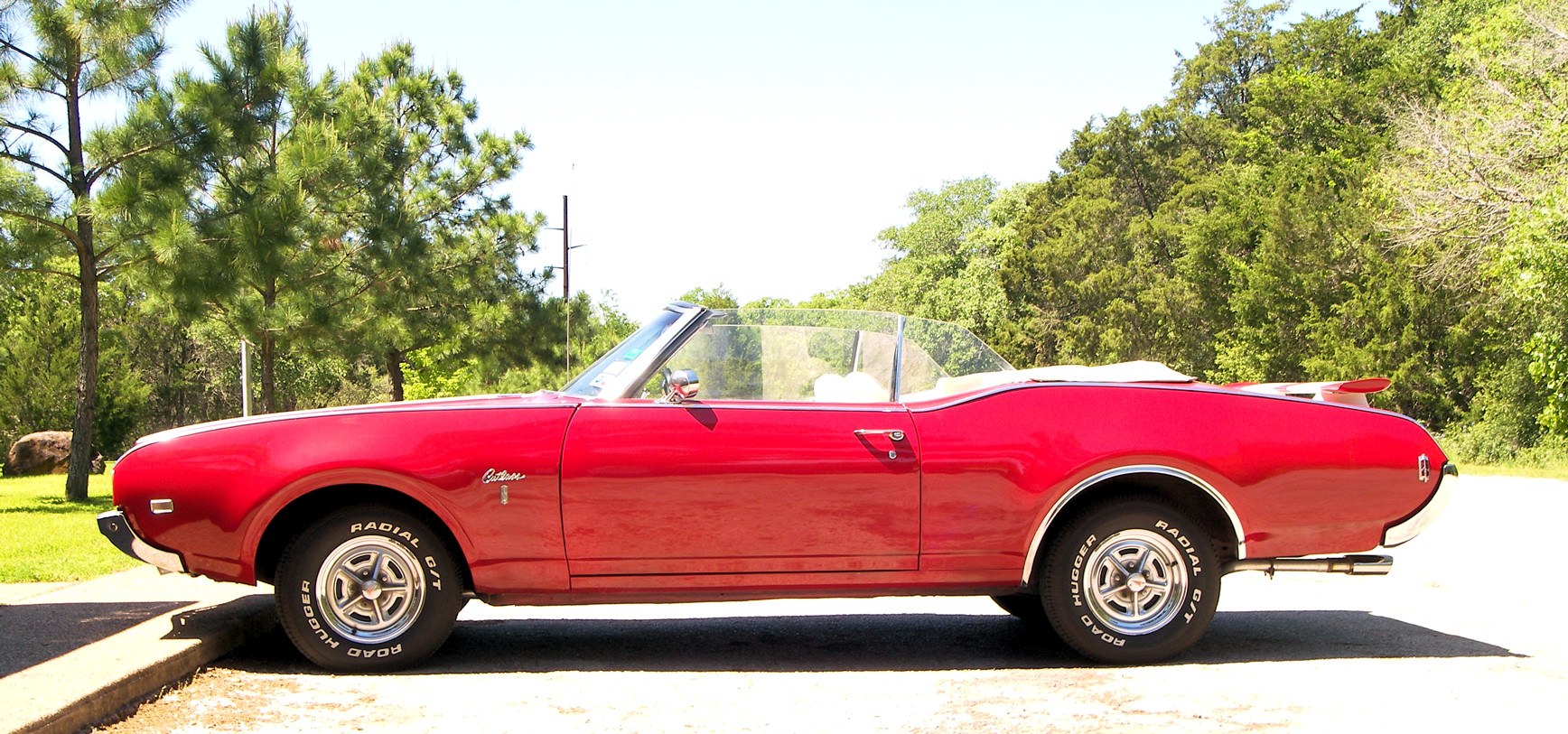
"...But just a very, very, very cool woman. And she, I mean, she let me drive from Macon to Savannah when I was 13 years old. That's cool. 77 Olds and Bill Wagon."
The 1977 Oldsmobile Cutlass Supreme is a type of car that was very popular in the 1970s. It was known for being comfortable and stylish, making it a favorite among many drivers.
The 1977 Oldsmobile Cutlass Supreme is a classic American car known for its comfortable ride and stylish design, popular during the late 1970s. It was part of the Cutlass line, which was one of Oldsmobile's best-selling models.
"...my dad used to let me drive. We had a 71 or a 71 red Bordeaux Galaxy 500 sedan."
The 1971 Ford Galaxie 500 is a large car that many people enjoyed driving in the early 1970s. It was known for having a lot of space inside and good performance.
The 1971 Ford Galaxie 500 is a full-size car that was known for its spacious interior and powerful engine options. It was part of the Galaxie line, which was popular for its performance and comfort.
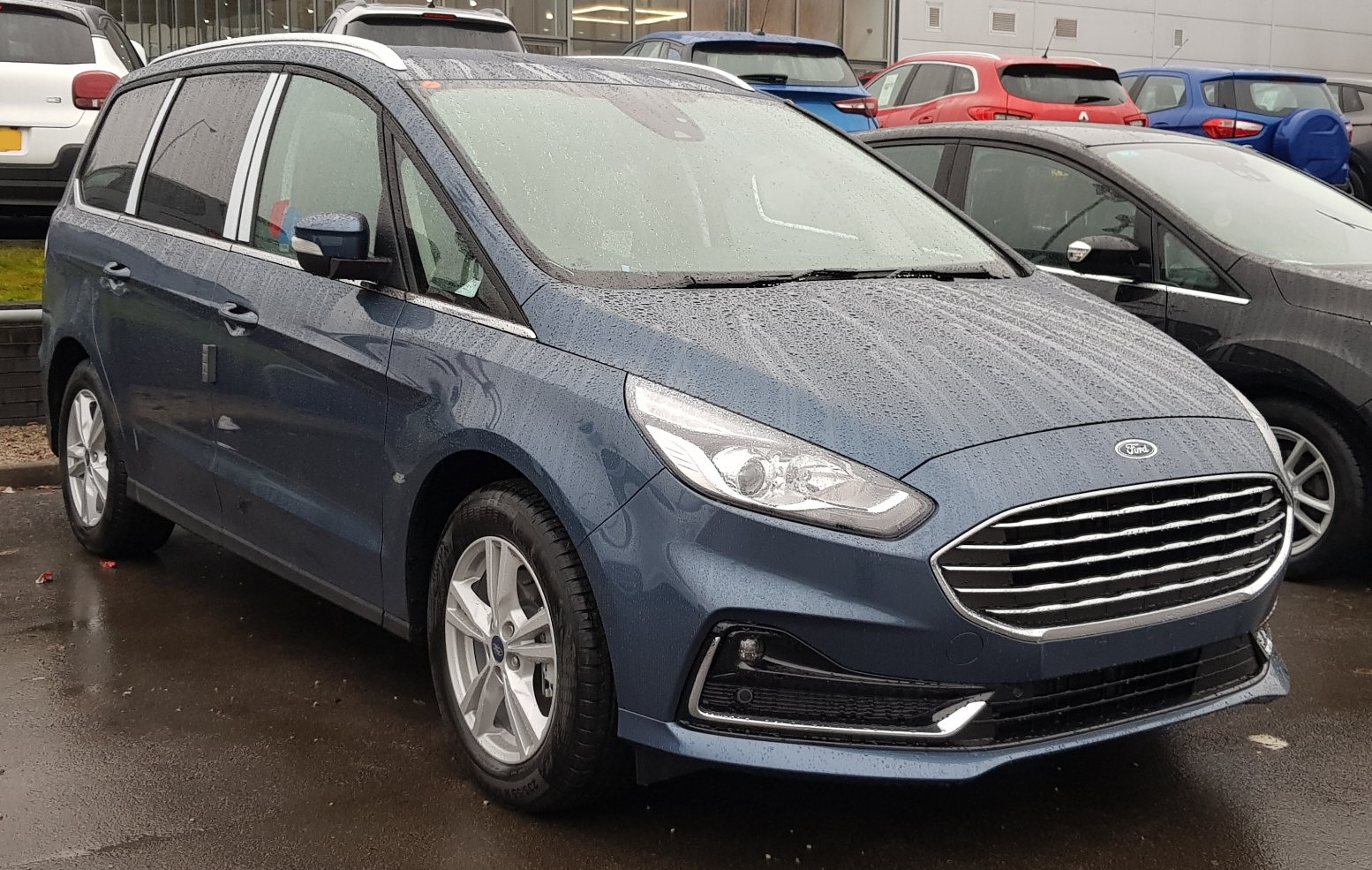
"...o let me drive. We had a 71 or a 71 red Bordeaux Galaxy 500 sedan. Apart from Hertz rental car."
The Ford Galaxy is a roomy family car that can fit a lot of people and their things. It's designed to be comfortable for long drives, making it a good choice for families going on trips.
The Ford Galaxy is a large MPV (multi-purpose vehicle) that was popular in Europe, particularly known for its spaciousness and practicality. It was designed to accommodate families and is often remembered for its comfortable ride and versatility.
"One had a live axle in the back. Cyclops was the brand."
A live axle is a part of a vehicle that helps the wheels move and keeps the vehicle stable. It's important for how the vehicle handles when turning.
A live axle is a type of axle that transmits power to the wheels while also supporting the weight of the vehicle. In go-karts, it helps provide stability and traction during turns.
Cyclops is a brand that makes go-karts, which are small, fast vehicles used for racing or fun. They are popular among kids and adults alike.
Cyclops is a brand that produces go-karts and other recreational vehicles. They are known for their durable designs and performance in the go-karting community.
Car
Yamaha 125 motocross bike
"...there's an ad for a 125 Yamaha motocross bike for sale over in Sandy Springs."
The Yamaha 125 motocross bike is a small motorcycle made for racing on dirt tracks. It's light and fast, which helps riders maneuver easily on rough surfaces.
The Yamaha 125 motocross bike is a lightweight motorcycle designed for off-road racing and motocross events. It typically features a two-stroke engine, making it agile and suitable for various terrains.
Car
Marguerite Panther X Junior
"...that's a brand new Marguerite Panther X Junior silver cart, the motor mounted on the side. I'd never seen anything like that in my life."
The Marguerite Panther X Junior is a type of go-kart made for kids. It has a special design with the engine on the side, which helps it handle better when driving.
The Marguerite Panther X Junior is a go-kart designed for younger drivers, featuring a unique design and performance characteristics suitable for karting enthusiasts. It often includes features like a side-mounted engine for improved weight distribution and handling.
"...I learned that a four horsepower Briggs cylinder head doesn't have the little lip on it. It has more compression."
Horsepower tells you how powerful an engine is. The higher the horsepower, the faster and stronger the car can be.
Horsepower is a unit of measurement used to quantify the power output of an engine. It indicates how much work an engine can perform over time, and is a crucial factor in determining a vehicle's performance.
"But you could run, basically, an open motor at that point. You could run any bore stroke, but the modified had to be only 30 over, stock stroke, et cetera."
Bore stroke is about the size of the engine's cylinders. The bore is how wide the cylinder is, and the stroke is how far the piston moves up and down. Together, they help define how powerful the engine can be.
Bore stroke refers to the dimensions of an engine's cylinders, specifically the diameter (bore) and the length of the piston travel (stroke). These measurements are crucial for determining an engine's displacement and performance characteristics.
"But you could run small flywheel, the whole deal. Then, like 78, 79, now I'm going to Bristol, Tennessee. They had a road racing course there right next to the drag strip in the Oval."
Road racing is when cars race on regular roads or special tracks. It's different from drag racing, which is just a straight line. Road racing can have turns and different surfaces.
Road racing involves racing cars on paved roads or circuits, as opposed to off-road or drag racing. It often includes a variety of vehicle types and can take place on closed public roads or dedicated tracks.
"...to set context for today, it's the Rolex 24 hours Daytona. You're gonna do- It was the Rolex then."
The Rolex 24 is a famous car race that lasts for 24 hours. It takes place at a racetrack in Daytona, Florida, and many different types of race cars participate.
The Rolex 24 at Daytona is a prestigious endurance race held annually at the Daytona International Speedway in Florida. It is part of the IMSA WeatherTech SportsCar Championship and features a variety of sports cars competing over a 24-hour period.
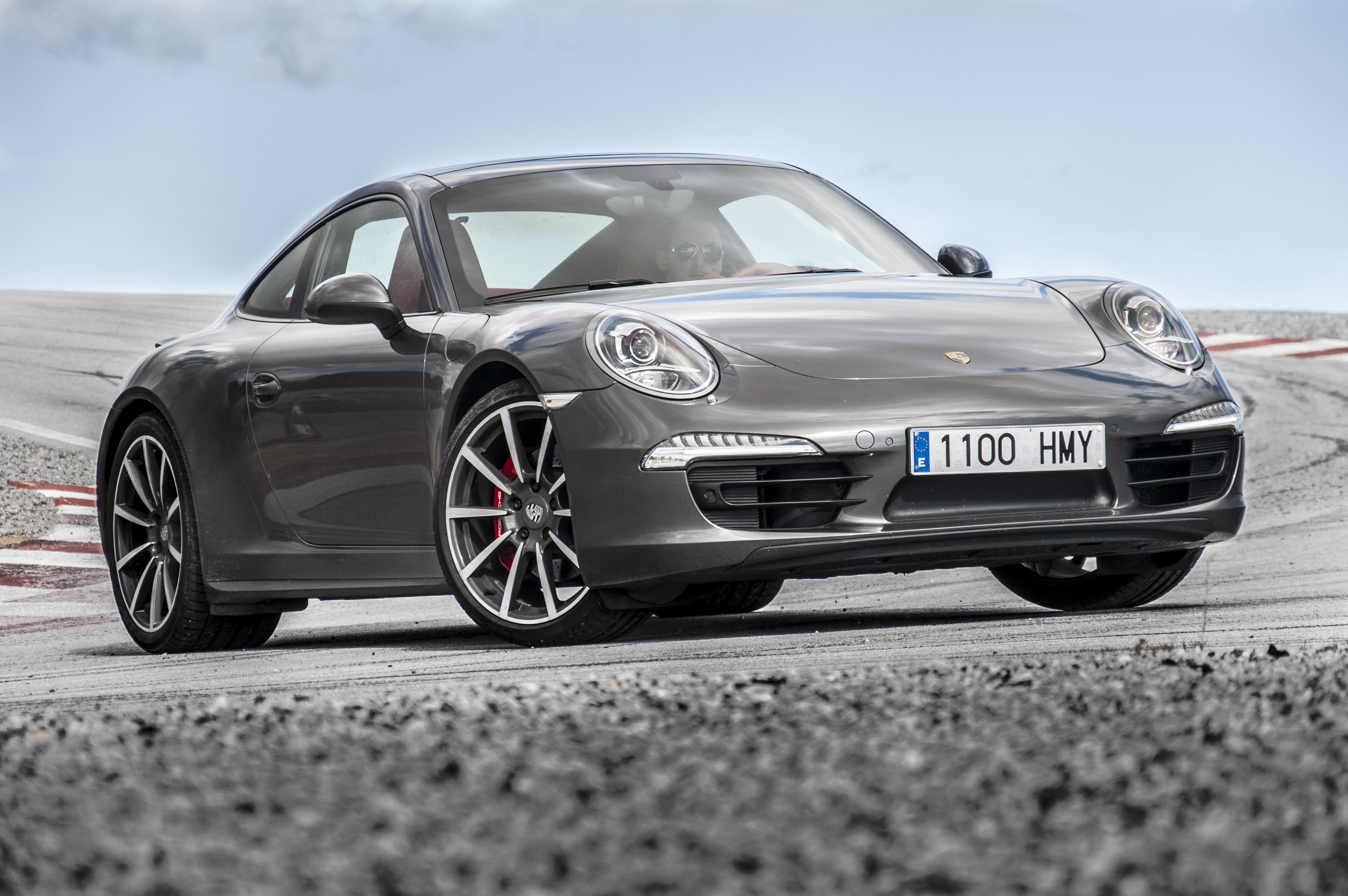
"Well, the go-kart went faster than the 9-11. Right, and now you're gonna do the Daytona 24 hour in 1993..."
The Porsche 911 is a famous sports car that has been around for many years. It's known for being fast and fun to drive, making it a favorite among car enthusiasts.
The Porsche 911 is an iconic sports car known for its distinctive design and performance. It has been in production since the early 1960s and has undergone several generations of development, maintaining its status as a high-performance vehicle.
"And then Don Panos came along and created the American Le Mans series. And it's like, build it, it'll come."
The American Le Mans Series was a type of car racing that involved long-distance races with different kinds of cars. It was popular in the U.S. and included exciting events where cars raced for several hours at a time.
The American Le Mans Series (ALMS) was a sports car racing series in North America that featured a mix of prototype and GT cars. It was known for its endurance races and was part of the larger Le Mans series, which includes the famous 24 Hours of Le Mans race.
"...now you are in this Ricci 360 Ferrari with Ralph Kellner's. And since that time until currently now, in my opinion,..."
The Ferrari 360 is a high-performance sports car made by Ferrari. It has a powerful engine and is designed for speed and handling, making it very exciting to drive.
The Ferrari 360 is a mid-engine sports car produced by Ferrari from 1999 to 2005. It features a 3.6-liter V8 engine and is known for its performance and design, making it a popular choice among enthusiasts.
"...you guys are like the factory car for ALMS. Is that correct?"
ALMS is a racing series in America where different types of sports cars compete in long-distance races. It's known for exciting races and high-performance vehicles.
ALMS stands for American Le Mans Series, a sports car racing series that features endurance racing. It showcases a variety of classes and is known for its competitive nature and technical challenges.
"Oh, hell yeah. I drive up there in the Ford Expedition with the little mattress in the back"
The Ford Expedition is a big SUV that can carry a lot of people and stuff, making it great for families or road trips. It has plenty of space inside and can even tow trailers, which is handy for camping or moving.
The Ford Expedition is a full-size SUV known for its spacious interior, towing capacity, and family-friendly features. It is often discussed for its versatility, making it a popular choice for families and outdoor enthusiasts alike.
A champ car is a type of race car used in a specific racing series. Toyota made these cars for racing, and they were popular in the late 1990s.
The Toyota champ car refers to a race car used in the Champ Car World Series, which was a premier open-wheel racing series in North America. Toyota was involved in motorsports and provided engines for various teams during this era.
"...because I drove Schumacher's 97 F1 car. Yeah, the last of the wide track slick tire cars."
F1 stands for Formula 1, which is a top-level racing series where cars compete in fast races on special tracks. It's known for its high-speed cars and skilled drivers.
F1 refers to Formula 1, the highest class of international auto racing for single-seater formula racing cars. It features a series of races known as Grands Prix, held on various circuits around the world.
Select text to request an explanation
A man who almost died on the way to his first win.
Unpracticed McDonald's spokesman.
And a fan of a certain F1 World Champion's daughter.
Oh.
Anthony Lozaro.
If you could describe this dinner, we just had one word.
What would it be?
Unreal honesty.
That's not one word.
Yeah, also I'm confused.
Wait, was it?
Wait, does that mean that honesty wasn't real?
Is this bull.
Now you were just lying?
Oh god.
Sorry to hit you with the English language.
No, but you're making me think too much of this for you.
It's all wrong.
It's all wrong now.
No, it's all gone.
I lost my train of thought, which is not hard.
It got derailed.
Derailing.
Derailing the thought.
And now for Dinner with Racers, presented by Continental
Tire with your hosts, Ryan Eversley and Sean Heckman.
Please hold your radio set.
Oh.
I've been driving very angry since the sound of a driver
on the radio during a race.
What do you think I should go ahead and do?
Engine on.
And welcome to yet another edition of Dinner with Racers.
I'm Sean Heckman.
I'm Ryan Eversley.
We are in Hollywood, California, wrapping out
our 10th season.
We are.
10 years.
10 years of doing this, so much so that we're celebrating
at Johnny Rockets, eating bacon cheese rice.
It's convenient, and they let us come in with a recorder.
And we'll just move on from there.
But when we were out at Petit Le Mans, your home race,
for some ins and action, we decided
to stay back for a few days, do a few dinners.
And that included someone who yourself, and honestly,
most of the sports car friend circle that we have,
have all recommended a guy by the name of Anthony Lazaro.
Anthony Lazaro, to me, is like this folk hero driver.
He's had an amazing career and had these crazy opportunities
early in life while he was still working as a mechanic.
He raced in the Atlantic series.
He won that Atlantic championship.
He did NASCAR.
He did IndyCar.
And it was eventually Ferrari's, like,
re-seat driver of choice here in North America.
And I've known him for a long time through the coaching world,
and he's got just the best stories.
He's one of those guys that every time I see him
at the airport, I'm excited to talk to him.
And I was really happy that we were
able to sit down with him at Culinary Dropout
in my hometown of Atlanta, Georgia.
I had the chicken sandwich, Ryan.
You sure did, Sean.
And I also had the chicken sandwich.
Well, that's good.
I don't steal my fucking sandwich.
I'm stealing your sandwich.
I'm stealing your thing.
I'm stealing my sunshine.
Yeah, stealing your sunshine.
I'm all sunshine here, so that makes sense.
That's right.
That's what they call you.
Yeah.
But some of the things you're going
to learn about with Anthony Lazaro
are racing in carts for, like, what seems like, 45 years.
How to ruin your back, like, seven times over.
And how many girlfriends you can have at one time?
Which he doesn't talk about, Ryan,
because that would never be a thing.
Now, none of this would be possible without the best sponsor
that we could possibly ask for.
None other than Got Nettled Tire.
Hashtag dinner with Conti.
And if you love Got Nettled Tire
and you love dinner with racers,
we have this new thing on Patreon.
Go to patreon.com forward slash DWR show,
where we're doing a little dinner club action,
where basically for a small fee,
you can get some behind the scenes content,
such as more behind the scenes stories
that we haven't posted, race reports, race reviews,
things that we have coming up.
You can ask questions of our guests.
You get to know who the guests are before anybody else.
And just a handful of different things that we're trying to do
by giving you guys a little bit more content.
Once again, that's patreon.com forward slash DWR show.
Now, this was in my hometown of Atlanta, Georgia,
but Shane Van Goesbergen drove us in my Tacoma.
And I think we stopped at Wendy's on the way home.
We did, we stopped at Wendy's, Shane, right?
Yo, we need to stop for some Wendy's saucy nugs.
Thanks, Shane, once again,
for your loyal and enthusiastic participation.
But now take it away, Anthony Lazaro.
Me.
All right, we're gonna start in five, four, three, two.
You're up, man.
What's going on, brother?
Have you met Shawn before?
I've never met Shawn.
Hey, nice to meet you.
Get in there.
So, hey, let me ask you a question first.
Uh-huh.
Or say anything.
Uh-huh.
Is this live?
It is.
No.
Okay.
No.
And perfect.
You and I have talked about this before many times
because your story is pretty gnarly and not normal.
And I can probably pick it up from like the Atlantic's forward,
but it's hard to find all the details before that.
So let's go back to the beginning.
Well, I didn't have the internet back then.
Right.
I don't think they have computers.
I don't think they have computers, no.
We were still using, you know, two cups in string for a...
Right, right.
Well, you were born in 63.
Yep, in Charleston, August 26, 1963.
Not a split window coop, but a 63 model.
Born in Charleston.
Yeah, so I have moved 27 times that I've counted.
Jesus Christ.
Yeah, there's a...
Probably growing up, you mean?
Yes.
A father worked for Lockheed, aircraft company.
Okay.
Dobbins Air Force Base type thing.
Yeah.
So, like I lived in Charleston maybe nine months.
Oh, okay.
Yeah.
Okay, so it's a birth certificate,
but it's not necessarily what you were raised.
Correct.
And it's funny because I've only really been there
a couple of times.
Yeah.
Once was...
Well, you know, I met a girl at the Sky Club.
I was going to Europe.
Two weeks later, when I came back, I had to go to Daytona.
So I had to go to Atlanta, Charleston, Daytona.
Got there at night, left in the morning when it was still dark
and never came back.
Okay.
But...
A little lighter.
Yeah.
Yeah.
You left a little lighter.
So...
I did go back last year for like 15 minutes,
but I was not to that same place.
Oh, but yeah.
It was actually a job.
What did you do with the other 14?
It was a job.
Okay.
Touche.
It was a job, actually.
So I was doing a gig and I had to go pick up
a truck and trailer and I left my little Jetta over there.
So, you know, I literally parked at the Sky's house,
walked in and used the bathroom.
And it's kind of pretty nasty and gross and disgusting,
but picked up the truck and trailer
and took off to Birmingham.
And, you know, a few days later,
came back and picked everything up.
So I was in and out like 15 minutes each time.
That's Charleston as far as you know it.
Yeah.
That's it.
What did I do for lucky?
Huh?
What did I do for lucky?
So, in the...
He was on the C5 program, radio equipment type thing,
always into electronics and all that.
And...
You know, Alex, you're right.
C5, yeah, that's a big boy.
Oh, yeah.
Big boy.
Still, I mean, because the first one,
they were built over here.
And when the first one flew the test flight
and all that kind of stuff.
I still, like to this day, have one.
Yeah.
It's still a cool.
Yeah.
Well, this would have been Cold Warrior,
like when they're ramping all that stuff up.
Yeah.
So he was on that program.
And, yeah, like I,
I don't know all the places I lived,
but I know we, he moved around a lot.
Yeah.
And it was like Delaware for a little bit.
I do know that I started first grade in Smyrna, Georgia.
Okay.
At Labelle.
I'm too far from here.
Labelle Elementary.
Yeah.
And I finished first grade in Palmdale, California.
And then for second grade, I started in Palmdale,
but then Lancaster, which is the town next to it.
Yeah.
And then started, so that's two schools,
two schools in first, two schools in second,
and started third grade in Lancaster,
at Desert View Elementary.
That's the one I remember the name of.
And that'll come back in a little while this year,
because it's kind of funny.
And then, so Lancaster Desert View,
back to Smyrna, Labelle.
Wow.
Then to Teasley Elementary in Bonnings, Georgia,
which is where we kind of settled.
Okay.
Yeah.
So my...
That's a formative age to like jump around
and get picked on as a new kid every time.
Yeah.
I didn't get picked on.
Okay.
Yeah, I'm very good at making friends.
Yeah, you're pretty social.
Yeah.
Very good at making friends.
Pretty good at packing.
Expert now.
Yeah.
All clear containers, stackable, that kind of stuff.
But yeah, it was, it's funny because I never,
I never had any issues with it.
Now, I wasn't smart because of it,
which was a little bit of a problem.
I'm going to blame it on that.
Yeah, for sure.
Yeah, I mean.
Definitely their fault.
Yeah.
I mean, it could be other things like birth defects
and stuff, but we don't totally know.
I mean, they said I had a pretty good IQ.
The, yeah, so that last part of third grade,
my core group of friends I still talk to all the time
are those people.
Oh, that's cool.
Yeah, yeah.
So I moved out when I was 21.
Just happened to be on my 21st birthday coincidence.
And then I, for the next 10 years,
I lived in a variety of places all around here.
Super cheap houses with guys,
200 bucks a month type thing.
And actually had an apartment for a couple of years,
two bedroom and $400 a month.
My car was so ugly, they wouldn't let me live there.
Get out of here.
This is back when I was a BMW mechanic over in Sandy Springs,
Buckhead Motorworks.
So I literally took a BMW from the shop
that the shop actually owned and I didn't steal it.
And I used that and said,
well, this is my car.
It's your daily car.
Cause I had an AMC Pacer at that point.
Oh, sweet.
We live in it.
Yeah, yeah, yeah.
Let's say this is early, mid 80s.
So yeah, it's, the story can kind of jump around
a little bit, but it was basically I was a BMW mechanic
from 82 to 94.
Right.
And yeah, the AMC Pacer came about just,
there's another little story that's tied to that,
but that was too ugly.
Yeah.
But it's so, so growing up.
So 21, you move out of your house,
you go straight to working as a mechanic.
So it was, was cars a theme this whole time?
Oh yeah.
Okay.
Where'd they come from?
Plain strains automobiles.
So my father, my father actually, this,
it's either, he went to the first Sebring.
12 hours.
Does your dad's name Jim?
No, Tony.
Okay.
There was a time when the Atlanta phone book
were the only Los Aros period.
Sure.
I found a Jim Lazar that raced and he raced an AMC Gremlin.
That's, I was like, what are the odds?
Oh my gosh.
Yeah.
That's why I'm like, wait, is that related?
But yeah.
But your dad went to Sebring.
Yeah.
He was actually, he liked sports car racing.
Okay.
Plain strains and automobiles and boats and all that.
He was, he was in a Navy.
Yeah.
His line of work sounds like, you know,
just like saying anything like that.
Yeah.
But he wasn't a fan and it was the first Sebring 12 hour.
I think 52.
Okay.
Something like that.
He, when we moved here, so we moved back in like 72, I believe.
74, he took me to Rotor Atlanta to the runoffs.
Okay.
That's your first exposure.
I actually took me to Willow Springs.
This is kind of crazy.
Oh, which is right next to Palmdale.
Yeah.
And I remember, I just remember the track up in the hill.
Yep.
And back then that thing's got to be just like
some pavement and dirt.
You know, like it is now.
Like it is now.
They just announced.
Yeah.
I was there earlier this year.
It had to be even more just nowhere out there.
Oh, yeah.
But it's weird that I remember,
I remember the track on the hill.
Yeah, right.
Like that's, yeah.
It's right next to like weird mining thing.
Yeah.
And that's what I remember.
So he, we went to the runoffs at Rotor Atlanta back in 74,
stayed in the 64, 64 country square wagon,
Ford, that type of thing.
But he was, he liked racing, sports car racing.
And he exposed me as far as that was concerned.
But my mother, huge, my mother somehow knew,
she bought me all sorts of books when I was a kid.
I still have all of them.
You know, I still have everything.
Really, really cool books.
So I, I fell in love with the 1930s Grand Prix cars.
You know, auto, auto unions in particular,
but yeah, the auto unions in the Mercedes.
I was fascinated by Tazio Nubilori and an auto union
could go 190 miles an hour on five inch wide tires.
And all that.
Back then.
Yeah, it's crazy.
What did your mom do?
So my mother, very, my father's got a pretty cool
personality, he's 93 years old.
Okay.
When he's right over here in Vinings.
Still kicking.
Oh yeah.
One of the busiest guys I know.
That's awesome.
Not surprising.
But my mother was very outgoing, very much personality.
I mean, I, I lived, she took care of me.
She was a, you know, housewife or whatever.
But the kind of, okay, yeah, she worked at riches
for a little bit up at Cumberland Mall.
Like I remember when they built Cumberland Mall.
Right.
But she was in theater, like in, in Cobb and Marietta,
Cobb Civic Center, something like that or whatever.
So I go see her in plays, things like that.
She took me, she's the cultural part of my life.
I mean, she took me to the ballet, to the symphony,
all that kind of stuff.
Theater as well.
You know, all that kind of stuff.
So that, that part of culture,
which the other part of my life was not like that.
But just a very, very, very cool woman.
And she, I mean, she let me drive from Macon to Savannah
when I was 13 years old.
That's cool.
77 Olds and Bill Wagon.
Yeah.
My dad was like, my dad used to let me drive.
We had a 71 or a 71 red Bordeaux Galaxy 500 sedan.
Apart from Hertz rental car.
Yeah.
My dad used to let me drive bench seat, you know,
from the side.
Yeah.
So me and my mom were going to Savannah by ourselves
cause she's born and raised in Savannah.
My sister born and raised in Savannah.
Different fathers, which I didn't even know.
So I was like 12 or 13.
Cool. Weird.
Uncle Tommy taught me how to shoot guns.
And we were all together all the time.
So it's like everybody got along.
It wasn't a thing like that.
But yeah.
So we're going to Savannah and, you know,
we get past Macon.
My mom lets me drive, like hops out and lets me drive.
So I'm going 80 miles an hour.
It's in the rain, about, you know,
20 miles outside of Savannah.
We swap again.
Of course my dad was like, I didn't really mean like that.
Yeah. Yeah. Yeah.
I meant, you know,
He's like letting him hold the steering wheel.
Oh yeah.
Driving the actual car.
Yeah. Right.
She slept.
She's sleeping.
Crazy.
For a 13 year old first time driver.
Yeah.
So that's how my mom was.
She sounds badass.
She was very badass.
Very artsy crafts.
The, the ironic thing is I lived all these different things.
And then she, she passed in January, 2023.
And I was, and she's got a nice place in Savannah.
Yeah.
And I was literally in her house.
The first dent was about eight days in a row by myself.
And I'm just going through stuff.
You know, just, just looking through stuff and just feel,
you know, and then I'm reading about all this stuff.
I'm looking at an article about her
and the gourmet cooking class that led to us buying
the amusement center up in Marietta,
which is one of the foundations of my carding
and all that kind of stuff.
It's all these little things that connect, you know,
seeing her in the newspaper, in the theater.
Yeah.
The Viney Civic Club, like she helped create
or whatever and all these women.
It's like.
Yeah.
She was doing stuff.
Now you're reading about things
that were just part of your life.
You didn't think much about it.
Yeah. Right.
It's embarrassing back then.
Yeah.
So it's a.
Yeah.
She sounds pretty special.
She's very special.
Yeah.
So you're going, you mentioned that you guys owned
an amusement park?
Okay.
What was it called?
Yeah.
It's called six.
It's called Five Flags.
We were one short.
We were so close.
So we're trying to crack it.
My father, when we came back from California,
my father still working for Lockheed,
but then he moved into sales.
So he's selling jet stars and C-130s.
To who?
To the Saudis.
Yeah.
Okay.
Now we're getting where I want to go.
This is the movie.
Right.
So somebody right now is like,
I thought we were going to talk about Toyota Atlantic.
Right.
No.
MCI.
Yeah.
So C-130s to the Saudis.
Yep.
C-130s and jet stars.
Yeah.
In the 70s.
Yes.
Early 70s.
All of the time.
Yeah.
Awesome.
Yeah.
Oh yeah.
Who ate the whole deal.
So we take them out to Dobbins, right out onto the tarmac.
He'd hop on the jet star and be gone for a while.
Yeah.
And buying a jet star back then was like buying a,
you know, Oldsmobile.
You get the little book with all the different interiors
and all that up, you know, which he gave me all that stuff.
I still have a jet star, you know,
those little desk models.
Yeah.
So he had a C-130 and a jet star.
He's got a C-130.
I have the jet star still.
But it was funny because he would,
you know, I'd look through all the things and he goes,
yeah, like we do.
What's not in the book is the gold sinks
and stuff like that.
Yeah.
That's not the option that Lockheed had.
But those are some of the options that they were.
That market might require.
We're selling at bin Laden's here.
Yeah, like we got, yeah.
Yeah, absolutely.
So I think the travel got to my mom
because he was gone a lot.
Yeah.
And so he ended up leaving Lockheed,
I think somewhere around 73 or so.
And then he was selling office equipment.
Like, it was boring as hell.
Yeah, right.
Like paper products and, you know,
office s*** basically.
So my mother, 1975, she was in a gourmet cooking class.
She met a guy, Jerry Budd was his name
and his son was named Jerry.
And it was J&B amusement center.
Like 189 Frazgen Road, Marietta,
right by near the big chicken.
Yeah.
There was a crystal restaurant right there on the corner.
Frazgen goes off to the right
if you're going north on 41.
There was a Kmart over there back in the day,
which I bought a lot of stuff from.
Yeah.
The big chicken is a landmark here in Georgia.
That's a big deal.
Oh, yeah.
Yeah.
So it didn't work back then though.
It was a KFC back then.
Yeah, right.
But it didn't.
Everything works now.
Yeah, it's a big deal.
And it's like literally you'll hear advertisements
on the radio that are like,
if you're going to like a car dealership,
like come on down to Troncolly, new son.
It's left at the big chicken a mile on the right.
Yeah.
But like, Frazgen Road in 41.
But J&B amusement center.
Yeah, so J&B was for Jerry and Budd.
Yeah.
So when they bought it, it became S&T.
Sonya and Tony.
Okay.
Makes sense.
Yeah, so it was a little oval go-kart track.
Yeah.
Okay.
Right next to it was a dirt track oval
with three-wheelers, dune cycles.
Yeah.
Couldn't have that now.
And it had gasoline-powered bumper cars,
putt-putt, and a little game room.
Yeah.
That's perfect.
What a dream come true.
Yeah.
And how old are you at this point?
11.
Oh, dude.
Come on.
Are you fricking kidding me?
Yeah, right, right.
Everything I know about you now makes sense.
Yeah.
You never grew up.
Yeah, you can live at boomers basically.
Why though?
I mean, I understand we have to change.
Yeah, why that business?
That's my point.
Like, I understand the office equipment stuff is boring,
but running a little amusement center like that
is a huge departure.
Yeah.
That's my mom.
Yeah, no clue.
I want this.
She just wanted to do something different.
She was that lady.
Yeah.
She encouraged me to do whatever I want to do.
I can do whatever I want to do.
Now, I got to pay for it.
Yeah, right, right.
But there was no lack of encouragement.
There was never, you know, structure of any kind.
Same upbringing.
So up to that point, I'm 11, my parents would never
like let me have a motorcycle.
Nothing, no go-kart motorcycle or anything.
But now there's a go-kart theme park.
Yes.
And it came with two Yamaha 60s.
Hell yeah.
So one was the Enduro, with the lights and all that.
The other one was the motocross.
So one was that reddish, whatever.
And the other was yellow.
And neither one worked.
So I just started working on it and made one out of two
and just started riding it.
And that was the end of that story.
Figured it out.
I just had a motorcycle and bought a bigger one.
But then got caught by the cops on it.
But it was the whole business and all of that.
Before that, I had two friends that had go-karts.
One had a live axle in the back.
Cyclops was the brand.
Says it on its seat.
Had a four-horsepower to comp so.
And then my other buddy, that's Kyle.
So my other buddy, Pat, had a, him and his brother
had a five-horsepower Briggs, one-wheel drive,
you know, brought up the tire all the time.
Yeah, right.
So Kyle's cart, the Cyclops, forced to come.
So that's the first go-kart I ever drove.
I have that go-kart.
It was never mine.
So in 2001, I do an IndyCar race in Texas Motor Speedway.
They live in Denton right there.
He's a doctor, Dr. Kyle.
He created Focus Factor as one of the products he made.
There's some other product he makes now.
Yeah, so they brought me the go-kart as a surprise.
No motor, but I have it.
I'm going to, I got an engine for it,
and it's going to be something.
So your parents get an amusement park going,
and then are you now allowed to drive stuff
because they have the toys?
I was allowed to drive the go-karts.
OK.
But I wasn't, you know, the motorcycle thing was like,
we don't want you on a motorcycle.
Right.
OK.
Yeah.
For all the reasons why parents say that.
But when I put the motorcycle together
and started riding it on the dirt track, flat track in it.
Yeah.
Everything's cool.
Nobody ever said anything.
Yeah.
And then a little bit later after that,
back when they had newspapers, you know,
there's an ad for a 125 Yamaha motocross bike for sale
over in Sandy Springs.
So my mom, we ride over there, and the frickin'
big, wide handlebars were cool back then.
So I bought this 125.
It was big compared to me.
It was a lot of bike, but bought it with my money.
Yeah.
So that was all a thing that started happening.
I could do whatever I want.
I had my own money.
And they were fine with that.
Yeah.
But like going back to your childhood,
you're collecting old 1930s Grand Prix books.
Yep.
Now your parents have a go-kart track here.
You're out kind of having fun on a flat track.
It's 11 years old.
It's badass.
Yeah.
I mean, it's an amusement center.
It was frickin' awesome.
Awesome.
But it's in the veins already.
Oh, yeah, yeah, yeah, yeah, yeah.
Is this leading towards you becoming a WKA kid?
Yeah.
So how do I get involved in racing?
Yeah.
Yeah.
That's the story.
But what I'm not hearing in any of this is actual racing.
It's just, yeah, this is like learning
how to play with toys and like figuring all this stuff out.
It's very similar to what I was doing.
But before the go-kart track, though, it was, you had bicycles.
Right.
Yeah.
And we, I did the longest wheelie.
I jumped the farthest of any of my friends.
Right.
You're that kid in the group.
My nickname, my nickname in elementary school at Teasley
was Adamant because I was this little guy that
was always fricking climbing all over the monkey bar.
The whole deal, right?
That guy, that kid.
Yeah, yeah.
Then action figure.
Yeah.
So right around 1975, my neighbor gave me this book.
I almost brought it.
But it's called Carding by Leroy Tex Smith.
It's still available.
Like it's still, like I Googled it.
That was my Bible.
Yeah.
It had the history of go-karts.
Art Engels, 1956, when he worked for Curtis in Indiana,
Indianapolis or whatever, building cars,
built a go-kart frame out of scrap metal
and a surplus West Bend engine, et cetera, et cetera.
There are pictures out of that book at AMP.
It's a cart track.
OK.
Yeah, yeah, yeah.
And there's a wall with some stuff on it.
Yeah, it's on there.
Yeah, I want to solve that one.
Holy crap, that's out of my book.
Yeah.
So it's in my desk, that book right now.
Oh, yeah, that's your Bible.
It's my Bible.
So I saw these go-karts.
I saw FKE full body cars that go 130 miles an hour.
I saw, you know, dual engine, alcohol, four carburetors.
I saw all this stuff.
Enduros, I saw pictures of Gary Hartman, Cathy Hartman,
John Hartman, and all these people.
And history of go-kart racing, it
must have been up to around 73 or so.
Right.
And I knew about go-kart racing had no clue
as to how to get involved.
Well, in 1977, this guy calls my dad.
And he says, hey, I just bought a new racing cart from a kid,
and I need to break the engine in.
Can we use your track?
My dad's like, come on.
Oh, OK, now you get to see it.
Oh, yeah, because he knew.
You know, he even made the comment.
My son is interested in go-kart, you know, all that.
So he came up there.
And Larry Davis, Mike Davis was the son.
And that's a brand new Marguerite Panther X Junior silver
cart, the motor mounted on the side.
I'd never seen anything like that in my life.
And it was freaking awesome.
He let me drive it.
And then he took me to Cumming Mini Speedway.
And I went and watched the race.
And then I bought his old cart.
And that was it.
So my mom took me to the track in Station Wagon,
19 and brand new back then, 77.
And I raced.
So I did all the work on it myself.
OK, so that was the first motor.
I had a little over $200 in this thing total, you know?
And I learned how to cheat.
Yeah, I learned why cheating is not good.
OK.
You know, I learned that because even going back
farther than that, the whole mechanic type thing,
when I was a kid, I wanted a Craftsman toolbox for Christmas.
And what version of autism do you have?
I have my.
But you're out there racing carts.
You said you learned that cheating can be a bad thing.
What did you do?
Well, I didn't have any money, you know?
And I wanted to do.
I actually got two third-place trophies that year,
my first two trophies.
But I learned that a four horsepower Briggs cylinder
head doesn't have the little lip on it.
It has more compression.
The only way you can tell is that you
got to look down at the part number on the head through the fins.
And at night, it's not as easy to see.
I came out and Sears were my two places I shopped.
And I bought grinding stones, put them on a drill,
ported the intake, went through the head bolt too much.
You know, ground too much.
Well, that's weird, because you could be so precise
with those tools.
But with the head bolt in, it didn't leak air so much.
The three horsepower vertical shaft mower or three and a half
horsepower vertical shaft mower had
is a little aluminum flywheel.
So you can put that on there.
And if you cut the little coil mounts on the five-horse motor
and put a little plate on there, you can remount the coil.
So it fits the three horsepower aluminum flywheel.
You paint it black, because the aluminum is too bright.
And you see that at night, right through the show.
Yeah, that kind of stuff.
And then I got caught.
So that's the learning that cheating is not good.
It's like a busted.
But if you hadn't got caught, it'd be OK.
Yeah, right.
I think.
Yeah, so you start racing carts in, I mean, 1977.
Yeah.
And then summer.
How quickly do you start getting competitive?
Eventually.
And to be able to answer your question, competitive.
Yeah, I think right away.
OK, yeah, yeah, yeah, yeah, yeah, I didn't.
It wasn't something that you like struggled with for a while.
You know, competitive right away.
Yeah, no, yeah, copy that.
No, put it this way.
When I drove my friend's go carts.
Yeah, we got a test of that first time.
I drove the piss out of them.
Yeah, I drove them fast.
I drove them better than they did.
Yeah, sliding around all this stuff.
Right, I tell everybody I learned how to race in carts
because you're doing this and these are this isn't WK yet.
Right, this is just local stuff.
So how do you make that transition to the WK stuff?
Go down to Barnesville in 1978.
You see the winner Olympics two cycle and four cycle and go,
holy crap.
Yeah, there's 600 carts.
Right. Yeah, 600 carts.
And you see like one of the biggest go carts races in the country
was 1976 at Barnesville, U.S. Nationals.
Yeah.
And it's, you know, Mark Dismore, Kyle Adkins, Scott Pruitt,
Terry Trader, Lake Speed.
Yeah.
All these guys, Comal Higgins, Canadian junior Neil legend.
Are you going just to watch?
Yep.
OK.
Parents sitting down there.
Yeah.
And then so the winner Olympics and the winner the two cycles,
like 600 entries, four cycle back then was like 450 or so.
So the winner Olympics were happening.
Huge.
Yeah, this is I want to say someone called the event.
Yeah, that's where I was getting the Olympics.
The Winter Olympics is actually the big national carding event
of that era was what called the Winter Olympics.
And I, and it was a road racing track.
I'd only been on the oval.
Yeah.
So, yeah, in 78, I went down there.
And by now I had it's funny because this part,
I'm not even sure how it how it all happened.
But there's a company indicator on Glenwood,
Glenwood Avenue, whether MCI.
OK.
MCA.
MCA.
OK.
Cardshop.
Yeah.
Very, it was kind of famous back in the day.
People that have grown up around carding here know that place.
And they had ads on TV.
I mean, we have five channels.
Right.
But they had an ad on TV.
But they were slightly more affordable.
Yes.
And you can see the famous whatever they called their cart
with a modified motor and all that kind of stuff.
So I, when I raced it in Cummings Mini Speedway,
it was an oval, raced the outlaw stock.
But it was like 12 and up.
So I raced with, you know, seniors basically.
Sure, right, yeah.
And then they had 8 to 12.
So I just started in senior class.
I remember that in junior.
Yeah, yeah, yeah.
And like the youngest guy.
So when I went to Barnesville, now it's WKA.
So I joined WKA member number 553,
which is the 553rd member of WKA,
because it was created by Dick Wilson, the owner of Barnesville
back then.
Yeah, yeah, yeah, yeah.
You're not diagnosed.
100% on the spectrum.
Yeah, yeah, this is your beyond spectrum.
You know too many numbers correctly.
Oh, yeah, yeah.
Let's see if they have some techniques.
Let's see if they have a box of techniques.
Yeah, exactly.
How many is that?
I know a lot of weird shit.
Yeah, weird stuff.
Yeah, go on.
Yeah.
Can't remember what I just did a minute ago.
I get it.
I get it.
But you know your member number from WKA?
Oh, yeah.
So 553 here.
Because when I rejoined in, uh-huh.
Oh, now you know.
2020, I see.
OK.
Yeah, December 2020, I rejoined.
So I can go back and drive a 250 supercar
at Daytona, first time in 30 years.
Yeah.
They gave me my number.
That's cool.
Now I lost it.
Yeah, right.
I lost another.
Yeah.
Because the next year, to renew it,
they lost their data file.
So we all got new numbers.
Oh, that's awesome.
But you know yours.
I still have my card.
Yeah, right.
You still have the original card.
I got it right here, guys.
Yeah, yeah, yeah.
I got all sorts of weird stuff like that.
So you start doing new numbers.
Yeah, so later on, I went down there and did that.
But then you had to have, basically, my motor
was kind of cheated up.
And I didn't have another motor to run the stock class.
So I ran junior modified.
Junior modified was 265 weight, 30 over on the bore.
But you could run, basically, an open motor at that point.
You could run any bore stroke, but the modified
had to be only 30 over, stock stroke, et cetera.
But you could run small flywheel, the whole deal.
Then, like 78, 79, now I'm going to Bristol, Tennessee.
They had a road racing course there right next to the drag
strip in the Oval.
I go to Darlington, South Carolina,
because they had a track in Darlington.
I go to Palmetto in Columbia, South Carolina.
They had a go-kart track.
I went down to Moultrie, Georgia, Oval.
So we traveled around a little bit.
And when we're traveling, yeah, my dad was on that program.
Yeah, OK, so how old are you at this point?
It's like 16, 17?
So I was, yeah.
OK, yep.
Yeah, and so you're traveling around, doing WK races.
Yeah.
I'm guessing you're.
It wasn't until 79 when I got my license, my driver's license.
And it's kind of like the, I'd say,
like maybe an overarching part of your story
until you got into the pro stuff, like pro racing cars,
that you were doing a lot with a little.
Oh, hell yeah.
What year was the first WK championship?
87.
OK, so we're talking, you're still in the 70s here.
It took me 10 years before I ever ran a full proper WK.
OK, yeah.
On the national, a full national schedule.
87 was the first time.
So 87, you're now in your 20s.
Yeah, you're 24 years old at this point.
Yeah, yeah.
So you win the WK championship.
What was that schedule like, like real quick?
Oh, so.
Is that just southeast, or are you going all over the country?
Not all over the country, because it was WK,
it was mainly the East Coast stuff.
And IK, it was the West Coast stuff.
So it was it was long track racing, too.
So it was enduro racing, you know, so like road Atlanta.
Exactly.
I raced at road Atlanta the first time in 1981.
Talladega, the road course.
The road course, not the Oble.
Well, yeah, the Oble too, but the road course in the Oble.
Yeah, right.
That's what they used to test, your dad's, I'm sure.
Yeah, not Little Talladega.
I've been there.
Oh, copy.
OK, not Little Talladega.
Not Little Talladega.
OK, so there's two different tracks there.
Super speed.
Yes, Badass Road.
Badass road course.
Watkins Glen.
Loudon, New Hampshire.
Briar Motorsports.
Part of it.
Yes, a pretty honest idea.
1.6 mile, the original Briar.
But here you're doing these throughout the 80s,
just like pickups here and there until 87.
I ran the whole schedule and I won the championship.
You know, won the Yamaha championship.
So we went in 87, we're in our 20s.
You've moved out by this point.
And are you now working at the BMW like, not dealership,
but I guess it's like a service shop.
Yeah, yeah.
So not only are you racing, you know, WKL over the East Coast,
but you're working full-time essentially as a mechanic.
Oh, yeah.
That's what's paying your bills.
I won my first national race at Talladega.
OK.
And it was 1985.
Right.
But my point is, obviously, you have no money
you're sharing an apartment with a buddy.
I'm assuming there's not like some Yamaha factory support
thing you've got at this point.
So every go-kart.
Yeah, not in 85.
I was starting to get help.
OK.
Right.
But it's funded by you turning wrenches for dealership.
Oh, hell yeah.
Yeah, yeah, yeah.
I started Buckhead Motorworks in 1982.
Yeah, yeah.
And I met Tony Burdett, the owner of Buckhead Motorworks,
at Cummings Mini Speedway.
So your bills and your carting is all paid for by you turning
wrenches as a mechanic in 1985.
Yeah, yeah.
Yeah, but in 1985, also, they had moved from Buford Highway
to the little tiny, tiny shop to their Taj Mahal that
just got torn down.
That didn't make the story any better.
Yeah, that really did change nothing.
Yeah, yeah.
The shots from LA, he has no idea where any of these places are.
Yeah, yeah, yeah.
But I do believe this.
It's a local.
I'm a local.
And LA, to be clear, is about 85 miles away from Palmdale.
Yep, I know.
And you go down the two freeway.
And I know a good deal.
I'm going to do the whole routine now?
Yeah, yeah, yeah.
Because I went by Desert View earlier this year in May.
I did you.
That's where you went to Almetres.
Because I remember the name of it, and I'm in Willow Springs.
Yeah, right.
And I'm in Lancaster.
And I'm like, I remember the name.
I put it in my GPS.
I'm like, holy shit, it's two miles away from my hotel.
Got to go.
Yeah, got to go.
Took pictures the whole deal.
Yeah, so it took me 10 years forever.
1985, I won my first national.
87, I ran the full season.
But self-funded.
Yeah.
Kind of, at this point.
So 1987.
But you won a national championship by 87.
Yep.
So you're going to get some help.
I quit my job in 1987 at Buckhead Motor Works
and moved up to live and work for Leo Capaldi.
Oh, yeah.
She's, wait, what?
How?
Like, how did you know who he was?
Because he was helping me.
Right, what was he doing in racing then?
He had Leo Capaldi.
Tony Perdet helped me tremendously with my work ethic
and the way I work on things, the cleanliness and detail
and all that.
Leo Capaldi taught me that you do all the work at the shop.
Like, 90% of the race is won at the shop.
So you don't, like, after Leo Capaldi,
I didn't work on my go-kart in the hotel room anymore.
Right, yeah, yeah.
That's a real program now.
Yeah, yeah, right.
Oh, yeah.
So you got across his radar.
And his play, oh, yeah.
So I used to go up to East Detroit.
Yeah.
This is where his shop was.
Yeah.
Pristine, he would, we'd build motors and all.
I'd take the engines back and forth on the airplane, carry on.
Kind of funny.
So he was helping me.
Then in 86, I got help with the chassis, with the frame.
Got help with tires, Burris, tires, Coyote Carts,
Leo Capaldi engines.
So Leo Capaldi racing is LCR.
Yep.
Lude, Crude, and Ranchi.
The way I like them.
No bulls*** was the insignia on the back of his shirt.
Yeah.
I quit my job to go racing.
Yeah.
Go-karts for a living.
I lived in his basement.
Right.
I moved all my stuff up there.
After a factory driver.
Yeah, I never spent any money on living quarters.
You know, I always lived with a bunch of guys.
$200 a month for many, many, many years.
Yeah.
And after you're going to make this work in carning.
It's a passion.
It's a drug.
So you're still winning despite all the first time you had it.
Yeah, and I won my first national championship.
Got you.
So from 87 to 92.
What did you say your first, your points championship?
I also at the end of, so getting back
to wanting to drive the fastest thing on the planet,
that was a 250 super cart.
And there was a guy who designed and built
these amazing lay down 250 super carts.
They were like Pinsky machines, right?
So I drive the super cart first time in 87.
Then I run that in 88, 89.
But from 87 to 92, I won five national championships.
The world championships are Daytona.
So I won the 250 twice.
Then after 89, they did away with 250s
because they were too fast.
And then I won 125.
And just to spell this out, in like 30 seconds or less,
for those who aren't carting experts,
a super cart is another level of carting.
When you think of go-karts, you think of the thing
we all see in the photos.
But a super cart is this tiny little thing with body work.
And I don't know if you'd call it downforce,
but there is some form of downforce there
because the 250 is fast.
It would go 158 miles an hour.
Yeah, yeah, yeah.
Daytona, it did a minute 53 at Daytona.
We don't run the chicane, but he knows what that is.
Roaded line of the old roaded line on 1988, minute 27.
Yeah, yeah, right.
So that's now granted way different configuration from now.
But yeah, that's only six seconds quicker and slower
than what we're doing now in GT3.
But now, if I had a modern cart, it'd be faster.
Yeah, absolutely.
But the point being when normally people
go from carts to cars, there's a massive jump,
not just in terms of weight and vehicle dynamics,
but speed, whereas in a super cart,
the speed part's already covered.
It's just how the cart translates.
You, like I said earlier, I learned how to race in carts.
I learned how to win in carts because I never had any money.
I used to just, seriously, I drove over people.
I was just a frickin', there was always this mindset
of I don't have the equipment, so I'm gonna make up
for it with me.
And it wasn't, yeah, that you could say the quality
of the determination and the mindset was good,
but doing every, you know, driving over people
is not great for them.
But you learn how to win.
I didn't drive a race car until I was 25,
so we'll get out of carts and move to cars now.
So you go from carts, into cars,
what's the first car that you raced?
Or what series, what?
This is a good one.
So 1988, I had a goal.
I wanted to, I wanted to drive an Indy car
by the time I was 35 and I was 25.
So I wanted to see if I had the ability to go further.
And I had been winning in carts
and even backing up a little bit,
I used to go, I met Jack Baldwin.
Yeah, yeah.
Okay, it's like 1988.
Adventure of the black t-shirt with silver right now.
So how did I meet Jack?
How did I meet him?
It was my buddy Al Tavelero,
mechanic at Chevrolet dealership in Sandy Springs.
He worked on Jack's car.
So he knew Jack and their wives or friends,
all that kind of stuff.
And Al knew me from carting and so he introduced us.
And as an example, I would,
in my little Chevy S10 truck,
with a little camper top on back,
a little mattress in the back of it,
I'd leave Buckhead Motorworks Friday afternoon,
drive up to Mid Ohio, stay at the truck stop,
camp out in the back of my truck,
pay five bucks for a shower in the morning,
put nice clothes on and go to Mid Ohio.
Back then it was IndyCar,
Super V, Atlantic, Indy Lights, Trans Am.
Yeah, I knew somebody.
I just, you never know who you're gonna,
so I met Jack Baldwin.
He introduced me to Buzz McCall,
the owner of the factory Chevrolet Trans Am team.
I met Larry Robinson, the Goodyear guy,
who gave me tires later on.
Buzz McCall put me in cars for commercials
and bought me tires.
Like weird stuff.
So just being around was the most beneficial thing.
Then I would, because you're a winner
and you're sleeping in your truck to get there.
You're taking the initiative.
Everyone's gonna register.
Exactly.
Oh yeah, yeah, yeah, yeah.
It's, but I was, I didn't wanna,
I was never one to go, oh, I'm just looking for a ride.
Like what are you doing?
I'm looking for a ride.
No, I'm winning.
I just won this race, I won that race,
won this championship.
I was in the meat of my carting,
you know, that part of the result.
So I had something to talk about.
And I had a little packet, you know?
Yeah, yeah, yeah.
A little packet, had a picture of the super car in it
at Rockingham on the Oval, it's pretty impressive.
And I would just go around and talk to people
and meet people.
And those people that I met, it paid dividends later.
Then I hopped in my little truck
after the end of the day on Sunday
and drove back to Buckhead Motor, you know,
drove back home, go back to work.
In 1988, can't remember exactly when,
but I do remember my first race
because it was the, some kind of pumpkin thing.
So it was October 31st at Nelson Ledges.
That's when I rented the Formula Ford 2000
from Craig Priddle.
I see.
And 1500 bucks for that.
I remember the first time I drove it,
I go from, and Nelson Ledges is like
an old school, cool, super fast track.
Two mile.
I go from first, second, to third,
and it goes, ba, ba, ba.
Then I go to fourth, ba, ba.
That's years put in back, or third, fourth put in back.
So they had to fix that.
Later on, I did over rev it and bust the rocker on.
You're saying it's a $1,500 rental.
What is $1,500 to you at this time?
Made eight.
Yeah, made 800 bucks a week.
Okay, so it's two weeks paid,
but that's the same thing.
There's no other expenses, yeah.
But Mike, let me pay him $200 a week.
Okay, so they finance it.
Yep, yeah, that's cool.
Okay, very cool.
Very cool.
Yeah, Mike Gouet and my dad came over on the same boat,
is how I always look at it.
So I've done an Essex and Mike and his family
my whole life.
That's why I got James involved in for our challenge.
Let's say James Bué and I went to probably each other's
first, second, through 10th birthday parties.
You know what I mean?
Yeah, that's just that time.
1993, you get to race the Daytona 24 hour in two classes?
Yep.
Okay, so not only are you doing your first Rolex 24
at the time when we called that,
but to set context for today,
it's the Rolex 24 hours Daytona.
You're gonna do-
It was the Rolex then.
I'll have a little patch from a driver suit.
How many sport 2000 races have you run by this point?
Forget rental cars and practice laps.
By January of 93?
Yeah.
One.
You've done one sport 2000 race?
Three, four from the four 2000 races.
One regional, four national.
Yeah, yeah.
I've done four car races.
So five total car races, five total.
Yeah, from 88 to 92.
Yeah, and you've done a decade of karting.
And we're talking fast karts,
like big, big shifter karts and laid out,
all that crazy shit.
And now you're-
Well, the go-kart went faster than the 9-11.
Right, and now you're gonna do the Daytona 24 hour in 1993,
and you're entered in a fab car with effectively
an LMP2 car of the time in the lights class,
and you're entered in a GTU Porsche,
which would be like a GT3 Porsche of the era.
Yeah, GTU, which is under four liters.
So GT and the slow GT class and the P2 class.
Yeah, and finished second and fourth.
Okay, right.
Yeah.
Who thinks this is a good idea?
Yeah, who's like, yeah, let's put the kid in
that's done none of this before.
Well, I think after I knocked off the second nose
out of three on the lights car, they were like,
so basically, I qualified the GTU car.
Uh-huh.
The, can't, oh, hang on.
So that's you in the car, that's your helmet.
Yeah, that's why it doesn't have nose on it.
What's missing on the car?
Well, the nose.
And the wing.
The rear wing.
Yeah, the wing's gone too.
Oh, so it's balanced.
Oh, that's to balance it.
Yeah.
Yeah, yeah, yeah.
I'm serious, we didn't crash the wing.
Oh, you took it off because the front's gone.
Yeah.
Okay, so you did that?
Yeah.
Okay.
Right, but who hired you?
Why are you there?
Why are you with it?
I got another picture, but I don't know.
That's not the question I asked.
The question I asked, why are you in the light?
Like, so basically modern LMP2 equivalent.
Yeah, right.
So Dave Seiber hooked me up with Frank Beard,
who sponsored me to go to represent the United States.
Frank Beard from ZZ Top.
Yep.
Yes.
So he likes you, he helps out in carting.
And he's driving?
Yeah.
He's in the Porsche, the GT car.
Sam Shalala.
Sam Shalala, Omar Daniel, Andrei Tonis.
Yep.
Tonis Nizaro, that's your lineup in the Porsche.
Mm-hmm.
Yeah.
And all, but all because...
Frank Beard.
Because Frank Beard says like this kid's going in.
It's called ZZ Proteknic Racing.
Yep.
Frank, Sam Shalala was a Proteknic, was a Porsche.
Yeah, right.
In Houston area.
They were the Rebel Rock of Imsa.
Yeah, there you go.
Yeah, not bad.
Not bad.
Oh, it was cool, man.
Because we did...
Old Rebel Rock of Imsa.
I did Daytona, did Sebring, and Atlanta.
Yeah.
And doing autograph stuff with Frank was cool.
Yeah.
Yeah, that's gotta be cool.
Okay.
Body parts.
Yeah.
So...
So how do you knock the nose off
in your first Daytona 24 hour?
Remember I told you about driving over people?
Yes.
Yeah.
So I qualified the Porsche.
They also put me in the lights car.
Buddy Lazir is in the lights car.
That's right.
That's cool.
He qualified that.
It's all the same organization.
Yeah, because it's a two car team, effectively.
Proteknic Racing.
I didn't make a single mistake in the GTU car,
but the prototype, I was driving over my head trying,
you know, I was like, you're driving.
Because I did go as quick, but saw the results.
Yeah, I knocked two noses off of it.
Yeah, right.
But you're not in a row.
It's the same team, though, with two different cars.
Yeah, yeah, yeah.
I drove, I think, 10 hours total of the race.
Right.
98, I drove two cars again.
Yeah, and the goal at this point,
all I've heard from a goal from you
is I want to drive an IndyCar before I'm 35,
is that what you said?
There's never a plan to go race for a living or nothing.
I'm just winging it.
I'm just following my passion.
Kind of tell by the sporadicness of opportunity.
And there is no like, I need to do this to get to here to here.
It's literally like, they said I could do this or this was going
to cover this if I won this.
It rode a line in 1974 and all the way up through watching
Camel GT and all that stuff.
Not in a million years, I ever think
I'd be on the other side of the fence.
Right, right.
Seriously, you mean it just wasn't?
Yeah, yeah.
All I'm hearing is a kid, and by this point,
not even a kid anymore, working his ass off,
like scrounging dollars, scrounging old tires,
traveling where you can, sleeping in a trailer.
The Anthony Lazaro reputation that I know of
has nothing to do with driving cars.
It's a guy that's successful in other ways.
How's the life outside of the track at this point?
Like as far as girlfriends, things like that.
I tell me about like, how was 19th century?
Just in general, yeah.
My relationships were always six months.
Because it was like, oh, oh wow, you raced, that's cool.
And it's like, oh, you raced a lot.
Yeah.
And a little while later, it's like, that's
really all you love to do.
Yeah, and it's not the glamour race.
I got dumped all the time.
You got dumped all the time, I got you.
So.
Because racing at that level ain't glamour.
No.
But in 92, I came back from Latvia, Estonia.
I went over to one of my best friend's houses.
And his neighbor is having a little kick party.
This is exactly how your parents met.
Yep, yeah.
Oh, yeah.
But it's for.
He just blew his mind.
Yeah, yeah, I got it from him.
It was for her son, who's my son now.
But he's three years old and had a pony keg.
And my first thing was like, Taylor,
is that your neighbor?
Yeah.
Holy crap.
OK, so you see this.
Yeah, OK.
Nice job.
Totally hot.
OK.
So I went over there, talked to.
I fell in love with Corrie immediately.
Because that's the first one I talked to is his birthday.
Wish him a happy birthday.
Yeah, OK.
Introduce myself and all that.
Corrie is a three-year-old.
Yep, OK.
Yeah.
So yeah, he's an amazing kid.
But still, that wasn't going to be.
Oh, yeah, we're in a relationship.
It was OK.
Yeah, it just kind of transpired a little.
But I'm a horrible guy to have a relationship with, period.
Yeah, yeah, yeah, yeah, yeah.
I'm single.
I'm focused on me.
Yeah, I love me.
I just want to work and try to succeed.
And I work my ass off constantly.
Still do.
Yeah, it's like, this is current.
Yeah, this is current, not glamorous stuff that you're doing.
Yeah, yeah, yeah.
The, yeah, so it was working at the BMW shop.
They told him, 24.
We finished second.
Yeah.
And fourth.
Ramada in, right across the track,
street from the track.
We have a little team party there.
And finally, at midnight, I got to frickin' go to bed,
sleep like three hours, wake up, and drive back to Buckhead
Motorworks.
Yeah, it'll work the next day.
Right, right.
You got to turn wrenches.
So you've just had a podium at Daytona,
like in your debut.
Two top fives.
Yeah, yeah, yeah, yeah.
You kick ass.
You're a professional sports car racer,
as far as anyone's concerned.
But you're a.
Yeah, it didn't make a penny.
I'm not getting paid or nothing like that.
Right, right.
Yeah, although I glamor.
Not having to pay.
Back to work.
Yeah, back to work.
Back to work.
And no women, no ladies for you.
Yeah, no.
Yeah, so, yeah.
Then you end up having some success with the Shannon
in sports too.
Yeah.
And then more sports car racing shows up.
You end up doing Daytona again in 94.
Yep.
So 94, is that Hooters Cup time?
Yeah.
OK, so give us the 32nd spiel on what was Hooters Cup.
So Hooters Cup was a sponsor by Hooters Restaurants.
It was on short ovals with Formula 4 2,000 cars.
In the beginning, it paid 6,800 to win.
Which is a **** time.
Yeah.
But after I won the first three races,
it paid 10 grand to win.
Yeah.
Bo won the first one that paid 10 grand.
Bo Barsfield.
Yeah, our current race director in IMSA.
So Hooters is basically like junior IRL,
before IRL is a thing.
It was one of the most fun series ever.
Open wheel racing on short tracks,
but with Formula Live, TV, and money.
And a lot of money.
Money.
So you've got yourself, you've got Bo.
Who are some of the other names in that series we would know now?
Alan May.
Yep.
Mike Burkowski.
Burkowski, the man.
Chris Simmons.
Yeah, yeah, yeah.
Former guest.
This guy, a little known racer called,
named Dan Weldon.
Yep, little Daniel Weldon.
Right?
Right.
Yeah, he won the championship with him.
And the 500.
Eddie also, yeah.
Yeah.
Yeah, Eddie was the engineer.
So Hooters Cup is like, that enabled me
to run my first Formula Atlantic race for Dave White
at Mid-Ohio in 94.
Because I was able to use the prize money.
Mike, so how does this happen?
How do I have it?
Yeah, yeah.
So this series is announced.
I have a car.
No way to do anything with the car.
So there's a guy in Acworth, Mike Hughes.
Big Corvette collecting guy.
Everything he had was super, super nice.
He raced the official test for the series
was at Lanier two weeks before the first race.
So me and Mike just go up there to spectate.
After the test, he's like, go ahead and get the car.
Because he had a shop and everything.
So we get the car, put it together,
fricking go to Lanier and win.
Bo broke a throttle cable.
He was leading when throttle cable broke and I won.
May 1st was Sunday, 1994.
So I won the first Hooters race.
I got back home at like 2 AM.
I wake up at 6 to watch the F1 race.
Ayrton Sinek is killed.
I have to go to Charlotte that night to be on race day.
Live, 8 o'clock.
So I drive to Charlotte on race day.
It's over at 9.
Drive back to Atlanta.
Have to be back at the BMW shop in the morning.
The main story, obviously, was Ayrton.
And then my daughter was born.
Wow.
That's an insane time period.
Yeah.
So the risk in racing.
I'm not sure how this is going to be.
I'm going to say what I'm going to say.
But the risk in racing, yeah, you
get your hot cycle girl from Pregnant.
You instantly have two kids.
My daughter was born May 3rd.
My father's birthday is May 1st.
My mother-in-law is May 1st as well, fun enough.
So I come back Sunday night or whatever.
Then Monday is May 2nd.
Yeah.
And I have to be in the BMW shop.
And Marcy goes to the hospital.
So I finally get up there like 11 PM or something like that.
And then my daughter was born the next day.
And then I had tickets to Pink Floyd at Grant Field.
So me and not your chick.
No.
I wasn't going to miss that.
So me and Neil Furr and Pat Scott, we go and Neil's Winnebago.
Mm-hmm.
How'd you do?
A Winnebago to the concert.
That's the move.
Yep.
Yeah.
And I'll never forget this because, you know, we party.
Yeah.
We're at Smithsville Bar after.
Yeah.
And I'll never forget this because I'll walk out and walk
out of the bar to the quiet.
Yeah.
And I'm just standing there on the sidewalk.
And I'm like, oh my god.
Yeah.
I'm a frickin' father.
You're a dad now.
I'm a dad.
Yeah.
Yeah.
Yeah.
That changed my life forever.
Right.
You end up winning the Hooters Cup twice, the Hooters Cup
championship.
And you're making money now.
OK.
Yep.
Very quick, Neil.
What's the first stupid thing you remember buying?
Nothing.
You got the Hooters money.
You're not buying anything dumb, Neil.
Go back.
Oh, so the, um, yeah.
So when Bo Barfield won, I was, you know, Bo, Bo and I
were like hardcore rivals, friends, hardcore rivals.
Yeah.
Yeah.
You know, he, um, he got into me and bit my wing at Concord.
And he won the fourth race.
And that's the first race they pay 10 grand, 94.
I get jealous because Bo would go out and buy
frickin' cool stuff, a car, motorcycle, and all this.
And what did I do with my money?
I'm buying frickin' diapers and paying the mortgage.
Right.
Yeah.
You're being a dad.
My daughter was born May, May 3rd.
I bought a house August 13th.
So we all could all live together.
I quit my job in December to go racing full time for a living.
So number one, number one, you pick a series that pays money.
Number two, you finish to get any of it.
You get that prize money.
Number three, they pay a lot more to the winner.
Do that a lot more.
It's short oval logic, to be honest.
Yes.
It's oval races around the country.
And I made my late model debut in, in 95.
I won the championship in 95.
I made like 45 grand as a mechanic.
I would have made more if I could have been there more.
You know, Tony, my boss put a phone at my work bench.
I work on my racing deals, all that.
When I quit my job to go racing full time,
he also came and worked on the race team on the weekends for free.
That's that kind of guy.
Yeah, super, super cool.
The, when I won the championship,
it came down to the last race of the season,
Hialeah, Florida, flat, three eighths oval.
So one, you know, it's supposed to have been 125 grand,
but a 175 grand.
So I made 110 grand racing.
Yeah.
Two liter from 45 as a mechanic that first year.
Thought things were great.
Yeah.
But I had to use that money to live off of it.
Yeah, you had to pay for, pay for life, right?
But all this to say, so like all the Hooters stuff was,
was fun.
It was making some money and it's,
and it's making you responsible.
That is, but it's 96.
When you start really getting into the Atlantic side of life,
how does it start forming?
Yeah.
So basically the Hooters series disappeared after 95.
They supposed to pay me 125.
They paid me 75.
It's supposed to spend 20 races.
I only went 14.
They pro rated it, et cetera, et cetera.
And they had a late model series,
which I did a little bit in that in 95.
So for 96, I had to move up.
There's no more two liter series.
And you want to be an Indycar driver.
And you got to drive on that 35.
John Betos.
Yep.
Here he comes again.
So he's in St. Pete now.
He'd moved from coming Georgia.
He had an RT-40, old Atlantic car that he bought.
And he's going to let me use it.
So BG Products is an oil company out of Wichita, Kansas.
They sponsored me with product in 94 and with money in 95.
And the money was $75,000.
I got $25,000 every four races for the Atlantic car.
I do the first four races.
The motor blows up because of them.
They wanted to run a 030 oil.
They just came out with this 030 oil.
We ran it in 95.
They wanted to run it in the Atlantic motor.
We knew it wasn't going to work.
It blew up at Homestead.
And is your sponsor?
Yep.
But they paid for the motor.
They paid, right?
OK, cool, cool, cool.
So then they made a different oil, you know, 2050.
So after the third race, John had sold the car to a guy.
And the guy was club racing the car.
And I had to work on the car for free at his club races.
So the second race was Long Beach.
And we built the car from a tub up and all that kind of stuff.
Now we're going to go out to Long Beach.
We put it together.
We're going to go to Long Beach.
John Batoche's truck's not going to make it.
So I call my buddy Tim Richardson, the guy that
was in the USA Today article with me back in the day.
He's got a brand new Ford Powerstroke.
He's going to drive it down from Baltimore to Florida
to let me use his truck for a month.
I got to pay the truck payment.
He takes my S10, Chevy.
So our first leg is 26 hours before we even
stop, you know, other than fuel.
Yeah.
So me and him drive that thing across country, Long Beach.
I do the race, finish 10th, whatever.
Go back to Wichita, do a car show, photo shoot,
and all that kind of stuff with it.
Then come back to Batoche's.
Now the car's sold or whatever.
Then I go to Nazareth.
And I bit my wing on the start, ended up finishing fifth.
The next race is Milwaukee.
Ken owns the car now.
I'm working on it, roaded line of the National
after our Labor Day or Memorial Day weekend.
Crashes the crap out of it, turn five, whatever.
I have to tow this thing to Milwaukee and work on it
and build it, rebuild it.
I'm putting, I'm gluing bungs into the tub
for the Tunnel Subolto.
I didn't do the test day.
I've been up for a long time.
I practice 30 minute practice.
I'm sixth, qualify fourth.
Then it rains out the race.
Thank God because I could sleep.
Just me and one other guy.
And I'm paying one guy to be on my team, Ron Heck.
And then the next thing, you know,
we'll go back out and fucking dominate, kill it,
win the race.
And Eddie Jones did the setup.
He did the setup, just like he did on the Hooters car.
He did the Hooters setup, which was totally different
than what everybody else was running.
That's why I won.
I used my left side tires from Nazareth.
I bought two rights.
I did the whole weekend for 2,500 bucks.
I won 22.5.
I should have quit because now I got to take
another 25 grand from BG.
Oh, right.
Yeah, yeah, you're sponsored.
I'm dead.
I put everything on the credit card.
I'd pay it off.
Vicki O'Connor from the series
would float me the entry fee
and let me pay it off prize money.
So did Yokohama.
Yeah, yeah.
But I only bought two rights.
This is back when the series wanted to help people.
That whole nice guy thing came a long way with me.
Yeah, yeah.
And a lot of people.
A lot of people gave a s*** about the sport
and not the business.
So that's how I finished sixth in the championship.
Did 10 out of the 12 races and won.
So that was the last year of the struggle
in terms of you're going to have to hustle,
you're going to have to work on things that you don't want
to be doing.
You just want to drive race cars.
You know what I mean?
This other stuff shouldn't be something that has to happen,
but it's what you're doing to make it work.
I only know how I did it.
At this point.
I don't know how I did it.
To be clear, this is 1996.
You are 33 years old?
Well, yeah, I lie 30.
OK.
But still 30.
Why did I lie?
Well, no, no, no, no, no.
I get that.
Because of links.
How old's the oldest driver in the Indy Next series right now?
I don't know.
But what, 23 maybe?
Maybe 23.
You're 30.
Yep.
And your first 33.
Oh, yeah.
Yeah, yeah.
You're still like even if you're lying from 30, 30, 30,
you're still seven years older.
You're f***ing too old.
And like, mid-90s, the late 90s,
the Atlantic was f***ing studs everywhere.
I won the championship at 36.
36 years old.
Aglioning, buddy race, 26.
Yeah, exactly.
So the point is that you just said the first time you actually
didn't have to work anymore, like turning wrenches
and doing all the bull*** was when you were early 30s in
Atlantic.
Yeah, that's after listening to two hours of wrenching
at the well, 35 minutes in the piece.
I made $110,000 in two liter.
So what?
I made $110,000 in form of the $42,000.
Yeah.
That's crazy.
Yeah, yeah.
I didn't make anything in 96, so I had to live off that money.
OK, so 1997.
How do you get to PPI?
From 97.
So 1997, I drove for Pierre Phillips.
Back to Vicki O'Connor.
Vicki O'Connor had this guy, Canadian guy.
Vicki O'Connor was the person behind the Atlantic.
The Atlantic and the Elginville Pro Series.
Yeah, so she's known me since the beginning.
Yeah, and she's like a huge table.
A legend of open-wheel racing.
A lot of careers.
Right, the amount of open-wheel careers that, I mean,
and sports car, because of where they would end up,
that she has influenced and helped is remarkable.
That caught the attention of Nick Harvey.
And Nick Harvey, PPI, had just did an Atlantic team in 97
with dismal results, so Cal Wells.
So they were going to revamp, and they basically
got rid of everybody and started all over for 98.
And I was part of that start over.
Yeah, yeah, yeah.
My guy that sponsored me in 97 was going to sponsor again in 98.
And then he went belly up.
Yeah.
So he had paid Cal like $125,000.
That was it, and Cal Wells continued anyway.
We built the team around me.
And the whole team wasn't even complete until about six months
into the year where we had everybody.
And it was phenomenal people.
There's 160 people on the team.
Jesus Christ.
We had a seven-post shaker rig in the shop.
Wow, for an Atlantic program.
Well, he had his IndyCar deal.
Two factory IndyCars, two Atlantics.
Yeah, because he's like the Toyota team.
We should have won the championship in 98.
We dominated the last part of it.
But Nazareth, which was early in the season,
the first oval for the new Swift chassis.
At Nazareth, the first oval race for that car,
the right rear axle broke in practice.
And fortunately, there was a friend of mine
had a camera set up, super eight, on the outside of turn two.
You hear the snap.
It's on the test day before the weekend.
You hear the snap.
It comes into view in the air right rear off.
Goes out of view, kaboom, comes back into view, broken half.
It broke the transmission back at the engine off transmission.
I got knocked out, busted four ribs right here.
Don't remember any of it.
The next race was three weeks later at St. Louis.
First time at St. Louis for the new oval.
Thank God it was an oval, because it's this way.
These ribs.
Yeah, they're not the loading.
Not fine, but I couldn't get it out good.
But if it was a road course, I probably
couldn't have done it.
Qualified on pole, finished third.
Nice.
And then dominated the last part of the championship.
We would have won, but we had a couple of mechanical failures.
That was one.
Whereas a lot of your career at this point
is serendipity, people who like you or random chance
meetings with this person.
Cal Wells and PPI, it was a team that was in the paddock.
They saw what you did with the mid-pack team
and said, this is the kid we want.
Nick Harvey, the team manager for the Atlantic team.
He's like, we've got to get this guy.
But this is a much more traditional story of how
somebody moves to another team.
Just like somebody on another team
sees, OK, this kid's got what we don't have.
Absolutely.
We want him.
Although you keep saying kid.
Yeah, you're not a kid.
This man.
This 30-year-old.
Which means that you must have been so impressive that even
at your age, they were like, he's going to do it for us.
Did that get in your way?
Well, they thought I was 33 instead of 36.
That's still too old.
It's still too old.
That's a decade older than the average.
The reason I lied is because Lynx wouldn't test anybody
over 30, so I was 30.
But Steve Cameron, he knew.
Yeah, right.
Steve Cameron, Dan's uncle, who still runs race cars.
He was still badass, but like.
He was at Three Rivers in 93.
Right.
You win the championship at 36, but like, so this is 30.
You're 35 at this point in 98.
But like, I don't remember exactly who the names were,
but like, Carpontier had just been there the year before.
Carpontier, Jagliani.
Jagliani, Mamo Giddly, Buddy Rice, like.
But they're all under 25.
Or at least around that age.
You're older than most of the IndyCar paddock cars.
Yeah, and that's my point.
It's like, and R-Sierra Wells at this point
is trying to build what I assume is a feeder system
into their champ car program.
But usually you invest in young talent
to then cultivate into what you're doing.
You're already past that point.
They're picking a man.
Yeah, Wells is an expanding team.
So it takes half the year to get their **** together.
So 98 is a good second half of the year,
but just too much bad luck.
But 99 then becomes your year.
Yeah, we dominate.
You know, go back to Nazareth, Qualcomm,
Paul, lead every lap, same thing.
Yeah, you got like MCI World Comp sponsorship,
because that's going to last forever.
The one Laguna Seca two years in a row
would have won Houston two years in a row,
except for the last lap.
And it's a big company.
It's going to last forever.
Yeah, MCI is like sponsoring a lot of ****.
They're sponsoring events.
They're sponsoring IndyCar races.
So you were on the way.
And now you've won the championship.
Then what happens?
So Cal, the reason I stayed in Atlantic in 99
because Cal Wells had never won a asphalt championship.
And I wanted big time off.
And there was some opportunity
to move up to IndyCar after 98.
But I stayed.
Who was calling?
It was just some open seats,
but not calling, calling, but luck here there.
Maybe we can do something.
Sure.
Well, with Cal Wells.
Okay, yeah, yeah.
So you might be able to get in there.
Yeah, yeah.
99, then the 99, no, but also in April of 99,
when we were at Nazareth,
he announces that he's going to run Bush
the following season.
So I put my hand up right away.
Yeah, yeah, yeah, yeah.
And I put my hand up right away.
Oh, you did?
Yep.
Even though IndyCar was what you told yourself.
But a chance to test.
Not stupid.
Yeah, yeah, yeah.
Sure, sure.
Okay.
So basically the McDonald's guy, Bill Corvus,
was an off-road guy in New Cal from off-road.
And they wanted to do something different
from the team they were with at the time.
Yep.
Bill Elliott.
Yeah, yeah, it was a huge deal.
Which is all based up in Hickory, North Carolina
with Joe Garone and all that.
So I tested against Ryan Newman.
I beat Ryan Newman for the ride.
I had to go to Oakbrook, Illinois
and stand on the stage in front of 400 people
from McDonald's and tell them why they should sponsor me
instead of my hero, Bill Elliott.
So I'm a big Elliott fan.
Big Elliott fan.
So you don't decide to try to be an IndyCar driver
even though the car.
There weren't really any openings either in 99.
I mean after 99.
Right, right.
And you go bush racing.
And the goal is, is that you're gonna do
this season with McDonald's.
If that works out, you're going.
Going cup.
Going cup racing.
It was a five year, my contract was a five year deal.
Yeah.
And is it with the team or with McDonald's?
With the team.
Okay, all right.
And then PBI.
Yup, yeah.
It's like the same team that you did
all the Atlantic stuff.
Yup.
So a week after I won the Atlantic Championship.
Yup.
I go to Talladega to do an arc race
to get my super speedway license.
And I have like four bush races scheduled.
Had already tested.
So I do my, a week after my Atlantic Championship
I go to Talladega.
It's the 1999 Windix C300.
Yup, yeah.
And I'm running on the last restart
like six laps ago, I'm running fourth.
Yeah.
Harvick, and Harvick's third.
His little pack started pulling away.
I'm leading the rest and getting together with Bill Baird
at the end of the back straightaway
and make ESPN thrills and spills and break my back.
So my first big break, I broke my back.
Okay, so what happens?
Walk us through it.
You're going down the back straight.
Going down the back straight and he.
Bill Baird.
Bill Baird comes up.
Yeah, I mean, we got together.
Yeah.
And I just ran out of racing room
because I think he was coming up
and I was starting to come down.
Yeah, one of those days.
I just remember the car when it turned around,
got up in the air.
I'm like looking over the steering wheel
and I hit the wall like it kind of lands.
Yeah.
And then I get hit head on, shoved into the wall.
Yeah, right.
And it's the most pain I've ever felt in my life.
It's excruciating.
And I've car finally stops.
I get my ass on the door sill and put my hands on it.
You're trying to get out.
Oh yeah, I got halfway out.
Yeah.
But that's far as I get my hands are on the hood.
Yeah.
Like on the roof and I'm sitting my butts on the door sill.
Right.
As far as I could go.
Yeah.
Yep.
And that was it.
So.
As far as you could go,
because you're trapped in.
I couldn't do the four bush races.
No, I mean, I just couldn't do so much pain.
Yeah, yeah, yeah.
Yeah.
I had to get you out.
Well, I'm halfway out already.
It may show up and help you the rest of the day.
I mean, I knew I broke my back because it was f***ing,
it was excruciating pain.
You know, everybody's there.
All my friends, they drive over.
Yeah.
It's two hours from Atlanta and all that.
Yeah.
And then I got to fly out in a helicopter to Birmingham.
Not too far.
Yeah, right.
Yeah.
And that was my, I mean, I missed the four bush,
the four bush races I was supposed to do,
which I tested it a couple of the tracks, et cetera.
Yeah.
Yeah, I could attend the year, right?
Yeah, it was going to be with another team.
Right, right.
But it's to get you ready for your McDonald's ride.
I didn't get my Speedway license,
because I didn't finish the Arca race, so.
So the problem with.
Well, you did get a broken back.
Yep.
The problem with all of that was.
A lifelong pain?
So Bill Corbis, total racer.
Yeah.
McDonald's guy.
He gets Cal Wells over there.
Yeah.
And then Cal Wells takes over the McDonald's deal.
So then all of a sudden, it's going to be a bush deal.
One year in bush, then we're going to build a cup.
Yeah.
Had Cosworth building the motors.
They'd never built bush motors before.
That's not a NASCAR thing, yeah, yeah.
The team had only done cup, not bush,
and there's difference like building,
building cars, body, hanging bodies,
all that shit's different.
So the problem was then Tide comes to Cal,
it comes to Bill Corbis and goes,
hey, we just saw what you did with this Cal Wells guy.
We want to do that.
Right.
So Cal was only going to go do bush with McDonald's
and cup and all that and build his team.
And then all of a sudden, Tide comes and lands in his lap.
To go bigger and better than he'd already been doing.
So for Cup.
Yeah, right, right.
And then he hires Scott Pruitt.
Yes, yeah.
Yeah, heard of him.
Bit of a hero type thing for me,
because he's only like three years older than me.
But when he went to Barnesville.
Yeah, but he was like.
A huge cutting guy.
A huge cutting guy.
And then the factory Marguerite.
Yeah, and he's at the Olympics back then.
I knew everything about his career.
Yeah, of course.
Yeah, you know, and then he becomes my neighbor and teammate.
Yeah, right, yeah.
But the problem is, so he drove my bush car,
they told him for him to get the experience.
Super seedway to license it.
And that's unfortunately, that's the way it started to go.
Because Scott needed seat time
and he struggled in the beginning.
Well, he goes in.
He goes in and he cars the cup.
That's like, yeah, yeah, that's a tough thing.
And he's already transient.
I'll give you an example.
We go to Charlotte to test.
Scott does the first day of the test
in the bush car, two-day bush test.
He does the first day.
I do the second day.
I was second, the second day.
Second overall, we failed to qualify for the race.
We go to Vegas and we tested at Vegas.
The car was tight, tight, tight, tight, tight.
They hung the body wrong, re-hung the body,
go to the race, loose, loose, loose, loose, loose.
And I never went to a bush race
that had less than 60 cars qualified.
Oh, right, yeah, start.
Even at Vegas, I was second.
I was first of the second day qualifiers.
I missed it by half a tenth.
Behind me, Terry Labani, Mike Skinner, or said.
Right, right.
Like that, yeah.
I'm just, whatever.
So Andy Houston ends up replacing you in that program.
And that's the end of the big, the big.
Yeah, I mean, I do another,
I do another bush race for channel lock.
Walken's Glen.
At the same time though,
if we backtrack a couple of years,
you are starting to become the sports car guy
that's driving for Alex Job.
You're driving for Doran.
You're doing really big sports car stuff.
And almost from my first one in 96 at Texas in L and P1.
I led my stint.
And you're doing it with teams
that are gonna become like.
Legends.
Legendary programs.
So you get paired up with Alex Job,
who effectively becomes the factory Porsche team years later.
And he's still building his legend
in his notoriety and all that stuff.
But you're getting to do big races.
Rolex 24, Sebring, things like that.
And then you end up getting in L and P1 cars.
And for a while there,
you're like the plug-in guy for the Ferrari 333SP.
When's the first test that you get to drive that car,
which is probably a halo car for 90% of our listeners?
I never tested the car.
So it's like, just go race.
Yeah.
Okay.
Yeah.
But you got to race in the first Petit Le Mans
and he did it in effectively at the time,
which was WSC or whatever,
but a P1 car.
Yeah.
Like the top class.
And a 333.
Yeah.
And you live in Georgia.
This is your home race.
And this is the first big event.
Like, I mean, they haven't had an endurance race
or anything like that ever.
And it was a, I'll never forget it.
I roll into the gate and, you know,
rode the lines of my home track.
Yeah.
And, you know, the crowds had dwindled.
The whole, you know, the whole facility was lacking.
Yeah.
And then Don Panos came along
and created the American Le Mans series.
And it's like, build it, it'll come.
Yeah.
Yeah.
And I'll roll into the gate
and I'm like, all these people are here.
Yeah.
Big event.
I was there.
Yeah.
It was a big deal.
My track is back.
Yeah.
It's awesome.
Sebring comes around.
What do you do there?
Giuseppe Ricci.
Ricci competition.
So I met Giuseppe at the first Ferrari Challenge.
I think 94 at Savannah and Roded Land.
They did exhibition races.
And that's when I met Giuseppe.
Yeah.
Just met him.
So Giuseppe will tell the story.
Petit Le Mans.
I'm in chassis 04.
He's like, I come down through turn 12.
The car was moving all over the place.
I passed Vanderpoel in my stent.
Vanderpoel was only a few years out of Formula One.
Yeah.
And you're in the Dollheit car.
I'm in the Dollheit car.
So if you're passing chassis 04.
If you're passing the Ricci car in the Dollheit car,
you're doing something.
They won overall.
And I didn't know how well I was doing
until I drove their car at Sebring.
Right.
So you get asked to come do 12 hour.
Yep.
And this is the Olive Garden car.
Yep.
It's a very famous car.
I do two days of Atlantic testing, red-eyed to Sebring,
go right to the racetrack off the plane
and the motor blown up.
So they're replacing the motor.
So they go go to the hotel and go sleep.
Right.
Alex Caffee had been testing.
So I came back at the end of the day.
I did five laps, went faster than Caffee.
So I was hired.
Yep.
And when I drove their car, five laps, I'm like,
oh my f***ing god.
There's like a little bump over in 17.
I don't know.
The track's smooth.
You're right.
And it had, Jeff Braun had developed
that whole third damper spring system, all that and that thing
was a Cadillac.
Yeah. Yeah.
But the motors blew up.
So that was a problem.
Right.
Daytona 2001, my first race ever.
You drove for Paul Genolozzi.
Yep.
Did you get paid?
5,000.
1,000 a lap.
Only did five laps.
I'm sure Paul f***ing hated that.
Yeah.
Yeah.
You're like, God damn.
And this is where I would say the core known entity
of Anthony Cesaro comes to life.
Because now you are in this Ricci 360 Ferrari
with Ralph Kellner's.
And since that time until currently now, in my opinion,
you were like Mr. American Ferrari driver.
Because to this day, you still go do Ricci test days for him
when he gets a new toy or a new thing or whatever it is.
So 2002, you get paired up with Ralph Kellner's.
And I think you guys are like the factory car for ALMS.
Is that correct?
Not a factory car, still privateer.
OK.
But technically won the privateer championship.
OK.
But you are the Ferrari in ALMS going against like.
I drove the first 360 GT to come into the country.
Like a lot of it was the Grand Amspec.
OK.
And I drove it at Savannah for a Ferrari of Washington
Alley Ash to set it up because they had a bunch of people
that had clients come through and drive it.
And that was their program.
Then later on in the year, the American Le Mans version
came through, which is a flat bottom car.
They were different.
Yeah.
The standard six speed, six speed, synchro.
Standard.
Gated.
Yeah, yeah, yeah.
That's surprising.
In Grand Am, they ran paddles.
Yeah, right.
So we ran Laguna and we ran Petit.
The first race was Laguna then Petit.
And Jeff Braun engineered the car.
Yeah.
The, I'll never forget this, because all we did
was test at Texas World Speedway.
Yeah.
We had no freaking clue about how fast we were.
Yeah, right.
That first session at Laguna.
It's not a track we race at.
I'll never forget, because it's like,
we're just so fucking curious about, where are we?
And we were decent.
We're OK.
But we lost literally a half second from turn 11 to turn 2.
OK.
And that was torque.
Yeah.
Because I was, the drive was in the car.
I said, I'm going to go up on the freaking hill and watch
and time.
And that was it.
Torque.
Yeah.
Because we had a five-valve motor.
OK.
Back then, they didn't have this thing called BOP.
They had this thing called Rulebook.
Oh, wait, wait.
You got a 3.6 liter engine.
This is your restrictor.
This is your weight.
Yeah.
Oh, it's not fast enough.
We'll do a better job next time.
Figure it out.
Yeah, yeah, yeah.
Four-valve motor, because it's an air pump.
Five-valve motor needed an RPM.
And with that restrictor, we revved it to 9 grand,
but we still couldn't.
That's awesome.
We didn't have torque.
Yeah, yeah, yeah.
And yeah, I'll never forget it,
because it was like, where are we?
And we finished the second, I believe.
You're right, right.
Then we go to Petit.
And it was cool, because Petit, you know,
you're driving with one other guy,
and you don't see each other till after the race.
Torque to each other till after the race,
because it's just passing a moment.
Yeah, right, yeah.
Yeah, and I think we finished second there.
Yeah, you did.
And then we go to Daytona.
Daytona, grand down.
We had to put the paddles back on.
And that's one of the biggest disappointments,
because everybody else is taking the green flag
and we're all just coming down the pit lane,
shifting problems.
And we led a lot of it, finished second overall,
second class, but I'll never forget this in the morning.
Holy s**t, he's going into the chicane,
all of a sudden he's through the sand and all that,
because it wouldn't shift.
Right, right, and it was like that.
So, yeah, big, could have been overall win
in a Ferrari at Daytona.
Yeah, yeah, yeah, that would have been huge.
Yeah, from that period of like 02 to like 06,
you were in the Risi car, whatever they're doing,
you're doing it, and you're becoming like Mr. American
Ferrari guy.
He's the only guy, only American to ever drive for him
full time.
Yeah, yeah.
And why is that?
Because to this day, you still work with him.
Why does he love you so much?
I don't know.
Yeah, I don't know.
Loyal, sure.
Extremely loyal.
Yeah, I've always been loyal.
I've lost tens of thousands of dollars keeping my word.
Right, I'm not, yeah, I'm not very good at making money.
I have very strong morals in some areas
and very twisted morals in others.
And I appreciate the honesty.
Yeah, the strong morals are things like that.
I give somebody my word, it's my word, period.
Yeah, yeah.
So at the same time that the Risi stuff is going well,
the sports car stuff is going well,
you do actually get to make an Indy car debut.
2001, through Sam Schmidt, St. Louis.
Yeah, what's that phone call like when you find out
it's going to happen?
Because that's been a goal for a long time.
Oh, hell yeah.
I drive up there in the Ford Expedition
with the little mattress in the back
that I had from the Chevy S10.
So they all have motorhomes.
I had that.
Yes, as you should.
God bless you.
That's what I had.
Yeah.
Yeah, I do the Indy car race.
It was, yeah, finally.
Check it out.
I drove Cal Wells's 1998 Toyota champ car.
Oh, OK.
At the end of the season, 1998.
Butler.
Oh, right.
Yeah.
The what?
The old bumpy.
Yeah.
So we used to be on the.
With the S's flat?
We used to do, fucking crazy.
We used to do the east course all the time with the Atlantic.
Yeah, the west had this, you know,
the long sweeping, vast corner down to the hairpin all that.
Yeah.
I'll never forget because the car had brutal power,
awesome power.
Yeah, and I can compare a little bit
because I drove Schumacher's 97 F1 car.
Yeah, the last of the wide track slick tire cars.
Yeah, you know, 650 horsepower, this thing at 850.
Yeah.
Heavier, but, you know, the sequential, the hairpin,
six gear down to first, it could break so well
it's hard to shift fast enough to get it down to the right gear
for the hairpin.
Yeah, right.
Yeah, and the S's were like, awesome.
Yeah, yeah, change of direction.
Yeah.
And I went faster than Lee Bentham by half second.
OK.
So he got the chance.
He got the test because he won the Atlantic Championship
in 98.
Right.
And I got the test because I was racing for Cal Wells.
Yeah, right.
You're part of the family.
So you end up doing the IndyCar series.
Was there any sort of sense like, OK, I did it
because that was a long goal that you had for a long time.
When I drove the champ car in 98.
Yeah, that's not all it was.
It's just getting to drive on.
I was 35.
Yeah, yeah, yeah.
So you did it.
That goal.
Yeah, right.
Right.
Yeah.
That goal.
So how do you feel about the, I mean,
so you finally get to run with Sam Schmidt.
I mean, you do a few races here and there.
How do you, if this was the goal the whole time,
how do you feel about that IndyCar run?
I didn't get the proper opportunity.
And I was offered the Panos ride.
Yeah.
So apparently, I was the first person to ever say no
to Don Panos, and I was living in North Carolina at the time,
still from the NASCAR deal.
And I drove down to say no.
I didn't like do it on a phone call or anything like that.
I drove down to talk.
I wanted to go to Indy so bad.
My first Indy 500 to spectate was 1986.
Yeah, yeah.
When Bobby Ray Hall won.
So you're going to say no to this Panos program because.
I didn't see, I mean, Ray Hall won.
I didn't see him take the checkered.
Gotcha.
Because I've met somebody the week before when it rained out.
But that's a whole other story.
But I was there.
Gotcha.
Yeah.
And I just wanted to, Indy to this day still every single time
it's on, that's what I'm watching.
Right.
So you had a career opportunity with Panos.
And you said no, even though knowing this Indy car thing
might not be right.
And I went to Indy with Sam Schmidt in the car
that I had been running.
And Sam, pretty thrifty with the dollar.
Back then, it was the Oldsmobile.
The Chevy was the motor.
The Oldsmobile was the last year's motor.
We had an Oldsmobile that still had like 200 miles left on it.
And it wasn't a swap.
It was a conversion.
Put the Oldsmobile in to do my rookie test, which is again,
conversion on a swap.
So I was super quick.
No problems whatsoever.
Rookie test, all that kind of crap.
I was super quick for an Oldsmobile.
And then I come back three weeks later for the race.
And the car is leased to Mark Dismore.
Friend of mine.
Friend of mine.
Nope.
Nope.
He's out.
But it's Sam rented the car because Sam's paying me not much.
But he's paying me.
And Mark had money.
So Mark gets knocked out the first week.
He's one of the few people who hit the safer barrier that year.
And so he puts me with PDM.
I bailed on the Pano Steel to go to Indy.
My lifelong dream to be at Indy.
Yeah, for the 500.
Yep.
And he leases you out to PDM, which is not my rookie test.
Everything's fine.
Flying colors the whole deal.
And I go there in PDM's car with my third lap.
Not knowing the PDM.
Fastest lap for like four days.
They had it on qualifying downpours.
They had a narrow track, which is cool.
That's fine.
But they have a short track steering rack in it.
Big spring split.
So if you get out of the throttle at all, the thing pitches.
And Paul Diakulovich, and I can't remember the cruise
she's named.
Paul's the owner, PDM.
They're still running AJ Watson's roaster setups.
So and Paul, he's like complaining about my line
and all this kind of.
So finally, Sunday, whatever.
Finally, like Wednesday, I'm like,
I bring him a pinion gear.
Maybe he can find time to put the pinion gear in.
Change the steering rack.
I'm a mechanic.
You can't bulls*** me.
Then, you know, Mark gets knocked out.
They bring in Richie Hearn in the primary car
and Sam's primary car.
So then on Thursday, I'm able to get the shocks and springs
and ran at the rookie test.
I pick up three miles an hour on one run.
Paul goes, oh, wow, now you're driving the right line.
F***ing dumbass.
You f***ing dumbass.
It's the only time in my entire life where I got angry at anybody
in racing, much less an owner, crew chief.
So we were comfortably in the, we're going to qualify.
No problem.
And then they changed the car.
I did learn 15th out of half flat, 15th out of ride height.
Makes a difference.
I did learn that and qualify to do the first two laps flat.
Things a little bit free or whatever, but I'm a 10th off
and they wave it off.
And I come back, you know, then there's nothing no running
until like next Wednesday, I come back and they're pouring
a seat for Billy Kite.
Nobody called me, told me nothing.
And he doesn't qualify.
Dismore gets cleared after the concussion a week later.
So he qualifies the backup car easily in the field.
So now Sam's got PDM contracted, but I'm not in it.
And their car's not in it.
So Dismore runs with PDM.
On car day, he's last.
On the race, I'll never forget this.
On the race, he did like 35 laps or whatever it was and gets
out, the car's undrivable, parks it, then I hop in the boat
and go to the lake.
Yeah, it was like that.
And that's your IndyCar career.
Brutal.
Yeah.
Yeah.
Yeah.
Brutal.
That's a shame that it came to that.
But at the same time that the IndyCar thing didn't go well,
your sports car racing career has been tremendous and long
lasting and continues to this day.
You literally this year are racing GT3 cars in the SRO series
for a time.
Got fired.
Volunteer driver got fired.
I'll see Bill this way.
Well, I'll see you in a couple of days.
You were driving with Bill Dalhite, who you drove last time
with 98.
Petite Le Mans in the Ferrari 333 SP.
But I'd say more known for the last decade or so for you
has been Ferrari Challenge.
Yeah, yeah.
Coaching all that.
You were the staple Ferrari Challenge coach guy.
You've done probably more laps in Ferraris
than any other American that's living.
You've been.
And I love Ferrari.
Yeah, and it's so obvious.
I'm going to tell this story.
We're going to bleep a lot of it out.
And you can decide to do what you want with it.
Do you remember sitting next to me at the,
it was a Monterey Ferrari Challenge dinner,
like the big like party that they'll do on any given weekend.
And the host of that event was, yes, I do.
Do you remember the next thing you said to me?
And again, we're going to bleep most of this out,
including the name he just said most likely to America.
I didn't say anything about that.
Yeah.
OK, there's only one that has a daughter that's
super attractive.
And it happened to be a little farmhouse in Lake Seneca.
Walk-in squad?
Yeah.
Yeah.
John Gorslein rented a farmhouse every year.
Yeah, lovely man.
Lovely man.
Cook spaghetti and meatballs for everybody in the house.
Yeah, right, right.
Including all the women.
Yeah.
And then there was a little meatball party later.
Yeah, right.
Yeah.
Right.
Is that we're going to call it?
Yeah.
Oh.
Yeah, but check that box.
Check that box.
No, my mouth is full.
How are you doing, John?
You good?
Drive the Playboy car.
Uh-huh.
Right.
Yeah, you drove the, yeah, you did.
Drive Playboy car.
Tommy Constantine, right?
Yeah, and Bimberkowski.
Bimberkowski, Mike Berkowski.
Yeah.
Go to the strip club with playmates because they invite you.
Yeah, you have to.
You have to.
Check that box.
Yeah.
I've had like a crazy, crazy life.
Crazy life.
Yes, yeah.
Very fortunate.
Like I've had the racing, I mean, number one,
getting back to being over the fence on the other side of the fence,
cannot believe it.
So I'm very, very blessed in so many ways.
Right.
I've also never had it easy.
OK.
I've worked my ass off for everything I've ever had.
And I didn't make it, make it.
You know, like I had some big breaks, but I got, yeah.
But I wouldn't trade it for the world.
And the, you know, my core group of friends,
those last ones from third grade, I was talking about,
I answered my phone no matter where I'm at in the world.
Yeah, I answered my, I'll say, I can't talk,
I got to call you back, but whatever.
That means a tremendous amount to me.
And then I have my racing life and I have my personal life.
And I used to keep them very, very, very separate.
So we have a pass along question.
Last night, we had dinner with a lovely young man named
Ted Giovannis, who crashed with me.
That's what he told us.
Yeah, he did explain that.
Yep.
And Ted passed along a question for you, very specific,
to you, allegedly.
What's the top number of women you can date at one time?
Five.
Okay.
No, hang on, hang on, no.
Is this five exclusive relationships or five dating?
Whoa, whoa, whoa.
What are you, girlfriend?
It's not five, it's four, I haven't sex with.
So yeah, there was two Kims.
Thanks for clarifying.
There's two Kims.
There's two Kims, both in Atlanta.
Yeah, oh, that's dangerous.
Yeah.
That's dangerous, thank you sir.
Yeah, yeah, yeah.
Joanne, New York.
Uh-huh.
And Linda.
Hang on, Kim.
Now, is this current or is this at one time thinking?
No, it's not current right now.
We can bleep names.
No, no, no, no.
This is a long time ago.
And the heyday.
Right, answer machines are still around.
Yeah, that's what got me in trouble.
Okay, ooh.
Leave it messages.
Yep, got it.
Yep, got it.
In your work.
Yeah, right, you can't clear it out.
No, I was at work.
You're great, right.
Yeah, yeah.
So the voicemail gets left.
Yeah, yeah, yeah.
And it can be checked by people that are living with you.
Well, it can be heard also.
Yeah, yeah, yeah, yeah.
Yeah, fair, okay.
Yeah, right, right.
I got you, dammit, okay, top.
Yeah, okay, so that's the answer.
It's four to five, roughly.
Four.
Four, okay, four.
Yeah, for how long can you balance four?
Ooh.
Well, you don't struggle.
Like, you're a good looking dude.
You're this combination of Guy Pearson, Brian Cranston.
And Matthew McConaughey.
Yeah, with like a Matthew McConaughey voice.
That's what I'm saying, you got that voice.
The guy appears, Brian Cranston, looks like you're doing fine.
Also a race car driver.
That's where it all changed.
But like kind of kooky, which they like,
because you're somewhat on the spectrum.
So the, my career, yeah, I mean I'd go out to the bar,
whatever, but I'm not like talking about what I do
or anything like that.
And then fast forward, going through the divorce,
the internet, that's what I learned about the internet
and how it works.
With the divorce and the answering machine tied?
Oh, no.
Okay.
They didn't have an answering machine then.
They were already long gone.
Yeah, I see.
So the, it's basically, there's always one bar stool.
I work by myself.
And you meet some, it's like one of these things.
You meet somebody and they go,
what do you do on a race car?
What do you race for?
I race for RIs.
Then you go to the bathroom and they Google you.
Right.
That's how I learned how that worked.
Yeah.
Oh, I used it all the time.
Right.
Yeah, yeah.
You dropped the Google.
Yeah.
You dropped a way to look you up.
You were very Google-able,
as what a woman once said to me that was interested.
I was like, oh, I guess it works.
Yeah.
Yeah, yeah, yeah.
I guess it works.
Yeah, you're all over it.
Yeah.
You're like that guy.
So just to close out the pass-on question,
we don't know who our next guest is gonna be.
It might not even be this year.
So think of one question you could ask through us
to anyone in racing and keep in mind
it could be somebody in the media,
not necessarily a driver.
It could be a crew chief, crew person, whatever.
But any question at all?
Do you think drivers of today are p****
because they have power steering,
paddle shift, air conditioning?
Yeah, I like this.
Yeah, okay.
What do you think?
Yes.
Yes.
Okay, absolutely.
They have no clue.
Yes, that's the question.
I couldn't even drive a 911 now.
So we have a fan group that follows us for Patreon.
It's a website thing.
And trust me, we have plenty of fans.
I know you do.
We have a question from a guy named Jack Sholowski.
When someone types your name into Google,
the first autocomplete suggestion is Andy Lozaro.
Do you know what it is before?
Do you?
Okay.
Casey Anthony because her ex-boyfriend shared your name
and was a key witness person of interest.
Yep.
What does it like to have your name
in the press constantly for something else?
It was terrifying when I would watch TV.
I would see Anthony Lozaro tied to that case on TV.
In a hotel room.
Dude, I'd be s***ing my pants.
And it was like, very surreal.
Let's go back to four minutes ago.
Your game was to drop your name and be Googled.
Yeah.
Yeah.
But not try to associate with murderers.
You're like Ferrari.
You gotta say Ferrari.
I'm gonna go to the bathroom, but remember Ferrari.
Ferrari.
Yeah.
Yeah.
There was a time when you'd Google it
because my mom's never been on the internet in her life
except her neighbor did and they Googled me.
Yeah.
Showing my mom the internet.
And it was like.
And it was Casey Anthony stuff?
Nope.
Oh, thank God.
It's like, who's that girl?
Yeah.
Right.
Yeah.
But surreal, I'm guessing.
Yeah.
Yeah.
The Casey Anthony thing was very surreal
because that was a real thing.
When I first saw it, I'm like,
because I'm just laying in bed watching TV at night
and laying in the hotel room and all of a sudden,
oh my God.
Yeah.
That's weird.
Did your ID ever show up at a store or something like that?
We're like, wait a minute.
No, thank God.
Dude, Jesus, right?
Okay.
Yeah, because you don't do social media.
No, not really.
So, second question, I'm completely more in line
with not Casey Anthony.
Second question that we have is from Nick Calhoun.
He asked, what was it like to drive
Rhode Atlanta with the dip?
Magic.
Yeah.
My favorite turn.
This isn't a known thing with the dip was,
I guess, compared to Rhode Atlanta today.
Which is really sad.
I was looking at some, I just happened to find
a stack of photos today from 1993,
the Shannon Sports too, and it shows the dip.
Yeah.
So what is the dip?
The dip.
Before we talk about it, how do you drive it?
It, Rhode Atlanta.
Yeah.
This guy's name is Nick?
Nick.
Yep.
So, if you look at the bridge,
when you're crossing the bridge,
and you look at the back straightaway,
you can see the road turn nine,
go, the white lines do this,
kind of here to the right.
And they go straight.
Yeah, you can see the difference.
Yeah, it's not perfect.
So, it would come down to the right,
there's a tunnel there now,
so it'd go down to the right,
and at the bottom, it was a left.
The car compresses, the bike's called it gravity cavity.
Then you would approach the bridge from the right,
and the bridge turn, under the bridge,
turn 11 was my favorite corner of any racetrack
in the world.
My favorite racetrack corner that I'd never drove
until I raced there in Spa was Eruse and Radium.
Yeah, yeah.
But, yeah, the old road line, turn 11,
and the dip, by far,
one of the coolest corners in all of motorsports.
Turn one, like in a Formula Ford, say 110 under the bridge,
was like over 100, 105.
Super fast.
Yeah, yeah.
Super fast.
You'd never see one.
And what would make the dip so-called the courage factor,
just the weird physics at work?
The weird physics at work,
and it made the bridge turn 11.
So there was a dip,
but it made turn 11 a real corner.
Blind, fast, turning to the right,
you go off into the pit lane entrance
of the original pit lane.
To set yourself up.
In my first Olds and Bill Pro Series race,
when I won, coming to the checkered,
I got hit under the bridge,
knocked sideways,
I go through the dirt, rooster tail,
take the checkered flag,
and Calvin Fisher announced the whole thing,
can't get much better than that.
That's pretty dramatic.
And a one-five grand.
And my first pro race win.
Someone might listen to this 10, 20 years down the road,
who didn't know you,
and they're gonna hear this
and bet that'll be their main takeaway from you.
What would you hope that they would take away
as your legacy?
If you want something bad enough,
you can achieve it.
You know, just got to fight for it.
It's all driven by passion, period.
There's never, I want to do this
because of the money ever.
That's my biggest issue, actually,
is I would have much rather been smart
and paid for racing than to do it for a living.
But I turned my passion, my, yeah, my passion.
I don't think I'd say my hobby,
it wasn't a hobby, it was a passion.
Into my living and to be able to do that
and actually, I never became rich or anything like that.
I've had some good breaks and I've also broke.
But the fact that I earned a living doing what I love,
the places that it has taken me over the years,
all over the world and the people that I've met,
it's a whole other family, people like yourself
and all the drivers that I've been around.
And yeah, I mean, one of the things
about the Course in Polota program,
I work with a lot of Italians and I love them.
I mean, they're all really good guys.
I have a good camaraderie, respect the hell out of them.
See something that's not quite right? Our annotations are AI-generated and can sometimes miss the mark.
Click the flag icon on any annotation to suggest a correction.