IndyCar is a type of car racing that features fast cars with open wheels. It's popular in the U.S., and one of the biggest races is the Indianapolis 500.
Michigan International Speedway is a big racetrack in Michigan where cars race really fast. It's famous for hosting NASCAR events and has a lot of seats for fans to watch the races.
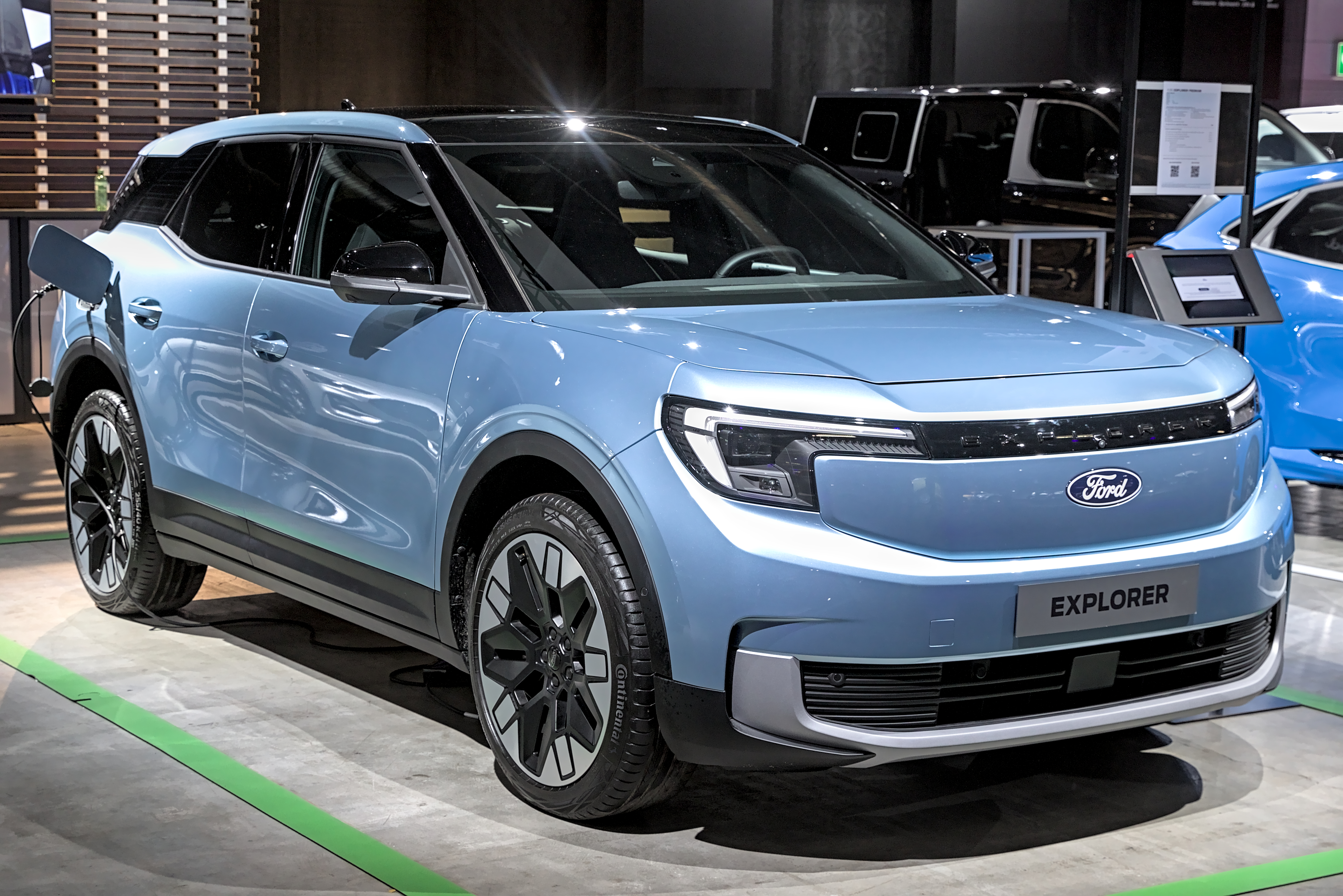
The Ford Explorer is a large family vehicle that can carry many passengers and their stuff. It's great for road trips and has some features that help it drive well on different types of roads, including rough ones.
NASCAR Cup is a popular racing series in the U.S. where specially designed cars race on tracks, usually in circles. It's a big deal in motorsports and has many fans.
Poconos is a racetrack in Pennsylvania where car races happen, including NASCAR events. It has a special shape that makes it different from other tracks.
Peterbilt is a company that makes big trucks. They're known for being well-designed and are commonly used by truck drivers for transporting goods over long distances.
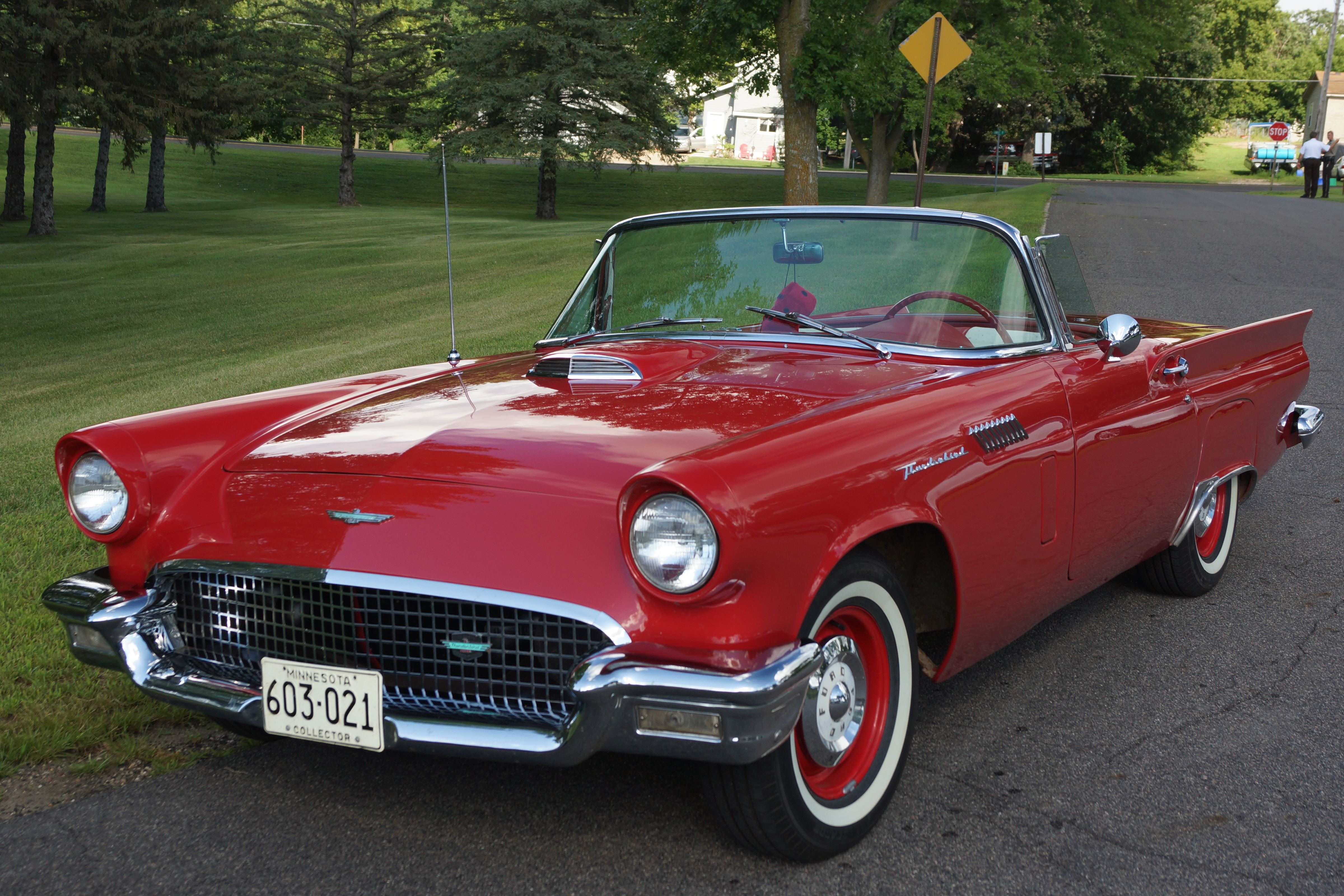
The Ford Thunderbird is a car made by Ford that has a long history and was popular for its elegant look and comfort. It was designed to be a luxury car for personal use.
Sports car racing is a type of car racing that uses fast and powerful cars. These races focus on how well the cars can perform on the track, and they can include different types of races.
Trans-Am is a type of car racing that started in the 1960s. It features cars that are based on regular production models, making it popular with fans of muscle cars and sports cars.
Can-Am was a type of car racing that took place in North America. It allowed car makers to build very fast and powerful race cars without many restrictions, leading to some exciting and unique vehicles.
Stock car racing involves cars that look like regular cars but are specially built for racing. It's most famous in NASCAR, where cars race on circular tracks.
The Ford Granada is an older car that was popular in the 1970s and 1980s. It was known for being comfortable and stylish, and some people still enjoy racing them for fun.
The Chevrolet Caprice is a large car that was popular for families and even used by police. It had a roomy interior and was known for being comfortable to drive.
Bias ply tires are made with layers of material that cross each other, making them strong and durable. They are often used in racing but don't grip the road as well as other types of tires.
Radial tires have layers that go across the tire in a way that helps them grip the road better. They are the most common type of tire used today because they perform well and help save fuel.
The Mazda MX-5 is a small sports car that is very popular for its fun driving experience. It's known for being light and easy to handle, making it a favorite among car enthusiasts and racers.
The Rolex 24 is a famous car race that lasts for 24 hours. Teams of drivers take turns racing their cars around a track in Daytona, Florida, and it's known for being very challenging.
IMSA is a group that organizes car races, especially for sports cars. They have different types of races and are well-known for events that attract many fans.
In an endurance race, cars race for a long time, sometimes many hours. It's not just about going fast; it's also about making sure the car can last and the drivers can handle the long hours.
LIVE
the man who drunk dialed Chip Ganassi.
Tallahassee's greatest local sports scooper.
And Great Lakes boat captain.
Yeah, Matt, you're welcome.
If you could describe this lunch we just did in one word,
what would it be?
Everlasting.
Ooh.
That's the first one.
That is a good one word.
Because all the conversation that we started here
is going to carry on to more dinners.
And it's going to segue, as we like to always say in TV,
segue to another story.
Correct.
To another story.
To another story.
And with that, we'll be right back.
Welcome to Dinner with Racers.
I'm Ryan Eversley.
I'm Sean Heckman.
We're sitting here, year 10 of Dinner with Racers,
the podcast.
It's 10 years.
I can't believe it.
Where?
We made it?
Currently.
Currently out of Johnny Rockets in Hollywood, California.
So yeah, we've made it.
We made it to Hollywood, baby.
Yeah, we're on the cusp of another program
that we're working on where we decide to do our hosting today
and get it out of the way.
And we're just looking through our list of people
we met with this year and a name that probably
doesn't need too much introduction,
but somebody that's very, very powerful in the sport,
none other than Matt Yocum.
Matt Yocum.
So if you're not familiar with the name Matt Yocum,
it probably means you've never watched
Racing on American Television.
Because Matt Yocum is everywhere.
But Matt Yocum has had a long time broadcasting career,
something like 20 plus years covering NASCAR
on the sort of different television channels,
being on radio shows, TV specials, behind the scenes shows
you name it, all leading to his current role.
Which if you're a fan of IMSA and you watch it on NBC,
you have absolutely seen his pit reporting
because he's the guy and Matt has been for a very long time.
Yeah, Matt grew up in the racing world,
thanks to his mom and her association
with Michigan International Speedway.
She worked for a couple of different groups
as well as as her own kind of marketing executive
and raised Matt into the sport,
which is very apparent when we sat down and talked with him.
But honestly, I didn't know anything about his mom
until we interviewed him and I learned a lot.
Exactly, so some of the things you're gonna hear about,
Roger Penske, are you teaching you how to use soap?
Traveling by a shipping vessel?
And how Tony Stewart ruins everything.
Now, none of this would be possible
without a phenomenal, phenomenal sponsor.
And that sponsor, Sean?
Okay, I'll say it, Continental Tire.
Hashtag, dinner with Conti.
Ryan, you notice how I keep saying hashtag dinner with Conti?
I do notice how you keep doing that.
I feel like it matters.
Yeah, no, I think it does because Continental has told us
that they love all you guys purchasing their tires
and they love it if you keep using that hashtag
dinner with Conti, because it lets them know
how supported we are and lets them see
that we are definitely worth sponsoring
for another 10 years.
Exactly, so if you're on Instagram
and you see a Continental set of tires,
you purchased something Continental branded,
you would just see something that reminds you
of our show regardless of tires.
Tag Continental Tire, but also use that hashtag
dinner with Conti, that tells Continental
in a very trackable way that we are absolutely worth
continuing for 30 more years, Ryan.
Now, we were in Charlotte for another project
of Continental Tire and so while we were there,
we figured we'd try to pick up one last podcast
for the year and we called up Matt
and he was like super excited.
We tried to get Matt on for a little while,
just needed to get the scheduling to line up
and he recommended the Brick House Tavern,
which we've been to twice before,
once with Alex Bowman and once with Joseph Newgarden,
which was kind of cool to get to go back there.
And I had a Caesar salad with buffalo shrimp.
And I had a chicken sandwich.
Now, speaking of repetitiveness, we have a Patreon.
You can go to patreon.com right now,
forward slash DWR show, where we are doing
a behind the scenes extra content for our dinner club.
Members get access to our guest list prior to it going out.
We also are doing preview questions
that you can ask the guests before, you know,
anybody knows we're gonna have them.
And then we're doing content
that didn't make the cut in the edit.
We're doing behind the scenes stories.
We're talking about our inside jokes.
And it's just been a lot of fun for us
to kind of sit down a couple of times a month
and just let you guys see what it's like
behind the scenes of Dinner with Pracers.
Speaking of behind the scenes,
you know who got a real taste
of what it's like to be on the road with us?
Shane Van Gisburgen.
Shane Van Gisburgen, thanks for driving us.
I'm Shane Van Gisburgen.
And I'm totally driving this GM product of a minivan.
What a delight, Brian.
What a delight.
Speaking of delights, Matt Yocum.
Me-yo.
Me-yo.
All right, we're gonna start in five, four, three, two.
Throw it on.
Take a seat.
Throw it on.
Let's talk about it.
Yeah, we waste no time.
Yeah.
So you brought a bag.
I brought a bag of show and tell.
Ooh.
Okay.
We like prepared gifts.
Yeah, we like props.
Yeah.
Yeah.
Usually though, I would do that like post-show.
Yeah.
As far as...
We don't do a post-show wrap up.
There's no like...
There's not like the extended web-stream after.
The after-show of Dinner with Racers.
Well, we do have a Patreon.
Yeah.
And you know, if you know of sponsors,
we could do a post-show and it can be like you reviewing us.
We could do the Matt Yocum's Dinner with Racers.
The Matt Yocum's Dinner with Racers post-review
sponsored by whoever is in North Carolina.
I don't know.
I rock.
And the thing about it is,
I was actually gonna be here like 20 minutes early.
Okay.
And I jumped in the toll lane.
I was on a call with David Tibbet.
I was on 77.
On 77?
Yeah.
One of our senior producers and talking about already
the 2026 NBC Rolex 24, 2026 season preview show.
Oh, wow.
Okay.
And then much like a driver going,
oh, I just missed pit lane.
Oh, you missed.
Oh, you missed the exit.
I missed getting over out of the toll lane.
That has been the number one age thing that hits me.
On the phone, missing exits,
something about hitting 40 that changed for me.
I don't know if it's the same for you,
but I can not be on the phone and make an exit now.
And it's one of those things where you're like,
oh, because then I go into where,
I'm usually in the toll lane taking my daughter
to her soccer practice.
So I go to two edges, oh, right, right, right.
So, well, that just meant you were on time, by the way.
Exactly.
So it's still not bad.
And you're still, I would say,
well in the upper half people in terms of timeliness.
Perfect.
So you're fine.
Yeah, you're well on your fine.
Yeah, you're doing just fine here.
Perfect.
Yeah.
Who would we say is the worst we've ever had?
Rusty Walls.
Rusty Walls.
Yeah, that's right.
By a lot.
See, I co-hosted a radio show on Sirius
for like 10 years with Tony Stewart.
And when he was in town,
because he had a place here, Charlotte,
but he also had his place is, you know,
has palatial log cabin estate.
That's right.
That's right.
It was like a Bass Pro Shop.
Which was a Bass Pro Shop.
And I said to him, he shows me the plans
and I'm like, why do you have a big fish tank?
Dude, it's going to be cool.
I said, just kind of throwing it out there.
Don't you also have to clean it?
I found a guy in Indy who said he'd come out to clean it.
No.
And I'm like this.
And then I'm like, why do you have like two kids bedrooms?
You don't even have a girlfriend.
I said, that's a problem.
And then I was like, why don't you just do it
like in sections?
As your life grows, I don't think grow the property.
He goes, Hoss, you don't understand.
When you're building a log mansion.
Which is a phrase.
Yeah.
You have to buy the logs all at one time to match.
So they matched.
I'm like, have you ever heard of like Sherwin Williams?
You know.
Yeah, right, man.
Yeah, yeah.
He was sponsored by Home Depot.
Yeah, he can get anything done.
He can get a deal.
But when he was in town, our show would start at 7.58.
Yeah, okay.
When we start.
Many times I would bring us on the air
and I'd see headlights pull up out in front of my house.
And then I would just hold the headset out.
And he would slide in as I gave us a very extra long.
What we have coming up tonight and talking about
what took place.
And then he'd slide right in, put it on.
He'd been there the whole time.
Yeah, this is exactly what I expected out of that.
Then all of a sudden one time he did the same thing.
Didn't realize my mom was up visiting
with our three Cocker Spaniels we had at the time.
And it was like Guard Dog City.
And also you heard all the barky.
And he's like, oh, shout me, musket, you know.
Right.
So I did not realize you were from Michigan originally
until we started doing the research on you
because I've always known you as a Florida guy.
I know you went to FSU.
We've talked about the nulls before.
So growing up life in Michigan in Morence.
Michigan.
So I was born in Morence, which is a small farming town.
My great grandfather moved there,
I guess like around maybe 1930, 1928.
He traveled the world.
He built electric cable car systems
around the turn of the century.
Everywhere from New Zealand, I've got tons of his stuff.
New Zealand, the Philippines, Europe.
I even have a little travel log where he had,
he was in London and he spent five cents on this
and 20 cents on dinner.
And he was filling it out on his own.
Oh yeah, yeah.
And then he retired from that when
he was 44, met a school teacher from Iowa
because I think that was his last stop.
She was a train came out.
She was 22.
OK.
Different time.
Different time.
But still cool.
But you know, I was going to say, different time,
but still see a lot of the same templates.
I'm not sure that I agree.
Yeah, but and so it's a small little farming town,
but I lived in Brooklyn, Michigan.
Yep, Michigan.
And our home was about two and a half miles from MIS.
My mom started there before the first IndyCar race in 68.
And she was there for about 11 years, I guess,
working at Speedway and ran the control room on race weekends.
Then they were very, very short staffed.
So during the normal race, you know, non race weekends,
they would have probably five people
that worked in the office and the track superintendent.
So when I was young, I would cut grass in the summer.
But see, it's a different like when we were kids,
things were different in that, you know,
I'm six, seven years old.
I'm driving a tractor.
Yeah, yeah, right.
That kind of stuff.
And so I did that during the summer.
I was a runner from the media center and the press box
down to the infield media center
because they didn't, obviously before internet,
there was golf and golf cars probably weren't a thing.
They just got a little yokem.
So they just had me and I would run stack of, you know,
every 20 laps, whatever, I'd run the stuff down there.
And so I would do that on race weekends.
And it just kind of parlayed from there
because during a rain delay, I think it's 78,
which kind of goes back to typical for me,
for rain delays, because that's where I have the most.
You've had a lot of fun.
I've had a lot of fun.
Yeah.
The guy who was the PA announcer, Wayne Blackman.
And so I'm up there.
I got my little, you know, Navy blazer on
because I'm doing stuff.
And he goes, hey, what are you doing?
I go, well, we're in a rain delay.
So, you know, I can't take anything else.
He goes, you want to come on in the PA booth
and we'll have some fun on the PA.
I'm like, all right, great.
And you're how old?
At that point, probably 10.
Yeah.
You're ready.
Yeah, you're ready.
But also with a clearly very young voice.
Yep.
And very young.
And so then, but typical fashion for me now,
it's like deja vu.
I go back to then as we're talking about stuff
and he's asking me, you know, I see Andy
who was driving the international tractor
that had the rolling broom on the front
trying to get the water off.
So I'm throwing in, you know,
because I've always tried to take care
of like the over the wall guys
or the guys that call strategy, you name it.
I always like to interview them or do stories on them
because I feel like they're just as much or more important
keeping the show going.
So mom's working at Michigan.
What did she do before working at the racetrack?
And was that just because of proximity?
Proximity, but also because if that,
she would have been probably around that time 23.
And she worked for, again, everything is kind of like
six degrees of Kevin Bacon.
So she worked for the circuit judge, Judge Spears.
Judge Spears actually owned majority of the land
that Michigan International Speedway sits on.
And if you've been to MIS, the White Penske house
that's out front that, you know,
RP stayed there for years and everything else,
that's where Judge Spears home was.
My grandfather was a way master.
And right there in the corner of 12 and 50
was the way station.
And when my mom was a little girl,
she would go to work with my grandfather sometimes.
And when they had an issue,
they'd have to go to Judge Spears house to settle it,
you know, with the truck or whatever.
So ironically enough, when she ended up getting a job,
she worked in the circuit court office in Adron
and then they were building MIS.
And then through a friend, she got recommended.
And so she got hired and it was a very,
I guess it was probably stressful those first few years
because money was like super tight
and it ended up going out of business.
Penske bought it off the courthouse steps.
And even the first few years of his year, it was very lean.
And I mean, I remember hearing stories about how
like the very first weekend that Roger owned it,
Roger and Les Richter are out doing camper lineup.
Not think about this.
We've tried to keep this place going.
And they're sitting there.
They're out doing camper lineup.
And, you know, RP's going in to make sure you don't have
three people hiding in the bathroom in the back of,
you know, the camper or whatever.
We have no free tickets here.
Yeah.
And it was raining.
And so they're all in the office
and they've got all this wet cash.
And they're all sitting on the floor and they're separating.
And if you can imagine like RP.
Yeah.
Sitting on the carpet.
Les Richter sitting on and they're spreading out
all this wet cash to dry out so that they can, you know,
then take it to the bank and exactly.
But, but, and that was really, you know, part of the fun
because I remember riding my snowmobile to the office
and she would, you know, make sloppy jokes
in the middle of the winter there.
Now this is back when Michigan actually had snow
from November to April.
Bro, you could, I mean, we were always snowmobiling.
So I would ride, you know, again, different times.
You had to be home by dinner.
That's it.
My neighbors all had sleds.
We would always go, you know, snowmobiling and stuff.
But we would ride up there and she'd fix us,
launch sloppy joes, you name it.
And while it worked.
Yeah.
Because it had a kitchen in the back, you know.
So what was your mom's official responsibility
when she was at MIS?
She was like the.
Sounds like she kind of did everything.
So when she started out, she was the secretary.
Okay.
And then.
To who?
Well, she was like the only secretary.
Oh, okay.
The whole office.
Yeah, yeah.
Because like the, the Larry Lopatin era,
like the day she started, this is where she's like,
oh, she goes, it was scary.
The day I got started, my first day,
the guy that hired me got fired.
Oh, wow.
And she's like, man, I hope I, I hope I last the day too.
Welcome to racing.
But it was always very, I think they,
really got overextended.
And then, you know, started moving money, whatever happened.
But, and then RP came in and then, you know,
they started that whole process of building that
into a great track.
But so she started out as an executive secretary.
And then by the time she was done,
she'd run the control room during the race weekend.
The operations, yeah.
And pretty much everybody there had like three jobs,
but you have one title.
Yep, yep.
And.
Still doing that at some tracks, you know?
Yeah, yeah, yeah.
And so like I'd work and mentioned before
on the, on the maintenance crews, I'd cut grass, you know,
I'd polish RP's, K&M motorcycle.
He had a couple of dirt bikes down at the Penske house.
And, and then at the end of the season,
they had the end of the year party.
Couple guys thought it would be fun.
It's slide me some beer.
I had a little league game that night.
First three innings.
I kind of had to really focus on the ball.
Which one was it?
A little two.
Exactly.
And luckily I wasn't catching that night.
I was playing second base,
which is probably why I was playing second base
because I'm looking a couple different balls coming at me.
And man, coach was pissed.
My mom was, my mom was like, I didn't know it, you know?
But, but, you know, all the things like that
that you go through, you look back at just such incredibly
fun and blessed memories because you're like,
you can't make this up.
I did, I mean, I remember when I got,
I didn't go to second qualifying weekend at Indy
because in the eighties,
she was the manager of special events
for Peterson Publishing.
And they had suites all over the country.
Long Beach to Lime Rock, Indy,
they had a suite for the whole month.
Daytona, everything that moved to Daytona,
they had a suite.
And so I gave up going to Indy
for the second qualifying weekend
because I had scored so high on the pretest or whatever,
I could take the abbreviated driver's day.
Oh, nice.
So we watched all the gory films for four hours on Saturday.
Just talking about this.
Took the four hours road test
and I'll never forget the, whoever the driver's ed guy,
he got a deal and the girl was actually in my class
for driver's ed, her dad owned a used car lot.
So they would get used cars.
And it was a light blue Ford Maverick.
Heck yeah.
Was our, you know, and this is not like,
I didn't take this in the seventies,
but it was one of those,
Hey, it's got 70,000 miles and it's nine years old,
but it's still a lot, you know?
And so I drove and like 10, 15 minutes.
He goes, you've been driving a lot, haven't you?
I go, well, we had 10 acres.
Yeah.
Gee, he goes, pull over and get in the back.
Right.
And then my time was over.
That was it.
Yeah. We don't need to waste time.
He doesn't drive.
Yeah.
But that's like you say, it's so different.
But that's why I think that you look at,
you go to an IMSA WeatherTech weekend
and you see kids or you go to, you know, a car show,
you name it and you see kids there.
I was out at 10, 10ths
and there's these, you know, probably five or six,
you know, what look like teenagers, whatever.
And they're walking all over.
They're taking all kinds of video pictures
and I finally stopped them.
I said, Hey, let me ask you, you know,
what are you guys, you know, doing?
You know, you guys are all into it, which is cool.
He goes, Oh yeah.
He goes, my buddies and I, he said, we love the cars.
In fact, he said, we shoot for people.
We've even got a harness.
And you know, so-and-so's mom's got a minivan
and we'll use her minivan and shoot cars going down like,
you know, like what we always see for the bucket.
Yeah, like car to car stuff.
And I'm like, oh my God, this is like,
this is like really interesting.
And we talk more and he goes, yeah, he goes,
we were down at Amelia Island.
I'm like, okay, these are the kind of kids that are real.
And I think you see those type of kids
and then you see the ones where, all right, I'm 18.
Yes, I have to.
I might just.
Yeah, right.
But the kids that are in it, man,
it's like so cool to see.
Oh yeah, for sure.
So cool to see.
Yeah, nowadays, I mean, a basic phone
can take such great photos
that you can go to a cars and coffee
and you'll see kids that are, you know,
yeah, still not enough to drive,
but they're sitting there trying to get the shots
and they're really into it.
And you're like, okay, that person's gonna grow up
to be in this.
You know, at some level.
That's what gets me when I hear people, oh, car culture.
It's dead.
I don't know.
Nobody cares about cars.
I'm like, really?
I said, it's just like, you have to look.
Perfect example.
Like I loved going for iron ore freighter rides.
Every year.
Okay, this is on my list of things
I want to talk to you about.
Because this is listed as a hobby of yours.
Yep.
So buddy of mine, I met through actually weather.
Yeah.
Because it's, I know, it's like I said,
six degrees of Kevin Bacon throwing a little bit
of wackiness, but because of, you know,
doing broadcasting of races, we have a lot of weather.
And so I started to really get into weather, weather apps.
And I, we're on a motorcycle ride
from Watkins Glen, did the cup race,
went up into Canada, came back down through St. Marie.
And we stopped off and it was the late Bill Davis,
his wife, Steve Park and myself.
And we were at this restaurant down on the St. Mary's River
on the Canadian side.
And so we're sitting there and we're talking.
I said, now look, if you look over here,
this is going to be the Sioux locks.
And you can see there's a boat coming out.
And my buddy's like, you know, oh, wow, yeah.
And part of it goes, wow, look at the boat behind it.
I go, no dude, I said, Haas, that is one boat.
I said, that's a traditional Laker where you've got the,
the pilot house on the bow and everything else in the stern.
And the waitress heard me.
She walks over and she had binoculars
and she had a book called Know Your Ships.
She goes, hey, I heard your conversation.
You might like this.
So I'm going through it.
And so I wrote down what the book was.
And then when I got home, I ordered like the last,
you know, six or eight years of it.
And in there was an ad Colorado Storm Chaser.
And Colorado Storm Chaser was my friend, Eric Treese.
And he did storm chasing when he wasn't piloting
Great Lakes freighters.
And so we kind of, it kind of became friends that way.
And asked some questions about whether he didn't believe me
that who I was.
And then I said, Hey, you know,
if you want to come to Michigan, you know,
I got him passes from Michigan, didn't believe,
cause we had never met in person.
Sure. Oh, okay.
Yeah. I've never met in person yet.
And so he shows up and he and his buddy are like,
I really think this is a fraud.
I really think it's a scam.
And then he said, Holy smokes.
It really is, you know, and it took me like maybe three years
of us being friends to where my schedule worked out
that I could actually go for a freighter ride
because you got to give yourself a week to,
to 10 days to what they're not fast.
So tell me about freighter ride.
What is this?
It's the coolest thing.
So we're talking like the big ships that go across
Lake Michigan.
Edmund Fitzgerald.
Okay. Yeah. Yeah.
What is that?
So basically they'll haul iron ore.
Okay. So big old ships.
Big ship. Like the, like the,
the one that I love is like 770, no, 767 feet long
about 75, 80 feet wide.
And it'll haul iron ore.
Now the, the boat that I loved going on the most
was the Edward L. Ryerson, which was not a self unloader.
And so that hurt its production.
So it went back into layup and then I pretty much went
on the, the Wilford Sykes, which was built in 49.
Right. But these are all ship names.
Yep. Okay.
The steamer Wilford Sykes and,
and so we would haul iron ore down to Lorraine, Ohio,
down to from Duluth, down to Chicago,
East Gary or East Chicago.
This is your job.
This is just something you want to do.
This is fun.
And the coolest thing on there, Sean,
is that you go and you can exhale from life.
Yeah. It's like National Geographic Explorer.
I mean, this isn't a cruise ship.
No, no, no.
This is what you're, you're in a, you're in a working.
Yeah.
I mean, we could hit the dock at three AM.
Yes.
And, you know, and they're always on the go.
They don't wait as soon as they're full,
they're back and away.
Yeah.
And I'd gone like nine and a half years
without missing a NASCAR Cup race.
And when our TNT section was, was done in 07,
I did Indy for Direct TV Hop Pass.
The next race was Poconos.
And then I, I had that and several other often.
So I went on another ride.
And so I, I flew because I was going to have a stretch off.
Didn't really have an end date.
So I was like, this is going to be fantastic.
Yeah.
So I'm waiting.
I get to the airport, hour delay, two hour delay.
Oh no.
Three hour delay.
The boat's got to go.
And so we fly, instead of going Charlotte to Minneapolis
to Duluth, we go Charlotte, Detroit, Detroit, Minneapolis.
And they go, all right, as soon as we get to Detroit,
keep your same ticket, your same seat.
We're going to go 64 gates down.
You get on the plane and we're going to go from there.
So everybody on that flight, they just shuttle us.
So when we landed in Minneapolis,
I told my friends to look, man,
I'm probably not going to make it.
What I'll do is I'll fly there.
And if you're not there, I'll rent a car.
I'll drive to Sault Ste. Marie and I'll get on the boat there.
So we landed and he goes, all right, all right,
we're almost loaded.
Where are you?
I said, I'm here at baggage claim.
I'm waiting for my bag.
He goes, all right, you know, hurry.
I'm, you know, as soon as, as soon as we're full,
we're back in the way.
And so I walk out and there's these two guys there.
And they're sitting there smoking.
And one guy goes, you need a cab?
I go, yeah.
And the other guy goes, where are you going?
I said, the BNR number five war doc.
He goes, Ben there, know how to get there, jump in.
And I'd already done that route before.
And I had cash on me, you know, for the cab and everything.
And so he's, all right.
I said, look, man, here's the deal.
Here's $100.
And I put $100 on a seat and go,
whatever is leftover is yours.
So he knows, and I know,
he's going to get about a $75 tip.
And so we, it's like bullet.
We are going through the streets of Duluth.
And I mean, I'm hanging out on the back, you know,
and all of a sudden I go through the windshield
because he comes almost to a dead stop
because this is going to be a police zone through here.
They like, they like to hide in the bushes.
And there's, you know, there's no way.
So you don't got the little icon that pops up
and it's flashing cop.
And so all of a sudden, boom, he guns it.
And we're hauling ass again.
We pull up to the gate.
And this guy comes out.
He's about five foot tall, five foot wide.
Looks like, you know, could be in smoking the bandit.
Polyester security uniform.
He goes, are you Matt?
I said, yes sir.
He goes, captain said you'd be coming up fast.
He wasn't lying.
I mean, there's dust flying.
And so here go ahead and sign and print.
So like sign print, like, all right.
So let me go hauling ass up to the boat.
And we pull up and you know, right up next to the boat,
ladders there, they throw down a rope,
tie up my suitcase, they pull it up.
I go up the ladder, they pull the ladder up.
I take my bag to the pilot house lounge, drop it.
I go up to the pilot house and I hear the, all right,
go ahead and start pulling the rear lines.
All for you.
And then, yeah.
And so I just, my buddy says, I'm just gonna tell you,
another 10 minutes, you would have been waving.
Yeah, right.
And his mom,
And it would have been like 20 yards away.
And his mom was on there.
And when I walked down to the lounge in the morning,
she's like, wow, I didn't know if you'd make it or not.
You know, because when I went to sleep,
I didn't think you're gonna make it.
Right, right.
But it was so cool because you get on there
and the air is so clean up north.
And the first like, it's 27 hours across Lake Superior.
And it is like, if you watch,
one of my favorite new shows is Aerial America.
Oh my God.
Is that the one we talked about?
Mark Heckman loves this.
My dad loves this show.
It's a story.
That show makes me angry.
Oh, is it?
The drone.
Yeah, it's all drones, though.
It's just drone, like, no, no, no.
I'm gonna take a three minute or 30 second detour.
That show makes me furious because I didn't think of it.
Because it's drones with a narrator
and like very simple royalty free music.
Yes.
Like those guys do an entire half hour show
by never leaving the shade.
They shoot the whole thing in 20 minutes.
And they're like, let's get lunch.
We've got an episode.
And it's just like all these random cities across America.
Oh yeah.
From the air.
So yeah, go on.
And so it's sort of like that because, you know,
everything you see is beautiful.
Come down through, you know, Whitefish Bay,
where Ed and the Fitzgerald,
they were just shy of making it.
Come into Whitefish Bay and then you go through the locks
and then down through Rockcut and you work your way all down.
Everything you pass, Mackinac Island.
I mean, you can smell the food and the horses.
As you're going through the straits, going past there,
but everything is just so cool.
Yeah.
But again, this isn't a cruise.
So it's a little, you've got your-
No, it's working.
You've got your working classroom.
Yeah.
You say there's a lounge.
I'm assuming it's not some gourmet kitchen.
It's just, you can get food there.
So here's the deal.
So back when the shipping industry
was really massive on the lakes
and they had just, there were just mega numbers of freighters.
And so like the boat that I last went on
for the last few trips, the Sykes,
it was built in 49.
It's got tile, like in the guest quarters
because the shipping industry would always entertain.
And like I talked to Ed Salford about it.
I said, you know, when your dad, you know, was the man,
did you ever get a chance to go on any of the Ford fleet
for a ride?
He goes, no, he goes, I really regret that.
He goes, you know, my dad would go every so often.
And so they would entertain people.
Even on these freight ships.
Yeah.
Yeah.
Because, A, you gotta know somebody,
take it on there.
And these ships, I mean, it built in 49.
I mean, it was like luxury for a working ship.
And I bet the private yacht industry that we have today
probably wasn't a thing.
Correct.
Yeah, so this would sort of be an exclusive way
to get on a boat.
And so you'd go on there and you'd have the lounge
and they would have, back in that time,
they would have like someone who would make drinks for you.
Yeah, right, right.
Which is all gone now.
All the nice items.
Right, it was a great way to entertain.
And so like the bathrooms are all like
kind of Art Deco tile.
Each, there were four guest quarters.
Each bathroom was a different color tile.
And it's all on the bow.
And so it was just, you go in there and you could relax.
And we would take pictures.
And like with the Ryerson, I mean, it was like
such a cool boat.
And they would have to, you know,
use the clam buckets or whatever to take the ore out.
And then when they would get close,
and I'll send you pictures to show you some time,
when they would get close to being done,
they would then stop and they would lower a bulldozer
and a front end loader.
Right, into it.
Into it.
Yeah, yeah, yeah, yeah.
And they would scoop everything into big piles,
which then the buckets could come down and get.
But the cell phone loaders change all that.
But the cool thing is, you would go on there
and you might get to Duluth if you're going back up
to load 3 a.m.
You know, all of a sudden you're pulling out of there
at 10 a.m.
And then all of a sudden you'll get to a place, you know,
or if you've got weather, you got to drop anchor
and wait out the weather, which we've done.
But it's all, it's not like, all right, well, five o'clock,
you know, we're going to be, and they have dinner three times,
you know, breakfast, lunch, dinner.
And just a working kitchen.
It's a working kitchen, yeah.
Same food the crew's eating.
Yeah, yeah, yeah.
Oh yeah, Saturday night is always steak night.
And that's a tradition that goes back decades and decades.
And if you're in harbor somewhere loading or unloading,
then they'll move it to the next night.
Okay.
It was just so much fun.
It's like when we, we go to the racetrack and we've got jobs
and it's our passion, it's our fun.
But when we go do something completely different,
it's like, oh, this is damn cool.
That's exactly why I want to do it.
You know, she's so fascinating to me.
And that's why, I mean, I did it for like,
I think I did like 14, 14 rides.
That's awesome, man.
Yeah, yeah, dude, that's way cool.
Yeah.
All right, but let's go back to 10-year-old Matt Yolkham.
So your first broadcasting gig is when you're 10 years old.
Ironically on a rain delay, which has become your specialty,
was being a guy in a microphone a thing that even caught your eye
or did you just want to be in the sport?
Not really.
It was just, I like the sport.
Yeah.
And that's where for me, I was always,
and you could, you could roll the dice, whichever it was,
you know, road racing, NASCAR, IndyCar, short track racing,
then stick and ball stuff.
So for me, it was always racing.
Yeah, you're like a baseball guy, right?
Yeah.
And so I would always try to, you know, people go,
hey, I love doing TV and oh, racing looks exciting.
For me, it was racing is it, how can I find a home?
How can I find a place that the things that I like to do,
which are history, you know, finding cool stories on people
that nobody's heard of.
And when, you know, it's like with your podcast,
so many incredible stories have come out
and you've helped educate people and why,
hey, I say all the time, every year we go to an impster race,
it's a record crowd.
And there are so many free agent fans
looking for somebody to pull for.
And if they hear a cool story, that might be the link.
And so that's what I've always tried to do.
I always love telling people something they don't know.
And so that's kind of how my path,
but that was really the start.
And I always, you know, kept that and everything.
And I spent my high school and college summers with Iraq,
but I still, and at one point in racing,
because if you think about it,
in the 80s, there wasn't a Jerry Maguire in racing.
Oh, that's interesting.
I mean, so many people, okay, I've got my attorney,
he did my will, he does my real estate.
He did my contracts, yeah.
And there was nobody who was like an agent kind of person.
And so when I went to Florida State,
it was one of those things where I'm like,
you know what, I think that's what I want to do.
But then I got halfway into college and I'm like,
you know what, I really want to chase the storytelling,
the broadcasting.
And to sort of back up kind of your own background
at this point.
So your mom, you know, worked for Michigan
and then she kind of ran her own motorsport agency.
So she's obviously on the business side of it,
but you didn't grow up,
and as far as I understand it,
like a mechanical racer household.
So like being a mechanic or being a driver
probably wasn't on the cards.
Right.
Because you just didn't have that acumen.
And I ran carts for a little while,
but again, single parent, it's tough.
Yeah.
And you just can't, you just can't make it work.
Because your mom wasn't on the mechanical side,
actually just at the business side before.
She would help pay for it.
But it was just, you know, it was just so much.
But along the way, you meet certain people.
Like I recall walking out of the bathroom
at the original office at MIS,
which was an old farmhouse.
And as I'm walking out of this little bathroom,
Roger Penske's walking in and he goes,
hey, come here, I want to show you something.
I'm like, okay, I mean, I think I'm like seven at this time.
So we go walking back in and he goes,
all right, because we didn't have soft soap
to wash your hands.
Then it was always a bar of, you know,
he goes, hey, now look at the bar.
All right, now if you take the bar,
when you're done washing your hands
and you go underneath the faucet,
you wash all the dirt that you left on the bar of soap,
then you put it back so it's clean for the next guy.
And I was like, never thought about that.
Right.
You know, and he also taught me
how to shake hands properly.
That's cool.
Roger Penske.
Yeah, he's like, he had to be Penske first.
Always look at someone's eyes.
You know, don't, you know, shake your hand, you know.
And it's little things like that that you,
the greatest businessman of all time, potentially.
Yeah, yeah, for sure.
Right, motorsports, no question.
Yeah, that's pretty damn neat.
That's pretty damn neat.
Yeah.
So one thing we haven't heard anything about,
what's going on with your dad?
So my parents divorced when I was really young.
Okay.
And I was always with my mom.
Sure.
And so when, and then she finally got tired
of the Michigan winters.
My grandparents had retired to Florida
and they would only come home to Michigan
like three months out of the summer.
And then by Labor Day weekend, he was back down
because he hated the cold.
And he was, he was, you know, my mom was probably,
I consider the hardest working person I've ever seen.
My grandfather was probably the second.
He was a farmer.
He worked for the state of Michigan as a way master.
And he also started his own company that built,
like up in that region, you had, you know,
hunters, outdoors people.
And so he would build caps for the back of pickup trucks
and also owned a company that did all that kind of service,
all that, all that kind of stuff.
So, but he ended up hating.
So he, and so.
Eventually the cold gets you.
And so we ended up moving down to Orman Beach.
And so.
Big change.
Good change.
That's kind of where, you know, and, you know,
my girlfriend would say, he's from wherever his story
relates best to.
One minute he's from Michigan.
The next minute he's from Orman Beach.
Yeah.
Yeah.
Your best client is the one closest to you.
Yeah.
And, but yeah, so we did that.
And, and so she was always on the business side.
Yeah.
And so I always had so much great opportunity, you know,
just tagging behind her.
Gotcha.
And we don't have to cover anything you don't want to cover.
Yeah.
But dad wasn't, just wasn't in the picture then.
No, no, but it was always, it was always,
she was, she and I were just always a team.
And so, like I remember, did you ever hear
the great American truck race?
If you ever watched Smoking Abandoned 2,
it's the, it's the opening scene.
And so the great American truck race,
it was the first Bobtail truck race
at Atlanta Motor Speedway.
Oh yes, I've seen the video.
Yeah, we've actually talked about this before.
Okay, yeah, yeah.
And 79.
Yeah.
It's basically big rigs without trailers on an oval.
Oh yeah.
Yeah.
It's insane.
It's on YouTube.
You go look it up.
Oh yeah.
It is awesome.
It was like either June 8th or I think June 16th of 79.
And so.
Yeah.
If you didn't get that right,
this podcast will be over.
I know.
All right, go ahead and hit delete.
And so they were, they were,
the people that were in charge of it
was, I think it was Jim or Bill Donahoe.
I think it was Jim from Nashville.
Fairgrounds.
Sunny West, who was one of Elvis' bodyguards.
And another guy.
And they were promoting and they were losing their ass.
And they called my mom two weeks out and said,
look, will you please come down
and help us try to save this?
And so she goes, hey, you're out of school.
Let's go to Atlanta for two weeks.
I said, all right.
So we flew down from Michigan.
And so we were there for two weeks.
By this point, she's like known as the,
like the fixer that can come out.
Yeah, she was basically like a management type agent.
She was kind of like MacGyver in many ways.
And so we go down there.
And it was a, it was a cool deal
because at that point in time you had smoking abandoned.
You had, you know, moving on, you know, Sonny and Will.
You know, and that was when like CB Radio's
and the whole trucker scene was huge.
It's a lifestyle.
And so we get down there and we're there for,
and I'm around all these cool Peterbilt's, you know,
couple auto cars, just cool stuff.
And ironically enough, the truck that won was the ugliest,
you know, they called it the junkyard dog
because that's what it was.
But to be down there during that time
and, you know, I'll never forget we're sitting there
and I went and that's when I first met Hal Needham.
Okay.
He was there obviously filming.
Jerry Reed was doing a concert
for the Trucker Saturday night.
So I go, yeah, and so, so I go into the bus
and I meet Jerry Reed and I always gave Hal Needham,
just because we're on the older side of our fan base.
Jerry, who is this?
So if you go back and look at smoking abandoned,
Jerry Reed, the snowman, he drove the Kenworth now.
But he was like a folklore country singer.
Massive country music singer.
Back when they had the two forms,
country and Western.
Right, exactly.
He was in a lot of TV shows and movies.
I'm proud of you.
Yep, and so he was there gonna do a concert.
And so I, someone took me back to meet him
and super cool guy, super nice.
I mean, I'm just a freaking, you know,
11, 12 year old, whatever.
And he's like super cool to me.
And then Hal comes in, all right kid,
you're gonna have to get moving here
because Jerry's got things to do.
And so I always, I always gave Hal a hard time
because like, you know, 10 years later,
he and my mom actually ended up starting to date
for a couple of years.
Okay, yeah.
And he owned a cup team and everything else.
But it's so, so the next day, you know,
everything's going on.
And the guy that I liked was Junior Reed.
He had this, I think it was like a 72 Peterbilt or something.
It was yellow, beautiful green stripes.
And it said dirty dozen across the hood.
And number 15, a cool looking truck.
And so I'll Google stuff and find out
whatever happened to people, you name it.
Again, useless, but sometimes cool to know info.
This is what's gonna happen the whole way home today.
Exactly.
Like we're gonna be looking up this race.
Can you believe how stupid that story was?
God, can we delete that?
I mean, that was, that'll put people asleep.
And so I'll never forget, we're sitting there in this room
and they've brought in all this cash, piles of cash
from all the ticket sales.
And my mom is sitting there counting it.
And her hands are black from all the money
that she's already counted.
And so he's, and she's counting it and putting it in piles
because everybody had their own pile.
And Sonny West, who I had a great time talking,
because he was Elvis' bodyguard.
Right, yeah, he's got sorts of things.
He was Memphis mafia.
He and his cousin, Red, who was on Pappy Boyington
and the Bob-Bob Black Sheep show and everything.
Again, people are going, I don't know what the heck
the hell that show is.
People are Google, right?
Yeah, yeah.
You're under 40, good luck.
And so Sonny, incredible storyteller,
just such a fun guy.
And so I spent two weeks with him
hearing all these cool stories.
So I was very blessed.
I've always been very blessed being around,
being a nobody, being around so many cool people.
And so Sonny is sitting there and he's just, you know,
twirling his revolver on the table.
Because he's bored.
He's just waiting for the money to come.
And so he's just twirling this revolver.
And I'm just sitting there going,
what if he twirls it and it goes off?
Right, yeah.
What are the chances it's gonna hit me or my mom?
And so she finally gets all the money counted.
You know, Donahoe got his, Sonny West got his,
the other guy got his.
You know, she got her little stack.
And it was like, if you're watching one of those shows
where it's like the getaway or something.
And so we get on, and it was a rustic fourth Thunderbird
that she had gotten to drive as a courtesy car
from a local dealership.
And she said, all right, get your stuff.
We're hauling ass to the airport.
Oh, we gotta go.
So we got a Delta flight to catch.
And so we're hauling ass to the airport.
And so we pull up in front of the Delta section
at the Atlanta airport.
And we've got this courtesy car.
And we were talking when she was sick with cancer,
we'd started talking about all kinds of stories.
And this is one of them that came up.
And so we go in and left it running.
Just went in, went right through inspection,
went right to the gate, got on the plane.
And she was like, I wonder how long that car sat there.
Before somebody found it or before somebody goes,
why is there a car sitting here running?
Right.
There are no people.
And then how it ever ended up getting back
to the dealership.
Also, now you can't go back to that dealership ever again.
Exactly.
She's like, I was willing to burn that bridge.
Yeah, that's fine.
Thank you.
But yeah, if you go back to that first segment of my life,
and that's where I tell people that my first recollection
of racing was sports car racing.
Because even though they would think, oh, it's IndyCar,
or it's NASCAR, because they had sports car racing
at the beginning of the MIS era.
They had CanAm, they had TransAm.
And then someone was killed in the infield
when one of the Mustangs went off and had an accident
and it killed a fan.
And then they stopped doing the sports car racing.
Old racing is where the safety is.
Yeah.
And so, but I always remember, I was telling Zach Brownness
that my first recollection was papaya orange,
because that's what I saw CanAm races there.
Because I was two years old, two and a half years old,
or whatever.
And I was like, why are they going the wrong way?
Because of how sports car racing would go clockwise there,
the open wheel and stock car racing
would go counterclockwise.
Right, yeah.
But that's always my first recollection.
I remember when Mr. Penske bought the Speedway.
And I was maybe five.
Michigan.
Michigan, yeah.
And I would draw him pictures of race cars or whatever.
He would take it back with him, because his office was
in New York City at the time.
And, but yeah, he was just such a cool guy when he
said to my mom one time, what we called the Penske House.
It was Judge Spears House, and it had been run down, vacant.
And he said to my mom, hey, this winner,
can we remodel that?
Can we do something so that I can stay there and not
have to stay in Jackson?
And so one winner, she did it, took it down to the studs,
completely remodeled it.
And of course, they had no budget, but remodeled it.
And he came in for the first race weekend.
Hadn't seen it yet.
And he calls her on Friday and goes, hey,
I need to have you come down to the house.
I got to talk to you.
And she's like, Roger, I've got this fire to put out.
I've got that.
I can't do it right.
He goes, you got to come down.
You got to come down to the farmhouse.
You got to come down the farmhouse.
And she's like, I can't.
She goes, it's vital.
You've got to come down to the farmhouse.
So she goes down there.
And when he came in the night before,
and I found a lot of cool things after my mom
died going through her files.
And she gets down there.
And he says, look, we came in yesterday
and were completely blown away.
I called my pilot, told him, fly back to New York City.
As soon as it was either Tiffany's or Gucci,
as soon as they open, buy a nice watch,
bought a nice watch, flew back to Jackson,
brought it down to the farmhouse.
So when she got down there, he gave her the watch as a thank
you.
And I remember going through her stuff,
there was one letter from Kathy Penske.
And it was a thank you note.
Thank you for all that you've done
because they had two little kids, Mark and Jay.
And I rode motorcycles with Greg a couple of times
because they had a couple of dirt bikes there.
But anyway, so there was a thank you note from Kathy.
And typical of my mom fashion, she's like,
and I thank you for the playpen and the Winnie the Pooh stuffed
animals, that kind of stuff.
And when you go through and you find things like that
that are 50 years old and just very sentimental.
And things for your mom that if she's working,
these are probably just part of the job and not worth
celebrating for herself.
Yeah, yeah, I get that.
Also, at this point, he's not as Penske as he is now.
Right, he's the guy she works for.
Yeah, yeah.
I found another sheet, another email, well, I call it email.
Then it was just a typed letter from Roger to Les Richter.
And he says, you know, you guys all did a great job
on the house.
I just don't feel it's right, though,
that you guys want to call it the Penske house.
He said, I feel like you should call it the Yocum house
because she did such a beautiful job on it.
And I found that going through her files.
Just neat stuff.
All right, so through your mom, you see how it can be done
in the sport, even as not a mechanic, not as an engineer,
not as a driver.
So you see how your mom is just sort of this, I don't know,
Jack of all trades is the right term,
but in many ways she was, especially on the operational side.
So when you go to FSU, you decide this is sort of the path
you want to be on.
But it wasn't necessarily broadcasting.
You just know you want to be involved in the sport.
Right.
Taking care of business, however that looks.
Yep, and so I spent my high school and college summers
with IROC because it was a way to be around racing.
And Jay and Barb's ignoring.
Like my mom had it in her paperwork
that if something ever happened to her,
that's where I was supposed to go, if she would tell me.
If something happens to me.
The people that took over IROC.
Yep, first thing you do is call Jay and Barb.
And so we're in California and we're
going to move back to Florida because she
had to go to California for a year for Peterson.
And she was like, look, I can work for you from Orman Beach
or I can work for somebody else from Orman Beach.
But I'm going back to Florida because she just
didn't like California.
And I posted something one time about Granada Hills
and Larry Dixon was like the drag race.
I didn't know you did time in the valley.
I'm like, oh yeah.
Yeah, I'm like, yeah.
No ankle bracelet or anything.
But yeah, we did time in the valley.
I'm glad to leave what I wanted.
But it was just the time change, beautiful out there,
but just the time, everything, because our whole world
was on the East Coast and it just made it tough.
But so we moved back and everything.
And so that summer Barb goes, well, Mary,
if you're going to be traveling anyway,
why don't you just have him come with us for the summer?
So flew to Jersey and spent the summer in Jersey.
I rented.
They were going to get me one of those executive suite
hotels.
And I had the company station wagon.
You were like 17, 18?
I just turned 16.
Oh god.
And so I had the company station wagon,
which was a Caprice with the fake wood on the side.
And so during lunch, she told me where she'd gotten the room
for me.
And so during lunch, I drove over there to check it out.
And I was like, I see hookers.
I see this is not good.
I'm like, oh, man, what am I going to say when I go back?
And so I go back to you.
Hey, come here.
I need to talk to you.
She said, I checked out that place.
That is not a place for you.
Right.
I talked to Michael Landis and he will rent you his couch.
And I'm like, sweet.
Couch turned out to be a love seat.
So it was definitely not comfortable.
But we were testing in Talladega and Michigan
and different things.
So I wasn't going to be there a whole lot.
But still, I was 16.
And a lot of a lot of learning took place during that time
about not that I wasn't worldly, but a lot about because
Jersey at that time, the licenses didn't have pictures on them.
Oh, right.
And because I had the same hair color as Landis,
he let me use his license.
Right.
So when we would go on the road, I'm 16.
I'm going with the guys out to the bar.
Yeah, yeah, yeah, yeah, I mean, this is part of the team.
This is stuff you want to, you know, if you could email
then you want to text her, you're not going to believe where I am.
Yeah, right, right, right.
And then one time they were like Bobby Thomas.
He was an Iraq legend.
He was the painter. OK.
And all those guys were from Wall Stadium.
They were all from Modified's and they were fantastic, fantastic.
Hardcore racers, hardcore racers.
And so Bobby goes, hey, and he's twirling his mustache.
She's like, hey, what are you doing this weekend?
I said, I don't know.
And he goes, we're all going to go out to dinner.
Friday night, you want to go?
I said, sure.
So we go out to dinner and he goes, all right,
we're going to go get some drinks after.
And keep in mind, it's like I'm wanting to call my buddies.
You're not going to believe this.
You know, I'm going out to bars with the guys.
So we, you know, and we go to this one bar
and this is probably one of the parts that gets edited out.
If I ever write a book, this will definitely be one of the stories in it.
And so we go to this bar and there's professional dancers
also at this establishment. OK, yeah, yeah, yeah.
Yeah. And so I'm going, my buddies will not believe this.
No, no, yeah. So we're sitting there and but they,
but they would go there often.
So they knew everybody.
It's kind of like you've got somebody dancing and then like, yeah,
I got the new refrigerator and I'm remodeling my house.
Yeah, you're saying a bunch of racers in the 80s
knew about the establishments nearby. Yeah.
That's weird. Yeah, I know it's a shocker.
Definitely didn't carry on in the 90s or 2000s.
Exactly. Exactly.
And so I'm sitting there with my fake ID with no picture on it.
And so we're here and this, this girl's, you know, she's dancing.
Well, then she sits down, she starts talking to me.
She's, oh, you know, so what do you do?
I'm like, oh, I'm a student.
She goes, really? I go, yeah.
She goes, really? Where do you go?
I go, I'm a sophomore at Florida State.
She goes, oh, cool. You know, I'm actually just completed
being a sophomore in high school and and oh, yeah, yeah, yeah.
But it's like, there was so many fun times like that.
Yeah.
That, you know, the Iraq years, because we had four races,
we would be at a track for three weeks
because we would go there three weeks out
because when the regular high building series would arrive,
IndyCar or NASCAR, we had to be done by Thursday.
And so we would go through every, so we would be there.
I mean, I remember one night when and they both work in NASCAR,
Satchin' Berkey.
So we're at the Quality Inn in Talladega.
The first time they've ever had racers, they just open.
They know nothing about racing.
They loved us when we checked in.
They didn't love us when we checked in.
Sure, sure.
And so they went to this bar and they're backing up
and they backed the white cube van,
which I would later wreck.
We backed up the white cube van into a Cadillac
and my roommate, Landis, is the one who checked in
with the white van.
So anyway, he backs it into a Cadillac and panics, guns it.
And he goes, Satch goes, Berkey, Berkey, did we hit it?
He goes, hit it?
He goes, you ripped a damn bumper off of it.
And the guys that owned the Cadillac
were sitting on the patio drinking,
saw the whole thing.
That's the whole thing, right?
Oh no.
Oh yeah, so they followed them back to the hotel.
Okay, they sound like a businessman.
Called the police.
Okay, oh, okay.
So, you know, again, a sheriff like you'd see
in Smoking Abandoned and his buddies show up
and they knock on Landis's door and they go,
you Michael Landis?
And he goes, yes sir.
He goes, you got a white van?
He goes, I checked in with one, but I don't have it anymore.
That's room 202.
So they go down.
What?
Oh yeah.
And so then they go and they knock,
we had to wake up, Les Richter had to wake up Jason Norrie.
This is all like three in the morning.
All the bosses.
They're gonna arrest Satch and they wrote some tickets,
but somewhere in between there, within 48 hours,
the sheriff came out to the racetrack.
Yeah, yeah.
Oh, got some crew passes.
Ray was a test driver also, besides being, you know,
the crew chief of the whole Iraq crew.
Ray ever had.
Ray ever had.
And Ray was also a test driver.
So we put Sheriff Buford in the car on a blanket.
Yep.
How'd you do?
How'd you do?
And so Ray takes him for a role.
He goes down pit lane.
He's going through, but going through the gears.
And he goes, you do this often.
He goes, no, this is my first day.
Goes to the gears again.
And he goes out.
He took him for like three laps.
And he comes in and he gets out.
We're all staying there.
And he looks to me and the guy goes,
you know what kind of beer Ray drinks?
He goes, oh my God, that was awesome.
And I'm like, no, sir, I have no idea.
And so he talked a little bit more.
And everything quietly faded away.
Weird.
But it's weird how that happens.
And so my roommate, Michael Landis, he's like, look,
he goes, when our race is done,
Berge and I are going to drive the Cube van back to Jersey.
We're going to leave at 3 AM Sunday.
So we'll get home.
Everybody else is going to travel Monday and work Tuesday.
So we'll get home.
We can have like half a Sunday and Monday off to go to the beach.
And because this place was in Long Branch,
a block from the beach.
Like, look, man, I'm here.
I want to see the race.
No, no, you need to come.
Like, no, I'm staying for the race.
Yeah, yeah.
And so.
I want to work.
So we loaded up the trailer with all kinds of body parts,
way too much weight.
And I grabbed a can if there's ever anything.
And for people at home, you talk about glitter.
If you have kids or you've got nieces or nephews
and they play with glitter, you can never.
It's like if a car's on fire,
you can never get that stuff out.
And so I grabbed a can of anisees.
So I've got.
I don't know what that is.
Never sees.
It's the silver.
Yeah, so I've got this whole can of never sees.
And so we get back.
They've already gone back.
They've gone to sleep at six o'clock.
We go out to dinner and we come back.
I've got this can of never see.
So I go over and I do the door handles.
All right.
And then I'm like for giggles.
It's like liquid metal, basically.
Yeah, I mean, it's just, it's the silvery grease
that you could never, never get out.
And so I did the door handles.
Well, then on the way out, I said, well, you know what?
I'll do it.
Go ahead and do the padlocks.
Yeah, for fun also.
So they left at 3 a.m.
They got down on the Toledo turnpike down in Ohio.
All of a sudden, one of the axles breaks.
Oh, no.
No, they get up the side of the road.
Well, then they had to unhook the trailer,
drive the van, get a U-Haul, drive back with the U-Haul,
unload everything out of the trailer.
Then, you know, basically drag the trailer off
to go to a place to get,
I think they put just like a pipe through just to,
And so they didn't get back until Tuesday afternoon.
So no time off.
No time off.
It's worse than anything.
Yeah, right.
The first thing they did at 3 a.m., Michael grabbed,
he goes, Berge, don't grab the, too late.
And then when they went to unload the trailer,
Yeah, yeah, the padlock.
Oh, yeah, yeah.
Oh, yeah.
Highly pissed.
So when you look back to the Iraq deal,
one of the reasons why I have such an appreciation
for the men and women that work in the pits,
and all they do on pit lane, whether they go over the wall,
they're on the other side of the wall,
is because for the first three years of Iraq,
I did tires and it was the bias ply
where we had to make sets to where then it was the radios.
And then it's pretty much,
you check just to make sure something wasn't really out,
but pretty much the set I picked up from Goodyear
is a set that would go on a car.
And I came across one of my old tire sheets
and I think I was up to 109 sets for whatever track we were at.
And in the one summer, the first one,
I had a trailer that could put two sets on.
Well, at Talladega, it's 100 degrees every day.
And me trying to haul as many as I could in one trip,
I'd pull three sets by myself
and I dropped two pants sizes that summer.
Yeah, just hustling everything.
But it always gave me a great appreciation forever
of what the crew guys do.
And maybe that's the reason why I,
not a lot of people like in my business
do stories on those heroes,
but I've always done it.
And it was like when they were re-airing,
when NBC got NASCAR back,
they were re-airing the 01 Pepsi 400.
And everybody was tweeting as the race would go on.
And my teammate then and now, Dave Burns,
he's like, there's Matt Yolkham,
mentioning a crew guy's name went over the wall.
But it's things like that.
And then I went into being in charge
of one of the practice cars and everything.
And also by the time you got on the journalism side,
you weren't in awe of it anymore.
And I think that's a very common thing
when you come from the journalism side.
I mean, obviously my kind of re-entrant into the sport
a few decades ago was on the media side.
And like, it's easy to be like,
oh, there's that driver I've looked up to and so on.
So if you're cutting grass at Michigan at eight years old,
that's gone, you know what I mean?
So I assume there's a lot of, okay,
you've already passed that,
but now you're seeing things for what they are.
But if you go back to that time in racing,
and into the eighties,
and when it really started going big into the nineties,
you look at like, they go all the glory days
of sports car racing in the eighties.
And I'm like, well, that's the romantic period to me
of sports car racing.
But when you look at the Woodstock gridwalk
that we had at at Rotet Atlanta,
but I go back like I did a piece on a pit box at Daytona.
And I had taken the picture myself
because the Flisses who run the Mazda MX-5 Cup program,
we went to high school together.
Yeah, that's one of my notes about it.
And so we would camp out and turn four.
We'd rope off an area.
But anyway, so I'm in the pits
and I took a picture of the Alhobar Porsche pit.
And back then, compared to now with the condominiums,
they would go to your local home improvement store
and buy lumber and plastic and build your little deal.
Yeah.
And so I had that picture
and I sent it to Todd Holbert.
And I said, I got a question for you.
I said, I think this was 86
because Sullivan's in the picture.
He goes, yep, that's the year, that's our pit box,
that's this, that's all right.
Just want to make sure because I want to use it on air.
And I used it when I did a piece on Shanks pit box.
Yeah, right.
Of then versus now.
And so I've always had an appreciation
for that side of the sport.
But when you go back to just in the seventies,
Richard Petty would come by on Friday night
and pick me up to take me
to the Richard Petty fan club meeting down in Adrian.
And that's how I first learned
how you can drive without using your hands
because I had my two buddies with me on one of the trips.
He goes, all right, and never forgets, it was a blue Plymouth.
And two doors, I'm in the back, you know, again,
no seat belts who cared.
So I'm sitting here like, you know, my hands up on the seats
because it was a whole bench seat.
My buddies are up front.
We got the music playing and he's, ah,
have you ever seen anybody drive without using their hands?
Or we're all, I mean, we're like five or six.
We're going, no, no, so he's driving with his knees
as we're going down Onsted Highway
toward Adrian for the fan club meeting.
And just little moments like that.
And to me, love the King.
My all time favorite driver is for our stock car racing goes.
And it's much like my daughter
where my mom dropped her off at the Speedway out here
when she got out of school for the last day of school.
And my mom goes, oh, you know, what are you going to do
when you get to the track?
She goes, well, I'm going to go by and see Uncle Tony smoke
because he will be expecting me.
I will go by and see Miss Danica
to get an update on her dogs.
And then I'm going to go to MRO and we'll paint stuff
and all that until that's done working.
This is not everyday life.
Yeah, right.
And I was talking to Tony about it,
that particular Tony Stewart, that particular trip.
And smoke goes, you know, she doesn't get it.
I'm just Uncle Tony.
And someday she'll go, oh, holy smokes.
That was cool.
But then it was just like, you know, Uncle Tony.
And so for me, that was like going back in the 70s.
The King was my guy.
But he was driving you around in his knees.
Oh, yeah, yeah.
And that's why like when you go to Daytona in 85,
and he's like, what are you doing?
I'm like, just sitting here on pit wall.
He goes, you want to go for a ride?
I'm like, all right.
No helmet.
Put a blanket down.
Yep.
Pack and blanket.
Prop my leg up with the roll bars.
Put my arm around the other one.
And we went 187 because I've got it somewhere
like the little champion spark plug, you know,
times when it equated to speed.
And he circled it and he signed an RP on there.
That's crazy.
But you know, again, it goes back to the Brian Tilting.
I really don't believe any of this stuff really happened.
But you know, it sounds good, but it did.
The foundations of the career that I think most of us know
is when you got started on the NASCAR side.
So was that coming from there?
How's this transition over?
So it kind of goes back to everything
that I've done in my career.
I've had to do it the hard way.
So I go to college.
I was political science communications
because I was going to go to law school.
Literally my degree.
I was going to go to law school.
Be it be an agent, this and that.
But I loved history.
I love telling the stories, everything else.
So I pivoted back.
And so when I got out of college,
I worked one last Speed Week for IROC.
Bumped into, during Speed Week,
I bumped into Jim Foster.
He was the track president.
Also the guy who helped start MRN back in the 70s.
And he goes, hey, what are you doing now?
I go, well, because your mom said you graduated.
Yep, I graduated.
I'm sending out resume tapes.
And to every little station,
triple digit markets all across America.
From where are these tapes coming from?
You're doing local news and stuff.
Well, yeah, that's what I'm asking.
So when I graduated,
I also interned the last year and a half
at the ABC affiliate in Tallahassee.
So that was WTXL TV 27.
And so when I graduated,
I had Pee Wee football.
Right, right, bad.
I had a story on this.
It's all right.
So you've got your reel.
But I had my reel, yeah.
And so when I bumped into Jim Foster,
who was president of the Speedway at Daytona,
he's like, oh, so what are you doing?
And I go, well, I'm firing off my resume tapes,
you know, to Mississippi and you name it.
He goes, well, he goes, go.
We're actually starting to wrap.
While you're doing, that was like other broadcasts,
like in the lower level and the local affiliates,
are you still thinking like, I gotta get to racing?
Or is it like, or maybe I could be a local news guy
for a family?
Everything in my life, always.
It was gonna go that way.
Okay, yeah.
And like, I knew where I wanted to go.
I knew what I wanted to do.
I just had to try to navigate the path.
Because there is no defining path.
You go up and down the grid at an instant race,
everybody's journey to that point.
No one's, and I tell kids all the time,
like, hey, can you tell me how I can, you know,
get into broadcasting and do auto racing?
I'm like, I'm gonna tell you, you can ask 10 people.
And everyone's story will be completely different.
It's all about timing.
It's all about relationships.
And so when Jim Foster said, hey, you know,
I got a buddy, he's the general manager
over at Western Orlando.
Why don't I connect you guys,
and maybe he can give you some advice.
I'm like, perfect.
And so up to that point,
all I've done is my own little packages,
interning at the ABC affiliate in Tallahassee
while I'm in school.
But we call it a very minor market.
Yes, yeah, it was, you know, 1012, 109,
something like that.
And so I go in and I meet the guy
and his name was Jeff.
And so he looks at my stuff, didn't throw up.
And he goes, hey, he goes, you know,
I see some promise there.
Why don't I take you down and introduce you to the sports guys?
I'm like, okay.
So we go down and Mark Middleton,
who was the sports director, was down there.
And so he looked at my tape.
He goes, well, see, and he was also Florida State alum.
John Knowles.
And he looked at, he looked at my stuff and he goes,
I can see a lot of problems there.
And I'll tell you what, we can help you and you can help us.
You can roll on feeds, you can edit,
you can go grab post game sound.
And in turn, when you do stories for your resume tape,
you're real, it's not going to be Pee Wee football.
It's going to be Shaquille O'Neal.
It's going to be racing at Daytona, you know,
Citrus Bowl, spring training MLB stuff.
And I'm like, all right.
So you're not going to be a reporter,
but we're going to give you the access.
I'm doing all the grunt work, all the, all the, you know,
right, whatever I can do.
You're going to do the bullshit work,
but we are going to be okay with you building samples
on the side for yourself.
But you got to do that on your own.
Exactly.
Exactly.
You just spent summers doing Iraq.
So you're used to doing the grunt work that you got to do.
And so he's like, all right, so you can do this.
You help.
Perfect.
So I started out and it was 52 miles one way.
So 104 miles round trip to my mom's house.
I was doing it for free,
but I knew that you had to do those type of things
where my sacrifice was every day.
And I went from my mom's house to the station every day
for three and a half months, didn't take a day off every day.
And I was there long enough to where all of a sudden
they're going to add an extra 20 minutes
to their Sunday night sports extra show.
Oh, okay.
And I said, look, here's the deal.
We can hire you on the full-time, part-time basis.
So you can work as many hours as you want.
Just can't have benefits, insurance, whatever.
But I'm like, dude, I'm getting paid.
Now I can get an apartment and not have to drive
all that way.
So I was there for like two and a half years doing that.
It's a good market, but it's also so NASCAR centric.
It's perfect for you.
And so the station where I worked,
Buddy Pittman was the weekend guy.
And Buddy was, Bill France Jr.
once said they had had a press conference at the Speedway
on the same day as the NBA All-Star game.
And the NASCAR executives were like,
well, I don't think anybody's going to show.
And Bill France Jr. said, I'll bet you lunch,
Buddy Pittman will show.
And sure enough, here comes Buddy,
because Buddy was the racing guy.
We would go out and shoot our own race highlights
for the Rolex for the NASCAR races all during Speedway.
And so Buddy, Mark was great.
He taught me different things about being creative.
Like one day we didn't have anything to do
for the five o'clock newscast.
And so we're driving around
and we saw these four old black gentlemen in a park
at a card table playing cards.
And so Mark goes, I got an idea.
So he went up and he asked the guy,
look, if we do this, are you good?
Yep. So we backed the truck up and basically we pull up,
Mark jumps out, camera guy goes in and he goes,
all right, we have gone all over Orlando.
And we finally have found
the great sports prognosticator Archie Lee.
Archie, who is going to win the NCAA championship?
He goes, Duke is going to be there
and it's going to be this guy,
but Duke is going to win it.
Duke is going to win it all, baby.
And so, and he asked him a bunch of questions in between,
went back and made a two minute package out of that.
And people loved it.
He's got to make it work.
But that's the creativity on that side.
And so I learned so much.
I learned so much from Buddy.
I took the weekend off to go to the Bristol night race.
I'd never been.
So I went up there, spent the weekend with my mom
and I went to the NBC affiliate and they go,
hey, can I shoot a live to tape and you guys feed it back?
They're like, yeah, no problem.
So I did the big E did Dale Earnhardt
because my friend John Rhodes was his PR guy.
I knew Dale from Iraq,
but John started out in the credential office at Daytona.
And then he got the gig with Earnhardt.
And so goes back to Daytona relationships.
So I did the live to tape, fed it back.
Six months later, they called me and they said,
hey, we've got a weekend sports anchor reporter job open.
Are you interested?
And I said, how many races would I get to go to?
And they said, well, we're the only satellite truck
station in the market.
So we go to 10, including speed weeks.
I'm like, all right, I'm in.
So I went from no health insurance,
but I can pay for an apartment to,
I'm gonna make 14,200 a year.
Okay, yeah.
And I went up there, I got an apartment,
I negotiated new carpeting.
So we go up there, I've got my U-Haul truck,
my dog, my mom's driving my Honda,
back to U-Haul up, I give her the keys.
She goes in to unlock it.
The door goes up, she comes out, which is waving on.
Nope, nope, put it back down.
Put it back down.
I'm like, why don't you put the door back down?
Like, why?
There's gotta be a better place.
And I said, this is the nicest apartment complex in Bristol.
I even negotiated brand new carpeting.
Yeah, you don't understand.
And it was, you know, it was a big, it was a big deal.
She's all right.
So I was there exactly one year to the day.
Because I was in Daytona in Ken Squire,
who my mom had known for years.
He goes, hey, saw your mom.
She says, you're doing TV up in Bristol.
I go, yep.
He goes, you need to call Patty Wheeler
because we're starting a new all motor sports TV show
called Race Day.
And I want you on it.
I want you to be a part of it.
I said, okay.
And so Jim Roller was the producer.
And so I updated my resume tape.
I had cover letter to Ken.
And all of a sudden Roller calls me and he goes,
hey, I talked to Ken Lee.
He says, I need to give you a call.
I said, well, I've got my resume tape
and my whole paperwork and everything
I was going to send to him.
He goes, no, no, no, no, just send it to me.
Like, all right.
So FedEx it down to him.
And he calls me the next day and he's like,
hey, you weren't kidding.
You were actually sending it to Ken.
I'm like, yeah, the cover letter was to Ken.
And so I went down and did the interview.
He goes like, I can't guarantee you any on air work,
but I can guarantee you after a year
of helping me get this show off the ground
because it was so run lean.
There were four people.
And so we could never take any time off
because it always screwed somebody else.
But so I did that in the very first show.
I had a package in it.
Had a package in every single show.
What it was highlights, calling races, whatever.
And I had built so many comp days.
And I was doing the Dara Walsh racing weekly show as well.
And I had so many comp days.
And then if I didn't use them, I'd lose them
because we didn't get overtime.
So then I said, you know what?
There's going to be five races in two days at New Hampshire.
Two modified, two Bush North and a truck race.
I'll go be Glen Gerrits, pit spotter.
I've got my own scanner.
I did all kinds of stats
because Glenn never did any stats.
He always shot from the hip.
And I did all these stats on every single series.
And I was going to go have fun.
It was my vacation.
Right. At a racetrack.
And so a hurricane went through the Southeast.
The truck series race at Richmond barely got done.
It ended under a yellow because of rain.
The Bush race was postponed till Sunday.
Jeff Fuller, who was going to be the second pit road guy,
all of a sudden had to stay till Sunday.
Glenn called David Hall, who was the president of TNN,
and called Patty Wheeler and said, here's the deal.
Matt's here.
He's a talent on your air.
Fuller's not coming.
Give him a shot.
I don't want to do five races by myself.
Yeah.
And they're like, all right, if he doesn't suck on Saturday,
we'll let him do Sunday.
So Glenn calls him, Matt, you're in.
Just don't suck on Saturday.
I don't want to do three races by myself on Sunday.
I need you, man.
And so I didn't suck enough.
And they let me do Sunday.
And then they're like, all right, you know what?
We're going to have you do the truck race at Bakersfield with Glenn.
OK.
I'm like, sweet.
So same thing.
I mean, I visited shops because I always
like to visit shops if I can if they're in town.
That's what I love about.
I mean, really, Charlotte has become like a sports car hub.
Yeah, for sure.
Where it was like Atlanta for years now.
It's all the shops that are here.
You know, WRT is coming.
You name it.
So I had done that.
I got all kinds of my stuff was all ready.
And I've got the shower going for the hot water,
which always takes forever to pop up.
My phone rings.
It was my boss at T&N.
She is look, our announcer that we were going to have in Nashville
for the All-American 400.
Can't find him anywhere.
He's haven't been seen since the Mark Holly race.
Celebrity race.
You've got to be on a plane in 75 minutes.
And if you're not, you got to drive to Nashville.
Yeah.
I'm like, oh, holy shit.
So I up in my suitcase.
I throw cold weather stuff in barely make the flight.
I get there.
I knew nobody in the late model race the day before.
And I didn't know anybody in the All-American 400.
And again, they saw.
What is the All-American 400?
It's like a super late model.
It's like ASA type race.
And so I didn't suck enough there.
Sure.
And they said, all right, you know what?
We're going to put you.
We're going to add a person on Pit Road
for all of our coverage next year.
So we're either going to have two or three.
Because at that point in time, they
won to a truck race, whatever.
So they moved me up to do all their different NASCAR series.
I did a USAC race one time at Phoenix.
But anyway, and so that was because of a hurricane,
I got that shot.
Yeah, right.
And because you took the initiative, you got to do it.
You made yourself available.
The thing I keep hearing is if you look at your resume
on a Wikipedia, it's OK.
Your mom obviously was very connected.
You could say, OK, this came, and this came, and this came.
But it all comes from, like, yeah, you work at IROC.
But you're eating shit.
Like, you're just slinging tires around,
you're driving cargo.
So you're doing whatever you can do.
Then you're working minor.
For like a couple of years, you're working minor now in Tallahassee.
And then you're, again, OK, now you're
working in Orlando at a news station.
But you're not working NASCAR.
You're working the tape room for whatever sport
that is on at the time.
And you're making yourself available and saying, OK,
there might be a small opportunity here,
and you're still eating shit everywhere that you're doing this.
So to me, that's the thing I keep hearing,
is that at no point it's just like, oh, well, here's
a new opportunity.
This is perfect, and it kind of goes from there.
Yep, it's all grinding it out.
You got to show grit.
I tell kids all the time, if you like having your weekends
with family holidays and birthdays, whatever,
this is not the sport for you, because it is a lifestyle career.
And if you look at, and this is why I go back to,
just like my mom let me go with Jay and Barr for the summer,
I would never let my daughter do that.
And she wants to be a content creator,
and she's got big plans, and she's got it all mapped out.
But I would never let her do that.
But it's a different time, because now
she was going to do it in racing, it's a whole different.
Because we're all one family, so it's a whole different thing.
And as much as you've got experience,
to me, the biggest experience you can impart on her
is that the path isn't going to be the same.
Because your path is in no way linear.
And I'm sure it for her is going to be the same.
It wasn't for Ryan, and it's not for me.
I guess it's just how it is.
So anyway, OK, so you finally, I don't
know if there's such a thing as a break,
but you're finally now you're in the NASCAR scene
doing all of this stuff, literally because you made
yourself available and because you
were willing to sprint to an airport in 70 minutes.
And so if you look at, I think my entire NASCAR career
was maybe 27 years if you include what I did at WASH.
Because, like I said, if it was a car on the track,
sports cars, you name it, whatever,
if it was on the track, we're covering it.
So and then if you look at all I did there
in that body of work, and what I loved
was when I was near the end of my Fox run,
I started doing it in 2012.
Rick Miner goes, hey, you like sports cars, don't you?
I go, love them.
He goes, all right, you want to do the Rolex 24?
I said, absolutely.
And so they threw me on the speed crew for the Rolex 24.
And I started, I think in 12, and I went all the way
through their run at the end of 18 with Speed Channel.
And so I would do opening the year with the Rolex 24
and it with Petit, and then they also threw in
sometimes Watkins Glen or Elkhart Lake.
And so that's what I looked forward to all year
because I love the culture.
I love the opportunity to tell stories
because the kind of stories I love to tell,
they're plentiful, and I just love the paddock.
And when I was at Elkhart Lake in 17,
this guy comes up behind me, taps me on the shoulder,
and I turn around it and I go, holy smokes.
And he goes, you're not going to remember me.
And I said, Eric Rang, third base.
He goes, I thought I played short.
I go, no, that was Chad Van Sickle.
You played third base because I was a catcher.
And it was a guy that I was on my T-ball baseball team,
my Pee Wee baseball team, my Little League baseball team.
And he's now one of the hauler drivers at Action Express.
Oh, no way.
Yeah, okay.
And so that's where you go back to, it's such a small world.
And, but yeah, so then I just slowly kept migrating
more and more.
And then when I got COVID deleted at the end of 20 at Fox,
because during COVID, we would only have one pit reporter.
And the guy in charge in LA wanted to, at the end of,
because you know, I loved hearing the Boothmore.
The pits are not that important.
And so my contract was up.
So I was, I was an easy deletion.
And they said, look, we're just going to have two pit
reporters for everything we do.
And we're just going to use the same two.
I'm like, okay.
The pit reporting isn't that critical in a NASCAR race?
They loved hearing the announcers in the Boothmore.
With at the time, 43 cars.
Mm-hmm.
Yeah. And that's why today for most.
Not more insight from the guy actually making the decision
that they can go like, hey, what are you about to do?
Yeah. Right. That's what I'm saying.
Was it 43 cars and a lot of pit decisions being made?
Like, I don't know.
Maybe like 25 cars that can do really well.
Yeah. Yeah. Yeah.
And that's why.
And the Booth.
Well, those Booths for NASCAR, they would actually
go to those races, right?
The Booths were.
Oh, yeah, everything.
So at least they're there.
Oh, yeah.
Yeah.
And so, you know, we would have, at that point in time,
it was near the end, it was just Mike and Jeff Gordon.
And then Boyer came in.
I think my last year, I think Boyer came in.
And but they loved, you know, hearing those guys more.
And and you know what?
At the end of the day, it was probably time for a change
because I'd been there for 20 years and everybody who I started,
you know, that tour of duty with were basically gone.
Right.
And they're all gone now, except for for Mike.
Well, and so just to spell this out for the last NASCAR familiar
in our fan base, I mean, your name really got on the map
for most people through NASCAR.
So like starting with race day and doing all the stuff on TNN,
which covered a ton of NASCAR and basically then it's Fox.
And then it's so you had a huge NASCAR run.
Oh, yeah.
What most of us attach you to.
Yeah.
And the thing is I go back and look at it and I did 20 straight day
tone of 500.
Yeah.
And probably that record will never be beaten.
And I didn't even realize it until a couple of years ago.
Somebody 20 straight in the pits.
Yeah.
That's a lot.
Yep.
20 20 straight because, you know, you'd have guys that would
work in the pits or they might work in the pre show.
Or they're sure.
But 20 straight in the pits.
And then at the end of 20, they came to me and said, look,
you know, we love your work, but we've got too many voices.
And we need to cut some people and your contract's up.
And so a week later, CBS called and said, we're going to do SRX.
Do you want to do it?
I said, absolutely.
That's like a homecoming for you.
Yeah.
And so you had a long history with Tony Stewart and some
of that.
And it put Ray and I back, Everett and I back together.
I rock like that.
Yeah.
Yeah.
Yeah.
So and so then go back to again, weird things that nobody
could ever, you know, say really happen, but it did.
I was voting still on the NASCAR Hall of Fame.
Oh, cool.
And the induction night, there was a snowstorm.
And I was like, yeah, I don't think I'm going to go.
And my buddies are like, oh, you should go.
I'm like, it's going to snow.
I don't want to drive.
No, you should go.
And so I went to the induction ceremony and I bumped into
Jeff Banky and Sam Flood from NBC.
And both of them are two of my all time greatest bosses.
Okay.
For different reasons.
I hear their names all the time from Relidge.
And I've always heard those.
Oh, yeah.
And what I learned from each of them, you know, you can't put
a price tag on, but Sam Flood, the greatest boss I've ever had.
And he knew how to get the most out of people.
It wasn't just, okay, this is the template.
It was, I know what your strengths are, Sean.
And this is how I'm going to get the most out of you and make
you better.
Same thing with you, Ryan.
And so the greatest boss I ever had.
And so bumped into them.
Oh, what are you doing?
And so they called a couple of days later and go, hey, do you
want to do some IMSA?
And I'm like, absolutely would love it.
Love doing it before.
And like, all right, you know, we can only give you Sebring
right now and we got to figure out the rest of the year.
And before Sebring, they'd already added like seven more.
And so I've been there ever since.
And so for me, it was the perfect stage of my life.
It was a perfect time because I love that culture and it's fun.
I can do what I feel like my strengths are.
So to be able to come back and especially at the time where
there's so many great stories, it's so much fun for me.
And I tell John Doonan all the time.
Can we not get a couple more races?
I really wish we could, you know, but I know budgets and I
have a few team owners that I'm not on board with this.
Yes, sir.
Exactly.
You get it for free.
Yeah, yeah, you know, like, like Wayne Taylor and I were
talking, he'd be like, oh, no, no, no, this is this.
Zero team owners agree with you.
Yep.
And like when I first met Wayne was when I was working at
Wesh because hometown guy.
And so it's just neat, you know, for me, I just feel very blessed.
Okay.
So on that level, let me, let me ask you this.
So your love of sports car, that's undeniable and you're
proving it on this podcast, but here's the thing I always
wonder about when you from the broadcasting side where it's not
just storytelling, but it is also providing information that
you're getting pit side that they're, they can't tell in the boot.
Right.
You come from NASCAR, which don't get me wrong.
NASCAR is very complicated, but IMSA has an infinite lay number of
layers to how complicated it can get between the hardest series I
have ever covered.
That's what I want to know, right?
Because you think, oh, it's multi-class, multi-class is hard.
But then it's like, okay, but now there's driver ratings and four
and six rules and virtual energy.
And like there's every time you think like, oh, now I've got it.
Oh, wait, there's this now?
What is this?
Every year we find a new way to make a way harder to follow.
And you know, like on the strategy side, I am supposed to know everything
and I don't pretend that I do.
Um, and for you, it's got to be, I can't imagine how difficult it is to keep
tabs on, okay, well, this is a P2 driver.
What's their drive time requirement?
Cause that's different from the pro cars.
And like, there's so much people have no idea all that goes into keeping
track of what's going on.
And then you throw in like an endurance race, right?
Then it's just like, and I tell people, I said, look, here's the deal.
NASCAR, you've got 43 cars.
Same 43.
The same guys that go with the wall, the same class engineers,
same fuel mileage, everything is still the same pretty much year after year.
Yeah.
And they're like, Oh, and you go to him says, is that easier?
I go, no, it's 10 times as hard.
Yeah.
Because especially look at what, like 56 cars for the Rolex 24, four drivers,
four drivers.
And then you factor in what I like to do and how I feel comfortable going
into a race, all the people that I talked to, the over the wall guys, you name
it, all this stuff that is 10 times more, uh, information that I had on
the NASCAR side to do the job that, that I, you know, set out to do and
challenge myself to do.
Well, and you have to be mobile.
Yeah.
When you're calling strategy, you're keeping times on a thousand things,
but you're literally sitting with a laptop and a bunch of windows open.
You're walking.
You can't do all that stuff.
I've got my, and it was hard for me to, to change my routine of the technology.
Yeah.
Because I was like Brian Till, I was paper.
And then finally I just said, I had a couple of friends that look, you
really have to look at a tablet and I said, and it took me about six months.
I finally pulled the trigger and then I went into a race weekend and said, all
right, no matter what happens, no matter how bad it gets, I'm not going to call
an audible and go back.
I said, this is because I've got to just see if this works.
And it really worked better for me.
I'm able to cut and paste some things, but I'm the, you know, my daughter will
tell me she is my IT person because when it comes to stuff on my phone, she'll
be like, whoa, stop, stop, just stop.
Okay, do this to the art.
There you go.
And, um, but it's the hardest thing I've ever done.
Yeah.
It's the hardest thing because, and also you have 75% don't live in America.
They're from different countries, different pronunciations.
You name it.
And so there's so much that you have to learn so that you know that you did a
good job and you don't embarrass yourself.
And it's just like we were at the, at road Atlanta for the finale and we were
eight hours in and somehow I was trying to tell a story, you know, about dragon
speed and I was talking about, you know, Reesey, you know, and somehow I got going
down the road and I merged Giuseppe Reesey and, and I, at that point it just
was a crashing burn, like the, like the skier on wide world of sports, I need
to feed the crash just kept getting better and finally I just had to stop and
then I, and then I finally went on and we got the commercial and then Till and
Calvin, uh, fish were joking around, making fun of me.
I'm like, why, why couldn't he just have a name like Jim Smith?
I could've totally got my stuff out of the bitch, you know, but all those
different elements that you have to, to learn and, and that's what I loved, but
there's so much work that goes into people and no, I can't keep track of it.
You know, live event, you're walking around.
That's the part I keep thinking about.
Like you're not going to know all the details of what this car is going
through because it's probably changed in the last 10 minutes and there's 800
rules attached to what just happened.
So when I went to NBC, we did it also at Fox when they in speed, when they
covered, you know, IMSA, but we'll, we'll have an endurance race.
I mean, all right, this is your, your segment.
All right.
You can take the next two hours off and then you'll come back and do this.
And then you'll, and I hate that.
Like when I do Watkins Glen, I never take a break.
I did Indy, you know, was all eight hours, whatever it was.
And, and so I did all but an hour of seabring just because I feel like if I leave,
yeah, you're not going to know then I've, I've lost connection and I tell people
that, you know, Dover would, you know, for NASCAR race would have been six hours.
The world 600 here in Charlotte would have been five hours.
So to me, you know, staying on during that length of a, it's not a big deal.
And I only took an hour and a half at the season finale at Rhode Atlanta.
And I was on the whole time just because, you know, I want to be in, you know,
the whole flow, you lose that flow of the race and you've lost connection.
So we do a Patreon now and Patrick Tye, his question for all three of us.
I feel like I've been hearing a lot more pushback against the playoff system
from retired racers, racers and in general on social media this year.
I've never been a fan of it myself.
It just feels like a forced drama to me, wondering what you three think of it.
And if it's likely that NASCAR will ever go back to a traditional point championship.
I think that that's one of those topics where it's like throwing a rock in the
lake, ripple effect.
Yeah.
There's always, you know, unintended consequences with everything.
I love the season long championship.
I remember when Stewart won his last championship, Tony Stewart at Homestead.
And that was the race where we had rain delays, red flags.
And I'll never forget, you know, he sucked really the first half of the year.
He limped into the playoffs, said he shouldn't really be there
because of how they perform, but then he won five or 10.
And, you know, and there's probably different reasons for that too.
But in that championship race, I was standing there and he goes walking by
and he looks over at Jack Roush and Doug Gates lost.
Yeah. Yeah. So there and this is during the red flag.
So they're over, they're over on the walk because they're talking and everything.
And Tony is walking to his car and looks over and he goes, hey,
you better tell your man to get up on the wheel.
They're like, what?
You better tell your man to get up on the damn wheel because I'm coming.
And you could just see the look on their face.
It was just like, oh, my God, he's already won.
He's in the zone.
And he was.
And it was just he went from the back to the front, back three different times.
And, you know, and that was a cool story.
Sean, your take on it real quick.
Two things. One, I think we forget history.
The playoffs didn't come from nowhere.
And in 2003, there was a change in sponsorship from Winston to next tell.
And next next tell was looking at the end of season ratings going, what?
Because at the end of 2003, there was a runaway to this didn't come from nowhere.
So the playoffs and its format in 2004 was a business case to try and do
something different to make a sponsor happy.
I would ask the data what it says, you know, how are the ratings now versus how
are they then and go from there as a fan?
I'm not sure that I love that comes down to one race, but it's a business.
So whatever the business takes and whatever the data says, and then that's what it should be.
I do find myself watching the last race now.
It's my point more than it's already decided.
And I still try to watch them all anyway, but it's definitely like, oh, I got to send
and that's my point as a fan.
I hate it, but like we always signed by the NFL and it's real.
And you can watch the Super Bowl.
Yeah, exactly.
And and I mean, I'll put it in another way.
How many people watch the IndyCar finale this year where it was clearly
what we already had a declared champion.
Yeah, like two races before.
Yeah. And that's my point.
So this is a business and if this brings better ratings, that's the business.
We do a pass along question on every episode.
Our last guest was Anthony Lazaro, who you're familiar with, but a long time
sports car racing regular Rolex 24 hour two time winner did IndyCar,
didn't ask our sorts of stuff.
And his quote and question, not knowing that it was going to be for you
because we weren't sure was, do you think drivers today are because they have
power steering, paddle shifters and air conditioning.
I love that it got to you.
Great question. And we will bleep and they were bleep bleep bleep bleep bleep.
You know, I think it's a great question.
And I go back to when I watch the onboard and you always see them of like
Senna and it's a qualifying lever and he's sitting there.
He's shifting with one hand, steering with the other.
And to me, on the romantic side of racing, I wish that we didn't have the
$25,000 steering wheel.
I wish that you shifted with your right hand and you were steering with your left
because I felt like in some ways that puts even that much more of your talent
behind the wheel, you know, showcasing that.
But I also know that if you look at generationally, there's so many kids
that today they sim. Yeah, right.
And that's a part of it.
And if that helps, you know, build the sport, if that helps bring, you know,
the youth, which we're seeing coming into our sport, then I guess that's OK.
You know, I still wish that and I say it at least once a week and a man,
can you imagine if we were just like the old days to me, that would be cool.
So but I think if you go back and look, every generation has people.
Yeah, right.
And you go back and you think about Derrick Bell and Al Hubbard
and the Lonebron car, I mean, such a beautiful piece.
But you look just at that era.
I got to drive one of those really back in like oh, seven when I was,
you know, pretty young and it was hard as hell to drive.
And I'm like, dude, these guys are doing this for like they're splitting
the 12 hour, you know, I mean, they're splitting the 24 hour.
It's crazy. Oh, yeah. Yeah.
So yes, to answer his question, I wish that we could go back to that.
Do I think that, you know, that's how we label
the drivers of the day, I'll save you the bleep and and say,
you know, my love for the sport, like Kevin Costner, love for the game,
my love for for racing would be to go back and even more in a driver's hand
to showcase just how much of a superhero, right?
Gladier, you know, they are.
It's like Ken Squire would always say racing is full of common men
and uncommon things. Yeah. Yeah, for sure.
Yeah. And when you see people come in and do the Rolex 24,
it's like when Stewart, 20 Stewart did it for a couple of years,
came 20 minutes from winning it and how cool that would have been for him.
But seeing personalities like that.
And I love when we see someone like that come in for the Rolex
or they get an opportunity and we see Scott Dixon run a couple of times here.
But I wish we could always have like when Dale Earnhardt ran the Rolex 24 and 01.
Yeah. And he had so much fun.
He kept talking about it when the NASCAR portion, you know, entered.
And it's like when I moved to Charlotte, he was kind of like the welcome wagon.
Yeah. To me, because when I when I moved here,
he told me to get the insurance guy that I still have.
Well, he retired. Yep. You use his son.
I used his son.
He emails better, replies faster, I guess.
I know how to use a confused Steve Ellsworth.
Yeah. You know, I used to cut my hair and he's kind of retired.
When when we were going to the New York Banquet in December of 2000,
you know, Ellsworth says, all right, I got 555 open.
They am. I said, all right, I'll take it.
Because I need to get my haircut for the bag.
And I pulled in and there was this reddish orange Chevy Silverado.
Catalytic converters ticking away.
So I know he just pulled in.
I walked in and Big E was sitting there and he goes, sit down.
I said, you're in my slot.
He goes, sit down. We need to talk.
And he wanted to know everything there was about the new network TV package.
Oh, wow. Yeah. Everything you know what I'm in for,
you know, from soup to nuts.
Yeah. What what I thought it was going to mean for the sport,
just how it broke down, who the people were.
And then when he was done with his haircut,
because I had a whole lot more hair than he did.
And so then he moved over and sat down and he still kept asking me questions.
And but that was a guy that could see like him running sports cars.
He would have done more of that.
He would have done what he loved that.
And, you know, so that's, you know, you talk about characters
and that's where you go back to like, you know,
somebody trying to get friendly to get air time or whatever.
If you've got a great personality and you've got a great story,
you know, you come naturally, you to come naturally and you'll be in the box.
So we don't know who our next guest is going to be.
But if you can think of a question to ask through us that we can pass along
to the next one and keep in mind just like yourself.
Yeah, yeah, yeah, necessarily a driver.
Yeah, could be a mechanic or a member or whatever they tell them.
Yeah, it could be it could be an international motorsports star.
So if I'm going to do a question and I'm going to pass it on to the next guest,
I'm going to leave it a little bit open ended because I think it says a lot
just from the experience that I've had with pals.
So if you could sit there and take five drivers
and yourself and go to a go kart track
that's an amusement type go kart track
and have a fun night where you rented the track,
who would the five other guys be or women
and who would be the one that you would want to crash first and you.
Oh, you know, I think I'd throw Stuart in there
because he's a cheater.
He blew up our whole friends go kart superstar event.
It was called the spring fling.
And we told him what the rules were and he cheated on the rules.
Yeah, and a fun race.
We had three heats and he had to have a relief driver for the middle heat
because he was afraid he was going to fall out of the seat.
And then he ended up winning because, you know, we did also by points.
And so we had the trophy was made by this woman
and she did it with Schlett's beer cans.
Hell, yeah. God bless it.
And then we also part took in some schlitz that night.
We all had bad hangovers the next day.
We had practice at 10 o'clock and I was leaned up against the wall.
I never left this one stall in the garage.
And during that night, we started drunk dialing people
as you should. God bless it.
And so we started out with Chip Ganassi.
Of course, it was Kevin Harvick, Tony Stewart myself.
And so we got the phone sitting in the middle of the table as we call up Chip.
And he's like, he's in St. Pete for the Indy Car Race.
He's like, hello.
And Harvard.
That's right.
What time is this?
Oh, it's like two in the morning.
Yeah, right. OK.
And he goes, hey, Chip, it's a Harvick and Stewart here.
He goes, yeah.
He goes, look, we've been talking and we want to come dry for you.
And really, Chip has had like he's had two red balls.
Hey, well, you know, we've been we've been talking about.
I mean, I've told you guys several times.
We can get you on the plane.
We can get you, you know, we can get a deal done.
And he goes, yep.
He goes, and as a matter of fact, we've got it all worked out
and we're going to flip a coin and whoever lands on heads
drives the first half of the season and then the loser drives the second half.
And at that point, he knows he's been had because we're just
off and so he's and then we hung up from him.
And then we called Ken Trader and we called Trader.
You answered drunk.
Yeah. And Trader had had been asleep for probably four hours.
Is, you know, he had just gotten to to Martinsville.
And so we're talking to him.
And then he's like, all right, well, you know, if you guys need anything else
from me, I'll call you and then we called and then we called
Rusty Wallace's son, Stephen, who was who was running Bush then.
Yeah. And he's an I think he was like 18, 19.
He's in a bar in downtown Charlotte.
And you can hear it's like he's like, hello.
And I'm like, Steve, he goes, hello.
I said, Stephen, it's Dick Trickle.
He goes, everybody, shut the fuck up.
It's Dick Trickle.
And then he realized it wasn't right.
And so Tony and Kevin started giving Stephen a hard time about wrecking all the time.
Yeah.
Steven's like, you know, I got the pole at Bristol and we were running
and like, how did it end up for you on the rollback?
Can you imagine like two of the biggest names in this part?
You suck at this.
We're drunk. Oh, yeah.
And we've got Matt Yokem here to voice it perfectly.
And he'll tell it perfectly in a podcast in seven years.
Oh, yeah. Your feelings.
And so we finally hang up from him.
And I'm like, all right, that's that's it.
That we're done.
And so the next day I'm on the air.
I can I'm leaned up against the wall in the garage doing all my stuff off the scanner.
I'm not. Yeah.
Having a good day. Yeah. Oh, yeah.
Stewart gets done.
He goes directly back to his hauler because he feels sick.
Yeah.
And so he's laying down up there and straighter.
He comes be bopping along.
He goes, hey, is Tony up there?
Like, yeah, but you know what?
You shouldn't go up there, but he's not feeling long.
Straighter goes and perfect.
So he goes up and messes with him.
Yeah. And then.
So then so Stuart won on.
So we came back for the fall brawl and it almost turned into a brawl.
And Stuart.
We're having fun go car.
Oh, yeah. That's where everything always goes off rails.
Yeah. And so.
So Stuart, his little go cart buddy, Sumo.
Sumo calls me up and he goes, hey,
are there any rules as far as like body rules or whatever?
And I'm like, no, you guys know what we run.
Like, OK, OK.
And so he hangs up and in Harvard goes, they're going to run side panels.
I bet you guarantee it.
They're going to run aeroside panels.
And so when we got beat at our home track in the spring,
everybody's stuff was tight for the fall. Right.
And when they came rolling, they were they were actually in the trailer
from Indiana to North Carolina in the trailer going down the road,
working on the go car. Good.
And when and when they pulled in, they wanted the beer trophy.
Our stuff was all on stands, all done.
I mean, it was like walking into the team.
This isn't fun anymore. Yeah, right.
And Stuart saw that and he was like, man, he goes, I got a migraine.
And and so he didn't end up running because he had a migraine.
Right. Sure. And then it, you know, then it kind of got rough.
And there was almost a fight that night.
And Stuart's business guy, the godfather,
Eddie calls me, hey, how'd the go kart race go?
Well, it was a little bit of right.
And so I hung up coming back.
All right, we're out of the go kart business.
I'm just going to take that right now.
That's over. And that's over.
And then it was, yeah.
But those are just some of the fun times.
Well, so, I mean, you you actually had a pretty memorable moment with
Biggie, as you call him, Dale Earnhardt, senior, you know, day before
or day he passed, you know, and it's a picture on your Twitter background.
You know, and it's a really like lack of a better word.
It's a romantic photo to me, because it's such a special moment, you know,
and like you're both look so genuinely happy, happy, you know,
with no grasp of what that is at the time. Yeah. Yeah.
It was one of those moments where I didn't even know the picture existed
until six months later.
And so if you go back to this, this is right before our interview, two hours
before the race. Right. And so I was outside
and waiting for him to come out of the bus.
And he comes out and he's like, hey, he said, how long?
And I said, we're going to go to commercial, come back from commercial.
And you've heard it many times.
And we come back from commercial.
And so we're sitting there and he goes, can I do it sitting down?
Yeah, yeah, it's fine. So he's sitting there and they come back from commercial.
They don't go to us. They go to somebody else. Sure.
And in that moment, he's saying to me, they lie to you every time.
And I started laughing. Yeah.
And we did the interview and he was just it's one of those like surreal moments
where he comes out and there was just a genuine calm peace.
And we talked about a couple of things and then we did the interview.
And if you go in and listen to the words,
talked about how, you know, winds up, you know, people at Fox are going to be
seeing something today that they've never seen before or this and that.
And then we ended it.
And then I went out on the grid and they fired engines.
And my last pit whip before we went green, I'm standing by the car.
And, you know, he starts it up and I do my whole bit or whatever.
And I gave it like a little wave and I walked down to my area.
And and then everything that happened the rest of the day.
And then I got the phone call and went back to the tea and I knew it was bad.
Yeah. Because I could tell when I heard Trader's voice
and I heard Trader's interview and I'm like, he's gone.
I already knew it. I could just tell from Trader.
I'm like, he's gone.
And so we go back to the compound and then got a phone call that he was gone.
Yeah. And it was the first race of Fox.
And so you've got a mix of people that are NFL.
Sticking ball right from Fox.
And they've most of them had never even been to a race.
So we're on the compound and then you've got the racing people.
And and we're all crying.
Yeah. You know, it was it was a huge emotional moment
because Superman just passed away.
And so and they don't know what to think because they're like, oh, you know.
And and we're all just crushed.
And then six months later, Russ Thompson, who is a mega decade long
historians, he's the stats guy for the Indy car races.
He's always in the booth and he was my pit spotter that day.
And in the back of the picture, you can see him like looking off in the distance.
And I got an email and he goes, hey, I'm sure you probably have seen this.
But just in case you haven't, I wanted to send it along.
I'm like, cool.
So I look at and I download the picture and it pops up.
Yeah. And I was like, wow, I mean, I mean, I could have started crying.
And then I was like, wow, I had no idea it existed.
And it's a priceless photo to me. Absolutely.
Because like working in the business, you never go, hey, can we get a picture?
Of course. You know, right.
Or that that and then time passes and someone passes away.
You're like, you know what, I wish.
And that's why when my mom got sick and.
I think it restructures not that it doesn't already before that,
where you're always looking to live in the moment.
But that was the the huge.
Pivot for me of I'm just going to live more in the moment.
Just because we have the time to do it.
Thank you for being so supportive of me.
Like you've interviewed me so many times on TV and been really good at like
pitching me a story that we've already discussed.
But you've always been very supportive, not just me, but like obviously
it's directly helping me by building my brand and putting my name out there.
Father, it doesn't mean a lot to me. So thank you for that.
Well, I mean, my pleasure.
You know, thank you for providing great content to tell a story.
We're trying, you know, and it's it's like when, you know,
you're doing the no mill thing.
And I knew the story made a lot of fans happy.
And I knew that I knew the whole story and I'm sitting there and and I'm
interviewing you at Daytona and the signs behind me and whoever was
proud of that. Yeah, whoever was whoever was producing
Ashley Keller from from Sunday group.
It was helping. She's holding the thing up.
Oh, so great.
So the producer didn't know I knew the story.
He's like, you need to ask.
I'm like, dude, just let me get there.
I'm working my way there.
And then we and then we had fun with it.
Yeah. But it's I love a story.
I love passing the story on.
And I love, you know, genuine people, good people.
And you find that so much in our sport.
Yeah, right.
Because it just seems like, you know,
you know, unless you're a couple of people, you end up in prison.
But besides that, most pretty much everybody in the sport is just great folks.
And everybody's got a story.
You know, both you guys, you look at how where your careers are
and your impact on a race day.
And I try to be if you look at the outlet in the wall and the TV.
Right. I try to be the court to help pass on that type of info.
Ordinarily, we we asked the guests to give us like their legacy
or what they would hope someone would take away from this.
But a few minutes ago, you did a very good job of that naturally.
So instead, I was thinking to be cool if you gave us Mary Yokem's legacy.
Wow. So I think if you look at her period of racing
and when she started, women were not allowed in the garage
or not allowed in gasoline alley.
When she would need to do something at Michigan on a race weekend,
she could drive a speedway car in and somebody could like come to the car
and she could do business.
Yeah. But in those first couple of years, women were not allowed.
Right. And if you look at what she quietly did,
and I'm very proud of that, she had the respect
from different people through the different, you know, generations of her work
and all that she did and always honest
because like everybody, you know, you'll gain accounts, lose accounts.
Politics is always involved, whatever.
And she was spun out of one account.
And the person that spun her out all of a sudden was in trouble
because he couldn't get what she used to get.
That's all about relationships and trust.
And so one of her friends, there's a look, you know,
he's in a bad way and you could probably get that and sell him to him
and make a lot of money.
She goes, no, no, that's not how I do business.
She goes, it's honest, start to finish.
She goes, I'll get it for him and I'll help him out.
But I want him to know it came from me.
Yep, because she would always say
everybody needs a little bit of confetti in their day.
So that's what I try to carry on.
Let's say with that, Continental's got the check.
I'm finished.
Love will always rise above.
Whatever comes, it will be just fine.
If I am yours and you are mine.
Take my hand and let's fly away to another galaxy.
Hold me close, I want to feel your love.
Together we are free.
Just be with me.
Just be with me.
Just be with me.
Now we're one with the sun over our heads.
And at night will be the start.
We can go any place that we want to.
I don't care if that's too far.
Take my hand and let's fly away to another galaxy.
Hold me close, I want to feel your love.
Together we are free.
Just be with me.
Just be with me.
Just be with me.
Just be with me.
About this episode
Matt Yocum, a prominent figure in NASCAR broadcasting, shares his journey from a young boy in Michigan to a seasoned pit reporter for IMSA on NBC. The hosts, Ryan Eversley and Sean Heckman, delve into Yocum's unique experiences, including his early days at Michigan International Speedway thanks to his mother, and entertaining anecdotes about racing legends like Roger Penske and Tony Stewart. The conversation flows naturally, reflecting on the evolution of racing media and personal stories that have shaped Yocum's career.
One of the most prolific television commentators in the sport, Matt Yocum has made an art of being a pit reporter in an endless series of motorsport categories. Known for a three-decade run in NASCAR, Matt has been everything from pit reporter to show host, eventually transition to a career today in IMSA as one of the stapes of both the NBC broadcast as well IMSA’s “Endurance Hour” podcast. Lunch was served at the famed Brickhouse Tavern in Davison, NC, with Eldar Kedem’s “For the One” taking us out. Thanks to Continental Tire for making this all happen!