
Chris Pook recounts how the Long Beach Grand Prix was born from a travel-industry pitch and a “Monte Carlo on the streets” vision—then survived years of politics, safety engineering, and environmental and labor battles. The episode covers the early city council win, the ACCUS/CSI hurdles to get an F1-style event approved, the Coastal Commission fight, and the frantic, improvised 1975/76 build with concrete blocks, tire barriers, and last-minute logistics. It also explains the later shift from F1 to CART and the business pressures that shaped the event’s evolution.
The latest of our RE-HEATED series, where we re-issue episodes that might share something with racing stories in the news… Episode 222 featuring Chris Pook. With the Long Beach Grand Prix happening this weekend, we figured it was a good episode to re-visit. A known figure for a number of motorsport ventures, including running CART for some time, Chris’s wild idea to hold a street race in the California port city of Long Beach in 1974 was the start of tradition that continued today. Hailing from the UK and working as a long-time Long Beach resident, Chris’s path to creating the event was anything but smooth, with the detailed story in this podcast. This is of course a complimentary episode to our “Dinner with Racers” video series on MotorTrend’s YouTube and MotorTrend+ streaming, where you can see the story unfold in a two-part special. Lunch was served at 555 East Steakhouse in Long Beach, CA, with the song “I Got Me” by Jane & The Boy taking us out. Thanks again to Continental Tire and Acura for making it all happen.
"And now for Dinner with Racers, presented by Continental Tire with your hosts, Ryan
Eversley and Shawn Heckman."
Continental Tire is a big tire company that sponsors racing events. Their tires are designed for grip and control, which matters a lot on track.
Continental Tire is a major global tire manufacturer and a common sponsor in motorsports. In a podcast intro like this, it signals the show’s racing connection and likely the sponsor’s interest in performance and safety.
"And the reason we're doing that this week is because when this comes out, it'll be the weekend of the Long Beach Grand Prix, which is a huge part of the IndyCar and sports car series that race there every year."
IndyCar is a major American racing series for open-wheel cars. Long Beach is one of the big races on the IndyCar calendar.
IndyCar is the top open-wheel racing series in the United States, centered on oval, road course, and street-course events. The Long Beach Grand Prix is one of its most prominent races, which is why it’s referenced as part of IndyCar’s yearly schedule.
"And also, this was part of our two part video series that we did with Motor Trend a couple years ago. If you go to Motor Trends YouTube, they named it How to Build the Street Circuit Parts 1 and 2."
Motor Trend is a car-focused media company. They posted a video series online that includes adaptations of the interviews from this project.
Motor Trend is a well-known automotive media brand that produces videos and coverage across motorsports and car culture. The hosts reference a Motor Trend YouTube series that repackages their interviews into a longer-form adaptation.
"Mario Andretti once referred to him as the ultimate visionary when it comes to street racing in America."
Street racing refers to racing cars on public roads rather than purpose-built tracks. In the U.S., it has a strong cultural history, and it often overlaps with how motorsport events are marketed and legitimized.
"So who better to hear from about the Long Beach Grand Prix than Chris Pooke?"
The Long Beach Grand Prix is a big race event in Long Beach, California. It’s run on city streets, and it can help bring visitors to the area.
The Long Beach Grand Prix is a major motorsport event held in Long Beach, California, known for racing on a street circuit. It’s often discussed in the context of how cities use motorsport to drive tourism and economic activity.
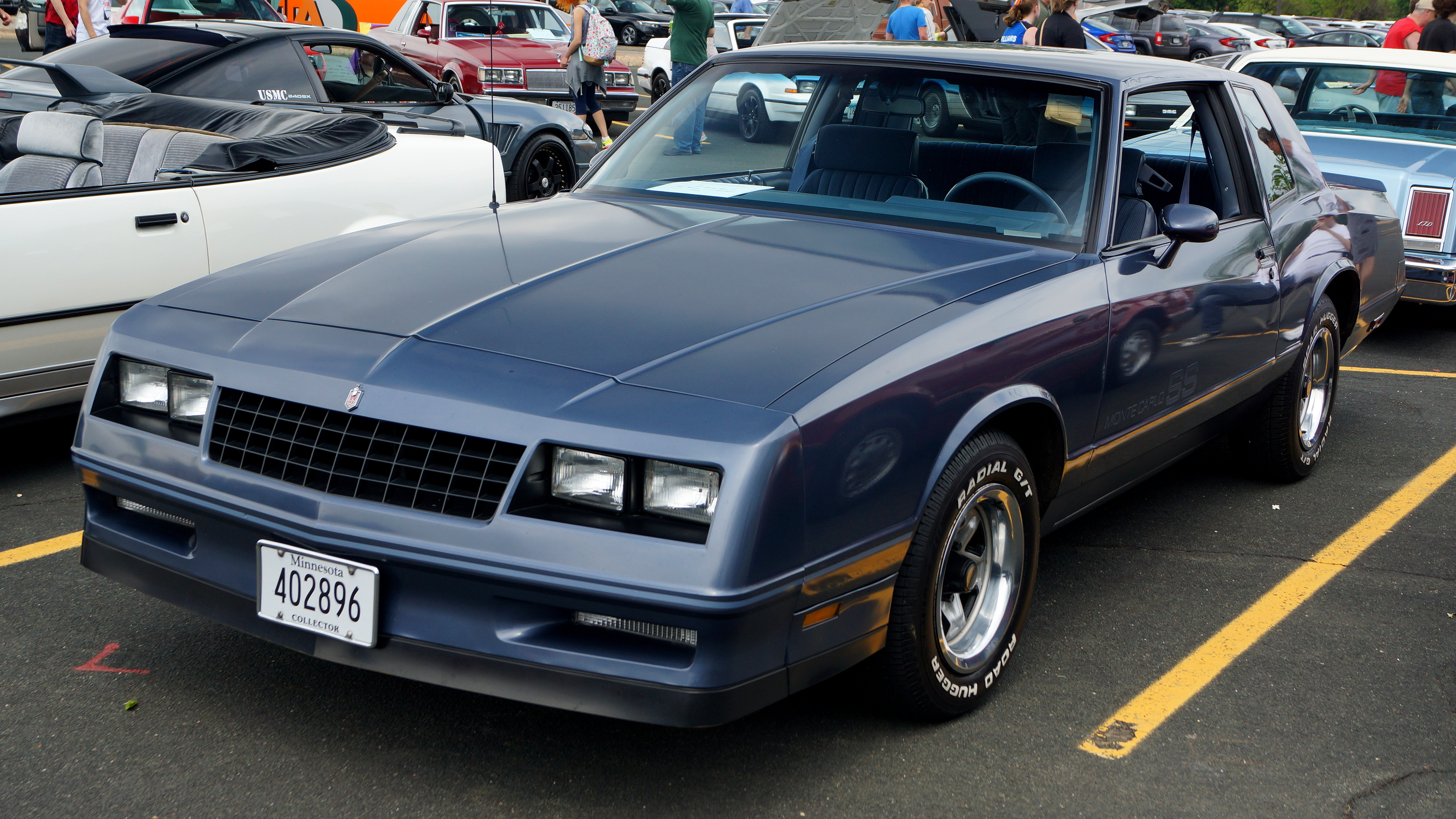
"... So, you know, that reminded me of the history of Monte Carlo because Monte Carlo came about because of decent ..."
The Chevrolet Monte Carlo is a car made by Chevrolet that’s designed to look sporty and drive like a performance coupe. People bring it up because the name “Monte Carlo” is linked to racing history, and the car became a recognizable part of that era. It’s the kind of vehicle that shows up in stories about how performance cars became popular.
The Chevrolet Monte Carlo is a mid-size personal luxury/“muscle” style coupe that became well known for its role in American performance and motorsport-era styling. It’s often discussed because its name and identity are tied to the broader “Monte Carlo” racing heritage and the idea of a sporty, street-friendly car. In a podcast, it may come up when someone connects the car’s name to the history and popularity of Monte Carlo racing.
"[382.4s] Yeah.
[383.3s] And you shut streets down and run racing cars.
[385.3s] And from the very start, I said, you know, we've got to run the top of the class."
This describes a street circuit setup, where public roads are closed and converted into a temporary race track. It’s a common approach for events like the Long Beach Grand Prix, requiring track barriers, safety planning, and precise course layout.
"[385.3s] And from the very start, I said, you know, we've got to run the top of the class.
[388.7s] We've got to go for Formula One, nothing but.
[390.7s] Yeah, right."
Formula One is the highest level of open-wheel racing. It’s where the biggest teams and drivers compete, so aiming for it means wanting the event to be top-tier.
Formula One (F1) is the top tier of open-wheel racing, with teams competing in a global series. When the guest says they had to “go for Formula One,” they’re talking about aiming for the highest level of motorsport credibility and competition.
"[579.7s] This is more of a Gymkhana type thing.
[581.6s] You know, where they jumped over fences and did all kinds of silly stuff like that."
Gymkhana is a driving competition where the goal is to show off control and skill. Instead of racing for position like a normal track event, drivers do tricky maneuvers around obstacles.
Gymkhana is a motorsport style focused on car control and precision driving, often on tight courses with obstacles. It’s known for flashy maneuvers and stunt-like driving rather than traditional circuit racing.
"So cold call Dan Gurney. Yeah. I mean cold, cold call Dan's office... And I'd like to get Mr. Gurney's opinion and see if he can give me some guidance."
Dan Gurney was a famous race driver and a big name in racing. The speaker is calling him because he wants expert advice.
Dan Gurney was a major figure in American motorsport, known for his success as a driver and his influence in racing. Mentioning him here signals the speaker is seeking guidance from a highly respected racing authority.
Concept
cardboard piece layout
"And two days later, I think it was three days later, I'm there in all American races with my cardboard piece layout. Right. Proposal."
It sounds like they made a quick cardboard mockup to explain the idea. Racing teams often start with simple sketches or models before they build the real parts.
A “cardboard piece layout” sounds like an early, low-fidelity mockup used to communicate an idea quickly—often for aerodynamics, packaging, or a proposed race setup. In racing, teams frequently use rough prototypes to align on concepts before building real hardware.
"Why do you think Dan Gritty would take a call from some guy he doesn't know saying, oh, no, trust me, 10 miles north, there's, there's going to be a street race."
A street race is when people race on regular public roads instead of a closed race track. It’s usually less organized and depends a lot on who knows the area and how to set it up.
A street race is an informal competition held on public roads rather than a sanctioned track. It often relies on local knowledge, timing, and coordination because the route and rules aren’t standardized like they are at a circuit.
"He pushed the envelope. Even, even the latter years of his life, he was still pushing the envelope in the, in the business they're in right now."
“Pushing the envelope” means not playing it safe—trying to do something more extreme or advanced than usual. In cars, people use it when someone is always looking for a better way to go faster or improve the tech.
“Pushing the envelope” means trying to go beyond what’s considered normal or safe—taking risks to achieve better performance or innovation. In automotive conversations, it often maps to experimenting with new engineering, driving techniques, or racing strategies.
"But you're also talking about the guy who has made his mint off of Daytona International Speedway and all these big speedways in permanent facilities."
Daytona International Speedway is a major motorsports venue in Daytona Beach, Florida, best known for NASCAR and the Daytona 500. It’s the kind of “permanent facility” that supports large-scale racing events with purpose-built infrastructure.
"We met with the convention people. We met with the city manager."
The city manager is a top official who runs the city’s day-to-day operations. For big events like races, they often help coordinate what the city needs to make it work.
A city manager is a senior local government administrator who oversees city operations and helps coordinate major events. In motorsport, city manager involvement often relates to permits, public services, and event planning.
"And this is, you know, this is before CAD, right? [2250.9s] This is when drawings were hand drawn. [2253.2s] Right."
CAD is a computer program engineers use to draw designs. Before CAD, people had to make drawings by hand, which took longer and was harder to change quickly.
CAD (computer-aided design) is software used to create precise engineering drawings and models. The speaker contrasts it with earlier workflows where plans were hand-drawn, which affects how quickly and accurately layouts could be iterated.
"[2518.3s] With the who?
[2518.3s] California Coastal Commission.
[2519.5s] Oh.
[2520.4s] Huh."
The California Coastal Commission is a government group that helps protect California’s coastline. If something could change the coast—like building or major events—they can require approvals.
The California Coastal Commission is a state agency that regulates development and activities along California’s coastline. In the episode, it’s central because it can require permits and approvals for projects that could affect coastal resources.
"[2526.5s] This is like an environmental group because obviously we're right here on the coast.
[2521.9s] They ruled that they had jurisdiction.
[2526.5s] This is like an environmental group because obviously we're right here on the coast.
[2546.1s] So they interpreted, even though we were temporary, they said, no, we're having jurisdiction
[2550.6s] on it because you're going to have an impact on the coast."
Jurisdiction here means legal authority to regulate or approve an activity. The speaker describes a dispute where the commission decided it had authority even though the project was temporary, due to expected impact on the coast.
"And then they don't understand that the exhaust fumes coming out of racing cars is far more clean and pure than the average car or the truck or the bus."
Exhaust fumes are what comes out of a car’s tailpipe. They’re made from the fuel burning in the engine, and different engines and setups can change what’s in those fumes.
“Exhaust fumes” are the gases and particulates that come out of a vehicle’s exhaust system. In racing, the exhaust can be tuned for different combustion and flow characteristics, which can change what comes out and how it behaves in the real world.
"So that was scheduled for September the 28th, 1975, and then the F1 race will be March 76th."
“F1” means Formula 1, the highest level of race car competition. If they’re talking about an F1 race date, they’re discussing the event planning and track setup needed to hold the race.
“F1” refers to Formula 1, the top tier of open-wheel racing run by the FIA. When a transcript mentions an “F1 race” and specific dates, it’s usually about the logistics and infrastructure needed to host a Grand Prix.
"We got down to the final lapse of the race and we'd forgotten about a victory circle. That was missing. It wasn't anything."
The victory circle is where the winner goes right after the race to celebrate. It’s also where cameras, photos, and announcements usually happen.
A victory circle is the designated area where the winning team/driver celebrates after finishing a race. It’s often used for post-race ceremonies, media, and sponsor visibility.
"We went up to Laguna Seca because the 5000 series went up there. And then we go to Riverside."
Laguna Seca is a well-known race track in California. It’s the kind of track where driving skill really matters because the corners are tricky.
Laguna Seca is a famous road course in Monterey, California, known for its challenging layout and the “Corkscrew” corner. When a series “goes to Laguna Seca,” it usually means teams are racing on a track that demands strong braking, traction, and driver precision.
"I mean, we had a trip and fall. They documented it. And I can't tell you the lawyers after the 76 race started hitting us with all these trip and fall suits."
A “trip and fall” lawsuit is when someone says they got hurt because the place wasn’t safe. In racing events, it can happen to staff or visitors walking around the venue.
“Trip and fall” suits are premises-liability claims where someone alleges they were injured due to unsafe conditions on a property. In motorsport contexts, this often comes up around paddock, pit, and spectator areas where people move around on foot.
"And they suspended his license. So that time his license was suspended and he's riding his bike."
If your license is suspended, you’re not legally allowed to drive for a period of time. You may need to do something to get it back before you can drive again.
A license suspension means the driver’s legal permission to drive is temporarily taken away by authorities. It often comes with restrictions like no driving at all, and sometimes requires paperwork or reinstatement steps before driving is allowed again.
"right after Dan won the Indianapolis 500 with Bobby in 1975, he flew straight to San Francisco"
The Indianapolis 500 is a huge race in the U.S. for open-wheel cars. Winning it is a big deal for a driver’s career.
The Indianapolis 500 (often called the Indy 500) is one of the most famous American open-wheel races, held at Indianapolis Motor Speedway. Winning it is a major career milestone for drivers and teams, and it often shapes their opportunities and public profile afterward.
"Yeah, right? It's because of that damn Phil Hill. Yeah, Phil Hill is taking our job. Dan Gurney."
Phil Hill was a famous race car driver from the early days of Formula 1. People mention him when they’re talking about racing history and big names in the sport.
Phil Hill was an American Formula 1 driver and the first American to win the F1 World Championship (in 1961). In racing conversations, his name often comes up as part of the sport’s early history and the competitive “who’s taking over” narrative.
"...the Grand Prix Association of Long Beach is now a functioning organization... the Grand Prix Association of Long Beach is its own company... It is a private, for-profit company."
The Grand Prix Association of Long Beach is described as the organizing entity behind the Long Beach Grand Prix. In the segment, it’s portrayed as a private, for-profit company that contracts with the city to run the event and can pursue other activities beyond the venue.
"...particularly after 84, Jim took over the day-to-day and became Chief Operating Officer."
A COO is the person who runs the day-to-day work of a company. Here, they’re saying Jim took over the daily operations after 1984.
A Chief Operating Officer (COO) is the executive responsible for day-to-day operations of a company. In this discussion, Jim is described as taking over daily management and operations after 1984.
"[6215.0s] Mercedes already gone.
[6216.5s] Yeah.
[6217.4s] A Ford basically gone, but we rescued Ford back."
They mention Mercedes leaving the racing effort. When a major brand like that backs out, it usually creates a scramble to keep the series going.
Mercedes is referenced as already having left the series. Manufacturer exits are a common turning point in racing, often forcing organizers to restructure partnerships and budgets.
"we're gonna put out an RFP.
Okay.
And so an RFP is a request for proposal."
An RFP is basically a formal invitation for companies to bid on a job. The city uses it to compare options and choose who can do the work.
An RFP (request for proposal) is a formal process where a government or organization asks companies to submit bids for a project or service. The goal is to gather options, do due diligence, and select the best-qualified supplier based on the criteria laid out in the request.
"The story is, as it's told by other people is that when there were council meetings on possibly exploring your offer or your consideration of F1, that if they did their due diligence, they would learn that this claim wasn't real, that there was no actual F1 conversation."
“F1” means Formula 1, the highest level of race car competition. They’re debating whether there was actually any serious talk about F1 or if it was just a claim.
“F1” refers to Formula 1, the top tier of open-wheel racing. In this context, the discussion is about whether there was ever a real conversation or offer related to bringing or involving F1.
"Like if you're going to put out a, if you're going to put out a video that was part history, about the Grand Prix. There was part history and part, you know, making this year's race happen. Oh, you can't, you can't tell the story of the Grand Prix of Long Beach."
The Grand Prix of Long Beach is a big car-racing event in California. It takes place on a street circuit, so it’s not just about the race cars—it’s also a huge production to set up and run the event.
The Grand Prix of Long Beach is a major motorsport event held on a street circuit in Long Beach, California. It’s known for blending racing history with the logistics and effort required to stage a race on public roads.
Select text to request an explanation
September 28, 1975 was, in most ways, just another beautiful day in Long Beach, California.
The vibrant seaside city with its five and a half miles of beaches along the glistening
Pacific Ocean was just beginning to come of age as a world-class port.
But this wasn't just any Sunday.
On this day, Chris Pook's dream for Long Beach was about to come true.
Grand Pre-Racing had come to Long Beach.
And now for Dinner with Racers, presented by Continental Tire with your hosts, Ryan
Eversley and Shawn Heckman.
Please hold your radio sound.
I've been driving very angry in the sound of a driver on the radio during a race.
What do you think?
And welcome to another edition of Reheated Dinner with Racers episodes.
I'm Shawn Heckman.
I'm Ryan Eversley.
And as we said in previous weeks, these are literally the same episodes that you can get in our archives.
But we figured for the next few months we would put out kind of our old episodes, but with kind of a new spin on topics that might be relevant to the current week that we're in.
And Ryan, what episode are we doing today?
Well, today we're going to revisit with Chris Pook, who was one of the founding members of the Long Beach Grand Prix.
And the reason we're doing that this week is because when this comes out, it'll be the weekend of the Long Beach Grand Prix, which is a huge part of the IndyCar and sports car series that race there every year.
And so we thought it'd be appropriate to kind of revisit there.
We did discuss it a little bit.
Unfortunately, the passing of Jim McHaley and a couple weeks ago coincides right before the race that he's most known for.
So a little bit of a bummer, but if you listen to the reheated we did with him, you'll know a lot about the race.
And so Chris Pook, who plays a major role in the history of this event, was somebody who thought would be interesting to hear from.
Exactly.
So one of the things we're trying to do with these reheated kind of reposts is giving you a little bit more behind the scenes.
And actually, more than Chris Pook and the Long Beach organizers, we should probably talk about 555 East Steakhouse.
I think that's a cool behind the scenes story.
Yeah.
When we went to Long Beach, we were a little bit surprised how hard it was to get places to eat and film, which I think is probably just because it's so close to Los Angeles and everybody there knows about filming and permits and things like that.
And so we had a little bit of pushback at times, but 555 East Steakhouse was great to us.
And what we've come to learn is that Chris is a friend of the owner and he eats there a lot and takes a lot of means there and things like that.
So fantastic meal.
I remember when we were setting up there, really helpful and really nice and treated us like they wanted us there, which in the California things of filming that we've done, I think is a little hard to find.
Yeah, there's a little too cool for school thing with Southern California and Los Angeles in general.
So and I can say this because I live there, but it was nice to have a restaurant that actually was willing to deal with us and happy to have us there.
So anyway, I think that's it.
A couple of things I'd like to say is that Chris Pooke is an interesting character.
And one of the things that we learned was because he and Jim McAleon both had a big part of the building of this program, there was a little bit of, I'd say it was a little icy when we mentioned to certain people that we were going to be interviewing Chris.
But then you and I sat down with him and we really loved this interview.
I remember we both didn't know we were getting and he was he was excellent with us.
Yeah, exactly.
Over the years, obviously that the Grand Prix is taking different directions with different management structures, but Chris was nothing but accommodating and gave us everything we needed both story wise.
But even after the recording, he was really, really helpful with archival photos and assets and things like that.
So I mean, Chris was honestly a big part of our video series.
And also, this was part of our two part video series that we did with Motor Trend a couple years ago.
So if you go to Motor Trends YouTube, they named it How to Build the Street Circuit Parts 1 and 2.
So if you go there, you can sort of see the video adaptation of all these interviews that we did.
But this is sort of the longer form extended cut of what we did with Chris Pooke.
And yeah, he was a big part of that video that we ended up putting.
Mario Andretti once referred to him as the ultimate visionary when it comes to street racing in America.
So who better to hear from about the Long Beach Grand Prix than Chris Pooke?
Hey, thanks, Got Nettle Tire!
Got Nettle Tire!
So we heard a rumor that the Grand Prix exists because of the idea of stemming from this room?
Um, it actually stemmed from a tiny office just across the hallway here, just behind this wall here.
Oh, OK. Yeah.
Which was my travel agency at the time.
Ah.
And I came to work on Memorial Day weekend and put the 500 on the radio as I was working.
And at the same time, I remember the people in the convention bureau who were six floors above me saying that they were going to build a convention center here.
And, you know, they were changing languages, images from an oil town, an aircraft town, an avi town, and they wanted to become a tourist convention destination.
So I sat and thought for a second, you know, well, it's going to be pretty hard if you're going to build this whole convention center for 50 million bucks or whatever.
Yeah.
And you don't have any decent hotels for people to stay in.
Right. Right. Yeah.
Where they're supposed to go.
So, you know, that reminded me of the history of Monte Carlo because Monte Carlo came about because of decent con, the two towns next door, which were doing a gang buster business, particularly in the wintertime with the northern Europeans and the English coming down there.
And so Monte Carlo said, well, what do we got to do to compete with this?
And somebody in Monte Carlo said, well, let's run cars around our streets.
And that's how the Monte Carlo Grand Prix got started in the principality.
And then, of course, came the rally and everything afterwards.
So I thought, you know, Monte Carlo established itself by running cars around the streets.
You know, what happens if we do it here?
I mean, when the Canada Ford, if one doesn't have a reputation as a convention center, then you're going to have to spend a quarter of a million dollars a year at least on establishing your destination.
Right.
And this destination was hidden by LA.
Disneyland was better known.
Santa Barbara was better known, excuse me.
And how do you establish Long Beach?
So, you know, so you do something absolutely outrageous.
Yeah.
And you shut streets down and run racing cars.
And from the very start, I said, you know, we've got to run the top of the class.
We've got to go for Formula One, nothing but.
Yeah, right.
And so that was the decision.
That was the night thought process that Memorial Day.
And thus the nightmare began.
What brought you to Long Beach originally?
Well, I bought a home here in 1968.
I was in the travel business and I sold my companies first in 68 and then again in 71.
And I decided to open up retail travel.
I was on the other side of the travel industry, retail travel in 71.
And I looked around at Long Beach, what was here, what was, you know, how things were going on.
I thought, well, I live here.
I don't know work here.
Right.
Right.
So it made sense.
So that's what got me started.
So I started from scratch and we had a very, very small agency.
We did, you know, rather than have people writing tickets all day long, I brought in
tele-ticketing machines and things because it was cumbersome in those days.
Right.
You're like, with the right technology, a travel agency can last forever.
Right.
Exactly.
Yeah.
Here in the 1970s.
Yeah.
And I focused on business travel to start with.
Yeah.
So anyway, it all sort of worked out.
But that was Memorial Day 73.
And we moved forward from there with the help of one Daniel Sexton Gurney.
I'm of the opinion.
No one comes up with the idea of racing unless they're already a racer themselves.
So were you always a life-wrong race fan?
Is this something you enjoy going up in?
Oh, yeah.
I'd been watching racing from speedway bikes on the grass.
Right.
In England to speedway bikes on shale in the Greyhound stadiums all the way through to
being a bad rally driver.
And it just sort of, you know, something that I wanted to do.
But it was not easy in England in those days getting started.
I mean, unless someone had a lot of money in the family to do it for you.
Sure.
You had to, you know, scramble.
It's much easier now.
Yeah.
It is a lot easier now.
But then, you know, with that, when I was trying to raise money for that in England,
I realized just, you know, well, this is tough over here.
What about America?
I always have my eye on America.
So I immigrated with a green card in 1963.
Okay.
Yeah.
And I don't know if it's self-described, but in the books about you, you are described
as like an entrepreneur from day one.
Yeah, probably.
I think that would be fair enough.
I ran, my first event was when I was seven years old.
I ran a dog show on the Village Green.
A dog show?
A dog show, yeah.
Okay.
It was in the Village Green in Gawley and we had, we put up fences for the jumping contest
and then there was the fetch contest.
And you're seven years old?
Yeah.
When you say we, who's with you?
The neighborhood kid across the street.
I mean, he was awesome.
So it was put it on.
Were you partners or was he working for you?
You know, I don't know about that.
I think we were partners.
But I suppose to be fair, I would say that he was the minority partner.
So it started early.
Yeah.
Yeah.
I had a fairly strong personality in those days.
Yeah.
Back then.
Yeah.
Back then.
Yeah.
Okay.
I had already run away from school.
That's seven.
Well, yeah.
I mean, the dog show business is booming.
Yeah.
Yeah.
Yeah.
Yeah.
Yeah.
This is more of a Gymkhana type thing.
You know, where they jumped over fences and did all kinds of silly stuff like that.
Yeah.
So you were the Ken Block.
Yeah.
Motor sports.
Motor sports.
So you show up here in Long Beach and at the time it was paradise, right?
Downtown Long Beach was fairly marginal in those days.
Upper Pine Avenue up to Broadway and then Lower Pine Avenue down to Seaside.
It was pretty educational to say the least.
Educational.
Yeah.
You learn a lot.
You learn a lot.
You learn a lot about what goes on in life down there.
And then also Long Ocean Boulevard.
We had the movie theaters with the porno movies and stuff like that.
Also educational.
Also educational.
And then interesting ladies walking around in the evening.
Overdressed.
Yeah.
Yeah.
Quote unquote.
Uh-huh.
So anyway, it was, you know, but the rest of the city, you know, once you got away from
the downtown area, it was, it's actually a really, really nice city.
But it had gone into decay and has happened to many American cities around the time of
the late 60s and the early 70s.
So, you know, I thought, you know, how are we going to do this?
I mean, how are we, you know, we've got to change the image of the city.
We can't, you know, how can you be a convention city or tourist town with that stuff going
on?
Yeah, we're going to need something to bring people in.
We need something to spur development, change the image.
So, and I just really, all I copied was what Monte Carlo done over the years.
I mean, they just, they, they, as a progression, you were, as you saw the hotels emerging in
Monte Carlo and the growth and the things, the attraction, the swimming pool around the,
you know, on the edge of the harbor and the harbor for boats and all that stuff.
So, it all sort of, you know, I mean, I, I didn't, this is not original thinking.
I don't want you to think that, you know, but it, you know, I pictured in my mind what
could be done.
Now, the sort of, the templates may be the wrong word, but the idea of looking at what
happened in Monte Carlo and Monte Carlo and saying, okay, that could apply to what we're
trying to do here in Long Beach.
Did that come as being a race fan or is that just sort of general knowledge if you're,
if you're from Europe?
I would think it came from general knowledge from being from Europe, but I would say the
more intricate detail of what had to happen or how it got there came from my interest
in motorsports and then digging into, you know, okay, how, when I was a kid, you know,
this is amazing, Monte Carlo running around the streets, how they do it, you know, and,
and then in the like 61, I think it was 62, who went to Monte Carlo and I saw firsthand
not realizing that 10 years later I would be going through the same process.
Right.
And regretting every minute.
Just, you know, I just looked at it and it's sunk in.
And of course, 10 years later, that visit came back vividly.
Right.
You know, okay, this is, this is what happens if you do this.
What's the first move?
Well, the first move was to talk to the convention visitor bureau guys who were clients of mine,
became travel clients of mine.
Okay.
So, I mean, I took them to lunch at Lombardo's here and, and I'd taken up some tourist maps
and sort of mapped a circuit together, which included going over the Queensbury Bridge to
the Queen Mary and sort of, you know, stuck it together on a cardboard back.
This is the day before computer graphic arts.
Right, right, yeah.
And then I just launched into the idea, but, you know, what we wanted to do.
And the three of them, Bob Lichtenhan, Paul Bestler and Dan Swanson, kind of their eyes
got bigger and bigger and they looked to me like, are you, are you serious about this?
Are you serious?
I said, yes, I'm serious about it.
And they said, how, how can this, how can this happen?
How can I, I said, I don't know.
But if it's an idea you think is good and it's possible, you know you've got a problem.
Yeah, yeah.
If you think, if you believe that this with national, international television and go
research Formula One and come back and tell me if this will solve your problem of reach
and it's getting the word, then I'll, I'll take the next step and I'll put a phone call
into a well-known American race car driver called Dan Gurney who I'd only met once in
the paddock at Brands Hatch and he didn't know me from Adam.
Sure, sure.
Yeah.
So they, they thought about it and they left the lunch and about an hour later Lichtenhan
called me and he says, let's go forward.
Let's bring Gurney in.
We've got nothing to lose here.
Right.
What you're saying is making sense to us.
Yeah.
Our job is to sell the place.
Yeah.
We can use this.
Right.
So next step.
Cold call, Dan Gurney.
Because at the end of the day it's still Southern California so nothing happens without star
power.
Correct.
And Dan Gurney is of course in the 1960s when it comes to American racing.
Yeah.
He is as big as it gets.
Right, right.
Yeah.
No, he, he exactly.
I mean he made his mark in Europe.
I mean, you know, it was amazing that he, that he did what he did as tall and big as
he is.
Yeah.
You know, and then he survived.
Right.
Right.
Just think about like he's tall and lanky and yourself like that'd be like Gumby and
Pookie.
Exactly.
A little bit.
I couldn't resist.
Okay.
So cold call Dan Gurney.
Yeah.
I mean cold, cold call Dan's office.
All American races on South Broadway in San Ana.
Yeah.
And just a few miles from here.
Yeah.
It is just a few miles down the road.
And Kathy answered the phone.
Same Kathy that's still there.
And I said, I'd like to speak to Mr. Gurney, please.
What's this about?
And I said, well, I think I've got the Genesis for a Formula One race on the streets of Long
Beach.
And there was silence and she said, would you repeat that?
So I said, I think I've got the Genesis for a Formula One race on the streets of Long
Beach.
And I'd like to get Mr. Gurney's opinion and see if he can give me some guidance.
One moment, please.
And I thought, you know, okay, I'm going to get the run away.
Right.
This is Ted.
Yeah.
I'm going to help you.
Yeah.
All of a sudden.
Alex.
Hey, this is Dan Gurney.
How you doing?
And holy crap, I'm talking to Dan Gurney.
Right.
I got to sell this thing now.
I sort of quickly went over it and he says, and I said, I'd like to come down and see you.
And he says, okay, when can you be here?
And two days later, I think it was three days later, I'm there in all American races with
my cardboard piece layout.
Right.
Yeah.
Proposal.
Proposal.
And he said, you know, where's the city?
I said, I don't know about the city, but the convention bureau is on board.
If you'd like to come up and have a meeting with him, I can arrange it.
Right.
And you can also see the city in the layout.
And he said, okay, fine.
He says, but you know, this going over this bridge backs and forwards doesn't look very
good to me.
He says, that's too fast and too dangerous.
You know, but I said, well, you know, we'll tweak it around.
Yeah.
That's not the end of the world.
Yeah.
So sure enough, he came over in his white van.
I thought, you know, he's going to show up in Ferrari.
Yeah, right.
Yeah, exactly.
Because it's a non-descript white van.
Yeah.
And that's because he's a real racer.
Right.
So anyway, so.
Probably running parts.
And he says, okay, you know, you got that, you got that piece of cardboard with what
you laid out.
I said, yeah, I said, get in the van.
So we got in the van and we drove and we drove around ocean and down Linden.
And then it was all dirt below the hill in those days.
And then they were going to build shoreline drive.
And then we went over the Queensway bridge.
He says, no, this is not going to work.
Yeah.
This will not work.
I said, like, I got to get the Queen Mary in it.
And he said, yeah, but we can do that as a backdrop.
So anyway, very quickly, he, he figured out a circuit which was ocean down Linden screw
around in the Linden Park and lot up to the hairpin by the Villa Riviera because he loved
that building.
Down shoreline hairpin turn back to pine up pine back to ocean.
So the original layout of the Grand Parade of Long Beach wasn't some aerial photo where
you handpicked each corner and think about where it was in a white van driving around.
Yeah.
That's what I like to hear.
Here's actually the thing that I hear in that story because I would assume racing through
all time has had the same types of characters, including the 1960s.
So in modern racing, we're both used to the phone call from some random person who's got
an idea and it's nonsense.
And you can immediately kind of suss out that it's nonsense.
Why do you think, I imagine the 1960s was probably the same.
Why do you think Dan Gritty would take a call from some guy he doesn't know saying, oh,
no, trust me, 10 miles north, there's, there's going to be a street race.
I can make it happen.
Daniel never looked at a glass has been half empty.
He always looked at the glasses being half full.
That was the nature of him.
He pushed the envelope.
Even, even the latter years of his life, he was still pushing the envelope in the, in
the, in the business they're in right now.
Yeah.
So that was the nature of the piece.
And for him, you know, oh, this will be fun.
Yeah.
You know, I've driven a Monte Carlo.
Should I tie that in my backyard here?
Holy crap.
All right.
So you're saying if we want success, we shouldn't be so pessimistic and.
No, no, no, no.
Always look at the glass being half full.
Never look at it being half empty.
I got, I got, I got to, I got to go.
I got to leave.
So anyway, so I mean, and he embraced it.
And of course, when we, we were late for the lunch with Lichtenhahn and, and Swanson
and Bessler, again, back in famous Lombardo's here.
And I mean, I thought these guys were going to wet their trousers when they saw Gurney
come through the front door.
Sure.
Yeah.
I mean, oh my God, stood up and Leonard Lombardo was a huge man.
He was everywhere.
I mean, you know, whatever you guys want, you know, just tell me.
So anyway, so, I mean, Dan was very blunt about the thing.
He just said, look, you know, this is feasible.
It can be done, but it's not going to be done on our own.
You got to have the city involved.
The city has to embrace this.
If the city are not involved in this thing, it won't happen.
Yeah.
So that was the marching orders for the convention boys.
Yeah.
Go get them on board.
Go get the city on board.
And this is all 1973.
This is all 73.
Yeah.
This is all 73.
Yeah.
This is this is July, August.
Yeah.
A couple months after the 500.
And so that was, you know, the end of the lunch and Dan went away.
He took one more.
He said, let's go one more drive around and look.
And you know, there was no paving, no, no marina down here.
Nothing was all dirt.
Yeah.
But the convention boys had a plan of what it would look like.
For them, not for the Grand Prix, but just for they want to let the convention area.
In the concept of having a, you know, a harbor for boats out there and all that stuff.
Expansion of the convention.
How to make this a place you want to come to.
Was the writing already on the wall for the future of the city?
Because like the convention bureaus, it is now makes a lot of sense with the naval base shutting down and the city developing and changing how it has.
But I don't know if they had that foresight in the 1970s.
The naval base didn't shut down to 15 years after.
Right.
So this wasn't foresight thinking like we need to replace this.
The city knew that it had to do something about its downtown.
They had a dying downtown.
Right.
The resale was leaving.
Everybody was leaving.
So the timing was good.
I mean, the city already recognized they had to do something.
They're already committed to build the convention center.
They hadn't thought out what they were going to do, but they knew they had to clean up the area.
Yeah.
And do something to not be hidden within Los Angeles and Anaheim and everything.
And to establish our own identity.
So, you know, it all sort of kind of that piece.
Those pieces fell into place.
And next thing we know, we're in front of the city council.
Was that a positive meeting or was there a pushback from the get go?
No.
There was a meeting in those days Long Beach was run by the city manager with a very firm hand.
Okay.
Yeah.
We didn't have regional council districts.
You're elected to council.
You represent the whole city.
So we show up on Tuesday at the council meeting.
But this time I've got a local lawyer involved with us.
And we're sort of starting to assemble what this that's where the next thing to be structured.
Yeah.
That's where the napkin took place.
Okay.
On the Thursday after the meeting with the city manager, we met here.
Right.
Drinks on a napkin and put together the Grand Prix Association of Long Beach on the napkin.
Nice.
And when you say here, you mean like where we are right now?
No, on a high rise.
Okay.
No, this is bad for TV.
Right here.
Yeah.
Right here.
Right here.
There you go.
And we created what the company would be.
And then we fronted up Tuesday.
And it was on the, we were briefed very carefully by the city folks and the convention bureau folks not to say a word.
This was on the managers agenda.
Okay.
The last agenda item on his agenda.
So the item was permission to enter into a long-term contract with the Grand Prix Association of Long Beach for the purpose of running a Monte Carlo style Formula One race on the streets of Long Beach.
Period.
That's the agenda item.
Okay.
So chicken by Phillips, Councilman Phillips, who's, he lived in this district, this area down here.
He made the motion and it went down eight to one.
Okay.
Yeah, like everybody.
Yeah, yeah, yeah.
One lady who said no, she was, thought it was very bad.
We sent a terrible message to the kids about racing on the streets.
So she voted against it.
Fair enough.
Okay.
Porn theaters are fine.
Yeah.
Yeah.
So anyway, so then we're out of there and we look at each other and say, holy crap.
What do we do now?
We got to do running.
Right, right, right, right.
Yeah, it's real.
This thing's gone further than we thought.
Right, right, right.
There's one thing I want to go back a step on and I don't know if it's relevant or not, but like, who are you at this time?
And here's where I'm going with that.
So you are, you've got a small business, you're running a travel agency out of Long Beach.
I understand how you, I would assume through running a travel agency, you've already become friends with the convention bureau guy because that's an obviously very intermingled series of businesses.
And many of the business leaders in town because I was pitching them for their travel business.
Okay.
So, and that's where I was going.
It's like, I don't, like the big real estate hotel guy, I can see knowing everyone in town, but I don't necessarily know how the travel agent knows everybody, but it's literally because you've been pounding on doors all through Long Beach with powers that be trying to get their travel business.
Exactly.
Okay.
Exactly.
I was doing the university's travel for their athletic teams.
Okay.
I was doing most of the major businesses travel.
Right.
I had just been awarded the Port's travel account.
Okay.
Because again, travel agencies are going to live forever.
I have to tell you that the fact that I had Dan onboard with me.
Yeah, absolutely.
I mean, that was the, the, the imprim of.
The legitimacy you needed.
The legitimacy and that, you know, and, you know, people didn't, they didn't want to meet Chris Pooke.
They wanted to meet Dan Gurney.
Sure.
Sure.
That was, that was, you know, sure.
When our podcast started, our sponsors agreed to letting us go on this road trip.
And after they agreed to it way too quickly, we realized, oh crap, we have to do it.
And it sounds like this was on a much bigger scale, exactly what you were stuck with.
Like, okay, they've just voted on this.
We're, we're okay.
Now we have to follow through.
That's where we were.
Yeah.
What's the next call then?
So the next call is, now we've got to enter into the politics of American motorists.
Huh?
So the politics of those days were, there was the, the members of the Accus, right?
Where SCCA, USAC, NHRA, NASCAR and IBSA.
Okay.
And it's all fun.
Falls under Accus.
Falls under Accus.
The automobile competition committee for the United States.
Right.
Still in existence today.
Right.
There's sort of a general oversight.
It's an umbrella.
It's designed to be a clearinghouse umbrella.
So make sure it wouldn't be date conflicts for major events, et cetera.
I see.
I see.
Oh.
Are you sure they're that active today?
And they're still around, huh?
Still around.
I'd like their number.
Still around.
Right.
So, so Jim is going to, his, his prime, his brief is to go to the Accus and get an application
together from the Accus to the, what was the CSI in those days?
CSI, Commission on Sportive International, they govern motor racing.
Okay.
They had sort of a FIA equivalent.
Yeah.
It's the FIA equivalent.
Yeah.
Okay.
So actually the FISA equivalent.
Ah, copy.
Okay.
The FISA equivalent.
More of the commercial one.
So anyway, so to get, to get a, you know, date application moved forward and then to
start the process of drawing safety inspections or the whole protocol you've got to go to.
So we never made it out of the Accus meeting.
Oh.
We were killed.
And the basis was God bless him.
Big Bill, France.
Yeah.
He says we are not going to have these temporary circuits.
They're dangerous.
And they'll put our permanent circuits out of business.
That's the biggest.
I'm guessing one of those two things was true.
Yeah.
So that's, they were, they were both true at the time.
Oddly enough, a year later, there was a street race in Pontiac.
Yeah.
And a guy got decapitated.
Wow.
There.
But you're also talking about the guy who has made his mint off of Daytona International
Speedway and all these big speedways in permanent facilities.
So anyway, so it was a question of votes.
I mean, and then it was, and we were killed.
That right away.
Yeah.
So we'll come back and, okay.
Well, that was a good idea.
Let's go and sell some airline tickets.
Yeah.
But Daniel said, no, he wasn't going to take that for an answer.
Nope.
He said, no, this is ridiculous.
He said, these people kind of sit there in Florida and vote this thing down, not knowing
what it is.
And forgive my ignorance because I don't know.
You needed Accus to get to Formula One.
That was the protocol.
Why?
That's the way it works in every country around the world.
The ASN, right, the governing body.
And with this case, it was going to be the SCCA.
Okay.
There was a loan at the time.
We hadn't got to the form of 5,000 piece yet.
Sure.
So technically, the SCCA would carry it forward, which Kaiser Arrange, right?
They present the application to the Accus as a member club.
But, and you can't, like CSI would have been the equivalent of pieces today.
You couldn't bypass them in those days.
You can't just go direct to them and say, look, we have a long beach once.
Yes.
Okay.
You can't do that.
No.
Okay.
No.
That's not how it works.
Today it works that way.
But not in the 1970s.
Not in those days.
So we were dead.
But Daniel said, no, absolutely not.
We're not going to put this in the bed.
We're going to figure a way through this.
So if you remember, there was a disaster at Indianapolis and I think it was 72 or 71 or whatever it was.
And they appointed an Indiana, very well respected Indiana businessman called Tom Binford to be the chief steward at Indianapolis.
So Dan knew Tom Binford very well.
Tom Binford was also the Acus rep to the CSI.
So he sat on the Acus board, but he also represented the Acus at the CSI.
So Daniel called up Binford and Binford was very familiar with Monte Carlo, obviously, called up Binford.
And we arranged for Binford to come and visit Long Beach on a trip he had coming to LA.
So anyway, Dan brought Binford down here.
We were all down here.
He went through his whole concept.
We met with the convention people.
We met with the city manager.
We said hello to Mr. Phillips, Chicken Pie Phillips, whose council district it was, because he had a Chicken Pie store.
I hope so.
No one knew why they called him that.
And Binford went away saying, I don't know what's wrong with Bill Frantz on this thing.
He said, but let's just do the politics on this thing.
Let's see where we are with votes.
He says, I think Wally Parks, he didn't vote no.
He just abstained because it was not drag racing.
And Dan said, I know Wally pretty well.
And Binford said, I know him pretty well.
He says, let's see if we can talk to Wally and get Wally involved.
So now we had, and we did.
So now we had Wally, SCCA.
We had two member clubs involved.
So you guys are basically doing like what you have to do in Congress.
Yeah, exactly.
Like we're going, OK, this guy's going to vote yes, but we can't turn him.
So he's a waste of time.
And Binford was masterful of that.
And also there was some independent delegates on the actress as well.
So he got a whole of a couple of them.
What's the, I don't know if you know the numbers, but like what was,
how many members were there and how many people had this one?
I think there were 11 members, 11 voting members.
There were five, no more than that.
There were five member clubs and three members at large.
What? OK.
So 13.
And you needed seven people to vote yes?
We needed seven to vote yes.
So you're literally like, you've got names on a bulletin board and like, no.
So anyway, we went through the process.
Binford managed it through the process.
So we ended up, so the two, the NASCAR votes were two NASCAR votes.
A NASCAR owned IMSA, if you recall.
So there were four votes over there.
We knew we were bad news.
That left us, you know, we knew we could get SCCA.
Yeah.
Binford could deliver USAC because he's in the Indiana guy.
OK.
So there's that.
That's an easy one, right.
So Dan and Binford went to Wally, who really didn't want to get involved,
but thought, OK guys, yeah, I'll step up.
So now we have six, one more.
So we got one more, the one more was Binford.
OK, well done.
So we have seven votes.
Yeah.
So we go back through this whole process again.
Right.
And we get it on a seven to six.
Nice.
How long does this take?
This took.
A year?
Almost a year.
About, I would say to you about nine months.
OK.
Yeah, I don't remember the timeline exactly.
Right.
Now this was already a harebrained idea to the Long Beach City Council.
Yeah.
Yeah.
And they don't know racing, I assume.
And, you know, yeah, you brought Dan Gurney, but here's this wild idea.
Like, do you have to explain why this is stalled out
and explain the details of ACIS and all these things
that you can't expect them to understand?
Yeah, we did.
Yeah.
And are they getting more skeptical of this, or are they just like?
They're kind of going, mm-hmm, whatever.
He'll show up or he won't.
Deal that we have to.
Yeah.
But remember, you know, they'd voted on a contract.
Right.
Like, are you looking at some timeline where that vote becomes null after two years?
They'd have to rescind it.
OK.
Or we can't come to terms on the agreement.
Yeah.
Because then it just dies.
They authorize the city manager to enter into a contract.
OK.
So you're not on any sort of time lapse, like, oh, in the years going back.
Yeah.
So anyway, we get through with our seven to six vote.
Yeah.
Which did not make Mr. Frans very happy.
I was just about to ask.
Yeah.
Big fan.
So now we move forward to the CSI.
Yeah.
So the CSI in those days had various committees.
Mm-hmm.
So we basically had to clear two committees.
Number one, the calendar committee.
Mm-hmm.
Number two, the safety and circuits committee.
OK.
With an ackis?
CSI.
With an CSI.
OK.
Because they don't want you to be, you know, a conflict with their already in place schedule.
And you can't be killing people under their, under their branding, right?
Or underneath their...
And then we had a problem with the schedule.
OK.
Because in those days, only one Grand Prix was granted per country.
Right.
And the USGP was already won this one.
The USGP was already at Watkins Glen.
Right.
Sorry.
Benford, he thought, he said, I think I can tackle that one just by the sheer size of
the country and the population that we justified to have two Grand Prix.
So don't let us worry about that.
Mm-hmm.
So let's worry about the safety piece now.
So he said to Dan, I want to bring out the chairman of the circuit and safety committee
to Long Beach.
And I want to walk through this whole thing with him of how we're going to do this.
And his name was Nino Baccio Gallupi.
Baccio Gallupi ran Monza.
Oh, OK.
Really?
So it's probably...
Yeah.
Oh, he's a tad...
Never has.
Yeah.
Little guy.
Little guy.
Telling you?
Great little guy.
Wonderful.
Doctor, he was an engineer.
So the first thing we do is figure out with Baccio Gallupi about the circuit.
He immediately makes some changes in the bottom of Linden Hill.
He wants a left-hand turn and he wants runoff.
He wants a big sweeper going through the parking lot and then, pardon me, another sweeper going
up to Shoreline and Alameda's up, you know, the U-turn, runoff areas, down Shoreline,
big runoff area, U-turn on Shoreline, up pine, instead of going straight up pine, dead
straight because it goes up to the hill, would be very dangerous arriving on a braking
distance.
You know, those cars would arrive there 120, 130, 140 miles an hour.
He wants to jog into a parking lot and create not a chicane, but a right-hander, very short
straight, left-hander, straight, left-hander, short straight, right-hander, back up, and
then the pits.
So, they're working all this.
In the meantime, we've got city engineers in tow with us and they've got scaled city
drawings and everything and they're making copious notes doing everything they're supposed
to do and we're on foot doing this and this traffic, you know, Shoreline wasn't built
in those days, but there's traffic all over Ocean Boulevard.
Immediately, you know, we could see where it was a dangerous situation, so the city
guy with us, George Medak, who was incredibly helpful with the whole thing, he immediately
calls the cops.
He's the next cop himself.
Now, we have several black and whites controlling traffic while we're walking around the streets.
And Batchekaloupi saw this, you know, he saw this, all this city cooperation, you know,
all of a sudden, you know, I'm concerned about these cars are coming too fast, you know.
Yeah.
Okay.
Cops.
Boom.
Right.
Done.
Okay.
The city's behind us.
Yeah.
Right.
Right.
So, uh, we, then we go to the city engineer's office when the walks are all done through
and the city engineer, Jack McGinnis, he assigns two assistants.
And this is, you know, this is before CAD, right?
This is when drawings were hand drawn.
Right.
Everything was done by hand.
He assigns two engineers to it and he gets the layout going and this, this turn.
And then Batchekaloupi starts talking to him about vertical radiuses and horizontal radiuses
and turns.
Yeah.
Okay.
He gets, you know, he understands that he's an engineer.
Right.
So he gets the principle of all that.
Anyway, so we leave there probably at seven o'clock at night.
Next morning we show up in the Queen Mary breakfast and then all of a sudden McGinnis shows up
with his engineers and they've been working all night long and they have everything laid
out.
Wow.
Finished.
Yeah.
For Batchekaloupi.
And he looked at me and says, oh my God, I cannot believe you do this.
Yeah.
All night they worked.
So Benford and he start talking about the date thing then.
And so Benford said, well, you know, why don't we, why don't we suggest to the CSI that there
is the need for a second Grand Prix in America because of the size?
Yeah.
But let's distance the second one as far away as possible in time from the first one.
Also in distance, in literal distance.
Yeah.
Right.
So Bingo.
Here we go.
October, Watkins Lane, upstate New York, March, Southern California.
Yeah.
Distance.
Yeah.
Distance accomplished in both.
Yeah, right.
So any argument about overlap and you're like, you're not going to get this, people aren't
going to go to the same race twice.
Yeah, it's all gone.
Yeah.
So there we are, then we go through the commissions and all the stuff and of course
times going on and we have lots more inspections and the decisions being made about guardrail
and concrete blocks.
I've been to the rescue again and basically says, you know, there's a little town up
in Canada called Trava Vieira and they run a race there every year and they use concrete
blocks around the circuit.
Yeah.
They said, you know, they're much better because if a car hits it, it'll bounce off.
It's a vertical, can't have a, can't be a freeway block because a slick will climb that
slope and that is a ramp.
Yeah.
So vertical concrete blocks and then Phil says, you know, cash fencing, you know, those
days there was cash fencing, cash fencing is about this high, you know, chain link.
And it was a real problem because the guys, apart from being hit, this is Donny who was
killed by a pole and the cash fencing hit him in the head, but cars would get wrapped
up in it and he couldn't get the guy out.
He couldn't get out and fire was a huge issue in those days.
Yeah.
So anyway, so Phil said, you know, up in Laguna Seca, they have a retired physician up there
and he's developed a program with old used tires where he's bolting and lacing all these
tires together in runoff areas.
And he said, when the cars hit him, the tires all stretch and go and they absorb the energy.
And it's amazing.
He said, you know, he said, I've seen guys hit it at 150 miles an hour and just walk
away without a problem.
Right.
So, uh, Bush Group, he says, OK, I need details of that because we'll have to get that approved
etc.
So anyway, Phil gets hold of Talbot and we get details for that and the engineers will
engineer it up so it looks reasonable.
Yeah.
And, uh, off we go with the circuit, maps to be approved, then the calendar date to be
approved.
Yeah.
And of course, Dictona Beach is actually having a connection.
Oh, Liz and their minds.
Yeah, right, right.
This is going on.
Now, do you think that's the adding more F1 to compete with their prize NASCAR in himself
or that is the fact that more street courses are going on?
Street courses.
Yeah.
All about street courses.
Yeah.
Huge threat to their business.
Yeah.
Yeah.
You know, we get, we get these approvals and, OK, back to the city, done over in Europe,
signed contract.
Yeah.
Then we start to hold a series of other crap.
So then we were introduced, well, we had to raise money first of all.
OK.
But say, because one thing I'm hearing is, so you've got all these objectives, but these
are all approvals.
None of these are, now it's time to execute.
No.
Yeah.
These are all approvals.
Yeah.
So when you all of a sudden it has to become a real thing, it's like a new layer of oh
s*** to me.
It is definitely a new layer of oh s*** because then we had regulatory, plus we have money.
With California Long Beach or with the racing commissioning?
With the who?
California Coastal Commission.
Oh.
Huh.
They ruled that they had jurisdiction.
This is like an environmental group because obviously we're right here on the coast.
1974, Coastal Act of State of California, every development within one mile of the mean
high tide of the ocean has to have an approval permit from the California Coastal Commission.
And we're well within a mile.
Of course.
Yeah.
So they interpreted, even though we were temporary, they said, no, we're having jurisdiction
on it because you're going to have an impact on the coast.
Well then another nightmare again.
It was just horrific.
It's the Coastal Commission, is that what it was called?
California Coastal Commission, 12 districts from the Mexican border to the Oregon border.
Their concern is primarily environmental and taking care of the coast, right?
Right.
Well, automobiles coming, fumes.
You know what I'm going to say, like a car race is not exactly in line with their value.
Exactly.
Yeah.
And then they don't understand that the exhaust fumes coming out of racing cars is far more
clean and pure than the average car or the truck or the bus.
Yeah, especially in the 1970s or so.
So how did that go?
So that was interesting.
We had our first here.
First of all, we were on the consent calendar, just like.
So it should have been just an automatic thing.
Just an automatic thing.
But final California.
The hearing was held in the conference room at the Port of Long Beach on the top floor.
The conference room is on the sixth floor there.
And that's where we met Jim McKelley.
Was in this process?
During this process.
So I'm riding up in the elevator with two of my now directors to go to this hearing,
understanding it was going to be on the consent calendar.
And this guy with a bike gets in the elevator with us and he stands the bike on its rear
wheel and he's got fairly long hair and dressed very casually.
Yeah.
And I said to Stu Elner, who was one of our financial guys getting raising money for us.
I whispered to him, so look at this communist over here with his bike.
So anyway, we go through the hearing, well, we get pulled off the consent calendar by a
citizen.
Okay.
The citizens had the right to pull items.
Right.
And we go to hearing.
Anyway, we got through the hearing and there were like 12 votes or probably we had about
eight of them and four against us, the real environmental types.
Anyway, so we laughed and we think, okay, we're good there.
On the way out of the meeting, Jim approaches Elner, talks to Elner and says, hey, I'd
really like to volunteer my time, I'm between jobs right now, I'm a UCLA grad in business
administration.
Yeah.
Let me know what I can do.
And this is the kid that was on the bike earlier.
This is the communist with the long hair on the bike.
Yes.
Okay.
So anyway, so Elner later tells me, you know, okay, this guy volunteers, you know, if you're
putting your management team together, blah, blah, blah, blah, you should talk to him.
He's, you know, seems like he's prepared to help and so anyway, you talk about Karl Marx.
Yeah.
Yeah.
So it turns out that Jim is a huge auto racing fan, huge auto racing fan.
And he says, no, I can volunteer my time.
I said, you know, we don't, we won't have any money coming into, we get this first event
and funded and things.
I said, you know, he says, no, don't worry about that, I'll, I'll, I'm in, I can take
care of the business side for you.
So that's how Jim came on board.
In the meantime, the coastal commission has approved us for going forward with only problem
being that in the 10 day appeal period, the same woman that pulled us off the consent
counter now is appealing us.
Okay.
So even if you get the majority of votes are still in appeal process for those who object
to.
And cause she's brought now out of the woodwork, all the other groups like the heel, the bay,
and save the fish and the birds will be hurt by the noise.
And I mean, you name that is, in fact, the 501c3 registration is you name it, we got
a list this long.
They're suddenly, you know, yeah.
And of course, one of the reasons those people jump on something like this is they want publicity
for their cause as well.
Right.
Right.
You know, they, they may not be, you know, truly against us, but they're going to be
against us to get the paper, get the paper, you know, so.
So now we're rolling into June, right.
And we, we're raising money, but the money's old and escrow cannot, cannot spend money.
We've got a September 28th date to run a Formula 5000 race, which let me back up for a second
for you.
In those days, before you ran a Grand Prix, a Formula 1 Grand Prix, you had to run a
proving race to make sure you knew what you were doing.
So that was scheduled for September the 28th, 1975, and then the F1 race will be March 76th.
Exactly.
So now we're, now we're getting worried because we're up, you know, we're getting close.
You're in the spring of 1975.
The races.
We're on the edge of summer.
Right.
And the race is just a couple of months away.
Exactly.
And you're dealing with save the birds.
And we've got to worry about building 2500 or so, 12,000 pound concrete blocks.
Yeah.
We've got to assemble poles, all bent.
We've got a cable, chain-link fence, tires.
And you can't put large concrete block down until this California Commission approves it.
Exactly.
Okay.
So anyway, we, we, we get hurt in San Diego and, you know, fortunately the opposition
in their zeal to cut us down told some untruths to the Commission and had a phony signature
list.
And there was a terrific operation by the city because they got their petitions together.
We demanded to see those petitions.
We got them back to the city.
The city went through and started verifying, bear in mind, this city owns its own gas company.
Right.
So we know who lives, they know who lives where.
Well, they found about 30% of the signatures were phony or did not live within the coastal
zone.
Okay.
So anyway, we get through the Commission hearing and we get approval and they gave us approval
for, for not only the 5,000 raise, but the formal one race.
Okay.
The next spring.
Right.
But now we've got to worry about assembling the blocks, doing this, doing that, blah,
blah, blah.
So all the red tape is finally through.
Two years later.
The red tape is done.
Okay.
Two years.
Two years.
Yeah.
Yeah.
The red tape is done.
And a bunch of birds.
Birds.
So anyway, so that takes us, you know, into the formal 5,000 weekend.
That was a nightmare weekend because we had security and the city insisted on having police.
So we thought the police were going to help us with our, with our outside perimeter lines.
But the police were there so there wouldn't be drunken brawls or fights or people doing
bad things.
When it came to securing our perimeter lines, the police had nothing to do with us.
Right.
No problem.
So overnight we had to put together security companies who also didn't know what they were
doing.
Same day kind of phone calls.
Same day.
Yeah.
Can you come down here and stop the crowds of Long Beach?
Yeah.
Yeah.
So, you know, we, the important thing was that with the help of the SCCA, Wally Reese
and Birdie Martin, God bless Birdie.
They ran the race part on between the walls and the, and the, and the Cal Club region.
We had to deal with everything else, the souvenirs, the concession stands and all that stuff.
And it's just all brand new to everybody.
Right.
I mean, no one knew really well, you kind of skimmed over the track belt.
I mean, in today, 2021, it's an intense process for, for eight weeks.
And that's off of decades of knowing how to do it.
We didn't have eight weeks.
I mean, the 5,000 race was, was operated was literally our final approval was six weeks
before.
In fact, you've never built, never built local guys don't necessarily know where everything
goes the way you do today.
So back up, you remember where I told you have Dr. Peter Talbot and the tires?
Yeah.
So he had volunteered to do the tires and stuff for us and had a pretty good concept of safety
on the circuit, what needed to be done and interpreting drawings tonight.
So I called Peter and I said, you know, you're going to come down here.
Right.
And he said, yeah, yeah.
And I said, well, how about you coming down right now and bring your tires and, and supervise
this whole track being built.
And he said, well, I never done that before.
I said, well, I've never run a race before.
Right.
Yeah.
So we're in this boat together.
Are you in for it?
And he said, absolutely.
So down he came.
So he took over the actual construction of the blocks.
Now bear in mind that the first race, we were not allowed to close Ocean Boulevard until
five o'clock in the morning on the Friday.
That traffic had to flow, even with construction, even with construction.
So we had, we had to deal with the Pine Ocean Intersection.
We had to deal with Linden Ocean Intersection.
We had to deal with Alamedas Shoreline Drive Intersection.
All active roads and all active roads.
And again, you don't have decades of locals being used to it.
Right.
This is the first time people are driving in through this stuff.
So we're struggling and it literally, I mean, everybody's out there helping Phil Hills
out there putting up wire fencing.
Really?
He's actually physically working.
Phil Hill is literally chaining up.
Chaining up.
That's when, that's back when drivers were actually adults and had to work jobs at certain
times.
Was this for his Instagram account?
Yeah.
Was he doing this for his Instagram?
Yeah.
No.
Was he what?
Was he doing that for his Instagram?
No.
Look at me working.
I'm one of the people.
No, no, no.
Hashtag grinding.
Yeah.
No, Phil was most.
No.
Even if it was Instagram, Phil would not do that.
That would not be Phil.
He was more of a Twitter guy.
Nope.
He would not be.
Would he?
Phil was again a very modest world champion.
Very, very modest.
Unlike that damn McLaren.
So anyway, so he, he, he's out there working.
I mean, all Dan's out there working.
Everybody's out there working.
We're all out there putting a fence up and trying to get, coordinate it again.
So we finally, one o'clock we get the thing built in the afternoon and the SCCA takeover
and run it.
And in the meantime, God bless him, George Medak, who's our city liaison guy now.
He has gone to the city manager and said, we're not going to make these guys take this
down tonight.
They can leave it up all weekend because the plan was we had to take it down that evening.
Jesus Christ.
You're very like, you've just figured out how to put it up and you're supposed to take
it down and put it up every night.
Every night.
Up Friday morning.
Down Friday night.
The fencing and the block.
Fencing and the block.
Everything's supposed to be, who's supposed to do this?
Well, that's that we had crews.
Dan Gurney.
Right.
So anyway, so George, George goes to the city manager and the city manager comes down
and takes a look.
He says, I agree.
We're just shut out.
It shouldn't be like that.
Is this the same day?
Like this is all like this is all happening during in the period we're constructing on
the Friday.
They're all, I mean, they're working behind the scenes.
Right.
They're getting the council votes together.
Now it's an eight week very organized process, but you're figuring this out on the flight
with like minutes to go is absolutely.
Yeah.
So anyway, so anyway, we start the weekend.
Well, then we had, we'd appointed various people responsible for certain areas.
Somebody in charge of grandstands, somebody in charge of security, somebody in charge
of this and that.
So I had a radio, obviously, and I literally had to run that race the whole three days
off the radio on my hip.
And I would go through like three radios a day because in every question, we'd never
faced it.
Right.
So you needed somebody who could look.
So I'm sort of saying, you know, we'll do this or we'll do that or we'll do that.
It was a it was a horrific weekend.
Yeah.
Yeah.
But we got through it.
We got down to the final lapse of the race and we'd forgotten about a victory circle.
That was missing.
Yeah.
It wasn't anything.
You know, you got so much going on.
Yeah.
So anyway, so we get to, we think, well, Toyota had come on board as our sponsor.
So I got our operations guy at that time, Lance Schaefer.
I said, Lance, get us, get us a pickup truck here to the start, finish, stand at ocean
and and Long Beach Boulevard.
Yeah.
I said, we'll make the pickup truck our victory circle.
And Wally Reese said, what about champagne for the winner?
I said, oh, wait, champagne.
Oh my God.
Where do we get that?
So I went to Jack's liquor on Elm right there.
Walked in.
You've got to kick out this story.
I need some champagne.
He said, I don't have champagne.
I don't have whiskey.
I don't have anything.
He says, I've sold out of every one.
Aren't you the guy running this thing?
I said, yeah, I said, I need champagne.
He says, I got some warm Andre in the back.
I said, that'll do.
Just give me three bottles of Andre champagne.
So he gets me three bottles of champagne, Andre champagne.
I go to papers.
I don't want to be paid.
You don't need to pay me, pal.
Yeah, I'm already paid.
Yeah.
Oh, that's cool.
For a sponsor.
So I come out with a brown paper bag.
Brown bag in it with the champagne in the warm Andre.
But this time they've got they're getting Redmond organized up
in the in the back of the pickup truck, right?
The Miss Grand Prix.
So you thought of the Miss Grand Prix.
We had thick with Miss Grand Prix.
We couldn't be found anywhere.
OK.
So she was with one of our directors drinking sweet girl.
She's a sweet girl.
But she would have been there if she somebody told her, you know.
But anyway, so we got another director's wife to substitute
to present the trophies.
And I'm passing the champagne up out of the brown paper bag.
And Brian remembers it very well.
Because when he was on it, the racists, I remember the brown paper bag.
He says, the first time I've ever had a victory given to me
out of a brown paper bag.
Anyway, so that's the sort of thing we did.
You know, so anyway, the following weekend, you know,
it was pretty, pretty worn out, as you can imagine.
And that we're tearing the place apart.
We've got to find a place to store it and haul it and all that stuff.
And I said, I thought over the weekend, I said,
I'm never going to go through this again.
So I sat down.
This is September.
Well, in the meantime, you know, we'd gone after us.
We went up to Laguna Seca because the 5000 series went up there.
And then we go to Riverside.
And because of the they were right after us, we were in demand.
I mean, people wanted us to talk to us, the media, people want to talk to us
and stuff like that.
So our PR guy said, oh, you got to go to these races.
You got to go make an appearance.
So so we got those out of the way.
And then I took a Shaffer was handling the all the storage with Talbot
and where we're putting the stuff away and all that was all getting done.
Places being pulled apart, no problem.
And I went after it was in November.
I took a trip to South America and sort of as a break.
And during the whole plane ride down there, I'm thinking, you know,
I got to do something about documenting what I did this whole weekend.
We got to I got to walk through this whole thing.
So I said, OK, I got to sit down and write down the best of my memory.
What occurred so and when it occurred so that that over the next two months,
I developed the what has become known as the minute by minute.
But basically every single thing that I remembered had to occur.
I wrote in the time it had to occur and who had to do it.
And this is retroactively.
So on the first weekend, there was no minute by minute.
No no zoning improvising on a radio.
I think right now is when we're supposed to do this.
Yeah. Yeah.
Yeah, well, the guy running the grandstand is down at the end of shoreline.
He said, I got a whole load of customers here that said they got grandstand T.
So I can't find grandstand T. Where's grandstand T?
Well, the grandstand guy had built grandstand T as part of grandstone
grandstand S. Instead of being a separate grandstand, he just combined the two together.
Excellent. Sure. And of course, at that particular point, you know,
all the grandstands are packed, right? Right. Right. Right.
And there's people everywhere, right everywhere.
I mean, we're running out of T shirts, we're running out of halter tops,
we're running out of this, we're running out of that.
I mean, it was just crazy.
Well, of course, the problem was why the grandstands were full was that
the people that bought grandstand seats were in there, but everybody else
that had a G.A. ticket or just came over the fences.
Yes, just sat where they wanted to sit.
So aesthetically on television, it looked great.
Fantastic.
It was a roaring success.
But physically, it was a frigging disaster.
Man, if they had Twitter back then.
So, yeah, it just I mean, it was just anyway.
So, yeah, it just went, you know, just evolved from there onwards.
And we got them in it by minute.
We divided the circuit all into master areas, like five or six master areas.
And each area had maybe seven or eight sub zones in it.
Each sub zone had a manager and assistant managers and gophers.
And they were our eyes and ears.
So when, you know, so we had a problem, something go wrong.
They knew it.
I mean, we had a trip and fall.
They documented it.
And I can't tell you the lawyers after the 76 race started hitting us
with all these trip and fall suits. Yeah.
And when we'd go into court and reproduce these reports from the red down.
But a minute, you know, Mrs.
Jones fell tripped on her, but she tripped because she drank too much.
Right.
Those lawsuits started to go away very fast.
Yeah, because you guys have the documentation.
We had to document everything.
Yeah, yeah.
So still today, I believe Jim still uses the same system.
Yeah, the minute by minute.
The minute by minute. Yeah.
Or it's actually under under Dwight's prevail now.
Early on in the process of meeting with commissions and adding to your staff,
there was this young Kami Pinko that you met.
What was that guy doing during that race?
He's in charge of collecting the money, ticket sales.
OK, so he was ticket sales.
Yeah, yeah, he's he's doing everything.
So despite his appearance, he was actually useful.
Oh, Jim was invaluable.
I mean, you know, Jim's very knowledgeable, very.
He's very smart, very knowledgeable guy.
And he's he no, he he he ran the finances of the company.
It was my right arm all the way up.
Then he became we appointed him.
I think as we started to to diversify the company in the in the mid 80s,
Jim became the chief operating officer.
And then I I just focused on developing the company.
All the new the race tracks we were building and aspects of making the company
more profitable before became a public company. Right.
I did all that and Jim ran the day to day of the company.
But that first year when you first laid eyes on him, you thought, who's this guy?
Oh, yeah. Oh, yeah.
We found out afterwards why he was on his bike. Oh.
It took us about three or four years to get to the bottom of it.
But turns out, Jim had a habit of going very fast on city streets
and getting preponderance tickets. Right.
And they suspended his license.
So that time his license was suspended and he's riding his bike. Yeah.
Yeah. So yeah.
But it took you three years to realize that.
It took us that we tried to get him a a a car with Toyota.
Toyota gave us a lot of cars.
We said, oh, Jim's got to have a car.
Jim said, I don't think I need a car.
No, Jim, you got to have a car.
Everybody else got a damn car. You're going to have a car. Right.
So then we found out about three weeks later why
we can't give him one.
That all adds up. Yeah. Yeah.
We know he can't have one.
So yeah. Anyway, he's got over all that stuff, I think.
So anyway, so, you know, that sort of catches you up through 76.
And then, you know, then then more nightmares occurred later on.
No, you can't do that. You can't.
So Jim, who was in charge of tickets, told us a story that, you know, you,
as you say, you look around, it's wall to wall people.
So at the moment, you have to be thinking, oh, we're golden.
We've made so much money.
But yet what what happened after the fact?
Well, I mean, when we started to look at the revenue,
you know, the actual ticket revenue, where it was, we started looking around
everybody, you know, who was keeping an eye on the ticket sellers?
What were they doing?
Who? What about the box office?
Were there problems there?
You know, because we were the the amount of bodies in the place
did not relate to the amount of revenue.
Yeah. And of course, the city's all the thing and said,
oh, this thing, you guys are rolling in money.
You know, and they they handed us a huge bill, a monster.
Right. Of course, you're going to pay it.
You know, and we said, hey, you know, we don't have the money.
Well, where is the money? We don't have it. Yeah.
Well, your place was packed. Yeah.
Well, we got that negotiated down.
New word tax and payment terms.
There's there's so much stuff that went on behind the scenes.
I mean, you know, the the the public don't know about.
And in those negotiations, the city bill was almost started
over $800,000. That's right.
That's a lot of money in those days. Yes, it was.
Right. Today, that's nothing. Yeah, right?
Yeah, it's peanuts. Yeah.
We got that whittled down to about 300,000.
Uh-huh. Right.
Now, the city wanted to see us survive, understand, you know,
that the city did not want that.
This thing caused created so much positive publicity.
I mean, we were we were everywhere.
Yeah. And the worst thing would be for the city to collapse.
Yeah. What was the attendance versus what the the financials
showed the attendance was?
I suppose the attendance was probably somewhere in the area of
50,000 people. Yeah, for the first Sunday.
Yeah. On Sunday.
And there were probably of them 20,000, 25,000 paid at best.
Nice. Solid.
Less than half. Yeah.
Less than half of people at your track.
But the problem is you build, I think we built for 35,000 seats.
Right. Mm hmm.
But when you build for 35,000 seats, you have the fixed cost of
those 35,000 seats, but you're only getting paid for 20,000.
Mm hmm.
That means you're eating 15,000 seats.
Yeah. Yeah. Yeah.
So it's it's a double negative.
Yeah. Right.
But and you had way more.
The liquor store, they were golden.
Everybody was golden.
The locals are.
The local pubs were golden.
Yeah. The local bars were jammed.
They were roaring.
Just everyone with the guy putting the hotels were roaring.
Yeah. Everybody was roaring.
Restaurants were roaring.
And you were exhausted.
And we were exhausted.
Yeah.
And we were out of money by the time that the end of the 76.
We were broke.
We were broke. Yeah.
So in racing, you got everybody but yourself rich.
Yeah. I mean, yeah, that's well, you know, we.
Making payroll was a nightmare.
And then, of course,
following the 76 race, we were even more debt.
When he brought on F1.
When we brought F1 in, we, you know, we had all the bills from 75
and we had the bills from 76 to go as well.
And then we we we cured probably 80% of our of our security
problem by the next March.
But we still had a bunch get in for free.
And so it was not good.
It was crowded and everybody thought it was great.
It was a terrific event.
All went well.
Yeah.
But then we were right.
When we got done with those two races,
we were about two and a half million dollars upside down.
Oh, boy. Wow.
Now, the initial thing is, OK, file chapter 11, boom, move on.
Yeah. OK.
The problem is in the event business,
if you file chapter 11 and move on,
no one's going to give you anything, any money.
There is no more.
There's no more advanced ticket sale.
Yeah. There's no more sponsorship money.
You know, yeah, we'll sponsor you,
but it's going to an escrow account.
Yeah. So you had no cash flow.
And in racing, cash flow is king, right?
Absolutely.
So we had to sit down.
We had some unsolved stock.
And we we did something fairly creative
with our concrete and our fencing.
One of our directors is a terrific guy, a wonderful guy,
who was kind of my personal assistant
over the previous two years, John Queen Sr.
He put together a company of his buddies
and they bought from us the concrete blocks.
And we leased them back for 10 years
with a 10-year option at the same fee.
Then they took the fence and we sold the fence
to another wealthy guy.
And I think we raised $50,000 there,
or maybe a hundred, I don't know, selling in their range.
And we leased the fence back from him
for two 10-year periods.
Right. So we had some cash.
Yeah. Yeah.
So we said, okay, we'll do a creditor settlement.
We don't want to declare chapter 11,
but we want to pay the creditors off.
We'll give them 20 cents in cash
and 35 cents in stock, which was worth zero.
If they'll bite the bullet on the balance of their debt
and we'll give them assurance
that we will use their services for the next 10 years
if they are within 5% market value.
Yeah. Yeah.
So there were 186 creditors.
And Jim and I sat down with all of them, except three.
Three refused to take it.
Okay. They said they want to be paid.
So we said, no, we're not going to pay you, sorry, Suez.
So they sued us. Yeah.
Well, the grandstand guy, Mike Brown,
he paid off one of the creditors,
wrote a check here, go away, don't ever come back.
Yeah.
And then the other two,
with all the other creditors approval,
told them we're going to pay them.
So Jim and I talked to 183 of 186 creditors head-on,
face-to-face, there might have been 10 or 12 of them
over the phone, but I mean,
you want to know the definition of verbal abuse?
We got rightfully so.
We'll beat them out of their money.
Yeah, right, right.
Okay. I mean, we took so much manure,
it was unreal, but the bottom line is we got it done.
We made it through to 77.
By leveraging every part of yourself out there.
Yes. Then we had two more nightmares.
Two more. I just heard 188 of them.
Yeah. Well, now we've got to come back
to the coaster commission.
Cool. Right.
So this is an interesting little story
and it's actually in the book,
but you guys get a kick out of it, I believe.
The coaster commission hearings in San Francisco.
I'm a chairman.
That's one thing I know about San Francisco.
They love car racing.
Yeah. Well, where we were, they didn't.
Anyway, so in the meantime,
because of the crisis in San Diego
with the FODI names and all the stuff,
I had built a reasonably good relationship
with the director of the coaster commission
called Peter Douglas.
And he was all powerful.
And I knew that I had to-
But get on his good side.
Get on his good side and bear in mind
that I forgot to tell you that
when we were going through the initial work process
with the coaster commission,
right after Dan won the Indianapolis 500
with Bobby in 1975,
he flew straight to San Francisco
and went to the coaster commission offices.
And Dan went into those offices and I mean, it was a-
Yeah. Yeah.
It's part of these guys being very liberal guys up there.
They knew who Dan Gurney was.
So, you know.
So we really had a good relationship with Peter Douglas.
So the hearing starts on a Monday evening at six o'clock
or five o'clock or something like that.
No, and I'm sorry to interrupt,
but is this a cyclical thing?
Like you have to re-up every few years?
And we did.
I had to re-up every year.
Every year.
So it's not like somebody objected
and you had to get a hearing.
No. This is an annual thing.
Annual thing.
So I roll in there at about 6.30 or so.
And I know we're on the agenda
and we'll probably come up about 9.30
or 10 o'clock at night.
It'll be, we'll come up maybe later.
Peter Douglas waves at me
and then beckons me to come up to him.
When I go up to him and he leans forward,
he says, we're in trouble with your application.
He said, we'd come to staff approval.
He said, but right now we've got nine,
at least 10 votes against it.
I said, how can that be?
He says, the opposition had got to these commissioners.
I said, oh, no.
He said, I'm gonna try and get your thing
pushed over to tomorrow.
So we can talk to some sense into these commissioners tonight.
But he says, if we have a vote tonight, you're done.
Right, right.
So I just sit there and think, oh, crap.
What do we do?
So he's working the commission.
So our item comes up at about 11 o'clock.
And Peter jumps in and says, I want this item heard.
I want to recommend to you this item be heard tomorrow.
This is a difficult item.
We need to deal with this tomorrow.
Not at 11 o'clock tonight,
because this could run us into one o'clock
or two o'clock in the morning.
And I don't think it's correct we do that.
So let's adjourn this item till tomorrow morning.
Or adjourn till tomorrow morning.
So another commissioner who we knew, Long Beach Guy,
he comes up to me right at the hearing and says,
I don't know if Peter told you
when you were whispering over there with him
that you're in trouble.
He says, I don't know what to do with these guys.
They are locked in against you.
So I said, okay, let me think about something.
So I went back to my hotel room and I thought,
what do I do here?
So I better call Eccleston, I'll call Bernie.
Oh, it's 7.30 in the morning.
He doesn't get into his office till nine.
Yeah.
So I waited till about eight o'clock,
the UK time called.
Thank God his assistant was in there, Ann Jones.
So I told Ann, I said, you've got to reach Bernie now.
No, it's just before cell phones and stuff.
Right, right, right.
Well, he had one.
Yeah, the first one, yeah.
Anyway, fortunately, about five minutes later,
Bernie calls me back and I tell him what's going on.
He says, right, I'm not going to do that.
He says, you damn Americans,
you've got all these stupid ridiculous things.
He says, don't you understand,
this is an international race.
I said, yeah, it's an international race, Bernie,
but who's going to explain to these commissioners
what they're doing?
I said, you know, you're going to have to do something.
You don't think of something.
What are you going to do?
I said, I don't know, I'll think about it.
So I'll call you back in an hour.
I said, okay.
So this is, remember, this is the middle of the night,
my time, early morning, his time, he's in London.
Paris is one hour ahead of him.
So nine o'clock in the UK, 10 o'clock in Paris.
So Bernie calls the president of the CSI, Prince Medinec,
and says to Medinec, you know,
we've got a problem in California.
These Californians are going to cancel this race.
Now remember, the schedule is all published.
Yeah, right.
Yeah, it's a big deal for them.
Yeah, so I said, they're going to cancel this race,
and they don't give a damn about any other country
in the world.
He said, it's an insult to these other countries
that are holding romperies,
that the Americans are treating us this way.
So Medinec takes it, and he says,
and Eccleston says to Medinec, he said,
you need to go to the French minister of sport,
get his support.
So Medinec goes to the French minister of support,
gets his support.
The two of them go-
It's all happening in like a matter of minutes.
It's happening in, you know,
in the middle of the night for you.
We've got eight hour-
Yeah, yeah, yeah, before the next meeting, yeah, yeah.
So Medinec and the minister of sport
go to the US embassy, to the attaché,
and explain to the attaché what an insult this is,
and how could this be?
This is ridiculous, this thing,
that it's a temporary circuit.
At the US embassy.
Yeah, okay.
Over the California coastal commission.
Over the California coast, for a car race.
Right.
So the US embassy goes to the State Department
in New York, in Washington DC, right?
Who wait, who wait until eight o'clock in the morning,
eight o'clock in the morning, California time, right?
What year is this?
It's the 77.
I think my grandfather just retired
from the State Department, right?
None of his jobs had anything to do with race.
Right, yeah, like this dumb little car race
along with just created an international incident.
Okay, so, uh-huh.
So the phone lines go from Washington
to the governor's office.
Of California.
Of California, yeah.
Who was Brown?
Oh, is Jerry Brown even there?
Jerry Brown, right, right, that makes sense.
Moonbeam.
Yep, yep, yeah, yeah.
Who was at the time very environmental.
Who at the time had announced he was running for president.
Oh, it would have been that, yeah, right.
Yeah, yeah, yeah.
Because the presidential election
was coming the next year in 78.
Yeah, okay.
And this is the spring of 77
and he's sort of getting his stuff organized
and ready to go, right?
Yeah, yeah, yeah.
So the State Department was talking to his Chief of Staff
and explaining the whole thing to him, right?
Yeah.
Chief of Staff, smart guy.
If what they're saying is true
and this thing gets out of control,
this is not gonna look very presidential.
No, right, yeah.
Okay.
Control it.
Yeah.
Control it.
So I guess they discuss it.
Anyway, I go down to the,
now I get a call from Bernie and Bernie says,
I got these wheels in motion.
He says, I don't know if it's gonna work or not,
but you know, maybe it'll work, maybe it won't,
but give me a call either way.
So, well, fat lot of f***ing good.
That is great.
Thanks, man.
Thanks, you know.
So anyway, out we go to the hearing.
Peter Douglas immediately beckons me over.
He says, we're going into executive session.
The governor wants to speak to the commissioners.
Over a car race.
So anyway, I don't know what went on
in the phone call or whatever it was.
Yeah, yeah.
The governor had two appointees.
No, the governor had four appointees on the commission.
The Senate had two, the assembly had two more.
Yeah.
Okay.
And then there were other appointees at large.
Yeah.
But somehow or another, as I understand it,
the governor said that if this thing does not get authorized
and causes him an embarrassment,
he wants the resignation of his appointees
on his desk immediately.
Wow.
Wow.
Voter die.
Yeah.
For Long Beach.
Had you not called Bernie Eccleston,
there might not be a Long Beach Grand Prix.
No, no.
So anyway, so they come back in
and there's a tendency to vote in our favor.
Yeah.
One of the appointees happened to be
the vice president of financial affairs
for Operating Engineer Union Local 12 in LA.
And he was with us from the start.
He was a good guy from the start.
So after the commission hearing is over
and we're going on down the road here
and we're starting construction,
this is now 77, we're going to have an early April race 77.
So we're now in February.
So yeah, we're in mid-February, mid-late February.
We're starting construction.
I'd get in my office at 5.36 o'clock every morning.
Pete Byer, who you guys probably don't remember
the name Pete Byer, but he was one of the leading
American photographers of the 50s and 60s and 70s.
Cool.
He comes to work and he says,
what the hell's going on downstairs?
Look, in those days our offices were across the street,
the 600 building on the top.
I go out, I look over the balcony wall
and there must have been 200 guys with picket signs.
Unfair labor.
What?
LA Building County Trades Union.
Yeah.
They're parading up and down in front.
They're picketing us because we're not union.
To build the track.
Yeah.
Right?
So we have a, what the hell?
You know why?
It's because of that damn Phil Hill.
Yeah, Phil Hill is taking our job.
Dan Gurney.
So anyway, we now figure out what the hell's going on.
This is what's going on.
The city come over to us,
they have labor relations guys and the problem is
you guys, union labor, these guys picketing you,
they want union labor, et cetera, et cetera, et cetera.
So anyway.
I'm actually surprised it took so long.
So the police open up a driveway,
so people, they won't get in the way of cars coming in.
They opened up the driveway where we stored our,
all our stuff on Reeves Field out there
on the west side up there.
So the trucks are getting in and out.
And we struggled, we struggled finding people to work for us.
Yeah.
That's an old thing.
So anyway, we last for about three weeks
and then one night, one day the boys come to work
and about a dozen of our concrete blocks,
the ends have been blown off and they dropped hand grenades
down in there, pulled the pin and run and just, you know.
It's literally blowing them up.
They blew, they blew the ends off.
So there were issues.
Yeah, so you couldn't interlink them.
They were, I mean, they were serious crap those days.
So anyway, finally, we.
This is that long ago either.
No, no.
So we're in chorus.
We get a meeting with the union guys,
the LA County Building Trades at the Hilton Hotel.
And lo and behold, there is one face in there I recognized.
My man from Local 12, Operating Engineers.
And he says, you know, you gotta be union.
With all this publicity on this thing,
it's a non-union, we can't have this.
Yeah.
We just cannot have this thing being non-union.
So anyway, we decide, you know, we're talking about money
and how much money we have and how much money we pay
and we can't afford to pay union wages
and benefits and all that stuff.
So anyway, he says, let me have a time out.
I'll talk to my guys.
So we go outside and he's talking to his guys
and you could hear the language through the door
and the walls.
Yeah, right, right.
It was unbelievable.
Rubble, rubble, rubble, rubble.
So he comes out and says, well, what can you guys pay?
And I said, you know, how about if we have a flat rate,
no working to rule.
Everybody has to do whatever they're told to do
for 75% of the union scale.
Maybe.
Let me go see.
He says, will you pay all the dues?
I said, so you want 100% of dues, right?
And we'll pay 75% of scale.
He said, yeah, that's what you're saying, right?
And I said, yeah, that's what I'm saying.
He goes back in, there's more noise.
Door opens, all of a sudden these guys start filing out.
You know?
Yeah, yeah.
Scab, all the stuff, usual stuff.
Kids, back in the day.
Anyway, so, and he's left there and he says, come on in.
I said, okay, and sit down.
And I've got our attorney with us, obviously,
and one of our directors.
And he says, the laborers union is prepared
to cut a deal with you.
I said, okay, 75% of scale, yes.
All dues, yes.
No work to rule, we're laborers, we'll do anything.
We'll build this place for you.
Yeah.
Okay, got a deal, boys.
Sure can, and I said, right away
or could you wait till next year?
Well, all right, we'll wait till next year.
Ten year agreement, right?
Well, I guess if you say so.
Yeah, I guess it's gonna have to be, yeah.
Ten year agreement, done.
Yeah.
Laborers are there to this day.
That same, not the same guys.
Right, right, right, but the same basic.
Father and son, and obviously enough,
I was in a meeting in Anaheim on a project over there
and having breakfast one morning.
And a young guy comes up to me,
the young 35-year-old guy comes up to me and says,
hey, you a poop?
I said, yeah.
Do you remember my dad?
I said, well, who was your dad?
He says he was in charge of the Laborers' Union
back in 1977 at the Hilton Hotel.
Yes, I do.
He says, yep, we're still there, I said, great.
So if the movie's telling me anything
about dealing with unions, at a certain point,
you get home and there's some guy waiting for you,
like, you Chris, good to know.
And then he leaves, like, was there any moment like that?
No.
Aw, can there be?
Aw, well I would say using hand grenades
to blow up parts of your equipment.
I mean, there were the usual confrontations,
you know, when they yell at you
when you're going in and out of your office
or you know, there's screaming of sentries at you.
But we never had a, we never had a better situation.
So if there's one takeaway from this whole conversation,
it's that when it comes to feeling threatened
between Labor unions and environmental coalitions,
Labor unions are far less scary.
Oh, absolutely.
Absolutely.
I mean, I mean,
Bernie doesn't have an end.
No, no.
That's not to say that, you know,
Labor unions are not environmentally conscious,
they're pragmatic and sensible, right?
You don't have to be political here.
I know, but I mean, I get a lot of friends
who are good environmentalists,
and I tell them, you're not rational.
You're not balanced, you know.
So it seems like once you got your Labor union sorted out
and the commission has worked out,
at this point, did it start to get smooth sailing?
Well, now we're still financially strapped.
We're very much, you know, we, you know, we, we,
Tough times.
We've got 77 coming at us and we, you know,
we, we, we hang it on by fingernails, you know.
So we got through 77 and then of course,
the great savior of 77 was Mario.
So here, so we got Mario, Nick, Mario, Nicky and Jody.
And that was the famous year that hunts,
you know, you've all seen the picture of hunt in midair
in the Malbraker.
Yeah, yeah.
That's the same, that's the race.
And Mario's underneath him.
You know, racing stuff.
Yeah.
And so that's the race.
That was a tremendous race.
It was an incredible demonstration of precision driving
at high speed by three racing car drivers.
Yeah.
Of world championship level.
And of course, Mario wins in the last three laps
in dramatic fashion.
And that just blows the newspaper headlines
and the TV shows off the map.
First American to win on American soil,
you know, in a U.S. Grand Prix.
And it just, and we actually made the New York Times
that Monday morning, which is, you know,
the New York Times doesn't do anything.
Sure.
Yeah.
So anyway, so that, of course, that then allowed us
to come back to following the success of that race,
let us come back to the city and say,
okay, now let's get on with the business
of developing and promoting this city
to people who can make a change in our downtown.
People who can build buildings,
people who can bring hotels,
people who can bring funding.
And that's what launched us into that in 78,
that initiative with the city.
The city realized, okay, this thing's here.
These guys have got their ship straightened out.
We've got all this other stuff behind us.
Now let's start marketing and promoting our city.
Yeah.
And using the event to do it.
And then there's a whole, another saga that goes on
right from there.
Positive, all positive though.
But it took three years just to get to the first race.
And it took another couple of years of events
for it to actually be something you could then take
to people that build buildings, businesses,
and anything that would make people want to come live here
and be involved.
Exactly.
Yeah.
That's a long way to get there.
Yeah.
Yeah.
But you know what?
It was good.
I mean, for everybody, you know,
I mean, everybody came out at the end of the day.
The unions came out okay, the creditors came out okay,
the investors came out okay, people had jobs.
A lot of people had good jobs.
Yeah.
And I'm able to sit here today and enjoy lunch.
Yeah.
You've made it.
You've been on our show.
Crowning achievement.
Yeah.
No, it's good.
I appreciate it.
One, just sort of historical bullet point.
So the race is finally sustainable-ish.
You guys are moving along.
And then all of a sudden, you make that switch
from F1 to CART.
We've heard Jim sort of side of what forced this hand,
but how would you describe that change?
It's all about money.
I mean, everything was going well.
You gotta remember back in the 70s and the early 80s,
event ticket prices were very, very cheap.
Sponsorship was nowhere near what it was.
Corporate hospitality was not even there.
Okay.
So I mean, you could go to Dodge Baseball game
for five bucks, right?
Can't do that today.
No, you cannot.
Okay, it's like 75 was the cheapest ticket.
Right.
Right, so our ticket prices got up to like,
I think Jim broke the threshold in like 82
with $100, he broke the $100 mark for the good seats.
Yeah, in the 80s, early 80s, that's a big number.
And we felt the price resistance.
And so Bernie, so we were trying to get our tickets
to go up maybe five, seven percent a year.
And we'd maxed out volume.
We could not put any more people in here.
I mean, if somebody tells you there's 130,000 people
in here, it's not possible
because there's the real estate to put them in there.
Right, right.
No, we could get to, we got to 97, I think,
on race day a couple of times, the Formula One,
but it was jammed.
I mean, it was, I mean, crush.
So we couldn't get any more people in.
We were maxed out on dollar prices.
Sponsorship is, we got sponsors everywhere,
but they're all, they're tapped out.
They're saying, steady.
This is all I want to spend.
Toyota's telling us, okay, you know,
you're getting more out of us than anything else we do.
And I sat down with Bernie.
I said, Bernie, you know, the price for next year
is literally the last straw that's going to break
the camel's back.
The sanctioning fee that have been required.
We can't, you know, we're making maybe $150,000, $200,000
profit, right?
For an event this large.
This large, right?
And if we get a massive rainstorm or something like that,
something happens and we're back in the same boat
we were in 1976 and 77.
And that's my point.
Profit isn't profit that we think that goes
into your pocket.
Profit is this goes here in case we have a really bad year.
We had no reserves.
Yeah, right.
Yeah, yeah.
So we basically, you know, we discussed it with the board
and Daniel said to us, you know,
you should really look at, at, at Card.
He said, you know, he said, you, he says,
I think the venue is bigger than the series.
And he said, he said, you made your mark internationally
now, you know, Indy cars on the rise.
Why don't you take a look?
So that's what we did.
And Jim and I went to New York and 82 the winter of Thanksgiving
weekend of 82 met with Bernie.
He didn't want to budge.
And we went up to, went up to Detroit and met with Frasco
and Camper Negro and cut a deal, brought it back to the,
brought it back to the board before we took to the board.
He said, Bernie, this is one last shot at it.
You know, the board approves it from the sign of contract.
So we signed a contract and then on 83 raised us the right
up warmup after one of 83 Bernard came up to me and he says,
Hey, let's get this contract done for 84, 85, 86 and 87.
I said, nope, can't do.
He said, yeah, yeah, you can come on, come on, come on.
He said, what do you want to pay?
I said, Bernard, I told you, we can't do it.
We signed a contract with somebody else.
It's over.
No, no, it can't be over.
It can't be over.
I said, Bernard, we told you in New York,
we told you before, we told you to gain today.
I'm sorry.
You know, that's it.
That was the end.
Yeah.
Hindsight, you look at it today where Formula One is,
where this place would be, this would be,
you think Mexico City was incredible?
Yeah, right.
Yeah, this place would have been off the map.
Okay, but Formula One, IndyCard did great.
Told it to a little split occurred,
and then that's another chapter.
But you guys also might have gone out of business.
We could well have gone out of business.
If you were trying to pay Formula One prices.
I mean, it just sounds to me like
it's just very, very basic economics.
You feel as though you were maxed out.
You aren't gonna make any more money
off of what you can max out on.
So if the sanctioning fee is too close to that,
it just doesn't make sense.
Yeah, and you know, you gotta,
you know, there's a lot of things you do as a CEO.
A lot of things you do, but you've got to do, right?
But when it comes down to numbers,
and you talk to your numbers guy, okay,
and your numbers guy tells you, hey.
You shouldn't do that podcast.
Yeah.
There you are.
Yeah.
I mean, you listen to him.
And, you know, it's unfortunate.
I mean, Ben and I were good friends.
We didn't talk for a couple of years,
and now we're back on good terms and good pals, and,
you know, and of course he never ceases to remind me
that if he knew it was that bad, he'd have bought the company.
Oh, thanks for that.
There you go.
Is that the nature of dealing with Bernie?
That as soon as you're kind of of no longer
of used to him, you're out?
I would think with some people,
but fortunately for me, I've not had that experience.
I mean, you know, when he was at Phoenix,
he needed some help from me, and he called me
and asked me to go to Phoenix to help him.
And that surprised my wife.
She says, oh, what's this all about?
You know, but that's Bernie.
He's passed behind him, and he values friendship.
I mean, anytime I need any help with anything over there,
he's there, and he's called me on little issues over here.
See if I could help him do something, you know.
And I do.
I mean, you know, it's, it's,
we're, you know, divorcees, but we're good friends, right?
Yeah, yeah, yeah, yeah, I hear you, I hear you.
And he's an amazing, I mean, he,
the things he's done are incredible.
It's just the mind bug.
I mean, you just can't, you have, you know.
Well, he made an international incident overnight
to help your race happen.
Yeah, absolutely, yeah.
I mean, he was willing to destroy the California coastline.
No, I mean, that's-
He single-handedly prevented Jerry Brown
from becoming president.
That's, you know, just stop and think about some of the things.
You know, he's a, you know, he's, he's, he doesn't have
the swathness and smoothness of a chase carry
or how chase operate, but he, but then it took the formula one
by the bootstraps and he built it into a huge
multinational sport that's 300 million people watch
every week.
Right, right, yeah.
So once the cart contract happens, I mean, you know,
not to jump along here, but effectively that in my head,
it starts running relatively smoothly as smooth as it can
with something like this.
Yeah, yeah.
So at this point now, the Grand Prix Association
of Long Beach is now a functioning organization
that can now start to think about other things.
Correct, correct.
And so this in my head is where Jim McAleon
starts to become sort of the guy that's running the event
of this specific race, whereas you started focusing
on how to expand the organization
because the Grand Prix Association of Long Beach
is its own company.
It is not the venue here per se.
It is an organization that puts that on in a contract
with the city, but can do other things.
It's a private, for-profit company.
Right, right, yeah.
So Jim basically, as we started to expand the company,
particularly after 84, Jim took over the day-to-day
and became Chief Operating Officer.
Right, right.
And your focus at this point became
how to expand the business to other things, so.
The first thing we had to do is,
the one thing you have to understand
about the temporary circuit is you gotta have a good people.
You don't have anything if you don't have good people.
And to get good people, you gotta pay them a good salary
and they gotta have a good incentives.
Yeah, 75% of what they're used to.
No, that's the guys, that's the other guys.
That's the other guys.
So, you can hire part-timers,
but they're still part-timers.
They have no vested interest in the company.
It's not their company, they're not participating.
So I made the decision with the help of my board
to say, look, we gotta pay people year-round,
hire them year-round.
We gotta give them stock incentives, performance incentives.
We gotta give them, if the company does well,
and we're making a profit, they've gotta participate.
They have got to feel ownership in the company.
So that's when we made the decision, okay,
you know, we got a great marketing director of sponsorship.
We got great PR guys.
We got tremendous operations guys.
So how can we put the operations guys to work,
like Dwight, okay?
How can we put Dwight to work, revenue earning?
So we got in the grandstand business.
Right, so by this point,
then we get in the electrical business.
At this point, is a guy like Dwight a full-time employee?
But you're having a hard time paying
for that full-time employment.
Because it's, remember, I got shareholders.
I got to deliver a profit to the shareholders.
We were not delivering dividends.
Sure.
I mean, they were getting free race tickets and food.
Sure.
But I mean, okay, but they weren't getting...
Because your business is literally one event
that you're paying a whole team of people for 12 months.
So we did Seasons Palace, that helped.
We designed Detroit, the whole Detroit and everything.
That helped, that brought money.
But it was a one-time hits.
Yeah, right.
They were not ongoing.
So we had to create.
So that's why we got in, you know,
we got Dwight operating that division,
grandstands, electrical, and some event consulting.
We had Mike Clark on board,
our director of marketing, terrific guy.
We got him, so okay, how do we get him to work?
So, you know, we took on Laguna Seikerns, they count.
We took some other consulting jobs for that.
Right.
Excuse me.
So we got that department chicken.
Then we started like, okay, how else do we make this thing?
So then we looked at Delmar, right?
And Delmar went forward and forward.
And then the three of us people decided to build a adjunct
to their horse track with a horse ring and everything.
That took away our race track, basically.
Yeah, that's what we had to stop.
So then I said, you know, we still gotta expand this company.
So I started to look around at places where we could go,
temporary circuits, and temporary circuits
are very, very difficult.
You've got to have certain criteria with temporary circuits.
I know that now, did I know that in 1975?
Absolutely not, not a friggin' clue, just back to it.
But you've got to have some natural perimeters.
You can't shut places down constantly.
You've got to let spectators be able to move around.
Absolutely.
All this stuff, okay.
So there's a host of temporary circuits,
and they've all failed.
They've all failed basically for the same reasons.
Customers can't move around.
Impact on business in the area.
Not natural barriers.
You can just give me a list and we'll point it out to you.
Which way they fell.
So I said, you know, why don't we take our expertise
and start looking at maybe other circuits,
other markets that don't.
So we landed on St. Louis.
And having gone through the painful regulatory business
of Coastal Commission and all that stuff.
I said, we've got to find places that already have
their operating permits with their government jurisdictions
in place.
That's why we landed on Gateway.
That's why we landed on Memphis.
Because we didn't have to go through
that regulatory process.
Yeah, we had to improve Aingrass and E-Grass
and we had to improve the facility.
Okay, but we knew how to do that.
Yeah, right, right.
And if we couldn't improve it to the maximum state
for one or two major events a year,
we're in the temporary business.
Right, exactly.
We understand that.
So that's how we built the company.
So that's how it went forward.
And effectively that, let's lease out our expertise,
let's lease out our equipment to build other events.
I mean, that's still in effect today.
Absolutely.
And the other thing that we became pretty good at
was getting on with communities.
Okay.
Creating other events, many events that made money
around our major event and give that money
to charity in the communities.
How to rally that support.
So we did that in St. Louis.
We did the same thing in Memphis.
So we had the, this was the money-making thing
in the middle and the spin-offs, the little stuff.
They all supported the event.
Have you had to call any more international diplomats?
Nope.
Okay, that was a time deal.
Not anymore, unfortunately.
As the company develops, eventually 2001 comes
and you decide to step away.
I decided to step away because I was very, very concerned
about where IndyCart, where Cart was going.
Okay.
So way outside of the event itself.
Way outside of the event.
But we were dependent on, here at Long Beach,
that was the backbone.
Right, right, yeah.
You can lease yourself out to a million events,
but the money-maker is this one right here.
This is home, okay?
So in 2000, Roger Pansky called me
at the time of the Fontana race.
It was the same year, yeah, 2000.
And said, hey, I want you and several directors
want you to come and run Cart.
So I did go back to Chicago.
I did interview.
And I realized in that hour and a half interview
why Andrew Craig left.
Because the directors were all trying to run the company,
but they were trying to run it for their own
little private fiefdoms and not-
You have the greater good of the series.
Not the good of the series or the shareholders.
Right, yeah, which is a bigger problem.
Bigger problem, yeah.
So I turned it down.
So to create kind of a one paragraph summary of that time.
So the Cart IRL split by this point is six years in.
It's obviously not healthy for anybody,
but Cart was notoriously run by the people running the teams
who were of course selfish in their own interests.
And so during that late 90s, early mid 2000s time,
there was a revolving door of people that ran the series
because the series just continued to slow its momentum.
And I'm assuming that there were no shortage of opinions
as to what should be done.
That's an understatement.
Yeah.
Okay.
In hindsight, if you're getting to this point,
in hindsight, do I regret leaving in 2001 and going to Cart?
Right.
The answer is yes.
Had I known what I found out, what I got there,
right?
I had said, let's stay where we are.
Let's, you know, we've got to look at the product
that's coming through the door.
Maybe it's going to be IRL.
Maybe if we switch to IRL, it'll give IRL that boost.
That's a little bit they need.
That needs to take it to a decent level.
So you left the Grand Prix Association of Long Beach
to go and run Cart, which was a very difficult organization
to be in charge of.
What organization?
Feudal.
Feudal?
Difficult.
Difficult.
But you can say feudal too.
That's on you.
Yeah.
Yeah.
Very difficult.
I mean, we had to make some drastic decisions
when we got in there.
And there were people issues that were severe.
There were, I mean, we were based up in Detroit,
you know, the home of IndyCar races in Indianapolis.
Right.
Our teams were down there.
We, you know, so we made a lot of changes.
And, you know, I've often asked myself, you know,
would you have done a lot of stuff different?
The answer is no.
You know, was the damage done?
It was done.
Why they did not realize,
why those directors did not realize the value
of the manufacturers to a series I'll never know.
But the decision by the manufacturers to leave,
that I did not know it, but it already taken place
when I got there.
When you took in.
Yeah.
Because that's around the time where Toyota jumped high.
Toyota went, Honda went.
Honda went.
Yeah.
Mercedes already gone.
Yeah.
A Ford basically gone, but we rescued Ford back.
Right.
To become the single supplier.
To become a single supplier.
Yeah.
So, I mean, it was not an easy period,
I can tell you.
It was very, right.
From a personal regret that you maybe made a bad decision
or just that it was a horrible experience
to run the series.
It was not a good experience.
Yeah.
Number one.
But, you know, CEOs are not paid for their,
what they like about the experience,
but CEOs are paid to do things to salvage the company.
And, you know, we did everything in our power.
We just couldn't get there.
The horse was out of the barn.
Yeah.
Is that just because so many decisions
were made prior to your arriving,
or is it you can't be in charge
if you're not actually in charge?
If you know what I mean.
I would say to you, I was in charge.
When I got there, I made it pretty clear
that CEO reports to a board,
the board of the policy makers,
the board should not get involved
in the day-to-day running of the company.
And we had one unfortunate incident with a director
who tried to do that.
And I put my foot down and, you know,
I told him, I said, you know,
if you don't agree with me,
then you take it to your fellow directors
and you remove me.
It's easy.
Yeah.
So you leave the Grand Prix Association
along with us to run, to run CART.
That doesn't work out.
Grand Prix Association is still going
with champ car events.
And eventually when the, when the series reemerged,
by this point, Jim is basically running the deal his way.
Was there an option for you to come back?
Or was it at this point,
are you already out?
You're cashed out and that's over.
And not appropriate.
Sure.
My shareholders are all being cashed out.
Everybody being cashed out.
Yeah.
Was that a new ownership of two other guys?
Yeah.
No.
Right.
So technically the Grand Prix Association
of Long Beach has a contract
with the city of Long Beach to run their race.
That city does, the city of Long Beach
does have the right to go elsewhere if they choose to.
Correct.
And in 2014, all of a sudden the rumor started to come out
that you might have something working with Bernie
and with F1 coming back to the race.
So the then city manager was very worried
about the state of IndyCar.
I'm very worried about the attendance
and what was going on here.
It was in 2014, years after the reemerging and so on.
So he approached me and said,
is it possible to get Formula One back?
And I said, okay, I'll find out.
Right.
So I went to Burnett.
Burnett said, absolutely.
Absolutely.
We'll come back, but we gotta have a long-term agreement.
Gotta understand who's gonna be with,
what's the role of the city, et cetera, et cetera.
So we started on that path.
And just for the edit, when you say Bernard,
you mean Bernie Eccles is running F1 at the time.
So the city went public and said,
we're gonna put out an RFP.
Okay.
And so an RFP is a request for proposal.
That it's a very standard fare in any business
when you're doing something with the municipal government.
They wanna do their diligence and put it out
to anybody who can supply this product.
So you're now eligible to supply.
So the staff was instructed to put out an RFP
and for whatever reason, it took them two years to do it.
To see the RFP?
To see the RFP.
Okay, city government, weird.
Yeah.
In the meantime, I'm getting stuff teed up with Bernard.
Bernard's getting stuff teed up.
Yeah.
We're ready to put a bid.
But in that two year period, very cleverly,
Cal Cove and Forsyth and Jim got a lobbying position together
on the council members and basically convinced the council
we don't need to change.
Tony George now owns the series.
Everything's good.
This is gonna be huge again in a few years.
We don't need to go back to formal one.
Didn't have the votes there to get it done.
Move on.
Yeah.
Simple as that.
It's unfortunate.
It would have been, I mean, particularly
where formal one's gone today.
I mean, it's, it's, it's staggering.
Yeah.
It is staggering.
But you know, Roger's got into car now.
He will turn it around.
It'll, it'll grow.
He knows what he's got to get done and he'll get it done.
Yeah.
And it'll, he'll bring it back to,
like some of them like to refer to the glory days of the card.
So he, you know, so the series and the speedway
can no longer go apart because they're under one ownership.
And that was where he was very smart in doing that.
Yeah.
Very smart.
Right.
The story is, as it's told by other people is that
when there were council meetings on possibly exploring
your offer or your consideration of F1,
that if they did their due diligence,
they would learn that this claim wasn't real,
that there was no actual F1 conversation.
You obviously disagree with that statement.
Oh, I would complete disagreeing.
So would Bernard.
Yeah.
Absolutely.
Yeah.
Yeah.
And on that same level,
how was your relationship with Jim today?
With Bernie?
No, with Jim McAleon.
Oh, I think it's okay.
I mean, it's, you know, he's, he's obviously not happy
about what happened in 2016.
With the, with the two bids.
Yeah, the two bids.
But I mean, you know, it's, it's business.
I mean, I was the logical person to go to
for F1 to go to.
Yeah.
And I was the logical person for the city to go to.
Yeah.
In 1974, this long haired kid on a bike
that you called communist showed up to work for you.
You know, it seems like you guys are okay now,
but certainly it's, it's not the warm,
healthy relationship it probably once was.
Is that unfortunate to you?
Maybe.
You know, we were never very,
we were not close friends ever.
I mean, we were business associates.
We were never, I mean, our families didn't get together.
We didn't, wives did not go out together.
Wives did not do social things together.
So we were never ever, it was strictly, I mean,
a business relationship.
So, yeah, I mean, obviously, you know, I, I,
one cannot but not be concerned that, you know,
that he's concerned about it.
Then he, I know he, he doesn't like it when I comment
that, you know, the numbers are not good at the race.
I mean.
Which he, which he did.
Which I guess did, but I'm going to tell you that,
I mean, the facts are the facts.
It's unfortunate.
I mean, it's not his fault.
I mean, he's done his best to, to make that company
survive.
Absolutely.
Yeah, totally.
Yeah.
But, you know, they are, it is what it is.
Yeah.
Well, speaking of the event,
I'm just sort of a couple of closing things.
So I have been coming to this race since 1997.
Ryan's been coming for.
2015 was my first one.
It was your first, but, and, and.
Somebody who tunes in to watch a show like this.
Our whole thing was not to tell the history,
but also to let people, give it people an insight
as to just what an undertaking this is.
What would be the takeaway you'd want somebody
watching this to, to learn from this experience?
The experience of the lunch today?
No, no, no, no.
Like if you were going to put out a,
if you're going to put out a video that was part history,
about the Grand Prix.
There was part history and part, you know,
making this year's race happen.
Oh, you can't, you can't tell the story
of the Grand Prix of Long Beach.
Or the Toyota Grand Prix of Long Beach,
as I refer to it from the old days.
Sir, not on this show.
He drives for Honda, sir.
Okay.
Love my Acura.
No, but I mean, you've got to recognize that Toyota's,
you know, it's outside of Malibu in motor racing.
Toyota's the longest sponsorship relationship
that in all of motor racing.
Sure, sure.
But you can't do the history of an event without,
and if it's still operating without telling the present day.
Right.
So for somebody watching,
what would be the thing you'd want them to learn the most
out of how this race happens?
I think that you, they have to understand
that this race doesn't just happen.
This takes an incredible amount of planning
and a lot of hard work and long hours and dedication
to make it happen.
And when it happens, it happens pretty well.
I mean, it's well executed.
It runs on time.
The place looks good.
Still does look good.
You know, the Germany's guys do an outstanding job.
For video people like us, of the staff that's still there
that you know, who do you think is the most difficult for us?
I'm guessing I can get it right.
Well, it's going to be Dwight.
But you know, I think I might have told you this
on the phone.
Yeah.
That if you want to, if you want an operations director,
no matter what your business is,
you would, there's nobody better than Dwight Tanaka.
Nobody.
He's a commudian.
He's a pain in the ass.
But you know what?
Tell him to get the job done.
Dwight Tanaka gets the job done.
It doesn't matter how he gets it done, he gets it done.
And he gets it done extremely well.
When you first walked the ground in the downtown area
back in the late 60s, early 70s,
as you said, it was porno theaters
and rough areas for sailors.
Today it is a very different area when you walk through.
Do you look at that with some satisfaction
that maybe you played a role?
Yes, I do look at it with satisfaction.
I do, I do look at it because the whole objective
was the original thinking in that office.
Right here.
Was how do we make change?
Yeah.
If they're going to spend $42 million on a convention center
and they got no hotels and a grubby downtown,
how do we affect change?
I think we did it.
I don't know we did it, but we didn't do it alone.
Please don't think that it was just us.
Right, yeah, yeah.
This was a collaborative effort between the city,
a private company, community organizations,
all coming together, singing off the same hymn sheet.
How's the travel agency going?
Oh, I'd lost that about a year ago.
Yeah, that's gone.
I'm glad I'm not in that business anymore.
I sold them.
No one is, so.
Yeah, you have a phone now, right?
Yeah, it's gotta be a horrible business today to be in.
I'm not sure it really is much more there, I think.
If you could describe the Long Beach Grand Prix
in one word, what would it be?
A happening.
I mean, I thanks a lot for having me
and listening to my viewpoints.
And yeah, I hope it's productive.
Mew, meew, meew, meew, meew, meew, meew, meew.
I'm finished.
Mew.
And I got me I'm good. I'm head over shoes on hardwood for me. You know, I wrote the book
I'm moving along from somebody wrong
So go ahead
Tell me all the ways you miss it how you want me back in your bed, but I'm not around for hearing you out
I gave you too much honestly, and you close the door
Now you're calling me, but I don't need you anymore. Yeah
I already know
24k got nothing on me. Make you want it for
Trying to play a game, but you don't play for keeps messing with the girl from the east side
Yeah, and I love you wanna build your tears on yeah, but I already know
I'm a go getter and I got me on my own and I don't waste any time
Chasing the ghost or don't try. I'm tired of the show, but you have to self somebody else
It's too late. Don't really care about all your mistakes. You were out of your league in the first place
I'm not even surprised that you let me down down down
I gave you too much honestly, and you close the door
Now you're calling me, but I don't need you anymore
Yeah, I already know
24k got nothing on me
Make you want it for ever trying to play a game, but you don't play for keeps
messing with the girl from the east side
I already know
You
You
Request an explanation for:
1 cars
1 cars featured
Request an Explanation
Heard something you'd like explained? We'll add it to this episode.
Sign in to request explanations for terms you heard.
Want to learn more?
Browse our glossary for plain-English explanations of automotive terms, jargon, and concepts.
See something that's not quite right? Our annotations are AI-generated and can sometimes miss the mark.
Click the flag icon on any annotation to suggest a correction.