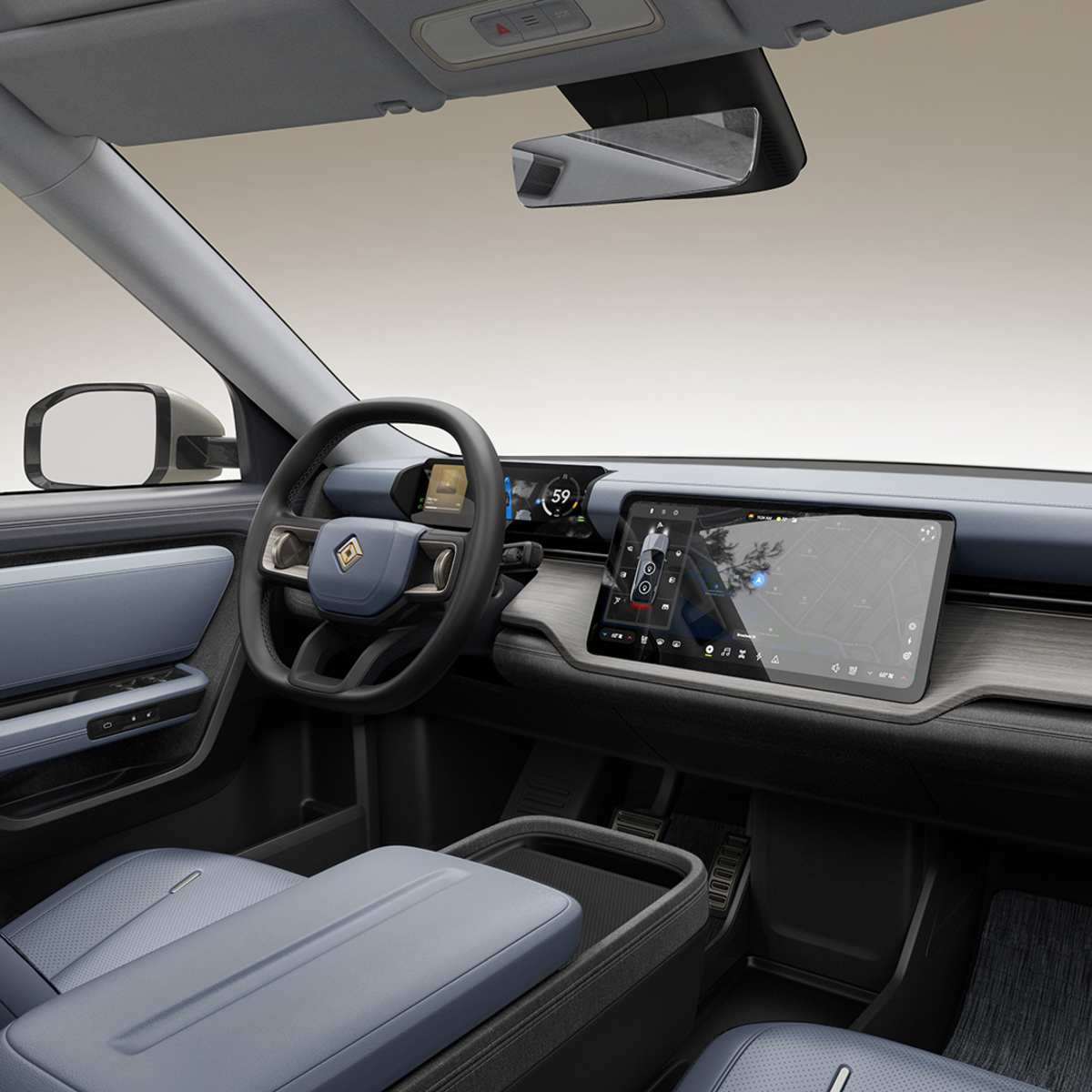
The Rivian R2 is a smaller electric Rivian that’s meant to cost less than their bigger models. The idea is to make an EV that still feels like a Rivian—built for everyday use and trips.
The Rivian R1S is an all-electric SUV with room for more than two people. It’s designed to be both practical and capable, and it runs on an electric battery instead of gas.
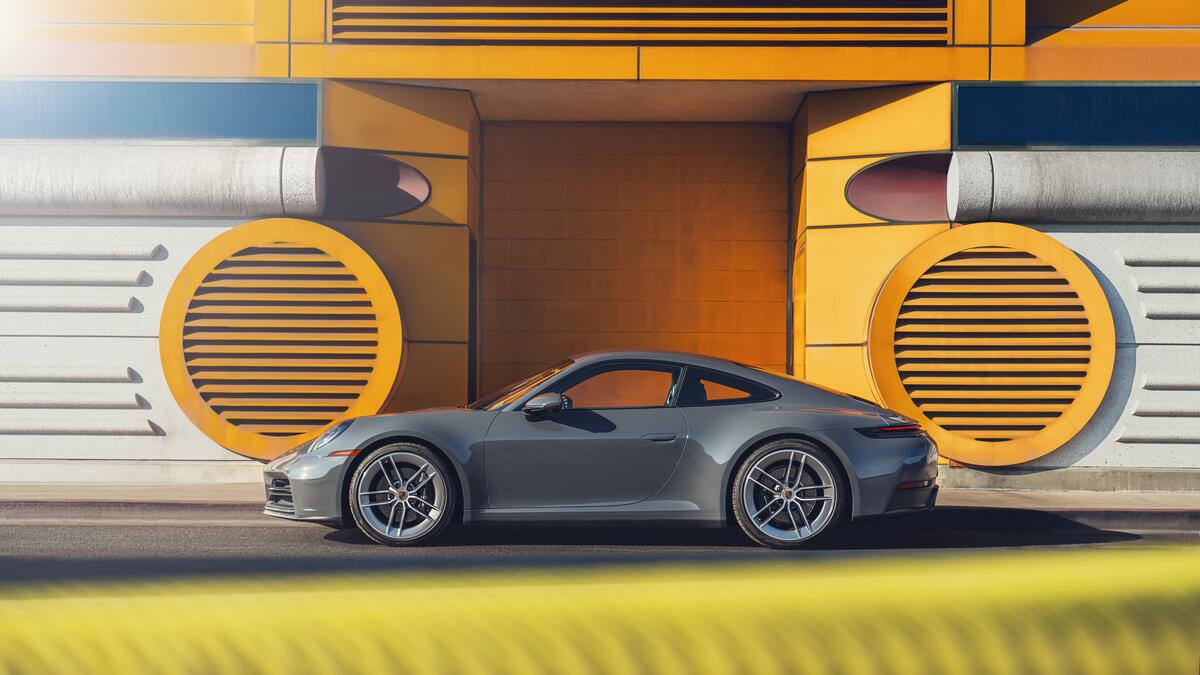
The Porsche 911 is a sports car made by Porsche. It’s famous for being quick and for how it drives, and people talk about it a lot when discussing performance cars.
“Skunk Works” is a nickname for a special development area where engineers build and test prototypes fast. It’s not a regular production factory—more like a high-focus lab for getting ideas working.
A battery lab is where engineers test battery systems and related setups before they’re integrated into a vehicle. “Testing battery setups” typically covers performance, safety, and how the pack behaves under different conditions.
A metrology lab is a measurement-focused lab. They use precise tools to figure out material strength and dimensions so parts are safe and fit correctly.
Tensile strength is how much pulling force a material can take before it breaks. It’s a key number engineers use to decide if a part will hold up under load.
Lithium batteries are the kind of battery most electric cars use. They store electricity and help the car move. The hosts are saying some newer batteries are cheaper and simpler than the fancy lithium ones.
Rare earth metals are special materials used in some electronics and electric-car parts. They can be hard to source, which can make certain technologies more expensive. The hosts bring them up to explain why some batteries are “high-tech.”
Aerodynamic means the car is shaped to cut through air more easily. Less air resistance can help the car use less energy. The hosts are saying the design aims to improve efficiency.
Term
limited components
“Limited components” refers to designing a vehicle with fewer distinct parts and simpler assemblies. In EVs, reducing part count can lower manufacturing complexity, cost, and potential failure points. The hosts suggest the company is emphasizing this approach in what they showed.
Subframes are structural sections of a vehicle that support major components like suspension and sometimes the powertrain. They’re typically attached to the main body structure to help manage loads and improve serviceability. The podcast mentions subframes as part of the vehicle’s structure they showed.
The cooling system keeps the electric-car parts from getting too hot. That matters because batteries and electronics can be damaged by overheating. The hosts are using it to compare designs between cars.
Tesla Model 3 is a popular electric car, and its design is known for how neatly it fits the battery and cooling parts. The hosts are saying the other car’s cooling setup looks similar to how Tesla does it on the Model 3. It’s basically a “this is what it reminds me of” comparison.
An intake is where air is pulled into the car’s systems. In this context, it sounds like it’s meant to help cool something by bringing in lots of air. The hosts are describing how the airflow is handled.
Cast aluminum is aluminum that’s poured into a mold to make a specific shape. In crash-related parts, how it breaks and how you fix it after an accident depends on how the part was designed.
These “cut lines” are planned places on a crash part where you’re supposed to cut it out if it gets damaged. That makes repairs more straightforward and helps keep the rest of the structure safe.
An angle grinder is a power tool that spins a cutting/grinding disc. Here it’s being used to cut out damaged metal where the car’s structure is designed to be trimmed.
Term
super big stampings
“Super big stampings” are large metal parts made by pressing sheet metal into a shape using big machines. Making parts this way can help them be consistent, which matters for crash strength and repairs.
Adhesive is a strong glue used to stick car parts together. Sometimes it’s used in important places where the car needs strength, not just for decoration.
Term
zip tie technology
A zip tie is like a heavy-duty plastic tie that locks down. Cars use them to hold wires and parts in place so they don’t rattle or move.
A rolling road is like a treadmill for a car. The car stays put, but its wheels spin on rollers so engineers can test it in a controlled way. It’s handy when you want repeatable results, like testing how the car acts in very cold or very hot conditions.
Climate-controlled testing means the car is tested in a controlled temperature environment. Instead of waiting for the weather to be just right, engineers can make it very cold or very hot on purpose. That helps them see how systems like batteries change with temperature.
Battery validation cycles are repeatable test sequences designed to stress a battery under realistic usage patterns. Here, the speaker describes cycling between charging and towing at different temperatures to observe how the battery behaves and degrades. The point is to shorten validation timelines by getting more information from controlled lab testing before confirming with some real-world testing.
The Toyota RAV4 is a compact SUV. The podcast is using it as a reference to say that the passenger space in the vehicle being discussed feels very roomy.
The Hyundai Santa Cruz is a small SUV-like vehicle with a truck bed. The podcast is comparing it to other SUVs and pointing out that it has a big interior for its size.
The Ford F-150 is a large pickup truck. It’s the kind of truck people buy for work or towing, and the podcast is talking about how an electric version might not fit everyone’s needs.
Concept
EV adoption the first time around
They’re referring to the early days of electric cars and why they didn’t spread as fast as people hoped. The idea is that both the cars and the “support around them” weren’t good enough yet.
EV means electric vehicle. It’s a car that runs on electricity stored in a battery, and it needs places to charge.
Concept
policy failure
They’re saying the rules or programs meant to help EVs didn’t work well enough. The main issue they point to is not providing enough money or support to make EVs practical for people.
Charging infrastructure just means the places and equipment for charging electric cars. If there aren’t enough chargers, it’s harder to own an EV day-to-day.
The Ford Ranchero is a type of vehicle that mixes a passenger car with a pickup bed. The podcast is wondering whether Ford would use the Ranchero name for something new.
Ford’s Falcon was a popular car line, and in Australia it was often turned into truck-like versions. Here, it’s mentioned as the foundation for the pickup/ute versions that relate to the Ranchero story.
A “ute” is what Australians call a truck that’s shaped like a car up front, but has a bed in the back. It’s the same general idea as a pickup, just with a different naming tradition.
Concept
Ranchero EV truck
They’re talking about a future truck that runs on electricity instead of gas. And they’re wondering if Ford will bring back the “Ranchero” name for it.
The Buick Century is a car model name that Buick has used for a long time. In the podcast, it’s mentioned because it has a lot of history behind the name.
The Ford Thunderbird is an older Ford model that was made as a stylish coupe. The podcast is talking about a version that looked like a Thunderbird, but wasn’t exactly the real thing.
The Ford Transit Connect is a small van that businesses use to move stuff or tools. Here, they’re talking about how some versions were shipped in pieces and put together in the U.S.
The Ford Transit Custom is a van made for commercial use. It’s typically used by businesses to carry tools, goods, or people, and the podcast is talking about it as a fleet vehicle.
“Chicken tax” is a nickname for a U.S. import tariff that can make certain vehicles more expensive to bring in. Companies try to avoid it by assembling vehicles in the U.S. instead of importing them fully built.
A swap means taking the engine and/or gearbox out of one car and putting in different ones. Enthusiasts do it to change how the car drives—often for more power or better fitment.
The Ford Focus ST is a sportier version of the Focus that’s built to be fun to drive. Here, it’s being used as an example of a drivetrain people would want to swap into another car.
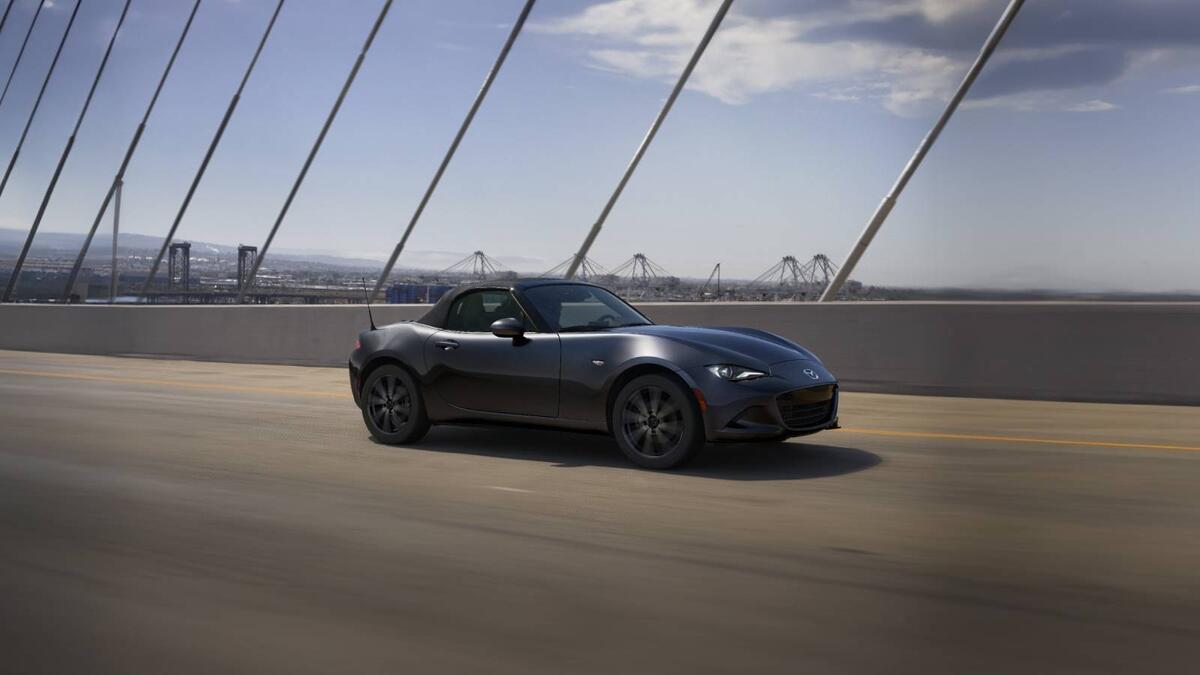
“NA Miata” is a nickname for an early Mazda MX-5 Miata. It’s a small, light convertible that doesn’t use a turbocharger, and a lot of car fans like it because it’s fun and easy to drive.
BMW is a car company that also races in motorsport. When BMW shows up in a race like the Rolex 24, it usually means a BMW-powered team is competing.
LIVE
Yeah, I, those are really appealing to me lately.
I've been trying, well, it's like,
the Rivian is going back.
As Rivian is very keen to remind me several times a day,
it's going back in June, so I will be, actually.
How does it remind you?
By text.
Well, it's just like,
it's like you're gonna need to have a car.
Oh, I see, so it's not actually like,
no, they, a person from Rivian does call and text me
all the time, like at night, in the morning, weekends,
they're like, hey, you know, your car's gotta go back.
Have you thought about getting an R2
or have you thought about getting another R1S?
We could just sign you right up.
We could just put you on another lease right now.
And it's like, no dog, like I, no.
Have you noticed that I've been late making payments
on this shit for like the last, like,
you notice that I was like three months behind on this,
like just chill, you don't want, but you don't want me,
you don't want me to do that.
You're gonna create a situation for all of us.
So, it's just chill.
This is, this is a subprime situation.
Yeah, I'm not your customer anymore.
That's interior.
No, none of us win if you pray on me, man,
it's gonna go back.
Yeah, yeah, yeah, it's like, yeah, the, so, yeah.
You're being predatory right now.
Right, it's like calling you out.
The bass who jokes to death,
trying to swallow a bluegill, that's you right now.
But the, yeah, although I do have the truck,
I do have the 9-11 theoretically,
and then I also do have a press cars while we have them.
So, because I don't need to buy a car right away,
but I am, you know, it's like,
come in, that would be cool,
that'd be fun to have a little transit.
But anyway, yeah, that was it.
What was the name of the pod that we're doing?
Tired, the pod is tired.
It is the car podcast for people who understand
that cars are bad.
And it's us, it's Rory, it's Maddie, it's Peter.
I was very refreshed by the YKS
Straits of Hormuz take today,
just get politics out of it, let's find a common sense.
Why does everything gotta be political?
It's a good question, that's a trenchant observation
of those boys.
I was actually, I don't know if I said this in the chat,
but it was like having the realization of watching them
kind of goof on the situation and realizing
that those two guys who have a podcast
that makes fun of Kickstarter's would genuinely
have done a better job in this situation
than actually ended up happening.
Like, given the exact same set of circumstances,
everything would have, I mean,
they probably just would not have done anything.
Well, you wouldn't have done it.
That's all you had to do is just not do it.
I mean, it is astonishing.
You could put those guys in any part of the situation
currently two weeks ago, three weeks ago,
and it would be better.
Anyway.
Well, because you would just, yeah,
you would just say, look, guys.
Whoops, yeah.
Yeah, we fucked up.
Sorry, this was a bad idea.
I don't know, yeah, I don't know where we're at.
We're just gonna get our stuff in a little kind of.
You guys are right.
Like, we really, you know, and it's fine.
And it's, it's-
We're just gonna pack up our shit.
We do need to get politics out of this.
Yeah.
And we're just gonna-
We're just gonna cut around.
Take our lumps.
Yeah, we're just gonna back out.
Get out of here.
But yeah, that was good.
The, I'm going to Ford in Detroit tomorrow
to see what I believe is a Carhartt edition F-250.
I'm supposed to go to Atal Design.
There's a Michigan Atal Design office
that I'm supposed to go to next week.
Wow.
Now, that's no longer affiliated with Jujaro.
They sold that off a while ago.
That's true, yeah.
But yeah, I'm excited to go.
I'm gonna go poke around.
There's probably some cool shit in the office.
I can steal, like-
Oh, I'm sure.
Yeah.
Yeah, maybe you can get a fork.
Yeah.
Dang it.
Yeah.
The, I tell you guys, I saw the little Ford truck.
The new Universal Review.
Well, you did, you mentioned it,
but I think you were under embargo.
So you couldn't tell us too much about it.
But I don't think we talked about it at all.
I don't think any of our talk about it
actually made it onto the pod.
So tell us about it.
Yeah.
Yeah, it went out to Ford's
Electric Vehicle Development Center
in Long Beach, California.
Yeah.
AKA the Skunk Works.
The Skunk Works.
It's not as skunky as some of the other Skunk Works
that you've seen in the past, but.
It's works.
It was, yeah, it was cool.
I mean, I think like, you know, Ford hired Alan Clark,
who was like big deal at Tesla on the engineering side
in 2022 with the intention of like building this new product
that was like gonna be some kind of an EV.
I like, I don't know, when they hired him in 2022,
the world looked so different as far as
what EVs were expected to be or whatever.
So it's like, who knows what the journey
to this product has been.
But the whole like set up is like being able
to build and develop a car under one roof.
So they have like, there's seating guys
like making seats and part of it.
There's like two or three guys who just make
wiring harnesses like on a prototype basis.
There's designers, there's a paint booth.
There's like a milling machine,
like a foam milling machine that is maybe 30 feet tall.
And like, I mean, it's enormous.
It's like one of the biggest machines I've ever seen.
It's like very cool.
They can build a milling entire car.
This is all in their Skunk Works, their development facility.
This is not like a factory.
This is just like.
Yeah, yeah, this is 12 buildings,
but it's began as prototyping stuff.
Yeah, and they're only prototyping this truck.
I mean, they have other stuff built off this truck
that will come out of that lab too,
but it's like they have a battery lab
where they're like testing battery setups.
And like they had a metrology lab
where they're doing like measuring materials.
Like what is the tensile strength of this aluminum piece
or like, I mean, it's like a complete soup to nuts.
Like every aspect of car development pretty much
is happening under this room or in this room.
And everybody works like right next to each other.
It's really crazy.
Like you can just go walk over and be like,
does this fit on here?
Yep, all right.
How big a place are we talking about?
Like a warehouse?
250,000 square feet, yeah.
Oh, so I mean, so pretty good size.
Yeah, okay.
Yeah, but it's like, you could imagine
like if you basically put two Walmart's together.
Okay.
It'd be like that.
Yeah, that's easy to visualize, yeah.
Yeah, with two like, with a parking lot in between them.
But yeah, super cool.
I mean, it was like, you know, real,
real, it's like, and I've been trying to get an answer
from Ford out of this,
but it's like, what are you guys seeing
in the economic outlook that leads you to believe
that this is like a really important product?
Like the $30,000 pickup truck, you know what I mean?
Like, it's like a lot of the affordability stuff.
It's like, this is kind of maybe an answer to that, you know?
I mean, I would say as of right now,
it's suddenly the answer to everything.
A lot of things, yeah.
I mean, like two months ago, yeah,
what the fuck are you doing?
But suddenly...
Makes a ton of sense.
Yeah, anything that is not dependent on gasoline
is looking...
Pretty good.
Yeah.
But it's, you know, they use like,
forget what the battery chemistry is,
but it's cheaper and like less high-tech.
It's not like the fancy lithium batteries
that require all the rare earth metals.
It's like a more conventional battery,
but they're trying to make that up
in making it super lightweight and aerodynamic.
So a lot of the stuff they showed us
was like just the limited components.
They've been really big on like limited components.
I think like they also showed the structure,
like the frame, the subframes.
And there are two big aluminum castings.
And this like, there's a lot of stuff on here
that feels Tesla E, like the cooling system
and the way it's packaged is exactly like Model 3.
It's just like a little refrigerator unit
and like a bunch of two big and stuff
with like a huge intake that sucks air
because like assume right off the ground
in front of the car,
which always seems like a durability thing to me,
but the structure is cast aluminum
to big chunks of cast aluminum.
And, you know, they're like,
we worked with our repair people
and we worked with like insurance companies
to figure out like, what are the common crashes
and like, how would they be repaired?
And it's like, the structure is basically
supposed to stay safe from most of the big crashes,
but if it does get crunched,
there's like cut lines on the aluminum
that you can just chop it off,
like with the angle grinder.
And then I was like, oh, so you're like-
Oh, this is made, this is like-
Yeah, I was like, oh, I can do that.
This is like raw, tailored for raw.
Yeah, yeah.
Hey, Roy, you're making it.
And then I was like-
That's been one of the big knocks on like those,
I mean, Tesla kind of pioneered like those super,
like big stampings that like-
Castings.
And castings, okay, sorry.
And which like, great, okay,
it's like cheaper to make, it's efficient, it's strong,
whatever, but it's like,
it's a kind of thing where, you know,
a fender bender can fucking total the car.
So they're kind of trying to get the best of both worlds
here, we're having a bit of that,
but have it actually be repairable.
And so we, like each one of these stations
that we went to, they allowed us to ask two questions.
And as we were leaving this first question-
That's very like the genie in the bottle, you know?
Yeah, yeah, so they asked,
someone asked the first question and then I was like,
how do you, when you cut this aluminum piece off,
how do you have to weld it back in?
And he goes, no, you can use adhesive and rivets.
And I was like, what?
I was like, that's like structure of the car stuff.
I was like, what?
And he's like, yeah, you just, you glue it back together
and you can use rivets.
And I was like, I have more questions.
Like, I, I can't, I can't-
Where do you get this glue?
Yeah, it's like-
You want me to get my proper fit gun
and just go in there?
Like, okay.
Yeah.
And there's like a lot of, like, you know,
a lot of car stuff now is just made, is just adhesive.
Adhesive, yeah, that's true.
But I was like, I mean,
that's a big structural member of the car.
And they're like, yeah, just fucking glue it on there.
And it was like, again, one of the,
one of several things that happened here that day
where I was like, we need additional questions.
Some of the stations-
We've developed new zip tie technology.
Yeah.
I was like, can I bank some of the questions
from the areas I don't care about
or go back to the body guy?
My question savings account has five questions in it right now.
I need to spend them all on you.
So that part was cool.
They, we, they have like a rolling road
that's like climate controlled
so they can do like way sub zero,
I think like negative 60 up to like,
you know, over a hundred degrees Fahrenheit
on a rolling road, which is neat.
I never heard of that.
I mean, the rolling road is kind of like a,
like that's like a, like a way to test cars
like aerodynamic behavior, but like with, with, you know,
as it would be on the road with the road.
Yeah. And they're using it a lot of it
for like validation for battery stuff.
So like one of the examples they gave was like,
okay, if you tow, if you charge and then tow
and then charge and like those cycles,
like how does the battery behave at different temperatures?
And they said like that, that was leading,
like that was shortening validations for,
cause it's like building that little capsule
that can do a lot of the testing.
And at least like they said,
they'll still do some real world validation,
but it's like you can get closer doing it.
In the building, you know what I mean?
Like do it, do it cold, do it.
Yeah.
What you're building, you're building like,
I mean, it's just like with the, you know,
like the race cars, you know,
where they just build like these data sets
and they can do all, you know,
once you've got like the data, you know,
then you can just model everything, right?
Yeah, exactly.
But it was, it was cool.
They had like a full body shop.
They showed us a wooden buck of like an SUV version.
They had a real like millennial mood board
in the design area that was like,
I wrote a bunch of the stuff down,
but it was like those little Knox binoculars, you know,
like that they saw on Instagram.
They had a lot of teenage engineering,
like hardware stuff.
They had like G Shock.
They had a bunch of like Nike mules
and like, it was like very like just millennial ass
mood board.
And I was like, I just started writing stuff down.
I was like, this is fascinating.
It's like, like more, more Wes Anderson shit.
Very whimsical, but like,
I was trying to think of like what movie.
The Wes Anderson pick up.
Yeah, it was like a, it's like a Wes Anderson in space.
There's, there is a specific sci-fi movie
that like the aesthetic is like,
and I kept, this is bad, but I kept,
you know, the children of men movie adaptation with 5-O-N,
you know, all the little trucks and stuff
that are like very European in scale
and like, but kind of futuristic looking.
I kept thinking about that movie.
And I was like, I'm sure they're not going through
the children of men look like, that is it.
That's not good.
You don't want to be there.
No, this is a fun return to Wes Anderson
after our previous conversation
about Wes Anderson this week.
What was the last one?
Yeah, what were we talking about?
I don't think that made it either.
No, we were, this was, we were in boys chat saying
had the correspondence dinner shooter
was like a real Wes Anderson situation.
Oh, that's right.
Like someone maybe got hurt
and he might have tripped and fallen.
There was a thing with the doll.
Because he tripped.
I mean, that was the last thing that we,
I think we learned was that was somebody,
the suspicion being that, that he just,
he just tripped and fell on his face.
That's how he ended up on his face like that.
Not good.
And that's like, nobody stopped him at all.
They just shot at him and, and, and he just fell down.
He just took a header.
Turf monster, I think they say the Turf monster got him.
That video you sent with security guy looking up
just like, oh.
Uh-oh.
Oh, look on that guy's face when he dashed past
and he just looks up and his mouth
is just making the round.
Oh, it's posh.
Shape, it's so fucking funny, man.
Not so good.
Oh, I gotta go look at it again.
I'm gonna cheer me up.
But the, yeah, the, I don't know.
It's like, the fuck.
So did you, did you get to see the, the, the truck?
Yeah, so.
So you saw what it looks like.
What is it?
What does it look like?
Well, it's, it's a company camo.
I don't know.
So I think like there's a lot,
there's a lot of stuff to get through.
I think like the, the, the one thing
about these types of visits is you talk to these
like young engineers and they're all just like
uniformly the most optimistic, excited,
engaged employees or whatever.
So it's like hard to like,
hard to be cynical about the thing
just cause everyone's like,
this is the coolest thing I will do in my career,
probably, you know what I mean?
Like, and one of the coolest things you could do
as an engineer is to like have that kind of freedom to
like.
Because six months from now you're gonna be on a board.
Yeah.
Yeah.
But the, that, so that part of it was super cool.
I think
they did roll the truck by us.
So there was like a staged moment where it was supposed
to like drive in front of us as we were crossing
like the courtyard and it didn't work.
It's like, it came in behind us.
So we had to kind of whip around to see it.
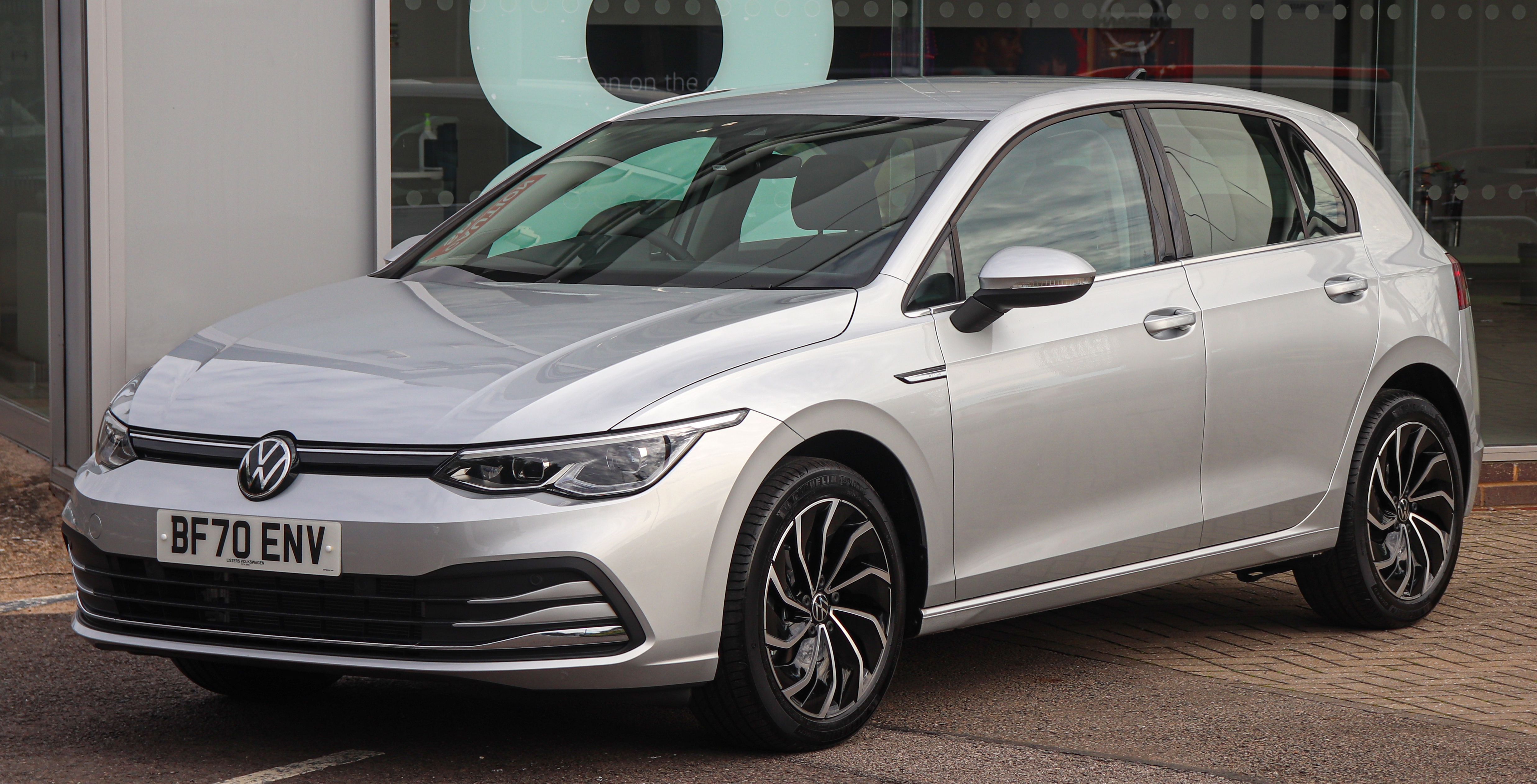
But it, it is like Maverick sized, so very small.
I mean, like a Volkswagen Golf size with a bed.
The passenger area is huge.
It's like RAV4 sized, they said.
Wow.
So it's big interior.
It's kind of like more Hyundai Santa Cruz than Ford Maverick.
But it, the front end is also very Santa Cruz
because it looks like a car.
Like it's like, for lack of a better word, it's pointy.
Like the, the hood angles down like a car instead
of looking more like a truck, it'd be more upright and boxy,
which is an aero, aero thing.
So I think the, the stuff that I,
like I saw some headlights that may have been its headlights
that are like little squircles.
I saw some tail lights that were kind of cool.
That may have been tail lights or they may have been
tail lights from a prototype that they didn't use
or like Amazon tail lights from a car
that I've never seen before.
But I think like depending on how it's detailed
and depending on how far they go with like some
of the like quirk quirkiness of it,
it could be pretty appealing as a design exercise.
I don't, like my fundamental thing for ever
has been EV people don't want a truck
and truck people don't want an EV.
Right.
So like the truck EV is kind of doomed.
But I don't know, it's like a lot's changed.
The price point is there.
I think the big, I think that the big rugged,
the F-150 truck EV is doomed.
But I think that small, cheap, useful EV truck,
I think that's a very sellable proposition.
Yeah.
And what it sounds like, like this sounds like
it could actually be like kind of a nice compliment
to the Slate Truck, right?
Where the Slate Truck is, you know,
similar value proposition, but it's like.
Super stripped.
Super no frills, but also the presentation is very
just kind of like, just like, you know, primitive,
but like in a cool way, you know.
Appearing primitive, whatever.
It was interesting.
And this sounds more like they'd be shooting
for something a little more mainstream and car-like.
Yeah, that's definitely true.
And I think like they did, without saying it,
I think like, and they were at great pains
to not throw any shade at the Slate,
but it was like, you know, we think people
want power windows and a stereo in their car.
And I think like, you know, I think that's true.
I think the approach is really interesting
where it's like Slate is gonna get to a price point
by using what would be considered a higher tech,
more conventional and more common battery technology,
but get to a price point by stripping everything else away.
And this is like, we're gonna use a cheaper battery,
but use kind of our industrial wherewithal,
manufacturing wherewithal to take cost out of the car
in ways that you do not see.
So it's like, you know, Slate is like, okay,
there's no radio, there's no power windows,
there's no whatever, whatever.
This is like, you have all the creature comforts
and the expected car stuff.
We're taking money out of the structure of the car.
We're taking money out of like the battery,
like stuff that, again, that you're not touching.
So that's, it's interesting.
I mean, I think like, again, it's like you said, Peter,
like this seems more prescient or more like of the time,
I guess now, then did six months ago or five months ago.
But, you know, it's like a lot of this stuff too.
It's like the same hurdles do remain for EV adoption.
Like it's still hard to charge cars.
It's still like yada, yada, all that stuff is still true.
Which is something like, you know,
the Chinese cars discourses really picked up
in the last couple of weeks.
And it's like, it is true.
I think that like China could dominate this market
because they can build gas cars,
they can build hybrid cars, whatever.
But it's like all of these products,
the Kevin's big thing that we've been talking about,
it's like EV adoption the first time around failed largely
because the products weren't very good.
It's like, I agree, like most of the products
weren't very good, but my thing is like,
it was a policy failure where it was like,
there was not enough support in price support
or costs in the hood or money on the hood.
And there was not enough infrastructure
about investment to make it happen, make charging.
So both of those things.
So with this car and the slate,
you're eliminating the cost thing.
Like you're selling a car 20 grand
below the average price of a car in America right now.
Which is like, that's a lot.
This is a big deal.
You did not solve the infrastructure thing.
So we'll see.
I mean, it's like in the slate.
I mean, yeah, I mean, the thing is,
there are places in this country
where the infrastructure is not in.
In big markets, you know.
Yeah, exactly.
And I think that's enough for them to get a foothold.
And once they do, you know,
I mean, once they start selling in serious numbers,
if that happens, I think the...
You're starting to make a use case for more infrastructure.
Exactly.
Like a business case for more infrastructure.
Just kind of that would just happen kind of naturally
by market forces, whatever.
Yeah, I think the other like unspoken thing,
especially with the slate, less so with this car,
but like the use case of a large Amazon type fleet buyer
or any UPS or Aldi's or like big plumbing companies
or electrical companies or electricians,
like companies that need a truck
that are very sensitive to gas prices
because they own whatever a hundred pickup trucks
or a hundred vans or whatever.
Like that stuff is like, you know,
like there are a lot of cars on the market in the US
that are cheap to build,
that are sustained with almost no consumer sales whatsoever.
They're all being sold to fleets,
like Ford and ProMaster and a bunch of other cars.
No one buys those, no consumers buy them for the most part,
but it's like, they're still a business.
And like, you know, if you're Ford,
I'm sure that's not what you aspire to with this car
or if you're Slate, it's not what you aspire to,
but it's like, if you're profitable
on either of these cars doing that, like fine.
What's the difference?
Yeah, fine.
Money sounds the same.
Yeah, exactly.
So yeah, it was interesting.
I think like, you know,
kind of a classic Rory quick turn
on the coast for 24 hours type thing.
Got to hang out with Ron Baugh, which is great.
Got to hang out with Jesse Wood from the Speed Channel,
which we should talk about speed at some point on the pod.
Do you guys know what that is?
You know what?
I mean, is it the online thing
or are we talking about like the TV channel, the cable channel?
Speed, it's a YouTube channel mostly.
Yeah, yeah, yeah.
It's James Pumphrey, he used to be on Donut.
And it's his channel, him and this Jesse guy
and a couple other guys who put this together
after they left Donut.
And it's like, got into like a,
I think a million or 2000000 subscribers on YouTube
and like makes decent money and like it's a good product.
But I have to say it's like the only watchable YouTube
or one of a couple of watchable YouTube programs
that I've seen where it's like, and it's really like.
So it's like a program?
It's like a, it's a channel.
He's like making car videos and making.
Yeah, okay.
But the fun thing about it is he's really like following
the old auto week thing, which is like the magazines
about what we say it's about, where it's like,
they've done episodes on like camping
in like 1920s era camping gear.
They do like a lot of like fitness and like nutrition
and like personal grooming or like how to dress stuff,
which is like.
Interior design for boys.
But it's like really good because it's like,
his audience is a lot of like young, very young men
or teenagers and it's like everybody refers to him
like as Ankur, like an uncle.
I think he's like 32, maybe 35.
It's like that.
Dude, that's me in my maintenance class.
That is, yeah, that is you, but it's like,
it's so great because it's like, fuck, if I was,
like when I was in my early 20s,
I got a subscription to like Esquire
because I was like, I gotta sort of learn
how to put clothes on.
Like I can't wear the clothes that I used to wear.
And I got the Esquire subscription.
That didn't occur to me until I was in my 30s.
Yeah.
I'm still not there.
But I was like, but it was like,
you know, the Esquire subscription.
It's like, if you need to look better,
simply go to the Gucci store in your town
and buy a bunch of Gucci stuff.
And it's like, let me stop you right there.
I don't have any money and my town's not like that exactly.
So, but yeah.
You have to start with the lifestyle stuff.
Like I did have to chew the fellas out today
for having a very heated argument about Dragon Ball Z,
like getting you a shouting match about it.
And I was like, fellas,
you're gonna have to go home and read a book.
I didn't, cartoons don't count.
You're gonna have to read a book.
You guys can't, you guys know how to use a wrench.
You can't do this anymore.
I'm sorry.
And they were all like, oh, they were all like real shit.
And I was like, yeah, I'm sorry, guys.
You can't, you can't get into a screaming match
about Spider-Man at your job.
You're gonna have to pick up your wrench to read a book.
I can recommend you books.
It's grown up time.
And they were all like, oh, fuck.
That's great.
I mean, that's, you're like the speed channel
of that class.
You're the onk.
Well, I'll check it out.
I mean, I do watch a fair bit of,
I have to say, you know, like a couple of weeks ago,
I guess around the time that kind of like the,
what do you call it, the kinetic operations
in the golf kind of abated somewhat.
But it was right.
I mean, like, I think I was just kind of, you know,
I mean, this thing that had been just like consuming
all of my attention for weeks and weeks and weeks.
And I was just kind of exhausted with it.
And there was one night where I just like,
you know, was watching like, you know,
making my usual YouTube rounds.
And my attention got distracted by something, you know.
And the thing that took me away, that like got me back,
and it brought me back to kind of just, you know,
like the real reality was just like,
like watching like, you know, burn out, fail, video.
It's the same way.
Just, just guys, yeah.
The algorithm was like,
this guy is going in a direction.
We have to arrest this guy.
Well, the thing is, we gotta grab him.
No, it's like, we've been letting this guy go
in this direction for fucking, you know, like six weeks.
Yeah, if not years, I don't know what it was that,
I mean, really that was, that's another, you know,
just kind of equally, you know, dangerous rabbit hole.
But it was nice just to kind of like, you know,
it's just like catching up with an old friend, you know.
There's a whole lot of like,
it's just in the last year,
there have been a bunch of like exotic car like accidents
that I haven't seen that were captured
on, you know, phone, digital video.
And these are all fresh and new to me.
Like, oh, here's this Lamborghini that's just on fire.
You know.
That does sound real nice.
Yeah, it's good stuff.
Before we leave the, your Ford trip,
the topic behind completely,
I do have to ask, given that it is a sort of car like
pickup truck coming from Ford.
Yeah.
Are they gonna call it fucking Ranchero?
Well, I don't know.
I guess they could.
I think they should call it a Ranchero.
Yeah.
But there's, was there?
It's been, we've gone too long without a Ranchero.
Was there a, there was a Falcon pickup too though, right?
In Australia, the Australian pickups were all Falcons.
The Utes.
Was there a Falcon to Ford,
or Futura pickup?
Yeah.
Oh, the American ones were called Ranchero.
They were called Ford Falcon Ranchero.
But there was a Falcon Ranchero in the early 60s.
Oh, motor trying to everything we know about the 31st
Ford Ranchero EV truck.
Interesting.
So that maybe they will call it Ranchero.
I don't think that's the vibe they're going for.
No, but it's just, it's just a, it's a fucking good name,
man.
And you've got the, got, I mean,
yeah, it's only people as old as me.
Like the name has any resonance too.
But, but you know, come on, you're fucking Ford, man.
You've got, you've got like a century plus of,
of history to draw from, fucking draw from it.
They'll call it, I bet they'll call it the Futura.
Maybe not.
Futura is a good name.
I mean, the last Futura that, well, in my mind is like the,
maybe that was a name that lived on in other places.
I don't know, but, but in the U.S.
I feel like the last Futura was like the,
the kind of 80s, like down market Thunderbird Coupe,
you know, that wasn't quite a Thunderbird.
It was just like the Fairmont Coupe or something.
Like a real, like a real fucking Malaise, Malaise car.
It's like, we're not even fucking trying here.
I don't know.
It's like the work, just the,
the absolute bottom.
There was, there was a, I think a Futura concept,
I want to say it like in the early thousands.
Oh, that sounds right.
Yeah.
But, it's a good name.
This, it predates my trip out to Ford,
but I posted a picture on Instagram website last night
of this Ford Transit Connect, the focus-based one.
They're built in Turkey and they were shipped to the U.S.
as a knockdown and assembled here to avoid
chicken tax type problems.
But there's one with Ace Hardware decals on it
that I drive by.
Yeah, you sent, you sent the pic to the chat too.
Oh, I didn't.
Okay, cool.
Though the styling of those has aged so well.
I've, they look so, again, another,
another children of men ass car.
I think this is like, I'm going to define the genre
of cars that look like production design
from children of men, but it's, it's got,
it's got the ribbing on the side,
like to strengthen the tall bed.
It's got like the plastic cladding and like the little
kind of friendly square headlights,
but like those are super cool looking now.
And like you can get them with a stick.
There's a pretty vibrant swap community doing engine
and transmission swaps of those cars.
Like Ford, Ford Focus ST type stuff would be incredible.
But they are very cool.
I always, I mean, when those cars were, or vans were new,
I thought that that was such an appealing package.
I thought they were so cool.
I, all I could think was like, like if,
if you were just like a band starting out,
like a, you know, two piece band, perfect,
perfect tour vehicle.
Yeah.
I mean, you could even, you could like put gear on one side
and put like a cot on the other.
Yeah, totally.
Yeah.
Yeah, no, absolutely.
And I've always just thought they were very funky and cool.
And it's funny when you, when you sent that,
that pick over this morning and we were talking about it.
And I didn't realize that like, I mean, there,
there was the, the, they went to the next generation.
Yeah, yeah.
Pretty quickly.
So, so, but I mean, those, they had sold those in Europe
for, for many years, I think like going back to the early
odds, but they didn't start selling them here until 2010.
So they were only in the U S market for four years,
2010 to 2013, which I did not realize it was that brief.
And then they went to the, the next generation ones,
which I mean, same concept, but just they're not as,
Not as cool.
Cool looking.
Yeah.
But yeah, the other thing is, is I did look on like
cars.com just to see like what's out there
and like unlimited, you know, range.
Like just like, I want to see every single one that's not
here.
Not a single one with a manual transmission.
Yeah.
I have to imagine that that was vanishingly small.
I mean, there, there's a fair number of them.
And a lot of them in, in decent, you know, like good,
kind of like sub 100,000 mile cars that, you know,
for like, yeah, I mean, like, like 10 grand or below.
You know, I mean, they're, they're like, you know,
quote unquote affordable.
Yeah.
But yeah, they are cool.
Like, and that would be a fun, fun thing to like turn into
like a little, little campers, sporty van.
Yeah.
But I have been equating myself with a lot of Brandon
Eggleston's friends from tour world and boy, what a journey
through a absolutely delightful set of people who are very
just cool and kind and like very excited.
And man, for Ben nice.
I, it's been a fun week.
There's another guy named Rory, which has been
actually a fucking nightmare.
I had like, I just like, you don't think, if we talked about
on the pod before how like at the masters that kept hearing
people say Rory Rory, cause they were talking about Rory
McElroy and I was like, I always turn around.
Like you guys, if you hear someone say, hey, Matt,
hey Pete or whatever, you probably don't turn around.
I assume there's five of me anywhere.
There's, there's 10 more mats every time we turn your head.
Well, I'm used to my entire life being the only Rory around,
but I yesterday made a note to Rory to myself.
He said, call me at five.
And so I made a note in my calendar that said call Rory at five.
And then my little alert went off and it said call Rory.
And I was like, Oh, this person is going to call Rory me
on the phone in a few minutes.
So I'll be ready to receive that call.
And then something happened and obviously he didn't call me
cause I was supposed to call him.
You gotta be, you gotta put, you gotta, you gotta do
the last name.
You gotta go last name mode.
Yeah.
And I, he texted me at seven 30 and was like, Hey,
do you still want to talk?
And I was like, Oh fuck, I'm so sorry.
I was like, lovely guy.
I talked to him for like an hour.
And then I was like, if we do end up working with this guy,
I don't know if I can handle the continued complications
that this would cause for me.
You know what I mean?
Like it's, this is the first.
Well, you just, you just got to, you
you got to just invent a new, a new convention.
Yeah.
I mean, I was, you know, I was in a band with,
with a number of jobs for, for many years.
And they're just, there are ways to, to get around it.
Even when I was around it was a problem
because someone would walk in the bus and go,
Matt and me and Matt Douglas and both go, what?
I think I might, I'll just change my own name.
Yeah.
Well, I mean, you just, you just use your RC.
You just use your, your, your regular,
you just use your, your wallet.
My Bible, he's my government.
Your wallet name.
Robert.
Which is crazy.
Robert.
Yeah.
That is crazy.
It's bananas.
A little known fact.
Only, only a few people.
And the NSA guy who follows our boy's chat.
Hi NSA guy.
Yeah.
And listen to the podcast.
He's a fake fan.
Yeah, he's in there.
I showed, speaking of that, I showed the girls
back to the future last weekend.
What do you think?
Huge hit.
Really?
They were so skeptical.
They were like, I don't want to watch this movie.
It's too talky.
It's too boring.
Who are these people?
Who are they?
Too talky.
It's like, you know, movies that don't, don't,
Right.
Where there's not explosions happening every
10 seconds.
Two seconds.
But they were enthralled by the end of it.
They were like, absolutely into it.
Yeah, it was very good.
Some good Carson then movie too.
I don't think I've ever actually seen the whole thing.
I don't think I've ever, I mean, that's just,
like for me, that was just kind of like in a funny
Valley where when it, when it came out.
Too old.
I was just too, I was too cool.
I was, I was like, I was a high, older teen.
Yeah.
I'm a high school kid who's like fucking,
like listening to big black, you know,
it's like, I'm not fucking.
We're not watching back to the future
with the Huey, Huey Lewis soundtrack.
Exactly.
That's not what we're doing.
Yeah.
It's like, sorry man.
But had you been a few years,
had you been 13 when it came out?
Yeah.
Probably would have caught you directly.
Yep.
You were too old.
It was the wind out.
Yeah, I was just outside of it.
I will say it does absolutely hold up.
The movies are great.
I like, a few years ago, there was a very drunk type situation
where I watch all three movies consecutively,
which if you try to do that with like Star Wars,
you will try to blow your brains out.
Or I found I could do with the back to the future
or Lord of the Rings, fine.
It's like, I was, they were like,
they were just like at the right wavelength
of like me being, you know,
barely.
The Mission Impossible is a good contender for that,
probably.
Ocean's movies?
No, cause two, you get stressed out.
Yeah.
Sam Smith wrote a thing years ago
about watching all of the,
what do you call it?
Fast and Furious movies.
Stoned.
Ah.
Like getting really high and watching all of them,
whatever it was up to at the time.
But it was a lot of them.
It went to space.
Which I thought like, that would be pretty fun actually.
They're all dead.
In my straight edge days in high school,
which I know if you're not now, you never were,
but a bunch of my high school friends made a plan.
It was like when the Star Wars prequels came out
and they were gonna,
like they were gonna watch all the original movies
and then start with episode 12
and then go see three in the theaters.
Tough day.
And the idea was they were gonna drink
and do a bunch of drugs to like make it manageable.
But it became a real hot house in there.
And everybody got mad at each other.
And there was a lot of fighting and arguing.
It was like, it became a real mess.
And they legendarily did not make it to the third movie
because everybody got mad, went home,
and people screaming at each other.
And it was a real.
I would just think that like if you watched the first
and second one of those, like,
like that to me would just like, why would,
why would just.
Why do I need more of this?
You're kind of like, well, now I gotta see,
I guess I have to see how they're gonna end this.
I'm bought in.
I mean, that was like one of the, you know,
I mean, talk like a movie that I was in the, you know,
in the wheelhouse for, right?
You know, I mean, the original star, I mean, I was seven.
So I mean, that was just like.
Which is the perfect time to be in December.
Of course.
Yeah.
I mean, that's exact, that's the right age.
And yeah, and it was fucking great.
I had all the shit and like, but also it's like, you know,
when you're seven and it's like, oh, and you know that,
like there's, you know, because from the, from the outset,
it was like, you know, we're gonna make,
this is a trilogy, you know, and it's like,
oh, there's gonna be a next one that'll come out
like when I'm in, you know, whatever great, you know,
and it's like, you know, when you're fucking that old,
like three years from now, like, you know, I'll be 10,
I'll be in fifth grade.
Like that just seems like.
A lifetime, it literally is your entire lifetime over again.
Yeah.
And, and like, I mean, that just seems like, you know,
imagine how far into the future you can even like,
Yeah.
You know, conceive of.
And it's like, it's beyond that, you know.
It's like me being 75.
Yeah.
Right.
And, and, and so, you know, so when each of those movies
came out, it was just like, it really felt like,
but, but also then at some point in there, it was like,
well, you know, there's, that's the,
these are just the middle ones of this,
you know, nine part story, you know, and it's like,
and someday, and it was just like, oh wait, really,
is that, is that, you know, and, and so,
I mean, I didn't really care that much about fucking
by return to the, I was kind of over it, whatever.
But, but you always kind of knew that like some,
maybe some, some day in the future,
in your far distant adulthood,
there might be more of these movies.
And then, and then when, you know, I was,
when did the first, episode 11 come out?
Like late 99 or something, 98, 99?
I was in the seven years old age range.
Yeah, I was still in California.
I remember going to see that in the theater,
just out of curiosity, you know, I was just like,
I'll give this a shot.
And just being like, this fucking sucks.
Yeah, I was gonna say, it's so terrible, it's unwatchable.
When you're seven, as hard as it is to conceive
of being in fifth grade, it is even harder to conceive
of the New Star Wars movies sucking shit
and being like a fucking unwatchable.
Oh my God, I was nine.
And it was just like, it was so disappointing.
It's like, wait, I waited, I waited 20 years
for this dog shit.
Real.
And that was, that was the last one that I saw
until, until like, I went and saw the Ryan Johnson one.
Oh yeah.
Just because it was Ryan Johnson.
Shout out to Ryan Johnson on bandcamp.
So I picked up the new one.
I was like, that's my man, yes.
He's still like, one of the first people
to buy every fucking music thing I could ever do.
He's so real, Ryan Johnson, I love you.
Crazy.
You're a real one.
I will stick by you.
We should have by the back.
We should, Ryan Johnson going to show, what are you driving?
Let's talk about, the girls also love the glass onion movies,
which is so funny.
Like that, like that of all the characters for me to be,
it's like, what's his name doing, a weird Southern accent.
And like being a, like.
Cool gay detective, we love it.
It's great.
It's like, let's go finally.
Yeah, but, but yeah, it's,
you know, like when, have you guys seen Looper?
Oh, that's been on my list forever.
The Ryan Johnson movie with, with, with,
I think it was like his third one.
And it was kind of like, like the first one was.
Brick Brothers Bloom, Looper.
Right.
Yeah.
And like Looper was, like each of those first three ones,
kind of like, you know,
leveled up in terms of just like,
ambition and budget and whatever.
Love Brothers Bloom.
But Looper like, you know, it's
Bruce Wells is in it.
And anyway, it's like, it's this big,
kind of intense sci-fi time travel, you know,
like all of his movies, it's like, you know, giant puzzle.
But, but I remember like emailing him after we went and saw it
and, and, and complimenting him on, on a car thing
because it opens like in the future.
I forget like, you know, however many years, you know,
but it's, you know, like 20, 70 or something like that
or 50 or something.
And, and, you know, and it is like,
recognizably a futuristic world,
like a Blade Runner-y type world.
And the car that the protagonist is driving
is an NA Miata.
Let's go.
And it was just like, no, that's fucking great.
Because the thing that like, the thing that,
that all cinematic or other just like,
like visions of the future get wrong,
always, almost always is, is they,
they exclude the, the fundamental fact that like,
the future includes the past.
Yeah, yeah.
It's never, it's never like a clean break, you know?
It's like, like, you know, in 20 years in the future.
Yeah, exactly.
The ship from now will be there.
Right.
And, and, and, and so that was just like,
like a really just kind of like,
oh, how do you solve this problem kind of center?
You know, what do you put the guy in?
But it was just, it was just a perfect like,
way of, of just making it like,
like actually be realistic too.
You know, but I don't,
but also kind of tell you something about the,
you know, kind of advance the story
and give you an idea of like, you know,
who this guy is or whatever,
but I, I thought it was so, so clever and, and, and cool.
Did you see that, that Alex and Artie,
Daya.
He, I mean, I, I, I must have seen him race,
like in the lit, when he was doing IndyCar stuff
and in the 90s.
And, but Rory, did you, but he was also,
I know, I remember we were both at Daytona in 2019.
Did you encounter him there?
No, I mean, I saw, I saw the car and I saw,
I may have seen him like, like around,
but I didn't speak to him or anything.
I remember it was a crazy, huge deal.
It was a huge deal.
And, and I, and the thing is,
I kind of, I was aware of his story.
I mean, he, for listeners, if you don't know,
he was, he was a Formula One and IndyCar driver in,
in the 90s and like a real talent.
I mean, he, he won like the IndyCar championship,
like twice, I think in like 97, 98.
And then in 2001 was in a terrible accident.
Where he basically car like got sliced in half
and lost his legs.
And, but he, he came back to, to drive like,
you know, competitively using hand controls.
And then also like became like a fucking Paralympian.
Like, like hand cycling gold medalist in like two Olympics.
He, he won like the New York marathon and, you know,
like for hands like, you know, I mean,
just like this guy who is just like indomitable spirit
and dude, and then very cruelly in 2020
was in another terrible accident
in his like hand cycling wheelchair thing.
And, and never really kind of made it back
to public life after that.
But, but he was at, he was at the Rolex 24 in 2019
that Rory and I were both at.
And BMW, right?
Mm-hmm.
Yeah. Yeah.
In the car with like Colton Herda
was one of the other drivers in that car.
And, and the thing is I, I remember seeing him like around
like both in the paddock and we,
and he was just like constantly sworn, you know,
just like where, where there was just always a crowd
around him and he was just signing.
And I have some, some great picks of, of just him,
just signing stuff for people.
And, and I mean, and he just had like that, that,
just that, that thing of just like that,
that kind of magnetism and charisma
and just like total positivity.
And, and I was also in the, in the media center when
like, you know, they, you know, he, he basically had,
you know, they had a press conference just for, for him.
And so that people, you know,
media could, could interview him and stuff.
And, and, and it's like,
you know, like, like those media center things, you know,
they're usually just, you know, they're pretty, you know,
perfunctory and kind of pad just like, you know,
the thing, but that guy had such genuine charisma and,
and, and it really was the kind of thing where it's just like
everybody in that, I mean, and, and, you know,
media center and fucking Daytona, it's, it's a big room.
There's a lot of fucking people in there.
And there, there wasn't anybody who was not paying attention.
Like, I mean, every eye in, in the room was on him
and hanging on every word.
And, and, and he was just like, just incredibly
just thoughtful and, and positive, just, just, you know,
I mean, it's, it just sounds like hokey and bullshit to just
say he was a positive person.
I mean, obviously, I mean, attitude or whatever, but yeah,
yeah, but, but I mean, it was, it was pretty extraordinary
just to, to be in the room and experience that.
And, and yeah, just a real shame that, yeah.
One of those, you know, it's like when he had that,
that second accident, it really was just like one of those
things where it's like, the people, the, the,
everything happens for a reasoners that you encounter life
in life.
He's like, you just want to just go, yeah, okay.
Okay.
CTFO.
Why, why would you do this to this fucking guy?
You know, who's just done nothing but inspire people.
Yeah.
You know, and, and yeah.
Anyway, but yeah, RIP to, to Alex and Artie.
A real hero.
I mean, like a genuine hero.
Just kept doing what I loved to do.
Like that's, that's something when obviously literally
everything is stacked up against you still getting to
encounter what, what's the, how was it described?
Just sort of speed is the last true new pleasure
invented by modernity.
And it's like, yeah, you do, you do want to get back in there
and like, you got to get back in there.
Yeah, the thing is I just really love going back.
Yeah, yeah, of course you do.
I get it.
I get what you're trying to do with everything,
with the waves and stuff.
It's like, it's out of my way.
I have to go fast.
I'm going to have to, I'm going to have to go do that again.
Yeah.
That's a real one.
Yep.
Yeah.
All right, should we wrap?
Absolutely.
Let's wrap.
All right.
All right boys.
Stay tired everyone.
Stay tired, sorry for the short one.
So.
Stay, stay, stay.
Stay, stay, stay.
Okay.
You guys always keep me up all night.
You guys always keep me up all night.
It's perfect
Me a culpable
All right, I'll see you guys in the chat. All right
About this episode
Rivian reaches out about returning the hosts’ vehicle in June, offering options like switching to an R2 or another R1S lease while payments are behind. The conversation then shifts into Ford’s EV “Skunk Works” style development: a one-roof prototype setup with battery testing, metrology labs, and rapid validation on a climate-controlled rolling road. They dig into EV cost-cutting via cheaper battery chemistry and feature deletions, plus repairability and aluminum crash structures. The episode also riffs on the Ranchero name for a future electric truck.
Rory went down to see how Ford's tackling the EV pickup idea. We salute Alex Zanardi for racing as hard as he could, for as long as he could. We also shout out the guys at Speeed for teaching the youngsters interior design. Digressions include the proper age to enjoy Star Wars, Rian Johnson's good taste, and Rivian trying to get after the wrong bluegill.
Peter's got new music out: https://peterpeterhughes.bandcamp.com/album/dissociation-loops
Alloy's piece on the Ford EV skunkworks visit is here: https://alloymag.com/visit-fords-evdc-skunkworks-ev-uev/
And of course, sign up for an Alloy membership here: https://alloymag.com/sign-up/
And your producer pal Matty has nothing to plug & is just glad you're here on the Patreon page. Thank you for listening to the show, please comment if there's an episode subject or recurring topic or update you'd like from us! We also take email at staytiredpod.gmail.com if you have a question for our next mailbag episode!