Episode 116: Skywalker Ranchero
About this episode
Rivian reaches out about returning the hosts’ vehicle in June, offering options like switching to an R2 or another R1S lease while payments are behind. The conversation then shifts into Ford’s EV “Skunk Works” style development: a one-roof prototype setup with battery testing, metrology labs, and rapid validation on a climate-controlled rolling road. They dig into EV cost-cutting via cheaper battery chemistry and feature deletions, plus repairability and aluminum crash structures. The episode also riffs on the Ranchero name for a future electric truck.
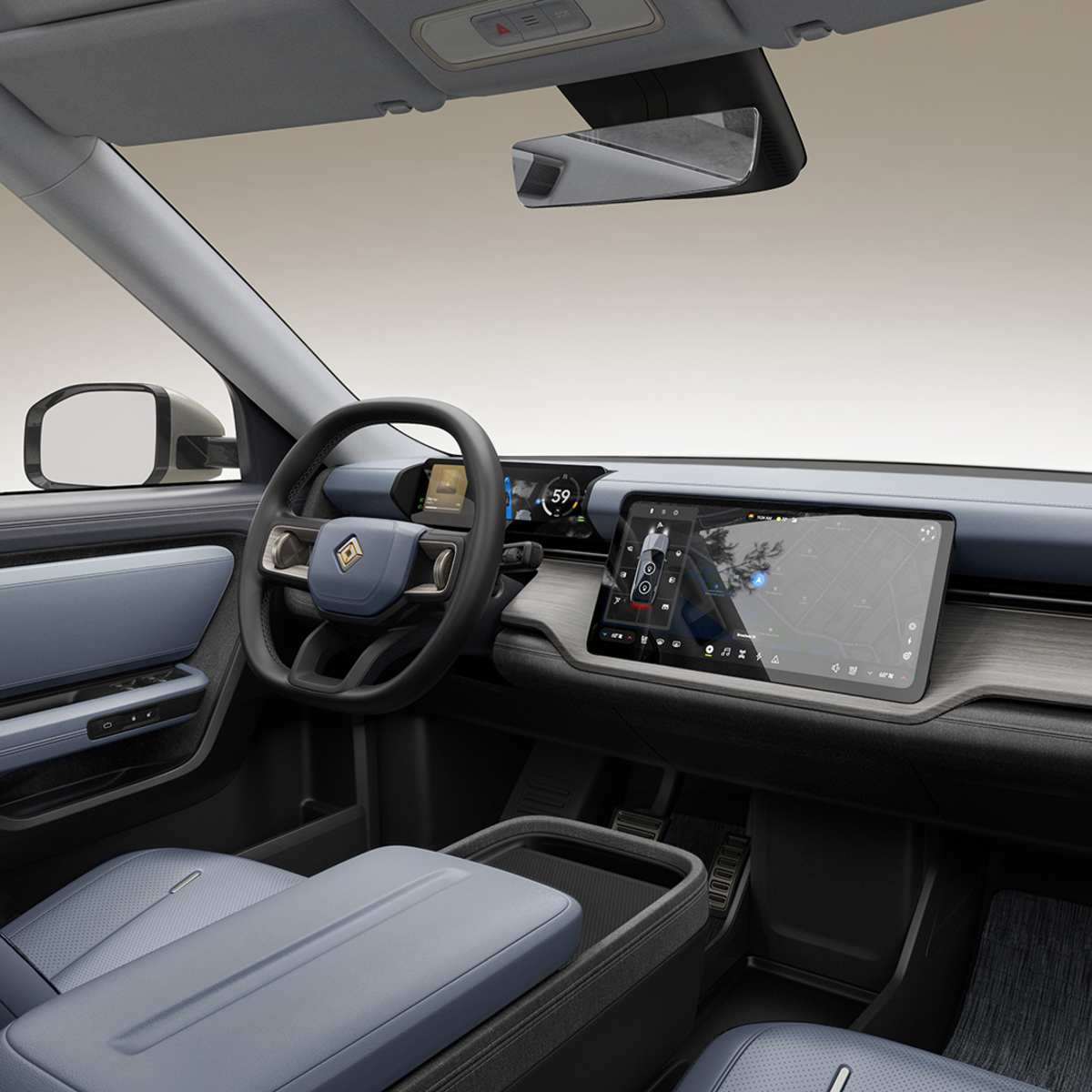
Rivian R2
"Have you noticed that I've been late making payments [51.0s] on this shit for like the last, like, [54.0s] you notice that I was like three months behind on this, [56.3s] like just chill, you don't want, but you don't want me, [59.6s] you don't want me to do that. [61.5s] You're gonna create a situation for all of us. [66.3s] So, it's just chill."
The Rivian R2 is a smaller electric Rivian that’s meant to cost less than their bigger models. The idea is to make an EV that still feels like a Rivian—built for everyday use and trips.
The Rivian R2 is Rivian’s smaller, more affordable electric vehicle concept compared with the R1 lineup. It’s positioned as a mainstream EV option while keeping Rivian’s focus on adventure-ready design and software-driven features.

Rivian R1S
"Have you noticed that I've been late making payments [51.0s] on this shit for like the last, like, [54.0s] you notice that I was like three months behind on this, [56.3s] like just chill, you don't want, but you don't want me, [59.6s] you don't want me to do that. [61.5s] You're gonna create a situation for all of us. [66.3s] So, it's just chill."
The Rivian R1S is an all-electric SUV with room for more than two people. It’s designed to be both practical and capable, and it runs on an electric battery instead of gas.
The Rivian R1S is Rivian’s three-row electric SUV, built on the company’s skateboard-style EV platform. It’s aimed at families and adventurers who want EV torque and space without giving up off-road capability.
lease
"We could just sign you right up. [43.1s] We could just put you on another lease right now. [44.7s] And it's like, no dog, like I, no."
A lease is like renting a car for a fixed time with monthly payments. You usually give it back at the end, unless you choose to buy it later.
A lease is a financing arrangement where you pay to use a vehicle for a set period, rather than buying it outright. At the end, you typically return the car or buy it for a pre-set price, which is why lease terms can matter a lot when payments get late.
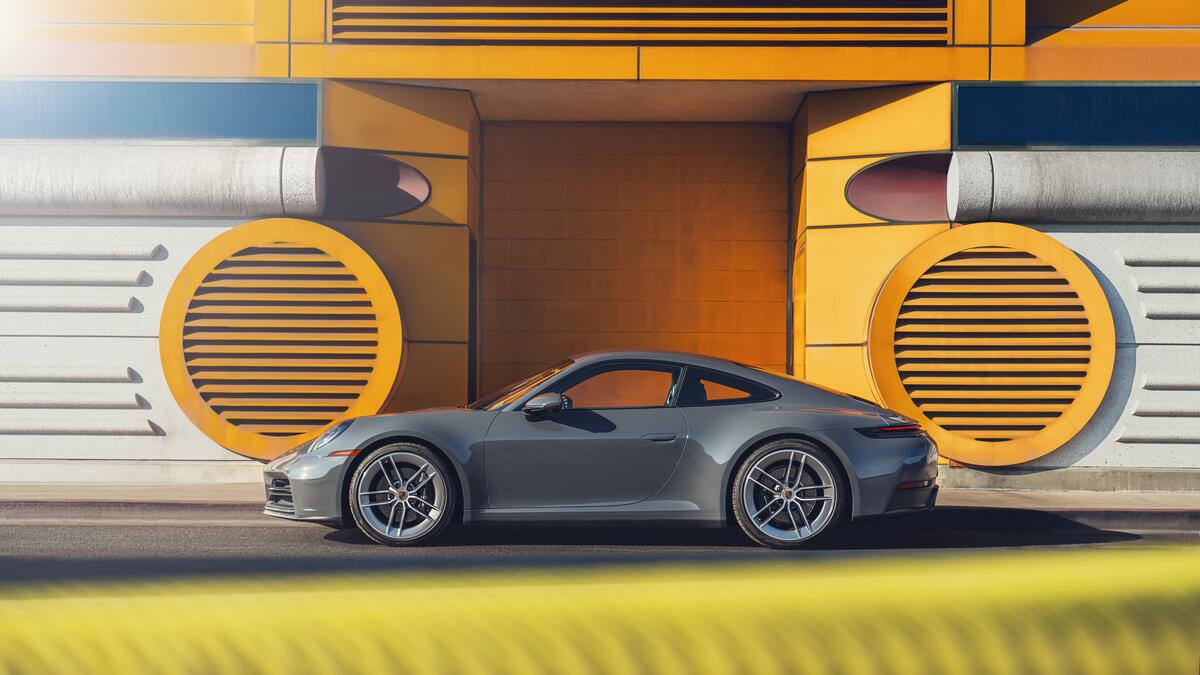
Porsche 911
"But the, yeah, although I do have the truck, I do have the 9-11 theoretically, and then I also do have a press cars while we have them."
The Porsche 911 is a sports car made by Porsche. It’s famous for being quick and for how it drives, and people talk about it a lot when discussing performance cars.
The Porsche 911 is a long-running sports car known for its distinctive shape and rear-engine layout. It’s often discussed because it represents a benchmark for performance and driving feel, and it’s a common “reference car” in automotive conversations. In the podcast, it’s mentioned as one of the cars the speaker has access to or considers.
Skunk Works
"This is all in their Skunk Works, their development facility. This is not like a factory."
“Skunk Works” is a nickname for a special development area where engineers build and test prototypes fast. It’s not a regular production factory—more like a high-focus lab for getting ideas working.
“Skunk Works” refers to a specialized development facility style where engineers prototype and test new technology quickly, often outside normal factory workflows. In the automotive context, it’s used to describe a place focused on early-stage engineering work like fitment checks and component testing.
battery lab
"but it's like they have a battery lab where they're like testing battery setups."
A battery lab is where engineers test battery systems and related setups before they’re integrated into a vehicle. “Testing battery setups” typically covers performance, safety, and how the pack behaves under different conditions.
metrology lab
"And like they had a metrology lab where they're doing like measuring materials. Like what is the tensile strength of this aluminum piece"
A metrology lab is a measurement-focused lab. They use precise tools to figure out material strength and dimensions so parts are safe and fit correctly.
A metrology lab is where engineers measure parts and materials with high precision. Here, they’re using it to determine properties like tensile strength of an aluminum piece, which helps validate whether components can handle stress.
tensile strength
"Like what is the tensile strength of this aluminum piece or like, I mean, it's like a complete soup to nuts."
Tensile strength is how much pulling force a material can take before it breaks. It’s a key number engineers use to decide if a part will hold up under load.
Tensile strength is the maximum stress a material can handle while being pulled before it fails. When engineers test tensile strength for aluminum parts, they’re checking whether the material can survive real-world loads without cracking or breaking.
lithium batteries
"But it's, you know, they use like, forget what the battery chemistry is, but it's cheaper and like less high-tech. It's not like the fancy lithium batteries that require all the rare earth metals."
Lithium batteries are the kind of battery most electric cars use. They store electricity and help the car move. The hosts are saying some newer batteries are cheaper and simpler than the fancy lithium ones.
Lithium batteries are the most common energy-storage type in modern electric vehicles. They use lithium-based chemistry to store electrical energy and deliver power to the drive system. The podcast contrasts them with “more conventional” battery types that may be cheaper but less advanced.
rare earth metals
"It's not like the fancy lithium batteries that require all the rare earth metals."
Rare earth metals are special materials used in some electronics and electric-car parts. They can be hard to source, which can make certain technologies more expensive. The hosts bring them up to explain why some batteries are “high-tech.”
Rare earth metals are a group of elements used in various high-tech products, including some battery and electric-motor supply chains. Their availability and mining impact can affect cost and manufacturing scale. The podcast mentions them to explain why certain battery technologies are described as “fancy” or more resource-intensive.
aerodynamic
"but they're trying to make that up in making it super lightweight and aerodynamic."
Aerodynamic means the car is shaped to cut through air more easily. Less air resistance can help the car use less energy. The hosts are saying the design aims to improve efficiency.
Aerodynamic design reduces drag—the resistance a vehicle experiences as it moves through air. In EVs, lower drag can improve efficiency and range. The hosts connect lightweight, aerodynamic goals to how the company is trying to compensate for using a “more conventional” battery.
limited components
"So a lot of the stuff they showed us was like just the limited components. They've been really big on like limited components."
“Limited components” refers to designing a vehicle with fewer distinct parts and simpler assemblies. In EVs, reducing part count can lower manufacturing complexity, cost, and potential failure points. The hosts suggest the company is emphasizing this approach in what they showed.
subframes
"I think like they also showed the structure, like the frame, the subframes. And there are two big aluminum castings."
Subframes are structural sections of a vehicle that support major components like suspension and sometimes the powertrain. They’re typically attached to the main body structure to help manage loads and improve serviceability. The podcast mentions subframes as part of the vehicle’s structure they showed.
cooling system
"there's a lot of stuff on here that feels Tesla E, like the cooling system and the way it's packaged is exactly like Model 3."
The cooling system keeps the electric-car parts from getting too hot. That matters because batteries and electronics can be damaged by overheating. The hosts are using it to compare designs between cars.
An EV cooling system manages temperatures for components like the battery and power electronics. Keeping these parts within an operating range helps performance and protects hardware from overheating. The podcast uses the cooling system as a key clue for how the vehicle is packaged.

Tesla Model 3
"And this like, there's a lot of stuff on here that feels Tesla E, like the cooling system and the way it's packaged is exactly like Model 3."
Tesla Model 3 is a popular electric car, and its design is known for how neatly it fits the battery and cooling parts. The hosts are saying the other car’s cooling setup looks similar to how Tesla does it on the Model 3. It’s basically a “this is what it reminds me of” comparison.
Tesla Model 3 is an electric sedan known for its EV packaging—how the battery and cooling hardware are arranged to fit efficiently. The hosts compare the cooling system layout and packaging of the discussed vehicle to the Model 3’s “packaged like a refrigerator unit” approach. That comparison is meant to give listeners a concrete reference point for EV thermal management and component layout.
intake
"and like a bunch of two big and stuff with like a huge intake that sucks air because like assume right off the ground"
An intake is where air is pulled into the car’s systems. In this context, it sounds like it’s meant to help cool something by bringing in lots of air. The hosts are describing how the airflow is handled.
An intake is an opening or duct that brings air into a system. In EVs, intakes are often used for cooling airflow management—moving air to heat exchangers or radiators. The podcast describes a “huge intake that sucks air,” implying an airflow strategy for thermal control.
cast aluminum
"but the structure is cast aluminum [652.0s] to big chunks of cast aluminum."
Cast aluminum is aluminum that’s poured into a mold to make a specific shape. In crash-related parts, how it breaks and how you fix it after an accident depends on how the part was designed.
Cast aluminum refers to aluminum parts made by pouring molten metal into a mold. In crash structures, it can be used to create complex shapes, but the way it fractures and how it’s repaired depends heavily on the design and the presence of engineered cut/trim points.
cut lines on the aluminum
"but if it does get crunched, [677.6s] there's like cut lines on the aluminum [680.3s] that you can just chop it off, [682.1s] like with the angle grinder."
These “cut lines” are planned places on a crash part where you’re supposed to cut it out if it gets damaged. That makes repairs more straightforward and helps keep the rest of the structure safe.
“Cut lines” are engineered weak points or trim lines on a crash structure that tell repairers where to cut/remove damaged sections. The goal is to make repairs more predictable—so the damaged aluminum can be chopped off and replaced without compromising the remaining structure.
angle grinder
"that you can just chop it off, [682.1s] like with the angle grinder. [683.7s] And then I was like, oh, so you're like-"
An angle grinder is a power tool that spins a cutting/grinding disc. Here it’s being used to cut out damaged metal where the car’s structure is designed to be trimmed.
An angle grinder is a handheld power tool with a spinning abrasive disc, commonly used to cut or grind metal. In this context, it’s mentioned as the tool used to remove damaged sections along the engineered cut lines in aluminum crash structures.
super big stampings
"I mean, Tesla kind of pioneered like those super, [699.9s] like big stampings that like-"
“Super big stampings” are large metal parts made by pressing sheet metal into a shape using big machines. Making parts this way can help them be consistent, which matters for crash strength and repairs.
“Super big stampings” refers to large, high-volume metal panels or structural pieces formed by stamping presses. The idea is that stamping can produce strong, repeatable shapes at scale, which can influence crash performance and how repairable the structure is after damage.
adhesive
"a lot of car stuff now is just made, is just adhesive. Adhesive, yeah, that's true. But I was like, I mean, that's a big structural member of the car."
Adhesive is a strong glue used to stick car parts together. Sometimes it’s used in important places where the car needs strength, not just for decoration.
In modern cars, adhesive is used to bond parts together instead of relying only on mechanical fasteners like bolts or welds. When the speaker calls it a “structural member,” they mean the glued joint is part of the car’s strength and crash-load paths, not just trim or weather sealing.
zip tie technology
"Some of the stations- We've developed new zip tie technology."
A zip tie is like a heavy-duty plastic tie that locks down. Cars use them to hold wires and parts in place so they don’t rattle or move.
“Zip tie technology” refers to using cable ties as a fastening method—often for bundling wiring, securing harnesses, or holding non-structural components in place. In automotive contexts, the key is that the ties must survive heat cycles, vibration, and chemical exposure without loosening or degrading.
rolling road
"They, we, they have like a rolling road [822.5s] that's like climate controlled [824.8s] so they can do like way sub zero"
A rolling road is like a treadmill for a car. The car stays put, but its wheels spin on rollers so engineers can test it in a controlled way. It’s handy when you want repeatable results, like testing how the car acts in very cold or very hot conditions.
A rolling road is a treadmill-like dyno where the car’s wheels drive rollers while the vehicle stays in place. Because the speed and conditions can be controlled, it’s useful for repeatable testing of things like aerodynamics and drivability. In this segment, it’s also being used to study how vehicles behave across extreme temperatures.
climate-controlled testing
"[822.5s] that's like climate controlled [824.8s] so they can do like way sub zero, [828.2s] I think like negative 60 up to like,"
Climate-controlled testing means the car is tested in a controlled temperature environment. Instead of waiting for the weather to be just right, engineers can make it very cold or very hot on purpose. That helps them see how systems like batteries change with temperature.
Climate-controlled testing means running vehicle tests in a controlled temperature environment rather than relying on outdoor weather. This lets engineers compare results across consistent cold and hot conditions. In the segment, it’s used to evaluate battery behavior at different temperatures.
battery validation cycles (charge/tow/charge)
"they said like one of the examples they gave was like, [860.0s] okay, if you tow, if you charge and then tow [863.3s] and then charge and like those cycles,"
Battery validation cycles are repeatable test sequences designed to stress a battery under realistic usage patterns. Here, the speaker describes cycling between charging and towing at different temperatures to observe how the battery behaves and degrades. The point is to shorten validation timelines by getting more information from controlled lab testing before confirming with some real-world testing.

Ford Maverick
"...kind of whip around to see it. But it, it is like Maverick sized, so very small. I mean, like a Volkswagen G..."
The Ford Maverick is a small pickup truck. It’s meant to be easier to park and drive than bigger trucks, while still having a bed for hauling.
The Ford Maverick is a compact pickup truck designed to be smaller and more practical than full-size trucks. It comes up in discussions because it’s often described as “truck-sized” but easier to live with day to day. The podcast compares its size to other vehicles, emphasizing how small it is.
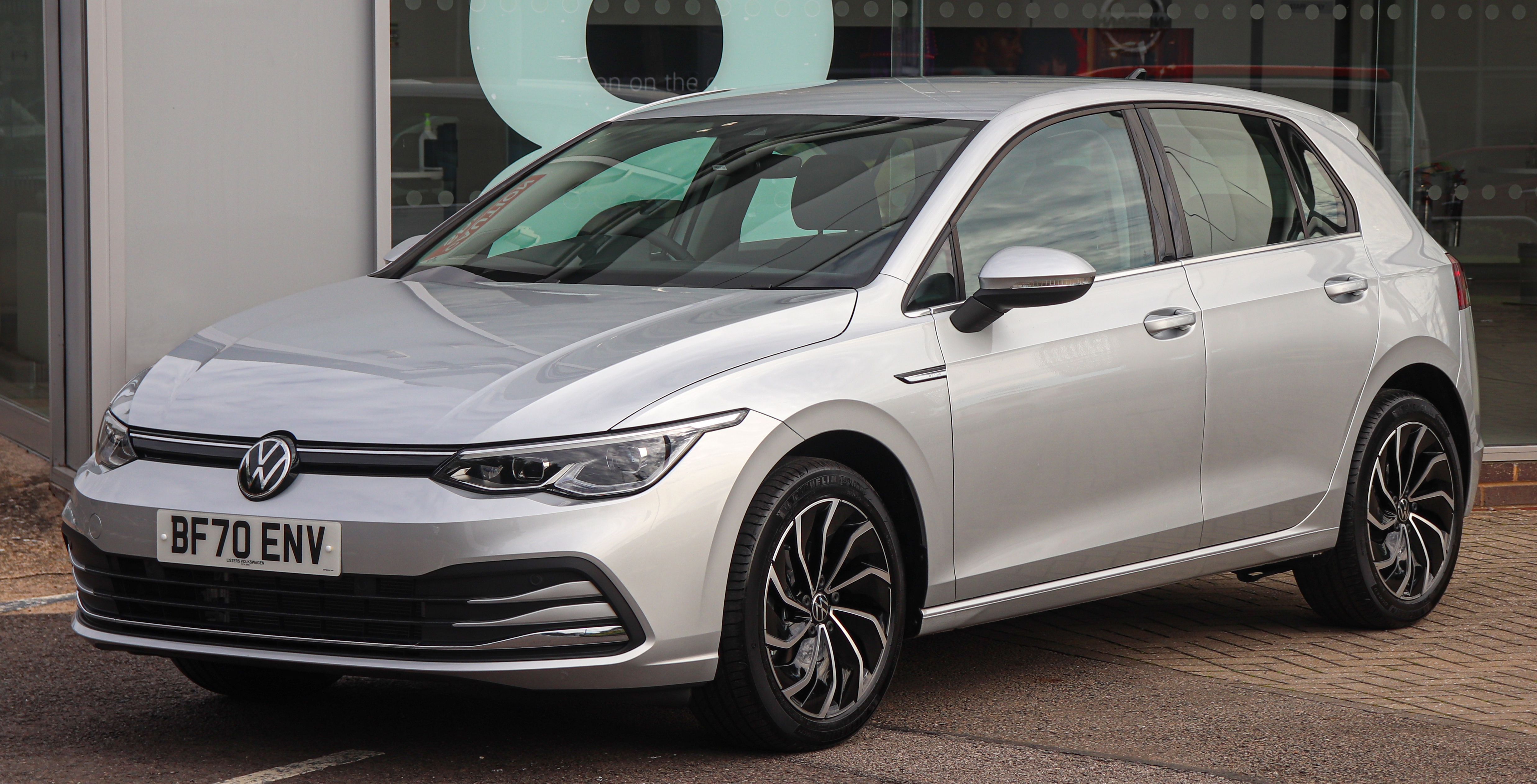
Volkswagen Golf
"...k sized, so very small. I mean, like a Volkswagen Golf size with a bed. The passenger area is huge."
The Volkswagen Golf is a compact car. People often use it as a reference for size, and it’s generally built to be practical for everyday driving.
The Volkswagen Golf is a compact car that’s known for being practical, efficient, and easy to drive. It’s frequently used as a size reference point because many people understand what “Golf-sized” feels like. In the podcast, it’s mentioned to describe how small a vehicle is, while also noting that the passenger space feels large.

Toyota RAV4
"The passenger area is huge. It's like RAV4 sized, they said. Wow."
The Toyota RAV4 is a compact SUV. The podcast is using it as a reference to say that the passenger space in the vehicle being discussed feels very roomy.
The Toyota RAV4 is a compact SUV known for being practical and widely used. In the podcast, it’s used as a size benchmark—specifically noting that the passenger area is huge “like RAV4 sized.” The mention is about interior space and how roomy a vehicle feels.

Hyundai Santa
"So it's big interior. It's kind of like more Hyundai Santa Cruz than Ford Maverick. But it, the front end is..."
The Hyundai Santa Fe is a midsize SUV. It’s designed to carry more people comfortably, and the podcast is pointing out that it has a large interior.
The Hyundai Santa Fe is a midsize SUV built to offer more space and comfort than smaller crossovers. It’s discussed in the podcast for its big interior and for how its overall layout compares to other vehicles mentioned. The speaker is describing the Santa Fe’s size and front-end look in that comparison.

Hyundai Santa Cruz
"...it's big interior. It's kind of like more Hyundai Santa Cruz than Ford Maverick. But it, the front end is also..."
The Hyundai Santa Cruz is a small SUV-like vehicle with a truck bed. The podcast is comparing it to other SUVs and pointing out that it has a big interior for its size.
The Hyundai Santa Cruz is a compact crossover with a pickup-style bed, designed to combine SUV comfort with light hauling capability. The podcast compares it to the Santa Fe in terms of interior size and overall feel, while also describing the front-end look. It’s mentioned as part of a “which vehicle is closest” comparison.

Ford F150
"I think the big, I think that the big rugged, the F-150 truck EV is doomed. But I think that small, cheap, useful EV truck,"
The Ford F-150 is a large pickup truck. It’s the kind of truck people buy for work or towing, and the podcast is talking about how an electric version might not fit everyone’s needs.
The Ford F-150 is a full-size pickup truck and one of the most common “work and everyday” trucks on the market. It’s discussed in the context of electric trucks and market direction, with the podcast suggesting that a rugged, big F-150 EV approach may struggle. The key point is how the F-150’s size and positioning affect what buyers want.
EV adoption the first time around
"it's like EV adoption the first time around failed largely because the products weren't very good."
They’re referring to the early days of electric cars and why they didn’t spread as fast as people hoped. The idea is that both the cars and the “support around them” weren’t good enough yet.
The hosts are talking about early electric-vehicle (EV) rollout efforts and why they didn’t take off. Their point is that early EV adoption struggled because the vehicles themselves weren’t compelling enough and the surrounding ecosystem wasn’t ready.
EV
"it's like EV adoption the first time around failed largely because the products weren't very good."
EV means electric vehicle. It’s a car that runs on electricity stored in a battery, and it needs places to charge.
EV stands for electric vehicle—cars powered primarily by electric motors and rechargeable batteries. The discussion is about how EV adoption depends not just on the cars, but also on pricing and charging availability.
policy failure
"it was a policy failure where it was like, there was not enough support in price support or costs in the hood or money on the hood."
They’re saying the rules or programs meant to help EVs didn’t work well enough. The main issue they point to is not providing enough money or support to make EVs practical for people.
In this context, “policy failure” means government or program design didn’t provide enough financial support to overcome the high upfront costs of EVs and related systems. The hosts connect that lack of support to slower EV uptake.
charging infrastructure
"there was not enough infrastructure about investment to make it happen, make charging."
Charging infrastructure just means the places and equipment for charging electric cars. If there aren’t enough chargers, it’s harder to own an EV day-to-day.
Charging infrastructure is the network of places and equipment that lets EVs recharge—like public chargers and the supporting electrical buildout. Without it, EVs can’t be convenient for people who can’t reliably charge at home.

Ram ProMaster
"They're all being sold to fleets, like Ford and ProMaster and a bunch of other cars. No one buys those, no ..."
The Ram ProMaster is a van made for businesses. The podcast is saying these are usually purchased by fleets for work, not by most everyday drivers.
The Ram ProMaster is a commercial van commonly sold to fleets for deliveries and business use. The podcast notes that these vans are often sold to fleets and that they aren’t typically bought by private customers. It’s mentioned as an example of a vehicle category that’s more about work than personal ownership.

Ford Ranchero
"Yeah. Are they gonna call it fucking Ranchero? Well, I don't know."
The Ford Ranchero is a type of vehicle that mixes a passenger car with a pickup bed. The podcast is wondering whether Ford would use the Ranchero name for something new.
The Ford Ranchero is a pickup-truck style vehicle that blends a car-like cabin with a truck bed. The podcast is discussing whether a new or proposed model would use the “Ranchero” name. The mention is about branding and what the name would imply.

Ford Falcon
"In Australia, the Australian pickups were all Falcons. [2029.7s] The Utes. [2031.9s] Was there a Falcon to Ford, [2036.5s] or Futura pickup?"
Ford’s Falcon was a popular car line, and in Australia it was often turned into truck-like versions. Here, it’s mentioned as the foundation for the pickup/ute versions that relate to the Ranchero story.
The Ford Falcon is a long-running Ford model line that, in Australia, was used as the base for local “ute” and pickup-style variants. In this segment, the hosts connect the Australian Falcon-based pickups/utes to the American Ranchero naming.
Utes
"In Australia, the Australian pickups were all Falcons. [2029.7s] The Utes. [2031.9s] Was there a Falcon to Ford, [2036.5s] or Futura pickup?"
A “ute” is what Australians call a truck that’s shaped like a car up front, but has a bed in the back. It’s the same general idea as a pickup, just with a different naming tradition.
“Ute” is an Australian term for a vehicle that’s part passenger car and part pickup—typically a car-like front end with an open cargo bed. In the transcript, the hosts use it to describe how Australia’s Falcon-based variants correspond to the American Ranchero idea.
Ranchero EV truck
"Oh, motor trying to everything we know about the 31st [2049.5s] Ford Ranchero EV truck. [2051.8s] Interesting. [2052.7s] So that maybe they will call it Ranchero."
They’re talking about a future truck that runs on electricity instead of gas. And they’re wondering if Ford will bring back the “Ranchero” name for it.
An “EV truck” is a truck powered by an electric motor instead of a gasoline engine. The hosts are speculating about a future electric vehicle that revives the Ranchero name, tying the classic Ranchero/ute/pickup concept to modern EV branding.

Buick Century
"... fucking Ford, man. You've got, you've got like a century plus of, of history to draw from, fucking draw fr..."
The Buick Century is a car model name that Buick has used for a long time. In the podcast, it’s mentioned because it has a lot of history behind the name.
The Buick Century is a long-running model line from Buick, known historically for being a mainstream, comfortable car. The podcast mentions it as having “a century plus of history,” emphasizing the brand’s long background with the name. It’s brought up as a reference to legacy and model identity rather than specific specs.

Ford Thunderbird
"...a was like the, the kind of 80s, like down market Thunderbird Coupe, you know, that wasn't quite a Thunderbird."
The Ford Thunderbird is an older Ford model that was made as a stylish coupe. The podcast is talking about a version that looked like a Thunderbird, but wasn’t exactly the real thing.
The Ford Thunderbird is a classic personal-luxury coupe that was especially associated with the 1950s through later decades. In the podcast, the speaker references an “80s down-market” Thunderbird Coupe, but notes it wasn’t quite a true Thunderbird—suggesting a look-alike or mislabeling. It’s mentioned mainly as a styling and naming reference point.

Ford Transit Connect
"but, but I posted a picture on Instagram website last night [2151.3s] of this Ford Transit Connect, the focus-based one. [2157.9s] They're built in Turkey and they were shipped to the U.S. [2161.0s] as a knockdown and assembled here to avoid [2165.1s] chicken tax type problems."
The Ford Transit Connect is a small van that businesses use to move stuff or tools. Here, they’re talking about how some versions were shipped in pieces and put together in the U.S.
The Ford Transit Connect is a small commercial van built on a car-like platform, commonly used for deliveries and service work. In this segment, the host specifically mentions a version that was shipped to the U.S. as a knockdown kit and assembled locally.

Ford Transit
"...a picture on Instagram website last night of this Ford Transit Connect, the focus-based one. They're built in Tu..."
The Ford Transit Custom is a van made for commercial use. It’s typically used by businesses to carry tools, goods, or people, and the podcast is talking about it as a fleet vehicle.
The Ford Transit Custom is a small commercial van used for transporting people or cargo, often in business fleets. The podcast mentions it in the context of where certain vans are built and how they’re sold. It’s brought up as part of a discussion about fleet-focused vehicles.
knockdown
"They're built in Turkey and they were shipped to the U.S. [2161.0s] as a knockdown and assembled here to avoid [2165.1s] chicken tax type problems."
“Knockdown” means the van is shipped in pieces instead of as a finished vehicle. Then it gets put together in the destination country.
A “knockdown” shipment means the vehicle is sent in parts (often as a kit) rather than fully assembled. The receiving country assembles it locally, which can help manufacturers reduce certain import costs or meet trade rules.
chicken tax
"as a knockdown and assembled here to avoid [2165.1s] chicken tax type problems."
“Chicken tax” is a nickname for a U.S. import tariff that can make certain vehicles more expensive to bring in. Companies try to avoid it by assembling vehicles in the U.S. instead of importing them fully built.
The “chicken tax” is a nickname for U.S. tariffs that historically targeted imported light trucks and related vehicles. Manufacturers sometimes use local assembly or trade-structure workarounds to avoid paying those higher import duties.
engine and transmission swaps
"There's a pretty vibrant swap community doing engine and transmission swaps of those cars."
A swap means taking the engine and/or gearbox out of one car and putting in different ones. Enthusiasts do it to change how the car drives—often for more power or better fitment.
An engine swap and transmission swap are modifications where you replace a car’s original powertrain with different components from another vehicle. People do this to chase more power, better reliability, or to fit a drivetrain that wasn’t offered from the factory.

Ford Focus ST
"Like Ford, Ford Focus ST type stuff would be incredible."
The Ford Focus ST is a sportier version of the Focus that’s built to be fun to drive. Here, it’s being used as an example of a drivetrain people would want to swap into another car.
The Ford Focus ST is a performance-oriented compact hatchback known for its turbocharged engine and enthusiast-friendly handling. In the context of the transcript, it’s mentioned as a dream donor drivetrain for swapping into another platform.
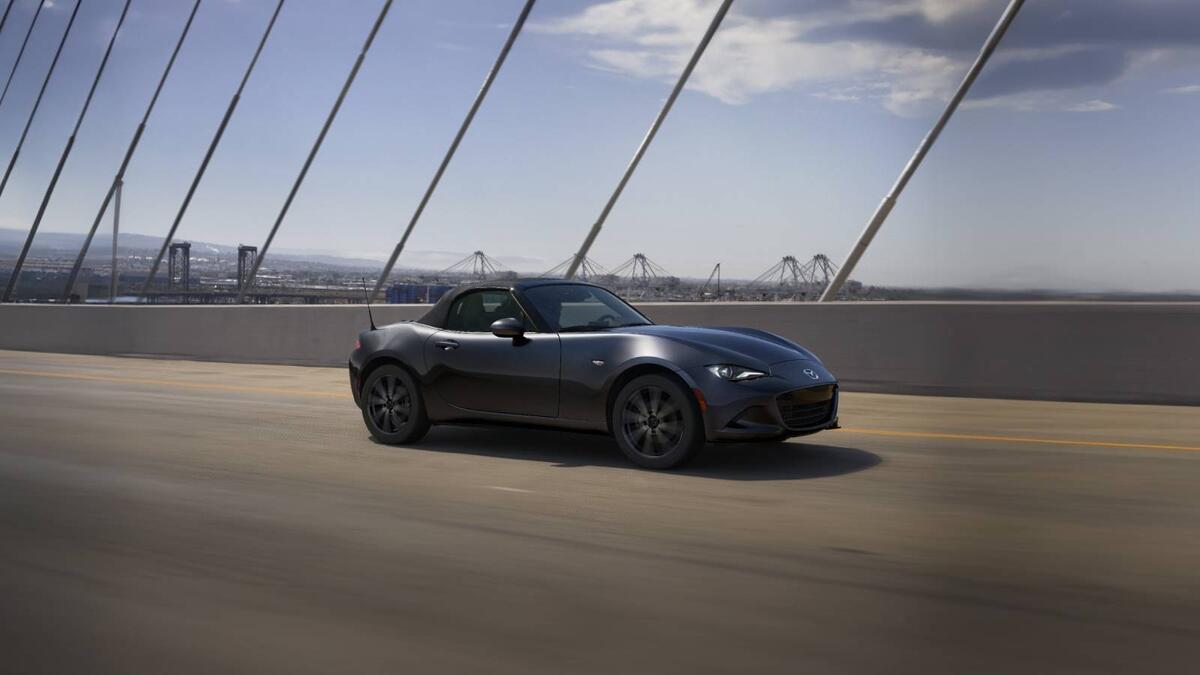
NA Miata
"And the car that the protagonist is driving [3043.6s] is an NA Miata."
“NA Miata” is a nickname for an early Mazda MX-5 Miata. It’s a small, light convertible that doesn’t use a turbocharger, and a lot of car fans like it because it’s fun and easy to drive.
“NA Miata” refers to the first-generation Mazda MX-5 Miata (the NA chassis). It’s known for being a lightweight, naturally aspirated roadster that’s popular with enthusiasts because it’s simple, tossable, and rewards driver input.
Formula One
"he was, he was a Formula One and IndyCar driver in, in the 90s and like a real talent."
Formula One is the highest level of open-wheel race car competition. The cars are very high-tech and race on tracks all over the world.
Formula One (F1) is the top level of open-wheel, single-seat racing, with races held around the world on road courses and purpose-built tracks. It’s known for highly engineered cars, strict technical regulations, and major manufacturer involvement.
IndyCar
"he was, he was a Formula One and IndyCar driver in, in the 90s and like a real talent."
IndyCar is a top-level racing series in the U.S. It uses open-wheel race cars and runs on different kinds of tracks, including ovals and road courses.
IndyCar is a major American open-wheel racing series, featuring races on oval tracks, road courses, and street circuits. It’s distinct from F1 in car design rules and the typical race calendar, but it’s still top-tier motorsport.
Rolex 24
"But, but he was at, he was at the Rolex 24 in 2019 that Rory and I were both at."
The Rolex 24 is a long endurance race that lasts 24 hours. Teams share driving duties and try to keep the car running reliably the whole time.
The Rolex 24 is a 24-hour endurance race, most famously associated with the Rolex 24 at Daytona. Teams rotate drivers through long stints, and the focus is on durability, consistency, and strategy over outright sprint speed.
BMW
"And, and he was at the Rolex 24 in 2019 that Rory and I were both at. And BMW, right?"
BMW is a car company that also races in motorsport. When BMW shows up in a race like the Rolex 24, it usually means a BMW-powered team is competing.
BMW is the German automaker that competes in major motorsport events and produces race cars and engines for various series. In endurance racing contexts like the Rolex 24, BMW involvement typically means factory-backed or team entries using BMW powertrains.
Request an Explanation
Heard something you'd like explained? We'll add it to this episode.
Sign in to request explanations for terms you heard.
Want to learn more?
Browse our glossary for plain-English explanations of automotive terms, jargon, and concepts.
Help improve this episode
See something that's not quite right? Our annotations are AI-generated and can sometimes miss the mark. Click the flag icon on any annotation to suggest a correction.