
Episode 119: The Cool Chair Zone
About this episode
The episode bounces from warehouse logistics and studio gear to a long, very human thread about “cool chair” ergonomics—armrests, no-armrest options, and DIY seat/armrest fixes. It then shifts into real-world car ownership: stripping parts (“organ donor time”), chasing a Volkswagen GTI no-start with immobilizer/OBD2 issues, and hard-starting mysteries. The hosts also dig into paintless dent repair (PDR) and why aluminum panels can make it easier, before pivoting to luxury-brand strategy and a big endurance-racing rules roundup.
1995 teal pickup truck
"there is the masking effect of driving a super beat-up 1995 teal pickup truck that is like [303.2s] Would not be a car that she'd expect me to be in"
They’re talking about an older pickup truck they used to drive. The point is that the truck looked so worn-out and old that it made people judge the driver differently.
The speaker is describing a specific older pickup truck—an example of how a beat-up, dated vehicle can change how people perceive the driver. In this context, the truck is used as a “masking” prop to explain why someone might not expect the driver to look a certain way.
organ donor time
"in psychological preference preparation of just throwing the rest of it away. It's organ donor time [910.5s] Exactly"
They mean the car is going to be taken apart so useful pieces can be reused. It’s like donating the car’s parts to help keep another project going.
The host is using “organ donor time” as a metaphor for turning a car into a parts source. In enthusiast terms, it usually means stripping usable components before the rest is discarded.
parts
"if you put especially like where you live if you put [921.6s] sob SPG for parts on [925.5s] Marketplace it would be gone. Someone would come get it like tomorrow [929.5s] Probably yeah, and I mean, you know, and there's there's like sob bulletin boards, too that I could you know post you on and I [937.7s] suspect that somebody would come and get it just for [941.4s] Parts, yeah"
“Parts” here is used in the enthusiast sense of selling off individual components from a car rather than selling the whole vehicle. That’s common when a car is being dismantled for a project or scrapped.
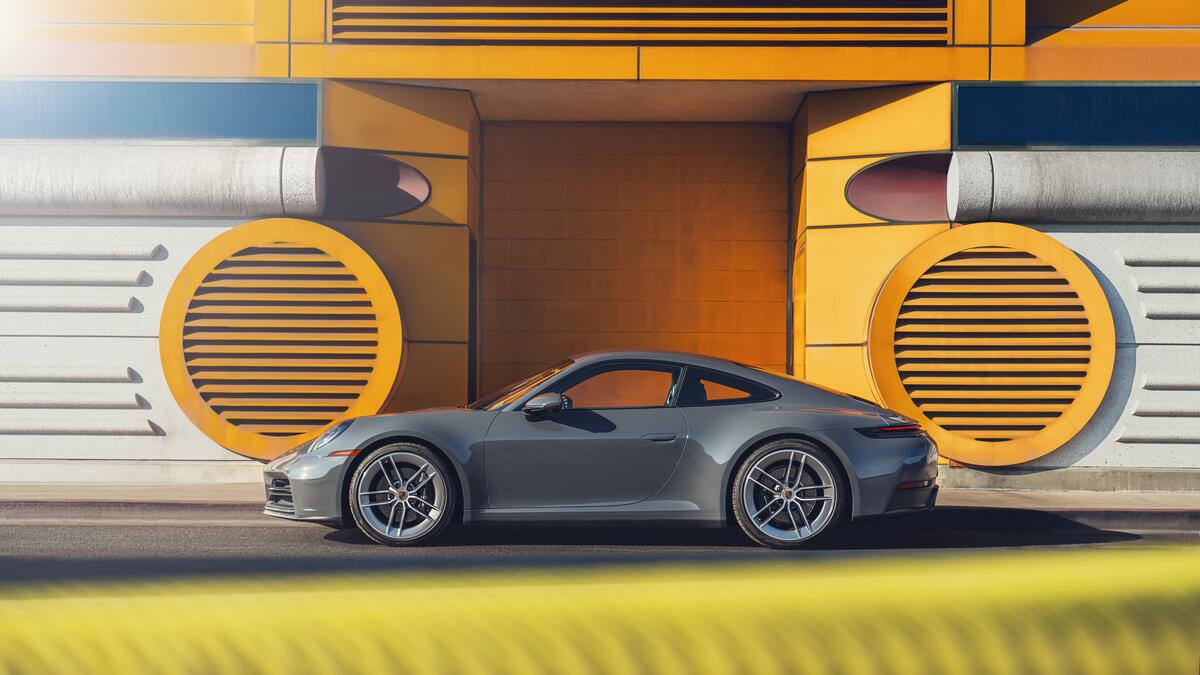
Porsche 911
"Um [968.6s] Yeah, you're you're like a third of the way to making a gaming rig out of your car, right? [974.1s] Yeah, totally. That's true [976.3s] Yeah, the chair rocks. It's very good. We should get some photos on the sob SPG simulator [982.4s] 2026 [984.2s] Yeah, I am my current car project has been I [990.8s] Was supposed to finish the 9-11 a couple weeks ago, and then I was like oh [993.9s] Car has some rust bubbling through on something I talked about this on here and"
They’re working on a Porsche 911 project car. They had to pause because rust is showing up under the paint, which can mean more work than expected.
The host references a “9-11” project car, which is almost certainly a Porsche 911. The key detail is that the project was delayed because the car has rust bubbling through, which is a common issue that can affect structural parts and body panels.
Bondo
"Is this the thing we're like did you discover like a ton of Bondo or something or was that a different car?"
Bondo is a thick filler used to cover dents on a car before painting. If someone used a lot of it, it can mean the damage wasn’t properly fixed underneath.
Bondo is a brand name commonly used for automotive body filler—thick putty used to smooth dents and reshape panels before paint. The host is wondering whether the repair involved excessive filler, which can be a sign of poor workmanship or rushed bodywork.
immobilizer
"It seems like there's like an immobilizer where it's just turning it off and there's this Met this message that pops up on the dash"
An immobilizer is the car’s anti-theft feature. If it doesn’t recognize the key properly, it can stop the car from starting—even if everything else seems fine.
An immobilizer is an anti-theft system that prevents the engine from starting unless the correct key/transponder is recognized. Here, the host suspects the car is immobilizing after the repair, which would explain why it cranks/turns but won’t start.
break error break system service vehicle
"there's this Met this message that pops up on the dash that says break error break system service vehicle or whatever"
That’s a dashboard warning about the brakes. The host is wondering if that brake warning could somehow be connected to why the car won’t start after the repair.
This refers to a brake-system warning message on the dash, indicating the car’s brake-related electronics or sensors have detected a fault. The host is considering whether a brake fault could be related to the immobilizer/no-start behavior, which can happen if certain safety modules enter a protective mode.
OBD2 scanners
"It's not in the manual and it will not connect to any of the VW specific OBD2 scanners"
OBD2 scanners are tools that plug into a car and read error codes from the computer. If the car won’t connect, it can make troubleshooting much harder because you can’t pull the usual diagnostic codes.
OBD-II (often written OBD2) is the standardized onboard diagnostics system used to report fault codes from a car’s electronics. The host says the GTI won’t connect to VW-specific OBD2 scanners, suggesting the issue may be in modules/communication rather than a simple sensor fault.
high-pressure fuel pump
"trying to figure this I already replaced the high-pressure fuel pump, which is like Was recommended on one of the forums is like a potential solution. It did nothing"
The high-pressure fuel pump is the part that sends fuel to the engine at the right pressure. If the car won’t start, people often suspect this part—but in this case, replacing it didn’t solve the problem.
A high-pressure fuel pump pressurizes fuel to the levels required by modern direct-injection engines. The host already replaced the high-pressure fuel pump based on forum advice, but it didn’t fix the no-start/immobilizer-like problem, implying the root cause may be elsewhere.
hard-starting
"It it had been kind of hard-starting occasionally for a while and I think it's related to that but I think somehow sitting for a while like"
Hard-starting means the car is difficult to start. The speaker is saying it had been happening occasionally, and that leaving the car sitting for a while might make it worse.
Hard-starting means the engine struggles to start—often requiring extra cranking or repeated attempts. The speaker suggests the issue had been happening “for a while” and that sitting for a while may have made it worse, pointing toward a fault that shows up after the car sits.

Ford F150
"No, she's driving the F-150 quite a bit And yeah, so it's fine and like it you know whenever we leave as a family we just take the press car or whatever but"
The Ford F-150 is a popular pickup truck. Here, it’s mentioned as the truck the driver uses a lot while they’re dealing with a car that won’t start reliably.
The Ford F-150 is a full-size pickup truck known for being extremely common and easy to live with day-to-day. In this segment, it’s the vehicle the speaker says the person drives “quite a bit,” so it’s part of the troubleshooting context.
spark
"It's getting spark. It's getting fuel. It's got compression. Right. Just just run and it's like well. No, actually, there's some"
Spark is what lights the fuel in a gas engine. If there’s no spark, the engine can’t start, so the speaker is basically saying the car seems to have the usual starting ingredients but still won’t run.
Spark refers to the ignition event in a gasoline engine where the spark plug ignites the air-fuel mixture. The speaker lists spark, fuel, and compression as the basic ingredients needed for an engine to run, then suggests the car has an “unknowable fault” somewhere else in the system.
compression
"It's getting spark. It's getting fuel. It's got compression. Right. Just just run and it's like well. No, actually, there's some"
Compression is how much the engine squeezes the air (and fuel) inside the cylinder. The speaker is saying the engine seems to have enough compression, but it still won’t start because something else is wrong.
Compression is the pressure created inside an engine’s cylinders when the piston moves up, which helps make the air-fuel mixture ignite properly. The speaker uses compression as one of the three “it should just run” ingredients (spark, fuel, compression) before pointing to an additional fault.
unknowable fault
"Just just run and it's like well. No, actually, there's some unknowable fault Somewhere it's in the car. I am we're not gonna tell you where it is"
An “unknowable fault” is when a car has a problem, but it’s not obvious what part is causing it. Even if the engine seems like it should start, the car’s computer may be blocking it for a reason that’s hard to find.
“Unknowable fault” is the speaker’s way of describing modern diagnostic trouble: the car may have the basic starting conditions (spark, fuel, compression) but still refuses to run due to a fault that’s hard to pinpoint. This highlights how newer systems can fail in ways that aren’t obvious without specific scan tools and procedures.
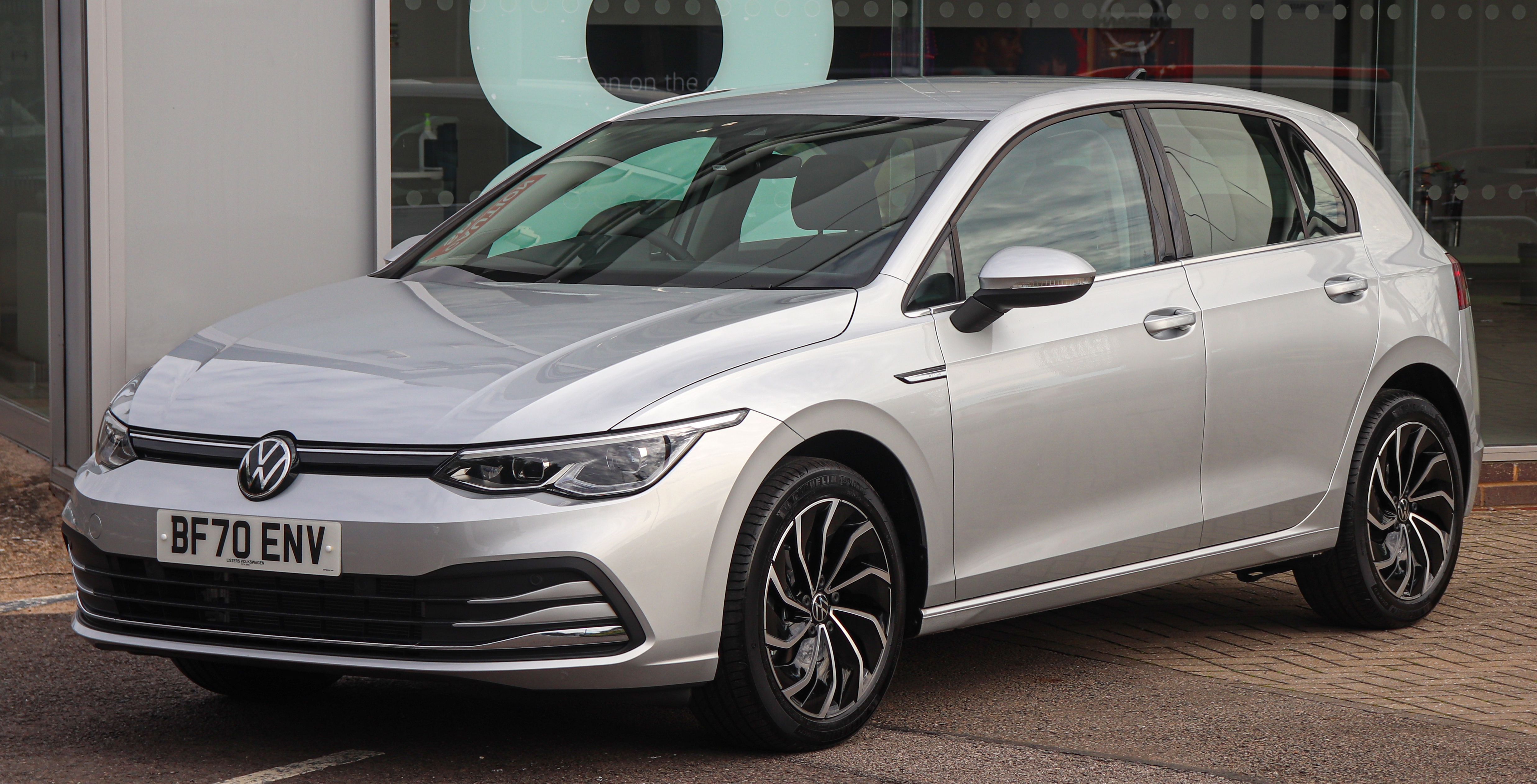
GTI
"I am learning fascinating stuff on a preliminary Google such as some mechanics are like, yeah, you know, GTI You just turn the key to on for 20 minutes and then turn it back again and see if that resets everything like hello"
GTI usually means the Volkswagen Golf GTI. In this conversation, it’s brought up as an example of a car where people try a simple key-on procedure to reset something when it won’t behave correctly.
GTI is short for Volkswagen Golf GTI, a performance-oriented version of the Golf hatchback. The speaker mentions it in the context of a “turn the key to on for 20 minutes” reset idea, implying a specific kind of electronic/starting issue that some owners try to clear with a procedure.
turn the key to on for 20 minutes
"I am learning fascinating stuff on a preliminary Google such as some mechanics are like, yeah, you know, GTI You just turn the key to on for 20 minutes and then turn it back again and see if that resets everything like hello"
This is a DIY-style reset idea: turn the key to ON and leave it there for a while, then try again. The point is to reboot the car’s electronics so it clears a glitch that’s preventing normal starting.
This describes a “key-on” reset attempt, where leaving the ignition in the ON position for a set time is used to cycle or reinitialize certain electronic systems. The speaker relays that some mechanics suggest this for a GTI starting/behavior issue, implying the fault may be related to modules, sensors, or software states rather than a purely mechanical problem.
Rivian
"You know that the the Rivian gave is gone You gave it back to that piece in the pod description"
Rivian is a company that makes electric cars, especially trucks and SUVs. Here, they’re talking about returning one of their Rivian vehicles.
Rivian is an electric-vehicle brand known for trucks and SUVs built around EV powertrains and modern software. In this segment, the host mentions a Rivian vehicle as part of their personal fleet change.
paintless dent removal
"I did do a fair amount of pdr on it ... I want to hear of I want to hear about your your paintless dent dent removal Project process"
Paintless dent removal is a way to fix a dent without repainting the car. It works by reshaping the metal so the surface stays mostly intact.
Paintless dent removal (PDR) is a body-repair method that fixes dents without repainting by reshaping the metal from behind or using controlled pulling. It’s often used for door dings and other dents where the paint hasn’t cracked.
DIY
"Because you said got like some kind of kit. Yes to DIY it you DIYed your pdr I bought a kit probably from ebay"
DIY means you do the work yourself instead of hiring someone. Here, it means they used a kit to try dent repair on their own.
DIY means doing a task yourself rather than paying a professional. In this context, the host is describing doing paintless dent removal themselves using a kit.
paintless dent repair
"which actually makes the pdr thing way easier because [1527.0s] um [1528.1s] You can actually like when when you over pull and they're like high spots"
Paintless dent repair means fixing a dent without damaging the paint. The goal is to push the metal back so the outside looks normal again.
Paintless dent repair is a technique that fixes dents while keeping the original paint intact. Instead of sanding and repainting, the repair is done by reshaping the metal so the surface returns to its original contour.
fender
"And the thing about she she had been hit. She got hit bad and like it collapsed her tail light and her fender"
A fender is the outer panel above the wheel. If it gets dented in a crash, sometimes it can be fixed without repainting, depending on how bad the damage is.
A fender is the outer body panel over the wheel area. When a dent or impact happens here, PDR may be possible if the paint isn’t broken and the metal can be worked back without needing replacement.
tail light
"And the thing about she she had been hit. She got hit bad and like it collapsed her tail light and her fender"
A tail light is the light on the back of the car. If the car gets hit, the tail light can get damaged or not sit correctly anymore.
A tail light is the rear lighting assembly that includes brake/turn/position functions depending on the vehicle. In collision damage, it can be cracked, misaligned, or affected by nearby panel deformation.
PDR
"You could probably make a lot of money going around and doing pdr, uh like just showing up people's houses and doing it like"
PDR (paintless dent repair) is a way to fix a dent without repainting the car. A person uses special tools to push the dent back out from the inside of the panel.
PDR (paintless dent repair) is a method for removing dents without repainting. Instead of sanding and respraying, the technician works the metal back into shape from behind the panel using specialized tools.

4Runner Forerunner
"...or the third time this week A guy in a new Toyota forerunner Uh, tried to brake check me when I was driving th..."
The 4Runner is a type of SUV made by Toyota. It’s designed to handle rough roads and off-road driving better than many regular SUVs. People talk about it because it’s a common, sturdy vehicle.
The Toyota 4Runner is a body-on-frame SUV known for off-road capability and a rugged, truck-like build. It’s often discussed because it’s a popular choice for drivers who want something durable for rough roads and everyday use. In a podcast context, it may come up as an example of a common, capable SUV on the road.
brake check
"Uh, tried to brake check me when I was driving the f-150 yesterday and I just like Did not slow down whatsoever. It's just like and he very panically, you know took off"
A brake check is when someone suddenly brakes on purpose to scare or force the car behind them to slow down. It’s risky because the following driver may not have enough time or space to stop safely.
A brake check is when a driver intentionally taps or slams the brakes to force a following driver to slow down. It’s dangerous because it can cause rear-end collisions, and it ignores the real stopping distance needed for the vehicles involved.

Ford Bronco
"We talked about we talked about the philson thing. Yeah, we talked about going to About what? Seattle The philson bronco"
The Ford Bronco is an SUV that’s built for off-road driving. Here, the hosts are referencing a particular Bronco they talked about earlier.
The Ford Bronco is a classic off-road SUV line known for its rugged, trail-focused design. In the transcript, “philson bronco” appears to refer to a specific Bronco discussed in a prior conversation, likely tied to a person or story rather than a formal trim name.
regenerative
"the braking like with with the kind of uh regenerative stuff Just like completely non-linear completely unpredictable"
Regenerative braking is a hybrid/electric trick where slowing down also helps recharge the battery. It uses the motor to help brake the car instead of relying only on the friction brakes.
Regenerative braking is when a hybrid or electric car slows down by turning the drive motor into a generator. Instead of wasting braking energy as heat, it converts some of that energy back into electricity to recharge the battery.
non-linear
"Just like completely non-linear completely unpredictable It made the car like really Unpleasant to to drive."
“Non-linear” here means the car doesn’t slow down in a smooth, predictable way when you press the brake. In hybrids, the car may use different braking methods depending on conditions, so the feel can vary.
In driving feel, “non-linear” means the car’s response doesn’t scale smoothly with your inputs. With hybrids, the blend between regenerative braking and friction braking can change depending on battery state, traction, and system logic, which can make deceleration feel inconsistent.
BMW
"It's like does BMW on a whole make a better car than Cadillac or lexus or does Mercedes?"
BMW is a luxury car brand from Germany. Here it’s mentioned as one of the major luxury makers people compare against other brands like Cadillac and Lexus.
BMW is a German luxury brand known for driving dynamics and performance-focused engineering. In this segment, it’s used as one of the “big luxury companies” being compared on overall car quality.
Cadillac
"It's like does BMW on a whole make a better car than Cadillac or lexus or does Mercedes? That's really It's at the point where you're really splitting hairs."
Cadillac is a luxury car brand in the U.S. In this discussion, it’s brought up as an example where people may buy into the brand more than they understand the engineering details.
Cadillac is the American luxury brand from General Motors, often associated with comfort, styling, and brand image. The host argues that for some buyers, the reason to choose Cadillac is more about marketing and brand perception than engineering specifics.
Lexus
"It's like does BMW on a whole make a better car than Cadillac or lexus or does Mercedes?"
Lexus is Toyota’s luxury car brand. The hosts mention it as part of the group of big luxury brands that are hard to separate on quality alone.
Lexus is Toyota’s luxury brand, typically positioned around refinement and a “premium” ownership experience. Here it’s included in the broader comparison of whether one luxury maker is truly better than the others.
Mercedes
"It's like does BMW on a whole make a better car than Cadillac or lexus or does Mercedes? That's really It's at the point where you're really splitting hairs."
Mercedes is a major luxury car brand from Germany. In this segment, the host argues that Mercedes has such strong brand recognition that it’s hard for other brands to compete with on “why people buy.”
Mercedes (Mercedes-Benz) is a German luxury brand with a long reputation for engineering and technology, but also for strong brand identity. The host claims Mercedes is “unassailable” because its brand perception motivates buyers even when engineering differences are small.
brand perception
"It really comes down to like service and then like just brand perception. I think and it's like that's really like"
Brand perception is what people think of a brand—like whether it feels prestigious, trustworthy, or “the right choice.” The host is saying that when cars are all pretty good, what people believe about the brand can matter more than the technical details.
Brand perception is how people emotionally and socially view a company’s products—what they “feel” the brand stands for. The host argues that once engineering quality is broadly similar across luxury brands, brand perception and service become the main differentiators for buyers.
marketing side
"And that's like on the the marketing side more than on the like engineering side, I think the engineers are pretty good."
The “marketing side” is the branding and advertising—how a company convinces you to want the car. The host is saying that for some brands, the reason people buy is more about that story than about the engineering details.
“Marketing side” refers to how a brand sells itself—messaging, positioning, and the story it tells to attract buyers. The host contrasts this with engineering, arguing that some luxury brands’ appeal comes more from marketing than from what engineers build into the cars.
concept
"Mercedes can do like a really goofy looking concept or like art um, like a one-off art car or whatever that is like if"
A concept car is like a showpiece prototype. It’s built to demonstrate a new design idea or technology, even if it might not become a regular production car.
In automotive terms, a concept car is a prototype built to showcase new design directions, technologies, or styling themes. The host is using “concept” to describe Mercedes taking chances with unusual looks that may not be destined for mass production.
one-off art car
"um, like a one-off art car or whatever that is like if"
A one-off art car is a one-of-a-kind car made mainly as an art project. It’s not meant to be sold like a typical model—more like a custom showpiece.
A one-off art car is a single, custom vehicle created primarily as an art piece—often with unique styling, materials, or decoration—rather than as a normal product. The host is using it to illustrate how some brands can treat cars as collectible design statements without backlash.
interiors
"Like design-wise their interiors are like they're fucking crazy um, they're not they've they've gotten like they're a long way from from the kind of"
In this context, “interiors” means the inside of the car—what it looks and feels like for the driver and passengers. The host is saying Mercedes’ cabin design has gotten more unusual than before.
“Interiors” here refers to the cabin design—materials, layout, and overall visual style. The host is specifically criticizing Mercedes’ interior design direction as becoming more extreme and less aligned with what they consider “traditionally” conservative luxury taste.
three-pointed stars
"It's just like the way of just like the the proliferation Of three-pointed stars Across like every fucking aspect of those cars"
That “three-pointed star” is the Mercedes-Benz logo. The point here is that some luxury cars put the logo all over the exterior instead of keeping the look understated.
The “three-pointed star” is the signature emblem associated with Mercedes-Benz. In this segment, it’s used to describe how the logo shows up everywhere on certain luxury cars, making branding more prominent than subtle design cues.
Louis Vuitton
"like Louis Vuitton style has the my buck print on the On the top the convertible top and then on the hood"
Louis Vuitton is a high-end fashion brand. The speaker is comparing the car’s loud logo graphics to the kind of branding you’d see on Louis Vuitton products.
Louis Vuitton is a luxury fashion brand whose recognizable branding is being referenced as a style comparison. The host is describing an SL with “Louis Vuitton style” graphics—like a pattern of logos—applied to exterior surfaces and the convertible top.
Toyota
"And and and they were And poor and and Toyota was left like basically as the only like manufacturer competing in that the top prototype class"
Toyota is the Japanese automaker that competes in top-level endurance racing, including the prototype categories discussed here. In this segment, the host is pointing out Toyota’s dominance/participation level in that class.
prototype class
"And poor and and Toyota was left like basically as the only like manufacturer competing in that the top prototype class, you know, there were a few like just kind of like little one-off teams"
A “prototype class” is the top category of race cars that are built just for racing. They’re not normal cars you could buy from a dealership.
In endurance racing, a “prototype class” is for purpose-built race cars that aren’t based on production vehicles. These cars are designed specifically for top-level competition, with rules that focus on performance and efficiency rather than showroom resemblance.
Ferrari
"I mean Ferrari has dominated but um But like and and the thing is they've been competitive. They just haven't won at Le Mans, you know"
Ferrari is a famous Italian sports-car brand. The host is saying Ferrari has been strong overall, but Le Mans is a specific race where they hadn’t won yet.
Ferrari is the Italian performance brand referenced as having dominated the broader endurance “championship” while still missing Le Mans until this point. The distinction matters because a season title and a Le Mans win are different achievements with different pressures.
Le Mans
"They've been competitive. They just haven't won at Le Mans, you know I mean they won the championship in 23 and um But kind of Le Mans just it eluded them until until now"
Le Mans is a famous long-distance race in France where cars race for 24 hours. Winning it is a big deal because the cars have to be fast and also last a long time.
Le Mans refers to the 24-hour endurance race held in France, one of the most prestigious events in motorsport. Winning at Le Mans is a major benchmark because it tests outright speed, reliability, and team strategy over a full day of racing.
tomato can
"Yeah, it's not a It's not a tomato can Exactly a paper championship. It's a real right"
“Tomato can” is slang for a really uncompetitive car or team. The host is saying the win wasn’t just because the other side was clearly worse.
“Tomato can” is a motorsport slang phrase meaning a weak or uncompetitive opponent—basically, a team/car you’d expect to beat easily. In this context, the host is arguing that the championship win isn’t against inferior competition.
paper championship
"It's not a tomato can Exactly a paper championship. It's a real right Um so I was I was happy to see them win"
A “paper championship” means the title looks good in records, but it doesn’t feel like it was truly hard-fought. The host is saying this one is the real deal.
A “paper championship” is a championship that looks impressive on results sheets but doesn’t feel earned due to weak competition or circumstances. The host contrasts it with a “real” win, implying Le Mans success proves competitiveness.
Genesis
"other things that I was excited to see [3881.3s] the Genesis cars [3883.8s] After having like, you know and and arriving, you know"
Genesis is a luxury car brand from Hyundai. The host is talking about Genesis showing up in a racing event with their race cars.
Genesis is Hyundai Motor Group’s luxury brand, and it’s fielding cars in sports-car racing. In this segment, the host is excited to see the Genesis cars after the team’s first year.
first-year program
"A first-year team and and it's it's kind of [3892.0s] Generally a given with with with this, you know sports car racing any first-year program [3899.1s] um [3900.4s] Nobody expects to be competitive in the first year."
A “first-year program” means a team’s first season in a racing series. Usually they’re still figuring things out—collecting information and adjusting the car—before they can be truly competitive.
A “first-year program” in racing is a team’s debut season, when expectations are usually modest. The focus is often on learning the car, gathering data, and making incremental setup changes rather than immediately chasing wins.
collecting data
"It's really you're really just out there running the car [3906.3s] collecting data and [3908.2s] And learning about it and and just kind of just you know [3914.9s] Having fun with your friends. Exactly"
In racing, “collecting data” means the team records numbers from the car while it’s running. They use those numbers to figure out what’s working and what needs adjusting.
In racing, “collecting data” means recording performance and vehicle behavior measurements during runs. Teams use that information to understand issues and decide what to change in the car’s setup.
making tweaks on the fly
"And learning about it and and just kind of just you know [3908.2s] And learning about it and and just kind of just you know [3914.9s] Having fun with your friends. Exactly and"
“Making tweaks on the fly” means the team changes the car’s settings during the event. They do it as they learn how the car is behaving on track.
“Making tweaks on the fly” refers to adjusting the car’s setup during the event as new information comes in. In motorsport, these changes can involve things like balance, tire usage, and other settings to improve how the car drives.
prototype manufacturer
"And then at Le Mans and their third third race as a as a manufacturer a prototype manufacturer and and race team ever"
A prototype manufacturer means a company that makes special race cars built for racing, not regular cars you’d buy. Those cars are designed to be fast and to survive long races.
A prototype manufacturer is a company that builds and campaigns purpose-built race cars (prototypes) rather than using production-based models. In endurance racing, prototypes are designed for efficiency, downforce, and long-duration reliability.
final qualifying round
"They got into like the final qualifying round, which they have this whole new kind of gamified qualifying process"
Qualifying is how teams set their starting spots. The final qualifying round is the last chance to get a great position for the race.
The final qualifying round is the last stage of a race weekend’s qualifying session, where teams fight for the best starting positions. In endurance racing, qualifying performance can strongly affect race strategy because track position matters over long stints.
gamified qualifying process
"They got into like the final qualifying round, which they have this whole new kind of gamified qualifying process That's actually kind of fun"
A gamified qualifying process is a qualifying format designed to feel more like a game—often with staged sessions, points, or rules that reward specific on-track actions. The goal is usually to make qualifying more engaging while still determining grid order.
overnight
"Like one of the cars like dropped out with an issue finally like uh in the overnight"
In long endurance races, there’s a part where the cars keep running through the night. That can make things harder, so teams plan carefully for tires, drivers, and reliability.
In endurance racing, the overnight portion is the long stretch where cars run through the night, often with changing grip and visibility. Teams typically adjust strategy around driver stints, tire wear, and reliability during these hours.
hypercar regulations
"Uh, the the other the other notable thing I think to come out of lemal was the announcement about the 20 30 hypercar regulations which are going to be adopted by imsa as well and it's going to um to unify"
Racing “regulations” are the rules that decide what kind of race cars are allowed. “Hypercar regulations” are the specific rules for the top class of endurance prototype/hypercar racing. They affect what the cars can be built like and what tech they’re allowed to use.
“Hypercar regulations” are the rulebook criteria that define what cars are eligible to race in a top-tier endurance category. They typically cover things like minimum weight, aerodynamics limits, engine/hybrid allowances, and how teams must build or homologate the car. In this segment, the host says these rules are being adopted by IMSA to align with another set of rules.
imsa
"Uh, the the other the other notable thing I think to come out of lemal was the announcement about the 20 30 hypercar regulations which are going to be adopted by imsa as well"
IMSA is the organization that runs a lot of big sports-car races in North America. When IMSA adopts new rules, it changes what race cars teams are allowed to bring to those events. That can influence how teams design their cars.
IMSA (the International Motor Sports Association) is the North American sports-car racing organizer that runs major endurance series and sets the competition framework for teams. In this segment, the host notes IMSA adopting the new 2030 hypercar regulations, which would affect what cars can race in IMSA events. That can change development priorities for teams and manufacturers.
lmdh cars
"The the two it's going to streamline the the current situation where you kind of have like these two rule sets, you know, if like the lmdh cars"
LMDh refers to a specific class of endurance race cars with a particular set of rules. The host is saying the sport is trying to combine different rule sets so teams aren’t building to two separate standards. That can make it easier to race the same type of car across series.
LMDh is a prototype racing car category designed to compete in major endurance series, and it’s built around a “customer/production-based” approach rather than being fully bespoke. In this segment, the host contrasts LMDh with another rule set and says the goal is to unify them. The mention also ties to the idea of streamlining different technical regulations into one system.
monocoque
"which are kind of, uh off the shelf, uh Um What do you call it? Um So like the monocoque, you know the um, yeah, yeah, they're um"
A monocoque is a vehicle structure where the body shell itself carries most of the loads, instead of relying primarily on a separate frame. In race cars, a monocoque is often built from advanced composites to be stiff and light. The host mentions it in the context of LMDh-style cars, implying a shared structural approach under the rules.
spine of the car
"Yeah, no, it's that that's the the term I was looking for is this is the spine So the spine of the car is is is built by these, you know suppliers"
A race car’s “spine” is the main structural frame that helps the car stay stiff and strong. Other companies may build that backbone, and then the race team adds the rest of the car onto it.
In top-level race cars, the “spine” is a structural backbone that carries loads through the chassis. It’s often built by specialized suppliers, and then the manufacturer integrates the rest of the car around it (like mounting the power unit).
Orica
"So it's either like, um orica or dollar like these race car makers. So you're a manufacturer. You just get what you know"
Orica is mentioned as a company that can supply parts for race cars. The idea is that the race team doesn’t always build everything from scratch—they partner with specialists.
Orica is referenced here as a supplier partner in prototype race-car construction. In motorsport supply chains, companies like this can provide major chassis/structure components that manufacturers then integrate with their own systems.
LMH
"Um, and then you have the lmh's the lemal hypercars, which are the more kind of bespoke um Cars where they're completely designed and and put together by the manufacturer."
LMH is a racing category for top-end endurance prototype cars. The key point here is that it allows more manufacturer-specific design than the other main prototype category being discussed.
LMH (Le Mans Hypercar) is another endurance prototype category, but it’s described as more “bespoke,” meaning manufacturers have more freedom to design and assemble the car themselves. The segment contrasts LMH cars with LMDh cars in terms of how manufacturer-specific they are.
Aston Martin
"The toyota are all um and the eston martin. So, um"
Aston Martin is mentioned as one of the brands competing with LMH-style endurance race cars. The takeaway is that these cars are designed and assembled by the manufacturer under that category.
Aston Martin is named as an LMH competitor example in the segment. The host is using these brands to illustrate which manufacturers are building cars under the more bespoke LMH rule set.
balance of performance
"But but they're it's it's a little bit complicated because that you know just for for balancing them Kind of balance of performance wise"
Balance of performance is how race organizers try to make different cars compete more fairly. If one car is naturally faster, rules may adjust things so the racing stays close.
Balance of performance (BoP) is a regulatory approach used in racing to equalize performance between different cars. The segment suggests BoP is part of why the categories are “complicated,” because organizers try to keep cars competitive despite differing designs.
rear wheel drive
"where the cars will all be rear wheel drive as opposed to four wheel drive there will be"
Rear-wheel drive means the engine sends power to the back wheels. The host is saying the rules may shift so these race cars will use rear-wheel drive instead of all-wheel drive.
Rear-wheel drive (RWD) means power is sent to the rear axle, affecting traction, handling balance, and how the car behaves under acceleration. The host is saying a future streamlined class will require RWD rather than four-wheel drive.
four wheel drive
"rear wheel drive as opposed to four wheel drive there will be"
Four-wheel drive means power goes to all four wheels. The host is contrasting it with rear-wheel drive to explain a rule change for the cars.
Four-wheel drive (4WD) sends power to both front and rear axles, which can improve traction and change handling characteristics compared with rear-wheel drive. The segment uses it as the contrast point for the future class being described.
hybrid system
"Or at least a standardized hybrid system that manufacturers can either [4235.4s] Like use the an off-the-shelf Bosch unit or make their own, but it has to you know"
A hybrid system uses both a gas engine and an electric motor. The car can use electricity to help the engine, which can improve efficiency and sometimes acceleration.
A hybrid system in a race or production car combines an internal-combustion engine with an electric motor and a battery to share work. The goal is usually better efficiency, stronger acceleration, or both, depending on the rules and how the system is integrated.
Bosch
"Like use the an off-the-shelf Bosch unit or make their own, but it has to you know [4241.8s] Meet certain specifications."
Bosch is a company that supplies car parts to other automakers. Here, they’re mentioned as a ready-made hybrid system a team could buy and use.
Bosch is a major automotive supplier that makes components and complete subsystems for manufacturers. In this context, the host is referring to an “off-the-shelf” Bosch hybrid unit that teams could use instead of designing their own.
acura
"some of these manufacturers are are fallen off [4258.1s] I don't think we have we talked about the fact that like acura is pulling out of of imsa next year"
Acura is Honda’s performance car brand. The host is saying Acura is stepping back from a big racing series called IMSA.
Acura is Honda’s performance brand, and it has competed in top-level sports car racing. The host mentions Acura pulling out of IMSA, which is a major North American racing series, indicating a shift in their motorsport involvement.
Alpine
"and alpine in is this is last year for alpine in the wek although [4273.6s] um"
Alpine is a car brand that also races in endurance events. The discussion here is about what happens to their racing effort and whether it can keep going in some form.
Alpine is a French performance car brand that also competes in endurance racing. The host is discussing Alpine’s racing program and how it may be changing, including whether the team behind the cars can continue under a different arrangement.
lemal
"There have been rumors and they were kind of substantiated [4282.6s] um [4284.8s] At at lemal [4284.8s] The the team that actually runs the alpines"
“Lemal” sounds like it means Le Mans, a very famous long-distance race in France. It’s a big deal in racing, so changes to racing programs get talked about around it.
“Lemal” appears to be a transcription error for Le Mans, the famous endurance race in France. It’s a key event in sports car racing, so teams and manufacturer programs often get discussed in terms of what happens there.
turnkey thing
"It's it's kind of like a turnkey thing where you could just like come in and buy the different logo on the car and run it, you know [4317.2s] Um"
“Turnkey” means you can get the whole setup ready to go. Instead of starting from zero, you buy into something that’s already organized and supported.
A “turnkey” racing program means a team can buy into an already-prepared operation—car, logistics, and support—rather than building everything from scratch. In motorsport, that can lower the barrier to entry for new sponsors or entrants.
BYD
"Oh, that'd be interesting. Yeah, I have heard that. Yeah, b yd and also apparently there are a number of other Chinese automakers who are now. I mean b yd has been has been Kind of actively pursuing this for a while like since since last year since late last year There's been stories floating around about about a potential uh b yd program"
BYD is a Chinese car company that makes a lot of electric cars. The hosts are saying BYD might get involved in long-distance race events, which is a big deal because those races test whether cars can last.
BYD is a Chinese automaker known for aggressively expanding into passenger cars and especially electrified powertrains. In this segment, the hosts mention BYD pursuing an endurance-racing program, which would be a notable marketing and engineering push because endurance racing stresses reliability over long durations.
Great wall
"There's talk now of like cherry Great wall and somebody like want somebody else Okay, forget the third one."
Great Wall is a Chinese car company, especially known for SUVs and trucks. The hosts are saying it may want to race in endurance events, which are long races that test how well cars hold up.
Great Wall (often referred to as Great Wall Motor) is a major Chinese automaker best known for trucks and SUVs. The segment suggests it, along with other Chinese brands, is interested in entering endurance racing, which typically requires strong durability engineering and long-term program support.
Endurance racing
"There's kind of there's there are several Chinese automakers who are interested in coming to Endurance racing"
Endurance racing is racing that lasts a long time. Instead of just being fast for a few minutes, the cars have to keep working reliably the whole race.
Endurance racing is motorsport where cars compete over long time periods (or many laps), emphasizing durability, consistent performance, and efficient operation. For automakers, it’s a high-visibility proving ground because the cars must survive heat, wear, and driver changes without failing.
Request an Explanation
Heard something you'd like explained? We'll add it to this episode.
Sign in to request explanations for terms you heard.
Want to learn more?
Browse our glossary for plain-English explanations of automotive terms, jargon, and concepts.
Help improve this episode
See something that's not quite right? Our annotations are AI-generated and can sometimes miss the mark. Click the flag icon on any annotation to suggest a correction.