Autocross is a timed driving event on a cone-marked course. “National” usually means it’s part of a bigger, more competitive series than a local event.
Term
super challenge
A “super challenge” is a special part of the event where drivers compete for an extra top spot. It’s like a separate mini-competition inside the bigger autocross weekend.
ABS is the system that helps prevent your wheels from locking up during hard braking. “ABS fluctuation” means the system was working and the braking felt like it was pulsing or changing.
“Delay throttle” means you don’t press the gas right away. The driver is trying to wait a moment so the tires have grip and the car stays under control.
“Push” is a common driver way of saying the car won’t turn as sharply as you want. It’s like the front end is sliding wide instead of rotating into the turn.
“Grit” is basically how rough or abrasive the track surface is. If it’s low grit, the tires don’t bite as well, so the car can feel less grippy and more unpredictable.
Term
front-load drive
They’re describing a driving setup where the front tires do more of the work. With that kind of feel, it’s easier to notice when the back starts sliding, but not as easy to tell when the car is “too tight” in a turn.
They’re talking about whether the back tires are “aiming” the same way as the front tires in a corner. If the rear tires don’t follow the front’s path, the car feels unbalanced and harder to control.
“Corner exit” is the part of the turn where you start coming out of it and getting ready to accelerate. The car’s balance can feel different there, so it helps to watch where the tires end up.
This is a corner that gets tighter the farther you drive into it. You usually have to steer more as you go, so you can’t just set up once at the beginning.
The rev limiter is a safety system that stops the engine from revving too high. When you reach it, the car limits power so the engine doesn’t over-rev.
It means you don’t just floor it or lift completely—you gently adjust the gas pedal. Doing that helps the tires keep grip so the car stays pointed and you don’t clip cones.
Concept
tour format
A tour format is when the autocross series goes to different places. Since you’re only there briefly, you may not get many chances to practice and adjust your setup.
Term
ST class
In autocross, cars are grouped into classes with rules about what changes you’re allowed to make. “ST class” is one of those groups, so the setup choices are constrained by the rules.
Shock settings refer to how the suspension dampers are adjusted to control how the car moves over bumps and during weight transfer. In autocross, the right damping helps the tires stay in contact with the ground so you can hit the course consistently.
Rebound is how the suspension springs back after being pushed down. Changing the rear rebound setting adjusts how quickly the back of the car recovers, which can change how stable it feels in turns.
When you turn, the car leans to one side. “Roll rate resistance” is basically how much the front suspension resists that leaning, and it helps determine whether the car feels like it pushes wide or rotates more in the turn.
The rear sway bar helps control how the back of the car leans in a turn. Changing it can help the car rotate and grip better in corners—especially slower ones where you’re often on power.
Term
slowest corner of the course
The slowest corner is the hardest part of the track to drive fast because you have less speed to work with. If your setup is tuned for that corner, the car usually accelerates better out of it.
Tire tracks are the lines your tires leave on the ground. In racing, looking at how the front and rear tire paths line up can tell you how the car is behaving in a turn.
“Outside two tires” are the two tires on the outside of the curve. During hard cornering, those tires carry more load, and that affects how the car tracks and turns.
“Rotation” is how the car turns its body/pivot as it goes around a corner. A good rotation means the front and rear are working together instead of fighting each other.
“Too tight” means the car feels like it won’t turn the way you want. You may feel like you can’t get the car to rotate/point where it needs to go through the corner.
“Pre apex” means before you reach the inside-most point of the turn. The idea is that you should be able to make the car change direction and feel balanced before you get to that point.
“Full stiff” means the sway bar is at its hardest setting. It makes the car resist leaning more, which can change how the tires feel and how the car handles.
“Low grip” means the tires aren’t getting much traction from the road. On low-grip surfaces, small setup changes can make the car feel very different and sometimes less controllable.
Spring rate is basically how stiff the suspension spring is. If you make the rear springs stiffer, the back of the car will move differently when you brake and turn, which can make the car feel more predictable and easier to steer.
Term
weight is on the edge of the car
When you turn hard, the car’s weight shifts toward the outside wheels. The phrase is describing that shift—how the car “leans” and loads the tires—so the driver feels how the balance changes.
Weight transfer means the car’s “load” moves around when you brake, turn, or accelerate. That movement changes which tires are doing more work, which is why the car can feel different mid-corner.
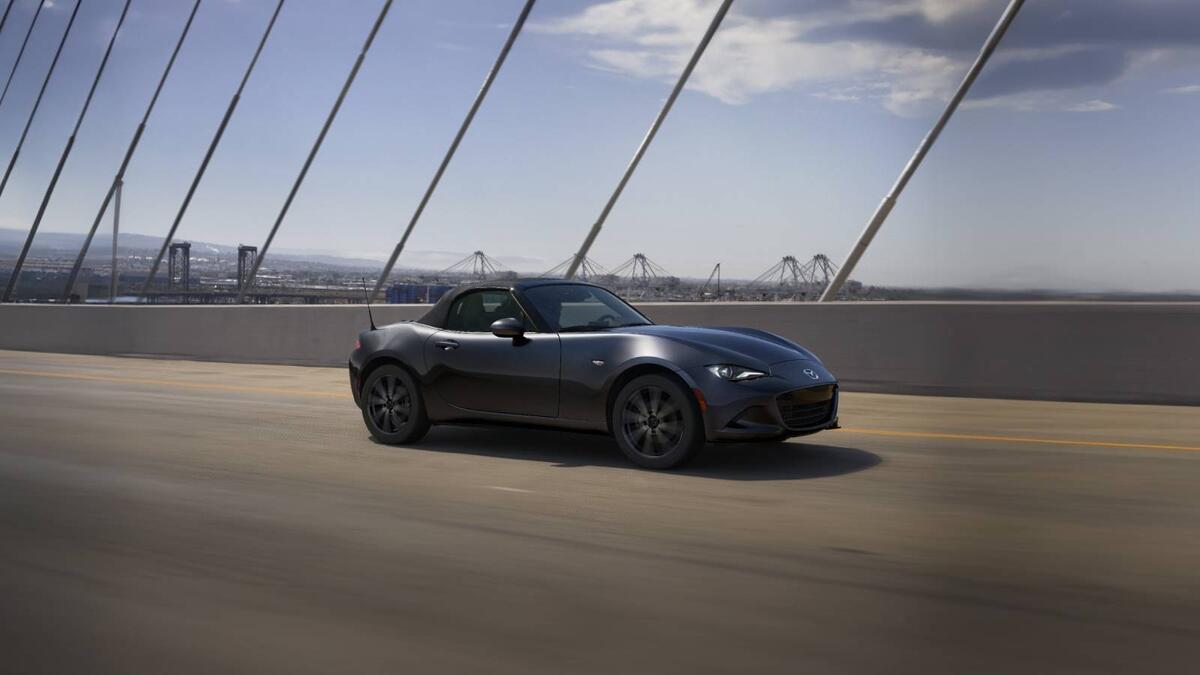
The Mazda MX-5 (Miata) is a small two-seat sports car made by Mazda. It’s designed to be easy to handle and fun to drive, especially on twisty roads or track days. Because it’s popular in driving events, people who have practiced with it may feel more comfortable in competition.
Unsprung weight is weight on the parts that move with the wheels rather than the main body of the car. Taking weight off those parts can make the car ride and handle bumps better.
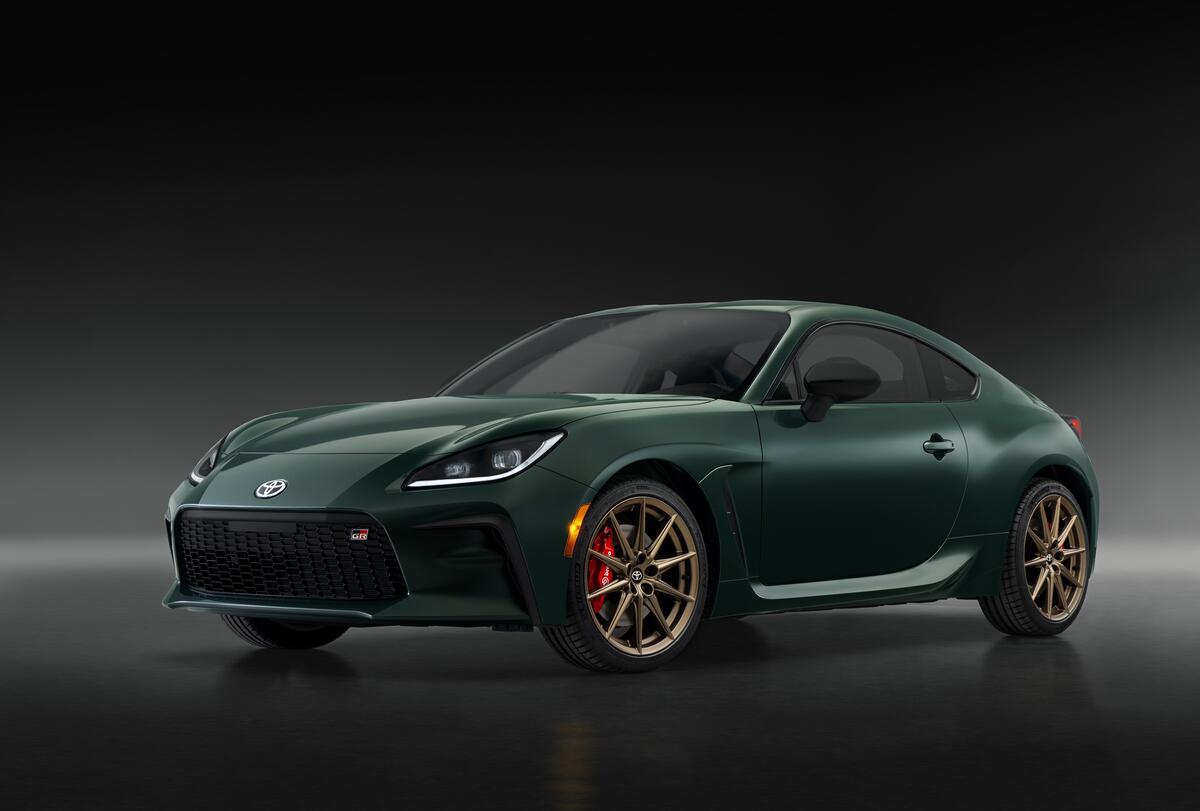
The Toyota GR 86 is a small, lightweight sports car that many people use for autocross. Here, they’re talking about a lithium-ion battery issue on a GR 86 during a pro solo event.
“Pro Solo” is a higher-level autocross event where drivers run timed laps on a course marked out with cones. They’re describing where the car was pushed out during the event.
The 12-volt system is the car’s low-voltage electrical network that powers things like lights, infotainment, and many control modules. When people swap in a lighter battery, they’re usually replacing the 12-volt battery that supplies this system.
A lithium-ion battery is a rechargeable battery type. If it fails, it can get extremely hot and catch fire, which is especially dangerous at race tracks.
Thermal runaway is a battery failure mode where overheating accelerates the failure, causing the battery to rapidly get hotter and potentially ignite. The transcript describes batteries getting too hot and then failing, which is consistent with this kind of runaway behavior.
An AGM battery is a sealed battery type (lead-acid) that’s designed to be more stable and safer for harsh use. The hosts are recommending it as a safer alternative to lithium-ion for track/autocross use.
Concept
battery pack ejection on crash detection
Some vehicles use crash sensors to trigger safety actions involving the battery. The hosts are discussing whether ejecting the battery pack after a crash could prevent fires.
Term
97 degrees
They’re talking about a temperature threshold being crossed for long enough. When things get too hot, cars and sensors can trigger warnings or protective actions to prevent damage.
Term
120 degrees
They mention hitting 120 degrees, which is very hot. When a car or sensor gets that hot, it may trigger a protective response to avoid damage.
A six point harness is a racing safety belt with multiple straps that hold you in place at several points on your body. It’s designed to keep you from sliding around during hard driving or a crash.
The Corvette is a Chevrolet sports car that’s built for speed and track driving. Here, they’re talking about what safety gear you should wear when you’re only doing one lap in it.
A three-point harness is a racing seatbelt setup with straps that hold you in at your shoulders and lap. It’s less “complete” than a six-point harness, which uses extra straps to keep you more firmly positioned.
The HANS device is a safety support that helps protect your head and neck in a crash. It connects your helmet to your seatbelt so your head can’t jerk forward as much.
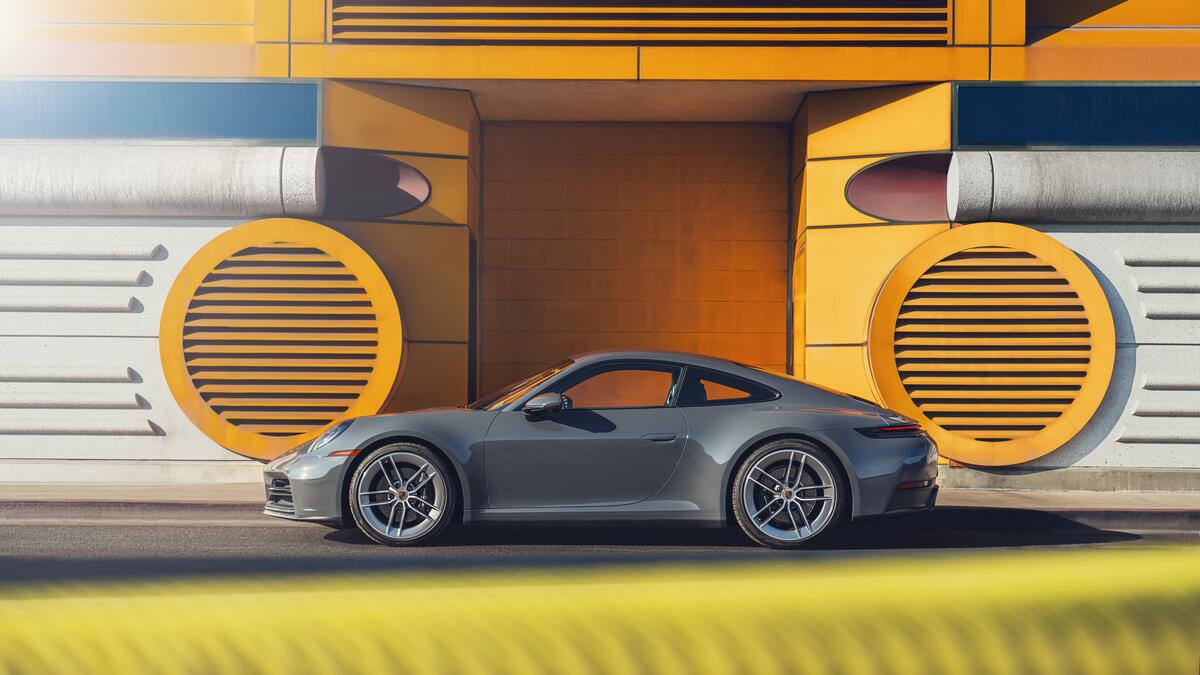
The Porsche 911 GT3 RS is a track-oriented 911. Its bucket seats are shaped to keep you from sliding around, so you stay planted in the car during hard driving.
Car
GT three cars
GT3 cars are race cars built for a specific racing category. They’re designed for the track, so the cabin can still feel uncomfortable—especially compared to a normal street car.
The BMW 3 Series is a compact car that’s designed to feel sporty and comfortable. It’s also a popular choice for driving events, so you often see certain older versions of it in those competitions. The podcast mentions it because the speaker noticed similarities to the cars that usually show up in that class.
Concept
GLTC weekend
GLTC is the name of a racing series or event the host is talking about. A “GLTC weekend” means the full event with multiple race sessions, not just a single race.
WTCC is a type of car racing series for “touring cars.” A “WTCC weekend” means the whole race event, not just one race—there are usually multiple sessions and races across a couple of days.
“Spec racing” means everyone races cars that are kept similar by rules. Because the cars can’t be wildly different, the competition tends to come down more to driving and fine-tuning within the rules.
A “spec tire” is the same tire type for everyone in the race. When everyone uses the same tire, it’s easier to compare drivers and strategies because the tires aren’t the big variable.
“One set of Toyos” means the drivers used the same set of tires for the whole weekend. That makes tire wear a big part of how they plan each race.
Term
raw starting position
“Raw starting position” means where you line up for the next race based directly on how you finished the previous one. So your result can strongly affect your starting spot next time.
iRacing Arcade is a racing video game that tries to make the cars feel realistic. The host is saying the way the cars react to curbs and the driving “feel” are good enough that it’s still fun even though it’s not a full simulator.
Curbs are the raised edges along the track. In racing games and real cars, hitting them the right way can be fast, but hitting them wrong can upset the car.
Contact physics is how the game decides what happens when cars bump into each other. Online, it can get weird if the game can’t line up what each player sees at the same time.
Net code is the online “plumbing” that keeps players in sync. If it’s not great, bumps and race timing can feel off because everyone’s game isn’t perfectly matching up.
LIVE
Hello, everyone, and welcome to the Lizard Brains podcast.
I'm your host, DJ Allison Drini.
I'm joined by my co-host, Tom O'Gorman.
Tom, how's it going?
I'm good.
How are you?
I'm, I'm great, Tom.
Can't you tell?
Great.
Yeah.
You have frosted flakes all over your face.
Oh, I wish you looked great.
That would be great.
Wham into a bowl.
Oh, that sounds amazing.
I, I think we talked about cereal last episode.
Did we not?
We did.
Did I mention, did I mention, uh, like cinnamon toast crunch?
Cause I feel like that's like my guilty pleasure as an adult.
Now you said, you said, uh, the chocolate vampire one.
Yeah.
Count Chocula.
That's like, that's like a little too much of being an absolute child as a 38 year old man.
So I only get that like around Halloween time, but if I got a little bit of a sweet
tooth going, man, cinnamon toast crunch, it's pretty hard to beat that one.
Well, I'm glad you're feeling as good as a bowl of cinnamon toast crunch.
Although you sounded like before we, we came on, you were talking about being a
little sleepy, a little tired, stress, a little thin.
Yeah.
I don't even, I don't even remember what I was doing last week, but I just felt like,
uh, I was having to like budget out every 15 minutes to understand like how I needed
to spend my time and it's been like that.
Yeah.
Well, no, it's mostly during the week, during the weekend.
It's really, that's normally when I get to chill, like at an autocross event or something.
Can I ask what are you doing?
Is that work related stuff is so busy or you're balancing like, I got to do this
thing for work and then we're going to go mow the lawn and then I'm going to come
back and I'm going to go power wash the deck or whatever.
No, no, no.
The deck is still a disaster.
If you've been listening for the last three years, it's, it's even more,
what are you doing?
It's more so of a disaster.
It's, it's worse.
It's, some people say better than ever.
It's worse than ever.
Like that's a, it's the deck's not doing great.
No, it's literally the worst.
It's, it's like the wood is turning different shapes and they're all doing it
in different directions.
So it's like, it's, it's a disaster waiting to happen.
If you come over to my house, maybe go up, maybe, maybe insist on walking
through the front door, don't go through the back door.
So come up the concrete stairs, not the wood ones, but even the
concrete's not doing so hot.
Look, look, racing is going great.
Everything else is just literally crumbling around me.
So, um, but yeah, I just, I've been, uh, just really busy, uh, just
cause, uh, uh, the national events.
So I'm like cramming in, uh, coaching in like limited space instead of
like spreading it out through the week.
And then, uh, like the last couple of days between, uh, like, uh, trying to
get a week's worth of coaching, it filled in in two days.
Uh, and, and, uh, you know, putting different springs
on the rear of Peter's car, which we'll, which we'll get to, uh, and, you
know, recording the podcast and like, and like regular stuff that I have to
like take it like the, I was planning on mowing the lawn, but like, I
don't know when that's going to happen.
So like, hopefully, hopefully Christine's feeling really ambitious
about getting out there and pushing that thing around for a little while.
But, so you remember how Wednesday loves to be outside now?
Yeah.
Just have her go out to her how to lead the lawn mower around the yard.
I think it would be better and probably cheaper to just buy one of those
like, like Roomba lawn mowers.
That's what you need.
They had them everywhere in Austria last year when I went to get a bunch of those.
Dang.
Well, just one, you tell me one would do, you tell me they have healthcare
and Roomba lawn mowers.
Oh my God.
Yep.
I think that's, I think that's the play.
I don't know why you wouldn't have one of those.
Honestly, if you have a yard, I had to mow my parents yard a couple of times
while they were gone.
Yeah.
I used to hate mowing the yard, but honestly, this one's small enough.
It was fine.
Is this the, is this the sign of being an adult when you're out there like mowing
and did you, did you have like a beer and a koozie and this is kind of nice?
Were you on, were you on a riding lawn mower or were you pushing it?
I had to push it around, but it's one of those new electric ones that are really
light.
That's what I have.
Yeah.
That's so boomery though.
Oh my God, you're so right.
That's like, I just like the peace and quiet in my brain.
I like to walk around my yard and get in touch with nature.
I throw, I throw in my headphones, like my little earbuds.
I like listen to a podcast or like a, like a SA style YouTube video.
And I just, uh, I just vibe out for a little bit.
And next thing you know, the grass is short and my neighbors are happy with
me because I'm no longer the house on the street that looks like chaos.
Well, it still looks like chaos, but not as much chaos.
Sure.
I cannot relate to that at all.
I've never had a place where I've had to be like, well, my neighbors might
think dot, dot, dot.
What a foreign thought.
That's so interesting.
Yeah.
It's like a constant social pressure to keep the space around you clean enough
that everyone else will tolerate you.
You just don't want to be like the house that's definitely detracting the
property value from all your neighbors the most.
Sure.
Yeah.
And there's like a couple of houses that like definitely keep me from being like
that one neighbor, but not, they're not too far off.
They are not too far off Tom.
I'm like, sometimes I'm fighting for that top spot of like depreciation of assets.
Like, you're like, Oh, no, working my way up the leaderboard.
Oh, no, this is not the leaderboard I want to win.
Yeah.
Interesting.
So you're basically cramming in what five to seven clients in two days instead
of five and trying to do national autocrosses, which we'll get to.
Yep.
Let's go there.
You would, you want, you went to the DC pro.
I did.
And you got second in the super challenge.
You were almost a back-to-back super challenge winner DJ.
I'm so proud of you.
Oh my goodness.
I coned it Tom.
I, I would have won by like six or seven tenths and I hit a cone and I thought it
was a different cone because there was like this really tight right hander on the
right hand course for the people that were there.
Uh, and it like really pinches down and it like leads into like a long space where
you're just sitting there like just driving in a straight line.
So like the, the run out of this thing was pretty important.
And, uh, I, I got a little bit of ice mode or like, you know, ABS fluctuation as
I was like coming into it.
So I had to delay throttle a little bit.
So I didn't mow over that last cone and I thought I damaged controlled it really
well, but I was like, man, I, I might've like touched the base of that cone.
Like I knew I was close to it.
And then when I came back and I saw the time I was like, there's, there's no
fricking way I lost this thing.
Cause like those are like some of the two fastest runs of like the, the whole event.
And, uh, then they said that Dave beat me by like 1.4 seconds or whatever.
And I was like, what the hell did Dave just do?
And then I found out it was a cone and I was like, oh, okay.
Yes.
All right.
That makes sense.
But it was like a cone that I didn't even think I was close to, but it's
because my eyes were like so far up the course.
I just probably just, just like just ran it over and didn't even
notice, which is like, I feel like these challenges.
Uh, so the, the first round.
So, uh, we, there's, there's like two elimination, like you have to be top eight.
Uh, and then you get into the bracket.
The first round of the bracket was, uh, the other guy hit a cone and then the
next round, uh, so I went against Eric Peterson.
He hit a cone and then he actually almost came back on me.
Cause I was like, well, I'm just going to leave like three inches to every cone.
Apparently when you do that, it's like over a second, it was so slow, but I,
like I saw the car dancing and moving around and I came back and saw the time
and I was like, that's gross.
I'm almost embarrassed by time was that, uh, but like, it's not like I was
under driving cause I feel like that would be harder to gauge.
So I was just like, well, I'm just going to leave a little space to the
cones and just drive that.
And it was like, like a 1.2 seconds slower or something along those lines.
Um, and, and it's not like I was leaving a bunch of room.
It was just like in my mind, it was three inches, but like, he was only, he was
only like a half second behind me after hitting a cone.
And I was like, oh my God, that would have been so embarrassing.
I was telling, uh, I was telling Tamara that if I lost that, I might have, um,
she might not have had a ride for the, uh, uh, uh, spring nationals.
Pro solo cause me and her driving together, uh, because I would have just quit.
I would have been like, nope, I, that's it.
I'm done.
I'm never doing that again.
Salute out.
Yup.
That disappear, walk through the woods and never be seen again.
Never be seen again.
I'd be like Homer in the bush.
Um, but, uh, and then the next round, uh, Daddy, uh, uh, was doing the pro
solo event in, uh, in a launcher and, and he was kind of fighting like launching
that thing off the line cause he could only get launch control on one side.
And especially in the challenge cause there's just not enough time for the
launch control to like reset itself cause it needs to be like a certain
amount of time before you can use a launch control again.
So I think he was trying to launch the better side to use the launch control was
the left side.
And so he was trying to save his, he was trying to save his launch control for the
left side.
So he was trying to do it with like the e-brake and he just like read that.
So I just, I just want, I, I almost wanted to just to save the tire temp, uh, to
just like pull off, but I was like, does a DNF, I have to, I have to clarify this
cause I just did my run and I was like, this is the most, it counts the same.
Okay.
Cause I'm like, this is the most pointless autocrosser I've ever done
where right now, because he instantly loses when he red lights, right?
No, you're right.
Yeah.
He did certainly loses.
I have seen people not launch the car and just like pull off in DNF.
I've seen them do that.
All right.
I don't know what the precedent is.
I did the run.
We live in a crazy world.
Yeah.
I did the run, but it was like, this is the most pointless run of
autocross ever.
And then I was like a confliction in my mind the whole time I was doing it.
I was like, like, I should just be saving like the tire temp for the, like for
the next round, which I always, when it gets to the bracket, I always think
there's more rounds than there are.
And then all of a sudden it was like, Oh, I'm in the finals, like because Daddy
Oh, red lit.
And I was like, Oh, it's literally, you just get past the first two rounds
and then you're in the finals.
That's a bracket of eight.
And then it was just me and Dave, me and Dave Montgomery, which is pretty cool.
Me and him were talking earlier and it's funny.
We both had the same thought independently of each other.
You're doing the math in your head because you get past the first round,
then it's round to four and then the next round is round to two.
Right.
I was trying to compare it to the old style, which was just a round of 32.
Yeah.
Which was 32, 16, 8, 4, 2, 1.
So it'd be five rounds.
It'd be five.
So right now you're doing, you're doing 34842
Well, you're doing an additional round now.
Do I do that math right?
You do.
So K1 and K2, that's where they, they knock down.
You're doing two more rounds.
The old, the old style of 32 was you would do six rounds.
And the new style is you do eight rounds.
If you win, if you win, it's much quicker because they split the 32 people
that are in the challenge into two groups, K1 and K2.
And K1 is like its own heat.
Like they all, they all pull up to the line, all 16 people.
And then K2, all 16 people pull up to the line.
And then it's just like whoever was the top eight on each of those goes on.
So it goes way faster.
It's a much better format.
And then they actually offer cash prizes for K1 and K2.
And then if you win K3, you get cash prize too.
So it kind of like incentivizes you to get rid of the sand.
Cause you're like, I may or may not win the challenge, but I could get like 200 bucks.
If I just like get rid of all the sand and like cash in on it right here, right?
Sure.
I don't know exactly know what the prize payouts are.
So if anybody knows, I know I like, the last time I won this, or the only time I
won it, I ended up winning like K1 and K3 and the challenge.
So I got like a $600 check, but I don't know how it all like splits up.
So I want so much money.
I don't even know how much I want.
If someone could tell me how much money I want, I would love to know how much money
I want, because I'm so rich that I want some money.
You know, it is when you're just filthy rich from autocross.
Yeah.
Um, but, uh, yeah.
So, okay.
Tell us about the event from the rewind.
Sorry.
We got distracted about this shit.
But basically pro solo standing style launched like a drag strip, mirrored
courses, roughly you do left and right sides.
Your best combined means you win your best combined times are your total, which
can let you win and DJ almost one.
Almost.
I was leading the whole time and, and we have a, we have a discussion on this.
And the car felt like mostly fine.
It felt like a little bit pushy, but my times are fine.
Like after, after the first session, I was winning by like, I don't know,
like a second or something.
And I was actually top packs of the whole event.
And I remember thinking, what the hell is everyone else doing?
Cause it didn't feel like, you know, how you do the run
and you're like, that wins, like who was going to get that?
And then like every once in a while, maybe somebody does, but you do the run
and you're like, that's it.
That, that's what I needed to do.
Right.
None of those, none of the runs until I got to the challenge felt like that.
Like the whole time.
So I kind of felt like I was under threat because I didn't have that feeling of
like, like that wasn't it.
That wasn't good enough.
Um, I'm sorry.
How does it feel like that happens?
The way you described that made it sound like you feel like that happens
every time somehow.
What the get, you get the run where you're like, that's it.
Yep.
Who's going to beat that?
I mean, if you look at my wind percentage, it's only like 30 or 40%.
So I guess I get it like for like a little less than 40% of the time.
Okay.
All right.
That's enough.
That's enough of the, that's a, uh, frequent enough where I know the feeling
of like, that's it.
That's the one.
Yeah.
Yeah.
You're right.
I think you're right.
But I don't want people thinking that that's what it feels like every time
you set the wind.
No, no, I've won plenty of events where I'm like, oh crap, they're going to get me.
I know I left this and that and like that.
Oh, yeah, and they didn't get it.
Oh, I guess I won.
Like that's like, that's how, that's the other version of that.
Um, and I'm trying to think of an instance where I'm like, yeah, that was the
one and then somebody goes out and goes faster.
I'm struggling to think of that.
I'm sure it's happened because it's not like, it's not like you do the run where
you're like, oh yeah, that was, that was the winning run.
And then you're like a hundred percent success rate on that.
But I'm sorry.
I got distracted by Pat Griffin posting a picture of my stuff laying on the
ground from early.
I was like, did I leave that there?
But then I'm like, no, that picture's not right now.
It's, it's way back in time.
I like looked over.
I'm like, nope, all that stuff sitting on the counter right there.
So just taking pictures of, uh, of my stuff in, in the grid, that's got Pat.
My backpack has like data stuff and, uh, batteries and just like stuff in it.
I got, I got Tums in there in case I start to get heartburn.
It's like my purse.
That's what, that's what that backpack is.
Um, anyways, so we go into the last session.
Everyone knows that Saturday is just practice for, for Sunday and we go into
Sunday and I don't know, I just wasn't feeling it.
I just like, I just wasn't putting the runs together that I needed to.
Um, I, I think I felt pretty good about my right side run, um, but apparently
I hit a cone, uh, so with that cone, uh, it would have been like a six,
10th, seven, 10th improvement on the right side.
I literally sat in the, my first right side run the entire event.
Uh, and that's what I ended up on.
Um, so I don't know, like when I, when I was done, I didn't, I didn't feel
like I drove the runs that like would win an event and that was true.
I did, I didn't do those runs and I ended up fourth.
And if I, if I didn't hit that cone on the right side, I wouldn't
end up second, but it didn't feel like I put together the runs that, uh, I
know I'm capable of.
And part of that was the car was pretty good, but it did feel like we were
like dealing with a little bit of push, but I just like, it felt balanced on
entries and maybe on exit, I would have wanted it to push a little bit more,
but the surface is really, really low grit.
And I was afraid of making a change and then we would just be chasing
the car everywhere and it'd be drastically slower.
And for the challenge, I made the change that I kind of wanted to make, but
it was like too afraid to make it because I was already in the lead.
I'm like, I don't know, like it's good enough.
Obviously, like I'll put, I'll finally put these runs together, like
eventually instead of just like the mistake I made was not just competing
against myself, like, cause if I was just out there, like all the
competitors are gone and I was just out there just trying to set the fastest
times, I would have made the setup change because like, who cares?
If it's slower than I learned something and then I like move forward.
I like change it back or whatever.
Like, I don't know why, why the context of the competition made
me not make the setup change that like I wanted to make essentially.
You're afraid of taking away your opportunity to do better.
By just driving better.
By, by making the change, you're worried that the change will undo the
opportunity to make you, you know, undo the opportunity to do better
because it also creates an opportunity to do worse.
Yeah.
Instead of just like, if I was just in a vacuum, I would have been like, yeah,
I think like, I do think basically the feeling that I was having and I don't
know, I did a terrible job at getting video and go pros did go pro stuff.
But like the feeling I was having that to drive too much
around the cones in order to not hit them with the rear tires.
So that was, that was like the feeling that I had.
It didn't necessarily feel like I'm like, oh, the car won't turn.
It was more like, I can't have, when I get in throttle, I can't like
slither the car around this cone.
So I have to turn around it a little bit more.
So then when I get in throttle, I don't like the rear tires don't like
hit the cone essentially.
So we had the idea of talking about how to decipher whether the car is too
pushy, because this is something that both of us have struggled with.
You're actively struggling with it in your hindsight of this weekend.
Yep.
I struggle with this because I mostly came from front-load drive and I could
tell if it was too loose because then it would be sideways, but I couldn't
tell if it was too tight really that well.
Cause it always feels like, what you just described is basically you're
perceiving that the, the, the rear tires are not following the front tires.
They're following inside.
And you know, like if I just turn now and get this right, I know that the
rear is not rotating around into the front tire tracks, into the, the way
that like a perfectly balanced car should.
And so maybe, maybe that's like the thing I need to pay attention to is it's,
is are my rear tires following inside of the front tires or are they following
on the outside of the front tires?
Cause ideally they would just follow with the front tires.
Like that would be a well-balanced car.
And I think in my brain, like I haven't like that, the way I just
worded that and the way I thought about it, I haven't, I've never thought
about that until like this event.
Um, and maybe if I can pinpoint where the rear tires are ending up on average,
uh, on corner exits or even entries or whatever, then that will help me judge
what the actual balance of the car is.
Or like what the balance of the car should be to like, could do a good
lap at this particular course.
Yeah.
I'm trying to rewind.
Like if you had told me that 10 years ago, could I've got it?
If I, if you told me that 15 years ago, what I've got it, I don't, I don't know.
That's like so hard to, it's almost like paying attention to your hands
instead of paying attention to the way, like the weight is, is transferring
around the car.
Like how do you pay attention to exactly where the front tire and rear tire are
hitting for me at the first time you said, like, let's talk about.
Uh, pushy cars.
Uh, my first thought was, or the first thing I came to, I had to think
about it kind of hard was like the, uh, if you can't, if you can't add extra
steering input past the first weight transfer, then the car's too tight.
Yeah.
Then even that is so abstract.
So I'm talking about like the initial turn in, you're coming off the brake
pedal, the car, the weights rolling from right in the center of the nose or right
roughly there and then out to the outside tire.
And if I could get to the point where then I can like just do it like a little
extra turn or a little extra like lift and turn and the car doesn't respond.
It's too pushy.
Yeah.
The thing is it wasn't that far out the window though.
Like, exactly.
Yeah.
So I could manipulate where it ended up on entry, like via like a little, you
know, little extra twist of the wheel or set some more weight on the, the nose
with the brake or, or whatever.
Like I could, I had say where the car ended up on entry.
There was this beautiful element where it was this, you'd come in like
basically on the rev limiter and it was a decreasing, uh, radius turn.
And there was three like inside cones and it was a large radius all the way down.
And it was, it was beautiful.
If I ever remember, we've talked about, I have no like, like I have no interest
in making a course or course design or whatever.
If I ever make a course, that element would be in it because I just felt
like it was just an absolute blast to drive and it really rewarded, uh, having
your eyes like more than a gate ahead because to really try to link down this
like, uh, decreasing spiral into the last, uh, cone.
That's the cone I hit by the way.
So in the, in the challenge, I don't even know how I hit it, but apparently
that's somebody came up and apologized and I was like, Oh, you called the cone
and on me and like, was it here?
And he goes, no, I was here.
And I like, I like threw my hands up in there.
I'm like, I don't even know I did that.
But anyways, I like crashing a car in turn 13.
It wrote Atlanta, America.
Yeah.
You're like, I don't even know I did that, but you know how you did that.
You were, you were being a hooligan.
I know exactly.
I get you.
Um, but, but yeah, it, the, I think the tire tracks thing is that I'm going to
try and I'll try to keep the podcast updated.
But I think thinking about our, am I having to turn around the cones more?
Uh, and then you could do the same thing with like cones on the exit.
Like, am I having to modulate the throttle so much where the rear of the, the car
doesn't like the front doesn't hit it.
Am I having to like, worry about the rear hitting it everywhere?
Like on the outside of the car.
So that might, like, that might be an indication that it's too loose because
it's tough with autocross.
Cause you only get a couple of shots at it, uh, especially in like a tour format.
So like making a change there is like, I almost like the more I play around with
this ST class thing is I'm almost wondering like, all right, you showed up.
You, you, like the car has its sway bar and shock and whatever settings.
And does that work for the course?
How close is it?
It's like, uh, almost like a formula one weekend.
It's like when the simulator drivers can like nail the setup right off the bat,
they just have like a better event.
It's almost like the same thing.
Like at nationals, like if your setup was like spot on right away, then you're
just going to have a way better nationals than you would.
If you're like, uh, like you're never going to do your first run and then be
like, okay, we need to soften the front and like stiffen the rear and like make it.
You're just never going to get there.
Like, but if you're in the window.
Yeah.
Do you think, okay.
So for those who don't know pro solo runs in three pods, you do two runs on each
side, Saturday morning, two runs on each side, Saturday afternoon, two runs on each
side, Sunday morning.
So you have these big windows of time where unlike a normal autocross where you
do all your runs at the same time, you can go away and think about it and really
like, look at video, look at data, the course gets rubbered in more, the course
gets cleaned up more, more and more cars run all this.
So it's definitely different than a standard autocross.
If you've never done one.
How much do you think is down to for a pro solo to like that time?
Because I've, I, I, I'm on the extreme end where I've like basically never asked
for an autocross change of setup.
Yeah.
We've talked about that, but even at pro solo, I don't have a pattern of
success at pro solo the way I do it, normal solo.
So do you think that there's something to that with like the opportunity to go
away, think about it, make some changes?
Yeah.
I don't think so super much, but maybe people are doing more than I think.
Yeah.
I'm, that's what I'm saying.
I'm curious what like my competitors are doing.
Um, I know in D street, we would make changes when we first got the car, but
then like in street class, it's just like it's, you have way, way less adjustments.
Like once we basically got it in the setup window, we literally never touched it.
Like maybe we'd make a rear rebound change.
That was basically it.
Lugat posted a little, little zippy face emoji.
Uh, Lugat also said, um, uh, shocks for turning only front bar for overall grip
change, um, the cars pushy everywhere, drop the front roll rate resistance.
So lower this front sway bar and he says rear bar increase or decrease to
improve the slowest corner of the course, which I guess kind of makes sense.
Cause you would, like, you would be like on power the most at that point.
Um, I don't know how to change direction the fastest at that point.
Yeah.
I feel like I'm a little agnostic to whatever the front of the cars doing
because if, if there's like one weakness in my driving is I tend to drive the
rear of the car, uh, more than, than like anything else.
So like if the front's having an issue, I just like haven't even noticed, but
like if the rear is having an issue, like I'm like, yeah, like honestly, like the
best team, like if I could morph Peter into any type of driver, it'd be like
the driver that drives the front of the car.
And then together we would end up like with the greatest car ever.
So, um, interesting.
I do think I drive the front of the car, but to, to some
is what we just talked about with the push, huh?
Are we the best team?
We are the best team.
Oh, uh, I think that the, the tire track thing is kind of
an interesting idea if your brain works that way.
And to put it a different way, if you picture like a perfect sheet of like
the tiniest bit of snow on the ground and you were to drive a circle at five
miles an hour, you would see one set of tire tracks for the front tires.
You would see one set of tire tracks for the rear tires, but when you're
traveling at, at full momentum on a race track, or you have the car, let's
say a different way loaded fully to the outside two tires, they would be in the
same tire track in a, in a perfect world, physical world.
Like the, the rear is following the front.
Yeah.
That's rotation.
If you, if your brain works that way, that's great.
If not, then I think if you can't add any change of direction from the turn in
point, from the initial outside front tire loading, then the car is too tight.
And I think that that counts even as early as pre apex.
Like if you can't change direction again, pre apex by realizing you're not going
to make it, and then like shifting the weight just a little bit or adding a bit
of steering angle to shift the weight around with the pedals or the steering
wheel, whatever, the car is too tight, but it's so fricking hard to read.
I used to struggle with this so much.
So if anyone's out there struggling with the, yeah, I know it's not too loose,
but I don't know if it's too tight.
This is like the ultimate pursuit as the way the driver brake release is the
ultimate pursuit, I think.
Yeah.
I, um, so the, the hindsight of the event is that I want stiffer springs on the
rear of the car, cause right now we're doing all the balance changes with the
sway bar and the sway bars, the sway bar is maxed out.
We're like full, like when, when the bars on full stiff, that's when I'm
happiest with the car.
So we were, the rear sway bar has five settings and we were at like four out
of five stiffness for most of the event.
And when I went into the, to the finger like sesame tune, I was playing with
the, um, uh, I was, I was playing with the, the different, um, settings like we
talked about on whatever episode that was.
Uh, and what the, the sway bar setting that ended up on that I liked the most
was the stiffest setting, but DC felt like it was really, really low grip.
So that's why I was hesitant to just go back to what like I liked on that other
surface with the other style, of course, on the other, right?
Cause I, I wasn't necessarily sure if the car was pushy or not.
I just kind of, I don't know, like that whole, that whole discussion we just had.
Um, but I would like to have the adjustment range where we're not just
like full stiff on the rear sway bar.
And my thought is like the behavior change of, of the car as the weight
rolls around the edge is too much.
Uh, like once it really starts to load, like, uh, like the outside rear corner
of the car.
Um, so it makes the window of how the car gets placed, feel a little bit
smaller than it should.
So that's why, that's why I'm justifying like increasing the rear spring rate
because that will be a little bit more constant as the weight is on the edge
of the car.
Cause if you think about, about a car, like, okay, if you think
about where the weight is on a car, you hit the brakes, it's on the front
of the bumper, and then you're rolling it around the edge of the fender, it
gets to the door.
And then as you get in the power, it goes to the outside rear of the car.
If, if you imagine the weight like that, and right now it feels like the
transition from the weight on the door to the outside rear feels like the car
changes too much in what it's, what its potential balance is.
So I'm thinking that the increasing the rear spring rate will allow that
change in balance to be a little bit more, uh, gradual, I guess is the word
I'll use, uh, from when it's on the door to when it, uh, really leans
into that outside rear corner.
Um, so I think that will make the car easier to drive, but it will still
have the balance that I want where, where the car feels pointier than it,
than it normally does.
So that's, that's what I did, uh, yesterday.
I next day aired some springs.
Uh, thank you, uh, Andy, uh, for helping me find some, cause apparently
there's a giant shortage on six inch 2.25 inch, uh, uh, 550 pound springs.
It's a world global shortage.
But Andy, Andy, uh, apparently Pegasus is, uh, the goat when it comes
to just ordering random stuff next day air.
So nice.
Yeah.
Spend a guard.
Yep.
Yeah.
Perfect.
So, yeah.
Okay.
Global phenomenon, global crisis.
Yeah.
I mean, look, yeah, I know all you guys are out there looking for 550 pound springs
and it's, uh, it's tough, man, but you know, you just got to keep trying.
You'll end up with something.
It feels like it's like people trying to get like a Nintendo Wii back in like
2006 over here.
That's so true.
Oh, so if there was a black Friday for springs, let's track
them, people beat each other up.
Yeah, they got a bunch of springs in their shopping cart.
Uh, Ryan says he might have something, you know what, if I, if I couldn't
find some just to buy in like next day air to the house, I would have put
out a feeler on Facebook to see if I could, could get some sent to me or
something from somebody because I mean, the point of me going to spring
nationals is really to, is to, to feel out the surface before we get there.
So we don't end up in that scenario.
Like I talked about where we're like just out completely outside the setup
window and we didn't have time to figure it out before like it's all said and
done because the people that have been in this class for two years, uh, maybe
even three went back when they were like running with the Miata's, they're
going to have like a little bit of an advantage because they've, they've seen
all these sites before.
They kind of have an idea of like the behaviors that the car had on these
different surfaces and, and we're seeing it all for the first time.
I, uh, okay.
So I was going to say something about the spring that, oh, I'll be curious
to see if there's any change in, I know that DC is known to be one of the
lowest grip surfaces and like also spotty on grip levels.
Yeah.
Cause it has patches down and sealer down and things like that.
I'll be curious when you go back to normal sites and even concrete with
high grip levels, if the car stays pushy, cause in my mind that it'll trend
looser, the more grip you add available to the tire.
So what was surprising to me is I'm curious if that's true.
Yeah.
What was surprising to me is that, uh, with the, with the bar on full
stiff on the rear, it, the, the drive ability and like just how easy the car
was to drive, uh, was about the same as Finger Lakes where I did most of the
driving, uh, before DC.
Um, so
meeting it was easy, easy to control.
Yeah.
It was just easy to place the car.
Like it felt like I could get the nose where I wanted it.
Um, though, my only gripe was is that, uh, and really I just want, I want
the car to be as easy to drive as possible, um, especially for, for Peter,
cause he has trusted me to figure that out, uh, is I, I think the rear
springs with a little less rear sway bar will give the same balance, but
just make it a little bit, uh, more predictable.
Cool.
So I liked the balance of the car at full stiff, but I thought the
behavior change was too drastic as the weight moved into that area of the car.
Guys, the joy of a adjustable race car slash autocross car.
It is pretty fun.
I thought you would love this pursuit to be honest, cause you, you, you
pursued D street, which is a unmodified in a way version of the same car.
Yep.
But, and you were all in on still maximizing the car.
Yeah.
And you know, whereas I'm like, I find that so freaking annoying.
It's supposed to be a stock car.
Leave it alone, you know, but now you have even more, you have actually
modifications to the car and then adjustability within that instead of
just barely modifying the car and trying to adjust it within that scope.
Yeah.
And I mean, there's a lot of stuff that we could do to max maximize the car,
but it's really like whatever, like Peter has the stomach for, um, like, I
think a seat would add a lot to the car, just like in terms of just
understood, like feeling exactly what the car is doing.
Like I think the stock seats and the twins are probably some of the
better stock seats in any of the cars that are probably being autocrossed.
Besides like the Porsche carbon bucket seats or whatever, but, um, I
still think a seat would help.
And then you could get like a, uh, a little baby break kit for the front to
like drop a bunch of, uh, unsprung weight.
Um, yeah, it was like little stuff like that.
Uh, dude.
Oh, I forget it was Graver's car, uh, his lithium ion battery tripped
cause it got too hot and they had to like get pushed out of the, the solo
lanes, like the, the, the staging lanes for pro solo.
So they were deletion ion battery for the GR 86.
Yeah.
It's like, and it replaces the 12 volt like the, just because it's like,
it's lighter.
Oh, meaning they swapped it out.
Oh.
Yeah.
This is a normal thing.
This is a normal thing.
But guys, look, if there's one takeaway from this episode, do not put a
lithium ion battery in your race car.
I've seen too many cars burned down to the ground, like literally at race tracks.
We'd be like, Oh, why did that car catch on fire?
Oh, it was a lithium ion battery failure.
I've seen multiple of that happen.
I, I've seen multiple where they like, they get too hot and then they just fail.
And then they're like autocross days over because now they have to like
try to find a battery.
It's just not worth it.
It's not worth it.
Just put, put an AGM battery in instead, weigh six extra pounds and put an AGM
battery in the car.
That is so true.
No one has ever lost anything ever because of six pounds.
Yeah.
What do we do?
I'll put everything I own on that.
But also, uh, what if we did it where have you seen these videos of the Chinese
cars where they eject the battery pack?
If they're, if they detect a crash, what if you do that?
You just, you detect that the ion battery in your, in your autocross
car, detects that it's over 97 degrees for, for more than too long or whatever
it is, 120 degrees.
And it just shoots out of the side of the car with no warning.
The poor scanner.
That'd be crazy.
Yeah.
Poor scanner.
Yeah.
The scanner is like taking, taking bullets out there.
Should we talk that through?
Actually, I think that was an interesting little text message we had.
We never hashed out on the, on the podcast, which one being strapped into the
race car because you said you'd like being strapped, strapped, strapped down to
the seats.
We didn't talk about that.
Yeah.
Yeah.
I'm curious if the listeners are, I have opinions or whatever, but the,
the preface was I was not wearing the full six point harness in the one lap
Corvette Corvette Jesus.
Oh my goodness.
Yeah.
I'm still a little brain fried from it to be honest.
You heard it here.
The one lap part.
You heard it here first, Tom.
Or you heard it here first everyone.
Tom's driving a Corvette next year for one lap.
Yep.
Yeah.
Chevrolet, Chevrolet and flip anyway.
So I was using the three point harness, not the six point harness,
because mostly like Salil and I needed to different sizes and I'm like,
it's a completely stock car.
I just buckle up whatever in hindsight.
Once again, do as I say, not as I do, where all of your safety equipment.
That's available.
So DJ called me on that via text and I was like, I was surprised.
Nobody said anything.
I'm like, I'm literally texting you.
I'm like, I'm surprised nobody said anything.
But like your Hans device just floating around like attached to your helmet
because there obviously wasn't any belts going through it,
but you were just wearing it anyways.
And it's just because one lap, like you got to wear your Hans device
even if you don't require it.
Yeah.
And it's like, it's so silly because Tom's just has a three point on.
Yep.
Yeah.
Uh, but the point, the, the point of the debate ended up being not,
not the safety stuff, but the like DJ likes to be strapped into the,
well, I'll say what I like.
I don't care to be strapped into the race car, particularly other than
the safety level that's required.
And even that is like clearly I'm still not that concerned for better or for
worse, mostly for worse, but I prefer to be able to move around a little bit.
I'm a little bit fidgety in, in general.
So I know I fidget behind the wheel and you can't relate to that.
No, I want to, I want to feel like I'm in the simmering, you know,
I never get tossed around in the simmering.
I just like sit there and I turn the wheel and I push the pedals.
I just, I just sit in my chair and I turn the wheel and I push the pedals.
If, if a real car could feel like that.
Oh my goodness, Tom, speed unlocked, speed unlocked.
I just want to sit there and push buttons.
Do you find yourself like confused or flummox sometimes if you get into a
race car where you're not locked into the seat?
I feel a little bit more out of control than I would otherwise.
It doesn't stand out in your brain.
You're like, I realized that I'm not strapped into the car the way I
would like to be.
And I know that's affecting my ability to feel what's happening.
Yes.
It's, it's that.
It's, it's, well, it's, I don't, it, what it is, is it's, I don't have
a full understanding of what this car is doing to me in relationship
that, that I would if I was just like strapped to it.
Interesting.
I find it, I find it almost stressful if I'm strapped in too tight.
Yeah.
So if I'm going to be strapped in tight, like I, I, especially when I was
wheeler racing professionally, grid life, whatever in the last five years,
I am, I am strapped in properly, but I need the seat to almost be closer
to everything than I normally would because I still want the freedom to
be able to flex my limbs and like move around and like roll my shoulders
and whatever else.
So if I'm strapped to the seat, like I'm like glued to it and frozen,
like I want to be closer to everything almost.
Yeah, I mean, but I'm curious if that's like a, if that's a learning
curve thing, like do you need to, what do you think it's easier to learn?
Do you think it's easier to learn being strapped to the seat?
Super, super, super crazy hard that you feel no movement
in your body, but then therefore everything through the wheel.
Well, let's, let's define, I don't know what that is.
Yeah.
Let's define like DJ's preference of being like strapped in the car
because I don't want it, it like restricting my breathing.
Right.
Like that's, I go as tight as I can before it feels like I'm having to,
like my diaphragm is trying to fight the belts to like pull air into my body.
Right.
Okay.
Yeah.
Ryan Kristoff says, I want to be the seat.
I am one with the seat.
Yeah.
I'm, I'm, I'm kind of where Ryan is, but it just like, at some point
it just can't restrict like my intake of air.
I want that to still be effortless.
So do you, I'm curious when it's super tight, do you feel like you're
having to fight the belts to get air or?
No, I really only care if my hips don't move side to side.
As long as my hips aren't moving, I'm completely fine.
I'm completely happy.
You want to do like a little seats a little too big for me.
I strap in the lap belt like way harder than I typically would.
Okay.
Versus to, to Doug's point, the GT3RS has nice buckets that hold you
in pretty well versus stock C6 or C5 Corvette seats, which are like
sitting on a park bench.
Yeah.
I would love to be strapped to the car properly with my, my hips
not moving around like I'm not, not a fixed to the car at all, but
I don't care to not, if the seat is nice enough that I don't move
side to side, I don't feel super strongly about being bolted into the
car, which to answer Mark's question, Mark Kruger's question in the chat.
Have you ever hit a wall or have you had a hard crash?
It changes how you feel about being secured to the seat.
Yeah, I do.
I did.
I totaled my car into concrete.
It wasn't fun, but I still, you know what, you know what the difference
probably is in a way almost a little bit better to not be like completely
small.
I'm not going to try to speculate science.
Here's the difference.
Don't be like me.
I don't know if I've ever driven a race car in a seat that was
like DJ sized.
I seem to attract these race car drives with seats that are made for
giants and those are the always the one I'm driving.
It's cause your race car driver sized and most people are not.
Yeah.
That's what I'm saying.
So maybe, maybe this, like I'm thinking, you know what?
When I drove Diego's car, he had a DJ size seat and I didn't need
to cinch down the lap belts.
I still did the shoulder belts like really tight, but I didn't feel the
need cause Diego had a really nice setup in his car.
Like he had the seat was leaning back.
So when I would hit the brakes, my hips wouldn't like slide forward.
It the side bolstering in my hips, like it was, maybe
it was not quite DJ sized.
It was more like Diego size that maybe if it was like an inch bigger
would have been DJ size, but whatever.
I just gave it a couple of bounces and I like slipped into the seat.
Um, and then at that point, he just, you just, uh, yeah, a lot of you.
DJ was a floppy noodle in mine.
So, uh, and I'm a floppy noodle most of the time.
I feel like floppy noodle is like default DJ, but, um, yeah, somebody
throw that in the who said what, uh, chat.
Um, but yeah, I think maybe that has something to do with it for sure.
Cause I know your, your GLTC car.
I don't know how you fit in that thing, Tom.
I could put like one butt cheek in that seat and like that was about it.
The seat was tight.
That was a very tight seat.
I didn't even think I could bounce into it.
Like, I guess it's always as long as my body, as long as my hips,
I think somewhat, I forget who pointed this out in the discord
about their hips, but when they, when they said that, I realized
it was a hundred percent true.
Uh, I don't know what the safest is though.
I think other than to have all of your stuff on a hundred percent of the
time with six point harnesses that they're available and your heart,
Hans device properly underneath them.
Yeah.
Tom says all this and then he posts a video and he's just like yellowing
it in a t-shirt.
Come on, Tom.
We need you around for the long haul.
We need you around for the long haul.
So come on.
I heard this idea from, from, uh, I forget where, but it was an older
person saying that older people don't get uncomfortable with racecar driving
or they don't get slower rewind.
They don't get slower, especially if they're already, you know, they,
they figured it out.
They have the, they have the, the backing behind their name.
They have the results record.
They have the, like the pattern of being able to succeed.
It's that older people are less willing to be uncomfortable.
And I think that's so true because part of being in a racecar with all the
belts strapped down to the point that you are not moving to the point
where you have every single thing locked in, like you're locked in and
especially GT three cars with the windows up and like there's,
there's quote unquote air conditioning and all this.
It's uncomfortable.
And I think a 55 year old racecar driver who knows what they're doing
in their brain is probably a lot more comfortable to cut corners on that
because of being comfortable.
Does that make sense?
Then I, then a 25 year old who's like, yeah, lock me down in the racecar
and make it hot.
I have a, I have a short tangent.
Um, I was working with a client last night and he was talking,
we were talking about, he did a race weekend and he was talking
about, uh, the last race, he was just slower and I was like, well,
do you think who you were driving worse or this or that or whatever?
And he didn't have a in car video.
We were just kind of doing like a verbal breakdown and he also had
like a broadcast of the race and we watched the broadcast.
Um, so we just had conversations about the race weekend.
What could have went better?
What, whatever.
And he was saying that he was going like slower in the last race and like
in previous discussion, he was saying it was hot.
And I was like, you know, I told him the story about me at VIR where
I didn't realize I was too hot until I started to make mistakes.
And was like, I wouldn't normally make that mistake.
Like that was weird mistake that I made.
Um, like, uh, what's, what's going on?
Oh my God.
I think I'm, I'm too hot.
Like, because when you're impaired, it's hard to know you're impaired
because your brain is not functioning properly.
So how are you supposed to diagnose that your brain's not functioning properly?
Your brain's the thing that needs to do the diagnosing.
You know what I mean?
So like you just can't like you can't rely on your brain to diagnose
that the brain's not working correctly.
Uh, so I brought that up and he goes, you know, DJ, I wish I had a good
excuse like that and he's like, he's probably like a 60 years old.
He goes, I got my, my head blower thing.
I got the cool suit.
I, I, I'm so comfortable in that car.
Like I can't, I can't take that excuse.
And I'm like, okay, fair.
I didn't like, I'm, I'm used to like full on slumming it over here,
but making it work.
Yeah.
Yeah.
I ever, ever since somebody said that, I thought it's a really interesting
thing to be aware of just that as the older you get, the less willing
you are to be uncomfortable.
And I think that's in every, every facet, including more, more abstract stuff.
Like you're, you're less willing to be uncomfortable on a learning curve.
You're less willing to be uncomfortable with, with failure, like all sorts of stuff.
You, you get locked into your ways and you know what you're good at.
And you, you feel like you have things under control in your normal life.
And then you get made uncomfortable and you're like, I don't like this, you
know, I think it's important though, as, as we get older to understand that
tendency to like not get outside our comfort zone.
And we have to do it anyways.
Cause I think once you start getting too comfortable being in your comfort zone,
then we stop learning, you'll get left behind.
All of a sudden like a cell phone will come.
Like we all, we all remember our grandparents like trying to like, like use
a cell phone, right?
Like it, at some point technology and things will progress to the point where
because we weren't paying attention to any of it, some device or something or
something will exist that we now have to use, but we have no context of how
it got there.
And we will be grandma with the cell phone trying to figure it out.
You know what I mean?
Like that's, that's why I think it's important to, to like, like Ick away
from like any kind of comfort zone in that, in that sense.
And to your point, acknowledge that as we get older, we will, we will naturally
seek that out more and we should, we should be like proactively making ourselves
uncomfortable just to stay relevant longer.
Yeah.
Yeah.
I also, I try to pick and choose that battle cause there are things like for
example, you mentioned, I don't know if you mentioned AI or I just started
thinking of it, but I fucking hate it.
I will, I'll, I don't care.
I fucking hate AI.
I hate when people send me videos of it.
I hate when people send me slop.
I hate when people use it in group chats.
I absolutely hate it.
And I think that that's a problem for me because I'm like putting a hard line
in the sand for a thing that I should be accepting of on the flip side.
I did challenge my comfort zone this weekend.
Oh, my commentating for the first time ever as the lead commentator for a
race that was not a sim broadcast.
How did it go?
He'll open.
Yeah.
How did it go?
So it's like, I, I'm going to pick and choose the like, I, I'm going to be
uncomfortable here, but that thing that makes me uncomfortable.
I hate it.
I'm not going to interact with it.
That was what I was going with that.
Uh, but about great.
It was so, it was super great.
I actually was like, I was really proud by the end of the weekend of what I did.
I feel like I made some really, really high quality club racing look as cool and
as competitive and as important as high quality club racing should be.
Yeah.
Uh, they had every challenge in the book to be honest for the broadcast.
Like, I think the weekend went really well, but they had 15 to 20 mile an hour
winds consistent with like 40 to 50 mile an hour gusts in that region of the
country for the first, like first time in like forever.
And so bad at the point that the, I don't know, Matt, Matt Busby's listening,
but was it the county or the city or the, the local power company?
They cut the power off to the racetrack because they were worried that the
wind would like create a fire somehow.
And then it was so dry that they would.
Okay.
The power company cut the power because of that fire risk.
So, you know, the first day we're kind of like dealing with the wind, which
is 30 to 40 mile an hour gusts.
And you can see the cameras like wobbling all the time and you could see
that like the quality of the event broadcast was compromised because of this
wind in a way.
And then overnight I get this text like, Hey, we might not even have power
tomorrow.
I'll keep you posted whether we're going to be on time or not.
And they brought out a bunch of generators and they brought out like
a bunch of, uh, they connected everything together and they figured
out a way to make the internet work somehow with, I think it was, was
it someone volunteering a, uh, uh, Starling space Elon Musk, Starling.
Thank you.
Yep.
Was it, I don't know if it was somebody volunteering that.
I think it was like literally patching together.
Let's like make the stream work.
And the fact that I had to lead that stream in those conditions made it
felt like, okay, if I'm also terrible, like this is, it's already at risk
of being like, I, I can't also be a weak link because there's so many possible
weak links and I didn't know that I was leading it coming in, coming into it.
I think I had an idea that I was supposed to know the most about it,
yeah, but I didn't know that I was leading the like coming in and coming
out of the show and showing commercials and controlling all this stuff.
And I didn't start what I was proud with, but I ended with what I was
proud with, but what are you going to ask?
Do you think the sim practice led to a better performance in real life
in this, in this capacity?
In a way.
Okay.
What I'm, what I'm figuring out is I love commentating like racing
and competition and I'm not great at presenting.
I don't, I don't love presenting like ad breaks and coming to and from the
show and leading in that way.
You know what I said?
You know what I suck at commentating?
Drawing concrete at solo nationals.
The first time I ever grabbed the microphone.
So for the next hour, you have DJ L is a 3D waiting for the concrete to
draw.
What are you wearing?
And then Larry McLeod pops out of the trailer.
DJ keep talking.
I'm like, I went through my 15 minutes of bullshit before this thing started.
What am I supposed to talk about?
And you're in the back of the car just dying.
God, that was rough.
It's so rough.
So like when it's good, it's, I think what I'm realizing is I like the easy
parts.
It's easy to commentate good racing.
It's easy to commentate good autocross runs and action and competition,
but the other parts are freaking hard.
You got this pressure to be entertaining with nothing to present.
That's entertaining.
Like what are you supposed to do?
You're just supposed to be a clown on a microphone.
I'm not a stand up comic.
I don't have a prepared routine.
Like what am I supposed to do on this thing?
Right.
Yeah.
But I think some people are super, but like that's where they thrive.
They're like thriving on, let me just talk.
Let me just take this where I want to go.
Yeah.
And they have a vision for what they need to talk about.
They have, they have an awareness of like, I need to hit this.
I need to hit that.
I need to hit, you know, I need to hit championship points.
I need to hit the entry list, the grid.
The it's very like it's nuts and bolts at the end of the day.
But dude, the all time greats of lead commentators.
I honestly think that they must have like two brains.
Like we're all, we're all over here operating with our like single
processor brain and that can like focus on this one thing, but
they have like background tasks that's like running in the back.
They're like still talking.
They have not stopped and they're literally while they're talking,
thinking about something else.
To me, that is like an impossible task.
Like how do you, how do you talk and illustrate a thought while
like actively planning the next thought that comes out?
Yeah.
Single processor brain.
Yeah, that's, that's my brain.
Single processor.
It's at least like it's a Pentium four at least, but like it's just,
it's it's not, it's not a core duo.
It's yeah.
I don't know what that means, but it's a good joke.
That's a, that was like the end of the single product.
That was like the most powerful single processor that that was like before.
It's like a D 16.
I don't know.
Oh, is that a Honda engine?
The, the most powerful single cam motor.
No, I'm doing this right now.
No, no, the cam is not like a processor at all.
So like the CPU, the CPU and your computer Tom has like, like eight
or 10 cores, but forever computers just had one core.
And so like how many camps the Pentium four was like one of the last
single core processors before they were all just like two core processors
and eventually had quad core and blah, blah.
Now they have like 128 core, like as a consumer product and 32 valve.
No.
Nope.
I think I'm making sense to somebody out there.
Liam says he understands what I'm doing.
Somebody, somebody out there is like, I'll get you Tom.
Everyone else is going, what is Tom doing?
Don't make no kind of sense, but I see where you got there from.
Oh no.
Uh, okay.
So from the weekend trying to think if there's anything else I actually
I'm like not paid to say this, but I'm like sold on the Thunder Hill open.
So what they did was they, they had a different person from each race group.
Lead the series for the weekend.
So they had spec me out of, they had Western touring car championship.
They had formula awesome, which is like a conglomerate of a bunch
of different formula cars.
And it wasn't like a NASA spec me out a group or a SCCA spec me out a group
or a like insert this, that or whatever.
It wasn't like a grid life GLTC weekend.
It was like, Hey, those cars from GLTC would be eligible and whoever's
in charge of the weekend is in charge.
And those cars from spec me out are eligible and whoever wants to put it
together, you know, they already had people on board, which was pretty cool.
And then it ended up being that they were like doing their own thing.
Kind of, I wasn't trackside, so I don't 100% know how the vibes were,
which was really, it's kind of a kind of interesting to be in that position.
But either way, it was, it was a different way to put together a race weekend
and it led to they, they did their own format.
The race did race weekend.
So they did three heat races of eight laps each and each one started
on the previous grid position, but then the final race was the only one
that counted for the final of the weekend and it was a four laps longer
and it was gridded based on the best finish of, of race three.
So you like, you had to, it wasn't like GLTC where it was like building
off different singles, different times every single time it was
the exact excuse me exact same thing every single time where you, you race,
race one, wherever you finish is where you start race two, wherever you
finish is where you start race three, wherever you finish, you start race
four, but the winner of race four is the only one that wins anything.
It was pretty cool.
I was like, I was super entertained.
I was proud of how I presented it.
I was proud of how the presentation went overall for what it was.
And I want to go next year.
I want to go so bad.
I want to race it so bad.
Also WTCC is pretty cool.
It's like GLTC, but West Coast only and only BMWs.
Sorry guys, kidding.
It's BMW GLTC class on the West Coast.
There's a lot of E46s, but it reminded me super much that I'm going to be
blunt, but I don't mean it bluntly.
It reminded me of GLTC in 2020 and 2021 before anybody had cheated before
anybody had like sparred before there was any drama.
It was just like everybody had been on the same page and they were all excited
to all be there together and cheering each other on, whether they were winning
or in 15th, like it's, it's a, it's a scope of things to be honest.
Like I want to clarify that it's because it's still new and small
enough that that hasn't happened yet.
Yeah.
And it's not if it happens, but when how it gets handled that I think is
what creates the next evolution and evolution.
That GLTC is now.
I feel like probably every class when it's like on, it's like, it's new,
but you know, it's going to be a thing just from like the people,
like the people who have bought in the, you know, the excitement around it.
I like that's like the heyday of like being a part of that scene, right?
And I'm sure this has happened like all the classes, think of all the classes.
This is probably like how it felt.
All the grassroots motor sports classes.
Is there a way to capture that as long as possible?
Because think about like W TCC.
Like once it's really gamed out, like if there's a broadcast, it's, it's like
going to, it's going to get serious.
Like it's going to attract the lizards.
Let's be honest.
And then like inevitable.
Yeah.
It's inevitable.
It's like in, and so, but like, so you won't be able to hold, you won't be able
to keep that in the bottle forever.
But like, is there a way or a format that doesn't force people to completely
change their cars all the time, uh, but to, to like capture that, like the
feeling of it's a new class.
We're all still figuring it out.
Uh, so it's not like super gamed out to the point where we start caring about
like the, you know, the nuances that us auto crossers care about.
Uh, yeah.
And we're just like in the moment, just like having fun competing in this.
Like in this, like not fully fledged out, figured out thing.
It's kind of like, like if you remember now, maybe this is a bad example
cause formula one, like with their super clipping and everything.
But if you remember the excitement kind of going in the first race, you're
like, I don't know how this is going to be.
This is kind of weird and kind of like, it's like a whole new reg or whatever.
Right.
So, uh, like that energy, that excitement of it's not fully figured out.
Like how do you, the thing is people are smart, so they're
definitely going to figure it out.
So, but like, how would, is there like a way you could format it?
And if you're thinking like, Oh, obviously you would do this and like,
please write into the podcast.
Like I think that'd be a pretty interesting discussion.
But to me, part of that is that it's not fully figured out.
And so if it's not fully figured out, people aren't super invested into it.
Uh, but they're still invested into it enough because it's like learning.
It's kind of like the same vibes of like when one lap went to the oval and
everyone's trying to figure it out or when we're all doing like the drag
strip and everyone's trying to figure it out.
And like, I'm sure it felt like the very same there where everyone's like
trying to figure it out.
Right.
Like it's, I think that's like a really fun atmosphere to be in.
So is there like a competition or a way that like that could just be like,
that could be the competition.
Right.
Yeah.
I mean, we've talked about it before, but I think that's down to the
organizer to know what they want.
And as soon as the organizer doesn't know what they want and answers a
question or sets a precedent based on what they feel at the moment, but not
with a bigger zoom out of what they actually want.
Yeah.
Like a grander vision.
Yeah.
And whether that's because of a competitor doing something that they
didn't anticipate or whether there's a rules thing that they didn't anticipate
or somebody trying to cheat and they didn't anticipate somebody trying to
cheat no matter how you handled the challenge really easy for that.
Those scenarios to come up super.
Yeah.
Especially when it starts to become or feel serious, which I would say,
I mean, I don't mean to make WTCC sound like a new thing.
It's not brand new, but I think this was one of their first broadcasts,
which by the way, I'm in my proud era.
I will say remember I said from one lap, I broadcasted and
commentated the first ever GLTC weekend ever in 2019.
Okay.
I've now broadcasted and commented the first ever WTCC weekend.
All right.
In 2026.
I'm like, I'm making stuff happen here.
Good vibes.
Yeah.
Yeah.
Either way.
Sorry.
Okay.
So then my point being my point being, I think that it's important for
foresight, like you need to foresee where this will go and it's so far.
It seems like they have that to on the flip side of this, right?
The other side of the weekend was spec Miata, which is like as old as it gets
as far as spec racing goes and it was also incredible racing.
They had a spec tire.
Everyone was on one set of Toyos all weekend long and it was so fascinating
to watch it unfold from race 1234 where it was just raw
finishing position created the raw starting position for the next race.
Yeah.
But one winner takes all at the end in spec Miata because they're like,
they have the opportunity to race like maniacs, but do you restrain yourself?
Do you not?
Like the picking and choosing.
I think it was maybe the most compelling spec Miata format I've ever
watched.
Yeah.
Yeah.
On top of maybe tied with the runoffs where it's like all of the spec Miata's
because I've done runoffs for spec Miata for a while now and it's,
it's always very compelling.
Yeah.
Well, the winner takes all is kind of a compelling format just all in
itself.
Yeah.
Yeah.
Well, cool.
Um, I'm going to have a 12 hour drive in the next 18 hours or so.
So, uh, I will probably have, uh, I would definitely not be watching
because that'd be reckless, but I'll probably, uh, check out the broadcast.
Tom,
it's on the racing network on YouTube.
Okay.
And give it a second.
It, especially as you, if you track through the weekend, I need to go back
and put like timestamps in the comments or something for when the races actually
happen, but, um, it is, it's static cameras in 40 degree winds that are like
they're choppy and whatever, but I will say the direction of following the
racing is logical and great.
And I think there's a bigger conversation to be had almost of whether
cameras that move are important for motor sports.
Like is, if you had, if you had 14 cameras that covered the cars moving
throughout the race track, a hundred percent of the time, is it important
that the camera moves or no, because these cameras don't move.
So if you're turned off by that, give it a second and like let the racing
action pull you in.
Cause I will genuinely put my foot down that it was good racing action.
I do, I do think it's a little bit jarring when your eye is like following
like the battle for the lead and then it disappears off screen and then
you're like, come on, come on.
And then it switches.
You know what I mean?
And then you have to pick up like, oh, there's that, there's that orange car
again. Oh, that's the battle I'm watching.
Right.
Like that's a little jarring.
It's a little bit easier to follow that when the, when the cameras
following it, but if the, if the timing of the switch is like the moment
the, the, you know, the spectacle exits the screen and then it switches
like, and it's on the screen again.
I think that's perfectly fine.
But I think that switch is really hard.
I think that's, I think that's like the most jarring part of it.
I agree.
Uh, I will shout out the producer that does, sorry, the director.
He's the one that controls the cameras for the SCCA super tour.
His name is Jordan worth is absolutely incredible at using this static camera
thing to follow the battles.
Okay.
So if you've never turned into SCCA super tours or stuff, it's not,
there, there are still like seven or eight race groups or sometimes there's
a dud as far as a race goes, but that dude, I don't know if he'll ever hear
this. I don't care, but that dude's incredible at like, he knows exactly
what battle is the most interesting.
He will lead us before we're done talking about it.
He will start following what we start talking about.
He's like incredible at it.
It's what a, what a like weird niche skill.
Yeah.
I said, that sounds, that sounds like that dude's basically Kyle higher
cause Kyle's, that's like Kyle's hidden skill too.
Yep.
Yep.
It's weird.
I don't even know how you would find out that he have a talent for that.
Like you can, I think it's, I think it's related to the same thing
that I've found at working race track stuff, you know, working a track day,
working organization for something like that, where you have an innate feel for
where cars are based on the amount of time that's passed.
You have an innate feel of like where cars are going and flowing from at
any given time.
So you can see like, if I release this session from the race track to impound
to, to, to their paddock at this point, like this section of the paddock
is going to be saturated or this, this, this car just passed start finish line
and now I hear an incident in turn three and it's been roughly that amount
of time.
So I think it might be that car.
There's like an innate amount of understanding and like comprehension
with being at a race track that some people have and some people don't Mike.
It is, it is Carson, host of ours friend, Jordan worth that I was talking about
small world.
You know what I'm talking about?
Have you been, you've been in the autocross or a track or something
and you have this innate feel for like, I, I understand hi, hi Wednesday.
She came in me out at me a couple of times, scratch the crap out of her cat
tree and then walked out and Tom saw her.
Nice.
She made her mark.
You know, I'm talking about it all.
Do you relate to this or are you like, you're still kind of in what's
happening at your event?
No, I'm probably, I, I'm so lost every basically.
I just, I dude, I was late to my work assignment.
I think every single time this weekend and it was announced, right?
That's different.
Oh, that's different.
Okay.
Well, a little bit, a little bit different.
Yeah.
Oh, speaking of announcing Tom, I think announcing pro solo is my favorite
job at autocross.
It's fun, right?
It's like racing.
There's a lot of stuff going on.
Yeah.
Yeah.
Yeah.
That's good.
Yeah.
You were the, you were the announcer.
Yeah.
They let me do it.
Nice.
They let me do it.
Sometimes I get to do it and I'm like, Oh, thank you so much.
I don't know why, but thank you.
I kind of feel like that's how a commentator should feel.
An announcer should feel like, Oh, they're letting me do this.
I have to do a good job.
Yeah.
You should be inspired to like work hard to be able to do the thing
you're allowed to do.
That's why I feel bad being late every single time.
Okay.
Being late as the announcer is a little rough.
I know, but it's just because I lost track.
Like you're like this innate, like Tom's, Tom's over here talking.
Oh, he got this innate feeling of like the passing of time and this
and I'm just like, no, I'm just running around and at some point
I go, are those super street cars?
Oh no, I'm late.
And then I run over to the thing.
So like, I, I don't know.
That's so funny.
Okay.
So that was my weekend.
Um, I had a couple more thoughts from one lap.
Yeah.
Kind of just one, if I can remember.
Uh, I haven't played my sim yet since one lap.
I can't get myself to get back in it.
One that broke Tom's I racing career.
Because I feel so great about being able to drive in real life on these race tracks
all week and do the thing that's the coolest thing ever.
Remember how you talk about like it becomes the thing you do every single day.
Yep.
I don't want to go back to just the sim being the way that I do that.
So I literally haven't sat.
I'm tapping it here.
I haven't sat in this since I got home.
It's been over two weeks.
I think at this point, dude, I'll tell you what, if I could sim race, you've been
swimming Tom, if I coach, look, if I could, uh, well, um, I mean, I think I did
an apex this league race, but I haven't had time to do anything else.
Especially this week.
Um, but if I could sim race every night we got to the hotel at one lap, I would
man tell you what I'm hooked.
I'm hooked.
I just, I know it's like a little different here and there, but I just, I
just love it too much.
I just, it's my, I don't think we're that far off that.
What do you mean?
Like you'll be able to have like your, your glasses, your VR glasses travel with
somehow and then like maybe the, the rig is just a steering wheel in front of
you somehow.
Yeah.
Yeah.
I just, it has to go in the back of whatever car I'm driving.
Like that's, look, somebody reached out to me.
They're like, we can win in this car.
I'm like, dang, we totally could win in that car.
All right.
We really got to figure out the storage space because I need to bring my
logic wheel amazing.
That was the only, actually that was the only thought I had from one lap left
over.
It's like, I just can't, I can't get myself to get back in the sim, but to
the chat's point, I have been enjoying, we tried iracing arcade last week on
the discord.
I thought it was a good time.
It was pretty fun, but it's a bad game.
Uh, it was broken in a couple of different ways.
I feel like I don't know how much more development they're doing on it, but
it feels like it's like one or two patches away from being like super good.
I think so.
I think they need, they need like it's first of all, it's $30.
I don't know if that's like, that's not, that's not crazy for a game, but
that's still cheap.
Well, games are like 70 to $80 now.
So 30 bucks is no, no, no, no.
The, the billion dollar title games for consoles are 70 to $80.
This game in contrast feels like a mobile game.
Dude, it's in my opinion.
It's like, it's just okay.
It has a couple of licensed tracks.
It has a couple licensed cars.
You do the same thing over and again.
Oh yeah.
Either way.
Uh, uh, I, I agree it's fun, but I don't know if I recommend anybody buy it.
I think it drives great.
I'm, I can't wait for them to finally come out with the steam frame.
That's like the standalone, uh, VR headset because I'll be able to play it on
that like in a virtual TV screen in front of me and it'll be like native to
the headset.
Uh, and that'll be like my, like main travel game.
I'll be like sitting on an airplane wearing this like fricking like the
headset on my face and I'll just be playing, uh, like I racing arcade.
That would be good.
See, but it needs to be like that should be free.
And then you get an ad every once in a while.
That's what it feels like to be crazy.
But we also got fours of horizon six.
Yeah.
Sorry.
Hold on.
I want to talk about the, uh, the iRacing Arcade.
I think the driving is super good.
Like the way the cars interact with the curbs and like the physics behind
it, I think it's, it's like physically enough for it to be fun and make sense.
Uh, but then the driving is friendly enough for you to just be able to like
pick it up and grab it.
And then I was getting the same feelings, like chasing lap times and
like chasing people down and stuff like that is like you do when you're racing.
So like it was like third person, cartoony graphics, whatever, but like,
I still got those sensations of, of like using the whole race track,
like bombing over curbs, like seeing what you can get away with.
I think it did that.
Like to me, that's probably the harder thing to hit in a game.
Then, uh, then anything else.
So like the foundation of it is really good.
That's what I'm saying.
It feels like it's a couple of patches away from being like super rock solid.
Uh, but yeah, there was like a couple of things where it was like
a little bit more broken than it should be.
And I can't quite remember.
There was like something that wasn't working.
I can't remember what exactly what it was, but just the, the contact
physics of being online with the net code.
The internet aspect of it was really bad.
Like, like I would be getting ran off the road and there was nothing
next to me or I would see myself killing Tom and he's like three car
links in front of me and I'm like, how would and Tom's going?
What the heck?
Like cause he's getting murdered.
And I'm like, I swear I'm not murdering you on purpose.
The internet wanted you dead.
Yep.
Uh, yeah, I agree with all that actually, which is interesting.
Okay.
So I just said fours of horizon six, which is like the other game that's
got our discord and some of us really paying attention this week.
And it has the exact opposite problem.
I think because it's not that great to play.
Like try to make it a borderline too realistic too, too vague.
Like the cars field, they don't feel very pointy or quick or like they
don't have weight transfer at all, which circuit superstars.
Sorry.
I racing arcade did perfect.
Yeah.
But then I racing, uh, then fours of horizon has everything else
like locked it's in Japan and it's like so well done and it's expansive
and it feels pretty like it doesn't feel like they phoned it in that much,
which I think is a pretty high praise for a fours of game.
Yeah.
I, uh, I have heard, uh, gripes that there's like specific wheels that
just aren't working with it for whatever reason.
Like they don't have support for like moza and sim magic and like all
the most popular wheels, like all of a sudden just don't have support
for the, for this like driving game.
So if you're saying they made it feel too realistic, they made it
feel too realist realistic.
If you're playing it on a controller, because that's basically
the only way you can play it.
Right.
That's what I don't understand.
Anybody who wants to play this game on a wheel, including the developers
who decided to try to make it playable on a wheel, you know, it's like
just put it on a controller, make it super snappy and quick and
arcadey in a way that makes sense.
It's not like a cartoon or cartoon game, but, uh, but we either way,
we played both of these games with the discord and with some, uh,
some friends of the podcast and all this in the last week and a half
and it's been fun.
Yeah.
I, that's what I'll submit up to when I jumped into the discord
uh, I interrupted a little like 10 person forza party.
So sorry.
Yeah.
They did these time attack tracks that are just like sporadic
throughout the map.
So you just come across like a road that pulls you onto a pit lane
that pulls you onto a time attack track.
And when you clear the start, finish line, it starts a lap timer
and you can just grind these start, finish not start, finish grind
these laps on this time attack track and they have like four of
them throughout the map.
Okay.
So we were doing that.
It's kind of fun and just like make the car for it and start lapping.
I do not think you'll see me on that.
I don't think so either.
I was not surprised to not see you try to get it.
Sorry.
Especially cause you have all this free time that you've been talking
about.
Yeah, just, you know, just all the free time.
Yeah.
I, um, Sam says, did you had fun once?
It was terrible.
Hey, I had fun this last weekend while I was in the lead,
but then I stopped having fun at some point.
Oh, womp, womp.
Well, I stopped winning.
Yeah.
When I stopped winning, I stopped, I stopped having fun and then
it was terrible.
No, um, no, the ultimate winner though.
You were the furthest, furthest progressing D's C street car
of the whole weekend CST.
So yeah, C street touring.
So in the end you won.
What?
Cause of the challenge?
Yeah.
Yeah.
Okay.
Yeah.
I guess.
I mean, I don't, I think I'm the only one that made it out of K one
and K two.
So where are you at?
Rest of CS.
The second, Josh Lester.
Oh, he didn't even stick around.
He probably would have, Josh was driving really good.
He, he would have probably done really well on the challenge.
He was just popping off those runs though.
The cones were kind of holding them back.
So maybe he would have just combed out of the challenge.
I'm not sure, but dude, he did like a bunch of low, like mid 37s on
the right side, but every single time it came by, like I would, cause
we were next to each other.
So I would come back and I would see his time flash up and I go,
Oh crap.
He did it.
And then I'd hear the announcer.
Oh, but it's cone again.
And I'm like, whew, go me.
And then the one time I came back and I saw the time and I was like,
come on, cone.
Nope.
Nothing.
Oh crap.
Now I'm losing.
So I love that.
Oh, Sam D in the chat said, Josh would have hit 46 cones.
That's rough.
Yeah.
Josh, we love you.
Josh.
How long are we going to go and do you want to do questions?
Do you have anything else to catch up?
No, I don't have time for questions.
I want to be west of Chicago by the end of tonight.
Oh, deal.
Okay.
All right.
So you're going to nationals this weekend, huh?
I am.
Yep.
I'm driving most of tomorrow.
I think I'm going to leave and get some of the trip done tonight.
Just so I have a chance to make it for the practice launches.
And I just found out that there's a test in tune course.
So that'd be cool if I get there in time.
Yeah.
So that's the plan.
I'm driving with Tamra for the pro.
And then I'm currently by myself for the tour.
But somebody might hop in the car because it looks like it's pretty cold.
Uh, on the Sunday, Monday that the tour is and I do have tire blankets, uh, but
if it's like 50 degrees and like windy, having somebody else in the car would
be, uh, would be nice.
I think that the Bridgestone RE71 RC is definitely reward that you're driving
Peter's car.
You're taking it by yourself, right?
Yeah.
Tamra's driving with you and then you're driving solo.
Yep.
Yeah.
So Peter, uh, Peter couldn't make it.
He had other obligations.
Um, so thank you to Peter for just being like, Oh, take the car.
For sure.
Um, so now, uh, I get to drive, uh, Peter's very, very nice, uh, CST car and, um, take,
I'm literally taking it like 15 hours away from Peter, uh, and competing in it.
And then I will eventually bring it back to him at some point.
So that is very, very gracious, uh, uh, from Peter.
So to reward him, I fully cleaned up the interior of the car and the steering
wheel is feeling a little like dirty and gritty and I reconditioned it for him.
So now it feels like it's brand new again.
Wow.
Is it leather?
It is leather.
Yeah.
Yep.
Peter, you're coming out ahead on this one.
I gave it the full treatment.
It took me, it took me a whole 40 minutes.
That's about it.
So, uh, but yeah, I'm really looking forward to the weekend.
It should be a lot of fun.
Um, I'm looking forward to driving with Tamra.
She's, she's, uh, has a lot more experience with car setup stuff than I do.
So I'm sure I'll learn a bunch in that, in that regard.
Um, yeah, I'm just excited to compete against basically everyone I competed
against, uh, in Las Vegas.
It's like, uh, all the heavy hitters in Las Vegas are also going to be there.
So it should be fun.
Yeah.
Nice.
Have fun.
Uh, this weekend is my last weekend off before a whole run, like a month basically.
So next weekend, we have our finger lakes.
Lizard brains autocross school pump for that, uh, which I believe is sold out,
but maybe still has a wait list in some way shape or form.
If you're in the Finger Lakes, New York region or area, you can sign up for
that on their website.
Uh, and then what else is next?
Then I commentate, uh, the, go ahead.
Uh, I just want to pat ourselves on the back a little bit cause we were
unsure like how popular the school would be and it sold out in like 15 minutes.
So yeah, like that's, that's pretty cool.
Like guys, everyone listen to podcasts.
We love that.
That's going to, that's definitely going to make us, um, like try to figure
out how to do more of these.
So if you're a region and you, uh, have like a test and tune, a day planned
or whatever, I think like piggybacking on that is probably the best.
And if you want, uh, like a lizard brains presence at the school, like reach
out to us and then, and we'll, uh, we'll figure it out.
We'll try to make it, make it work.
We kind of have to plan them like a year in advance because our calendars
kind of fill up pretty quickly.
Uh, but, but reach out to us anyways, maybe cause last year, uh, finger
lakes was trying to get us to come out, but we didn't have a weekend that
we were willing to cancel on that where we were both ended up on the same weekend
that we were willing to cancel on.
Right.
And it's also important to us to make it worth your while.
I know that sounds salesy and whatever, but like if we do it at the
end of your season and then it goes to the off season and then there's not
enough across for six months, we're not going to do it.
Like it either needs to be beginning of the year to set some goals or it needs
to be right before nationals to give you some final thoughts or like, it needs
to make sense.
So I, uh, this, these have only happened because the regions have reached out
to us with dates available that have made sense.
And it just is easy for us to plug in and the region to like plug us in.
It's not a whole bunch of moving parts or anything.
That's, that's why it happens.
Yeah.
I would actually rather not do it right before nationals cause cause I remember
one time, Tom, when you drove my car at nationals in a test and tune and
you completely blew my brain for the entire event.
Cause I was like trying to implement all these new things cause you just
completely crushed me, uh, like at nationals and like that just doesn't
work.
Like that's just do what, what you've been doing.
So I think there's like a limited window, uh, which is like the beginning
of the year, uh, and cause then you get to work on the things that we
identified the entire year.
Yep.
100%.
So we're picky.
That's the point.
Yeah.
And we do that next weekend.
Then I commentate the Hoosier super tour for SCCA or in America.
Then I drive at grid life Midwest.
Then I commentate the Hoosier super tour at Watkins Glen.
And then that's the next month.
That's fun.
Well, I love this.
So when we get back on that racing time, come on, we'll see.
When forza horizon six gets a nice checkmark next to it, either by boredom
or by success, we'll see which one.
Wait, what is, what is forza horizon six success look like?
That was a lot of s noises.
Like I completed the game without anything else to do.
Okay.
I didn't know that was the thing.
It'll be by boredom.
I'll get bored of it.
Okay.
It'll be because I'm bored.
Then I'll get back on my racing.
All right.
When is Midwest by the way?
It is May, uh, 20.
Nope.
Nope.
Nope.
Nope.
You mean June?
I was like, oh, 11, 12, 13th.
Okay.
14th.
All right.
I think that's the same weekend as the Toledo pro.
If I remember correctly, I think that sounds right.
Ooh, maybe I can do both again.
Oh, was that a thing that you did at one point?
I did.
No, I did mid Ohio champ car and speed ring in the same weekend, which
was Detroit to mid Ohio.
That would be pretty good.
But if you just shift everything left, like three hours, that's also
gingerman to Toledo.
Yep.
Yep.
See what I did there.
Yeah.
You could do it.
What, what's stopping you besides Toledo being on a giant waitlist?
That, that basically that.
Okay.
All right.
That's the only thing stopping Tom.
So SCCA, when you listen to this, maybe pull some strings.
Give me some special treatment, baby influencer treatment.
Tom influences the influencer.
All right.
All right.
I think, I think we'll call that an episode.
I got to finish up the packing and get driving.
So Tom, you want to lead us out?
Yep.
Hey, this weekend when you're in Lincoln, first of all, everybody at
spring Nats, this applies to you, but specifically DJ and Tamara.
I love your hair and I hope you win.
Yeah.
Yeah.
About this episode
Conversation-heavy episode that blends real driving instruction with event talk and off-track banter. The hosts and guests dig into how to spot “pushy” handling by reading tire tracks, weight transfer, and how the car reacts to small steering/lift inputs. They connect those ideas to autocross/pro solo formats, cone strategy, and setup choices like sway bars and spring rate—plus practical notes on competition pressure, grip changes, and even safety gear and battery/fire risk.