Here, “chargers” means the equipment used to charge an electric car. The host is talking about a premium charging setup, including installation details like cable routing.
Anderson-EV.com is a website the host points to for electric-car charging equipment. They’re describing it as a service that helps from start to finish, not just selling a charger.
The Audi A2 is a small Audi made with efficiency in mind. Here, the host is talking about getting extremely high fuel economy—around 100 miles per gallon—in that car.
The Audi 100 is a comfortable sedan made by Audi. In the episode, it’s brought up because someone tried to drive it in a way that would use very little fuel. The point is about fuel economy and how people test it.
“100 miles to the gallon” means the car goes about 100 miles on one gallon of fuel. It’s an unusually high number and usually comes from special “hypermiling” driving techniques.
The Skoda Superb is a bigger Skoda meant for everyday family use. In this story, someone tried to drive it to extreme fuel economy (like the Audi A2 attempt) and reports what the car’s fuel display showed.
The fuel computer is the car’s dashboard display that estimates how efficiently you’re driving. It can sometimes be a bit too optimistic compared with what you’d calculate from actual fuel used.
A “hyper-mile effort” means trying to get the best possible gas mileage using special driving habits. People do it by driving very smoothly and planning around traffic and road conditions.
Term
50-mile-an-hour restrictive road works
Road works often mean temporary speed limits. In this story, those slower, controlled conditions helped the driver keep the car efficient and raise the overall average.
Place
M1
The M1 is a big UK highway. Here it’s mentioned because the route and speed restrictions (from road works) change how efficiently the car can be driven.
Term
XMOD
XMOD sounds like a specific add-on or setting the speaker used with the car. The episode doesn’t explain it fully here, but it’s mentioned alongside the fuel-computer photo, so it’s probably related to how the efficiency run was set up.
HGVs are big freight trucks. Driving close behind them can reduce wind resistance (drafting), which can help fuel economy—though it’s risky if you’re too close.
A manual gearbox is a car transmission where you choose the gear yourself. You use the clutch and the shifter to control how the engine and wheels work together.
“1.6 diesel” means the engine is 1.6 liters and runs on diesel fuel. Diesel engines work differently than gasoline engines and are often built for good fuel economy and pulling power.
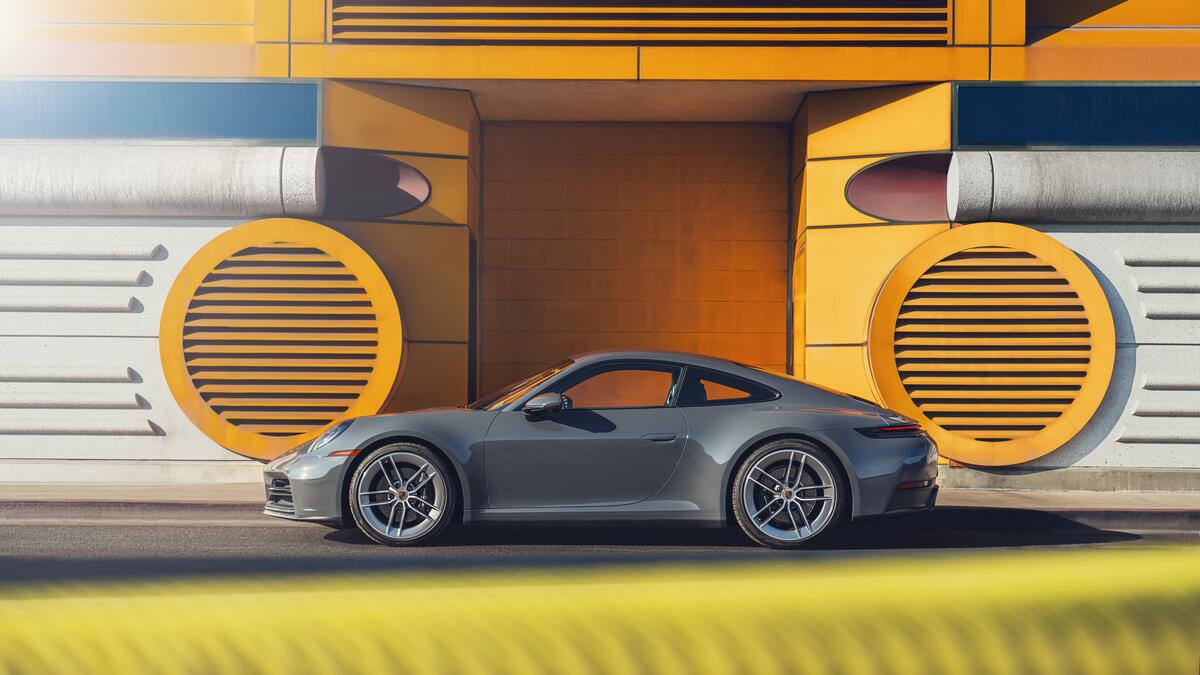
The Porsche 356 is an early Porsche sports car that helped define what Porsche became known for. It’s a classic model from the brand’s early days, and it’s historically important for Porsche fans.
Silverstone is a famous race track in the UK. It’s the kind of place where major racing events happen, and here it’s being used as the setting for Porsche activities.
Place
Porsche Silverstone
“Porsche Silverstone” is a Porsche-branded location or event setup near the Silverstone race track. The point here is that it’s different from the track, even though the names sound similar.
Term
values keep going up
They’re talking about collectible cars getting more valuable over time. If a car is worth more later, throwing it away (scrapping it) would be a bad financial move.
This is an older Porsche 911 called the Carrera 3.2. It’s famous because it has a 3.2-liter flat-six engine and it’s the kind of 911 many enthusiasts consider a benchmark for “classic” 911 driving.
Car
Land Rover
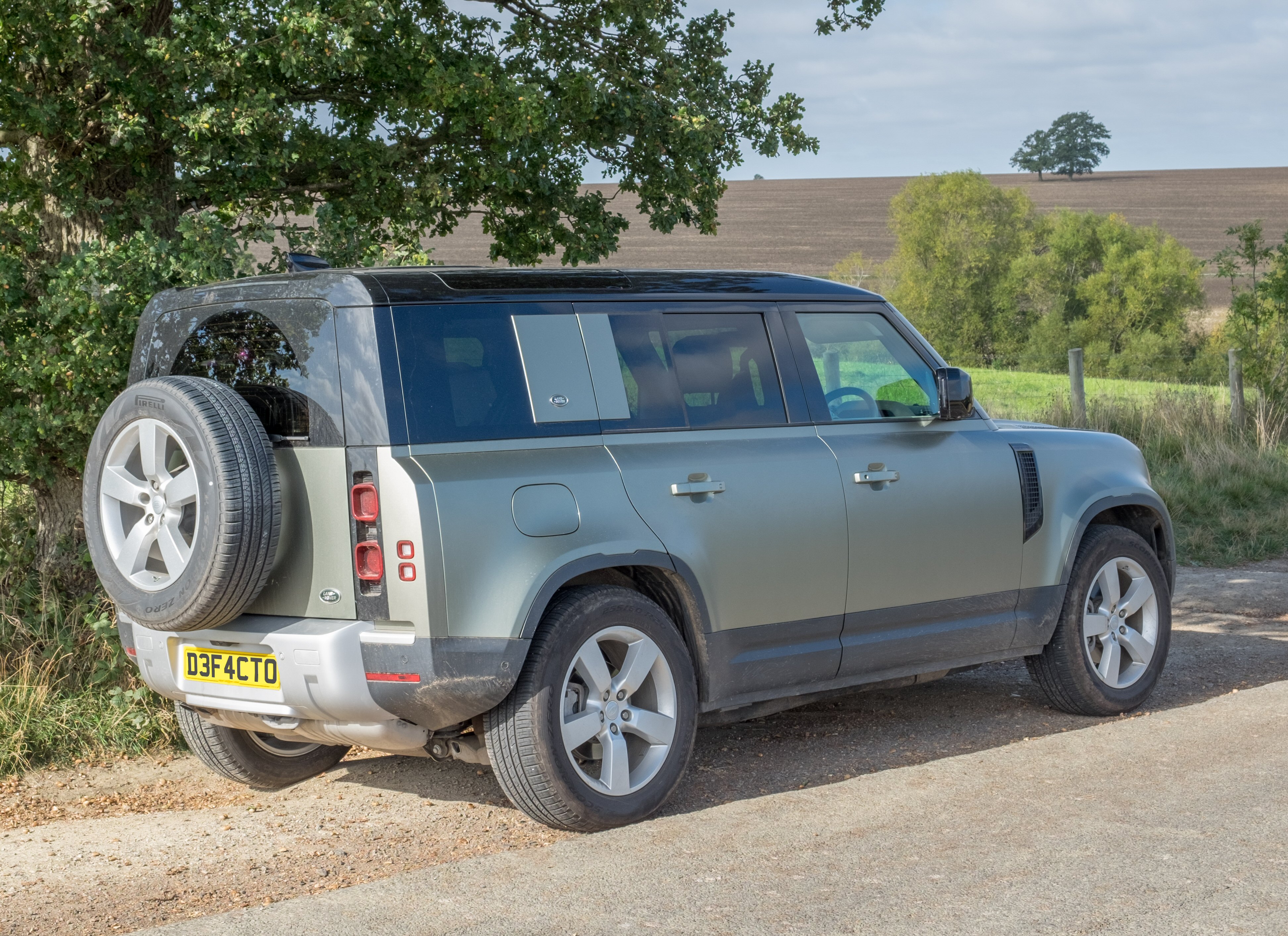
“Land Rover” is the British SUV brand known for off-road-focused vehicles and rugged construction. In this segment, they’re talking about how long they’ve owned their Land Rover, implying it’s been a long-term keeper.
In the UK, an MOT check is the yearly inspection most cars must pass to be allowed on the road. It checks safety and emissions, and it’s often where you confirm vehicle details.
Company
Rugged Roads
Rugged Roads sounds like a local shop that sells motorcycle parts (and maybe complete bikes). The hosts mention them because they do good work on adventure/Dakar-style setups.
Car
Africa Twin
The Honda Africa Twin is a motorcycle built for adventure riding—comfortable for long trips but also capable off-road. Here, they’re saying the bike they’re discussing really is an Africa Twin, and they’re imagining different versions for different kinds of riding.
“Dakar spec” means the bike is set up like it’s meant for the Dakar Rally. That usually translates to extra durability and off-road-focused gear so it can handle rough terrain for long stretches.
“Airport spec” is a joking way to say “set up for travel,” not hardcore rally racing. Compared with “Dakar spec,” it implies a bike that’s easier and more comfortable for normal roads and getting around.
The Chevrolet Tahoe is a large SUV. It’s popular for families and for towing, so it’s a common US vehicle people import.
Term
Scatterpacks
Scatterpacks are when parts arrive in separate pieces instead of one complete set. It’s a common way importers source components to finish a vehicle or match the right configuration.
Towing cars means pulling another vehicle behind you. It usually needs a strong engine and the right setup so the truck can handle the extra weight safely.
Cubic inches measure how big an engine is. More cubic inches usually means the engine can move more air/fuel per cycle, which often relates to power and torque.
Term
Cummins 6
Cummins makes diesel engines. “Cummins 6” means it’s a six-cylinder engine, which usually helps it make strong pulling power for heavy work.
Car
Ram pickup
A Ram pickup is a big American work truck. People buy them for hauling and towing, especially if they’ll be using the truck for long days.
The Dodge Ram is a large pickup truck. It’s made for tasks like hauling cargo and towing. The podcast mentions it in connection with pickup trucks and what they’re used for.
It’s how much of the car’s shape faces the wind when you look at it from the front. A smaller front “profile” makes it easier for the car to move through the air, so it can be more efficient.
They mean the best way to sit while driving to get the car (and you) working efficiently. In this context it’s mostly about reducing wind resistance and improving how you can see.
Aerodynamic efficiency is about how well the car cuts through air. If the shape is designed to reduce air resistance, the car needs less energy to keep going.
Term
lower center of
They’re talking about sitting/positioning lower to the ground. Being lower can help the wind “see” less of you, and it can also make the vehicle feel more stable.
Car ergonomics is how the car is set up so the driver can sit and reach everything comfortably. If it’s done well, you don’t get tired as fast and you can drive more easily.
Term
sports bikes
Sports bikes are performance-focused motorcycles. They often make you lean forward a lot, which can strain your wrists and arms—especially when you’re not moving fast enough for wind to help.
A cockpit is the driver’s area—where you sit and operate the car. In race-style cars, it’s often more enclosed and built around keeping the driver positioned.
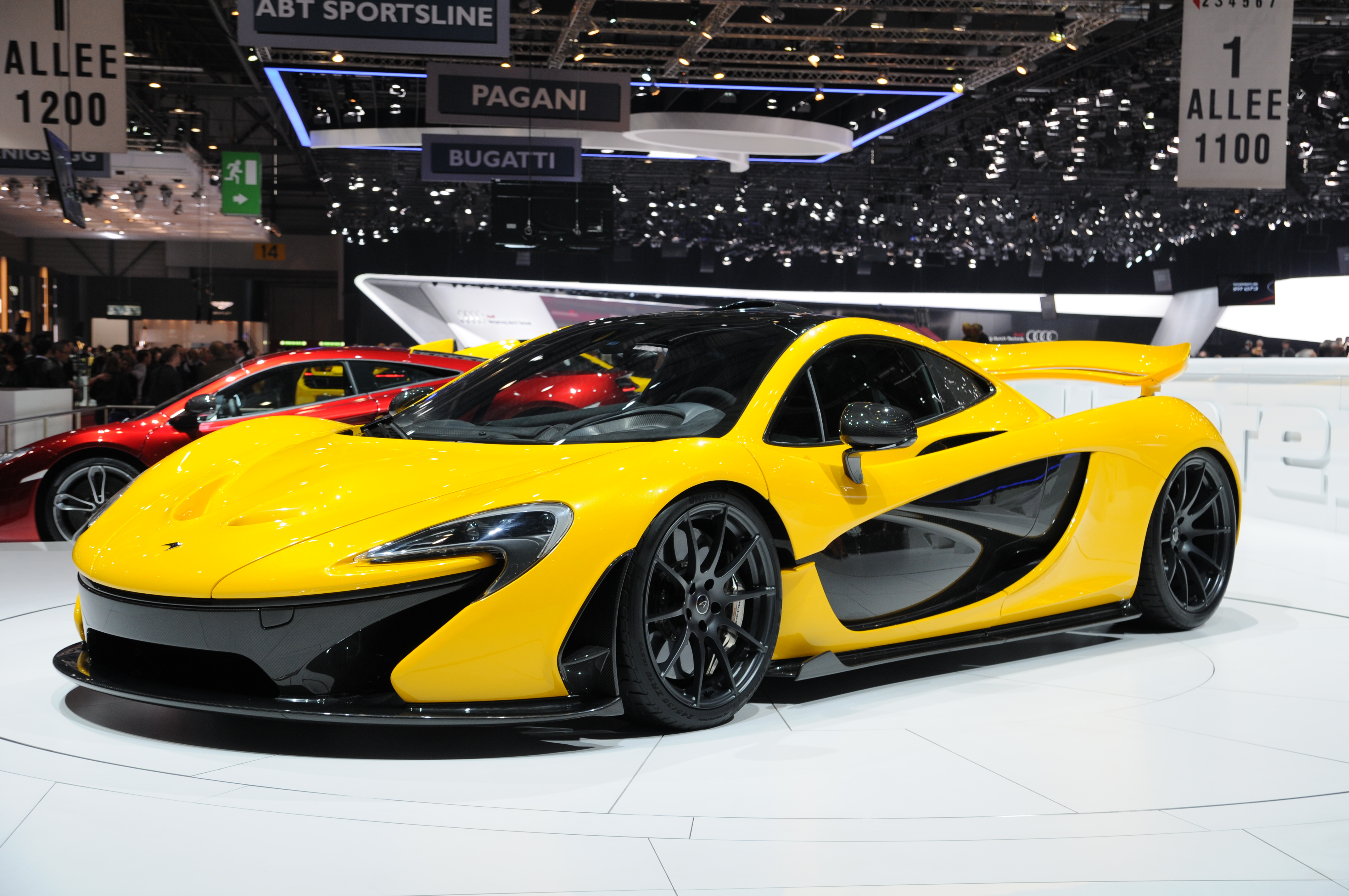
The McLaren P1 is a very high-end supercar/hypercar from McLaren. It’s famous for its aggressive shape and aerodynamic design, and it’s built to feel very focused and special to drive.
Paul Oxton is the person they’re talking about in connection with the McLaren P1. The hosts say he’s been a key engineering leader on major performance-car projects.
McLaren Special Operations (MSO) is McLaren’s in-house customization and bespoke program. The segment uses it to underscore that Paul Oxton’s engineering leadership spans both special projects and the P1 hypercar program.
A hypercar is an extremely expensive, extremely fast performance car—usually limited and packed with advanced tech. In this discussion, they’re saying many modern hypercars look and feel similar because they follow the same aerodynamic and layout ideas.
These are aerodynamic parts that grab airflow and use it to help the car grip the road and cool important components. The idea is that the car’s shape and add-ons are doing real work, not just looking aggressive.
Downforce is what presses the car down onto the road so the tires can grip better. Aerodynamic parts help create it by shaping how air flows around the car.
The McLaren W1 is a very high-end super/hypercar. The point here is that its seat design is tightly built into the car’s structure, so the driver sits more securely without needing extra space for the seat hardware.
The Aston Martin Valhalla is a very serious, high-performance Aston hypercar. In this discussion, it’s brought up as another example of how modern hypercars are redesigning the seat to be part of the car’s structure.
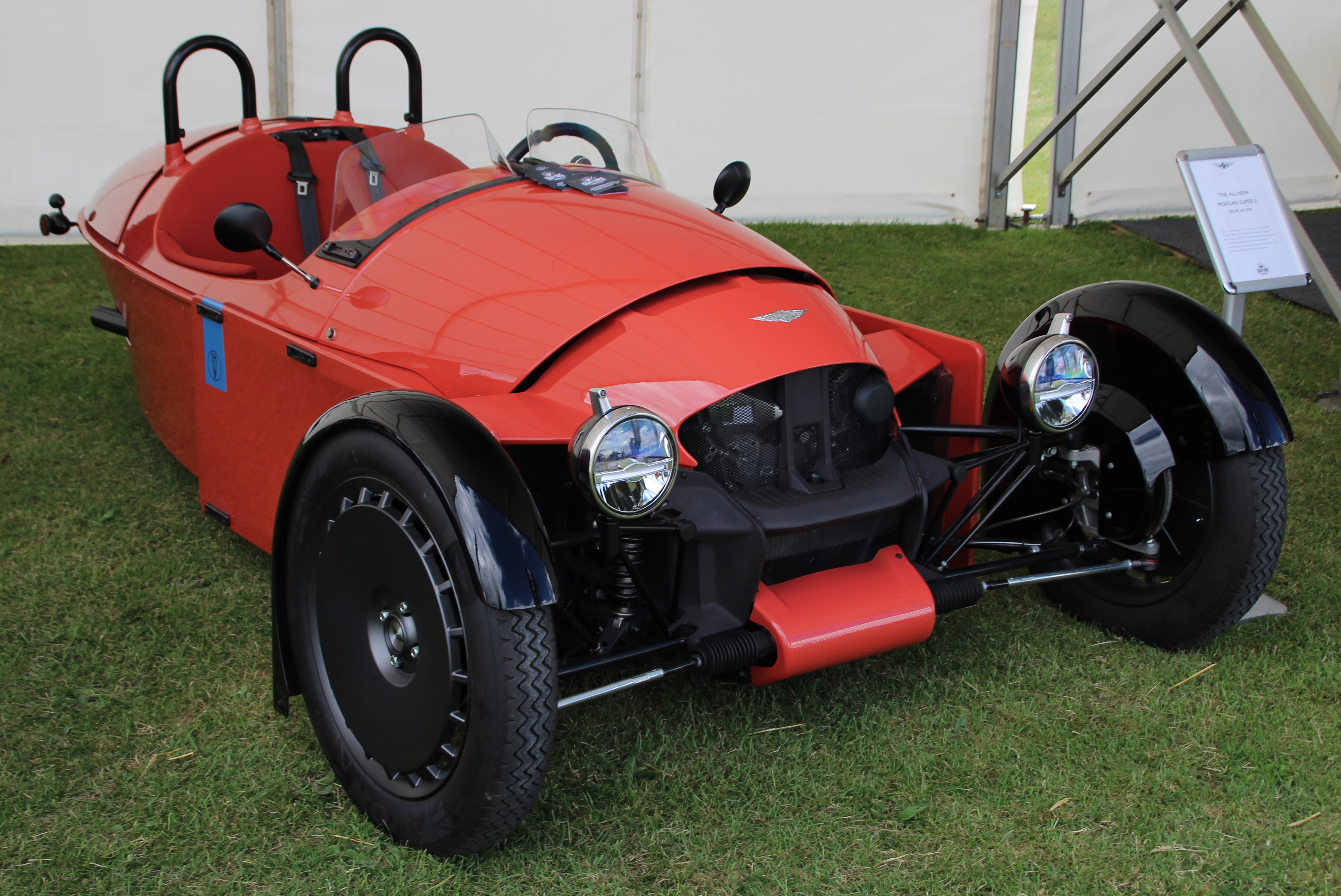
The Morgan Super 3 is a lightweight, driver-focused performance car. The host is using it as an example of how these cars can reposition the pedal area to fit the driver, instead of relying on a traditional seat that moves a lot.
A carbon frame is a strong, lightweight structure made from carbon fiber. Here it’s part of the seat build, helping the seat stay rigid and light while still fitting into the car’s main structure.
The pedal box is the part of the car that mounts the pedals and connects them to the drivetrain controls. The idea here is that designers can adjust where the pedals sit rather than moving the seat around.
“G” is a way to measure how hard a car is accelerating compared to gravity. “1.8 G” means the cornering forces are extremely high—so the seat and car structure have to be built to handle that stress.
The Ariel Atom 3 is a very lightweight, track-oriented car. The host is saying that even though the Atom 3’s seat could move on a rail, it was still a more traditional bolted-in design compared to the newer “seat molded into the chassis” idea.
The passenger footwell is the space under the dashboard where the passenger’s feet go. The host is saying they had to put luggage there, which tells you the car doesn’t have much normal trunk space.
The Super 3 is a very light, narrow sports car in the Caterham “Seven” tradition. Because it’s narrow and you sit close to the front wheels, it can feel different when you’re trying to line it up in tight parking spots.
Depreciation means how much a car’s value drops as it gets older. The host is saying Porsche cars tend to keep their value better than many other cars.
GT3 is a Porsche track-focused version of their sports cars. It’s the kind of car people buy for serious track days and racing, and it can be very expensive on the used market.
Term
value of this car
They’re talking about what the car is worth in the market—basically the price you could sell it for. But the point is that owning it costs money too, so the “profit” idea often doesn’t work.
The Ferrari 250 GTO is one of the most famous old Ferrari race cars ever made. It’s rare and highly prized, so people talk about it like a special piece of racing history.
Goodwood is a famous UK event venue where car fans go to see classic and racing cars. It’s known for big historic-car shows and races.
Term
salt exhaust sort of system
This is a special exhaust setup that uses salt to change how the exhaust behaves in the air. The goal is to make the high-speed run more controllable and easier to measure safely.
These are special cars built to set speed records on a straight, measured course. They’re designed to be very stable and controlled at very high speeds, not just fast in normal driving.
The Jeep Commander is an SUV made by Jeep. It’s meant for carrying people and gear, like a family vehicle. The podcast mentions it because the word “Commander” is used in another phrase.
Term
Zeppelin museum
A Zeppelin museum is a place that shows the history of Zeppelin airships. These were big floating aircraft that used gas to stay in the air.
A transatlantic journey means traveling across the Atlantic Ocean. Here, it’s about airships making long-distance trips over the ocean.
Term
Myback engines
The “Myback engines” are the engines that power the airship. They were placed out to the sides, so people had to reach them to check they were working.
The Pontiac Solstice is a small sports car with room for two people. It was made to be fun to drive without being a huge, heavy car. The podcast brings it up because it sounds like “solstice,” which is the seasonal event mentioned.
Term
customer center
A customer center is a place a car company sets up to welcome visitors. It’s where they can meet staff, get a tour, and learn about the brand’s history.
Here, lineage just means the brand’s history—where it came from and how it developed over time. It’s presented as a way to learn about Bentley’s past.
Term
WO
WO is shorthand connected to Bentley’s early racing history. The speaker is basically saying the display includes photos tied to Bentley’s motorsport roots.
A crash gearbox is an old-style manual transmission. It doesn’t have the modern synchronizers that make shifting easy, so you have to shift carefully and at the right time.
This is the steering wheel rim covered in leather. The interesting part is that the leather is stitched by hand, so each customer’s wheel can end up being unique.
“Stitched by hand” means a person sews the leather together instead of a machine doing it. On luxury cars, that can make the finished part look more precise and more tailored.
Lotus is a well-known British racing and sports-car brand. Here it’s mentioned as an example of the kind of racing car/team people wanted but couldn’t easily get.
Car
Brabham
Brabham is a famous racing team name from Formula 1. The point here is that regular people couldn’t just go race with the top teams back then.
A “special” is a car that someone has customized or built up themselves, often from an older base car. In this case, the host is talking about Austin 7-based custom builds.
The Austin 7 was a famous early small car that lots of hobbyists built on. People still talk about it because it became a starting point for custom and race-prepped versions.
Horsepower is a way to describe how much power the engine makes. The host is saying that even at about 80 horsepower, the car still feels like a real, usable machine.
An extension lead is just a long electrical cable. The host is explaining that their garage was far away, so it was a hassle to get power out there when they wanted to work on the car.
Term
A-shaped frame
It’s a simple metal frame shape the car is built on. The idea is to keep the structure light and easy to build, while still being strong enough to support the suspension and body.
The front axle is the part that links the two front wheels together. It helps the wheels steer and (if the car drives the front) also helps deliver power to them.
The rear axle is the part that connects the two back wheels. It’s important because it takes a lot of the forces when you accelerate, brake, or turn.
LIVE
Hello and welcome to the AutoCard podcast, my week in cars with Brian here, Steve properly
there, hello Steve.
Hello mate, how are you?
Very well mate.
Very hot?
Yeah, but tell you what mate, I've had it, so I managed to break the zip on a pair of
shorts this morning, but then I took another pair of shorts out of the drawer and in them
I found a pair of headphones that I use for the gym that I have lost a month ago, so swings
around about it.
Fantastic.
So you know, good day.
Steve and I will be talking our respective AutoCard columns a bit this week, but probably
more stuff besides our diaries don't align very much over the next few weeks, so we'll
be catching up on some stuff we've written about before or has not been published yet
and so on and so forth.
This pod is brought to you in association with our sponsor Anderson, Anderson-EV.com
for all of your home EV charging needs.
They do great chargers.
I have just discovered that I need, my charger has had so much use that it's become a little
bit shabby on the side of the building, so I'm getting, I think it's got perfectly nice
paint on it, but I'm going to get out the car polish and give it a bit of a rub.
Very nice mate.
Very nice.
Does it match the building it's attached to?
Yeah, yeah, it was color coded as you can.
As you can.
As you can.
If you go to Anderson-EV.com you can see the full range of chargers.
They start at 695 pounds even though they're premium chargers and they have a concierge
service that will look after you from start to finish.
You can color code them to your car, to your building.
You can have a hidden cable.
Your fingernails, I suppose.
Your fingernails.
You can have a hidden cable, an outside cable or whatever, but anyway, go and see.
Who's written to us?
You can write to us, listen at autocaratheymarket.com or you can find my email address, Steve's
email address at the end of our respective columns.
I remember I tried and succeeded in getting 100 miles to the gallon out of my Audi A2.
Certainly do.
Marvin Hurst writes to say, after reading about Matt's 100-mile-to-gallon effort, I thought
I'd try to achieve the same in our company's 2018 Skoda Superb.
I failed.
I can only manage 91.1 on the slightly optimistic fuel computer, over 117 miles, still impressive
in a large car and it was my first hyper-mile effort.
It was a trip on the M1 from Leeds, the last eight miles in 50-mile-an-hour restrictive
road works, which pushed the average to over 90.
I think that's the key, actually.
The car has an XMOD, very basic 1.6 diesel, attached as a photo of the fuel computer.
I slipped streamed a few HGVs, not too close.
I presume it's a manual gearbox.
It must be.
Yes, you would think so.
Yeah, base 1.6 diesel, I would imagine that would just keep going and
forever.
Sure.
Sure.
Porsche is 75.
In the UK?
Yes, 75 in the UK.
I think the UK was a very early import market for Porsche and some very early 356s around.
And they celebrated at their driving centre.
You know, they've got their separate circuit and quite a big elaborate building where
you can go, we get taken by your dealer if you want to try some Porsches.
Yeah, inside Silverstone circuit.
That's it.
Not to be confused with Porsche Silverstone, which is in toaster.
Yes, of course.
That's right.
Good thinking.
But I guess Porsche Silverstone in toaster must know this circuit pretty well.
Yes, you think so.
But it's a good place to go, isn't it?
I mean, we've done a few jobs there, but this time I was astonished by the number of Porsche
not only rubber-neckers like me, but also Porsche owners who showed up.
I mean, there were hundreds of cars there, privately owned, all parked in, or mostly
parked in colour-coded order.
And it's a lovely sort of up and down, quite an interesting site.
And they had tents here and there with a band playing and a bloke doing barbecues and bars
and God knows what, as well in the main building.
And it was a thoroughly good thing.
Even the bus in and out from the car park, which I've learned to hate the idea of getting
on a bus to somewhere inside Silverstone, worked perfectly.
It was good.
Very good.
Nice people.
Was there a lot going on at the same time, then, that required a necessitated a bus,
or was there just not enough space at this experience centre?
Not enough parking for us all.
Not enough parking for non-Porsche owners like you.
Yeah, well, and Porsche owners.
Oh, really?
The car park was, car parks A and B, were pretty much chocker by the time we were there early,
because I'm just addicted to getting places early, but by the time we left, the place
was chocker block.
Why?
That gives you a view of how huge that Porsche constituency is.
And if you check in Britain's Aston population and Ferrari population and MG and all the
rest of them, I love the view of the potential voting power of the world of car enthusiasts.
Yeah, yeah, yeah.
I think we are.
Just have a look in people's driveways and when their garage doors are open.
There are a lot of us, aren't there?
So good, isn't it?
Yeah.
We were wondering, perfect, not far from here.
And it did just that.
Walked along perfectly, ordinary suburban street, and, you know, in the first one was an AC,
and the next one was a Vincent motorbike.
It's just great.
Yeah.
Love it.
Yeah, yeah, yeah, same.
I suppose also Porsche has helped by the fact that a lot of them will still be on the road.
They are, I guess.
Yeah, proportionally.
Because you'd be nutty to scrap one, wouldn't you?
Because the values keep going up.
We were walking around inevitably looking, I've only owned one Porsche and it was a 88
F plate Carrera 3.2.
And we were interested, and I was there as steering committee, and we were interested
to see what cars like ours would be like now.
And there was an absolutely pristine one, admittedly, better than ours was when we sold it.
But it was 80 plus, 80 grand plus.
Really?
We sold ours for 20, I think.
Okay.
Bought it for 18, sold it for 20.
Oh well, okay, yeah, that's all right.
Yeah, and the proceeds went on the roof of our house, which has got acres of Cotswold
stone tires.
Is that good?
Well, yeah, if it needs doing, it needs doing.
Well, yeah, the water was starting to come through.
We didn't really have an option.
But we have tried to buy a few cars since.
I like the idea, and I'm starting to do it, owning something for a very long time.
Like a 911 like that, to have it.
Well, we're getting there.
Yeah, that is, how long have I had the Land Rover?
12 years?
14 years?
Hang on, 13 years, I think, or thereabouts.
Hang on, maybe more.
I need to look that up.
I can look it up, the last registration change was.
Can you do that on the MOT check?
I think so.
Yeah, I think you can do that.
Yeah, and I think, well, if I keep everything, that'd be nice.
Well, the mugs aren't going anywhere now, is it?
No, I don't think so.
I took it out last night at midnight.
It was lovely.
Oh, midnight.
Yeah, just perfect.
Because by the time this pod comes out, it was a warm evening yesterday.
By the time this pod comes out, it may no longer be warm evenings.
But it was just lovely, just really nice.
Yes, encouraged one to keep calm and carry on.
What should more drivers do?
It's just an observation.
I think I just seem to have been in areas, in traffic, sort of melees,
where everybody's on the horn all the time,
and people seem to get stroppy in an unreasonable way quite often at the moment,
and I'm putting it down to the heat, the horrible roadworks that hold you up,
because every time somebody shifts a kerb stone,
they have to close half of the road.
And the other thing that I think is getting on our nerves
is the rubbish world situation,
particularly British politics, if you care about it.
The whole thing is winding us up to some extent,
but this is a time when we need to take a deep breath and not worry about it.
I mean, you're pretty good, not worry about it, man, aren't you?
Well, I mean, I try, but it's harder than it used to be,
and I think that is exposure to more bad news more frequently.
Maybe there is more bad news more frequently,
or maybe it's just exposure to it,
and I think people are a little more frothy than they were.
Some of it's a worry about driving down the world's biggest pothole.
Oh, there is that.
Yeah, there is that.
Just, yes, I know, you know, I can't believe it.
Are we still going around potholes at the end of June?
But yes, because they're still there,
and they have been since blinking February, January, you know,
ones near here, which you'll have come down,
where you may have come down the road,
with a couple of them, very large ones on.
Yeah, is that the one where I mangled a mini?
It's one where you wrangle the mini,
and then yet at a T-junction off that road,
that road is apparently being mooted for one of Oxfordshire Council's
ideas of quiet roads where they would ban cars,
because they want to give pedestrians a cyclist priority,
but it doesn't really go.
People in cars don't use it a great deal anyway.
But you just think, how have you got all the energy to expend on that,
but not just fix the roads that we do need to use?
Because it's not rocket science.
Well, down that road that we're talking about,
there's a couple of hamlets, and the people are quite militant,
don't they?
And maybe they've got good negotiating power.
Yes, but it's not on that road, but it's a road.
There is a road off it, which actually wouldn't make a huge difference
to people if cars don't go down it,
because cars don't go down it very much.
I was just going down the Fosway the other day,
and there's this extraordinary sign on it, which now says,
what a series of signs, and one says something like,
collisions mainly occur at junctions.
This is supposed to be a lesson for us.
It's a perfectly straight piece of road,
and it says collisions mainly.
It's a great sign.
Wait till you, when you're on the Fosway next,
have a look.
It's completely Byzantine.
I don't want to...
Because also, there's quite a lot of new houses
and quite a lot of new buildings,
and permission possibly for not one but two theme parks near here,
and no improvement in the road infrastructure.
Well, why do you think people are using roads?
Oh, my God, these roads are so busy.
Why do you think that is?
Maybe stop building stuff.
Maybe stop building stuff
until you've improved the infrastructure.
I don't know.
I don't know.
Maybe that's why everybody's cross.
Sorry, mate, I'm getting cross.
The trouble is,
I suppose the argument's always the same.
If you care about it that much,
you need to get yourself on the council or something,
and try and...
I don't know whether your confrears would see it that way anyway.
Yeah, I don't think my views on the parish council
are going to make a huge difference
to the multinational French company
that wants to build a theme park five miles from this house.
I don't think it's going to make a lot of difference.
Fate of Compley, I think,
because they've already been changing road junctions
at a cost of $12 million for the past three years,
with the expectation that traffic will increase.
God.
Why would that expectation be?
Last date of V5C logbook change, 2014,
in my land over, so I've had it 12 years.
Ah, right.
Didn't know that.
And it's here forever?
Probably.
Yeah, I probably.
Unless...
Yeah, unless a better idea comes along.
Unless something else goes.
No, I think...
The longest I've ever had was the Berlingo,
which lasted 19 years.
I mean, the car's still going strong,
because it got bought by another journalist who loves it.
I think he's got four in total.
And this is his star one.
This is his best one.
Who's that?
Oh.
Locrum Practical Classics Deputy Editor.
Oh, OK.
What's his name?
Ah.
Sorry, mate.
Sorry, mate.
He's got four.
Yeah.
Wow.
And this is...
Some of them are a bit baggy,
but this one has taken over as his flagship.
So, because he...
It's quite a good spec, you know.
Yeah.
And the big engine and all that,
and he knows them intimately.
He was starting to have rear suspension trouble,
and he just fixed it in an instant,
whereas it was the sort of thing that worried me.
I quite like that idea of having more than one car
of the same thing, just so that you can...
You become a bit of an expert in that field,
and you can keep things...
You've got to love them, though.
That's a trouble, isn't it?
Yeah, yeah, yeah.
That's quite a commitment.
It is.
Because when the old insurance bill comes in,
and you're paying three times as much as you would do...
Because you're four rather than one.
But the experience is the same.
Yes.
Yeah, I suppose so.
Could you sort a couple and keep one going?
I suppose you could.
I think about Defenders and, well, the A2 as well, in a way.
And actually, my motorbike, which I had MOT'd yesterday,
one advisory, could live with that.
That's okay.
Yeah, I think Sawn is helpful.
I've done it myself a few times.
Yeah, I've got...
Well, actually, I haven't got the two classic Sawn,
even though they're not on the road,
but they're free to tax.
But if it cost me anything, I'd just Sawn them
and keep them ticking over.
But yeah, I could have another Africa twin bike,
I've got to say, and have one for best.
Think of that.
Yeah, that'd be good.
Yeah.
I do like the one for best idea.
That is a good idea.
Yeah.
Because there's a dealer of parts,
and I think whole bikes as well,
in the south called Rugged Roads,
and they do really good stuff.
And these are real Africa twins, aren't they?
Yeah, yeah, yeah.
So the early...
So the early...
I mean, I think they probably do bits for the new ones too,
but yeah, I like the old one, because it's...
Well, I don't know.
I just have one.
It's good.
And the idea is that you could have one in full Dakar spec
and one in kind of airport spec.
Yeah.
I find it quite attractive.
That is a good idea.
But then I might not use it very much,
which is another issue.
But you'd have it.
I'd have it.
Which would be a thing.
Sorry about that.
I've lost the thread there.
Still listening to what complaining incessantly about nothing.
Yeah, maybe people should chill
and a bit less horn and a bit more...
Yeah.
It's hard, isn't it?
It does feel...
Does it feel to you
that the world is a less tolerant, less happy place
than it was 20 years ago?
Yeah.
Because it does to me,
and I don't know if I'm just getting to be a middle-aged grump.
Yeah.
Well, I think you've got to be careful of that
because it is inevitably partly you.
But I was reading somewhere the other day about
somebody, some mental health expert going on about
how everybody's got a bucket full of worries or concerns
and there's a point where
the level changes depending on what's happening to you in your life
and there is definitely a point if the bucket gets a bit full.
Effective behaviour.
So you have to try and get rid of a few of the problems.
Get rid of them.
Make a list of them and dial them out.
Yeah, because if there's stuff you can't do anything about,
I don't know why you...
I don't know.
I don't know.
But I must say I've got a fair feeling
that there is quite a lot you can fix.
I've got a house full of crap.
I'd really love to get rid of this crap.
And I haven't.
And if I did it, it would reduce my concerns about things.
Yeah, I know.
I do get that.
Yeah, I get that.
Because I've got cars that don't work and I'd like it if they did.
And it stresses me a little sometimes that I'm not doing any work on them.
And actually, I don't really want to sell them.
But I've just come to go.
It's fine.
I did watch a few
collected car type American restoration type programs,
you know, where they do that sort of thing.
And they've got some people on that who go,
oh, yeah, I've got the 300 cars in a field.
And I feel rather better about things after that.
And they go, oh, yeah, well, we've got this.
I haven't worked on it for eight years.
But, you know, it's just there.
And I think, oh, maybe that's,
maybe that's all right, actually.
Maybe that's okay.
The bloke that I admire for that,
for that, you know, that business of having lots of cars and not caring
is Paul Cowland.
You know, the...
I spoke to him the other day because he...
We see him on the box and he hangs around a museum now and then and all that.
And he, I think he has some sort of a deal with his missus or had it,
where he agreed not to buy a motorbike and risk killing himself.
And she said, you can have as many cars as you like,
as long as you don't have a motorbike.
So he's up to 80, I think it is.
Yeah, didn't he have a little clear out recently?
But I think, I think, yeah,
I don't know how he's getting on amazingly well.
We should go.
We need to take the pod over there.
Yeah, we should.
Because he's a great talker.
Yeah, we should.
He's brilliant.
Yeah, he was...
Yeah, I was speaking to him the other day because he put me in touch with a garage
not far from here where they import some US spec vehicles like Chevy Tahoe's and Ram 2500s.
He's driving around in something.
Yeah, I think so.
I think he probably sourced it from them.
And anyway, so he said, you should go and drive.
You should talk to these lads and go and drive some of their stuff because they've been bringing in...
Did you do it?
Yeah, I did it on Monday.
Oh, wow.
Yeah, I only drove two Ram pickups on Monday.
But they've also, as I say, they've got the Chevy's, they've got a Trail Boss, they've got the Yukon,
and they've got some Challenges with Scatterpacks and all sorts.
So there's loads of stuff to go...
Well, you should come over or go over instead of me and do a first drive on one of them,
and I'll do some others.
I think you'd better go together.
They're Kidlington.
We can be called there.
They're only in Kidlington.
Yeah, we could actually.
That's a good idea.
But I think I saw him the other day when he was rather boastfully going on about a Dodge Charger
that he drives around.
Well, that may be sourced from them.
Yeah, I think they bring in about 100 cars a year.
So it's not a small...
I mean, it's a small market in the scheme.
As they say, we sell a million and a half cars a year in the UK, whatever it is, 2000000
They only want a tiny, tiny chunk of it for people who find that, well, they just want one.
But also, if you have one of these big American pickups, they're not off-roaders.
They're towing cars effectively.
And if the alternative is that you're driving a small lorry, but you need to do sensible
motorway mileage or whatever, this is what they're for.
They do fulfill a purpose.
They do feel a bit large and left-hand drive in the UK, and they are a bit large and left-hand drive.
What about the V8?
One was a V8.
One was a Cummins diesel.
Oh, my word.
So that was, I suppose, a 6?
Is it an inline 6?
I guess.
Yeah, I think so.
I need to look that up.
But it was, I mean, it was...
They used to make an Cummins 6 called a 6354, and a 354 was 354 cubic inches.
So it must have been six and a half litres in here.
Yeah, this, I think, is about that in a Ram pickup.
And they're just, you know, if you haul stuff around and you spend all day in one, I get it.
Because if the alternative is a short truck with a, you know, with a dual tyres on the rear axle.
I remember now.
I saw it, but there was a bit of a do at Shelsley Walsh, and Paul showed up in this car.
He didn't run it up the hill, but it was prominent in the pits, shall we say.
Oh, really?
It was a Haggerty day they did the other day.
Yeah, I couldn't make that at the end, which was a shame.
Yeah.
He chats a bit of that, doesn't he, from memory?
Or he did last time?
He did, yeah.
I was there in an electric JCW Mini.
It was good.
Really?
It was good up there.
There was plenty of poke out of the bends, which is what you need.
No, it was good.
What was I talking about?
Sorry mate.
Oh, I don't know, but I'm much happier already.
Excellent.
I'm much calmer, much more zen than I was five minutes ago.
I'm impressed by the lack of heat in your house.
Oh, well, we're lucky, I suppose.
Lots of people are overheating as we speak.
Yeah.
It's got to be 30 something outside.
Yeah, it's what, it's midday now, and I went out at 11, when I got back at 11, I was like,
okay, I don't need to go out again, because it's, yeah, it's listener if it is now freezing
cold, but it's just, it's hot today.
No, it's, yeah, well, we're lucky we live in the sticks.
Yeah.
You know, and it's a, it's got thick old walls to try and keep you warm in winter.
And so it's actually quite, you know, just shut the curtains in the morning and it stays
chill.
What are we going to talk next?
Should we talk this funky driving position idea?
Oh, yeah.
Yeah, yeah.
Which has come from San Rivatti.
Do you want me to?
Yeah.
Oh, well, do you want to talk, what's the, what's the idea?
Well, it's just an email that we both received, isn't it, which comes from a company I had
never heard of called San Rivatti, but which seems to have some pretty good backers.
And they, their big claim to fame is that instead of building a car that's a hypercar,
which is mainly concerned with low frontal area being squeezed down on the road, you
know, you should start with, with the perfect driving position and they reckon that the
perfect driving position or a perfect driving position is the, is the posture that you take
up on a super bike where your head is forward and your, you sort of concentrate, you better
visibility, they say, better, better security in the car.
And, you know, I was thinking about it, you do, whenever you concentrate on something,
say you're doing something on a kitchen table, you always bend forward, don't you?
And in the average hypercar, you are very nicely accommodated, but you are in essence a sack
of spuds in a, a hammock, aren't you?
And I think it's a, it's an interesting piece of observation.
It's an interesting thought on it.
Cause on a bicycle or on a motorbike, you do feel very connected and actually on one
of those recumbent bicycles, which people will say, are they much better from a, an
efficiency point of view, you present a lower center of a lower frontal area to the wind.
So it's more aerodynamically efficient and also you get more efficiency at your legs
because you're not supporting your whole body.
But on a bicycle doing that, it feels weird.
Yeah.
And that is effectively the position we do adopting a car.
Yeah.
I think there's something in it, but I couldn't help thinking that having made that point
and these guys need, would, would need, in order to develop it, which I believe they
haven't done at the moment, they're still assembling their, their team.
Yeah.
It looks like we've got a, it's not even a fancy, fancy, fancy rendering.
It's a very straightforward sketch.
Yeah.
Just sort of shows, you know, where the driver would sit and how, how the driver would affect
the, the lines of the car.
But they, I think they need, you know, some practical car ergonomics help.
You know, you would want to see, you know, the guys from Renault take up the idea and
with all their experience of building car interiors already, because it would be possible
to get it very wrong, I think.
I, so when I look at this sketch, which will be online somewhere by the time this pod comes
out, effectively this driver isn't on their knees as far as I can tell, and then leaning
forwards with arms slightly outstretched and head up.
It is a sort of super bikey style position, except the legs are a bit more extended, aren't
they really?
I think the thing about sports bikes is that they can be, with that lean forward position,
is they can be desperately uncomfortable because they put a lot of weight on your wrists.
But as you pick up speed, the wind pulls you off it and that makes it easier.
In this car, you wouldn't get that.
So are you leaning on something with your chest?
Yeah.
Because also in a crash, surely you need to be harnessed.
Protected, yeah.
In a cockpit, in a way that, in a motorcycle, only motorcycles are dangerous, but they'll,
if you crash on one on a circuit, they'll throw you off.
Yeah.
There's a lot to.
There's quite a lot to unpack.
Isn't there?
As the thought of a better race.
But I mean, you, in fact, you were reading it.
The bump in you has said that there's a bloke from McLaren P1.
Yeah.
P1 project leader who is, whose name is Paul Oxton.
Thank you very much.
Good on you Paul.
There it is, beautiful.
Well done.
He was VP of engineering at Singer, head of engineering at McLaren Special Operations,
sorry, and project leader for the P1 hypercar.
So he's got some experience.
He'd be an interesting guy to talk to about.
Yeah, he would.
Harnesses and so on.
Yeah.
I just, I suppose what we said to one another before we started recording was,
was, is the interesting thing, you know, a hypercar is, is a, I mean, I hesitate to
denigrate them, but it's a, in a way, it's a, it's a rather predictable format these
days.
It's just a very wide car, very squeezed down on the road, lots of air collecting devices,
how huge poke in the back.
And the, as I say, the driver in effect sitting in a hammock, you know, and I just like the
idea of somebody contemplating it in a different way.
Although you also mentioned the quad bikes already that are legal on the road already
do that in there.
Yeah.
That's probably the, in terms of the sort of riding position, I suppose, for one of
the better phrase.
It's, you know, that in terms of four wheels, that's the closest you get to it, but I suppose
they're a bit higher.
You ever had a serious go in one of them?
Not.
I mean, I've had a few goes, but not a serious, serious, not serious as in.
Some of the madmen you see going up and down there.
No, not really.
I've driven a, I've ridden a couple, but I haven't, I'm trying to think when I last
rode one, would have been a while.
I was found it was slightly difficult to get to grips with somehow.
I had to go on a tricycle, you know, one of those motorbikes with two wheels on the back.
Yeah.
And they.
One of the little Honda.
No, this was a BMW conversion.
So it was a one liter BMW with a, but the trouble is I found the two problems.
One was that you wouldn't much rather at banked because suddenly you're confronted with side
forces that aren't there on a motorbike or hardly there on a motorbike.
And the other thing is because the, the, you're looking forward and you, your head judges the
width as being the width of a motorbike and then you slightly forget that there's a car
behind you.
So you might hang the rear wheels on a kerb or something worse.
Yeah.
Do you see that video of the, I think it was a French journalist on some big sports touring
motorbike.
So it's probably 10 years ago and he's filtering around a sort of dock side, a little marina
for camera and they're filming him as he goes past.
And one of the panniers on the back smacks a lamppost or a, or a post of some kind and
basically throws him and the bike into the water.
Yeah.
Into it lands in a boat and it's a proper team.
And he's not going very fast when he does it, but I think he drops 10 feet or six feet
or something.
Yeah.
Pretty nasty thing to do.
But yeah.
That term.
Yeah.
Width after width, things that get wider than, than they are when you're in a driving seat
are an issue that the original Lotus Spree did that, I think, not by much, but it was
enough to be a bit concerning.
If you were, you know, going for a line down a narrow road, you know, you could sort of
hang poor old Colin Chapman's fiberglass on the wall.
Yeah.
The, oh yeah, two things I was going to say.
One, the seat, the seating thing in hyper cars, that new McLaren W1, also the Aston
Valhalla and the Morgan Super 3, in fact, the, the biggest advance in seating tech is the
fact that the seats are effectively molded into the chassis.
And then they put cushions, you know, it's just carbon, carbon frame effectively molded
into the chassis for the seats.
And then they put, they just insert squabs into the seat.
So to hold you as snugly as possible, you know, Clara's thinking, and then the seat,
the pedal, the pedal, yeah, like the Super 3, and then the pedal box moves instead.
And the idea is that one, you only have to worry about headroom in one place.
And although the fixed, the seat back is a fixed angle, you just go, well, we'll live
with that.
And then you, yeah.
So, so in terms of car roofline, you don't have to have it higher than you want to anywhere
else to give headroom, because you only have to worry about that one bit.
But also, as they say, it doesn't matter how rigid you make the seat, it will flex slightly.
If you've got hyper car levels of performance, and it's doing 1.8 G of peak cornering or
whatever, the seat will flex, whereas if you just mount it rigidly, it's part of the chassis,
it won't flex.
And also, it's lighter.
Like the idea.
Yeah.
So that's quite...
But yeah, I had an Atom 3, do you remember, an Aerial Atom 3, and that admittedly, you
could move the seat on a rail, but it was bolted in place, and it was a one-piece...
Yeah, so one-piece molding, isn't it?
Yeah.
No, there was no upholstery, and honestly, it was comfortable.
I'm not sure whether the steering committee would say this.
We went to the Isle of Wight for a weekend in an Atom one time, which she didn't come
back sort of writing poetry about, I must say, but possibly because all the luggage
had to go in the passenger footwell.
Oh yeah, that's true.
But no, I reckon this, also, it just looks right, doesn't it?
You look in the Super 3 and you just see how great it is.
What a terrific idea.
Yeah.
Yeah.
What are the other things I was going to say?
Oh, yes, Super 3 does not get wider behind you.
No, of course not.
If you've missed it with the front, you've missed it with everything.
Actually, in terms of manoeuvring, so the problem I have with it is I sit so far in
board of the front wheels, and they're about 1,800mL wide, so they're not that narrow.
Reversing into a parking space and getting it central, I'm still getting used to.
Oh, because...
Because it's quite easy to reverse back into a space and they go, I'm not in the middle
of this bay at all.
Is that because it's so short or because it's funny?
I think because I sit so far in board of the, I don't know, I just end up, the wheel starts
rolling in as I reverse into a space and I go, I can't even say the wheel's not in
between the lines properly.
Whereas if you go forwards, it's much, but the turning circle's so bad and I don't like
going forwards into spaces much anyway.
But in terms of judging exactly where the edge of the car is, I mean, I park forwards
outside here because we've got to squeeze a lot of cars onto the driveway and I can
nudge that wheel perfectly up against the edge.
Because you can see it.
Because you can see it all the way through.
Yeah, beautiful.
Yeah.
Well, the thing is, the car's not going anywhere mate, so you've got many years to practice.
Well, I've got many years to get used to it.
That's the thing.
That is the thing.
Was I going to say something else about hypercars?
No.
Was it?
Well, I was I was just taken with I'm I'm I'm taken with the idea, but I can see that.
Yeah, I can.
Oh, I was going to say, I wonder what the legislative issues are because so far it's the pictures
have got somebody with a helmet on.
Yeah.
What does it mean?
Yeah.
Could you?
And is it a track only car?
Yeah, maybe it's a track only car because can you can you position somebody like this
on the road or not?
Yeah.
It's presumably only a single seater as well, because yeah, I think we I mean, it'll be
some things that there's quite a long and the best show say press release, which is
mainly about assembling the team and how Auguste all are.
So I presume more is going to start coming out, but I suppose if you're going to make
a hypercar mate, you've got to give people a reason to buy one because there's plenty
of reasons that they might just go and buy one from Ferrari or McLaren or Porsche or
Aston Martin or anybody else.
Yeah.
So why would they buy one from you if they've never heard of you?
Yeah.
And here is maybe a reason why they would where they would.
I tell you what this Porsche event that we talked about that definitely made the made
the case for buying a Porsche because he just the the values the fact that they just do
not depreciate or at least the the choice one.
So people, you know, I was standing next to a bunch of blokes talking about some GT3
or other because there's quite a few GT3s out there.
But, you know, this particular persuasion of GT3 just changed hands for 500 grand.
And, you know, the owner will not have paid that money.
No.
So if you know that you're going to be able, even if you're not buying for investment purposes,
it's not half consolation to know that your your indulgence will go out the door for the
money you paid.
Yes.
And buying for investment purposes is not very wise.
No, it's a terrible idea.
Oh, but I think, well, yes, one of our friends, Ed Callis, says, there's
that.
He says, look, you know, yes, all right, the the value of this car is now X and 10 years
ago.
It was that.
But in the interim, you've had to look after it and you've had to have had to pay this
on it.
You've had to do that on it.
Yeah.
Don't buy a car because you want to make money out of it.
No, he's right.
Buy a car because you want to buy a car because you like it.
You see, he's in the Ferrari racket, right?
Yeah, he knows a lot about a lot of the very special Ferraris.
Yeah.
Yeah, yeah, yeah.
Yeah, he's an absolute expert on, I think, particularly when events like Goodwood come
around and he sees 250 GTOs racing and he'll say, by the way, that isn't one.
There may be none at the revival this year because they're all, you know, they're all
yes, they're all.
Yes.
Whatever word you want to use, not exactly the original ones.
No.
Oh, I see what you mean.
Yes.
We could take a short break to tell you this podcast is brought to you in association
with Anderson, our sponsors, Anderson-EV.com makers of design focused premium electric
car chargers.
And we have the archive.
I don't know if I've been in the AutoCar archive this week, Steve, because I've had
a week of new stuff and writing new stuff that I haven't.
I was in the archive.
I was looking up the credentials of some designer and I've forgotten who the hell it was now.
But I was trying to, trying to appear, oh, I was, um, the bloke.
Oh, God.
It's gone.
Oh, God.
We've got a lot going on, mate.
We've got a lot going on.
There's a lot to think about.
This was, I was writing something about the, this new record breaker called HydroMax.
Oh, yes.
Yeah, yeah, yeah.
And the, there's a particular shape under the car, which is, which copes with the way
the salt comes off the, of the, the, the floor, you know, once it gets to the tires.
And it was the, the, the system, the salt exhaust sort of system was designed by a bloke, very
senior, died not so long ago, was involved in thrust two and, you know, thrust SSC and
all those.
And he, he just designed a way of sorting out the salt and I've forgotten his name,
but he was a great theoretician of, of, of, of land speed record cars.
Not an engineer called John Ackroyd.
No, no, but he's, no, sorry, the older man than that.
It's gone.
I will.
Oh dear.
Anyway, if you visit.
Sorry, sir.
You know, you're in heaven and I really need, you need recognition for what you did.
If you visit the magazine shop.com, I couldn't remember the, the web address
for a moment.
You can look that up and let Steve know by subscribing to the Auto Car Archive.
There is a.
Subscribe.
There is a listener offer in the show notes for this pod.
It'll say click here.
If you click here, you can go and you can get six issues for six quid, I think, and full
access to the Auto Car Digital Archive.
The thing is that the annoyance is that this gentleman's name is in a, in a notebook in
the boot of my car, which is outside my, your house as we speak.
Oh, okay.
But.
So that, have you written the feature on the micro max?
Yeah.
When's that in the mag or is it in the mag already?
By the time this podcast.
Yeah, I suppose so.
Yeah.
The, the sort of forces of publishing are still cogitating, but it's a, it's either
a, you know, half a week or one and a half weeks, whatever it is.
I enjoyed it.
It was good fun.
I like Andy Green is just amazed by the blokes ability to talk.
I said to him, you know, we're standing around on the edge of a wittering area of
wittering runway where they're doing these tests for the, for the thing before it goes
to Bonneville.
And I said, is there's a rumor that you used to run the place.
And he said, Oh yeah, I was in charge of flying operations here when I was a.
When he was Wing Commander or whatever it was at the time.
There was less, therefore there was less one, fewer people wondering about how they managed
to get to use it.
He doesn't know where before I last saw Andy Green on a road.
I was in London the other day just south of Waterloo and on the London to Brighton
where his steam car and our Vauxhall had ceased to.
What's the word?
What's the word?
Prevail.
Yes.
Well, they had both temporarily come to come to rest.
Do you get going again?
Yeah.
I think ours was just a loose cable and his was a bit more in depth than that.
But I think, yeah, I think you made it to Brighton.
Yeah.
Oh, good luck.
Yeah.
I was just a risk of your risk getting your backside singed in those things.
There's a large fire underneath your bum.
Yeah.
It's a bit of a hairy way of going about things.
Yeah.
And you need a couple of years of sort of degree study to work out what all the taps do.
Do what they all do.
Yeah.
One of my favorite Christmas road tests still was the steam engine, steam locomotive.
I can't remember the name of it.
But that was to talk about how they work, how you fire them up, how you fire them up.
We've done a steam roller as well as the locomotive.
Oh, yeah.
Yeah.
But, you know, you get out and have to fire it up several hours before you want to go
anywhere and get build up ahead of steam.
And then, by the way, keep an eye on these glass gauges, they say.
Yeah.
Keep an eye on these glass gauges and make sure they've got water in.
Because if they don't have any water in, you're basically turning it into a large bomb.
So don't run it dry of water.
But then, you know, the good drivers and firemen between them
will know that on this stretch of railway, there's this incline in which they'll need
a lot of steam.
So they start building up the fire well in advance.
And then, actually, they will let it die down.
If they know they've got a large downhill section, they can just let that fire die down
and just let it coast a bit.
And then there's more efficiency in how much coal you use or don't use.
But the idea that one person can shovel enough coal to drag 400 tons of steam locomotive
and passengers at 70 to 80 miles an hour.
And one person can shovel enough energy into a fireplace to do that.
It's amazing, isn't it?
Yeah.
Yeah.
One person with a shovel can propel that entire, you know, can put enough energy into it.
Enough fuel into it.
I never thought about it like that.
That's a really interesting way to look at it, isn't it?
Yeah.
I mean, it's quite an energy-dense fuel, I suppose, coal.
But still, that's pretty impressive going.
It is.
Yeah.
That you could run from, I don't know, London to Edinburgh.
This Christmas road test routine, you must have done 20 of them, I suppose.
I worked it out the other day.
I think I've done 16, 17 of them or maybe 18.
I think maybe it's more than that.
When I was 2006, I've done all but two since, I think, because Goodwin did one and Saunders
did one.
Yeah.
And other than that, I think I've done them all.
Saunders did a Mitsubishi Pikes Peak hill climb car, and Goodwin did a stunt plane,
because he can fly one.
Yeah.
He also did some mobile, somebody did some mobile shopping trolley.
It'd be a shopping trolley, didn't he?
In the early 90s, I've got a list of my, it might be on my phone, actually.
I've got a list of all the Christmas road tests.
The thing that amused me was that we had this offer the other day to go in the Goodyear blimp,
and it just bobbed up on my phone, so I passed it on thinking, this looks like a good one
prior to the Christmas road test.
And back came your reply saying, did it in 2000, mate?
Yeah, 2020, the Goodyear blimp, or the Zeppelin, it has got a proper name, the Zeppelin something
or other.
There's a great music.
They're based on the Lake Constance in Friedrichshaven, but there's a brilliant Zeppelin museum nearby
as well.
And some of the pictures of, because Zeppelin ran a transatlantic journey, but in those old
airships, the Myback engines were well outboard, and the engineers would have to go, have to
walk out on these stalks to check that the engines were, you know, to check the engines
were running properly, things like that.
And the pictures that they take from up there, because they're sort of 65 600 feet
above the ground, maybe not quite that, over the Atlantic, just, or just sitting on top
of the blimp, just looking out.
And the original, where they were driven from, rather than, I think they had a viewing platform
at the front.
Right.
And then they're driven from the gondola underneath.
Right.
Not driven from, you know, I mean, piloted from.
But it's really this sort of steampunky interior, just for one point.
And everything's designed to be incredibly light, because it has to be lifted by hydrogen.
Yeah.
But what a way to cross the Atlantic, that would have been.
My first one was the Leeper T282B, which was the world's largest mining truck in 2006.
And then, yeah, some of the, so the nice thing, some of them we've been in, driven, done.
Yeah.
Happy days.
And when you get somebody who goes, yeah, I know what you need.
I know what you, I understand it.
It's like the tall ship pelican we did in 2023, which was a reader got into contact with
us, said, I run the charity.
Hello, Adrian.
And so would you like to come aboard?
Would you like to do it?
And, you know, spend a day on board, drive it, take the wheel, see what it's like, pull
some ropes.
That's fantastic.
Yeah.
And other times, obviously with a Honda jet, for example, it's a bit more tricky because
I don't want you flying it.
And in fact, we didn't go in it, but that's okay.
So there's, because I think at some point we did Concorde in, when did we do Concorde?
Did the Euro tunnel, TBM machine tunnel in 1987?
And I'm going to guess we didn't have a go.
In 1984, we did the space shuttle.
I don't think we drove it.
So there's all kinds of.
So the first, I need to go back into the archive actually, because I, it's hard.
I don't know the exact year we first called it the Christmas road test.
I think it was a Brewer's Dray in 1972.
Okay.
But I'm not sure.
So I need to go to the archive.
Have you, I mean, obviously you can't blow the gaff, but have you got an idea yet?
Oh, I think so for this year.
Yeah.
Yeah.
I think so.
I haven't arranged the day when we're doing it, but I want to do it quite soon and it's
in the UK.
It usually happens this time of the year.
Yeah.
Before, I suppose when there's some light for photography.
Yeah.
Yeah.
It's better this year when it's warmer, but as long as it's done by September is when
it starts to get hairy, if it isn't arranged by then.
We had one that fell through.
We had one that fell through a couple of years ago and we arranged something else with fairly
short notice and that was, that was good.
But it's nice when it's arranged in advance.
Yeah.
I thought, I mean, mate, they're my best days of the year every time.
I was amused by that, that moment in, it's usually August or something when James Atwood
or somebody sends around this email saying, Merry Christmas.
Yes.
And we're all required to come up because the two Christmas issues are so chock-a-block
with features that we're all required to come up with ideas and volunteer for things.
Yeah.
Quite good fun there.
It is good fun.
Apologies for the first mention of Christmas on podcast this year.
Well, I hope you have the lights are drawing in on this day.
They are.
They are indeed.
We've just had, what was it, two days from the solstice.
Yeah.
Yeah.
We're running a bit of, we're running our recordings a long way in advance just because
Stephen and I, our calendars don't, don't really meet and probably until the Festival
of Speed, I think probably.
Yeah, that's it.
Yeah.
Oh.
Just hear that jet going over.
No care jets going over here very often.
Yeah.
What that is.
I'll look that up.
I'll look that up.
Well, you tell me about Bentley's Heritage Collection.
Well, Bentley are ever enterprising.
They, you know, they're forever thinking up new ideas and, you know, new ways, new cars,
new processes and so on.
And their latest is to open up their customer, what do you call it, kind of customer center,
which is on the edge of their factory called CW1, which is in fact part of the postcode.
It's in Pims Lane in crew.
And there's a, there's a sort of front part of it, which is where you can arrive and sit
down and wait for anybody that is going to show you around or meet you or something like
that.
But in the back, there is a, there's a thing that's now called lineage, which is, which
is an opportunity to really get stuck into the history of Bentley.
Lots of beautiful photographs, period photographs, history of WO, racing history of Bentley.
And of course, sprinkled around are a, you know, a dozen or so, maybe more cars that are
crucial to the, to the history of Bentley, including, usually including the oldest surviving
Bentley, which I think is called number two, number one.
I think the bits of number one might have been used for number two or something, but
it, it's, it's amazing thing to see because you'd look at this car and it's just so complete
and confirmed.
And you, one of the things that's always been spectacular about early Bentley's made me
want one before I ridiculous realized it was.
Before you looked at how much they were.
Was just how capable they are.
You see them going around on modern, modern rows and they, they're good enough and they're
plenty of performance, good brakes, a bit of a handful, but you know, you've got to know
how to work a crash gearbox, but you can do that.
Lovely cars, beautiful mechanical thing.
Anyway, this, this heritage, you go there, you give them 20 quid, having made an appointment,
somebody who really understands that company gets hold of you, takes you right around,
explains to you all the nuances of the cars and so on.
It's, you know, I guess we are too.
And the best thing of all is that this is the beginning of a, of an even bigger plan
they've got, which is to invite people into the factory where you can see cars being built.
Amazing.
I think they've got a, they're possibly coping with an issue, which is that some people
who buy cars in that bracket don't particularly want their cars to be seen by everybody.
Yeah, we've had that a few times about going around the Bugatti factory and they will say,
sorry, yeah, we don't want, the owners will not want their car in build to be photographed.
But I suppose, but, but, I mean, we have been around a Bentley factory ourselves, haven't we?
And so it must be possible to cope with it.
Yeah.
Have I told you the story?
I don't know if I've told it on the pod, but in the, in the bit where they sew and stitch
all the leather steering wheels together because they're all stitched by hand.
Yeah.
Every seems to brings in their own kitchen fork and prongs in the leather around the outside.
So they know where to stitch.
So they just put their four little picket with four little holes and then they move around,
which means that every Bentley steering wheel will be individual to the individual fork
that that particular person has brought with them.
Yeah.
Oh, don't you love it?
Yeah.
For a factory that makes, what, 50, 10, 15,000 cars a year.
I love that.
Yeah.
No, they haven't lost track of the importance of individuality, have they?
And I mean, you can see it when you go down the production line, they're all different.
In fact, I think if I were contemplating buying one, I would need to do a lap at a factory just
to see what the potential is.
Because although you can go to your dealer and get talk through all the, you know, the
bewildering array of colors and textures and God knows what, I think it's much more helpful
to see a few cars built and say, that's the one.
Yeah.
That wasn't a jet.
It was an A400M out of Bryce Norton at 2,300 feet, which is why it was noisy enough.
Oh, right.
What's that?
Oh, that's the big, you know, the Hercules replacement, you know, the Airbus, the Royal
Air Force Airbus thing.
Have you been to the Haynes Museum recently too, or have you just seen some stuff about
the Haynes Museum?
I just got sent some info, but I was talking to a lady called Emily Vandeville, who's the
marketing director there, I think, and she was, she's, you know, she would like to think
that the pod might go down there one time and do something.
We really should do that.
We really should do that.
I was there not so long ago.
The steering committee were on our way, we were on our way to Cornwall.
We dropped in because they're just off the A303 at Sparkford.
I spent the morning there.
And it's quite interesting because although I know a bit about car collections because
of my links with the British Motor Museum, this is entirely different.
So you can go to the other museums you know and you'll still have a different experience
at John Haynes.
It's basically, John Haynes was a bloke that got into publication, publishing workshop
manuals when there were big news, you know, everybody with a Cortina would, you know,
change their own chokers and all that sort of thing, as they needed to do probably every
year or two.
And he made quite a lot of money out of it and published other things, of course, but
he put a lot of doshing to this collection.
So the collection is very much his collection and it's as ever.
It's just great to see something curated by one person.
But they're having this thing, which is an Austin 7 display in September.
Emily was wanting to talk about that.
And it's called something about when, you know, when innovation was king.
When ingenuity took the wheel is what I've written in my show notes, but I don't know
whether that's what it's called.
And we've talked about this before.
I just love the era that occurred before and after World War II when people had lots
of ambition and lots of desire to go racing and absolutely no opportunity.
You know, they couldn't go by a Brabham or something or a Lotus or and so they built
one.
And this country is half full of interesting specials and a hell of a lot of them are
based one way or another on Austin 7s.
And the Haines plan in September is to assemble 75 of these cars.
Oh, really?
So I'm going to hop foot down there and see it.
Oh, yeah.
Me too.
Because I love it.
I had a lot.
Yeah.
Well, you've raced them, too.
I've raced the famous John Miles.
John Miles, one of the ones he built after his retirement, he built, I think, a few.
Yeah, it was too fast for me.
80 horsepower, but felt like a proper car.
And I've raced a much more simple one, which I loved really getting on top of.
That was really cool.
And I had one when my garage was in a block out the back of the house in a block of carriages,
50 meters from the house.
And I'd have to trail down an extension lead any time I wanted to do something to get power
down there and move the kids' bicycles and the lawnmower out the way and everything else.
So I didn't really get on top of it properly.
And I sold it to a bloke in Italy.
And about eight weeks later, he sent me this photo of it looking perfect.
It was just slightly disheartening.
Yeah.
But I would love another at some point.
Well, the thing that's remarkable is that you see so many versions of cars that are
basically based on this little A-shaped frame with a perfectly simple front axle.
And I love the way the springs grow, the rear springs grow out of the ends of the chassis rails
to support the rear axle.
Yeah.
It's such a simple thing, isn't it?
And I wrote a column about it recently because it's being interviewed.
And another interviewer had said, look, it's just a uniquely British thing to mess around
in sheds because we're the only ones mad enough.
But I think there's a bit more to it than that because I think we've got the right weather
for it.
We had the right cars around.
There was a lot of aluminium spare going in the late 40s, early 50s, and there were a
lot of disused airfields.
So actually, opportunities presented themselves came together.
And that's how you end up with hundreds of...
Yeah.
But of course, those specials were the things that began the Lotus dynasty.
Yeah.
You know, the first Lotus was a Boston 7 special.
And goes for a lot of cars like that.
I just love it all.
I'm going to get down there and immerse myself in this.
And I will absolutely come with you for that.
We'll go down together.
And that's September, isn't it?
It was an early September date.
Oh, well, let's do that for sure.
Yeah.
I will join you for that.
Well, Emily is a very welcoming person and we think we would have a damn good time.
Yeah.
Well, let's do that.
And then, yeah, let's record something down there and talk to some people while we're there
too.
Yeah.
Well, if you haven't seen the collection lately, I think you'd be impressed.
Yeah, I should.
My brother lives nearby, so he goes a lot and I do need to go because it's been a while.
Because John Ains, as well as being very, I mean, it is a big collection, but as well
in loving sports cars, there's a rather fantastic collection of Americans too.
So, you know, if you want to see a few Toledo's and Mustangs and whatnot.
Well, they're a Duesenberg in there, is that right?
Or something like.
Yeah.
It's good for memory.
It's a good collection.
Oh, anyway.
There are various stuff.
Big Yanks.
Yeah.
Oh, there's a cord saloon.
You know, that's what I'm thinking.
I think, yeah, that's what I'm thinking.
Sort of 20s.
Yeah.
30s.
30s.
Yeah.
So what's wrong about that?
There's so much to know in this thing.
There's too much to remember.
I've also talked to the other, oh, about the McLaren W1, I was saying to the Andy Biel,
the chief engineer, I was like, right, talk through the suspension of this because I don't,
how is this different to them?
And he's like, yeah, let me stop you.
The 570 or the Archer has got basically core springs, adaptive dampers.
Yeah.
Then you move up to the 720, 750, whatever.
That's got the hydraulically linked system.
That's interconnected, yeah.
Yeah.
But then this, the Ultimate Series has got a different system again, but we don't want
it to be heavy, so it doesn't use the 48 volt stuff.
It's, and I've tried to explain it in the first drive I've written.
I've written like two and a half thousand words for a 1500 for a first drive.
Trying to get it down because it's just, it's so...
I hope we run at length though, that because it...
Yeah.
We're running it long.
Yeah.
I think it's been put up to six pages.
Those things need explanation, don't they?
And I think that, I mean, that's our job.
Because the story they do in the daily telegraph is never going to be about the minutiae of
the interconnected suspension and we need to know about that.
Yeah, it's good.
I think I tried to explain it on this pod last week, but it's good thing.
Brain stretcher.
Basically, there's a heave bar and it moves in normal ride height mode.
It moves completely flexibly.
So that's fine.
But it is attached to two torsion bars, which act as springs.
Now, when it's, this thing's running completely smooth, it's not doing
any to those springs.
It's just moving.
But then when you put it in its race mode, the bar locks itself out hydraulically and
in locking itself because it's attached to those springs.
If you want to move anything, if you want to move it from one side to the other, it brings
those springs into play.
Therefore, it increases the spring rate when you drop the ride height.
Clever stuff.
Really clever stuff.
But without 48 volt complications or anything, it's just either open or closed.
So it's a very simple thing just to.
These people, there's no doubt about them, is there?
Yeah, they're really.
I was doing the JCB Hydro Max, which, and you stand over this thing, which is, you know,
probably yard wide at the most meter wide at the rear.
And it just looks as though there are, you know, two very large wheels and tires and it
looks as though there's no room for either suspension or brakes.
They're both in there, big.
And you need somebody to stand over there and say, see, just look down in there and you'll
see, and it's got a multi-link suspension.
That's what you need.
That's what you need is somebody, an engineer to go or to walk around it with you and go,
that's what's happening there.
But this is a five-link rear suspension.
It's not just a sort of.
In a thing that's a meter wide.
It's amazing.
That's extraordinary.
But there's one suspension.
There's one spring unit, damper unit, which does both sides, a bit like racing cars.
So they just see no problems these people.
Love it.
That brings us to the end of this week's My Week in Cars podcast.
Even I'll be back this time next week.
In the meantime, visit our sponsor, Anderson at Anderson-EV.com, makers of fine home charges.
Just let them sort of, if you need a home charger, visit the website, get in touch.
They'll look after you.
Fantastic short of it.
Steve and I will be back this time next week.
There will be some pods in and around it, but our diaries are all over the shop at the
minute, but I think we'll try and get some interviews and things as bonus podcasts on
weekends, when and where we can.
Another one.
Festival of speeds coming, isn't it?
Festival of speeds coming.
So yeah, we'll have lots of decent stuff.
Do a few then.
Yeah, lots of decent stuff then.
We'll do, there were loads of news from that as well, because that is a sort of de facto
British motor show these days.
So there'll be loads coming up in the next few days about that over at AutoCard.co.uk.
Stay tuned.
See you next week.
Excuse me.
About this episode
Brian and Steve kick off a lively 200th episode with a mix of motoring diary chat and listener notes. They swap stories about Porsche’s 75th anniversary celebration at Silverstone—hundreds of Porsches, color-coded parking, bands and BBQs—and debate what it says about the brand’s enduring value. The conversation also drifts into fuel-economy bragging rights (a 2018 Skoda Superb hyper-mile attempt), plus frustrations with UK roadworks, potholes, and traffic politics. A midnight drive and “keep calm” mindset round it out.
This week's My Week In Cars podcast is the 200th Wednesday episode! Not that our hosts, Steve Cropley and Matt Prior, remembered at the time they were recording it. Perhaps they'll remember to celebrate next week.
Meantime, then, they talk about the 91mpg Skoda Superb, Porsche GB turning 75, driving a Morgan at midnight, American pickups, Zeppelin airships, and, er, "end of the year" Road Tests.
Prior and Cropley also have your letters and chat about the archive. And for details of a special offer which gives you SIX issues of Autocar for just £6, click here.