
Episode 201: The Journey vs The Results
About this episode
Five straight days of Autocross set the stage, with a “test and tune” day that turns into hands-on coaching: multiple runs, shock tweaks, and course work. After a close loss to a Honda S2000, the focus shifts to why the car feels different session to session—especially when “rake” is off by a quarter inch. The hosts connect setup diagnosis to a broader “journey versus results” mindset, emphasizing learning, benchmarking, and capturing data/video with co-drivers.
Discord Link
Youtube Link
Show your lizard brains on the outside with Merch!
CLICK HERE FOR THE MERCH
Spicy Cat Racing Store
test and tune
"We're like, so we're doing more test and tune, right? Because we lost by three tenths."
“Test and tune” is practice time. The goal is to try changes to the car and learn how it drives so you’re better prepared for the actual race or timed session.
“Test and tune” refers to practice sessions where drivers focus on learning the car’s behavior and dialing in setup changes before the next day’s competition. It’s typically about finding what adjustments improve lap times and consistency.
entry, middle, exit
"I always looked at it as entry, middle, exit, mostly like that. How the weight is moving on the vehicle."
This is a way to think about a corner in three parts: getting in (entry), being in the middle of the turn, and leaving (exit). Coaches use it to help you make the right inputs at the right time.
“Entry, middle, exit” is a driving-coaching framework for how a car should be managed through a corner. It breaks the turn into phases so you can match steering/braking/throttle inputs to what the car is doing at each point.
phase three A and phase three B
"Tamara broke up each of those sections into basically two. There was phase three A and phase three B."
This sounds like a structured way of breaking a corner into smaller steps. The driver is saying they used a method that splits one part of the corner into two sub-parts so they could adjust the car more precisely.
“Phase three A and phase three B” describes a more detailed cornering model that splits the driving/weight-transfer process into sub-phases. In this context, it’s tied to specific setup adjustments and the car’s on-track behavior.
stiffer rear springs
"But one thing that we didn't look into, because I threw the stiffer rear springs in, like I talked about in the last episode,"
Springs are what keep the car’s suspension from bouncing. “Stiffer rear springs” means the back of the car resists movement more, which can change how the car grips and feels when you turn and accelerate.
Rear springs control how the car supports itself and how weight transfers during braking, turning, and acceleration. Switching to “stiffer rear springs” typically changes rear grip and balance, often making the car respond differently mid-corner and on corner exit.
surface is more rubbered in
"And I think like temperature changes, like the surface is more rubbered in or not whatever would kind of send it out of this like narrow window that it lived in..."
“Rubbered in” means the track has more rubber on it from other cars, which usually makes it grip more. More grip can change how your tires and car behave. So the same setup can feel different from one session to the next.
A track “rubbered in” means rubber laid down by previous cars has increased grip and changed how the surface behaves. That can shift tire traction and the car’s effective balance, so a setup that worked one session may feel different later. It’s one reason drivers can see big changes between sessions.
shocks
"because the surface is more rubbered in... because the shocks were controlling bad behavior... And the bad behavior was because we had a quarter inch more rake than we anticipated"
Shocks are the parts that control how the suspension moves up and down. They help keep the tires planted instead of bouncing around. If they’re not working with the rest of the setup, the car can act unpredictable.
“Shocks” (dampers) control how quickly the suspension moves and settles after hitting bumps or during cornering. If the damping isn’t matched to the car’s setup, it can amplify instability instead of smoothing it out. In this case, the speaker links the car’s “bad behavior” to the shocks’ role in controlling that sensitivity.
unsprung weight
"And knowing that not possibly every single variable like bushing bind and this and that and unsprung weight versus like..."
Unsprung weight is the stuff on the car that the springs don’t directly support, like wheels and tires. If there’s more of it, the suspension has a harder time keeping the tires stuck to the road. That can make handling feel less stable.
“Unsprung weight” is the mass not supported by the suspension springs—typically parts like wheels, tires, and some suspension components. More unsprung weight makes it harder for the suspension to keep the tire in contact with the road over bumps. That can worsen traction and ride consistency, especially in a sensitive setup.
bushing bind
"And knowing that not possibly every single variable like bushing bind and this and that and unsprung weight versus..."
Bushings are rubber/metal parts that let suspension components move. “Bind” means they get stuck or don’t move smoothly. When that happens, the car’s handling can change in weird ways.
“Bushing bind” is when suspension bushings don’t allow the suspension to move freely through its normal range. Instead of moving smoothly, the suspension can resist motion, which changes alignment and handling under load. That can make the car feel inconsistent and harder to predict.
street touring
"it competed and drove great. But I feel like part of my learning curve of street touring was being shown by like just not identifying that issue essentially."
“Street Touring” is a type of racing where the cars are more like normal street cars than full-on race cars. Since they’re not as specialized, setup details can matter a lot for how predictable the car feels. The speaker is saying they’re learning to spot problems sooner.
“Street Touring” is a motorsport class/category focused on cars that are closer to street-legal setups than full race cars, often emphasizing drivability and consistency as much as outright speed. Because the cars are less specialized, small setup mistakes (like ride height/rake) can show up as inconsistent behavior. The speaker frames it as a learning process for identifying issues quickly.
moving target
"but it did sound like we have this moving target. I have no idea how to find it. Yeah, dude, moving target."
“Moving target” here describes a setup/diagnosis problem where the car’s behavior changes between runs, making it hard to isolate a single cause. In suspension tuning, this often happens when conditions (tires, temperature, ride height, alignment) shift the car’s balance.
caster
"I noticed that there's a two caster settings on the top hats for the car steps kit and we're on the like the lower caster setting for some reason. And I'm like, Oh, what does that do?"
Caster is the angle of the steering “pivot” when you look at the car from the side. It affects how the steering feels and how stable the car feels as you turn.
Caster is the fore-aft tilt angle of the steering axis. More or less caster changes steering feel and stability (especially self-centering and how the car behaves as you turn in and load the front suspension).
top hats
"I noticed that there's a two caster settings on the top hats for the car steps kit and we're on the like the lower caster setting for some reason."
Top hats are parts that sit on top of the suspension strut/coilover. They help set alignment angles, so swapping or adjusting them can change how the car steers.
Top hats are the upper mounts/adapters for a strut or coilover assembly. They can include adjustable geometry settings—like caster—so changing top-hat position can fine-tune steering and front-end behavior.
front rebound and the rear compression
"with the shocks, they were controlling the excess, uh, rake, like especially between like the front rebound and the rear compression."
Shocks control how the suspension moves. Compression is when the suspension gets pushed down, and rebound is when it springs back up. Changing the front rebound versus rear compression can change how the car shifts weight during braking, turning, and acceleration.
Rebound and compression are the two directions a shock absorber controls: rebound is how the suspension extends after being compressed, while compression is how it moves inward under load. The “front rebound and rear compression” phrasing points to tuning how quickly the car regains ride height at the front versus how it resists squatting at the rear, which strongly affects weight transfer and stability.
excess rake
"with the shocks, they were controlling the excess, uh, rake, like especially between like the front rebound and the rear compression."
Rake is how much higher or lower the car sits at the front compared to the rear. If there’s “excess rake,” the car’s attitude is more extreme than intended, which can make it handle differently and feel less predictable when you push.
Rake is the fore-aft ride-height difference between the front and rear of the car. “Excess rake” means the car is set with too much of that angle, which can change aerodynamic balance and how the suspension loads under cornering, potentially leading to instability or inconsistent behavior as grip changes.
operational and we could like manage the car
"then it would move out of that, like that small window that it felt like operational and we could like manage the car and then it would just like turn into like a little bit of a death machine."
Drivers talk about an “operational window” like a comfort zone for the car. It’s the range where the car feels controllable and consistent. Outside that range, the car can suddenly become much harder to drive.
In racing setup talk, “operational window” refers to the range of conditions (grip level, temperatures, fuel load, and suspension settings) where the car behaves predictably. If the car moves outside that window, handling can change abruptly—here described as turning into a “death machine.”
corner exit oversteer
"in the moments where you like really needed to push because it was creating really late corner exit oversteer."
Oversteer is when the back of the car wants to slide outward more than you expect. “Corner exit oversteer” means it happens near the end of the turn, when you’re trying to accelerate out. That’s a sign the car’s balance isn’t right for the grip you have.
Oversteer is when the rear of the car rotates more than the driver intends, reducing traction at the rear. “Corner exit oversteer” specifically describes the instability that shows up as you unwind steering and apply power near the end of the turn, often caused by suspension geometry, tire grip balance, or weight-transfer timing.
rotation
"rake is more ride height in the back than the front, uh, which that will create more rotation all the time in the corner phase, including all the way to the time the wheel straight."
When drivers say the car “rotates,” they mean how much it pivots and turns its nose into the corner. More rotation usually feels more eager to turn; less rotation can feel calmer or tighter depending on the setup.
“Rotation” is the way a car pivots around its center as it turns into and through a corner. Setup changes like rake can increase or decrease rotation, which changes whether the car feels eager to turn (more rotation) or more reluctant (less rotation).
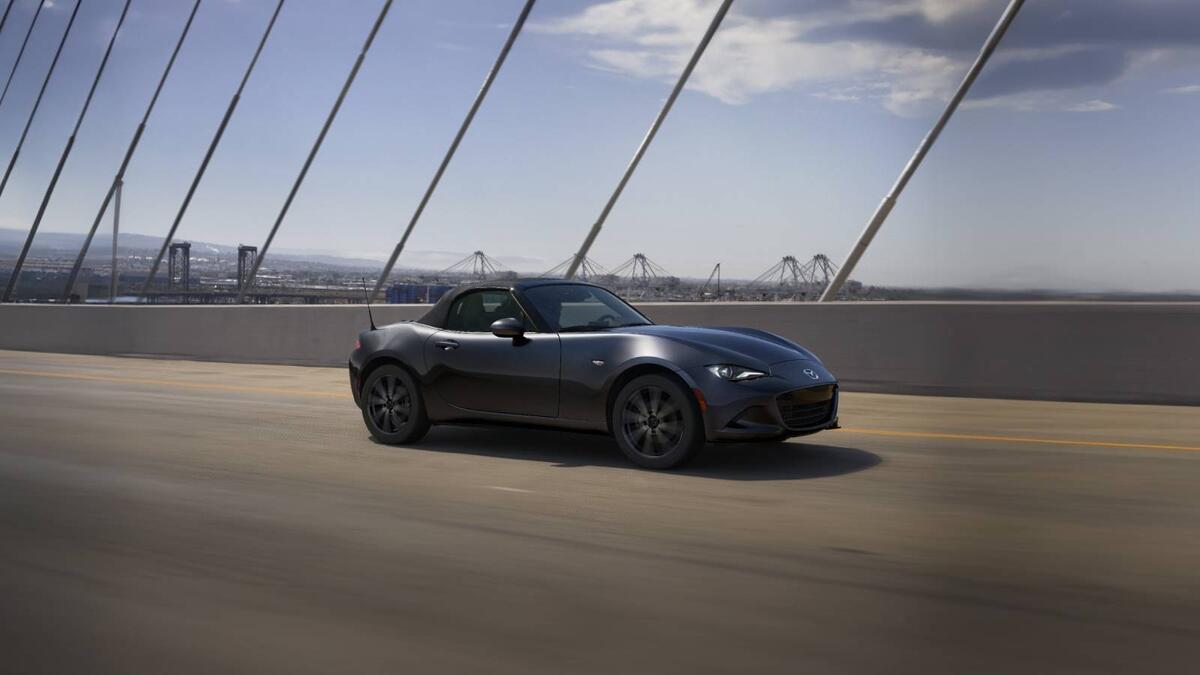
NC Miados
"It's basically current generation twins. Yep. Honda S 2000s and NC Miados. Those are the three contenders that people are like in the conversation."
The “NC” Miata is the third generation of the Mazda MX-5 Miata. It’s a small, rear-wheel-drive sports car that’s popular in autocross because it’s nimble and responds well to driving and setup changes.
The Mazda MX-5 Miata “NC” refers to the third-generation Miata, which is known for its balanced chassis and strong autocross/track potential. In this class discussion, the NC Miata is grouped with the Honda S 2000 as a key contender, implying similar handling-focused strengths.

Honda S 2000s
"It's basically current generation twins. Yep. Honda S 2000s and NC Miados. Those are the three contenders that people are like in the conversation."
The Honda S 2000 is a rear-wheel-drive sports car that’s famous for revving very high and feeling fun to drive. In autocross, people like it because it handles in a way that makes setup changes noticeable.
The Honda S 2000 is a lightweight, rear-wheel-drive roadster known for its high-revving engine and sharp handling balance. In autocross, it’s often used as a benchmark because its chassis responds predictably to setup changes like ride height and corner-entry behavior.
overpowered
"there was definitely some S 2000 OP jokes being thrown around OP chance for overpowered."
They’re using “overpowered” like a gamer joke—meaning one car seems too strong compared to the others. It’s not a technical measurement here, just a way to say it felt unfairly fast.
“Overpowered” is being used as a joke shorthand for a car being unfairly strong relative to its class. The speaker connects it to “OP” jokes around the Honda S 2000’s perceived dominance.
droops
"I was like the McElphys still let me take, uh, take a tape measure to their car when I was trying to figure out what the hell's going on with my car. Like I was measuring like droops."
“Droops” means how much the suspension can drop when the wheel moves downward. They were measuring it to figure out what was wrong with how their car’s suspension was behaving.
“Droops” refers to suspension droop—how far a wheel can move downward from its normal ride position. Measuring droop typically involves lifting the car and checking suspension travel to diagnose setup or handling issues.

Ford Mustang
"...ally in street where it's like the Camaro and the Mustang, if Ford and Chevy didn't make those cars almost ..."
The Mustang is a sporty two-door car made by Ford. It’s built for driving that feels exciting, with different engine options depending on the model. It’s often mentioned alongside other performance cars because it’s a common standard for how these cars perform.
The Ford Mustang is a long-running American performance coupe that’s available in multiple powertrains, ranging from everyday-friendly to high-performance versions. It’s significant because it’s one of the most recognizable “street performance” cars, and it’s commonly used as a reference point when comparing how different sports coupes drive. That’s why it shows up in conversations about street competitiveness and lap-to-lap performance.
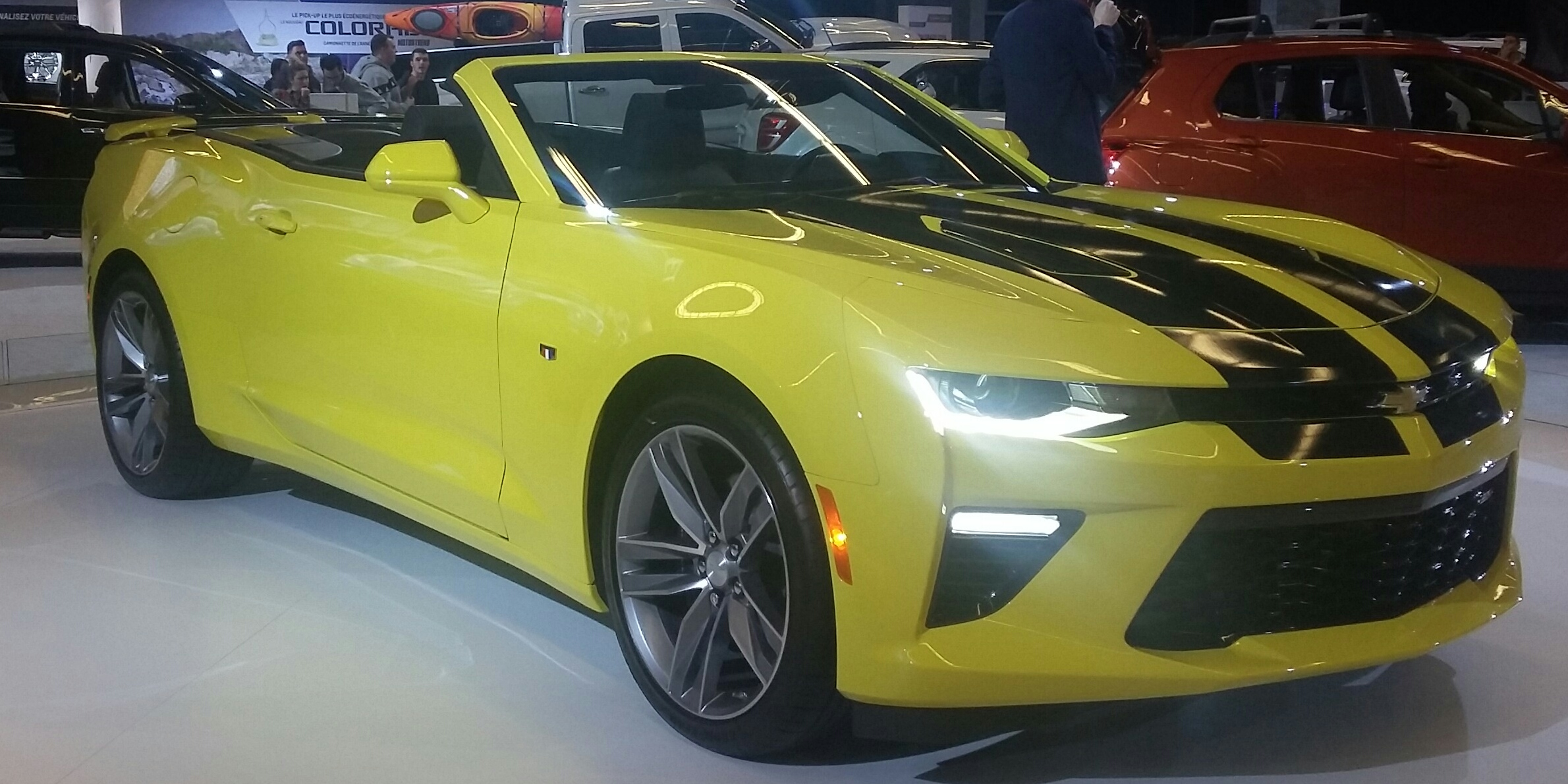
Chevrolet Camaro
"...ogether, especially in street where it's like the Camaro and the Mustang, if Ford and Chevy didn't make th..."
The Camaro is a sporty two-door car made by Chevrolet. It’s designed to feel fast and fun to drive, not just to get from place to place. People often talk about it when comparing it to other popular performance cars on the road.
The Chevrolet Camaro is a performance-focused sports coupe from Chevrolet, best known for its strong engine options and track-capable driving feel. It often comes up in discussions of American “muscle” style cars, especially when people compare it to other popular performance coupes. In a street-driving context, it’s frequently mentioned alongside the Mustang as a benchmark for how these cars behave in real-world driving and spirited runs.
SCCA
"SCCA is hardly that at all. And the fact [1219.4s] that they can manage street cars being competitive in classes like this is like a huge,"
SCCA is a big U.S. group that organizes amateur racing events. They also set rules that group cars into classes so competition is more about driving than just having the newest or fastest car.
SCCA stands for Sports Car Club of America, a major U.S. motorsports organization that runs amateur road racing, autocross, and time-attack-style events. The hosts are contrasting how SCCA classing and rules affect whether different cars can reach similar performance levels.
CST
"you need a 20-year-old S2000 to be competitive in CST, [1256.8s] and that is like not good for the class, right?"
CST is a racing “class” name—basically a category of cars that compete under a shared rule set. They’re discussing whether the rules could end up favoring one car so much that other cars struggle to keep up.
CST is a specific SCCA class designation used to group cars with similar rules and performance expectations. In this segment, it’s central to the argument about whether a single car (like the S2000) could become so dominant that it harms class variety.
course dependency
"Yeah, but I think they're all kind of within the noise [1274.8s] and they kind of come down to like course dependency on some level, but at the same time,"
Course dependency means the “best” car can change depending on the track. A car that does great on one layout might not be as strong on a different one.
Course dependency means a car’s relative performance changes depending on the specific track layout and conditions. In autocross/road-course terms, some cars suit certain corner types, braking zones, or traction patterns, so results can vary from event to event.
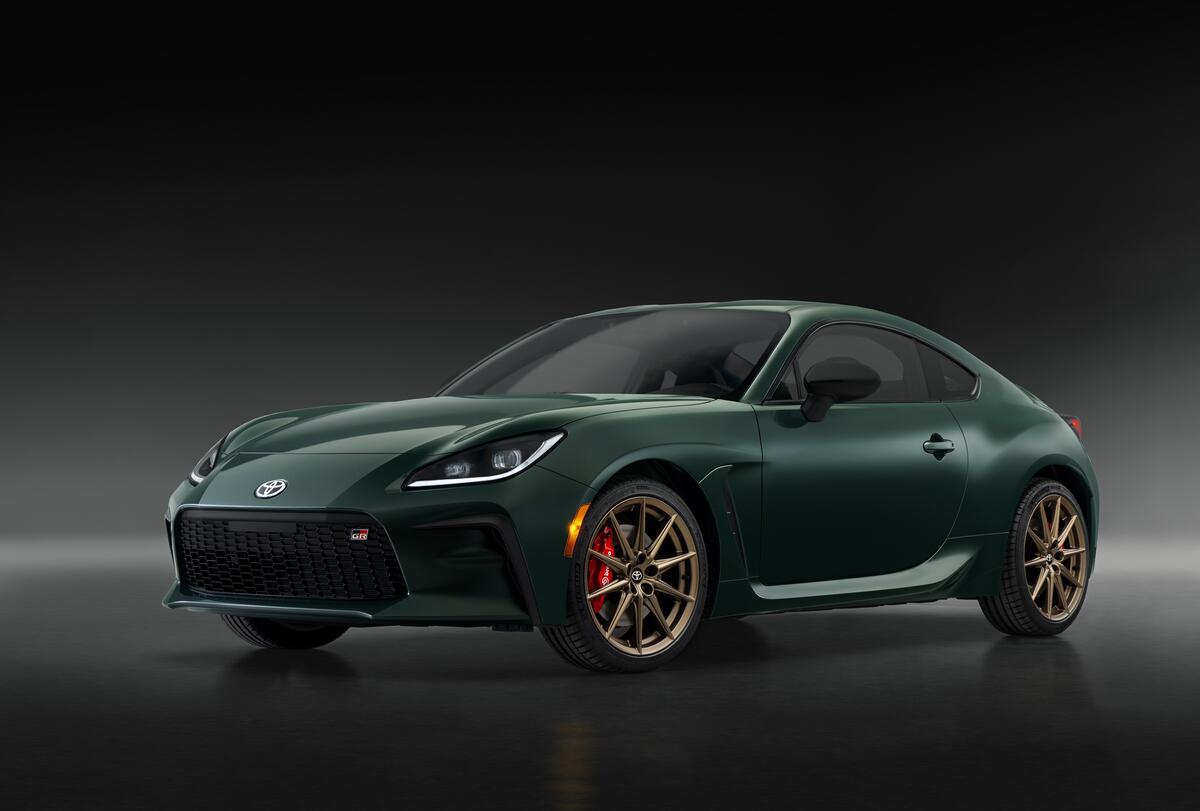
GR86
"I went a couple tenths slower than I did in the GR86 in my first run. So I think [1311.9s] like another run or two, like I would have been right there, but then also like the S2000 is just"
The Toyota GR86 is a sporty Toyota coupe that’s meant to be fun and agile. They’re talking about how a GR86 can be close in speed to an S2000, but also how experience and development time matter.
The Toyota GR86 is a modern, affordable sports coupe built around a balanced chassis and a naturally aspirated engine, making it popular for autocross and track days. In the segment, it’s compared directly to the Honda S2000 in terms of lap-time potential and how driver development and car development can narrow (or widen) performance gaps.
spring Nats
"dude, I had so much fun. I think spring Nats needs to happen. That needs to just [1341.7s] be like the norm. Have you been to spring Nats, Tom?"
“Spring Nats” is a recurring big event people go to during the spring. It’s like a major autocross/racing meet where lots of competitors show up.
“Spring Nats” refers to a recurring seasonal national event in the SCCA autocross community (often shortened from “Spring Nationals”). The hosts treat it as a regular calendar fixture and discuss their personal experience with attending.
iRacing
"This is how I feel every time I see a group of people play iracing that I'm skipping [1885.2s] because I hate iracing."
iRacing is a racing video game that tries to simulate real driving. People use it to race online and practice, and the speaker here says they personally don’t like it.
iRacing is a subscription-based racing simulator known for realistic physics and online competition. In this segment, the speaker contrasts skipping iRacing with the excitement of group sim racing in the lizard brains Discord.
sim rig
"Oh, it's also been since prior to one lap since I sat in this sim rig. [1890.5s] I don't know why that's a sense of pride for you, but"
A sim rig is a home racing setup you use to practice in a video game. It usually includes a wheel, pedals, and a seat so it feels more like real driving.
A sim rig is a home setup for racing simulation—typically a steering wheel, pedals, and a seat mounted to a frame. It’s used to practice driving lines and car behavior without going to a track.
data laps
"How'd you break the seal? Did you come home and drive a GR86? [1919.4s] No, I, I was, I was doing data laps for coaching."
Data laps are practice laps where you’re trying to gather information about how you’re driving. A coach can use that info to figure out what to adjust to get faster and smoother.
Data laps are practice runs where a driver focuses on collecting performance information—like lap times, braking points, throttle use, and consistency—rather than just racing for position. In coaching, they’re used to diagnose what to change to improve driving.
Bathurst
"Which one of those was the GR86 on Bathurst, which is like an interesting track for that track, but [1929.6s] but uh, uh, yeah, there's, I thought about doing a race..."
Bathurst is a famous race track in Australia. It’s known for being tough and twisty, so people use it to see how well a car (or a sim setup) really performs.
Bathurst refers to Mount Panorama Circuit in Australia, one of the most famous and challenging road courses in the world. It’s known for steep elevation changes and long, technical sections, which makes it a popular benchmark for both real driving and sim racing.

Tesla Semi
"... again. I think it's either a giant truck, like a semi truck or a limousine. You just ruined the game by..."
The Tesla Semi is a large electric truck used to move cargo. Instead of using diesel, it runs on electricity stored in batteries. It’s mentioned because it’s a very big vehicle compared with typical cars.
The Tesla Semi is an all-electric heavy-duty truck designed for long-haul freight. It’s significant because it represents a shift from diesel-powered trucking to battery-electric power in a segment where efficiency and charging logistics matter a lot. In the podcast, it’s brought up as an example of a “giant truck” that changes the dynamic of a game or scenario, emphasizing its large, noticeable presence.
tuning mechanisms
"super beneficial to, um, me as a driver, um, as somebody who's playing with the tuning mechanisms of the car, um, and as, as a competitor."
In a driving/track context, “tuning mechanisms” refers to adjustable setup items that change how the car behaves. Examples include suspension settings, alignment, and other adjustable components that let a driver/crew dial in handling and balance.
lowering springs
"Cause if, uh, I don't think Tamara would have flew out to Lincoln to uh, drive my Miata on lowering springs."
Lowering springs are springs that make a car sit closer to the ground. That can change how the car handles, especially in turns, because the suspension and tire grip behavior are different.
Lowering springs are aftermarket coil springs designed to reduce a car’s ride height. Lowering changes suspension geometry and how the tires load during cornering and braking, which can make the car feel more responsive but may also affect ride comfort and alignment needs.
journey versus the result
"So, uh, the, the podcast, like talking points is the journey versus the result and the opening topic is competing through, uh, adversity, adversity."
This is about focusing on what you’re learning while you drive, not just whether you got the perfect outcome. If something feels off, you treat it like a clue to figure out what to change next.
“Journey versus the result” is a mindset framing where the focus is on learning and process rather than only chasing outcomes. In driving, that often means treating unexpected car behavior as feedback to diagnose and improve technique and setup.
adversity
"So, uh, the, the podcast, like talking points is the journey versus the result and the opening topic is competing through, uh, adversity, adversity."
Here, “adversity” just means things that go wrong or make driving harder. Instead of getting discouraged, the idea is to use those problems to learn what’s happening and improve.
In motorsport, “adversity” usually means setbacks like unexpected handling changes, mistakes, or difficult conditions that disrupt your plan. The episode frames adversity as something you work through by staying curious and using it to learn.
car shifting its behavior
"Um, so one of the, like one of the things that was happening this weekend was like the car shifting its, uh, behavior, like drastically, right?"
This means the car starts to feel different while you’re driving. That can happen as tires heat up or the suspension loads change, and the episode suggests using that as information instead of getting frustrated.
“Shifting its behavior” describes how a car’s handling characteristics can change noticeably during driving—often due to factors like tire temperature, suspension load, or setup. When that happens, it can feel unpredictable if you’re only watching results instead of diagnosing what the car is telling you.
measuring stick
"It applies to this perfectly is keeping the measuring stick that you're on as true as possible and then being aware of that as best you can... And we had a big conversation over data one night about how you have like this, you have in a way the truest measuring stick you could possibly ask for."
Here, “measuring stick” means a fair way to tell whether you’re actually improving. The host’s idea is that racing against (or driving with) strong people gives you the clearest comparison, because it’s hard to fake improvement.
In this context, “measuring stick” means a reliable benchmark for judging driver progress—specifically, comparing your pace against other drivers in the same car and conditions. The host argues that having strong people in the car gives the most honest feedback, even if it feels discouraging at first.
Darian
"So the person I always think of that I watched this happen, I watched him put in the work and do the journey like from this point was Darian because he had an auto cross S 2000 at the time"
Darian is the driver the host is talking about as an example. The point is that he kept working at it and improved over time, especially through autocross and co-driving.
Darian is referenced as the driver the host watched “put in the work” and go through the journey of improving. The episode uses Darian’s autocross experience as an example of how repeated seat time and co-driver feedback can shape development.
autocross
"So the person I always think of that I watched this happen, I watched him put in the work and do the journey like from this point was Darian because he had an auto cross S 2000 at the time and his first co-driver and the person who basically helped him build the car to what it was was Robert Thorn, obviously an auto crosser."
Autocross is a timed driving event on a course made with cones. You’re trying to drive the course as fast and smoothly as possible, and it’s great for learning how to improve your driving.
Autocross is a motorsport where drivers navigate a marked course (usually with cones) at speed, typically one car at a time, aiming for the fastest time. It’s a driver-development environment because small technique changes—like line choice and braking timing—show up quickly in results.
co-driver
"and his first co-driver and the person who basically helped him build the car to what it was was Robert Thorn... And then when Robert moved away, the next person that he had co-drive the car regularly was me."
A co-driver is another driver who rides along or drives with you to help you improve. They can show you what you’re doing wrong, help you learn faster, and make it easier to compare your driving to someone better.
A co-driver is a second driver who shares driving duties and provides feedback, often helping with technique, car setup understanding, and learning faster than solo practice. In autocross and other motorsports, having a strong co-driver can act like a “measuring stick” for your pace and consistency.
Robert Thorn
"and his first co-driver and the person who basically helped him build the car to what it was was Robert Thorn, obviously an exceptional auto crosser. And then when Robert moved away"
Robert Thorn is mentioned as the person who helped build Darian’s autocross car into what it became. The host also frames him as an exceptional autocrosser, using his involvement to illustrate how driver development often depends on knowledgeable support and setup work.
sim race
"You know how anytime you know someone's really quick, whatever discipline, like you get maybe into a sim race and like someone joins you and you're the only other one"
A sim race is racing in a video game or computer driving setup, usually with a steering wheel and pedals. People use it to practice and compete without going to a real track.
A sim race is a race conducted in a driving simulator (software + steering wheel/pedals). It’s used to practice driving lines and car control, and to compete with others online.
cone dodging
"You know that cone dodging thing? Yeah, he's one of the best at it. And he's whooping your ass."
“Cone dodging” is what autocross feels like—driving through a course made of cones. You have to steer accurately and keep your speed under control to avoid hitting them.
“Cone dodging” is a casual way to describe the core skill in autocross: threading through a tight course of cones. It involves choosing the right line, managing speed through turns, and making precise steering corrections.
Request an Explanation
Heard something you'd like explained? We'll add it to this episode.
Sign in to request explanations for terms you heard.
Want to learn more?
Browse our glossary for plain-English explanations of automotive terms, jargon, and concepts.
Help improve this episode
See something that's not quite right? Our annotations are AI-generated and can sometimes miss the mark. Click the flag icon on any annotation to suggest a correction.