A sim rig is a home driving simulator setup, usually with a steering wheel and pedals. People use it to practice driving or race virtually, and here it’s mentioned as something someone might buy.
Autocross is a timed driving event where you drive a course made of cones in a parking lot. SCCA is the club that organizes many of these events, and you usually drive one car at a time to see who’s fastest.
A “test in tune” is basically a practice day. People use it to get comfortable with the course and make small changes so the car feels right before the main event.
An autocross school is a coaching session for learning how to drive an autocross course. Instead of just lectures, instructors often ride with you and teach you what to do right away.
Place
Grissom at Peru
This refers to an autocross venue in Peru, Indiana, associated with the Grissom area. Autocross events are often held at local facilities or airfields, and the specific site matters because surface, layout, and run-off areas affect how the course drives.
A slalom is a cone course where you weave left and right. Drivers practice keeping the car balanced and choosing the right speed so they don’t get “stuck” behind the cones later in the pattern.
A “transition heavy course” is a track layout that keeps forcing you to switch what you’re doing—slow down, turn, then speed up, over and over. It’s harder because you have to get the timing right every time you change directions or speed.
Here, “underdrive” means you go into the cones too slowly or don’t commit enough early on. If you do that, you end up behind the pattern and it’s harder to carry speed through the rest of the slalom.
“Overdrive” here means you go in too fast or try too hard at the start. That can throw off your timing and make the rest of the cone weaving harder to do cleanly.
Transitions are the quick changes between turning one way and then the other. The idea is to shift the car’s weight smoothly so it doesn’t feel like it’s fighting you during the change.
To “overdrive” means you push the car harder than it’s ready for at that moment. In a cone course, that usually makes the next turn harder because you didn’t set up the car correctly.
Weight transfer is when the car’s weight shifts from one side to the other as you turn. If it happens smoothly you get better control; if it’s abrupt you can lose grip and stability.
Lateral weight just means how much weight is on the left vs. right side of the car while you’re turning. In cone weaving, getting that side-to-side shift right helps the car track where you want it.
Term
back-siding
“Back-siding” a cone is a driving technique where you aim to pass the cone on the “back side” (the side that keeps the car’s path tight to the intended line) rather than missing it and forcing a late correction. It’s often about steering timing so the car is already rotated for the next cone.
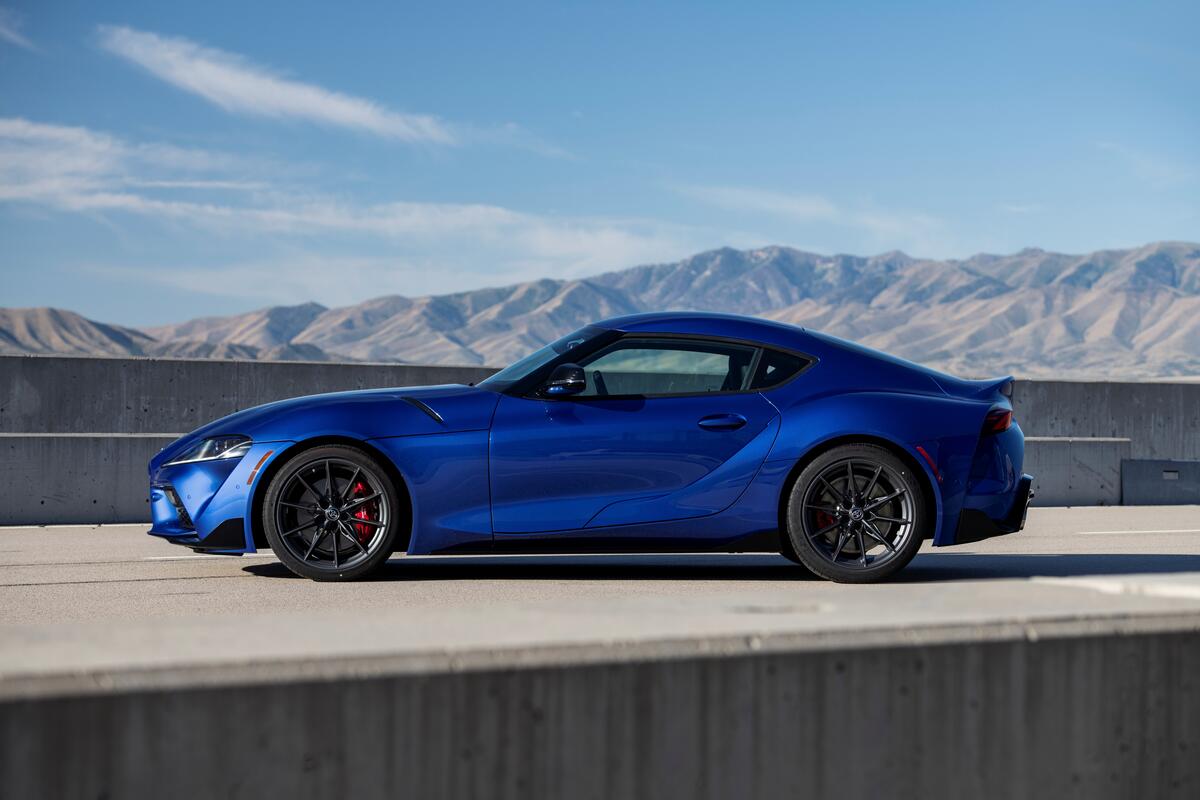
The Toyota Supra is a sports car built for fast driving and responsive handling. In the podcast context, it’s being used to practice difficult maneuvers that require the driver to control the car’s direction precisely, including turning it sharply and managing the rear of the car.
Brake release is what you do when you stop pressing the brake and start turning. If you let off the brake too suddenly or too early, the car can lose grip and not turn the way you want.
Autocross coaching is training for autocross events, where you drive a car through a tight course with cones. Coaches help you time your braking and turning so you don’t lose control or hit cones.
Road course driving means driving on a track with longer corners and repeated braking. When you come off the brakes matters because it changes how the car grips and turns.
iRacing coaching is training using a racing video game simulator. People use it to practice real driving skills like braking and turning in a repeatable way.
The apex is the closest point to the inside of the turn that you try to hit. Hitting it well helps the car turn and sets you up to exit the corner faster.
Here, “flow chart” refers to a mental decision process for how brake release, turn-in timing, and throttle application relate to the car’s corner shape. The host’s point is that if you brake too much or too early, the car won’t rotate as quickly, and you may need to adjust turn-in timing and when you get back on throttle.
Rotation is how the car pivots into the turn so it points where you want to go. If you lift off the brakes too soon, the car doesn’t pivot as quickly, so you end up spending more time in the corner.
They’re using what you see outside—the horizon—as a simple way to judge how the car is turning. If the horizon moves quickly while braking, it suggests the car is changing direction effectively; when you’re off the brakes or on throttle, the movement changes.
SIM coaching is coaching using a driving video game/simulator. Coaches can look at what the driver is doing from the driver’s viewpoint and help you adjust your braking and cornering technique.
They’re talking about how using the brakes can make the car turn in more. Braking shifts weight to the front tires, which can help the front tires bite and help the car rotate into the corner.
When you’re on the brakes while turning, it changes how the car loads its tires. That can change how easily the car turns in, depending on the car and your timing.
Term
C3 car
They’re referencing a specific kind of car where this braking/turning behavior is very obvious. The exact model isn’t identified here, so think of it as “that particular car.”
They mean you can get quick confirmation that your driving input worked. In this case, the outside view and the car’s response tell you right away what you did with the brakes and gas.
“Rotate” means the car pivots into the corner so it starts turning the way you want. They’re saying that on some cars, braking helps the front tires grip and rotate the car better.
They’re talking about putting more weight on the front tires. That can help the car turn, but if you do it too aggressively the tires can lose grip and the car may spin.
The Hyundai Elantra N is Hyundai’s sporty, track-oriented version of the Elantra. Here it’s being used to explain how the car behaves when you brake and turn—especially how the front end can feel like it wants to rotate or “spin” if you do it the wrong way.
“Lift” just means taking your foot off the gas. Doing it at the right time changes how the car settles and turns, because the engine is no longer pushing the car forward the same way.
The front axle is basically the front wheel connection point that helps the car steer and rotate. If the car “pivots on the front axle,” it means the front tires are doing most of the work in how the car turns.
Brake release refers to how quickly and smoothly you reduce braking pressure (how you come off the brake pedal). Rapid brake release can cause abrupt weight transfer and upset the car’s balance, making it harder to turn smoothly.
Understeer is when you turn the steering wheel but the car doesn’t rotate enough, so it tends to go wide. Here, the idea is that braking and releasing the brake too abruptly can cause the front tires to lose grip and make understeer more likely.
The brake pedal is just the pedal you use to slow down. In racing, it’s not only how hard you brake—it’s also how smoothly and when you let off the pedal that affects how the car behaves in the turn.
Weight balance is where the car’s weight is sitting while you drive—like how much is on the front vs. the back. In corners, moving that weight at the right time helps the tires grip and makes the car easier to steer.
Term
roll speed into the corner
This is about how smoothly and quickly you transition from slowing down to actually turning. If you do it well, the car stays stable and you can carry more speed through the corner.
Average speed means how fast you go over the whole part of the track, not just at one point. The idea here is that smoother corner entry can help you be faster overall.
Late braking means you wait until the last moment to slow down before turning. It can help you carry more speed, but it’s harder to control because you have less time to smoothly let off the brakes.
Brake-release timing is about how you let off the brakes as you turn in. If you brake too aggressively, it’s harder to smoothly transition from slowing down to turning, and the car can feel less stable.
Momentum here means how fast and how smoothly the car is moving through the turn. If you brake and release at the right time, the car will flow through the corner better.
ABS is a system that stops your wheels from locking up when you brake hard. When it kicks in, it can pump or modulate the brakes, which changes how the pedal feels and makes it harder to be super precise with brake timing.
A balanced car is one that feels predictable while you’re turning—front and rear tires are working together. That usually means it doesn’t suddenly understeer (push straight) or oversteer (loosen up). The idea is that balance helps you go faster more consistently than chasing tiny braking timing changes.
A pin turn is a super tight corner where you basically have to turn the car around quickly at low speed. Since the turn is short, you don’t have as much time for the “brake then release then turn” timing to make a big difference. The main goal is to get the car pointed in the right direction fast.
This is about how much of the car’s weight is sitting on the front tires while you turn. More front grip usually helps the car turn in and feel stable. The point here is that if you already have the car working well, tweaking front weight transfer may not be the biggest improvement left.
Diminishing returns means that after you’ve already optimized the biggest factors, further adjustments produce smaller and smaller improvements. In this context, the speaker argues that moving weight around the car can still help, but once the car is already doing well, that becomes a lower-priority “fine-tuning” lever. It’s a driving strategy idea about where time is realistically gained.
A “braking zone” is the part of the course where you’re slowing down before you turn. How you brake there affects how stable the car feels when you start the turn.
“Brake pressure” is how hard the brake system is being pushed when you press the pedal. People look at it on data to understand whether they’re braking smoothly or too abruptly.
This is about how “fine-grained” the brake pedal feels. If you can press the pedal a little bit and get a matching change in braking, it’s easier to brake smoothly and consistently.
“Inducing rotation” means deliberately setting up the car so it rotates toward the corner exit at the right time. Instead of hoping the car rotates naturally, the driver times inputs (often steering and brake/throttle balance) to make the car rotate on purpose.
The Ford Mustang is a performance car that’s designed to be fun to drive. The podcast says the Mustangs feel “soft,” which usually means the suspension and ride feel less firm, affecting how quickly the car responds when you turn and drive hard.
Tire flex means the tire squishes and bends as you drive. That movement helps the car communicate how much grip you have, so the driver can react sooner.
Term
death group on the wheel
“Death grip” (as implied here) means holding the steering wheel too tightly. Over-gripping reduces your ability to sense small changes in tire grip and suspension movement, which can slow down learning and smooth driving inputs.
Term
hands, like where the spokes are on the wheels
They’re talking about where your hands sit on the steering wheel. If your hand position is consistent, it’s easier to steer smoothly and make the car respond the way you expect.
Topic
turn-in and throttle timing using cones
They’re describing how they use cones on a course as “checkpoints.” Watching where the car is relative to those markers helps you decide when to turn and when to start accelerating.
The “break point” is the moment you stop braking and start the next step of the drive, like turning in or getting back on the gas. Getting that timing right helps you set up the car for where you’re going next.
A “trajectory” is the path something is going to take. In driving, your brain predicts your path from what you see, which helps you time the gas and steering so you don’t end up too wide.
“Spatial information” is what you see about position—where you are and where you need to go. With good cues, your brain can help you decide when to ease off the gas and when to get back on it.
“Lookaheads” just means you look farther ahead on the track so you can plan your next move. Instead of only reacting to what’s right in front of you, you’re setting up for the next turn or braking spot.
A “90 degree corner” is a very tight turn where you basically turn the car about a right angle. These are great for learning because you have to brake and steer very precisely.
A “braking zone” is a marked spot where you should slow down before you turn. The goal is to brake at the right time so the car is stable when you start steering.
Here “multitasking” means you’re not just turning the wheel—you’re also thinking about where you need to go next and when to slow down. Good autocross drivers keep planning while they’re executing the current maneuver.
Term
front side a tunnel
“Front side” here is about how you aim the car as you approach a tight passage. If you set the angle right, you can drive through the “tunnel” and keep moving toward the finish instead of going straight and stalling your run.
A speed trace is basically a chart of your speed as you go through a corner. The shape of the chart (like a “U” or a “V”) shows whether you slow down gradually or drop quickly and then come back up.
“Pointing and shooting” means you steer the car so it’s aimed at the next section, then you get on the gas quickly. It’s a common autocross idea because the course changes direction fast.
“Minimum speed” is the slowest moment during a turn. The point here is that in autocross, it’s important to reach that slowest point and then start accelerating again quickly.
This is about switching from slowing down to accelerating quickly, without lingering in the middle. The idea is that doing it cleanly helps the car turn and then pull out better.
On a cone course, “key cones” are the cones you should focus on most because they help you figure out the correct path. If you aim for the right cones, the rest of your turns usually line up better. The tricky part is that different instructors might not agree on which cones are the “key” ones.
“Outside exit cones” are cones that show you where you should be when you finish a turn. They help you avoid cutting too early or running wide. Using them as targets makes it easier to drive the course smoothly.
Concept
pop quiz
A “pop quiz” is a quick test to see if you really understand what you’re supposed to look for. In this case, it’s about identifying the important cone on the course. The host is using it to show how the training checks your understanding immediately.
The “starting line” is where you begin your run on a timed course. Where you line up and how you launch can change how your first turn goes. It’s basically the first step that sets up the rest of your driving.
An “autocrosser” is a person who does autocross—driving a cone course against the clock. It’s less about going fast in a straight line and more about steering well and hitting the right path. The host is saying the people there were already very good at that.
This is when you sit in the passenger seat of someone else’s car to learn how they drive the course. You can see their steering and where they aim the car. The host is saying the school became collaborative because people were doing this while waiting.
Autocrossing is a timed driving event where you drive through a course made of cones. You’re usually testing how well you can steer and control the car, not racing in a straight line.
This means gripping the steering wheel with more force than you need. If you do that, your steering can get jerky or less precise, which makes it harder to guide the car smoothly through turns.
LIVE
Hello everyone and welcome to the Lizard Brains podcast. I'm your host DJ Alice Andrini.
I'm joined by my co-host Tom O'Gorman. Tom, how's it going?
I'm okay. Happy Pride.
Yep. Happy Pride Month, Tom.
Thanks. How are you?
I am doing great, Tom, and that's because my wife right now, Christine Rohiric,
she is at a work party and they picked a carding track to go to for this work party.
So naturally, I had to pull out, I had to go like super try hard.
And Christine, she didn't join me at first.
I wanted to go like three or four separate days for training for this corporate work party.
You did or she did?
I wanted to. I wanted to go with her as like training.
OK, so last week she was she wasn't feeling up to it.
I couldn't get her to go, OK, which like understandable.
I probably like scared her away.
I'm a little intense.
So Monday comes around, I talk her into it.
We're about to leave.
I look it up to see if we can like book races ahead of time.
So we don't have to wait as long.
It's closed. They're closed on Monday.
What the heck? OK, so the work party is today.
It's literally happening right now as we record this.
And the only time we could go was during lunch
because the work party was literally right after work.
So there was no time to practice before that.
So we went and I'm like, we got to extract the most out of this limited practice
because we only have like time for we like, yes, it's a team effort.
OK, so so we only had time for like two races.
So I literally I put I strap a GoPro to her head.
We're reviewing video after the first race.
I got headphones in her ears and I'm like talking to her on the phone
like while she's going like through her first lapse.
Oh, dude, it's no wonder she doesn't want to do any of this stuff with me.
I'm like, I'm an absolute lunatic.
Yeah, you are. That's crazy.
OK, we got to get the blue to the head, both plugged in
so I could talk you through the track.
It's flat out. It's just flat out, right? You steer.
Yeah, yeah, exactly.
I would be like, OK, you can go flat through that corner like them.
You know, just like stuff like that.
Anyways, so we review video after the first race
and I'm like trying to talk her through it or whatever.
And then at some point it's like, all right,
we need to just do like a lead follow.
So I go on bio race and they put me in the same race with her.
There's some other people in there and so we're doing the lead follow
and I'm like making sure that she's still behind me, like looking back there
and like she's just kind of keeping up.
And at some point I'm like, man, whoever's in P2 is like getting kind of close to me.
Like I better like put in a couple of burner laps or whatever.
So I put in some burner laps and look behind and Christine's still freaking there,
dude, she's just there and she got so she got P2 in that race
and had right now she has like the fourth fastest time of the day.
And would you like to tell everyone how you know that?
Yes, I will get there.
So not being an overbearing husband, I swear.
I've been following the live timing of this like corporate event
on their website and I've just been rooting for Christine.
Dude, all right, I've already told all 23 audience members so far
while we were waiting for you.
But so P1 or like race one, she just like just it goes by fastest time, right?
So that's how most rental car places go.
She kind of just dust everyone.
That's because like everyone else is probably still trying to figure out
where the track goes.
So race two, I'm looking.
And she's in P3 at the times are looking a little off pace.
And then I see a lap time where she's like like four seconds slower.
And then the very next lap, boom, straight to the top of the board.
Tom, she literally gave herself a gap lap and like found empty track to put in
like a flyer next level.
Tom, you got you've never seen a prouder husband than you see right on this web
cam right now.
I am so fricking psyched.
I love that for you.
And I don't know how she feels about it, but I support however she feels about this.
No, I'll tell you what, after lunch, dude, here's some of the things that she said.
She said, normally it takes me the whole weekend to have that much fun.
That's what she said after lunch.
Okay.
So she's not a prisoner over here.
Everyone like starting to like write in like a worrying messages to Christine.
Okay.
She had fun.
All right.
Edo's doubting this, but like I, I tell you what, she had fun and I don't think
it was just to appease me.
I think she legitimately had fun.
She has not responded to any of my let's go tax after she won the first two races.
Um, so I'm assuming that she's just having a lot of fun with her coworkers.
Um, Lou God says Christine blink twice if you need help.
So I'm assuming she's just having a bunch of fun with the coworkers, but we'll
have to have a debrief on how the races went, you know, what could have went better.
You know, just the typical, typical husband wife conversation after a corporate work party.
I don't know if you actually realized this, but my job for over a year at the
go-kart track that I worked at was corporate event, like manager and hope.
Do you know that?
Yeah.
Yeah, you did.
Okay.
So I was literally, I was the host of the person who was all these strangers were
coming in and there, I feel like coworkers are strangers.
Maybe, maybe there are some healthy workplaces where that's not the case, but
realistically, how many coworkers know things about each other that is like not
just work related.
Yeah.
So you get these groups of at the smallest, it would be 78 10 max.
And then at the largest, it would be like 50 to 50 to 70, 80 people, I think.
That was one of the biggest ones we hosted.
And like, first of all, I'm terrified of speaking in front of people at the time
I was, I should say.
So I'm like the energy of the group.
You would be perfect for this job.
Oh my God.
Me.
But also it was really entertaining to watch the people who would come out of
their shell over the racing.
And it was really entertaining to watch the way that some people would respond to
other people's, I don't know if I call it success, because sometimes it was like,
there was always, if I could profile, there was always like the loud doofus guy
who was in like, he obviously played like football in high school and he's like
the sales guy and he's like the energy of your office.
And that guy like was a thousand percent convinced that he was going to win when
he showed up at the track.
And he would be like, he'd be slow as shit.
And then there would be somebody who was either really quiet, really small in the
corner, you know, small presence, not, I mean, physically small, although they
would often be physically small and they would just like wax everybody.
Yeah, that's Christine right now.
I'm profiling the shit out of Christine's work group at this go-kart track,
because I know exactly how they are.
They're all the same.
It's every office dynamic has the stereotypical, this guy, this person, this
person, this person.
So the person, that's so fun.
I'm picturing it is, it's a good time.
The person that was put in charge for like, like putting together this corporate
party said, I literally picked this place just because I wanted to win.
And as far as I know, that person has not won yet.
I'm sorry, uh, because my wife is there and she's whooping your ass.
Let's go because he didn't want it bad enough.
He didn't, he didn't put in the practice.
Yeah.
He didn't put in his recon and like have a coach like help and stuff and things.
Yeah.
Now that I think of it, there were, I don't know that it happened more than
once or twice, but there were people who would show up before their work event.
Yeah, to, to, to like, they said practice, but I don't think they knew what
practice was. So they would just like do races before, you know?
Yeah.
Like they didn't show up with a coach.
They didn't have a built in marriage with a coach involved that was like
stressing them out, making them do practice.
They were just show up and like,
I want to do a race or two before I show up with my job and, you know, look silly.
Christine, if you happen to listen to this episode,
thank you for appeasing me of like, because she was a little embarrassed.
She's like, really?
I got to put the headphones in and I'm like, come on, I got to talk to you.
Like, like it was like, she was like feeling a little ridiculous.
And trust me, Tom, we looked fricking ridiculous.
Like I got that we like, because they're like, oh, are both you racing?
And I'm like, nope.
And then she's like, just me and they're like looking at us confused.
Like, wait, why are you both here?
And like, it's just her racing and like, what is going on here?
Like they were so confused.
So, yep.
Uh, I was the weirdo at the cart track today.
And that's right.
You guys are weirdos together, to be honest.
Yeah.
Well, she was, she was a weirdo by proxy, but I think she was weirdo by association.
And I was, I was source of weirdo.
So, yep.
Um, yeah.
But that's really fun though.
I hope she wins.
Can we get an update?
How do you, how are you going to know if she wins?
It's currently 641 on Wednesday, June 3rd.
Well, when is she going to be done?
Oh, she just did race three and she won again, Tom.
Wow.
Three for three.
Let's hit the button.
Oh, wait.
Can I hit a button?
Yeah, hit a button.
Nope.
No, I don't have a button to hit.
Okay.
Well, then I will hit a button.
Nope.
Not that one.
Very good, very good.
I missed, I missed this last one.
Yeah.
She kind of, she's kind of running away with it.
That might make her, that makes her, uh, third fastest for the week so far.
Kind of killing it.
Damn.
Yep.
Well, the week started today.
Let's, uh,
Is that including you?
No, I didn't, I didn't count me.
I disqualified myself.
Okay.
Got it.
It's, let's keep it fair for everyone.
Okay.
Does this energy have anything to do with being in instructor mode and coach mode after this weekend?
Yeah, a little bit.
You know what?
I think if I was put in a similar situation like this with Christine,
like four or five years ago,
I don't think I would have had the necessary coaching tools to like
properly handle like an actual novice and like,
like not overwhelm them with information and stuff like that.
Literally just like focus on the immediate thing that's within their control and within their skill set.
And then just like let them loose and then like watch them figure out other stuff on their own.
Cause I feel like a lot of times, uh, with coaching, especially when you're first starting,
you just feel like I need to provide a lot of value and you're just like throwing stuff at them.
And there's no way they could hold all that information.
And I think at the lizard brain school, uh, this last weekend that we did,
I think overall we did a really good job not overloading, uh, our students with just like
a sheer amount of information, but really taking the approach where we just pick like
one, maybe two things and send them out there and let them figure it out.
Yeah. I agree with that. Before we get there, um, Raul has a great business model. I think, uh,
he said Christine's going to get an invoice for coaching. And I think that if, I mean,
I don't know how taxes really work, but Christine does, but I think you can create a model where
Christine gets driver coaching to you and then you, she pays you and she writes off the payment
and then it goes back into the household. So that you're basically, I don't know,
then, then you get free money. I think I did the question mark,
and then the final one is profit profit. Yeah. I think this is, this is the start of something
beautiful. Raul will reach out to me. I need to understand the clever, uh,
logistics and counting lower the tax burden. Ha, ha, ha. That's what, that's what Raul says.
Oh, and then Anthony says also make sure it's a charity. Yes. Okay. Yeah.
For sure. Yep. All right. We got, we got the whole plan figured out guys. Next thing you know,
I'm going to have a $20,000 sim rig behind me and you'll know where that money came from.
Yeah. Or a Porsche in the driveway. Yeah. Or, or I might show up to an event in a Porsche. That
is mine. Like that would be, yeah, yeah. Cause I might show up to an event in a Porsche,
but like it's definitely not going to be mine. Right. It would be yours or and or actually
let's add and or you see DJ's Instagram stories and he's off on a scuba diving vacation.
Mm hmm. Yeah. Also an option. Yeah. Uh, that would be Christine's pick.
That would be Christine's pick. Uh, we're getting to do all the stuff DJ wants this week,
but we'll cover that when I go to, uh, what I'm doing this upcoming weekend. Uh, but how was,
how was your weekend Tom? Uh, we, I mean, we just did the lizard brain school. So
you want to talk about it? Yeah, it was, yeah, for sure. Uh, my weekend was good. It was our
second ever lizard brain school. I think we've talked about it, but the quick and dirty is, um,
now two regions have reached out to us. SCCA autocross regions is effectively and said,
Hey, we have a test in tune going on. And would you be interested or would you be willing to put
on a autocross school during our test in tune? And the first time we did it was, was it last year
or two years ago? It was last year, right? Two years last year. We never found a free weekend.
We both, we had two years ago. Yeah. Last year we just had weekends where you weren't willing
to like miss out on that thing. And I wasn't willing to miss out on other weekends and we just
couldn't find the same weekend. Yep. Um, so we did it once in, in Grissom at Peru, um, for the,
it was a Chicago region, the tri-state sports car club. And then we just did one with Finger Lakes
region SCCA. And, uh, I learned a lot. I learned the ways that we need to do better for doing
those types of events, but I also had a lot of fun because we, I mean, the first one,
I feel like we got a little bit of a mix of people we knew and people we didn't know.
And I'm not exactly sure how that worked because the region did handle most of it. And this time
the region did handle most of it again before the event as well. And somehow we ended up with
basically, I mean, probably 75% of people that we knew. Um, but it was also a lot of people that,
I think the newest person was maybe like three years into autocross and had been,
you know, hitting it pretty hard. Um, and then we had people who were casual, but 15, 20 years in.
And my favorite part of that was that it could be chill without it mattering that much.
Uh, in that we, we didn't have to do, what am I trying to say? We didn't have to do anything
extra super formal or like curriculum based or classroom based or like, you know, this is
the stuff that we're going to start with. And then we move on from there. It was literally like
from the jump it was who, whatever that person needed from the start, uh, we're in the car with
them and then we just start there. And, um, everybody got to have both of us in the car.
Everybody, I think everybody got to have at least one of us drive their car.
And it was super fun. It was just, I love, you know, I have a hard time with like things being
the line between like formal and informal. And this one was definitely on the informal side
as far as like the way that we approached it, but I think it worked super, super well because
by the end we were like, we basically didn't have a cutoff for the time that the course was
able to be run. And by the, by the end people were like, you know, I'm kind of, I feel pretty
like I'm kind of good. I don't need to, I need to think about this more. I need to,
you know, whatever be prepared for tomorrow, but I don't need to take any more runs today.
Like everybody got a lot of runs and all that. So that was all good.
I think one person got 40 runs, 40 plus. Yeah. Which like that's,
that's some, that's some testing and tuning like that's, that is a lot of runs. Tom, were you
40 runs plus multiple times of one of us or both of us being in and out of the car for that quick
and like the veritasium video, it's, it's a legitimate field with instantaneous feedback.
And basically that instantaneous feedback that we, that we were regularly in and out of the car.
Hopefully enough, but yeah, it was really good. What did you think?
Well, I mean, I think there's a couple of things that we could do better and we discuss those
things like, like having more of an idea of what we wanted to like set the tone in the beginning.
Like basically just set the tone for kind of putting everybody in the right mindset,
not saying anybody was in the wrong mindset, but just thinking like,
like we've done two of these and they just, except for that one guy.
Yeah. Except for that one guy and you know who you are. No, I'm just kidding.
Just like, and I think we got lucky on like the last two where everyone,
for the most part, like everyone was listeners of the podcast. So they're kind of understanding
this like, this learning growth mindset that needs to, needs to exist for them to extract
like the most out of the learning that's about to happen, right?
But I think like the intro like discussion could probably help set that tone a little bit better
of like, what does learning feel like? What does it look like? What should you be looking for?
And then also like just encouraging people to ask questions when they don't get something and
just like, like basically set the tone to make it where like the students, because
anytime you do coaching, there's students who definitely get more out of it than others.
And there's like a trend of the students who get more out of it. And those are the people that
ask questions. They're the people that, that, you know, they'll, they're like aggressive about
the learning. They'll like, they'll literally be like, Hey, I think I got the thing. Can you jump
in the car and like, let me know if I got it. And then like, but like, you know what I mean?
There's like an aggression behind the analogy. They would almost be like a husband coming to
a go kart track with his wife to like force her to be better. I'm kidding. Go ahead. Sorry.
But yeah, I think maybe, and we'd have to like workshop out the like the beginning spiel or
whatever. But that, that's generally the gist of it is like, you almost need to be kind of aggressive
about like getting the most out of this thing. Cause those are the, those tend to be the people
who take the most away from a learning opportunity like that. And they're just a little bit more
aggressive. And I know maybe the, you know, the character of some people isn't, you know,
maybe they're just not aggressive. But we should encourage that probing, that question,
that questioning, the experimentation, the, you know, all the things that will lead to
like getting the most out of the school. And I feel like we could have set that tone better
in the beginning. I think we mostly set it, but just kind of doing like a hindsight, like what,
what would bring the most out of the experience for all the, all the clients at the, at the school.
Um, that to me, that was probably like the biggest takeaway.
Yeah. Why don't we do our own personal experience of the weekend at the end,
because we had the idea of sort of running through what was the most common conversations that we
had for like the topic of this podcast. I think we sort of did that two years ago with the previous
school. We did. And it was different this time around. So it was different, which I think is
interesting, but also I have some thoughts about the weekend. I think it's fun to preface it. You,
you described your experience with driving people's cars this weekend and you explained how when you
finish a run, your default go to like conversation topic point, whatever is almost like just to do
a verbal rundown of your own run. Like I'm going to point out the things I think I did well. I'm
going to point out the things I did poorly right at the end so that people can like hear my dialogue
of like what, what I could have done better. My analysis of my own run. Yeah. Let's do that
at the end, but uh, only cause I don't want to lose all the driving stuff first. What do you,
what do you think of that? Is that good?
What? Talking about the, the things that we kept like the same conversations we were having with
people. No, no. Yeah. Yeah. Let's do that now. Okay. Uh, so it's finger legs. So it's on a runway.
So it's a very transition heavy course. And the thing that like, I think the most, the thing that
we kept talking about was either, uh, it was literally like the first two cones in a slalom was
like the thing that we like kept talking about. And what would happen is people would underdrive
the first two, then they would fall behind and then they would have the car into a hustle for
like the rest of the slalom, but then they were already behind. So what we were, what we kept
like communicating was if we had the car in a hustle, like on those first two cones, then
you create more space and then you have more speed as you, uh, as you, you know,
are in the second phase of the slalom. And that, that conversation came up a lot.
Was there another one that you were thinking came up?
Yeah, I had a couple, but I'm intrigued by the way you said that because you said they
under drove the first two cones in a slalom. And I think we, we basically had a couple sets of
five cones, slaloms basically. And each one was a little different,
but you said they under drove them. And I was going to say they overdrove them.
Okay. Interesting.
So use more word. What do you mean by what you said? Because I know what you mean.
Like the cars, the car's not at the limit. They're kind of like they,
they get an angle on the first cone. They turn around the second cone. And next thing,
now the car's dancing like third, third, fourth, fifth cone instead of like,
okay. So they're laterally under driving the first two cones. Correct. Yes.
I agree with that. Yeah. I had that conversation a lot with people. And, and again, these,
these are people who go to this site all the time. They're people who drive slaloms and
transitions almost exclusively in a way because their local site is a runway. Yeah.
Or the majority of what they drive is that anyway. So they, I was going to say they
overdrove them because they would drive past the first cone and then try to start
at the second cone. Sorry. Sorry. Non-autocrossers, but I think this,
I want to try to extrapolate out the mistakes that autocrossers were making into bigger driving
picture as well. But for autocrossers specifically, you know, if you have a,
if you have a five cone slalom, the conversation that I had almost constantly this weekend with
people was to do the work early when the car is going slower and when you have the most amount
of time to fix it. So that means turn the wheel the most, make the biggest weight transfer,
get the lateral, you know, weight moving side to side lateral, like right to left,
side to side movement with the steering wheel. And then once that energy is started and once
you've done all that work early by back-siding the first cone, back-siding the, honestly,
the second cone is the one that I had the hardest time with getting people like,
you can tuck in behind the first cone, but doing it literally like instantly,
you have to turn the wheel back literally right away to get back to the backside of the second
cone. And when you force someone to backside the first cone, almost right away, they fuck up the
second cone. And then they have to think about it and try again and luck, you know, with three,
three or four slaloms in the course, it was fine. But it, it was surprising to me how many,
how many times that came up in a way. It wasn't in a way. It wasn't because it is one of the
so my, my, uh, my coaching point for this is to exaggerate it, to like do it too much.
I want you to literally like, instead of driving at the slalom and turning into the slalom, I want
you to like do like a 90 degree, like hand over hand, like backside it, put the car behind the
first cone and then put the car behind the second, like really exaggerate the steering input so that
you feel the space that that buys you later on. Because when you, when you force someone to do
that, they literally will all of a sudden hit the third, fourth, fifth cones in the five cone
slalom and they'll just be like cruising. Nothing's happening. They're just nothing.
Exactly. You overdo it so you can experience the sensation of that extra space. So then once you
experience the sensation of that extra space, then you know, kind of what like, what's,
there's an in between somewhere, what you did and you'll kind of have a better idea of how that
extra hustle on those first two cones makes that space for the last three cones.
Yep. And that goes for, I mean, we've had the mythical 100 cone slalom conversation,
but it goes for basically everything. All right. This is the hard one. This, this is an easy
conversation. This, that part's like, if you force someone to backside the first two cones,
in my opinion, the first cone establishes the, the positioning and the second cone establishes
the timing. So like the first input behind the first cone, that's critical for getting the
amount of space that you need, but then the second one is the timing of the rest of the slalom.
Yep. Does this relate to driving in any other way, discipline road course specifically?
Maybe at mid Ohio. I know I was picturing the essence of mid Ohio too. I have a hard time
with this. I don't know that there's really a direct correlation with it in a, in a transitional
element on a road course where you're linking corners together, but to your point at mid Ohio,
if you. Mid Ohio is a little messed up because you got all these like elevation changes.
Yeah. And there's just always more space to work with. Yeah. This might be the only thing
about autocross that doesn't relate really well to a road course. Okay. What's the, what's the
second thing? Well, the rest, the, the, the next thing that came up a lot was brake release.
Yep. I had a, actually braking in general, but let's start with brake. Does it make sense
to start with that? Yeah. We'll start with brake release. I think we had mostly experienced
autocrossers. Again, they're used to things coming at them quickly. They're used to reading a course
relatively quickly. They're used to putting inputs into the car quickly. And I think a,
a crutch or a symptom of that is that they come off the break really fast. They're like,
break, turn. And then they just like are off the break. Yeah. And this came
up with maybe, maybe 30, 40% of the people I rode with where they would get to a point where like
their braking was really good. They would like, they would stab the brake pedal, get the initial
application good. And then they would just like break, break, break, pop off the pedal and try to turn
which is directly related to road course driving. But did you, did you have this as well
this weekend? Yeah. And this is a, I mean, this, this conversation comes up a lot in
iRacing coaching and racetrack coaching and then obviously autocross coaching. And it's,
it always shows, it's like a little, everyone like messes this up a little differently. Like
everyone has their own flavor of how like, how this gets goofed up. Like, what do you mean?
Like some people, some people that, that they're really fast off the, off the brakes because they
killed their momentum, like way too early in the corner. Some people are just, they just come off
like abruptly, like they'll start to have a trail and then they'll abruptly come off
because like they turned in too early. So like if they kept on the brakes, then it would like
pull them into the cone. Some people will just give it like a, the brake, just like a punch
and then they'll just sit there and coast until it's like ready to get on throttle. Like there's
so many different flavors of this like bad brake release that, that doesn't like quite, like, I feel
like a lot of the explanation for like having a better brake release could, like all these,
all these conversations could just be like a little bit differently depending on like how
that release comes off. And I haven't, I have like a way to describe like what we should be,
like what the, like what our experience with the brakes should be. And I'm kind of curious what
your, like, like how you describe it to people.
Okay. Describe what? Cause you just explained, there's a ton of different ways.
So to me, I approach it from wherever they're at. So it's a different conversation depending
on where they're at. To me, if somebody is using the brake to tug the nose of the car down to the
apex, that's like the most universal, like good brake release is if, if as they're getting off
the brakes that you can literally feel there's like a sweet spot in the brake pressure that will
like pull the nose of the car in. Or at least that's the sensation that, that I feel when doing that.
And I think if people can lock into that feeling, then they just end up at having the brakes be
effective on entry. Cause if at some point like the brakes are pulling the car too much in,
then it's probably time to get on throttle anyways. And if you get on throttle and you're
going to like push too wide, then you know, you turned in too early. There's like a little bit
of like a flow chart there of what like the corner shape should look like and how the brakes can
help influence the corner shape. Because the side effect of popping off the brakes too early is
that you just spend more time in the corner. Like the car is not rotating or twisting as
fast as you could. And probably the easiest way to see this is literally just watch your video
and don't look at anything on course. Don't look at anything in the car. Just stare at the horizon
and notice how fast the horizon moves when you're on the brakes and then how fast it moves the
moment you're off the brakes and then how fast it moves when you get on throttle. And you'll notice
that when you're on the brakes, unless we're like slowing the car down, but when you're using the
brakes to tug the nose in, the horizon actually moves left to right or right to left the fastest.
And really that that's indicating that we're changing the angle of the car as fast as the car
will allow us to change it. I heard you explain this. I think it's very abstract. I'm curious,
does this come from SIM coaching where you can watch in the SIM from the car's perspective,
from the from the seat perspective? Yes, but okay, but it also, I remember,
I mean, when I was first like figuring out like this, like the brake pulling the car in sensation,
I remember watching my own videos in autocross and like,
because I truly believe that fixing your bad habits is 90% or 95%
noticing when you do those things. So I would watch my own videos pay attention to the horizon
of did I, and I'll do it, I would watch these videos right after the event. So like all the
runs were still fresh in my head and I could like remember what the sensations felt like and like
what it felt like. And I would watch the horizon and see like, okay, I could see right there,
like the pace that the horizon's moving. I must be on the brakes. And then you can see
instantly, especially in a C3 car, so they're so pushy and they really only turn on the brakes.
I would watch the moment I come off the brakes, the horizon moves slower and the moment I got
on throttle, the horizon moved even slower, slower. So I would, I could see myself doing it well or
not doing it well. And it's like that instantaneous feedback thing that, that, that we talk about
all the time. As soon as you put it in the context of a car that may, of a specific car that
makes so much sense, because you explained it in this context of a car that tends to push,
which means that the car will rotate slash turn the best when you're on the brake. Yes.
So I don't think it's, some cars are better at that than other cars, but all cars benefit from
cars are opposite of that. Some cars are like, as soon as you just turn the wheel and lift,
they're going to turn the fastest they've ever turned. And you have to like slow that down with
the brake. You know what I'm saying? I think, I think this horizon test would disagree with you.
Like you can, you can, the car will always turn faster with a little bit of weight
set on the nose with the brake to the point where it's just fucking spinning. Like it,
like the car you're describing, I feel like if you loaded the front end, you would just spin,
right? To me, that's like a poorly set up car, but like some, some cars just drive like that.
And then some, sometimes cars at speed will have that behavior too, like, like higher speeds.
So like you can't do like a drag of the brake to pull the nose in because the car would just be
unstable, right? So let me challenge you with go back to the Hyundai Elantra N that you drove at
the pro. And if you were to watch the horizon speed of the car, again, this is so abstract. I hope
this is like verbally making sense. But if you're, if you're like focused on that, and then you do
like a little lift and turn with no break, the horizon is going to move really fricking fast
because that car just wants to like pivot on the front axle and spin all the time.
Yep. Yeah. It would be more spinny with a, like a, the sweet spot of break that wants to potentially
yes, but I think it's, I think it's good to like, oh, this is how everything is just always
like a little bit. It depends. Yeah. It really does depend, but like, I think you can slow all
that down, but it's interesting. Okay. So go back to your initial thought with the, with the break.
I think if people can walk to the person that you were describing that to is you should see the
horizon move the fastest under breaking, you're not going to see it in the car. Like as you're
doing the thing, you're not going to see it because like you're not staring at the horizon. And also
our eyes don't work the same as it does through like a video camera or what it like, because your
eyes are going to lock on things. You can't just like, you can't just see the blur of a moving
object and like our eyes don't work like that in real life. So this is like a, a
post analysis thing. But to me, the, the sensation that they should be hunting for is like the tugging
of the nose into the corner with the breaks. Okay. So my experience with the people this weekend
and that stands out the most is the, the, the, the temptation to want to break as late as possible
and what that does to the break release. What I found more often than anybody else was that
drivers would try to break as late as possible, not leave themselves enough time to get off the
break in a smooth way. And it would result in them coming off the brake pedal extremely fast
when they knew they needed to turn around the cone, the inside cone, whatever the, if there's
five inside cones, who cares? The, the first one that makes them want to turn, they know they
need to turn. They know they can't turn and break at the same time. So they came off the
break super fast and that still puts the car into an understeer or it still makes you miss the
corner effectively. So every time I brought up the break release, there was also a simultaneous
conversation about whether they should break later or could not. And a lot of times
they were misconstruing the, the feeling in the car of that braking slightly too late or just at
the limit and then getting to the cone or the apex that made them want to turn and coming off the
pedal super fast. And I had to have a conversation with multiple people about actually considering
braking earlier because even though the braking may not be as aggressive, it may not happen as
quick. It may feel like you're breaking slightly too early. The overall weight balance of the car
is happier through the corner. You're in control of whether the car is turning or rotating or not
before you get to the point where you want it to just like turn and change direction. It can't
happen instantaneously. So I would all, I'm trying not to get lost in the horizon thing again because
it's still on my head, but what happens, what happens, what's interesting to me is that it was
such a fixation on breaking as late as possible that they, that multiple people would lose sight of
and then, and actually quickly fix. I was really impressed with how basically everybody that I
brought that up to fixed it like within a run, like by the end of the run, if not the first
time they came off the brake pedal, like people were really, really quick to fix it. Yeah.
Honestly, which tells me it's the thing to pay heavy attention to in the future for those drivers.
Like I have to make sure that this becomes my new subconscious executable. Yeah.
For the way I break because almost everybody had that, that, that like, well, I feel like I
could break a little later. And that correlation between getting off the pedal in a better way
to rotate the weight around the car a little bit better and, you know, roll speed into the corner
so that the, the average speed stays higher while feeling like they could be able to break later.
I'm, I'm trying to, I, I'm almost having a hard time putting myself in that position.
Do you know what I'm saying? Yeah. Why are those two things related is basically what I'm getting
at. First, first off, I want to say the group that we had like put together ideas and like these
more abstract conversations and like they would go out there and like they, like this group was
like super good at executing on, on these things where it was like, it was really fun for us to be
like, okay, yeah, look, this is good. This might take a little while. You're going to have to work
on this thing. And then, and then I would jump in like, like 15 minutes later and I'm like, oh,
shit, okay, let's identify some other low hanging fruit. Like you've solved that one. Okay. I thought
that was going to take longer than that, but here we are. Like, yeah. That was, that was really fun
and rewarding. I, 11 thing I see a lot is like with this like, like really heavy,
like late breaking thing is it's the release is just too difficult to time up to be effective.
Like it's like you're, you're forcing like the window is so small with like this large amount
of break and then getting like the release rights or the momentum is correct in the corner. It's just
like, it's just making it way too hard, especially autocross is hard enough. Like it's just, it's
just way more difficult. So if you just break a little bit lighter, we're not saying like you're
just like breaking at 50% of what the car can do, but instead of 100% of what the car could do,
you break it like 90, 95% of what the car can do. And you leave yourself this like,
this like window of, of that being able to manipulate and move that weight around. And
you're, it's easier to judge how the momentum can work for you in the rest of that corner
if it doesn't feel like you're just like kind of just freaking slamming into the corner.
And then you have to like somehow time is released off of the brakes and it's just,
it's just, it's just more difficult than it needs to be. The other thing that will happen
is let's say like, let's say 50 pounds of pressure into the pedal is like
just into ABS. If you're pushing 100 pounds into the pedal, then you are releasing 50 pounds
of force out of the pedal until you get to the point where it's doing the same thing.
And then it will change like and the next like 50 pounds of brake release. Does that make sense?
It does. Yeah. I didn't have anybody struggling with that this weekend.
No, I didn't notice that, but I've had that conversation before for sure. But yeah,
just like I, I, it's just, I'm going off on like a, like charging the braking zone rant.
And it's just, almost never worth it. It's just, it almost never is. Unless it's
like a pin turn, because then the, the brake release phase is going to be very short.
Uh, like keeping the weight down on the, the nose is going to be kind of like short lived.
You just need to like get there, turn around and like drive away, uh, extending the brake
zone in that situation generally kind of costs more time than like having a balanced car.
Um, and like the, you know, the weight efficiently on the nose and all that, all that stuff.
So like the longer the corner is, like the more important the, the brake releases, uh,
there's probably like, uh, there's probably like an, uh, uh, a moment where like the corner
so long that the brake release maybe doesn't matter as much. Uh, but there's like a sweet
spot where like the brake release matters a lot. And then there's, uh, like the pin turn
where it really doesn't matter all that much either. You think the pin turn, it doesn't matter
much. This is meta. Do you think the pin turn doesn't matter? Cause the corner
is slow or because the corner is short, meaning you're going 25 miles an hour.
You're not spending very, like the card is not traveling very fast or is it,
I'm getting myself confused. I know exactly what I mean. Did you understand what I mean?
Look, I, I, I can envision it in my head right now. Why, but putting it into words is like,
I'm kind of like struggling a little bit. Okay. We might, we might have to stop then move on.
But it might be because, uh, the weight, uh, so like the, with the weight properly on the nose
in a, in like a very sharp short turn like that, the weight moves so fast anyways,
like the weight moves so fast around the car that it like traveling around the edge of the car,
it's diminishing returns. Like it still matters. It still matters, but it's not like,
it's not the thing that's like, look, you got to be, be doing really well. If that,
like, if that moving the weight around the car is your low hanging fruit and like,
if everywhere else you're doing great, you know what I mean? Yep. Yeah. I think any road course
where your car might go to second was where we're kind of at. Yeah. That's, that's the equivalent
of an autocross like hairpin, which you don't see an autocross very long. But if you're in like a,
you know, CMP turn 11 where it's like, you're coming in at a hundred and something and you're
cornering it 40, you're dissipating so much speed, the weight transferred to the outside happens so
fast anyway. The cars in the corner for such a relatively short period of time because you're
just changing direction and going back off in a different direction. I agree. That's when the
brake release matters the least in a way that being said, it is way harder to have a proper
brake release in autocross than on a racetrack because on a racetrack, everything's happening
way slower. You have all this time to like, like manipulate the weight of the car and where it ends
up and what the balance is and everything. And in autocross, everything's like super short and
condensed and you're kind of always turning. Uh, so it's not like you just like, like,
you'll that like, it just met like the overall fundamentals just matter like so much because
the dynamics of the car is the entire lap.
Uh, I missed the last bit of that. The car is the dynamic of the whole lap. What?
The, well, like the car is like being dynamic to whole lap. So like the cars. Oh yes. Yes. Yes. Yes.
Thank you. Yeah. Yeah. Yeah. If anything, I'm kind of, I'm still stuck on this horizon line thing.
I think if you go back and watch an autocross run and the horizon stops moving at some point,
like you're just going straight, you're, you probably fucked up. You probably messed up.
Like you should keep, you should keep some lateral weight and inertia in the car at all times. And
if you find yourself, like if you go back and watch your video and especially in a braking
zone, but just in general, if you're in a braking zone and you see like brake, brake,
brake horizon doesn't move, move. Wham, it moves.
Yeah. That probably is like directly correlated to coming off the brake way too fast.
Yeah. I could see that popping off the brake pedal versus
not versus just that's my thought. I did have a conversation with one person about
brake pressure. They had it. They actually had it on data and they had the brake pressure on the
pedal working so that you could actually see what the driver input was, which I've barely ever,
ever autocrossed a car that has that working. I've barely ever driven a race car on a racetrack
that has that working. That's not a pro car, but this person had it. And one of the big
standouts between our two runs, my run and his run in the car was there were like two corners
where we were mostly changing direction and not changing speed and their break input was the same
as every other braking zone. And my break input was like half or slightly less because I'm not
actually, it basically means that I have more fidelity on the pedal. It means that I'm like,
I'm just using the brakes to turn the car. That's all part of the same conversation rather than
his default was to just like hit the pedal. I break. Therefore I, like it was like, yes,
no, I break now, you know, right? Yeah. It's the same pressure every time you touch the pedal.
It was like a button on a controller. It wasn't like, uh, it didn't have any modularity to it.
It was just like, uh, uh, time to take speed out now. Bam. And then like, okay, time to go now.
And then off and then gas, right? Yeah. That one's way harder to me than like a proper brake
zone. And that's that to me pops up on a road course a lot too. People who are not comfortable
with different levels of brake pressure doing different things. Um, so that was, that was
another one, but that was minor. I didn't see that one nearly as much. No, no, no, no, almost,
almost, yeah, almost nobody was just the, the digital, uh, brake button. Yep. The other,
the other conversation I had around braking was steering the car with the brakes. There were
a couple of front wheel drive cars and, and, um, then I have one last thought about like apex
speeds, but there were a couple cars where it was like, you have to wait longer to feel the rotation
to point the nose of the car towards the exit on purpose. You can't just be trying to go fast all
the time. You have to intentionally like give some of these times, uh, some of these corners,
some of these spaces a bit of time to like when you feel it's almost around your shoulders,
around your back, around like wherever you feel the rotation happening,
you need to be inducing that, making it happen on purpose rather than just like hoping it happens.
Hold on. I'm going to dig into that. Go ahead. So you feel it like in your back because I feel it,
I feel it in like the back of my head. Is that weird? Where does everyone else feel rotation?
I think it's all kind of in this similar space. I feel it like it's like in my neck and in my head
if I had to like pinpoint where the sensation is. It's such a weird sensation. Depends on the car.
Yeah. Like for example, we had, we had a couple of club spec Mustangs this weekend. The Mustangs,
they're soft. They're not very special. Like they're just kind of Mustangs. Wow. Those I feel,
I feel them like in my shoulder blades. I feel them like in my, what is this? What is right here?
When you, if you're like mogul skiing or like, uh, like rowing, it's like in your back muscles,
like cause the car moves a lot. If you're in a, if a sportier car that doesn't do
all that movement, then yeah, I agree. It's a little role says he feels it in his ears. Yeah.
I think this is probably, uh, I think everyone probably experiences a little different. You
know what? I, I literally still feel it in the same spot on the sim. When I'm like really fricking
tuned into like some laps on the sim, I feel that like, and the, the what? The, the simulator,
like, I, what, what's, uh, what's that?
Just cause I haven't driven it for a long time.
You had this, you had this like cheeky look. Um, yeah. And it's,
it's not a motion rig or anything like that. It's literally just sitting on the ground,
but like I'll feel that like same sensation. I don't know, dude. It's, it's weird. It's,
it's hard to lock down what that sensation is. And I feel like, uh, I know it is physical to
like what's happening, but part of me wonders if it's like the inner ear feeling something that
different than what it's seeing and like that sensation is like, like the, the, the rotation
thing that like, and how we perceive it is not, it's not going to be the same from,
from person to person. Right. Uh, and the fact that I feel it in the sim tells me that maybe
it's not even like a hundred percent physical. So I, yeah, I don't know. It's a, it's a very
weird sensation, but I'm hoping everyone listening to this knows exactly what we're talking about.
I hope so. also want to go on a detour. I want to go on a detour and see if
there's a, I mute the cough and then top coughs anyway.
If you're watching on the YouTube video, you can literally see it in my face,
how much, how much it annoys me.
I'm curious how, how often in general, but especially this weekend, did you have to,
let me just say what I think. I had to catch myself multiple times to not tell somebody how
to pay attention to their, their physical input on the car and instead like reverse the way that
I'm trying to get some like trans translate feedback so that instead of making them think about
their hands or their feet or their foot or their brake pedal or their like their input,
think, think about their body, think about what the effect they're trying to create is.
And that was a bit new for me because I haven't, I haven't to autocross taught in a while.
And I thought, I think that popped up more this weekend than ever is like not,
don't tell someone to watch their hands. Don't some, don't tell someone to think about their
foot. Think about like the concept of what they're trying to get as the effect because I completely,
and with you on things that you've said before about like, you can't pay attention to like,
how your body's working. Like that's not how our brains work. You need to think about the effect
and our body's pretty good at getting there. There was a professional musician in the group
and I got to have, talk about like my drummer analogy where he's not thinking of,
like the drummer is not thinking about what their left hand is doing and then also what
the right hand is doing and then what their left foot is doing and then what the right
foot is doing and they're like, cool, I'm just going to do all those things with all these limbs
I have. There's literally no way the brain can't do that. But what the drummer thinks about is
the beat and what it needs to sound like. So as we're driving the car, we need to think about the
quote unquote beat, which is the weight, the tires, you know, the dynamics of the car.
And then our inputs, you know, all our limbs holding different drumsticks and stuff will,
will figure out how to make that happen with intentional learning, like just building good
fundamentals. One thing you said, you didn't want people to focus on like the inputs or whatever.
But one thing that I did have a conversation with a couple of people was their hands just
like kind of death gripping the wheel and that's just removing all this sensation that otherwise
could be coming through the wheel and informing them how this drum beat is going. It was just
killing any of that feedback and it was like a night and day difference when they just like
consciously thought about just like holding the steering wheel as tight as necessary,
but no tighter than that, just the amount of control and the comfortability and you know,
and unfortunately, like you're just going to have to like consciously focus on that thing,
whatever the, whatever the low hanging fruit is that we pointed out can have to consciously
think about that thing for at least a little while until it starts to wire itself into your brain
and you can do it without having to like consciously think about it.
Yeah, interesting. I don't, I think if, if anything, I might have done a bad job of paying
attention to people's grip on their hands because that is a visible thing. I try really
hard to watch where their head goes and where their eyes go. So I caught multiple people
like not looking. I was doing that too. You would lean back and like the passenger seat would be
like this, right? Yeah. You can catch, you can like, you can get a lot of it with your peripheral
vision of like where all you're trying to, all I'm trying to see is when does their head
acknowledge where the exit is? Exactly. Yeah. I was doing that a lot. I'm getting off track here.
Let's come back to that. But my question is why, why do you think it's okay to think about your
hands to loosen them up, but not think about your inputs and your body in any other way?
I, because the hands give you the answer to this question. Yeah. The hands give you the
information of what's happening with the car. Try, look, everyone listening to this right now,
literally try it just driving down the road, just freaking like just wrench the steering wheel
and then just like drive a little bit with your hand, like really tight in the steering wheel
and try to like, try to pick out like modulations in the road or just like anything that a vehicle
is doing. Okay. Now shake your hands out, shake them out, get them all nice and loose. Let the
blood like flow back into them. Now barely grab the steering wheel, just like fingertips as light
as you could possibly hold the steering wheel. How much more information do you have even just
driving in a straight line down the road? Unless you're on an off ramp right now, if you are right
in, cause that would be kind of fun. You have so much more information coming through the wheel
when you're not pushing past the like the fat, gooey parts of your hand. Like if the steering
wheel can live on the, you know what I'm talking about? Tom, everyone's got the fat, gooey parts
on their hand. I have beautiful, svelte hands that are very lean, lean hands. If anything
musky, look at this, look at this bicep on my thumb. Dude, that is a pretty beastly thumb. What the
hell? My hands are dainty as hell compared to Tom's. What is that thing? Is that a gamer thumb?
Have you been gaming bro? No thumbs. Oh, piano thumbs, but no, give it a
look. God goes, what is this hand fetish? Um, but yeah, give it a shot. Like literally just
driving around the street and some people, they will grip onto the steering wheel during an
autocross run, but when they're driving around the street, they don't, that's they'll learn
to hurt your hands. We don't, we don't condone that Tom, Tom. I was trying to be that person
when you're driving down the highway and you like, they're probably done something stupid.
So you're looking and they're just like, like 10 to chin up just a little bit.
I'm completely normal and I definitely wasn't on my phone.
I think it's because, because there's so many other moving parts to the vehicle. Like
if you think about the, the, the, oh shoot, what did you call it? The, um, not been diagram. Was
it been diagram? No, I don't think I've ever said that. Not been diagram. The flow chart.
There's a flow chart of like the inputs from you to the, to the ground and there's your,
there's your hands. It's, it's effectively your hands, your muscles, your body.
And then there's the steering wheel, the steering rack. There's the, the steer, the tie rods, the,
the suspension, the springs, the shock, the, there's the tire. What? Then there's, you know,
the, the tire flex. There's like so many extra parts that you having a death group on the wheel
does nothing. There's all those other moving parts are still there. You're just removing
your ability to feel what's happening. Yeah. You're going to talk. Oh, oh, I didn't, I didn't,
oh, hello everyone. This is Carlton, my car guy. Uh, I thought I was going to have to
jump in and help Tom with all these car parts, but it looks like he figured it out.
I did pretty good, right? You did. I, I, I meant to turn the filter off. So I mean,
I meant to shoot Carlton away.
Uh, but yeah, I think, I think there's like a couple of things that is like good fundamentals
for driving and having your, having like your hands, like where the spokes are on the wheels
and having really light hands, I think is pretty high on the tier list of really like just fundamental
things. Like if you have, if you have good discipline, good hand discipline, uh, then
everything else gets easier. So I, like anytime I jump in the car with somebody
and that, like that, that to me is immediately like the easiest low hanging fruit, uh, to,
to identify because it unlocks so many other, uh, potential learnings just from being able
to feel what is happening with the car more. Yeah. Um, I feel that if anybody in the chat
can remind me what I cut off DJ about to come back to this, but I have something else that I
wanted to get to. I had somebody that, um, I remember, by the way, this is, this is, oh, you
do go ahead. What was it? Uh, because I remember mine. My favorite spot. I'm doing the same thing,
Tom. I mean, Tom, both have our fingers crossed, um, which means if you cross your fingers when
you're trying to remember something, you'll like always remember. Anyways, before I forget it
by explaining that, uh, it was always the turnaround. I would lean like back into the right
and like just stare at when, when their eyes would look at that first lollum cone because
that kind of dictated like when they could actually get on throttle and the, and the people
who looked at it earlier literally ended up in the, the right spot more often.
Yep. Thank you for that. Um, I agree with, I would, that was, that was the best test on this
course because we weren't changing direction. It was mostly just like straight line transitions,
but when you are riding with somebody, if you don't see their neck or head turn at all,
that's like extra dead giveaway, but it is.
Is that right? Yeah. What, what do you mean?
We lost trying to think. So you can, yeah, if you see their head kind of moving a little bit
or not moving much during transitions, that's fine. But if you see them doing like you're
changing direction, 180 degrees and the exits over there, like it's across the window from you on the,
on the passenger side of the car. And I don't see your net and your head turn or your neck move
dead giveaway that you don't have a game plan for where you're going to go up or even worse.
I actually have that, that much this weekend, but I did have it a couple of times and that was,
I added a couple of times where somebody would get in throttle and then their head would snap.
And it's like, Oh, hold on. We got to figure that out.
Yeah. Yeah. Exactly. So, so what was fun about that is this has been since like
almost 20 years of autocross instructing. But when you, when you notice that happening,
the exercise becomes, I'm going to verbally call out to you when I would be looking for these exits.
And I just want you to try to follow me. And almost every single time they're like,
what that early? Like it blows people. It's like, Oh my God, like they can't keep up. They don't,
like, because obviously they're, they're mentally not ahead, which means they're visually not ahead
or vice versa, whatever I mean. But it's such a, it's such a like stark learning tool. And I think,
I honestly, if you're one of those sad sacks who rides on HPDEs, good luck about, I don't know,
I hate doing that. But if you are, watch for that too. Like if you're going into turn one at VIR,
and you don't see their head turn or you're going into the keyhole at mid Ohio and you don't see
their head turn or you're going into a hairpin at Kota, I guess no one drives a Kota publicly
anymore. But you know what I mean? Like you don't see their head turn. Yeah. Have the conversation
and maybe, maybe give a, either a hand motion or if you have a radio or something, you can hear
them in the car, give like a verbal, it probably should happen before the break point in a perfect
world. But if it's a long breaking zone, it should happen maybe during the breaking zone
to make sure that they know where they're going, that we know where we're going and
whoever you are, if you're doing it by yourself and you realize like, watch your video, see if
your head turns, if your head doesn't turn, how do you know where you're going?
Yeah. It's our, our brains are amazingly, and I'm not saying ours isn't like me and Tom's. I'm
sure they're pretty good at it too, but I'm saying like ours like human beings, our brains
are super, super good at trajectories. Think about it, somebody throws you a ball and it's like,
you know, two feet to your right or left or whatever and you're trying to catch the ball.
You literally move your entire body, that couple feet to reposition yourself the moment that ball
leaves a hand, like we just, our brains see the trajectory of something for a split second. We
already know what's going to end up. It's the same thing in a car. As long as our eyes are like
given that information, then our brain will do the rest of the trajectory and you'll know when
to get in the throttle. Uh, if you got in the throttle, if you need to lift real quick and get
back into it because like you were going to run wider than you wanted to, but we need to have that
spatial information for our brains to do that like wizard math in the background that we don't even
think about. Yep. The subconscious executable of calculus. We should be sure it just says
subconscious.exe. Oh, we should. But I also think, uh, that that ties to, oh, I just made the joke
and I lost what I was going to say. Oh no, you didn't crush your fingers. It's gone forever.
No, I have the other one still here.
Yeah. You're running out of fingers over here. Yeah.
Kyle O says wizard math would be a sick band name.
It would. Yeah. Yeah. Maybe if you guys are a bunch of nerds.
Oh, what I was going to say is that I think this becomes extra complicated and autocross,
but maybe it happens on the road course too, is when you have to do those,
those types of lookaheads while doing something else. Yes. So for example, at the school this
weekend, we had a five cone slalom that was also the final cone of the slalom,
the final two cones of the slalom were a breaking zone for a 90 degree corner.
So you had to be ahead of the car enough that you had mental bandwidth to remember to
look to the exit while finishing the slalom and breaking the car and getting the off the
brakes in a way that got you into the corner. It was the kind of multitasking that autocross
requires you to do. Yeah. If you can't do that, you will not ever be exceptional autocross. Like
that's a line in the sand that I think is true. And you can get away with it in a way,
but you have to be able to identify like this is one of those moments where I need to have
created myself bandwidth so that I can do two things at once mentally almost.
You know, my favorite part of the weekend was Tom is that we, and I don't know,
because you made most of the course. So like maybe you were big brain in the whole thing,
but we really did end up with like a course that had like a lot of cool, because like
the last autocross school we did, we just tagged on to the existing test and tune course that was
there. But in this one, we actually got to make our own and we had some general ideas of like,
okay, we want a slalom where we want people to actually be able to exit it. We want a slalom
where people can't exit it, stuff like that, right? And then, but like we ended up with all
these like really awesome teachable moments in like different various spots of the,
of the course, like for example, and people that weren't there, I'm going to know what we're talking
about. But at the very end, you could front side a tunnel and still like make it across the finish
line. And sometimes people would like get, they would just drive straight through the tunnel,
and then they'd be kind of just sitting there driving in a straight line till they got to the
finish line. And by like changing angles before that, you could make it where like, you know,
like you had the front side angle on this last tunnel, and then you still had to like have the
car turning as you got to the finish line. It was just, it was really interesting. And I
accidentally made the biggest big brain kind of five cone slalom ever. And if I ever do actually
make a course time, I'm stealing that because me ending up with like a five cone slalom that was
disguised as not a five cone slalom was one of the coolest accidents I think I've ever seen.
Yeah. Is that kind of like spamming a spawn point with a new tube?
No, not front siding a tunnel for the finish. No, not really because it wasn't making people
rage quit and come play Halo with me. So that's true. That's true. Yeah. Yeah.
So maybe if I had it set up, maybe I would have thought of something is like,
actually we're going to completely nuke this school and I'm going to have like a Halo land
set up in the corner over here. And my real, my real goals here is just to have everyone
come play Halo with me. Play Halo. Yeah. Yeah. Yeah. The last takeaway that I had from the school
was that I had a conversation with a couple of people about being willing to let the apex
speed, the ultimate apex speed be lower and spend less time at that minimum speed than carrying
a slightly higher minimum speed through a corner
for the sake of spending less time turning overall. Did that verbal description make sense?
Yeah. Another way we could say that is you go a little bit slower so you can start the actual
exit of the corner sooner. Yes. Yeah. And I think, I think this course didn't reward that a ton
actually. That was maybe the one spot where we didn't create a course that rewarded it,
which is fine, but there were a couple spots where like when I drove the car versus when someone
else drove the car, I almost tried to make that point when I drove every car, especially if someone
had had data so that if they went back and looked at data, they could see exactly what it looked
like. Yeah. And if you're having a hard time picturing this, think of the letter U versus
the letter V and that's your speed trace. So the letter U, like your speed comes down and it
spends some time towards the bottom of the trough or the bottom of the U and then it comes back
up versus the V, it like comes straight down, spends a moment there and goes straight back up.
Yep. To me, autocross rewards Vs rather than Us. Yep. I agree. And I had to talk to a couple
people about being willing to do that, especially like, I think I talked to at least one Mustang
person about that. I talked to the all wheel drive golf about that, like pointing and shooting
effectively is another way to say it, that you're willing to spend, it feels weird because on a,
on a, you know, especially a video game or in theory, like your, your line should be like
archy and, and sweepy and you should spend, you know, you come down to that minimum speed and
then you just kind of accelerate away from it and everything, but an autocross course,
it's such a small distance relative to the speed the cars can travel.
Even with, even with lower horsepower cars, I think it rewards Vs over Us for the most part.
It rewards and, and having that consideration at least that consideration, if not that approach
from the start is critical to me. To me, that the, like the V at, like at the bottom of that speed
distance trace means that we had a, like a really efficient pivot of the car, because if you're able
to end the braking and start the accelerating like right away, and it, assuming it's at the apex
of the corner, which is where you would make like the, the Vs of Vs, then that tells me that we got
like a really good twist on the vehicle, like as, like be like, as we were getting in power,
because then you're already, you're already going because then we were able to accelerate
cleanly from wherever we're at. We didn't have to like partial throttle in and are we going to
keep there? And then the lines are like swoopier than they need to be to get back to where we were
going. And yeah, there's just, there's a lot of, we could, we could really get into the weeds about
like, because the thing about autocross is so, and like, I think abstract. Yeah. Yeah. It's so
abstract. And I honestly think like driving on racetracks is easier. Like, because you have more
I agree. A thousand percent. Yeah. Cause it's just more, I don't know. It's just, I feel like the
flow charts has less moving pieces and autocross, it feels like the flow chart goes in like an
every which direction. This, if this, but also when this, but maybe not if this like an erase,
a racetrack is like very, if this than that, for the most part, like there's a couple like
branching paths in that like quote unquote flow chart. But yeah, autocross is very cerebral,
very abstract. And honestly, I think it's a, it's a pretty difficult thing to coach and to,
and to learn. I think, but, but that being said, I think if you can figure that out,
everything else is easier.
Yeah. I agree. I mean, I think I, talk and I certainly taught some autocross stuff in,
in pretty black and white terms, like when we were given the course walk, it's like,
I, I truly believe that you should have the car. Damn, I'm going to make a complex analogy again.
But like, you know, when I pointed out, like, you should have the car parallel here and plan
on going straight, even though this is an exit where you're probably going to end up over there,
two car lengths to the right, and you're going to have to be winding and turning the wheel through
all this in a perfect world. You came off this corner and you are literally pointed straight
at the next thing and it's just an acceleration zone. That's not what I actually do, but that's
what I think of it like. And I think that's an advantage to think of it in those black, in, in
those, in those extreme terms, so that you get as close to that as possible. Yeah. So Tom likes to
like overcompensate what his like mental view of the courses. So then he doesn't go veering,
in the opposite direction, which would, which would be these like longer distant lines, these
like swoopy, like where you can't commit on throttle, stuff like that, right? Yeah, I, I do
that for, for two reasons, one to minimize distance and one to maximize straight lines or
acceleration zones where I'm doing minimal steering. So when I say like, these,
like these really black and white phrases or whatever I'm, whatever I'm talking about,
like I'm, I'm thinking of it in that extreme. I'm not doing it in that extreme. I'm just trying
to get as close to that extreme as I can. Yeah. Yeah. I have a question just because I've never
done like a starting line or an evo school or anything like that. Do they talk about like
course walks and the things that the top drivers are looking for and like, because we take everyone
on a course walk. So I'm just kind of curious like how that compares to the, these other schools.
Yeah. There's a little bit more curriculum based where like the, especially the starting
line, actually both are very like, they talk about key cones a lot. And the key cones are the outside
exit cones. Yeah. The limiting cones to find that. Yeah. Yeah.
And they actually have a, they have, they call, they call it the rabbit and they have one of
the instructors walk like one full corner ahead and stand at the key cones. Okay. So that they,
you can be like, okay. So you're, you're at this part of the course and then they do a little
pop quiz. Like what's the key cone and the other instructors like off in the distance over there
and then they stop and they're standing next to it and they're like, that's the key cone. That's
what you want to look for. What if the, what if the other instructors not on the same page?
Wait, what? What if the other instructors not on the same page? Like there's a debate
on what the key cones are. It happens. Yeah. So that, to me, that's why the curriculum stuff
is so tough. Like you got to be able to think about concepts and the better you get it out
across, the better you get about thinking of concepts and the way you like structure your
approach. I think, I think we'll, we'll stick to this like advanced level. Like you're already fast
and like come do our school to get even faster level. We're beyond Evo school. Yeah. Yeah. Yeah.
Yeah. You know, you got starting line, Evo school, and then you got lizard brain school.
Look, yeah. If you already got a jacket, but you want more sign up for the lizard brain school.
Hell yeah. Let's trust me out a bunch of national champions show it up and I got to try to help
them. You know, honestly, like I think that would be really good. Like, so like at one point,
because everyone there was like really good. Like everyone was already like a really proficient
autocrosser. At some point people started hopping out of their car into passenger seats of other
car and people started like helping each other while they were waiting for like me and Tom to
get there. So it was a very like collaborative effort. So I'm kind of wondering like what is,
what is like a jacket school look like? Like everyone has a jacket and it's just like everyone
knows like the basics, but like what if everyone was collaborative in this like jacket meetup
and everyone just like shares ideas and things and just like it's like this huge collaborative
effort. Like everyone's jumping in the passenger seat of everyone else's car and like all working
together to like just separate themselves from all these other like alien ass aliens. I don't know.
To me, I'm like, I'm like nerd chilling over that. That sounds awesome.
It does sound awesome. Actually, yeah. The closest I've done to that is after starting
line schools and Evo schools, we would always drive the local event the following day,
kind of like this weekend. And we would, most of the instructors would drive the same car,
whether it was a rental car or somebody else's local, a local person's car and getting like three,
three or four national caliber instructors in the same car for a day is really, really fun.
Yeah, especially if it's a rental car, especially if it's like a bad autocross car
in a way. Yeah, yeah, yeah. It's good. I obviously, look, Tom excels in terrible driving cars. I
don't know what it is about you, Tom. You just, you just jump in a terrible driving car and you
just somehow separate yourself from everyone else when the car is absolutely dog shit.
Tom does his best. So of course, Tom likes the rental car challenge. Of course,
I do love the rental car challenge. I mean, anybody can drive a good car.
You know what? You keep saying that. Someday I'll figure out how to also drive a good car.
That's where it's a work in progress. You literally won a championship driving a good car.
You're a maniac. I'm not satisfied with one, Tom. I need enough jackets where they just
start ending up at Salvation Army. That's the goal here. Okay, got it.
Jacket factory. I know we said we're going to leave this to the end, but I think we've been
going for almost an hour and a half, right? Yep. My thoughts about how we could have structured
it better. We did, because we were not part of the same region's event, we were like on our own.
We made our own course. We had our own timing. We had our own, we didn't have any workers. We had
to like realize at the night before like, oh, we should split these people or was it the morning
of we should split these people into groups so that they actually work the course because we
don't have course workers, things like that we did not think of nearly as well as we should have.
And then I think the intro, like midday and outro meetings needed to be to your point. Like
way more focused on learning mindset, way more focused on
in a way goals, setting goals, like takeaways for the day, that type of thing. But that was
a little too casual for me for sure. Yeah. Also like just tying in the camaraderie of like all
of us trying to get as best as we can at this, at this like very silly sport, let's be honest.
Yeah. Like just kind of like just tie in the fun that was already being had, but like just kind
of like wrap it up a little, like with a nice little bow. Because the big thing is like, especially
with the people we had that were so quick at responding to the feedback, that kind of learning
does not stick in one day at all. Like you have to, you have to have those takeaways in your mind
for the next one, and one.
And sometimes it's going to be like three years later, you'll be like, God damn it,
I forgot to do that thing. And we talked about that thing. And it may not even come to your
brain that we talked about it last week in 2026, when you're autocrossing in 2028. But
that's the reality. And I wish if we had done something better with those meetings,
or it done a meeting at the end, especially, like drive that home. Yeah. Yeah. And like the thing,
I'm hoping that a lot of the people that were to school will listen to this episode.
The thing that to touch on basically what you just said, the thing that I would really want to
drive home is you might have completely conquered whatever the low hanging fruit was that was
pointed out today, but it is going to come back at some point. You're going to be like,
why am I doing that thing again? And it's that's just part of the learning process where it's like,
you have to recognize, oh shoot, I'm holding the wheel too tight again. Okay, I got to like,
I got to like concentrate on that for at least this next run or whatever. And then it will like,
it will like subdue and like go back to a subconscious executable. But every once in a
while, these things like prop up, you're like, oh crap, my eyes are like freaking suckin again.
Like what are they doing? Like it's like, it's a continuous like whack a mole of trying to be
as good of a driver as you can. And when you put in your best runs is when the most moles were whacked.
Yeah, I like that analogy, but I disagree with the, you're not going to, I think the job is already
done when you say, my eyes suck using your example, like to realize that you're not going to have that,
you're not going to have the epiphany like my eyes suck now what you're going to have the like,
I feel off today or my results were bad today, or I lost to somebody I shouldn't have lost to
today. And then, then the analysis starts and then the, the end of the analysis is probably
something close to, oh, my eyes were down all day. Like I even asked somebody this weekend,
if you, can you remember on that run where your eyes closer to the hood or to the top of the
windshield, you know, that kind of conversation, but observing that at the start, observing that
is at the start of the learning curve, not at the end. Yes, exactly. Cause recognizing the mistake
is at least 90% of fixing the mistake. Tom, I have a question for you that have you ever
been skydiving before? I have, I loved it. Have you, do you want to go again?
I would when, where, why there's a listener of the podcast that wants to go skydiving with
both of us and they will pay for all of it. I'm down. I loved it. Have you been before?
I haven't been before, but we need to pick the, I had clear instructions,
which was to pick a place that has been around for like 20 years and they haven't killed anybody.
That was, that was like basically the clear instruction. Oh, they're not a skydiver. No,
why do they want to go skydiving with us? Cause because we, we are fun people. Tom,
we will record a podcast while skydiving. You ready? It doesn't have anything to do with anything.
It's just, you want, they want to hang out with us. Yeah. Yeah. Yeah. I'll tell, I'll,
I'll tell you who it is later. It will make more sense when I tell you who it is,
but they want to go skydiving with us and they're willing to cover the costs.
So we can all go have a bunch of fun and jump out of an airplane. Are you down?
Yeah, but for what goal is there, there's literally just hang out and for have fun.
It's just to jump out of a plane together. It doesn't, there doesn't need to be a goal.
Fun is the goal. Yeah. Okay. We're doing it. The last time I was strapped to some guy who
looked like Adam Levine. Dang. I hope I get that guy diving trip.
All right. We're, I don't know what weekend this will fall on. It might have,
it might have to happen in like October or something, but like we're doing it. Okay.
Down. All right. I wonder how many did not expect us to end there.
It could be, but I wonder how many lizards we can fit into an airplane.
The plane that I did it from was I think 10, 10 customers. And then that's, that implies 10
dive masters. No, that's, that's scuba diving.
Backpack operators. I don't know if you call it a skydiving instructor.
Okay. I'm going to check, but maybe we get like a little group together in the podcast
discord to go skydiving together. Cause I think that'd be kind of cool.
And we'll pick a weekend. We'll pick a weekend where we're all able to go do it.
Deal. All right. But it's not going to be this weekend
cause we've got plans. Tom, what do you got planned?
I'm commentating the SCCA super tour at road America, which is the June sprints.
They have 350 cars entered. They have nine race groups.
That's like within a hundred cars, almost of last year's runoffs.
So a pretty big event. Yeah.
We'll be on YouTube live Friday, Saturday, Sunday from
nine Eastern to five Eastern every day.
Okay. What are you doing? I missed what track it was. What track is it?
Road America. So it's the same track they run for the national championships later this year.
It's basically the, it's the spring nationals of road racing.
Okay. It's like the championship practice round.
Yeah. That'll be a, so all the heavy hitters should be coming out and stuff.
That will be a really entertaining.
Yeah. They have like 50 some spec racer forwards, 30 some spec me out of like 20 of each production
class. There's like 30 sums formula Vs. There's all, it'll be, again, I think this road racing,
I think I've said it before anyway, but I think the, the SCCA club racing on the initial
watch is like a little bit like, what is this? Because the cameras don't move
and it's a little stop and start. Like they run a lot of ads and stuff,
but the racing in general, I think is really, really high quality.
So if you haven't watched one yet, it's worth watching.
And if nothing else can be me, shit in the YouTube comments.
Go say hi to Tom in the YouTube comments. Do you, do you guys ever acknowledge the
comments on stream? Oh yeah. All the time. We call them the associate producers.
I love that. Cause a lot of times they know more about something specific than we do.
Yeah. Yeah. The associate. Oh, I love that. That's, that's so charming.
Yeah. What are you doing this weekend? So I've been wanting to do
this since I was a child, Tom, ever since I saw it, I'm like, oh, I'm going to go do that.
I want to go do that. And I've never, I'm not going to go do it by myself.
And I've been bugging Christine for years to go do white water rafting.
That's what I'm going to do this weekend. Oh, fun. Have you ever done it?
Have you done it? I have. Yes. Yeah. Okay. I feel like I'm the only person that hasn't
done this. The chats about the blow up with like, oh yeah, I did that too. And it's like,
I've been the only person that's never done this, but we're going to, it's a small little town called
Ohio pile. And there's like all these like big rivers that kind of run into the same area.
And the, I remember last year, so last year the rivers were absolutely crazy. They were like,
like, I don't think it would be that crazy cause it just rained a bunch.
But I remember like hiking these hiking trails and looking over at the river and people were in
rafts, having the time of their lives, Tom. And I tried to get us to do it that weekend.
But Christine's not about like doing spontaneous, like, like, oh, you know, we had these plans.
Screw those plans. We're doing something else. Like that's me. That's not Christine. So,
so we're doing it this time around this year. So we're going to Ohio pile and we're going to
do some white water rafting. It's going to be great. I've got, I've got like different mounts
till I try to mount a GoPro to my head because I need to capture this. This might be the only time
I ever do this ever in my life. I want to capture it. So hopefully I have fun footage
and hopefully I don't lose the GoPro I just bought in the river.
I hope not. Do you know what level rapids you're doing? If I remember correctly,
there are five levels of rapids. If I remember correctly, four is pretty intense.
I think there's six. It said three and four is I think the thing. Oh, oh God. People make me
nervous. Dang four to start. Did we, did we goof? It said, it said it was fine with no experience.
I think it'll be fine. Yeah. I mean, you're mostly just like holding on.
Yeah. But you do, you might go over some like, I don't know, eight foot drops, 68
10 foot drops. That's great. I read that if you want the most fun, you sit on the front of the
boat. And so I'm like totally down. I'm just like, throw me in, put me in coach. I like,
I just want to, I want to experience it all. So that's what I'm doing. Maybe I'll sit in the back
of the boat sometimes to get footage of like the entire group. It's just me and Christine and then
we'll be paired with like other people. But I'm thinking if, if this is kind of cool,
like, I don't know, maybe we just, we get a group together, Tom, and we go whitewater rafting. That
sounds like it would be a good time. I missed the last part of that. You might cut out for me at least.
Oh, I was saying, uh, uh, if this, if this is fun, which I'm assuming it will be,
like maybe we get a group together and we go do some like whitewater rafting together,
that'd be pretty sick. That'd be cool. This is such, you're doing such Boy Scout stuff.
I know you're going hiking and whitewater rafting and skydive. You're going to get
so many badges. Oh, I can't wait. I get my camping badge, get my cooking badge when I make some
quesadillas on a pan on our little Coleman propane thingy. Yep. I think it's called a grill.
And then you have to bully the weird kid. That's part of it too. Yep. Absolutely. Push them overboard.
That's a former weird kid. That's a former weird kid. I think a part of it. I think that was part
of it. Bill says I have to drink my pee to survive. I might skip that badge. Just saying I might,
that might be the, oh, Mark Kruger says I'm the weirdo. Dang it. Oh, it's true though. I am kind
of a weird kid. All autocrossers are. We were all the weird kids. What if, what if we get a bunch
of autocrossers to go and we're all the weird kids? Do we just throw ourselves in the, in the river?
We bully the weirdest one. Oh, no. All right. Well, have fun. That's super cool. I'm excited for
that for you. I'm excited for it too. And it will be great practice for the next weekend,
which is Toledo Pro Solo. Nice. In no way that makes sense, but it should be fun. All right.
Do you got anything else? No, I'm good. Okay. I could have, I could have talked even more
when we'd haven't even done any questions as well. So we'll probably, we will get to questions next
week. Oh yeah. There was a good question. You know what? We got our, we got to end this thing at
some time. Yeah. We'll, we'll talk about it next week. Oh yeah. The Brunswick pro was canceled
because some other club, somebody in it ran a scooter on the runway and the FFA, the FAA is
running an investigation on non aeronautical activities and then that cost a really good event
to, to get canceled. Womp. Womp. Yep. So all right. Somebody, somebody brought the mark,
brought it up in the chat. So there we go. There's your news coverage of the week. And with that,
we're going to have Tom send the show out. You know, of all the fun we had this weekend,
my favorite was hanging out with you and Christine at the Airbnb and having dinner and all that. So
I love your guys' hair and I hope y'all win.
About this episode
Coaches and racers swap stories from a busy kart/track weekend, including using onboard video and live timing to help drivers improve. The conversation then turns into “lizard brain school” lessons: how to structure practice with lead-follow, why early slalom commitment matters, and how brake release timing (plus a horizon test) changes rotation and corner balance. They also cover coaching mindset—focus on car dynamics, not body mechanics—and share event logistics, SCCA commentary plans, and even a white-water rafting trip.