
Episode 204: Toledo Midwest Festival
About this episode
A weekend at the Toledo Midwest Festival turns into a wide-ranging chat: from a tense hike story with “Garmin updates” and bear-safety humor to detailed track-day setup talk—ride height, gurney flaps, rake, shock damping, and tire wear. They compare how tire diameter and worn rubber can affect ABS and controllability, then get into prosolo-style formats, oil-temp rev limits, and wet-session grip. The episode closes with sim-vs-real driving insights, left-foot braking, and how to make autocross easier to watch online.
Discord Link
Youtube Link
Show your lizard brains on the outside with Merch!
CLICK HERE FOR THE MERCH
Spicy Cat Racing Store
double adjustable Olin's
"and got a double adjustable Olin's on it. It had a rear sway bar."
These are performance shock absorbers. “Double adjustable” means you can change how the shocks behave in more than one way, which helps the car handle better.
“Double adjustable” refers to suspension dampers that let you tune more than one setting, typically separate compression and rebound behavior. Öhlins (spelled “Olin's” here) is a well-known performance suspension brand used to fine-tune ride and grip for track driving.
rear sway bar
"It had a rear sway bar. I don't believe it had a different front sway bar."
A sway bar helps control how much the car leans in corners. A rear sway bar specifically changes the handling balance as you turn.
A rear sway bar (anti-roll bar) reduces body roll by transferring some resistance to the rear axle. Changing the rear sway bar can noticeably affect turn-in balance and how the car feels during cornering.
ABS
"is the diameter from the front to the rear can't be that different from what OEM is because then the ABS will freak out and no GM engineer actually understands what would happen."
ABS is the system that helps you keep steering control when you brake hard. It watches wheel speeds, so if tires are mismatched in size, it can act weird.
ABS (anti-lock braking system) prevents wheel lockup during hard braking by modulating brake pressure. Because ABS relies on wheel-speed sensors, large differences in tire diameter or rolling circumference can confuse the system and trigger faults or abnormal behavior.
OEM
"is the diameter from the front to the rear can't be that different from what OEM is because then the ABS will freak out"
OEM means the car’s original factory setup. Here, they’re saying you shouldn’t change tire sizes too much from what the car came with, or the car’s safety systems may not like it.
OEM means “original equipment manufacturer,” i.e., the factory configuration the car was built with. In this context, the speaker is saying the front-to-rear tire diameter should stay close to OEM specs so the ABS and other systems behave as designed.
sidewall series
"So with thought, you said you had a 305 on the front. Yeah, but I forget the sidewall series."
Tire “sidewall series” is basically how tall the rubber sidewall is compared to the tire width. Taller or shorter sidewalls change the tire’s overall size, which can affect how the car’s sensors interpret wheel speed.
The “sidewall series” refers to the tire’s aspect ratio (the sidewall height as a percentage of the tire width). That number strongly affects overall tire diameter, which matters for keeping front and rear rolling circumference consistent for systems like ABS.

Acura NSX
"Right. Uh, this came up with the NSX as well. It comes up with the Porsche for one lap..."
The Acura NSX is a sports car made for fast driving. It’s built to handle well on a track, not just to look sporty. That’s why it shows up in conversations about quick lap times.
The Acura NSX is a high-performance sports car built by Honda’s luxury brand, known for blending everyday drivability with track-capable performance. It often comes up in motorsport and lap-time discussions because it’s designed to be fast and balanced rather than just powerful. In the podcast context, it’s mentioned alongside other performance cars in a one-lap comparison.
overall diameter
"Most of the modern cars have a certain overall diameter that you have to stay within the window relative front to rear. Yep. So like you can't just make the rear way lower with overall diameter or vice versa in theory."
Overall diameter is basically how “tall” the tire is from the outside. If the front and rear tires are too different in size, the car can misread wheel speeds and its traction/stability systems may not work the way they’re designed to.
“Overall diameter” is the effective rolling size of a tire (tread + sidewall), which affects how far the car travels per wheel rotation. Modern cars use wheel-speed information for stability/traction and other functions, so the front-to-rear tire overall diameters generally must stay within a specified range to avoid confusing the sensors and control systems.
front to rear
"Most of the modern cars have a certain overall diameter that you have to stay within the window relative front to rear. Yep. So like you can't just make the rear way lower with overall diameter or vice versa in theory."
“Front to rear” here refers to the requirement that tire size (especially overall diameter) be matched between the front axle and rear axle. Keeping that relationship within a “window” helps ensure the car’s wheel-speed-based systems interpret rotation rates correctly.
shootout
"putting the top five into the shootout. And then at the end of the weekend was a five car, the top five shootout. Everyone gets three laps. They're on the track at the same time."
A “shootout” is a mini-race after qualifying. The fastest drivers from earlier sessions go into a short final where they all run together to decide the results.
A “shootout” is a competition format where the fastest qualifiers (often the top few) run a short, high-stakes session to determine final positions. In this segment, the top five from timed sessions advance to a five-car shootout with everyone getting three laps.
pro mode
"but Dallas showed me the, the, um, the pro mode, which [579.1s] theoretically turns everything off stability and traction. [582.4s] And I tried race two on my first lap and with the, with the stability on. [589.8s] Sorry."
“Pro mode” is a more aggressive driving setting. It usually reduces how much the car’s computer interferes, so you get a more direct feel when you accelerate and turn.
“Pro mode” here refers to a driving mode that (the speaker says) disables or reduces electronic stability and traction interventions. The point is to let the car respond more directly to throttle and steering inputs, which can change how the car behaves on track.
stability and traction
"And I actually found it to be relatively non-invasive when I was on the 300 [573.4s] treadwear tires, but Dallas showed me the, the, um, the pro mode, which [579.1s] theoretically turns everything off stability and traction. [582.4s] And I tried race two on my first lap and with the, with the stability on."
These are computer systems that help the car stay pointed where you want and keep the wheels from spinning too much. If the car senses you’re losing grip, it can reduce power or apply brakes to help you regain control.
“Stability and traction” refers to electronic driver-assist systems that help keep the car from sliding or losing grip. In practice, they manage wheel slip and vehicle yaw (directional control) by reducing engine output and/or braking individual wheels.
race two
"And I tried race two on my first lap and with the, with the stability on. [589.8s] Sorry. [590.4s] Stability, I think is often traction control is on for the minimal amount in race [594.4s] two, so it was interfering constantly. [596.7s] It was just like holding me back in a way that was not enjoying, enjoying it all."
“Race two” sounds like one of the car’s driving modes. It changes how the car behaves—especially how much the computer steps in to control wheel slip and stability during harder driving.
“Race two” appears to be a selectable driving mode that changes how aggressively the car allows slip and how much electronic stability/traction intervention is permitted. Mode naming varies by manufacturer, but the key idea is that it adjusts the balance between driver freedom and electronic control.
traction control
"Sorry. [590.4s] Stability, I think is often traction control is on for the minimal amount in race [594.4s] two, so it was interfering constantly. [596.7s] It was just like holding me back in a way that was not enjoying, enjoying it all."
Traction control is the car’s way of stopping the wheels from spinning uselessly when the road is slippery or the tires can’t grip. It usually reduces power so you can keep moving forward more smoothly.
Traction control is an electronic system that limits wheel spin when tires lose grip. It typically intervenes by cutting engine torque and/or braking the slipping wheel(s), which can feel like the car is “holding you back.”
full torque
"Uh, uh, did you notice that like where it won't give you full torque? [656.46s] "
Torque is the twisting force that makes the car accelerate. The speaker is saying that in that mode, the car doesn’t always let you have the maximum power/force right away.
“Full torque” means the engine delivering its maximum twisting force to the drivetrain. The speaker suggests that in the mode they’re discussing, the car withholds torque—likely to keep traction/stability systems from intervening too much.
over rotate
"the car to not over rotate the rear through the apex, past the apex so that you could actually get to the power after..."
“Over rotate” means the car’s rotation in the turn is too much—like the back end swings around more than you wanted. That usually makes it harder to accelerate cleanly out of the corner.
“Over rotate” describes a handling condition where the car turns in too much (or pivots too aggressively) and the rear end rotates more than intended. In practice, that can cause you to miss the ideal line through the apex and delay when you can apply power effectively.
apex
"the car to not over rotate the rear through the apex, past the apex so that you could actually get to the power after..."
The apex is the closest point to the inside of a corner. Drivers use it to plan their line so they can accelerate well when they straighten up.
The “apex” is the point in a turn where the driver aims to get closest to the inside of the corner. Racing lines often describe whether you reach the apex early/late and how that affects traction and how easily you can apply power out of the corner.
acceleration zone
"after you actually got to the acceleration zone, but you couldn't start to feed throttle and power out of the corner through the apex..."
The acceleration zone is the part of the corner where you’re ready to start accelerating. You can’t do it effectively until the car is pointed and stable enough.
An “acceleration zone” is the portion of the track where the driver plans to start applying power after the car is positioned correctly for the exit. It’s closely tied to the racing line and how much rotation the car has through the apex.
throttle
"you couldn't start to feed throttle and power out of the corner through the apex, like a normal car."
Throttle just means how much you press the gas pedal. “Feeding throttle” means starting to apply power smoothly as you exit a turn so the car stays stable.
In driving, “throttle” is how much you press the accelerator pedal, which controls engine power delivered to the wheels. In cornering discussions, feeding throttle means applying power at the right time so the car stays balanced and doesn’t lose grip.
squared up the corner
"Did it feel like you were losing too much time if you squared it up that much to actually get like a straighter shot off of it?"
“Squared up the corner” means setting up the turn so you can come out more straight. It’s a line choice—sometimes it helps your exit, but it can also make you lose grip if you do it too aggressively.
“Squared up the corner” is a driving-line phrase meaning you aim for a more direct, straighter exit by positioning the car so it’s less rotated at the apex. The tradeoff is that a more “square” line can cost time if it reduces grip or delays when you can apply throttle.
pursuit
"So here goes the pursuit is I immediately talked to Andy and cause Andy's there and he's got his base base C eight on similar suspension..."
Here, “pursuit” sounds like a specific racing/competition segment where drivers are trying to catch up or score. It’s not just normal driving—it’s part of the event structure.
In this context, “pursuit” appears to refer to a competitive session format or segment where drivers are chasing results, not just a general idea of following someone. The speaker then talks about quickly coordinating with team members to adjust the car for upcoming competition.
spring rates
"he did his 06 What they've kind of determined is the 06 package as far as spring rates go for the shocks and whatever on this car."
Spring rates describe how stiff the suspension springs are. Stiffer springs can make the car respond faster, but if they’re not matched to the rest of the suspension, the car can feel awkward or unstable.
“Spring rates” are how stiff the suspension springs are, typically measured in force per unit of wheel travel. Higher rates generally reduce body movement but can make the car feel looser or less compliant if the setup isn’t matched to tires, shocks, and track conditions.
shocks
"What they've kind of determined is the 06 package as far as spring rates go for the shocks and whatever on this car."
Shocks are the dampers that control how the suspension moves. They help keep the tires in contact with the road so the car doesn’t bounce or feel unpredictable in turns.
“Shocks” (dampers) control how quickly the suspension compresses and rebounds after hitting bumps or during cornering. They work with spring rates to determine ride/handling balance, including how stable the car feels while you’re managing rotation through the apex.
compression rebound
"Yeah. So Aaron recommended some shock changes based on what I described. [806.6s] It was basically, you know, compression rebound, compression up in the front,"
Your suspension moves up and down. “Compression” is when it squats down, and “rebound” is when it comes back up. Tuning them changes how quickly the car settles and then returns after bumps or cornering load.
In suspension tuning, “compression” and “rebound” are the two directions the suspension moves. Compression damping controls how the shock slows the suspension when it’s moving into the body (hitting bumps), while rebound damping controls how it slows when the suspension extends back out.
rebound down in the front
"compression up in the front, [812.6s] rebound down in the front, compression down in the back, rebound up in the back,"
Rebound is how the suspension comes back out after it gets pushed in. Changing “rebound down in the front” means the front suspension returns differently, which can change how stable and predictable the car feels in corners.
“Rebound” damping is adjusted to control how quickly the suspension extends after being compressed. “Down in the front” implies reducing front rebound damping so the front can return more freely, which can affect turn-in feel, grip consistency, and how the car behaves over repeated bumps.
rake
"And then he says after that, um, rake, look at, look at the rake. [822.2s] You can maybe drop the rear a bit."
Rake is how much higher or lower the car sits in the front compared to the rear. Changing it can make the car feel more stable or more eager to turn, because the car’s balance shifts.
“Rake” is the difference in ride height between the front and rear of the car. Adjusting rake changes weight transfer and aerodynamic balance (especially in cars with downforce), which can influence traction and stability during braking, cornering, and acceleration.
session one
"Anyway, we do the shocks for session one and I do a 131 one, sorry, 131 three. [837.8s] So I just repeated the same lap time basically, you know, Tom, I love the details."
On track, drivers get multiple timed sessions. “Session one” is the first block of track time where they try changes and see if lap times improve.
“Session one” refers to a timed track session (practice/qualifying/race segment) where the driver tests setup changes. Comparing lap times across sessions is a common way to evaluate whether suspension adjustments improved the car.
gurney flap
"Salil and Chris and the GT4 RS did this trick after Chris almost spun on the oval at Gateway to put a little like metal wicker and create a gurney flap on the back of the factory spoiler wing thing and it worked great."
A gurney flap is a small piece you add to a spoiler/wing. It helps the wing push the car down more, which can make the car feel more stable and predictable in corners.
A gurney flap is a small tab added to the trailing edge of an aerodynamic surface, like a rear wing. It increases downforce and can change how the car rotates and stabilizes at speed by energizing airflow over the wing.
factory spoiler wing
"on the oval at Gateway to put a little like metal wicker and create a gurney flap on the back of the factory spoiler wing thing and it worked great. So that clicks in my head like, oh, maybe we could do that."
That’s the rear wing the car came with from the factory. They’re modifying it with a small add-on to change how the car grips at speed.
A "factory spoiler wing" is the rear wing/spoiler that comes on the car from the manufacturer. In this context, the speaker adds a gurney flap to the factory wing, using it as the mounting point to alter aerodynamic behavior.
understeering
"It's now not rotating through the apex. In fact, it's slightly understeering and all it does is make mean that I have to like wait for the car through the apex rather than have the back end swinging out right after the apex."
Understeer is when the car feels like it won’t turn enough in a corner. Instead of the back helping you rotate, the front grip runs out first, so you have to be more patient through the apex.
Understeer is when the car turns less than the driver expects—typically the front tires lose grip first. The speaker links the setup change to a shift toward understeer, meaning they have to wait longer through the apex instead of letting the car rotate and the rear step out.
back end swinging out
"like wait for the car through the apex rather than have the back end swinging out right after the apex. Does that make sense?"
This is when the rear of the car starts to slide outward in a corner. It usually means the car is rotating more (often feeling more like oversteer).
When the "back end swings out," the rear of the car is losing grip and rotating outward relative to the front. Drivers often describe this as a more oversteer-like behavior, where the car’s rear helps rotation after the apex.
power down
"Yeah, the car felt totally different with getting power down. Like it was, it was not rotating to the point where to get power down in the phase of the corner..."
“Power down” means you press the gas while still turning or near the exit of the corner. How the car reacts—whether it grips and goes straight or starts to slide—tells you if the car is set up to be stable or to rotate. It’s a key part of tuning cornering feel.
“Power down” refers to applying throttle during a corner, especially as you approach the corner’s exit. The way the car responds under throttle—whether it rotates, pushes, or wants to go sideways—reveals the balance between front and rear grip and how traction is being managed. Setup changes like rake and aero devices can strongly affect this behavior.
sideways
"was that like that very, that very early exit stage. That's when it wanted to be sideways. Now it wasn't doing that..."
“Sideways” here means the car’s rear starts to slide out while you’re turning. That’s usually called oversteer. Drivers pay attention to when it happens in the corner because it changes how controllable and fast the car feels.
In driving feedback, “sideways” describes the car rotating into oversteer—where the rear steps out and the car points more toward the outside of the turn. When the speaker says the car “wanted to be sideways” earlier, they’re describing how the car’s balance and traction limit changed across the corner. That’s often tied to aero balance and ride-height (rake) adjustments.
drivability window
"Roughly, but it was within like hundreds moving that little drive ability window up and down through the corner. And we, we settled on putting the rake back up to try to like offset that bit"
A “drivability window” is the range where the car feels good and predictable to drive. If the window shifts, the car might be great in some parts of the corner but harder in others. Setup changes aim to make that “good-feeling” range wider.
A “drivability window” is the range of conditions (setup and driving inputs) where the car feels predictable and easy to drive quickly. Moving it “up and down through the corner” implies the car’s balance changes across the corner phases, like entry vs mid-corner vs exit. The goal is usually to keep the car stable when you need it and responsive when you want rotation.
sim racing
"maybe with enough tries, you would like, if this was sim racing, eventually you would string that lap together, right?"
Sim racing means practicing driving in a computer game or simulator. People use it to learn how to drive faster by practicing many laps and reviewing what happened.
Sim racing is using a driving simulator (software + steering wheel/pedals) to practice and race virtually. Because it can replay data and laps, it’s often used to learn racing lines and improve lap consistency before going to a real track.
Garmin catalyst
"I'm going through data, which this car actually, it effectively has a Garmin catalyst in the dashboard, which is kind of cool."
Garmin is a company that makes GPS and tracking devices. Here, they’re using a Garmin-based system to record driving data so they can see exactly what’s happening lap to lap.
Garmin is a GPS and data-logging company, and in-car “catalyst” here refers to a Garmin-based performance data system. The idea is that it turns your driving into measurable traces so you can compare runs and diagnose where time is being lost.
PDR mode
"So the PDR mode on this car, now you can like scrub through speed traces and you can see the speed Delta differences between over the lap time"
PDR mode is a special recording/review mode for track driving. It helps you look back at what the car did—like speed changes—so you can figure out where you lost time.
PDR mode refers to a track-data recording mode that lets you review performance information from the car. In this context, it’s used to scrub through speed traces and compare differences between laps.
speed Delta
"you can see the speed Delta differences between over the lap time and you can compare the videos side by side."
Speed delta is just “how much faster or slower” you were compared to another lap or moment. It’s a way to pinpoint where you’re gaining or losing speed.
Speed Delta means the difference in speed between two points or two laps. By looking at speed deltas over the lap time, you can see exactly where one run is faster or slower and target those sections for improvement.
predictive thing
"And I was, you could see on the predictive thing,"
The “predictive thing” sounds like a feature that tries to estimate what your next lap or next section will look like. It’s meant to help you adjust your driving based on the data.
“Predictive thing” here likely refers to a data overlay or analysis tool that forecasts performance based on current inputs and recorded traces. The point is to use the car’s data to anticipate what will happen next and decide what to change for the next attempt.
Gingerman
"Gingerman kind of does that. I think that's like a gingerman thing. Cause like all these corners, they're like, they're, they're weird to get, ...It took me forever to, to really like find my way at gingerman."
Gingerman Raceway is a race track in Michigan. It’s known for tricky corners where you have to be precise, and small mistakes can cost a lot of time.
Gingerman is shorthand for Gingerman Raceway, a road course in Michigan known for tight, technical cornering and lots of braking/turn-in decisions. Drivers often talk about “windows” of grip and timing there because small changes in entry and exit can swing lap times.
de-acceleration spot
"we would always get entry and another one, we would always get exit and it would equal out by the time you got to the next de-acceleration spot, it would equal the same."
That phrase means the exact spot where you start slowing down for the next turn. Hitting that point consistently helps you set up the corner better and go faster.
A de-acceleration spot is the specific point on track where a driver begins braking or otherwise slows down to set up the next corner. It’s a key reference for consistent lap times because it ties directly to entry speed and how the car is positioned for turn-in.
oil temp
"Tom, I noticed that my oil temp is only 140 and on the twins, if your oil temp isn't high enough, it restricts your rev limiter."
Oil temp is how hot the engine oil gets. If it’s too cold, the car may limit certain things to protect the engine.
“Oil temp” means the temperature of the engine’s oil. Many performance engines use oil-temperature sensors to protect the engine and manage behavior until the oil is warm enough.
scanned
"I get scanned as I'm pulling up to the line."
“Scanned” means the car gets checked by an official system right before the run. It’s usually for timing/ID so the event knows exactly what’s on track.
“Scanned” here refers to the car being read/checked by a system as it approaches the start line. In racing contexts, this is often used to confirm driver/car identity, transponder timing, or tech/eligibility status before a run.
rev limiter
"Tom, I noticed that my oil temp is only 140 and on the twins, if your oil temp isn't high enough, it restricts your rev limiter."
A rev limiter is a safety feature that stops the engine from revving too high. It can kick in harder when the oil is cold so the engine doesn’t get abused.
A “rev limiter” is an engine control that prevents the engine from spinning faster than a set RPM limit. In this case, the host says the limiter is effectively tightened when oil temperature is too low, so the engine won’t rev freely until conditions are met.
autocross
"Yep, I accidentally I don't think you actually did but I accidentally cheated once at an autocross Oh, yeah, and I got away with it too back when in 2020"
Autocross is a motorsport format where cars run timed laps through a temporary course marked with cones, usually on a parking lot or airfield. It emphasizes driver skill and car setup because the course is tight and changes how the car grips and turns.
prosolo
"I think I was driving a prosolo not it was a normal event a normal tour"
ProSolo is a type of autocross competition with rules about what cars and modifications are allowed. The host is talking about how they entered under a different class than usual.
ProSolo is a motorsport event series organized around autocross-style competition, with classes and rules that determine what modifications are allowed. In this segment, the host says they were driving in a ProSolo-style event and then changed classes to run a different setup.
F prepared
"We bumped up a class and we ran F prepared and we ended up running against Dave Montgomery"
“F Prepared” is a competition class that comes with a rulebook. Moving into that class changes what you’re allowed to modify on the car.
“F Prepared” refers to a specific autocross/road-racing class (from the SCCA-style Prepared class system) that defines what modifications are permitted. The host says they bumped up into F Prepared, which changes the rules and what competitors are allowed to do.
strip the car out
"And we had this big brain idea that because we're up a class we can like strip the car out We took out the passenger seat and a bunch of interior pieces."
“Strip the car out” means taking out extra stuff you don’t need to save weight. They removed interior parts, but that also changed what safety rules they had to follow.
“Strip the car out” means removing non-essential interior components to reduce weight for competition. Here, the host says they removed the passenger seat and other interior pieces to gain an advantage, which then affected the class rules.
passenger seat
"We took out the passenger seat and a bunch of interior pieces. We took out like 80. Yeah, 60 ish pounds"
The passenger seat is the seat for the person riding in front. They removed it to save weight, but that decision had consequences for the event’s rules.
The passenger seat is a removable interior component that can be taken out to reduce vehicle weight for competition. In this segment, removing it is part of the host’s weight-saving strategy that later led to a safety-rule requirement.
roll-over protection
"And it came out after the event that in if you do that you are also required to have roll-over protection installed in the car Which we did not"
Roll-over protection is safety gear that helps protect you if the car flips. They’re saying their weight-saving changes made the car require this safety equipment, but they didn’t install it.
Roll-over protection is safety equipment—typically a roll cage/roll bar system—designed to protect occupants if the car flips or rolls. In this segment, the host explains that removing interior weight triggered a rule requiring roll-over protection, and they didn’t have it.
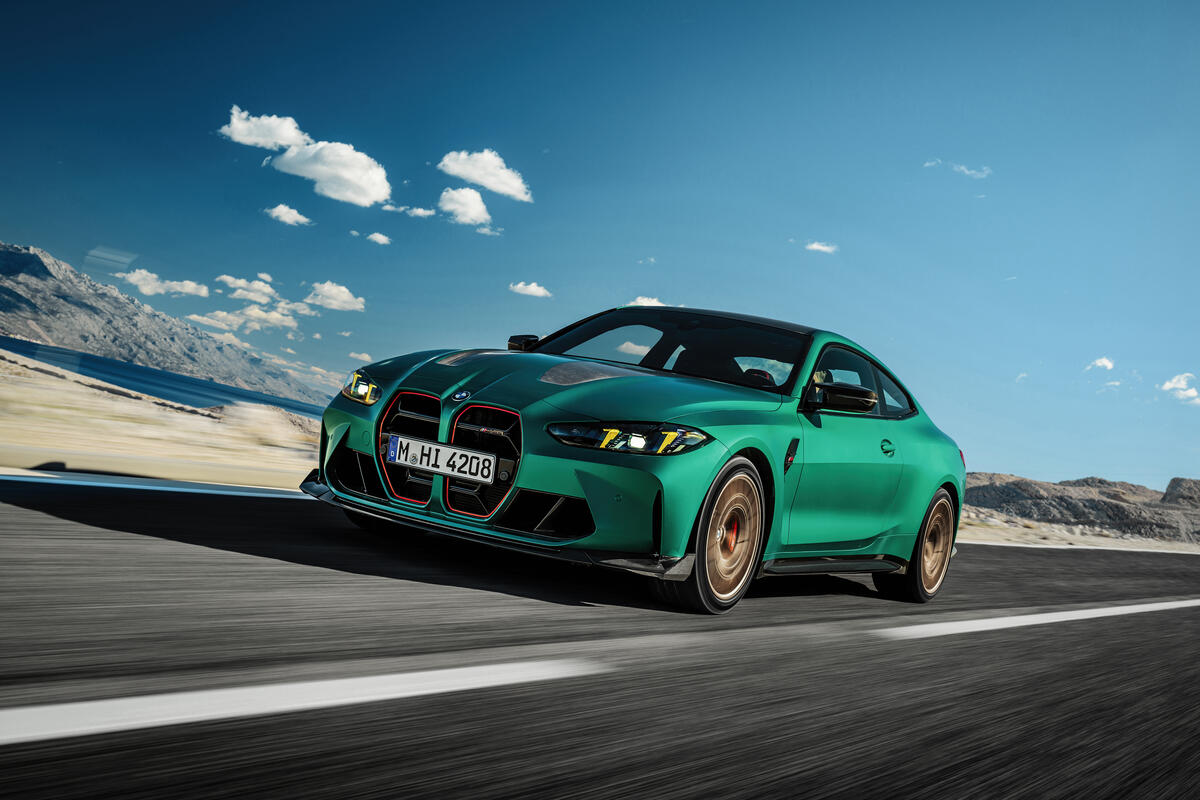
BMW M4
"A driver in a all-wheel drive BMW M4 his name is Adam slowinsky best time attack name ever he was like point one some faster than me in session one"
The BMW M4 is a high-performance BMW. Here it’s being used by a fast driver in an all-wheel-drive setup, and it’s the benchmark for lap times.
The BMW M4 is BMW’s performance coupe/convertible line built around a high-output twin-turbo inline-six. In this segment, it’s mentioned as an all-wheel-drive car used by a top competitor, setting the pace in repeated sessions.
qualifying rounds
"We ended up finishing all the qualifying rounds it rained for the final one"
Qualifying rounds are the earlier timed runs that set you up for the main event. They finished those, and then the weather changed for the final.
Qualifying rounds are the timed sessions used to determine starting positions or advancement for the main event. The host says they completed qualifying, then it rained for the final run.

Chevrolet Stingray
"it rained for the final one and I drove The stingray that Justin peachy was driving instead of the ZR one and they approved me to just drive that and dequeue my times to try out"
The Chevrolet Stingray is the Corvette’s performance model. They’re saying they got to drive a Stingray car for the final run instead of the usual one.
The Chevrolet Corvette Stingray is a performance sports car known for its mid-engine layout and track-focused capability. In this segment, the host says they were allowed to drive the Stingray instead of a different Corvette variant and keep/adjust their times accordingly.
orange C8
"I saw a clip of orange C8 out there just like bombing around and I literally thought like damn that dude's driving like Tom"
A C8 is a Chevrolet Corvette. It’s special because the engine sits closer to the middle of the car, which affects how it handles. Here, they’re talking about how someone is driving it fast.
The C8 is the Chevrolet Corvette’s mid-engine generation, which changes how the car feels and responds compared with older front-engine Corvettes. In this clip, the speaker is watching an orange C8 “bomb around,” focusing on driving feel rather than specs.
a7 compound
"It's like the autocross compound the a7 compound that's supposed to come up faster"
“A7 compound” is a name for a particular rubber recipe in a tire. They’re saying it’s designed to get ready (warm up) faster so it grips sooner.
“A7 compound” is a specific tire rubber compound designation used by a tire manufacturer (commonly discussed in autocross/track tire lines). The speaker’s point is that this compound is intended to reach working temperature faster for quicker performance.
hydroplaning
"It was raining pretty hard. So it was there were some hydroplaning issues"
Hydroplaning is when your tires ride on a thin layer of water instead of gripping the road. That can make the car feel like it’s not responding normally, especially when it’s raining hard.
Hydroplaning is when water builds up between the tires and the road, reducing tire contact and causing the car to lose grip. It’s especially relevant in heavy rain and can make steering feel vague or unpredictable.
breakaway characteristics
"The grip felt pretty good the breakaway characteristics were okay"
Breakaway characteristics are about what happens when the tires start to lose grip. If it breaks away in a predictable way, it’s easier to correct before the car fully slides.
Breakaway characteristics describe how a tire transitions from gripping to sliding when you exceed its traction limit. Good breakaway behavior usually means the car gives warning and the driver can catch the slide more predictably.
axis is lower
"But nine and three in the Corvette like the axis is lower. So it kind of like scoops"
They’re talking about how the steering wheel’s shape/position makes it feel like the turning point is lower than usual. That can change how your hands guide the car, especially when you’re trying to correct a problem.
The speaker is describing how the Corvette’s steering wheel geometry changes the perceived steering “center” (the effective pivot/rotation feel) compared with the usual “nine and three” hand position. That can affect driver inputs and how quickly they can correct when the car is not behaving perfectly.
track mode
"I put it in track mode so the throttle response was like really touchy and I didn't really think about it until really late. I was already like basically done with the session"
Track mode is a setting that makes the car act more like it’s meant for racing. In this case, it makes the gas pedal respond more sharply, so small inputs feel bigger.
“Track mode” is a driver-selectable setting that changes how the car responds to your inputs for circuit use. It often makes the throttle mapping more aggressive, so the throttle response feels “touchy” compared with normal driving modes.
tires closer in the wet
"But anyway, I do think that tires closer in the wet to like the Bridgestone Yokohama conversation than the like then a Falcon or a kumo or whatever like actually close. You wait, you think it was better than a Falcon because"
In the rain, tires matter a lot because they need to grip the road while water is on it. Some tires work better than others depending on how warm they get.
In wet driving, tire choice and tire temperature strongly affect grip and stability. The speaker is comparing how different tire models behave in rain, noting that some tires can feel worse if they don’t have enough heat.
Bridgestone Yokohama
"But anyway, I do think that tires closer in the wet to like the Bridgestone Yokohama conversation than the like then a Falcon or a kumo or whatever like actually close."
Bridgestone and Yokohama are tire brands. The speaker is saying some of their tires handle better in wet conditions than other brands mentioned.
Bridgestone and Yokohama are major tire brands, and the speaker is grouping their wet performance together. The point is that certain tire lines tend to behave more predictably in rain than others.

Ford Falcon
"...estone Yokohama conversation than the like then a Falcon or a kumo or whatever like actually close You wai..."
The Ford Falcon is a car model made by Ford. Depending on the version, it can be a performance-focused car. In the podcast, it’s brought up as one of the cars that’s being compared closely to others.
The Ford Falcon is a model line of cars produced by Ford, commonly associated with performance and racing in certain markets and eras. In the podcast, it’s mentioned in a comparison group alongside other cars, suggesting it’s being used as a reference point for how different vehicles perform or compare closely. The “Falcon or a … close” phrasing indicates it’s part of a tight matchup discussion.
treadwear
"Adam has sticker Goodyear supercar 3 Rs, which are definitely a better tire because they're 100 treadwear. I like that tire a lot and"
Treadwear is a number that gives a general idea of how long a tire might last. In simple terms, it’s used to compare tire wear characteristics.
Treadwear is a tire rating (part of standardized testing) that’s used as a rough indicator of how quickly a tire is expected to wear. Lower treadwear often correlates with softer, stickier tires, while higher treadwear tends to indicate longer life.
Goodyear supercar 3 Rs
"Adam has sticker Goodyear supercar 3 Rs, which are definitely a better tire because they're 100 treadwear. I like that tire a lot and"
Goodyear Supercar 3 R is a performance tire model the speaker credits for being better in their context. They also mention its 100 treadwear rating, which is a clue about how long the tire may last versus how grippy it is.
tire warmers
"He has tire warmers, so he doesn't have to worry about getting him up to temperature, which they take forever. So I'm like, I'm literally not gonna win this."
Tire warmers are like heating blankets for your tires. They get the tires up to the right temperature before you drive, so you get grip sooner.
Tire warmers are devices (usually electric) used to preheat tires before driving. Preheating helps tires reach their optimal temperature quickly, improving grip and consistency—especially important in cool or wet sessions.
four-off
"He would have won but in the shootout you only get three laps and if you do a four-off you're disqualified. so I"
“Four-off” means you went off track too many times. In this event, that results in being disqualified.
“Four-off” refers to exceeding the allowed number of off-track events during the shootout. In many track-day/club formats, going off course multiple times triggers penalties or disqualification.
disqualified
"But I know that he's disqualified now. Yeah, basically like Unless one of the other three cars went faster than me that hadn't gone faster"
Disqualified means the officials decided the run doesn’t count because of a rules issue. Even if you drove it, the result can be removed.
“Disqualified” means the driver’s result is removed due to a rules violation or an infraction (for example, track limits, unsafe driving, or procedural issues). In racing, it can happen even if the driver completed the run, depending on what officials determine after review.
watching back
"Unless one of the other three cars went faster than me that hadn't gone faster How close were they to you? Were you aware of that like as you're like No, but watching back."
They’re talking about reviewing what happened after the run, like watching a replay. That helps them figure out what they did and whether it caused trouble.
The speaker is referencing video review (“watching back”) to understand what happened on track, including timing and caution behavior. This is a common racing practice for learning from mistakes and verifying whether a driver’s actions were within rules.
yellow flag
"So I do 123 I'm green I go through the yellow flag cautiously, but still at pace I'm still green."
A yellow flag means “slow down—something is wrong on the track.” Drivers have to drive more carefully because there may be debris or an accident ahead.
A yellow flag is a race-control signal meaning there’s a hazard on or near the track (like an incident or debris), and drivers must slow down and be prepared to react. In practice, it reduces the risk of speeding into a dangerous area while marshals handle the situation.
green
"So I do 123 I'm green I go through the yellow flag cautiously, but still at pace I'm still green."
“Green” means the track is clear and you can drive normally again. It’s basically the opposite of a caution/yellow-flag situation.
“Green” refers to the track being cleared for normal racing conditions after a caution. It typically means there’s no longer an active hazard requiring drivers to slow down.
drifting
"and then all of a sudden it just snaps loose and I catch the car and then I'm drifting to the left and then I straighten up and I ride it"
“Drifting” here means the car starts sliding sideways because the tires lose grip. The driver has to steer against the slide to keep control and straighten it out.
In this context, “drifting” means the car’s rear loses grip and the car rotates while the driver keeps it under control. It’s usually caused by sudden oversteer (often from braking, throttle changes, or low traction), and the driver counter-steers to regain stability.
gravel trap
"Off the racetrack is forward through a gravel trap and then over a little like two-foot berm and down into a Some sort of field full of like corn."
A gravel trap is a safety zone next to the track made of loose gravel. If you go off the track, it helps slow the car down so it doesn’t keep going as fast.
A gravel trap is an off-track run-off area filled with loose material designed to slow a car that leaves the racing surface. Loose gravel increases rolling resistance and can help bring the vehicle to a stop more safely than solid ground.
berm
"Off the racetrack is forward through a gravel trap and then over a little like two-foot berm and down into a Some sort of field full of like corn."
A berm is a raised mound of earth beside the track. If you hit it after going off, it can slow you down but it may also make the car bounce or get unstable.
A berm is an earthen mound or raised edge used in track design. In run-off areas, it can redirect or slow a vehicle after it leaves the racing surface, but it can also be rough and destabilizing depending on speed and angle.

Honda Civic
"...een down there before Tom I was there in the GLTC Civic once it's a long way back up because you can't ju..."
The Honda Civic is a small, everyday car. People like it because it’s generally efficient and straightforward to drive. It can also be used in racing, which is why it comes up in track-related talk.
The Honda Civic is a compact car that’s widely used and known for being practical, efficient, and easy to live with. It’s also discussed in motorsport contexts because certain Civic models have been raced and adapted for competition. In the podcast, it’s referenced in a scenario involving a GLTC Civic and the idea of getting back into the action after a long distance.
driver aids
"I even turned the car back to like drive mode So the driver aids would come back on and like not get stuck"
Driver aids are electronic helpers that keep the car stable, like traction and stability systems. Switching modes can turn those helpers back on so the car behaves more predictably.
“Driver aids” are electronic systems that help the driver maintain control, such as traction control and stability control. When the driver changes modes (like switching to “drive mode”), these systems may re-enable and help prevent the car from getting stuck or spinning.
drive mode
"I even turned the car back to like drive mode So the driver aids would come back on and like not get stuck"
A drive mode is a setting that changes how the car behaves. It can affect things like how sensitive the throttle is and how much the car’s stability/traction helpers intervene.
A “drive mode” is a selectable vehicle setting (often via a dashboard button) that changes how the car responds—commonly throttle mapping, steering feel, and how traction/stability systems intervene. In this story, switching back to drive mode likely re-enabled electronic control behavior after the off-track incident.
podium sprint
"Whatever I kind of feel like no one cares about the podium sprint relative to just the overall lap time [2421.6s] And I produced the overall lap time that I could"
A podium sprint is a short, fast race segment at the end of an event. The host is basically saying they care more about their main lap performance than this smaller sprint.
A podium sprint is a short, race-like session that’s typically tied to the event’s results and is often treated as a separate competitive segment. The host is saying it matters less to them than overall lap time, suggesting the sprint is more about entertainment or a bonus contest than the main performance metric.
overall lap time
"Whatever I kind of feel like no one cares about the podium sprint relative to just the overall lap time [2421.6s] And I produced the overall lap time that I could [2424.2s] Yep, so it was a much softer blow to the ego than it could have been"
Overall lap time is how long it takes to do one full lap around the track. Faster lap times usually mean the car is handling well and the driver is hitting good lines and braking points.
Overall lap time is the total elapsed time for a complete circuit around the track. It’s a primary performance metric because it reflects how well the car and driver work together across all corners, straights, and braking zones.
plastic under trays
"Okay, and I was really glad the car wasn't damaged one of the plastic under trays got punctured a little bit [2432.7s] But he said that that had happened on his other cars without [2437.0s] Like doing anything [2438.9s] Hard either. I guess [2440.9s] Um, um, um, so at the very end [2444.1s] What that that plastic under tray it sounds replaceable"
These are protective panels under the car. They help keep dirt and debris from hitting important parts, and if one gets punctured, it’s often a relatively cheap replacement compared to bigger damage.
Plastic under trays are aerodynamic shields mounted underneath a car to help manage airflow and protect components from road debris. They’re often cheaper than metal undertrays, so puncturing one after an off-road moment is usually less expensive than damage to major structural parts.
time attack
"Kyle even said it's supposed to rain sunday time attack. Please just go out and give us something to talk about Dude, honestly, look if any if any time attack people are listening to this"
Time attack is when the goal is to go as fast as possible around a track for the best timed lap. Instead of racing side-by-side, you’re mostly trying to beat the clock.
Time attack is a motorsport format where drivers try to set the fastest single lap (or best timed run) on a track, usually with limited or no racing against other cars. The emphasis is on lap time through driving technique, tire grip management, and car setup rather than wheel-to-wheel competition.
slide around
"Like just go out there and drive around and slide around a little bit and like just to have fun with your car You know, it doesn't need to be productive in any sense"
To “slide around” means the tires aren’t gripping fully, so the car starts to move sideways. On a wet track, that can happen a lot more, and you have to be careful.
“Slide around” describes intentionally or unintentionally losing traction so the car rotates and drifts rather than gripping and tracking straight. On wet surfaces, sliding can happen more easily, and skilled drivers manage it to keep speed while staying in control.
james houghton
"But I got to ask what is james houghton doing to be like the most viral driver In a sense. Do you remember he had the three-wheeled finish?"
James Houghton is a driver the hosts are talking about because he keeps ending up in viral, dramatic moments. They mention he even finished after losing a wheel and still had an extremely close result.
James Houghton is referenced as a driver known for viral moments and very close competition, including a “three-wheeled” finish where he still completed the event. The host frames him as especially good at producing highlight-worthy driving clips.
grip driving
"so he has all these like viral clips from grip driving that are like impossible to get and somehow He's the most viral person with these moments"
“Grip driving” means driving in a way that keeps the tires hooked up to the road as much as possible. Instead of sliding a lot, you try to stay in control and use traction efficiently.
Grip driving is a style of driving where the car stays mostly within the tire’s traction limits, using smooth steering, braking, and throttle to maximize grip. It contrasts with more slide-heavy styles where the car is deliberately rotated or drifting.
manual gearbox
"How do you adapt real life versus sin sim? In particular with manual gearbox cars"
A manual gearbox is a car where you shift gears yourself, usually with a clutch pedal. That can change how easy it is to use left-foot braking because your left foot is busy with the clutch.
A manual gearbox is a transmission that requires the driver to change gears using a clutch pedal and a gear lever. In left-foot-braking discussions, manual cars matter because the left foot is already involved with the clutch, which can affect pedal ergonomics and technique.
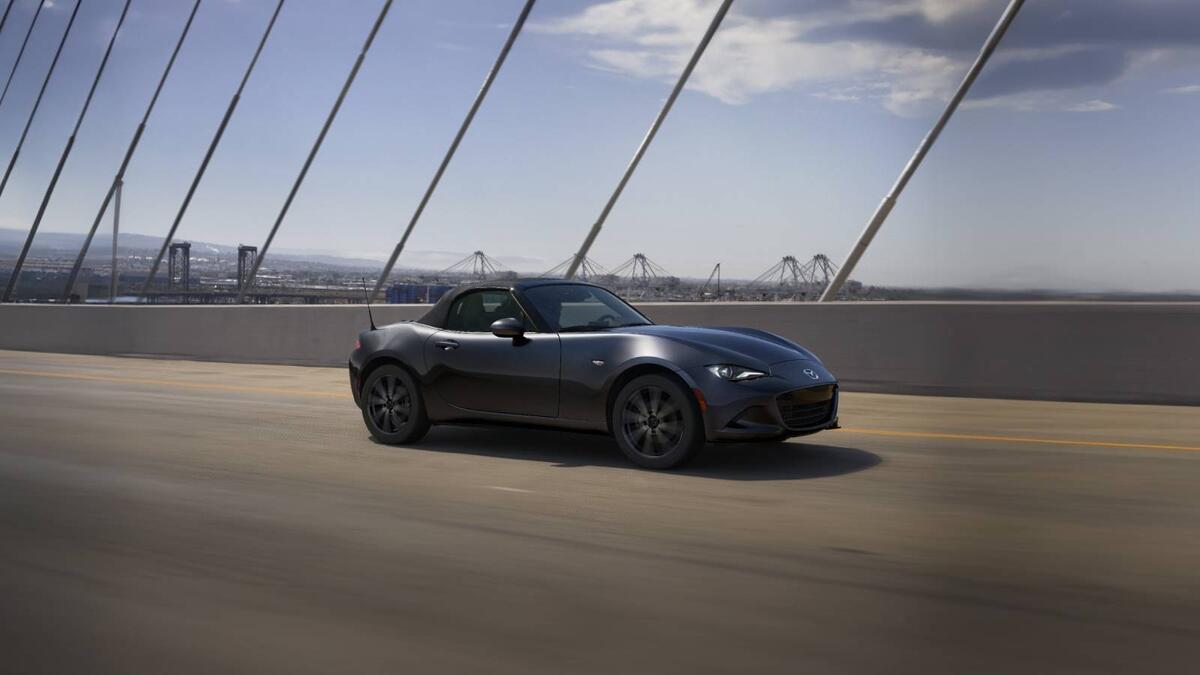
Mazda MX-5 / Miata
"...ing with it Yeah, that was an es uh the first gen miata, right? Yeah, but all like the pedals were like b..."
The Mazda MX-5 (Miata) is a small two-seat sports car made for enjoyable driving. It’s known for being light and easy to steer. The podcast is talking about the first version and how the controls like the pedals feel.
The Mazda MX-5, commonly called the Miata, is a lightweight two-seat roadster that’s famous for its simple, fun driving feel. First-generation Miatas are often discussed because their basic layout and driver-focused design make them popular in enthusiast and track settings. The podcast specifically mentions the first-gen Miata and details about the pedals, which points to how the car feels to drive.
paddles
"In real life when i'm driving like a zr1 or uh, you know gt3 or something that where it's like I have paddles [3255.0s] I typically left foot brake [3256.6s] But it's not because of like foot speed or whatever"
“Paddles” are the shift buttons on the steering wheel. They let you change gears quickly while keeping your hands on the wheel, and the speaker is using that as part of the example for why left-foot braking feels natural.
“Paddles” here means steering-wheel paddle shifters, which let the driver manually command gear changes without using a traditional gear lever. The speaker mentions them to describe the kind of car where left-foot braking feels consistent with their sim habits.
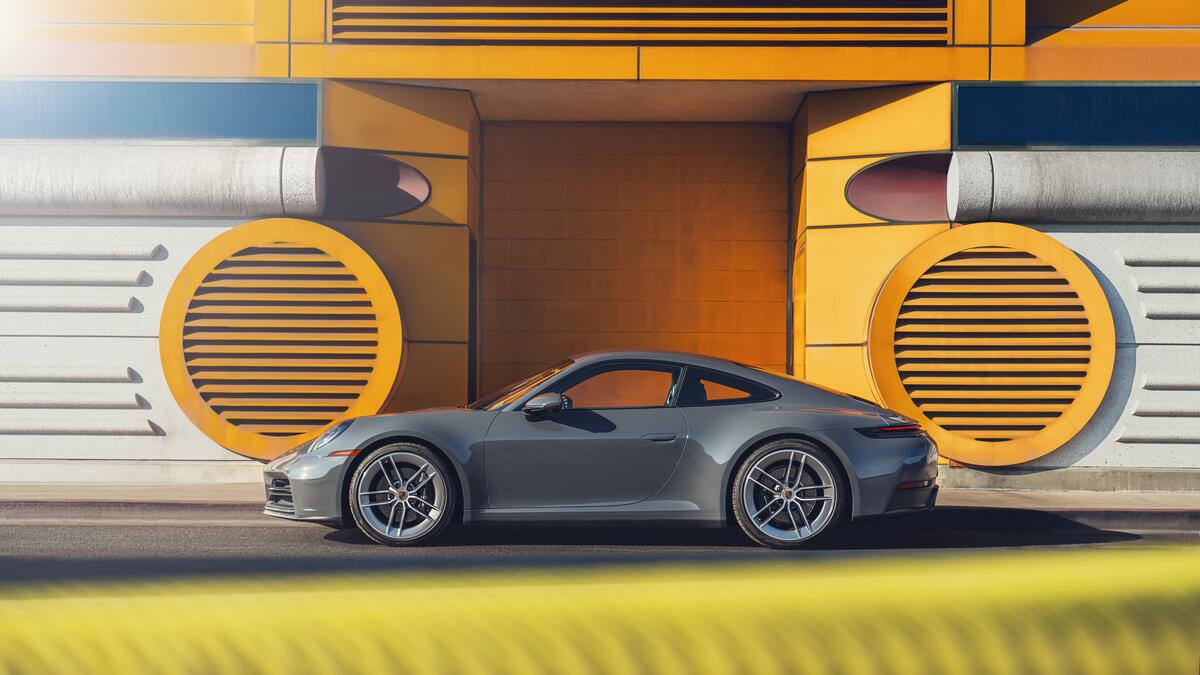
gt3
"In real life when i'm driving like a zr1 or uh, you know gt3 or something that where it's like I have paddles [3255.0s] I typically left foot brake [3256.6s] But it's not because of like foot speed or whatever"
“GT3” is a Porsche 911 model that’s built for track driving. The point in this segment is that the speaker left-brakes in cars like this because it helps them manage the car’s behavior when slowing down.
“GT3” refers to Porsche’s 911 GT3 track-focused model line (and sometimes the broader GT3 racing class). Here, the host is using it as an example of a car with paddle shifters where left-foot braking feels more natural due to sim experience.
weight shift
"It's just like the the transition from uh, like the weight shift and stuff like that. It's just [3266.7s] Like I have so many sim hours that it's just so like well baked in and it feels like I can actually like [3272.3s] Pivot the car harder"
Weight shift is how the car’s “load” moves around when you brake or turn. When you brake, the car usually shifts weight forward, and the speaker thinks their braking technique helps them control that shift.
Weight shift is how a car’s mass moves during braking, acceleration, and cornering—typically transferring forward under braking. The speaker connects left-foot braking to being able to “pivot the car harder” by moving the car’s weight quickly and predictably.
sim hours
"Like I have so many sim hours that it's just so like well baked in and it feels like I can actually like [3272.3s] Pivot the car harder [3274.3s] Because my my foot can instantly like move the weight backwards to like start catching it"
“Sim hours” means how much time someone has spent practicing in a racing video game simulator. They’re saying that practice can carry over to real driving—especially how you time braking to control the car.
“Sim hours” refers to time spent driving in a racing simulator (like a PC/console setup). The speaker argues that practice in the sim can transfer to real driving by improving how you time braking inputs to manage the car’s balance.
left foot braking
"I just feel faster or just I feel more comfortable left foot braking, especially in like the fast cars Uh, I just feel like I just have a little bit more nuanced control of like what happens"
Left foot braking means using your left foot to press the brake pedal instead of your right foot. People do it to feel smoother and more in control when slowing down, especially when driving fast.
Left foot braking is a driving technique where the driver uses the left foot to press the brake pedal while the right foot stays on the accelerator. Enthusiasts use it to improve pedal coordination and keep the car balanced during hard braking or trail-braking into corners.

Audi S6
"...Where I just like I got everyone everyone's doing s6. Come on tom. You're gonna drive an frs Like come..."
The Audi S6 is a faster, sportier version of a regular Audi sedan. It’s meant to feel quicker and more responsive while still being a normal car you can drive day to day. The podcast mentions it because people are choosing it for driving comparisons.
The Audi S6 is a performance-oriented version of the Audi A6, typically offered as a faster, more powerful sedan with sport-tuned driving characteristics. It often comes up in driving discussions because it’s designed to deliver strong acceleration and confident handling in a more practical body style. In the podcast, it’s referenced as something “everyone’s doing,” implying it’s part of the group’s car choices for driving or comparison.
Request an Explanation
Heard something you'd like explained? We'll add it to this episode.
Sign in to request explanations for terms you heard.
Want to learn more?
Browse our glossary for plain-English explanations of automotive terms, jargon, and concepts.
Help improve this episode
See something that's not quite right? Our annotations are AI-generated and can sometimes miss the mark. Click the flag icon on any annotation to suggest a correction.