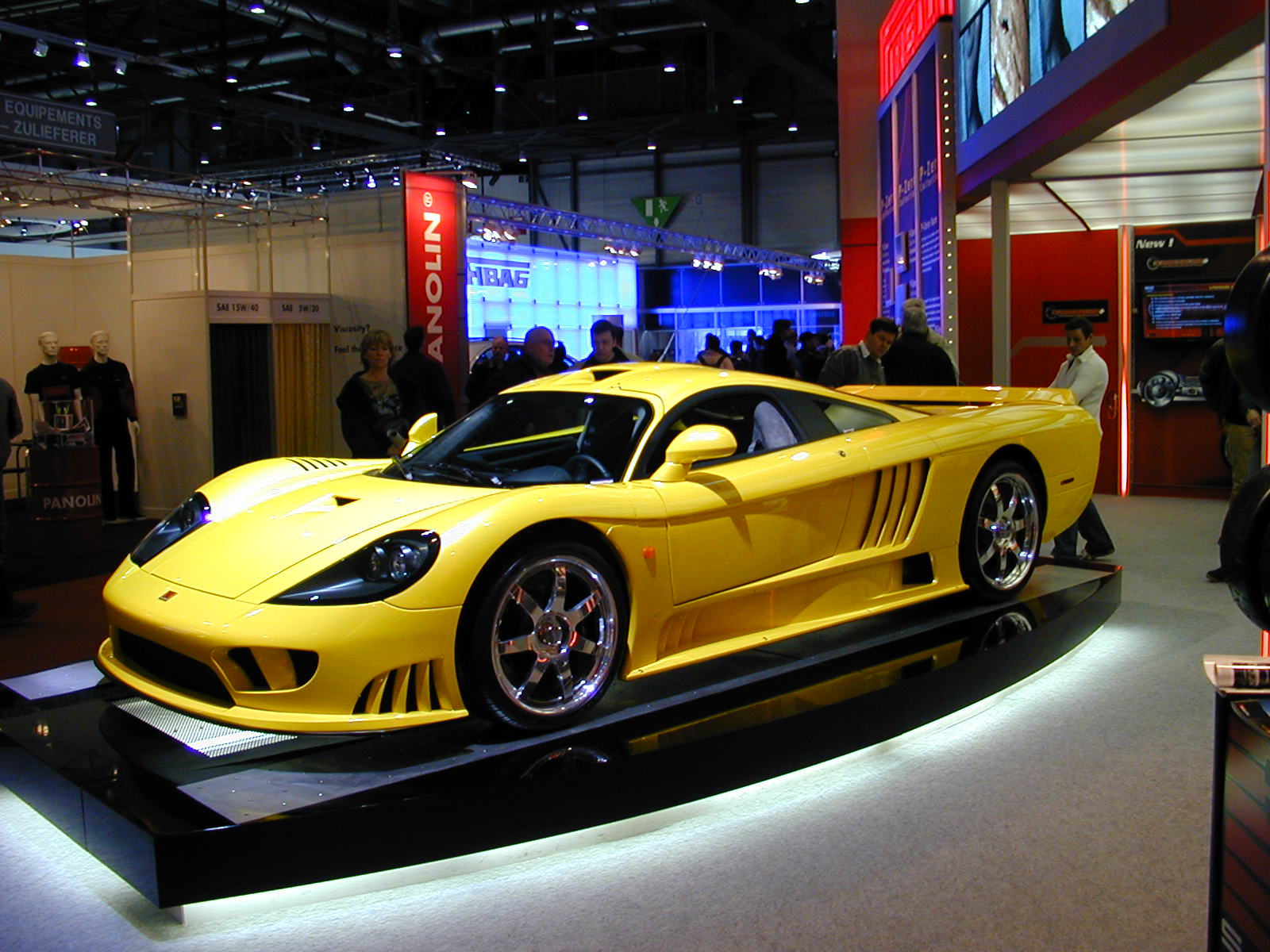
Steve Saleen, a legendary figure in American automotive history, reflects on his journey from a young speed enthusiast to a successful manufacturer of iconic supercars like the Saleen S7. Celebrating the S7's 25th anniversary, he discusses its impact on the supercar market and his experiences in racing and engineering. Saleen shares insights into his collaborations with major brands like Ford and Dodge, the challenges of navigating corporate changes, and his vision for the future of performance vehicles, including an upcoming museum exhibit showcasing the evolution of American supercars.
"...his year marks the 25th anniversary of the Seline S7, the American supercar that stunned the world. Ha..."
The Audi S7 is a fancy car that looks nice and drives really well. It has a powerful engine, which means it can go fast, and it's designed to be comfortable and stylish at the same time.
The Audi S7 is a luxury performance sedan that combines elegance with powerful performance, featuring a turbocharged V6 engine and a sophisticated all-wheel-drive system. Celebrating its 25th anniversary this year, it represents a blend of practicality and sportiness, making it a popular choice among enthusiasts.
"This year marks the 25th anniversary of the Saleen S7, the American supercar that stunned the world. Hand-built, uncompromising, and impossibly bold, the S7 proved that an independent U.S. automaker..."
The Saleen S7 is a high-performance sports car made in the USA. It's famous for its speed and style, and it was built to compete with luxury brands like Ferrari and Lamborghini.
The Saleen S7 is an American supercar known for its high performance and unique design. It was notable for being hand-built and aimed to compete with established European supercar brands.
"could not only compete with Ferrari, Lamborghini, and McLaren..."
Ferrari is a famous car brand from Italy that makes very fast and expensive sports cars. They are well-known for racing and luxury.
Ferrari is a renowned Italian luxury sports car manufacturer known for its high-performance vehicles and success in motorsport, particularly Formula 1.
"...the past, the present, and the future of the American supercar and the never-ending pursuit of speed."
An American supercar is a very fast and powerful sports car made in the United States. These cars are known for their speed, unique looks, and advanced technology, like the Saleen S7 and Ford GT.
The term 'American supercar' refers to high-performance sports cars manufactured in the United States, often characterized by their powerful engines, advanced technology, and distinctive designs. Examples include the Saleen S7, Ford GT, and Chevrolet Corvette ZR1.
"...we had set it up at the Pebble Beach Week to have our debut at the racetrack there in Monterey at Laguna Seca."
Pebble Beach Week is a big car event in California where people show off fancy and classic cars. It's a chance for car lovers to see some really special vehicles.
Pebble Beach Week is an annual automotive event held in California, featuring luxury and classic cars. It includes various activities, culminating in the prestigious Pebble Beach Concours d'Elegance, where rare and vintage vehicles are showcased and judged.
"I did a lot of the development I did actually in England for the aerodynamics on this to reverse ourselves into the F1, looking at where Aero would be going in the future."
Aerodynamics is about how air moves around cars. Good aerodynamics helps cars go faster and use less fuel by reducing drag.
Aerodynamics refers to the way air interacts with a moving vehicle. It's crucial in automotive design as it affects speed, fuel efficiency, and stability, especially in high-performance cars like those in Formula 1.
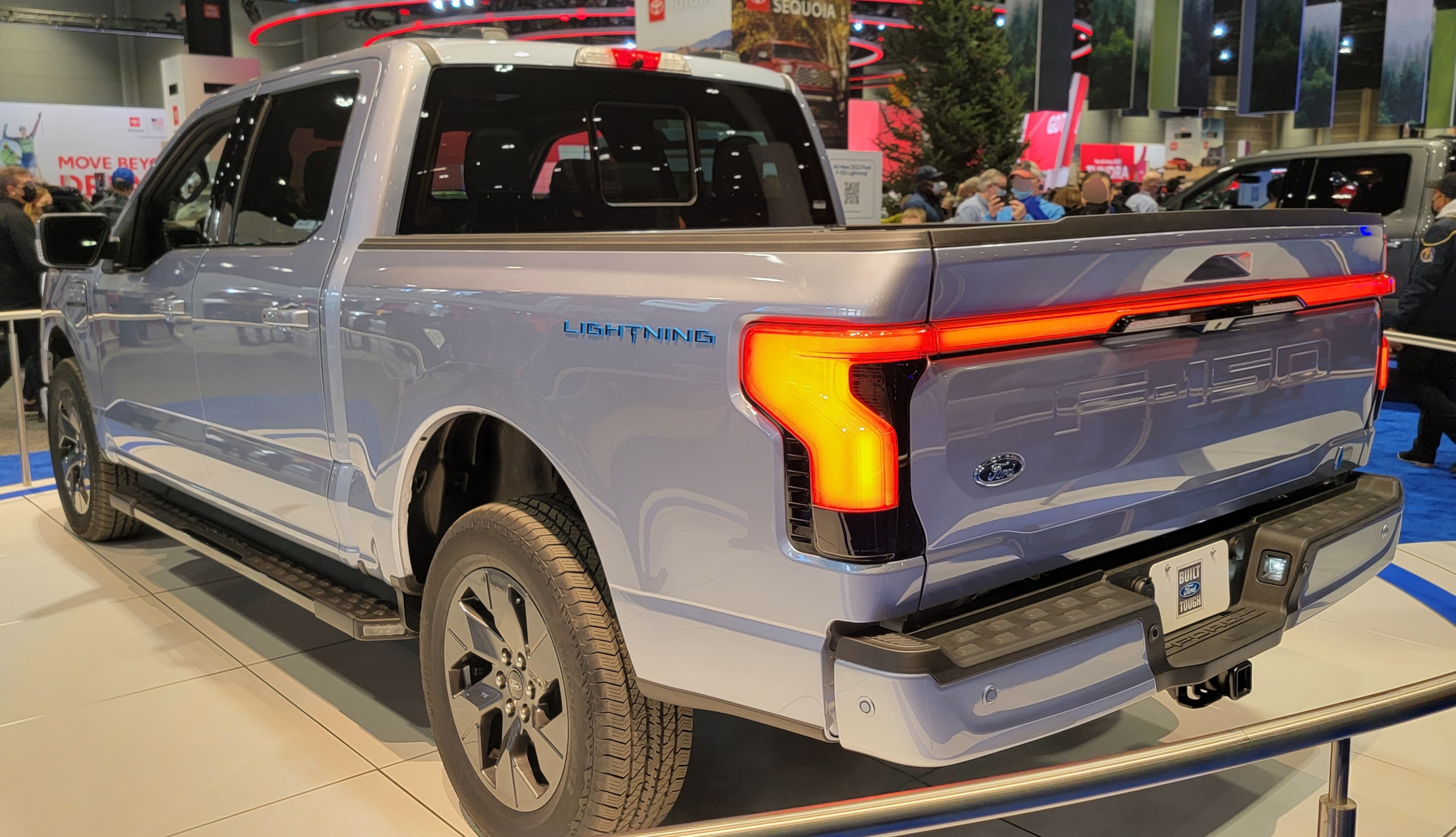
"...there's going to be some derivative of the Ford F-150 truck or something."
The Ford F-150 is a popular pickup truck that many people use for work and everyday driving. It's known for being tough and reliable.
The Ford F-150 is one of the best-selling pickup trucks in the United States, known for its durability, versatility, and range of powerful engine options. It has a strong reputation for both work and leisure use.
"...it's similar to what Ford's trying to do with the GTD Mustang. Right."
The Ford Mustang GTD is a special version of the Mustang that is made to be really fast and perform well on race tracks. It still looks like a Mustang but has extra features to make it even better for driving enthusiasts.
The Ford Mustang GTD is a high-performance variant of the iconic Mustang, designed to deliver track-ready capabilities while maintaining everyday usability. With advanced engineering and a focus on performance, the GTD aims to elevate the Mustang's legacy in the world of sports cars.
"From the racing pedigree, the F7 is the most successful supercar to date in the respect that it has won at literally every major race track in the world."
The F7 is a high-performance sports car that has done very well in racing competitions globally.
The F7 is a supercar known for its racing success, having won at numerous prestigious tracks around the world.
"And when we finally won the 24 hours of Le Mans with the car and the racing version,"
The 24 hours of Le Mans is a famous car race that lasts a full day, where cars try to go as far as possible in that time.
The 24 hours of Le Mans is one of the most prestigious endurance races in the world, held annually in France, where teams compete to cover the most distance in 24 hours.
"...Dad ended up from a friend, purchased a 1956 Porsche 356 European model. And I got to drive that when I got my driver's license."
The Porsche 356 is an early sports car made by Porsche. It was popular for its speed and handling, and many car enthusiasts love it today because of its classic design.
The Porsche 356 is a classic sports car produced by Porsche from 1948 to 1965. It was the first production automobile by the company and is known for its lightweight design and excellent handling.
"And the Porsche Owners Club was a bunch of professional and amateur Porsche racers."
The Porsche Owners Club is a group where people who own Porsches can meet and share their interest in these cars. They often have events and races together.
The Porsche Owners Club is a community for Porsche enthusiasts, including both professional and amateur racers. Members often participate in events, track days, and social gatherings centered around their love for Porsche vehicles.
Motorsport is a term for sports that involve racing cars or motorcycles. It includes many types of races and competitions.
Motorsport refers to competitive events involving motorized vehicles, including car racing, motorcycle racing, and other forms of racing. It encompasses various disciplines, from Formula 1 to rally racing.
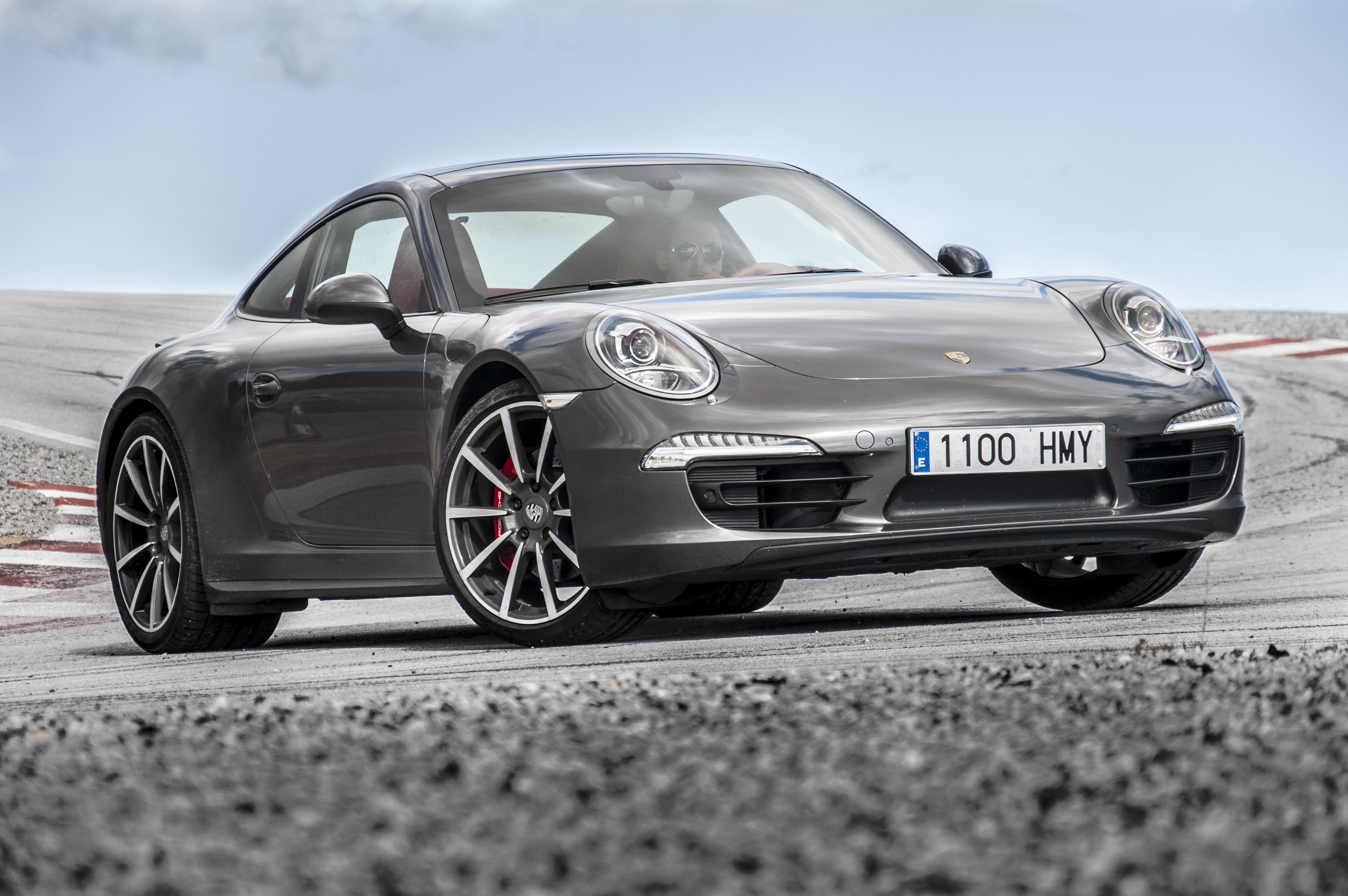
"And then I sold the Porsche because I wanted to get a newer one, a 911 S. And then I realized it was going to take a long time to save up for that."
The Porsche 911 S is a special version of the Porsche 911, which is a famous sports car. It usually has better performance and features than the standard model.
The Porsche 911 S is a variant of the iconic Porsche 911 sports car, known for its performance and distinctive design. The 'S' typically indicates a sportier version with enhanced features.
"So I saw an ad to buy a used Shelby Mustang in Southern California. So I ended up buying that and fixing that up. And that's what introduced me to the world, if you will, Ford performance. And so that had a big, and watching the Shelby Mustangs, the Cobras, and of course the Ford GT40s on this deal."
The Ford GT40 is a famous race car that won many races, including the Le Mans. It's known for being very fast and well-built.
The Ford GT40 is a legendary race car known for its success in endurance racing, particularly at the Le Mans 24-hour race. It was designed to compete with Ferrari and is celebrated for its engineering and performance.
"...that driving sedans wasn't necessarily, or production cars wasn't necessarily the best path, you needed to be in formula cars. And so I ended up selling my house at the time I was not married and bought a Formula Atlantic."
Formula Atlantic is a racing series where drivers compete in fast, single-seat cars. It's a place for drivers to gain experience before moving on to bigger racing leagues.
Formula Atlantic is a type of open-wheel racing series that serves as a stepping stone for drivers aspiring to reach higher levels of motorsport, such as Formula 1. It features single-seat cars that are designed for high performance on road courses.
"...I competed wheel-to-wheel on the Formula One side was Jills Villanue and KK Rosberg, who won the Formula One championship."
Formula One is a type of car racing that involves very fast cars competing in races around the world. It's known for its advanced technology and skilled drivers.
Formula One is the highest class of single-seater auto racing, governed by the FIA. It features a series of races known as Grands Prix, held on various circuits around the world, and is known for its cutting-edge technology and high speeds.
"...but I was offered a pain drive with Pontiac Motor Company."
Pontiac was a car brand that made sporty cars in the U.S. It was popular for many years but stopped making cars in 2010.
Pontiac was a brand of automobiles produced by General Motors, known for its performance-oriented vehicles. The brand was discontinued in 2010, but it had a significant impact on American car culture.
"So I left my position at the end of the racing season in 1983 and started the company to build special edition V8 version Mustangs."
A special edition car is a unique version of a regular car that has special features or designs. It's often made in limited numbers to make it more exclusive.
A special edition car is a variant of a standard model that features unique design elements, performance enhancements, or limited production runs. These editions are often created to commemorate an event or to offer something unique to enthusiasts.
"...there was certainly the Mustang as an American muscle car or sports car. On this was the right platform."
Muscle cars are fast cars made in America, usually with big engines that make them powerful. They became popular in the 1960s and are known for their sporty looks and speed.
American muscle cars are high-performance vehicles typically featuring powerful V8 engines and a focus on straight-line speed. They emerged in the 1960s and are known for their aggressive styling and performance capabilities.
"...many may not realize that you built the mid 2000s Ford GT, right? And the late 2000s Dodge Viper."
The Ford GT is a super-fast sports car that looks really sleek and is built for racing. It's special because it has a lot of advanced features and is inspired by an older car that was famous for winning races a long time ago.
The Ford GT is a high-performance sports car that pays homage to the legendary Ford GT40, which dominated the Le Mans races in the 1960s. The modern version, introduced in the mid-2000s, features advanced technology and a powerful engine, making it a significant achievement in automotive engineering.
"When we came out with the F7 is I kept Ford top management of Ford Motor Company informed of what we were doing and what we were about to debut and what our intentions with the vehicle works."
The Ford F7 is a type of car made by Ford. It's part of their sports car lineup and shows Ford's commitment to creating exciting vehicles.
The Ford F7 is a model that was developed as part of Ford's lineup, likely aimed at the sports car market. It represents a significant effort by Ford to innovate and expand their offerings in this segment.
"And they went through several iterations under what they call the code name Petunia."
A code name is a special name used for a project before it has an official name. It helps keep things secret while the project is being worked on.
A code name is a temporary name used during the development of a project, often to keep the details confidential. In the automotive industry, code names can refer to new models or concepts that are still in development.
"Well, and so that's what really kind of got me more in the OEM. What is the large OEM bill?"
OEM means Original Equipment Manufacturer. It's a term used for companies that make parts for cars, which are then sold under another brand's name.
OEM stands for Original Equipment Manufacturer, referring to companies that produce parts and equipment that may be marketed by another manufacturer. In the automotive industry, it typically refers to the car manufacturers themselves.
"...d challengers before there were Hellcats. You did Camaros. You even did Tesla. So do you approach each bran..."
The Chevrolet Camaro is a sporty car that looks really cool and goes fast. It's been around for a long time and is known for being fun to drive, especially if you like cars that have a lot of power.
The Chevrolet Camaro is a classic American muscle car that has been a symbol of performance and style since its introduction in 1966. Known for its powerful engines and aggressive design, the Camaro has competed with other muscle cars like the Ford Mustang and Dodge Challenger, making it a significant player in automotive history.
"...what I learned on vehicle dynamics and everything from power trains, suspension aerodynamics..."
Vehicle dynamics is about how a car behaves when it's moving, like how it turns or stays stable on the road. It's important for making cars that are safe and fun to drive.
Vehicle dynamics refers to the study of how a vehicle responds to various forces while in motion, including handling, stability, and ride comfort. It is crucial for designing vehicles that perform well under different driving conditions.
"...everything from power trains, suspension aerodynamics..."
The suspension is the part of a car that helps it ride smoothly over bumps and turns. It keeps the car stable and comfortable for passengers.
The suspension system of a vehicle connects the body to the wheels and helps absorb shocks from the road, providing comfort and stability while driving. It plays a key role in handling and ride quality.
"...everything from power trains, suspension aerodynamics..."
Power trains are the parts of a car that make it move, like the engine and transmission. They help the car go faster or save fuel.
Power trains refer to the components of a vehicle that generate power and deliver it to the wheels, including the engine, transmission, and drivetrain. They are essential for determining a vehicle's performance and efficiency.
"...they? Yeah, it was like when we ventured into the Dodge realm on this because of what we were doing with the Vi..."
The Dodge Ram is a big truck that can carry heavy loads and is great for work or outdoor activities. It's popular because it can handle tough jobs while also being comfortable to drive.
The Dodge Ram is a full-size pickup truck known for its ruggedness, versatility, and strong performance capabilities. It has been a popular choice for both work and leisure, offering a range of configurations and powerful engine options to suit various needs.
Select text to request an explanation
The automobile is one of the most important inventions that revolutionized the modern world.
In America, the rich history of car culture runs deep, as technology continues to shape the future of the industry.
Jason Stein is here to share the stories of people passionate about cars, from industry leaders and innovators to car-obsessed celebrities.
Buckle up as Jason takes you inside the boardroom, onto the track, and around the bend, on Cars and Culture on SiriusXM Business Radio.
I'm your host, Jason Stein. It's great to have you along for the ride again this week.
I've had the privilege of interviewing legends who shaped the very soul of performance cars,
but few stories in American automotive history are as rich, relentless, and personal as that of Steve Seline.
For more than four decades, Seline has been a driving force behind some of the most iconic cars ever to wear in American badge.
From his legendary Mustangs and high-performance trucks, to the mid-2000s for GT, Dodge Viper,
even a foray into the electric performance with Tesla.
This year marks the 25th anniversary of the Seline S7, the American supercar that stunned the world.
Hand-built, uncompromising, and impossibly bold, the S7 proved that an independent U.S. automaker
could not only compete with Ferrari, Lamborghini, and McLaren, it could beat them on racetracks around the world.
But Steve's story is much bigger than one car. It's a journey through passion, persistence, reinvention, and survival.
From a tricycle terror in Southern California to Le Mans winning engineer, from private equity battles to global ventures in China,
Steve has lived every chapter of American automotive ambition.
Now as he looks ahead to the next evolution with new cars, new ideas, and a forthcoming museum called
Birth of the American Supercar, Seline remains focused not just on legacy, but on what's next.
I first sat down with Steve 25 years ago when the S7 made its debut.
Today, as we celebrate that milestone, I welcome him back to cars and culture
to talk about the past, the present, and the future of the American supercar
and the never-ending pursuit of speed.
This is Cars and Culture, and this week, it's the legend Steve Seline.
Hi, I'm Steve Seline, and this is Cars and Culture with Jason Stein.
What a pleasure to be back with Steve Seline.
Some might not know that Steve and I actually got together 25 years ago, and isn't it appropriate?
As we celebrate the 25th anniversary of the S7 Supercar, I have Steve back on the other end of this microphone.
What a pleasure, Steve.
Well, it's my pleasure, and it's probably long overdue, so it's great to be talking to you again.
Well, it's great to be talking to you, and it is a landmark 25 years ago, unbelievably, that the S7 Supercar debuted.
And I have to think that you've taken more than a couple of moments to think about that.
What it all means, and I guess specifically about setting a benchmark for American performance and engineering and style and everything that the S7 represents.
What does it mean to you?
Well, it's always easier to reflect at the time we were looking at, I was just looking at building a Supercar for the street and one that would be successful on the racetrack.
The ongoing success we've had exceeded any of our expectations, obviously, at the time, but reflecting back on it, it certainly was a moment.
In fact, since it was literally the turn of the new century on this, we went from 1999 to 2000.
And a lot of times when that happens, there's a lot of things that happen globally, and that was one of the things I think that really made a lot of sense.
We were really to advance, if you will, cars and supercars in general.
What was the reaction from the automotive world when the S7 rolled out?
Well, it was kind of interesting is that we had set it up at the Pebble Beach Week to have our debut at the racetrack there in Monterey at Laguna Seca.
And we had sent out invitations to a lot of people, media and other people, but we had kept very, very quiet the development over the previous year of what we were actually doing.
I did a lot of the development I did actually in England for the aerodynamics on this to reverse ourselves into the F1, looking at where Aero would be going in the future.
And so there wasn't a lot of exposure on the car, and there wasn't really any pre-exposure that we had given anybody other than we were invited everyone to the event that day.
And it was kind of unique in the respect that the way that people were expecting another version of, let's say, a saline Mustang that we were going to unveil.
And when they showed up, though, is that the way that the S7 was built, it has the doors that go straight up to the sky, the trunk opens straight up, and the hood or the front trunk opens straight up as well.
And so under the car cover, when we set it on our stage on this, I opened all the doors and all of the doors and trunks on it, and it gave it a very unusual shape.
It was basically like three times as big.
And when people saw it draped under that, they were saying, oh, it looks like you're going to go into the truck business, and then there's going to be some derivative of the Ford F-150 truck or something.
And we didn't say anything on this.
And so I welcomed our guests as I started the presentation.
And then as we got closer to it, then I asked my crew, I had two guys to do the unveiling, I asked them to prepare the car.
And it was almost like a magic act in the respect of why it was still on cover.
They went over and they closed the doors and the two front truck in the rear front to it and shrunk that car like a magic into a third of the size that it was there and then quickly revealed the car under the cover.
And it was absolutely a gas on everyone was like, they couldn't actually believe it.
And then at that point in time, we happened on a turntable.
I started the turntable and then people started going, oh my God, I could I never seen anything quite like this.
And it was caught everyone really so far out in left field that it was really a lot of fun.
And I don't think I'm talking even 25 years later, there was a number of people there and journalists and friends that's go.
Wow, I had never seen anything that and they expected in a such a surprise that we ended up with it.
It was very memorable to say the least.
Oh, it was memorable still is memorable.
It's become one of the most recognizable American supercars really ever built.
Did you convince people that an American company could compete with Ferrari or Lamborghini or McLaren?
Well, it started with racing.
Obviously, my racing as a background has always been in driving professionally.
And when we were taking the Mustangs, we had modified actually it's similar to what Ford's trying to do with the GTD Mustang.
Right.
We took ours and raced over at Le Mans as well and all of that.
In competing with the European mates, Ferrari, Porsche, Lamborghini,
I realized the architecture of the Mustang was still way too high.
It was built as a four-seater, not a two-seater sports car.
We're still always going to be hampered on being competitive with the like cars.
And the only way you either have to change the rules or which I didn't foresee that happening,
or we have to build a car that's more in line as a supercar to compete against the Ferraris and Porsches.
And so that was a genesis of us campaigning the cars around the world.
And so we came back and basically 1999 and started developing the Mustang.
And I started then doing the wide-body Mustang and did a lot of the development for the cars of what we would have to do.
And then finally, I was able to put the right amount of financing together.
And everything kind of came together at the end of 1999 to where we could design our own supercar.
And we built it to not only look great and drive great on the street
and have all of the comfort features from air conditioning to electric windows
and the best sound system and all of that sort of stuff,
but also to be a car that would be dominant on the race tracks around the world.
And fortunately, I would say that we definitely were very successful on that endeavor on this.
From the racing pedigree, the F7 is the most successful supercar to date
in the respect that it has won at literally every major race track in the world.
And I'm talking from Shanghai, China to Mount Fuji, Japan, Laguna Seca, Daytona, Sebring, Watkins Glen, Silverstone, England,
Barcelona, Spain, Imola, Italy, Nürburgring, Germany, Abu Dhabi, Dubai.
And when we finally won the 24 hours of Le Mans with the car and the racing version,
we have won more races than Ferrari, Lamborghini and McLaren combined during that time.
And so to say that it's been an overachieve would be a little bit of an understatement.
Wow. Incredible.
You've been a racer for 50-plus years, low-volume manufacturer for 40-plus years.
You have had this fascination with cars and speed. Where did that first begin, Steve?
Well, actually, probably the speed part of it, I can say, was almost preschool, is that we had a...
where I grew up in Southern California, we lived across from a park and there was a very steep hill.
And on my tricycle, which was to my parents' grief on that, I was a terror going down that at speeds
that they couldn't understand how I could actually go that fast and stay on top of the tricycle.
So I guess I've always liked the speed part of it from a...
The tricycle.
...the standpoint. Yeah, on a tricycle.
So I'm going back to preschool on this hill.
But when I would say when I got into...
at the beginning, end of junior high school and into high school is when cars became...
and living in Southern California was a big deal with the car culture and it became a big deal.
Dad ended up from a friend, purchased a 1956 Porsche 356 European model.
And I got to drive that when I got my driver's license.
And then I then received it after I graduated. We're very fortunate.
I received it after graduating from high school and then I started fixing it up.
And then I joined the Porsche Owners Club, which is different than the Porsche Club of America.
And the Porsche Owners Club was a bunch of professional and amateur Porsche racers.
And going to those meetings on this day was when you realize,
well, being a race car driver probably would be pretty cool.
So I would say that that's kind of where in my late teens is when I really got the urge to follow racing.
Who was it that influenced you the most? Was it Harold Shelby?
No, at the time, because it was more on the Porsche side of life,
I would say that there was a, in Southern California, a gentleman by the name of Alan,
and I can't remember his name here in a second, which I will in a second.
And Milt Minter and Vic Elfer are professional Alan Johnson.
And Alan wrote the book, one of the first books on how to race a car in the B.
And so I would say that they were very influential with me on doing it.
And then I sold the Porsche because I wanted to get a newer one, a 911 S.
And then I realized it was going to take a long time to save up for that.
So I didn't want to wait that long. So I saw an ad to buy a used Shelby Mustang in Southern California.
So I ended up buying that and fixing that up.
And that's what introduced me to the world, if you will, Ford performance.
And so that had a big, and watching the Shelby Mustangs, the Cobras, and of course the Ford GT40s on this deal,
I fell in love with all of that, that type of sports car racing.
The Selene Mustang debuted in 1983, right?
Yeah, we started the company in 1983. It was actually a 1984 model that we debuted in June of 1984 at Sears Point racetrack.
And what gave you the confidence to launch a company around modifying Mustangs?
Well, a little bit on my background is that after I had the Mustang, I fixed that up to go racing.
I entered 1973. I entered my first race at Riverside, California.
And the worst possible thing happened is I won.
And I realized, wow, this is how hard can this be?
But then I'll just say it's been downhill ever since, so I'll get that out.
But I realized, though, that if you wanted a professional career,
that driving sedans wasn't necessarily, or production cars wasn't necessarily the best path, you needed to be in formula cars.
And so I ended up selling my house at the time I was not married and bought a Formula Atlantic.
And that is when I started my professional racing.
And that, I still didn't have a lot of money, but we raced against the era of drivers.
I competed wheel-to-wheel on the Formula One side was Jills Villanue and KK Rosberg, who won the Formula One championship.
And as Thun won it a few years back.
And then on the IndyCar side, it was a Bobby Ray Hall and Danny Sullivan on this.
And then I also with one of the car programs I had, I was also teaming with Rick Mears.
So that's the era I grew up.
And then from Atlantic, you either went into Formula One or into IndyCar.
Neither one opened for me, but I was offered a pain drive with Pontiac Motor Company.
And I debated if I would lower my standards to go back and drive a sedan or a production car.
I ended up doing that.
And then that's what introduced me to Detroit.
And then 1982, I was with the team, the Pontiac team that won the championship for Pontiac.
And Ford Motor Company was just coming back into racing.
And I got to know the guys at Ford and they were going to build a special edition Mustang.
And that was going to be a four-cylinder single turbo, the SVO.
And I said, ooh, I think the American public would rather have a V8 version of it.
And they said, well, we're committed on the four-cylinder.
But Steve, if you had interest, we might support you doing a V8 version.
So I left my position at the end of the racing season in 1983
and started the company to build special edition V8 version Mustangs
that would strictly support our racing endeavors.
It wasn't to build street cars.
But somewhere along the line, the street car and building your own cars got way involved.
So we still pursued racing.
But we also then got heavily involved in building ground-ups in street cars.
When you eventually expanded into SUVs, even the Focus, were you chasing opportunities in the market
or were you simply following your own curiosity?
Well, it was a combination of both.
I would say that there was certainly the Mustang as an American muscle car or sports car.
On this was the right platform.
It's turned out to be a very good platform for us to do this.
But then the other opportunities and the other market segments,
we got into truck racing in the late 80s, early 90s on this.
And I've actually won the most races as a race truck driver.
I'm doing it so we then started doing trucks during that period of time as well.
And I looked at different opportunities that I felt that it could take our expertise on the track
and apply that, if you will, on vehicles that can be driven every day for the street.
So that's kind of what has been a little bit of the genesis of this driven us.
Well, and many may not realize that you built the mid 2000s Ford GT, right?
And the late 2000s Dodge Viper.
How did those opportunities come about?
I mean, here you were.
You were building now on someone else's badge versus your own.
Those were both were great, great opportunities.
When we came out with the F7 is I kept Ford top management of Ford Motor Company
informed of what we were doing and what we were about to debut and what our intentions with the vehicle works.
And so we came out with it.
And then that was ended up being very successful.
In addition to that, then a couple years later for was looking at doing their own ground up sports car.
And they went through several iterations under what they call the code name Petunia.
And then the Petunia project turned into being the Ford GT slash 40 on it that they debuted at the Detroit Auto Show in 2002.
And Ford was looking at it as strictly as a show car.
But the reception that they had was so great that they wanted to look at see what would be involved in taking that in the production.
And that's where we were then because of my relationship with Ford on this, we were then asked to get involved with helping to deal with the engineering aspect of it and also the limited bill.
And we ended up with two separate contracts with Ford.
One was overseeing the engineering and the certification with it.
I moved a fellow by name of Neil Hanaman, who was one of our main guys on the seven relocated them back to Detroit to work with SVT and John Coletti and Ford to engineer the vehicle.
And then the other contract I had was the complete build and assembly and paint of the vehicle.
And I had to set up a facility back in Detroit, Troy, Michigan to be specifically and we manufactured as private label all of the vehicles and shipped them directly to the Ford dealer with the Ford bad gene in the window stickers for the Ford dealers.
And then after that, the next project we ended up doing is because I had a first class automotive assembly in the Detroit area is we got involved with Dodge and the Viper to do all of the sub assemblies in the paint for for them on the Viper program.
And then we also did the supercharged version of Ford for the F 150 Harley Davidson edition.
Oh, yes.
Well, and so that's what really kind of got me more in the OEM. What is the large OEM bill?
What did you learn from producing halo cars for major OEMs?
Well, it's again, when you're dealing with very large companies, you need to be very nimble on and focus on your role and the aspects that you on doing that.
But it also offered the whole Whitney to elevate, if you will, our production, our just in time, our quality controls, the manufacturing skill sets that are used to do those type of vehicles.
And so I would say that, you know, that those experiences are always ongoing and are always very educational as well as as great building blocks for what we do with our own vehicles.
Is there more pressure, Steve, when you're involved with something like that than when it's your own?
Well, I think I think I would say it's it's I'll use this as analogy, whether we could it doesn't have to be cars. If someone has entrusted you for some aspect of doing something for him, I would say there's always pressure that you have to do a better job that you've been entrusted to it.
Then if it was your own that you have to do it on yourself, because you can modify your own expectations or timetable or whatever. But when someone else asks you to do a job, it is a lot more scrutinized and you have a lot more responsibilities to deliver.
Yeah, well said. So many other manufacturers. I mean, we mentioned the Viper, but there have been others who have benefited from the saline treatment. You did challengers before there were Hellcats. You did Camaros. You even did Tesla.
So do you approach each brand differently or is there a saline DNA that applies across all of those cars?
Well, I think, well, first of all, I guess there's a basic DNA. This is because I'm heavily involved in the development of all of those both as from a racing background into the product development cycle on this is the one thing that is serving well is to be able to translate
what I learned on vehicle dynamics and everything from power trains, suspension aerodynamics, ergonomics on this, I'm able to translate that from both a high performance driving racing into street driving and that has always served me very well in the evaluation of a whole vehicle.
The other thing though that I would say is that we've also, since we've been doing it for 43, 44 years now, it's, we have also been able to really learn what should or could not get done both from a commercial standpoint from a cost effective standpoint from a physical standpoint has served as well in the development of the vehicles.
And we're able to, I think, apply that much more effectively and much more cost effectively. And that's where our current lineup of our mustangs in a truck benefit that not that they're inexpensive cars because they're not their premium cars, but the cost effectiveness and our cure
and offering them through established dealer network on this deal has given us if you will a pretty good advantage from a competition standpoint to be offering a product that the consumer can purchase complete to have a higher level of performance safety features.
Exclusivity, which helps the collectability of it at a price point that is is more within reach with a lot of people even though it's a premium brand.
Well, you, you know, just on the on the DNA subject, I mean, you've, you have shared that DNA across so many interesting projects, but while I would venture to say that let's take the challenger.
And as I said that came before the Hellcat era.
I think this I think that Celine help prove, maybe the appetite for high performance muscle cars was still very much alive.
Well, I won't, I won't disagree with you on this deal. I had a little bit of a disappointment, I will just say on this is that I had at our facility in California when we were developing a supercharger for it.
I had a lot of the senior engineers from Chrysler and Dodge out looking at how we were adapting all of that to to our our challenger why we were using a twin screw supercharger as opposed to a a centrifugal or to a root style is how we were using the male and the female rotors in there and how that was working and why that was a better application for
it. And then I really kind of took, took them behind the curtain and show that because I thought at the time that we would be subset to where we would do that.
They chose to go down in a different direction, but they they have, I won't say copy but they've initiated and imitated a lot of the stuff, especially down to the twin screw supercharger of what a big and that their car is.
The Dodge was a much heavier car, so much larger car. So the amount of torque and the way that that has to drive has to be applied differently. Then let's see how we would oppose tackle the Mustang or a Camaro.
And so all of these get into the very specific aspects of of being able to do it. So the core, the core DNA so to speak is is taking and looking at the base vehicle if I'm taking a base vehicle and looking at its strength and weaknesses and how we can minimize the
weaknesses and accentuate the strings from both a performance of safety aerodynamic and a full driving experience is what I think has served us well in doing it. And, and I will just say that that at the, it was kind of going back in time with the
Fox body Mustang is at the time, even though it wasn't by today's standards much horsepower, the power to weight ratio because of Fox body Mustang was fairly lightweight, which meant that there was a lot of flex in the chassis.
So we spent more time with the aerodynamic and the chassis than we did worrying about the horsepower aspect on initially as we developed that the we then went on to the
as the next generation of Mustang, they increased the chassis rigidity which added more weight. And that's where then I realized, well, we need to add an accentuate more torque and horsepower to augment where the to give it a better all around
feel. So those are the type of approaches that we end up doing and looking at the base vehicle. The Tesla is the same way is that range anxiety was at the time in 2014. The big thing so I didn't really look at putting more, more
if you will juice to the to accelerate. I did change the acceleration rate by changing the gear ratios, but I didn't want to take the batteries but one of the problems with the electric cars is your first lap is always your fastest and after that you have a tremendous deterioration on
the
batteries. So what we concentrated on was improving the cooling for the batteries so that I would stay at peak power longer so I could have better acceleration and better performance for a longer period of time. These are the approaches that we've always taken when we've been dealing with existing platforms.
After the break, I'll continue my conversation with Steve Salin and to see the interview with him, visit the cars and culture YouTube channel. Subscribe, comment, check out hundreds of conversations with the creators, collectors and culture makers who are driving the industry forward.
Welcome back to Cars and Culture here on SiriusXM. I'm your host, Jason Stein. Now the continuation of my interview with Steve Salin. To see the interview with Steve, visit the Cars and Culture YouTube channel. Subscribe, comment and check out hundreds of conversations with the creators, collectors and culture makers who are driving the industry forward.
Which non-Ford projects has surprised you the most in terms of success or customer reception?
Wow, that's a good question. I don't know that I can answer that out the top of my, all of them have been very unique.
They're all kind of special in their own way, aren't they?
Yeah, it was like when we ventured into the Dodge realm on this because of what we were doing with the Viper to begin with, that made it natural on this. That was pretty cool. We developed a lot of unique features.
We developed what we call the red butterfly hood induction system where like a double-aid fuel dragster, we had the mechanical on this to where the butterflies that you see that were on the streetcar would operate and would open up to feed more air into the engine based on throttle position that we had.
That was pretty unique. I carried that concept over on the Camaro when we got involved with Chevrolet on doing the Camaro and then the electric with the Tesla, that was a whole different aspect of it.
All of the cars that we end up doing on the vehicles, we end up doing to accentuate these level of efficiency and performance. This gets back, I think, into racing.
A race car is built to a set of rules and then what you're trying to do is maximize that efficiency within that package. I would say that that's really from the racing background. We've always applied that on all of the vehicles that we have.
Then we'll always come back in and the styling is one of the last things that we do. After we've taken the engineering aspects, we will then blend that into where you have a difficult time seeing where the base vehicle started and where we end up.
We've always taken pride in being able to make that a very natural blend on our vehicles.
Let's talk about some of the maybe the persistence and the highs and lows of the company. It's had different corporate owners, international partnerships, even a period in China.
What did those experiences, Steve, teach you about survival in this industry?
Well, I guess if you look at our, we're almost the definition of survival.
You are, yeah.
In that respect, I've had the history of the company as followed very much, I think, like people's lives is that you have the highs and you have the lows.
You will go from friends and family being joyous into, obviously, family and friends have died.
I think in the corporate world, you end up experiencing those too. Sometimes it's very jarring and sometimes it's over a period of time.
And I think as long as you kind of keep true to your passion and what you're looking at doing is that you are able to figure out a way to navigate through what life brings at you.
And we've certainly had, in some respects, probably maybe more than our fair share of some of the aspects of it.
But yeah, I went through a corporate sellout and then the new private equity guys were not able to run the company properly and I didn't have control at that point in time.
And they went in the bankruptcy and I had to buy it out of bankruptcy and start a new.
And that was a painful lesson that I learned on this and then subsequently we ended up not that long ago on this deal.
I saw an opportunity where China was interested in starting a major automotive company globally and I looked at it very similar to what Apple does.
And that is that here in Southern California, I could do the design engineering and product development of all of vehicles that would be done for a global basis.
And I would have a first class manufacturing facility in China that would give us a cost effective way to actually produce cars.
And we would be able to distribute the saline vehicles over the on a global basis.
And this was a large endeavor.
This was people don't realize this was actually at the time from a plant standpoint, it was much bigger than anything Tesla has.
And it was actually much larger than any single plant that Ford or Chevrolet has on that with maybe the exception of the Rouge plant at Ford.
But it was a large endeavor.
We built a ground up first class manufacturing facility in China.
It was on 850 acres.
And to put that in scale is that the plant that we put in place with could build literally 500,000 vehicles per year as a single manufacturing facility.
So that puts it into it and the employees that we could that we would have a peak capacity was 10,000 people.
So if this was not a we get pin a lot of times in the tuner category, a lot of times, but this was way beyond in a very modern day state of the art full on automated manufacturing facility on this and everything was going fine up until the stroke of midnight of 2020.
And then that without getting into all of the details here is that the coronavirus came and basically changed the whole chemistry of that.
And so we've now had to scramble in the last five years have been just trying to recover from the coronavirus.
Wow. What a journey. What a journey.
You addressed some myths about about your company. You say you get classified as a tuner and I think you get classified in a couple of other ways too.
And you finally kind of had enough of it.
And you wrote on the website, you know, myth versus reality and you said automotive purists love to speculate and love a good mystery even more.
And you know, there is the need to believe a good tale every once in a while, especially when it concerns, you know, sports cars.
But you see, but it's written on your site. It's all well and good until the media and the public start to believe that these theories are true even without any credible evidence.
So you let people have a bunch of fun and they said, okay, we're going to set the record straight.
And you addressed a laundry list of falsehoods through the years, regardless of how outrageous they are.
What what compelled you to do that? You just get tired of it all?
Yeah, you get it.
Yes, a lot of it I end up taking personal, I shouldn't, but after so many times you end up going.
And then it's just people in this to a certain extent as nature, I won't even get into the political state that we're in now follows pretty much that.
So this is not something I'm going to change.
But if I will single out of a specific publication, Jalopnik, they are the National Enquirer or the old National Enquirer that they don't really care if it's true or not.
Jalopnik got the story.
Now with the internet, literally anybody can make that the story.
Sometimes you have to actually spill out the fact so that people can actually have a little bit more of an open mind and realize what they're reading is not true.
And it is 100% myth, as we say on this, and you, you're always combating, you know, reality with what perception is, and that's, that's always an ongoing thing.
That's just human nature.
Yeah.
You know, Southern California racers, engineers, hot rodders, you truly are one of the only ones left, you know, in those categories.
And the word icon is often used around your name, Steve.
When people look back on your career, what do you want the Celine legacy to be?
Actually, I still feel that we're still writing it.
You will see, I will share a little bit with you on some upcoming stuff.
We are, I'm involved with the La May Museum in America's automotive trust up in Seattle area.
It's actually the largest automotive museum in the US, both in physical size and in car count.
And towards the end of this year, we're, we're opening up that I'm helping curate a new exhibit that really hasn't been done before.
It's called the birth of the American supercar.
And it's the past, present, and future.
And the, it will be a journey that the individuals will actually go through from the, from the 1900s all the way into the future.
And we are showing some future stuff.
I won't say any more than that that people will be involved.
But I think you will be looking at the past, what's in the present on supercars.
That are American made and all into the future.
And I think that if I look back at it, I've always been focused, not really so much in the past.
I've always been looking at where the automotive sector and transportation in general is going.
And I've always been looking at more in forward thinking is probably the racer and me always wanting to go faster or beat competition.
And we continue to, to drive for the future.
So I think from a legacy standpoint, it would be less of what we've accomplished and always looking more to the future would be to answer your question is where I think my focus and where, where my drive is.
And I got to give you a minute here to brag about the S one. Tell me a little bit about that and what it means to you.
Well, the, the S one was part of the China aspect of it.
And I was able to at least retain a lot of that from the, from the Corona virus.
And we are currently doing a wanting to bring that into fruition, both as a streetcar.
We are with our, with our new website that we will be having here at the end of this month.
So we're only talking a few days on this deal.
We will be offering a crack version of it that you can purchase now.
And I'm currently doing a new capital raise that will obviously part of that will go to help bring that and finish up the certification to bring that as a, if you will, a little bit more of the affordable cost.
A less effective supercar that more people can actually touch and participate with.
Yeah, wonderful, wonderful.
There obviously you believe this but there is still room for independent builders like Celine in today's industry isn't there.
Yeah, I actually, I think we're seeing a expansion of that.
If you look at some of the supercar builders, both on a global basis and even in the US on this, you're seeing more people coming out with, with what I will call a
Peace folk coach build type of vehicles as well as ground up vehicles.
And I think technology is driving that to where before you had to have a lot of different people now on a computer, a 3D printer and imagination, you can actually do your own vehicles and then because of the ease of getting into that is
you can actually build your car.
And so I think over the more recent or the more recent years and the years coming up, I think we'll see a lot more of differentiation on different type of vehicles that people can buy or see that we really haven't had in the past.
And so I think it'll become much more of an imagination.
If we move into the robotics, then I think actually larger scale will then start taking place really from from your, your bedroom or your kitchen or dining room table here to where you can actually start companies doing a lot more off of that is where we're going.
Now how this ends up with how the human interfaces with this, I'm not going to predict on this but I think we are definitely living at the beginning of a really new era.
And I only look at the, my family and my grandchildren, I have a very unique opportunity in front of them on how that all interface going forward.
Amazing. Steve Racer builder icon and you and I reunited for the first time in 25 years. What a pleasure. You would a great opportunity to hear from you today and congratulations on a quarter century with the s seven and so much more to come.
Yeah, no, thank you. And I'm, this was one overdue and, and we should, for both of us, though, we should set a date 25 years from now to do another follow up.
Make sure we can do that.
I don't know that I could do the math on what year that is, but yeah,
Yeah, yeah, yeah.
2050.
So in 2050, we should definitely want to have our, our next interview and then it'll be good. I always have, I always tell people, I'll be glad when this years over and they always think, Well, why is it?
No, I go because then I know what happened.
So I went to hurry up and find out what the next, the next chapter is actually always going to be so.
I'll see you. I'll see you in 2050, August 27.
Very good. So all right, it's a date.
Thank you, Steve. What a pleasure having you on the program. Thank you so much.
Thank you, Jason.
Thank you.
It's where the road always leads to the people who help shape it.
That's episode 224. I'm your host, Jason Stein. We'll see you down the road.
Request an explanation for:
15 cars
Scroll for more
15 cars featured
Request an Explanation
Heard something you'd like explained? We'll add it to this episode.
Sign in to request explanations for terms you heard.
Want to learn more?
Browse our glossary for plain-English explanations of automotive terms, jargon, and concepts.
See something that's not quite right? Our annotations are AI-generated and can sometimes miss the mark.
Click the flag icon on any annotation to suggest a correction.