Andrew Gilleland, Senior VP of Automotive Operations at Toyota North America, shares his remarkable journey from washing cars to leading Toyota's North American sales. He discusses the importance of a long-term vision amidst industry changes, the strength of Toyota's dealer network, and the company's commitment to electrification and affordability. Gilleland also highlights Toyota's motorsports culture, emphasizing how racing informs vehicle development. The conversation touches on the challenges of the automotive landscape, including tariffs and market dynamics, while underscoring the company's dedication to continuous improvement and customer relationships.
"...Toyota's Motorsports program, from NASCAR to Le Mans, have become not just showcases of performance..."
NASCAR is a type of car racing that takes place on circular tracks, where specially designed cars race against each other at high speeds.
NASCAR (National Association for Stock Car Auto Racing) is a popular motorsport organization in the United States known for its stock car racing events, featuring high-speed races on oval tracks.
"...from NASCAR to Le Mans, have become not just showcases of performance..."
Le Mans is a famous car race that lasts for 24 hours, where different teams try to drive the farthest distance in that time.
Le Mans refers to the 24 Hours of Le Mans, an endurance racing event held annually in France, where teams compete to cover the most distance in 24 hours, showcasing both speed and reliability.
"...we built the Prius, right? And I can remember, you know, getting in one of those things and, you know, whatever it was early 90s and driving it home."
The Toyota Prius is a car that uses both gasoline and electricity to run, making it very efficient and better for the environment. It's one of the first popular hybrid cars.
The Toyota Prius is a hybrid electric vehicle known for its fuel efficiency and low emissions. It was one of the first mass-produced hybrids and has played a significant role in promoting environmentally friendly transportation.
"...selling Previus and Supras in the winter. This thing is going to be something different."
The Toyota Supra is a fast sports car that many people love for its speed and ability to be customized. It's popular among car fans.
The Toyota Supra is a sports car known for its performance and tuning potential. It has a strong following among car enthusiasts and has been produced in several generations since its introduction.
"So things like Corolla allow a price point. And we have some other things that we're thinking about that have been in the media that are, you know, sub $30,000."
The Toyota Corolla is a popular small car that many people buy because it's dependable and not too expensive. It's a good choice for those looking for a reliable vehicle.
The Toyota Corolla is a compact sedan known for its reliability and affordability. It's one of the best-selling cars worldwide, appealing to a broad range of buyers.
"...it's, you know, a Camry or a Forerunner or a RAV."
The Toyota Camry is a larger car than the Corolla, known for being comfortable and reliable. Many people choose it for family use or commuting.
The Toyota Camry is a midsize sedan that is known for its comfort, reliability, and strong resale value. It often competes with other popular sedans in the market.
"...it's, you know, a Camry or a Forerunner or a RAV."
The Toyota RAV4 is a small SUV that's popular for its roomy interior and good fuel economy. It's a great option for people who want a versatile vehicle.
The Toyota RAV4 is a compact SUV that combines practicality with efficiency. It's one of the top-selling SUVs in the market, known for its spacious interior and reliability.
"...it's, you know, a Camry or a Forerunner or a RAV."
The Toyota 4Runner is an SUV that can handle rough terrain and is great for outdoor adventures. It's a good choice for families who need space and versatility.
The Toyota 4Runner is a midsize SUV known for its off-road capabilities and rugged design. It's popular among outdoor enthusiasts and families alike.
"So I think the other big thing that we're really trying to analyze is value chain, right? People talk about it a lot, but what it means to us is, you know, hey, we may not necessarily make a lot of money on a Corolla."
The value chain is a way to look at all the steps a company takes to make and sell a product. It helps them find ways to do things better and save money.
The value chain refers to the full range of activities that businesses engage in to bring a product from conception to delivery. Understanding this helps companies identify areas for improvement and efficiency.
"...with, you know, petroleum crisis and affordability issues, Toyota did well."
The petroleum crisis was a time in the 1970s when gas prices went up a lot, and there were shortages of gas. This made people want cars that used less fuel.
The petroleum crisis refers to a period in the 1970s when oil prices skyrocketed due to geopolitical tensions and supply shortages, leading to fuel shortages and increased interest in fuel-efficient vehicles.
"For any of those who've been to the Indy 500 and know what snake pit is. I think my dad was in the middle of that."
The Indy 500 is a famous car race that happens every year in Indianapolis. It's known for being very exciting and has a lot of fast cars and many fans watching.
The Indy 500, or Indianapolis 500, is one of the most prestigious automobile races in the world, held annually at the Indianapolis Motor Speedway. It's part of the IndyCar Series and is known for its high speeds and large crowds, attracting fans from around the globe.
"He'd been to Watkins Glen for the F1 race, been in the middle of that."
F1 stands for Formula 1, which is a type of car racing that features very fast cars and takes place all over the world. It's one of the most popular racing series.
"He'd been to Watkins Glen for the F1 race, been in the middle of that."
Watkins Glen is a racetrack in New York where many car races take place. It's known for being a fun and challenging track for drivers.
Watkins Glen International is a road course located in Watkins Glen, New York, known for hosting various racing events, including Formula 1 and NASCAR races. It has a rich history in motorsports and is famous for its challenging layout and scenic surroundings.
"Like I've been through a bunch of performance driving schools and even our company makes us get a performance driving license..."
These are schools where you learn how to drive better and faster, especially in sports cars, often on a racetrack.
Performance driving schools are specialized training programs that teach drivers advanced driving techniques, vehicle dynamics, and how to handle cars at high speeds, often in a track environment.
"They're using old Scion FRS as a matter of fact, which is today's 86."
The Scion FR-S is a fun sports car that's easy to drive and great for learning how to handle a car on the track.
The Scion FR-S is a lightweight, rear-wheel-drive sports car known for its balanced handling and engaging driving experience. It was developed in collaboration with Subaru and is closely related to the Subaru BRZ.
"oh, let me go buy, you know, a Miata or something and put it on the track."
The Mazda Miata is a small, sporty car that's very popular among people who love to drive and take their cars to the racetrack.
The Mazda Miata is a lightweight, two-seat roadster known for its excellent handling and fun driving experience. It has a strong enthusiast following and is often used for track days and motorsports.
"So we got into GR Cup, right? So GR Cup is sort of our beginning of our ladder and our motorsports program."
The GR Cup is a racing series where drivers can compete using special Toyota cars, helping them learn and improve their racing skills.
The GR Cup is a motorsport series created by Toyota's Gazoo Racing division, designed to provide a platform for drivers to compete in a controlled environment, often featuring modified versions of Toyota vehicles.
"...understanding car dynamics at a different level. So that, you know, when I'm talking to chief engineers about some of the great new GR products..."
Car dynamics is about how a car moves and reacts while driving. It helps drivers understand how to control the car better, especially when going fast or turning.
Car dynamics refers to the study of how a vehicle behaves in motion, including its handling, stability, and response to driver inputs. Understanding these dynamics is crucial for improving performance and safety in racing and everyday driving.
"...about some of the great new GR products, for instance, that we're bringing to market..."
GR products are special cars and parts made by Toyota that are built for better performance and racing. They are meant to make driving more exciting and fun.
GR products refer to the Gazoo Racing line of performance vehicles and parts developed by Toyota. These products are designed to enhance driving performance and are often used in motorsports and enthusiast circles.
"You know, we're bringing some new products to market, including a very special car here that we'll announce later this year."
The GR brand is Toyota's special line of cars designed for high performance and racing.
The GR brand, or Gazoo Racing, represents Toyota's performance division, focusing on creating high-performance vehicles that are track and race tested.
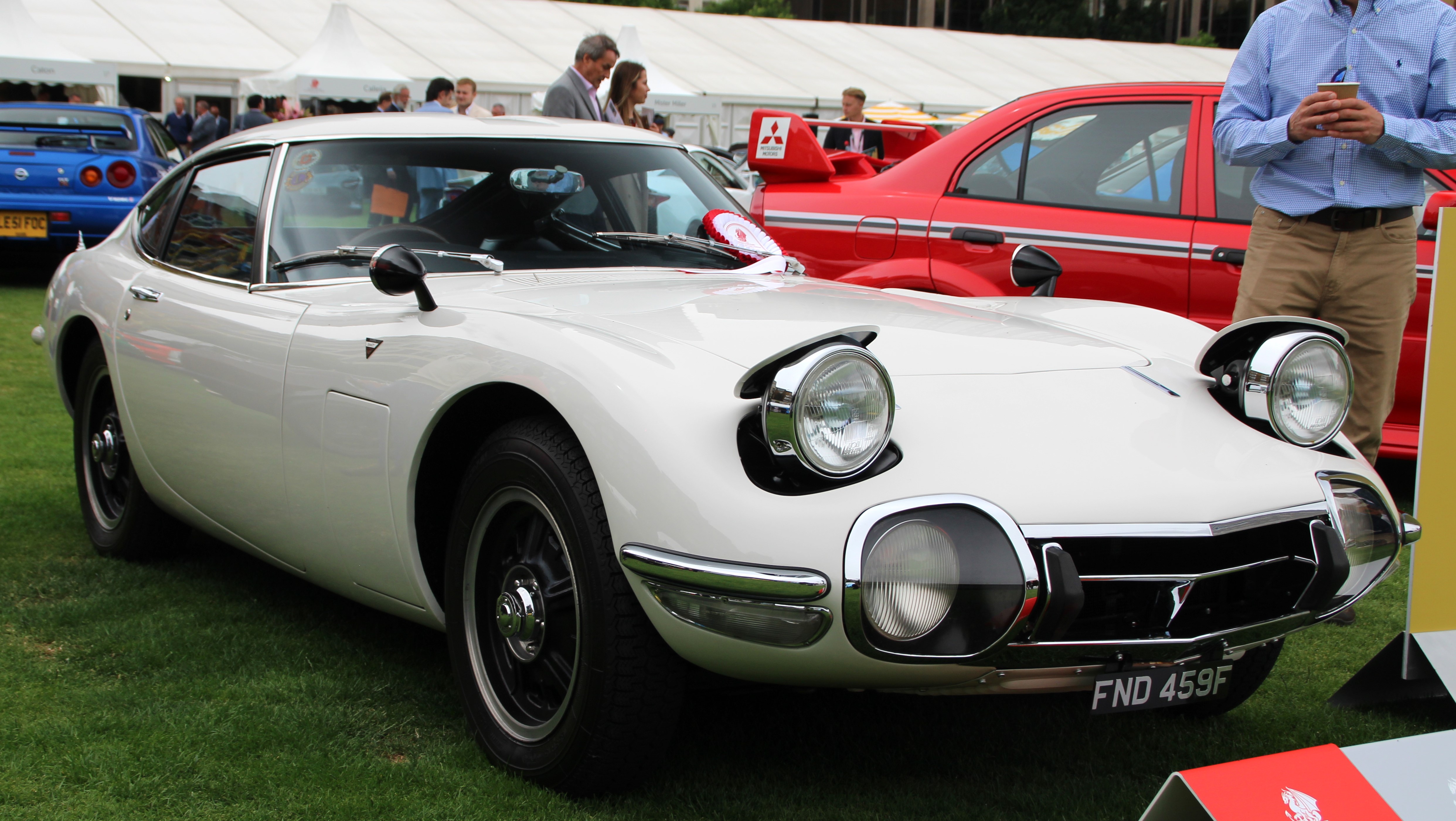
"And it goes all the way back, frankly, to the 2000 GT."
The Toyota 2000 GT is an old sports car from Toyota that is considered their first supercar because of its speed and style.
The Toyota 2000 GT is a classic sports car produced in the late 1960s, often regarded as Toyota's first supercar, known for its sleek design and performance.
"...It was called the Toyota seven. Then he went on to become our master driver."
The Toyota 7 is a race car that Toyota created for a specific racing series called Can-Am. It was important for Toyota's involvement in racing and showed off their engineering skills.
The Toyota 7 was a race car developed by Toyota for the Can-Am racing series. It showcased innovative engineering and design for its time, contributing to Toyota's reputation in motorsports.
"...you can see this, the Gazoo Racing, which was just a website that Accio was doing used cars with in Japan. But they started training together..."
Gazoo Racing is a part of Toyota that works on making faster and better cars, especially for racing. They help improve Toyota's sports cars and are involved in motorsports.
Gazoo Racing is Toyota's performance and motorsport division, focusing on developing high-performance vehicles and enhancing the driving experience. It plays a crucial role in Toyota's motorsport activities and the development of performance-oriented models.
"...that started this pathway of Accio wanting to develop performance cars that represented Toyota. And so that's where the LFA came out of, right?"
The Toyota LFA is a special sports car made by Toyota that has a powerful engine and is designed for high performance. It's known for being very fast and is quite rare.
The Toyota LFA is a limited-production supercar known for its high-revving V10 engine and advanced technology. It represents Toyota's commitment to performance and innovation in automotive engineering.
"while he was developing the LFA. So this next car is the next iteration."
The Lexus LFA is a fast sports car made by Lexus. It's famous for its powerful engine and unique sound, and only a few were made, which makes it special.
The Lexus LFA is a high-performance sports car known for its exceptional engineering and sound. It features a V10 engine and was produced in limited numbers, making it a highly sought-after model among enthusiasts.
"...we've had Toyota NHRA drivers on the program. I mean, you go from all ends of the spectrum..."
NHRA stands for National Hot Rod Association, which is a group that organizes drag racing events where cars race in a straight line to see who is fastest.
The NHRA, or National Hot Rod Association, is the largest motorsport sanctioning body in the world, focusing on drag racing. It organizes events where cars compete in straight-line races over a quarter-mile distance.
"...there's two young men that work in TRD, which is the company, our company that manages all that."
TRD is a part of Toyota that makes cars faster and better looking. They create special parts and upgrades for Toyota cars.
TRD stands for Toyota Racing Development, which is the performance division of Toyota that focuses on enhancing the performance and aesthetics of Toyota vehicles.
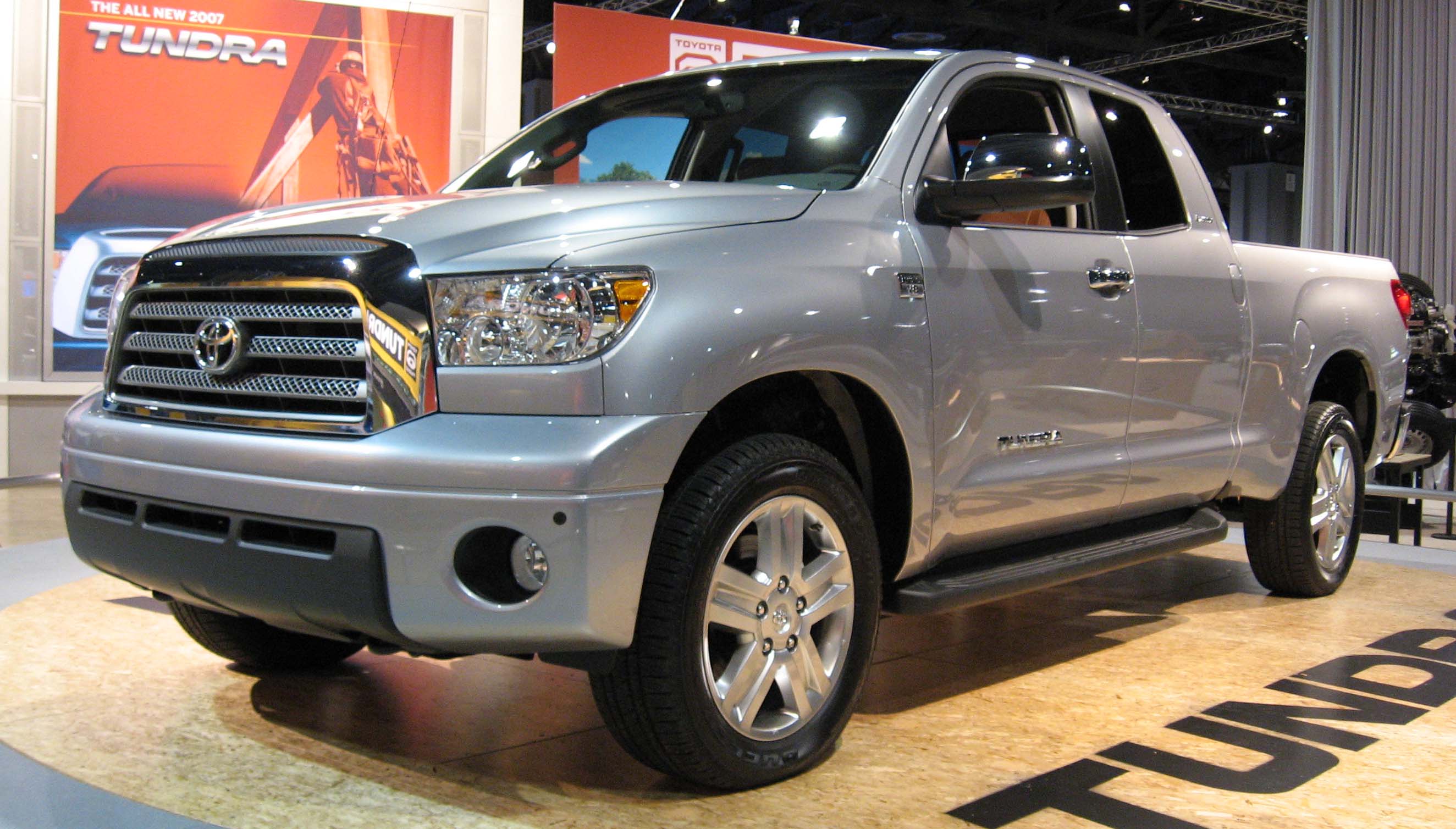
"...t they're the people that are buying Sequoias and Tundras and they're buying Lexus product."
The Toyota Tundra is a big truck that people use for work or to carry things around. It's known for being tough and lasting a long time, which is why many people like to buy it.
The Toyota Tundra is a full-size pickup truck known for its durability and reliability. It has gained popularity among consumers looking for a robust vehicle that can handle both work and leisure activities, making it a significant player in the truck market.
"...n't. And I think we learned to be a little bit of Mavericks without going too far off the deep end,"
The Ford Maverick is a smaller truck that’s easy to drive and park, making it great for city life. It’s designed to be affordable and gets good gas mileage, which is why it's attracting a lot of attention.
The Ford Maverick is a compact pickup truck that combines versatility with fuel efficiency, appealing to a new generation of truck buyers. Its introduction marks Ford's return to the compact truck segment, offering a more affordable and practical option for urban dwellers.
"Jim Farley's doing it, right? And the Mustang Challenge. I'm trying to get him and Akio togethe..."
The Ford Mustang is a classic sports car that many people love for its speed and cool looks. It’s been around for a long time and is often talked about because it represents a fun driving experience.
The Ford Mustang is an iconic American muscle car that has been in production since the 1960s. Known for its powerful performance and distinctive design, it represents freedom and the spirit of American automotive culture, making it a frequent topic of discussion among car enthusiasts.
Select text to request an explanation
The automobile is one of the most important inventions that revolutionize the modern world.
In America, the rich history of car culture runs deep, as technology continues to shape the future of the industry.
Jason Stein is here to share the stories of people passionate about cars, from industry leaders and innovators to car-obsessed celebrities.
Buckle up as Jason takes you inside the boardroom, onto the track, and around the bend, on Cars and Culture on SiriusXM Business Radio.
Welcome into episode 225 of Cars and Culture with Jason Stein here on SiriusXM, Business Channel 132.
Great to have you along for the ride again this week.
Few executives in the automotive industry embody loyalty, longevity, and leadership quite like today's guest.
Over three decades, with one of the world's most respected brands, Toyota, have taken Andrew Gilliland from field operations
to the senior leadership ranks of Toyota Motor North America, where he now serves as senior vice president of automotive operations.
It's a journey that started far from the corporate suite, in dealership lots, service bays, and small-town showrooms,
and has evolved into a career defined by a deep understanding of dealers, customers, and car culture.
Andrew's story is one of passion and persistence, from washing cars as a trainee in the early 1990s,
to now overseeing Toyota's North American sales operations, where he's also shaping strategy through historic industry shifts,
from electrification and affordability challenges, to global supply pressures.
But he's also a racer at heart, someone who still believes that understanding a car means feeling it on the track.
And under his watch, Toyota's Motorsports program, from NASCAR to Le Mans, have become not just showcases of performance,
but reflections of a company culture rooted in continuous improvement and authenticity.
Today, we'll talk about Toyota's unwavering long-term vision, the strength of its dealer network,
and what it means to lead through change, while staying true to the principles that built the world's largest automaker.
It's a conversation about leadership, legacy, and the future of mobility, with a man who still calls himself, at heart, a kid who loves cars.
Today, my conversation with Andrew Gillan, senior vice president of automotive operations at Toyota Motor North America.
Hi, my name is Andrew Gillan. I'm the senior vice president of automotive operations for Toyota North America.
And this is Cars and Culture with Jason Stein.
What a pleasure to be with my friend again, not often enough. And when we're together, it's not long enough that we're together.
But Andrew, first of all, welcome back from Japan, because I know you just returned. And welcome to the program.
Thank you. It's good to be with you.
Great to be with you. The state of the world is constantly in flux. The state of the automotive space is always changing.
You've spent more than three decades inside Toyota and Lexus for field operations, to national leadership.
What has kept you inspired through that journey and all of the chaos?
You know, I think, Jason, for me, it's just, I love what I do. I've loved it from the first day I started with the company.
And I get up every day and I'm happy to come to work. I'm energized.
And I think it's the dynamic nature of the industry that makes it fun.
You can have all the plans in the world and then you come into the office and, you know, you'll have five or six big issues that need to get addressed or things you need to do.
And so I think it's that diversity that happened all the way, you know, when I started as a field traveler, you're going out and seeing different dealers and you're in different markets.
So it's just been this lifelong kind of learning experience in the auto industry and, you know, frankly, I'm 56 years old and I still feel like a little kid getting to play with cars.
So I'm truly blessed. I'm one of those people that never thought I'd be in this job, quite frankly, and it's an honor every day.
What was it you were going to do if you weren't doing this?
That's an interesting story. So I have two degrees, one in marketing, one in economics.
I thought going into banking would be a great idea and found out pretty quickly like this is not a very good fit.
And so I skied competitively in college, not on a team, but just with a bunch of buddies and was skiing all the time I went to school in Western North Carolina.
And I decided I was just going to go out and teach skiing for a couple of seasons out in Colorado and actually met somebody that worked for Toyota at Copper Mountain and struck up a conversation with a guy.
But he was going up the lift and you were coming down the lift?
No, no, no. We had a marketing activation there and he was checking on it, which didn't realize at the time what that meant.
It means go there and go skiing for a couple of days.
But he asked what I was doing and I explained to him that it started to work in retail banking and it wasn't for me.
And I was just going to teach skiing for a couple of seasons and kind of figured out this was in 1992.
The market for jobs wasn't great. And he said, well, are you interested in the car business?
And I said, yeah, absolutely. I mean, I love cars. I grew up in North Carolina. I love racing.
He goes, well, I'll get you an interview. I'm not getting you a job. Just send me a cover letter.
So to his credit, he did do that and went through a bunch of interviews.
Actually, more interviews than most normal hires go through because I came through a sort of non-traditional path.
So, you know, basically every interview that I went through and there was probably eight or 10 of them, like every single time I told people,
like you're probably going to see better resumes, people with better pedigrees from an education standpoint,
but I will absolutely outwork everybody and I won't let you down or embarrass you.
Just give me an opportunity. That's all I've ever asked for.
And you know what he did and the rest has sort of been, you know,
the history of taking opportunities and working hard and somewhat feeling like I'm lucky to be here quite frankly.
And so I think that's also driven some of my being willing to take risks and chances
throughout my career and doing different things throughout my career.
That was field operations. Is that what that was?
Yeah, it was, well, it started out as, you know, we go out as trainees, right?
And I'm sitting around a building in California and I mean, there's people from Dartmouth and Michigan and Michigan State.
And I'm like, hey, my name's Andrew Gillin.
I'm from Appalachian State and the needle just went off the record.
Everybody turns around and that was my first imposter syndrome moment.
And within the county, I'm like, uh-oh, I'm going to have to probably work twice as hard to keep up with these folks.
And, you know, I always had a strong work ethic from my dad.
You know, he was pretty hard on me as a youngster.
So, you know, it was already built for that and built to take chances and risks and push.
You know, I didn't grow up, you know, without, but I didn't grow up with money.
And so, you know, I wanted to make sure I could take care of my family.
Those were my two main goals, right?
Do something I love and take care of my family.
If I could do that, I'd be really happy.
Where did you think that you, how far did you think you could go?
Where could you end up with?
To be honest, it's funny you mentioned this.
I was just talking to a young person the other day that it was a newly hired trainee.
And I told them, I said, you know, when I first got to the regional offices, you know, this was back in the day like the general manager like, hey, go get my car washed.
I'm like, not a problem.
And I remember calling my dad and saying, hey, I think I might be the highest paid car washing guy in the United States.
But I was happy to do that, right?
I mean, it was that or do spreadsheets.
I'm more than happy to go get your car washed.
But it never bothered me.
None of that stuff ever bothered me.
I was like, hey, if that's what you want me to do, great.
So I didn't, I tell people a lot like you need to have goals, but you got to be careful.
I think being great every day is way more important than having these lofty goals because many of those things are out of control, your control.
The only thing you can control is your effort and your attitude.
And, you know, I know that's something that people say a lot, but it's true.
So I tried to keep my expectations, frankly, pretty low because I just couldn't believe I was working for this great company.
Yeah. Yeah. Amazing.
You've seen so much transformation within the company and the pendulum has swung.
You know, we've talked about it on this program many times.
Everybody was all in on electrification and now, you know, and then the rules change.
And all Toyota does is just stay the course.
And I'll never forget when Bob Carter, obviously former head of Toyota sales in the U.S. and head of North America for a while.
When Bob talked about the move from California to Texas, it was outlined with this 50, 100 year vision.
Very few companies in the automotive space talk about visions that go out decades.
You mentioned setting goals.
What's that been like to be within a company that despite all of the many things that change around you, it stays just on the course and steady.
Yeah. I mean, I think to the outsiders, it looks on the course and steady. It takes a lot of work.
I think one of the things, you know, the Toyota family years ago sort of made a transition from making looms to cars.
So we're used to doing things that are really uncomfortable.
I'm quite sure when Kichiro and Sakichi Toyota were talking, he was like, you want to do what? You want to build cars?
Right.
Because the family was really successful in the loom business.
So I think we have that in our DNA that, you know, we're willing to take measured risks, but we also have long term views.
And that's one of the things I love about this company. You know, we don't get paid on quarterly results.
We get paid on the long term growth of the company.
And I think that's a very different culture and different mindset from other car companies.
And luckily we've been successful enough where we can diversify risk, you know, through powertrains.
Like, you know, we built the Prius, right?
And I can remember, you know, getting in one of those things and, you know, whatever it was early 90s and driving it home.
I was working in Chicago and I'm like, this is going to be a big problem.
Like I'm having trouble selling Previus and Supras in the winter.
This thing is going to be something different.
And to see the evolution of that car and where it's at today, it's just amazing, right?
When you really look at it. And we did that because we cared about the environment.
And I don't think that any senior executive in the car industry, hopefully, they don't think that, you know, it isn't important to take care of the environment.
I believe that all of us are trying to work together to make an impact in a positive way.
And that's certainly what started us on the pathway of hybrid.
And now we've moved into EVs and we still have very efficient internal combustion engines.
So we've been blessed as a company to kind of diversify the risks that have been in the market.
Your dealer network, your dealer sentiment, everything that we talk about on a regular basis is always so sky high.
Everybody wants to be a Toyota or a Lexus dealer.
Yeah.
That's got to be something that resonates through the entire company.
I mean, that's got to be a bit of a mission statement for you as well.
Let's keep what we have there.
Yeah.
Yeah.
We just finished the NADA survey, right? And Lexus and Toyota were one and two.
That's right.
And it's just cultural.
Like from the day you start in this company, particularly in the operation side of the business,
the dealer is the customer and you need to be focused on taking care of the dealers.
And it's interesting because when I first went out, Steve McDaniels, who's a large dealer up in Minnesota,
my first assignment was up in Minneapolis.
From North Carolina, it's like negative 30.
Like this is not comfortable.
I don't know these guys.
And I was putting in a parts EPC, electronic parts catalogs.
Like I was up in the rafters running wires trying to get this thing to work.
And Steve Watney is, what are you doing?
I said, I'm trying to get this thing to work. Who are you?
I said, I'm your parts wrap.
He started kind of giving because as soon as you get done, I want to talk to you.
So I walked in his office and he said, hey, I appreciate you and your effort and your work.
Not many people would do that.
Let me help you learn the job.
Because I had told him like, I have no idea what I'm doing.
Like they hand you a planner.
And at this point, it was an atlas.
And here's your dealers and get after it.
Oh, yeah, like the old, I mean, you ride down the road trying to figure out where you're going.
But what I learned very early in my career was the dealers can teach you.
And I was smart enough to figure out and we all have, we have good dealers.
And then we have great dealers and I could see the difference.
And so I would spend time with them and I was honest with them.
I think that also helped like, hey, I don't understand this, explain this to me.
And it helped me throughout my career and even today.
Like I still call, there's 40 or 50 guys that I'll call and like, hey, this is what we're thinking.
How does this sound? Does this make sense?
So that relationship that the dealers have with us and we have with them.
I think is at the core of, you know, why we've been successful in many ways because it's family,
because we care about each other in ways that I don't know that other brands have that same relationship.
I've been exposed and around to different dealers and different manufacturers and the nexus between those two groups.
And I have never seen what I have witnessed inside a room when Toyota leadership talks to their dealers.
It is a different language, Andrew.
Yeah. I think Harvard Jason is authenticity.
Yeah.
Like you cannot get up there and here's your belief, bullshit dealers.
They'll see right through it.
If you're not authentic with them and you're honest with them and you lose that trust.
That's when all the problems in my mind really begin.
And so we've always been straight with our dealers even in difficult times.
We've over communicated, you know, we've had a lot of challenges over my career.
But the one thing that remained constant was over communication and making sure everybody understood what we're doing in the direction we're going
and making sure that we were getting feedback from them that what we were doing is the right thing.
I mean, we have, you know, Kaizen, right?
It's a real thing, right?
It's constantly improving.
So you've got to be open to that.
And look, we all have egos and insecurities and it's just not, it's just different here, right?
Like we are a team.
We're trying to support one another.
It's not perfect.
You know, I'm not trying to make us out to be a perfect organization, but it's different.
I mean, you know, when I say I love who I work with, I mean that and I love the dealers.
And again, I'm very blessed to be able to do what I do.
Well, former Ford CEO, Alan Mulally, had to get up and express that to Ford once when he first joined.
That's not anything that needs to be communicated from Toyota to its dealers because they know.
Yes.
Right.
Everything you do.
I tell people all the time, like, listen, your actions mean way more than your words.
Don't judge me by what I say.
Judge me by what I do.
And I mean that.
And I think that that is really important every day is showing up and being on thing.
And I'm far from perfect.
I make mistakes and, you know, I tell people quite a bit, you know, I learned more about myself and what I want to be and who I want to be by losing.
You don't learn anything from winning.
What do you learn?
I want, right?
And when you, when you don't do something successfully or you fail at something, which you try to avoid no question.
When you really sit down and like, hey, what could I done differently?
How could we have handled this differently?
And then taking personal accountability.
I think that's really important no matter where you're at in an organization is you got to own it.
And so, again, that creates this, this culture of accountability in our side of the business.
And it's special for sure.
Those were the dealer last week who talked about trying to buy Toyota stores and that the, they were looking at multiples that were, you know, eight, nine, 10 X, you know, there've been record numbers that have been talked about in various places.
Maybe more to come.
What do you make of all that is that I mean there's there's an opportunity.
You know, for some real generational wealth here, if you're, if you're one of the folks who, who got in early and who may want to make some different decisions.
What a testament to the brand.
Yeah, you know, it's funny because I, you know, I was lucky again, you know, early in my career being in the Midwest.
I mean, we had like 345% market share at Detroit at 2% market share Michigan.
And so I, I watched the franchise grow.
I used to pull up to places Jason and like the lights wouldn't be on at our store.
This is like down Southern Illinois and Indiana.
They were big Chevy and Ford dealers and they probably bought the Toyota franchise so the guy down the street couldn't buy it.
But I, I learned early on in my career, like, don't tell people you're coming and I'd show up and there'd be people scrambling out of the Chevy store to come over.
And I fast forward to the day and, you know, now in many cases, the Toyota franchise is the anchor of that platform for those because some of those guys are still around.
Sort of joke with them like, you know, I pulled up to your store and all your people are running out.
So, you know, it's interesting to see the value of the stores grow the way that it has.
I think it's reflective of people's view of the brand, right?
And will the franchise value increase, which is one of the NADA scores that we look at.
And the answer is, you know, we're above all the other brands.
I think that's because we're making good decisions.
I think it's because we have a clear strategy and I think we have the financial wherewithal to deal with all the chaos that's going on in the marketplace today.
All right, chaos in the marketplace.
What's at the top of your list?
I mean, we could talk about a lot of things.
I mean, you name it.
Which one do you want to talk?
Government regulation or tariffs or customer taste?
We can't go a day without talking tariffs, Andrew.
Yeah, tariffs are obviously a bit problematic.
Really, they end up being a tax on consumers.
We're very thankful that we've got some clarity from 27 and a half down to 15.
We can manage our business on that.
I think the next big shoe to drop, frankly, is the USMCA, which I feel confident we'll get taken care of.
I mean, it was something that came out of the Trump administration and in his first administration.
So that's the next big one.
And I don't think it's just Toyota.
Obviously, you know, some of our competitors have pretty big footprints in Mexico and Canada as well.
So that's the next one.
We need some clarity on Jay so we can manage our business.
We're trying to move with the market from a pricing standpoint.
So our prices have gone up, but clearly not 15%.
And I'm hopeful that, you know, we'll be able to manage the supply chain and our actual production
and try to minimize pushing that price down to the customers.
I mean, you know, we're at $50,000 or $49,000 transaction.
A third of customers today can afford to buy a new car.
And I think that's a big challenge.
Luckily with Toyota, we stayed in the sedan business.
So things like Corolla allow a price point.
And we have some other things that we're thinking about that have been in the media that are, you know, sub $30,000.
I think that's really important.
When you look at the numbers, when somebody buys a Corolla,
58 to 60% of the time they come back and buy another Toyota.
And it's, you know, a Camry or a Forerunner or a RAV.
So I think the other big thing that we're really trying to analyze is value chain, right?
People talk about it a lot, but what it means to us is, you know,
hey, we may not necessarily make a lot of money on a Corolla,
but if you look at the value chain associated with across the lifetime of purchasing,
which is four or five times for normal consumers, you know,
we can have a pretty good business based on that.
So, you know, I'm constantly pushing as the sales guy, like we need a price point.
We need a price point to keep those people in and TCUV,
our certified use program plays a part in that.
But you got to get people into the brand and then the dealers who are great engage the customer
and take great care of them in that sort of all works together to keep people in the family.
Yeah. And affordability. You just, you hit on an important topic that comes up a ton on this program.
It's been a concern for a number of years now.
It continues to be a larger concern.
And as you mentioned, you stuck with a segment that many had abandoned.
Once again, long-term planning, long-term thinking, options.
And whether it's a propulsion system or whether it's the type of vehicle that you drive,
you've got, and you like to say and you, okay, and actions, not words,
you've got something for everybody in a number of ways, right?
Yep. Yeah. I mean, I'm really proud of the company.
You know, Cooper Erickson, who's our senior vice president of product planning.
You know, he's quite the car guy.
And, you know, him and I spend a lot of time bouncing ideas off each other
and looking at our global portfolio.
Some cars just, you can't, you can't get into the U.S. because of safety or regulatory or emissions.
But we have a big portfolio globally.
And, you know, it gives us good ideas like, oh, this is interesting.
Maybe this is something we could bring into the U.S. market.
So we're always looking at that.
But, you know, right now to your point, you know, affordability is something that is on all of our minds,
along with the regulatory environment.
And how do we participate in that in a constructive way?
It's difficult, as you know.
And other brands are struggling and we are too to figure out what does regulation look like,
you know, administration, administration, you know, we're on a, we decide today
we're going to build a car.
It's five years, four to five years.
So it makes it very difficult, you know, when these regulations change and things,
and I can't control that.
So you're having to make some bets.
And luckily, I think over time we've made educated bets that have paid off very well for us.
Well, you've placed your chips in a number of different areas on the board.
Right.
That's the answer.
You haven't pushed all in in one place, as some have.
And you haven't pushed and you haven't pulled all out.
Yeah.
Yeah.
After the break, I'll continue my conversation with Toyota executive Andrew Gilliland.
To see the interview with Andrew, visit the Cars and Culture YouTube channel.
Subscribe, comment and check out hundreds of conversations with the creators, collectors
and culture makers who are driving the industry forward.
Welcome back to Cars and Culture here on SiriusXM.
I'm your host, Jason Stein.
Now the continuation of my interview with Toyota executive Andrew Gilliland.
To see the full interview with Andrew, visit the Cars and Culture YouTube channel.
Subscribe, comment and check out hundreds of conversations with the creators, collectors
and culture makers who are driving the industry forward.
The Chinese, you know, decades and decades ago, a small brand from Japan came into the
American market and because there was an opportunity in the 1970s with, you know,
petroleum crisis and affordability issues, Toyota did well.
Decades later, a couple of brands from Korea did well.
Do the Chinese have an opportunity if things swing in their favor from an entry standpoint
to fill that gap as well in a very similar way?
I think the short answer is yes.
You know, I have Mexico as part of my responsibility.
So if you get out of Mexico today, you'll see the influence of the Chinese brands.
The thing that I get a bit concerned about is I'm not sure that I'm competing against a company.
I feel like I'm competing against a government and that is, that's a different thing altogether.
And I think that's what some of the concerns that frankly our government has had around allowing
access for the Chinese.
So I want to be careful because I don't need to start an international kerfuffle,
but I think we have to be clear about who we're competing with, right?
And I think we're willing to compete on a fair and level playing field.
And I think every brand in the globe would do the same, but it's going to be a big challenge.
I mean, you're dealing with some different dynamics when you deal with Chinese brands
that you're not dealing with with some of the more traditional car brands.
Yeah, yeah.
Let's switch gears, go into racing.
Yeah.
You have been an, your name is everywhere.
I don't know if you know this or not in various racing forums.
I mean, you're a racer, excuse me, a racer at heart.
You want to spend as much time as possible on the track.
Has that always been the case?
Yeah, I mean.
Where did you pick it up?
I mean, it started with my dad.
You know, to Wake County Speedway and Raleigh, you know, and watch dirt cars.
So it's always been a part of my life.
My dad was a huge fan of the Indy 500.
He started going in the fifties, finally took me when I graduated from school.
Couldn't understand why he'd never take me.
And then I went and I'm like, oh, okay, I can see why I wasn't coming.
For any of those who've been to the Indy 500 and know what snake pit is.
I think my dad was in the middle of that.
He'd been to Watkins Glen for the F1 race, been in the middle of that.
You know, unfortunately my dad was one of those kind of old school guys that
didn't really talk to me a lot, but I think he had some stories that he
I wish he would have shared with me, but that started it.
And it just always been a fan of racing, to be honest.
I just, I love the competitiveness of it.
I love the team aspect of it.
I love the engineering that goes into it.
But I like the emotion of it, right?
The noise and the sound and you had a chance to go Le Mans this year for the first time.
And it's emotional for me.
I grew up as a kid watching this stuff and I'm like standing there on the grid.
It's hard for me to believe.
And so it's just been a part of my life.
The racing aspect itself, I had never really done.
Like I'd gone to skip, like all of us.
I've been to 50 skip barber classes, you know, Bondurant.
Like I've been through a bunch of performance driving schools and even our company
makes us get a performance driving license so that we can drive prototypes.
So that class was the first time I was in a semi-prepared race car.
They're using old Scion FRS as a matter of fact, which is today's 86.
And I'm like, this is kind of cool, right?
And, you know, when you're working as much as I do, it's hard to like justify like,
oh, let me go buy, you know, a Miata or something and put it on the track.
So we got into GR Cup, right?
So GR Cup is sort of our beginning of our ladder and our motorsports program.
And motorsports is under me.
And I was like, well, if I'm sort of paying for it, which isn't me.
It's Toyota like, I should do this.
How hard can it be?
So I went down to Skip Bar where got my license in Austin and honestly,
I had no idea what I was getting into.
Like you just, people think they can be race car drivers.
And let me tell you, they can't.
It's something different.
It's so hard.
It is unbelievably hard.
Mentally.
Mentally hard.
Yeah, I showed up to start doing my training for this and like all the guys,
the professional coaches and they're like, too, we're so proud of you.
Like this is all I'm like, what are these?
Why are they saying this stuff?
Well, now I understand.
Like they knew what I didn't know, which was you are crazy to be doing this
at 56 years old with a zero experience.
You're going to have a problem and you're either going to get hurt or damage a car.
So I think they were amazed that like I could go out and not wreck the car,
actually finish races.
And it's just been this building.
And what what's really been good for me is now understanding car dynamics
at a different level.
So that, you know, when I'm talking to chief engineers about some of the
great new GR products, for instance, that we're bringing to market,
I can give them like candid feedback as a driver that I don't think
I would have been able to do before.
So I don't know how long I'll do it.
You know, I'm very blessed that the company allows me to do it.
But I, but I love it.
It's funny because Aki always says like you shouldn't be a car executive.
You don't know how to race a car.
So I mean, that was sort of my excuse.
I'm like, well, Akio thinks you're in the right company because between,
you know, Akio's efforts on the track and some others who have been in
and around leadership.
Sato son also enjoys racing too, doesn't he?
I mean, there's a there is a pedigree.
And and a bright red line that runs through Toyota, which a lot of people
might not know, especially if they think about a Corolla, for example,
that is like serious racing.
I mean, you're right.
And you mentioned Le Mans and the rapid level of success that has
occurred there within the company is also remarkable.
I mean, you're wearing the T-shirt right now.
Yeah.
Yeah.
It's interesting the GR brand, which has this great history.
You know, we're bringing some new products to market, including a very
special car here that we'll announce later this year.
But the GR brand itself, the history behind it.
And once you understand it creates a really authentic story around performance.
Like these aren't badge cars.
These are performance designed, engineered, track tested, race tested.
And it goes all the way back, frankly, to the 2000 GT.
So you as you know, and some of your listeners may know, the 2000 GT was
really Toyota's first super car, quote unquote.
That car was developed by a man named Naruse.
Mr. Naruse started out as kind of an accountant in the company.
Somehow ended up in the engineering section.
He went on to go into a department called engineering department seven,
which was the people that developed our first can am car.
It was called the Toyota seven.
Then he went on to become our master driver.
Now, this is where all this stuff connects, right?
Accio was sort of a mid-level employee working through the company.
And, you know, somehow met Mr. Naruse and Mr. Naruse told him like,
you have zero, zero ability to tell me how a car should be without
being a performance driver.
And then started this relationship with him where he developed Accio
as a driver.
So that's where you can pick up and you can see this, the Gazoo Racing,
which was just a website that Accio was doing used cars with in Japan.
But they started training together and that started this pathway of Accio
wanting to develop performance cars that represented Toyota.
And so that's where the LFA came out of, right?
And so you may know Mr. Naruse passed away actually at Nürburgring
while he was developing the LFA.
So this next car is the next iteration.
So every 20 years we come up with a car.
The car I was describing to bring to market is that the next logical,
it's not an LFA replacement, but it's a proper sports car
that I'm excited to talk to you and others about later this year.
So it's in our DNA in an authentic way is my point.
We're not just badging cars and calling them performance.
We are putting them on the track.
We're racing them.
We're breaking them.
We're fixing them.
And that's going into the road, going cars.
And so when you buy an 86, which I would tell you,
I think is the finest sports car in the market for the price point.
You're getting all that engineering that we've developed through racing.
And so it goes on through the lineup with the Corolla and the Super, et cetera.
Well, and there's so much success to talk about on the racing side.
And we were fortunate enough, probably three,
three and a half years ago to have Joe Gibbs on this program.
Yeah.
And when you look at now where you are, even just sitting here today,
the NASCAR Cup Series playoffs, the round of eight, I don't have to tell you.
Hey, I mean, Denny Hamlin in there, you got Christopher Bell,
you've got Chase Briscoe.
I mean, Toyota and Joe Gibbs are all over that, that final round.
It's kind of everywhere.
You look around and we've had Toyota NHRA drivers on the program.
I mean, you go from all ends of the spectrum and there's a Toyota logo somewhere.
Yeah.
Yeah.
I mean, it allows us, again, we don't just do it to put our logo on a car.
We're doing it because we're learning about cars.
And that learning comes back and is put into the road going cars that customers can buy, right?
And that technology that we learn.
So, you know, there's a reason we do it.
NASCAR is a great tool for us, not only from what we are as a brand in the United States,
but also like, again, the technology.
I think people look at NASCAR that aren't really familiar.
They're like, oh, they all look the same.
Let me tell you something.
The engineering that goes into those things is amazing,
whether that's suspension, engine, arrow.
And we learn stuff and that stuff is then passed along.
We've got, finally, I was just in Japan, like you said last week,
and there's two young men that work in TRD, which is the company,
our company that manages all that.
We put two young men over there.
They're on international assignments and they're embedded with GR company
so we can create better communication back to TMC.
And that information is technical in nature.
It's designed in nature, but now we have people embedded
so we can improve the communication around it.
Yeah, it is in the DNA, as we've said, and pretty remarkable.
You know, go back to early days again, if we could.
A lot of people, some people may, may not remember Scion
and you're sitting in your office with a Scion sign behind you.
Just to remember where it all began.
And that was an interesting experiment, wasn't it Andrew?
I mean, it was going to be a car that was going to appeal to young folks
and I was there for the launch of it and Jim Farley,
who now leads forward, was running that inside the company.
What did you learn from Scion that could be applied elsewhere?
Yeah, I think we learned a lot.
It's interesting because you mentioned Jim,
like Mark Templin, who's our COO, worked there.
Jack, who retired recently, worked there.
I worked there.
David Christ, who runs the Toyota division, worked there.
So it's funny because most of our senior leadership team
actually, and Scion lived for what, five, seven years,
whatever it was, went through that channel.
And I think what we all learned, first of all,
we were able to now focus on young customers, right?
The baby boomers got us to where we were at.
And we knew that that wasn't going to be what kept us going.
So we had to appeal to younger consumers.
And so what we learned through all that is like,
okay, they're not that different from their parents,
which we were scared to death, like not your father's Oldsmobile.
So they still value the QDR, you know,
the quality, dependability, reliability of Toyota,
but it just wasn't cool enough.
And so we learned about customization.
We learned about accessorization.
We learned about personalization.
And I remind people, don't forget,
these people are now in their 40s, right?
It's gone by like that.
But they're the people that are buying Sequoias and Tundras
and they're buying Lexus product.
And what we learned is, you know,
our brand was really, really strong
and we need to lean into that reputation.
But we need to be more,
no more boring cars as Accio would say.
I think we learned that through there.
And we learned about customization
and we learned about how to market differently, right?
Today, as you know, and the media landscape
for automotive marketing is completely different
than it was 15 years ago, right?
The traditional linear is still important,
but now you're into digital and social
and influencing different groups.
And I think we learned all that.
But the one thing we learned is to be a little irreverent.
Like we were sort of over there away from everybody
and we were able to do things
that larger Toyota couldn't or wouldn't.
And I think we learned to be a little bit of Mavericks
without going too far off the deep end,
which, you know, typically that was me and Jim.
I was in Jim's office like, what are you doing?
But we pushed boundaries together
and, you know, it was interesting working with Jim
and I'm very, very happy for him
and the success that he's had.
He pushed a lot in a good way.
And so it was a great experience, I think,
for all of us about, you know,
sort of don't always do things the way that we've done them
because if you do, you're going to have a problem later on.
Well, and now maybe you're borrowing
a little bit from that playbook
when you update a brand like the Corolla Cross, right?
Yeah.
Where you're trying to get some young buyers in
and like you said, you know,
things, areas that are more affordable,
I guess you would say.
Yeah.
Lexus, you know, you say Lexus
and it almost has its own meaning.
You know, something is the Lexus of something else
and people know what that means.
How do you keep refreshing Lexus?
What's your mission on Lexus?
What do you, what does Lexus need to do?
Well, fortunately, unfortunately,
I was running Lexus Division
when we had a bit of a product drought.
So I don't think that, you know, again,
I wish I could say I was Henry Ford.
I'm not.
Guess what?
Product matters.
If you don't have great product,
no amount of marketing or telling people
it's something that it isn't is going to work.
So, you know, I think the thing that has set Lexus
apart in the luxury channel from 1989
until today is product.
The engineering that goes into it,
the design that goes into it,
being relentlessly focused on that
has been really important.
And, you know, things like TX,
you know, we only build TX here in the U.S., right?
And that's a challenge, right?
When you're dealing with global TMC,
they don't like having single plants.
One of the great things about our company
is our manufacturing flexibility, right?
We can change lines.
We can run different cars down lines.
Well, the TX is so big,
the only place you can build it is Indiana.
Right.
And to convince TMC that, like,
hey, we can make this business model work
on a car that you're only going to sell
in the U.S. was a big challenge,
but it's been a huge hit.
So, I think it's relentless focus on product
and the customer, and then the experience
that dealers give to Lexus customers
is amazing.
Yeah.
And I think that also matters to luxury buyers.
They, you know, they're discerning
and they want to be treated a certain way.
And a certain way doesn't mean the same.
It's that personal relationship, Jason,
like understanding you
and how you want to be dealt with
and how I want to be dealt with.
Our dealers just do a great job with that.
So, I think that, you know, you add product
and you add dealers that are, I think,
the best dealers in the luxury space.
And, man, that's a winning combination all day long.
You know, I saw that sportscoupe concept
that was in Pebble Beach.
I mean, just incredible speaking of product,
you know, the good stuff coming
in concept form.
Yes.
Some of that stuff is going to come to fruition.
So, can't tell you which ones.
Sure.
But we're constantly looking at that
and there's some other cool stuff
that I'm really excited about we're working on
that are going to be some amazing products
that I think are going to
really have huge customer acceptance.
So, I'm excited about the future of Lexus.
It's very, very good.
A couple more things, Andrew.
Akio Toyota.
Give us a window for our listeners
who may not have had much exposure to Akio,
but they've heard of him.
They have a concept.
We mentioned the racing earlier.
What's your, and you just returned from Japan.
I'm sure you probably bumped into him in the lunchroom.
What is life like under Akio Toyota?
It's good.
I don't think anybody can argue that the company
is better off today
than it was 20 years ago when he started.
Like, there is no doubt about it.
Like, we are in a much better place
with his leadership.
Frankly, his leadership started off
pretty bumpy, right?
We're in the middle of the recall crisis
and, you know, coming to Washington, D.C.
I'm sure wasn't fun for him,
but I think it caused him to stay focused
and it caused him to really want to succeed
him personally because, you know,
his name is on the building.
So I think that's the first thing is
he's a great car guy
and he's provided great leadership
for the company over the last 20 years
or however long he's been there.
It's interesting because you have
Akio the chairman
and then usually when I see him
it's in a track.
So he runs in a series called Super Taiku,
which is like an endurance,
like Emsa, but a little bit lower.
So he and his son both run there.
They typically run prototypes
where we're developing the cars
and they're helping us develop it.
My interaction with him is mostly at the track.
So I was at the Super Taiku race
down in a place called
Autopolis in southern Japan in July.
And, like, you wouldn't know your...
I mean, you know you're talking
to the chairman of Twitter,
such a normal, kind of approachable guy
at the track,
and I saw him with fans
and, you know, taking pictures with kids
and it just...
it was good to see because, man,
that guy's under a lot of pressure.
Like, I'm not sure I want that job.
That is a lot, right?
And so, you know,
what we try to do here in the U.S.
is make his life easier, right?
So make sure that we are focused
on taking care of customers
because that's the most important thing.
Making sure that we hit our targets.
That's the second most important thing
in generating revenue
to, you know, support the future of the company.
So he's an interesting guy, for sure.
And, you know, he's, I think, 70.
And he's out running around racing.
And I dig it.
I think that's totally cool.
And I think, you know,
it's one of the things...
Jim Farley's doing it, right?
And the Mustang Challenge.
I'm trying to get him and Akio together
and do a race together.
Like, bring the Mustang Challenge.
We'll bring one of our cars
and maybe do it in Australia or the U.S.
And so, I hope there's a time
where those guys can get together
because I just think it's cool
that we have people in the industry
that are authentically car people.
And that's really cool.
Even Alan Mulally, like, right, you know,
I think one of the first things he taught
to some of the foreign employees
is about Lexus, right?
Because he was driving an LS at the time.
He was an authentic car.
I love these guys that are authentically car guys
that are still passionate about cars.
And don't just see him as, hey, point A to B.
Right, right.
That's pretty cool.
Yeah.
AI, how's that changing your world, Andrew?
I mean, I think we're all Jason dealing with,
like, what does that really mean?
So, it's, you know, it's like everything else.
So, it's a buzzword.
What does it really mean?
I think AI for us on the operations side
is efficiency and better understanding
of the business model that drives revenue
and profitability.
So, you know, we can be much smarter
about what are we building
and we can use AI to sort of sense
what's going on in the market.
I mean, we were always sort of using
trailing and lagging indicators.
Today, you can use AI, like for your website,
for instance, you go on our website
and you start configuring cars.
Well, we can aggregate that
and start to understand, okay,
this is what customers have been,
this is what they're building
is our manufacturing and build
for the next three months.
Is that measured up?
That's one example
where we can just be more efficient.
You may know this, like,
we build one type of car
and we've got to put parts in a warehouse
somewhere for 10 years, right?
By law.
Yep.
So, the other thing I think it helps you do
is be more efficient on supply chain,
which is hugely challenging,
which we all found out with tariffs.
So, anything you can do to create stability
further down the supply chain
where the suppliers can see
what they need to do
and they can make appropriate investments
and tweak their production
creates more efficiency
and through that efficiency
we can control pricing,
which is what we talked about earlier,
how do we keep cars affordable?
Well, if we're a little more efficient
and a little more effective
in building,
we can hold the line on costs.
Mm-hmm.
You look out...
Go ahead.
No, go ahead.
When you look out and consider
your career
and go back to,
well, where it all started,
what's the evolution?
Where does it go
before you decide that you want to race
just full time all the time
and maybe not sit behind a desk
and play now?
Where does the industry
evolve?
How does it evolve?
Because there's so much talk
for so long, Andrew,
about fuel cells
and at one point
there was going to be a radical
uberization of the world
and then it was going to be,
well, we're just going to swap cars
and car sharing to some extent.
Some of those things,
most of those things
actually haven't really panned out.
No.
Have they?
Things have just kind of stayed the same.
The internet's going to ruin
the dealer retail channel.
I mean, all that stuff.
Right.
I think
for students of the industry
like you and I,
you need to take those as an input,
as one input.
Yeah.
And then you got to,
I think you got to really think
critically about the scale.
Like you have to remember,
like this business is
at peak maturity,
at peak scale.
So changes are not just,
you can't just change things
in six months.
You know, there's an infrastructure
that's created around the
entire auto industry,
suppliers and all these people
that are employed.
So I think we're not just going to
wake up one day
and everything's going to change.
Right.
I think EV's been the greatest example
of that.
We know it's important.
We know that it's a future,
but is it the future?
And I would submit to you.
I'm not sure.
Right.
We're still not sure about that.
So I think you have to look
at everything with a critical eye
and really use all the knowledge
that you have,
not get caught up in all that
knowledge,
because if you just live in the past,
you're going to have a problem in the future,
but you have to take into account
the massive macroeconomics
of the auto industry.
I think the EU is getting ready
to find this out.
They've passed some regulations that
I think when the,
you know, some of the labor unions
over there, which are very different
than the UAW here,
when they start losing jobs,
that's going to be a bit of a problem
in the auto industry
is a big part of the economy
in Europe.
It's a national crisis then, yeah.
So I think, you know,
we're sort of out in front of that,
you know, with some of the regulatory easing,
and I don't want to get into a
political discussion clearly,
but I think you got to be reasonable
about what are the goals.
Like I said earlier in the conversation,
I think we all care about the environment.
I got a 10-year-old kid.
I care.
So, you know,
when I have these conversations
with some of my friends,
I'm like, you can't tell me I don't care.
I mean, I care about Victoria
and she's going to inherit.
So we need to work on that.
But mobility creates opportunity.
It creates economic efficiency.
It creates a higher standard of living.
You can't argue that.
And so mobility,
whatever form that may take,
is going to continue to be
part of who we are as human beings
and what drives economic success.
And I'm just happy to be a part of it.
Like, figuring it out is the big piece.
Like, if I had that,
then I probably wouldn't be sitting here to your point.
I'd be doing something else.
But I love the challenge of it
and I love seeing what we're going to do in the future.
And I think, like you said,
we've got a lot of chips on the table.
So it'll be interesting to see how it plays out.
Andrew, thank you so much for being on the program.
I really appreciate your context
and a walk through a little bit of your history
and maybe where we're going.
Thank you again.
Yep, appreciate it.
Yep.
That's today Toyota Executive Andrew Gilliland.
To see the full interview with Andrew,
visit the Cars and Culture YouTube channel.
Subscribe, comment,
check out hundreds of conversations
with the creators, collectors, and culture makers
who are driving the industry forward.
Like, subscribe,
and dive into a growing library of more than 200 episodes
where the road always leads to the people
who shape the ride.
This is Episode 225,
and I'm your host, Jason Stein.
We'll see you down the road.
All the things you can do with money,
you can give it,
you can invest it,
and you can spend it.
Call 888-825-5225
and get no nonsense practical advice
from America's trusted voice
on money and business.
If you just keep spending everything,
you're going to retire broke,
and you're never going to give.
So you're going to retire broke and bitter,
because people who don't give end up bitter.
The Ramsey Show,
live weekdays 2 p.m. east on Business Radio,
and anytime on the SiriusXMF.
Thank you for watching this video.
Request an explanation for:
13 cars
Scroll for more
13 cars featured
Request an Explanation
Heard something you'd like explained? We'll add it to this episode.
Sign in to request explanations for terms you heard.
Want to learn more?
Browse our glossary for plain-English explanations of automotive terms, jargon, and concepts.
See something that's not quite right? Our annotations are AI-generated and can sometimes miss the mark.
Click the flag icon on any annotation to suggest a correction.