Duncan Aldred, President of General Motors North America, shares insights on managing a diverse portfolio spanning combustion engines to electric vehicles. He discusses GM's strategic pivot amid shifting regulations, balancing EV momentum with continued investment in internal combustion engines. Aldred highlights GM's adaptability through recent industry disruptions like supply chain issues and changing subsidies. He also touches on software-enabled vehicles, connected services, and the evolving customer journey. The conversation offers a deep look at leadership, market dynamics, and GM's approach to growth in a transitional automotive era.
"…He's Duncan Aldred, Senior Vice President and President of General Motors North America. He was appointed to that role in May of 2025 to lead sales, service, and marketing across the U.S. Canada and Mexico."
General Motors is a big company that makes cars and trucks, including popular brands like Chevrolet and Cadillac.
General Motors (GM) is a major American automotive manufacturer known for brands like Chevrolet, GMC, Cadillac, and Buick. It plays a key role in the global auto industry.
"…today's shift towards electrification, towards software-defined vehicles and new retail models. Now, in a role focused squarely on growth…"
Electrification means making cars run on electricity instead of gas or diesel. This helps make cars cleaner and better for the environment.
Electrification refers to the automotive industry's shift from internal combustion engines to electric powertrains, including battery electric vehicles (BEVs) and plug-in hybrids. This transition aims to reduce emissions and dependence on fossil fuels.
"…today's shift towards electrification, towards software-defined vehicles and new retail models. Now, in a role focused squarely on growth…"
New retail models mean new ways to buy cars, like ordering online or subscribing to a car instead of going to a dealership.
New retail models refer to innovative ways vehicles are sold and delivered to customers, including direct-to-consumer sales, online purchasing, and subscription services, changing the traditional dealership experience.
"…today's shift towards electrification, towards software-defined vehicles and new retail models. Now, in a role focused squarely on growth…"
Software-defined vehicles are cars that can get better or add new features through updates on their computer systems, kind of like how your phone updates apps.
Software-defined vehicles are cars where many functions, features, and performance aspects are controlled or enhanced through software updates rather than hardware changes. This allows for continuous improvements and new capabilities after purchase.
"…Duncan sits at the intersection of brand strategy, dealer relations, and evolving customer journey…"
Dealer relations means how car companies work with the places that sell and fix their cars to customers.
Dealer relations involve the interactions and partnerships between automotive manufacturers and their franchised dealerships, which are critical for sales, service, and customer experience.
"…especially critical vantage point as affordability pressures, inventory normalization, and consumer expectations continue to reshape the North American market."
Inventory normalization means car dealers getting back to having a normal amount of cars to sell after times when there were too few or too many.
Inventory normalization describes the process of returning vehicle stock levels at dealerships to typical amounts after disruptions like supply chain issues or high demand.
"…especially critical vantage point as affordability pressures, inventory normalization, and consumer expectations continue to reshape the North American market."
Affordability pressures mean that cars are getting more expensive or people have less money to spend, making it harder to buy a car.
Affordability pressures refer to the challenges consumers face in purchasing vehicles due to rising prices, inflation, or economic conditions that affect buying power.
"…Today, we'll talk about how GM is balancing EV momentum with ICE profitability,"
EV momentum means more people are buying and making electric cars, which run on batteries instead of gas.
EV momentum refers to the growing adoption, production, and market share of electric vehicles as automakers and consumers shift towards cleaner transportation.
"…Today, we'll talk about how GM is balancing EV momentum with ICE profitability,"
ICE profitability means how much money car companies make from selling regular gas or diesel cars while they also work on electric cars.
ICE profitability refers to the financial returns automakers get from vehicles powered by internal combustion engines, which remain a significant part of their business during the transition to electric vehicles.
"...the global racing calendar roars back to life, and its Formula One opens its season in Australia."
Formula One is a type of car racing with very fast and special cars that race in different countries around the world. It's the top level of car racing.
Formula One is the highest class of international single-seater auto racing sanctioned by the FIA, featuring the fastest and most technologically advanced race cars in the world. It is a global racing series with a calendar of races held across multiple countries.
"...I oversee and run the four General Motors brands across North America, Chevrolet, Cadillac, Buick and GMC."
Buick is a car brand that makes nicer cars and SUVs that are more comfortable than regular cars but not super expensive.
Buick is a General Motors brand that offers premium vehicles positioned between mainstream and luxury, often featuring comfortable rides and upscale interiors.
"Talking about propulsion systems, a really great diverse set of propulsion systems. On the combustion engine side..."
Propulsion systems are what make a car move, like gas engines or electric motors. Different types help cars work better in different ways.
Propulsion systems refer to the technology and components that move a vehicle, including internal combustion engines, electric motors, or hybrids combining both. A diverse set of propulsion systems means offering different types to suit various needs and preferences.
"On the combustion engine side, anything from three-cylinder and four-cylinder engines, which turbocharged, producing..."
Turbocharged means the engine has a special part that pushes more air in so the car can go faster and use fuel better.
Turbocharging is a technology that forces extra air into an engine's combustion chamber using a turbine powered by exhaust gases. This increases engine power and efficiency without significantly increasing engine size.
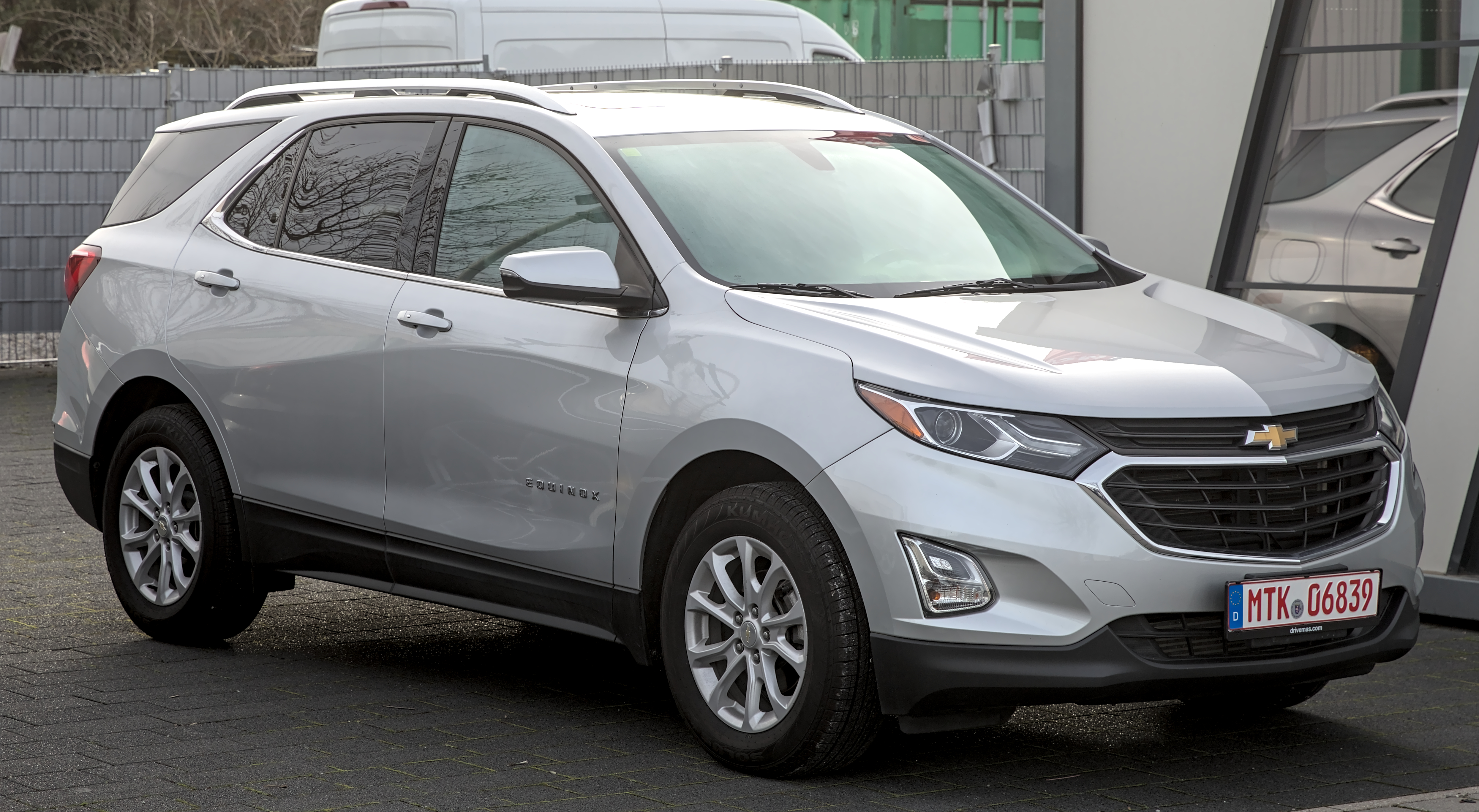
"just launching the Bolt EV, which is our most affordable electric vehicle under $30,000 starting price right up through to the Hummer electric vehicles you can get in GMC."
The Chevrolet Bolt EV is a small car that runs only on electricity and is one of the cheaper electric cars you can buy.
The Chevrolet Bolt EV is a compact all-electric hatchback known for being one of the more affordable electric vehicles on the market.
"Then, really, the pinnacle of our range, the Escalade IQ, which is the electric version of the Escalade. We've got a really broad portfolio of propulsion systems"
The Cadillac Escalade IQ is a big, fancy SUV that runs completely on electricity instead of gas.
The Cadillac Escalade IQ is the fully electric version of Cadillac's flagship luxury SUV, the Escalade, featuring advanced electric propulsion and technology.
"You also mentioned connected vehicles, software-enabled vehicles. That's a key part of our strategy, not only today,"
Connected vehicles are cars that can use the internet to send and receive information, like getting traffic updates or remote control features.
Connected vehicles are cars equipped with internet access and often a wireless local area network, allowing them to share data with other devices and services.
"So EV adoption, electrification, one of the biggest shifts of this era. We've had so many people in this program talking about it from both a consumer standpoint and a business leadership standpoint."
EV adoption means more people are buying and using electric cars instead of gas cars, which is a big change in how we drive.
EV adoption refers to the increasing acceptance and purchase of electric vehicles by consumers and businesses, marking a significant shift in the automotive industry towards electrification.
"Yeah, so last year again was a volatile year. There was a $7,500 EV tax credit which had various qualification factors, but by and large, certainly for general motors, that was available to most of our customers either by purchase or lease."
An EV tax credit is money the government gives back to you when you buy an electric car, making it cheaper.
An EV tax credit is a government incentive that reduces the cost of purchasing an electric vehicle, encouraging consumers to choose electric over traditional gasoline cars.
"What it did do was create a rush into electric vehicles towards the end of September date, and then it did create a fall off afterward, just a re-timing of that demand."
Electric vehicles are cars that run on electricity instead of gas. They use big batteries to store power and don't make smoke like regular cars.
Electric vehicles (EVs) are cars powered entirely or partially by electricity stored in batteries instead of traditional gasoline engines. They produce zero tailpipe emissions and are key to reducing pollution and dependence on fossil fuels.
"We've also announced additional capacity on some of our best-selling combustion engine vehicles as well, whether it be the full-size utilities or the compact SUVs."
These are regular cars that use gasoline or diesel engines to run, like most cars on the road today.
Combustion engine vehicles are cars powered by internal combustion engines that burn gasoline or diesel fuel to create power. They are the traditional type of vehicles before the rise of electric cars.
"Two manufacturing plants, an engineering centre, proving ground after sales warehousing, about 300,000 a year sales,"
A proving ground is a special place where cars are tested to make sure they work well and are safe.
A proving ground is a dedicated testing facility where vehicles undergo various performance, durability, and safety tests before production or release.
"... $30,000 last year, and that is in the affordable element of the market. And they were predominantly our s..."
The Honda Element is a small SUV that looks box-shaped and is easy to clean inside. It’s good for people who like outdoor activities and need a practical car.
The Honda Element is a compact crossover SUV known for its boxy design, versatile interior with easy-to-clean surfaces, and practical utility. It gained popularity for outdoor enthusiasts and those needing a flexible, affordable vehicle with a unique style.
"...minantly our small SUV vehicles, so the Chevrolet Trax, the Trailblazer, and then the Buick Mvista and ..."
The Chevrolet Trax is a small SUV that’s easy to drive and park in the city. It doesn’t use much gas and is good for people who want a simple, affordable car.
The Chevrolet Trax is a subcompact SUV designed for urban driving with good fuel economy and maneuverability. It’s often chosen by buyers looking for an affordable, small SUV that offers modern features and easy parking in tight spaces.
"...ose full-size SUVs. So on the Chevrolet side, the Suburban, the Tahoe on the GMC side, the Yukon's, and the..."
The Chevrolet Suburban is a big SUV that can carry lots of people and stuff. It's popular because it’s roomy and strong, good for big families or hauling heavy things.
The Chevrolet Suburban is a full-size SUV known for its spacious interior, strong towing capabilities, and long-standing presence in the market as one of the largest SUVs available. It's often discussed for its utility in family, commercial, and fleet use, making it a significant model in Chevrolet's lineup.
"...SUVs. So on the Chevrolet side, the Suburban, the Tahoe on the GMC side, the Yukon's, and then, of cours..."
The Chevrolet Tahoe is a big car that can fit many people and their stuff. It’s a bit smaller than the Suburban but still very roomy and good for families or trips.
The Chevrolet Tahoe is a full-size SUV slightly smaller than the Suburban but still offering substantial passenger and cargo space. It's well-regarded for its balance of comfort, capability, and technology, making it a popular choice among large SUV buyers.
"market, those full-size SUVs. So on the Chevrolet side, the Suburban, the Tahoe on the GMC side, the Yukon's, and then, of course, the Escalades on the Cadillac side. And again, we have over 60% of that segment. So really, the way I look at it is that we've been able to produce"
The GMC Yukon is a big, fancy SUV that can carry lots of people and things. It’s like a Tahoe but with more luxury and nice features.
The GMC Yukon is a full-size SUV similar to the Chevrolet Tahoe but positioned as a more premium option with upscale features and styling. It’s popular among buyers looking for a large, comfortable SUV with strong towing capacity and advanced technology.
"Personally, since coming to the US, I've got into NASCAR, got into IndyCar, been to the Daytona 24-hour race recently as well."
The Daytona 24-hour race is a very long car race where teams drive for a whole day and night without stopping. It tests how strong the cars and drivers are.
The Daytona 24-hour race, also known as the Rolex 24 at Daytona, is a prestigious endurance sports car race held annually at Daytona International Speedway. Teams race continuously for 24 hours testing durability and strategy.
"Personally, since coming to the US, I've got into NASCAR, got into IndyCar, been to the Daytona 24-hour race recently as well."
IndyCar is a kind of car race with special fast cars that have only one seat and no roof. They race on different tracks including big ovals and road courses.
IndyCar is an American open-wheel racing series known for high-speed races including the Indianapolis 500. It features single-seat, open-cockpit cars racing on a variety of track types.
"Personally, since coming to the US, I've got into NASCAR, got into IndyCar, been to the Daytona 24-hour race recently as well."
NASCAR is a type of car racing in America where cars that look like regular street cars race around oval tracks really fast. Lots of people watch and enjoy it.
NASCAR (National Association for Stock Car Auto Racing) is a popular American motorsport series featuring stock cars racing primarily on oval tracks. It is known for close competition and large fan engagement.
"But coming from the UK, before I came here, I was living basically in the heart of what is F1 country right near Silverstone. It's where nearly all the teams are based. So it's just something I grew up with."
Formula 1 is a world-famous car race with very fast and special cars that race on many different tracks around the world. It's the top level of racing.
Formula 1 (F1) is the highest class of international single-seater auto racing sanctioned by the FIA. It features the fastest and most technologically advanced cars competing globally on road circuits and street tracks.
"...arrives in my driveway at some point, but the 26 Corvette ZR1. I mean, for those who haven't had the exper..."
The Chevrolet Corvette is a fast, sporty car that looks cool and goes really fast. The ZR1 is a special, super-powerful version made for people who love speed and racing.
The Chevrolet Corvette is an iconic American sports car known for its high performance, sleek design, and relatively affordable price compared to other supercars. The ZR1 variant mentioned is a top-tier, track-focused model celebrated for its powerful engine and advanced engineering.
Select text to request an explanation
The automobile is one of the most important inventions that revolutionize the modern world.
In America, the rich history of car culture runs deep.
This technology continues to shape the future of the industry.
Jason Stein is here to share the stories of people passionate about cars,
from industry leaders and innovators to car-obsessed celebrities.
Buckle up as Jason takes you inside the boardroom, onto the track,
and around the bend on Cars and Culture on SiriusXM Business Radio.
Welcome to Cars and Culture. I'm your host, Jason Stein.
Great to have you back, listening again with us.
This week, we're joined by one of the most experienced operators in the global automotive
business. He's Duncan Aldred, Senior Vice President and President of General Motors North America.
He was appointed to that role in May of 2025 to lead sales, service, and marketing across the U.S.
Canada and Mexico. Duncan is a 33-year GM veteran, but he is so much more than that.
He has roots that go all the way back to the factory floor at Vauxhall in England.
And Duncan has spent decades inside the industry's most pivotal transitions from the rise of global
platforms of today's shift towards electrification, towards software-defined vehicles and new retail
models. Now, in a role focused squarely on growth, Duncan sits at the intersection of brand strategy,
dealer relations, and evolving customer journey, and especially critical vantage point as affordability
pressures, inventory normalization, and consumer expectations continue to reshape the North American
market. Today, we'll talk about how GM is balancing EV momentum with ICE profitability,
what commercial growth really means inside one of the world's largest automakers,
and how dealers and OEMs must stay aligned as the industry moves from disruption to
disciplined execution. We'll also get his perspective on leadership inside a changing
organization. And this episode debuts as the global racing calendar roars back to life,
and its Formula One opens its season in Australia. All that and more coming up on Cars and Culture,
here on Serious XM. Hi, I'm Duncan Aldred. This is Cars and Culture with Jason Stein.
What a pleasure to be back with a gentleman who I've known for a very long time, probably speaks
to both of our time in the industry. A leader whose journey began not in the boardroom, but
on the factory floor, which we'll talk about a little later. But what a pleasure to have you
with me on the program on Cars and Culture. Welcome in, Duncan. Thanks very much. Always a
pleasure to be with you, Jason. Great to be here. Great to be with you. You are running, overseeing
one of the most diverse product portfolios in the global auto industry. There is talk of electrification.
There is talk of product dynamic that's changing software to find vehicles. How do you characterize
this moment in the industry? Well, there's an awful lot there in that question and everything that
you referenced is absolutely relevant in today's industry and to our customers, not only right
now here today, but in terms of the future product programs that we've got coming up as well.
Talking about today right here right now, I oversee and run the four General Motors brands
across North America, Chevrolet, Cadillac, Buick and GMC. Great portfolio of vehicles. First of all,
talking about propulsion systems, a really great diverse set of propulsion systems. On the combustion
engine side, anything from three-cylinder and four-cylinder engines, which turbocharged, producing
great performance, but great fuel economy as well, through to what everyone knows General Motors for
with the great V8s. Then, of course, we've also got the broadest range of electric vehicles in the
industry across Chevrolet, Cadillac and GMC. Everything from a Chevrolet Equinox EV. We're
just launching the Bolt EV, which is our most affordable electric vehicle under $30,000 starting
price right up through to the Hummer electric vehicles you can get in GMC. Then, really, the
pinnacle of our range, the Escalade IQ, which is the electric version of the Escalade. We've got a
really broad portfolio of propulsion systems across all of our brands. You also mentioned
connected vehicles, software-enabled vehicles. That's a key part of our strategy, not only today,
but going into the future. We've got an amazingly successful on-star business. That is our connected
services brand. Again, we've got 12 million subscribers worldwide. It's a key part of our
business. It's just set to grow as we go forward. We've also got our autonomous product, Supercruise,
which is hands-free driving. We've got 600,000 users of that product. By the end of this year,
it will be a million. Again, this just drives great value for money for the customer, a great
experience. It's a real core part of our strategy as we go forward. So much to consider when you
think of the industry these days and very different than what you probably had to consider when you
were starting out. As you step back and take a look at some of the things that you just ticked off,
all of them significant, all of them revolutionary. But is this a more evolutionary time in the
business from a consumer standpoint than a revolutionary time? Yeah, I don't know about
that. Again, your reference, maybe it's more complex than previously. I don't know. You and I
knew each other in Europe and the complexity across 30 markets in Europe, many of which
had different emissions standards and regulations driving to diesel solutions, three-cylinder solutions
was pretty incredible. What we're finding now is I think a transition period again. We all know
the industry and the regulation was really driving for a really quite fast adoption of
electric vehicles. A lot of those regulations have changed or been eased recently. So it is causing
general motors on the industry to pivot, to do things like increase our capability to build
combustion engines because we predicted that the mix of vehicles, the mix of propulsion would change.
Whilst still leaving electric vehicles as our North Star, still maintaining that amazing portfolio
vehicles that I mentioned, but just the quantities that we're talking about are going to change over
the short or maybe even medium term. So a lot of investment into capacity on our combustion
engine vehicles in order that we can satisfy the demand of our consumers while still driving
those electric vehicles forward and still continuing to invest in future battery technology to bring
down the cost, but also ensure that the range and the driving characteristics remain best in
industry. So it is a transitional phase, but again, another exciting part of what this industry is.
Indeed, an exciting part and indeed lots to deal with. Let's get through some of the things that
you just mentioned. So EV adoption, electrification, one of the biggest shifts of this era. We've had
so many people in this program talking about it from both a consumer standpoint and a business
leadership standpoint. What's your current read on EV adoption based on real consumer behavior
right now, Duncan? Yeah, so last year again was a volatile year. There was a $7,500 EV tax credit
which had various qualification factors, but by and large, certainly for general motors, that was
available to most of our customers either by purchase or lease. And that was in place and it
was there to try and drive EV adoption. That went away at the end of September, so that money went
away. What it did do was create a rush into electric vehicles towards the end of September date,
and then it did create a fall off afterward, just a re-timing of that demand. So I think we're just
in the period now where we're saying, okay, so what is that real level of demand? I personally
think March will be a key month for that, but what we're seeing January and February so far is that
the EV percentage of industry is running around six, six and a half percent, so that's what we're
seeing. It peaked closer to 10 last year, especially in that pull ahead period. And what we expect to
see from here is that it probably will continue to gradually increase in the absence of any
stimulus or government support. We think technology adoption, new technology,
maybe some price coming down as well, will increase adoption over the next several years,
but clearly at a slower pace than was previously envisaged. I mentioned any kind of stimulus.
There are still certain levels of stimulus in place, whether it could be on a state level,
there's discussions taking place in California, for example, to put a stimulus behind electric
vehicles. In Canada, they've just announced the reinstatement of a subsidy as well for electric
vehicles as well. So we're still seeing signs of this, and of course that will speed up adoption,
but yeah, I think what we're looking at now is six to seven percent range in the near term,
and then gradually growing up towards the end of the decade.
It's difficult to do product plans. You and I have discussed this when you get such a whipsaw
back and forth, not only from a political slash tariff standpoint, but also from a regulatory
standpoint. I can only imagine the enormous set of scenarios and or future casting that you try
to do amidst all of that chaos. It has to be complicated. Oh, it's super complicated. I'd say
on the good news, I think one of GM's great strengths, even a superpower of ours, is this
adaptability, the ability to look at huge changes in the environment and respond to them
with great speed and great effectiveness. And I think we can look back over the last several
years, which have been maybe the most turbulent in the whole industry's existence, whether it
started with for GM, there was a strike which interrupted supply back in 19, then there was
COVID, then there was a chip crisis, then there was tariffs, then there was EV tax credits,
all these things which just create super volatility and changes in customer demand as well.
This has really been a period of time where GM has really shone and won through in the marketplace.
I think our adaptability, especially for such a big company, is just outstanding and we've
proven it time and time again. And that's why last year in the US was our highest market share for
10 years. In Canada, highest market share for 15 years. Financial results are excellent as well.
And again, I think it's just because of the ability for GM to flex and pivot.
One of the things that we're doing right now is we've announced a series of manufacturing
investments. Again, an investment into propulsion systems, power trains, into
essentially gasoline production. So that's happening in Tonawanda and that'll be on stream.
Over the next year also, we've also announced additional capacity on some of our best-selling
combustion engine vehicles as well, whether it be the full-size utilities or the compact SUVs.
Where, quite honestly, we've been at maximum capacity and now with the changing landscape,
we know we have to increase that capacity so we can meet that market demand. So these are huge
investments and these are things that take time to do. But really, from the changing regulations,
that pivot, we've probably executed it within just over 12 months, which is quite remarkable,
I think, when you're talking about capital investment and everything that goes behind
expanding vehicle production or engine production. So it is complicated, but again,
I think GM have just proven time and time again. It is a superpower of ours to be this flexible,
this adaptive and really keep winning in the marketplace.
I would argue that you have an equal superpower as well, because when I think about your career
and actually go back to, you and I go back, the audience wouldn't know this, but to 2012,
so we're entering our 14th or 15th year of knowing one another. You began your career at
and in 2012, some dozen years later, you were an excuse me on that. Let me start that again.
That's not a dozen years, that'd be 22 years. I've done the math wrong on that. Let me start
that again. Sorry. I would argue that you have a superpower yourself and the adaptability and the
opportunity to seek challenges and change. And the audience wouldn't know, but you and I go back
some 15 years or so when I handed you what was then known as a rising star award in Europe.
But prior to that, in 1990, you began your career at the Ellesmere Port Plant. You were a student
in this industry, quite literally at the beginning. And do I have it right? That was a factory floor
that trained you for much of this? Yeah, it's very close. As you say, I grew up in
Northwest England. I did my business degree in Liverpool. And part of that, it was a four-year
degree. One year, you had to actually do an internship and go and work in business. General
Motors had a manufacturing location very close to Liverpool. I was lucky enough to get a role there.
It wasn't quite on the factory floor. It was actually in the offices within the Truman Car
Final Assembly area. But I did have to go out on the factory floor. I was doing a lot of quality
analysis, statistical analysis. And so I was walking the floor and really doing a lot of that.
So yeah, that's how I started. I went back to General Motors near London to our headquarters
in the UK. It was the Vauxhall brand over there. It started my career in sales and marketing and
one that took me to run 10 countries out of Budapest in Hungary, running all of Southeast
Europe for the Opel brand and the Chevrolet brand. And then to our head offices in Frankfurt in Germany,
running our sales operations. Back to the UK as chairman and managing director of Vauxhall. And
again, the UK was a similar type of business to what we see in Canada. Two manufacturing plants,
an engineering centre, proving ground after sales warehousing, about 300,000 a year sales,
about 13% market share. So it was a big business. And then before I came here, I was running the
whole European business as well as the UK business. And then I was lucky enough to come over here,
running the Buick and GMC brands globally before coming into my role as president of North America.
So yeah, it does require some adaptability and the ability to learn. I mentioned it before,
Europe is an unbelievably complex environment to work within. So it's a great learning experience
for anybody in the industry. And a lot of the lessons I learned there, I could bring over here
and apply here, whether it be now across North America or previously across the global markets
I was responsible for. But yeah, it just underscores really amazing industry, dynamic industry,
and General Motors is an amazing global business that's been a great place to work.
When you were a student at Cannon Slade High School, was the car business your
most immediate path? Was it written in the stars?
I wanted to get into business. I absolutely wanted to get into business. I love cars,
but at that point in time, it was almost like, what do you dare to dream about? So I did want to
get into cars. My parents, my grandparents actually drove GM cars from that's all I ever knew. So I
think it was maybe written in the stars that I ended up going to Liverpool. I did it because I
wanted that one year as an intern in a business. And it was just great that in that locality that
the GM was based there and I was able to get that role. And once I got into that, whilst I had other
opportunities in telecoms and other things, once you get the opportunity to be in the auto
business, there's really only one choice. So yeah, it was fantastic to get in.
Yeah, wonderful. I mean, and I had to imagine that some stage running Vauxhall, which for most
North American listeners would not be on the tip of their tongue, but is a national institution
in England. I mean, it is, you know, the Vauxhall name is known so well. And then it was, I mean,
you rise at this point and now you're running the brand that had to be enormously satisfying for
you. Yeah, it was, yeah, it was an incredibly proud moment. We've gone in as an intern and worked
in the Ellesmere port plant to a few years later, quite a few years later, but to become chairman
and managing director of Vauxhall. I mean, this is a company to your point that dates back to 1903.
It was one of the pioneers of the auto industry. It was one of the pioneers of racing as well.
I mean, initially it was competing with the likes of Bentley and all these type of vehicles in a lot
of the vehicle trials. It got bought in 1925, 26 period by General Malters, which I still think is
quite incredible when you think back that GM was able to go out and acquire these additional
brands in other continents with the lack of communications capabilities. But it did. So
yeah, through my whole life it was part of General Malters and it became a mainstream brand. It was
regular competing for number one, number two in the market. So to have started with my parents and
grandparents driving GM vehicles to being an intern, to coming back later on and running the
business was phenomenal. And at the time it was the fourth biggest country of sale, market of sale
for General Malters anywhere in the world. So as I say, it's significant. But it's fabulous opportunity
to run a country, to run a General Malters business in a country, because you are the person who's
frontline dealing with the trade unions. You're dealing with the government, the prime ministers,
the premiers of those countries as well, as well as having to keep the business going. So
it's a real privileged position and something that I absolutely love doing.
Well, and at a rare journey now to where you are in all of the twists and turns,
how has that path maybe shaped your leadership philosophy in a period of massive industry change?
Yeah, I think so all our background, all our ability to deal with complexity, it's just amazing
in having what you can learn. Going from the UK, we've probably had literally the best sales data
anywhere in the world because it was all consolidated by the government. So for example,
every single day, you knew how many vehicles you were selling, you knew how many vehicles your
competitors were selling, you knew it down to a zip code level, you knew it down to 25 different
customer types, and you literally got that every morning. So to go from that to working
Southeast Europe, which was at the time maybe 10, 15 years out of communism, very limited data
provision, just required whole new skills to be developed to say, oh, how do you manage
a business with very limited data? And then there's a lot of countries that were in between on that.
So different cultures, different data. And then coming to the US, again, very, very different
business, huge scale. But I'm pleased to say in some ways, more simple than say Europe,
because there was more diversity there. But of course, we've still got all the state issues.
So we do have different franchise laws within the states. And again, that is a constant challenge.
So by no means is it simple here. But within all of that, it really boils down to seek first to
understand the business, understand the drivers, get great people around you, empower those people,
and give real clear direction on what are the priorities for the business. I think if everybody
knows and understands what we're here to achieve, and you narrow that down, and you make it real
simple, get good people, empower them, then the job of a leader can get easy real quickly,
and you just steer the ship a little bit. And I've seen that work across all those markets
with all those different elements within it. And it's driven a lot of success.
Jason Stein is here to share the stories of people passionate about cars from industry
leaders and innovators to car obsessed celebrities. Buckle up as Jason takes you inside the board
room onto the track and around the bend on Cars and Culture on SiriusXM Business Radio.
Welcome back into SiriusXM's Cars and Culture. I'm your host, Jason Stein. Now the continuation
of my conversation with GM executive Duncan Aldred. To see more Cars and Culture interviews,
visit the Cars and Culture YouTube channel, subscribe, comment, and check out hundreds of
conversations with the creators, collectors, and culture makers who are driving the industry forward.
So now you look at where, you know, your purview is a culturally different one as you just pointed
out. Chevrolet, Buick, GMC, Cadillac, trucks and SUVs, the emotional and financial backbone of
the company, of the country to some extent. Where are the biggest growth opportunities
across those brands? Yeah. And again, all of those brands play a critical part in what makes up
General Motors. Chevrolet, mainstream brand, you know, really is the heartbeat of America,
as we like to say. It's culturally just so relevant. As are all our brands, but Chevrolet is kind of
present across US culture and society. It's our volume driver. Again, it's got the broadest
portfolio. It is a full line manufacturer, everything from small affordable vehicles, combustion
engine vehicles to full size utilities, everything in between. And then really not dissimilar line up
on the electric vehicle side as well. I mentioned the under $30,000 Boltz, which is just being
introduced in the market now through to Equinox and then right through to the Silverado electric
vehicle pickup trucks. And that made us a strong number two in the electric vehicle market last
year behind Tesla, who are still quite a dominant player there. On the combustion engine side,
though, again, we just enjoy great success. Again, the more affordable end of the range,
something that we're very conscious is critical in this marketplace. We sold over $700,000 vehicles
below $30,000 last year, and that is in the affordable element of the market. And they were
predominantly our small SUV vehicles, so the Chevrolet Trax, the Trailblazer, and then the Buick
Mvista and Encore GX. So really, really market leading, super successful. There we actually
get around 40% of that SUV, that small SUV affordable segment, which is a real strength for
us. But then you go through to the pickup trucks, and this is another super strength for us. We
led in the pickup truck market between Chevrolet and GMC. We do that year after year after year,
again, well over 40% of the pickup segments as well. And then right at the top end of the
market, those full-size SUVs. So on the Chevrolet side, the Suburban, the Tahoe on the GMC side,
the Yukon's, and then, of course, the Escalades on the Cadillac side. And again, we have over 60%
of that segment. So really, the way I look at it is that we've been able to produce
an amazing suite and portfolio vehicles, which can really win at the affordability end,
the absolute core of America, which is the pickup truck segment, and then really at this
top end as well, the full-size utility. So again, just incredible success there. I think as we look
forward this year, again, I mentioned the bulbs. We're going to be really driving the portfolio
we've had, and then we'll be preparing to launch our next generation of full-size pickup trucks
really at the end of this year into next year. So again, very excited about that as well.
Just moving on to GMC, at its all-time record, this is over a 100-year brand. It had its best year
in history last year. Buick, again, over a 100-year brand, but was one of the fastest growing
brands in the industry. And Cadillac, again, as it moved more into electric vehicles, still had
its best year since 2007. So just incredible success across all of those brands.
Yeah. You mentioned the full-size truck launch of the next generation. I always remember that
being such a pivotal moment for General Motors, frankly, for any automaker, but for GM, especially
just because of what's riding on that. What is also so pivotal is Cadillac's entry into Formula
1. And we had Dan Towers on the program last fall to talk about the 11th team on the grid
for the 26th season, which starts now. It is one of the boldest brand moves in years.
I know for you personally, it's also highly interesting, and I know a point of satisfaction
for the entire General Motors team. How do you see that translating into brand energy and maybe
consumer awareness across North America? And of course, we just saw Cadillac's commercial on the
Super Bowl, too. Yeah. As you say, it's just unbelievably exciting point in the brand's
history and in General Motors' motorsport history, which is an unbelievably successful history,
as you well know. Personally, since coming to the US, I've got into NASCAR, got into IndyCar,
been to the Daytona 24-hour race recently as well. And these are all amazing things. And as I say,
we've had such success across all of those types of racing. But coming from the UK,
before I came here, I was living basically in the heart of what is F1 country right near Silverstone.
It's where nearly all the teams are based. So it's just something I grew up with. So the opportunity
now for General Motors to get involved with our Cadillac brand is personally just really,
really exciting. We're very conscious that F1 is not easy. This is the absolute pinnacle of the sport
and the sheer fact that we've put a car together that will be on the grid in a very short period
of time now is an amazing feat in itself. And clearly, we're going to have to work ourselves
through the field as we go forward. This is really hard racing and absolutely the pinnacle of
technology, as I've just said. But of course, we didn't just do this to prove ourselves on the
track. We did it because it's a great next step for Cadillac. I mentioned there best year since
2007, we're number one in terms of the luxury EV marketplace. We have over 20% of that marketplace
with, again, amazing vehicles from entry level SUVs to two-row and three-row SUVs and again,
the Escalade. So we've got an amazing portfolio of vehicles there. And it was really time to say,
okay, how do we take Cadillac to the next level? Not just in North America, but on a global stage
as well. And Formula One is maybe along with World Cup soccer is probably the most global
sport that is out there with fans all around the world. But critically for me and critically
for General Motors, here in North America, again, very, very popular in Mexico always has been.
Having selected Checo Perez as our driver is going to just make Cadillac probably the favorite team
on the grid over there. Canada, of course, rich history of Formula One there as well. And now
three races across the US as well. So an increasing amount of fans in the US. Every time we've made
an announcement, whether it be drivers, whether it be the delivery of the vehicles which was revealed
during Super Bowl, as you mentioned, the spike that you see in terms of website visits, awareness,
even through to consideration is quite remarkable. And again, it just shows
the power of F1. Again, here in North America, where he's still growing, there's no doubt about it.
It's got a long way to grow, but it's at a high level already. And really, we can turn that
consideration, that imagery that it creates around the vehicles into sales. We've invested a whole
lot of money into our V Series products. So this is our racing line products across the Cadillacs.
We've got them across our combustion engine vehicles and our EV vehicles. They're absolutely
outstanding. And yeah, that will be a core part of the link between Cadillac and F1 as well. So we
really think this is going to take Cadillac to whole new levels, not in terms of just awareness,
but also in terms of whether people see Cadillac as a brand for them and then into consideration
and then into purchase as well. And also technology transfer at some stage. I mean,
great brands through the years have used the Formula One experience to make the cars that are on
the streets for the average individual, the average buyer, much more technologically advanced.
So is it technology transfer, marketing integration, brand aspiration,
those would be sort of performance, credibility and brand all in the same breath?
Yeah, I think that's a really good way of putting it. Again, we've seen that technology transfer and
really harness it across all of the other race series that I've talked about. And again, we've
seen many applications of that. We expect to see that in Formula One as well. But absolutely,
as you say, we think this will elevate the brand to a different level. Again, when you think who's
on the grid this year, it is all of these global premium or luxury brands out here coming into the
Formula One, Cadillac coming into Formula One. We've already got Mercedes obviously. So again,
we're really in the right place to be showing ourselves in this form of racing. So it will
elevate the Cadillac brand. It will increase the awareness and it will, we believe, result in more
sales. You couldn't come at a better time in terms of timing and relevance. Yeah, I think we've seen
F1 across North America grow year after year after year. I think if you go back 10 years,
the progress that it's made and the awareness across the states with the three races now has
been huge. The television program has obviously added a lot to that fan base and the awareness level
there. But it's also great timing as well because when the rules change and the rules do change for
this forthcoming season, so again, different propulsion systems, different aero, it really
kind of levels the field a little bit. So let's see how we go. We can't wait to get on the grid in
Melbourne. A few more topics here. We hear a lot about software-defined vehicles, connected ecosystems.
What does that mean for the everyday customer over the next few years? Are customers going to
notice the benefits immediately or gradually and maybe related? Duncan, how does that change
the ownership experience? Yeah, well, I think General Malt has really been a pioneer in this
space. You go back 25 years to the introduction of OnStar, which gave people amazing reassurance
in terms of crash response, but it did a lot more than that. I remember it did turn by turn
navigation before navigation systems were an everyday part of the vehicle or before you could
get it on your mobile phone. And this has really progressed and progressed rapidly into what we've
got today, where we've got Wi-Fi in the vehicles as well. We've got Google Maps in the vehicle.
You have an app on your phone where you can remote start the vehicle in either cold weather,
like where I am now in Detroit, so the car's warm when you get in, or even hot weather to cool it
down if you're in hot climates. So these are things that are positively impacting
customers' experience right now. Where this is going to go into the future is autonomous. And
again, we talk about autonomous as part of that connected service because it does require that
connectivity in the vehicle. Super Cruise is a hands-free driving system. It's been award-winning
and largely acknowledged as the best in industry. We've got more active users on the road of our
autonomous system than any of our competitors. It's 600,000 at the end of last year. It'll be a
million at the end of this year. And cumulatively, even now, we've driven 800 million miles in terms
of Super Cruise. So again, there's a lot of people using this very, very actively. And it just
transforms a journey. Anyone who's used it will say it's just so relaxing. You get to your destination
just so much more relaxed than had you actually been at the wheel. And Super Cruise will get better
and better. It's hands-free at the moment. It will develop into hands-free and eyes-free. So a
different experience, even more relaxing and enabling you to either be more productive on the journey
or even more relaxed when you get there. And again, this will form, again, another key part of our
connected strategy. One thing that we're really excited about is that we see when we sell a vehicle
to a second owner, so a used vehicle, that 50% of people who buy that second vehicle, if it's
enabled with Super Cruise, are subscribing to it. So one in two saying, yeah, I'd love that feature.
Oftentimes, it's why they buy that used vehicle as well. So again, it's just creating this whole
ecosystem and enabling us to have great long-lasting relationships with our customers
beyond that first owner, but into the second owner and beyond. And again, this capability enables you
to upgrade the vehicle. So something that you could never say, going back a decade, that the
vehicle can get better with time. But now, with over-the-air updates, with other technology,
vehicles can literally improve through the ownership cycle, the ownership journey a customer has.
So it's a core part of our business. It's one that will rapidly develop. As I say, I think customers
see the benefits and use the benefits today. It's only going to grow into the future. It's going to
create closer relationships with the customer. And it's also going to enable us to have those
relationships with second owners, third owners, along into the future as well. So yeah, just
another example of why this is a great business, why General Motors has got great brands, great
company because it keeps evolving what that ownership experience means to those users.
A prominent dealer friend of mine in the United States described the dealership experience as
being a digital experience now going forward, not necessarily one of selling cars through TV
commercials and blown up gorillas on the front of dealership lawns. Those were his words. Is the
vehicle becoming more of a long-term digital platform in a way? It certainly is, yeah. I mean,
first of all, I think in terms of retailing, yeah, we've adopted a digital first strategy
really for many years now. And again, there may still be a place for the inflated gorilla outside
of showroom from time to time. We all miss those. But yeah, it's so much more sophisticated than
that now. Very, very targeted marketing. Even when you see TV commercials, it's typically going to
be really targeted to a group of buyers. So less and less absolute mainstream broadcast, the more
absolute targeted broadcast. So the technology around that has changed massively. And again,
we work very closely with our dealer partners to ensure we're all adopting the absolute best
technology and synergizing together in how we put our messages forward. In terms of that relationship
and that digital platform for consumers, yeah, it really goes and speaks to what I was saying
about the vehicle getting better as it goes through the life cycle. Again, we're now downloading
apps onto vehicles. So again, you can have that app embedded app experience, whether it be Apple
Music, whether it be some of the streaming platforms, the broadcast platforms, really a whole
blend of things, which is really turning the vehicle into an entertainment space,
as well as being something that can get you from A to B. So again, we'll see more of that going
forward. You'll see more additions of things like screens on the passenger side of the vehicle,
as well as the center screen or the driver screens. Again, so the passenger can enjoy
that entertainment capability that now our vehicles are beginning to provide. So yeah,
this is going to just continue to develop. We've created that platform and again,
all the ideas and all the use cases will come into the vehicle, making it again,
an even better ownership experience. Let's end on this. If you don't mind,
spent a few minutes talking about this. I've not been in one yet and hoping that one arrives
in my driveway at some point, but the 26 Corvette ZR1. I mean, for those who haven't
had the experience, we are reading about 1,250 horsepower. We are reading about what you get
when you combine a ZR1 with an e-ray, a little touch of e-ray. The first ever all-wheel drive
ZR1 at the top of the C8 lineup. It can challenge hypercars, Duncan. The competition now includes
vehicles like the SF90 and Lamborghinis. What does that do to a brand like Chevrolet?
Well, I think it does amazing things for the Chevrolet brand. It does amazing things for
the Malters and it does amazing things for Corvette, which is a sub-brand as well,
all on its own. But I was personally lucky enough to be driving the ZR1X on a beautiful October
day up to Northern Michigan for a few hours. Believe it or not, with the roof down in October,
it was such a nice day. And that vehicle is, as you say, it's almost like nothing you've
ever driven before. The absolute power is unbelievable, the performance is unbelievable,
the responsiveness similarly. But also a really great everyday vehicle. I know
some of the leadership here have been driving them all winter on winter tires, for example,
because of that all-wheel drive capability that you mentioned. But in terms of the actual supercar
performance, something that Corvette has never done before, it's really just changing the whole
lens. But something that we're really proud of is that we will always keep that Corvette formula,
the ingredients, which again goes back to affordability. And it may sound a little odd
talking about affordability in a supercar range. But when you compare the performance of the Corvette,
really across all of its forms, but the ZR1X to equivalent vehicles, it is unbelievable
value for money. So that's something that we hold very true to, that the ingredients of what
makes a Corvette a Corvette. But as you say, it casts a halo over everything Corvette,
everything Chevrolet, and quite honestly everything General Motors. It just shows
what we're capable of as a company, amazing engineers, amazing manufacturing capability
producing amazing vehicles. Yeah, it checks all the boxes of that. The ZR1X is something too.
Definitely appreciate it in all of its raw yet refined glory. What's the clearest pathway forward
for GM in North America over the next decade? Is it trucks? Is it SUVs? Is it luxury? Is it
commercial? Or is it new mobility? Or is it all of it? It's going to be a lot of all of that for
sure. Again, I mentioned earlier the investments we're making in to some of our core products,
whether it be those combustion engines that we're investing heavily in, whether it's the core
segments that we're expanding our capacity in. Again, the best EV portfolio in the industry
across all of our brands from mainstream Chevrolet to premium GMC to luxury in Cadillac. And again,
we're already planning on the future of our battery technology and electric vehicles as well. We do
still see that as the end game. We think that's where the industry is going. And so we're going
to continue pursuing that as well. They're just amazing vehicles. We know that when somebody buys
an EV, a very, very high percentage, maybe 80% will buy another EV afterwards, which is a lot higher
than the combustion engine equivalent. So yeah, we'll certainly be looking to win in combustion
space, in electric space. And those key segments remain the key segments. I talked about affordability
where we're pretty dominant in that small SUV, trucks where we've been the market leaders for
many years across GMC and Chevrolet and then those full size utilities. But again, the beauty of
General Motors is that they're almost like the pillars of our portfolio, but we kind of do everything
in between as well, even the ZR1X that you just mentioned. So that is our success formula. That
is something we'll be doing more of over the next five and 10 years. We will be investing into new
products, new technologies. We will be growing our connected services, our software enabled
vehicle as well. And that's really going to keep us at the forefront and the leadership position
in this industry. Yeah, that's many things that would be hard to consider while working at Vauxhall
now, I'm sure. Final thing, I say this as a Canadian, but who are you pulling for this summer
as probably your most favorite sport hits the North American shores? Is it England or is it
the United States? Or is it Canada, Duncan? Or is it all of them? Well, I think, yeah, I hope to have
the opportunity where I can support all three teams. I'm Mexico, of course. Mexico. And I don't
have to choose between them. Let's see how the draw pans out. So I'm going to just be very political
on that one. I want them all to be successful. But yeah, England probably have the best chance
out of the four right now. Yeah, agreed. Well, we made it through an entire interview without
talking much about tariffs. So that's a credit to both of us. We know that you're dealing with it,
but I know you have a lot of other fun things on your plate. So thank you so much for the time.
Thanks for being on the program. Good to be back with you again. Great to see you.
Great. See you soon. Thank you, Duncan. A big thanks to my guest again,
Duncan Aldridge, Senior Vice President and President of General Motors North America.
Thank you for listening. And to see more cars and culture interviews, visit the Cars and Culture
YouTube channel, subscribe, comment and check out hundreds of conversations with the creators,
collectors and culture makers who are driving the industry forward. That's this week's episode.
I'm your host, Jason Stein. Thanks for being with us. We'll see you down the road.
Request an explanation for:
10 cars
Scroll for more
10 cars featured
Request an Explanation
Heard something you'd like explained? We'll add it to this episode.
Sign in to request explanations for terms you heard.
Want to learn more?
Browse our glossary for plain-English explanations of automotive terms, jargon, and concepts.
See something that's not quite right? Our annotations are AI-generated and can sometimes miss the mark.
Click the flag icon on any annotation to suggest a correction.