Christian Muenier, Chairman of Nissan Americas, shares insights on revitalizing Nissan's brand and business amid industry challenges. He discusses regaining Nissan's core identity of affordability, excitement, and durability while navigating electrification and hybrid technology. Muenier reflects on his leadership approach, the importance of transparency, and lessons from his global automotive career. He addresses competition from Chinese manufacturers, the evolving EV market, and Nissan's strategic focus on hybrid e-power technology. The conversation highlights Nissan's efforts to simplify, innovate, and reconnect with customers to drive sustainable growth and brand momentum.
"This week, we're joined by Christian Mune, Chairman of Nissan America, a global automotive leader who has spent decades shaping brands,"
Nissan is a big car company from Japan that makes many types of cars you might see on the road. They sell cars all over the world, including in America.
Nissan is a major Japanese automotive manufacturer known for producing a wide range of vehicles including sedans, SUVs, trucks, and electric cars. The company is a key player in the global automotive industry with a strong presence in North America, Asia, and Europe.
"Nissan is in the midst of a significant product refresh, balancing its heritage in accessible, high value vehicles"
A product refresh means making some changes or improvements to a car model to keep it looking new and interesting, but not completely changing it.
A product refresh refers to updating or improving existing vehicle models with new features, design tweaks, or technology enhancements without a full redesign. It helps keep the model competitive and appealing in the market.
"with the industry's rapid shift toward electrification, connectivity, and advanced driver assistance technologies."
Connectivity means the car can connect to the internet or your phone, letting you use apps, get directions, or even talk to other cars.
Connectivity in cars refers to technologies that allow vehicles to communicate with other devices, networks, or infrastructure. This includes features like internet access, smartphone integration, and vehicle-to-vehicle communication.
"with the industry's rapid shift toward electrification, connectivity, and advanced driver assistance technologies."
These are special features in cars that help the driver by warning about dangers or even helping control the car a little to keep you safe.
Advanced driver assistance technologies (ADAS) include systems that help drivers operate vehicles more safely and efficiently, such as adaptive cruise control, lane-keeping assist, and automatic emergency braking.
"with the industry's rapid shift toward electrification, connectivity, and advanced driver assistance technologies."
Electrification means making cars that run on electricity instead of gas or diesel. This helps reduce pollution and can save money on fuel.
Electrification in the automotive industry refers to the shift from traditional internal combustion engines to electric powertrains, including hybrid and fully electric vehicles. This trend is driven by environmental concerns and regulatory pressures.
"That balancing act, maintaining a volume strength while elevating brand perception, is one of the defining strategic challenges facing automakers today,"
Brand perception is what people think about a car company, like if they believe the cars are good, cool, or reliable.
Brand perception is how customers and the public view a car brand, including its reputation for quality, innovation, and desirability. Improving brand perception can help a company sell more vehicles and command higher prices.
"a dual track strategy that many global OEMs are now embracing."
OEM means the company that actually makes the cars or parts, like Nissan or Ford. They are the original makers, not aftermarket companies.
OEM stands for Original Equipment Manufacturer, referring to companies that produce vehicles or parts under their own brand. In this context, it means global car manufacturers like Nissan, Toyota, or Ford.
"You stepped out and led Jeep at a time when Jeep was really a trademark brand to some extent."
Jeep is a car brand from America that makes tough vehicles you can drive off-road, like in the mountains or dirt trails.
Jeep is an American automotive brand famous for its rugged SUVs and off-road vehicles. It is known for models like the Wrangler and Grand Cherokee and has a strong heritage in off-road and adventure vehicles.
"You can talk about 240Z, you can talk about the Maxima,"
The Nissan 240Z is a cool old sports car that was fun to drive and didn't cost too much. It made Nissan popular with people who wanted a sporty car without spending a lot.
The Nissan 240Z is a classic sports car introduced in the 1970s, known for its sleek design, performance, and affordability. It helped establish Nissan's reputation for producing exciting and accessible sports cars.
"We had edgy products. You can talk about 240Z, you can talk about the Maxima, you can talk abo..."
The Datsun 240Z is an old sports car made by Datsun in the 1970s. It was designed to be fast and good-looking, and many people still like it today.
The Datsun 240Z is a classic sports car from the early 1970s that helped establish Japanese automakers as serious contenders in the sports car market. Known for its sleek design, strong performance, and affordability, the 240Z remains an iconic and highly collectible vehicle.
"You can talk about 240Z, you can talk about the Maxima,"
The Nissan Maxima is a family car that also feels a bit sporty and fun to drive. It's been popular for people who want a nice car that’s not too expensive.
The Nissan Maxima is a midsize sedan known for blending performance and comfort, often marketed as a sportier alternative in its segment. It has been a key model for Nissan's brand image of affordability and excitement.
"You can talk about 240Z, you can talk about the Maxima, you can talk about Xterra,"
The Nissan Xterra is a tough SUV that can handle rough roads and outdoor activities. It’s known for being strong and reliable.
The Nissan Xterra is a rugged SUV designed for off-road capability and practicality. It contributed to Nissan's image of durability and adventurous spirit.
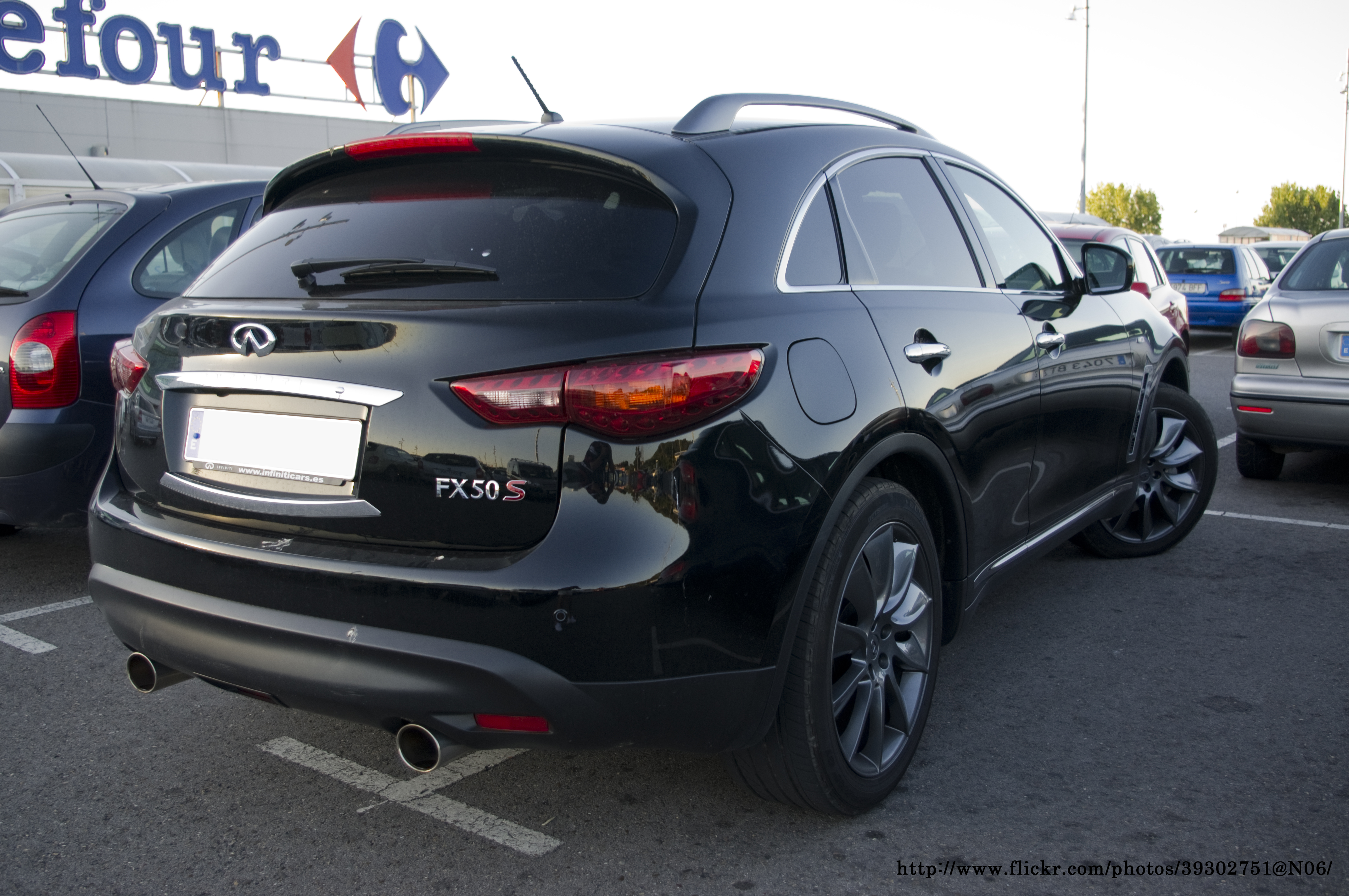
"and on the Infinity side you can talk about the FX and product like that,"
The Infiniti FX is a fancy SUV that looks sporty and drives well. It’s a more luxurious option from Nissan’s luxury brand, Infiniti.
The Infiniti FX is a luxury crossover SUV known for its sporty styling and performance. It represents Nissan's luxury brand offering with an emphasis on excitement and style.
"you can talk about the FX and product like that, or G35."
The Infiniti G35 is a nice car that’s both fast and comfortable. It’s a luxury car that doesn’t cost as much as some others.
The Infiniti G35 is a luxury sports sedan or coupe that offers strong performance and luxury features. It helped build Infiniti’s reputation for sporty, affordable luxury vehicles.
"...roduct like that, or G35. So product we'd had an edge with a spice. At the same time, the products wer..."
The Ford Edge is a medium-sized SUV made by Ford. It is designed to carry families comfortably and has features to make driving easier and more enjoyable.
The Ford Edge is a midsize crossover SUV that combines a spacious interior with a smooth ride and modern technology. It serves as a versatile family vehicle with options for performance and comfort, making it a key player in Ford's SUV lineup.
"And the third component was Japanese durability, right? And I think the three things,"
Japanese durability means that cars made by Japanese companies like Nissan usually last a long time and don’t break down easily. People trust these cars because they are tough.
Japanese durability refers to the reputation of Japanese car manufacturers, including Nissan, for building vehicles that are reliable and long-lasting. This durability is a key selling point and builds customer trust.
"We're bringing hybrid on the next generation of Rogue at the end of this year,"
A hybrid car uses both gas and electricity to drive. This helps the car use less fuel and be better for the environment.
A hybrid vehicle uses both a traditional internal combustion engine and an electric motor to improve fuel efficiency and reduce emissions. Nissan is introducing a hybrid version of the Rogue to meet modern efficiency demands.
"I'd love to know your honest assessment of EVs today and EV affordability. And maybe what's holding all of that back and what now with regulations that have changed? Yeah, Nissan has been a pioneer in electrification with EV, with Leaf launching in 2010. And since then, obviously, we've launched a few product, Leaf, the next generation, we have three generations of Leafs with the Aria. And we've been quite successful with those, but the volumes have remained pretty limited. I think at the end of the day, I think that's a very good lesson for everybody. I think, you know, there's so much you can do to force the customer to buy your product if the product is not adapted. And I think the affordability of EV is not there without the government incentives."
Electric vehicles are cars that run on electricity stored in big batteries instead of using gas. They don't produce smoke or pollution like regular cars.
Electric vehicles (EVs) are cars powered entirely by electric motors using energy stored in batteries, instead of internal combustion engines. They produce zero tailpipe emissions and are considered a key technology for reducing pollution and dependence on fossil fuels.
"And I think the affordability of EV is not there without the government incentives. I think the cost of electrification is very high and remains pretty high."
Government incentives are discounts or money given by the government to help people afford electric cars.
Government incentives are financial benefits such as tax credits or rebates offered to encourage consumers to buy electric vehicles. These incentives help reduce the effective cost of EVs and promote adoption.
"I would say the cost of battery is going down, but it doesn't go as quickly down as we expected five or 10 years ago."
Battery cost means how much it costs to make the big batteries that electric cars use. These batteries are expensive and affect the price of the car.
Battery cost refers to the expense of manufacturing the lithium-ion battery packs that power electric vehicles. It is a major factor in the overall price of EVs and has been decreasing over time but not as fast as initially expected.
"You know, we talk about electrification, but you have autonomous drive. You have all the technology that comes in our new cars."
Autonomous drive means the car can drive itself without a person controlling it, using special computers and cameras to see the road.
Autonomous drive refers to self-driving car technology that allows vehicles to operate without human intervention using sensors, cameras, and advanced software. Levels of autonomy vary from driver assistance to full self-driving.
"On the off-road, there is a lot of new technology that makes off-roading so much more, I would say, not simpler, but more accessible for the mass."
Off-roading means driving a car on rough ground like dirt or rocks instead of smooth roads. New technology helps people do this more easily and safely.
Off-roading is driving a vehicle on unpaved surfaces like dirt, mud, sand, or rocks. Modern technology has made off-roading more accessible by improving vehicle capabilities and safety.
"I worked for a G lighting at the time for three months and on pricing strategy in Europe. And I didn't like it."
Pricing strategy is how a car company decides how much to charge for their cars to make sure people want to buy them and the company makes money.
Pricing strategy in the automotive industry involves setting the price of vehicles and services to balance competitiveness, profitability, and market demand. It can include considerations of incentives, dealer pricing, and market positioning.
"Did you go to Le Mans? Did you have a chance to see Le Mans? I went to Le Mans a long time ago when I was a kid. That would certainly get enough automotive spirit inside anyone, wouldn't it?"
Le Mans is a very long and famous car race in France that lasts 24 hours, where drivers see how fast and strong their cars can be.
Le Mans is a famous 24-hour endurance race held annually in France. It is one of the most prestigious motorsport events, testing the durability and speed of cars and drivers over a full day.
"I've been to all kinds of different Grand Prix or Formula 1, NASCAR, etc. But I think Le Mans is a good reference point for sure."
Formula 1 is a type of very fast car racing with special cars and drivers competing all over the world.
Formula 1 is the highest class of international single-seater auto racing sanctioned by the FIA. It features the fastest and most technologically advanced racing cars competing in a world championship.
"I've been to all kinds of different Grand Prix or Formula 1, NASCAR, etc. But I think Le Mans is a good reference point for sure."
NASCAR is a type of car racing in the U.S. where drivers race special cars mostly on oval tracks.
NASCAR is an American auto racing sanctioning and operating company known for stock car racing. It features races on oval tracks and is one of the most popular motorsports in the United States.
"I've been to all kinds of different Grand Prix or Formula 1, NASCAR, etc. But I think Le Mans is a good reference point for sure."
Grand Prix races are big car races held in different countries, where the fastest drivers compete in special cars.
Grand Prix refers to a series of high-profile international motor races, most notably in Formula 1. These races are held on various circuits around the world and are key events in the motorsport calendar.
"I bought a Z manual transmission six months ago for myself. A car that I'm going to keep."
A manual transmission means the driver changes the car's gears by hand using pedals and a stick. This makes driving more fun because you control when the car changes speed.
A manual transmission is a type of gearbox where the driver manually shifts gears using a clutch pedal and gear stick. It provides more driver involvement and control compared to automatic transmissions.
""...we need to accelerate on the cost competitiveness of our products so that we can offer competitive offering, coming back to affordability.""
Cost competitiveness means making cars that don't cost too much to build or buy, so people choose your cars over others. It's about keeping prices low but still making good cars.
Cost competitiveness refers to a manufacturer's ability to produce and sell vehicles at prices that are attractive compared to their rivals, often by controlling production costs and pricing strategies. It is crucial for maintaining market share against competitors offering lower-priced products.
""...to be able to offer the product that people want at an affordable price and EV especially. EV is obviously China has focused 100% on the electrification the last 10, 15 years...""
An EV is a car that runs on electricity instead of gas. It uses batteries to move and doesn't pollute the air like regular cars.
EV stands for Electric Vehicle, a car powered entirely or primarily by electricity stored in batteries instead of gasoline or diesel fuel. EVs produce zero tailpipe emissions and are a key part of the shift toward sustainable transportation.
""...We need to shorten the lifecycle of our product as well. We need to shorten the development process from six years...""
Product lifecycle means how long a car model is made before a new one replaces it. Making this time shorter means newer cars come out faster.
Product lifecycle in automotive terms refers to the period from the initial development of a vehicle model to its discontinuation. Shortening this lifecycle allows manufacturers to bring newer, more competitive models to market faster.
""...We need to shorten the development process from six years, which used to be the Nissan standard for engineering to develop a new car from A to Z. Now it's three and a half years...""
Development process means all the work needed to design and build a new car before it can be sold. Doing it faster saves money and makes cars better fit what people want.
The development process is the entire engineering and design timeline required to create a new car model from concept to production. Reducing this time can lower costs and improve market relevance.
Select text to request an explanation
The automobile is one of the most important inventions that revolutionize the modern world.
In America, the rich history of car culture runs deep.
This technology continues to shape the future of the industry.
Jason Stein is here to share the stories of people passionate about cars,
from industry leaders and innovators to car-obsessed celebrities.
Buckle up as Jason takes you inside the boardroom, onto the track,
and around the bend on Cars and Culture on SiriusXM Business Radio.
Welcome into Episode 243. I'm your host, Jason Stein.
Great to have you back listening again on SiriusXM Business Channel 132.
This week, we're joined by Christian Mune, Chairman of Nissan America,
a global automotive leader who has spent decades shaping brands,
launching products and navigating some of the most competitive markets in the world.
From Europe to Asia to North America, Christian has built a reputation for driving discipline growth
while staying laser focused on what matters most.
Primarily product, brand clarity, and the customer experience.
Now at the helm of Nissan's operations across the Americas,
Christian is leading the charge at a pivotal moment for the company.
Nissan is in the midst of a significant product refresh,
balancing its heritage in accessible, high value vehicles
with the industry's rapid shift toward electrification, connectivity,
and advanced driver assistance technologies.
That balancing act, maintaining a volume strength while elevating brand perception,
is one of the defining strategic challenges facing automakers today,
and it's squarely on Christian's desk.
We'll talk about the roadmap for Nissan's core name plates,
the importance of maintaining affordability,
and how the company is aligning its dealer network to deliver a more consistent,
more premium customer journey.
Christian will also share his perspective on how Nissan plans to compete in a crowded EV
landscape while continuing to lean on the strength of its internal combustion lineup,
a dual track strategy that many global OEMs are now embracing.
We'll also dig into the realities of leading a regional organization
within a global alliance, how decisions made at headquarters
translate into execution across showroom floors in the United States,
and what he's hearing directly from retailers about inventory,
demand patterns, and the evolving expectations of today's car buyers.
All of that and more coming up with Christian Mounier on Cars and Culture.
Hello, this is Christian Mounier, and this is Cars and Culture with Jason Stein.
It's been a little while since I've been with him,
and it's been now a long while, but he's been in his new role.
So we have a lot to talk about, we have a lot to catch up on,
but it's great to be back with you again, my friend.
Welcome in, Christian, to the program.
Thank you, Jason. It's a real pleasure.
Yeah, it's great to have you here on SiriusXM.
I just noticed that we clicked over to another year.
You're now no longer the newcomer who has gone back to his company.
You're now a semi-veteran who is now back with his company.
Welcome to year two of your leadership position, chairman of Nissan Americas.
What was year one like for you?
Well, year one was quite exciting.
I was back to Nissan after 17 years with Nissan.
I went away for a few years and came back in January 25.
And so I'm celebrating my first year anniversary.
A lot of things happening in Nissan.
And I would say that when I came back, I realized that the company has changed.
It changed for a lot of different reasons, obviously executive changes,
but also the COVID period that had somewhat
hurt the resilience and the culture of the company.
Because this company, Nissan, the corporation at the time,
when I was with Nissan a few years back, was very resilient.
I think there was a kind of a fighting spirit, a scrappiness
in our culture that made us never accept a bad result.
And always find solutions to an innovation and new ways of thinking
to get things done and to get better results.
And I think that innovation went a little bit away during COVID.
And I think what I was really, really pushing the team to do is
first to regain that fighting spirit that is a characteristic
and part of the DNA of what Nissan is about,
but also that new way of thinking, simplified thing,
eliminate what is not necessary and really focus on less things, but bigger things.
When you watched it from a distance, from other positions that you were in,
did you notice that fighting spirit had dissipated from where you were?
Did you not notice it?
What were your observations as an outsider?
So I could see it in the results, obviously being outside of the company.
I could see the results sinking.
And obviously I was very connected with a lot of people,
being an ex-Nisan employee, I had made a lot of friends within the company,
so I was connected to them.
I could feel that the company had lost its mojo, that the brand was a little bit lost,
the corporation was not really thinking that growing is important.
And the scale in automotive is very important because that's the scale that you get,
costs, benefits, and you generate more profit.
And I think the company had lost that fighting attitude,
that really generated better results in the past.
And with that, the company, when you look at it,
in more than five years, six years, lost 45% of its revenue,
of its sales volume and everything.
And obviously the factories and the plants that we have across the globe
were very, very significant when we had our capacity.
So we had to take actions, we had to restructure,
and that's pretty much what 2025 was about, restructuring,
reducing the cost and regain that passion for selling cars,
taking care of the customers and making profit,
because ultimately these three things are what drives the company in the right direction.
Why was it appealing for you to come back?
How was it appealing?
I think it was the people, the people I knew.
I could feel that I could have an impact, I could be a driving force for change,
for regaining that spirit that we had lost, that the company had lost.
And at the stage of my career, I'm not going to take a job on which I'm not going to have an impact.
I wanted to have an impact.
I wanted to also enjoy it, and I wanted to, if I could do things that would
make me happy, fixing, turning around the company that I like,
and helping my colleagues and my friends to feel proud of working for Nissan again,
that would be a big accomplishment.
And the good news is the one, the right track,
the company is turning around here at a global level.
The profitability is coming back, the free cash flow generation,
positive is coming back.
And the growth is there, so that's really important.
And in this region, especially, we're growing significantly,
and getting the dealers back with us, the suppliers back with us,
the employees getting motivated again.
It's tough.
I'm not going to lie that this business is tough.
There is a lot of competition.
There are more and more manufacturing facilities and manufacturers all together,
including the Chinese attacking, especially Latin America.
And we're well equipped to respond.
We just need to take actions and simplify and eliminate the things that are not
generating value for the company.
You were the global president for Infinity.
You stepped out and led Jeep at a time when Jeep was really a trademark brand to some extent.
What did the experience of Jeep teach you that maybe you didn't know or didn't have before?
I think the power of the brand is something that I learned.
I had a lot of respect for Jeep, and I still have a lot of respect for Jeep.
I think it's one of the most iconic brands in the world.
And I think the branding has been significant.
I've also learned that you've got to be careful with a brand like Jeep.
And I think I don't want to debate too much in details about what happened,
but I think we've pushed the limit.
I think we've overpriced the product.
And doing that, we've basically lost a lot of our customers.
A lot of our customers were very loyal to Jeep for many, many years,
and you've got to be very careful before you take too many actions on pricing,
on repositioning, on electrification.
I think we've been probably going too fast too far.
And the vast majority of our customers were not ready to make the move.
And we've lost them.
And I think that's the learning I have.
You need to be very, very cautious with your customer base.
I think customer experience, customer loyalty,
is what makes the value of a brand and the foundation.
And then obviously you can go beyond that,
but you're always going to be careful with your brand, your customer base,
because that's what makes the value of who you are.
Yeah, you've always been such a brand guy,
whether it was the emphasis on the brand that you put with Infinity,
and of course what would happen with Jeep,
and now transitioning back to Nissan and applying those brand principles.
What's the brand stand for now?
What do you want Nissan to stand for as a brand?
Nissan, it's interesting because Nissan has lost its way a few years back, I believe,
but I think we're back on track.
I think Nissan, the success of Nissan,
and especially in this region, has been really relying on three things.
Excitement, coolness, spice, you can call it with many different names,
but that's an edge, right?
We had edgy products.
You can talk about 240Z, you can talk about the Maxima,
you can talk about Xterra,
and on the Infinity side you can talk about the FX and product like that, or G35.
So product we'd had an edge with a spice.
At the same time, the products were affordable.
They were affordable, they were accessible,
and were not there to be the most expensive product.
We offered a lot of value for the customers.
And the third component was Japanese durability, right?
And I think the three things, the edge, the durability,
and the affordability made Nissan a very, very powerful proposition
in the marketplace and was very unique.
And I think we've lost a little bit our way, and I think we're back now.
We're bringing hybrid on the next generation of Rogue at the end of this year,
so we'll bring a lot of value for the customers.
It's going to be very, very exciting technology that we're going to bring.
And a couple years later, we'll bring the new product on frame with V6 hybrid,
and I'm very proud to announce that the Xterra is going to come back.
So we're going to be bringing a product that's going to help renovate and rejuvenate,
I would say, the Nissan brand back to the roots, back to the DNA of who we are,
and exacerbate that, because that's what the Nissan fanatics are expecting from us.
Yeah, Nissan has had a complicated brand story in the United States.
It's been somewhat mass market, sporty, value, innovation,
sometimes all at the same time, and you have to choose a North Star for the brand.
What do you have to say no to, even if it drives volume?
I think technology, for the sake of it, is not what people expect in a Nissan.
I think you want the technology that people want.
I think one of the taglines when the first generation of Xterra was launched in 2002 was
we give you everything you need and nothing you don't.
And I think that's a little bit what Nissan is about, is we give the customers what really they
expect from us, and no more, meaning we don't put extra cost in our product or extra features
that make it cumbersome for the customer, and that adds a lot of cost,
and we keep the product affordable. And I think that's really what is critical for Nissan to
focus on. So edgy, fun, exciting, exciting to drive with an exciting design, but at the same
time affordable and durable, because that's what a Japanese DNA is about.
Yeah, and a lot of times the industry confuses brand with marketing.
Right? So Nissan's brand where it needs to be versus the marketing of how it's done.
Which one is the easiest to fix? Which one's the hardest to fix?
I think the brand perception is the most difficult thing. You don't move the brand
perception super quickly, and I think it relies on you really delivering on your promise of the
brand. And if you're consistent, if you bring the product that fits your brand DNA and what your
brand is about, people are going to understand who you are. And I think the marketing is really
one component of delivering that brand promise, but it's the product as well,
it's the experience with the dealers, it's the overall experience that customers have, and
how they talk about the brand, that will make the difference. Unfortunately, it takes a while to
rebuild the brand, to rebuild the reputation of the brand, but I think the consistency and
the simplicity of what the brand is about is critical for us to be successful. And I think
with a future product plan that we're bringing in the next three to four years, we will have all
the opportunity to reset everything and go back to the roots of Nissan. And if we bring technologies,
we'll bring technologies that people can use and want to use, not technology for the sake of it.
I don't think we need to have the widest screen in the world. I don't think that's what
our Nissan customers expect. Yeah. What's the single most important product decision that Nissan
has to get right in North America over the next couple of years? And why? I think the number one
is to get the hybrid e-power technology right and bring it to market in the US. It's been launched
across the globe. So we've been selling, I think, 1.6 million units of hybrid e-power across the
globe, mostly in Europe and in Asia. Now we're bringing the third generation. So the product is
super good, super mature, works super well, super efficient. So fuel efficiency is great,
but it's also very, very exciting to drive it. The acceleration is great, the quietness is awesome.
So I think we're a little bit late to the party, but I think we bring a hybrid system that's going
to make the difference. I think that launch of the rogue hybrid e-power that we bring in
market at the end of the summer this year is going to be critical. And the second thing is in
2028 when we bring what we call the next generation of frame vehicle, which will include the Extera,
the Pathfinder, the Frontier, and two Infinity versions of that that we will build in the US
in Canton, Mississippi, this is going to be another, you know, the second big important step
to revitalize the company and revitalize our business in North America.
Yeah. And I mean, even as it relates to product and powertrains, I mean, Nissan was early with the
Leaf and it was early in alternative propulsion systems. I'd love to know your honest assessment
of EVs today and EV affordability. And maybe what's holding all of that back and what now
with regulations that have changed? Yeah, Nissan has been a pioneer in electrification with EV,
with Leaf launching in 2010. And since then, obviously, we've launched a few product, Leaf,
the next generation, we have three generations of Leafs with the Aria. And we've been quite
successful with those, but the volumes have remained pretty limited. I think
at the end of the day, I think that's a very good lesson for everybody. I think, you know,
there's so much you can do to force the customer to buy your product if the product is not adapted.
And I think the affordability of EV is not there without the government incentives.
I think the cost of electrification is very high and remains pretty high. It's improving,
I would say the cost of battery is going down, but it doesn't go as quickly down as we expected
five or 10 years ago. And I think, obviously, EV has a good future, but I think it's not for
everyone. I think we need to recognize that for people that drive long distance and need
a different powertrain, it's not appropriate. And maybe one day it will be, but today it's not.
And the cost, right? The cost to develop and to manufacture an EV product is much higher than
a regular product with a hybrid system. So I think the hybrid system is a little bit of a
bridge for electrification until EV gets to a more affordable level. It cannot just be a
subsidized business. It has to be something that fits what the customers expect. And it needs to be
profitable business for the manufacturers. We're here to make money. We're not here to lose money,
and we're here to create value for the future of the company and for our stakeholders and shareholders
and for the customers. So ultimately, it has to be a win-win for everybody else.
It cannot just be a political decision. Yeah, it's a pragmatic conversation now,
right, instead of an ideological one. Exactly. Exactly. I think it's all about
customer needs and affordability. When you think about it, 10 years ago, the average
transaction price of a car in the US was $30,000. Today, it's almost $50,000. I think it has become
very unaffordable. And I think there is a need for us to open our eyes and focus on affordability
and make sure that we have affordable transportation. It's very critical for this country.
Yeah, does that worry you, affordability in general?
Yeah, I think affordability is a real issue because people have a hard time
affording a new car today. And I think we need to make sure that we have solutions for people.
We have the freedom of mobility is an important component of the freedom in this country. The
public transportation is not that common, especially if you're not in a big metro. And I
think we need to offer affordable transportation, which Nissan has been really focused on. When
you think about Rogue, we start below $30,000. And we have Sentra, which is a $20,000 to $25,000
car. And we have the Kix, which is between $25,000 and $30,000. So we have three product
below $30,000, which we're trying to really focus on keeping that this way. At the same
time, we need to go back to the roots of Nissan and bring what the customers expect and nothing
else. I think the customer focus is what OEMs have to be focused on to be successful in the
future. Give what the customers expect, nothing more, nothing less. I think that's what we want.
And sometimes create a new innovation, obviously, that will delight the customer. I think that's
what we should be doing. Some might not know your history, but I know it and I want to talk about
it a little bit because for those who wonder how Christian Mounier might be able to improve
a brand image, you've done all this before. I mean, you did it at Rover France when you were
working on Rover and MG and Mini at the time, even going back a few years prior to that,
working with Ford. And it's incredible for me to think that this is your 34th year in the business
because you're only 39. But what did you learn in your early days of sales operations in France
and then maybe the transition to a big group like or a luxury group like BMW dealing with Rover?
I think the power of the brand, the focus, the consistency of the brand
makes some brands more stronger than some others. And I don't want to quote too many brands, but
some brands have been very consistent about their product offering for the last 50 years and
usually they're the most successful ones. They found their own territory and they deliver on it
and customers buying and repurchase. The loyalty remains and that's one of the secret of our
business. You make your customers happy, they become your advocate and usually they're families of
brand. And yeah, I started with Ford and you have Ford families in this country. You have people
that only buy certain brands. So I think the branding is really critical. I think what made me
what I am as well is the fact that I started in France in Europe and then I came to the U.S.
And then I went to Brazil, then I went to Canada, then I went to Hong Kong, to Asia, and then I
came back to the U.S. The vast majority of my career was North America, but I've been moving
around a lot in the world and I've seen different markets. But there is one thing which is always
the same, which is consistent, is the power of the brand is super important. And people say,
yeah, millennials don't care. The new generations don't care about brand. Maybe they're less loyal
than we used to be and our parents were used to be. But ultimately, if you deliver on the
promise, people will stay with you. If you have a good customer experience, people will stay with
you. If they like your product and what you bring them at an affordable price, they will stick with
you. And when I say affordable, it's more on the Nissan side. On the Infiniti side, it's really
about bringing strong value. People love spending money and if they get the right value in return
or more, they're happy. I think it's everywhere the same.
the future of the industry. Jason Stein is here to share the stories of people passionate about
cars from industry leaders and innovators to car obsessed celebrities. Buckle up as Jason takes
you inside the boardroom onto the track and around the bend on Cars and Culture on SiriusXM
Business Radio. Welcome back to Cars and Culture here on SiriusXM. I'm your host Jason Stein.
Now the continuation of my conversation with Christian Mune, Chairman of Nissan Americas,
to see more Cars and Culture interviews, visit the Cars and Culture YouTube channel.
Subscribe, comment, and check out hundreds of conversations and thousands of videos with the
creators, collectors, and culture makers driving the industry forward. We'll go back to your history
of growing up in France. Was the car business always, was that your destiny? Was that what you
were going to do? Or was there another path that we don't know about? I've been with the car business
all my career and with the exception of three months at General Electric a long time ago.
And I didn't like it. I didn't like it. I didn't have the passion for the product. I didn't have
the passion for seeing my product every day. I think it's a fascinating industry. There's
so much going on in this industry. You know, we talk about electrification, but you have
autonomous drive. You have all the technology that comes in our new cars. You have all the safety
innovation that come in our car. On the off-road, there is a lot of new technology that makes
off-roading so much more, I would say, not simpler, but more accessible for the mass.
There's so many cool things happening in this industry. The only problem, the only caveat is
the cost that comes with cars now and the new technologies, but it's an industry that is
constantly on the move. And there are not many industries like that. And the product
is exciting. You don't get bored in this industry. Every day is another adventure.
What were you doing at General Electric? I worked for a G lighting at the time for three months
and on pricing strategy in Europe. And I didn't like it. I thought it was boring. I think the
product was not my cup of tea and decided to go back. That's when I went back to Land Rover in
Europe. So were you a car guy growing up? Yes. Yes, I was. My dad was a fanatic of
British and Italian cars at the time. And I was raised with very exciting and very
powerful products in the family. Did you go to Le Mans? Did you have a chance to see Le Mans?
I went to Le Mans a long time ago when I was a kid. That would certainly get enough
automotive spirit inside anyone, wouldn't it? Completely. It's one of the most exciting
races that you can find. And obviously, since then, I've been to all kinds of different
Grand Prix or Formula 1, NASCAR, etc. But I think Le Mans is a good reference point for sure.
Yeah, I had the opportunity to join when you were with Nissan the previous time
to attend a Montreal Formula 1 race when Renault was heavily involved. And the excitement around
an automaker that's positioned close to that form of racing is simply intoxicating to some
extent. So good to be back with the Z family. And we've had Alfonso Albiza on the program.
I rode around in a Z that looks very similar to the one that's over your left shoulder
in the streets of Miami. There is a spirit inside of this company. There is a performance
spirit that exists still, doesn't it? Yes. And I think we need to
resurrect it. We need to push it forward even more aggressively, because I think we'll have it.
Just need to rejuvenate the brand and bring that passion back. The passion and the belly.
It's not only about brand. It's emotion. It's soul. We need to bring the soul and the emotions
back to the brand. And not only focus on the hard facts, the data and the studies and this and
that. I think there is a need for us to be a brand on the move. And I think Z. I bought a Z
manual transmission six months ago for myself. A car that I'm going to keep. It's not a company car.
It's a car that I felt like I needed to own. I wanted to own one. And that's my favorite car.
That's the car that I enjoy the most driving every day. In the twisty roads of Tennessee,
in the countryside in the morning. This is a hell of an experience and it's fun.
Yes, exactly. That's the passion that we need to bring back to the brand.
Yeah, for sure. Your job requires you to be inspiring and operationally unforgiving.
Where do you draw the line between empathy and accountability?
I think we need both, right? I'm a hard guy. I build high expectation from the teams. But at
keep that empathy to understand that we're human being. We're not perfect.
We can screw up. We need to take risk. But at the same time, you need to be excused when
you miss a target, when you fail. It's okay to fail. And I think it's very important to have that
dual message. Build high expectation. Get people committed to certain things which are critical
for the business to go forward. But at the same time, keep that empathy because it's very important.
People have to be one respected and second, they get so much better when there is positive energy
and positive motivation. And I would say positive pressure. That makes a big difference when people
feel good about working hard for the right cause. Big companies, Christians, struggle with truth
telling. How do you design a culture where bad news travels fast, especially across regions and
functions? I guess what mechanisms do you use to make sure that the good news that you're trying
to share after having some, you know, the brand admittedly, as you said, some bad news that it
needed to share. How do you also balance those things in reshaping the culture of what's occurred?
I think, I think it's about being transparent with people. You know, I think it's very important to
tell people the truth, whether it's a good news or a bad news. I think it's very important,
especially internally. When there is something that you're not satisfied with, you need to tell
people that it's not working, that we need to change, that we need to adjust. I think it's
super important. At the same time, also you need to tell them when things go well, right? It's very
important for people to know when they do a good job. So I think the feedback is what I'm pushing
everybody to provide their teams. So that's really about management, giving people feedback,
good, bad, ugly, giving feedback for people to know exactly if what they do is right,
it's going in the right direction. I think transparency, taking risk, accepting to fail,
and excusing people to fail as long as they learn and they don't do the same mistake again and
again and again, right? I think it's all a culture of transparency, trust. Obviously,
it's easier to lose trust than to gain it, but if you're transparent, if you stay the course,
if you're consistent, that's how you build and establish trust within the company, but also
outside the company. So I think transparency is very important and not being afraid to tell the
truth, even if it's sometimes not an easy thing to do when you have bad news to provide.
You've been in so many global markets. You're watching global markets all the time as well,
but a lot of conversation about Chinese manufacturers. When I was at the Consumer
Electronics Show recently and one Chinese brand overtook Las Vegas Motor Speedway with their
vehicles and ran cars around the track, they are brands and Chinese are manufacturers who have been
undercutting their competition in markets around the world for some time, except in two places
where they don't exist, Canada and the United States. So what do you do if the Chinese appear on
these shores? And are you watching this closely? So I think the good news is, as Nissan, we're very
aware of it and we have a strong presence in China. So even though we don't have Chinese
manufacturers coming to the US and Canada, we know the Chinese market and we know how competitive
they are and the quality of the product they provide and the price point. So it's very clear to us
that we need to accelerate on the competition. We need to accelerate on the cost competitiveness
of our products so that we can offer competitive offering, coming back to affordability.
It's very, very clear that in Europe, for example, but also in Latin America, the Chinese are creating
a dent in the business very quickly because of the price that they offer and the value for money.
So they offer a decent product at a very, very low price and very, very low compared to the
other manufacturers. So they're gaining market share super quickly. So it's super important that
all the manufacturers, including Nissan, benchmark them and regain cost competitiveness against the
Chinese. And coming back to our discussion about affordability, to be able to offer the product
that people want at an affordable price and EV especially. EV is obviously China has focused
100% on the electrification the last 10, 15 years and they have an advantage on cost which is
significant compared to European, Japanese and American manufacturers. So we need to wake up
and we need to accelerate. We need to shorten the lifecycle of our product as well. We need to
shorten the development process from six years, which used to be the Nissan standard
for engineering to develop a new car from A to Z. Now it's three and a half years. And that thing
is going to make a difference because by reducing the timing to develop a car, obviously you save
a ton of money and you make your product more appropriate and more accurate in the marketplace
because you start developing only three and a half years before you go to market.
So you have an advantage bringing a car that is not obsolete, that is really, really meeting
the customer requirement at a good moment. A few more industry questions. What is the industry
overestimating right now? And maybe what is it underestimating?
I think we're overestimating the Chinese offensive. I think there are 95 OEMs, Chinese OEMs in China.
I don't think there is any that makes money or barely make money. There is a lot of subsidized
business from the government in China. So we need to put a perspective on this.
At the same time, I'm not denying the fact that we need to keep an eye and we need to increase
our competitiveness, as I just explained. So I think we need to step back a minute
and we need to make sure that there is fair competition. Fair competition is super important
and we need to make sure that we don't compete with less tools than the Chinese manufacturer.
I think on EV, especially on electrification, I think pragmatism is key. I think it's super
important that we get more pragmatic and I think even Europe, which was very, very much advanced
in pushing electrification and killing the internal combustion engine by 2035,
has realized that it was too early and it would basically kill the European industry.
I think there is a movement going on, which is more pragmatic, more rational, which is bringing
electrification as maybe the ultimate goal, maybe 20 years from now. But in the meantime,
I think there is a need for us to be pragmatic and have a arsenal of solution from the regular,
low-cost ice to the hybrid to maybe the plug-in and the range extender to the electric
vehicle. So that we have a product for everyone and we let the customer decide what is appropriate
for them. If we have this conversation a year from now and you'll have finished your second year
in the chair that you currently sit in, what is success for you? How do you define what success
looks like? So 2025 was really the year of restructuring and regaining that appetite to
sell cars, take care of the customer and making money. Hopefully we get to a break-even position
as a company very soon. So I think that restructuring component is behind us. We've
cut a lot of costs within the region. We cut a billion dollars year over year, so that's a lot
of money. And we did that without really impacting the business. As I said, we've lost 40% of our
revenue in the last five years, but the fixed cost had remained the same. The same thing on the
variable costs, on the cost of our product, we had a very aggressive attempt to reduce the cost
of our product without impacting our quality and we're very successful in doing that because our
quality is better than it's ever been. The best in IQS as a mainstream manufacturer, which is really
the cost down and improve the revenue and maxing out the production from the US, right? We're at
45% of our sales built in the US at the beginning of the calendar year 25. We're now at 65%. So we've
really localized and accelerated our localization in the US significantly, taking advantage of the
industrial footprint we have in Tennessee and Mississippi in the US. That's working. I think now
we need to take it to another level. We still pay too much tariff. We need to stop paying tariff as
much as we can. The fastest is the better. And so we're accelerating localization. That's going
to be the year 26. Accelerate localization in the US. Continue the growth mode that we've put in place.
Continue to improve the relationship with our dealers and our suppliers because ultimately we
need them with us or partners and we need them to make money. We need them to have
trust in the manufacturer and I think we've made a good progress in 25. We need to keep doing that
job and we need to keep growing. We need to keep growing the right way, meaning improving the
customer experience and making sure that we make it in a sustainable way. So I think 2026 is really
about consolidation and 2027 is really the year of acceleration when we get the hybrid power and
we get these new technologies that are going to help us regain a lot and tremendous market share
and brand credit through the technology we're going to bring with hybrid power.
When you leave this role at some point, what would make you say we turn the corner?
For me, it's pretty simple is to get the brand in a better shape, to re-clarify what the brand
is about, to get the future portfolio aligned with the brand definition and what you stand for.
It's about regaining momentum. So growth is critical in this business. We cannot
decide to shrink and be successful in this business. Scale is really critical. So it's
delivering on that growth, sustainable growth, not crazy growth for the sake of it.
And it's about profitability and making sure that we have a sustainable business for Nissan for the
next 20 years. So making sure that the free cash flow is positive and that the profitability
allows us to invest in the best product for the customers and the best technologies that
fit their needs. So my legacy would be about handing over to my successor a company that
is in good shape that makes money with a brand that is in better shape or people understand
what Nissan is about and a product portfolio that is super competitive at the right cost
and is affordable for people to purchase us. So that's a lot, but we're on the right track.
Yeah. What is it in the last year that maybe people don't know that's meaningful to you personally
that's occurred? Personally or professionally? Yes.
Professionally. Both. I don't know. I think resilience
is very important in any kind of business, in any kind of job, I think. Ultimately,
everybody goes with ups and downs. A company has ups and downs. People have the same.
It's easy to be depressed. When a world which is super difficult, super competitive,
I think the thing that is super clear to me and I think I bring that to the table
and to the company here and the employees is to tell people when you have a problem,
there is always a way. There is always a way forward. So you can accept a problem
if it's an important hurdle to your business or to your personal life. There's always a way to address it.
Can't just accept something that is really going to hurt you or if you accept it,
you need to grab a bigger opportunity that's going to make you big, better and bigger and stronger.
So it's really about not accepting just the facts and trying to innovate, find solutions.
Yesterday, just the day before, yes, yesterday we had a full-day meeting on
planning, planning the production volume, planning the models that we're going to build,
how many we're going to sell, which versions, etc. And we had all the function represented in one
room and at one point there was a big issue that was put on the table and they didn't have a solution
and I was hoping that it would bring a solution. And ultimately, someone came up with a solution,
a solution that was really not a very complicated solution, but it's something that's going to
solve the problem. And I was pretty proud of the fact that the people come up with ideas
that are not the traditional way and that help us go forward, solve the problem and move on.
When you get stuck, you want to get, when you're stuck and you accept to be stuck,
you remain stuck and you have no momentum. So I think momentum is everything. When you have
momentum, you need to accept some mistakes, you need to accept that you're going to have to change
a few things, but keep the momentum going. That's me. I don't get stuck and maybe Jeep helped me
learn about this. I never get stuck anywhere. So maybe the professional viewpoint also is also
shared on the personal viewpoint as well of having the meaningful last year for you.
I think so. I think life is tough for everyone, but I think it's important to see the bright side.
I think life is not easy, but if you look at the bright side, you look at the positive side,
you can move on. You can move on. And I went through a few tough things in my career at work,
and I would say more on the personal side, but I moved on and I don't regret it.
Great. It is great to be back with you again. Congratulations on finishing your first year
in your current role and your return to the brand where you were for so long, and you
are well on your way to the turnaround story. We will watch with great anticipation and we'll have
you on to talk about it again maybe in another year or less. It's a wonderful to be with you,
Christian. That sounds good, and thank you, Jason, for inviting me. It was a pleasure
talking to you. Nissan is back, and hopefully we can prove it with facts in 2026.
Wonderful. We will all be watching with great anticipation. Thank you so much for being on
the program. Thank you. Thanks again to my guest today, Christian Mounier, chairman of Nissan Americas.
To see more cars and culture interviews, visit the Cars and Culture YouTube channel. Subscribe,
comment, check out hundreds of conversations with the creators, collectors, and culture makers
who are driving the industry forward. That's episode 243. I'm your host, Jason Stein. We'll see you down the road.
Request an explanation for:
7 cars
Scroll for more
7 cars featured
Request an Explanation
Heard something you'd like explained? We'll add it to this episode.
Sign in to request explanations for terms you heard.
Want to learn more?
Browse our glossary for plain-English explanations of automotive terms, jargon, and concepts.
See something that's not quite right? Our annotations are AI-generated and can sometimes miss the mark.
Click the flag icon on any annotation to suggest a correction.