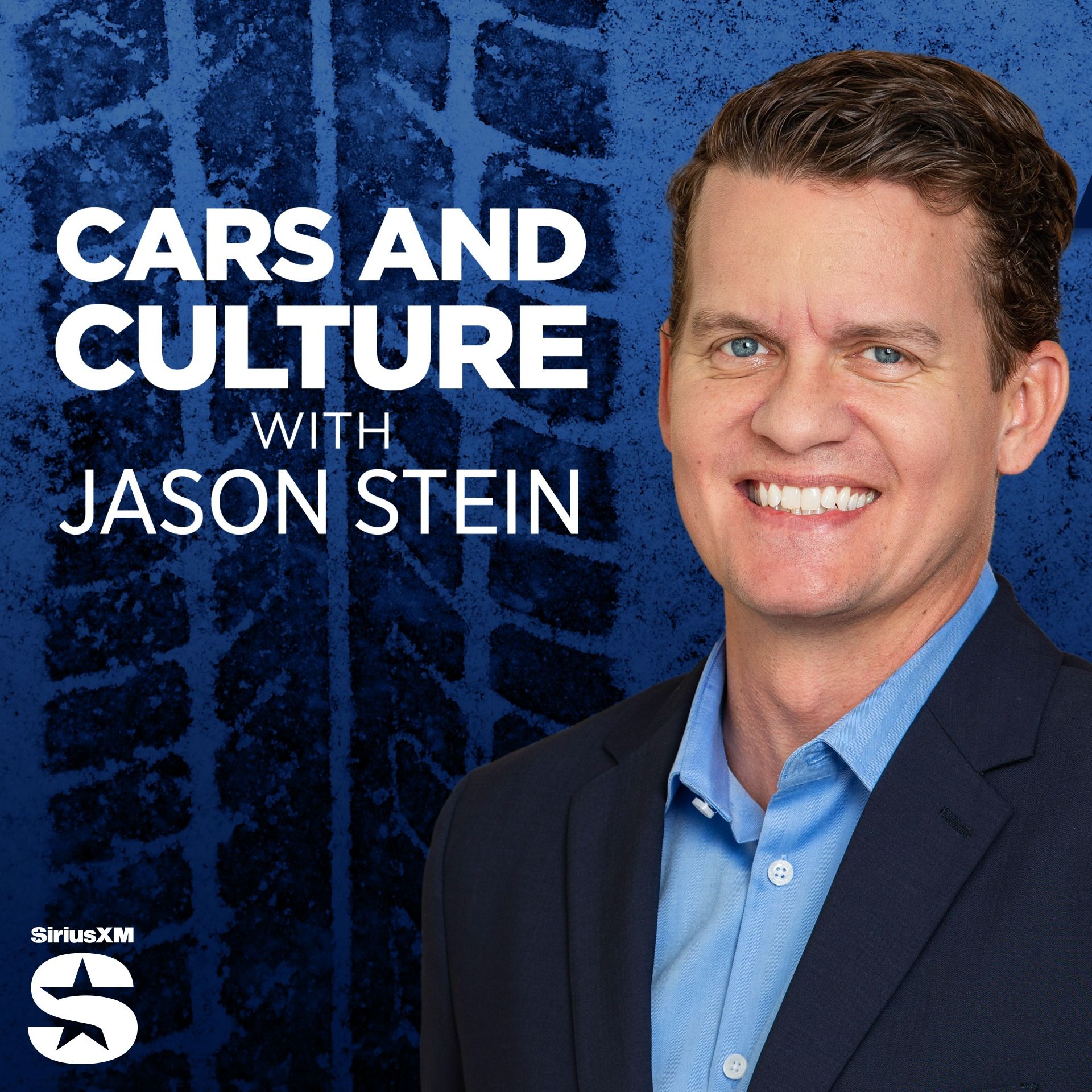
Miami’s Grand Prix is framed as more than a race weekend—“a platform, a platform for media, storytelling, technology and global brand building.” The conversation moves from ABX leadership themes to how organizers handled disruption, noting “reorganizing a global sports league… is a difficult task mid-season.” Growth is measured in scale and investment: “over a billion dollars of private investment” and “hundreds of thousands of attendees.” Apple TV’s F1 upgrades and multi-view engagement are paired with fan-demographic shifts, plus long-term Miami plans like a Paddock Club expansion and a contract extended to 2041.
"We are very excited to be here because as you said, we are not used to stay on standby mode after an incredible start to the season, so it's great because we know that we are coming here in a fantastic place...
...this is the fifth edition."
The Miami Grand Prix is a Formula 1 race weekend in Miami. They’re talking about how excited everyone is for this specific event after time off between races.
The Miami Grand Prix is a Formula One race held in Miami, and it’s the event the hosts are building excitement around. In this segment, the discussion centers on how the sport’s leadership and promoters are preparing for the weekend after a gap in the schedule.
"it seems yesterday from one side or on the other side it seems that we are here since 77 years of Formula One.
...thinking the way that F1 is thinking today big and this is a dimension that is really clear on our strategy."
Formula One, or F1, is the highest level of open-wheel race car competition. This segment is about how the series is managed—like scheduling races and working with sponsors—when plans change.
Formula One (F1) is the top tier of open-wheel racing, organized as a global championship with teams, promoters, and race organizers. Here, the speaker discusses how F1 leadership coordinates calendars, sponsors, and promoters—especially when disruptions force changes mid-season.
Select text to request an explanation
The automobile is one of the most important inventions that revolutionize the modern world.
In America, the rich history of car culture runs deep as technology continues to shape
the future of the industry. Jason Stein is here to share the stories of people passionate about
cars from industry leaders and innovators to car obsessed celebrities. Buckle up as Jason takes
you inside the boardroom, onto the track and around the bend on Cars and Culture on SiriusXM
Business Radio. Welcome into episode 251 of Cars and Culture with Jason Stein here on SiriusXM,
Business Channel 132. On this show, we're coming to you from one of the most dynamic intersections
in global sport, business and culture, the Formula One Crypto.com Miami Grand Prix. But this isn't
just about racing, because what's happening here in Miami is something much larger. It's where
technology meets entertainment, where global brands meet new audiences, and where the future of
sport is being built in real time. And that's exactly what brought together one of the most
compelling leadership conversations of race week. At the Autosport Business Exchange, known as ABX,
some of the most influential voices shaping the next era of Formula One and global media came
together trackside, not just to talk about racing, but to talk about where it's all going. On stage,
Stefano Domenicali, the CEO of Formula One, ADQ, Senior Vice President of Services and Apple,
and Tom Garfinkel, the man behind the Miami race. Because Formula One today is no longer
just a sport, it's a platform, a platform for media, storytelling, technology and global brand
building, and increasingly a culture all onto itself. And Miami may be the most powerful stage
in the United States. In this conversation, we hear about how Formula One continues to expand
its global reach, the role of media in streaming and shaping the fan experience, why companies like
Apple see opportunity at the intersection of content and sport, and how events like the
Miami Grand Prix are redefining what a modern sporting experience can be. Because if you want
to understand where the business is going, you start right here. Now the conversation with Stefano
Domenicali, ADQ and Tom Garfinkel from the Miami Grand Prix. Thank you all for joining us today.
We're going to talk about a lot of stuff. We're going to talk about Formula One, Miami,
Apple of course. Stefano, I want to start with you though. It's been five weeks since we've been
racing. I imagine reorganizing a global sports league and talking to promoters and rearranging
the calendar and sponsors is a difficult task mid-season. Take us through just the last four
or five weeks and sort of what's been going on and more importantly how excited you are for this
weekend too. We are very excited to be here because as you said, we are not used to stay
on standby mode after an incredible start to the season, so it's great because we know that we
are coming here in a fantastic place where there is a great vibes. I was just saying to Tom,
you know, this is the fifth edition. It seems yesterday from one side or on the other side it
seems that we are here since 77 years of Formula One. So that means that we were able to capture
with a great project here the attention of the American market is incredible city. So
I just want to thank Tom and all his organization for what they delivered in terms of thinking the
way that F1 is thinking today big and this is a dimension that is really clear on our strategy.
We want to keep embracing the American fans in the right way, creating the right vibes,
talking about sport, talking about business and that's also, you know, thanks to this initiative
is showing the possibility that F1 is not only sport, which is of course the base,
but it's even bigger than that. And if I go back to your first question, as you can imagine,
you know, we never cry in our life and we are here as an organization to try to react as much as we
can of the situation that we cannot control, which are of course a geopolitical situation
and a forecast. So don't worry about the things that you cannot control, but control what you
can. So that's why together with our ecosystem, as soon as we of course knew that it was not
possible to go ahead in that situation, we have to take decisions informing our stakeholders.
And I have to say that everyone understood the situation that we didn't have any kind of
problem, complaints, it's just a big understanding of a family that is having a clear mission
to try to take this sport to another level. And you know, despite this hole in the calendar,
you know, there is a greatest excitement, you know, after an incredible start to the season,
where we so for sure, one team that is stronger than the other so far, but there is a billion of
a lot of action on track, a lot of things on talk's point, and this is where we are today. So
once again, we are an organization that needs to be ready to react if something is happening,
without worrying too much on the fact that we know how the system can be managed. And that's why
I think it's the key of our success. Working together with all the stakeholders, understanding
each other, and trying to have a strategy for the future. But now we are here in Miami, let's see
in, I would say, less than half an hour, the cost will be, because that's really what we as racers
would love to see. Yeah, it's like you get a second start at the season again. So it's all
good things. Tom, I would love to hear about, this is the fifth year, as Stefano just said, and
there's a cruise ship out there that I passed on the way in. There's a lot of changes, but
let's just talk through sort of your vision. And when the race started, like now we're in
year five, it's obviously changed a lot. It's become this huge event with hundreds of thousands of
attendees. How does it sort of stack up at this point to what you envisioned at the beginning?
Well, first of all, I want to welcome everybody to Miami and to the Grand Prix. It's
only possible because we have someone like Steve Ross who thinks big about things and invests
in big ideas. And so when you look at what's happened around the stadium generally, you're
talking about over a billion dollars of private investment into the facility, the gondolas,
the tennis center, the training facility, the stadium itself, and now the racetrack for the
Grand Prix. So when you think about that kind of investment, it enables you to do things
that are a little bit different. And we try to do things differently. We try to innovate. I think
where the Grand Prix is today, I think it's bigger than we probably originally imagined.
Just from the standpoint of its impact on culture and on business, I think the business
that gets done at this race, the quality of the attendees from the standpoint of just across all
different sort of parts of culture, global culture is really pretty remarkable. And then
economic growth of South Florida, but also just on people's lives here. So all of those things
combined make it a pretty special thing to be a part of. Eddie, Stefan is here, but you can be
honest. I want to hear how you think it's been going so far with Apple coming into the fold this
year and being a broadcast partner now. Look, it's been great because first and foremost, I'm a huge
fan watching the races. And we wanted to make sure that when we started doing this, that when fans
watched the race on Apple TV, it was something that they were going to be like, wow, this is better
than it's been. And that was a high bar. But Dolby, we've had 4K Dolby vision. We don't compress
the video as much. And so when you watch a race for the first time, you're amazed at the quality.
And then we've added things like multi-view. Over 30% of our folks that have access to multi-view
are actually watching the race that way so they can watch the main telecast generally in drivers
or the overhead one that shows you where everyone is on the track and all of the data. The response
from fans has been overwhelmingly positive. They've loved it. I'm not surprised. Our teams have
worked together. We've been innovating. We've got some new things we're doing this week. And we're
going to keep doing really innovative things together over the next year. And it's quite exciting.
We're going to come back to that hopefully in a second because that sounds good.
Stephanie, let's talk about Miami this race specifically in general. As a Formula One fan,
I talked to a lot of other fans, stakeholders, people around the business. And I think a lot of
people outside of the US maybe questioned initially why there was three US races. Thought maybe that
was too much. It feels like maybe that narrative has changed over the years. But if we could talk
specifically about Miami and the importance of this race just on the sport in general.
Well, I accept that. That's no problem. Anyway, well, if you think back, I mean,
F1 has been always in US. But randomly, I would say in terms of
presence. We were in Detroit. Indianapolis. Austin. And the last time we
were in Austin, not hundreds years ago, but just eight years ago, we had around 60,000 people.
And now we have three races where the average attendee is huge. That means that the evolution
of the lover for one, this country, has been phenomenal. When we wanted to be in Miami,
we thought there was the right place to put the right point of interest in a city that
is basically very, very aligned with all what F1 was to be. Glamour place. The right economic
environment. The right place that has to take the lead on developing the growth of the business
in US. And now I think that it's fun enough, three races, and there is a lot of requests to be more
in US. And this is something that we need to manage, of course. We care. But we are just
at the beginning of our journey in US. We are resilient. And I always said that sport in US,
which we respect a lot, is part of culture. And the culture to change the culture or to evolve
the culture takes time. So we just need to keep hammering what we want to do together with our
partners, with our promoters, because US give us an opportunity to grow that is tremendous
and is big. And the measure of the business that you find in US, you don't find anywhere else in
the world. Of course, we are a worldwide sport that needs to capture the attention of all the
business and the sport around the world. But definitely this market and this country represent
for us an area where we keep investing. And we will do with the right partners. But that's
something that will take time to do another step of growth. And we don't give up. We will stay
there. We know that the biggest sport in US are still far away, but we are racers. And so we are
not shy and we're going to attack. Attack mode, respectfully, of course, the other sport. But
we're going to be in the culture of American fans soon. What do you think? It sounds like a fourth
race might be on the horizon, hopefully. Tom, I want to come back to you and just the evolution
of the race. I know this status out there, but for those who haven't heard it, the race will do
more ticket sales this weekend than the Miami Dolphins home season. At least it has in the past.
So it's obviously a huge success from a business perspective. But from a fan perspective, I'd love
to just talk through sort of the evolution of how you got here. You can get paddock club passes,
you can buy general admission, and there's 50 options in between. There's also a lot of
different activities to do when you're here. Maybe just talk through how year one was and
how we've evolved, where we are today with permanent paddocks and different things like that.
Yeah. Well, I mean, year one, obviously, we're just trying to pull off the race. I think we had
11 months in a post pandemic supply chain challenge world to actually build everything,
including the racetrack. So year one was an incredible endeavor to kind of pull it off,
if you will. And I think as we headed into year two, we really wanted to improve on the things
we didn't get right. And then year three, try to even fine tune those things even more. And now
headed into year five, I really can't say enough about the team of people that work here. It's
remarkable. I mean, I did a walk through last week with Kathy Nowak, our president, and
Sydney McLean, and Natalie Clark. And this team of people that work on this race and what they do,
the team here at the stadium with Todd Boyan, I mean, in a national championship game,
we had a major tennis tournament. Now we have the Grand Prix. And you see all these structures
that are all around this place. And then you're talking about the World Cup coming soon.
It's remarkable. And we're always trying to innovate. So, you know, you see a cruise ship now
as a hospitality structure out there. And hopefully all of you have had a chance to see it,
which is really a birth by the team. I challenge them, okay, what are we going to do out in the
marina area to improve? How are we going to do something big? What's new? What's going to be
innovative? And the team came back with the cruise ship idea. And then MSC Cruises got on board,
which made it possible. And to create this thing that had, and if you get a chance to go tour the
cruise ship, it's not just like sort of, you know, this big thing sitting in the middle of the racetrack.
It's actually a world-class hospitality venue with a bagatelle restaurant, et cetera. So we're
just trying to innovate. We're just trying to take it to the next level. And, you know, we're only
able to do that with the great team of people that we have. Yeah. And Eddie, I'm curious when it
comes to initially being interested in this deal. I know you're a big sports fan. You obviously
follow racing too. But how much do events like Miami go into that, right? It feels like it's sort
of like each race in Formula One is like a mini Super Bowl. Miami's like that. You're from Miami.
I'm curious, just sort of like the large-scale single event weekends. How much of a plus was
that for you guys? Yeah, let me start with your question that they answered. One thing that we,
three of us have in common is we have a great team of folks, but we're never satisfied with what we
have. We want to keep getting better. And we do that through innovating, coming up with ideas.
And we talk a lot about this together of how, you know, we get better. And that's what you're
seeing in the racing, I think, in Apple TV and in the Miami Grand Prix. Look, this is an amazing
sport. We're going into this weekend. You don't know who's going to win. It's the best unscripted
drama there is. You know, is Mercedes still going to be as good? Did McLaren, you know,
get these new changes to catch Mercedes? What about Ferrari? They were really fast in the curves,
and are they going to be fast in straightaway? And you just don't know. You don't know what's
going to happen, and that's what makes sports amazing. But the thing that you have with Formula
One is, besides the racing, there's all the technology. It's the most technologically advanced
sport there is. You have these incredible personalities, and it's not just the drivers.
The personalities are the teams and the team principals, and there's so much going on. And
I think as a sport, they're much more open in the way they communicate. And then there's all of the
the people that come in and the culture of the whole thing. And so it is huge. It is a Super Bowl
every weekend. And that was exciting to us, because we think this is very different than
a lot of the sports that are out there. We think this is a sport that's going to continue to grow
very, very rapidly in the U.S. And it still has a lot of room for growth, by the way.
And Miami brings all of that together. It's in the Yonasi, in La Casamilla. It's great to be back
in Miami. And it represents, again, the whole world. There's no more cultural city in the
United States than Miami. And I think this race being here is where it should be. And it's a great,
great place. And so for us, it's been great. We're very excited. This is our first U.S. race.
You know, some of the races earlier on are a little bit challenge, time-wise, especially for
me and the West Coast. But this is going to be great for everyone. Yeah, I want to stick with you
on that point. There's, you know, shifting from cable to streaming is obviously a difference.
I think there was some pros and cons people would say about each option. Can you just give us an
overview of how you think the first three races have gone and sort of what you're expecting,
meeting expectations or not? Yeah, I think, you know, there are different ways to do it. But the
first way everyone looks at it is, hey, what are the ratings? So it's a simple way. And we're
thrilled. The ratings were way up over where they were last year on linear for the first three races
significantly. Not only did we see more viewers, but we also saw more viewers on throughout the
weekend. So one of the things that I think I was always excited about is like, you look at today
and tomorrow and Sunday, all three days are huge. Today you've got a practice session with all of
the changes that are going on. You've got the sprint qualifying tomorrow, you've got a sprint
race, you've got the race qualifying, and then you have the race itself. And so I always thought
there was a huge opportunity to grow viewership, not just on Sunday, but all weekend. And we've
seen that early on in the results that we have. And the last thing is, are we growing the audience
in two major areas that we were excited and we're focused on? One, a younger group of folks watching
and more females watching. And we've seen that as well. So the early results have surpassed
certainly, I think, the expectations that we had and I think that F1 had. So we're thrilled. And
it's a great start, but we got a long way to go. And, Stefano, I want to talk to you about,
certainly, Apple and how you feel like it's gone, too. But more overall also globally,
there's three races. I know viewership for each of those three races was up year over year,
but maybe just talk us through sort of how you think viewership is trended this year.
But the trend is definitely great because we have a plus 26% year on year after the first
race in a time zone that are the most complicated one for the bigger, for the world. So we are
definitely happy about it. But as I said, for us, it's important to see this trend that is going
in the right direction. And he was saying one thing that is very important above all in this
market. We have 40% of our fans are female and very, very young. So we have a great demographic
that allow us to think that, you know, we are doing the right thing also because we know that
the younger generation loves to connect and live not only the sport with different way of
connectivity. The streaming for sure is something that has a different approach and different
dimension country to country, region to region. We are a worldwide sport. And this is the biggest
and the first more than experiment choice to go in this direction. And we believe that was the
right one because of the place where we are, because of course the part where we are. And this
will for sure give a trend in the future. But as always, we need to manage and see country to
country what is the right way to connect. There is not only the streaming, there is also the social
platform that we are doing. We don't have to forget that we have been always trying to be
different and innovative. We did the movie last year that has been a great success together,
once again, vision of doing something that is totally after the scheme of the old formal one.
That's the way and that's the reason why we are attractable in this moment where, you know,
everyone can choose what to want to see or wants to want to live. And this is another example,
like entertainment, hospitality, you know, having a unique experience is something that we want to
keep always at the top level because we are confronted with all the things that are around
the world. So the fans that can have the opportunity to come here, needs
and whatever they have to buy in terms of tick and offer, they need to be the best
kind of proposition they can find all around the world. And if they are connected with our
social platform, we need to make sure that they are following what they want to see and
that's what is happening all around the world. And this kind of dynamic listening,
trying to capture the information and be progressive in our offer is what I think is
enabling us to be worldwide, a platform that is growing with more than around 900 million fans
around the world. So it's a big number. We need to feel that responsibility not to be happy.
You were right, Ed, you were right, Tom. We are the one in our duty to empower, as is written there,
our people to be better, having a bigger vision, to not sit in an incredible state we live in today
because that's not very enough in a constructive way. But that's where we are today, thanks to,
you know, the one that believe in us because it's something that we feel, once again,
is a great responsibility to keep this world growing because, as I said, there is a lot of
space to grab in the future. I like how you clarified that 900 million fans was a large number.
It's an interesting number. Yes, it is an impressive number. Tom, sticking with the theme of
Formula One's partnership with Apple, I'd love to hear just sort of from a promoter perspective
how you're able to lean into that and sort of the benefit that would come from visibility across
Apple's different platforms and devices too. Yeah, I mean, I think it starts with a great
product, right? And Formula One is the highest form of motorsport in the world. It has been forever
and it will continue to be. It's the most exciting form of motorsport to watch. And it's the most
technological sport in the world. It's a sport with a demographic that's used from a fan base
in the United States much younger than the four major sports. And so when you think about technology
and you think about a young fan base and you think about the excitement of it and the job that,
you know, Liberty Media and Stefano have done with the sport over the last several years to grow
the sport and particularly here in the United States, it all just kind of is this confluence of
opportunity that comes together. You think about the NFL moving over to streaming platforms,
which has been an undeniable success, which is also a great product. But when you have a great
product and people will go where the product is and they'll go when it's convenient and the
technology and what Apple's doing is innovating that experience. It's not just the same old
broadcast. It's not just, you know, the world is changing at a faster pace than ever before in human
history. And so the broadcast is going to change. Information is at our fingertips and young people
even more so want that information. And so I think having Apple is just a perfect partner
for the sport. And as the sport grows, obviously it endures the benefit of our Grand Prix and
we look at it as reciprocal. We take the responsibility of, you know, our responsibility
as a promoter of growing the sport in the United States very seriously too and try to continue
to innovate to, I believe fans are built at the event at the racetrack. People come casual fans
and they're going to watch and then they fall in love with it. You can't help but fall in love
with it if you come out to the event and learn about the sport and then that translates to more
viewership. So, you know, we're trying to do our part there as well. And speaking of investing in
sort of the promotion of this race, I know that the contract has been extended till 2041,
which is one of the longest and not the longest on the calendar. My understanding,
I've heard that there's going to be some construction happening after this year's race.
Is there anything else you could tell us on that?
Yeah, happy to share with everybody today. We're excited that we're going to be investing in
other big investment here into the Grand Prix. We're going to be adding 115,000 square foot
permanent extension to the Paddock Club building. So, you'll see some images here.
So, currently turn one with the Casa Tua trackside club and is a temporary building. We put it up
and take it down every year. We're going to be, you know, a major investment here to extend
the Paddock Club building, which is currently about 6,000 Paddock Club tickets to what will now
be about 9,000 Paddock Club tickets. And just another example of an investment into the sport,
we're only able to do this because we have the long-term commitment and a great partner in Formula
1 and in Stefano. And so, that's why we're able to do and we have an owner in Steven Ross who,
you know, sees it and says, yeah, let's continue to invest and make this better and better every
year. So, we're excited about about the new building and it'll be ready for the Grand Prix next year.
Amazing. That must make you smile. You have to build a fence right after the fence.
I'm very unlucky at the end. Anyway, I'm just thinking that the next one,
Tom, is to make sure that all the stadium is surrounded by this incredible hospitality.
So, that just, he's getting there. We're trying. I mean, one step at a time, my friend.
We have to actually, it's interesting, we have to immediately after the race, we have to start
taking the temporary structure down and we have to build the fence from the new construction because
we have the World Cup coming soon. So, you know, it's between, again, national championship game
and then the tennis and then now Formula 1 and then World Cup coming, you know, the work never stops.
And this will be ready next year. This will be ready for the 2027 Grand Prix, yes.
Can I say something on that, Tom, for this, well, presentation. This is exactly what is
happening today in our ecosystem. Every promoter is pushed, you know, to do better. And this is a
an incredible, you know, form of constructive push for all the others to stay at that level.
Because today, you know, we are in a privileged position where we have a lot of requests from a
lot of countries. But the standards are now at a level where if you don't have this, you cannot
be with us. And this is a great thing that will enable all the system to grow. Amazing. Stefano
Eddie, Tom, thank you all so much for doing this. Thanks everyone for joining today. Enjoy the race.
Big thanks again to ABX at the Miami Grand Prix for the interview with Stefano Domenicali, Eddie Q
and Tom Garfinkel from the Miami Grand Prix. To see more cars and culture interviews, visit the
Cars and Culture YouTube channel. Subscribe, comment, check out hundreds of conversations
with the creators, collectors and culture makers who are driving the industry forward.
That's episode 251. I'm your host, Jason Stein. We'll see you down the road.
Every weekday morning at 9 a.m. east on Business Radio channel 132.
Or listen on the Serious 6M app.
Request an explanation for:
Request an Explanation
Heard something you'd like explained? We'll add it to this episode.
Sign in to request explanations for terms you heard.
Want to learn more?
Browse our glossary for plain-English explanations of automotive terms, jargon, and concepts.
See something that's not quite right? Our annotations are AI-generated and can sometimes miss the mark.
Click the flag icon on any annotation to suggest a correction.