Formula One is the most famous kind of professional auto racing. It’s a big global series, and the Montreal weekend is treated like a major cultural moment.
General Motors Canada is GM’s organization in Canada. The discussion is about running the Canadian team and expanding how much they sell and build locally.
Concept
mobility is revolutionizing itself
They’re talking about big changes in transportation—how cars and mobility are evolving. The claim is that Canada can build and support that future locally.
EVs are cars that run on electricity from a battery, not gasoline. When people say the industry is “driving toward EVs,” they mean more companies are planning and building electric cars.
“Tech forward” means focusing on newer technology first. In cars, that often points to electric power and software features rather than just engine changes.
Gas propulsion just means cars that use gasoline engines. The speaker is saying they’re offering both gas cars and electric cars as the market changes.
Connected services are car features that use a wireless connection to the internet. They can include things like remote app controls, navigation updates, and software improvements over time.
“Propulsion options” means different types of powertrains—like gas, hybrid, or electric. It’s about having more than one kind of drivetrain available as the market evolves.
In an EV, thermal systems are how the car manages heat. It keeps the battery and electric parts from getting too hot or too cold, which helps the car work well and last longer.
Advanced safety refers to modern driver-assistance and safety technologies beyond basic airbags and seatbelts—such as collision avoidance, lane-related assistance, and automated emergency responses. These systems typically use sensors and software to detect risk and intervene or warn the driver.
Super Cruise Intelligence is GM’s advanced driver-assistance tech. It’s designed to help the car drive more on its own (like steering) on certain roads, while you stay responsible and ready to take over.
This phrase describes a system where the car can do some driving tasks without your hands, but you still have to watch the road. It’s meant to be supervised driving, not fully autonomous.
Connected technology means the car can link up with services or devices outside the car. That can enable features like better software updates and more personalized experiences.
Dolby Atmos is a surround-sound style audio system. It’s designed to make music and movies sound like they’re coming from different directions, not just left and right.
Concept
gas pump feeling
It means how people react to what it costs to buy gas. When gas prices feel high or unpredictable, it can make people more interested in alternatives.
It just means how a brand splits its lineup between gas cars and electric cars. As people’s preferences shift, the company adjusts how many of each it sells.
These are safety and convenience features that help the driver—like keeping the car in its lane or helping with speed. You still have to pay attention and drive.
The Escalade is a large luxury SUV made by Cadillac. It’s designed for comfort and a premium feel, and it’s meant for buyers who want a high-end family vehicle with a big, upscale look. It often comes up because it’s one of Cadillac’s most recognizable models.
They discuss how GM is handling trucks in Canada—keeping the popular pickup business strong while also investing in future technology. They also mention different versions of pickups for different buyers.
A propulsion system is the vehicle’s “go” system—what provides the power to move. In EVs, that usually involves electric motors and related components.
The Chevrolet Colorado is a smaller pickup than the big full-size trucks. They’re using it as an example of a model that fits buyers who want affordability and truck needs met.
The EV1 was an electric car made by General Motors. It was built to show what driving with electricity could be like, instead of using gasoline. It’s often mentioned in EV history because it was one of GM’s early electric efforts.
The Chevrolet Equinox is a popular mid-size-ish SUV. They’re using it as part of their lineup for buyers who care about affordability, including in the EV discussion.
The Chevrolet Bolt is an electric car. They’re saying it’s one of the cheaper EV options in Canada and fits the affordability focus they’re talking about.
The Cadillac OPTIQ is Cadillac’s newer, more affordable electric SUV/crossover. Here, GM Canada is saying it’s part of their plan to offer EVs at prices that fit more shoppers’ budgets.
Term
EV perspective
“EV perspective” just means they’re talking about electric cars specifically. In this part, they’re explaining how EV rebates and credits affect which electric models they can sell and at what price.
The Chevrolet Equinox Bolt is an electric Equinox. They’re saying it can qualify for government EV incentives if the vehicle’s price is low enough, which helps make it more affordable.
A federal credit is a government incentive that can lower what you pay for an eligible purchase. They’re saying their EVs can qualify, which helps customers afford them.
Concept
portfolio packaging
“Packaging” means how the car is offered—what features and price you bundle together. They’re saying they’re arranging their lineup so customers can choose options that fit their budget.
Energy management software is the car’s computer logic for how it uses electricity. In an EV, it helps decide when to pull power, when to save it, and how to keep everything working efficiently.
Non-traditional marketing is advertising that doesn’t rely only on typical car ads. Here, the idea is to use racing and pop-culture style visibility to reach people differently.
They’re talking about using Formula 1 as a marketing “platform.” Instead of only promoting around race day, they use it to set up special customer experiences through dealers.
The Chevrolet Bolt is an electric vehicle (EV) model, and the speaker calls out its “affordable” launch as a key step in GM Canada’s EV push. The point in this segment is that GM Canada is using the Bolt to drive EV sales momentum in the Canadian market.
Brand
Lyric
Lyric is a Cadillac model name they’re highlighting as part of the brand’s newer direction. They’re using it to show Cadillac is reaching people who haven’t bought Cadillac before.
Brand
Vistik
Vistik is another Cadillac model name mentioned as part of the brand’s new lineup. They’re using it to illustrate how Cadillac is attracting many people who are new to the brand.
EV adaptation means how well and how fast a place is switching from gas cars to electric cars. It includes things like EVs being available and people being willing to buy them.
Here, “closed ecosystem” means the car’s apps and online features work together with local services in a more tightly connected way. That can make new technology show up in cars faster.
The Buick Century is a car model line from Buick that was made for many years. It was designed to be a comfortable, everyday mid-size vehicle. It comes up in conversations about Buick’s history because the name has been around for a long time.
LIVE
The automobile is one of the most important inventions that revolutionize the modern world.
In America, the rich history of car culture runs deep as technology continues to shape
the future of the industry. Jason Stein is here to share the stories of people passionate about
cars from industry leaders and innovators to car obsessed celebrities. Buckle up as Jason takes
you inside the boardroom onto the track and around the bend on Cars and Culture on SiriusXM
Business Radio. We welcome you into episode 252 of Cars and Culture. I'm your host Jason Stein.
Great to have you along for the ride again. This week we're headed north of the border
and toward one of the biggest moments yet for Cadillac on the global stage.
My guest is Jack Opel, the president and managing director of General Motors Canada,
a longtime GM executive whose career has taken him across some of the most dynamic and competitive
automotive markets in the world. From Asia to the Middle East and Africa and now back home to
Canada at a pivotal time for the industry. And there's a lot happening. From Canadian
manufacturing investments in Oshawa and St. Catherine's Ontario to the future of EV adoption
to Cadillac's rapidly growing luxury electric portfolio to Formula One and what it means for
the brand globally. Jack is stepping into this role at a fascinating moment for General Motors
and for the Canadian auto sector overall. We'll talk about leadership, global perspective,
the changing political and manufacturing landscape and why Cadillac believes performance,
technology and luxury all belong together in the EV era. And yes, of course with Montreal
happening this week, we'll talk Formula One. Cadillac is using the global stage of F1 to
tell a much bigger story about innovation, engineering and brand transformation. And
with the Montreal Grand Prix, there's no better time to have this conversation.
My discussion with Jack Opel starts now. This is Jack Opel on Cars and Culture with Jason Stein.
It's a little bit of a homecoming of sorts for him. He is coming back to Canada after a significant
amount of time away. And I know he is energized. He is thrilled. He's been around the world.
And he has a big race in front of him where he will be representing GM Canada. Jack, it's
excellent to have you on the program. Welcome back to Canada. Welcome to Serious XM.
Hey, Jason. Great to be here. Looking forward to it.
I know that the weekend we'll talk at length about Formula One. I know that the weekend is
important for you to be in Montreal. What does it mean for you personally, probably more than
professionally? Well, personally, I have been out for almost 20 years overseas. And coming back
to Canada and leading the Canadian team at a very pivotal time with the broadest portfolio that
we've ever offered, probably the best portfolio we've ever offered. And Cadillac, with its racing
and engineering and performance pedigree, taking the stage and re-entering the F1, which today is
one of the biggest far stages that you can be from a cultural perspective, if you enjoy that.
It's a great place to be. And I'm looking forward to it.
Given where you've been now over the course of the last 25 years, now I'll ask professionally
what it means to be back. I mean, you've had the opportunity to spend time in China and India and
Singapore and the Middle East and Africa. And now you get to come home. What does that mean for
you professionally? I would say professionally and personally, it means a lot. And it's actually
more personal. These are the teams I grew up with. This is the country I grew up in.
It's our communities. It's our roads. It's our dealers. There's a true responsibility to prove
that a Canadian-led team can absolutely deliver, grow our volume, our share, our brands,
continue to grow our great footprint, whether it be our manufacturing or our engineering center,
and drive the innovation that we're driving today and that show that mobility
is revolutionizing itself, but it can be built in Canada for Canadians. So it's just a great
opportunity to be back. As I mentioned, you've worked around the world in very different markets
with very different consumers. What did those experience teach you about people? And maybe
not just cars, but about people? The markets that have had the great opportunity to work
when and represent Jason. First of all, they're very fast-paced and very, very disruptive.
And what I really learned about people and those markets is agility and discipline
sit way above anything else that you can do. We've got great product. We've been winning
in global markets for the last decade and a half, but at the end of the day, it's the ability for
the team to work together, their agility to respond to market changes that really make the
difference and discipline and execution underlines everything. When you look across that arc of where
you've been, what two or three assignments maybe have changed you as a leader, Jack?
I've had multiple opportunities to go back. I spent about half a decade overseas, came back to
Canada. And this last assignment, which was just at the tail end of COVID, where I got time to
spend in China and Middle East, I would say truly changed my perspective, being in China,
seeing the transformation and the drive towards EVs and just an absolute all-aligned commitment
to driving the industry and transforming it from a tech forward perspective. And then moving to
the Middle East, where our great tech portfolio and EV portfolio was just arriving on ground as I
landed there back in 22 and just see the immense success and adaptability that we've seen right
across the board. Whether we're offering great gas propulsion or our broad EV portfolio,
the ability of our portfolio to compete in that tech forward market, which just continues to evolve
at the fastest pace I've ever seen. I would go back, our ability and my team's ability to be agile
and be able to respond to what you don't know is going to happen tomorrow morning. And there are
unfortunate events going on in the region today. And our ability to remain disciplined and still
stick with the plan and execute, but also the agility to change the plan if the data tells us
to do so. And we've been able to do that very successfully for the last two or three years.
So I would say just reconfirming that agility and execution at the heart, if you want to stay
ahead of the innovation game that lies out of us today. And when you led GM Africa in the Middle
East, it was through a very highly competitive period, focused on growth, connected services,
multiple propulsion options. What do you think the region taught you about leading through
uncertainty? And you just referenced uncertainty and uncertain times. What do you think that taught
you? The learnings that I bring from there is in everything that we do, there's controllables
and there's things we can influence. In addition to the things that I've talked about, the agility,
the execution, the team holding itself accountable and going to market, a huge laser focus on your
customer. Because if you keep that customer focused and you keep the focus on what the customer needs
are and ensure how your products, services, and your execution are lining up with the customer
needs, even though the market is disruptive and highly competitive, with that customer focus,
you can still continue to deliver results. So always keeping that customer lens on and laser
focus that we're meeting their needs first and foremost would probably be one of the biggest
learnings in addition to what we control internally. One thread, Jack, in your career is that you have
this ability to adapt different regions, different customer expectations, different business realities.
Now you're bringing that back to Canada. As you step into the role here and really become more
immersed in the role, what's the first thing that you want to understand? Is it the business,
the dealer network, the customers, the culture? My style definitely is one where
I really like to lead by listening. For the last 100 days, as they call it, I've been on ground.
I've had the opportunity to meet our dealers, our customers in several engagements through
different auto shows that typically take place here in the first quarter. I've spent a lot of
time with our employees, both in commercial operations, manufacturing and engineering.
So really understanding and listening to what they're doing, why they're doing,
the alignment to our vision, that for me is at the heart of how I like to lead. I'm also super
obsessed with data, to ensure where the data is taking us and what the insights in the data are
and ensuring that we're rigorously debating, sometimes provocatively debating that if those
are the right things. But even in that context, even the customer in the center of that conversation
and then remaining agile in our execution basically comes all together. So it's a full circle.
And it's a complicated environment that you're stepping back into, EV transition,
affordability pressures, trade issues, government policy, technology disruption,
the list is kind of endless, Jack. How do you prioritize among those various items I just listed?
The prioritization is actually relatively simple and straightforward. Again,
if you keep the customer, our vision in place, what's the customer really looking for and how
are they responding? So the three priorities, and I keep it really simple, two or three top
two or three priorities. Number one priority is how do we protect and continue to grow a
commercial position of being number one in sales, total sales and EV sales leader in the country?
Just make sure we protect that by providing an absolutely outstanding end-to-end customer
experience, regardless of what type of product or services our customers are looking for.
And the second two pillars that really support that, and I keep in sight and our huge priorities,
is ensuring that we continue to invest in our Canadian plants, our footprint and our manufacturing
whilst continuing to leverage and add value to our engineering center, which employs over 1100
people today and is a key integral part of General Motors portfolio. So really it's all about
Well, let's talk about the tech center. The Canadian tech center has become an important
innovation hub for GM. Most people might not know what goes on there. What work is happening there
that more people should know about? As I said, it's a fully integrated technical center. We've
got over a thousand engineers in there. They're developers with great technical expertise on
software, primarily focused on in-vehicle software, infotainment, connectivity,
advanced safety, EV thermal systems. And the other big piece, which is kind of the leading edges,
General Motors, you know, eyes-on hands-off system, which we call the Super Cruise Intelligence
system. You know, our engineers are writing code and algorithms that literally are driving
on Canadian roads today and their entire in-cabin and driving experience. So we've got a complete
array of work that's being led by Canadians at our Canadian Technical Center. And a strong talent
base in software engineering and AI, advanced mobility. I'm wondering how that changes the way
GM overall thinks about Canada, not just as a manufacturing market, which of course has been
forever, but as a technology market. You know, the fact that we've got a huge integrated Canadian
Technical Center presenting the software engineering talent that we have, by a very strong academic
infrastructure that we afford with our great colleges and universities and the talent that
comes out of there, is a testament in itself of how General Motors considers the Canadian Tech
Center as a key integral part of its software future and how we develop it. So it is a key part
of how we're transitioning and how the overall automotive space in the vehicle is transitioning.
So I totally agree with you, then. And when you think about the future vehicle,
the biggest change is, of course, is just around propulsion, but it's also around
software and the customer experience. I'm guessing the importance of that technology center and the
connected technology to vehicle ownership and that experience will just become more prevalent
going forward, right? Jason, I couldn't agree more with that. And that has been our strategy
for almost a decade as we've been developing that the vehicle and performance design will stay
at the core of the vehicle. But the ownership experience, the in-vehicle ownership experience
of what customers want to feel and touch, you know, let's take every single Cadillac,
for example, today, comes with a complete Dolby Atmos system in it, which is fully
developed, tested right here at the Canadian Tech Center. That, again, is an answer to what
those customers are asking, and we can work with those customers, provide them a personalized
experience with that system to what they really want to experience both in the vehicle and outside
the vehicle in their personal spaces. So it really allows a very seamless transition of personal
spaces, really moving into an in-vehicle space and keeping it very consistent.
Let's talk about product. How do you think about the balance between EVs, internal combustion,
and hybrids in Canada right now, especially given the variability and demand that's across regions?
And, of course, circumstances being what they are at the gas pump.
I'm not sure we've seen a lot of immediate behavioral changes, but you're right, you know,
that gas pump feeling is there. It's there when I go there. I was there this morning when I refueled
to come to work. The key thing to remember is the way I look at it is, you know, today we're
offering ICE and full EV choices across segments. We're, you know, being number one on both sales
and EVs suggests that that choice, that broad portfolio for every purse, is resonating with our
customers. We will continue to review the powertrain mix as preferences evolve, but our focus is
really clear. You know, it's letting the customer drive a journey, but EVs still being the end game,
making sure that whether it's ICE or EVs, that we're giving that consumer the right experience
from a tech perspective, and giving the market a broad portfolio that matches every purse. So,
the way I would summarize that is, you know, we have to remain tech driven, and we have to deliver
it on customer terms, and whether that's gas or EV in tomorrow, it's got to be on customer terms.
So, is flexibility, Jack, the most important capability in your product strategy? In other
words, being able to pivot depending on where demand actually lands?
You got to, you know, as Mary Barar, our CEO, always consistently talks about agility at
General Motors is an absolute superpower. And in the experiences that I've talked about over the
last decade overseas, you know, we're entering that same era of disruption and how things are
moving fast. And our ability in the breadth of our portfolio, the ability of our resilient supply
chain and our manufacturing footprint to be able to pivot and adjust to consumer demands,
and yet still continue to drive to our vision of a whole electric future, I do believe is an
absolute strength.
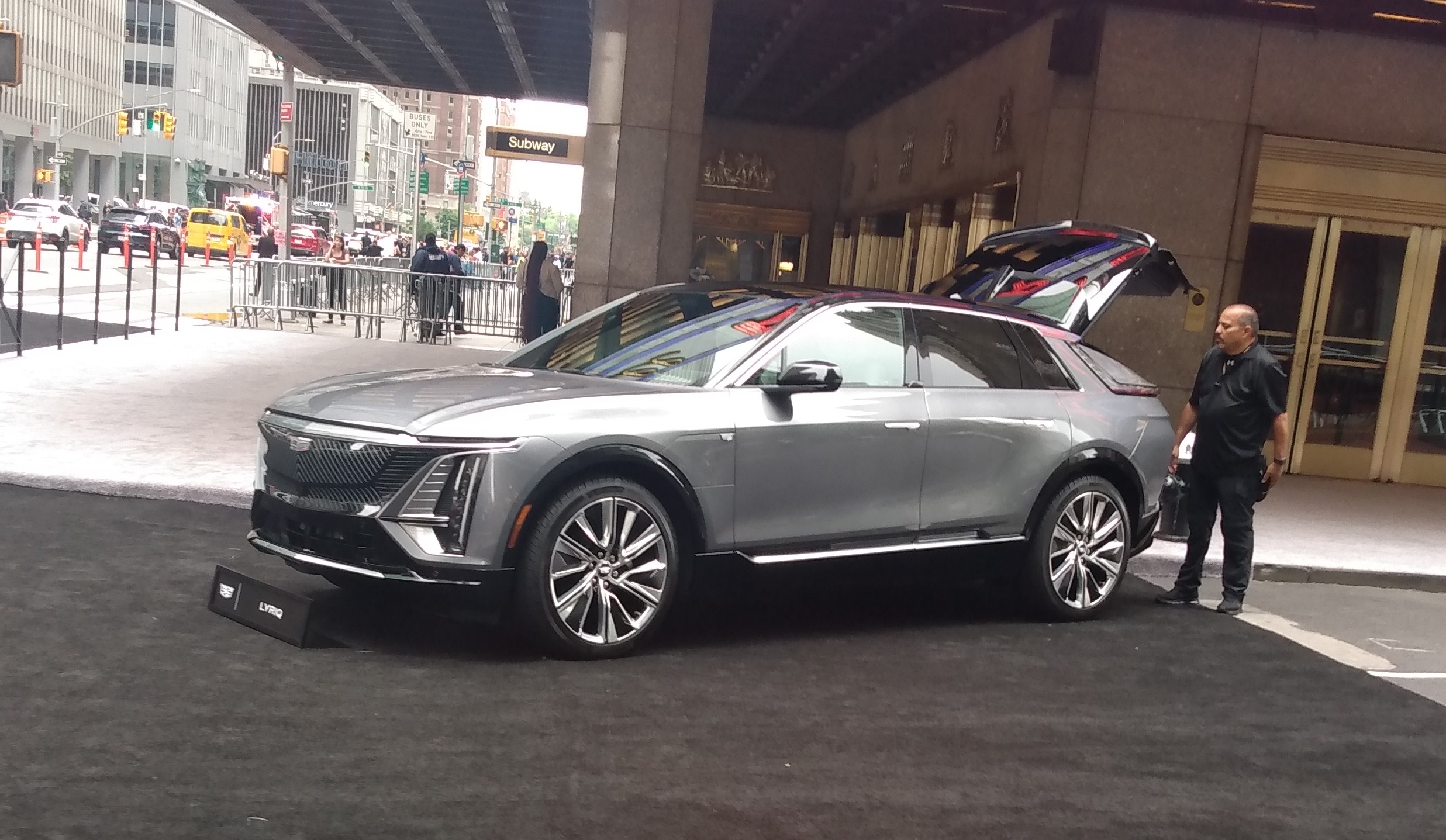
Cadillac, it's become a real bright spot in Canada's EV market. What specifically is resonating
with Canadian luxury buyers?
Cadillac has been on this journey for quite some time. And, you know, if we just look at the
results today, Jason, you know, Cadillac is Canada's number one luxury EV brand. It's led by,
you know, starting with the OPTIQ, the Lyric, and the Wistic, and all three luxury EVs.
It's really the refinement and the EV performance that we're bringing to the marketplace.
It's also the advanced driver assist and immersive tech that I've talked to you about the Dolby
Autmos or the Supercruise. You know, the cabin truly feels connected. It's a living space. It's
not just a car. And then Boy Grail is the outstanding design language that we've got with Cadillac.
It's really reestablishing itself and leading with the luxury first mindset that's tech driven.
And you look at Lyric, OPTIQ, and what's coming next. There's a common thread about Cadillac,
and it's effectively been redefined. What are you most excited about on the product front
as it relates to Cadillac?
On the product front, again, we envisioned this product portfolio about, you know,
six or seven years ago. And for that product to land today and resonate the way it is with our
consumers, it's just amazing. I mean, if we look at, you know, the OPTIQ, the Lyric,
Wistic, you asked about what's next, well, it's already here. You know, it goes all the way up to
the Escalade IQ and it takes that Escalade consumer to have a choice between an Escalade gas or a
completely electrified Escalade IQ with a world-class range and every single amenity
and luxury that the consumer expects from a Cadillac.
Yeah, exactly. Let's talk trucks. Canada, very much still a truck market. Silverado, Sierra,
full-size SUVs. How do you protect and grow that core business while you're investing in the future?
If we look at the truck market, it continues to remain resilient even with, you know, what we've
seen in recent months here. It's a strong segment. You know, if we look at our investments should
also signal very strongly. You know, just a couple of days ago, we announced over $700 million of
investment in our St. Catherine's propulsion system. We will drive the next generation of
powertrains in our pickup trucks and we did, we made announcements at Oshawa. So we believe
with the, and the current generation pickup truck continues to grow. You know, we, for the last few
months, we've delivered outstanding results when it comes to the pickup segment. We continue to connect
the market with variants, you know, off-road variants. We've got lifestyle variants in the
pickup truck and then we've got high-end variants. So again, when we look within the pickup segment
and it's resilient and the customer needs, depending on where you are in the country,
you know, whether you're, you know, in Alberta or whether you're in the city of Toronto,
there's a need for that product in certain construct, whether it's lifestyle or a work
truck or a complete off-road capable vehicle. So having the ability to provide within the truck
portfolio great propulsion systems, all the tech that we've talked about, and then the ability to
adapt to customers need by providing the right trim and the answers to those customers. I believe
that that segment will remain resilient and our products, both with the GMC Sierra and the Chevrolet
Silverado, will continue to resonate with those customers as they have for the last two decades.
What are Canadian truck buyers telling you right now? Are their priorities shifting at all? The
fuel efficiency, technology, pricing, durability? Today said overall, I would say affordability
continues to be top of mind and we've talked about all the reasons why. You know, we're in an
environment where, you know, the pricing of the vehicles and where the average transaction price
in most of these segments that we participate in continue to evolve. So affordability is at the
center of it and that's why if I look at our portfolio, we're bringing the tech, we're bringing
the propulsion and the customer needs across, even from a pickup truck segment, right from our
Chevrolet Colorado in the mid pickup segment to the GMC Canyon and then moving on to full
price pickups, you know, you can move between two pickup segments and still have your needs met,
whether it's propulsion, affordability, or the actual attributes of the pickup truck that you're
looking at. So I would say affordability is at the heart and we're looking at that and making
sure that we're meeting that customer and have the ability to meet that customer's demands
with our product portfolio. On the affordability front, is it shaping your product decisions in
terms of what you build, how you package it, how you price it ultimately and are you seeing more
demand for entry level or maybe value oriented trims? And if I look at the breadth of our portfolio
and I'll talk both ICE and EV1, we've got a parallel portfolio almost today that can
accommodate the customer on the affordability side. So if we look at the affordability side with
the Chevrolet Trax, Equinox, Terrain, and then on the same side, we've introduced the most affordable
EV in the Canadian market with the Chevrolet Bolt and the Chevrolet Equinox, even touching
into the entry level with the Cadillac OPTIQ. With that portfolio, we are keeping a very close
eye on how do we meet the largest segments of consumers with the broadest portfolio
and match them on affordability. Looking at the recent automotive strategy change
introduced by the federal government a couple of months ago with the $5,000 rebate that came in,
from an EV perspective, that makes the Chevrolet Equinox Bolt and some of our optics actually
applicable, which need to transact under $50,000. They make them applicable for that federal credit,
which again helps us drive and provide consumers with a wide array of options on that affordability
spectrum, which is also aligned with where the federal credits are coming in. So absolutely,
we look at the portfolio, its packaging, and how easy we want to make sure that we are taking
care of the customer with all the options possible from an affordability lens.
After the break, I'll continue my conversation with GM Canada leader Jack Opel. To see more cars
and culture interviews, go to the YouTube channel, where there are more than 3,000 videos from leaders
across the automotive world. The automobile is one of the most important inventions that
revolutionize the modern world. In America, the rich history of car culture runs deep. Technology
continues to shape the future of the industry. Jason Stein is here to share the stories of
people passionate about cars from industry leaders and innovators to car obsessed celebrities.
Buckle up as Jason takes you inside the boardroom onto the track and around the bend on Cars and
Culture on SiriusXM Business Radio. Welcome back to Cars and Culture here on SiriusXM. I'm your
host Jason Stein. Now the continuation of my conversation with GM Canada leader Jack Opel.
To see more cars and culture interviews, go to the Cars and Culture YouTube channel,
where there are more than 3,000 videos from leaders across the car world.
When we look forward, Jack, what does success look for you? How does it look for GM Canada
from a product standpoint? Success is for me, I have always measured success in
where the customer vote comes in. If I look at how the customers have responded
and where our sales have been leading the Canadian market for the last two years and through the
first quarter year, that for us is the ultimate test of the success of our portfolio services
and our connect with our customers. I would go back and say, the vision is continue to provide
the Canadian market with the broadest portfolio, our customers with the choices that meet their
mobility needs and let the customer vote by rewarding, by purchasing and positioning Canada
as a sales and EV leader in the marketplace. Let's talk about the weekend in Montreal and
go back to Formula One a little bit. Cadillacs move into F1 as a major global brand statement.
Obviously had an American homecoming in Miami just recently. What does it mean as a platform
for Cadillac in Canada? First of all, racing has always been how Cadillac advances its
engineering. Formula One is simply the highest stage for that story and that applies to Canada.
The weekend in Montreal is amongst the five most attended races on the entire circuit.
And if I look at YF1, it really compresses years of learnings in aerodynamics, energy management
software into months and those gains really flow straight back into our product portfolio,
our EVs and performance and we're able to bring those products and services to our customers
and bring those to life in our showrooms. And today, why does it really matter today is,
to be honest, F1 has never been bigger in terms of fan base, reach, its cultural impact
and it aligns perfectly with where Cadillac is headed as a true tech driven luxury brand
underpinned by performance. So I would say that's really where, you know, both from a Cadillac
global North American and even more so a Canadian perspective, the F1 really fits that story.
When we think about the opportunity to play off some of the things that you've just said
about Cadillac and its relevance, whether it's global audience, technology, fashion,
hospitality, entertainment, does that allow you to do some non-traditional, non-traditional
automotive marketing? Does it allow you to kind of peer into a cultural phenomena that
could spread from a marketing standpoint a little differently for the brand?
Yeah, Jason, that's a great point. It absolutely does. And, you know, we have been
really developing the Cadillac brand in several non-traditional manners. You know,
it's really looking at our audiences and catering the luxury story, the tech story and performance
story in those swim lanes and then bringing them together. The F1 platform allows us to kind of
bring it all together in the offshoots, not even just around the race day, but looking at, you know,
our network of over 100 Cadillac dealers across the country. It allows each one of those dealers
to tap into that customer audience in a much more personal and one-to-one way and deliver
curated experiences with those customers, whether they're coming in, you know, for an F1 weekend
or just wanting to experience that Cadillac. So the F1 platform gives us another reason to connect
with our consumers in a very personal, meaningful way and a curated manner that that consumer
expects us to connect with them. So, yes, you know, it's less about the mass market awareness,
which I think the F1 platform inherently provides us, but it gives us a unique opportunity to
connect with our customers in a very private and curated manner. The next chapter for you,
I know will be an exciting one. What's on your to-do list over the course of the next several
months, Jack? You know, well, F1 is just around the corner, so I'm looking forward to seeing you
there, Jason, and seeing a good performance that weekend. You know, we've got a lot of stuff happening.
We've got great momentum, you know, behind us here to the first four months. We continue to
lead the market from an EV sales perspective, and we're just starting to hit the market with
our great launch of the affordable Chevy Bolt, and we really want to see that resonate with
our consumers. So again, first and foremost, for the next, I would say for the balance
of the eight months of the year, it's really keeping that customer focus and continuing to
deliver an outstanding experience for our customers and leading the Canadian market with sales and
being the EV leader where, you know, one in every five EVs sold today is a General Motors EV.
And more importantly, you know, if we talk about Cadillac, how do we use the F1 platform
and the leadership that we've attained with OPTIQ, Lyric, and Vistik, and more than 50%
of the consumers coming into Cadillac today are new to the brand. You know, just let's just think
about that. I mean, that's a brand that is truly at the heart of its transformation. So keeping that
momentum both on our overall commercial performance remaining number one in oil sales, but really
driving that Cadillac growth further and being the luxury EV OEM in the country is a great priority.
Now, in addition to that, continuing to create value in our manufacturing footprint in Canada
is very, very critical and important for us. So, you know, in addition to the announcements that
we've made with St. Catharines and Oshawa, we want to make sure that as you know, those facilities
are absolutely ready and deliver that great product when we're ready to launch it. So we're
going to be prioritizing getting ourselves ready for those next generation products.
And we want to continue to lead with the tech transformation. I truly believe as the automotive
landscape transforms, and as you and I've talked about, the vehicle will still remain at the heart,
but the software and the experience will really define the differentiation that we can create
for the consumer from an in vehicle experience. And I believe that there is huge value in Canadian
talent in our academia, in our R&D and our Canadian technical center to grow and to continue to drive
value for General Motors and our vehicles eventually to drive that experience for our
customers. So I would say those three will continue to remain at the heart of what I'm focused over
the next seven to eight months. What do you think Canadian customers want from GM right now that
be different than what they wanted five years ago? I think the Canadian consumer is in a place where
mobility and tech are changing faster than ever. And the Canadian consumer is
always valued, it's a value-driven consumer, but they want good value for their product
and they want reliability, durability, safety and performance. I don't think that fundamentally
changes, but with the pressures that we have, we've talked about affordability and what we're
globally seeing influences the Canadian consumer on what they expect from a product, how is it future
ready from a tech perspective? And I believe with our products, whether it's again our Chevrolet
tracks at the starting end or a Cadillac IQ or a Hummer, deliver that consistent durability, safety,
performance and design at the core, and then the consumers can truly experience the tech and
the personalized experience in the vehicle. And I think today, consumers want that packaged
in an affordable, meaningful way, which still lives true to the Canadian value in ownership that they
really pride in. Given your global role, ask a few final questions, Jack. Given the context that
you've lived through, generally, not just for GM, but the industry, is the industry trying to do too
much at one time? We've talked about the enormous change going on at every level, and I'm talking
about propulsion systems, EVs, software, autonomy, new retail models. Where does the industry need
to simplify or does it? From my perspective, Jason, I would put it in kind of a couple of
swim lanes here. I think the industry, OEMs, our dealer body that has always served the market,
I think we do need to really simplify the customer experience and the purchasing experience for a
customer today. And then this research has been around for decades. The actual experience a customer
has when they go in to purchase a vehicle, and our dealers do a great job, but it is complex.
The vehicles are complex. How do you build the right vehicle that fits my needs?
So I think we need to, as an industry, and it's something that we're very focused on. I've got
teams that are literally working hours, day in and day out, is how do I make Jason's decision to
purchase a vehicle as simple as possible? Imagine a world where you can come in and say,
this is a vehicle I want, and you're able to research it, build it in three or four clicks,
and then be able to walk into the dealership, test drive that same vehicle, and have simple
options to own it. We are really focused on really microscopically looking at the customer and
their purchasing journey and ensuring that continue to simplify the purchasing journey.
I believe that that will drive both loyalty and conquest and appreciation, because it has
been a pain point for a long time, and I believe strongly that tech today enables us to do that.
That does not mean that we take humans out of the loop. I believe it's still a big purchase
for any individual. There has to be emotion attached. Car is still the second biggest buying
experience that most Canadians invest in, so the emotion plays a big part, and that emotion comes
true when they come and touch and feel the product, and test driving a vehicle remains
a huge priority in the buying decision, but we can simplify that journey.
Secondly, we need to drive more efficiencies right through our supply chain, manufacturing
processes, and we need to continue to drive costs down. That's a huge focus for us at General
Motors as well, because that answers, again, looking at it from the customer's perspective,
our ability to bring more innovation and tech into the vehicle, our ability to bring affordability
into the lens. As an industry, we may be doing a lot, but I think it's still keeping at the end
of the day, the customer at the center and the industry viable as an overall ecosystem. Cost,
affordability, resilience in supply chain, automation in manufacturing needs to drive
forward to give the customers the best possible, safest, durable, affordable product,
and on the customer experience side, we've got to simplify that journey.
One final thing, given your time, and this goes back to the beginning of our conversation,
given your time around the world, including your time as Executive Director of Chevrolet China,
what is it about the Chinese market that we are underestimating as an industry?
China has made a lot of progress when it comes to EV adaptation. We lead in the
Chinese market with Buick and Cadillac products, again, a wide variety of that product.
I would say the industry itself and the consumer is somewhat different. That consumer is looking
for a lifestyle within their vehicle. It's not just a vehicle that provides mobility.
For many people, for a lot of people in China, that vehicle is kind of their second living space
that they spend a lot of time in, whether it be in their free time or traveling on
the weekends and so forth. There is this intrinsic ask for bringing their lifestyle
into the vehicle. I think the Chinese ecosystem, if I look at our great product that we've
launched over the last couple of years with Buick and Cadillac, it's been able to bring that tech
and that the consumer's personal life seamlessly and continue that experience in the vehicle.
I believe that that need from the customer has really accelerated how tech is looked at
and how tech continues to make its way into those vehicles in a closed ecosystem within China.
That's kind of what makes everybody very excited and nervous at the same time is how quickly
the vehicles are truly accelerating and moving towards software and tech
and bringing that customer experience into the vehicle. I believe now that has to be managed
from a privacy regulatory perspective to continue to protect the consumer as well,
which China does in their own way because they've got regulatory environments and
privacy regulations that protect the Chinese consumer. I think as the world looks into it,
is how do you look at that huge tech renaissance that's going on within China and it's making its
way out of China as other Williams continue to adapt and drive the same way but making sure
that we continue to protect the consumer as we afford them those technologies and those experiences.
I asked Duncan Alder this question in Toronto recently but I'll ask you now,
are you concerned at all about the Canadian government's allowance of entries into the
country from the Chinese market? Jason, at the end of the day, if we are all going to remain true
to a customer lens, I truly believe that competition is really good. It's great because it provides
consumers with a great choice and more choices and it drives more efficiency. It challenges
everybody in the landscape to get better. If there's something that's going to come in that's
going to be more competitively priced, it's going to have different attributes to it.
It allows us all to look at it, respond and continue to remain competitive in the landscape,
to continue to provide our consumers with a differentiating experience with the brands
that have come to love for over a century. I will underpin it though that it still has to be
a fair landscape. It has to be fair game. You cannot have unfair competitive advantages
because we play in an open market and in a competitive market from a cost structure
perspective. As long as it's level playing field for everybody and everybody's playing
with the same rules, we welcome competition because at the end of the day, it's great
for the consumers and it's great for product improvements and technology to continue to drive
forward. Wonderful. I appreciate your global context, your perspective. Welcome back to Canada.
Congratulations and a great Montreal race weekend to you. We're looking forward to Jason and I do
look forward to catching up to you the in person on the Sunday race day. Thank you so much. I appreciate
you being on the program. Take care. Thank you. Thank you. Big thanks again to my guest today,
GM Canada leader, Jack Opel. For more cars and culture interviews, go to the YouTube channel
where there are more than 3,000 videos from leaders across the automotive world. I'm your
host Jason Stein. Thanks again for listening to the program. We'll see you down the road.
About this episode
Jack Opel, GM Canada’s president and managing director, talks about taking the job “on ground” and listening to dealers, customers, and employees as EV transition and affordability pressures reshape the market. He connects Cadillac’s EV push to Formula One—using F1 as a global engineering and brand platform—and highlights GM Canada’s software-led vehicle experience, including Super Cruise and Dolby Atmos. The discussion also weighs EV vs gas vs hybrids in Canada, from propulsion investments to federal credit price thresholds.