
Episode 252: Jack Uppal, Pres. + Managing Dir. General Motors Canada
About this episode
Jack Opel, GM Canada’s president and managing director, talks about taking the job “on ground” and listening to dealers, customers, and employees as EV transition and affordability pressures reshape the market. He connects Cadillac’s EV push to Formula One—using F1 as a global engineering and brand platform—and highlights GM Canada’s software-led vehicle experience, including Super Cruise and Dolby Atmos. The discussion also weighs EV vs gas vs hybrids in Canada, from propulsion investments to federal credit price thresholds.
Jack Uppal, Pres. + Managing Dir. General Motors Canada
Formula One
"I know that the weekend we'll talk at length about Formula One. I know that the weekend is important for you to be in Montreal."
Formula One is the most famous kind of professional auto racing. It’s a big global series, and the Montreal weekend is treated like a major cultural moment.
Formula One (F1) is the top tier of open-wheel motorsport, run as a global championship with races on purpose-built circuits and street tracks. In this segment, it’s framed as a major cultural event for Montreal and a key context for Cadillac’s involvement.
General Motors Canada
"And coming back to Canada and leading the Canadian team at a very pivotal time with the broadest portfolio that we've ever offered... And Cadillac... re-entering the F1..."
General Motors Canada is GM’s organization in Canada. The discussion is about running the Canadian team and expanding how much they sell and build locally.
General Motors Canada is the Canadian arm of General Motors, responsible for the brand and dealer ecosystem in Canada. In this segment, the speaker emphasizes leading a Canadian team and growing volume, share, and footprint through manufacturing and engineering.
mobility is revolutionizing itself
"and drive the innovation that we're driving today and that show that mobility is revolutionizing itself, but it can be built in Canada for Canadians."
They’re talking about big changes in transportation—how cars and mobility are evolving. The claim is that Canada can build and support that future locally.
This phrase refers to broad changes in how people move—typically including electrification, software-connected vehicles, and new transportation models. The speaker’s point is that these shifts can be supported by Canadian engineering and manufacturing.
EVs
"I would say truly changed my perspective, being in China, seeing the transformation and the drive towards EVs and just an absolute all-aligned commitment to driving the industry and transforming it from a tech forward perspective."
EVs are cars that run on electricity from a battery, not gasoline. When people say the industry is “driving toward EVs,” they mean more companies are planning and building electric cars.
EVs are electric vehicles that use one or more electric motors powered by a battery pack instead of an internal-combustion engine. In the auto industry, “the drive towards EVs” usually means shifting product plans, manufacturing, and supply chains toward battery-electric powertrains.
tech forward perspective
"seeing the transformation and the drive towards EVs and just an absolute all-aligned commitment to driving the industry and transforming it from a tech forward perspective."
“Tech forward” means focusing on newer technology first. In cars, that often points to electric power and software features rather than just engine changes.
A “tech forward perspective” in automotive usually means prioritizing advanced technologies—commonly electrification, software, and data-driven vehicle systems—rather than focusing only on traditional mechanical upgrades. It’s often used to describe how automakers reposition their product roadmaps around software and electrified powertrains.
gas propulsion
"Whether we're offering great gas propulsion or our broad EV portfolio, the ability of our portfolio to compete in that tech forward market..."
Gas propulsion just means cars that use gasoline engines. The speaker is saying they’re offering both gas cars and electric cars as the market changes.
“Gas propulsion” refers to vehicles powered by gasoline internal-combustion engines. In a market transition toward EVs, mentioning gas propulsion alongside an EV portfolio highlights that manufacturers may sell multiple powertrain types during the shift.
connected services
"it was through a very highly competitive period, focused on growth, connected services, multiple propulsion options."
Connected services are car features that use a wireless connection to the internet. They can include things like remote app controls, navigation updates, and software improvements over time.
Connected services are features that use an internet connection (often via the car’s cellular modem) to deliver functions like remote access, live traffic, software updates, and other cloud-based capabilities. Automakers emphasize them because they can improve customer experience and enable ongoing updates after the car is sold.
propulsion options
"it was through a very highly competitive period, focused on growth, connected services, multiple propulsion options."
“Propulsion options” means different types of powertrains—like gas, hybrid, or electric. It’s about having more than one kind of drivetrain available as the market evolves.
“Propulsion options” means offering different ways to move the vehicle—typically different powertrains such as gasoline, hybrid, plug-in hybrid, and battery-electric. In an industry context, it signals a strategy to match products to customer demand and regulations while the market is still changing quickly.
infotainment
"They're developers with great technical expertise on software, primarily focused on in-vehicle software, infotainment, connectivity, advanced safety, EV thermal systems."
Infotainment is the car’s tech for entertainment and information. It includes things like the screen, navigation, music, and phone features.
Infotainment is the vehicle’s combined information and entertainment system—think navigation, media, voice control, and smartphone integration—delivered through the dashboard screens and speakers. In modern cars it’s also tightly connected to other systems for features like connectivity and updates.
EV thermal systems
"They're developers with great technical expertise on software, primarily focused on in-vehicle software, infotainment, connectivity, advanced safety, EV thermal systems."
In an EV, thermal systems are how the car manages heat. It keeps the battery and electric parts from getting too hot or too cold, which helps the car work well and last longer.
EV thermal systems are the heating, cooling, and temperature-management components that keep an electric vehicle’s battery, power electronics, and motors within safe operating temperatures. Good thermal control helps prevent performance drop and reduces the risk of battery degradation.
advanced safety
"They're developers with great technical expertise on software, primarily focused on in-vehicle software, infotainment, connectivity, advanced safety, EV thermal systems."
Advanced safety refers to modern driver-assistance and safety technologies beyond basic airbags and seatbelts—such as collision avoidance, lane-related assistance, and automated emergency responses. These systems typically use sensors and software to detect risk and intervene or warn the driver.
Super Cruise Intelligence system
"And the other big piece, which is kind of the leading edges, General Motors, you know, eyes-on hands-off system, which we call the Super Cruise Intelligence system."
Super Cruise Intelligence is GM’s advanced driver-assistance tech. It’s designed to help the car drive more on its own (like steering) on certain roads, while you stay responsible and ready to take over.
The Super Cruise Intelligence system is General Motors’ driver-assistance software stack aimed at hands-free or assisted driving on compatible roads. It relies on sensors, mapping, and control algorithms to manage steering and vehicle behavior while the driver monitors the system.
eyes-on hands-off system
"And the other big piece, which is kind of the leading edges, General Motors, you know, eyes-on hands-off system, which we call the Super Cruise Intelligence system."
This phrase describes a system where the car can do some driving tasks without your hands, but you still have to watch the road. It’s meant to be supervised driving, not fully autonomous.
An eyes-on hands-off system is a driver-assistance approach where the driver’s attention is monitored (“eyes-on”) while the car can perform certain driving tasks without the driver’s hands on the wheel (“hands-off”). The key idea is that it still requires active driver supervision and readiness to intervene.
connected technology
"“I'm guessing the importance of that technology center and the connected technology to vehicle ownership and that experience will just become more prevalent going forward, right?”"
Connected technology means the car can link up with services or devices outside the car. That can enable features like better software updates and more personalized experiences.
“Connected technology” refers to vehicle systems that can communicate—typically via cellular or Wi‑Fi—with other devices, services, or the cloud. In this context, it’s tied to how software and the customer experience evolve as vehicles become more networked.
Dolby Atmos system
"“let's take every single Cadillac, for example, today, comes with a complete Dolby Atmos system in it, which is fully developed, tested right here at the Canadian Tech Center.”"
Dolby Atmos is a surround-sound style audio system. It’s designed to make music and movies sound like they’re coming from different directions, not just left and right.
Dolby Atmos is an audio technology that uses multiple channels and object-based sound to create a more immersive, 3D soundstage. In a Cadillac, the “Dolby Atmos system” implies the car’s cabin audio is engineered and tuned to deliver that spatial effect rather than just standard stereo playback.
gas pump feeling
"“especially given the variability and demand that's across regions? And, of course, circumstances being what they are at the gas pump.”"
It means how people react to what it costs to buy gas. When gas prices feel high or unpredictable, it can make people more interested in alternatives.
“Gas pump feeling” is a colloquial way to describe how fuel prices and the cost of refueling influence consumer attitudes and purchasing behavior. Here, it’s used to connect real-world gasoline economics to how quickly people change their habits toward EVs or other alternatives.
powertrain mix
"We will continue to review the powertrain mix as preferences evolve, but our focus is really clear."
It just means how a brand splits its lineup between gas cars and electric cars. As people’s preferences shift, the company adjusts how many of each it sells.
“Powertrain mix” is the mix of different drivetrain technologies a company sells—like internal-combustion (ICE) versus battery-electric (EV). In practice, it’s about how many models (and which ones) are offered with each propulsion type as customer demand changes.
Cadillac
"Cadillac, it's become a real bright spot in Canada's EV market. What specifically is resonating with Canadian luxury buyers?"
Cadillac is GM’s luxury brand. Here, they’re talking about Cadillac’s electric cars and the features that are attracting Canadian buyers.
Cadillac is General Motors’ luxury brand, and in this segment it’s positioned as a leading EV player in Canada. The discussion highlights specific Cadillac EV models and the tech/safety features used to appeal to luxury buyers.
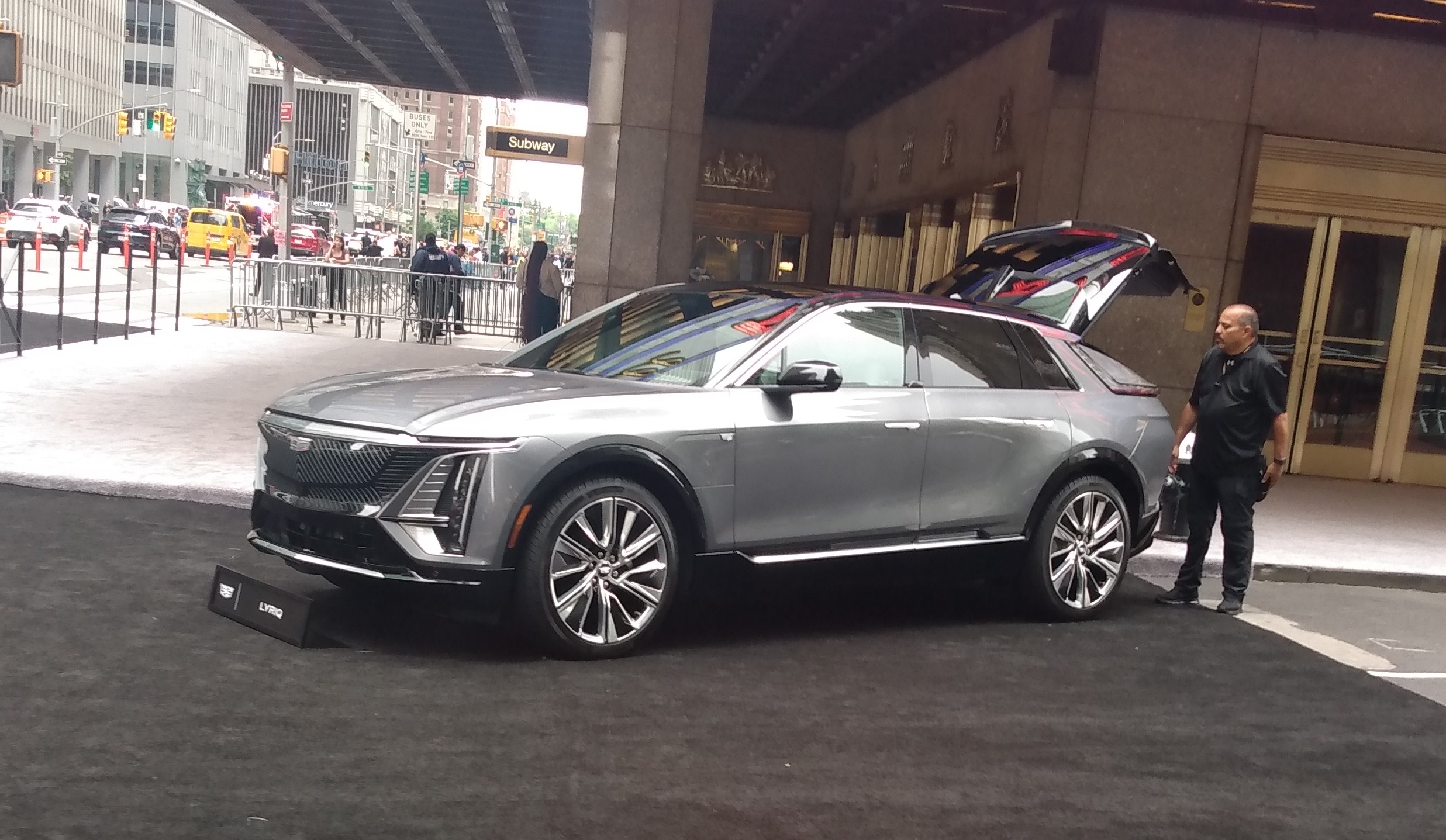
Cadillac Lyriq
"It's led by, you know, starting with the OPTIQ, the Lyric, and the Wistic, and all three luxury EVs."
The Cadillac Lyriq is one of Cadillac’s electric luxury cars. It’s mentioned as part of the EV lineup that’s resonating with buyers.
The Cadillac Lyriq is a Cadillac EV model cited as one of the brand’s key luxury-electric offerings. It’s referenced to illustrate Cadillac’s breadth of EV products aimed at Canadian buyers.
advanced driver assist
"It's also the advanced driver assist and immersive tech that I've talked to you about the Dolby Autmos or the Supercruise."
These are safety and convenience features that help the driver—like keeping the car in its lane or helping with speed. You still have to pay attention and drive.
“Advanced driver assist” refers to driver-assistance systems that help with tasks like lane keeping, adaptive cruise control, and collision avoidance. These features use sensors and software to reduce workload and improve safety, but they don’t replace the driver.

Cadillac Escalade
"...ady here. You know, it goes all the way up to the Escalade IQ and it takes that Escalade consumer to have a ..."
The Escalade is a large luxury SUV made by Cadillac. It’s designed for comfort and a premium feel, and it’s meant for buyers who want a high-end family vehicle with a big, upscale look. It often comes up because it’s one of Cadillac’s most recognizable models.
The Cadillac Escalade is a large luxury SUV known for its high-end interior, big presence, and role as a flagship-style vehicle for Cadillac. It’s frequently discussed because it represents the brand’s top-tier “luxury SUV” customer—especially when talking about how Cadillac positions its most premium products. The podcast context also ties it to Cadillac’s broader strategy and future direction.
GM Canada truck strategy and electrification investments
"Yeah, exactly. Let's talk trucks. Canada, very much still a truck market. Silverado, Sierra, [1125.8s] full-size SUVs... we announced over $700 million of [1152.8s] investment in our St. Catherine's propulsion system... we've delivered outstanding results when it comes to the pickup segment."
They discuss how GM is handling trucks in Canada—keeping the popular pickup business strong while also investing in future technology. They also mention different versions of pickups for different buyers.
This part discusses Canada’s truck-heavy market and how GM plans to protect and grow its core pickup business while investing in future powertrains. It references major investment in a propulsion system and highlights different pickup “variants” by use case and price tier.
propulsion system
"just a couple of days ago, we announced over $700 million of [1152.8s] investment in our St. Catherine's propulsion system."
A propulsion system is the vehicle’s “go” system—what provides the power to move. In EVs, that usually involves electric motors and related components.
A propulsion system is the hardware that provides vehicle movement, especially in electrified vehicles (electric motors, battery-related components, and related control systems). The speaker specifically references a $700+ million investment in GM’s St. Catherine’s propulsion system to support next-generation powertrains.
powertrains
"We will drive the next generation of [1158.3s] powertrains in our pickup trucks and we did, we made announcements at Oshawa."
A powertrain is what makes the vehicle move. It includes the engine or electric motors and the parts that send power to the wheels.
A powertrain is the set of components that create and deliver motion—typically the engine (or electric motors), transmission, and drivetrain. Here, GM is talking about “next generation powertrains” for pickup trucks, which implies new engine and/or EV-related hardware.
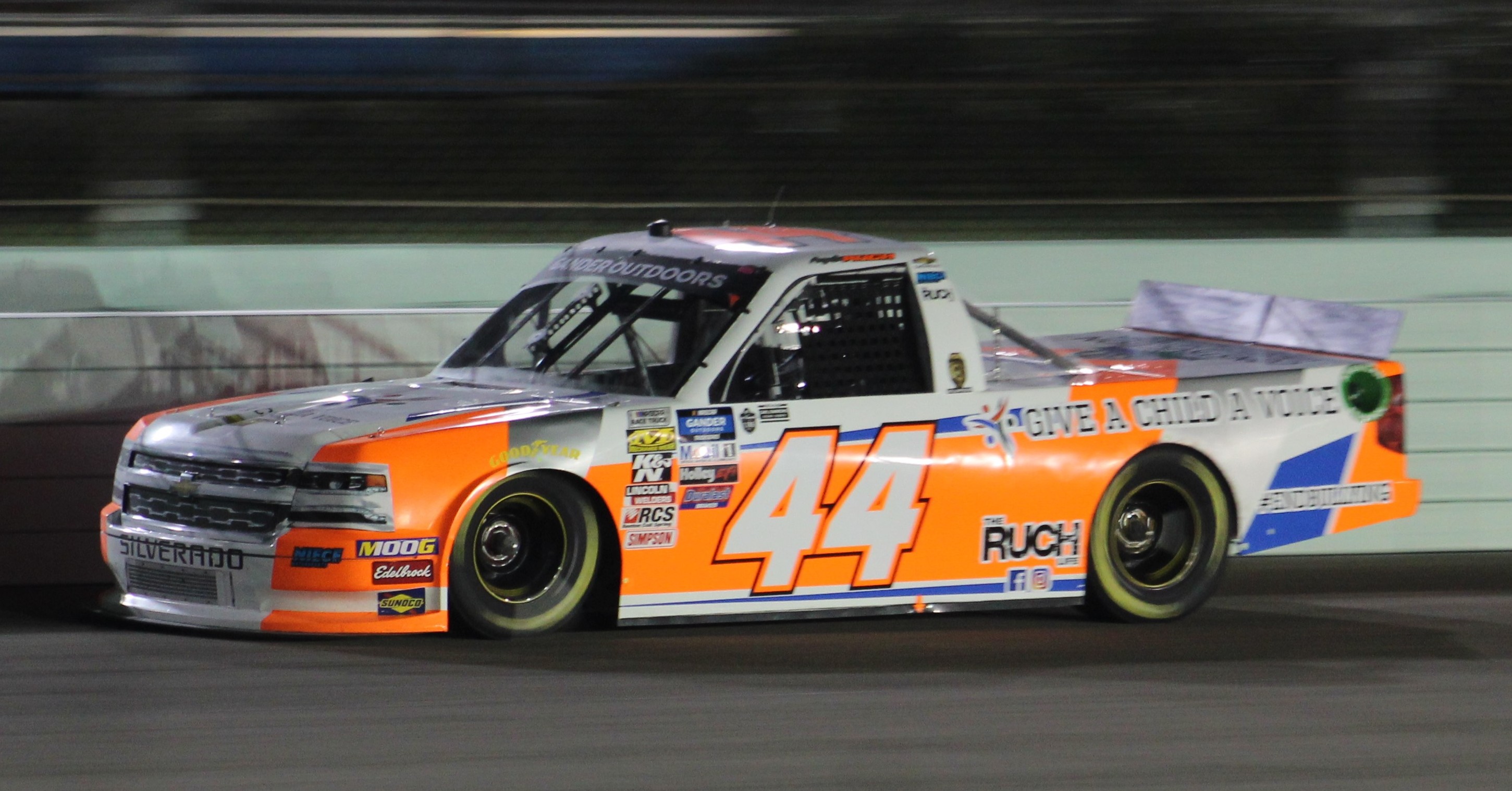
Chevrolet Silverado
"I believe that that segment will remain resilient and our products, both with the GMC Sierra and the Chevrolet Silverado, will continue to resonate with those customers as they have for the last two decades."
The Chevrolet Silverado is a popular big pickup truck. The host is pointing to it as a model that should keep attracting buyers in Canada.
The Chevrolet Silverado is a full-size pickup truck line from Chevrolet, known for being a mainstream choice for towing and everyday truck use. Here it’s mentioned alongside the GMC Sierra as part of GM Canada’s expectation that the truck segment will stay strong.

Gmc Sierra
"I believe that that segment will remain resilient and our products, both with the GMC Sierra and the Chevrolet Silverado, will continue to resonate with those customers as they have for the last two decades."
The GMC Sierra is a big pickup truck. The speaker is saying GM Canada thinks the Sierra will still be popular with Canadian truck buyers.
The GMC Sierra is a full-size pickup truck line from GMC, positioned as a work-capable truck with modern powertrains and tech. In this segment, it’s used as an example of how GM Canada expects its truck lineup to keep resonating with buyers.

GMC Canyon
"…right from our Chevrolet Colorado in the mid pickup segment to the GMC Canyon and then moving on to full price pickups…"
The GMC Canyon is a mid-size pickup truck. The speaker is using it to show GM has options across pickup sizes for Canadian buyers.
The GMC Canyon is GMC’s mid-size pickup truck, designed to compete in the same “mid pickup” category as the Colorado. In this discussion, it’s part of GM Canada’s lineup strategy to cover different buyer needs while staying focused on affordability.

Chevrolet Colorado
"…even from a pickup truck segment, right from our Chevrolet Colorado in the mid pickup segment to the GMC Canyon and then moving on to full price pickups…"
The Chevrolet Colorado is a smaller pickup than the big full-size trucks. They’re using it as an example of a model that fits buyers who want affordability and truck needs met.
The Chevrolet Colorado is a mid-size pickup truck, sitting below full-size trucks in size and typically aimed at buyers who want truck capability without full-size dimensions. The speaker uses it to illustrate GM’s “portfolio” approach across pickup segments.
EV1
"…and I'll talk both ICE and EV1, we've got a parallel portfolio almost today that can accommodate the customer on the affordability side."
“EV1” here is basically referring to electric cars. They’re saying they offer both gas cars and electric cars to meet affordability needs.
“EV1” is being used here as shorthand for EVs (electric vehicles), i.e., cars powered by electric motors and batteries rather than internal combustion engines. The speaker’s point is that GM Canada has both ICE and EV options in its affordability-focused lineup.

General Motors Ev1
"...eadth of our portfolio and I'll talk both ICE and EV1, we've got a parallel portfolio almost today that..."
The EV1 was an electric car made by General Motors. It was built to show what driving with electricity could be like, instead of using gasoline. It’s often mentioned in EV history because it was one of GM’s early electric efforts.
The General Motors EV1 was an early electric vehicle program from GM, created to explore battery-electric driving at a time when EVs were far less common. It’s significant historically because it represents GM’s early attempt to build and promote EVs alongside its traditional internal-combustion lineup. In a podcast, it’s a key reference point when discussing GM’s “portfolio” and how the company approached EVs before modern mass-market adoption.

Chevrolet Equinox
"…with the Chevrolet Trax, Equinox, Terrain, and then on the same side, we've introduced the most affordable EV in the Canadian market with the Chevrolet Bolt and the Chevrolet Equinox…"
The Chevrolet Equinox is a popular mid-size-ish SUV. They’re using it as part of their lineup for buyers who care about affordability, including in the EV discussion.
The Chevrolet Equinox is a compact crossover SUV that’s commonly offered in multiple trims and powertrain options. In this segment, it’s included in GM Canada’s “affordability side” lineup and later paired with the Bolt when discussing EV availability.

Chevrolet Trax
"…if we look at the affordability side with the Chevrolet Trax, Equinox, Terrain, and then on the same side…"
The Chevrolet Trax is a smaller SUV. It’s mentioned as one of the models GM Canada points to when talking about affordability.
The Chevrolet Trax is a compact crossover SUV, typically positioned as an entry-level option in Chevrolet’s lineup. The speaker lists it as part of GM Canada’s affordability-focused portfolio.

Chevrolet Terrain
"…with the Chevrolet Trax, Equinox, Terrain, and then on the same side…"
The Chevrolet Terrain is a compact SUV. It’s mentioned as another option in GM’s lineup aimed at affordability.
The Chevrolet Terrain is a compact crossover SUV that sits above the Trax in size and typically in pricing. The speaker names it as part of GM Canada’s affordability-oriented mix of models.

Chevrolet Bolt
"…we've introduced the most affordable EV in the Canadian market with the Chevrolet Bolt and the Chevrolet Equinox…"
The Chevrolet Bolt is an electric car. They’re saying it’s one of the cheaper EV options in Canada and fits the affordability focus they’re talking about.
The Chevrolet Bolt is an all-electric vehicle (EV) from Chevrolet, positioned as a lower-cost entry point compared with many other EVs. The speaker specifically calls it “the most affordable EV in the Canadian market,” tying it to affordability-driven demand.

Cadillac OPTIQ
"into the entry level with the Cadillac OPTIQ. With that portfolio, we are keeping a very close eye on how do we meet the largest segments of consumers with the broadest portfolio"
The Cadillac OPTIQ is Cadillac’s newer, more affordable electric SUV/crossover. Here, GM Canada is saying it’s part of their plan to offer EVs at prices that fit more shoppers’ budgets.
The Cadillac OPTIQ is Cadillac’s entry-level electric crossover in the brand’s lineup. In this segment, GM Canada is talking about using it as part of a broader portfolio to hit affordability targets for customers.
EV perspective
"Looking at the recent automotive strategy change introduced by the federal government a couple of months ago with the $5,000 rebate that came in, from an EV perspective, that makes the Chevrolet Equinox Bolt"
“EV perspective” just means they’re talking about electric cars specifically. In this part, they’re explaining how EV rebates and credits affect which electric models they can sell and at what price.
“EV perspective” means looking at the situation specifically through the lens of electric vehicles—like how incentives, pricing, and product plans affect EV adoption. Here, it frames the federal rebate/credit as something that changes what EVs GM Canada can offer at certain price points.
Chevrolet Equinox Bolt
"from an EV perspective, that makes the Chevrolet Equinox Bolt and some of our optics actually applicable, which need to transact under $50,000. They make them applicable for that federal credit"
The Chevrolet Equinox Bolt is an electric Equinox. They’re saying it can qualify for government EV incentives if the vehicle’s price is low enough, which helps make it more affordable.
The Chevrolet Equinox Bolt is an electric version of the Equinox crossover. In the discussion, GM Canada is tying it to EV incentives by saying it can qualify for a federal credit when it’s priced under a threshold.
transact under $50,000
"that makes the Chevrolet Equinox Bolt and some of our optics actually applicable, which need to transact under $50,000. They make them applicable for that federal credit"
They mean the car needs to be sold for less than $50,000 to qualify for the incentive. Incentives often have price limits like this.
“Transact under $50,000” refers to keeping the vehicle’s purchase price below a specific threshold so it remains eligible for the incentive. This is a common way EV credits are structured: eligibility depends on price caps.
federal credit
"They make them applicable for that federal credit, which again helps us drive and provide consumers with a wide array of options on that affordability spectrum"
A federal credit is a government incentive that can lower what you pay for an eligible purchase. They’re saying their EVs can qualify, which helps customers afford them.
A federal credit is a government tax incentive that can reduce the effective cost of an eligible purchase. In this segment, GM Canada is saying their EVs can be structured to qualify for that credit, which supports affordability and sales.
portfolio packaging
"So absolutely, we look at the portfolio, its packaging, and how easy we want to make sure that we are taking care of the customer with all the options possible from an affordability lens."
“Packaging” means how the car is offered—what features and price you bundle together. They’re saying they’re arranging their lineup so customers can choose options that fit their budget.
“Packaging” in automotive usually means how a vehicle is configured—trim level, options, and pricing—so it fits different customer needs. “Portfolio packaging” here suggests GM Canada is organizing its lineup so the right models and option sets land within affordability targets.
aerodynamics
"And if I look at YF1, it really compresses years of learnings in aerodynamics, energy management software into months and those gains really flow straight back into our product portfolio"
Aerodynamics is about how air moves around the car. In racing, getting that airflow right can help the car go faster and feel more stable.
Aerodynamics is how air flows around a car, and how that flow affects drag and downforce. In racing, small aerodynamic gains can be worth a lot because they improve speed and stability at high loads.
energy management software
"And if I look at YF1, it really compresses years of learnings in aerodynamics, energy management software into months and those gains really flow straight back into our product portfolio"
Energy management software is the car’s computer logic for how it uses electricity. In an EV, it helps decide when to pull power, when to save it, and how to keep everything working efficiently.
Energy management software coordinates how a vehicle uses energy—especially in EVs—by controlling systems like battery charging/discharging and power delivery. In motorsport, rapid development of this kind of software can translate into more efficient and responsive road-car EV behavior.
non-traditional automotive marketing
"does that allow you to do some non-traditional, non-traditional automotive marketing? Does it allow you to kind of peer into a cultural phenomena that could spread from a marketing standpoint a little differently for the brand?"
Non-traditional marketing is advertising that doesn’t rely only on typical car ads. Here, the idea is to use racing and pop-culture style visibility to reach people differently.
Non-traditional automotive marketing means promoting a car brand using channels and themes outside classic car advertising—often leveraging culture, entertainment, or lifestyle touchpoints. In this segment, the guest discusses using Formula One’s cultural reach to broaden Cadillac’s brand story in Canada.
F1 platform
"The F1 platform allows us to kind of bring it all together in the offshoots, not even just around the race day, but looking at, you know, our network of over 100 Cadillac dealers"
They’re talking about using Formula 1 as a marketing “platform.” Instead of only promoting around race day, they use it to set up special customer experiences through dealers.
The “F1 platform” refers to using Formula 1 as a marketing and customer-engagement framework. Here, it’s described as a way to connect luxury, tech, and performance messaging, then extend that engagement through dealer experiences beyond just race weekend.
Chevy Bolt
"we continue to lead the market from an EV sales perspective, and we're just starting to hit the market with our great launch of the affordable Chevy Bolt"
The Chevrolet Bolt is an electric vehicle (EV) model, and the speaker calls out its “affordable” launch as a key step in GM Canada’s EV push. The point in this segment is that GM Canada is using the Bolt to drive EV sales momentum in the Canadian market.
Lyric
"the leadership that we've attained with OPTIQ, Lyric, and Vistik"
Lyric is a Cadillac model name they’re highlighting as part of the brand’s newer direction. They’re using it to show Cadillac is reaching people who haven’t bought Cadillac before.
Lyric is mentioned as one of the Cadillac products tied to the brand’s leadership and transformation. The speaker uses it to support a broader point: Cadillac is using its newer lineup to attract consumers who are new to the brand.
Vistik
"with OPTIQ, Lyric, and Vistik, and more than 50% of the consumers coming into Cadillac today are new to the brand."
Vistik is another Cadillac model name mentioned as part of the brand’s new lineup. They’re using it to illustrate how Cadillac is attracting many people who are new to the brand.
Vistik is referenced alongside OPTIQ and Lyric as part of Cadillac’s leadership and transformation. In this segment, it functions as another example of the newer lineup helping bring in a large share of first-time Cadillac buyers.
Chevrolet China
"given your time around the world, including your time as Executive Director of Chevrolet China,"
Chevrolet is a car brand. “Chevrolet China” means the Chevrolet business focused on selling and supporting cars in China.
Chevrolet is GM’s brand, and “Chevrolet China” refers to the brand’s operations and strategy in the Chinese market. The host uses it to frame Jack Uppal’s experience and perspective on what Chinese buyers want.
EV adaptation
"China has made a lot of progress when it comes to EV adaptation. We lead in the Chinese market with Buick and Cadillac products, again, a wide variety of that product."
EV adaptation means how well and how fast a place is switching from gas cars to electric cars. It includes things like EVs being available and people being willing to buy them.
EV adaptation refers to how quickly a market, industry, and consumers shift toward electric vehicles—through charging availability, product offerings, and consumer acceptance. In this segment, it’s used to argue that China has progressed faster than other regions.
Buick
"We lead in the Chinese market with Buick and Cadillac products, again, a wide variety of that product."
Buick is a car brand. Here it’s mentioned as one of the GM brands doing well in China, especially as EVs become more common.
Buick is a GM brand, and in this segment it’s cited as leading in EV adoption in China alongside Cadillac. The point is brand-level market positioning and product breadth in the Chinese lineup.
closed ecosystem within China
"I believe that that need from the customer has really accelerated how tech is looked at and how tech continues to make its way into those vehicles in a closed ecosystem within China. That's kind of what makes everybody very excited and nervous at the same time is how quickly"
Here, “closed ecosystem” means the car’s apps and online features work together with local services in a more tightly connected way. That can make new technology show up in cars faster.
A “closed ecosystem” in the automotive context means the vehicle’s software, services, and connected experiences are tightly integrated with local platforms and partners, rather than being open to many competing systems. The segment suggests this integration accelerates how quickly new tech features reach Chinese vehicles.

Buick Century
"...with the brands that have come to love for over a century. I will underpin it though that it still has to b..."
The Buick Century is a car model line from Buick that was made for many years. It was designed to be a comfortable, everyday mid-size vehicle. It comes up in conversations about Buick’s history because the name has been around for a long time.
The Buick Century is a long-running mid-size car nameplate from Buick, historically positioned as a comfortable, mainstream option within the brand. It’s mentioned in the context of Buick’s heritage—“over a century”—because the Century name helped define Buick’s identity for many years. In a cars-and-culture discussion, it’s a good example of how legacy model lines shape brand recognition over time.
Request an Explanation
Heard something you'd like explained? We'll add it to this episode.
Sign in to request explanations for terms you heard.
Want to learn more?
Browse our glossary for plain-English explanations of automotive terms, jargon, and concepts.
Help improve this episode
See something that's not quite right? Our annotations are AI-generated and can sometimes miss the mark. Click the flag icon on any annotation to suggest a correction.