Patrick Brady is a Google executive who works on car software. In this conversation, he’s the person behind Android Auto—Google’s system that brings smartphone-style features into a car.
Android Auto is Google’s system that connects your phone to your car’s screen. It helps you use apps and navigation in a way that’s meant to be easier and safer while driving.
An embedded operating system is the computer “brain” inside a car that runs the car’s systems. It’s built to handle tasks reliably and safely, even while you’re driving.
AI powered assistance means the car uses AI to help the driver. It can understand what’s happening around the car and provide help like warnings or support features.
A software defined vehicle is a car where important features are controlled by software. That can let the car gain new features or improvements without replacing hardware.
Concept
cockpit experience
The cockpit experience is the overall user experience inside the car—how the driver interacts with displays, controls, and digital interfaces. In modern vehicles, it’s increasingly shaped by software platforms, connectivity, and app ecosystems rather than just physical buttons and gauges.
Connected vehicles are cars that can communicate with external networks and services (like the internet or other systems). This enables features such as real-time information, remote services, and tighter integration between the car and the user’s digital ecosystem.
Vehicle lifecycle just means how many years a car is expected to keep running. The software has to keep working reliably and safely for that whole time.
Driver distraction means anything that makes it harder for the driver to focus on driving. This can include using a phone or tapping around on a screen while the car is moving.
High-criticality means the software parts that matter most for safety. If they fail, it could be a big problem, so they need extra testing and stricter reliability.
Robustness means the software can handle problems and still keep working correctly. The goal is fewer crashes or weird behavior, especially in important parts of the car.
A wireless connection means your phone can connect to the car without a cable. That’s convenient, but it still needs to be designed so it doesn’t distract the driver.
A handshake is the quick “agreement” step where the phone and car confirm they’re connecting properly. After that, they can share the right information for the in-car experience.
Instead of carrying a key fob, you can use your phone to unlock and start the car. When you’re close to the car, the car recognizes your phone and lets you drive.
Infotainment is the in-car system that combines information and entertainment—think navigation, music apps, and voice control—on the vehicle’s screen. In modern cars, it’s often the main interface for connected services.
A voice assistant lets you talk to the car and get it to do things for you. You can ask for directions, control music, and more without touching the screen.
5G connectivity means the car can use a fast cellular network to get data. That helps with things like live navigation, online apps, and software updates without plugging in.
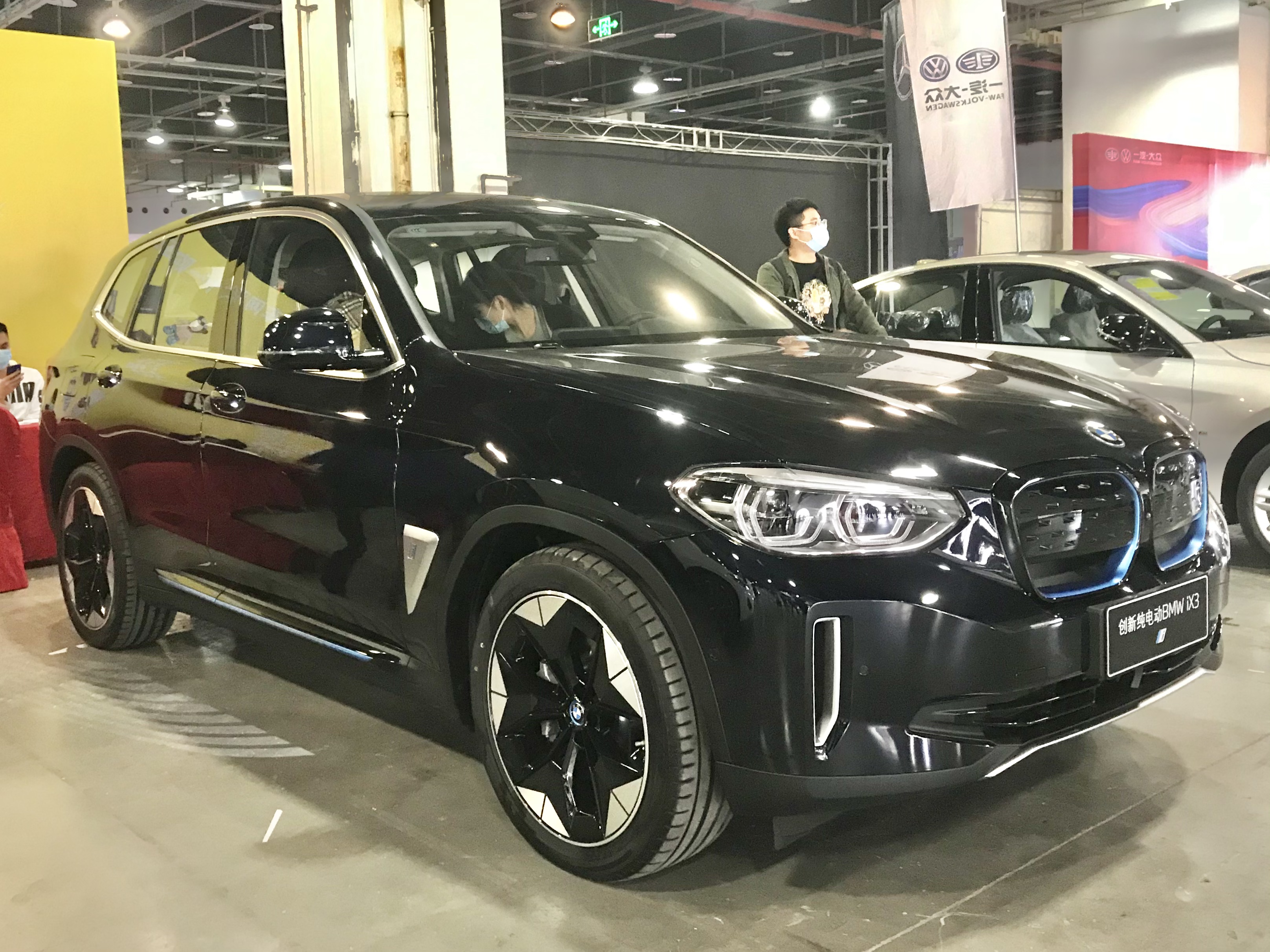
The BMW iX3 (G08) is an electric SUV, similar in size and purpose to a compact SUV. It uses electricity to power the drivetrain, and it includes BMW’s digital screens and controls. It’s mentioned because its interior tech helps show how BMW is changing its EV user experience.
Here, “wirelessly” means you don’t need to plug your phone in to use apps in the car. Your phone can stay in your pocket while the car still shows the content.
Google I/O is a big event where Google shows off new tech and software features. They’re saying they’re demonstrating this new Android Auto capability there.
Live lane guidance is the navigation feature that tells you which lane to be in before a turn or exit. It’s meant to be more accurate because it can use more up-to-date vehicle and network information.
This means the car’s computers are connected to each other and can share information. That connectivity helps navigation features get more accurate and up-to-date.
Immersive navigation is a more visual, more realistic type of GPS guidance. Instead of only a flat map, it shows a 3D view and highlights landmarks so it’s easier to understand where to go.
Lane-level navigation is a navigation mode that goes beyond “turn left in a mile” and instead identifies specific lanes you should occupy. It typically relies on map data plus real-time sensing (like a front-facing camera) to match the guidance to what you’re seeing on the road.
The Polestar 4 is an electric car. In this example, Google Maps can “see” the road using the car’s camera so it can tell you which lane to be in for an exit or turn. It can also estimate whether using a special lane will save you time.
A front-facing camera is a camera mounted on the front of the car that looks at the road ahead. Here, it helps the navigation system “match” the lane guidance to the real lanes you’re driving toward.
An HOV lane is a special lane meant for cars with more than one person. The system can estimate whether using that lane will get you there faster than the regular lanes.
An express lane is a special lane that’s usually meant to be faster than the regular lanes. The navigation system can estimate whether taking it will save you time.
That’s the warning light on your dashboard. It can mean something is wrong or something needs attention, and the idea here is that the car could explain what it is and what to do next.
Polestar 3 is an electric SUV. Here it’s the example car showing how an in-car assistant could help with practical questions like whether a big item will fit in the trunk area.
Situational awareness means knowing what’s going on around you while driving. The segment suggests that better on-screen/visual help could make it easier to stay aware without constantly tapping through apps.
They’re talking about how future car AI might make it less necessary to tap through menus and apps. Instead, you could just ask questions and the car would figure out the answer using what it knows about your car and your situation.
OLED is a type of screen technology where the pixels light up themselves. “Plastic OLED” means the screen can be made flexible and shaped, which helps car makers fit displays into more interesting interior designs.
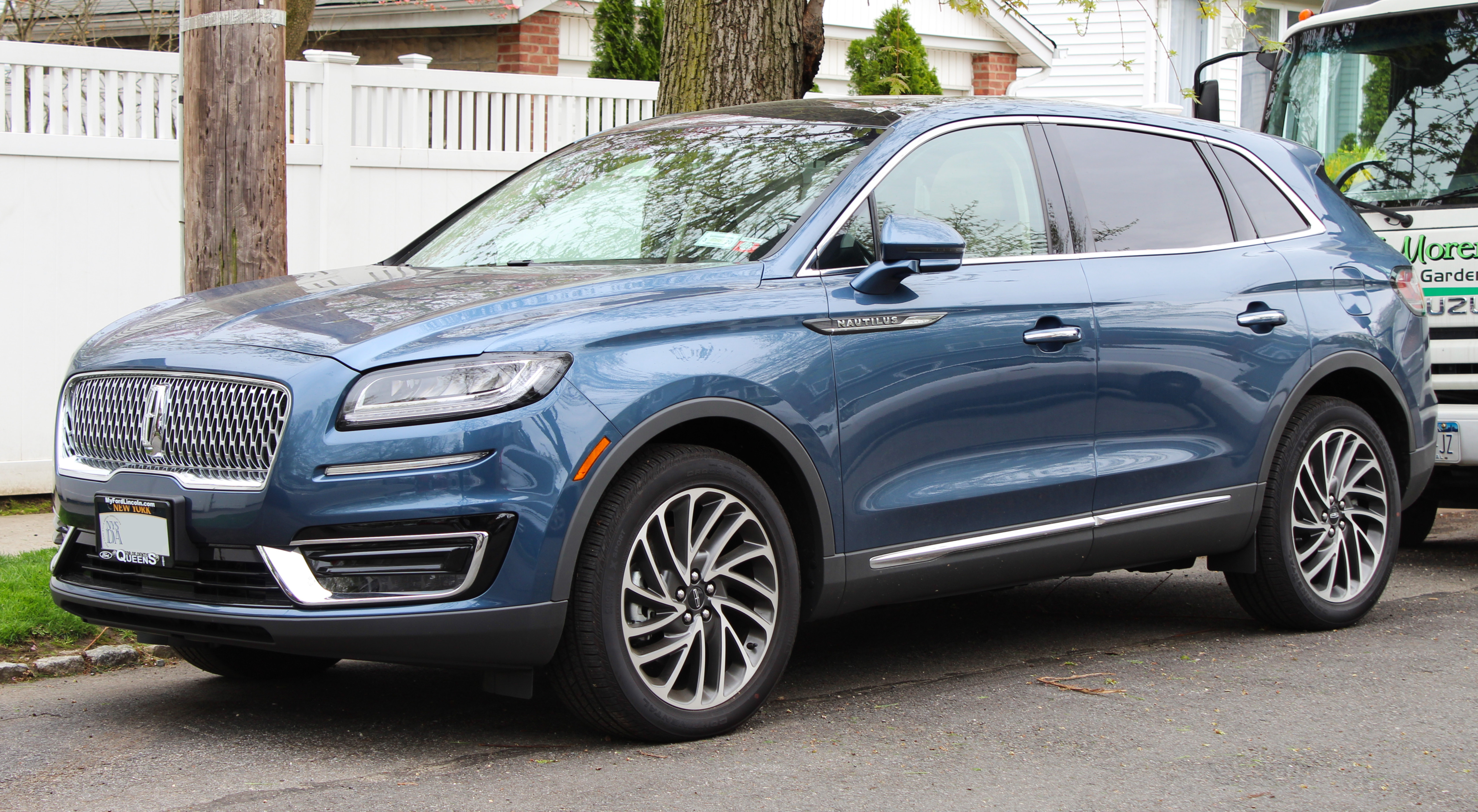
The Lincoln Nautilus is a luxury SUV from Lincoln. In this discussion it’s mentioned because it has a wide dashboard screen that stretches across the front of the cabin for a more modern look.
“Pillar-to-pillar” means the dashboard screen runs across most of the width of the front cabin. Instead of small screens in different spots, it looks like one big display.
“Generative user interfaces” means the car can use AI to create the screen elements you need, instead of only showing pre-made menus. So if you ask for something specific, it can build a matching display for it.
“Generative UI widgets” are small, functional interface components (like cards or panels) that AI can generate dynamically. The speaker describes asking for something (sports score, team schedule) and having a new UI element appear that stays available across devices and in the car.
Human-machine interface is just the “how you talk to the car” part—what you see and how you control it. They’re saying AI will make that interaction feel smoother and more natural.
Ultrasonic sensors are like the car’s “sound radar.” The car sends out high-pitched sounds and measures how quickly they come back to estimate how close something is.
Sensor fusion means the car combines information from different sensors to get a better picture of what’s around it. If one sensor is weak in a situation, another can help fill the gap.
The “cockpit environment” is how the car’s interior feels and how you interact with it—what you see and what you control. When the car drives itself more, the interface has to change too.
Autonomy means the car can do more of the driving work on its own. In this discussion, it’s about how the car’s behavior can change between city driving and highway driving.
GM Super Cruise is GM’s system for highway driving that can help steer and control speed. It works only in certain conditions/roads and still requires you to be ready to take over.
Ford BlueCruise is Ford’s highway feature that can help drive the car for you. It’s not “any road, any time”—it’s meant for specific mapped situations.
A multi-screen setup means the car uses more than one display to show driving and media info. The point here is that the screens need to feel different when the car is driving more on its own.
Security vulnerabilities are software weaknesses that could let someone break into or interfere with a system. For cars, that matters because the software controls important functions.
User experience just means how easy and smooth it feels to use the car’s tech. In this segment, they’re saying the best cars are the ones where the digital features work seamlessly.
CarPlay lets you connect your iPhone to your car and use certain apps on the car’s screen. It’s a way to get maps, calls, and music without constantly touching your phone.
BMW Neue Klasse is BMW’s plan for a new generation of cars, especially electric ones. The guest is excited because it represents what BMW is building next.
LIVE
The automobile is one of the most important inventions that revolutionize the modern world.
In America, the rich history of car culture runs deep as technology continues to shape the future
of the industry. Jason Stein is here to share the stories of people passionate about cars from
industry leaders and innovators to car obsessed celebrities. Buckle up as Jason takes you inside
the boardroom onto the track and around the bend on Cars and Culture on SiriusXM Business Radio.
Welcome into episode 253 of Cars and Culture with Jason Stein here on SiriusXM Business Channel 132.
Great to have you along for the ride again this week. Today we're talking about the future of
the automobile not just how it's powered but how it thinks learns and ultimately connects with
the people inside it. My guest is Patrick Brady, vice president of Android for Cars at Google
and one of the key architects behind the evolution of Android Auto and the broader
Android automotive ecosystem that is rapidly reshaping the in-vehicle experience. For years,
the auto industry has wrestled with one of its biggest challenges, how to merge the speed and
intuition of consumer technology with the complexity, safety standards and longevity
of the automobile. Patrick sits right at the center of that intersection from embedded operating
systems and AI powered assistance to app ecosystems, software defined vehicles and the
increasingly blurred lines between Silicon Valley and Detroit. Patrick has helped lead one of the
most consequential technology transformations happening in mobility today. The timing could
not be more important. As automakers rethink the cockpit experience, compete for customer loyalty
and look to differentiate in an area where software matters as much as horsepower,
the role of platforms like Android automotive has become central to the future of the business.
Today, we'll talk about where this technology is headed, how OEM relationships are evolving,
what consumers really want from connected vehicles and why the next decade inside the car
may look dramatically different than the last 100 years. It's Patrick Brady on Cars and Culture.
Hi, I'm Patrick Brady and this is Cars and Culture with Jason Stein.
There's no question now that when we talk about the auto industry, we're not talking
about horsepower as much as we are software becoming a bit of a differentiator. It's not
about chassis tuning or sheet metal. It is about how the automobile is changing from a technical
standpoint. I think we have one of the leading experts joining us today. Patrick, welcome to
Cars and Culture. Thanks for having me, Jason. Excited to be here. You know, not a lot of people
would know how much has changed and how Cars have become so much more connected, but you do
because you're in your 20th anniversary, your 20th year at Google. Is that right?
Yeah, it's crazy to think that I've been here this long, but yeah, it's been 20 years and I've
been working in automotive for a little over half of that. When you think about what's changed
from an automotive standpoint, even just going back 10 years ago,
I mean, what were you working on then that was considered pioneering that you kind of look at
now and go, okay, that's kind of an interesting endeavor that we were in at that point. Take me
back a decade or so ago. Yeah, sure. So about a decade ago, we were working with Audi and Volkswagen
on integrating Google Earth into their vehicles. And back then, it was absolutely novel. I mean,
Google Earth was still a fairly new phenomenon that was taking off on PCs and etc. And we thought,
what would be the best place to show this and how could it be most useful in integrating it right
into the navigation system. But back then, there was no software development platform for the
vehicle. And right around that same time, Android and iOS were emerging as platforms for
software development on mobile phones. And so, yeah, I would say the world looks very different
today. And that was revolutionary at that point. I mean, Google Earth inside of a car,
even when you think about it, right? Yeah, I mean, cars were around this time. So this is
about 2010, 2012. Around this time, cars were getting connected and not just connected for
telematics, but connected for consumer use in the car. And Google Earth, of course, is it's
streaming 3D rendering of buildings of terrain and everything from the cloud. You couldn't store
that all on a memory chip in the car. Cars were also getting larger screens. They were getting
touch screens. And so they were becoming full scale computers on wheels. And it became very
interesting to us, well, what more could we do together? And what more could you do? What could
you possibly imagine at that point? Because that was considered revolutionary. And yet when you
look at where we are a decade later, we're in a true revolutionary perspective, right? So it's
cutting edge is a sliding scale, isn't it, in software? It always is. Yeah,
I mean, back then, we were excited about cars getting connected. Cars getting a little bit
more compute power in the vehicle. And yet smartphones were really taking off. And we were
seeing speech recognition technology. And remember, Google Maps had introduced turn-by-turn
navigation for free on your smartphone. And it had live traffic, and it always knew the best way
to go. And so around this time, we started looking at how do we bring all these innovations into
the vehicle, right? If my smartphone can do all this, why can't my car do it? Spotify, Pandora,
all these things started taking off. And there wasn't an easy way to bring these into the vehicle.
And so around that time, it became clear to us that what we need to do is create a true platform
for developers, for everyone to be able to innovate at speed in the vehicle. And so that's what
really gave birth to the idea of bringing Android as a platform for automotive.
Before we get into a little more specifics, a philosophical question, I guess, or maybe even
a practical one. We know the role of software has changed inside the automobile, but how much has
Google changed its role of software inside the vehicle? That's a great question. I think, you
didn't know a lot about automotive. And I would say the car makers didn't understand a lot about
what was happening with software development on smartphones and on the web. And over the
interleaving decade, I would say we've learned a lot from each other. And people have left the
tech industry to move into work in automotive companies and vice versa. And so I would say now
both sides have a much better understanding of the problem we're trying to tackle.
And Google's role throughout that has changed where we get more and more, we partner more
closely with car makers on transforming the platform in the vehicle. Not only the software
platform, but kind of the electrical architecture and how we think about enabling the use cases
of the future together. So it's become a much, much tighter partnership over the years.
And I remember if you go back 15 years, 10 to 15 years, many, not to call out specific companies,
because I won't, but many Detroit based car companies said, we've got to go to Silicon
Valley and really understand the culture that's there. Because it's not what we've been dealing
with for the previous 100 years. And so they sort of embedded themselves inside these companies.
And as you say, some crossed one way, some crossed the other way. What have you learned
culturally from each other? Yeah, it's a great question. And also by the way, I would say GM,
Ford, Stalentus, all these companies, they don't just have offices and they don't even just have
leadership in Detroit anymore. They're in Silicon Valley, right? They've opened up development
centers here. That's right. And so I think both sides have learned a lot. On the car maker side,
I think they've learned that software is not just a part of the vehicle. It is a product in
and of itself. And consumers now expect in whatever computer they buy, that it will continue to get
better through software updates over the air. And that's true of cars now too. So car makers know
you're not just chasing that first start of production where the vehicle starts moving off
the manufacturing line. You need to figure out, okay, what are the features that are going to
come to that vehicle a month later, six months later, years later? And how do we think about
building the car so it can do that? On the Google side, we've learned a lot about
how the manufacturing cycles, how software works in a vehicle. Most people don't realize this,
but a vehicle is a massively complex computer. I think sometimes we talk about them being computers
on wheels. I think a better analogy is a data center on wheels. It's actually networked computers,
tons of them that are sharing information, that are handling multiple very complex workloads,
whether it's reviewing the cameras and doing computer vision and AI to understand the obstacles
around you and the lane markings and things like that, or streaming your Spotify and
navigating with Google Maps and things like that. So the car is doing all sorts of things at once,
and we've learned to appreciate and embrace the complexity of that problem together.
And automotive engineering has incredibly high standards for reliability and safety,
understandably so. Consumers also expect rapid innovation as well. So the question becomes,
how do you build systems flexible enough to evolve with a vehicle lifecycle that's a decade long,
sometimes, while maintaining that stability and safety? That's got to be a huge focus for you.
Both parts have to coexist. Yes. And there's multiple forms of safety that we need to ensure.
So driver distraction is one. Consumers expect the car to look and feel and operate
like a modern computer, a smartphone, a tablet, and yet we all know it's unsafe
to use a phone or tablet while you're driving. And so how do we create an experience that is
familiar to the user and yet safe for use and mitigates driver distraction and things like that?
But to your point, you also need to make sure that the software running is going to be reliable
and is always going to work over the lifetime of the vehicle. So you want to be able to move
at speed, but you also need to ensure that the functionality is automotive grade.
We do a lot of testing on our side, both for driver distraction, but also
build certain components of the software that are high-criticality that
have to meet a higher bar of safety standard. And so it's kind of thinking about the software
experience and how you divide it up so that you can move fast in some areas and in other areas,
you kind of lean a bit more on the robustness side of the equation.
Let's explain a little bit for our audience your role in terms of Android Auto,
in terms of Android Automotive OS, and maybe break down for us the differences
and the complementary sides of both of those facets.
Sure. So I lead Android's automotive efforts at Google. And as you said, that spans
things like the consumer product of Android Auto. If you have an Android smartphone,
you can connect to any one of over 250 million compatible vehicles on the road.
Most of these, it's a wireless connection today. And then we have a handshake with the vehicle
where the two integrate, and then we project a driver-safe version of your smartphone experience
into the vehicle so you can use it on the go. All your applications and services available,
but in a way that's designed for driving. So that's kind of half of the product suite.
We also, by the way, do digital car keys. So on almost all modern cars now, you can just walk up
with your smartphone, unlock, drive. You don't need to carry these kind of archaic things in
your pockets anymore. You just use your smartphone for it. The other side of the business is
Android Automotive OS. So as cars were evolving and gaining more connectivity,
more compute power, larger screens, we realized that not all of this is going to run off a
smartphone connected to the vehicle. And so we started transforming Android into
a first-class automotive platform. Not just, you know, it's very popular, obviously,
billions and billions of devices on the smartphone side. But now it's kind of become
a de facto industry standard and automotive for building infotainment. It's open source,
and so car makers can completely customize it to look and feel different. But it rapidly
accelerates their ability to bring innovation to market quickly and to add modern consumer
services, like a Spotify or a Waze or whatever it might be, into the vehicle without having to
kind of rebuild the platform from scratch. And then I also run a business called, or run a product
suite called Google Built In, where we work with car makers to actually build in Gemini
as the voice assistant, Google Maps as the navigation system, and Google Play so that you
can get thousands of different applications available designed specifically for driving.
So it's kind of a wide product suite for how we enable people to stay connected in a safe way
on the go in the car. And when you think about maybe an ideal in-car experience,
integrating what you effectively just described as the ultimate handshake that occurs,
how close are we to achieving what is ideal or best in class or right world class?
Yeah, well, I think like you said at the beginning, yeah, I think like you said at the
beginning Jason, cutting edge is always being redefined. And I think right now,
automotive is such a fun space because we see transformation in many different spaces. There's
obviously propulsion with electrification happening. There's digitization where you see more and more
screens in all sorts of shapes and sizes. There's connectivity where now most vehicles are getting
5G connectivity and beyond. But then there's also these software architectures and compute
that are putting so much computing power and sensors, cameras, LiDAR in the vehicle.
All of that was already happening. But on top of that, you see AI kind of really taking off
and becoming multimodal and becoming more helpful in consumer applications.
I would say we're very far. We still have a long ways to go to realize the ideal,
but I'll tell you a couple things that we're really excited about that are happening now.
The first one is that we're more and more able to kind of bridge the phone and vehicle experience
to be one. Ideally, consumers wouldn't have to think about, okay, I'm connecting my phone,
I'm using apps from my phone in the car. We want to create an experience where your digital life
just flows seamlessly with you into the vehicle and adapts to the in-cabin environment,
but when you leave for privacy security reasons, it goes with you. We're really excited about the
latest version of Android Auto that we've just launched that fills any screen. If you've seen
the new BMW or the new Mini Coupers have a round display, right? Automotive is not constrained
to the kind of typical rectangles that we use on TVs and tablets, laptops and phones.
Cars are coming with all sorts of new displays. The BMW Neue Classe, like in the new iX3 that
just announced, has this kind of irregular hexagon, really fun display shape. Now,
your phone content doesn't just go into that with kind of a letterboxed rectangle, it fills
that entire display, whatever shape it is, and your content floats naturally. It's not just
Google Maps and Spotify and YouTube Music and whatever else in the vehicle that you would use
while driving. It's now becoming a full entertainment experience. If you have YouTube on your phone
and soon to be other video streaming apps and you're parked waiting for someone or charging your
vehicle, you can bring those up seamlessly and it's all happening wirelessly. Your phone's in
your pocket and yet your content is kind of seamlessly in the vehicle. That's one I think
we're getting much closer to realizing the vision that we laid out. You're no longer plugging in,
you're not signing in, you just get into the vehicle and your content seamlessly flows.
The other one though that we're really excited about is with advances in Gemini, we're able to
actually tackle some long-standing problems that users have in the vehicle and technology,
the technology to solve them just hasn't been there in the past. Some examples I can give you.
I'll be driving and I'll get a text message from a loved one that will ask,
hey, what time is the school event that we're supposed to be at this week? Historically,
if I'm driving, I know that maybe I got an email about that and I could check my phone and check
that email and respond to the message. Obviously, that's not safe to do while driving. Typically,
you'd have to wait then to park somewhere and then look it up. Now with Gemini, we're able to
actually search your email, find that the correct answer and automatically suggest
bring that up in the user interface as a suggestion for reply. All of a sudden,
you can keep your hands on the wheel, your eyes on the road and yet you have your personal
information at your fingertips. Sorry, I noticed a long answer. As you can tell, there's a lot of
things I'm excited about. There are a lot of changes. One other one that we just showcased at
Google I.O. is as vehicles get more compute and they have cameras and all of these things are now
networked together, we can use the multimodal capabilities in Gemini. Multimodal means the
large AI models now. They don't just understand text, they understand speech, they understand imagery.
We showed off in the Volvo EX60, an amazing new car that Volvo just introduced, the ability for
Gemini to plug into the vehicle cameras and you can just drive and ask about the world around you.
Hey, what kind of tree is that over there? What is that historical marker? What is that about?
What is that statue or that building? All of these things, because Gemini can see what you can see
through the vehicle cameras, it can answer questions about the world around you. These things,
we didn't even really dream about just a few years back and now we're realizing them. I think we
still have a very long way to go in determining what is cutting edge. Amazing. The headline on
all of this is do more and have more fun with the next generation of Android in the car. Let's get
into a few of those things you just mentioned. Gemini and generative AI for years, the industry
promised a voice first cockpit experience. But frankly, most voice systems frustrated people
more than they helped them. Does AI finally change that with large language models, improving
conversational understanding and maybe flexibility? It's not memorizing commands,
but over time the system is becoming more proactive. Yeah, I think historically we've
taught humans to learn how to speak to computers. As a species, we learn pretty well
through conditioning and we learned how to use the voice commands, how to enter an address,
how to send a text message and dictate it. But the latest advances with LLMS, they understand
natural language. At a fundamental level, they understand it and they can also
converse in natural language. We've moved beyond the point where people in the vehicle need to
really think about and memorize the specific commands. You can just ask for what you want
and it understands and will answer you or ask follow-up questions. I really do think this is a
step-function change in how humans will interact with computers going forward. Certainly, I think
the car is one of the best examples of that because voice is the primary way you interact.
With Gemini Intelligence, if your phone has that, you'll be able to access it in
Android Auto later this year. That means your device understands your context, anticipates
your needs. As you said with the example, get things done on your behalf. That is an enormous
upgrade. The example that was cited just last week, you'll be able to order dinner while you're
driving starting with DoorDash by just telling Gemini, order my usual fish tacos on DoorDash
for pickup, but double the order. After you confirm your order with a tap, your dinner will be
prepped while you're driving and ready when you arrive to pick it up. This is a little different
than having a map software turn-by-turn direction.
A little while ago, we were all talking about generative intelligence and large language
models. Now, the capabilities are advancing so quickly, we're getting into agentic AI where it
can actually do things on your behalf. The use case you just spoke about is one that we're
demoing and will be launching this year in Android Auto. We're demoing at Google I.O. this week.
Again, what an amazing way to help people stay focused, keep their hands on the wheel,
their eyes on the road, and yet get things done. What actually happens there is when you're asking
the Android Auto to order your fish tacos or, hey, I want to pick up a coffee, can you find me
a Starbucks nearby and order a coffee there? It's actually launching the relevant app on your smartphone
in the background and will actually look up, okay, that fish tacos order that you mentioned
from last week, it can actually look that up on DoorDash, figure out what it is, and it understands
that you wanted to double it and will actually enter a new order based on that and place that
order. So it all happens in the background while you can just focus on driving. It's really pretty
amazing. That is amazing. Ineligible cars with Google built-in, immersive navigation in Google Maps
will be more precise thanks to what's known as a live lane guidance. Tell me about that.
Yeah. So this is another feature that benefits from the networked and connected
electrical architecture in the vehicle, but also the latest advances in AI. So
first, maybe start with immersive navigation. I think we're all used to, again,
understanding how car navigation systems speak to us. And I don't know about you,
but when my car says, in 300 feet, turn right, you think, what's 300 feet? You're driving and
you're trying to calculate how many feet you've gone, and it's not a natural way that you would
speak. So if you had an actual co-pilot next to you, they would say, hey, at that stop sign, or
maybe by the 7-11 on the corner, take a right. Well, now Gemini in Google Maps will actually
speak to you in that way and give you natural sounding instructions that you can understand.
We'll even highlight those landmarks that you're turning around in the map so you can see them.
The other thing with immersive navigation is we now show a much more 3D, real-world-like experience.
So you can see the overpasses, even trees, and it gets, you know, all rendered in the map. So
you don't have to do the work of translating kind of a 2D map to the 3D world you're looking at.
It's really, really helpful. Then the lane level navigation, as you said. So because in certain
cars, like one of my favorite recent vehicles that has this is the Polestar 4. It's a really,
Google Maps, we worked with Polestar to connect Google Maps to the front-facing camera. So Google
Maps not only knows where all the lanes are, it knows what lanes you should be in. And so if I'm
going to be turning in an exit coming up, it can show me through, it highlights not just, you know,
the entire road, but it highlights here the two lanes you should be in, and it will show you that,
hey, you need to move over a lane. And it can tell all of this through the camera,
the front-facing camera and the vehicle. And, you know, we're working on all sorts of things so
that if you're in the, say, an HOV lane, it will actually be able to calculate how much time you
will save by traveling in the HOV lane or an express lane compared to the other lanes. So it
really takes navigation down to another level of accuracy and helpfulness that we just haven't
seen in the past. After the break, we'll continue hearing from Patrick Brady, Vice President of
Android for Cars at Google. To see more cars and culture interviews, visit the Cars and Culture
YouTube channel. Subscribe, comment, check out hundreds of conversations with the creators,
collectors and culture makers who are driving the industry forward. The automobile is one of the
most important inventions that revolutionize the modern world. In America, the rich history of
car culture runs deep. Technology continues to shape the future of the industry. Jason Stein
is here to share the stories of people passionate about cars from industry leaders and innovators
to car-obsessed celebrities. Buckle up as Jason takes you inside the boardroom onto the track
and around the bend on Cars and Culture on SiriusXM Business Radio. Welcome back to the show here
on SiriusXM. I'm your host Jason Stein. Great to have you back listening again. Now here's the
continuation of my conversation with Patrick Brady, Vice President of Android for Cars at Google.
To see more cars and culture interviews, visit the Cars and Culture YouTube channel.
Subscribe, comment, check out hundreds of conversations with the creators, collectors
and culture makers who are driving the industry forward. Patrick, one of the favorite things
that I read about is that Gem and I are currently rolling out to cars with Google built in. We'll
answer questions that are specific to your actual car, like maybe it identifies a mysterious
indicator light on the dashboard, which we all, like let's face it, we're all googling what that
is anyway when it comes on and how do I fix it, or letting you know that if the TV you're about
to pick up will actually fit in your trunk. That example, I kid you not, it came from my
actual personal usage. I was driving in San Francisco and someone had just told me there
was these new TVs that come out that have Gem and I thought, oh, that's really cool.
And so I was having a conversation with Gem and I, this is like a very meta conversation,
having a conversation with meta in my car asking about, hey, what TV model is that that comes
with Gem and I now, and it told me and I said, oh, you know, interesting. It said it comes in 65
inch, 75 inch, and I thought, oh, that's interesting. And it asked, would you like me to see if there
are stores nearby in San Francisco that have it in stock? And I thought, oh, that's interesting. I
didn't think about that, but okay. And it found it at Best Buy San Francisco. And then I'm thinking,
oh geez, I could go and it told me it was in stock and I'm thinking, oh, I can go get it.
But I had that question, oh, will it fit in my trunk? Right. And so I ask Gem and I, will this
fit in my trunk? It looks up the box dimensions on the Best Buy website. It knows that it's running,
I have a Polestar 3. It knows that I'm running a Polestar 3 and it answers and it says, well,
the box width is this. If you fold down the second row seats, you should be able to fit this in the
back of your Polestar 3. And it was like the amount of context, right? The real world, right,
knowing where I am and where I'm driving, knowing about the TV, being able to check Best Buy's
website to see if it's in stock and knowing everything about my car and will that box fit?
This is truly magical. Wow. Visual interfaces will always matter, especially for navigation,
situational awareness, things like that. But do you think AI might significantly reduce dependency
on maybe complex touch interactions or maybe just change the whole scenario around app-based
interactions, traditional app-based interactions in the car?
Yes, absolutely. I think you see a lot of things happening with cars. The advent of plastic OLED
or POLED displays means we can build screens in different shapes, like I was saying, but
you also see some car companies that have pillar-to-pillar displays. The Lincoln Nautilus
made by Ford is just an incredible, has this pillar-to-pillar, beautiful display.
But to do that, you need to push these displays out further a bit. And then touch is just not
the right interaction. And so I think we're working with car makers to really make voice the primary
modality where you can just speak to the car and be able to control things. So I definitely think
that will be an interesting thing that is unlocked through these latest advances in AI.
One of the other things, though, that I'm really excited about is today,
the user interface is kind of predefined. And everything is contained, like you said,
in apps. And you go app by app to get the information. Another interesting thing that
we're starting to develop with, and we showed at Google I.O. this week, is generative user interfaces.
So in Android Auto now, we support generative UI widgets, where I can say, hey, I want to see the
sports score for this, or I want to show me the upcoming schedule for my favorite sports team.
And it will actually create a user interface element that you can have access to that will
be there, whether on your smartphone, on your watch, or in Android Auto in the car.
And that software interface is just kind of generated on the fly, very personalized to you.
And so I think the entire nature of human machine interface is going to be changing,
where it will be, again, much more fluid. It's amazing to think about what could change.
I know you're already working on it, and you probably can't share much of it.
But give us a little indicator of just some other areas that you'd like to make
advancements in the future, without giving away the farm.
Yeah, I mean, I think all of these things that we're working on, we now are starting to see a
bit further with the latest model advances, with the latest, you know, vehicle architectures.
We're now working with car makers to think, oh, wow, what if we could do this together?
You know, I think the fusion of the in-vehicle sensors, or I should say the sensors around
the vehicle, whether it's LiDAR, ultrasonics, cameras, with the real world understanding
of these AI models, and with the navigation and the advanced driver assistance systems,
fusing these all together, I think will unlock some very interesting use cases in the future.
I'm trying to think how to say it without... How can you say it the right way?
Yeah, how can I say it without telling you what we're working on?
No, I totally understand. I think there's a lot in that space.
I think the other thing, like I said, as cars get more and more screens, how do we make this
cockpit environment more dynamic? So we see car makers introducing new levels of autonomy,
right, where maybe your car, you're driving it around the town, and then you get on the highway,
you have a long drive, and you know, you just, you enable GM Supercruise, or you enable Ford,
BlueCruise, or whatever it might be, and now you're not driving. Okay, now what? We've been
building user interfaces and software systems for cars that were really designed around the driver
for many, many years. Well, now we have this incredible multi-screen system,
usually the best stereo system that people own. You have very comfortable seats. How do we transform
this entire experience when you're in an autonomy setting to be a completely different environment?
So I think there's some exciting ways where we're working with car makers to kind of rethink that
entire experience in the vehicle. What's something the auto industry still misunderstands about
software? That's, I mean, that's a tough question. I think the car industry overall has gained an
immense appreciation for software, and their capabilities and their understanding of software
has, I mean, it's really transformed, especially even just over the last few years.
I think what the rest of the world is seeing now, we certainly experience this within Google,
I think, you know, and not to say that the large car companies don't, but
AI is not just transforming our products, it's transforming how we build our products.
Whether it's finding security vulnerabilities and fixing them, whether it's, like I talked about,
generative user interfaces that can actually customize the user experience to that individual user,
or just, you know, rapidly advancing and accelerating the pay set which you can improve your software.
I think that's one we're all learning. You know, at Google, we announced this week that around 75%
of all code software written within Google is actually generated by AI. That's only going to
increase, and it's only going to accelerate. I think car makers, just like tech companies,
we're always, you know, our ambition always exceeds our capacity, and we support an immense
user base and, you know, diverse products. And so it's very, you're always making these kind of
trade-offs of, okay, what bugs are we going to fix? What features are we going to add?
I think AI is going to give us immense capacity so that we can do so much more and transform the
experience and add user value. And I think that's one thing we're kind of all learning together
right now. Let me ask it the other way. Conversely, what does Silicon Valley still misunderstand about
cars? You knew I had to ask that. Yeah, that's a good question. You know,
I think it's not something we misunderstand, but there's certainly some cases where there's just
this impedance mismatch, right, where we're building software and these AI models that are
more and more capable all the time. The software space is moving so rapidly, and yet, if I buy a
car, I expect that car to, you know, to work for a decade, right, 15 years in some cases.
And I also expect it to improve over that time. And yet, okay, the compute capabilities of the car
aren't always going to advance, right? So a 10-year-old car doesn't have the
same compute capability of your latest Pixel phone. And so I think that's one thing as we,
you know, as we explore this world together, you know, Google car makers were always kind of
thinking about, well, great, we have the latest advances in Gemini, but how do we bring those
to a vehicle that shipped eight years ago? You know, those are things we're doing now,
and it's always a continuous learning cycle. Yeah, for sure. When you think about the next
five years, what does success for Android in the car look like? That's not a future product
question. That's just a more of an Android question. Given your history, given what you've seen
and the advancements that have occurred, what does success look like? Is it further
deeper integration? Is it more consumer adoption? What is it?
Yeah, it's a good question. I think what I would say is today we have, you know, over
3000000000 Android phones out there, Android devices out there. We also have the vast majority
of car makers are now building on Android Automotive OS. And that may not be readily apparent to
consumers, right? If you drive a Rivian or you drive the new BMW or a GM or a Ford or Honda or
whatever it might be, Volvo, all of these are running Android under the hood. And the beautiful
thing is that you don't know that. You don't have to know that. They all look different. So the BMW
looks like a BMW. The Rivian looks like a Rivian. I think success for us is further development on
that. So I want to make great, great in-vehicle experiences that are all powered by Android
and yet really reflect the brand, you know, the vehicle that they're in and the driver that's
driving them. Beyond that, I think we have, we're just, if you have all these Android phones and
you have these vehicles powered by Android, how can we further deliver on our mission to just make
it a safer, a more seamless, more fluid user experience so your digital life comes in and
goes with you? That's kind of, the user experience is what will define success. If we can, if we can
just set a new expectation for consumers of how their car works. Let me ask you a couple final
questions just in the time we have remaining. What is your favorite underrated Android auto
feature that we might not be talking about or know about? I mean, you already talked, my favorite
Yeah, I've talked about a lot with the TV, but what's your favorite underrated Android auto
feature? That's a great question. You know, one of my favorites that's a fairly new thing
is Gemini live in the car. And so, you know, I spend a lot of time commuting. I think your average
American spends about, you know, 30 to 60 minutes in the vehicle every day commuting.
Now people are starting to talk to Gemini live in the vehicle and Android auto and just have
long ranging conversations about whatever it might be learning about. My daughter was having a
long conversation about the heat death of the universe that she was learning about in school.
And so you can really have these extensive learning conversations. It can help you plan for a
vacation or whatever it might be. It kind of transforms your commute time, if you will. And so,
I'm pretty excited about that. It's something that's new, but it's something that I think is
underrated and people are just starting to discover. Nice. What's one feature you wish existed today,
but doesn't? That's a good question. I don't know. I'll have to get back to you on that without
divulging our product roadmap. That was not a trick question. My team could answer that question
for you because we have a whole bunch of features we wish. I'll say the one thing I'll say on this
is, again, we're looking to create that more seamless experience. So today, I think whether
using Android Auto or CarPlay, people, you know, the technology still shows up. People still think
like, oh, this app's on my phone or this app's in the car and which am I using? I think over time,
we want that to be blended way more seamlessly. Ideally, consumers would not know or care where
that software is running or how that experience gets into the vehicle. Something we, I think,
all of us are trying to achieve. Yeah. What car do you personally enjoy using on Android Auto?
Oh, geez. So we have a large test fleet here at the office, probably. I love the Polestar. The design
language, I think, is really fantastic. The performance is fantastic. But I've been driving
the Volvo EX60. As I mentioned, I'm really excited about the new BMW Neue Classe vehicles coming out.
We have a whole host of, I mean, I could, the Cadillac Lyric, Lincoln Nautilus. So many. The
benefit and one of the reasons that I work on this project is I love cars. I just absolutely love
cars. And I don't, I really don't think it's a one size fits all. There's so many different cars
because there's so many different activities and styles. I'm very fortunate that we have a large
fleet of test vehicles that we, I get to swap my car almost every day. Yeah, that's perfect.
That's great. What a great opportunity. And final thing, when you think about your 10 years
working on the auto side of things, what do you think you've learned? What's your,
what's the reflective statement a decade later on the purely automotive side? What do you know
now that you didn't know then? Yeah, that's a great question. I think, you know, I, before working
on automotive, I was working in smartphones. So I was, you know, I worked on Android from the beginning,
helped launch the original Android smartphones all the way until, until about 2012. And,
you know, I think, I think at the end of that, I thought, well, I know a lot about software. I
when I jumped over to automotive, I knew nothing about in vehicle software. And I think it, you
know, it certainly humbled me and it, it, it, I think prompted me to ask a lot more questions
rather than, than making statements. And that's something I think I'm still learning all the
time. You know, there's a lot of the car makers out there that are solving problems we haven't
even thought of yet. And so as we, as we come together, we really explore those together.
And certainly looking at, you know, when we look at the, the evolution of vehicles,
kind of parallel evolution of vehicles coming out of China and what's happening in China right now,
it really prompts you to, again, challenge all of your assumptions and just start asking questions
again. And I think that's a really fun way to approach this problem space and,
you know, something I, I looked at take forward. This has been enlightening, entertaining,
awesome. Patrick, thank you so much for spending time on cars and culture. I know we're a whole
lot smarter today than we were before we had this conversation and we look forward to all
the advancements that you're working on right now, including the ones that you can't talk about.
Thanks so much, Jason. I really enjoyed the conversation and thanks for having me.
Thank you. Thanks so much.
About this episode
Patrick Brady, VP of Android for Cars at Google, explains how connected cars evolved from early telematics into full in-vehicle computing platforms—using examples like integrating Google Earth into Audi and Volkswagen. He breaks down Android Auto versus Android Automotive OS, why software-defined vehicles need safer, high-criticality components, and how OEMs and Silicon Valley now collaborate more closely. The conversation then turns to Gemini-powered, multimodal assistance, immersive navigation, and voice-first, generative interfaces—while acknowledging the challenge of long car lifecycles and fixed compute.