Episode 253: Patrick Brady, VP Android for Cars at Google
About this episode
Patrick Brady, VP of Android for Cars at Google, explains how connected cars evolved from early telematics into full in-vehicle computing platforms—using examples like integrating Google Earth into Audi and Volkswagen. He breaks down Android Auto versus Android Automotive OS, why software-defined vehicles need safer, high-criticality components, and how OEMs and Silicon Valley now collaborate more closely. The conversation then turns to Gemini-powered, multimodal assistance, immersive navigation, and voice-first, generative interfaces—while acknowledging the challenge of long car lifecycles and fixed compute.
Patrick Brady, VP Android for Cars at Google
Patrick Brady
"My guest is Patrick Brady, vice president of Android for Cars at Google and one of the key architects behind the evolution of Android Auto and the broader Android automotive ecosystem that is rapidly reshaping the in-vehicle experience."
Patrick Brady is a Google executive who works on car software. In this conversation, he’s the person behind Android Auto—Google’s system that brings smartphone-style features into a car.
Patrick Brady is Google’s vice president of Android for Cars. In this episode, he’s described as a key architect behind Android Auto and the broader Android automotive ecosystem, which focuses on bringing Google’s software platform into vehicles.
Android Auto
"My guest is Patrick Brady, vice president of Android for Cars at Google and one of the key architects behind the evolution of Android Auto and the broader Android automotive ecosystem that is rapidly reshaping the in-vehicle experience."
Android Auto is Google’s system that connects your phone to your car’s screen. It helps you use apps and navigation in a way that’s meant to be easier and safer while driving.
Android Auto is Google’s in-car software platform that brings a phone-like interface to the vehicle’s infotainment system. It’s designed to integrate apps and services while keeping the experience focused on driving tasks.
embedded operating systems
"Patrick sits right at the center of that intersection from embedded operating systems and AI powered assistance to app ecosystems, software defined vehicles and the increasingly blurred lines between Silicon Valley and Detroit."
An embedded operating system is the computer “brain” inside a car that runs the car’s systems. It’s built to handle tasks reliably and safely, even while you’re driving.
Embedded operating systems are the specialized computer operating systems built into vehicles to manage hardware and real-time functions. In cars, they’re responsible for coordinating systems like infotainment, sensors, and control units under strict timing and safety constraints.
AI powered assistance
"Patrick sits right at the center of that intersection from embedded operating systems and AI powered assistance to app ecosystems, software defined vehicles and the increasingly blurred lines between Silicon Valley and Detroit."
AI powered assistance means the car uses AI to help the driver. It can understand what’s happening around the car and provide help like warnings or support features.
AI powered assistance refers to driver-support features that use artificial intelligence to interpret data from sensors and make recommendations or take partial control. Examples in the broader automotive world include advanced driver assistance systems that help with perception and decision-making.
software defined vehicles
"Patrick sits right at the center of that intersection from embedded operating systems and AI powered assistance to app ecosystems, software defined vehicles and the increasingly blurred lines between Silicon Valley and Detroit."
A software defined vehicle is a car where important features are controlled by software. That can let the car gain new features or improvements without replacing hardware.
Software defined vehicles are cars where major functions are controlled by software rather than fixed hardware logic. That enables features like easier updates, new capabilities over time, and tighter integration with apps and connected services.
cockpit experience
"The timing could not be more important. As automakers rethink the cockpit experience, compete for customer loyalty and look to differentiate in an area where software matters as much as horsepower, the role of platforms like Android automotive has become central to the future of the business."
The cockpit experience is the overall user experience inside the car—how the driver interacts with displays, controls, and digital interfaces. In modern vehicles, it’s increasingly shaped by software platforms, connectivity, and app ecosystems rather than just physical buttons and gauges.
OEM relationships
"Today, we'll talk about where this technology is headed, how OEM relationships are evolving, what consumers really want from connected vehicles and why the next decade inside the car may look dramatically different than the last 100 years."
OEM relationships are about how car companies work with tech companies. It affects what software and services end up inside the car.
OEM relationships refers to how automakers (OEMs, or original equipment manufacturers) partner with technology providers and platform companies. These partnerships shape how software platforms are integrated into vehicles and how features are delivered to customers.
connected vehicles
"Today, we'll talk about where this technology is headed, how OEM relationships are evolving, what consumers really want from connected vehicles and why the next decade inside the car may look dramatically different than the last 100 years."
Connected vehicles are cars that can communicate with external networks and services (like the internet or other systems). This enables features such as real-time information, remote services, and tighter integration between the car and the user’s digital ecosystem.
vehicle lifecycle
"“...build systems flexible enough to evolve with a vehicle lifecycle that's a decade long...”"
Vehicle lifecycle just means how many years a car is expected to keep running. The software has to keep working reliably and safely for that whole time.
Vehicle lifecycle refers to how long a car remains in service—often a decade or more—during which software must stay stable and safe. The segment uses it to explain why automotive software needs long-term reliability and careful evolution rather than frequent disruptive changes.
driver distraction
"“...multiple forms of safety that we need to ensure. So driver distraction is one... how do we create an experience that is familiar to the user and yet safe for use and mitigates driver distraction...”"
Driver distraction means anything that makes it harder for the driver to focus on driving. This can include using a phone or tapping around on a screen while the car is moving.
Driver distraction refers to anything that pulls a driver’s attention away from driving, such as interacting with screens or using apps while in motion. The segment ties it to infotainment design goals: making the interface familiar to users while reducing unsafe behaviors.
high-criticality
"“...build certain components of the software that are high-criticality that have to meet a higher bar of safety standard.”"
High-criticality means the software parts that matter most for safety. If they fail, it could be a big problem, so they need extra testing and stricter reliability.
High-criticality software components are parts of the system where failure would be especially dangerous or unacceptable. The segment says some software components must meet a higher safety standard, so the team balances rapid development with extra robustness for those critical areas.
robustness
"“...divide it up so that you can move fast in some areas and in other areas, you kind of lean a bit more on the robustness side of the equation.”"
Robustness means the software can handle problems and still keep working correctly. The goal is fewer crashes or weird behavior, especially in important parts of the car.
Robustness is how well software continues to function correctly under stress, unexpected inputs, or changing conditions. The segment contrasts moving fast in some areas with leaning more on robustness in others to maintain stability and safety over time.
wireless connection
"“...you can connect to any one of over 250 million compatible vehicles on the road. Most of these, it's a wireless connection today.”"
A wireless connection means your phone can connect to the car without a cable. That’s convenient, but it still needs to be designed so it doesn’t distract the driver.
A wireless connection in this context means the phone-to-car link for Android Auto can be established without plugging in via USB. The segment contrasts this with older wired setups and notes that most compatible vehicles support wireless today.
handshake
"“...and then we have a handshake with the vehicle where the two integrate...”"
A handshake is the quick “agreement” step where the phone and car confirm they’re connecting properly. After that, they can share the right information for the in-car experience.
A handshake is the initial communication and authentication process where two devices agree on how they’ll connect and exchange data. Here, it’s described as the integration step between the phone experience and the vehicle so they can work together safely.
digital car keys
"We also, by the way, do digital car keys. So on almost all modern cars now, you can just walk up with your smartphone, unlock, drive."
Instead of carrying a key fob, you can use your phone to unlock and start the car. When you’re close to the car, the car recognizes your phone and lets you drive.
Digital car keys let you lock/unlock and start a car using a phone instead of a physical key fob. They typically use short-range wireless tech (like NFC or Bluetooth) so the car can detect your phone when you’re near it.
infotainment
"But now it's kind of become a de facto industry standard and automotive for building infotainment."
Infotainment is the in-car system that combines information and entertainment—think navigation, music apps, and voice control—on the vehicle’s screen. In modern cars, it’s often the main interface for connected services.
Spotify
"And so car makers can completely customize it to look and feel different. But it rapidly accelerates their ability to bring innovation to market quickly and to add modern consumer services, like a Spotify or a Waze or whatever it might be, into the vehicle"
Spotify is a music streaming service. They’re using it as an example of an app you might want inside the car.
Spotify is a music streaming service used as an example of the kinds of consumer apps that can be integrated into a car’s infotainment system. The segment’s point is that modern platforms can add these services without rebuilding everything.
Waze
"services, like a Spotify or a Waze or whatever it might be, into the vehicle without having to kind of rebuild the platform from scratch."
Waze is a navigation app that helps with directions. They mention it as an example of a map/navigation service you could have in the car.
Waze is a community-driven navigation app used here as an example of an in-car service. The segment frames it as something that can be added through the in-car platform rather than starting from scratch.
voice assistant
"where we work with car makers to actually build in Gemini as the voice assistant, Google Maps as the navigation system, and Google Play"
A voice assistant lets you talk to the car and get it to do things for you. You can ask for directions, control music, and more without touching the screen.
A voice assistant in a car is a system that understands spoken commands and helps control functions like navigation, media, and messaging. In this segment, the host ties it to Gemini as the assistant experience.
Gemini
"where we work with car makers to actually build in Gemini as the voice assistant, Google Maps as the navigation system, and Google Play"
Gemini is Google’s AI that can understand what you say. In the car, it’s used to power the voice assistant experience.
Gemini is Google’s AI model used here as the voice assistant inside the car. The point is that the assistant can handle spoken interactions as part of the in-car software stack.
Google Maps
"where we work with car makers to actually build in Gemini as the voice assistant, Google Maps as the navigation system, and Google Play"
Google Maps is the map and directions app. Here, it’s built into the car so you can navigate without relying only on your phone.
Google Maps is the navigation service being integrated into the vehicle’s in-car system. In this context, it’s positioned as the car’s dedicated navigation UI rather than a phone-only experience.
Google Play
"as the voice assistant, Google Maps as the navigation system, and Google Play so that you can get thousands of different applications available designed specifically for driving."
Google Play is where apps come from. In this segment, it’s used to describe how the car can offer lots of apps built for use while driving.
Google Play is Google’s app marketplace, referenced here as part of the in-car ecosystem. The idea is that cars can offer many apps designed for driving through the built-in platform.
best in class
"And when you think about maybe an ideal in-car experience, integrating what you effectively just described as the ultimate handshake that occurs, how close are we to achieving what is ideal or best in class or right world class?"
“Best in class” just means the very top in its category. They’re asking how close current cars are to the best possible in-car experience.
“Best in class” is a comparison concept meaning the top-performing experience within a category. Here it’s used to ask how close today’s connected-in-car experience is to the ideal user experience.
5G connectivity
"There's connectivity where now most vehicles are getting [954.5s] 5G connectivity and beyond."
5G connectivity means the car can use a fast cellular network to get data. That helps with things like live navigation, online apps, and software updates without plugging in.
5G connectivity is the next-generation cellular network used to keep a car online for data services. In practice, it enables features like real-time navigation updates, cloud-based voice/AI services, and over-the-air software updates.
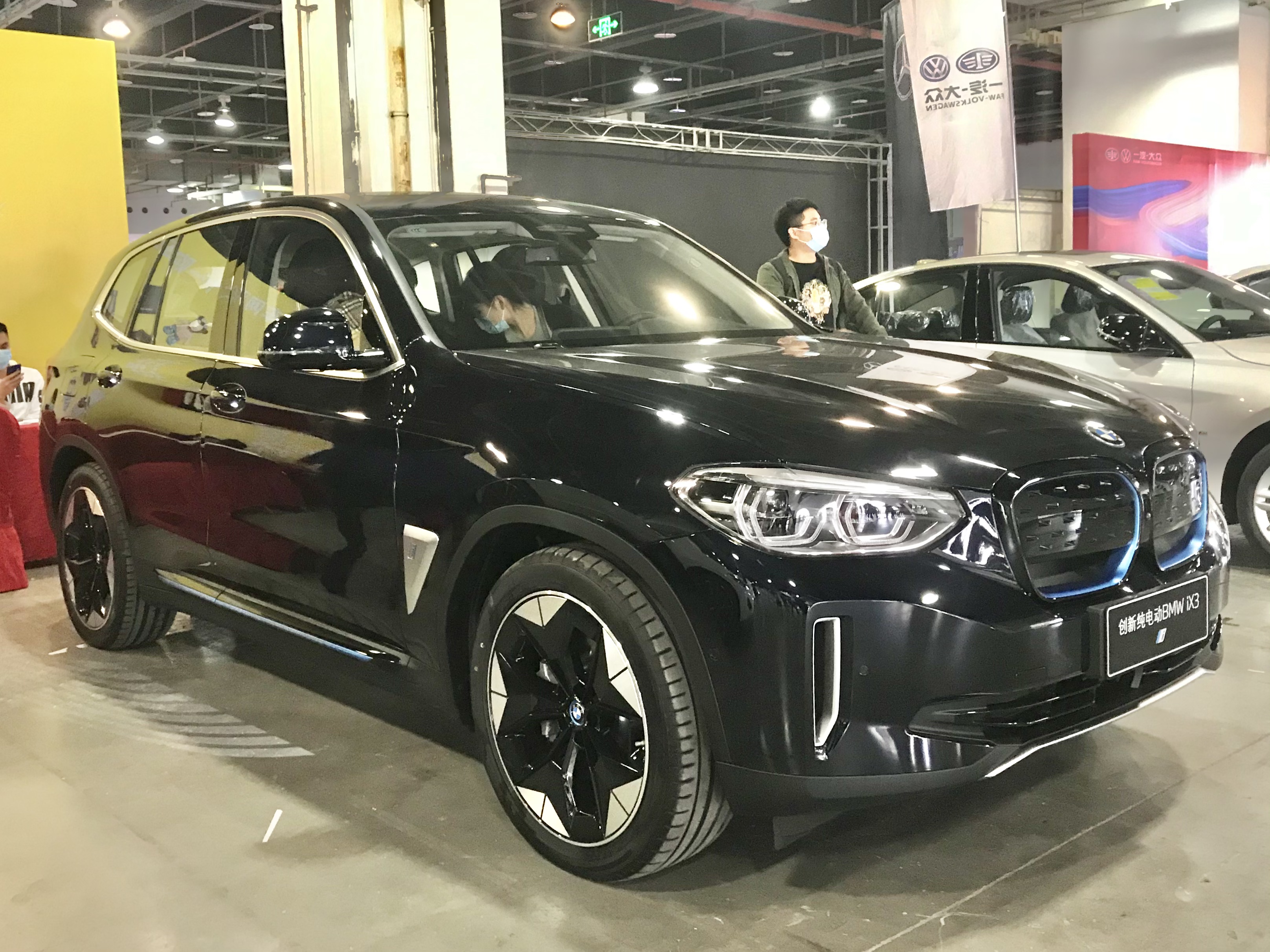
iX3 (G08)
"...ew displays. The BMW Neue Classe, like in the new iX3 that just announced, has this kind of irregular h..."
The BMW iX3 (G08) is an electric SUV, similar in size and purpose to a compact SUV. It uses electricity to power the drivetrain, and it includes BMW’s digital screens and controls. It’s mentioned because its interior tech helps show how BMW is changing its EV user experience.
The BMW iX3 (G08) is an electric SUV version of BMW’s X3-size lineup. It’s relevant in this discussion because it’s an example of how BMW is using newer display and digital interface ideas in an EV application. The podcast mentions it alongside the Neue Klasse concept, suggesting a connection between BMW’s evolving screen/tech approach and its next platform direction.
wirelessly
"If you have YouTube on your phone [1090.2s] and soon to be other video streaming apps and you're parked waiting for someone or charging your [1095.1s] vehicle, you can bring those up seamlessly and it's all happening wirelessly."
Here, “wirelessly” means you don’t need to plug your phone in to use apps in the car. Your phone can stay in your pocket while the car still shows the content.
In this context, “wirelessly” refers to phone-to-car media and app projection without a physical cable. That typically relies on short-range wireless connections (often Wi‑Fi-based) so content can appear on the car display while the phone stays in your pocket.

Google I.O.
"demoing and will be launching this year in Android Auto. We're demoing at Google I.O. this week. Again, what an amazing way to help people stay focused, keep their hands on the wheel"
Google I/O is a big event where Google shows off new tech and software features. They’re saying they’re demonstrating this new Android Auto capability there.
Google I/O is Google’s annual developer conference where the company previews new products and features. In this context, the hosts mention it as the place where the Android Auto use case is being demoed.
live lane guidance
"Ineligible cars with Google built-in, immersive navigation in Google Maps will be more precise thanks to what's known as a live lane guidance. Tell me about that."
Live lane guidance is the navigation feature that tells you which lane to be in before a turn or exit. It’s meant to be more accurate because it can use more up-to-date vehicle and network information.
Live lane guidance is navigation that shows which lane you should be in as you approach turns or exits, updating in real time. The segment claims it becomes more precise when the car has Google built-in and uses a connected vehicle architecture.
networked and connected electrical architecture
"Yeah. So this is another feature that benefits from the networked and connected electrical architecture in the vehicle, but also the latest advances in AI."
This means the car’s computers are connected to each other and can share information. That connectivity helps navigation features get more accurate and up-to-date.
A networked and connected electrical architecture means the car’s electronic control units communicate over a network and can exchange data with cloud services. The segment ties this to enabling features like immersive navigation and live guidance.
immersive navigation
"first, maybe start with immersive navigation. I think we're all used to, again, understanding how car navigation systems speak to us. ... The other thing with immersive navigation is we now show a much more 3D, real-world-like experience."
Immersive navigation is a more visual, more realistic type of GPS guidance. Instead of only a flat map, it shows a 3D view and highlights landmarks so it’s easier to understand where to go.
Immersive navigation is an enhanced navigation experience that uses more realistic, 3D, real-world-like visuals and landmark highlighting. The segment describes it as rendering overpasses and trees so drivers don’t have to mentally translate a flat 2D map into the 3D world.
lane level navigation
"It's really, really helpful. Then the lane level navigation, as you said. So because in certain cars, like one of my favorite recent vehicles that has this is the Polestar 4."
Lane-level navigation is a navigation mode that goes beyond “turn left in a mile” and instead identifies specific lanes you should occupy. It typically relies on map data plus real-time sensing (like a front-facing camera) to match the guidance to what you’re seeing on the road.

Polestar 4
"cars, like one of my favorite recent vehicles that has this is the Polestar 4. It's a really, Google Maps, we worked with Polestar to connect Google Maps to the front-facing camera."
The Polestar 4 is an electric car. In this example, Google Maps can “see” the road using the car’s camera so it can tell you which lane to be in for an exit or turn. It can also estimate whether using a special lane will save you time.
The Polestar 4 is a modern electric crossover where Google Maps can use the car’s front-facing camera to support lane-level navigation. In this setup, the system can highlight which lanes to be in for upcoming turns or exits, and it can also use vehicle data to estimate time savings for special lanes like HOV/express lanes.
front-facing camera
"Google Maps, we worked with Polestar to connect Google Maps to the front-facing camera. So Google Maps not only knows where all the lanes are, it knows what lanes you should be in."
A front-facing camera is a camera mounted on the front of the car that looks at the road ahead. Here, it helps the navigation system “match” the lane guidance to the real lanes you’re driving toward.
A front-facing camera is a vehicle-mounted camera aimed forward to observe the road ahead. In this context, it’s used to help Google Maps align lane guidance with what the driver is actually approaching, enabling lane highlighting and lane-change prompts.
HOV lane
"if you're in the, say, an HOV lane, it will actually be able to calculate how much time you will save by traveling in the HOV lane or an express lane compared to the other lanes."
An HOV lane is a special lane meant for cars with more than one person. The system can estimate whether using that lane will get you there faster than the regular lanes.
An HOV lane (High-Occupancy Vehicle lane) is a dedicated roadway lane reserved for vehicles carrying multiple occupants. The episode describes using navigation plus vehicle data to estimate time savings from taking an HOV lane versus staying in general-purpose lanes.
express lane
"it will actually be able to calculate how much time you will save by traveling in the HOV lane or an express lane compared to the other lanes."
An express lane is a special lane that’s usually meant to be faster than the regular lanes. The navigation system can estimate whether taking it will save you time.
An express lane is a roadway lane designed to move traffic more quickly than general lanes, often with access rules (which can include HOV eligibility). The episode’s point is that the navigation system can compare expected travel time between express/HOV lanes and other lanes.
mysterious indicator light
"We'll answer questions that are specific to your actual car, like maybe it identifies a mysterious indicator light on the dashboard, which we all, like let's face it, we're all googling what that is anyway when it comes on and how do I fix it"
That’s the warning light on your dashboard. It can mean something is wrong or something needs attention, and the idea here is that the car could explain what it is and what to do next.
An indicator light on a car’s dashboard is a warning or status message that alerts you to a system needing attention (for example, brakes, engine management, or safety systems). The host’s point is that an assistant could interpret what the light means and suggest next steps instead of forcing you to search online.
Ford Tv Model
"...ation with meta in my car asking about, hey, what TV model is that that comes with Gem and I now, and it tol..."

Polestar 3
"It knows that I'm running a Polestar 3. It knows that I'm running a Polestar 3 and it answers and it says, well, the box width is this. If you fold down the second row seats, you should be able to fit this in the back of your Polestar 3."
Polestar 3 is an electric SUV. Here it’s the example car showing how an in-car assistant could help with practical questions like whether a big item will fit in the trunk area.
Polestar 3 is Polestar’s fully electric SUV, built around a modern infotainment system and driver-assistance features. In this segment, it’s used as the example vehicle for how Google-integrated features can tailor answers to the specific car’s interior space (like folding the second row) and fitment questions.
situational awareness
"Visual interfaces will always matter, especially for navigation, situational awareness, things like that. But do you think AI might significantly reduce dependency on maybe complex touch interactions"
Situational awareness means knowing what’s going on around you while driving. The segment suggests that better on-screen/visual help could make it easier to stay aware without constantly tapping through apps.
Situational awareness is the driver’s ability to understand what’s happening around the vehicle—traffic, road conditions, and the car’s own status—so they can make good decisions. The host connects it to visual interfaces in the car, implying AI could present information in a more helpful way than relying on complex touch/app interactions.
AI reducing dependency on touch interactions / app-based interactions in the car
"Visual interfaces will always matter, especially for navigation, situational awareness, things like that. But do you think AI might significantly reduce dependency on maybe complex touch interactions or maybe just change the whole scenario around app-based interactions, traditional app-based interactions in the car?"
They’re talking about how future car AI might make it less necessary to tap through menus and apps. Instead, you could just ask questions and the car would figure out the answer using what it knows about your car and your situation.
This segment discusses how AI assistants could change the in-car user experience by reducing reliance on complex touch controls and traditional app-style interactions. The underlying idea is that conversational AI could handle tasks like answering dashboard questions and checking real-world fitment using the car’s context.
plastic OLED
"Yes, absolutely. I think you see a lot of things happening with cars. The advent of plastic OLED [1936.4s] or POLED displays means we can build screens in different shapes, like I was saying, but"
OLED is a type of screen technology where the pixels light up themselves. “Plastic OLED” means the screen can be made flexible and shaped, which helps car makers fit displays into more interesting interior designs.
OLED stands for organic light-emitting diode, and it’s a display technology where each pixel emits its own light. “Plastic OLED” refers to a flexible version of OLED that can be made thinner and shaped more freely than rigid screens, which matters for automotive interior design.
POLED
"The advent of plastic OLED [1936.4s] or POLED displays means we can build screens in different shapes, like I was saying, but"
POLED is just a flexible version of OLED screens. It can help car dashboards look more seamless because the display can be shaped to fit the interior.
POLED is shorthand for plastic OLED, a flexible OLED display variant. In car interiors, POLED can enable curved or unusual “screen-in-the-dash” layouts that would be harder with traditional rigid panels.
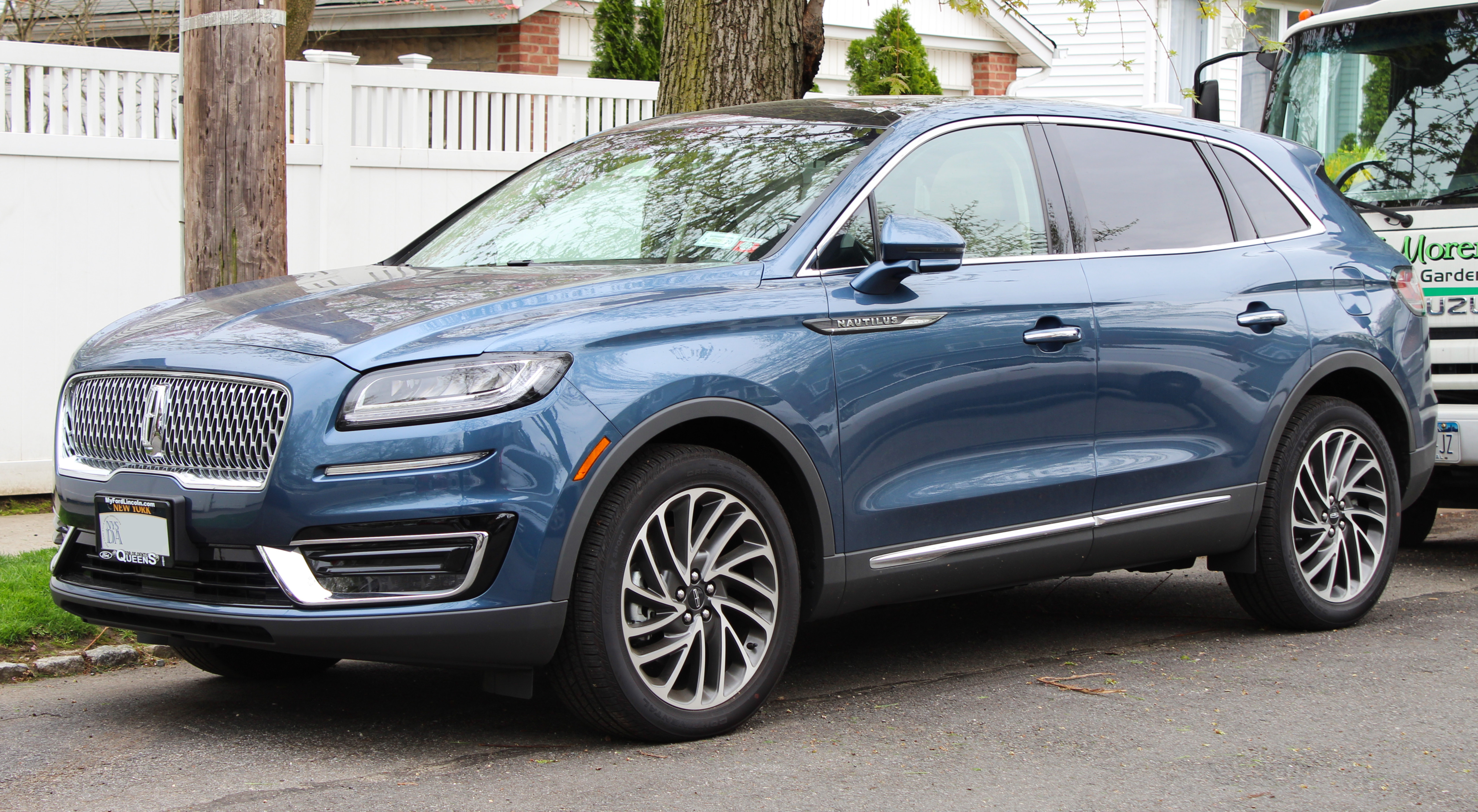
Lincoln Nautilus
"you also see some car companies that have pillar-to-pillar displays. The Lincoln Nautilus [1950.3s] made by Ford is just an incredible, has this pillar-to-pillar, beautiful display."
The Lincoln Nautilus is a luxury SUV from Lincoln. In this discussion it’s mentioned because it has a wide dashboard screen that stretches across the front of the cabin for a more modern look.
The Lincoln Nautilus is a Ford-owned luxury SUV that’s used here as an example of a “pillar-to-pillar” display setup. That means the screen spans a large width across the dashboard area, creating a more immersive, tablet-like cockpit look.
pillar-to-pillar displays
"you also see some car companies that have pillar-to-pillar displays. The Lincoln Nautilus [1950.3s] made by Ford is just an incredible, has this pillar-to-pillar, beautiful display. [1955.6s] But to do that, you need to push these displays out further a bit."
“Pillar-to-pillar” means the dashboard screen runs across most of the width of the front cabin. Instead of small screens in different spots, it looks like one big display.
“Pillar-to-pillar” refers to a dashboard display design where the screen spans nearly the full width of the cabin, from one side pillar area to the other. It’s a specific UI/packaging approach that supports a more continuous visual experience than separate screens.
modality
"And then touch is just not [1962.0s] the right interaction. And so I think we're working with car makers to really make voice the primary [1968.6s] modality where you can just speak to the car and be able to control things."
“Modality” here means the main way you interact with the car. For example, touch is one way, and voice is another way.
In this context, “modality” means the primary way a person interacts with the car—like touch, voice, or gestures. The speaker argues that voice should become the primary modality so you can control functions by speaking.
generative user interfaces
"Another interesting thing that [1999.2s] we're starting to develop with, and we showed at Google I.O. this week, is generative user interfaces. [2007.1s] So in Android Auto now, we support generative UI widgets, where I can say, hey, I want to see the"
“Generative user interfaces” means the car can use AI to create the screen elements you need, instead of only showing pre-made menus. So if you ask for something specific, it can build a matching display for it.
“Generative user interfaces” are UI elements created on the fly by AI rather than being fixed screens designed ahead of time. In-car, this can let the system generate a widget or layout tailored to the driver’s request and preferences.
generative UI widgets
"So in Android Auto now, we support generative UI widgets, where I can say, hey, I want to see the [2014.9s] sports score for this, or I want to show me the upcoming schedule for my favorite sports team. [2021.2s] And it will actually create a user interface element that you can have access to that will"
“Generative UI widgets” are small, functional interface components (like cards or panels) that AI can generate dynamically. The speaker describes asking for something (sports score, team schedule) and having a new UI element appear that stays available across devices and in the car.
human machine interface
"And that software interface is just kind of generated on the fly, very personalized to you. [2041.2s] And so I think the entire nature of human machine interface is going to be changing, [2047.3s] where it will be, again, much more fluid."
Human-machine interface is just the “how you talk to the car” part—what you see and how you control it. They’re saying AI will make that interaction feel smoother and more natural.
Human-machine interface (HMI) is the overall way people interact with a machine—screens, controls, voice prompts, and feedback. The speaker suggests HMI in cars will become more “fluid” as AI enables more natural, less menu-driven interactions.
LiDAR
"You know, I think the fusion of the in-vehicle sensors, or I should say the sensors around the vehicle, whether it's LiDAR, ultrasonics, cameras, with the real world understanding of these AI models..."
LiDAR is a sensor that shoots lasers out and measures how long they take to bounce back. That lets the car build a 3D picture of what’s around it.
LiDAR (Light Detection and Ranging) uses laser pulses to measure distances to objects around the vehicle. By building a 3D map of the surroundings, it helps advanced driver assistance systems (and self-driving stacks) understand where cars, pedestrians, and obstacles are.
cameras
"You know, I think the fusion of the in-vehicle sensors, or I should say the sensors around the vehicle, whether it's LiDAR, ultrasonics, cameras, with the real world understanding..."
Cameras let the car “see” the road. The system uses that picture to recognize things like lanes, cars, and people.
In driver-assistance systems, cameras provide visual information used to detect lanes, traffic signs, vehicles, and pedestrians. They’re often paired with other sensors so the system can cross-check what it sees in different lighting and weather conditions.
ultrasonics
"You know, I think the fusion of the in-vehicle sensors, or I should say the sensors around the vehicle, whether it's LiDAR, ultrasonics, cameras, with the real world understanding..."
Ultrasonic sensors are like the car’s “sound radar.” The car sends out high-pitched sounds and measures how quickly they come back to estimate how close something is.
Ultrasonic sensors use high-frequency sound waves to detect nearby objects and measure distance. They’re commonly used for low-speed functions like parking assistance and can also contribute to obstacle detection for driver-assistance features.
advanced driver assistance systems
"..., with the real world understanding of these AI models, and with the navigation and the advanced driver assistance systems, fusing these all together..."
ADAS are the car’s driver-assist features—things like lane centering or adaptive cruise. They use sensors and software to help you drive more safely.
Advanced Driver Assistance Systems (ADAS) are vehicle technologies that help with driving tasks like lane keeping, adaptive cruise control, and collision avoidance. They rely on sensor inputs and software to interpret the environment and then assist the driver or automate parts of driving.
fusing
"..., with the real world understanding of these AI models, and with the navigation and the advanced driver assistance systems, fusing these all together, I think will unlock some very interesting use cases..."
Sensor fusion means the car combines information from different sensors to get a better picture of what’s around it. If one sensor is weak in a situation, another can help fill the gap.
Sensor fusion is the process of combining data from multiple sensors (like LiDAR, radar/ultrasonics, and cameras) into a single, more reliable understanding of the vehicle’s surroundings. The goal is to reduce blind spots and improve accuracy by letting sensors complement each other.
cockpit environment
"I think the other thing, like I said, as cars get more and more screens, how do we make this cockpit environment more dynamic?"
The “cockpit environment” is how the car’s interior feels and how you interact with it—what you see and what you control. When the car drives itself more, the interface has to change too.
“Cockpit environment” is a design term for how the driver interacts with the car—what information is shown, how controls are laid out, and how the experience changes across driving modes. In autonomy, the cockpit needs to shift from “driver-focused” to “passenger/monitoring-focused.”
autonomy
"So we see car makers introducing new levels of autonomy, right, where maybe your car, you're driving it around the town, and then you get on the highway..."
Autonomy means the car can do more of the driving work on its own. In this discussion, it’s about how the car’s behavior can change between city driving and highway driving.
In automotive software, autonomy refers to levels of automated driving where the car can handle more of the driving task without continuous driver input. The transcript frames autonomy as something that can change by scenario—city driving versus highway driving—depending on the system’s capabilities.
GM Supercruise
"...where maybe your car, you're driving it around the town, and then you get on the highway, you have a long drive, and you know, you just, you enable GM Supercruise..."
GM Super Cruise is GM’s system for highway driving that can help steer and control speed. It works only in certain conditions/roads and still requires you to be ready to take over.
GM Super Cruise is General Motors’ hands-free highway driver-assistance system. It’s designed for specific mapped roads and uses a combination of sensors, cameras, and driver monitoring to automate steering and speed control within its limits.
Ford, BlueCruise
"...and you know, you just, you enable GM Supercruise, or you enable Ford, BlueCruise, or whatever it might be..."
Ford BlueCruise is Ford’s highway feature that can help drive the car for you. It’s not “any road, any time”—it’s meant for specific mapped situations.
Ford BlueCruise is Ford’s hands-free driver-assistance system for highway driving. Like other advanced systems, it relies on sensor inputs and mapping to determine when it can safely automate parts of the drive.
multi-screen system
"Well, now we have this incredible multi-screen system, usually the best stereo system that people own. You have very comfortable seats..."
A multi-screen setup means the car uses more than one display to show driving and media info. The point here is that the screens need to feel different when the car is driving more on its own.
A multi-screen system in a modern car refers to using multiple displays (for example, instrument cluster plus infotainment plus other screens) to present information. The transcript connects this to the challenge of redesigning the “cockpit” experience when the car is in an autonomy mode.
security vulnerabilities
"I think what the rest of the world is seeing now, we certainly experience this within Google, ... Whether it's finding security vulnerabilities and fixing them..."
Security vulnerabilities are software weaknesses that could let someone break into or interfere with a system. For cars, that matters because the software controls important functions.
Security vulnerabilities are weaknesses in software that could be exploited to compromise a system. In connected vehicles, identifying and fixing these issues is important because the car’s software can affect safety-critical functions and may be reachable through networks.
user experience
"how can we further deliver on our mission to just make it a safer, a more seamless, more fluid user experience ... the user experience is what will define success."
User experience just means how easy and smooth it feels to use the car’s tech. In this segment, they’re saying the best cars are the ones where the digital features work seamlessly.
In-car user experience (UX) refers to how smoothly and intuitively the driver interacts with the vehicle’s digital systems—menus, voice control, responsiveness, and how information flows. The speaker frames UX as the key measure of success for Android-powered cars.
CarPlay
"So today, I think whether [2638.3s] using Android Auto or CarPlay, people, you know, the technology still shows up."
CarPlay lets you connect your iPhone to your car and use certain apps on the car’s screen. It’s a way to get maps, calls, and music without constantly touching your phone.
CarPlay is Apple’s in-car platform that displays compatible iPhone apps on the car’s infotainment system. Like Android Auto, it’s designed to reduce friction between the phone and the vehicle so the experience feels built-in.

BMW Neue Classe
"As I mentioned, I'm really excited about the new BMW Neue Classe vehicles coming out. [2700.1s] We have a whole host of, I mean, I could, the Cadillac Lyric, Lincoln Nautilus."
BMW Neue Klasse is BMW’s plan for a new generation of cars, especially electric ones. The guest is excited because it represents what BMW is building next.
BMW Neue Klasse refers to BMW’s next-generation vehicle platform and EV strategy. The speaker frames it as a major upcoming shift, implying new architecture and technology that will underpin future BMW electric cars.
Request an Explanation
Heard something you'd like explained? We'll add it to this episode.
Sign in to request explanations for terms you heard.
Want to learn more?
Browse our glossary for plain-English explanations of automotive terms, jargon, and concepts.
Help improve this episode
See something that's not quite right? Our annotations are AI-generated and can sometimes miss the mark. Click the flag icon on any annotation to suggest a correction.