AutoTrader.ca is a website where you can look up cars for sale and automotive articles. It’s not a car part—just a place to find vehicle listings and related content.
A four-cylinder engine is the common type of engine with four cylinders. Here, they’re pointing out that the AWD version still uses the smaller, base engine.
“Blacks out” refers to darkened exterior or trim elements—often things like badges, grilles, or window trim—used to create a sportier look. It’s a common appearance package strategy that can vary by market and trim.
The Toyota Corolla is a long-running compact sedan benchmark, and the hosts use it as a reference point for what “contemporary” design looks like. The comparison is about styling and design language rather than size or performance.
“Design language” just means the overall look and style a car brand uses. They’re arguing whether the Mazda 3’s style looks current or more like an older design, even if it still looks good.
The Mazda RX-3 is an older Mazda sports car. It’s known for using a rotary engine, which is different from the usual engine type most cars use. The episode mentions it as a throwback because it has a look that reminds people of newer Mazda designs.
LED headlights use small electronic light elements instead of older-style bulbs. They’re popular because they can look sleeker and often help the car feel more modern.
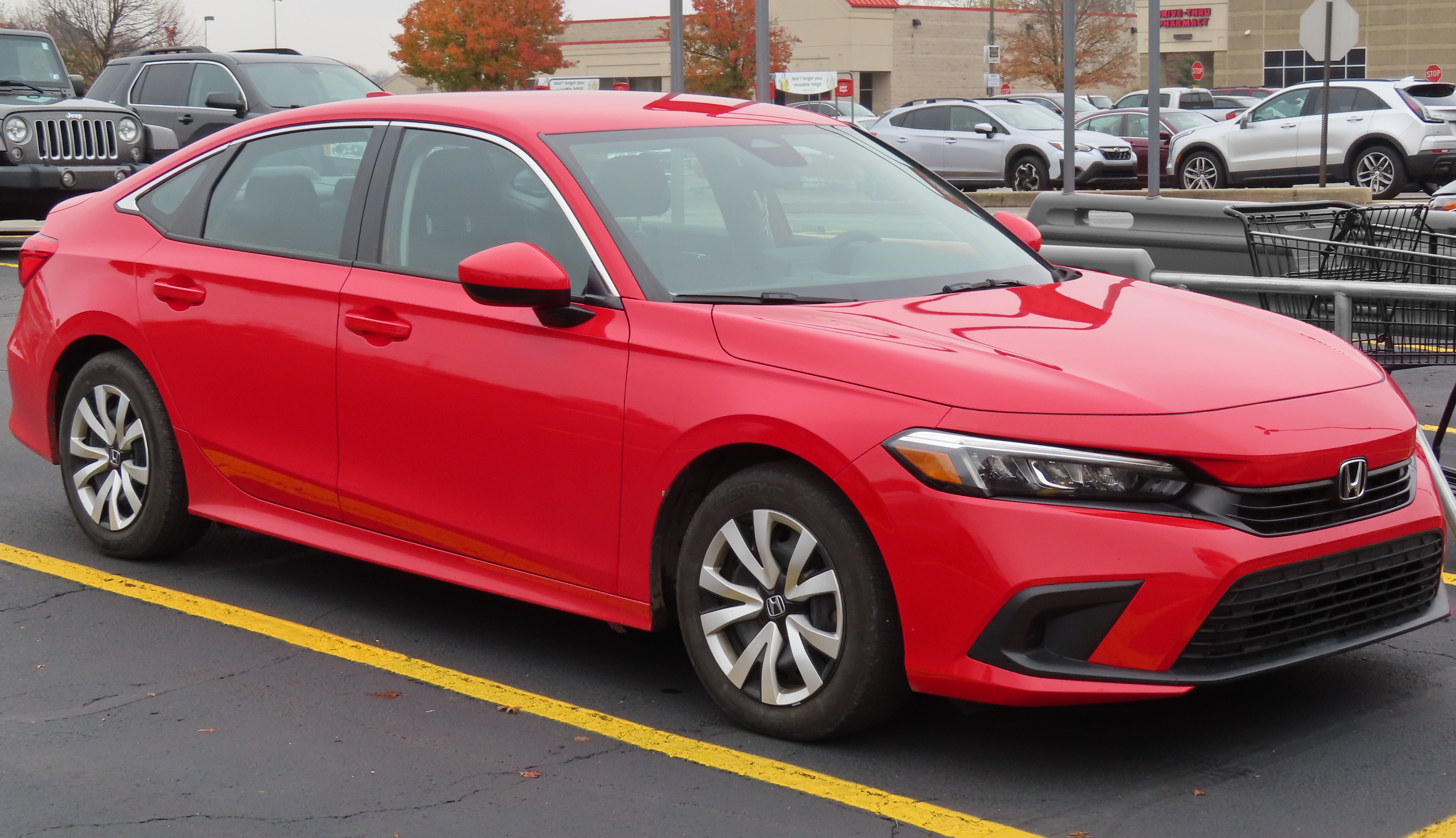
The Honda Civic is used as a styling example of a car that leans into sharp, angular exterior design. The hosts argue that this kind of aggressive geometry ties the car to a specific design era, which can make it feel dated sooner than smoother styling.
Concept
design aging (timeless vs era-specific styling)
They’re talking about why some cars look newer for longer than others. If a car uses very trendy shapes, it can start to look old sooner, but if it has a simpler, smoother look, it tends to stay looking modern.
The hosts reference the final generation Chevrolet Cruze as a styling comparison point for where the Mazda 3’s design “is coming from.” They suggest that the Cruze’s design direction resembles what they consider a more modern look, and they use it to frame how the Mazda 3’s styling fits into the timeline of design trends.
The Ford Edge is a midsize SUV that’s built for everyday driving. It’s designed to be comfortable and practical for passengers and cargo. The episode mentions it while talking about the inside of vehicles and what they’re like to live with.

This is the Mazda 3 Sedan, a compact car. They’re saying the inside looks and feels older than you’d expect, and the screen/controls are awkward to use.
The center console is the control area between the seats. They’re saying the infotainment is operated using a big knob/dial there, which makes it feel less modern.
Touchscreen capability means you can tap the screen with your finger to control the system. They’re saying the U.S. version doesn’t let you do that, so you have to use buttons or a knob instead.
A “dial” here refers to the physical rotary controller used to operate the infotainment system. The host argues the dial-based interface is awkward for map tasks—especially when using smartphone navigation apps—because it’s slower and less precise than touch gestures.
This describes a common infotainment safety design: touch input is disabled while the car is moving, forcing drivers to use physical controls (like a dial) or wait until stopped. It can reduce distraction, but it also limits how quickly you can interact with navigation maps and menus.
Android Auto is Google’s system for projecting a phone’s compatible apps onto the car’s infotainment screen. The host is criticizing how Android Auto navigation feels when the car forces you to use a dial instead of touch gestures, making map interaction clunky.
Apple CarPlay mirrors compatible iPhone apps onto the vehicle’s infotainment system. The host’s point is that when the car limits touch and relies on a dial, CarPlay navigation becomes harder to use—especially for zooming, scrolling, and selecting alternate routes.
They’re talking about Google Maps navigation. The issue is that the car’s control setup makes it hard to use map features like alternate routes and zooming the way you would on a phone.
This is about how the car’s main screen and controls are set up on the dashboard. Here, they’re saying the way it’s built into the dash can make it hard for people in the back seat to see the screen.
A gauge cluster display is the driver’s instrument panel screen that shows speed, engine info, and warning indicators. Here, the hosts describe a digital, single-color LCD screen placed between two traditional analog gauges, which affects how modern or “dated” the cockpit feels.
This is a screen that mostly shows information in one color instead of full color. The hosts think it makes the dashboard feel cheaper or older than it should.
Trim level is which version of the car you buy—base vs higher versions with more features. They’re saying higher trims should get nicer-looking screens and displays.
Adaptive cruise control is like regular cruise control, but it can slow down or speed up to keep a safe distance from the car in front of you. The car will show when it’s active so you know it’s controlling the spacing.
Safety assist is the car’s set of help features that try to prevent crashes or warn you when something looks risky. This segment is talking about how those alerts show up on the screen.
A digital speedometer (“digital speedo”) shows vehicle speed as text/graphics on the instrument display instead of using a traditional analog needle gauge. The hosts argue that on this Mazda layout, the digital speed is relegated to a small area, while the rest of the display is dominated by other information.
An analog speedometer uses a physical-style gauge with a needle and markings, even if the car’s overall cluster is digital. In this segment, the analog mode is contrasted with the digital speedometer mode, with different information (like trip or fuel mileage) appearing depending on the selected layout.
This is a market concept: automakers may deprioritize compact cars when allocating engineering and marketing resources, often shifting focus toward larger vehicles, trucks, SUVs, or electrification. The hosts connect that to why the Mazda 3’s driver display design may feel unchanged or underdeveloped.
The Mazda CX-70 is an SUV made by Mazda. The episode is talking about it as part of Mazda’s SUV lineup and how it relates to other CX models. It’s likely being mentioned because it’s meant to be an easier, straightforward choice within that range.
The Mazda6 is Mazda’s older midsize sedan. They’re saying Mazda stopped selling it during that time, which is part of why they think Mazda focused more on SUVs.
Skyactiv is Mazda’s name for a set of engineering ideas meant to make their cars more efficient. The hosts are saying Mazda tried some new drivetrain tech, but it didn’t work out as well as planned.
They’re talking about Mazda trying new engine/transmission ideas, but those ideas didn’t end up working out for the North American market. It’s an example of how hard it is to turn new drivetrain tech into a product people can actually buy.
Compression ignition is how diesel engines start—fuel ignites because the air is compressed and heated. The hosts are saying Mazda tried a similar approach, but it didn’t end up working out the way they needed.
They’re talking about Mazda trying to sell diesel versions, but it didn’t last. Even if a diesel idea makes sense on paper, it can be hard to make it work in the real market.
This is a safety system that watches your lane markings. It can warn you if you start to drift, and it can also try to steer you back—sometimes more aggressively than you’d expect.
Blind spot monitoring helps you notice cars that are next to or behind you where you can’t see well. It alerts you so you’re less likely to change lanes into another vehicle.
This means the car has a 2.5-liter engine with four cylinders. In this segment, they’re using it to explain how strong the Mazda 3 feels and what kind of power it makes.
A six-speed automatic is a traditional torque-converter automatic transmission with six gear ratios. The host calls it “old school,” implying it’s a conventional setup rather than a newer dual-clutch or continuously variable approach.
CVT is a type of automatic transmission. It doesn’t shift like a normal car; it smoothly changes the “gear ratio” to help the engine stay in the right power range.
Heavier cars usually feel slower to accelerate and can feel less nimble. They’re using weight to help explain why this car feels quick even with moderate horsepower.
They’re comparing the car’s weight to a C5 Corvette, which is a well-known Corvette generation. The point is that the compact feels surprisingly heavy for its size.
They’re comparing the Mazda to the Toyota Corolla Hybrid. The point is that the Corolla Hybrid is another AWD compact option, but it’s not as powerful.
Term
turbo for the Elantra
They’re saying the Elantra feels more powerful when you get the turbo version. Turbo models usually accelerate better, which matters for everyday driving.
Throttle hang is when you take your foot off the gas and the car doesn’t slow down smoothly right away. Some turbo cars can feel a little “late” to respond, and the speaker says this one didn’t.
A turbo engine uses a device that packs more air into the engine, which can make it feel stronger. But sometimes the response can feel a little delayed, which is why people talk about throttle behavior.
The Chevrolet Equinox is a compact SUV used here as a comparison point for ride quality. The hosts describe it as “boomy” and stiff over bumps, contrasting it with the Mazda 3’s calmer behavior.
Rev hang is when the engine speed doesn’t drop right away after you let off the gas. It can make the car feel a little less “snappy” when you change your mind with the throttle.
“Combined” means the efficiency number is averaged across both stop-and-go driving and faster highway driving. It’s a more realistic number for daily life.
A “luxury package” is an option bundle that adds extra features to the car. In this case, choosing all-wheel drive also forces you to get that package, so the price jumps automatically.
Car prices often change a lot depending on what drivetrain and engine you pick. Here, they’re basically saying that adding all-wheel drive (and matching the right engine) can cost thousands more than the base setup.
“Carryover powertrain” means the car keeps the same main drivetrain (engine and transmission) as before. They’re updating other stuff—like the infotainment—without redesigning everything under the hood.
A manual transmission means you shift gears yourself using a clutch and a stick. The hosts are pointing out that manuals are rare in this truck category right now.
They’re talking about how few trucks offer a stick shift anymore. If a Tacoma is one of the only manual options, that’s a big deal for people who want to drive a manual.
This is a Toyota Tacoma TRD Sport, and in this case it’s the manual version. The hosts are talking about how that trim and the stick shift affect how the truck drives day to day.
A side step is the little step along the side of the truck that makes it easier to climb into the cab. They’re saying this truck doesn’t have one, so getting in is harder.
The shifter is the manual transmission’s control lever, and its feel (including throw length and any looseness) strongly affects how “connected” the driver feels to the drivetrain. The hosts mention the shifter has a fairly long throw and wobbles while driving, which can be a notable quality/feel issue for some buyers.
Clutch feel is how the clutch pedal and the moment the car starts moving feel when you shift. Some clutches feel smooth and predictable, while others feel grabby or inconsistent.
Shift feel is how the gear changes feel—like whether the shifter feels tight and precise or loose and wiggly. It’s mostly about the driver’s experience, not just raw performance.
They’re talking about the Jeep Gladiator as a possible alternative to the Toyota Tacoma. The key point is whether you can get it with the setup you want (like a manual) and what engines are available.
The Jeep Wrangler is an SUV made for off-road driving. Many versions let you remove parts like doors so you can drive with more open-air feel. The podcast mentions that you can still get a V6 engine in some Wrangler setups.
Horsepower is a measure of an engine’s power output—how much work it can do over time. The hosts use horsepower figures to compare different Tacoma trim/engine configurations and to evaluate whether the base model feels underpowered versus higher-output versions.
A hybrid powertrain uses both a gas engine and an electric motor. The idea is to improve efficiency, and it can feel different from a regular gas-only setup.
The Tesla Model S is an electric car, meaning it runs on electricity instead of gasoline. The episode mentions the entry-level SR version and its power rating. It’s discussed because it shows what you get when you buy the Model S in its most basic form.
A pre-runner is an off-road truck setup used in Baja-style racing. It’s meant to handle rough terrain, but it’s often not four-wheel drive—so it’s more about suspension travel and durability than maximum drivetrain capability.
Two-wheel drive means the truck only powers one set of wheels. Even with 2WD, you can still have a suspension setup that soaks up bumps for off-road driving.
Longer-travel suspension means the wheels can move up and down more than on a typical street truck. That helps the truck stay controlled over rocks, ruts, and big bumps.
A supercharger is an engine add-on that forces more air into the engine for more power. “Factory” means it was offered as an official option, not something you had to retrofit yourself.
This is Toyota’s official way of offering TRD parts and upgrades. The hosts are saying the supercharger wasn’t just random aftermarket—it was part of an official TRD program.
All-season tires are made to be okay in a little bit of everything—regular roads most of the time, plus rain and light snow. They’re not meant to be the best choice for rough off-road trails.
The Renault Wind is a small car with a unique style. The episode mentions the lowest trim, including simpler features like manual-style windows. It’s discussed because it’s not a typical mainstream car and feels more basic and distinctive.
The Honda Ridgeline is a midsize pickup that’s designed to be more car-like in ride and handling than traditional trucks. The hosts use it as another benchmark for comfort and ease of driving versus a larger truck.
The Hyundai Santa Cruz is a compact crossover-style pickup (often called a “crossover truck”) designed to feel more car-like than traditional body-on-frame pickups. Here it’s referenced as an easier-to-drive alternative compared with a larger truck.
Dense downtown driving emphasizes low-speed maneuvering, frequent stops, and tight spacing, which can make larger vehicles feel harder to live with. The segment highlights how a truck’s size and driving characteristics matter most during everyday commuting.
Term
pricing wise
“Pricing wise” here refers to comparing the vehicle’s cost across markets (Canada vs. the U.S.) to judge value. Listeners often benefit from understanding that taxes, import rules, and dealer pricing can shift what “good value” means.
The Ford F-150 is a large pickup truck. You can choose different trims, and some are more affordable while others are more expensive. The podcast is talking about how the truck can be bought in a simpler, basic form depending on the trim.
Part
tuned by rd shocks
“Tuned” shocks means the suspension dampers are calibrated to match the vehicle’s intended ride and handling character. On a TRD-style Tacoma, that often translates to firmer or more controlled damping compared to base models. The goal is usually better body control over bumps and improved steering feel.
The infotainment system is the dashboard screen and the electronics that run things like music, navigation, and phone connection. Different trims can have smaller screens or fewer features. It’s one of the first things people notice when comparing cars.
Bluetooth speaker capability means the truck can play audio wirelessly using Bluetooth. In this case, the host is saying the speaker module is special to the vehicle, so you can’t just buy any cheap Bluetooth speaker and swap it in. If it’s lost, it may cost a lot to replace.
LIVE
The ground beefing tour apparently ground beefing ground apparently they're they're all about the ground beef
Okay, we're gonna start this podcast since we hit the button. Are you ready for that?
Technically we started this podcast an hour ago, and then you disappeared
All right, let's beef it up
Hello and welcome to the unnamed automotive podcast
My name is Sammy had just had and with me as always is my good friend and fellow automotive journalist
Benjamin hunting say hi to the people Ben greetings corporeal and non corporeal listeners greetings to everyone
If this is the first time you're listening to our podcast
Thank you for trying something new Ben and I are a pair of automotive journalists and more important than that
We're very good friends, right Ben
Sammy today I was frustrated in my intentions because I
Discovered that doing physical labor of some kind outdoors helps me to calm my nervous system
You've become a mountain man. That's what you've done
Is it there a TV show like hunting mountain men or something?
No, they they hunt for Sasquatch or something like that
Anyway, that's not what I'm talking about but I
Today I intended to do some of this work, but we've been getting insane amounts of rain all week
I don't know what's going on like literally like 25 millimeters a day
Which is fine because it fills the pond in the streams and I like it
But today there was a low in the rain and it was supposed to last all afternoon
So I did my writing in the morning and then about 2 o'clock. I'm like, okay
I'm ready to go out and I have these rocks that I want to pull this so
The where I live used to be farm pasture like a couple hundred years ago or whatever and then forest grew in but there's these old old
Stone fences that kind of crossed through the woods. I love these stone fences. I've seen them once
I like them too. I I just to say I'm not disassembling them
but someone has disassembled part of one on my property and made a pile and
I want to take this pile of old stones and use them to line the creek that cuts across my backyard and kind of give it a
nicer
Banks appearance it really gets crowded up with foliage and not foliage but like grass and whatnot in the
In the summertime, so I'm like, oh, if I put a bunch of rocks down definition of foliage to you
I think fully just leaves. I think we'll just leave bushes shrubs. No leaves. Okay foliage anyway
So I'm like it'll beautify the stream and I just basically what I have to do is go in the woods
It's not that far from the house and travel a short distance with the rocks and put them in the trailer for for my tractor
And then wait for it to dry out so I can bring the tractor to the creek
I was gonna do that today
And it just kept raining started at 2 o'clock hasn't stopped. I was upset about it
Why I'm saying this is because I want to start collecting two of every animal you can find I know
No, I want to know for our listeners. How do you deal with your ravage nervous system like what's
What do you do to calm down when things are just kind of freaking you out about the world or life in general?
I would love to hear about it. If you have any not necessarily techniques, but just things that have worked for you
Well, hopefully they listen to this podcast. I don't think that's calming anybody down. I
Think they do no, I'm gonna I write and I work on this podcast
It gets my mind off things
Where can people find your latest work, Ben?
They can find it at AutoTrader.ca at motor trend and at Haggerty
Let's go with those and you can find my work at AutoTrader.ca as well and driving.ca and driving.ca's YouTube channel, Ben
What about your comic work work? I have a new another a new comic book coming to Kickstarter on April 28th
www.deadaircomic.com
It is the third issue in a series that I have been doing about a world where one day out of the year
You can talk to the dead and it follows and they'll talk back to you. Hopefully I
Don't want to spoil things Sammy. I mean, I talk to the dead all the time. Okay. Well, that's weird back to the comic book
the
It's number three in a series that I've been working on for the past couple of years and all three books are available in the campaign
April 28th deadaircomic.com you can go there right now and sign up to be notified when it goes live
Ben this week. We've got a car that we haven't talked about as apparently since
2021 and that was a whole different time. That was five years ago experience
Yeah, I mean if you want to be technical about it. It was just five years ago
half a decade
So, um
I drove
It's a bit of a weird car
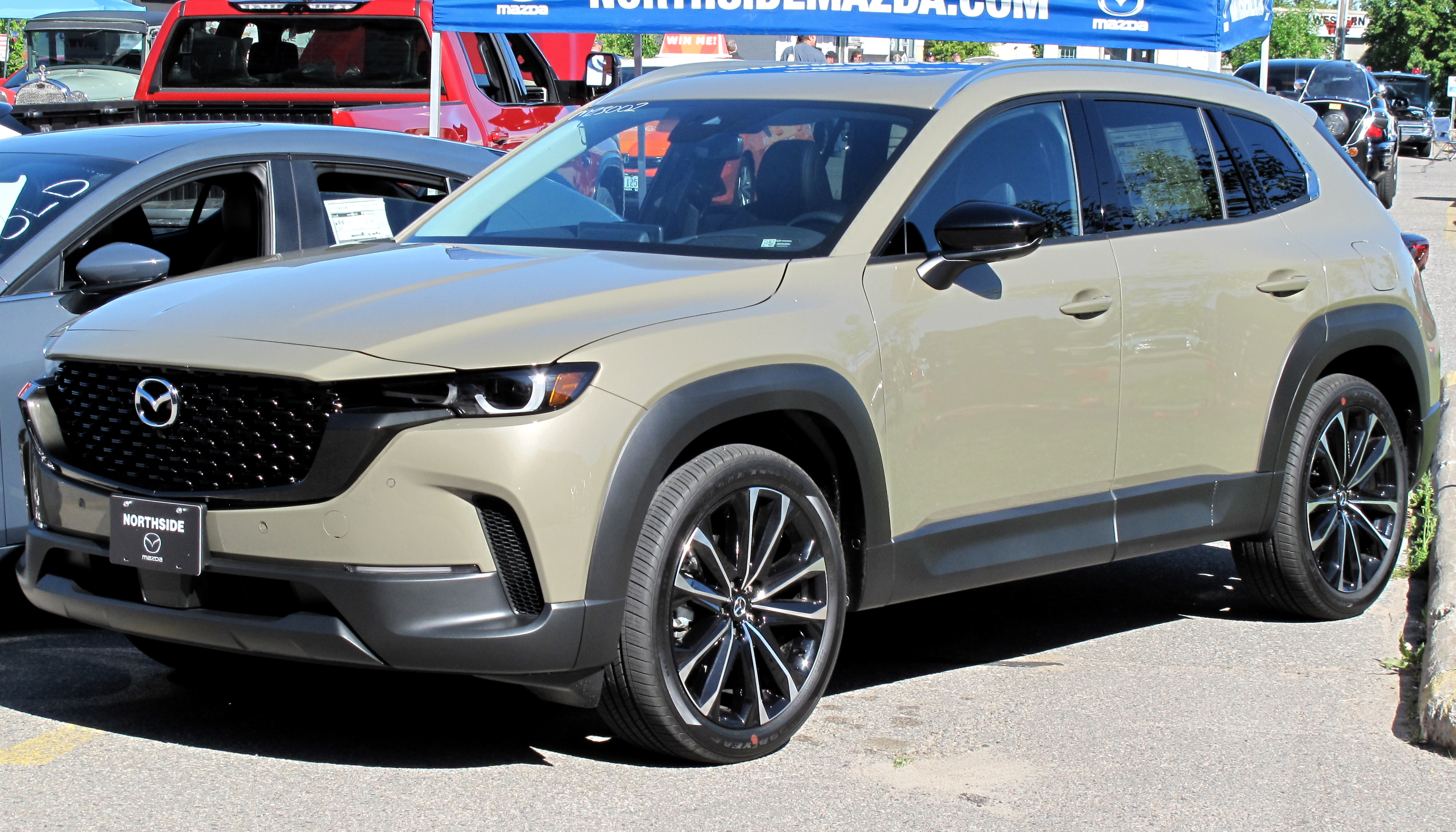
And and let me explain why it is the in canada the monster 3 gs all-wheel drive
This is the monster 3 sedan that has the base four-cylinder motor plus all-wheel drive
In the united states
There's only one model that offers that combination and that is the 2.5 s carbon addition
Which I think is new for last year
And that adds a different leather interior some larger wheels and blacks out a few things
The reason I bring it up is because there are some differences between the canadian and american market
Like in canada
It's our minds riding on like 16 inch wheels. I believe in the us is 18s
I have a black leather interior versus the red in the united states
The canadian car comes with the larger infotainment screen 10.25 inches versus the 8.8 that is in the us
For some reason masda only allows turbo buyers to get the large infotainment system. It's a little bit strange
anyway, those are the differences in the car
now
The reason I say it's a little bit strange is because sammy the masda 3 sedan feels like it's been on the market a long time
Am I wrong in saying that?
Yeah, I think it's been
It feels like it's been at least seven years. Maybe seven years. Wow. I
Let me take a look. Yeah, there must have been some kind of refresh at some point, right?
but fundamentally
when you look at this car
And then you look at say a corolla
Or an elantra or an or or a civic
I find that the masda looks like it comes from a different era of design
Would you would you think that say that's accurate?
Like it's compared to compared to the elantra. You said
Any any compact right now? I think I actually think it looks more compact than those two other cars
Well, I'm not talking about size. I'm talking about design in terms of their like
It just doesn't look angle free approach. It doesn't look contemporary
Oh, I think that's I think that's crazy. I think it looks super. I still think it looks
I'm not saying whether it's good or bad. You're misunderstanding me
I'm saying that it's from a different era of design and some people might prefer that
But to me when I look at this car, it stands out as not being modern looking
I don't know about that. I don't think I agree with that because you think that this car looks like a civic or an elantra
No, and I don't know why why we need to hone in on on those two cars because those two cars, I think
I'm sorry
Because they're newer. Yeah, exactly. That's the entire point. That's what I mean
Design in terms of design and design language. It's a very I think it's a very timeless design. I think it looks very good
I think it's an attractive car that that
For the past. Yeah, it has been nine years. I mean, sorry seven years
This thing still looks as good as it looked when it first came out
I mean, I don't know what else we can do to the and from what I can tell did not undergo a significant
redesign see we we're gonna have to agree to disagree here because I think if you put an elantra and a
Civic side-by-side
They don't look alike, but you can tell they're from the same era of design
You can tell they are contemporaries if you park a Mazda 3 beside them. It is a throwback
I don't know. I don't think so
But okay, you think it looks like it was designed two years ago. Yeah
The Mazda 3. Yeah, I think it's an attractive car
I think it looks fresh and and good all the time. Let me ask you another question
Is there any other compact car in the market that in any way resembles the Mazda 3?
No, I guess not. Okay, so what does that tell you about fresh?
Which is a word you just used
I
Think you're defending the car because you like it, which is fine. I don't say I dislike the design of the car because I find it to be
Um, I think it was ahead of its time when it came out. I think it's an attractive car that looks good
No matter what its contemporaries are
Now take away take away everything you just said
I don't care if you think it looks good or not because I think it looks fine. I don't have a problem with it
I'm just asking you if it looks like a modern compact. I do. I think it looks like a modern car. Wow
I I really have to disagree. Okay. Let's move on to the next the next aspect of the car like that's fine if we disagree
But I just think that I just don't know what
I just don't know what it is about the Civic or the Elantra that stands that maybe their
extensive use of led headlights and slimmer
The shapes of the cars are contemporary. This Mazda is not contemporary whatsoever. The shapes of the car
You said it's been seven years since this car was designed
It was not even designed in this decade and yet you're saying that it looks that it looks as fresh
Or at least feels contemporary compared to cars that were designed maybe a couple of years ago
Yeah, for me, I think that the the like angular design of the Civic and the and the
And the Elantra both of which really use harsh hard angles in their in their exterior design
Yeah, I think that makes them that really places them in this like specific highly specific era where that's exactly what i'm saying
And the Mazda is not is not in that era
And I think as but what i'm saying is that that helps age them because then you can know exactly when that car
Was done and then they can they when they when they redesign it
Um, they can remove they can smooth out all those lines with those cars and be like, ah, it's a brand new design
It's all this new thing. We're we're we're adopting a new modern look and I feel like the Mazda 3
has this like
And even the previous generation one was not angular either
So they've kind of gone with this like smooth
Look all the way through this kind of like water droplet style design, which I think is really not
Defined by an era. It's not like a like an error in automotive design
I think that the Mazda 3's design does date it
And I think that if you were to look for a car that looks like it something like the the final generation Chevy cruise
I mean, that's where this car is coming from
And that car's gone and it's I found that to be look to look more like what is a modern corolla corolla hatch
So the corolla I think is an example of a car whose design doesn't date it because it's so bland in a lot of ways
I guess that's a true point. I mean the hatchback has a bit more personality and i'm not
Dumping on the corolla. I don't think it looks bad. No, I think it looks bland
I think it it does not look like a car that that is
Designed first or or expression first. So let's move on from this because
Clearly tensions are high for the people who don't know sammy disappeared for 10 minutes earlier today
We were doing the pre-show talking about things sammy's like just give me a minute. I have to and then off the mic
And literally I left to get a snack came back. He wasn't back
I panicked. I called his parents. They didn't know where he was. I called his son. His son does not answer a phone
What did you call him on?
I I called him on uh, it's not important
And and in any case sammy just comes back on pretends that everything is okay. I was I'd spiraled into a panic
Uh, especially since I didn't get to move my rocks. I mean, I'm already on the edge
Anyway, uh the interior of the mauset three sedan. Yeah is definitely dated
I agreed. I agree with this and I also think that the interior of the mauset three is like wrong
If they messed it up like so the problems I have with the interior again, it's not bad
You're not going to get in this car and be like, oh no, how do how am I going to deal with this?
But it's monochromatic
At least in the canadian version the u.s. One you get the red the other seats that probably makes a big difference
But the canadian one it's just different shades of gray the dash is fine. I mean it's not
Particularly interesting, but it's not just a slab, you know, there's there's a little bit of detail going on
But the switch gear it's it's quite old
um, and more importantly the infotainment
is inexcusable in a lot of ways for a modern car now
You will get used to the fact that you have to use a little dial
To access the infotainment screen. It's not a little dial. It's kind of big
Okay, a big dial in the center console
There's two as I mentioned before there's two infotainment screens for this car in the u.s
You're stuck with the I believe 8.8 inch version, which does not have a touchscreen capability whatsoever
Unless you get the turbo in canada if you get this gs version
You get the larger touchscreen 10.25 that has a touch. Sorry
I say touchscreen you still have to use the dial
But if you're stopped you can use the touchscreen
If you're moving you can't use the touchscreen you're locked out on both of these screens
You have to reach deep into the dash to touch the screen because when they originally designed the car
What was it seven years ago sammy?
They didn't want anyone using touch screens most of us very against it
And so they're like, okay, we're going to make it uncomfortable to use
It's going to be far away because you're going to be using the dial anyway
And then they kind of had to give up on that philosophy
Because no matter how hard you try using something like android auto or apple carplay with a dial sucks
Like was never intended to do that one of the worst things about it is having that map and being unable to like properly
like
Scroll it or like or scrub it right like to like go somewhere or check where i'm going or that happened so many times when i was
Using the perfect example is i was caught in traffic and i wanted alternate routes
And you can do in ways you can pop up alternate routes to your destination, but they're very small
It's like it zooms out on the map and shows you like three alternates
Normally you can zoom in like with a pinch motion and see where they're taking you with the most of that's impossible
You're just like stuck staring at this tiny little map
I think there's a way like at least on google maps. There's like this really weird like
Square with with four triangles that you can like press like you can somehow it's so bizarre
um the other thing that kind of like weirds me out about this
um
Infotainment screen design is that it's kind of like it looks like it's stuck
Into the dash not on top of the dash, but like into it. Yeah, it's embedded. Yeah, it looks like there's a little like
Ridge of dash
In front of it. Does that make sense? I don't know how to describe this better. I understand what you're describing
I don't know if I saw it that way, but I have my photos of the car right here
So i'm going to take a quick look because it just looks like there's a piece of the dash in front of the screen
from the driver's side
Yeah, there's definitely a ridge and it's so strange
It definitely as a result
It means that you can tell that the screen and this infotainment design was
Was was thought up entirely to not be touched right? So if you are in the back seat
I'm looking at a photo taken from the rear
If you're in the back seat you can be positioned so that that ridge actually blocks the bottom eighth of the screen
That's what i'm saying
And you just can't see it at all
Which is a little strange the other thing that's strange about the mazda that really dates it
It's actually it's one thing that leads into another but i'm going to start with the
Um, there's like a gauge cluster display
It's between two traditional analog gauges, but it's a single color lcd
For the most monochrome. Do you think it's a monochromatic? I think there's like, uh, there's a couple icons on it that are color
But for the most part what you're seeing is like
Is like little little leds and you don't like that because it it feels like a waste of
Of like a wasted opportunity or i don't like it because it feels like it's from 10 years ago
And when i'm in a when i'm in a car like this
If you're out of the mid-level if you're out of the base level trim you should not be looking at that kind of thing
You should have like if you're gonna do
Um a driver's information display you got to go all in the mazda one is very limited in terms of what it shows you
Okay, and what it does show you is like mostly monochromatic and i'm just not super into that
Oh, there's like three different configurations of it that are pretty similar
Uh, and it's it's just not impressive my my i'm looking at some photos of uh of it
And usually there's just like this display of um your adaptive cruise control or your or your safety assist just like yeah
and it just
It's just a weird image to be staring at all the time. I think it's so like unnecessary
Yeah, it's or I guess the speedo
But if you want to see the digital speedo you have to look at that
That safety system display it doesn't show up anywhere else because the other setting if I remember correctly
Is an analog speedometer
Yeah, sorry. Yeah, and then there's a version of the analog speedometer that has like some
fuel mileage info or something or trip info
And then the only way to get the digital is is to have that tiny little read out at the top
And then the the majority of the display is taken up by this
This you know a little tiny masda that you're driving
It's this weird contract that masda wants to have between
It's like monochromatic so it kind of looks like a like a uh like a traditional gauge
But look at all these things like these digital customizations. Oh wait, we kind of like
We kind of like bailed out on making it look fancy enough. Well, it's so it's super pared down
But also it's like unnecessary like all I don't
I don't think they bailed out. I just think they haven't touched it in in seven years
You know, like that's the problem. Is this because I mean, I guess this is a conversation a larger
scoped conversation is because automakers just don't see compact cards as a
priority anymore if you kind of look at how
Masda has been focused over the past decade
We've gotten many different suvs right like we got a cx3
We got a cx30 we get a cx5 a cx30 a cx50
We got the two new um the cx90 to replace the cx9 and then the cx70 which is the ultra low effort
to throw
But we haven't gotten any new cars in that period
As far as I as I remember we lost the masda 6 right in that time
Yeah, and then endy one two and three of the of the mx5
And yeah, so like it's you're correct to say that
I think masda is just content to let this car do its thing
And a seven-year run without without a significant refresh. That's a pretty telling thing like
Usually an automaker would jam like all sorts of weird stuff at some at like the five-year mark
They tried right they tried to come out with sky-active and it didn't work
It was a different drivetrain technology that they were never able to make work properly
And that's the first of like or not the first of but one of several different drivetrain technologies that masda
Failed to bring to market in north america
So i'm wondering how much of the money that could have been spent in other ways was spent chasing these kind of quixotic
Different attempts of of internal combustion
Yeah, so like sky-active access this, uh, ignition compression ignition
Technology somehow kind of like blending the the technology of a diesel if i'm correcting if i'm correct
It's been a while so we we were at the prototype drive of this
I think we got in trouble at this prototype drive. It was a long time ago too much to the engineer
Yeah, so I don't really recall and it's because it never I don't think it arrived in any significant way
It might have been in europe. I don't know. Yeah, I think it came to europe
Um, it's similar to the diesel issue they had with the cx5 where they made a cx5 diesel that like sold for six months
in north america, I think it's like the rare one of the rarest cars in the world
Because they just couldn't make it meet emissions and it ended up having very little horsepower
The fuel mileage wasn't any better than a gas model
And they also they also have a hybrid version of the cx50
Which is also like super that's I think it's a it's a toyota rav4. I drove that last year
It's so crazy that they are like
So how do you yeah, how do you say like the reason
All these things we just talked about
Mazda is a very small company if they make mistakes, there are going to be consequences and maybe the mazda 3 is one of those consequences
Uh, one more negative thing that I will say about the mazda 3 before I get into all the things about it that I do like because there are many
Okay
The the active safety is pretty bare boats
Like there's adaptive cruise control. It's not stop and go
It will stop you and then you have to tap it to keep going again
There is lane departure warning and mitigation
So it will steer you but it will if you bounce it'll bounce you pretty hard off of a line
To the point where it'll push you across the opposite line. So you go stay on top of it. Um, that's fine
I expect that from a vehicle like this. It's not a self-driving system
But the only other thing you can get with the car is like blind spot monitoring
So those that's the bare minimum for active safety these days. There are a lot of small cars that have way more than that
I'm not saying that I need all of these features
But it makes the mazda 3 a little less competitive. Absolutely. I agree with you
Now what I like about the car. Let's start with the two and a half liter
Four-cylinder engine. It's a 186 horsepower
186 pound-feet of torque. It has an old school six speed automatic
That's I don't know where else you could find one of those in a compact car these days
But it's not a CVT. So it's not a CVT. Yeah other points
It is pretty quick. This thing weighs I think 3200 pounds, which is what a c5 corvette used to weigh
All right, I guess still weighs c5s are still around. You know, they might have shed some weight
That's more horsepower. So you have a decent weight 186 horsepower, which is more than the Subaru and preza rs
It's way more than the corolla hybrid, which is which are the only two other all-wheel drive. I think
Compacts that are out there right now
Um, it's more engine that you'll get in the base Honda Civic or the base Hyundai Elantra too
you have to go up to
I guess the hybrid version of the Civic to get more power and the end line has the turbo for the Elantra
So the Mazda isn't a really good place when it comes to output and especially when you're looking at price
Um, which we'll talk about a little bit later
You can get it in front. We'll drive if you want the same engine
Mine had all-wheel drive
The car felt peppy. I was able to pass people I was able to pass those slow pokes who are looking at leaves and like thinking about ski vacations and stuff
I appreciated it. It didn't have crazy throttle hang like a lot of turbo engines do
It was just pleasant. It was it was a totally cromulent engine. I was into it
186 horsepower. I mean
That's not much less than my old five series used to have my five series from the 90s and that was a
4,000 pound car almost so, um
It's it's a sprightly vehicle
It handles well. Mazda has done a good job of making sure the car is still engaging to drive
I mean, it's not a sports sedan, but it's enjoyable
And not only is it enjoyable, but it doesn't punish you for having good handling
I've been driving if you've been listening over the last couple weeks. I've driven the tracks
I've driven the equinox the tracks was fine
but the equinox was pretty boomy and stiff over
Bumps on the road and we have a lot of those right now because it's springtime
And the Mazda 3 was not it was calm quiet pretty much all the time
And that was impressive to me
interesting
what I'm really glad is that
This one like the entry level
This is the one point. This is the 2.5. Is there a two-liter engine still offered by the Mazda 3? Do you know?
I do not think so. No not in canada
Let me check in the united states. No, it's all 2.5s now
That means that there's it feels like there's a pretty good entry-level engine here as opposed to some of these other other cars that can have like
like I think there's some
entry-level compacts that have like around the 140 150 horsepower mark
Well, the I believe that the corolla hybrid which is the all-wheel drive version of the corolla. So that's why I brought it up
That has like 134 horsepower and it feels it feels so bland. It is quite boring
Yeah, and I think that's really good to feel that good to know that you can get an entry-level car
or entry-level powertrain and still get
You know a really reasonable response, especially the things that you mentioned in terms of no rev hang
Um and being able to pass people with that six-speed automatic. I'm sure the fuel economy isn't super impressive
That's where you're wrong
So I would have assumed the same thing given that it's a six speed, right and it's natural and all the drive
Yeah, all these things are kind of working against it
So in Canada, it's rated at 9.1 liters per hundred kilometers in the city
6.8 on the highway and the combined figure is 8.1
I saw 6.7 liters per hundred kilometers on my Tesla. That's that's really good
That that was combined city and highway driving that beat the highway rating for the car
This is during some cold weather
In uh american units, that's 34 and a half miles per gallon combined. That's very nice very
Very impressive for a car that has no real tricks and by that I mean, yeah, no cbt. No cbt. Yeah, it's that's really cool
So and and I wasn't babying it either. I was just driving it like normal
um and some of that was at high speed so
well done um in making a package that is engaging so
I guess the thing that that comes that the question is
Again, I don't think this is a bad-looking car. I think it heals from another era
Sammy loves it
I'm I'm okay with it. Um, I think the exterior design. Yeah, I think I think that part of it for me was
It was finished in this color called polymetal gray metallic
And I I feel like you really need color for it to pop
uh the
Like they not I'm not I'm not saying it has to be soul red
Which is what they want to upsell you to although soul red is like the same price as this optional polymetal color
but um
If you can deal with the infotainment
I think this is a good buy it starts at 27 in canada 27 850 before
um
Before fees delivery fees. So realistically it's 31,262 for the mid-level trim
The the all-wheel drive when you buy it in canada as an option
It automatically adds something called the luxury package that you can't get rid of so that moves the price to 35,340
That is so you immediately are getting like a like six seven six or seven thousand dollars just by by adding a little drive
No, not six or seven goes 31 to 35. So it's 31 to 35. Yeah
So that's it's not 35,000
I mean that's still way under the average price of a new car in canada
And I think you're getting a lot of car for that money and it's the same
Same prices you pay for pretty much any other all-wheel drive compact the corolla hybrid the impresa rs are very similar
It's actually a bit cheaper than a comparably equipped civic
Um, but the if you if you're looking completely at value the elantra really undercuts it
Yeah, you get and even if you move up through the elantra
To get like higher trim levels, you're still going to spend less or maybe the same and have a lot more gear
So that's the like just don't have all-wheel drive. Yeah, you don't have all-wheel drive
That's the caveat. So and the same can be said about the civic, right? There's no all-wheel drive civic
No, but I still mention it because it's it's cheaper, you know, it's just like it's everywhere. Sorry. Actually the mazda is a bit cheaper
So, okay than the civic the other thing that I want to ask you and I'm sorry if this is a silly question to ask because
mazda, it might just be a lot of marketing
Especially directed to to the mo the automotive press
But the mazda 3 has in the past been been considered to be a fairly enjoyable driving
Compact car is it still the case and especially given how many I've said it like two or three times
To me, I just I just heard the engine being the highlight of the of the driving
I talked about the handling and how how comfortable it was despite the fact that it was a good handler
And it didn't beat me up like those SUVs. Did you leave again? Did you go away for 10 minutes?
I had to take whatever phone you gave my son away and throw it. I didn't give him a phone
I gave him a personal communication device. Yeah, they're very different things. One of them relies on trans dimensional technology
You couldn't possibly understand. Yeah, it's in the garbage now. Wow. That's not a safe place for it
It's powered by garbage Sammy
Oh, no, um, can you tell me more about?
Where you would like to see them the mazda 3 go like you want to have a more contemporary design
I'll address that but first I want to say
Pricing in the States is 30 grand
For a comparably equipped model because you could only get one model with all-wheel drive
And that's the carbon addition the car starts at 24 for a front-wheel drive
And the most expensive front-wheel drive model is 27
So and there's a pretty big jump between turbo and this version in the States
turbos like 37 grand and in canada
Let me see the gt is there is 34,000
So the turbocharged mazda 3 which has all-wheel drive. I believe standard in canada
It starts at the same price as this gt this gt all-wheel drive does okay
So I don't know what that says for um, let me double check that on options. No, that's a front-wheel drive turbo. I'm sorry
So if you want all-wheel drive if you want a hundred more
70 or 80 more horsepower, excuse me in the similar package you are looking at a total of
oof
It's uh, it's almost another $5,000
So that's a pretty big jump. Uh, where do I want this car to go? I don't know
I mean the hatchback is a weird-looking car. I feel like that's where they put all their design into
Maybe weird looking. Okay. Yeah, the rear of the car is unusual. I don't think that that's a controversial statement the sedan
I don't know how you evolve a design like this
I mean so much of the design has been focused on the suvs. Do you really want to bring those cues over to the sedan?
Yeah, no, I don't think so. So I don't know. I don't know where this goes. Um, do they just keep
I'm sure it sells in small quantities in the united states
I know it's very popular in canada. It used to be the most the best-selling vehicle in kebek for years and years
Um, I I'm sure that's no longer the case because everyone buys suvs now
But I don't think that it sells enough for them to really worry too much about it
We might be looking at another corolla clock situation where it's just gonna like
Keep going until they decide to just not keep going anymore
It's very interesting. I'm I I don't know. I'm worried a little bit about maza
Did you know that they launched they launched a new generation of the cx-5 this year?
No, I didn't know that. Yeah all new gen
um
With with carryover powertrain and a huge new infotainment system
And I don't I don't recall getting any significant medium and I mean we're in the media
This was a surprise to me when it happened. They didn't like
Blast it in everyone's face like they usually do so they're being quite quiet this year
I don't know what's going on with with maza. It's kind of it's kind of worrying
I think I remember hearing about like the pre-release
Like some type of teaser that went out and then like no follow-up
No, they there was a there was a launch program. I'm pretty sure there's cars on the road now. Oh for sure
You're probably right. It's crazy
So, uh, I think that's all I have to say about the the maza 3 sammy. What what did you drive that you want to talk about?
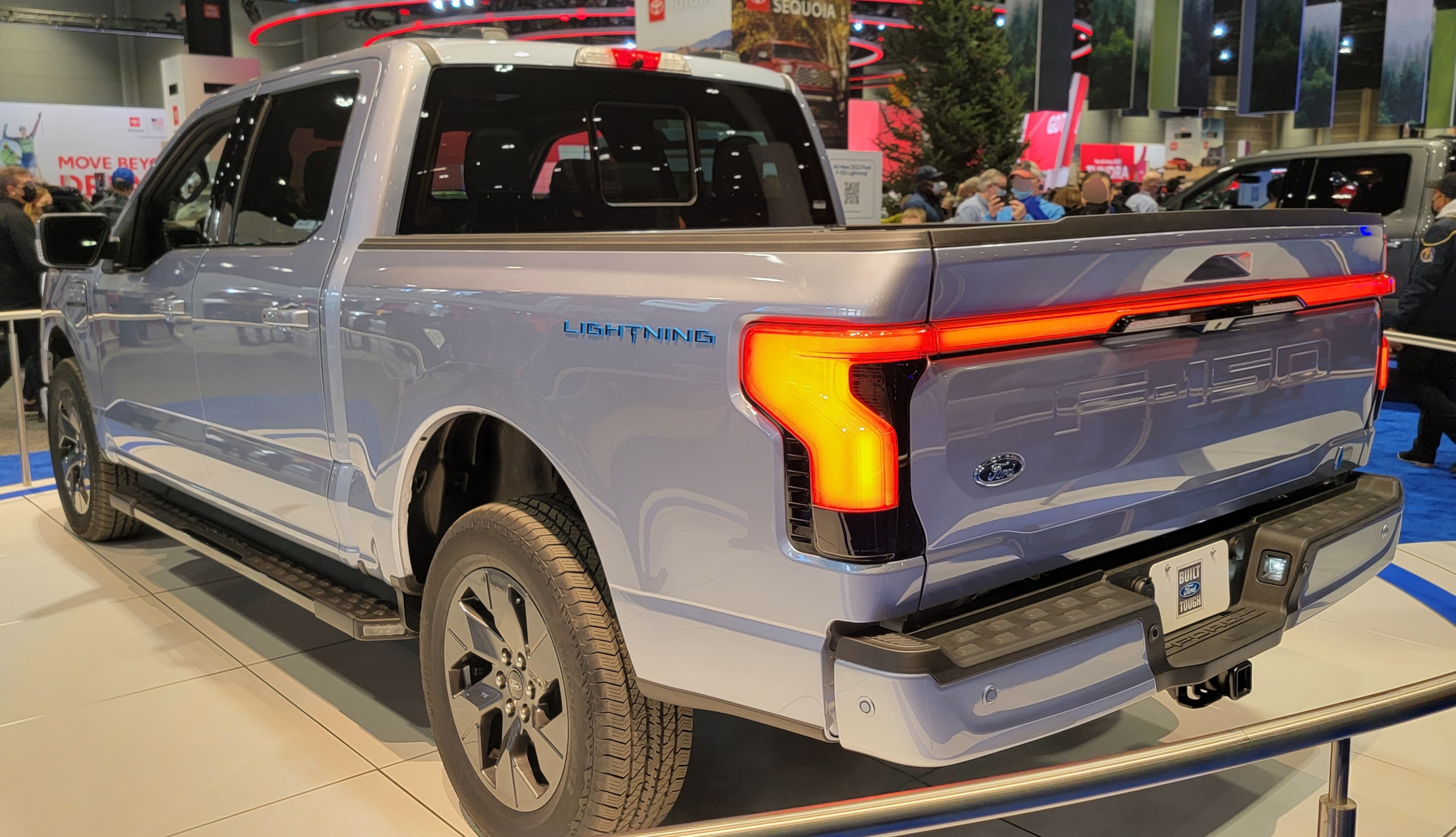
I I drove the 2026 Toyota Tacoma and
This is in in particularly this is called the trd sport in the in Canada
It's called the the sport plus which is an interesting concept
But it really caught me off guard because it is a manual manual transmission equipped
um
Tacoma and this is from what I understand the only manual transmission
In the in the segment now, can you get can you get this in the states and canada as a manual?
Yeah, so in in the states, it's not called the trd plus. It's called
The trd sport with the sport upgrade package
Okay, we drove we talked about the trd sport
Back in 2024. Yeah, but it wasn't a manual transmission. No, and I'm I'm I'm I'm really
I don't know. I don't know how I feel about all these things. Obviously. I don't I use trucks really
Like for the utility of them only, you know, I throw
for for sort of like
What do you want to call it landscaping projects or like getting rid of garbage or stuff like that?
You're always landscaping. I feel like I'm trying to and the problem when you're trying to landscape
It means that you have to do more and more to fix your problems all the time. So I'm
Trying to take advantage of this truck as best as I can
But a couple of things just caught me off guard for starters
There's no side step in this model. It's it's quite a even for a compact or a mid-sized pickup truck
it's quite the leap in and
I have a pregnant wife right now who is really uncomfortable making that jump into the car and and and taking the leap out
So some side steps would be very nice. Is it a four-wheel drive model? It is a four-wheel drive. Yeah, uh selectable four-wheel drive
Yeah, so it's not base base
No
No, okay
Because the base model would have rear-wheel drive. I would think so
And this has a 2.4 liter turbocharged four-cylinder engine
It is a it's an okay engine, but the combination of this engine and this powertrain are kind of like
It's not a it's not a car that that wants you to rush it
It's not a car that wants you to go like fast. See me. How long is the shifter?
It's it's fairly long
I'm glad you asked it wobbles a lot while you're driving it
So if you're the type of person to like put keep your hand on a shifter while you drive
It like moves around even while it's in your hand. Yeah. Yeah. Wow, it'll fight you back
It's like I'm picturing like a fire poker fire poker like
No, it's it's it's about half that but it it wobbles around a lot. It has a reasonable
Um clutch feel I do not love the the shift feel in this car, but of course
Um, it is the only one in the in the segment. So you gotta you gotta like it
Uh, if you want to I don't gotta do anything stop telling me what to do about shifters
It's interesting. There used to be I think there used to be a manual gladiator
Is it glad you're considering but then again is a gladiator a Tacoma?
Uh competitor, I don't think so. I think it is and I think there still is I think that
Interesting you you can still get because that's the uh v6 engine, right for for the Wrangler
I'm pretty sure you can still get that in a uh in the pickup
Like today like I'm like a 26. Yeah, let me double check while you're talking. I don't think that's I don't think you can
Um, I think you'd have to find a 24 or 25 or something. Wow
But um, it is it is an okay engine
Apparently there are different tunes for this engine. I've got to double check that but you can get how do you get the tunes?
Like what's the I think the basic model comes with only 200 ish horsepower like 220
Okay, 228 and then I have this I force model
Which has 278 horsepower. This is not the hybrid power train, which I think comes in
In so I force is separate branding from the base
You're saying yeah, I believe so and and it's only found on the entry level SR model
The that base model 220 horse power, which is really not good
huh
So I'm trying to build I'm trying to build a gladiator now
And I looking at the sport and the sport s and so far everything is automatic. Yeah
Because I know you can still get a manual with the Wrangler. So that's why I thought that it was still around for the uh
For this truck as well, but you are correct
it is
So what caught me off guard really was that I thought that Toyota branding suggested that TRD was like
their off-road truck
sort of
or sport truck and then
They had something called a pre-runner, which would be the street one and then anything non pre-runner basically sport off-road and
And that's not the case sport. It's like pre-runner is an appearance package. Oh, sorry. Go ahead
Pre-runner is a specific type of vehicle that was used in Baja
To drive the track that to drive the Baja race course
Before you went out with your race vehicle so that you it's like getting pace notes for a rally
So it was a way for you. So they are by definition not for the street
They're off-road trucks. They are off-road trucks, but they are two-wheel drive
So you end up with a longer travel suspension than you would on a standard
I mean, obviously pre-runner is used for marketing as well
Yeah, but the traditional pre-runner is a vehicle that it has the suspension to deal with off-road insults
But isn't necessarily four-wheel drive and isn't necessarily high performance, right?
The sport trucks to Toyo has been selling TRD sports for quite a while. Remember the X-Runner?
Yes, that was like a lowered TRD sport with a body kit and and all sorts of fun stuff
Was it lowered or was it lowered and you can get a factory supercharger with that
Either a supercharger or a turbo or a turbocharger. It was it was a supercharger
And it was available through the TRD accessories program. How cool is that? It was pretty cool
I mean, I thought they were stupid in the day, but now I now I realize
I realize we didn't know how good we had it. I guess this is what I'm saying
So what I'm trying to say is this is a car with off-road looks and on-road
Like performance it has all season tires
It has none of the like fancy goodies that you might want from an off-road truck. I it is just made to
To be a truck. Really. What about what about it is an off-road look like
Isn't it because to me when I think when I hear sport when I think about trucks, I think lowest trim level
I think like wind up windows
it's got a really aggressive like body style and and
Like a body kit like it's got a really a cool body kit that sets it apart in my opinion. All right
Let me double check. What else apparently the the the shocks are tuned for
By trd. I don't know what that really means, but that's that's happening there
remember back in the day when you could get like a two-wheel drive to coma that was designed like it was the
Institutional spec like it's what a university they would buy like six of them
They were always painted white and they were always with the black bumpers or something. Yeah, short box single cabs
You see those everywhere and you don't see them anymore
There's nothing cheap anymore. What are you gonna do? I know you can't even buy a cheap maverick
You can just buy an expensive maverick. I need to actually go back on something
I said that there are two tunes. There's actual actually additionally
A different tune for the automatic and manual powered models the manual one gets 270 horsepower
While the automatic gets an extra like eight horsepower
I want does it really seem worth the effort
For me to mention right now. No no no for Toyota to like make that tiny difference
Is that like the eight horsepower that breaks the clutches back? Like yeah
I wonder if there's some kind of weird torque curve thing where they're like if we change the torque curve
It'll be easier to drive with the clutch, but you're gonna lose horsepower. It is really a
Clumsy car to drive in my opinion. It's got a lot of it has a pretty significant rev hang while upshifting
and the
The ratios are really bizarre to drive it around town
It still feels like a very large truck by by my definition
So it's not as like comfortable or easy to drive as something like a maverick or santa cruz or even a ridge line
Which all feel really like you think it's bigger than a ridge line
I do it feels bigger for sure. Okay, um, especially like width wise
In terms of and and you've been to the city that I've that I have not for a long time
But I know that it is a fairly it can be a very dense city in the downtown core
And I have to drive through, you know, really dense
City to get to, you know, just the basic everyday commute that I do dropping a kid off to daycare or or
You offer to take your son to daycare, right? I try want to but there's a stream. There's a gravel pit
You have to have a waterfall. Yeah. Yeah. Well, Hamilton Hamilton is
Waterfall capital of North America. Isn't that is that correct? I think it's the world
But I think that's really pushing it because the rest of the world just doesn't have enough marketing
I have a question for you. If you live in the waterfall capital of the world, how come you don't commute in a boat?
I don't know. I don't know because probably there there'd be a lot
There's that's a one-way trip, right? Like a waterfall. You can't take a waterfall. You portage. You portage
That's a one-way trip like
You it's one in one direction
Presumably there's like one river that goes one way and another river that goes the other way
Can you imagine is the uphill river?
um, my car in Canada costs around $56,000 in the u.s. It's it's
much cheaper
closer to $46,000 which
Makes it pretty attractive pricing wise
again
You have to remember that this is a compact pickup track
do you want
To have the added the added capability and added size of a full size because like f-150s can
Can be kind of cheap depending on the trim you get but what I've got is a fairly bare bones mob got no leather
I've got a fairly small infotainment system. I've got
Like what else can I offer here? I've got tuned by rd shocks. Yeah, and a moonroof
I've got a weird jlb speaker that pops out and can be a can be a bluetooth speaker
I've always wanted to be able to accidentally lose part of my car stereo system
And to pay more for that privilege
That's that extra speaker is I don't know. I in in terms of headaches
Imagine but you know what like the problem in the waterfall
Yeah, it should the issue is
You can't just like go to like amazon and get another bluetooth speaker to put in that place and some straps or something
No, you're you're you're done. You have to pay like probably like 600 dollars for this one jl
Kid is going to take it without you noticing it one day
And just yeah, totally because that's the kids just leave stuff somewhere, you know
Um, my kid is obsessed with putting things in the garbage right now
Yeah, like the trans dimensional communicator that I told you specifically to keep away from the garbage
Am I supposed to say that I liked it to coma tiardi? I'm going to say I don't love it
It is not a it is not a standout small pickup truck. There's nothing about it that made me go. Yeah, this feels great
Yeah, um, I didn't do anything particularly trucky with it though not yet
So maybe next week I'll add an update where I said I drove it and it did exactly what I was supposed to do
And I was very happy with it. It is a very average vehicle in my opinion. There's a lot of engine noise. There's a lot of
Tire noise. There's a lot of wind noise
The transmission is really not the worth the hubbub that everyone kind of wants a manual transmission truck
It's not that good to be honest and the performance is just okay
I would say maybe if there's one thing I will add
That I was surprised the fuel economy is not that bad for a manual transmission truck. I'm getting 12
liters per 100 kilometers
Which is surprisingly better than my outback
What is the what is that in american units around 20 around 20 miles per gallon?
Eek
So not brilliant, but it's not bad. I feel the same way you do about the Tacoma
I have a friend a neighbor who has a previous gen Tacoma and he's asked me a couple of times
In comparison because I've had the Tacoma a couple of times here
And every time I'm like just keep your truck
Yeah, like I can't really think of anything that the new generation does that's better
Or that feels worthy of spending the not insubstantial upgrade price
You've got to help me out with this the old gen had a six cylinder, right?
Yeah, the engine was not good, but it was fine
It was a big big six cylinder like four liters or something three and a half. I think three and a half. No, you're right. It was four liters
And that's the major thing you get like this turbo like decent like low down torque if you really want it
But there's something about this truck. It just does not like the wrap the ranger feels much more modern to me
Which is crazy because it's not
Yeah, and feels like a much better truck to me
And then you've got like the added
Pizzazz I'm going to use of the colorado and canyon which can come in these really cool
Like zr2 or at4. I mean to be fair. There's like a million Tacoma trims, right?
Like you could go crazy and like spend a lot of money the only one that really stands out to me is the
Pre-runner that we mentioned and just the trd pro and the pro max and the pro max executives and the trip
The trail hunter trail hunter sasquatch boss edition like this a lot out there
I think it's I think
Yeah, go ahead
Well, I'm just gonna say it's like all the other car companies the truck companies
They go like wild with their full-size trucks because they're popular but no one buys the tundra
So when Toyota goes wild it's with the Tacoma. So that's a great point. They put all their special models there
Now actually, this is an important thing to talk about is the tundra
If you were to say, you know, which one has gotten the love from Toyota
The tundra the tundra and the Tacoma it is definitely the Tacoma, right?
I mean the the weird thing is both of these trucks were super neglected for a long time
But for like different reasons the tundra was neglected because no one was buying it
And the Tacoma was neglected because everyone was buying it and there was no
There was no need to change it, right? Like they oh, they were doing like a quarter million units a year
They didn't have to they owned the mid-sized truck segment. So why do anything about that? It was the same thing with the corolla
It's the same thing with the forerunner
The forerunner went on way longer based on the old Tacomas platform
Because they were doing like 100 130 000 units a year with like no investment
And then everyone else got serious about building these semi off-road capable
four-wheel drive truck four-wheel drive SUVs and Toyota was kind of coerced into the future
But what's strange is I actually liked the trail hunter version of the forerunner
I I found it was good
But all the Tacomas I've driven which are the same platform have been unimpressive
So like I'm not getting what's what the difference is like
Why is it not translating into the pickup in the same way it seems to work for the scv?
I'm very curious about that as well because that's my impression that I had when when I talked about uh
the trail hunter with you
Is that maybe this Tacoma feels like first of all that second row in this in this double cab or or crew cab model
Whatever you want to call it
Um, I should probably actually define exactly what I'm calling it
Is it like access cab and double cab and like crew cab and
It is a double cab. Okay
I think access cab is a Nissan thing
It is relative. There isn't a lot of space in the second seats while I don't think you have that issue with a four with a forerunner
No, but I'm sure the forerunner is like the same as a crew cab pickup platform probably. Yes longer in terms of wheelbase
And then in terms of equipment, you've got no like nothing on the inside that makes you go
Like that's very cool. Well to be fair the trail hunter is like a million dollars
Yes, it is like twice the price
But yeah
So it's really difficult for me to look at this Tacoma and kind of like
Expand my brain to the trail hunter version and say that's that's a great looking or great
Functional or good price or good value or it's cool. I just don't see it
I just don't see anything about this truck that makes me go. Whoa, you you you picked up a you picked up a winner there
I think that the drive trains are a big part of it
I feel like the old Tacoma drive train was not amazing. I was not a huge fan of it
But it was functional
But then you drove a hybrid powered version of the other one
I've driven the hybrid and the non hybrid and they're both duds to you
I think I've driven the non hybrid the hybrid had some weird issues the first time I drove it
Oh, yes, I remember that. Yeah, so the the thing the point I'm making though
Is you mentioned that the ranger feels more modern and I think that's perhaps because the drive train is just better
And the gm drive trains are also pretty good
And the Nissan one in the frontier is fine, you know, so like
Toyota might have shot themselves in the foot with this very complicated hybrid setup for their top-tier trucks
And then not done enough for the entry level
That's a really good way of just of of summing it up
I think you're onto something there and it's also really weird to me to see this like
Toyota has a couple of cars
They're doing weird. They are they are not afraid of doing weird things in my opinion now
Like lately they're actually trying to do something different in a couple of classes
We have those two crown models that are super super strange like high priced
um, but not
High high price but mainstream like the crown feels like something that a
Toyota executive made their pet project
And like supported and pushed all the way through because they wanted to see this vehicle exist
And maybe like in the home market. There's a space for it. Yeah, but then they were like, let's let's export it globally and everyone was like, uh
We don't know how to market this like we don't really know what it is
Yeah, um, I and I personally like the crown
Yeah, but uh, it is one of one in a lot of ways
And then there's other really successful products in their lineup from the Prius and the Camry
That are that are pretty solid. They're they're good choices in in my in my opinion
their truck lineup
and their sdv lineup
Besides the rav 4 which I haven't driven the new one and I haven't driven this bz woodland
The bz is an electric vehicle. That's pretty is like now average like that's good
it's like on the above average or average side of things
And the Highlander and Grand Highlander are okay as well. I actually kind of like the Grand Highlander, but
um, but these are all
They flopped a little bit with the Land Cruiser. It's it's very a style focused version of the of the
Car the forerunner is definitely a better pick up
And they're similarly priced too, which is weird. No, the forerunner has a way lower
Starting price. No, but you can buy very expensive versions of the forerunner
Which is like you end up in that weird situation where the Land Cruiser is supposed to be the flagship and then you can spend more on a trail hunter
Yeah, yeah
So I'm I'm like they're in the middle of this really weird transition period
Maybe it's like what you said they've been trying to hybridize everything and in the process means that some other cars
That don't have hybrids end up getting put to the wayside or something
Or less emphasized and I don't know like right now. I'm driving this Tacoma and I keep wondering like what's the big deal
Why is this a car that used to sell like gangbusters all the time? I think it probably still does
What's the big deal?
Is that a strange thing for me to ask? No, but I think it's a very it's a very poignant way to sum up your experience
Is and from what I understand the reliability on these on these new trucks has not been
The the bulletproof thing that Toyota used to hang their hat on right? Yeah. Well, you know what?
Do as you're told Sammy. That's where a lot of these sales end up when you're when you're a company like Toyota
um, they they're able to coast on reputation when they need to
And sometimes you end up in situations like this
We get this conversation a lot though like oh, it's the one with the manual like and it's not just the it's not just the
The Tacoma there's a bunch of cars that like we have the manual version of x now
And the question is is it a good manual?
A lot of them aren't like I I I remember the cayenne when the cayenne had a manual and I remember being excited to drive it
and it was awful like the
The transmission was like
Was just sloppy. It wasn't fun. It wasn't engaging. It was better to have the automatic version of the cayenne
So like it's you can't just slap a manual in there
Although the thing is we're so starved for it these days that you can and you
You end up in this situation
You said this I think about m about m3s
I think in the past you said you can get an m like a bmw m3 or m4 and that's a performance car
And you you would be like, yeah, it's a manual. It's
That's okay. Like you should probably get the other one. I don't know if I like the the dct that they had
Yeah, I can't remember. Maybe it was not a maybe it was not an m product. Maybe it was not. I'm sorry
but I
For me personally the version of that is the jaguar f-type
Where I find the automatic way better to drive than the manual that they that they create
So that's that's where I would go there
But anything else anything else you want to say about the Tacoma?
I
Killed all the other manuals to your last manual standing. Let's see for how long
So we have a listener question. I wanted to get to this week
Oh, yeah
From riko from the land down under as they sign their their message to us great to hear from from them
Long time listener and always appreciate them reaching out. So they they also wanted to say
That their mic their car stereo nearly exploded when sam sammy yelled into the microphone on a recent podcast
I can't remember what I did but I I did my best to minimize that in the edit and sometimes it's impossible, but um
riko's writing because they have heard a rumor
That volkswagen group will be taking the five cylinder engine that is typically found in the rs3
And installing it into the gulf r and the kupra version of the gulf r
We're over the kupra platform. I heard about this. I think you heard about this. I hadn't heard this
A rumor that came out late last year about volkswagen celebrating the 25-year anniversary of the gulf r by getting the
Audi the Audi rs3's engine now
that goes upset because
The way they put it
They made this emotional if you are an rs3 owner or s3
If you made an emotional and financial purchase
And you already own a gulf r or an s3 and then all of a sudden you find out that there's going to be this
Crazier version of the car that has this five cylinder engine, which has a very different personality more horsepower and whatnot
um
You would be upset by that
And the ea triple 8 engine that's already out there
I mean they could easily get more power out of that if that's what they wanted, right?
What the question that they're asking is why would Audi give away its unique engine?
To put into other platforms that are less premium quote-unquote than the rs3
I and and does this undermine current gulf r and Audi s3
Owners that engines the the engines of which owners have been proudly building over the last few decades
This is a pretty complex question. Um, I agree that it's a weird move
To take the one thing that makes the rs3 unique and special and dilute that
What do you think sammy?
I think that
I agree in the fact that Audi
Audi's like go-to thing here is its own 2.5. It's I think it's called the r5 or the ea
855 which is it was used in the rs3. I think it was also used in ttrs for a while. Yeah, I think you're right. I think you're right
I'm reading that it's also used in a in a product that we don't get in north america called the cupra for mentor
Well, that's what rica brought up. I think it's already in that end. It's already in that car
Yeah, and now they've just so so
Looks like it's already done the really has already made the move and I think I I disagree with that move
I think you're right. I think it's a lot like an amg thing, right? Like do you want to give
the the
flagship
The the beating heart of this product to another to another lineup
I don't know. I mean
I I personally wouldn't do it, but it makes me wonder if golf r sales
Are are lagging
Yeah, I mean that's the major thing like golf rs
I I like driving the golf rs. I hate living with them because like the modern ones because of that infotainment system stuff
but
It always feels like the the latest generation golf r feels a lot like the last generation golf r
Which felt like the last generation golf. They don't make a significant leap in in my opinion
Maybe I mean
Historically the golf r has had a bunch of different engines
So a six cylinder at 1.2. Yeah, um, this cooper fermenter is an suv
Great
It's the v 25
Is that what's called? Yeah. Yeah, it has the five cylinder engine. I thought it was called v z five v z five or v
v z five
Yeah, sorry. I I saw the z as a two when I was first looking at it
Which we used to do when we were younger 390 horsepower. So this is not something that we get in our market
We don't have any cooper's whatsoever
But it is sold in australia and elsewhere
And the rf3 apparently at the at the cooper website. It's like select your country or reach into view specific
Content the only selection I can make is other country
That's you. Yeah. Um, so that that's yeah, I tend to agree. I I would be irritated. I would be peeved
Um, and I would be confused if this was to happen. What if the outie tune was like better?
I don't think that's the thing. I think really it's a personality thing with this engine
But also because the 500 sound cool. They perform really well
It's an interesting concept. Maybe this is only happening in australia and europe and maybe north america. They continue with the four cylinder
It's really hard to predict what volkswagen is going to do. This is a company that just shut down
production of the id4
In the united states now this vehicle
They built a plant there or they expanded a plant there. They spent I think one and a half billion dollars
So they could build electric cars there and now they're not going to do anything there with electric cars
They're going to build some gas suvs
But they have this huge over capacity at this plant that they've invested in
They can't possibly sell that many vehicles to to to meet what the potential layers of the plant
It's like you look at decisions that are being made by volkswagen
Outside of the european market and it's really hard to understand them sometimes
I mean it really seems like they shoot themselves in the foot
Yeah, tig one is tig one and then tig one turbo even though both cars have a turbo and then
I don't know what's going on with that atlas really they they showed off a new atlas
Earlier this month at the new york auto show and it should have come with a hybrid powertrain. It didn't
And now they're considering adding a hybrid in the future. That was as far as they went when they announced that vehicle
Yeah, last the last auto show I attended. I think was in 24
Maybe or 25 I can't recall and their discussion
I went with volkswagen when they when they revealed the new tig one and they said we're going to give the atlas a
A hybrid powertrain and they didn't not yet
But we'll see if they're just kicking the can down the road until no longer
That's a a priority for or that's an obligation for them in terms of the market, which is
It sucks. It really sucks when I see automakers just like squandering like you said their potential
And seeing an automaker like volkswagen, which has a number of different brands across the world
Find footholds in new in new markets, whether it is with kupra or seat or or scota or something like that
They find ways to make their cars like marketable and interesting and offer a ton of different
um configurations for for a whole
A really large spread of customers and in north america it feels like we do not get that
No, in north america. It's just a continual whittling down of what's available
It's subtraction. I mean the id4 is gone. The buzz is not going to come back, you know
That really leaves a not that diverse showroom for volkswagen
It's it's really weird. It really is so I agree with you. I mean while volkswagen
Product lineup needs a shot in the like a shot of adrenaline
Stealing it from outie is a pretty bold move
and um
I don't know how that's going to play out. I don't like it. Well, riko. Thanks very much for the question
If anyone else has any questions
They want to ask us the easiest way to do that is to go to unnamed automotive podcast.com and fill out the contact form
Hit submit it ends up in our inbox while you're there you can if you're not already subscribing
You can do that. You can see all of our past episodes
If you would rather get in touch with us the old-fashioned way the email is benjamin at benjamin hunting.com
Or you can find us on instagram. I'm at hunting benjamin as sammie is at sammie underscore hop like you're laughing sammie
What are you going to be talking about next week next week? I've got the lexus tx 350
Um, I'm really excited to drive that lexus taxes. I am going to be talking about the toyota bz
Which you briefly mentioned on this big episode
Thank you everyone for listening. We'll talk to you later. Bye. Bye
About this episode
The hosts kick off with personal talk about using outdoor physical work to calm nerves, then dive into two fresh drives: the 2026 Mazda 3 sedan (Canada/US differences, dated interior, and a big debate over whether its design feels modern) and the 2026 Toyota Tacoma TRD Sport manual (rare stick, but clumsy shift feel, limited “truck” comfort, and average overall refinement). They also discuss Mazda’s apparent focus shift away from new compacts, and end with a listener question about rumors of Audi/Golf R using the RS3’s five-cylinder engine.
The Unnamed Automotive Podcast arrives this week with a thorough examination of how Benjamin tries to escape the swirling mess of constant bad news by moving some rocks around. Well, actually the show really hits its stride with Benjamin's review of the 2026 Mazda3 sedan. A surprisingly peppy compact with a design that causes some disagreement between our hosts, the Mazda3 has several positives elements as well as a few red flags. For anyone contemplating a compact car purchase in 2026, this review is a must-hear.
Then Sami chimes in with his review of the 2026 Toyota Tacoma TRD Sport. Armed with a six-speed manual transmission and little else, Sami wonders aloud, whats the big deal with the Taco? He discusses its impressive fuel economy, and its unimpressive stick-shift but comes to a lukewarm conclusion.
Finally our hosts tackle a listener question about the Audi five-cylinder turbocharged engine. Thanks for listening!