Episode 445: 2026 Mazda 3 Sedan, 2026 Toyota Tacoma TRD Sport Manual
About this episode
The hosts kick off with personal talk about using outdoor physical work to calm nerves, then dive into two fresh drives: the 2026 Mazda 3 sedan (Canada/US differences, dated interior, and a big debate over whether its design feels modern) and the 2026 Toyota Tacoma TRD Sport manual (rare stick, but clumsy shift feel, limited “truck” comfort, and average overall refinement). They also discuss Mazda’s apparent focus shift away from new compacts, and end with a listener question about rumors of Audi/Golf R using the RS3’s five-cylinder engine.
The Unnamed Automotive Podcast arrives this week with a thorough examination of how Benjamin tries to escape the swirling mess of constant bad news by moving some rocks around. Well, actually the show really hits its stride with Benjamin's review of the 2026 Mazda3 sedan. A surprisingly peppy compact with a design that causes some disagreement between our hosts, the Mazda3 has several positives elements as well as a few red flags. For anyone contemplating a compact car purchase in 2026, this review is a must-hear.
Then Sami chimes in with his review of the 2026 Toyota Tacoma TRD Sport. Armed with a six-speed manual transmission and little else, Sami wonders aloud, whats the big deal with the Taco? He discusses its impressive fuel economy, and its unimpressive stick-shift but comes to a lukewarm conclusion.
Finally our hosts tackle a listener question about the Audi five-cylinder turbocharged engine. Thanks for listening!
AutoTrader.ca
"Where can people find your latest work, Ben? [206.6s] They can find it at AutoTrader.ca at motor trend and at Haggerty"
AutoTrader.ca is a website where you can look up cars for sale and automotive articles. It’s not a car part—just a place to find vehicle listings and related content.
AutoTrader.ca is an online marketplace where people buy and sell vehicles in Canada. When a podcast guest says their work is on AutoTrader.ca, they’re pointing listeners to automotive content or listings rather than a specific car model.
Motor Trend
"Where can people find your latest work, Ben? [206.6s] They can find it at AutoTrader.ca at motor trend and at Haggerty"
Motor Trend is a car website/magazine that publishes reviews and news about vehicles. It’s a media outlet, not a car or part.
Motor Trend is a major automotive media brand known for reviews, news, and long-running car culture coverage. Mentioning it suggests the guest’s work appears in mainstream automotive journalism.
Haggerty
"Where can people find your latest work, Ben? [206.6s] They can find it at AutoTrader.ca at motor trend and at Haggerty"
Hagerty is a car-focused company that caters to classic-car enthusiasts. It’s known for classic-car insurance and automotive articles.
Hagerty is an automotive company focused on classic cars, insurance, and enthusiast-oriented content. When it’s mentioned alongside other outlets, it indicates the guest’s writing or media presence in the collector-car world.
driving.ca
"Let's go with those and you can find my work at AutoTrader.ca as well and driving.ca and driving.ca's YouTube channel, Ben"
driving.ca is a website about cars in Canada. It’s where you can read automotive articles and updates.
driving.ca is a Canadian automotive website that publishes car news, reviews, and buying information. The guest is directing listeners to additional automotive content beyond the podcast.
all-wheel drive
"let me explain why it is the in canada the monster 3 gs all-wheel drive This is the monster 3 sedan that has the base four-cylinder motor plus all-wheel drive"
All-wheel drive means the car can send power to more than one set of wheels. That helps the car grip better in rain, snow, or rough conditions.
All-wheel drive (AWD) sends power to more than just the front wheels, improving traction when roads are slippery or uneven. On compact cars like the Mazda 3, AWD is often tied to specific trims and can affect fuel economy and pricing.
four-cylinder motor
"This is the monster 3 sedan that has the base four-cylinder motor plus all-wheel drive In the united states"
A four-cylinder engine is the common type of engine with four cylinders. Here, they’re pointing out that the AWD version still uses the smaller, base engine.
A four-cylinder engine is a compact powerplant with four combustion chambers, typically used in mainstream compact cars for efficiency and cost. In this context, the hosts are highlighting that the AWD Mazda 3 in Canada pairs AWD with the base four-cylinder rather than a higher-output engine.
blacks out a few things
"And that adds a different leather interior some larger wheels and blacks out a few things The reason I bring it up is because there are some differences between the canadian and american market"
“Blacks out” refers to darkened exterior or trim elements—often things like badges, grilles, or window trim—used to create a sportier look. It’s a common appearance package strategy that can vary by market and trim.
10.25-inch infotainment screen
"The canadian car comes with the larger infotainment screen 10.25 inches versus the 8.8 that is in the us For some reason masda only allows turbo buyers to get the large infotainment system"
That’s the size of the car’s main touchscreen. A bigger screen usually makes maps and menus easier to read and use.
The infotainment screen size is a key usability and feature differentiator between trims and markets. A 10.25-inch display generally offers more space for navigation, media, and vehicle settings than smaller screens, which can make the system easier to use at a glance.
8.8-inch infotainment screen
"The canadian car comes with the larger infotainment screen 10.25 inches versus the 8.8 that is in the us For some reason masda only allows turbo buyers to get the large infotainment system"
This is the smaller touchscreen size used in the U.S. version they’re describing. They’re comparing it to the bigger screen available elsewhere.
The hosts contrast the U.S. Mazda 3 infotainment screen size (8.8 inches) with the larger 10.25-inch screen available in Canada. Screen size differences can reflect how manufacturers package features by trim and region.

Toyota Corolla
"when you look at this car... And then you look at say a corolla"
The Toyota Corolla is a long-running compact sedan benchmark, and the hosts use it as a reference point for what “contemporary” design looks like. The comparison is about styling and design language rather than size or performance.

Hyundai Elantra
"And then you look at say a corolla Or an elantra"
The Hyundai Elantra is a compact car. In this discussion, it’s used as another example of a newer-looking design compared to the Mazda 3.
The Hyundai Elantra is another popular compact sedan, and it’s brought up to compare current design language with the Mazda 3. The hosts are focusing on whether the Mazda’s styling feels like it comes from an earlier design era.
design language
"I'm not talking about size. I'm talking about design in terms of their like... It just doesn't look angle free approach. It doesn't look contemporary... That's the entire point. That's what I mean Design in terms of design language."
“Design language” just means the overall look and style a car brand uses. They’re arguing whether the Mazda 3’s style looks current or more like an older design, even if it still looks good.
“Design language” refers to the consistent visual styling cues a brand uses across models—like shapes, lines, and proportions. The hosts debate whether the Mazda 3’s design language looks contemporary or like it belongs to an earlier era, and whether that can still be considered “timeless.”

Mazda 3
"...ou can tell they are contemporaries if you park a Mazda 3 beside them. It is a throwback I don't know. I d..."
The Mazda RX-3 is an older Mazda sports car. It’s known for using a rotary engine, which is different from the usual engine type most cars use. The episode mentions it as a throwback because it has a look that reminds people of newer Mazda designs.
The Mazda RX-3 is a classic rotary-engine sports coupe from Mazda’s earlier era. The podcast references it as a “throwback,” comparing it to the Mazda 3 in terms of how the cars look side-by-side. It’s discussed because it represents Mazda’s distinctive rotary heritage and design language.
LED headlights
"...I just don't know what it is about the Civic or the Elantra that stands that maybe their extensive use of led headlights and slimmer"
LED headlights use small electronic light elements instead of older-style bulbs. They’re popular because they can look sleeker and often help the car feel more modern.
LED headlights are a lighting technology where the light source is made of light-emitting diodes. They’re often associated with a sharper, more modern look and can also improve efficiency and beam control compared with older bulb types.
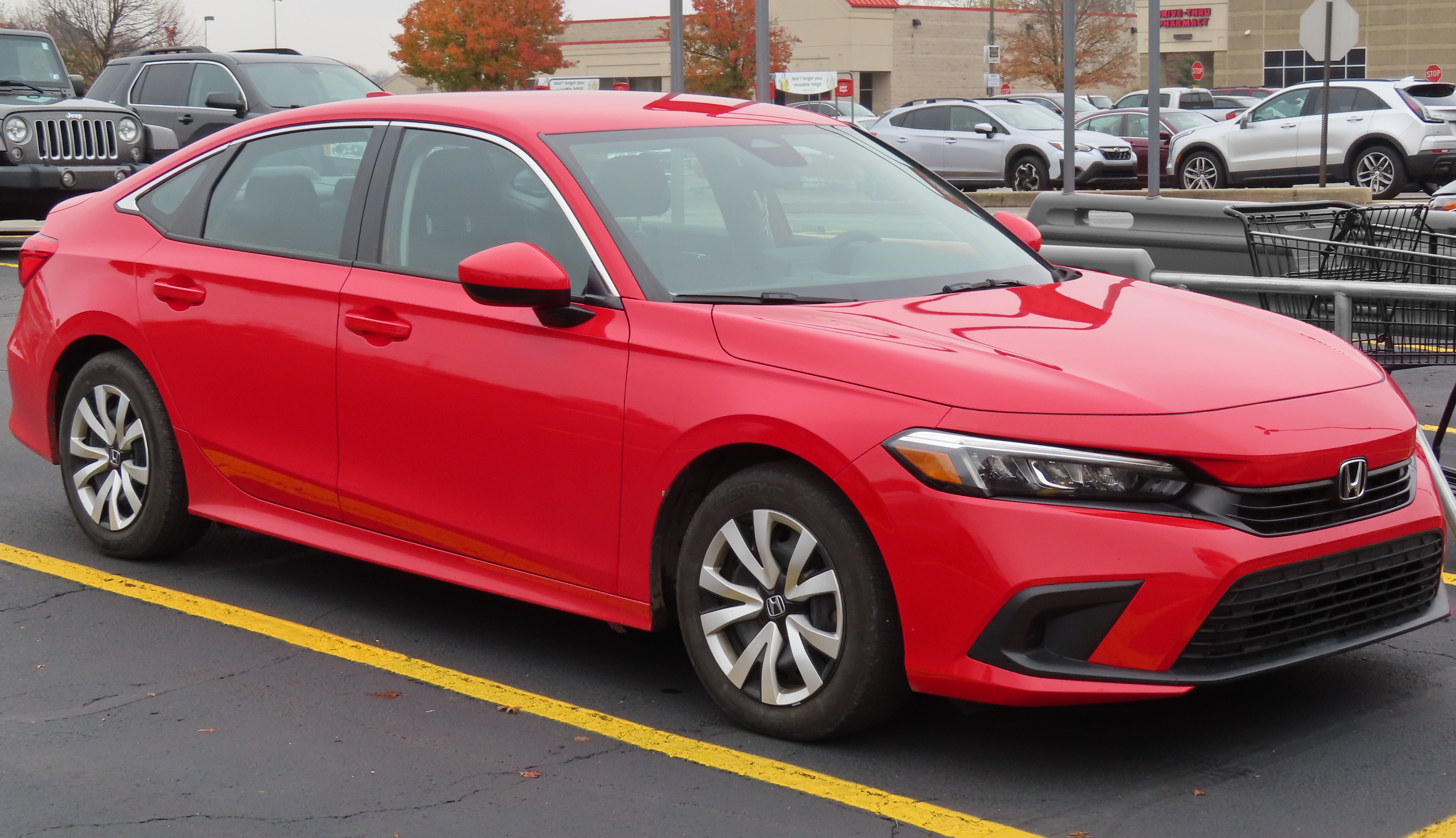
Honda Civic
"Yeah, for me, I think that the the like angular design of the Civic and the and the Elantra both of which really use harsh hard angles in their in their exterior design..."
The Honda Civic is used as a styling example of a car that leans into sharp, angular exterior design. The hosts argue that this kind of aggressive geometry ties the car to a specific design era, which can make it feel dated sooner than smoother styling.
design aging (timeless vs era-specific styling)
"...they can remove they can smooth out all those lines with those cars and be like, ah, it's a brand new design... I think that the Mazda 3's design does date it... the corolla... design doesn't date it because it's so bland..."
They’re talking about why some cars look newer for longer than others. If a car uses very trendy shapes, it can start to look old sooner, but if it has a simpler, smoother look, it tends to stay looking modern.
The hosts discuss how exterior styling can “age” depending on whether it’s tied to a specific design trend. Angular, harsh lines can make a car feel locked to a particular era, while smoother, more continuous shapes may look current longer.

Chevy Cruze
"...if you were to look for a car that looks like it something like the the final generation Chevy cruise... that's where this car is coming from..."
The hosts reference the final generation Chevrolet Cruze as a styling comparison point for where the Mazda 3’s design “is coming from.” They suggest that the Cruze’s design direction resembles what they consider a more modern look, and they use it to frame how the Mazda 3’s styling fits into the timeline of design trends.

Ford Edge
"... get to move my rocks. I mean, I'm already on the edge Anyway, uh the interior of the mauset three seda..."
The Ford Edge is a midsize SUV that’s built for everyday driving. It’s designed to be comfortable and practical for passengers and cargo. The episode mentions it while talking about the inside of vehicles and what they’re like to live with.
The Ford Edge is a midsize crossover SUV designed for comfortable daily driving with a practical interior. The podcast’s mention appears to be part of a broader conversation about interiors and features, including a comparison to other vehicles. It’s often discussed because it sits in the mainstream crossover segment where comfort and usability matter most.

Mazda 3 Sedan
"Anyway, uh the interior of the mauset three sedan. Yeah is definitely dated ... But the switch gear it's it's quite old ... and more importantly the infotainment is inexcusable in a lot of ways for a modern car now"
This is the Mazda 3 Sedan, a compact car. They’re saying the inside looks and feels older than you’d expect, and the screen/controls are awkward to use.
The Mazda 3 Sedan is Mazda’s compact car, and this segment focuses on how the interior and tech feel dated. The hosts criticize the infotainment layout and usability, especially compared with what you’d expect in a modern vehicle.
center console
"It's not a little dial. It's kind of big ... Okay, a big dial in the center console"
The center console is the control area between the seats. They’re saying the infotainment is operated using a big knob/dial there, which makes it feel less modern.
The center console is the area between the front seats that typically houses controls like the infotainment interface, climate controls, and storage. Here, the hosts point out that the infotainment is controlled via a large dial located in the center console, which affects usability.
touchscreen capability
"There's two as I mentioned before there's two infotainment screens for this car in the u.s ... You're stuck with the I believe 8.8 inch version, which does not have a touchscreen capability whatsoever"
Touchscreen capability means you can tap the screen with your finger to control the system. They’re saying the U.S. version doesn’t let you do that, so you have to use buttons or a knob instead.
Touchscreen capability means you can directly tap the screen to control infotainment functions. The hosts say the U.S. Mazda 3 is limited to a non-touch setup, forcing you to use physical controls instead, which they view as unacceptable for a modern car.
8.8 inch version
"You're stuck with the I believe 8.8 inch version, which does not have a touchscreen capability whatsoever"
They’re talking about the screen size—about 8.8 inches. Even though it’s a fairly large screen, they say it still doesn’t work as a touchscreen.
This refers to the size of the infotainment display in the U.S. Mazda 3, which the hosts say is an 8.8-inch screen. They use it to highlight a specific limitation: it lacks touchscreen functionality.
dial
"[793.4s] I say touchscreen you still have to use the dial [796.6s] But if you're stopped you can use the touchscreen [804.7s] You have to reach deep into the dash to touch the screen"
A “dial” here refers to the physical rotary controller used to operate the infotainment system. The host argues the dial-based interface is awkward for map tasks—especially when using smartphone navigation apps—because it’s slower and less precise than touch gestures.
touchscreen locked out while moving
"[799.7s] If you're moving you can't use the touchscreen you're locked out on both of these screens [804.7s] You have to reach deep into the dash to touch the screen because when they originally designed the car"
This describes a common infotainment safety design: touch input is disabled while the car is moving, forcing drivers to use physical controls (like a dial) or wait until stopped. It can reduce distraction, but it also limits how quickly you can interact with navigation maps and menus.
android auto
"[823.8s] Because no matter how hard you try using something like android auto or apple carplay with a dial sucks [830.3s] Like was never intended to do that one of the worst things about it is having that map and being unable to like properly"
Android Auto is Google’s system for projecting a phone’s compatible apps onto the car’s infotainment screen. The host is criticizing how Android Auto navigation feels when the car forces you to use a dial instead of touch gestures, making map interaction clunky.
apple carplay
"[823.8s] Because no matter how hard you try using something like android auto or apple carplay with a dial sucks [830.3s] Like was never intended to do that one of the worst things about it is having that map and being unable to like properly"
Apple CarPlay mirrors compatible iPhone apps onto the vehicle’s infotainment system. The host’s point is that when the car limits touch and relies on a dial, CarPlay navigation becomes harder to use—especially for zooming, scrolling, and selecting alternate routes.
google maps
"[865.8s] You're just like stuck staring at this tiny little map [869.1s] I think there's a way like at least on google maps. There's like this really weird like [873.0s] Square with with four triangles that you can like press like you can somehow it's so bizarre"
They’re talking about Google Maps navigation. The issue is that the car’s control setup makes it hard to use map features like alternate routes and zooming the way you would on a phone.
Google Maps is the navigation app the host references while discussing alternate routes and map controls. They’re pointing out that certain map interactions (like selecting alternates or zooming) are difficult when the car’s interface restricts touch and relies on a dial.
infotainment design
"It means that you can tell that the screen and this infotainment design was... thought up entirely to not be touched right? So if you are in the back seat... that ridge actually blocks the bottom eighth of the screen"
This is about how the car’s main screen and controls are set up on the dashboard. Here, they’re saying the way it’s built into the dash can make it hard for people in the back seat to see the screen.
“Infotainment design” refers to how the car’s screen and interface are packaged and controlled—where the display sits, how it’s angled, and what parts of the dash surround it. In this segment, the hosts argue the screen placement and surrounding dash ridge can block the view from the rear seat.
gauge cluster display
"there's like a gauge cluster display... It's between two traditional analog gauges, but it's a single color lcd"
A gauge cluster display is the driver’s instrument panel screen that shows speed, engine info, and warning indicators. Here, the hosts describe a digital, single-color LCD screen placed between two traditional analog gauges, which affects how modern or “dated” the cockpit feels.
single-color LCD
"it's a single color lcd... For the most monochrome... there's like, uh, there's a couple icons on it that are color"
This is a screen that mostly shows information in one color instead of full color. The hosts think it makes the dashboard feel cheaper or older than it should.
A single-color LCD is a display that mainly uses one color (or very limited color) for text and icons instead of full-color graphics. The hosts dislike it because it can look less premium and more like older infotainment/instrument tech.
trim level
"when i'm in a when i'm in a car like this... if you're out of the mid-level if you're out of the base level trim you should not be looking at that kind of thing"
Trim level is which version of the car you buy—base vs higher versions with more features. They’re saying higher trims should get nicer-looking screens and displays.
Trim level is the specific equipment package (base, mid-level, higher-end) that determines what features you get. The hosts suggest that if you’re not in the base trim, you should expect a more modern-looking instrument/display setup than a monochrome or older-feeling design.
adaptive cruise control
"And usually there's just like this display of um your adaptive cruise control or your or your safety assist just like yeah"
Adaptive cruise control is like regular cruise control, but it can slow down or speed up to keep a safe distance from the car in front of you. The car will show when it’s active so you know it’s controlling the spacing.
Adaptive cruise control is a driver-assistance feature that automatically adjusts your speed to maintain a set following distance from the car ahead. It typically uses radar or cameras to detect traffic and can display its status on the instrument cluster or driver information screen.
safety assist
"And usually there's just like this display of um your adaptive cruise control or your or your safety assist just like yeah"
Safety assist is the car’s set of help features that try to prevent crashes or warn you when something looks risky. This segment is talking about how those alerts show up on the screen.
“Safety assist” is a broad umbrella term for driver-assistance systems like collision warnings, automatic emergency braking, lane-keeping, and other alerts/controls. Automakers often surface these system statuses on the driver information display, which is part of what the hosts are critiquing here.
digital speedo
"But if you want to see the digital speedo you have to look at that... And then the only way to get the digital is is to have that tiny little read out at the top"
A digital speedometer (“digital speedo”) shows vehicle speed as text/graphics on the instrument display instead of using a traditional analog needle gauge. The hosts argue that on this Mazda layout, the digital speed is relegated to a small area, while the rest of the display is dominated by other information.
analog speedometer
"Is an analog speedometer... There's a version of the analog speedometer that has like some fuel mileage info or something or trip info"
An analog speedometer uses a physical-style gauge with a needle and markings, even if the car’s overall cluster is digital. In this segment, the analog mode is contrasted with the digital speedometer mode, with different information (like trip or fuel mileage) appearing depending on the selected layout.
automakers just don't see compact cars as a priority anymore
"...this is a conversation a larger scoped conversation is because automakers just don't see compact cards as a priority anymore if you kind of look at how"
This is a market concept: automakers may deprioritize compact cars when allocating engineering and marketing resources, often shifting focus toward larger vehicles, trucks, SUVs, or electrification. The hosts connect that to why the Mazda 3’s driver display design may feel unchanged or underdeveloped.
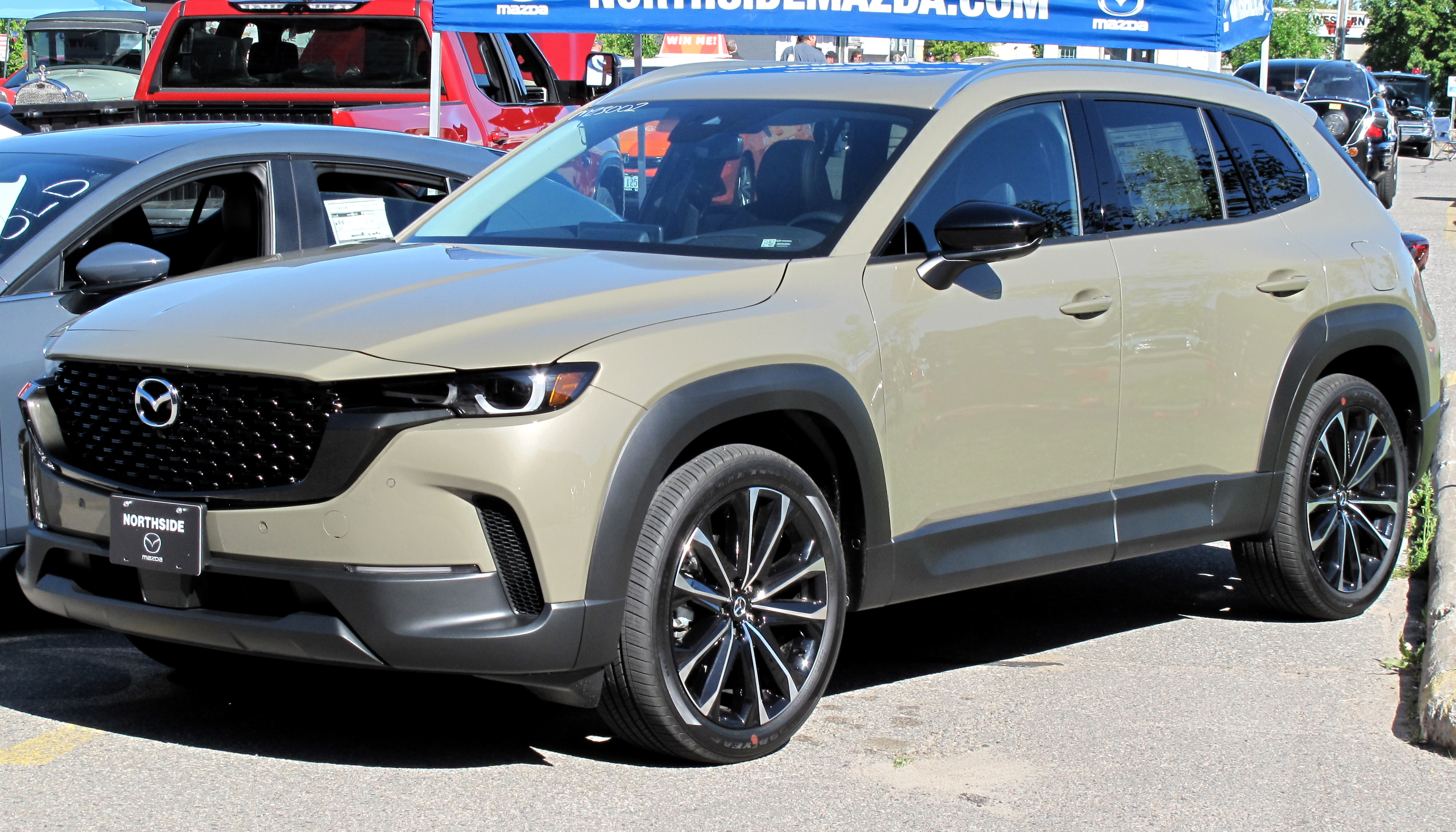
Mazda Cx50
"We got a cx5 a cx30 a cx50"
The Mazda CX-50 is a mid-size-ish SUV in Mazda’s lineup. It’s mentioned as part of the SUV-focused strategy.
The Mazda CX-50 is a compact crossover SUV. The hosts include it in a list of Mazda SUVs to show how Mazda’s product strategy leaned heavily on SUV additions and updates.

Mazda CX-30
"We got a cx30 we get a cx5 a cx30 a cx50"
The Mazda CX-30 is a small crossover SUV. They mention it to illustrate Mazda’s focus on SUVs during that time.
The Mazda CX-30 is a subcompact crossover SUV positioned between the CX-3 and CX-5. In this segment, it’s part of the broader point that Mazda expanded and updated its SUV lineup rather than introducing new non-SUV cars.

Mazda Cx90
"the cx90 to replace the cx9"
The Mazda CX-90 is a bigger, family-oriented SUV with three rows. They’re saying Mazda used it to replace the older CX-9.
The Mazda CX-90 is a larger, three-row crossover SUV. The hosts say it was introduced to replace the CX-9, which is an example of Mazda shifting its lineup with new SUV generations.

Mazda Cx70
"...o new um the cx90 to replace the cx9 and then the cx70 which is the ultra low effort to throw"
The Mazda CX-70 is an SUV made by Mazda. The episode is talking about it as part of Mazda’s SUV lineup and how it relates to other CX models. It’s likely being mentioned because it’s meant to be an easier, straightforward choice within that range.
The Mazda CX-70 is a crossover SUV positioned in Mazda’s lineup after the CX-9, with the podcast describing it as the “ultra low effort” option. The context suggests discussion about how Mazda’s newer SUV strategy is organized and what buyers should expect from the CX-70. It’s relevant because CX models are often compared based on size, features, and how they fit into a family’s needs.

Mazda CX-9
"the cx90 to replace the cx9"
The Mazda CX-9 is a three-row family SUV. They mention it because Mazda moved from the CX-9 to the CX-90.
The Mazda CX-9 is a three-row crossover SUV that the hosts say the CX-90 replaced. This mention supports the episode’s theme of Mazda updating its SUV lineup while not adding many new car models.

Mazda6
"As far as I as I remember we lost the masda 6 right in that time"
The Mazda6 is Mazda’s older midsize sedan. They’re saying Mazda stopped selling it during that time, which is part of why they think Mazda focused more on SUVs.
The Mazda6 is Mazda’s midsize sedan (and wagon in some markets). The hosts say Mazda6 was lost during the period they’re discussing, which supports their point that Mazda didn’t introduce many new cars while focusing on SUVs.
Skyactiv
"They tried right they tried to come out with sky-active and it didn't work ... It was a different drivetrain technology that they were never able to make work properly"
Skyactiv is Mazda’s name for a set of engineering ideas meant to make their cars more efficient. The hosts are saying Mazda tried some new drivetrain tech, but it didn’t work out as well as planned.
Skyactiv is Mazda’s family of engineering approaches aimed at improving efficiency and performance, including changes to engines and transmissions. Here, the hosts suggest Skyactiv involved drivetrain technology that Mazda struggled to execute properly for the North American market.
Drivetrain technology that never made it to market
"And that's the first of like or not the first of but one of several different drivetrain technologies that masda Failed to bring to market in north america"
They’re talking about Mazda trying new engine/transmission ideas, but those ideas didn’t end up working out for the North American market. It’s an example of how hard it is to turn new drivetrain tech into a product people can actually buy.
The hosts discuss Mazda attempting multiple drivetrain technologies but failing to bring them to market in North America. This is a broader concept about how automakers can spend significant R&D on powertrain ideas that still don’t reach production or don’t sell long-term.
compression ignition
"sky-active access this, uh, ignition compression ignition Technology somehow kind of like blending the the technology of a diesel"
Compression ignition is how diesel engines start—fuel ignites because the air is compressed and heated. The hosts are saying Mazda tried a similar approach, but it didn’t end up working out the way they needed.
Compression ignition refers to an engine that ignites fuel by compressing air until it becomes hot enough to ignite the mixture—similar to how diesel engines work. The hosts connect this to Mazda’s Skyactiv-related attempts, implying Mazda explored diesel-like combustion strategies but struggled to bring them to market successfully.
Diesel issue (short-lived diesel sales)
"Um, it's similar to the diesel issue they had with the cx5 where they made a cx5 diesel that like sold for six months"
They’re talking about Mazda trying to sell diesel versions, but it didn’t last. Even if a diesel idea makes sense on paper, it can be hard to make it work in the real market.
The hosts describe Mazda’s difficulty getting diesel powertrains to stick in the market—specifically referencing a CX-5 diesel that only sold briefly. This is a useful example of how emissions rules, customer demand, and real-world engineering/packaging can make a drivetrain launch fail even if the concept sounds promising.

Mazda CX-5
"Um, it's similar to the diesel issue they had with the cx5 where they made a cx5 diesel that like sold for six months"
The Mazda CX-5 is a popular crossover SUV. They’re talking about Mazda trying a diesel version of it, but it didn’t last long in the market.
The Mazda CX-5 is a compact crossover SUV. In this segment, the hosts mention a CX-5 diesel that only sold for a short time, which highlights how difficult it can be for Mazda to successfully launch and sustain certain drivetrain options in North America.

Toyota RAV4
"And they also they also have a hybrid version of the cx50 [1228.6s] Which is also like super that's I think it's a it's a toyota rav4. I drove that last year"
The Toyota RAV4 is a popular compact SUV. They’re using it as a comparison to explain what the CX-50 hybrid is likely like under the hood.
The Toyota RAV4 is a compact SUV used as a reference point for the CX-50’s hybrid discussion. The host implies the hybrid CX-50 is closely related in platform/strategy to the RAV4 hybrid, which helps listeners understand what to expect from the powertrain.
lane departure warning and mitigation
"There is lane departure warning and mitigation [1271.1s] So it will steer you but it will if you bounce it'll bounce you pretty hard off of a line"
This is a safety system that watches your lane markings. It can warn you if you start to drift, and it can also try to steer you back—sometimes more aggressively than you’d expect.
Lane departure warning alerts you when you drift out of your lane. Lane departure mitigation goes further by applying steering or other intervention to help keep you centered, which the host describes as sometimes pushing the car hard enough to cross lanes.
blind spot monitoring
"But the only other thing you can get with the car is like blind spot monitoring [1289.9s] So those that's the bare minimum for active safety these days."
Blind spot monitoring helps you notice cars that are next to or behind you where you can’t see well. It alerts you so you’re less likely to change lanes into another vehicle.
Blind spot monitoring uses sensors to detect vehicles in areas you can’t easily see, then alerts you (often with lights or warnings). The host frames it as one of the only additional active-safety options available on this Mazda 3.
2.5 liter Four-cylinder engine
"Now what I like about the car. Let's start with the two and a half liter [1308.0s] Four-cylinder engine."
This means the car has a 2.5-liter engine with four cylinders. In this segment, they’re using it to explain how strong the Mazda 3 feels and what kind of power it makes.
A 2.5-liter four-cylinder engine is a compact, relatively efficient powerplant commonly used in mainstream cars. Here, the host ties it to the Mazda 3’s performance character by quoting its horsepower and torque and pairing it with a specific transmission.
six speed automatic
"It has an old school six speed automatic"
A six-speed automatic is a traditional torque-converter automatic transmission with six gear ratios. The host calls it “old school,” implying it’s a conventional setup rather than a newer dual-clutch or continuously variable approach.
CVT
"But it's not a CVT. So it's not a CVT. Yeah other points"
CVT is a type of automatic transmission. It doesn’t shift like a normal car; it smoothly changes the “gear ratio” to help the engine stay in the right power range.
CVT stands for continuously variable transmission. Instead of fixed gear ratios, it uses a belt-and-pulley system to keep the engine in a favorable RPM range for smooth acceleration and efficiency.
weight
"This thing weighs I think 3200 pounds, which is what a c5 corvette used to weigh"
Heavier cars usually feel slower to accelerate and can feel less nimble. They’re using weight to help explain why this car feels quick even with moderate horsepower.
Vehicle weight strongly affects acceleration, braking, and how “eager” a car feels. The hosts connect the Mazda’s weight to its power output to explain why it feels quick despite not being a sports car.

Chevrolet C5
"This thing weighs I think 3200 pounds, which is what a c5 corvette used to weigh"
They’re comparing the car’s weight to a C5 Corvette, which is a well-known Corvette generation. The point is that the compact feels surprisingly heavy for its size.
The speaker uses the C5 Corvette as a reference point for weight, saying the compact car is around 3,200 pounds—similar to what a C5 generation Corvette used to weigh. It’s a way to contextualize how heavy the compact feels relative to a known sports car.
Toyota Corolla Hybrid
"It's way more than the corolla hybrid, which is which are the only two other all-wheel drive. I think Compacts that are out there right now"
They’re comparing the Mazda to the Toyota Corolla Hybrid. The point is that the Corolla Hybrid is another AWD compact option, but it’s not as powerful.
The hosts mention the Corolla Hybrid as one of the other compact all-wheel-drive options. The Corolla Hybrid is typically associated with efficiency-first powertrains, so the comparison is about how much power you get versus the Mazda.
turbo for the Elantra
"you have to go up to I guess the hybrid version of the Civic to get more power and the end line has the turbo for the Elantra"
They’re saying the Elantra feels more powerful when you get the turbo version. Turbo models usually accelerate better, which matters for everyday driving.
The speaker notes that you generally have to move up to the turbocharged Elantra to get more power. Turbo trims typically provide a noticeable performance jump over non-turbo versions, especially in passing and highway merging.
throttle hang
"I appreciated it. It didn't have crazy throttle hang like a lot of turbo engines do"
Throttle hang is when you take your foot off the gas and the car doesn’t slow down smoothly right away. Some turbo cars can feel a little “late” to respond, and the speaker says this one didn’t.
Throttle hang is a drivability issue where the engine doesn’t immediately respond to a lift-off or pedal change, causing a delayed reduction in throttle. It’s often discussed with turbo cars because electronic throttle mapping and turbo spool behavior can make response feel less immediate.
turbo engines
"I appreciated it. It didn't have crazy throttle hang like a lot of turbo engines do"
A turbo engine uses a device that packs more air into the engine, which can make it feel stronger. But sometimes the response can feel a little delayed, which is why people talk about throttle behavior.
Turbo engines use a turbocharger to force more air into the engine, allowing higher power output from smaller displacement. The tradeoff can include turbo lag and sometimes less immediate throttle response depending on tuning.

Chevrolet Equinox
"I've driven the equinox the tracks was fine but the equinox was pretty boomy and stiff over Bumps on the road"
The Chevrolet Equinox is a compact SUV used here as a comparison point for ride quality. The hosts describe it as “boomy” and stiff over bumps, contrasting it with the Mazda 3’s calmer behavior.
2.5
"This one like the entry level This is the one point. This is the 2.5. Is there a two-liter engine still offered by the Mazda 3?"
They’re talking about engine size—2.5 liters. Bigger or smaller engines can change how the car feels and how much power it makes.
Here “2.5” refers to the Mazda 3’s 2.5-liter engine option. The discussion is about what counts as an “entry-level” powertrain and whether a smaller 2.0-liter engine is still available.
two-liter engine
"Is there a two-liter engine still offered by the Mazda 3? Do you know? ... No not in canada"
They mean a smaller engine around 2.0 liters. Smaller engines often cost less and can be more efficient, but they may feel less powerful.
A “two-liter engine” is a smaller-displacement option (around 2.0L) that typically targets lower cost and fuel economy. The hosts are checking whether the Mazda 3 still offers this smaller engine, especially in different markets like Canada vs the U.S.
rev hang
"...especially the things that you mentioned in terms of no rev hang"
Rev hang is when the engine speed doesn’t drop right away after you let off the gas. It can make the car feel a little less “snappy” when you change your mind with the throttle.
Rev hang is the tendency for engine RPM to stay elevated for a moment after you lift off the accelerator. It can make throttle transitions feel less immediate, especially in cars that are otherwise quick to respond.
6.7 liters per hundred kilometers
"I saw 6.7 liters per hundred kilometers on my Tesla. That's that's really good That that was combined city and highway driving that beat the highway rating for the car"
That number is how much fuel (or energy, depending on the vehicle) the car uses per 100 km. A lower number usually means the car is more efficient.
“Liters per 100 kilometers” (L/100 km) is a fuel-consumption metric used widely outside the U.S. Lower numbers mean better efficiency, and the host is using it to quantify how economical the car was in cold weather.
combined city and highway driving
"That that was combined city and highway driving that beat the highway rating for the car In uh american units, that's 34 and a half miles per gallon combined."
“Combined” means the efficiency number is averaged across both stop-and-go driving and faster highway driving. It’s a more realistic number for daily life.
“Combined” refers to a blended efficiency rating that accounts for both city and highway driving. It’s useful because it better reflects everyday mixed use than a highway-only or city-only figure.
luxury package
"The the all-wheel drive when you buy it in canada as an option It automatically adds something called the luxury package that you can't get rid of so that moves the price to 35,340"
A “luxury package” is an option bundle that adds extra features to the car. In this case, choosing all-wheel drive also forces you to get that package, so the price jumps automatically.
A “luxury package” is a bundle of higher-end features (often comfort, convenience, and sometimes driver-assist tech) added as one option. Here, the host says the all-wheel drive option automatically forces the luxury package, making it impossible to buy the car without those added features.
trim/option pricing differences by drivetrain
"Pricing in the States is 30 grand ... because you could only get one model with all-wheel drive ... And that's the carbon addition the car starts at 24 for a front-wheel drive ... So if you want all-wheel drive ... almost another $5,000."
Car prices often change a lot depending on what drivetrain and engine you pick. Here, they’re basically saying that adding all-wheel drive (and matching the right engine) can cost thousands more than the base setup.
This segment highlights how manufacturers price the same model differently based on drivetrain (front-wheel drive vs all-wheel drive) and engine (turbo vs non-turbo). The key takeaway is that the “cost to upgrade” can be large—especially when AWD is only available on certain configurations.
turbocharged
"So and there's a pretty big jump between turbo and this version in the States ... turbos like 37 grand ... So the turbocharged mazda 3 which has all-wheel drive."
A turbocharged engine uses a device that helps the engine make more power. In this segment, the turbo versions cost more than the non-turbo ones.
Turbocharged engines use a turbocharger to force more air into the engine, which can increase power without necessarily increasing engine size. The hosts compare pricing between turbo and non-turbo Mazda 3 versions and note a significant cost difference in the U.S. and Canada.
market demand shift toward SUVs
"I'm sure it sells in small quantities in the united states ... It used to be the most the best-selling vehicle in kebek for years and years ... because everyone buys suvs now"
They’re saying people buy SUVs more than sedans now. That changes what sells best and can influence how much effort companies put into sedans.
The segment notes that SUVs have largely taken over consumer preference, even in markets where a compact car like the Mazda 3 used to dominate sales. This kind of shift affects how automakers prioritize updates, inventory, and marketing for sedans versus crossovers.
carryover powertrain
"With with carryover powertrain and a huge new infotainment system"
“Carryover powertrain” means the car keeps the same main drivetrain (engine and transmission) as before. They’re updating other stuff—like the infotainment—without redesigning everything under the hood.
“Carryover powertrain” means the new model generation keeps the same core engine and transmission hardware from the previous generation. Automakers often do this to control costs and speed up development while still refreshing the vehicle with styling and technology updates.
manual transmission
"But it really caught me off guard because it is a manual manual transmission equipped um Tacoma and this is from what I understand the only manual transmission In the in the segment now"
A manual transmission means you shift gears yourself using a clutch and a stick. The hosts are pointing out that manuals are rare in this truck category right now.
A manual transmission is a gearbox where the driver selects gears using a clutch pedal and shift lever. The hosts emphasize that this Tacoma is manual-equipped, and they claim it may be the only manual option in its segment, highlighting how uncommon manuals have become in modern trucks.
manual availability in the segment
"um Tacoma and this is from what I understand the only manual transmission In the in the segment now, can you get can you get this in the states and canada as a manual? Yeah, so in in the states, it's not called the trd plus. It's called"
They’re talking about how few trucks offer a stick shift anymore. If a Tacoma is one of the only manual options, that’s a big deal for people who want to drive a manual.
The segment is discussing how manual transmissions are increasingly disappearing from mainstream vehicle lineups, especially in midsize trucks. When a model is one of the few (or only) manuals available, it becomes a key differentiator for buyers who prefer driver engagement.

2026 Toyota Tacoma TRD Sport Manual
"The trd sport with the sport upgrade package... Back in 2024. Yeah, but it wasn't a manual transmission... And this has a 2.4 liter turbocharged four-cylinder engine"
This is a Toyota Tacoma TRD Sport, and in this case it’s the manual version. The hosts are talking about how that trim and the stick shift affect how the truck drives day to day.
The Toyota Tacoma TRD Sport is a Tacoma trim focused on off-road capability and sportier styling, and in this episode it’s paired with a manual transmission. Listeners will hear how the TRD Sport package and manual setup change the driving feel—especially around shifting and how the truck delivers power.
side step
"There's no side step in this model... I have a pregnant wife right now who is really uncomfortable making that jump into the car"
A side step is the little step along the side of the truck that makes it easier to climb into the cab. They’re saying this truck doesn’t have one, so getting in is harder.
A side step (running board) helps with getting in and out of a truck by reducing the effort of stepping up to the cabin. The hosts point out that this model lacks side steps, which matters for comfort and accessibility—especially when someone has difficulty climbing in.
selectable four-wheel drive
"So some side steps would be very nice. Is it a four-wheel drive model? It is a four-wheel drive. Yeah, uh selectable four-wheel drive"
Selectable four-wheel drive lets you turn 4WD on when the road needs extra grip. When conditions are good, you can usually drive without it.
Selectable four-wheel drive means the driver can choose when the truck uses 4WD, rather than having it engaged all the time. That can improve traction when you need it while keeping normal driving more efficient and comfortable.
shifter
"See me. How long is the shifter? It's it's fairly long I'm glad you asked it wobbles a lot while you're driving it"
The shifter is the manual transmission’s control lever, and its feel (including throw length and any looseness) strongly affects how “connected” the driver feels to the drivetrain. The hosts mention the shifter has a fairly long throw and wobbles while driving, which can be a notable quality/feel issue for some buyers.
clutch feel
"Um, it has a reasonable Um clutch feel I do not love the the shift feel in this car, but of course Um, it is the only one in the in the segment."
Clutch feel is how the clutch pedal and the moment the car starts moving feel when you shift. Some clutches feel smooth and predictable, while others feel grabby or inconsistent.
“Clutch feel” describes how the clutch pedal and engagement behavior feel to the driver—things like how smooth or abrupt the take-up is and how much resistance you notice. It’s a big part of how a manual transmission car feels day-to-day, especially in stop-and-go driving.
shift feel
"I do not love the the shift feel in this car, but of course Um, it is the only one in the in the segment. So you gotta you gotta like it"
Shift feel is how the gear changes feel—like whether the shifter feels tight and precise or loose and wiggly. It’s mostly about the driver’s experience, not just raw performance.
“Shift feel” is the overall sensation of moving the shifter between gears—how notchy it feels, how much resistance there is, and whether the shifter has play or vibration. Even when a transmission is mechanically sound, shift feel can vary a lot between models and can affect driver confidence.

Jeep Gladiator
"There used to be I think there used to be a manual gladiator... is a gladiator a Tacoma? ... I think it is and I think there still is... that's the uh v6 engine, right for for the Wrangler... you can still get that in a uh in the pickup"
They’re talking about the Jeep Gladiator as a possible alternative to the Toyota Tacoma. The key point is whether you can get it with the setup you want (like a manual) and what engines are available.
The hosts bring up the Jeep Gladiator as a manual-focused alternative in the pickup-truck conversation. They discuss whether it’s a true competitor to the Toyota Tacoma and reference the Gladiator’s available engine (the V6) and how trim availability affects what you can buy.
V6 engine
"...because that's the uh v6 engine, right for for the Wrangler... you can still get that in a uh in the pickup"
A V6 is an engine with six cylinders. It’s a common choice in trucks because it usually provides a good mix of power and everyday drivability.
A V6 engine is an engine with six cylinders arranged in a “V” shape. In trucks like the Jeep Gladiator (and many competitors), the V6 is often the mainstream choice because it balances power, smoothness, and fuel economy compared with larger V8s.

Jeep Wrangler
"...ecause that's the uh v6 engine, right for for the Wrangler I'm pretty sure you can still get that in a uh i..."
The Jeep Wrangler is an SUV made for off-road driving. Many versions let you remove parts like doors so you can drive with more open-air feel. The podcast mentions that you can still get a V6 engine in some Wrangler setups.
The Jeep Wrangler is a rugged off-road-focused SUV famous for its removable doors and open-air driving options on many models. The podcast references a V6 engine choice for the Wrangler, highlighting that buyers can still get a more traditional engine depending on configuration. It’s often discussed because it blends everyday usability with serious trail capability.
horsepower
"...the basic model comes with only 200 ish horsepower like 220... I have this I force model... which has 278 horsepower... This is not the hybrid power train..."
Horsepower is a measure of an engine’s power output—how much work it can do over time. The hosts use horsepower figures to compare different Tacoma trim/engine configurations and to evaluate whether the base model feels underpowered versus higher-output versions.
hybrid power train
"This is not the hybrid power train, which I think comes in In so I force is separate branding from the base"
A hybrid powertrain uses both a gas engine and an electric motor. The idea is to improve efficiency, and it can feel different from a regular gas-only setup.
A hybrid powertrain combines an internal combustion engine with an electric motor and a battery system. The hosts contrast the hybrid setup with the non-hybrid i-Force configuration, implying that the hybrid is a separate option with different performance characteristics and branding.

Tesla Sr Model
"...eve so and and it's only found on the entry level SR model The that base model 220 horse power, which is re..."
The Tesla Model S is an electric car, meaning it runs on electricity instead of gasoline. The episode mentions the entry-level SR version and its power rating. It’s discussed because it shows what you get when you buy the Model S in its most basic form.
The Tesla Model S is an all-electric luxury sedan known for strong performance and technology-focused features. The podcast mentions the entry-level “SR” model with about 220 horsepower, indicating a discussion about what the base version offers. It’s often discussed because it represents Tesla’s approach to electric driving in a high-end package.
pre-runner
"...They had something called a pre-runner, which would be the street one and then anything non pre-runner basically sport off-road... Pre-runner is a specific type of vehicle that was used in Baja..."
A pre-runner is an off-road truck setup used in Baja-style racing. It’s meant to handle rough terrain, but it’s often not four-wheel drive—so it’s more about suspension travel and durability than maximum drivetrain capability.
A pre-runner is an off-road-focused truck configuration associated with Baja racing culture, typically built to run the course before the main race vehicle. In the discussion, the key point is that pre-runners are often two-wheel drive but still use longer-travel suspension tuned for off-road impacts.
two-wheel drive
"...they are by definition not for the street... They are off-road trucks... but they are two-wheel drive... you end up with a longer travel suspension..."
Two-wheel drive means the truck only powers one set of wheels. Even with 2WD, you can still have a suspension setup that soaks up bumps for off-road driving.
Two-wheel drive (2WD) means only one axle provides power to the wheels. The hosts connect this to pre-runner trucks: they can be off-road capable thanks to suspension travel, even if they’re not 4WD.
longer travel suspension
"...but they are two-wheel drive... So you end up with a longer travel suspension than you would on a standard..."
Longer-travel suspension means the wheels can move up and down more than on a typical street truck. That helps the truck stay controlled over rocks, ruts, and big bumps.
Longer-travel suspension refers to suspension components designed to allow more wheel movement up and down. The hosts explain that pre-runner trucks often use longer-travel setups to handle off-road “insults” (impacts and rough terrain) even when they aren’t necessarily high-performance or 4WD.
factory supercharger
"...you can get a factory supercharger with that... It was available through the TRD accessories program..."
A supercharger is an engine add-on that forces more air into the engine for more power. “Factory” means it was offered as an official option, not something you had to retrofit yourself.
A factory supercharger is a boost system installed by the manufacturer (or through official factory-approved channels) rather than added later by an aftermarket shop. The hosts point out that the X-Runner could be ordered with a supercharger via the TRD accessories program, which is notable because it’s a performance upgrade tied to a specific trim.
TRD accessories program
"...It was available through the TRD accessories program. How cool is that?"
This is Toyota’s official way of offering TRD parts and upgrades. The hosts are saying the supercharger wasn’t just random aftermarket—it was part of an official TRD program.
The TRD accessories program refers to Toyota Racing Development’s official catalog of parts and packages that can be installed/ordered through Toyota channels. In this segment, it’s used to explain how the X-Runner’s supercharger option was made available as a structured, supported offering.
all-season tires
"Like performance it has all season tires It has none of the like fancy goodies that you might want from an off-road truck."
All-season tires are made to be okay in a little bit of everything—regular roads most of the time, plus rain and light snow. They’re not meant to be the best choice for rough off-road trails.
All-season tires are designed to work reasonably well in a mix of weather—typically dry, wet, and light snow—rather than being optimized for deep mud or dedicated off-road use. They help keep the truck comfortable and quiet on-road, but they usually won’t provide the same traction in serious off-road conditions as all-terrain or mud-terrain tires.

Renault Wind
"...t trucks, I think lowest trim level I think like wind up windows it's got a really aggressive like bod..."
The Renault Wind is a small car with a unique style. The episode mentions the lowest trim, including simpler features like manual-style windows. It’s discussed because it’s not a typical mainstream car and feels more basic and distinctive.
The Renault Wind is a small, distinctive car that’s often associated with a compact, sporty feel and unusual styling. The podcast mentions it with details like “lowest trim level” and “wind up windows,” which points to a discussion about how basic it can be and what you get at entry level. It’s brought up because it’s a niche model with a very specific character rather than a mainstream choice.

Honda Ridgeline
"So it's not as like comfortable or easy to drive as something like a maverick or santa cruz or even a ridge line"
The Honda Ridgeline is a midsize pickup that’s designed to be more car-like in ride and handling than traditional trucks. The hosts use it as another benchmark for comfort and ease of driving versus a larger truck.

Ford Maverick
"It still feels like a very large truck by by my definition So it's not as like comfortable or easy to drive as something like a maverick or santa cruz or even a ridge line"
The Ford Maverick is a smaller pickup truck. The hosts mention it because it’s generally easier and more comfortable to drive than bigger trucks.
The Ford Maverick is a compact pickup known for being easier to drive and park than larger trucks. In this segment, it’s used as a comfort/driveability comparison point versus a larger truck feel.

Hyundai Santa Cruz
"So it's not as like comfortable or easy to drive as something like a maverick or santa cruz or even a ridge line"
The Hyundai Santa Cruz is a compact crossover-style pickup (often called a “crossover truck”) designed to feel more car-like than traditional body-on-frame pickups. Here it’s referenced as an easier-to-drive alternative compared with a larger truck.
Dense downtown driving
"In terms of and and you've been to the city that I've that I have not for a long time But I know that it is a fairly it can be a very dense city in the downtown core And I have to drive through, you know, really dense City to get to, you know, just the basic everyday commute that I do dropping a kid off to daycare or or"
Dense downtown driving emphasizes low-speed maneuvering, frequent stops, and tight spacing, which can make larger vehicles feel harder to live with. The segment highlights how a truck’s size and driving characteristics matter most during everyday commuting.
pricing wise
"um, my car in Canada costs around $56,000 in the u.s. It's it's much cheaper closer to $46,000 which Makes it pretty attractive pricing wise"
“Pricing wise” here refers to comparing the vehicle’s cost across markets (Canada vs. the U.S.) to judge value. Listeners often benefit from understanding that taxes, import rules, and dealer pricing can shift what “good value” means.
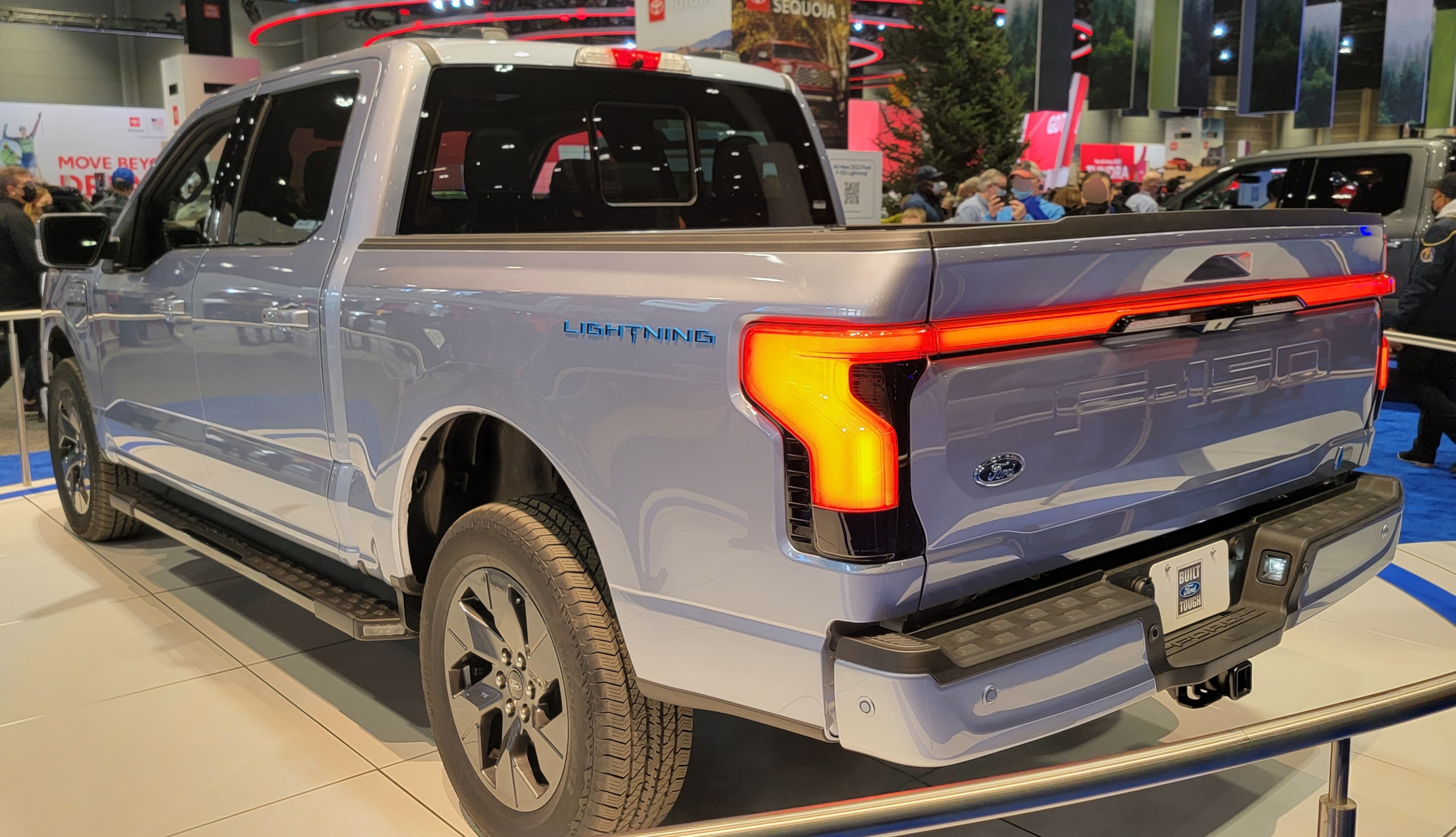
Ford F150S
"do you want To have the added the added capability and added size of a full size because like f-150s can Can be kind of cheap depending on the trim you get but what I've got is a fairly bare bones mob got no leather"
The Ford F-150 is a large pickup truck. You can choose different trims, and some are more affordable while others are more expensive. The podcast is talking about how the truck can be bought in a simpler, basic form depending on the trim.
The Ford F-150 is a full-size pickup truck known for offering many configurations, from basic work-focused trims to more feature-rich versions. The podcast mentions that F-150s can be “cheap depending on the trim,” while also describing a “bare bones” setup. It’s commonly discussed because it’s widely available and can be tailored to different budgets and needs.
tuned by rd shocks
"I've got a fairly small infotainment system. I've got... Like what else can I offer here? I've got tuned by rd shocks. Yeah, and a moonroof"
“Tuned” shocks means the suspension dampers are calibrated to match the vehicle’s intended ride and handling character. On a TRD-style Tacoma, that often translates to firmer or more controlled damping compared to base models. The goal is usually better body control over bumps and improved steering feel.
infotainment system
"...no leather... I've got a fairly small infotainment system. I've got"
The infotainment system is the dashboard screen and the electronics that run things like music, navigation, and phone connection. Different trims can have smaller screens or fewer features. It’s one of the first things people notice when comparing cars.
An infotainment system is the car’s integrated screen and electronics for navigation, audio, phone connectivity, and settings. The “size” or “quality” of the infotainment system can vary a lot by trim, affecting usability and feature availability. It’s often a major part of the perceived value in modern vehicles.
Bluetooth speaker
"I've got a weird jlb speaker that pops out and can be a can be a bluetooth speaker... you have to pay like probably like 600 dollars for this one jl"
Bluetooth speaker capability means the truck can play audio wirelessly using Bluetooth. In this case, the host is saying the speaker module is special to the vehicle, so you can’t just buy any cheap Bluetooth speaker and swap it in. If it’s lost, it may cost a lot to replace.
A Bluetooth speaker function implies the audio system can stream wirelessly to a speaker module, or the vehicle includes a removable/paired speaker. The host’s point is that this feature is integrated and not easily replaced with a generic aftermarket Bluetooth speaker. That can make it expensive to repair or replace if the module is lost.
Request an Explanation
Heard something you'd like explained? We'll add it to this episode.
Sign in to request explanations for terms you heard.
Want to learn more?
Browse our glossary for plain-English explanations of automotive terms, jargon, and concepts.
Help improve this episode
See something that's not quite right? Our annotations are AI-generated and can sometimes miss the mark. Click the flag icon on any annotation to suggest a correction.