Episode 455: Guest Chad Kirchner, 2026 Dodge Charger Six Pack Scat Pack, Hankook Ventus S1 Tire Test Update, Slate Pickup, Polestar Leave U.S.
About this episode
Guest Chad Kirchner joins the hosts, and the conversation quickly turns into a deep dive on the 2026 Dodge Charger Six Pack Scat Pack—its twin-turbo inline-six output, surprising straight-line quickness, and the “six in a car used to have an eight” sound debate. The hosts then broaden out to EV economics and real-world constraints using Slate’s $25k electric trucklet, tire testing updates (Hankook Ventus S1), and market shifts like Polestar leaving the U.S., plus corporate and safety talk across automakers.
Welcome guest Chad Kirchner on this week's episode which is loaded with all kinds of interesting car discussion. The show starts off with Benjamin's review of the 2026 Dodge Charger Scat Pack, which boasts a 550 horsepower inline six cylinder engine. However, Ben notes some important details about the size of this new muscle-y car, and suggests that it's stuck in a sort of limbo with few actual customers and rivals.
Then Chad reports on the newly detailed Slate Auto's EV pickup truck. Now with an official price, and list of features (or features missing), our round table can really begin. How influential will this startup be, when it lacks a paint job, radio, and power windows? Are other automakers checking their rear view mirrors about the Slate truck? Chad shares his thoughts and more! Thanks for listening!

Dodge Hornet
"Yes. Because the Hornet doesn't exist. Or Challenger."
The Dodge Hornet is a car model name that the podcast talks about as if it’s being confused with other Dodge models. The point is that the host thinks the name doesn’t fit the situation they’re describing. So it’s mainly about identifying the right car name.
The Dodge Hornet is a Dodge model name that the podcast treats as confusing or not present in the discussion’s context. The host says, “Because the Hornet doesn't exist. Or Challenger,” which suggests they’re mixing up names or referencing a situation where the Hornet isn’t the correct match. That makes it part of a naming/lineup clarification rather than a deep technical discussion.
Scat Pack
"It is the scat pack version of the car and it comes equipped with a turbo charge,"
Scat Pack is Dodge’s name for a higher-performance version of a car. It usually means more power and sportier tuning than the base trims.
Scat Pack is a Dodge performance trim name used to indicate a higher-output version of a model, typically with more aggressive engine tuning and performance-focused hardware. In this segment, the speaker says the Scat Pack trim is the only one they can buy right now and that it’s tied to the turbocharged inline-six.
twin turbo chargers
"and it comes equipped with a turbo charge, twin turbo charge."
Twin-turbo means the engine uses two turbochargers to push extra air into the cylinders. That extra air helps the engine make more power and pull harder.
Twin-turbocharging uses two turbochargers to force more air into the engine, allowing it to make more power than a similar naturally aspirated engine. With a twin-turbo setup, the engine can produce strong torque across a wider range, which is why it’s common on modern performance trims.
inline six cylinder engine
"I believe it's three liter inline six cylinder engine. It has 550 horsepower and 531 pound feet of torque."
An inline-six is an engine with six cylinders lined up in a row. It’s known for running smoothly, and here it’s the engine type behind the Charger’s performance.
An inline-six engine is a six-cylinder layout where all cylinders are arranged in a single line. This configuration is often praised for smoothness and balance, and in this segment it’s described as the basis for the Charger’s turbocharged power output.
torque
"It has 550 horsepower and 531 pound feet of torque. The scat pack trim is currently the only one"
Torque is the engine’s twisting force that helps the car get moving. More torque usually means stronger “pull” when you accelerate.
Torque is the twisting force an engine produces, and it strongly influences how quickly a car accelerates, especially at lower speeds. The host quotes torque in pound-feet, which is a common way to express how much pulling force the engine makes.

Jeep Grand Wagoneer
"Yeah, because this engine's available in the Grand Wagoneer. It's available in the Ram."
The Jeep Grand Wagoneer is a big SUV that’s meant to feel more luxurious than a typical Jeep. It’s designed for comfort and higher-end features. The podcast mentions it because the same engine is available in this SUV.
The Jeep Grand Wagoneer is a large, luxury-oriented SUV built for comfort and premium features. The podcast notes that an engine available in the Grand Wagoneer is also used in another vehicle, highlighting how powertrains can be shared across models. That makes it a relevant point when discussing what’s under the hood and how it’s offered.

Ram
"in the Grand Wagoneer. It's available in the Ram. And I think that's it for now."
Ram is a truck brand. The host is saying the same engine can be found in Ram trucks too.
Ram is the pickup-truck brand within Stellantis, and the host notes the same engine is available in a Ram model. This is relevant because it shows the engine is intended for heavy-duty, real-world use—not just a performance sedan.
straight six
"I think straight six, I mean, straight six is in turbocharged straight six can still sound good. I feel like I've heard every possible exhaust"
A straight six is an engine with six cylinders lined up in a row. It tends to run smoothly and can sound different from engines with eight cylinders or V-shaped layouts.
A straight six is an engine layout where all six cylinders are arranged in a single line. Because of its smooth firing order and balance, it often has a distinctive sound and feel compared with other common layouts like V8s.
turbocharged
"I think straight six, I mean, straight six is in turbocharged straight six can still sound good. I feel like I've heard every possible exhaust"
Turbocharged means the engine uses a device (a turbo) to push extra air into it. More air usually means more power, and it can also affect how the engine sounds and feels when you accelerate.
Turbocharged means the engine uses a turbocharger to force more air into the cylinders. That lets a smaller or differently configured engine produce more power, and it can also change the exhaust note and how the engine responds under load.
all wheel drive
"And the only coming all wheel drive is that... I believe so. Currently they are all wheel drive."
All wheel drive means the car can send power to all four tires. That can help it grip better, especially on slippery roads.
All wheel drive (AWD) means power is sent to all four wheels instead of just the front or just the rear. In this segment, the host uses AWD as part of the “only coming” configuration discussion, which matters because AWD can change traction and how weight distribution translates into grip.
weight distribution
"And 55% of that weight is over the front wheels."
Weight distribution is how the car’s weight is spread between the front and rear tires. If more weight is in the front, the front tires usually do more work, which changes how the car turns and stops.
Weight distribution describes how a car’s mass is split front-to-rear (and sometimes left-to-right). Here, the claim that 55% of the weight is over the front wheels is important because it influences steering response, front tire loading, and how the car behaves under braking and cornering.

Cadillac Ctsv
"And a thousand pounds, a thousand pounds more than my CTSV."
The Cadillac CTS-V is a performance Cadillac. They bring it up because their CTS-V is lighter than the Charger they’re discussing, which helps underline the Charger’s weight.
The Cadillac CTS-V is a high-performance version of the CTS, and it’s referenced here as another weight comparison. The host says the Charger is about a thousand pounds more than their CTS-V, emphasizing how unusually heavy this Charger variant is.
60 in four seconds
"So I just, I, I led with the weight because it does 60 in four seconds, which is nuts."
That’s shorthand for how long the car takes to go from 0 to 60 mph. Faster times generally mean quicker acceleration.
“60 in four seconds” refers to a 0–60 mph acceleration time, a common metric for how quickly a car reaches 60 mph from a stop. The speaker emphasizes it as unusually fast “for a car this size,” highlighting the performance impact of traction and power delivery.
quarter mile
"And it does the quarter mile in 12, three. That's really good. Yeah."
Quarter mile is a standard drag-racing test distance. People use the time it takes to cover that distance to compare how quickly cars accelerate.
The quarter mile is a drag-racing distance (1,320 feet / 402 meters) commonly used to compare straight-line acceleration performance. The speaker cites a quarter-mile time (“12, three”), using it as a benchmark for how fast the car is.
launch control
"I tried the launch control on this and it is, but, you know, suitably bananas. It's actually very simple, much simpler than past launch controls that I've used."
Launch control is an electronic driving mode that helps a car accelerate from a stop with maximum traction and repeatability. It coordinates throttle, transmission behavior, and traction systems so you don’t have to manually manage engine speed and slip as much as with older “manual” launch techniques.
305 35 series tires
"getting back to the idea of grip, it also has 305 35 series tires. Oh, yeah, that's great. Man, holy."
That tire size is a way of describing how wide the tire is and how tall the sidewall is. Wider tires with a shorter sidewall usually grip the road better, which helps with hard acceleration.
“305/35 series tires” describes tire sizing: 305 mm width and a 35-series aspect ratio (sidewall height as a percentage of width). Wider, lower-profile tires like this typically increase grip, which supports the segment’s discussion about launch traction and “grip.”

Dodge Charger
"I want to talk a little bit about the whole concept of this charger because it first arrived as an EV. We saw it as an EV first and then they were like, oh, no, now it's also a six cylinder, a gas powered version."
The Dodge Charger is a famous American muscle-car model. In this episode, they’re talking about a newer Charger lineup that comes in different versions—some electric and some gas—depending on the trim.
The Dodge Charger is a long-running American muscle-car nameplate, and this episode focuses on a modern twist: it’s being offered both as an EV and as a gas-powered version. The host discusses how the lineup evolved from an EV-first approach to adding a six-cylinder gas variant, then mapping trims like Scat Pack and Daytona to different powertrains.
EV
"because it first arrived as an EV. We saw it as an EV first and then they were like, oh, no, now it's also a six cylinder, a gas powered version."
EV means electric vehicle. It’s a car that runs on electricity from a battery instead of using gasoline as its main power source.
EV stands for electric vehicle, meaning the car is powered primarily by an electric motor and a battery rather than a gasoline engine. In this segment, the host is contrasting the Charger’s EV availability with later gas-powered variants.
drivetrain
"[782.8s] So you can get these same like drive train [785.1s] and features with two extra doors."
A drivetrain is the set of parts that send power from the engine to the wheels. They’re saying the car can be very similar mechanically even if you pick a different body style.
“Drive train” (usually spelled “drivetrain”) refers to the components that deliver power from the engine to the wheels, such as the transmission, driveshaft(s), differential, and axles. The hosts are saying you can get similar drivetrain and features even when choosing a different body style (two extra doors).
Wrangler philosophy
"[813.2s] But like that's probably the smartest thing about this car is [817.5s] adopting kind of a Wrangler philosophy where you can get, you know, [820.7s] well, making it simple like to to order,"
The host is comparing the ordering experience to the Jeep Wrangler, which is known for being easy to configure. The idea is that you can pick what you want without a confusing set of packages.
“Wrangler philosophy” is a reference to how Jeep Wrangler buyers can often choose options in a straightforward, modular way—prioritizing simplicity and configurability. The host is using it as an analogy for how this car is designed to be ordered or optioned without overly complicated bundles.

Jeep Wrangler
"...artest thing about this car is adopting kind of a Wrangler philosophy where you can get, you know, well, mak..."
The Jeep Wrangler is an SUV made for off-road driving. It’s designed to handle rough roads and trails better than a typical car. The podcast uses it as an example of the kind of capability people want.
The Jeep Wrangler is a rugged off-road SUV designed for trail driving and easy customization. It’s significant because it’s built around a simple, capable platform that supports off-road features and removable-style design elements. The podcast mentions it as a reference point for a “Wrangler philosophy” of getting a certain kind of capability.
Hellcat
"Well, there is. It's put a hellcat in everything because it's 2016 again."
“Hellcat” is Dodge’s name for a very powerful V8 engine. Saying they’d “put a Hellcat in everything” means they’d use that same big, high-performance engine in lots of different cars.
“Hellcat” refers to Dodge’s high-output supercharged V8 performance engine family (commonly associated with the Charger/Challenger). When someone says “put a Hellcat in everything,” they mean using that specific, very powerful engine across multiple models.

Challenger Hellcat
"...cause there isn't one. Well, there is. It's put a hellcat in everything because it's 2016 again. But that's..."
The Challenger is a Dodge performance car name. The podcast mentions it in connection with very powerful versions of the car. They bring it up to clarify which model they mean.
The Challenger is the Dodge muscle-car name that’s closely associated with high-performance versions, including the idea of putting a “Hellcat” engine into the lineup. In the podcast, it’s referenced as part of a timeline-like comparison (“it’s 2016 again”), implying a discussion about how the model has been offered or marketed. It’s mentioned to clarify what “Challenger” means in that context.
V8
"Caniscus has has applied pretty heavily that a V8 will fit and that a V8 is coming."
A V8 is a type of engine with eight cylinders. It’s usually associated with strong power and a classic muscle-car feel, and they’re debating whether this car will end up using one.
A V8 is an engine with eight cylinders arranged in a “V” shape, typically known for strong low-end torque and a distinctive sound. In this discussion, the speaker is arguing about whether a V8 will fit and whether moving to a V8 changes the character of the vehicle.
customer
"But I'm also going to I have the opinion that it's not going to matter. I think this vehicle. This vehicle does not have a customer."
They’re talking about whether there are enough people who would actually want to buy this car. If the audience doesn’t exist, the car can have trouble selling.
Here, “customer” is being used as a market concept: whether there’s a buyer segment that actually wants this specific kind of car. The speaker’s point is that if there’s no clear customer, even a good car can struggle commercially.
non luxury coups
"I want to qualify that because there are no large non luxury coups anymore."
They mean the kind of two-door cars that used to be more affordable and not considered “luxury.” Their argument is that those cars are harder to find now, so it’s tougher to sell a new one.
“Non luxury coupes” is a market category idea—what used to be mainstream, affordable two-door cars that weren’t branded as luxury. The speaker claims that segment has largely disappeared, which affects whether a “large” coupe concept can find buyers at a given price.
four door or two door
"we're talking about how this car can be either a four door or two door."
Two doors usually means a sportier look but less rear-seat access, while four doors are more practical for passengers. They’re saying this car could be offered in either format.
“Four door” vs “two door” describes body style/door-count packaging, which changes practicality and target buyers. In this context, the speaker is saying the car’s layout could be offered in either configuration, affecting who it appeals to.
wheelbase
"Yeah, this two door has a wheelbase of 100 and 21 inches. I when I open the door to this car, my seat is so far forward."
Wheelbase is the length of the car measured from the front wheels to the rear wheels. If it’s longer, the car tends to feel roomier and can change how the cabin and seating positions line up.
Wheelbase is the distance between the front and rear axles. A longer wheelbase usually means more interior space (especially for rear seating) and a different overall “stance” and ride feel compared with shorter cars.

Ford Mustang
"...it's almost two feet more wheelbase compared to a Mustang? Two feet. Was it something like 18 inches or som..."
The Ford Mustang is a sports car made by Ford. It’s known for being sporty and for having different engine choices depending on the version. The podcast mentions it to compare measurements like wheelbase to another car.
The Ford Mustang is a long-running American sports car known for its performance options and distinctive styling. It’s often used as a benchmark when discussing vehicle size and proportions because many other cars get compared to it. In the podcast, the Mustang is referenced while talking about wheelbase differences versus another car.

Dodge Polara
"I think Dodge did it a little bit with the Polara. They made full size cars with big block v8s."
The Dodge Polara was a big, older American car. It’s mentioned here because Dodge (like other brands) made large cars with powerful V8 engines during the muscle-car era.
The Dodge Polara was a full-size car from Dodge’s lineup, best known for the era when American automakers offered large “personal luxury” and big-engine cars. In the transcript, it’s used as an example of Dodge building full-size vehicles with big-block V8s to compete with the muscle-car crowd.

Mercury Marauder
"... and there was a Mercury. It wasn't it was like a Marauder, but it was it had a different name. Had an X in ..."
The Mercury Marauder is an older car name from the Mercury brand. The podcast brings it up because someone is trying to remember a similar model with a different name. It’s mainly a naming reference.
The Mercury Marauder is an older Mercury model name that the podcast references as something similar to another car, but with a different name. It’s mentioned as part of a memory or comparison about how certain vehicles were labeled. Because it’s not described in detail, the key point is the name association rather than specifications.
muscle car
"hey, we're going up against muscle cars, which are almost exclusively intermediates in terms of size and midsize vehicles, but they weren't."
Muscle cars are older American performance cars known for strong engines and quick acceleration. The host is comparing them to bigger luxury cars that were trying to compete for buyers’ attention.
“Muscle cars” are performance-focused American cars (often with large V8 engines) that became popular in the 1960s and 1970s. The transcript contrasts them with full-size “personal luxury” cars, noting that muscle cars were typically smaller (intermediate/midsize) while the luxury competitors were much larger.
personal luxury
"And personal luxury, it stayed a thing from like the seventies, the eighties and the nineties, and then it was killed in the nineties."
“Personal luxury” means cars that were sold as stylish and comfortable, more about the experience than racing. The host is saying this type of car was popular for decades, then SUVs took over the role for many buyers.
“Personal luxury” refers to a category of two-door cars marketed for comfort and style rather than pure performance. In this era (the 1970s through the 1990s), automakers used it to sell big, comfortable cars with powerful engines, before SUVs became the dominant choice for buyers who wanted to spend money on a car.

BMW 6 Series
"You had the BMW six series in this in the eighties, which was very much that."
The BMW 6 Series is a BMW model line known for upscale, two-door (and later grand-touring) styling and a “personal luxury” vibe. In the transcript, it’s cited as an example of the kind of car that fit that 1980s personal-luxury formula.

BMW 8 Series
"And then the eight series, which took it up a much higher level."
The BMW 8 Series is BMW’s more upscale, grand-touring-style luxury car line. Here it’s mentioned as the next step up from the 6 Series in that personal-luxury direction.
The BMW 8 Series is BMW’s higher-end grand-touring/personal-luxury model line, positioned above the 6 Series in the host’s comparison. The transcript frames it as taking the personal-luxury idea “to a much higher level” in the 1980s.
eight-speed automatic
"And even that, as much as I like the engine, it has an eight speed automatic. Usually I believe it's a ZF box. I mean, it has to be right."
An eight-speed automatic is a car transmission that automatically shifts through eight different gear ratios. Even with more gears, the way it shifts can feel smooth or can feel jerky—especially when you’re creeping around in traffic.
An eight-speed automatic is a gearbox with eight forward ratios that automatically selects the best gear for speed and load. More gears can help keep the engine in its efficient or power band, but the shift strategy (how it decides when to change gears) can still make the car feel jerky or unrefined, especially at low speeds.
ZF
"Usually I believe it's a ZF box. I mean, it has to be right. That's what Chrysler uses almost exclusively."
ZF is a company that makes car parts, including transmissions. Here, the host is saying the Charger’s automatic transmission is probably made by ZF, and they’re criticizing how it shifts in this specific car.
ZF is a major automotive supplier known for transmissions and other driveline components. In this segment, the host suggests the Charger’s eight-speed automatic is likely a ZF unit, and they judge its calibration (tuning) based on how it shifts.
jerky at low speeds
"It is not well tuned in this car. It was surprisingly jerky at low speeds. I've never encountered that in a Dodge product before."
“Jerky at low speeds” means the car doesn’t move smoothly when you’re going slowly, like in traffic. It can feel like the car lurches or shudders when it’s trying to shift or apply power.
“Jerky at low speeds” describes a drivability issue where the car’s transmission or torque delivery causes noticeable shuddering or abrupt movement when creeping, pulling away, or inching through traffic. It’s often tied to shift timing and how the transmission control software manages clutch/gear engagement.
Alex platform
"And it's not charming in the way that the Alex platform was where you knew you were in an older car. You knew the technologies were like dating from a different era. And that was kind of part of the appeal."
A platform is the underlying “bones” of a car that affects how it drives and what parts it uses. The host is comparing this car’s feel to another older platform, saying you can tell the design and technology are from an earlier era.
The “Alex platform” refers to a specific vehicle platform architecture used by Chrysler/Dodge products, and the host uses it as a comparison point for how “old” the car can feel. The idea is that the platform’s age shows up in the driving feel and the technology, which can be part of the appeal for some buyers.

Chrysler 300
"... But if it would have came out as like a Chrysler 300 or something that's designed to be a luxury, a mo..."
The Chrysler 300 is a large sedan made to feel more upscale and comfortable. It’s designed for people who want a big, traditional car rather than a small sporty one. The podcast mentions it as an example of a luxury-style approach.
The Chrysler 300 is a full-size, luxury-leaning sedan known for its bold styling and comfort-focused character. It’s often discussed as a more traditional “big sedan” alternative when people want a luxury feel without going to a smaller premium car. In the podcast, it’s referenced as an example of a car that could have been designed as a luxury model.
Challenger
"[1306.9s] Challenger sales that they couldn't get rid of the two door. [1311.6s] I could see that Challenger was a was like affordable, right? [1314.9s] And much smaller, which is crazy to say."
The Dodge Challenger is another popular American muscle car. The host is talking about how many people bought Challengers, and how that affects what body styles and trims automakers choose to keep selling.
The Dodge Challenger is the Charger’s sibling in the modern Mopar muscle lineup, and it’s known for offering multiple engine options across a broad price range. Here, the host is using Challenger sales and pricing history to explain why a two-door variant might have been hard to sell.
V6
"[1348.6s] There's no I kind of expected. [1350.1s] There is no base like GT V6. [1353.5s] Yeah, I guess that's that's you know, because the six cylinder [1356.6s] the six cylinder by far was the most popular power tree on both Charger and Challenger."
V6 means the engine has six cylinders arranged in a V shape. The host is saying that the V6 was the most common choice, so it strongly influences what “base” versions should cost.
V6 is an engine configuration with six cylinders arranged in a “V” shape. The host notes that a V6 was the most popular engine choice on both Charger and Challenger, which matters because it affects how automakers price and market trims.
power tree
"[1353.5s] Yeah, I guess that's that's you know, because the six cylinder [1356.6s] the six cylinder by far was the most popular power tree on both Charger and Challenger. [1362.3s] But even if they could introduce a naturally like, yeah,"
“Power tree” just means the different engine options a car comes with. The host is saying most people picked the V6 option for the Charger and Challenger.
“Power tree” is enthusiast slang for an automaker’s lineup of powertrains—basically the different engine/transmission options offered across trims. Here, the host uses it to say the V6 was the most popular choice for Charger and Challenger buyers.
Pentastar
"[1362.3s] But even if they could introduce a naturally like, yeah, [1366.0s] let's say they throw a Pentastar in this. Yeah. [1368.3s] It wouldn't drop the price by like 15000 dollars, right?"
Pentastar is a name Chrysler uses for a V6 engine. The host is saying that even if the car got that V6, it probably still wouldn’t become cheap enough to match the older base-price versions.
Pentastar refers to Chrysler’s V6 engine family used in many Dodge and Jeep models. In this segment, the host is speculating that swapping in a Pentastar V6 wouldn’t lower the new car’s price enough to reach the older “entry level” positioning.
EV platform
"Stella Large, I think the interesting thing about the wheel base with Stella Large is because it was designed to be an EV power in EV platform."
An EV platform means the car’s “underbody design” was built specifically for electric power and batteries. That usually makes it easier to fit the battery pack efficiently and keep the car balanced.
An EV platform is a vehicle architecture designed from the start for electric powertrains and battery placement. Because it’s engineered around batteries, it can optimize space, weight distribution, and structural packaging versus adapting an older gasoline-only design.
battery pack
"Everything about this car screams like priority was being able to stuff as much battery pack as possible. Right. Like that's what you get with a massive wheel base."
The battery pack is the big battery system that powers an EV. Designers try to place it low and near the middle of the car so the vehicle feels more stable.
A battery pack is the large set of battery cells/modules that stores electricity for an EV. Where it’s placed—often between the axles—matters for space and for lowering the car’s center of gravity.
center of gravity
"You you're able to put as many batteries as you can between the axles, I guess. And yeah, because that keeps the center of gravity lower."
Center of gravity is the “balance point” of the car’s weight. If it’s lower, the car tends to feel steadier and less tippy when turning.
Center of gravity (CoG) is the point where a vehicle’s weight effectively balances. Lowering the CoG (for example by placing a heavy battery pack low) generally improves stability and reduces body roll in cornering.
electrification platform
"Well, and we're also I'm sorry, but we're also talking about an electrification platform that the North American Stalantis doesn't have any experience really doing electrified anything successfully."
It’s the “base design” a company builds so it can make electric cars. Instead of redesigning everything from scratch for each model, they reuse the same basic electric-car layout.
An electrification platform is a vehicle architecture designed to support electric drivetrains (like battery-electric or plug-in hybrids) across multiple models. The key idea is that the platform dictates packaging, wiring, battery mounting, cooling, and how the powertrain integrates into the body and chassis.
Stalantis
"Well, and we're also I'm sorry, but we're also talking about an electrification platform that the North American Stalantis doesn't have any experience really doing electrified anything successfully."
This is the big car company behind brands like Dodge and Jeep (Stellantis). The point here is that the speaker thinks their North American team hasn’t done electric cars as well as other parts of the company.
Stalantis appears to refer to Stellantis, the multinational automaker formed from the merger of Fiat Chrysler Automobiles (FCA) and PSA Group. In this segment, the speaker is arguing that Stellantis’ North American operations lack experience executing electrified vehicles successfully.
Tavares
"So you have the Stela platforms approved under a Tavares and you have all of these European brands of Stalantis, you know, focusing their engineering talent and resources on that."
Tavares is a top executive at Stellantis. The speaker is saying that the company’s electric-car plans are being approved or guided under his leadership.
Carlos Tavares is a senior executive associated with Stellantis. In this context, the speaker mentions “platforms approved under a Tavares,” implying leadership-driven approval or direction for electrification efforts.

Mitsubishi Outlander
"...r this year. OK. It's. But isn't that just a good outlander? No, that's the plug in."
The Mitsubishi Outlander is a crossover SUV. Some versions are plug-in hybrids, which means you can charge it using electricity. The podcast is pointing out that the plug-in version is different from other Outlander models.
The Mitsubishi Outlander is a crossover SUV offered in multiple powertrain options, including plug-in hybrid versions. The podcast specifically distinguishes the plug-in Outlander from other Outlander variants, which matters because it changes how you charge and drive it. That’s why it comes up in a “which one is it?” type of conversation.

Nissan Rogue
"...utlander. The outlander P have is the best Nissan Rogue you can buy. I think that by far, I think that if..."
The Nissan Rogue is a compact SUV meant for everyday driving. Different versions of the Rogue can feel different depending on features and equipment. The podcast mentions it while talking about which Rogue is the best choice.
The Nissan Rogue is a mainstream compact crossover SUV aimed at buyers who want a comfortable daily driver. In the podcast, it’s brought up in the context of which Rogue version is “the best” to buy, implying there are meaningful differences between trims. That makes it relevant to shoppers comparing options within the Rogue lineup.

Mitsubishi Eclipse
"...n alive from the inside. So so the new Mitsubishi Eclipse, the new Eclipse is just that badge engineered. T..."
The Mitsubishi Eclipse is a model name that has been used on different cars. The podcast says the newer Eclipse is essentially the same idea as another vehicle, just with the Eclipse badge. So it’s not necessarily a totally unique car from scratch.
The Mitsubishi Eclipse is a nameplate that has been used on different cars over the years, and the podcast describes the “new Eclipse” as badge-engineered. In other words, it’s presented as a version of another platform rather than a completely unique model. That’s why it comes up in a discussion about what the latest Eclipse actually is.
all seasons
"So I've been testing as that event is S1 all seasons. They are on our 2015 outback."
All-season tires are made to be decent in hot, cold, and rainy weather. They’re a compromise—good enough for most people without switching tires season to season.
All-season tires are designed to work in a wide range of temperatures, typically balancing dry grip, wet traction, and moderate snow capability. They’re not as specialized as dedicated summer or winter tires, but they’re a practical choice for year-round driving.

2015 outback
"They are on our 2015 outback. And I talked about them, I guess, last month, maybe like two or three weeks ago."
The Subaru Outback is a family car that’s meant to handle bad weather pretty well. They’re using a 2015 model as the car to test the tires, so the results are more like what most people would experience.
The Subaru Outback is a crossover wagon built on Subaru’s legacy platform, known for all-weather capability and a long-travel suspension feel. Using a 2015 Outback as a test vehicle matters because it’s a common, real-world baseline for tire comfort and wet traction.
cold weather performance
"Second, wet weather performance has been really good."
Wet weather performance is how safe and grippy the car feels when the road is wet. It’s mainly about stopping and turning without slipping on rainy pavement.
Wet weather performance refers to how well a tire and vehicle behave on rain-soaked roads—especially grip during braking, cornering, and acceleration. Tire tread design and rubber compound strongly influence this, and it’s often where all-season tires are most scrutinized.
hydroplane
"when the vehicle hydroplanes is something that she talks about and notices when she's driving."
Hydroplaning is when your tires start to “float” on top of water instead of gripping the road. When that happens, the car can feel less responsive to steering and braking. Heavy rain and puddles make it more likely.
Hydroplaning happens when a tire loses contact with the road because water builds up faster than the tire can push it out of the way. The tire effectively rides on a thin film of water, which reduces steering and braking grip. It’s especially noticeable in heavy rain and standing water.
water channeling
"and we had no problems at all with water channeling. It did a really good job with that."
Water channeling is how a tire’s tread pattern and grooves move water out from under the contact patch. Good channeling helps maintain tire-to-road contact in wet conditions, reducing the risk of hydroplaning. The host is crediting the tire’s wet-weather design for staying stable in heavy rain.
Ventus S1
"So those are my two Ventus S1 all season updates."
Ventus S1 is a specific line of tires made by Hankook. The hosts are testing how well these tires grip, especially in rain, compared with regular all-season tires. They’re using real-world driving to judge the difference.
Hankook’s Ventus S1 is a tire line that’s positioned for stronger grip than typical all-season tires. In this segment, the hosts are tracking how it performs in wet conditions and how it feels on longer drives. The “S1” naming refers to Hankook’s specific performance-oriented model within the Ventus family.
all season tire
"So those are my two Ventus S1 all season updates. This is kind of how we're going to be talking about it over the course of the summer because they are summer tires."
An all-season tire is meant to work in a mix of weather—hot and cold, and wet and dry—without being specialized for just one season. The host is saying their Ventus S1 tires feel grippier than a typical all-season tire. That suggests they’re tuned more for traction than for broad weather coverage.
An all-season tire is designed to balance dry grip, wet traction, and moderate winter capability, typically using a tread compound and tread design meant to work across a wider temperature range. In the segment, the host contrasts all-season tires with the Ventus S1’s behavior, implying the Ventus S1 is more performance-focused than a typical all-season. That’s why they expect more grip.
summer tires
"This is kind of how we're going to be talking about it over the course of the summer because they are summer tires."
Summer tires are designed to grip best when it’s warm. They usually aren’t meant for cold weather or snow. The hosts plan to test them in summer so the results match what the tires are optimized for.
Summer tires are built to deliver stronger dry and wet grip in warm weather, usually using a tread compound that performs best above typical cold-season temperatures. They often trade off winter traction and may wear faster or feel less effective in cold conditions. The host notes they’ll test the tires over summer to evaluate how they feel when conditions match the tire’s design.
grip
"But I can say that they do appear to have a lot more grip than a standard all season tire, which makes sense"
Grip is how well the tires can “hold on” to the road. If grip is higher, the car feels more controlled—less sliding when you turn, brake, or accelerate. The host is saying these tires feel stickier than a typical all-season.
Grip refers to how well a tire can generate traction between the rubber and the road surface. More grip typically means better acceleration, braking, and cornering feel because the tire can transmit forces without slipping. Here, the host says the tires seem to have more grip than a standard all-season tire.
overtire a vehicle
"You can overtire a vehicle to the point where you have too much traction [2221.3s] and you'll break driveline components."
It means putting on tires that grip the road too well for the rest of the car. Then the car’s other parts can get overloaded, causing problems like extra noise or even damage.
“Over-tiring” means fitting tires that are so grippy that the rest of the car’s hardware (suspension, driveline, mounts) is forced to work beyond what it was designed for. When traction is too high, you can stress components and start seeing new noises or failures elsewhere.
driveline components
"You can overtire a vehicle to the point where you have too much traction [2221.3s] and you'll break driveline components."
The driveline is the power-transfer system that sends engine power to the wheels. If the tires hook up too hard, it can put extra stress on those parts and cause them to fail.
The driveline is the set of parts that transmit power from the engine to the wheels (for example, the transmission output through the driveshaft to the differential). If traction is excessive, torque spikes and wheel slip changes can overload these parts and lead to breakage.
bushing issues
"your spring pads are too noisy, or you're having some bushing issues, [2234.3s] that kind of thing."
Bushings are soft mounts in the suspension that help parts move smoothly and reduce vibration. If they wear out, you may hear noises and the ride/handling can feel off.
Bushings are rubber or elastomer mounts that allow controlled movement while isolating vibration between suspension components. When bushings wear out or get noisy, they can change how the suspension behaves and can be a sign the car is being stressed (including by higher-grip tires).
Hankook Ventus
"which speaks to how sticky these Ventus tires are. [2240.3s] And I keep saying Ventus, Hankook Ventus, is Ventus is like the sub-brand of them."
Hankook Ventus is a brand/model line of performance tires. The point here is that these tires grip really well, and that can make other parts of the car start acting up.
Hankook Ventus is Hankook’s performance tire line. In this segment, the hosts are discussing how “sticky” Ventus tires can reveal weaknesses in a car’s suspension and driveline when grip is higher than the rest of the setup can tolerate.
195 50 R 16
"I have a 195 50 R 16. [2259.2s] Yeah, that's tough."
That’s the tire size. It tells you the tire’s width, how tall the sidewall is, and that it fits a 16-inch wheel. The issue here is that this exact size is difficult to find.
“195 50 R 16” is a tire size code: 195 mm is the tire width, 50 is the aspect ratio (sidewall height as a percentage of width), and R 16 means radial construction with a 16-inch wheel diameter. The speaker is saying this specific size is hard to replace.
Michelin
"I reached out to Michelin directly because I've got a bunch of contacts there and they're like, well, are you in a Royal? We got some stuff in our Royal brand."
Michelin is a well-known tire brand. The host contacted them to see what options existed for his specific tire size and use case.
Michelin is a tire manufacturer, and the host says he reached out to them directly for help sourcing tires. The discussion highlights how tire availability can shrink in niche wheel/tire sizes.
Costco
"The only thing that Costco had available for me were two summer performance tires. It's like, yeah."
Costco is a big membership store. Here it’s mentioned because the host says Costco only had a couple of tire options in the tire size he needed.
Costco is a major retail warehouse club that sells tires and other automotive-related products. In this segment, the host uses Costco as an example of limited tire availability in certain smaller tire sizes.
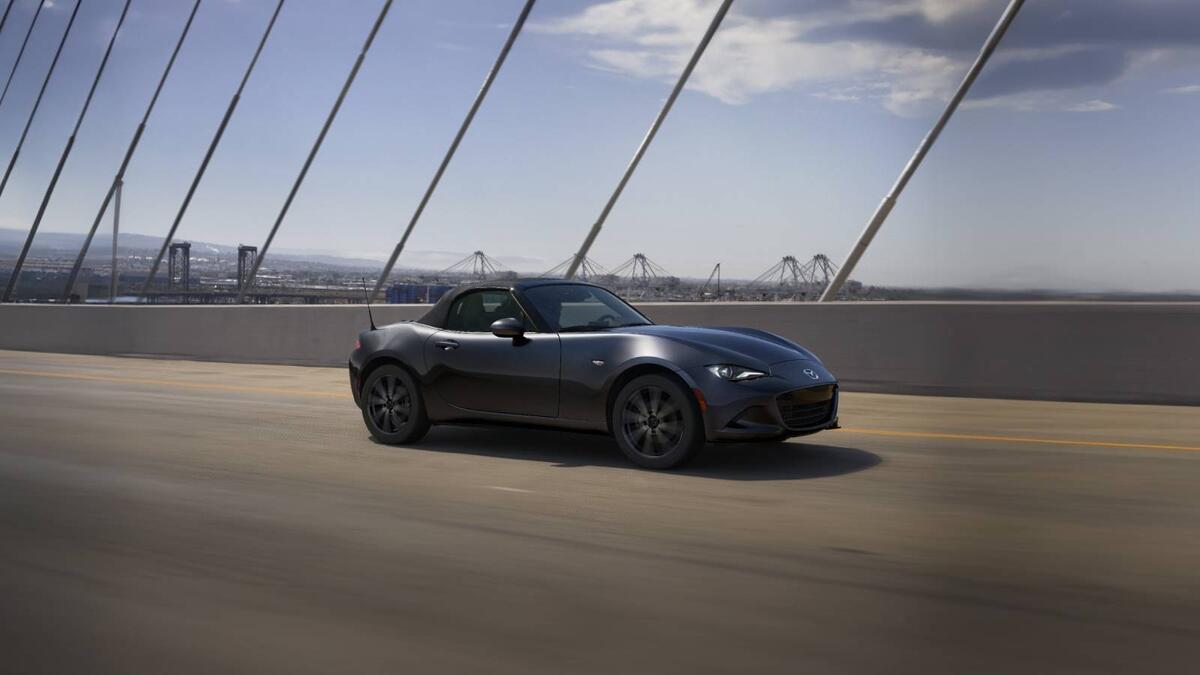
Mazda Miatas
"And a lot of that is because the reason you see smaller diameter performance tires is because Miata's are, I think, yeah. And they there are tons of people who are still driving Miata's every weekend"
The Mazda MX-5, also called the Miata, is a small two-seat sports car. It’s designed to feel nimble and fun to drive. The podcast mentions it because many owners still drive them often, including on weekends.
The Mazda MX-5 (Miata) is a lightweight, small roadster focused on fun handling rather than raw power. It’s significant in car discussions because it has a reputation for being easy to drive and popular with enthusiasts. The podcast specifically talks about Miata tires and how many people still drive them regularly.
road hazard
"And in my last set of tires that I bought, I had to buy four just because it was time along with the the road hazard stuff. A tire rack gives you two years of road hazard."
Road hazard coverage is extra protection for tires. If you damage a tire from something on the road, it can help cover the cost of replacing it.
Road hazard coverage is a tire warranty add-on that helps pay for replacement if a tire is damaged by things like potholes, debris, or punctures. The host contrasts different coverage durations from different retailers.
Tire Rack
"A tire rack gives you two years of road hazard. Well, it's been two and a half years."
Tire Rack is a company that sells tires. In this segment, the host mentions it because they offer road hazard coverage for a certain length of time.
Tire Rack is a tire and wheel retailer known for selling performance tires and offering fitment guidance. Here it’s referenced specifically for its road hazard coverage terms (two years, per the host).
date code
"So take a look at the date code on those tires at the dealership before you put them on your car. That's a good idea."
The date code is a number on the tire that tells you when it was made. It’s important because tires can age while they sit in storage. Checking it helps you make sure you’re not installing very old tires.
A tire date code is the stamped manufacturing date on the sidewall, usually indicating the week and year the tire was made. Checking it helps you avoid buying tires that have been sitting in inventory for a long time, which can mean the rubber has aged. The host recommends verifying the date code before installing tires from a dealer order.
batch
"because the chances are they're not from the same batch."
A tire batch refers to tires produced during the same manufacturing run/time period. The host suggests checking the date code on every tire because they may not all come from the same batch, even if they’re purchased together. That matters because different production dates can mean different levels of rubber aging.
seven year old tire
"You don't want a seven year old tire on your car."
Tires can wear out with age, not just miles. Even if the tread looks okay, the rubber can get worse over time. That’s why the host is warning against very old tires.
Tires age even if they have tread left, because the rubber compounds degrade over time. The host specifically warns against installing a seven-year-old tire, implying that age-related wear can reduce grip and safety. This is especially relevant for performance tires, which can be more sensitive to aging.
tire rubber and compounds
"It's just that we don't think about like tire rubber and compounds."
Tire compounds are the special rubber recipes inside the tread. They affect how sticky the tire is and how it wears, and they can change as the tire ages—even if the tread still looks okay.
Tire compounds are the specific rubber formulations used in different parts of a tire tread. They control key behaviors like grip, wear rate, and how the tire ages—so two tires with the same tread depth can behave very differently.
delaminates
"They're fine until it delaminates on the highway, you know, like"
Delamination means the tire’s internal layers start separating. That can make the tire fail suddenly, especially at higher speeds.
Delamination is when layers inside a tire separate, often due to aging, heat cycles, or damage. It’s dangerous because it can cause sudden loss of structure and traction, and it can lead to catastrophic failures at highway speeds.
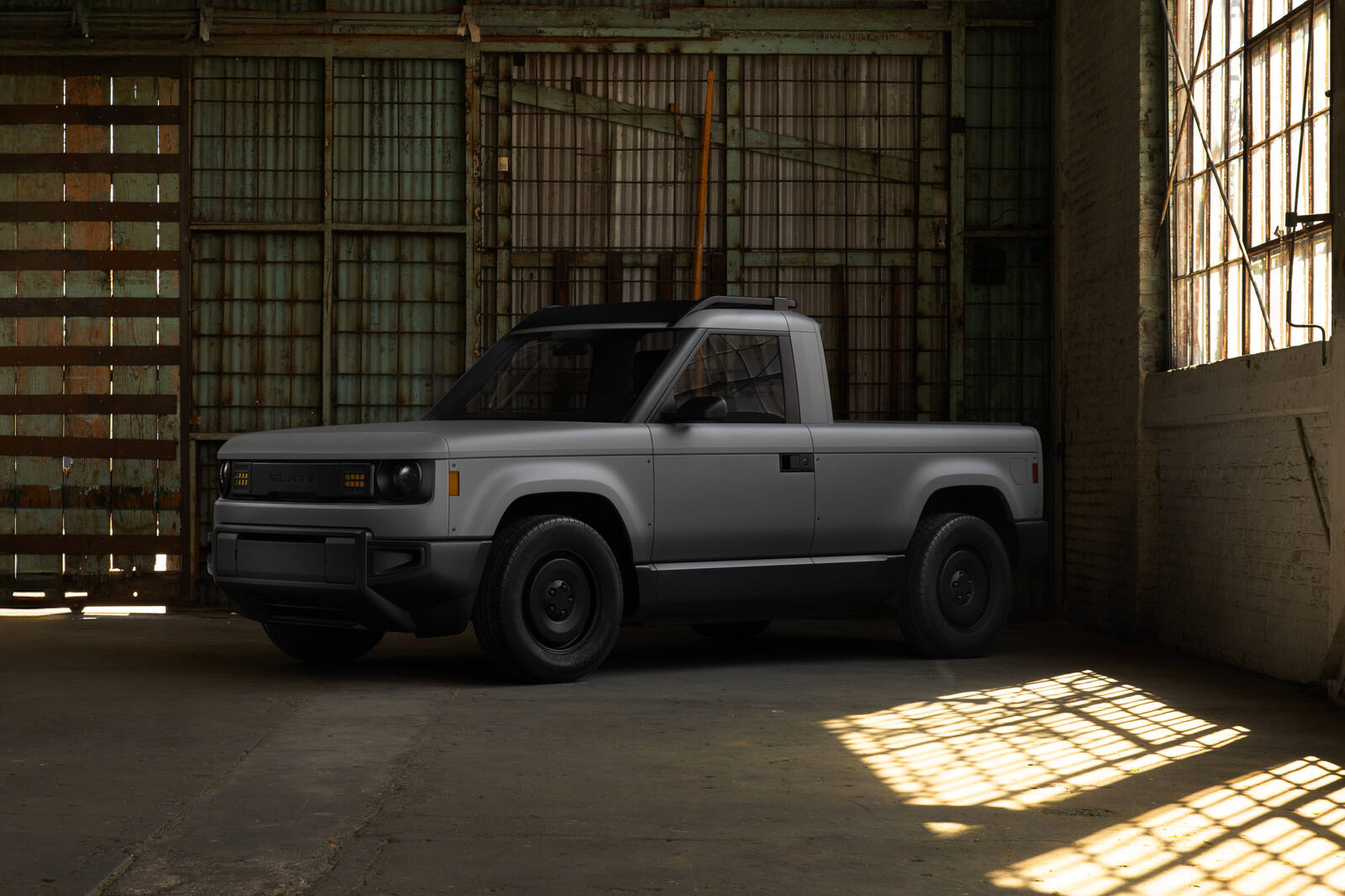
Truck Slate Auto
"... finally were able to see official pricing on the slate auto, I guess blank slate is the official model name. ..."
The podcast mentions a “Truck” and says they saw official pricing for it. The model name is described as “blank slate,” but the exact truck brand and model aren’t specified in the excerpt. So this part is mainly about the price and the name.
In the podcast, “Truck” appears as a placeholder for a specific vehicle being discussed with “official pricing” and a model name that’s described as “blank slate.” Since the actual truck make/model isn’t provided, the discussion is focused on pricing and model naming rather than technical details. It’s included here because it’s the only label given for that segment.
compromises
"it has many, I guess, like sacrifices in order... I would call them compromises."
They’re saying the truck is built with trade-offs to keep the price down. That usually means you don’t get every feature or capability you’d get on a more expensive truck.
The hosts are framing the Slate Auto trucklet as a product that makes compromises to hit an affordable price. In EV trucks, that often means giving up features, range, performance, or materials compared with higher-priced alternatives.

2011 Ford Ranger
"Have you driven a 2011 Ford Ranger or older?... Like that you have a friend who keeps a ranger in the backyard for bi-yearly trips to the dump."
They mention a 2011 Ford Ranger to help you picture the kind of small pickup they mean. It’s basically a practical truck you might use for occasional trips and errands.
The Ford Ranger is a midsize pickup, and the host uses the 2011 Ford Ranger as a reference point for how the Slate Auto might feel and be used. The comparison is about size and practicality—like a smaller truck you’d keep around for occasional errands.
EPA rated range
"Um, and it's, it's has a, they're hoping for an EPA rated range. So it hasn't done EPA validation yet, um, of 205 miles."
It’s the official EV range number from a U.S. government test. It helps you compare different electric cars, but your real range may be different depending on how you drive and the weather.
“EPA rated range” is the driving distance an electric vehicle is expected to achieve under standardized testing by the U.S. Environmental Protection Agency (EPA). It’s a consistent way to compare range claims between EVs, but real-world results can vary with speed, temperature, and driving style.
battery chemistry
"Now, anybody that has, has looked at Slate before, they were promising two different battery chemistry or two different battery sizes, 150 mile one for 35 or 25 grand, and then an unknown price for the upgraded battery."
This means what kind of battery materials the car uses inside. That choice affects things like how much range you get, how expensive it is, and how safe it is.
Battery chemistry refers to the specific materials used in an EV’s lithium-ion cells, which strongly affects cost, energy density (how much range you get for a given battery size), and safety characteristics. Different chemistries can also change how the pack is sourced and whether it qualifies for incentives.
tax credit
"Because the tax credit went away, it no longer was important for Slate to use the NMC... So, part of the full $7,500 tax incentive was where the batteries were sourced, the, the, the materials for the battery."
They’re talking about government money that can reduce the cost of buying an EV. The rules can depend on where the battery materials come from, which can influence what battery type the company chooses.
The “tax credit” referenced here is an EV incentive that can depend on battery sourcing and materials. When the credit rules change, manufacturers may switch battery chemistry (e.g., from NMC to LFP) because the incentive no longer forces a particular supply chain.
NMC
"Because the tax credit went away, it no longer was important for Slate to use the NMC, uh, battery technology because they needed to do NMC because LFP batteries were only coming from China."
NMC is a type of lithium-ion battery material mix used in EVs. It can help the battery store more energy, but it can also be influenced by supply and government incentive requirements.
NMC stands for a lithium-ion battery chemistry using nickel, manganese, and cobalt. It’s commonly used in EVs because it can offer relatively high energy density (more range for a given battery size), but sourcing and incentive rules can affect whether a manufacturer chooses it.
LFP
"Because the tax credit went away, it no longer was important for Slate to use the NMC, uh, battery technology because they needed to do NMC because LFP batteries were only coming from China. Like nobody's making them domestically right now..."
LFP is a common EV battery type that’s generally considered safer and often cheaper. It may not store as much energy per pound as some other battery types, so range can depend on battery size.
LFP (lithium iron phosphate) is a lithium-ion battery chemistry known for strong safety characteristics and typically lower cost. It usually has lower energy density than NMC, meaning you may need a larger battery to get the same range—but manufacturers can sometimes offset that with pack sizing and incentives.
energy density
"So they couldn't use LFP, which is traditionally a cheaper technology, less dense, but also less expensive and safer too."
Energy density is basically how much “battery power” fits into a certain size or weight. More energy density usually means more range without making the battery bigger/heavier.
Energy density is how much electrical energy a battery stores for a given weight or volume. Higher energy density generally means more driving range without increasing battery size, while lower energy density often requires a bigger pack to achieve similar range.
resistive heater
"but that 205 miles of range, they're using a resistive heater and [2956.0s] not a heat pump."
A resistive heater is an EV’s way of making heat by using electricity directly. In cold weather it usually uses more energy than a more efficient system, so you lose more range.
A resistive heater is an EV cabin/thermal system that creates heat by running electricity through a resistive element. It’s simple but typically less efficient than a heat pump, so cold weather can cause a much larger range drop.
heat pump
"but that 205 miles of range, they're using a resistive heater and [2956.0s] not a heat pump. [2960.1s] Yeah."
A heat pump is a more efficient way to warm the cabin/battery. Instead of “making heat” from electricity alone, it moves heat around—so you usually lose less driving range in the cold.
A heat pump is an EV thermal system that moves heat instead of generating it purely with electricity. Because it can extract heat from the outside air (or other sources) and transfer it efficiently, it generally preserves more range in cold weather than resistive heating.
EPA cycle
"and that 205 miles range is also EPA cycle. [2966.7s] It tends to be a 55% highway, 40% city, 45% city."
“EPA cycle” is the official test method used to estimate an EV’s range. Your real range can be different because real driving isn’t exactly the same as the test.
The EPA cycle refers to the standardized test procedure the U.S. Environmental Protection Agency uses to estimate EV range. Because it follows specific driving patterns and speeds, real-world range can differ—especially with cold temperatures, high speeds, or heavy loads.
aerodynamic box
"So, and this being a box and not a real engineered aerodynamic box, you [2976.9s] start hitting at least non Ontario, provisional police speeds."
A “boxy” shape usually isn’t as slippery through the air. More air resistance means the EV has to work harder, especially on the highway, which can reduce range.
The phrase “aerodynamic box” is shorthand for a vehicle shape that isn’t optimized for low drag. Boxy, bluff shapes typically create more aerodynamic resistance, which can hurt efficiency and range at higher speeds.
crank windows
"The, it comes with roll up windows only with crank windows. They were going to offer the ability to add electric windows as an add on feature."
Crank windows are windows you open and close by turning a handle by hand. The downside here is that there’s no electric power to move the glass.
Crank windows are manual side windows operated by a hand crank instead of an electric motor. The host is listing it as a negative because the car only comes with manual roll-up windows, not power windows.
electric windows
"They were going to offer the ability to add electric windows as an add on feature. They decided not to do that."
Electric windows are windows that move with a button instead of a hand crank. Here, they’re saying the add-on option for that feature didn’t end up happening.
Electric windows are power-operated windows that use a motor and switchgear to raise and lower the glass. The segment says the option to add electric windows as an add-on feature was planned but ultimately not offered.
wraps
"If you want anything other than like a weird gray on any of the panels, you're going to have to pay to get a wrap. ...They will give you a wrap and expect you to install it yourself."
A wrap is a sticker-like film that gets put over the car’s paint. It can change the color or protect the paint, and here they’re saying you may have to pay for a wrap because you can’t order the car painted.
A paint wrap (often vinyl) is a film applied over the car’s body panels to change color or protect the original paint. In this segment, they’re saying you can’t get the car painted from Slate, so you’d pay for a wrap instead—and you may be expected to install it yourself.
DIYing a wrap
"DIYing a wrap is not an easy thing to do. It is. If it's your first time doing it, you're going to mess it up."
DIYing a wrap means you put the vinyl film on the car yourself. The host is warning that if you’ve never done it before, it’s easy to mess up the fit and finish.
DIYing a wrap means installing the vinyl film yourself rather than paying a shop. The host emphasizes that it’s difficult for first-timers because you need the right technique to avoid wrinkles, bubbles, and misalignment.
radio
"So there's that. Uh, it doesn't have a radio."
The radio is the car’s audio system. The host is saying this car doesn’t come with one.
A radio here refers to the in-car infotainment/audio unit. The host lists it as another negative that the vehicle doesn’t include a radio.

Hyundai Ioniq
"...t putting in the vehicle. Cause you can go buy an Ioniq five with a small battery and rear wheel drive an..."
Hyundai Ioniq is a name Hyundai uses for a group of vehicles that can include electric and hybrid versions. The podcast is talking about how you can choose different setups, like battery size and whether it drives the front or rear wheels. The exact details depend on which Ioniq model you pick.
Hyundai Ioniq refers to Hyundai’s Ioniq-branded lineup, which includes electric and hybrid models depending on the specific vehicle. The podcast mentions it while discussing buying options like different battery sizes and drive setups. That makes it relevant as a nameplate people use when shopping across multiple Ioniq variants.
small battery
"Cause you can go buy an Ioniq five with a small battery and rear wheel drive and it is $350 less than a slate, including delivery fees."
A “small battery” means the EV has a smaller battery than the higher-end versions. Smaller batteries often cost less, but they usually provide less driving range.
A “small battery” in an EV usually means a lower-capacity battery pack than the top trim. That typically reduces range but can lower the purchase price, which is central to the host’s comparison of the Ioniq 5 versus the Slate.
rear wheel drive
"Cause you can go buy an Ioniq five with a small battery and rear wheel drive and it is $350 less than a slate, including delivery fees."
Rear-wheel drive (RWD) means the engine’s power is sent to the rear wheels. In an electric vehicle like the Ioniq 5, choosing RWD can affect traction, handling feel, and sometimes efficiency compared with all-wheel drive.
amortize the costs
"…if slate, if this idea of this truck came from an automaker that can amortize the costs over a whole fleet like Hyundai…"
It means taking a big upfront cost and spreading it out over lots of sales. So each car effectively “pays” only a small part of that original cost.
To amortize costs means spreading the upfront expense (like engineering, tooling, and marketing) across many units sold over time. In car pricing discussions, it’s often used to explain how a large automaker can lower per-vehicle cost by selling huge volumes.
Request an Explanation
Heard something you'd like explained? We'll add it to this episode.
Sign in to request explanations for terms you heard.
Want to learn more?
Browse our glossary for plain-English explanations of automotive terms, jargon, and concepts.
Help improve this episode
See something that's not quite right? Our annotations are AI-generated and can sometimes miss the mark. Click the flag icon on any annotation to suggest a correction.