The Cadillac CT6 Blackwing is the performance version of the CT6. The host is saying it’s special because it uses a unique Blackwing engine that’s only used in that one place.
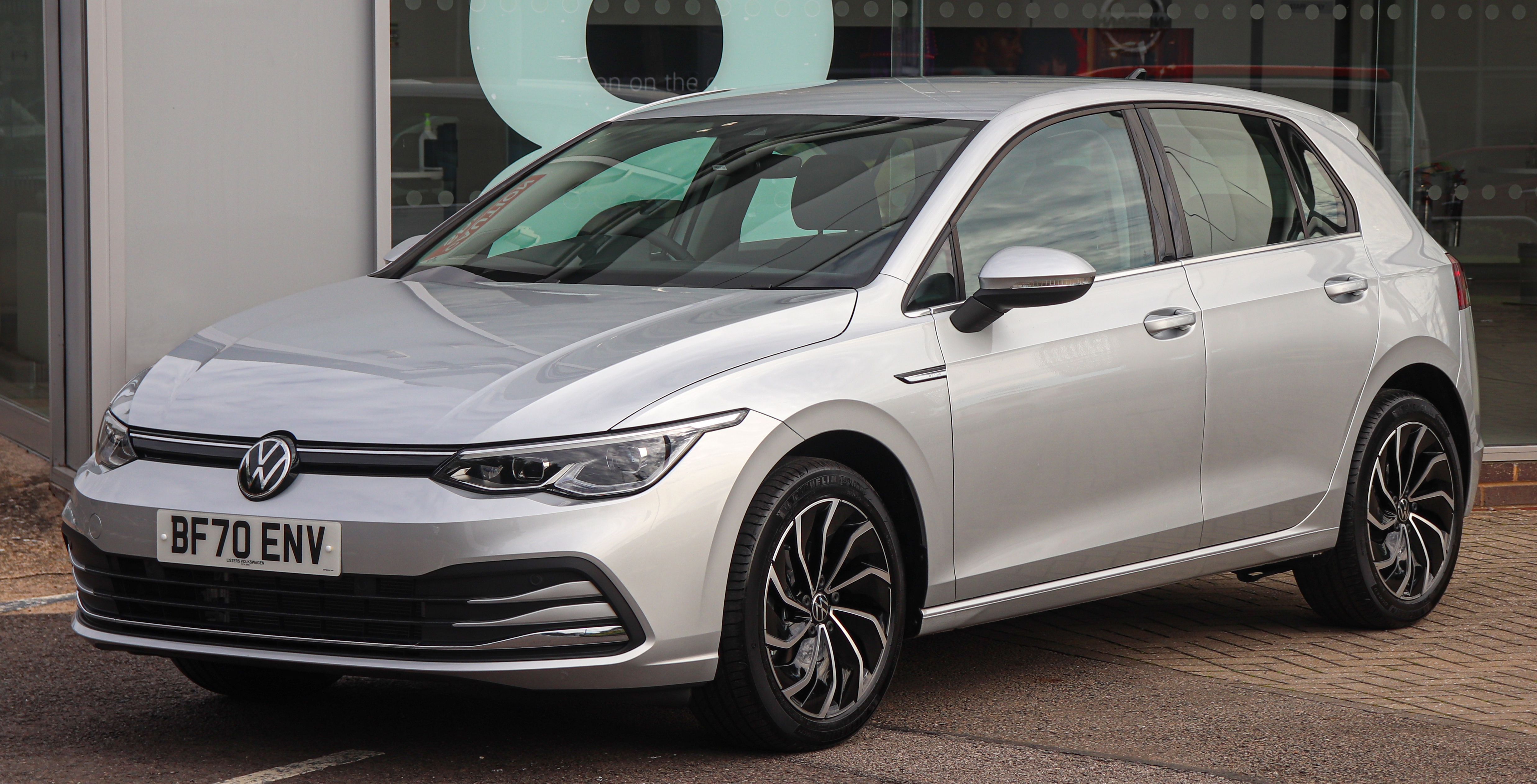
The Volkswagen Jetta is a common compact car from Volkswagen. Here they’re pointing out that Jettas used to be everywhere, but this particular one they’re seeing now looks special because it’s been lowered (sits closer to the ground).
“Lowered” means the car sits lower than stock. People usually do it to make the car look more aggressive, but it can reduce how easily you clear bumps and driveways.
The Volkswagen Passat is a bigger sedan than the Jetta. The hosts are using it as an example of a car that got so large that it became hard to figure out who it was meant for.
XDS is Volkswagen’s system that helps the car put power down better when you’re turning. It uses the front differential and the brakes to reduce wheel spin, so the car feels more stable.
The Volkswagen Golf is a small hatchback you can use for commuting and everyday errands. Different versions can include different performance and equipment levels, which is why people compare trims like the sportier ones mentioned in the podcast.
A limited-slip differential helps prevent one wheel from spinning freely. That can make the car pull better when traction is uneven, like on wet pavement or during hard acceleration.
Torque is the engine’s twisting force. More torque usually means the car can get moving more strongly, especially when you’re not already at high speed.
Traction control helps keep the tires from spinning when the road is slippery. If it senses wheel slip, it will reduce power and/or brake certain wheels so you can keep moving more smoothly.
Term
XTS intervened
The host is guessing that another car system helped manage traction on the slippery hill. They’re not certain, but it sounds like the car may have adjusted power or braking to keep things under control.
This is a way to measure fuel efficiency used in many countries. It tells you how many liters of fuel you burn to drive 100 kilometers—lower is better.
Hybrid fuel efficiency means a hybrid car can go farther on the same amount of fuel. It uses an electric motor along with the gas engine to reduce fuel use.
The Volkswagen ID. Buzz is an electric van, meaning it runs on a battery instead of gasoline. The podcast is talking about how many miles it can go and how that compares to what the company advertises.
Gearing is how the transmission ratios connect engine speed to road speed. Good gearing can let the engine spin slower at highway speeds, which helps save gas.
An eight-speed automatic is the car’s automatic gearbox with eight different gear ratios. It can help the engine run at a better speed for saving fuel, especially on the highway.
The EPA test track is a standardized driving test used to measure things like fuel economy. It’s meant to be consistent, not like a person flooring it all the time.
They mention the Honda Civic because it’s one of the main cars people compare against in this category. The point here is that it may cost more, which can push some shoppers toward other options.
Infotainment is the car’s main screen system for things like music, navigation, and phone features. They’re saying Volkswagen’s version feels less exciting or less modern than what other brands do.
This is the screen with your speed and other driving info behind the steering wheel. “10.25” means the display is about 10.25 inches across, and they’re saying it’s there but not especially impressive.
The Volkswagen Taos is a small Volkswagen crossover. The hosts are basically saying it looks very “Volkswagen,” and they’re using it to compare the look of the Jetta.
Multi-link rear suspension is a more complex rear suspension design. It helps the wheels stay positioned more accurately, which can make the car handle better and feel more controlled.
A sport-tuned suspension is set up to make the car handle more aggressively. It usually feels tighter and more responsive when you steer, especially in turns.
The Crosstrek is a small crossover SUV meant for daily driving and light rough-road use. The podcast is saying that in Canada, a certain engine is standard, and that it’s related to the same basic platform as another Subaru model.
This is a type of automatic transmission that can change gears quickly. It uses two clutches so it can be ready for the next gear, and it often lets you shift using paddles behind the steering wheel.
This means the car has upgraded brakes on the front and the back. Bigger brakes can help the car stop more strongly and keep braking performance from getting worse after repeated stops.
The Honda Civic Si is a sportier version of the Civic. In this segment, the key point is that it’s manual, which makes it feel different from the other cars being compared.
“Lobo” sounds like a nickname people use when talking about Ford trucks. In the podcast, it doesn’t clearly point to a single, official model name, so it’s likely being used informally.
Fuel economy is how far the car can go on a given amount of fuel. They’re talking about it in liters per 100 kilometers and saying they got that efficiency even during harder driving.
Eco mode is a setting that helps the car use less fuel. It usually makes the car respond more gently when you press the gas, so it feels a bit less “quick.”
The red line is the top safe engine speed. When you’re near it, the engine is revving very high, so it’s not something you’d want to do for a long time.
TDI is a type of Volkswagen diesel engine. The idea is that it injects fuel directly and uses a turbo, which can help it get better mileage than many other engines.
The Ford Explorer is a popular midsize SUV from Ford. It comes in different versions (trims), and the hosts are talking about which one they drove and how it compares.
They’re talking about how car makers sell “off-road” versions mainly through special trim packages. Sometimes those packages are more about looks than serious off-road capability.
The Ford F-150 is a large pickup truck used for hauling and everyday driving. The Tremor version is a special trim meant to handle rougher roads better than a standard F-150.
The Ford Escape is a small SUV for daily driving. The podcast is basically saying that it doesn’t have a certain off-road trim name that some other Ford models do.
The Ford Edge is a mid-size SUV meant for everyday driving with room for passengers and cargo. The podcast is saying it doesn’t have a certain off-road trim name that some other Ford models offer.
The Ford Bronco Sport is a small SUV meant to handle rougher roads better than a basic crossover. In the podcast, they’re pointing out that it doesn’t have the same kind of off-road “Tremor” trim naming you might see on other Ford vehicles.
The F-150 is a large pickup truck made by Ford. The podcast is talking about off-road trim options and saying the F-150 is the one that gets that specific off-road package.
The Ford Falcon is a Ford car/truck model name that exists in different versions depending on where and when it was sold. In the podcast, it seems to be connected to what kind of tires it uses for rougher driving.
Front tow hooks are strong metal loops on the front of the car. They’re there so you can attach a tow strap or rope if the vehicle needs to be pulled out.
A V6 engine has six cylinders arranged in two groups that make a V shape. “Three liter” is a measure of the engine size, which affects how it feels when you accelerate.
The Ford Expedition is a large SUV with room for passengers and cargo. Some versions use a smaller engine, and the podcast is questioning whether a four-cylinder is enough for what people expect from this size of SUV.
A naturally aspirated V6 is an engine with six cylinders arranged in a V shape, and it doesn’t use a turbo or supercharger to force air in. They’re saying they prefer that kind of engine feel for this SUV.
A three-row SUV has seats in three rows, so it can carry more people than a two-row SUV. Here they’re describing how the second and third rows are set up.
Captain’s chairs are separate seats in the middle row instead of one big bench. They usually make it easier to get to the back row and can feel more comfortable for the people sitting there.
The Renault Wind is a small car with a unique design. The podcast is referencing it in a way that suggests it’s fun to drive and has some special features related to how it operates.
BlueCruise is a system that can help drive the car on certain highways without you steering all the time. You still have to pay attention and be ready to take over.
“Hands-free” means the car can do some driving tasks for you, like steering, especially on highways. But it’s not fully automatic—you still have to watch the road and be ready to take over.
A lane change is the maneuver where the car moves from one lane to another, typically coordinated with turn-signal input and sensor checks. With advanced driver-assistance, the system may initiate or assist lane changes when it determines the move is available and safe.
GM Super Cruise is GM’s system for helping drive on certain highways. It can steer for you, but you still have to watch what’s going on and take over if needed.
BMW is the car brand being compared for how its driver-assistance works. The point is that BMW’s system can do something similar, but it may require different cues from the driver.
This means your GPS directions are currently active. The idea is that the car’s assist system can plan better when it knows your destination and upcoming turns.
Android Auto is a phone feature that shows and controls certain apps on your car’s screen. In this case, using it for navigation affects how the car’s driving-assist system acts.
These seats are designed to help you feel less stiff on long trips. Instead of relaxing massage, they move in a way that encourages your body to stay comfortable.
This is a feature that watches how long you’ve been driving and then reminds you to take a break. Sometimes it does it by moving the seat to get your attention.
An off-road driving mode changes how the vehicle behaves for dirt, gravel, mud, or trails. It often adjusts throttle mapping, traction control, and shift/gear logic to make wheel slip more manageable and improve control at low speeds.
Hill descent control helps you go downhill slowly and safely. It uses the brakes to keep the speed steady so you don’t have to modulate the pedal constantly.
Terrain management is a set of off-road settings the car uses to match the surface you’re driving on. It helps the vehicle adjust traction and control automatically.
The Subaru Outback is a crossover/wagon that’s designed to handle more than just smooth pavement. The point being made is that it’s already meant to be capable, so extra “off-road” trims may be redundant.
An appearance package is mostly about changing how the vehicle looks. In this case, the hosts are saying some trims are more style than real off-road upgrades.
A front air dam is a low piece on the front of the car meant to improve airflow. If it sits too low, it can scrape or limit how well the vehicle handles rough ground.
The Palisade XRT is a version of the Hyundai Palisade meant to look and feel more rugged. The hosts are using it to compare how these trims stack up for real-world muddy roads versus true off-roading.
A rear differential is a part that sends power to the back wheels. It also helps the wheels spin at different speeds when you turn, which matters for traction and control.
The Mazda CX-50 is a small SUV made for everyday driving, but it’s also designed to handle rougher roads better than a basic car. The podcast is pointing out that Mazda uses the CX-50 as its main “off-road” style option.
CVT means the car doesn’t use traditional gears. It can smoothly “shift” through many ratios, which can make driving feel smoother and sometimes helps with fuel economy.
The Land Rover Defender is an SUV designed to drive well on rough roads and trails. The Octa is a higher-end version meant to be even more capable and powerful than the regular models.
LIVE
Hello and welcome to the Unnamed Automotive Podcast.
My name is Sammy Hage Asad
and with me as always is my good friend
and fellow automotive journalist, Benjamin Hunting.
Say hi to the people, Ben.
Greetings, human listeners.
Greetings to everyone.
If this is the first time you're listening to our podcast,
thank you for trying something new.
I will reiterate, Ben and I are a pair
of automotive journalists, but you know what?
You know what's more important than that?
Oxygen?
Well, yeah.
But the fact a little bit lower down the list than oxygen
is the fact that we're very good friends.
Right, Ben?
I agree that friendship is lower on the list than oxygen.
You can find our work all over the internet.
I'm going to let Ben plug a couple of his publications
as well as an important thing that he's working on.
Go for it, Ben.
So we're in the last few days of the Kickstarter campaign
for my latest comic book, Dead Air,
which is about a world where one day out of the year
you can talk to the dead and it focuses around a group
of friends in a college radio station in the 90s
and their adult selves 15 years later
as they try to understand a tragedy that occurred
in their friend group and whether this detect technology
can help them make it right.
This is the third issue in the series,
but all three issues are available
at deadaircomic.com on the Kickstarter.
I know a lot of you have already supported
and thank you so much for that.
We are still at the time of this recording
only about 80% of our way to the goal.
Kickstarter is an all or nothing kind of deal.
So if you feel like reading a comic book
that I wrote about this, this is your chance to do it.
You can even get a digital copy,
which is really affordable.
It's about five bucks US or $7 Canadian.
Or you can get a print copy.
It's up to you, deadaircomic.com
to get all of that good stuff.
In addition to that, you can find Ben's work
in a couple of places,
but it seems like you don't want people to go there.
You want them to just go to Kickstarter.
I don't, I want people to just be themselves.
Oh yeah, you want people to be themselves,
but if they're them being themselves,
results in them checking out some of your content
or your work.
Don't say content.
I don't produce content.
I won't say content.
I'll stop. I gotta stop.
You gotta, it's like slapping yourself in the face
when you say content.
I know.
And you know how much I hate hitting myself in the face.
Like if you're a teacher and you go to work,
you don't say that you spent the day
producing content to educate children.
Like that's just not,
you're educating children.
You're teaching children.
And it's the same thing if you're a writer.
You're not producing content.
You're creating writing.
That's fair.
Yeah.
You can find my work.
You can find my content at autotrader.ca
and driving.ca as well as driving.ca's YouTube channel.
Ben, we've got some cards to talk about this week.
This week.
Did you hear that?
I did hear it.
We've got some cool cards to talk about this week.
Ben, you've got another Volkswagen.
It's been a little while.
We talked about the Taos last week.
Yeah.
I wanna, before we talk about the Volkswagen though,
I should wanna mention,
this week is Formula One week in Montreal,
which is the city closest to where I live,
like the large city closest to where I live.
And as a result, it's the time of year
where we're recording this on a Wednesday
and the festivities really start on a Thursday.
So keep in mind, this is 24 hours before things start.
This is the time of year where desperate PR people
who have either cancellations in their roster of journalists
who are supposed to attend an event
or who maybe didn't plan ahead
and are trying to struggle to find local
or local-ish people to show up at their events,
send out blanket emails about pretty much everything.
And it's funny because for one,
it shows that I was not the first thought
for whatever this event is.
Like they want me to talk to this driver
or meet an F1 steward or talk about watches
or whatever it is.
Sometimes it's very strange.
Sometimes it seems directly related to Formula One.
Like you're talking to FIA stewards.
And other times it's like,
here's a tertiary sponsor who wants to fill seats
at their launch party or whatever it is.
Anyway, either I wasn't the first choice
or like they expect me to be able to
within like 16 hours, clear my day,
show up in a different city
and magically have a client who's interested
in what they're providing.
This is a little bit of inside baseball.
I know this isn't interesting to most listeners,
but it's like a little bit behind the scenes
of somehow sometimes how automotive journalism works
where you get bombarded by PR
that's not really related to what you do.
Yeah, you get sent a whole lot of Hail Mary
from people about.
Yeah, it's like, so you cover cars.
Well, then obviously you would be interested in racing
and then beyond that, obviously you would be interested
in this tiny subset of a thing
that's tangentially related to racing.
And I do feel bad for people in PR
who are forced into these positions
where they're not able to plan like for whatever reason.
Maybe it was the last minute thing that was sprung on them
and then they have to somehow make it happen.
So we're in that season right now.
I'm getting like, I think I'm at three or four emails
in the last 24 hours that are related to this.
Well, I had a F1 thing get pulled out
from underneath my feet like last month.
It was so strange.
Yes, and he was supposed to come visit me.
Yeah, that was so brutal.
Because an organization wanted him to show up
in a different city and initially told them
that yeah, we'll get you there.
And then we're like, no, we can't get you there.
My first question was like,
are you capable of getting me there?
Because like airplane fuel costs apparently have gone up.
It's like a 600 kilometer distance.
It's not like one town over.
And this is a multi-billion dollar corporation.
Yeah, and they were like, yeah, we'll do it.
And then next week said, oh, you know what?
Yeah, we looked into it and we can't.
We can't do it, but still come and cover our thing
and spend a lot of money to get to where we're going.
So you can talk about this tangentially related racing thing.
The worst part though is I actually got coverage.
Like somebody said they'll take it and all this stuff.
And I could not believe that that happened to me.
It really is unfortunate.
And I know it sounds spoiled.
Like, oh, you guys expect to be transported here and there.
No, don't expect it.
But when you're invited somewhere.
But I asked.
I asked.
Yeah, when you're invited somewhere, you ask
and they're told, yes, we can get you to where this event is
happening because it's very far away from where you live.
And it's the most expensive week of like to be in Montreal.
Like, yeah.
So anyway, that rug pull was not fun.
So yeah, Sammy and I forever apart.
It seems that's not true.
We're going to do it.
We're going to get together.
Ben, we've got some cool cars to talk about this week.
We've got a Volkswagen, as I mentioned.
Hit me because there's only so few Volkswagen's in the Volkswagen.
Line up, which one of the five is it?
This is the rarest one.
Are you really?
Yeah, because it's not a crossover.
It's not an SUV and it's not a van.
It is, I believe, the only sedan that Volkswagen currently offers
in North America, RIP.
What was it called?
You know, the really big one, Ardeon, Ardeon, RIP, Ardeon,
which they sold one last year.
If you look at their sales sales report in US, someone bought a good looking car.
I see them every once in a while and I'm like, whoa, unicorn sighting.
I have no problem with them.
Oh, speaking of unicorn sightings, I saw two ELRs yesterday
within the space of an hour that there might be listeners
who have no clue what an ELR is.
ELR was the Cadillac version of the Volt.
It was very expensive.
First generation Volt.
First generation.
There's only one generation, isn't there?
Are there two generations?
Kind of a second gen.
OK, so when it came out and this means this vehicle is like 12 years old
at this point, something like that.
When it came out, it cost $80,000, which was a huge amount of money
to pay for what was essentially a Volt with two left doors.
Yeah. Coupe form.
It had a tiny bit more power.
I really liked it.
It was a very good car.
It was in no way worth that amount of money.
And the market agreed with me.
No one bought them.
It's, I think, the rarest modern Cadillac, except for the Blackwing,
the CT6 Blackwing, the CT6 Blackwing.
Yes, with the actual Blackwing engine, which is the only application
for that bespoke motor.
So these are the two.
So anyway, the first one I saw, it sits in a lot outside of a dealership
where I pick up cars from.
And I thought it was a customer car at first, but it's been there a while now
and the tires are sagging and maybe something happened.
So that one doesn't really count, except that on the way home
from that dealership, I passed another ELR, which never happens.
You never see them out on the road.
Like in Canada, I think they might have sold like 800 or something,
which is crazy.
But that is a unicorn.
So the unicorn I'm driving, less unicorn-ish, but still pretty rare.
Volkswagen Jetta.
Now, Sammy, there was a time when Jettas were everywhere.
Everyone had a Jetta in like the 2000s, I think.
Yeah, they were popular car.
And then Volkswagen or 2000s, both of those.
I very close friend of mine grew up driving Jettas.
I spent a lot of time in Jettas.
There's someone nearby to where I live now who has a 90s Jetta
in that minty green color.
You know what I'm talking about?
Minty green.
Yeah, it's like a mint green that was on a lot of Jettas.
It looks really nice.
This one's a little bit lowered.
It's tastefully done.
Anyway, then Volkswagen was like, what if Jetta but bigger?
And like we got larger and larger versions of the car.
This kind of happened with the Passat too.
The Passat got extremely large and eventually.
Eventually Volkswagen ran out of customers for the Passat.
They didn't really know who was buying it.
The Jetta kind of feels a weird, a weird position
where it's technically a compact car still, like according to EPA volume.
But it does feel bigger than a lot of other compacts out there.
That's that's what we're talking about.
Like I was in an Elantra not too long ago
and the Jetta feels like a larger car in a good way or a bad way.
Because sometimes a big car can be like a little bit
like Wallowy, a little bit more unresponsive, a little bit heavier.
I mean, that's kind of the Jetta thing anyway, right?
Like it's OK to get to that.
But it just feels like a family car
and it's a little surprising that it's compact.
I had the Jetta Sport, which is its own trim in the United States.
But in Canada, it's actually a options package on the comfort line,
which is like mid trim.
And before you get too excited, I was getting very excited.
The sport only really means one thing.
And that is XDS differential in the front.
Everything else is cosmetic.
You get different wheels, you get some blacked out trim.
In Canada, in the states, the wheels are different.
But in general, it's there's not a lot to the package.
It's it's pretty basic.
Is XDS related to the sort of like equipment
you would find on a GLI or a GTI?
Yes, it's a break based electronic limited slip system
OK, that is intended to improve cornering
by lightly breaking, I guess, the inside wheel
by ruining your brake pads. Perfect.
Yeah, also like I'm kidding.
It's supposed to improve traction off the line.
But the joke about that is this has a one and a half liter
four cylinder engine that produces 100 and 58 horsepower
and 100 and 84 pound feet of torque.
Oh, you really need that traction off the line every little bit.
There's really no situation where you're going to need a limited slip differential.
I found two.
One is if you have the wheel cranked all the way to one side
and you slam on the gas, you might get some wheel spin.
The other was
what an unhinged maneuver in a in a compact car.
Yeah, that's I call that the parking garage express.
And then the the other way was I was testing out the transmission
in sport mode, which lets you shift it.
And I was going up a hill and was a bit slick.
The road was a little bit damp.
And in first gear, I had the traction control light flash at me,
but I didn't have any wheel spin.
And I'm wondering if that's because the XTS intervened.
Impossible to know.
No, we'll never we'll never find out.
It doesn't really matter, though, because last week I had a house
that had the same motor in that in that application.
I thought it was fine in the Jetta.
It's also fine, but it's no way sporty.
Like there is nothing sporty about this car.
In even when I was doing those aggressive uphill twisty runs,
it held its own, but it's not a car that engages you.
It's not a car that's like, hey, we should go drive it, you know,
when it's sitting in your driveway.
It's just kind of like, hey, I'm really comfortable
and surprisingly fuel efficient.
Like, do you want to hear what I got for fuel mileage in this car, Sammy?
Yeah, hit me on the highway.
I got four point eight liters per 100 kilometers.
OK, yo, that's very good.
Do you know what that is in miles per gallon?
Like 60. It's 50.
It's 50 miles per gallon.
And then I didn't really believe it.
So I tried. I tried like pushing it.
That's reasonable, though.
Like that's a totally reasonable response to a gas powered car
achieving like hybrid fuel efficiency.
Yeah. And I pushed it as hard as I could.
You know, I was doing all my testing and whatnot.
I my average overall for the whole week
was six liters per 100 kilometers.
That's very nice.
And on the highway, on the return trip to Montreal,
I was able to match like 55 point one.
So it wasn't like a fluke thing that happened.
And what's crazy is like Volkswagen, I think,
advertises 36 or something like that miles per gallon.
Like combined 36 combined and you're easily getting 40.
I'm easily getting 50, dude.
Well, yeah, highway.
That's impressive.
And so is that what do you think that is gearing or?
I think it's two things.
Gearing, it has an eight speed automatic.
Yeah. And they usually go have these extra long,
like 878678 years.
No. The other thing, perhaps,
I was driving 100 kilometers an hour, which is 60 miles an hour
because gas is really expensive right now.
Yeah. And one of the best ways to improve your fuel efficiency
is just drive the speed limit.
Like normally I drive 120, which is about 70.
So I'm dropping 20 percent.
I'm in the limit and I'm able to get.
But in theory, like this is also how Volkswagen tests its cars, right?
They're not, they don't have like their foot to the floor at the EPA test track.
It's not how it works.
So I'm super impressed because the other thing about the Volkswagen,
even though it doesn't have enough power to really feel sporty,
as the name suggests, it does have enough power to do everything else.
Like I don't feel like it's a penalty box.
I didn't feel like I had not enough power to do what I needed to do in the car.
It never felt too weak for anything.
So to have an engine that feels all around pretty good
and gets 50 miles per gallon on the highway, that's crazy.
And it's also a very to a wide way of thinking large car for a compact.
Like this is a useful vehicle.
OK, OK, keep going.
You're you're kind of like turning my mind on this because to me,
the jet is a bit of a sleepy car that it's very sleepy that just doesn't have.
It's just like I really struggle to I struggled until you just told me this
to get into the mindset of a buyer who would put this above any other car in its
class, especially the Korean cars or the Honda Civic.
Civic is a little bit more expensive.
So I understand why that's immediately like move down the short list of like
I think if you want 50 miles per gallon, you're going to have to pay more for the hybrid, right?
So yeah, now I'm listening to you.
But of course, the thing about this jet is that it doesn't it's not advertised
as a 50 mile per gallon car.
It just you people will have to pay attention to these kinds of reports
that you're providing, but otherwise, like styling internal interior
and exterior styling always seemed sleepy.
Performance always seemed sleepy.
It is not. It's not an interesting car to look at.
It has the same problem the Taos does inside where like the technology
does feel and look look and feel dated.
It all works.
It has a small infotainment screen.
It has my vehicle because I had the sport was the sport package.
It comes with the 10.25 digital to 10.25 inch digital cockpit cluster.
It's not that impressive. It's just there.
I mean, it's fine.
It doesn't really dazzle you in the way that pretty much every other company does these days.
I think Volkswagen has taken an old school approach to infotainment.
I don't have a problem with that necessarily, but other buyers might
and I recognize why they would inside to like it's it's monochromatic.
It's just here's your car, you know, like, yeah, again, I don't have a problem.
What we said about the Taos was that it's it's like really stereotypically Volkswagen.
Like it looks like a Volkswagen as a Volkswagen has looked this way
for the past like 15 years.
Yeah. And the Jetta kind of looks like that just like embiggened a little bit.
That's not good. That's not.
I mean, I don't know if that's good or bad.
I think it's not good because it's pretty cheap in Canada.
It's 324 for a comfort line.
And then if you want sport, the sport package, you're looking at a sixteen
hundred dollar upcharge, you're up to like 34000 dollars.
Topped out, essentially.
In the States, you are looking at the sport at its own trim.
It's 26000
That's I mean, that's I'm liking this because it means that it's a lower
upfront cost than many other compacts, and it's got lower running cost
because of the fuel economy.
Yeah. So I think that this is a good commuter car.
Like, honestly, especially for longer distances, because you said
you can get such good fuel economy on the highway.
I could see people making an argument to have this on a test drive list
if you need a car for the daily drive.
And maybe, like you said, you have a somewhat extended daily drive.
But is it comfortable?
Like the seats are comfy.
Yeah, it's fine. No problems.
No, but like you don't want to be stuck in a no problems.
OK. So the other thing to think about, though,
there's another perspective to look at the jet of sport.
And that is the fact that when you when you have this kind of sport package,
you're opening yourself up to competition from other compact cars
in a similar spot on the market.
And what I mean by that is this Jetta is an almost sporty compact
in the same way that that like sorry, not in the same way,
but it's almost sporty in the sense that above it is the GLI,
which is the truly performance oriented version of the Jetta,
which has a more sophisticated multi-link rear suspension.
It has a more powerful engine, I think 70 or 75 more horsepower
and bigger brakes, better stuff, all that kind of thing.
The Jetta sport is none of that except for this XDS pretty much.
But that doesn't mean it seems a little a little less a little suspect.
But there are other car companies that offer similar vehicles.
I'm going to go through them. Are you ready? Yeah.
Subaru and Preza RS.
So this is a vehicle that is not again, it's not a WRX
and it doesn't really offer a ton of performance.
But what it does do is it gives you 180 horsepower
from a 2.5 liter four cylinder engine versus the two liter,
which I think is the same horsepower as the Jetta sport
that's in the base in Preza and you get a sport tuned suspension.
So that's not a lot, but that is a little bit of something.
So that's an almost sporty car.
I will say that it is like in actuality, it's not a very sporty car.
And no, it's the same.
The other thing to think about with the RS is that engine is now
standard in Canada in the cross track, which is based on the Preza.
So moving on, there's the Hyundai Alantra N line,
which is not as powerful as the actual Alantra N,
but it does have a 201 horsepower turbo,
100 and 95 pound feet of torque, multi link rear suspension,
a little bit more styling than the Jetta sport does.
And a seven speed dual clutch automatic that has paddle shifters
instead of forcing you to shift with the shifter at the center.
I'd say it pushes past the the Jetta sport in terms of performance.
It's not really that engaging to drive, but it is quicker.
It's a thousand dollars more in Canada.
So that's a consideration.
It won't get the fuel mileage that Jetta does, but if you really care about sport,
but you don't want to pay for an Alantra N, this is your option.
I got one more on this list and that's the Kia K4 GT line turbo.
And in the States, there's also a GT line that doesn't have the turbo engine,
but in Canada, you can only get it with the turbo.
It's the same motor as the Alantra, but it's tuned to like 190 instead of 201,
which is a little weird, weird.
It has a conventional eight speed automatic, so same as the Jetta.
So you're not getting that DCT, but it has the multi link rear suspension
and it has bigger brakes at all four corners.
It's a little bit more expensive in the sense that it's 35000
500 for the hatchback version and 35000 for the sedan.
It'll give you roughly the same performance profile as the N line.
I haven't driven it yet.
I haven't driven any of the K fours.
Sammy, have you? No, not yet.
So that's my roundup.
So that's that's pretty much what the jet is going up against.
I thought about including the Civic SI in this list,
but the SI truly does make more of an effort than all three of these cars.
Manual only. So I mean, it changes that changes things quite a bit too.
Yeah. So you can't really have it in there. No.
And there's not many other compact cars to begin with.
So this is pretty much where you're at. Yeah.
I guess you could put a Maverick Lobo in here.
That's what Ford would like us to do. Yeah.
I'm not going to do it. No, I don't like listening to it to them when they say that.
Can I tell you more?
Can I can I ask you more about just how?
Just how everything this is like it is such a strange discussion
to have to justify people that the Jetta, which used to be so popular and and like
and I think well loved by like everybody in the compact car community
now is we're asking people to like we feel like we're justifying it in a way
that it is actually still in like it's still competitive in its segment.
I just think people have kind of forgotten about it. Yeah.
And that, like I said, it makes sense because there has been a lot of improved competition
in this class, like there really has been.
And you know, we were talking before the show,
we were trying to figure out when the last time was we'd driven a base Jetta.
So we've driven GLIs over the last couple of years.
But the last time we were in a base Jetta was 2019.
A long time ago.
Because the fleet managers, not but the Volkswagen fleet people,
they're really pushing the GLI.
I think that that's, you know, maybe a better profit center,
maybe a more competitive car for them.
Maybe they don't need to advertise the base Jetta because people are just buying it
based on budget concerns.
It's it's it's in the realm of cars that people purchase because of price,
because they're affordable.
But I think that like the Jetta has more than that going for it.
I do think that this fuel economy is incredible.
And I didn't do anything special. I really didn't.
There isn't like an eco mode that like is super slow.
There is an eco mode.
I didn't normally use that. I was more mostly in normal mode.
OK. So and that that six liters per 100 kilometers
included like my high speed testing uphill and downhill country road runs
where I was in sport mode and sport everything.
So like, you know, at red line.
Pretty. Anything else you want to talk about when it comes to this?
This Jetta, am I am I rushing you?
No, just let's move on.
You're clearly you're clearly done with it.
No, I'm not. But I do think let's be clear.
Volkswagen has a really weird product lineup
where it feels like some of their vehicles are not top of the class
or like a class leading in any particular way.
And they often get criticized for their infotainment systems
immediately. They're better than they were.
Yeah. So what I'm trying to say is like,
I think they're they're improving in a number of ways
that people will not necessarily see or hear about.
Yeah. So for example, the the infotainment system is slightly improved.
This fuel efficiency thing, this was I would never have imagined
with the exception of a of the TDI diesel Jettas,
I would never have put the Jetta as a fuel efficiency kind of leader,
especially compared to some of the other cars in its class.
Yeah, all of those ones have practically had to resort to a hybrid powertrain
or to achieve that kind of fuel efficiency.
So that really shows some sort of
like improved execution from the brand,
but they've been keeping it kind of quiet or just it hasn't been reported.
Jetta is just the best kept secret at the Volkswagen dealership.
Well, I don't know. Do you think like, truly, do you think that?
I think it's definitely a secret.
It's a joke, like because you drove the towels and you said it was pretty good.
Yeah. I've driven the Atlas and I said, actually, it wasn't that bad.
So. But there's a new Atlas coming. So who knows?
That's true. Yeah.
I drove it as soon as they write on the day they announced the new one.
So anyways, this week, I've got a cool car that I think is
something we haven't talked about in a long time.
It's the theme of today's show is the Ford Explorer.
I think we talked about it last year.
I think I drove the the ST, which is driving explorers.
Me? Yeah. Up to cottage country.
I think I remember correctly.
Yeah. I am not driving the ST this time around.
I'm driving a more mid-ranged version of the of the
Explorer. It's called the Tremor.
Wait. And Tremor is mid-range.
Yeah. In the US.
What is what is Timberline then?
There is no Timberline. Timberline is dead now.
Wow. OK.
I will I wanted to talk to you about this because, you know,
we've been talking so much over the past few years about
like faux, like fake off-road like off-road trims have become a really big
selling like a marketing stuff, right?
Yeah, it's it's like 90 percent of vehicles.
I can hear you typing.
Are you typing about off-road stuff?
Yeah, I'm trying to figure out how off-road is off-road.
And I wanted to ask you specifically.
This is now called the Tremor.
But before that, they had something called the Timberline.
And the Timberline was, as I recall, very modestly equipped for off-road.
Like I think it was perhaps mostly an appearance package.
Yeah.
Like it had a different plastic cladding and it had maybe like a plastic skid plate.
I don't know where I'm pulling that from, but it feels feels like it could have that.
I don't have the information.
I was trying to find the most information I can over the of the Timberline.
But I just think it's so funny that they can just like remember Timberline.
Well, don't we got a new one.
And it's even funnier that Tremor is a name is like a trim name
that's now transcending just the it goes across the line.
You can get a and I think you can get an F-150 Tremor.
You can get a am I mistaken?
You can get a Maverick Tremor.
Yeah, you can get tremors of almost every SUV or pickup.
I don't think there was ever an Edge Tremor or an Escape Tremor.
And there's no Bronco Sport Tremor.
No, this feels like a sub level of like any vehicle that has a Raptor
doesn't get a tremor except for F-150.
So this is this is a version of the truck that is again a midline.
There are two there are two models in the Ford Explorer lineup
that are more expensive and they have different kind of is there a King Ranch?
No, it's Platinum and then ST.
So Platinum is the more luxury oriented model.
And then ST is the more performance oriented model.
And Tremor is is more catered towards being off road ready.
How off road ready to like like what does what do you expect from off road ready
that is effective, right?
So we've got all terrain.
I've got Falcon. Are they Falcon?
No, duelers. What is duelers?
Oof, I used to know the answer to that.
It's not Cooper.
Is it Bridgestone?
OK, I think they're Bridgestones.
And it's got these all all terrain tires.
It's got some they say it's it's front and rear skid plates
or deflector plates.
It's the official turn on your plates at the Ford.
Do I have to energize those before battle?
Yeah, of course, you get to choose.
Wouldn't that be great?
Like direct all energy towards the front deflector plate
as you approach a massive rock.
I would definitely use that while I was parking.
I would have like a threatening glow on my deflector plate.
Speaking of a threatening glow, there is some there are some interesting
off road lights on this truck in embedded into the.
Now you're going to love this because embedded into the grill.
Are these why?
Because I said, yeah, I'm into it.
Embedded into the grill are these two like LED strips.
OK, what they remind anybody anybody who sees this grill of
they remind them of the police because you know that the Ford Explorer
is also a police like commonly found on a police fleet.
And those are outfitted with these LED with with LED lights
in the grill and on the hood on the roof.
You're saying that you were unable to drive faster than the speed limit
because no one would speed in front of you when you had the vehicle.
And then in addition to that, it has these tremor logos inside
on the headrests and there are these really weird orange accents.
There there's front tow hooks that are painted orange.
There are orange accents on the 18 inch wheels.
And there's also that orange accent on that light strip in the grill.
Inside is typical Explorer fair.
My model has a three liter V six engine, which is pretty nice.
It has 400 horsepower and 415 pound feet of torque.
And it also has a limited slip rear axle.
It's turbo, right? Yeah, OK.
And this limited slip
towards an act limited slip diff is exclusive to the tremor.
I haven't had any opportunity to use it just yet.
And it also says that it has an increased rise, ride height and off road
tune suspension. I don't think it's like I don't think it's an I don't think
the ride height increases a byproduct of the.
Of the suspension, to me, it feels like it's probably a tire's thing.
Just doler, doler action.
Yeah, do doolers being doolers.
I really hope they're doolers now that I think about them.
Do you remember Fraggle Rock?
Yeah, do I remember like I don't know it.
The doosers.
The doosers.
So the doosers were these little construction dudes and they would build
stuff and their Fraggles would eat the stuff that they built.
OK, you don't remember that.
I don't remember that now. OK, although you are like.
I think I didn't remember it.
And now you've triggered something and my brain my brain is going into like
overtime and like picturing this doolers.
Maybe doosers. So.
Um, among the things that I needed to mention here is that
you can get a two point.
I think you can get a two point.
Let me make sure I think you can get one of the four cylinder engines of the tremor.
But my model had the six cylinder.
How do you feel about that?
I don't want a four cylinder expedition.
I mean, it's four. Yeah.
Why? I just don't.
I think it's too big a vehicle for that level of.
I mean, look at the Honda pilot, you can't get a four cylinder version of that.
Basically, what I'm saying is I want a three and a half liter naturally aspirated V6.
That's good. I like that.
What else do I want to talk to you about with this?
It's OK if you have no more thoughts about the tremor.
No, I have plenty.
Hold on one second.
Give me a minute.
You've done a good nine minutes on the tremor.
Don't be intimidated by the 24 minutes on the jet.
Sorry, I'm just I'm just trying to organize my thoughts.
And I don't do a very good job of that to be clear.
This is a three row SUV.
It's got buckets in the second row or captain's chairs in the second row
and a bench in the third.
Is there enough room between the buckets for your child to throw a shoe
all the way to the front of the truck?
Absolutely, he can he can wind up so nicely.
Except for I start taking off his shoes.
Have I not mentioned this?
You have. But I, you know, sometimes you're tired and you forget.
I mean, yeah, well, especially when I know that his shoes are clean
because he's in he's in a rear facing seat.
And if his shoes are dirty, they'll just he'll just put his
footprints all over the seat back. Right. Of course, it's amusing.
It's hilarious. Yes.
But so I start taking off his shoes and I've been I've been hit less
with flying shoes lately.
He likes it.
I mean, he he knows my favorite thing is he's learning the alphabet
and he saw the word tremor on the seat on the headrest.
And he's like, look, Daddy, and oh, and I'm like, yeah, man. Nice.
Oh, no, no, he said are because of his name.
And he said, look, another one are and he went with that.
And I love that.
So if you're trying to teach your children some words or some letters,
tremor, tremor works really good.
There's a lot of cars have cars have letters, especially
finally, I understood why automakers.
What the effective part of putting, you know, trim levels in headrest
stitched into headrests.
Yeah, it's not for the eyes in the back of your head.
It's for remembering the letters that are in the alphabet.
Other things that I want to talk about this car is equipped with blue
cruise, which is a hands free driving feature.
I was freaked out by blue.
I like I usually like these hands free driving features, because a lot
of my drive home is on the highway.
And I just set this and and was was letting it do its thing.
And then suddenly I heard the signal go and the car changing lanes.
And I got freaked the heck out.
That was the weirdest thing I've ever experienced.
I did not like I thought it like it stopped working.
I thought something was wrong with the car, but it automatically changes
lanes without any input from me, which is the only vehicle you've driven
that does this. No, other cars that I have driven.
You could touch the signals and it would do it or nudge the signals
and it will do it.
Both is the first one that I've ever done it automatically.
Well, GM Supercruise automatically does it.
I have never had it do it automatically.
Yeah, it doesn't ask or it said a lane change is available.
No, it definitely does it.
And BMW, you can look in the mirror and it will do it.
I thought again, I think it asks for something along those lines.
I've never had it done automatically.
No, no input from me really weirded me out.
Then I became curious if it was the checking the mirror thing that that triggers it.
But no, it's not.
It just doesn't whenever it feels like it.
And even when I had it, it did choose a few
inopportune times to do it, as in I was approaching an exit
and I wanted to stay in the right most lane so that I can exit the highway.
And then it was like, let's just pass the snow, the slow poke and
and figure it out later.
And I was like, no, please don't do that.
So in Supercruise, if you have navigation running,
it will know where you're going and it will not do that.
Yeah, so like I had my head navigation.
Mine had navigation running, but I was using Android Auto, not.
So was so was I.
So I'm able to communicate with Android Auto for navigation information.
OK, and I've had situations where instead of passing slower traffic
because it knew I had an exit coming up, it kept the car in the exit lane.
Again, one of the reasons why Supercruise is superior to BlueCruise,
BlueCruise is a system I don't really trust.
Yeah, you've had really much worse experiences.
That was just the weirdest thing that I've ever seen.
And again, maybe if I had been prepared for it,
because I have not had this function, this thing happen to me in the past.
Turn it off if you don't like it.
Yeah, it's not a requirement for these systems.
The other thing I want to point out, it had massage seats, which are
I mean, let's be clear, they're not massage seats.
They're kind of like anti fatigue seats more than anything else.
They kind of just like move your body in uncomfortable ways
and to make sure you're you don't like stiffen up too much.
Now, do they activate on their own like Hyundai does?
No, no, I have to turn them on manually.
So there's some cars that have this system
where they detect that you've been driving for a certain amount of time.
And then they're like time for a body break, pretty much.
And they start like it's called like rejuvenation or something.
And it's such a running a massage pattern.
It can be that can be to me is more surprising than the lane change.
I think the lane change.
I mean, then again, you're right.
It is interesting to be like poked and prodded
on unexpectedly in your in your car.
Yeah, it's just weird because like also if you've been in the car for a long time,
you're already like kind of hypnotized by the road.
Yes, that's right. It feels a little little off-putting.
The important thing to talk about with this is whether or not
it is a true off-road vehicle.
I don't think this is something that will replace a more dedicated off-road vehicle
like, let's say a forerunner or does it have low range, four wheel drive?
You didn't mention that.
It has four wheel drive.
Does it have low range, four wheel drive?
Like I assume it has like an off-road driving mode, but it has an off-road
driving mode, a hill descent control and a couple of like these terrain,
you know, this terrain management stuff.
But none of them, none of that is a low range.
All right, then. So how do you feel about that now?
I mean, it only kind of drives home your point.
But what's surprising to me about that is I think that other tremor vehicles do have,
I think the, don't quote me, but I think the Maverick has a low range gearing for the tremor.
So I'm a little surprised.
To me, that sounds like more of a Timberland kind of thing to not have.
Timberland? Timberline.
Timberline. Yeah, that too.
And this is the problem, right?
Like, and it just, it feels so weird that like they introduced,
imagine Subaru after naming all of its off-road versions of its car.
We already gave Subaru a hard time by saying like the wilderness trims are not totally necessary
because like the whole purpose of an outback is to be capable in certain road, in certain off-road
conditions. And then they're like, but you can go a little bit further with this.
And imagine- You get stuck farther away from home.
That's right. That's the joke. I love it.
But imagine like now that like wilderness has become or a household name.
They're just like, oh, we're going to get rid of wilderness and make it like super wilderness.
And you know what I mean? Give it a new name that like goes, like does away with the improvements
that the Timberline provided or whatever, but still did the same thing. Okay. That's the problem.
The wilderness felt like, I mean, the Timberline felt like a, like an appearance package with some,
like that's it, right? Yeah. It's the Jetta sport of off-roading.
And this, they put a little bit more effort in, but it's still, you know, it feels like a little bit.
I would just recommend somebody spend the extra, I don't know, $2,000 on the Platinum, right?
And get a nice vehicle rather than one that is catered to a road condition that
it's not super well suited for. Yeah. I don't think anyone's doing serious off-roading in an
Explorer. I think it's like an occasional thing. Yeah. And anything that they would occasionally do,
I think perhaps a Platinum or an ST could also, well, maybe not the ST, because I think it has
a lower, like maybe like a front air dam or something like that. Yeah. But it might be tire
dependent too. Like the tires you're getting with the Tremor are probably very helpful. But again,
like I do think that if you're in an Explorer, the situations where you're off-roading are like,
the road is washed out on the way to my cabin. Exactly. A gravel road or a mud road or something.
Yeah. It's very muddy. It's springtime. I got to get through it. And that's where it proves it's
worth. I don't think people are rock climbing with this vehicle. I think it's just too big.
But like a gravel road, a regular Explorer, no matter what trim can do it, right?
No, no. I don't mean a gravel road. I mean a washed out road where like you end up, I don't
know if you've ever been to a cabin in the springtime, but like the roads themselves because
of the thaw can become impassable because they're just so muddy and soupy. But like,
that's the kind of quote unquote off-roading I think an Explorer is going to be doing around
these days. And so the question is, how did you compare this to the other like fake off-road?
Like AT4 terrain and that kind of thing, or not terrain, but Acadia. Yeah. Acadia. I think there's
XRT versions of the Palisade. XRT? Yeah, but I feel like that's
an X-line and X-pro versions of the of the Telluride, right? That's even farther away from
what the what the tremors quote unquote, I keep saying that capable of. Yeah. I feel like there
they are facsimiles of what the Explorer is already a facsimile of. Those usually are just tires,
like an appearance, right? This one at least has a limit set, rear differential, rear differential.
So it's got something. It's just so, I need to figure out what, I think we all have to like
take a look at ourselves and be like, what happened that made off-road trims such a stunt?
Like, it's just styling. I mean, it's okay if you want to buy this Explorer because you like how
it looks better than the other spoilers. I mean, exactly. I'm okay with that. You know,
and I think that a lot of people, they like the idea of driving a vehicle that looks rugged,
and I think a lot of car companies have leaned into that very heavily. Every automaker has one.
Yeah. Who doesn't have an off-road trim? Mazda? Mazda? No, the CX-50 is their off-road trim.
That's wild. Nissan has Rock Creek. I don't even know what Rock Creek is. I don't know what
Rock Creek is. It's never been adequately explained to me. I mean, they have Pro 4x, right?
So it's like... I like that. I like Rock Creek. Oh, yeah, they do have Pro 4x,
but I like Rock Creek because it makes me think of the terrain that this vehicle should be capable
of. Rock Creek makes me think of the song Rock Creek Park, which I think is about New York City.
Well, that's... From the 70s. So like, I don't have the same associations that you do.
I love it.
Anyways, anything else you want? No, I don't have anything else to say about the Explorer,
unless you do. I want to say overall, though, like, I actually really enjoy the driving dynamics of
the Explorer. It's fuel mileage. Not superbly good. It's better than my outback at like,
so 12 meters. Better than your outback? Yeah, 12. My outback is awful on gas.
What does your outback get? I get easily 13, but I'm doing a lot of city...
13 liters per 100 kilometers, which is how much? Let me take a look at that.
About 20 to 21 miles per gallon in this tremor, and I get worse in my outback.
Our outback with a 3.6-liter six-cylinder engine gets better than that.
For sure. Then your outback. For sure. That doesn't make any sense.
You have the CVT? Yes.
I have the Turbo 4, but I'm telling you again, 90% in the city.
I'm awestruck. I don't even know what to say.
Yeah, it's awful. It really is the worst part of this truck.
Well, speaking of worst parts of trucks, if you want to tell us about the worst part of your
truck or car or your life or the best part of your life, which was maybe better to talk about,
how can people reach out and do that, Sammy?
They can head on over to our website, unnamedonmotivepodcast.com.
There's a contact form there. You just fill it out and it lands right in our inbox. Additionally,
you can reach out to us on social media. Both Ben and I are pretty active and responsive and
engageable on Instagram. You can find Ben at Hunting Benjamin and me. I'm at Sammy underscore
laughing. While you're over at our website, though, you can check out all of our previous
episodes. You can subscribe to our podcast. We're really approaching the 500-episode mark.
I think we're getting closer. Yeah, I think so. I think this is close to 450 now.
Really? I thought it would be even more than that. Or maybe I'm counting bonus episodes in
the wrong way. Yeah, you're probably right. Additionally, if you don't want to go through
all that rigmarole and you just want to send us an email, you can do that. It's Benjamin
at BenjaminHunting.com. Ben, what are we talking about next week?
I'm going to be talking about the Buick Encore GX, which I have not driven in a very long time.
I am driving yet another SUV. This time, it is the Land Rover Defender Octa in all capitals.
All right. Thank you for listening, everybody. Rip my fuel mileage.
Yeah. Thanks, everyone. Bye.
About this episode
A quick detour into the hosts’ “content” debate and a Montreal Formula One timing note sets the stage for two vehicle spotlights. The 2026 Volkswagen Jetta Sport gets framed as a surprisingly efficient commuter, with XDS front differential behavior, real-world MPG, and a 10.25-inch digital cockpit. Then the 2026 Ford Explorer Tremor shifts to off-road branding reality—skid plates, all-terrain tires, limited-slip hardware, and BlueCruise hands-free lane-change moments—plus a look at how these trims actually get used.
Has the Unnamed Automotive Podcast really never reviewed a Volkswagen Jetta? That's situation has been resolved, and Benjamin has a full and thorough test of the German compact car, as Sami asks him tons of questions. What makes the Jetta a worthy pick over other small sedans? And how does it compare to hybrid options out there? Benjamin has plenty answers as we review this sedan for the first time ever.
Then Sami checks out the 2026 Ford Explorer Tremor, an off road variant of the three-row crossover that replaces the old Timberline trim. Packed with a 3.0L turbocharged engine, the Ford Explorer has plenty of cool features and equipment, but Sami was really caught off guard by the hands-free driving tech. Thanks for listening!