Episode 450: 2026 Volkswagen Jetta Sport, 2026 Ford Explorer Tremor
About this episode
A quick detour into the hosts’ “content” debate and a Montreal Formula One timing note sets the stage for two vehicle spotlights. The 2026 Volkswagen Jetta Sport gets framed as a surprisingly efficient commuter, with XDS front differential behavior, real-world MPG, and a 10.25-inch digital cockpit. Then the 2026 Ford Explorer Tremor shifts to off-road branding reality—skid plates, all-terrain tires, limited-slip hardware, and BlueCruise hands-free lane-change moments—plus a look at how these trims actually get used.
Has the Unnamed Automotive Podcast really never reviewed a Volkswagen Jetta? That's situation has been resolved, and Benjamin has a full and thorough test of the German compact car, as Sami asks him tons of questions. What makes the Jetta a worthy pick over other small sedans? And how does it compare to hybrid options out there? Benjamin has plenty answers as we review this sedan for the first time ever.
Then Sami checks out the 2026 Ford Explorer Tremor, an off road variant of the three-row crossover that replaces the old Timberline trim. Packed with a 3.0L turbocharged engine, the Ford Explorer has plenty of cool features and equipment, but Sami was really caught off guard by the hands-free driving tech. Thanks for listening!

Cadillac ELR
"ELR was the Cadillac version of the Volt. It was very expensive."
The Cadillac ELR was a Cadillac version of the Chevrolet Volt. It used a plug-in hybrid system, but it was sold as a pricey luxury coupe.
The Cadillac ELR was Cadillac’s take on the Chevrolet Volt’s plug-in hybrid powertrain. It’s notable because it packaged that technology into a more stylish, coupe-like body, but it was priced like a luxury car.

Chevrolet Volt
"ELR was the Cadillac version of the Volt. It was very expensive. First generation Volt."
The Chevrolet Volt is a plug-in hybrid. It can run on electricity, and it also uses a gas engine to help extend how far you can go.
The Chevrolet Volt is a plug-in hybrid that uses an electric drive system for everyday driving and a gasoline engine to extend range. In this discussion, it’s the baseline technology that the Cadillac ELR was built around.
plug-in hybrid
"ELR was the Cadillac version of the Volt. It was very expensive. First generation Volt."
A plug-in hybrid is a car you can charge like an electric car. It also has a gas engine, so it doesn’t rely only on charging.
A plug-in hybrid is a hybrid car that can be charged from an external power source (like a home outlet) in addition to using its engine and battery management system. This matters for cars like the Volt/ELR because their electric-only driving range is a big part of the pitch.

Cadillac CT6 Blackwing
"the rarest modern Cadillac, except for the Blackwing, the CT6 Blackwing, the CT6 Blackwing. Yes, with the actual Blackwing engine, which is the only application"
The Cadillac CT6 Blackwing is the performance version of the CT6. The host is saying it’s special because it uses a unique Blackwing engine that’s only used in that one place.
The Cadillac CT6 Blackwing is a high-performance CT6 variant known for its dedicated performance-focused engine setup. In the segment, the host emphasizes that it uses the “Blackwing engine,” described as a bespoke motor with only one application.
bespoke motor
"Yes, with the actual Blackwing engine, which is the only application for that bespoke motor."
“Bespoke motor” means a custom-made engine. The host is saying the Blackwing engine was made for one specific car use.
A bespoke motor means an engine designed specifically for a particular application rather than a shared, mass-produced powerplant. Here, the host is claiming the Blackwing engine is unique to that one use case.

Volkswagen Jetta
"“So the unicorn I'm driving, less unicorn-ish, but still pretty rare. Volkswagen Jetta. Now, Sammy, there was a time when Jettas were everywhere… This one's a little bit lowered.”"
The Volkswagen Jetta is a common compact car from Volkswagen. Here they’re pointing out that Jettas used to be everywhere, but this particular one they’re seeing now looks special because it’s been lowered (sits closer to the ground).
The Volkswagen Jetta is a compact sedan that became especially popular in the 2000s. In this segment, the hosts talk about how common Jettas used to be, and how a specific example is now relatively rare—plus it’s described as “lowered,” which changes its stance.
lowered
"“Minty green… It looks really nice. This one's a little bit lowered.”"
“Lowered” means the car sits lower than stock. People usually do it to make the car look more aggressive, but it can reduce how easily you clear bumps and driveways.
“Lowered” means the car’s suspension has been adjusted so the body sits closer to the ground. Enthusiasts often do this for a sportier look and stance, though it can also affect ride comfort and ground clearance.

Volkswagen Passat
"This kind of happened with the Passat too. The Passat got extremely large and eventually. Eventually Volkswagen ran out of customers for the Passat."
The Volkswagen Passat is a bigger sedan than the Jetta. The hosts are using it as an example of a car that got so large that it became hard to figure out who it was meant for.
The Volkswagen Passat is a mid-size sedan that, over time, grew so large that it started to overlap with bigger segments. Here, the hosts use it as an example of how Volkswagen “ran out of customers” when the market didn’t clearly know who the car was for.

Hyundai Elantra
"Like I was in an Elantra not too long ago and the Jetta feels like a larger car in a good way or a bad way."
The Hyundai Elantra is another compact car. The hosts mention it to explain that the Jetta feels bigger than other compacts.
The Hyundai Elantra is a compact car used here as a comparison point for how the Jetta feels in everyday driving. The point isn’t performance specs—it’s that the Jetta’s size makes it feel more like a larger car than the Elantra.
XDS differential
"The sport only really means one thing. And that is XDS differential in the front."
XDS is Volkswagen’s system that helps the car put power down better when you’re turning. It uses the front differential and the brakes to reduce wheel spin, so the car feels more stable.
XDS is Volkswagen’s electronic traction/braking strategy that helps reduce wheel slip by using the differential and braking control. In practice, it can improve front-end traction and cornering behavior by effectively “simulating” a limited-slip effect when you’re turning or accelerating.
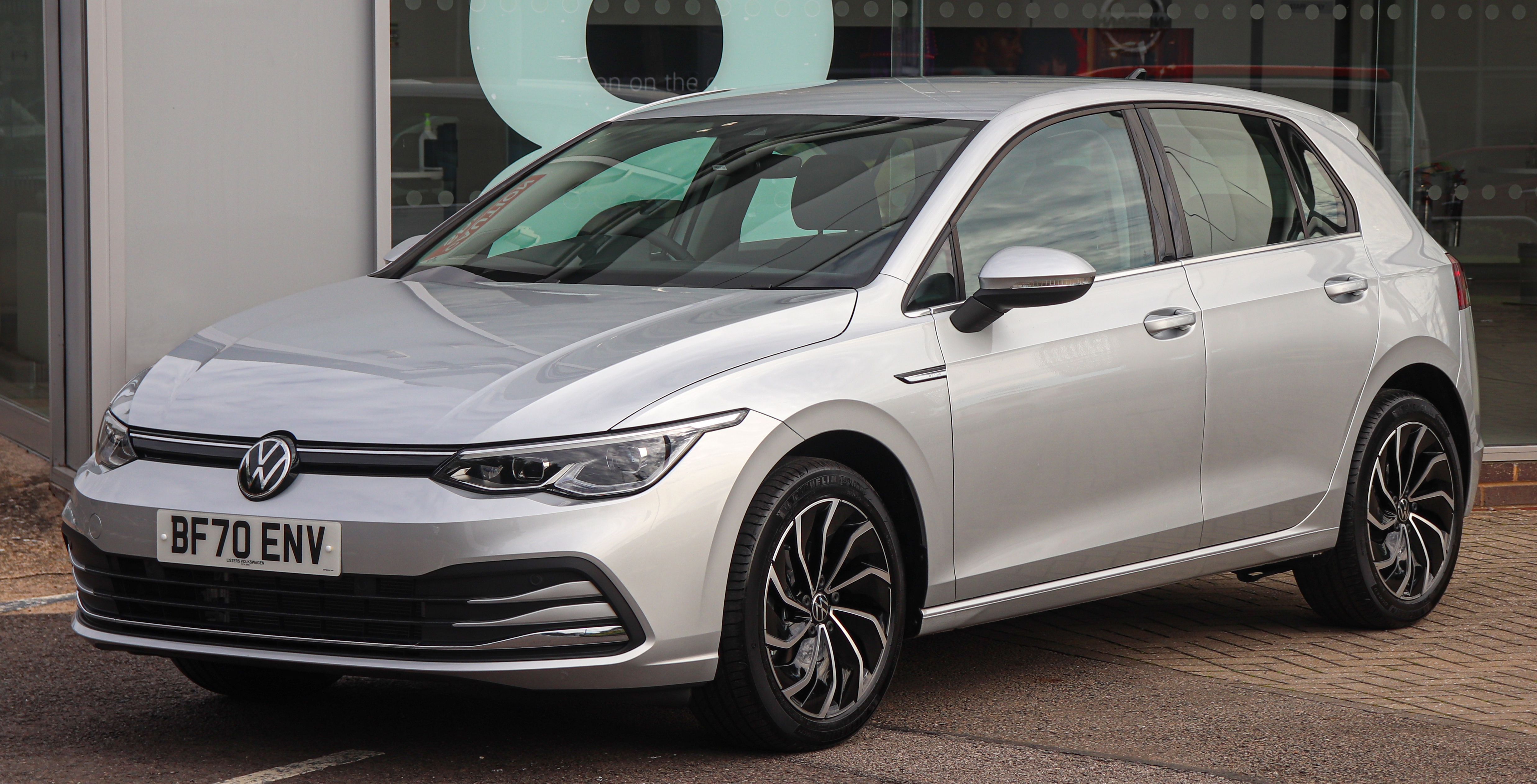
Volkswagen Gli
"...to the sort of like equipment you would find on a GLI or a GTI? Yes, it's a break based electronic limi..."
The Volkswagen Golf is a small hatchback you can use for commuting and everyday errands. Different versions can include different performance and equipment levels, which is why people compare trims like the sportier ones mentioned in the podcast.
The Volkswagen Golf is a compact hatchback known for being practical while still offering a more engaging driving experience than many mainstream small cars. The podcast mentions trim-level comparisons (like GLI/GTI-style equipment), which matters because Golf performance and feature content often varies a lot by version.
electronic limited slip system
"Yes, it’s a break based electronic limited slip system [677.7s] OK, that is intended to improve cornering"
This is a traction feature that uses the car’s computer. If one wheel starts spinning, it can use the brakes to help the other wheel(s) keep grip.
An electronic limited-slip system uses sensors and brake/engine control to reduce wheel slip. It can simulate the behavior of a limited-slip differential by applying brake pressure to a slipping wheel, improving traction without adding a mechanical diff.
cornering
"OK, that is intended to improve cornering [680.7s] by lightly breaking, I guess, the inside wheel"
Cornering is how the car handles a turn. The idea here is that the car can use traction control to help it stay planted while turning.
Cornering is how a car negotiates a turn, relying on tire grip and vehicle balance. The transcript specifically ties XDS’s brake-based slip control to improving cornering behavior by managing inside-wheel traction.
limited slip differential
"It’s supposed to improve traction off the line. [689.9s] But the joke about that is this has a one and a half liter four cylinder engine… [701.7s] There’s really no situation where you’re going to need a limited slip differential."
A limited-slip differential helps prevent one wheel from spinning freely. That can make the car pull better when traction is uneven, like on wet pavement or during hard acceleration.
A limited-slip differential (LSD) is a drivetrain component that reduces the speed difference between the left and right drive wheels. By limiting how easily one wheel spins, it improves traction during cornering and low-grip situations.
torque
"…a one and a half liter four cylinder engine that produces 100 and 58 horsepower [696.6s] and 100 and 84 pound feet of torque."
Torque is the engine’s twisting force. More torque usually means the car can get moving more strongly, especially when you’re not already at high speed.
Torque is the twisting force an engine produces, and it strongly influences how quickly a car accelerates, especially at lower speeds. The transcript contrasts torque with horsepower to argue about whether traction aids are necessary.
traction control
"And in first gear, I had the traction control light flash at me, [736.8s] but I didn't have any wheel spin."
Traction control helps keep the tires from spinning when the road is slippery. If it senses wheel slip, it will reduce power and/or brake certain wheels so you can keep moving more smoothly.
Traction control is a stability system that detects wheel slip and reduces it by cutting engine power and/or applying brakes to individual wheels. When it’s active, you may see a warning light flash, especially on slick or damp surfaces.
XTS intervened
"but I didn't have any wheel spin. [738.7s] And I'm wondering if that's because the XTS intervened. [742.0s] Impossible to know."
The host is guessing that another car system helped manage traction on the slippery hill. They’re not certain, but it sounds like the car may have adjusted power or braking to keep things under control.
“XTS” here appears to refer to a traction/stability-related system that may have intervened during the slick conditions. The speaker isn’t sure, but the context suggests it could be related to how the car manages grip when traction control is active.
fuel mileage
"It's just kind of like, hey, I'm really comfortable [776.3s] and surprisingly fuel efficient. [778.9s] Like, do you want to hear what I got for fuel mileage in this car, Sammy?"
Fuel mileage tells you how efficiently the car uses gas. Higher efficiency means you go farther on the same amount of fuel.
Fuel mileage is a measure of how efficiently a car uses fuel, commonly expressed as miles per gallon (mpg) in the U.S. or liters per 100 kilometers (L/100 km) in many other countries.
liters per 100 kilometers
"I got four point eight liters per 100 kilometers. [787.0s] OK, yo, that's very good."
This is a way to measure fuel efficiency used in many countries. It tells you how many liters of fuel you burn to drive 100 kilometers—lower is better.
Liters per 100 kilometers (L/100 km) is a fuel-consumption unit used outside the U.S. It represents how many liters of fuel the car uses to travel 100 km; lower numbers mean better efficiency.
miles per gallon
"It's 50 miles per gallon. And then I didn't really believe it."
Miles per gallon (MPG) is how efficiently a car uses fuel—how far it goes on one gallon. Bigger number usually means better fuel economy.
Miles per gallon (MPG) is a measure of fuel economy that tells you how many miles a vehicle can travel on one gallon of fuel. Higher MPG generally means the car is using less fuel for the same distance.
hybrid fuel efficiency
"Like that's a totally reasonable response to a gas powered car achieving like hybrid fuel efficiency."
Hybrid fuel efficiency means a hybrid car can go farther on the same amount of fuel. It uses an electric motor along with the gas engine to reduce fuel use.
Hybrid fuel efficiency refers to the improved miles-per-gallon you can get when a vehicle uses both an internal-combustion engine and an electric motor/battery. The benefit often shows up most in stop-and-go driving and can still be strong on steady highway runs depending on the system.

Volkswagen I
"So it wasn't like a fluke thing that happened. And what's crazy is like Volkswagen, I think, advertises 36 or something like that miles per gallon."
The Volkswagen ID. Buzz is an electric van, meaning it runs on a battery instead of gasoline. The podcast is talking about how many miles it can go and how that compares to what the company advertises.
The Volkswagen ID. Buzz is an electric van that’s designed to feel like a modern take on a classic van shape. The podcast mentions Volkswagen’s advertised efficiency figures, which is relevant because real-world range and fuel/energy economy are a big part of evaluating electric vehicles.
gearing
"And so is that what do you think that is gearing or? I think it's two things. Gearing, it has an eight speed automatic."
Gearing is how the transmission ratios connect engine speed to road speed. Good gearing can let the engine spin slower at highway speeds, which helps save gas.
Gearing refers to the gear ratios in the drivetrain that determine how engine speed relates to vehicle speed. For fuel economy, the right gearing can lower engine RPM on the highway, reducing fuel consumption.
eight speed automatic
"I think it's two things. Gearing, it has an eight speed automatic."
An eight-speed automatic is the car’s automatic gearbox with eight different gear ratios. It can help the engine run at a better speed for saving fuel, especially on the highway.
An eight-speed automatic is a transmission that can shift through eight gear ratios while the car controls the shifting. More gears can help keep the engine in a more efficient RPM range, especially at highway speeds.
EPA test track
"They're not, they don't have like their foot to the floor at the EPA test track. It's not how it works."
The EPA test track is a standardized driving test used to measure things like fuel economy. It’s meant to be consistent, not like a person flooring it all the time.
The EPA test track refers to the U.S. Environmental Protection Agency’s standardized testing procedure for measuring fuel economy and emissions. It’s designed to be repeatable, so results aren’t based on someone driving “foot to the floor.”

Honda Civic
"to get into the mindset of a buyer who would put this above any other car in its class, especially the Korean cars or the Honda Civic. Civic is a little bit more expensive."
They mention the Honda Civic because it’s one of the main cars people compare against in this category. The point here is that it may cost more, which can push some shoppers toward other options.
The Honda Civic is referenced as a key competitor in the compact-car shopping set. The host notes it can be more expensive than the alternatives being discussed, which affects how buyers narrow their shortlist.
infotainment
"styling internal interior and exterior styling always seemed sleepy. ... I think Volkswagen has taken an old school approach to infotainment."
Infotainment is the car’s main screen system for things like music, navigation, and phone features. They’re saying Volkswagen’s version feels less exciting or less modern than what other brands do.
Infotainment is the in-car multimedia system that combines functions like navigation, audio, and smartphone connectivity. The host argues Volkswagen’s approach feels more “old school,” implying the interface and screen experience aren’t as modern or flashy as competitors.
10.25 digital cockpit cluster
"I had the sport was the sport package. It comes with the 10.25 digital to 10.25 inch digital cockpit cluster. It's not that impressive. It's just there."
This is the screen with your speed and other driving info behind the steering wheel. “10.25” means the display is about 10.25 inches across, and they’re saying it’s there but not especially impressive.
A “digital cockpit cluster” is the fully digital instrument panel behind the steering wheel, replacing traditional analog gauges. A “10.25” screen size refers to the display’s diagonal measurement, and the host is using it to describe the Jetta Sport’s interior tech.

Volkswagen Taos
"What we said about the Taos was that it's it's like really stereotypically Volkswagen. Like it looks like a Volkswagen as a Volkswagen has looked this way for the past like 15 years."
The Volkswagen Taos is a small Volkswagen crossover. The hosts are basically saying it looks very “Volkswagen,” and they’re using it to compare the look of the Jetta.
The Volkswagen Taos is a compact crossover that Volkswagen positions as a mainstream, easy-to-live-with option. In this segment, it’s used as a reference point for how the brand’s design language has looked for years.
multi-link rear suspension
"which is the truly performance oriented version of the Jetta, which has a more sophisticated multi-link rear suspension. It has a more powerful engine, I think 70 or 75 more horsepower"
Multi-link rear suspension is a more complex rear suspension design. It helps the wheels stay positioned more accurately, which can make the car handle better and feel more controlled.
A multi-link rear suspension uses several control arms to better manage how the wheel moves over bumps and during cornering. Compared with simpler setups, it can help keep the tire contact patch more consistent, which supports better handling and ride control—one reason the host associates it with the Jetta GLI’s performance focus.
sport tuned suspension
"that's in the base in Preza and you get a sport tuned suspension."
A sport-tuned suspension is set up to make the car handle more aggressively. It usually feels tighter and more responsive when you steer, especially in turns.
A sport-tuned suspension is calibrated for sharper handling rather than maximum comfort. That typically means firmer spring/damper settings and/or different geometry so the car responds more quickly to steering inputs and holds up better in corners.

Crosstrek Cross Track
"...S is that engine is now standard in Canada in the cross track, which is based on the Preza. So moving on, there..."
The Crosstrek is a small crossover SUV meant for daily driving and light rough-road use. The podcast is saying that in Canada, a certain engine is standard, and that it’s related to the same basic platform as another Subaru model.
The Crosstrek referenced in the podcast appears to be the Subaru Crosstrek (often spelled Crosstrek/Crosstrek in casual speech), a compact crossover built for everyday driving with some off-road practicality. The discussion about an engine being standard in Canada and being based on the Preza points to how different markets can get different standard equipment and powertrains.
seven speed dual clutch automatic
"And a seven speed dual clutch automatic that has paddle shifters instead of forcing you to shift with the shifter at the center."
This is a type of automatic transmission that can change gears quickly. It uses two clutches so it can be ready for the next gear, and it often lets you shift using paddles behind the steering wheel.
A seven-speed dual-clutch automatic uses two separate clutches to pre-select the next gear, which can make shifts feel faster and more responsive than a traditional torque-converter automatic. The “dual-clutch” design is often paired with paddle shifters for manual-style control.

Kia K4
"...ption. I got one more on this list and that's the Kia K4 GT line turbo. And in the States, there's also a ..."
The Kia K4 is a compact car for everyday driving. The GT line turbo is a higher-trim version that’s meant to feel more powerful than the base model.
The Kia K4 is a compact car, and the podcast specifically references a “GT line” turbo variant. It’s discussed because buyers often look for a sportier trim with more power, and the GT line turbo is Kia’s way of offering that within the K4 lineup.
DCT
"So you're not getting that DCT, but it has the multi link rear suspension and it has bigger brakes at all four corners."
DCT means dual-clutch transmission. It’s a type of automatic that shifts gears quickly using two clutches, so the car can feel more responsive.
DCT stands for dual-clutch transmission. It uses two separate clutches for odd/even gear sets so shifts can be very quick and smooth compared with a traditional automatic.
bigger brakes at all four corners
"So you're not getting that DCT, but it has the multi link rear suspension and it has bigger brakes at all four corners."
This means the car has upgraded brakes on the front and the back. Bigger brakes can help the car stop more strongly and keep braking performance from getting worse after repeated stops.
“Bigger brakes at all four corners” means the car uses larger brake components on both the front and rear axles. Larger rotors/calipers can improve stopping power and reduce brake fade during repeated hard braking.
Civic Si
"I thought about including the Civic SI in this list, but the SI truly does make more of an effort than all three of these cars."
The Honda Civic Si is a sportier version of the Civic. In this segment, the key point is that it’s manual, which makes it feel different from the other cars being compared.
The Honda Civic Si is a performance-oriented trim of the Civic, typically emphasizing a more driver-focused setup than the standard model. The hosts mention it as a comparison point because it’s offered with a manual transmission, which changes how it competes.

Ford Lobo
"...you're at. Yeah. I guess you could put a Maverick Lobo in here. That's what Ford would like us to do. Ye..."
“Lobo” sounds like a nickname people use when talking about Ford trucks. In the podcast, it doesn’t clearly point to a single, official model name, so it’s likely being used informally.
“Lobo” is a name that’s often used as a nickname or shorthand in discussions about Ford trucks, but it’s not clearly identified in the podcast as a specific, official model designation. In the context you provided, it sounds like the host is joking about what Ford might want people to call a particular truck.

Ford Maverick
"I guess you could put a Maverick Lobo in here. That's what Ford would like us to do."
The Ford Maverick is a small pickup truck. “Lobo” is a trim level, and they’re mentioning it as another option that could be compared to the Jetta.
The Ford Maverick is a compact pickup, and “Lobo” is a trim name that’s used to position it as a more off-road-leaning or rugged variant. The hosts bring it up as a possible competitor, noting Ford would like it included.
fuel economy
"I do think that this fuel economy is incredible. And I didn't do anything special. ... OK. So and that that six liters per 100 kilometers included like my high speed testing uphill and downhill country road runs"
Fuel economy is how far the car can go on a given amount of fuel. They’re talking about it in liters per 100 kilometers and saying they got that efficiency even during harder driving.
Fuel economy is how efficiently a vehicle uses fuel to travel a given distance. The hosts quantify it using a metric of liters per 100 kilometers, and they emphasize that their results came even with high-speed and uphill/downhill driving.
eco mode
"I didn't do anything special. I really didn't. There isn't like an eco mode that like is super slow. There is an eco mode. I didn't normally use that. I was more mostly in normal mode."
Eco mode is a setting that helps the car use less fuel. It usually makes the car respond more gently when you press the gas, so it feels a bit less “quick.”
Eco mode is a driver-selectable setting that changes how the car behaves to improve fuel economy. It often softens throttle response and adjusts engine/gear behavior, which can make the car feel slower compared with normal driving modes.
sport mode
"where I was in sport mode and sport everything. So like, you know, at red line."
Sport mode is a button or setting that makes the car feel more responsive. It usually makes the car react faster when you press the gas.
Sport mode is a driving setting that changes how the car responds, typically by sharpening throttle mapping and altering transmission behavior. The goal is usually a more aggressive feel compared with normal or comfort settings.
red line
"So like, you know, at red line. Pretty. Anything else you want to talk about when it comes to this?"
The red line is the top safe engine speed. When you’re near it, the engine is revving very high, so it’s not something you’d want to do for a long time.
The red line is the engine’s upper safe RPM limit. Revving near or at the red line keeps the engine spinning very fast, which can increase noise and stress and is generally something you avoid for long periods.
TDI diesel Jettas
"with the exception of a of the TDI diesel Jettas, I would never have put the Jetta as a fuel efficiency kind of leader"
TDI is a type of Volkswagen diesel engine. The idea is that it injects fuel directly and uses a turbo, which can help it get better mileage than many other engines.
TDI stands for Turbocharged Direct Injection, a diesel engine technology used in some Volkswagen models. Diesel TDIs are often associated with strong fuel economy because of how efficiently they burn fuel.
hybrid powertrain
"all of those ones have practically had to resort to a hybrid powertrain or to achieve that kind of fuel efficiency."
A hybrid powertrain uses both a gas engine and an electric motor. That helps the car save fuel by using electricity in some situations.
A hybrid powertrain combines an internal-combustion engine with an electric motor. The system can use electricity for some driving and/or help the engine work more efficiently, which often improves fuel economy.

Ford Explorer
"So anyways, this week, I've got a cool car that I think is something we haven't talked about in a long time. It's the theme of today's show is the Ford Explorer."
The Ford Explorer is a popular midsize SUV from Ford. It comes in different versions (trims), and the hosts are talking about which one they drove and how it compares.
The Ford Explorer is Ford’s long-running midsize SUV, known for offering multiple trims that range from family-focused to more off-road-capable setups. In this episode, the hosts frame it as the main subject and discuss different Explorer variants they’ve driven.
off-road trims
"like faux, like fake off-road like off-road trims have become a really big selling like a marketing stuff, right?"
They’re talking about how car makers sell “off-road” versions mainly through special trim packages. Sometimes those packages are more about looks than serious off-road capability.
The hosts discuss how “off-road” is increasingly used as a marketing label via special trim levels. These trims often look the part (styling and some underbody protection) even if they’re not true off-road machines.
F-150 Tremor
"You can get an F-150 Tremor. You can get a Maverick Tremor."
The F-150 is Ford’s popular pickup truck. “Tremor” is the rugged-sounding trim name Ford uses on it to market an off-road vibe.
The Ford F-150 is a full-size pickup, and “Tremor” is the off-road-themed trim applied to it. This is an example of how the Tremor name is used across different Ford body styles, not just one model.

Ford F150
"that's now transcending just the it goes across the line. You can get a and I think you can get an F-150 Tremor. You can get a am I mistaken?"
The Ford F-150 is a large pickup truck used for hauling and everyday driving. The Tremor version is a special trim meant to handle rougher roads better than a standard F-150.
The Ford F-150 is a full-size pickup truck and one of the most popular trucks in the U.S. The podcast mentions the F-150 Tremor, which is an off-road–oriented trim that adds capability and styling for drivers who want more than a basic work truck.
Maverick Tremor
"You can get a Maverick Tremor. Yeah, you can get tremors of almost every SUV or pickup."
The Maverick is Ford’s smaller pickup. Ford also offers a “Tremor” version of it, using the same rugged trim branding on a different truck size.
The Ford Maverick is a smaller pickup, and “Tremor” is used as an off-road-oriented trim name on it as well. The point here is brand/trim consistency: the same “Tremor” identity is marketed across multiple Ford trucks.

Ford Escape
"...I don't think there was ever an Edge Tremor or an Escape Tremor. And there's no Bronco Sport Tremor."
The Ford Escape is a small SUV for daily driving. The podcast is basically saying that it doesn’t have a certain off-road trim name that some other Ford models do.
The Ford Escape is a compact SUV focused on everyday practicality, with optional features and trims that can include off-road–oriented packages. In the podcast, it’s mentioned in the context of whether there are specific “Tremor” trims across Ford’s lineup, which matters for buyers trying to match capability to the right model.

Ford Edge
"...ry SUV or pickup. I don't think there was ever an Edge Tremor or an Escape Tremor. And there's no Bronco..."
The Ford Edge is a mid-size SUV meant for everyday driving with room for passengers and cargo. The podcast is saying it doesn’t have a certain off-road trim name that some other Ford models offer.
The Ford Edge is a mid-size crossover SUV built for family use, comfort, and daily driving. In the podcast, it’s referenced in the context of off-road trim naming—specifically whether it has an equivalent to other models’ “Tremor” packages—so it’s relevant for buyers comparing capability options across Ford’s lineup.

Ford Bronco Sport
"...n Edge Tremor or an Escape Tremor. And there's no Bronco Sport Tremor. No, this feels like a sub level of like a..."
The Ford Bronco Sport is a small SUV meant to handle rougher roads better than a basic crossover. In the podcast, they’re pointing out that it doesn’t have the same kind of off-road “Tremor” trim naming you might see on other Ford vehicles.
The Ford Bronco Sport is a compact SUV positioned as a more rugged, off-road-capable alternative to typical small crossovers. The podcast specifically notes that there isn’t a “Bronco Sport Tremor” trim, which is relevant because it’s comparing how different Ford models offer off-road packages.
F-150 Raptor
"...s like a sub level of like any vehicle that has a Raptor doesn't get a tremor except for F-150."
The F-150 is a large pickup truck made by Ford. The podcast is talking about off-road trim options and saying the F-150 is the one that gets that specific off-road package.
The Ford F-150 is a full-size pickup truck, and the podcast is discussing how off-road “Tremor” style packages are offered across the lineup. The key point is that the F-150 is singled out as the exception where a Tremor-style option exists for that kind of vehicle.
all terrain tires
"So we've got all terrain. I've got Falcon. Are they Falcon? No, duelers. What is duelers? ...OK, I think they're Bridgestones. And it's got these all all terrain tires."
All-terrain tires are made for mixed driving—regular roads plus dirt or gravel. They usually grip better off pavement than regular street tires.
All-terrain tires are designed to work across mixed surfaces like pavement, dirt, gravel, and light mud. They typically have more aggressive tread patterns and tougher sidewalls than highway-focused tires, helping traction when you leave the road.

Ford Falcon
"So we've got all terrain. I've got Falcon. Are they Falcon? No, duelers. What is duelers?"
The Ford Falcon is a Ford car/truck model name that exists in different versions depending on where and when it was sold. In the podcast, it seems to be connected to what kind of tires it uses for rougher driving.
The Ford Falcon is a model name used by Ford that has appeared in different markets and generations, including variants known for different tire setups. In the podcast, it sounds like the discussion is about off-road or all-terrain tire choices and how they relate to the Falcon name being used in that context.
Bridgestone
"It's not Cooper. Is it Bridgestone? OK, I think they're Bridgestones. And it's got these all all terrain tires."
Bridgestone is a tire manufacturer. The hosts are saying the off-road tires on this setup are likely Bridgestone all-terrain tires.
Bridgestone is a major tire brand, and in this segment the hosts suggest the vehicle is equipped with Bridgestone all-terrain tires. Tire brand matters because different models can vary in tread design, wet/dry grip, and off-road durability.
skid plates
"And it's got these all all terrain tires. It's got some they say it's it's front and rear skid plates or deflector plates. It's the official turn on your plates at the Ford."
Skid plates are protective covers underneath the car. They help prevent damage if you hit rocks or bumps off-road.
Skid plates (also called underbody deflector plates) are protective metal or composite panels mounted under the vehicle. They help shield vulnerable components like the oil pan, transmission, and fuel lines from impacts when driving over rocks or uneven terrain.
LED strips
"Embedded into the grill are these two like LED strips. OK, what they remind anybody anybody who sees this grill ..."
LED strips are thin rows of small lights (LEDs). Putting them in the grille is both for visibility and to give the truck a recognizable look.
LED strips are long, narrow light bars made from multiple light-emitting diodes. When they’re integrated into places like a grille, they can act like distinctive daytime running lights or auxiliary lighting while also serving as a styling cue.
front tow hooks
"There there's front tow hooks that are painted orange. And there's orange accents on the 18 inch wheels."
Front tow hooks are strong metal loops on the front of the car. They’re there so you can attach a tow strap or rope if the vehicle needs to be pulled out.
Front tow hooks are hardware mounted to the front of a vehicle so it can be pulled or recovered using a rope or tow strap. They’re especially common on off-road–focused trims because they’re meant for situations like getting unstuck or assisting another vehicle.
V six engine
"Inside is typical Explorer fair. My model has a three liter V six engine, which is pretty nice."
A V6 engine has six cylinders arranged in two groups that make a V shape. “Three liter” is a measure of the engine size, which affects how it feels when you accelerate.
A V6 engine is a six-cylinder engine where the cylinders are arranged in two banks that form a “V” shape. The “3 liter” V6 mentioned here refers to the engine’s displacement (total volume swept by the pistons), which helps explain its power/torque character and how it fits the vehicle’s tuning.

Tesla My Model
"Inside is typical Explorer fair. My model has a three liter V six engine, which is pretty n..."
limited slip rear axle
"And it also has a limited slip rear axle. It's turbo, right? Yeah, OK."
This is a rear axle setup that helps the car not spin one wheel when the road is slippery. It tries to send power to the wheel that has more grip.
A limited-slip rear axle uses a differential that can limit wheel spin when traction is uneven. Instead of sending all the power to the wheel with the least grip, it helps keep more torque going to the wheel with better traction.
turbo
"It's turbo, right? Yeah, OK. And this limited slip towards an act limited slip diff is exclusive to the tremor."
A turbo is a device that helps the engine make more power. It uses the car’s exhaust to push extra air into the engine.
A turbocharger uses exhaust gases to spin a turbine that forces more air into the engine. More air generally means the engine can burn more fuel and make more power without needing a larger engine.
ride height
"And it also says that it has an increased rise, ride height and off road tune suspension. I don't think it's like I don't think it's an I don't think the ride height increases a byproduct of the."
Ride height is how high the car sits off the ground. More ride height can help the car clear bumps and rough terrain.
Ride height is the distance between the ground and the vehicle’s body/chassis. Increasing ride height can improve ground clearance for rough roads and off-road obstacles, but it can also affect handling and how the suspension works.
off road tune suspension
"And it also says that it has an increased rise, ride height and off road tune suspension. I don't think it's like I don't think it's an I don't think the ride height increases a byproduct of the."
This means the suspension is adjusted for rough roads. The goal is to help the tires stay in contact and handle bumps better.
An off-road tuned suspension is a suspension setup calibrated for rougher surfaces and more wheel travel. It often pairs with increased ride height and different spring/damper settings to better absorb impacts and maintain tire contact.
four cylinder
"Let me make sure I think you can get one of the four cylinder engines of the tremor. But my model had the six cylinder."
A “four cylinder” engine has four working cylinders inside the engine. They’re debating whether that smaller engine is a good match for a big SUV.
“Four cylinder” refers to an engine with four cylinders, which typically makes less power than larger multi-cylinder engines but can be more fuel-efficient. In this discussion, the point is whether a four-cylinder engine is enough for a large, three-row SUV like the Explorer Tremor.

Ford Expedition
"...you feel about that? I don't want a four cylinder expedition. I mean, it's four. Yeah."
The Ford Expedition is a large SUV with room for passengers and cargo. Some versions use a smaller engine, and the podcast is questioning whether a four-cylinder is enough for what people expect from this size of SUV.
The Ford Expedition is a full-size SUV aimed at families and people who need space and towing capability. The podcast discussion highlights concerns about choosing a four-cylinder version, which matters because engine choice affects how the vehicle feels under load and during highway driving.
naturally aspirated V6
"Basically, what I'm saying is I want a three and a half liter naturally aspirated V6. That's good. I like that."
A naturally aspirated V6 is an engine with six cylinders arranged in a V shape, and it doesn’t use a turbo or supercharger to force air in. They’re saying they prefer that kind of engine feel for this SUV.
A naturally aspirated V6 is a V-shaped six-cylinder engine that draws air in without a turbocharger or supercharger. The “naturally aspirated” part matters because it changes how the engine makes power and throttle response compared with forced-induction engines.
three row SUV
"This is a three row SUV. It's got buckets in the second row or captain's chairs in the second row and a bench in the third."
A three-row SUV has seats in three rows, so it can carry more people than a two-row SUV. Here they’re describing how the second and third rows are set up.
A three-row SUV is designed with seating for three rows (front, second, and third). That layout affects packaging and comfort—especially how the second row is configured and how much space is available for passengers in the third row.
captain's chairs
"It's got buckets in the second row or captain's chairs in the second row and a bench in the third."
Captain’s chairs are separate seats in the middle row instead of one big bench. They usually make it easier to get to the back row and can feel more comfortable for the people sitting there.
Captain’s chairs are individual, separate seats (usually in the second row) rather than a single continuous bench. They’re often chosen for easier access to the third row and more individual comfort for second-row passengers.

Renault Wind
"...the front of the truck? Absolutely, he can he can wind up so nicely. Except for I start taking off his s..."
The Renault Wind is a small car with a unique design. The podcast is referencing it in a way that suggests it’s fun to drive and has some special features related to how it operates.
The Renault Wind is a small, distinctive car that’s known for its compact size and convertible-style appeal. The podcast mention about “wind up” suggests they’re talking about how it feels when driving or how the car’s design/controls work, which is why it comes up as a quirky, memorable model.
blue cruise
"Other things that I want to talk about this car is equipped with blue cruise, which is a hands free driving feature. [2080.1s] I was freaked out by blue."
BlueCruise is a system that can help drive the car on certain highways without you steering all the time. You still have to pay attention and be ready to take over.
BlueCruise is Ford’s hands-free driver-assistance system that can steer the car on compatible highways while the driver monitors the system. It’s designed for specific mapped roads and still requires driver attention, even when the car is doing the driving tasks.
hands free driving feature
"Other things that I want to talk about this car is equipped with blue cruise, which is a hands free driving feature. [2082.2s] I like I usually like these hands free driving features, because a lot"
“Hands-free” means the car can do some driving tasks for you, like steering, especially on highways. But it’s not fully automatic—you still have to watch the road and be ready to take over.
A “hands-free” driving feature refers to driver-assistance tech that can control steering (and sometimes other functions) without the driver actively holding the wheel. In practice, these systems are limited to certain conditions and require the driver to stay attentive and ready to intervene.
lane change
"And then suddenly I heard the signal go and the car changing lanes. [2097.6s] And I got freaked the heck out. [2100.8s] That was the weirdest thing I've ever experienced."
A lane change is the maneuver where the car moves from one lane to another, typically coordinated with turn-signal input and sensor checks. With advanced driver-assistance, the system may initiate or assist lane changes when it determines the move is available and safe.
GM Supercruise
"Well, GM Supercruise automatically does it. [2130.6s] I have never had it do it automatically."
GM Super Cruise is GM’s system for helping drive on certain highways. It can steer for you, but you still have to watch what’s going on and take over if needed.
GM Super Cruise is General Motors’ hands-free highway driving system. Like other driver-assistance platforms, it can automate steering on compatible roads, but it still expects the driver to monitor the system and be ready to intervene.
BMW
"And BMW, you can look in the mirror and it will do it. [2141.4s] I thought again, I think it asks for something along those lines."
BMW is the car brand being compared for how its driver-assistance works. The point is that BMW’s system can do something similar, but it may require different cues from the driver.
BMW is referenced here in the context of its driver-assistance behavior for lane changes. The speaker claims BMW can perform an automated lane-change action after the driver checks the mirrors, highlighting how different brands implement similar features differently.
navigation running
"So in Supercruise, if you have navigation running, it will know where you're going and it will not do that."
This means your GPS directions are currently active. The idea is that the car’s assist system can plan better when it knows your destination and upcoming turns.
“Navigation running” refers to having an active route guidance session in the car’s infotainment or phone-based navigation. The hosts are using it as a key condition: when navigation is active, the driver-assistance system can anticipate upcoming maneuvers like exits and behave more appropriately.
Android Auto
"Mine had navigation running, but I was using Android Auto, not. So was so was I. So I'm able to communicate with Android Auto for navigation information."
Android Auto is a phone feature that shows and controls certain apps on your car’s screen. In this case, using it for navigation affects how the car’s driving-assist system acts.
Android Auto is a smartphone-to-car interface that lets you use your phone’s apps (like navigation) through the car’s infotainment screen. Here, it’s relevant because the host says they can communicate navigation information to the car, which changes how Supercruise behaves.
anti fatigue seats
"Yeah, it's not a requirement for these systems. The other thing I want to point out, it had massage seats, which are I mean, let's be clear, they're not massage seats. They're kind of like anti fatigue seats more than anything else."
These seats are designed to help you feel less stiff on long trips. Instead of relaxing massage, they move in a way that encourages your body to stay comfortable.
Anti-fatigue seats are seat systems that periodically move or adjust the seat to reduce driver stiffness and discomfort during long drives. They’re meant to keep you from “stiffening up” rather than provide true, relaxing massage therapy.
body break
"So there's some cars that have this system where they detect that you've been driving for a certain amount of time. And then they're like time for a body break, pretty much."
This is a feature that watches how long you’ve been driving and then reminds you to take a break. Sometimes it does it by moving the seat to get your attention.
A “body break” system is a driver-assist feature that monitors driving time and prompts you to take a break. It typically triggers seat or comfort actions (like seat movement) to encourage rest and reduce fatigue.
low range
"like, let's say a forerunner or does it have low range, four wheel drive? ... But none of them, none of that is a low range."
Low range is a special low gear for 4-wheel-drive. It makes the truck go slower but with more pulling power, which helps on rough trails.
Low range is a gear setting in a 4x4 system that reduces the vehicle’s speed and increases torque for slow, difficult terrain. It’s typically used for steep climbs/descents, deep sand, mud, or rock crawling where you need more control at low speeds.
four wheel drive
"like, let's say a forerunner or does it have low range, four wheel drive? ... It has four wheel drive."
Four wheel drive means power goes to all four wheels. That helps the car grip better on snow, mud, or rough roads.
Four wheel drive (4WD) sends power to all four wheels to improve traction on slippery or uneven surfaces. Many systems also include additional modes (like off-road or terrain settings) to adjust throttle response and traction control behavior.
off-road driving mode
"Like I assume it has like an off-road driving mode, but it has an off-road ... driving mode, a hill descent control ..."
An off-road driving mode changes how the vehicle behaves for dirt, gravel, mud, or trails. It often adjusts throttle mapping, traction control, and shift/gear logic to make wheel slip more manageable and improve control at low speeds.
hill descent control
"but it has an off-road driving mode, a hill descent control and a couple of like these terrain ..."
Hill descent control helps you go downhill slowly and safely. It uses the brakes to keep the speed steady so you don’t have to modulate the pedal constantly.
Hill descent control (HDC) is a driver-assist feature that helps maintain a steady speed while going downhill. It uses braking and traction control to prevent wheel lockup and excessive speed on steep grades.
terrain management
"but it has an off-road driving mode, a hill descent control and a couple of like these terrain, you know, this terrain management stuff."
Terrain management is a set of off-road settings the car uses to match the surface you’re driving on. It helps the vehicle adjust traction and control automatically.
Terrain management systems coordinate multiple vehicle settings—like traction control, throttle response, and sometimes transmission behavior—based on the selected surface type. The goal is to tailor drivability and stability for different off-road conditions.

Subaru Outback
"We already gave Subaru a hard time by saying like the wilderness trims are not totally necessary because like the whole purpose of an outback is to be capable in certain road, in certain off-road conditions."
The Subaru Outback is a crossover/wagon that’s designed to handle more than just smooth pavement. The point being made is that it’s already meant to be capable, so extra “off-road” trims may be redundant.
The Subaru Outback is a wagon-based crossover that’s built around being usable in a mix of road and light off-road conditions. The host is arguing that the Outback’s “capable” identity already covers much of what off-road-focused trims are meant to add.
appearance package
"The Timberline felt like a, like an appearance package with some, like that's it, right? Yeah. It's the Jetta sport of off-roading."
An appearance package is mostly about changing how the vehicle looks. In this case, the hosts are saying some trims are more style than real off-road upgrades.
An appearance package is a factory trim option that mainly changes the look—like exterior styling, badges, and sometimes wheels—rather than adding major mechanical capability. The hosts use it to argue that some “off-road” trims are mostly cosmetic.
front air dam
"But it might be tire dependent too... But again, like I do think that if you're in an Explorer, the situations where you're off-roading are like..."
A front air dam is a low piece on the front of the car meant to improve airflow. If it sits too low, it can scrape or limit how well the vehicle handles rough ground.
A front air dam is an aerodynamic panel at the lower front of a vehicle that helps manage airflow. The hosts mention it because it can reduce ground clearance, which matters when you’re trying to drive over rough or uneven surfaces.

Hyundai Palisade
"I think there's XRT versions of the Palisade. XRT? Yeah, but I feel like that's"
The Palisade XRT is a version of the Hyundai Palisade meant to look and feel more rugged. The hosts are using it to compare how these trims stack up for real-world muddy roads versus true off-roading.
The Hyundai Palisade XRT is a trim level that’s marketed with rugged styling and features. In this segment, it’s brought up in the context of comparing different brands’ “off-road look” packages and how much real capability they provide.
rear differential
"Those usually are just tires, [2532.3s] like an appearance, right? This one at least has a limit set, rear differential, rear differential. [2539.1s] So it's got something."
A rear differential is a part that sends power to the back wheels. It also helps the wheels spin at different speeds when you turn, which matters for traction and control.
A rear differential is the gearbox that sends power to the rear wheels and allows them to rotate at different speeds, which is important when turning. On off-road trims, it can also be paired with traction-focused features (like limited-slip behavior) to help maintain grip.

Mazda Cx50
"and I think a lot of car companies have leaned into that very heavily. Every automaker has one. Yeah. Who doesn't have an off-road trim? Mazda? Mazda? No, the CX-50 is their off-road trim. That's wild. Nissan has Rock Creek. I don't even know what Rock Creek is. I don't know what"
The Mazda CX-50 is a small SUV made for everyday driving, but it’s also designed to handle rougher roads better than a basic car. The podcast is pointing out that Mazda uses the CX-50 as its main “off-road” style option.
The Mazda CX-50 is a compact crossover that’s marketed with a more outdoorsy, rugged look and feel than many typical small SUVs. The podcast claims the CX-50 is Mazda’s off-road trim, which is notable because it highlights how automakers package “go-anywhere” capability into specific versions.
CVT
" [2665.5s] You have the CVT? Yes. [2667.4s] I have the Turbo 4, but I'm telling you again, 90% in the city."
CVT means the car doesn’t use traditional gears. It can smoothly “shift” through many ratios, which can make driving feel smoother and sometimes helps with fuel economy.
CVT stands for continuously variable transmission. Instead of fixed gear ratios, it uses a belt/chain and pulleys to smoothly change the ratio, which often helps keep the engine in a favorable RPM range for efficiency.

Land Rover Defender
"... yet another SUV. This time, it is the Land Rover Defender Octa in all capitals. All right. Thank you for li..."
The Land Rover Defender is an SUV designed to drive well on rough roads and trails. The Octa is a higher-end version meant to be even more capable and powerful than the regular models.
The Land Rover Defender is a rugged SUV built with off-road ability as a core focus. The podcast specifically calls out the Defender Octa, which is a high-performance, top-tier version that’s discussed because it represents the model’s most extreme take on capability and power.
Request an Explanation
Heard something you'd like explained? We'll add it to this episode.
Sign in to request explanations for terms you heard.
Want to learn more?
Browse our glossary for plain-English explanations of automotive terms, jargon, and concepts.
Help improve this episode
See something that's not quite right? Our annotations are AI-generated and can sometimes miss the mark. Click the flag icon on any annotation to suggest a correction.