A DMS is a type of software that helps car dealerships keep track of their cars, sales, and customers. It's like a digital assistant for the dealership.
Car
Tesla
Tesla is a company that makes electric cars. They are known for being very advanced and environmentally friendly, using electricity instead of gasoline.
Out-the-door price is how much you pay in total when buying a car. It includes everything like taxes and fees, so you know the final cost before you buy.
Mercedes-Benz is a famous car brand from Germany that makes luxury cars and trucks. They are known for their high-quality vehicles and innovative technology.
A general manager, or GM, is the person in charge of running a car dealership. They make sure everything is working well, from selling cars to helping customers.
The Cybertruck is a new electric truck from Tesla that looks very different from regular trucks. It’s made of strong materials and has cool tech features.
Mobile EV service means that technicians come to you to fix or maintain electric cars instead of you having to go to a shop. It makes it easier for people who own electric vehicles.
An EV dealership is a car dealership that sells electric cars, which run on batteries instead of gas. They usually have different types of electric vehicles available for customers.
The G-Class, or G-Wagon, is a fancy SUV made by Mercedes-Benz. It's popular for its tough look and ability to drive off-road, making it a favorite among many people.
Marking up is when a dealership raises the price of a car above what the manufacturer suggests it should cost. This can happen when a car is very popular.
A used EV tax credit is money the government gives back to you when you buy a used electric car. It helps make the car cheaper, so more people can afford to buy them.
A new EV is an electric car that has just been made and hasn't been owned by anyone else. They usually have the newest features and come with a warranty.
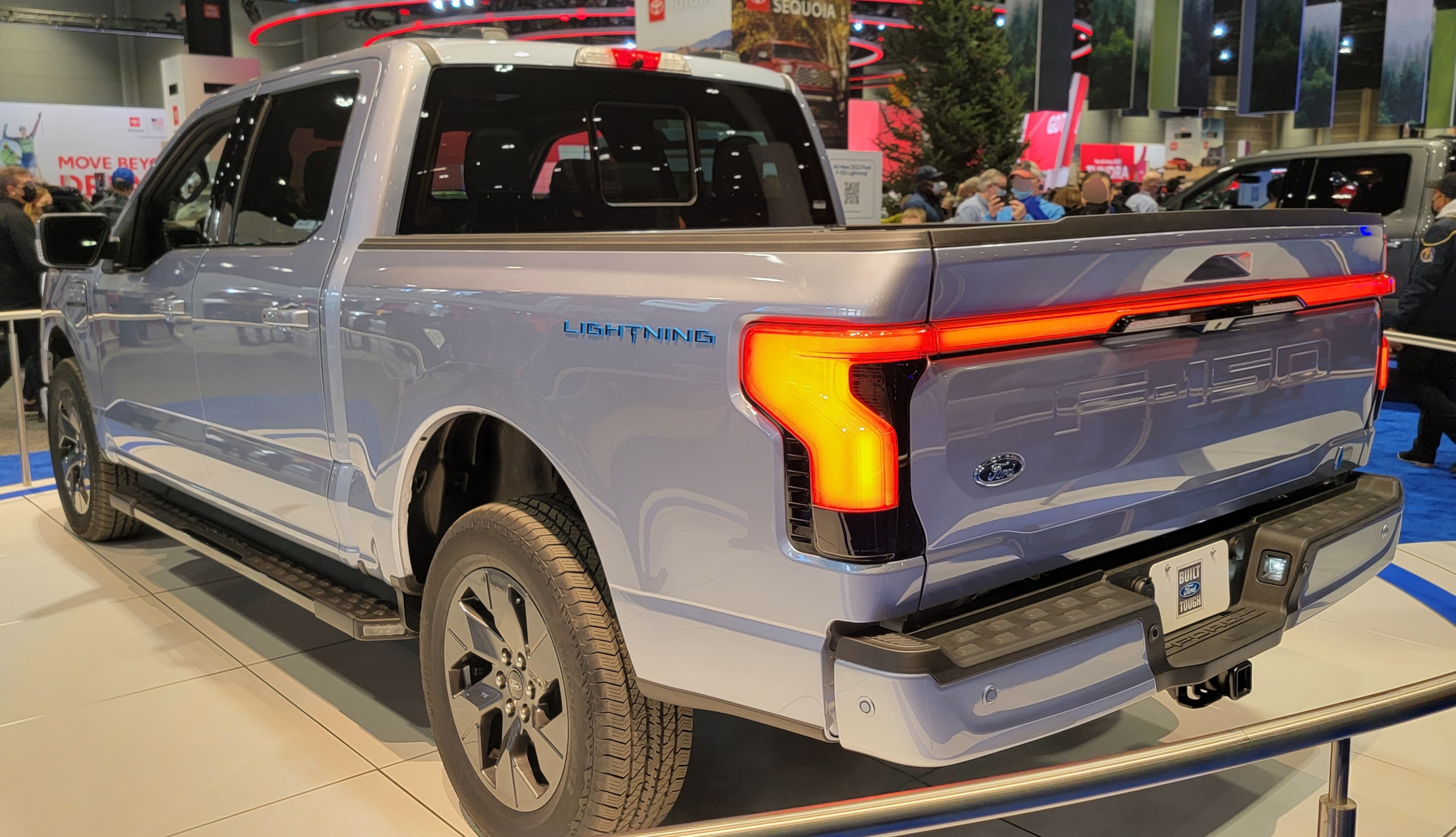
The Ford Lightning is an electric version of the F-150 truck. It's designed for people who need a truck but want to use electricity instead of gasoline, which can be better for the environment.
Battery range is how far an electric car can go before it needs to be charged again. A range of 300 miles means you can drive that far without needing to plug it in.
The Rivian R2 is a new electric car that will likely be cheaper than other electric vehicles. It's made by Rivian, a company that focuses on electric trucks and SUVs.
A plug-in hybrid is a car that can run on electricity and also uses gas. You can charge it at home and drive it using just electricity for short trips.
Supercharging is a fast way to charge Tesla cars so that drivers can quickly get back on the road. Tesla has many of these charging stations, making it easier for owners to travel long distances.
Self-driving means that a car can drive itself without needing a person to control it. Tesla is known for working on this technology to make their cars more automated.
The Tesla Model S is a high-end electric car that is known for being fast and having a long driving range. The newer models from 2022 and 2023 have some updates to make them even better.
A 'one owner' car means that only one person has owned it before you. This can be a good sign because it often means the car was taken care of better than cars that had many owners.
'Free promoters' are people who love a product so much that they tell others about it for free, without being paid to do so.
LIVE
I was not in a healthy stage in my life either, I was a mediocre father, a mediocre husband,
I was 75 pounds heavier than I am now, and just not at all in a good place.
And so that felt like a kind of a divine opportunity, if you will.
90 plus percent of my customers, as you said, have never owned an EV before, they got questions.
And they want to come in and talk to somebody and drive them, but they're nervous too because
they know historically, you know, they're going to get pressured, and people are going to be more
and more interested in just authentic content, whatever the category is, just whatever the
category is. And I think we're fortunate in that that's how we were already doing things,
but I think that's going to continue to be more and more important.
This episode is brought to you by Call Review, the dealership intelligence platform that connects
every conversation to performance. From their hosted phone system and AI-powered attendant to
real-time analytics, coaching, and reputation insights, Call Review helps you capture every
call, understand every interaction, and convert more opportunities. Call Review,
where communication meets intelligence. For more information, visit CallReview.com.
Welcome to The Doug Horner Show. My name is Doug Horner, and I'm here today with Alex Lawrence
of EV Auto. Alex, thank you so much for being here with me today.
Hi, Doug. Great. Thank you.
So, Alex, the mission of this show, as I mentioned to you, is all about finding people that are in
the automotive industry, that are content creators, and who I believe are having a positive impact on
the automotive space. And you are one of the people that is top of mind for me. I want you to
share your story because you have zero automotive background at all. You own your own dealership
in multiple locations now, and that is not the typical path. Most people that are in this business
either fell into it one way or another and then worked their way up the ladder to eventually owning
a dealership, or maybe they had a family business that they eventually took over. But you kind of
came out of nowhere and decided, I'm going to be a car dealer, which there's very few people who
have followed that path. So how was it? What were you doing before EV Auto, and where did you get
the idea that I'm going to start a car dealership?
Yeah, I mean, I joke. The first business I started when I was 16 was a car detailing business. And
the last business I'm going to start, not to sound too dramatic, is EV Auto. So it's kind of
bookends to my career, if you will, but in between nothing, you're right. And it wasn't is a
nonlinear path for me. So I've been an entrepreneur my entire life. And I like to say before it was
cool. You know, many years ago, being an entrepreneur was kind of for high school dropouts and
stuff like that. It wasn't looked upon like it is now. And so I've had kind of three careers
in entrepreneurship, if you will, and a fourth as a college professor. And so the first 10 years of
show of my career, I got some sweat equity, and probably the best education I've had in my entire
career, I got involved with a super high growth food franchise that went from seven, eight, nine
locations to hundreds of locations in a few years. And I got to be on the front lines of that as a
20 something year old early, early, early in my career. And so that I got to do things and be a
part of things I had no business doing or being a part of. But that that kept me in the franchise
world for about a decade. You know, various food franchises, I was both franchisee and
franchisor, I did both sides of the of it, and did that for about a decade. And I like to say that,
you know, I hit a lot of doubles, nothing crazy. But really taught me how to operate a business
franchises, food franchises, especially are hard to operate. Yeah, any brands we would know. Yeah, I
mean, old school brands, Godfather's Pizza, TGI Fridays. Okay, you know, stuff like that. I mean,
this was a long time ago. So yeah. But yeah, I mean, I think most people know some of those. And
there were others that we also were franchisor, vibe star painting, which is a national painting
franchise and others. And so once I'd kind of done that enough to have a small amount of
capital, I kind of thought what I really like. This is just something I fell into. And I've
always been an early adopter. I've always loved software, hardware, gadgets, the, you know,
cars knew anything new technology. And so again, I'm almost 52. This was when the internet was
really starting to catch on in business. And so started building websites for businesses.
And I built one of the first apps on the app store for Twitter. I think I'm user like 16,000
or something like that or 60,000 something. And really got into that world into the tech space
for the next decade. And involved in several different startups. The last one that I did
is a billion dollar fintech business now that I still have a tiny bit of ownership in
that's around the corner from this store. And that was career number two, career number three.
So I got a, I got a bachelor's degree at the beginning, hated it, C student, went back to
school, got an MBA and just curious, just wanted to learn not studious, not academic, and had a
great experience. I mean, you know, I had an awesome experience. That's the university Weber
State that I teach at now. So that's how my affiliation, they came to me and asked me if I
wanted to like start an entrepreneurship program and do all these other cool things. And I hadn't
worked for somebody else Doug since I was like 15 rig, technically with no, no equity or anything.
And so that was a non obvious thing. I was not at a healthy stage in my life either. I was a
mediocre father, a mediocre husband. I was 75 pounds heavier than I am now. And just not at
all in a good place. And so that felt like a kind of a divine opportunity, if you will.
And so switched over the agreement with the university was though that I wasn't retiring
from entrepreneurship. But I couldn't start, oh, you know, an online university or something.
I would compete and, and I couldn't hire current students because that would be a
conflict of interest, right? So for a number of years, I didn't really do that. I consulted,
advised, got involved in a couple of companies. And I'm getting to the punch line. I've been
doing this for 35 years. So I'm sorry, it's a bit of a long, windy answer. But
I got an actual PhD. I learned in this industry, there's, there's Papa had a dealership,
PhD. And so when I first came into this industry, people were like, ha, ha, PhD, so funny. And I
think what are you talking about? That was the worst five years of my life. You know, that was
terrible. And so I'm kind of a motivated, a bit chip on my shoulder doubters kind of guy.
And so when I got into academia, I had good experience in the business world, but a lot
of folks don't really respect you unless you have a PhD. And so I said, okay, I'll get one of those.
And not just get one, but go to like a real university of hearts, a hard respected program.
So I, I commuted Oklahoma State University for five years, almost five years, attending class
there while living in Utah. And it was miserable and I hated it. I made some good friends, but
it was difficult. So I finished though, I graduated, I got a PhD, I got tenure at Weber
State and I switched to the sales program. So it's actually a four year degree in sales,
a bachelor's degree in sales. Oh, cool. Yeah. So, so obviously a good fit for what I'm doing now.
And during that time, my co-founder, who I've been friends with for a long time and we've
done some other stuff with, he called me and said, Hey, have you ever tried to buy a used Tesla?
And I said, yeah. And he said, well, it's a huge pain. And I said, yeah. And he said,
we should start up a business. You know, and initially it was a website
that we acquired a few months later, edcars.com, that is a marketplace for other people to buy
and sell used edcars. And over time, I, as I was building that, I realized, or we realized,
I should say, that our paying customer was Cardiores and, you know, free for private sellers to list,
pay Cardiores pay us to list their cars. And in all of my previous businesses,
I had some connection to the customer. In this business, I had never been a Cardiore.
And a couple of things have happened over the years, Doug, that feel a little bit
more than coincidental. And one of them was this same co-founder says, well, I have an old dealer's
license and said, what? Well, I didn't know that. And so we dusted that off. And I got
signed up for our vanheim and central dispatch and a DMS and all these things, learning the
vocabulary, learning the tools so that when I went in to dealers to talk to them, I could
sort of speak their language a little bit, you know? And so I'll never forget, I bought my first
Tesla five years ago last month. And so my 2020 sales for EV, what is now EV Auto was one car,
you know, $68,000. And I think I made like three grand on it. I met this guy in the parking lot.
And I was like, well, that was cool. And we can get into what, you know, bought two and then three
and then four, you know, we've bootstrapped and self-funded and reinvested. And last year,
we sold almost 3000 cars. And so kind of crazy. And we can talk about that. I'll shut up now
because there's a lot that happened over the last five years. But I think that gets you up to speed
to how I got here. Yeah. Okay. So really, it sounds like the true birth of EV Auto was
this partner of yours kind of bringing to light the pain point of trying to buy a used Tesla,
which at that point in time, probably wasn't as fledged out as it might be now. But there's also
a lot, you know, you guys, I mean, 3000 cars, that's no joke. That's a lot of vehicles. And
I'm guessing that's between hard for me to, you know, like, holy crap, five years ago,
you know, like I said, it was one car. So yeah, it's really mind blowing to me too.
So not having had any, any dealership experience, one thing I know from watch getting to know you
and watching your content online is that you really prioritize being the opposite of what
most people are expecting from a dealership experience, right? Very low pressure. You talk
about that a lot, right? We're not going to try to pressure you. We're going to educate you.
We're going to give you time with the cars because you're selling a product really because it's EV
only. These are products that except for other crazy early adopter types like yourself, people
generally are kind of clueless when it comes to EVs, like they're intrigued. But it's like trying
to learn a new language for them because it just, they're so different in so many ways than what
they've been driving their whole life. So I know that you're a lot about education. But and I also
like that your look, we're going to be priced fairly, but we're certainly not going to be the
cheapest option. I mean, you put a lot of value in what you offer and you don't make it about the
price because a lot of dealerships, you could argue it's just constantly a race to the bottom.
And I think that you have proven it doesn't have to be a race to the bottom if you're providing
good service and a good experience to people. So what made you want to provide that high level
educational low pressure experience versus just kind of like, hey, whatever it takes to get the deal?
Yeah. And, you know, I still have mentors and peers that tell me how much money we're leaving
on the table and, you know, reconsider this approach or that approach. But it's not something
I'm willing to bend on. And I've said this a million times and I'll say it a million more times.
I've been the customer my whole life. And most people in the car business, especially car dealers,
they haven't been the customer in a very long time. And sometimes they've never been the customer
because they grew up in it. And you don't know how bad that experience is unless you experience it
yourself. And especially when I've experienced it probably dozens of times, because I bought a lot
of cars over the years. And I'm sure if I really thought about it, my memory kind of sucks. I could
probably think of a few instances where it was not a horrible experience. But those experiences
were probably ones where I just didn't negotiate and I just came in and bought the car and they
were super nice to me because I didn't negotiate. I just wanted the car and so they were very nice
and easy peasy and stuff. And so there's just some things that I don't know how to say it,
I abhor about the way that business has done. It just disgusts me that people have gotten rich
operating this way. And so we will never, and look, there's plenty of good cars. I mean,
I'm not saying this because I'm on your show. The way you guys operate, absolutely the same way.
And there's a lot of other good operators out there. But there's a reason why car dealers
and lawyers are the least respected job titles in the world. They've been earned. And so yeah,
so we won't do like you want an outdoor price, great, you can call us, text us, email us, we'll
give it to you in like three minutes. And if you want to go take that down the road and shop it,
do it. The only thing we're adding to the price that's optional is our dog fee. I mean,
everything else is sales tax license registration and the sales price. We're not going to add
anything else to it. We're not going to change the price if you pay cash. I've always thought that
was stupid. You punish somebody for saving money to buy a car. And so we won't do that.
We won't pressure people. 90 plus percent of my customers, as you said, have never owned an EV before.
They got questions. And they want to come in and talk to somebody and drive them, but they're
nervous too, because they know historically they're going to get pressured. And there's other things
too, Doug. It takes three and a half hours to buy a car from somebody, because they're passing you
back and forth to different offices and different people. And just, I mean, there's a long list
of things that we'll just never do. And in the short term, yes, I think it leaves some money
on the table. I do. I think if we pressured people more, if we added more fees, if we required them
to finance with us, if we required certain things to be add on to the car that we're already done,
we can't undo and things like that, would I make more money in the short term? Yes, I think so.
But in the long term, I don't think so. And at the end of the day,
I don't really care, because I want to feel good about what we do. I want to feel good about
how we treat people. And I know that the people here, our turnover is ridiculously low for any
industry, but particularly the car industry. And that's because people take pride in being here
and working here. And it doesn't feel like a used car dealership. I mean, I got some stories,
I can tell you about my salespeople that don't come from automotive, that come from software
sales, and going to go to Harvard Law because a 4.0 student at a prestigious university that
switched. And you ask them and they'll say, I don't feel like a car salesman. So anyway,
yeah, I think it's based in my experience as the customer and how terrible that's been
over the last several decades. Yeah, that's a great point that you bring up. And it's very clear
that a lot of car dealerships have not been a customer in a very, very long time, if ever,
like you said. And one thing that I've always said about the industry is that, unfortunately,
dealerships are inherently profitable just for existing, right?
Especially brand sizes. Exactly. Now, that's not a guarantee that all dealerships make money,
there are plenty that lose money. But generally speaking, a very
averagely run dealership will be profitable. And for that reason, it often does not then force
owners to really take a good look at their business and the experience that's being provided.
Because if you're making money, I mean, right, do I really want to?
Especially a lot of money. I mean, car dealers are oftentimes the richest people in their communities.
Right. And to be fair, I also think that, look, there's advantages and disadvantages to the way
I got into this business. I mean, I would love to be a franchise to have warranty business and
service business and marketing budgets and all that stuff. Heck, yeah, that'd be awesome.
But it's also, you don't have, a lot of them don't have the freedom and flexibility to operate
in certain ways. They have to do certain things. And in addition, they built these massive
organizations. So for example, you're sent back to the FNI person to sit down and for them to
pitch all these warranties. Well, that person only makes money if they sell you stuff. It's all
commissioned. So they're incentivized to sell you as much as they can. And they're not just
going to shut down their FNI department overnight. I mean, it's just too, it's overwhelming.
We would love, I have a lot of dealers that have told me I would love to operate that way.
But I'd have to blow up my whole organization because we've been set up to operate this way
for decades. And the franchise would only let us do 70% of that anyway. There's 30% of it that we
couldn't do. And so I do, I do sympathize that like, yeah, I mean, you're not a startup, you're
not operating under a franchise name, but I still think there's a gap there that could be
closed for sure. And you work at a franchise. I think they're a perfect example of that.
Yeah. And look, I'll say this. Yeah, there are certain limitations that you have when you're a
franchise dealer. There's requirements and things you can do and not do. But there is a lot of leeway
there, a lot more than maybe some people would have you believe. And I can't speak to every
manufacturer, but you really, a lot of the times what happens is that kind of the story you just
told people are like, ah, you know, I'd really have to, I'd have to blow the whole thing up or
we've been doing it this way for so long. And that's the reason that they always talk themselves
out of making changes that would be very beneficial. So I don't, I've always had a problem with anybody
who says that, right? Hey, this is just the way it's always been done. Or this is just,
this is the way I learned it. And this works, we're going to do it that way. It's like, I don't care
how long you've been doing it. If it's not the best way, then we need to change and or at least
we need to experiment, right? Because I feel like when you experiment in this industry especially
with the bar as low as it is, it's so easy to hurdle over it. And then let me look at you. I
was like, I can't tell you how impressed I am that in, it's been five years, right?
Yeah. So in five years to be selling 3,000 cars without a franchise is truly remarkable
because you have to rely completely on acquisition of used cars and, and then executing,
selling them, right? You have no inventory coming to you from anywhere. Nobody's gifting
you inventory, right? You don't have service business coming in from the franchise.
Yeah. We have our service center now, which is an interesting thing.
Which is great.
No warranty business at all.
Right. Exactly. So it's like you've built it in, I think, the hardest way possible. Like for
independent dealers that can grow to the size that you've grown to, that takes a lot of hard
work and it all, but it really takes good people in good process.
That's what I was going to say. The culture here, I mean, it's, it's cliche. You know,
people first, culture matters most, but honestly, I mean, so we've also been profitable every month
for five years. And, you know, the team here gets it and, and they believe in it. It's a part of
their identity that, that they realize that they get to work somewhere fun and successful and with
nice people that are hardworking and, and high performers. And I tell them all the time, look,
I'm totally biased, but I've been around for a little bit. Businesses like this are, are rare.
And I'm not saying you'll never get the opportunity in your career again, but you'll be lucky. And
again, this isn't like bragging. You'll be lucky if you get to be a part of a really high growth,
successful brand, probably, you know, and you get in early and you get to kind of like me in
the beginning of my career. That was, I learned more there than my bachelor's, my MBA, my PhD
combined in that, in that startup. And so the people here though are, are in the culture
is why we're growing, why we're profitable, why we're able to do the things that you said. And,
you know, I'm, I'm really proud of them. And, and really lucky that I work with so many people
that I just like and enjoy being around, you know, that's that that matters a lot, especially
as kind of towards the end of my career. And I know that they are very fortunate. Those people
are very fortunate to be working with you every day. Because one thing that I've talked about
in some of my previous episodes is that I also was one of those people that kind of fell into
my very first organization. And I was surrounded by some really amazing people that operated at a
high level, did things the right way. I could be things could be very different for me right now.
If I ended up at a dealership that did things like the way that everybody hates,
right, because what a question about that. Yeah, I mean, we just had a discussion yesterday about
this. Why do you think some of the things that I mean, you, like you said, it's, we both have
been lucky, really, to fall into thing. What do you think the people that mentored you? I mean,
did they learn it from somebody? Is it like this domino where they learned it, then they
learned it, then you learned it, then you, I mean, how did that, how did that shift happen
for them? Do you know for the, because they had to have it to give it to you, right?
Well, that's a great question, actually. And I think that you, maybe you'll agree with me,
maybe you're not, I like, I think that there's certain kind of like the bell curve of technology
adoption. I think there's sort of a bell curve of human beings as well. And where early adopters
would be sort of on that technology bell curve is a very small number of people that I think are
just wired differently. They see the world in a different way. They are energetic. They are outgoing
by nature. They learn things and they remember it without having to be told again, right? It's
hard to explain, really. They tend to have magnetic personalities, you know, things that
really can't be taught. Like personality is one of those things that can't be taught. You,
you're born with it. It is who you are. Can it be shaped a little bit over time? Yes. You know,
obviously the people you surround yourself with I think can help. But we are at the end of the day
kind of who we are. Now the things that we learn and become passionate about, I think that there's
a lot of different paths that any individual can go down in their life. But certain people, and I've
worked with a few of them. Okay, that's who you've been around, right? Right. They're just these
like larger than life personalities. They're like always at a 12 on a, you know what I mean? They're
just go, go, go all the time. One of the, you know, the first GM that I had at Mercedes-Benz
of Easton way back when this is in 2010 was Brian Kramer, who now has is really, yeah,
right? If you ever spend any time around Brian, he is a high energy guy. I think he was 32.
The GM of a big Mercedes-Benz store when I got there. Okay, that's awesome. Yeah, that I don't
know that you can say that, oh, it was somebody who taught him. No, I think he just had something.
Okay. Yeah. No, you know, he started as a car washer and was the GM by 32. And he was like,
dude, I don't know how many coffees this guy's had this morning, but he is like,
right? Yeah. No, I love Brian. I did not know that. That's a really, that actually explains a
lot for me. Yeah. And then I get some Mercedes-Benz of North Olmsted and, you know, we can keep any
political feelings out of it. But that store when I got there was owned by Bernie Moreno,
who now with zero political experience, got himself elected senator in his first attempt.
Yep. So when people, you know, he's a dynamic personality, like I said, unrelated to politics.
I mean, that guy is a yeah, yeah, big, big, big room wherever he goes. And when I didn't work
for Mercedes-Benz of North Olmsted and I worked at other Mercedes dealerships in Ohio,
and the sales numbers would come out every month and you would see how many North Olmsted was
selling versus everybody else. Everyone was like, what the heck is going on up there? How is this
in Ohio? These are numbers that shouldn't be happening in Ohio. And then when I finally got
there and I actually started spending time around him, I was like, oh, I get it now.
Yeah. Yep. And he just had this energy and this magnetism about him. So when he sold the
dealership and then people would ask, hey, do you think Bernie's got any shot at winning this
election? And I would always say, if anybody can win a Senate seat in their first attempt,
it would be him. Do not bet against him. Yep. For sure. That explains a lot. That's really
insightful, Doug. That explains a lot. Yeah. So it's just, I think that sometimes there are people,
now I don't think necessarily that I'm one of those people. I think that I have been,
like I think there's a lot of good pieces to me that over time being around people like
Brian and Bernie and some of the other mentors that I've had, I feel like that's helped to bring
out the best of what I have. And, but to my point, and to the point, and we're kind of down a winding
road here, if I hadn't had all of those people in my journey, and if I'd started at a dealership that
was like just kind of old school, like let's take advantage of everyone and make as much money as we
can, who knows? Yeah. Right? Yeah. Or how I would view the business. Yeah. That makes a lot of
sense. Thank you for, that was, that makes a ton of sense. Yeah. So how many locations are you up to
now? So we got three. We've got three dealership locations, and we've got a couple of cyber trucks
and trailers that are in different states that are doing mobile EV service as kind of an experiment
and doing that where we don't have a dealership located. And then we've got our eyes on a couple
locations, you know, this year. So I mean, I'd love to be here next year and say, you know, we sold
north of 5,000 cars, and we've got, you know, five locations open, maybe six. I mean, I don't know.
Locations for me are physically dependent on the property I can get, because I know the markets I
to get the right location. And a lot of trial, a lot of starts and stops and get to the 11th hour,
and it falls apart. And it's a painful process to get a car dealership location that's,
that's, you know, the right one for us or probably for anybody. But it's, so if I found two or three
locations that met my criteria, they'd open this year for sure. But I don't know. What would you
say your criteria is? So it's interesting. One of my mentors that has a massive dealership chain,
when I first started, and I was looking at my first location, he said, you know, I wouldn't
pay extra to be, you know, highly visible, like freeway visible or something like that. He said,
if you have a nice location that's in a nice area that's easy to get to the internet, people will
find you. And that made perfect sense to me for his chain. Because I was driving up and down the
main freeway here, and I counted six Ford dealerships from kind of north to south, I believe, six or
five or something. And I thought to myself, okay, I'm driving on the road, and I'm thinking, I want
to get a Ford F-150. I'm going to go to that one that I saw off of 33rd South, right? You're not
going to think that. There's six of them, and they all have the Ford sign, and you're not going to
think about it. But if I see an EV dealership with the right logo and the right sign and the right
cars, and there's one of them, now there's two, we're on the freeway, but I bet I'll remember it.
I bet I'll go, you know what, I've been driving by that place, I got all those Teslas out front,
I'm going to go there. And so I paid a premium to be right on the freeway, signed on the freeway,
highly visible, right on the front of the road for both of my locations. And then we paid a huge
premium for Brentwood to get into Tennessee to be right on the corner, right as you come off the
off-ramp. And that's another really crazy story, how we even got that location. And so I went kind
of counter against kind of the prevailing wisdom that you did that, and it makes sense to me for
those businesses. But for us, yeah, so short answer to your question is I want to be highly visible
in a good area. And those are typically more expensive than not. And so they're also hard
to find that are zoned for a car dealership. And our footprint is smaller than most car dealerships.
And so we've just got, there's just a lot of things that have to be right for us to open somewhere.
Yeah. So I want to pivot here and ask you about social media. And what, how did your social media
journey begin? What made you look there? Was it always part of your strategy to, you know,
say, hey, if I'm going to really grow this dealership that has never existed before,
I've got to get out in front of people? Or did it happen in some other way?
Yeah. So, you know, a lot of discussion has happened over the years about
how we think our customers will buy from us and how they'll interact from us with us and what
they'll think about us. And so, you know, a lot of dealers have done this over the years,
they put their name on the dealership. Now, we weren't going to do that. But they were essentially
tried to maybe personalize the dealership more, make it not just feel like, and look, I mean,
North Olmsted Mercedes isn't, isn't quite as personal as Bernie Moreno Mercedes. I don't
know if that's what it was called. Maybe Mercedes doesn't do that. Maybe they have to be Mercedes of
the location or whatever. But, but theoretically as, as a lot of dealers name them after themselves
and like, there's some dealers here, they're, they're on the TV commercials and they're talking
and stuff like that. And I think that worked more then than it does now because that just
comes off as advertising. It doesn't come off as it's not authentic. It just, it is. It's just
another ad that people kind of tend to ignore. And so it was like, you know, we, we think that
people are going to want to buy from a person, if at all possible, an authentic person. And so,
of course that had to be me, right? And, you know, Alex, before the car dealership, it might have
been more ego driven. You know, I want people to watch me or notice me or know me and stuff
like that. But Alex, you know, since we started the dealership, I don't know if he got age and
maturity, whatever, positive change in my life. It's like, okay, I'm going to be the,
I'm going to be the one, you know, and, and so started out just doing videos like educational
stuff. I just sent my phone on the thing and I just, let me tell you how you charge your battery.
You know, and I didn't do behind the scenes at all. And I did that, I'm going to say for a few years
and just didn't, you know, occasionally something had popped, but it didn't, it didn't move the needle.
And I'm not talking about follower account because for me, it's only about two things. It's about
attributable sales and engagement. That's all I care about. And that's all I measure.
And so, but, but I watched you and, and I watched George and I saw you guys showing
behind the scenes stuff. And, and I thought, well, I'll try that. I mean, literally, I was
watching you and George and I'm like, well, I'll try that. And so then I started filming like
phone calls with customers and occasional interactions, you know, I don't sell cars as
much as I used to and I love selling cars. And, and if it's, it's an advantage that you and George
and others have, I mean, you know, I would have to run this business and grow this business. And,
and there's different demands on my time. I would love to be out there with customers and
interact with customers and selling cars because that content performs the best.
Yeah. But, but I'm a content creator like third or fourth on the list of stuff,
right or wrong, good or bad. And so, but, but I posted a video that I was, and I bet you've
heard this before and you probably felt it. I was nervous to post it because I was getting into it
with a customer. They bought a car, drove it to another state and three or four days later,
wanted to return it. And they'd spent lots of time in here driving it. There was no pressure. It
was all, let's, you know, green light go, got a fair price. And, and I was like, no.
And look, I was, I was going to say this earlier, Doug, to do business the way we do,
you got to be willing to put your money where your mouth is sometimes. And you got to stroke,
you got to stroke some expensive checks to back up what you say you are. And, and you got to do
it off camera. You know, and, and it's, it's really when your culture and who you are is really
tested is when nobody sees, nobody knows. And it's like a week later, their battery went bad,
and that's a $15,000 expense. And I'm going to cover it, even though they turned down the battery
warranty, but it was only a week later. And I just, I can't feel good about that. You know,
it's two months later and they didn't buy the battery warranty. Totally different. But, but
I'm not a pushover. I won't just let anything fly. But we, we err on the side of the customer for
sure. And I get a lot of people like, you know, they're going to take advantage of you. And why
do you let them do that? And, and, you know, I get that. But anyway, this customer, I did do that.
Yeah, I drew the line. And that thing went viral. Yeah, you know, I remember it. Yeah. And so then
I just started doing more of it. And, and for me, it was easy because other than like strategy
of where we're going, what we're doing, or like personal information, people can watch whatever
we do here. Yeah. I'm like, I'm like delivered. Billy, the kid, call my business, please. It'll
be great for us. I'd love to be on the social media because I know we're going to handle ourselves
in a great way. It doesn't matter who you talk to when you call, when you come by, and it doesn't
matter what the camera shows. The editing that we do is for brevity and clarity, not to promote
a certain image. Right. And so the more we've done that, the better it's gone, the more engagement
the more attributable revenue. And so yeah, I hired a full-time camera person. Yeah. And, and editing
team. And, you know, and we're going to keep growing that more. And now I couldn't imagine
our business without it. I know you do the same way. I mean, so I'll just give you, I'll just tell
you, we can attribute, attribute about 40 million in sales last year to social.
Wow.
So, I mean, that's a huge number. And you know, the number is higher because you can't attribute
everything. Right, exactly. Exactly. But it's every day all day. Same with you, right? Phone
calls, people coming in, they want us, you know, they're here because of our videos. That, that's,
they're on the phone because of our videos. They're buying a car. They're, they're driving three
states to pick up a car and pass 25 Teslas that are the same Tesla from A to B to buy it from us.
Yeah. And, and it's because they trust us. And it's because they know they do. They know they're
going to get a good experience and we're not going to pressure them and the price is fair.
And they know we're going to back it up that on the occasion, something goes funny or they need
help or whatever, we don't lose our phone. We're still there. And so we're just going to keep
showing how we operate and how we do things. And I was watching a video, I'll send it to you. I was
customers reacted to different things and how last year it was a creator economy.
And this year it's going to be an experience economy, meaning creators that don't show real
experience like you, like me. They're going to start to see, you know, their brand deals and,
and their, their followings and stuff. And, and I can think of a couple of people I know that aren't
in automotive that have massive followings that used to do, or they've done the same stuff for a
long time, whether it's skits or, and, and their engagement just keeps, you know, they've got massive
followings, their engagement just keeps going down and down and down and down. And, and, and,
and this video I'll send you, I think it's true is that like people are going to be more and more
interested in just authentic content, whatever the category is, just whatever the category is.
And I think we're fortunate in that that's how we were already doing things, but I think that's
going to continue to be more and more important. I agree. Yeah. I mean, real content, real behind
the scenes, people love to see just actual life happening. And I think we're fortunate.
Do you like to watch that? Like who you fall, unrelated to the car business? Do you follow
anybody else that, that does stuff? Like I follow Vukam. I love watching that guy flip watches. I've
watched him flip watch over the years a million times. And I think it's going to happen. He's
going to try and sell it and he's probably going to make some money. He might not, but I still catch
myself watching them, you know? Yeah. I watch him from time to time. I watch, I can't, I can't
believe I can't even remember his name, but have you seen the guy that like appraises diamonds?
Have you seen him? Yes. Yes. Yeah. He's kind of blown up really like, dude, he, it's like,
literally he's holding up some kind of diamond or gem in front of his face for like five minutes
and talking about it, but it's riveting, right? I mean, just if you, right, birds I view, it's
boring. It's like, how long can I stare at this diamond, but like hearing him talk about it and
and the ins and outs of worth and everything else. But yeah, I mean, that kind of stuff is fascinating.
But yeah, it's just, I'm impressed. What made you, when you were, when you started social media and
you were just kind of doing those little educational type videos that weren't really going anywhere,
how did you stick with it when so many people are just like, you know what, forget it, right?
This is going nowhere. And, and I think it's getting harder and harder, don't you? Because so
many people now, especially in automotive are like, okay, we need to do this. And now you get a
dealership where all of a sudden you got 10 sales people that are posting every day. And, and I
follow all of them. I try to support. I mean, if a car person shows up on my feet, I just follow,
follow, follow, follow. And then just try to like and help. But I watch them and I'm like,
man, you got 138 followers. And it's going to be a grind for you.
It is. And, and, and you're going to have to learn how to do it. You're, you know,
there's different ways, right? The way Russ does it is different the way you do it is different
the way I do it. It's different like Georgia, everybody's got their own little unique things.
But you've given this advice. It's not new. Many other people, you just have to fight through
the cringe, man. And, and just go, there's probably not a lot of people are going to watch this.
There's probably not a lot of people they're going to care and gauge and just hope that
you'll just brute force your way to it over time. And I, I believed even before I saw you,
I mean, I knew the power of it in other industries. And it was relatively new. I mean,
really you and George and Russ, I would say, well, and, and, uh, Jevon and a few, I mean,
you guys are like the pioneers of automotive social media, like the one, I mean, I don't count
like supercar Blondie and some of those, um, these massive car accounts, forest, um, you know, and
stuff. I mean, maybe I should. I mean, I don't know, but they're going to different style of
content. That, that to me is like if car and driver was a person, you know, yes. Yeah. And it,
I mean, they have massive audiences and, and they're into it. I mean, they truly are
just content creators, right? I mean, that's their sole existence. Um, and so as I think about
this business and others like it in other industries, I'm like, it's just, it's going to work.
Yeah. Just kind of figure it out and you just got to stick to it. And to your point earlier,
I mean, one of the things I've been really fortunate and blessed with is an unusually high
threshold for work. Um, it's just like, yeah, I'm just going to do it. I'm just going to keep doing
it and eventually something will happen, but I'm not going to quit. Yeah. I mean, because I believe
it'll work. Yeah. And, uh, but I didn't know, man. I mean, I probably go back and look, I think I
was posting probably for a couple of years without really anything to show for it. Yeah. Um, and so,
yeah, I don't think there's a sexy answer other than just not give up and just keep going.
Yeah. Well, I mean, look, that answer I know is probably the one that people always expect to
hear, but it's I think an important reminder to hear it and also hear it in different contexts,
which some people, the, it maybe was a month. Others, it maybe was a couple of months before
it really started to get traction. In your case, it may have been a few years even. So it's not
like if you believe in it and I agree with you, there's plenty of evidence all around. You and I
included of that if you do stick with it, it will work. Well, aren't you guys like the number one
G-Wagon dealer in America or something like that? I mean, we're top 10, but for us, that's a big
accomplishment being in Ohio. You're in Ohio. You're in Ohio. That is not the G-Wagon capital of
the world. Right? I mean, it's because of you and your social media. That's it. That is the only
and the way you guys operate. Yeah. You know, talk nicely about you. You don't, you don't gouge
among cars. You don't mark them up, you know, but, you know, so it's both, but it's really,
people wouldn't know about that if it weren't for social. And look, you know, I don't,
I'm again, I'm blessed that the dealership has always been a high performing dealership. And I
a lot of times I carry this weight of feeling like, okay, I got to make sure that it continues that
way. Yeah, sure. Because it's always easier to take something bad or broken and make it good.
It's hard to take something good and make it great. Right? But your social is doing that, man. I mean,
honestly, you're a humble guy. And yeah, you've got a lot of pieces of the puzzle that were there
for you. But I mean, truly, you can't look at that performance and not say that your social
media presence isn't a massive contributor to those numbers. Well, you know, I live it every day now.
And it's, you know, the leads come in the phones ring and you hear the same thing over and over
again. So I just, I'm, I'm happy not for my own personal reasons. I'm happy for my entire team
that we all get to kind of share in this benefit of having more eyeballs on the dealership every day.
And because, you know, when you, me to a lesser degree than you, when you own the dealership,
when you kind of run the dealership or run the sales department, the collective success of everyone
there is your own success. Right? Oh, if you ask my team, they're like,
please don't ever stop making video, right? And it's interesting. So I know you've had Jared
and you've got another gentleman that joined your team that's got a good presence. I just,
name escapes me, recently joined you guys, right? Well, we have, we have Joe W. Otto,
who's been here for many years, but he only more recently started making content. He does it.
It started working, right? His content's working, isn't it? If I recall, I mean, no.
Oh, his content's amazing, but he's more of like kind of like a forest or like a super car.
I've watched his stuff, but you know, I have a, I have an employee that I'm, I'm just riding
and I was giving him a hard time last night. So he has a large audience that he developed
before getting into car sales. And he's, once he got into car sales, he's neglected it because he
doesn't need it to do anymore. And I keep telling him, man, like, when are you going to start posting?
Look at how the phones ring. Look at how people come in. Look at how people buy for me. And
and, and he does really well here. And so I tease him a lot of times. Well, I guess you make enough
money and he's like, no, you know, but I think it's, I think it's, it's interesting at dealerships
where you have a person that does it, that, that more people don't. I mean, I'm shocked that I
don't have anybody in my dealerships that hasn't been like, okay, I'm going to post every day.
And I'm just going to do, but I'm going to just turn the camera on at my desk and I'm just going
to show what goes on. And I mean, I'm like, man, the impact that would have on you and obviously
on me and my business, I'm not going to make them do it and stuff. I think a lot of these
franchise dealerships are kind of forcing people to do it. Maybe like it's a part of their job
now you have to, you know, post this much. And I don't think that's the right way either. But,
but yeah, what I was going to ask you is it feels like, sorry, I was just going to ask you,
I wanted your opinion of this. I do think the reason it took me so long is because I started
later with authentic content. I mean, like you and George and Russ, well, and Russ is skits,
right? But really, really good, Adam. You know, I think it's getting much harder to build an
audience than even a year ago in automotive. Yeah, I would agree. I think that it's definitely
getting harder as the space becomes more crowded. I've heard a lot of people say that it really
isn't that crowded in reality. And I try not to pay too much attention to it. I think that what
really, I mean, you've got to have a very distinct personality. You've got to add value.
Like you really have to do kind of one of three things. You either have to provide
kind of educational content that is entertaining to watch. And I think that's really kind of what
you and I do, which is I would, I would say I'm not really much of an entertainer. I'm more of
like an educator. You know, though, you know how to speak in sound bites. You've learned how to,
like I said, how to speak in sound bites, right? So it's, it's effective for your business,
but you know, it also films well. Right. Exactly. Yeah. You know, you can maybe change the way
you say something a little bit because it'll, it'll land better. But so I think you kind of have to
either do that educational style content that's entertaining. You have to be like totally skit
in parody based like, you know, spoof kind of what Russ did. And you got to be really good at that.
Yep. Or it's got to be like total shock value content. Highly controversial.
You know, because that always does well. Like to your point, the video that went viral is you
getting into it with somebody. The internet loves that. Well, the other one that's interesting for
me, I see a lot of these franchise dealerships that have scannily clad women on their videos
consistently. And I'm like, that's interesting. That's a franchise that has just basically said,
we know we'll get eyeballs this way. I'm like, okay. That's the other way that you can do it,
right? I mean, that's, you know, it works. I mean, it's working for them. So, but it,
whatever it is, it's got to be true to you are. Right. Exactly. Some people at the end of the day
just aren't comfortable on camera. And they don't want to be on camera. And they don't like social
media. And they don't want to be a part of it. And I think that's a tough person to ask or force
to do it. I mean, maybe over time they brute force it and they learn it and they get better at it.
Some people for sure, but it's not for everybody. Yeah, I don't know. I mean, again, I think
you're right. Most of us are just consumers of social media. And by percentage, there's a very
small number of people that are creators on it. And it is, it does take, I don't know, this, you
got to find a kind of different gear within yourself to do it, right? Because like you said
earlier, push through the cringe, like there's, there's, when you, I remember when I started to do
it, I felt kind of stupid a lot of the time where people walk into my, you know, because my content
is somebody walks into my office, I hit record. I still feel self conscious. If I have to
film a hook like out in the lobby and all my teams sit there, I'm like, you know, I hate it. I really
do hate it. Or, or like, are you going to go to NADA? Is that how you, okay. So I'm like, I probably
got to take my camera guy, because there can be a lot of good content. But then he's going to have
to follow me around in the show. And I'm like, I don't know. I don't know if I could do that,
you know? And, and so it's a, it's a push and pull for sure. It is, it is. But I feel like you've
got to want to do it truly. If you're going to, if you're forced to do it, it'll never be very good.
You know, so I think that when people ask me, oh, do you mandate it for your sales team? No,
because if they don't want to do it, it'll never be good. Here's the interesting thing about
car dealership owners. I've talked to a bunch of them, I mean, in these groups and stuff.
And I've told them, you probably don't really want to show a lot of your stuff. Be honest with me.
Like, that's probably a problem for you. And they're like, yeah. And it's not just secret
strategy stuff. It's how they talk about customers and how they talk about profit and margins and
deals. And, and, you know, they're not loving getting that on the internet. That's a problem. So
if that's their authentic behind the scenes content, then it becomes inauthentic packaged
content, which isn't going to work. And so I tell them all the time, do you realize the moat I'm
building, the competitive moat? You can't buy. You can hire people, you know, you can hire a
creator or you can hire a social media and have them come work at your dealership and that will
work. But I mean, there's not a lot of dealership owners that are on social media because they're
not willing to kind of, you know, open the door. Yeah. And, and I'm fortunate that that's true
because, like I said, they can outspend me in almost any category. And they can out, you know,
whatever, whatever. But an authentic, engaged audience, you really can't buy it. You have to
earn it. And, and if you believe this video, what we were talking about, about how the creator
economy is going to transition to the experience economy, you really have to just kind of be
willing to show how you run your business. And that's going to be very hard for a lot of car
dealership owners. It's a little bit easier for what's a lot easier for people like that working
in an organization that does things the right way. But if you're a car salesperson and you're
working in a dealership that kind of, I mean, you got to kind of do skits and stuff, you know,
because what are the traits you have?
Show the four square and going back and get him on this and get him on that. And we're going to
make all this gross and do all this stuff. And I mean, that's not going to be good for you or
the dealership. So you're kind of forced into this other stuff, which you may not be that great at
or you may not want to do. You really want to do authentic behind the scenes stuff, but you can't.
So it's a weird, it's a weird spot.
I know, I agree. Well, this has been awesome. I wanted to ask you one last question before we
part ways here. And no better person probably to ask than you, which is, what is the new
reality of EVs? And what do you see for the future now that we're past the kind of the days of it
being politicized and just the chaos of last year? What is the now and what is the future for
EV sales, both new and used?
Yeah, I mean, look, the used EV tax credit was a massive boost to my business. No duh.
And when it went away, that price point of cars demand went way down. And again, I'm like, no
duh. So none of this, what's so, so our profitability went way down. Are we still
nicely profitable? Yes. And so, you know, are we going out of business? No, we're still,
we're still profitable, right? And we're, and we're going to, and we're going to chip away at it.
And if you look at the, the used, new EV and used EV are totally different, man.
It's a totally different answer. But used EVs are becoming really competitive
value wise for a gas alternative. You know, in terms of feature set and miles and year.
And, you know, the fact that they can be updated with software upgrades or they might have other
things like self, I mean, they're very just apples to apples competitive now without incentives
on the use side. And so, so the market is going to continue to slowly grow. I've never been one
of those people like this. I've always said, I think it's just going to be steady growth. And,
and if I can be one of or the market leader in that, that's a massive market. It's a massive
market. But I mean, you couldn't, I wouldn't, there's hardly a new EV that I'd want to sell
really, truly. I don't know if there's one out there that I'd want to sell
other than a Tesla, you know. Yeah. And I think really the purpose of the question on the new
side was that given that used cars, trail new cars by on average three years, let's call it,
what's happening in the new car arena from the perspective of a lot of models getting canceled
or getting scaled way back, you know, that might not be the reality for you right this moment,
but eventually it will be. And, you know, when I look at just right now, I find it kind of,
I'm not surprised at all, but I do find it amusing that now that Mercedes Benz has slowed
production for the U.S. of EVs to a crawl, they are still making a few, but not many.
Now suddenly people want them, but you can't get them. I know, not interesting and stuff.
Right. You know, so at the end of the day, the 85% of my inventory is Tesla. Right.
So I don't think that's going to change anytime soon.
Tesla hasn't slowed down production of cars. Tesla isn't, they're going to come out with some new
models soon. And so, you know, but yeah, Ford Lightning is getting canceled. That was surprising
to me that they just canceled them. Because the Lightning is a good truck. It's a good,
it's an F-150. And they were way overpriced and under technology, if that's not a word,
for a little bit, but used, you buy really nice Ford Lightning for like high 40s,
low miles. And that's, I mean, go to its gas comparison. And look, if you're trying to tow
a boat, 250 miles, wherever, it's not for you. But most people that pick up trucks just take
stuff to the dump and their storage unit, drive around town and it's like, yeah, the 300 mile
battery is plenty for you. And so, I mean, I was surprised that they just cut it and other
brands to your point are cutting it. But there's so many leases that are going to be coming into
the market over the next couple of years, that's going to boost it. And I think you'll start to
see things, you know, like I think the Rivian R2 is going to be a big success. I think that's going
to be a really popular car. And I think you're going to start to see some manufacturers, you know,
Ford actually just talked about a cheap truck that they're going to re-release. That's a plug-in
hybrid. And so, they'll continue to be new models that are released that are compelling.
But Tesla's just going to keep being the driver and we've always hitched our wagon to them.
I think they have a trillion dollar lead in supercharging and self-driving, trillion.
And those two things are big factors and why you choose an EV. And, you know, I can sell you,
I sold last night, Doug, I was at my bountiful store and somebody bought a Tesla Model S
long-range, the new body style, the new interior, the refreshed version, right? So,
it was like a 2022 or a 2023. And it had low miles for the year. And I think the sales price on that
car was around $40,000. And I remember vividly that car being $100,000, vividly. And this car is
one owner, clean car facts, you know, low miles. But for that price point, I'm like, show me,
it has self-driving, show me another $40,000 sedan that compares. I'm like, I don't know.
I mean, there might be, but it didn't jump into my mind, you know. And then the last thing I'll say
that Tesla particularly has that is extremely undervalued, ridiculously undervalued.
You know the old saying, how do you know if somebody's doing CrossFit, they tell you,
they're doing CrossFit, right? Do you remember that saying? I kind of think it's the same thing
with a Tesla. If somebody buys a Tesla, they're probably like, you got to try this. You got to
come, you got to come go for a ride. You got to see this. You got to get one. And they are these
loud, free promoters. And they're not doing that for their new F-150. Oh my gosh. If you've seen
these F-150s, you got to get one. You want to go for a ride? And over time, I think that'll wear
out, but we're a ways out from that before people are just, and that is very meaningful.
People are chirping about that and convincing neighbors, convincing family members, bringing
them in. That's going to have a real big impact that's hard for people to measure and think about,
but I can't think of another car at scale. Look at my Porsche, look at my Mercedes. I mean,
it's not something that all their friends and family can go by. And so I don't know if there's
another car out there that has that kind of word-of-mouth army of guerrilla marketers
that Tesla and in some cases, other brands have. Yeah, I agree. I think that's how that
company grew as fast as it did. I bought a Roadster yesterday. I bought an original Roadster.
Wow. 2001. What is that worth now? I don't know.
I, they're anywhere in a range from about 70,000 to like 120, and it's all a function of miles,
but I think I'm actually going to give it away. So I'm going to do something fun and give it away.
But yeah, two-seater, rear-wheel drive convertible. It's essentially a Lotus
with a battery and the Tesla logo on it. But anyway, that's neither here nor there.
Awesome. Well, Alex, this has been a lot of fun. I really appreciate you making time for me
and I look forward to seeing you really soon. But thanks for being here today. A lot of great
insights. And hopefully the next you or me is watching this now and we'll finally get off the
couch and start making content. But thank you again, brother. I appreciate it. Yeah, always,
always fun to be here. See you in a couple of weeks. All right. Sounds good. See you, buddy.
You
You
You
You
You
You
You
You
You
You
You
You
You
About this episode
Alex Lawrence shares his unique journey from being an entrepreneur with no automotive background to founding EV Auto, a dealership focused on electric vehicles. He discusses the challenges of entering the car industry, emphasizing a customer-first approach that prioritizes education over pressure sales tactics. The conversation delves into the importance of authentic content on social media and how it has driven significant sales for his business. Alex also reflects on the evolving EV market, the impact of used EV tax credits, and the future of electric vehicles amidst changing consumer preferences.
Welcome to The Doug Horner Show, an original series spotlighting timely, relevant dialogue across customer experience, agent performance, dealership culture, and innovation in retail automotive.
Hosted by Doug Horner, General Sales Manager at Mercedes-Benz of North Olmsted and a rising voice in automotive social media, this new podcast brings a transparent, high-energy perspective to dealership operations, leadership, and digital engagement.
Known online as @BenzsandBowties, he has amassed 500K+ followers and 25MM+ viewers monthly across his channels where he often blends humor into content resonating with agents, operators, and customers alike with authenticity and real-world dealership insights.
"We all are consuming social media all day long every day,” Horner shared in a recent Car Dealership Guy interview. “If everyone is doing this all day long, then that's where we need to be.”
The Doug Horner Show dives into what drives dealership success today through candid conversations with respected industry leaders, performance coaches and digital creators shaping modern automotive culture.
Episode 5 - I sit down with Alex Lawrence, a college professor in Utah turned EV only car dealer. Alex his years experience on the OTHER side of buying a car, flipped it on its head, and has now scaled an independent dealership that specializes in EV's by doing everything opposite of traditional car dealerships.
About Doug Horner
Doug Horner is General Sales Manager at luxury dealership, Mercedes-Benz North Olmsted, and the creator of @BenzsandBowties, a brand centered on real dealership culture and leadership perspective, and the joy of the work, as an auto industry influencer.
About CallRevu
CallRevu is the leading communication intelligence platform built for automotive retail—empowering dealerships to take control of every conversation, from the first ring to the final result. Our holistic solution combines an automotive-specific hosted phone system, call monitoring, performance training, and reputation management–fueled by AI-powered analytics that turn every customer interaction into actional intelligence. Founded in a dealership in 2008, CallRevu was created by the industry, for the industry to drive revenue, improve performance, and deliver exceptional customer experiences.