FSD supervised is Tesla’s driver-assist system that can help with driving, but you still have to watch the road and be ready to take control. The car is not fully driving by itself.
Willows, California is where Tesla is building a new fast-charging station. More Superchargers along the route makes it easier to charge on longer trips.
Coastal Blue is the name of Tesla’s new blue paint color. The host compares how it looks to Tesla’s other blue options and notes how much extra it costs.
“Premium colors” are the nicer paint options that cost extra compared to the standard free color. The host is saying Coastal Blue costs the same as the other extra-cost paint colors.
Frost Blue is an existing Tesla paint color used as a visual reference point. The host says Coastal Blue appears to be a shade or two darker than Frost Blue, based on photos and side-by-side comparisons in design studios.
Midnight Silver Metallic is a silver paint option with a metallic sparkle. The host is using it as a reference to explain how one color shade compares to another under real lighting.
The Tesla Model Y is an electric crossover. In this part of the episode, they’re talking about how Tesla offers different blue paint colors depending on which version of the Model Y you buy and where you live.
“Metallic” means the paint has tiny reflective particles. That can make the color look different in sunlight, and the host says this particular metallic blue is no longer offered.
These are digital pictures made by the car company to show what a color might look like. The host prefers them for comparing colors because the lighting in real photos can change the appearance.
The Tesla Model S is Tesla’s larger, higher-end electric sedan. The podcast is talking about a paint color that used to be available only on Model S and Model X. When those models changed, the color availability changed too.
QHD is a type of screen resolution—basically how sharp the display looks. Here, the host is saying some Model Y versions have a bigger 16-inch screen with higher resolution.
HD is a screen resolution that’s usually less sharp than QHD. The host is comparing a smaller 15-inch HD screen to a bigger/higher-resolution 16-inch screen.
This is about how Tesla gets parts and builds cars efficiently. If they only need one type of ceiling panel and one type of screen, it’s easier and cheaper to source and ship.
The headliner is the material on the inside ceiling of the car. This episode is saying Tesla may be changing it from gray to black, which affects the look of the cabin.
A production line is where cars get assembled in a factory. The host is saying Tesla is using up older parts on the assembly line first, and then the newer parts start showing up once the supply runs down.
This is just the size of the car’s main screen. The host is saying some cars have a 15-inch screen, and newer ones may get a 16-inch screen as Tesla updates parts.
This means the car’s main screen is getting bigger—moving to 16 inches. The host thinks this bigger screen may show up first on higher-performance versions before it spreads to the rest.
The DeLorean is a famous classic sports car. The host brings it up to explain how choosing a black interior versus a gray interior can make the whole cabin look consistently one color, including the ceiling/headliner.
A robotaxi ride is when you’re in a self-driving car that acts like a taxi. The host brings it up because they’ve experienced different Tesla interiors during those rides.
In car talk, the “greenhouse” means the big glass area around you—like the windshield and side windows. More glass can make the cabin feel less closed in, even with a dark ceiling.
Alcantara is a soft, suede-like material used on some car interiors. The host thinks the black version looks and feels more premium than other headliner options.
“FSD transfers” means whether Tesla’s Full Self-Driving purchase can be moved to another vehicle. In this segment, the host says Tesla changed the rules, so some buyers may no longer qualify the way they expected.
All-wheel drive means the car can send power to all four wheels. In this segment, Tesla’s FSD transfer rules depend on ordering the Cybertruck AWD by a certain date.
This is Tesla’s way of letting you move your Full Self-Driving software to a different Tesla. “Supervised” means you’re still responsible for watching the road and taking over if needed.
A “trim” is the version of the car you choose, like different equipment packages. The host is saying the Cybertruck has different trims (including Premium and Cyber Beast) and that affects the FSD transfer options.
An order fee is money you pay to reserve or place an order. “Non-refundable” means you usually don’t get it back if you cancel—though the host says Tesla would refund this $250 in the scenario described.
This phrase means someone changes the rules after you’ve already made plans. Here, the host is saying Tesla changed the FSD transfer rules after people ordered the Cybertruck.
“Ownership experience” means what it’s like to live with the car after you buy it. Here, the host is saying Tesla handled something in a way that left customers unhappy even though they weren’t at fault.
This is an idiom meaning “to throw things off” or “to disrupt the usual way things are done.” The host is using it to say Tesla is changing the rules and causing unexpected fallout.
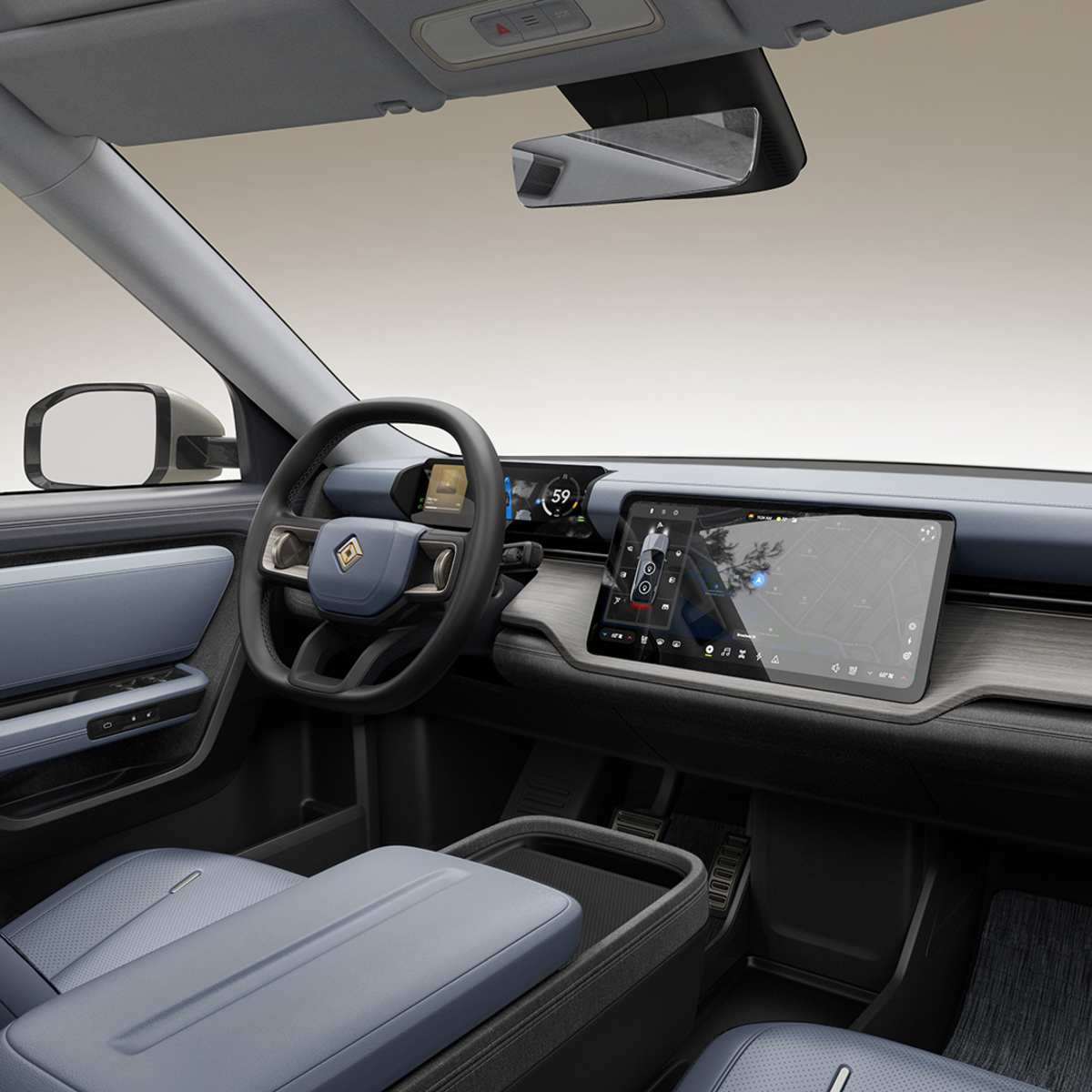
Rivian R2 is a new electric car from Rivian. The host is saying it has just started being delivered to customers, meaning you can actually buy one now.
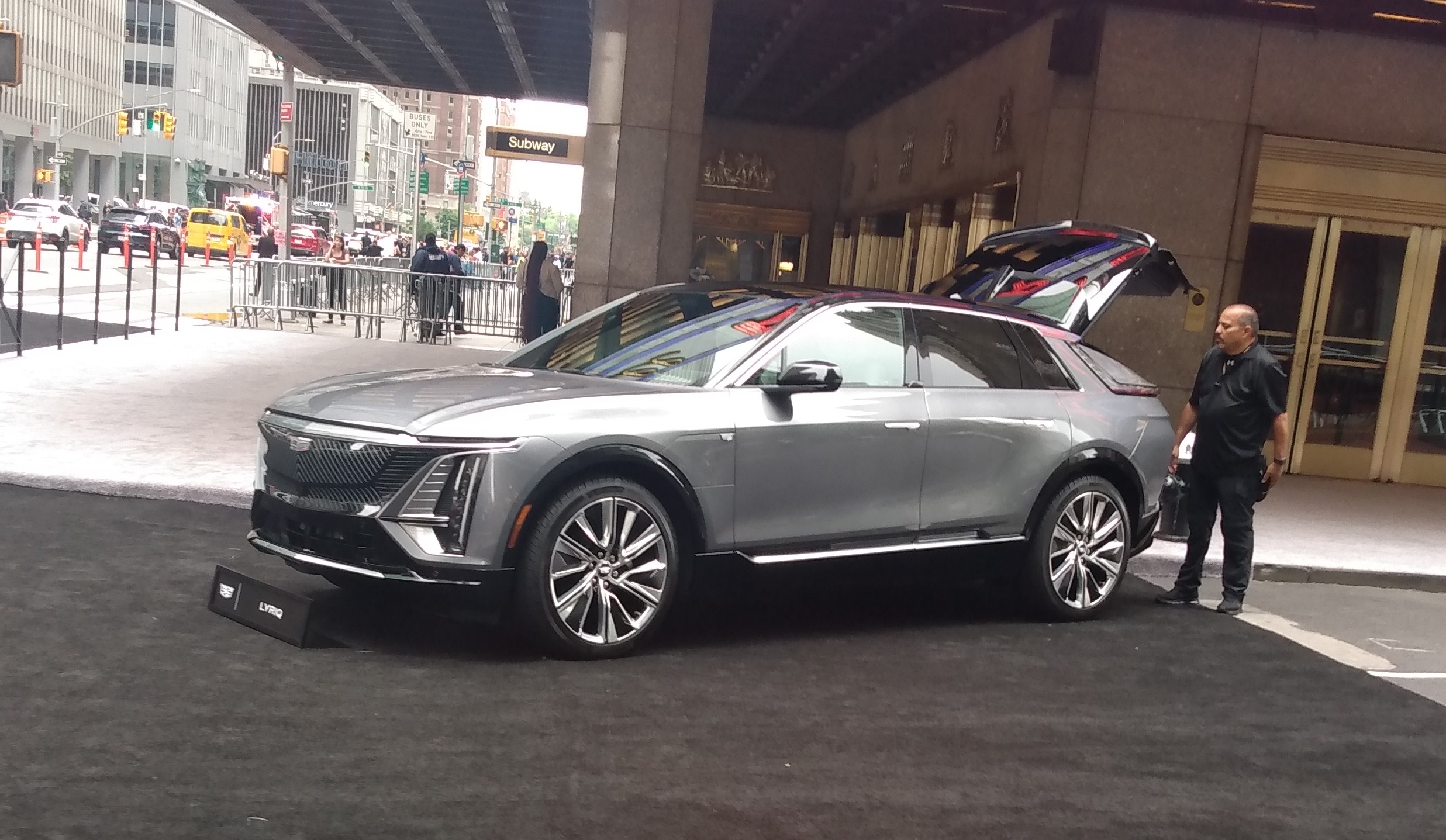
The Cadillac Lyriq is an electric SUV. The podcast mentions it as one option people might choose when shopping for an EV. It’s included in a general comparison of different electric vehicles.
In this raffle, “supercharge your tickets” means you pay extra to upgrade the ticket. If that upgraded ticket wins, you get extra prize value on top of the EV.
Term
$7,500 tax credit
The $7,500 tax credit is a government discount that used to lower the cost of certain electric cars. The host is saying that credit is no longer available, so EVs may cost more than before.
Accelerate Auto is a company the host mentions during a sponsor break. They’re not talking about a specific car part here—more about EV owners and planning ahead.
X care appears as a product/service offering for EV owners, positioned as a policy you buy before you need it. The host describes it as providing coverage and “peace of mind,” implying it’s meant to reduce the stress of unexpected issues.
The Rivian R1T is an electric pickup truck. The host brings it up to show that EV owners across different brands tend to plan and research charging and range.
Real-world range is the distance you get in everyday driving, not just lab testing. Here, the test shows the car goes farther than the official EPA number.
The EPA range estimate is the official “how far it should go” number from government testing. Real-world driving often differs, so the host compares it to an actual test result.
The EPA is a U.S. agency that runs standardized tests for cars. Their numbers are a good baseline, but your real results can be different in everyday driving.
Edmunds explains how they test EV range in a consistent way. They drive a set route that mixes city and highway, follow speed limits closely, and keep the climate control steady so the results are comparable.
“Auto” climate control means the car adjusts heating or cooling by itself to keep the cabin at a set temperature. EV range tests try to keep this consistent because heating and cooling use electricity too.
The Tesla Cyber Cab is meant to be an efficient, self-driving ride, not a fun-to-drive sports car. The idea is that it’s tuned to use energy as efficiently as possible.
The Toyota Prius is a car that uses electricity to help improve fuel economy. It’s especially known for being efficient and widely recognized. The podcast mentions it as a comparison for an EV that might play a similar “everyday” role.
“20-inch tires” refers to the wheel/tire size used on the car. Larger wheels often change ride comfort and grip characteristics, and they can also affect efficiency because tire rolling resistance and aerodynamic drag can shift with wheel size.
A “drive unit” is the electric drivetrain hardware that turns the wheels—typically including the motor and associated reduction gearing. The host contrasts the new car’s drive unit with an older one, implying a hardware change that can affect both performance and efficiency.
Sport suspension is a chassis setup tuned for sharper handling, often using different springs, dampers, and/or ride-height calibration than a comfort-oriented setup. The host is clarifying that the performance differences aren’t only due to suspension changes.
“Performance 3s” is shorthand for Tesla Model 3 Performance variants. The host uses it to emphasize that even the Performance version can still be relatively efficient when driven gently.
Amazon is a delivery company that’s switching more of its trucks/vans to electric. They’re talking about how many deliveries their electric vans have made and how they’re expanding in Europe.
Car
Rivian delivery van
This is the electric delivery van Rivian makes for Amazon. The hosts mention it because Amazon is using these vans to hit its long-term EV delivery targets.
“Zero emissions” means the vehicle doesn’t produce exhaust from its tailpipe while driving. The hosts are using it to describe the environmental benefit of electric delivery vans.
Mercedes-Benz is another car company whose electric vans Amazon is using for deliveries in Europe. The hosts are pointing out how many vans were added and where.
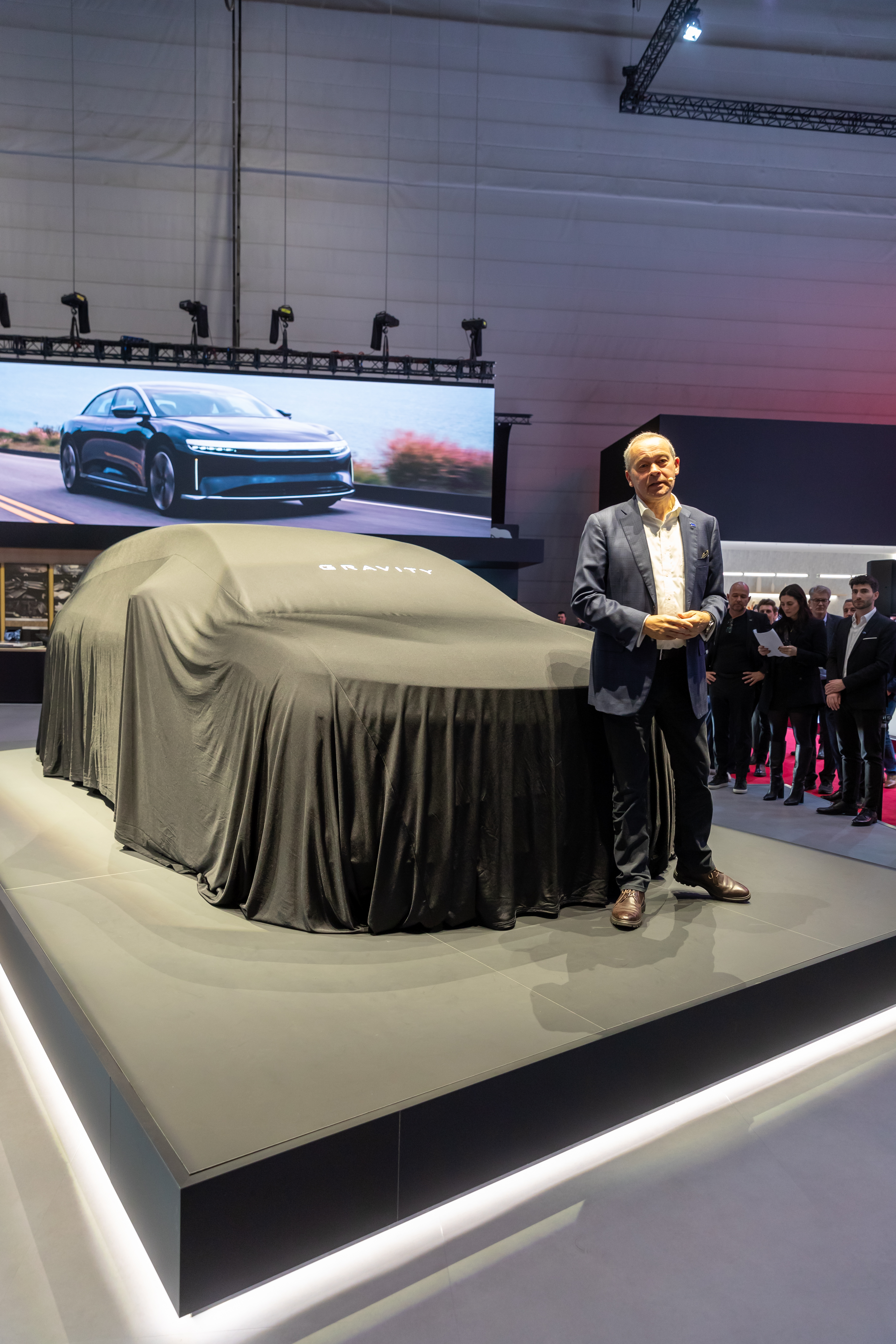
The Lucid Gravity is Lucid’s electric SUV. In this episode, they’re saying Lucid is updating it with new software features, including more automated driving help.
Hands-free drive assist is when the car can help drive itself for certain parts of the trip. It still requires the driver to stay attentive, and it only works on supported roads.
Automatic lane change is when the car can switch lanes for you. You still use the turn signal, and the system handles the lane movement when it’s safe.
Driving styles are different settings that change how the car behaves. In this case, they affect how often the car changes lanes and tries to pass slower traffic.
The instrument cluster is the screen behind the steering wheel. It shows important driving info, and here it’s being updated to display more traffic details.
UX 3.6 is a software update for Lucid’s car screens and controls. It includes convenience improvements like faster boot-up and better behavior for locks and mirrors.
Halo secure drive recorder is a built-in camera/recording feature in the car. It’s meant to capture events so you can review what happened, similar to Tesla’s sentry mode.
Sentry mode is a feature that keeps an eye on the car using cameras. If something happens around the vehicle, it can record it for you to look back later.
Waymo is a company/technology brand that works on self-driving cars. The host mentions it as an example of very advanced autonomy compared with other driver-assist systems.
Autonomy plus roll out means rolling out more advanced self-driving features in updates. The host is saying Rivian should be bringing that to customers soon.
The Mitsubishi Eclipse Sportback EV is an upcoming Mitsubishi electric SUV for North America. The host says it’s expected to use the same underlying platform as the next Nissan Leaf.
A battery electric SUV is a fully electric vehicle that runs on electricity stored in a battery. The host is saying this one is meant to be practical for daily life, not just a toy.
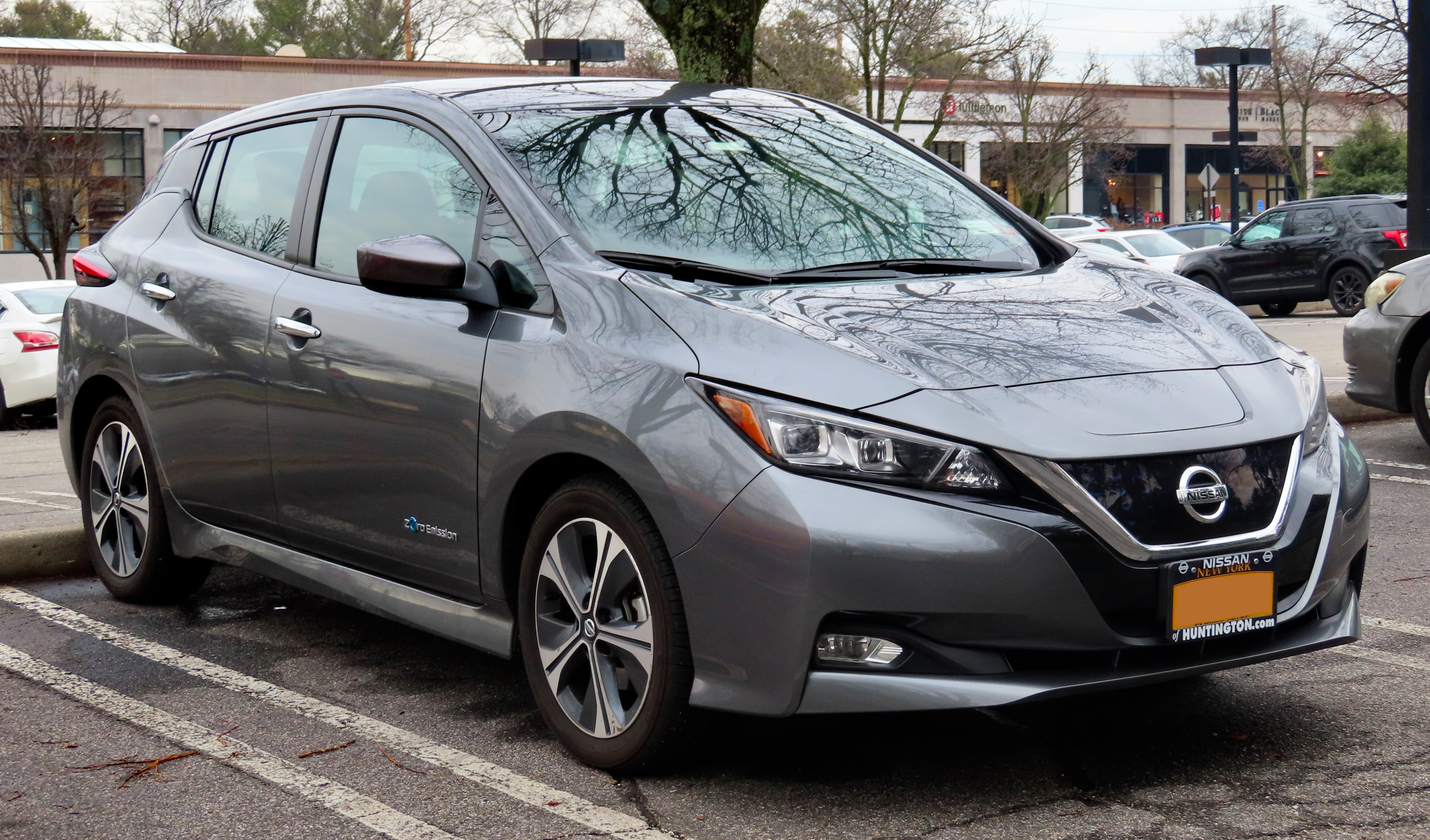
The Nissan Leaf is Nissan’s electric car. The host says the new Mitsubishi EV will be built using the next Leaf’s platform, meaning it should share some core engineering.
This is a Mitsubishi model that’s being turned into an EV. The idea is to keep the same basic size/shape, but update the outside so it looks more like Mitsubishi and can be developed faster.
This phrase means the car’s main “build plan.” If two companies share that plan, they can make new EVs faster and cheaper because they’re not starting from scratch.
Term
lift gate wheels
This is part of the rear hatch area on the car. The host is saying Mitsubishi changed details there to make the EV look more like their own design.
The D-pillars are the structural posts near the back of the car’s roofline. Changing them can alter the car’s shape and styling so it looks more like a specific brand.
The Toyota BZ4X is an EV that the host brings up as an example of two companies working together. The point is that sharing engineering can make EVs easier and faster to bring to market.
Car
Subaru Soltera EV
The Subaru Soltera EV is another example of an EV built through a partnership. The idea is that the companies can share the hard parts and still make the final product feel distinct.
The Solterra is Subaru’s electric SUV. The episode says it’s related to Toyota’s bZ4X, meaning they were developed together. That connection can affect how the cars are built and what you can expect from them.
The host is talking about automakers teaming up to share the work and costs of making EVs. That way, each company has less financial risk if EVs take longer to catch on.
The Honda Prologue EV was supposed to be a joint EV project with GM, but it got canceled. The host is using it to show that these partnerships can help, but they don’t always work out.
The host is talking about details that haven’t been announced yet—especially the price and how far the car can go. Without those, it’s hard to know if the EV is a good deal.
The Volkswagen ID Buzz is an electric minivan. The host is saying that if an EV costs a lot and doesn’t have enough range for the money, shoppers may not be interested.
Air vents are the outlets that blow heated or cooled air into the cabin. This call is about how the car decides when to run the vents for the passenger side versus only the driver side.
This means a feature that tries to save battery energy. The idea is that if nobody is sitting in the passenger seat, the car only runs the airflow where it’s needed.
Suspension geometry means how the suspension parts are set up and angled. If you change it, the tires can track the road better, so the car feels smoother and more controlled.
A tonneau cover is a cover that goes over the back cargo area of a truck. It helps keep things protected and can also help the vehicle move more smoothly through the air.
“Ute” is an Australian word for a pickup truck—basically a car with an open bed in the back for hauling stuff. The host is saying that’s a normal term there, not a weird nickname.
The host is talking about how the self-driving software decides when it’s “serious enough” to brake hard. They want it to be safe, but not so jumpy that it feels uncomfortable or scary for passengers.
“AI4” refers to Tesla’s internal hardware generation for its onboard compute platform used to run autonomy software. The host ties the braking incident to this hardware plus a specific software version, implying the behavior may depend on the compute stack.
“Version 14.3.3” is a specific Tesla autonomy/software release number. The host reports that on this version, the system braked sharply for a squirrel, using it as evidence to question how the software defines the threshold for emergency-like braking.
Remote service means Tesla tries to help you fix the problem using the car’s connection and software. But when something like a 12-volt battery fails, the fix usually can’t be done remotely.
EVs still use a small 12-volt battery to run the car’s electronics. If that battery fails, the car may not boot up or function correctly, even though the big battery is still there.
This means newer Teslas may use a different type of small battery for the car’s electronics. The claim here is that the lithium version should last longer and be less likely to fail.
Term
pro tip
A “pro tip” is just a smart piece of advice from someone who’s done it before. In this case, it’s meant to help Tesla owners avoid issues or make ownership easier.
This is a website the host recommends for buying Tesla accessories. They also mention it’s easy to order and return, and that they provide installation help.
DIY videos are step-by-step guides intended for owners to install accessories themselves. In the Tesla accessory world, they matter because many add-ons require careful fitment and basic electrical/trim handling.
Garage door safety sensors use an invisible light beam to detect if something is in the way. If the beam gets blocked, the door should stop or reverse instead of closing on something.
A “beam array” is a set of sensor lines that the device uses to “see” obstacles. More beams can help it notice things that are sticking out at different spots.
A snap plate is a bracket that holds your front license plate. It’s designed to mount securely without gluing or taping it directly to your paint, so removal is easier and safer.
They’re talking about heavy-duty tape that sticks accessories to the car. If you try to remove it later, it can be hard to do without pulling or scratching the paint.
Paint protection film is a clear protective sheet that gets put on your car’s paint. It helps protect the areas that get hit the most—like the front bumper and side panels—from chips and scratches.
Rocker panels are the lower side panels of the car. They’re often protected because they’re easy to scuff when you get in and out or when road debris hits.
The rear bumper is the part at the back of the car designed to take impacts. It’s often covered with protection because it gets scuffed or scratched in parking.
Ceramic coating is a protective layer you apply to a car’s paint. It helps the paint resist dirt and makes washing easier, and it can last for years instead of needing constant waxing.
Paint correction is basically polishing the paint to remove visible flaws. It targets things like swirl marks and scuffs so the paint looks smoother and shinier.
Swirl scratches are tiny marks in the clear coat that can make paint look dull. They often show up when light hits the surface a certain way, and polishing can reduce them.
Clear coat is the shiny, transparent layer on top of your car’s paint. If it gets damaged or looks bad, the whole finish can look worse—polishing can sometimes fix that.
The Pontiac Solstice is a sports car. In this episode, it’s mentioned mainly because of the word “Solstice,” not because it’s an electric vehicle. The discussion is likely using it as a quick reference.
LIVE
On this week's episode of Ride the Lightning, the Tesla and EV podcast, Tesla introduces
its fourth new currently available blue paint option.
The Model 3 crushes a popular consumer website's range test, Lucid introduces a major new software
update, Mitsubishi announces a new EV for the North American market, and more.
What's happening friends, alongside my four-legged friends, Daisy the Boxer and Lily the Silly
Labrador puppy, my name's Ryan McCaffrey, welcome to another week of Ride the Lightning,
the Tesla and EV podcast coming at you every Sunday at 9am Eastern 6am Pacific.
This is episode 567 publishing on June 14th, 2026 as usual on Friday evening.
Well, quick PSA before I get going, there is a new monthly mailbag slash ask me anything
post over on both my Patreon page, which is patreon.com slash Tesla podcast, and the community
run RTL pod subreddit, so if you want to make a comment on either of those posts asking
me any kind of question you like, I would absolutely love to hear from you because these
are really fun to round up and then I answer them all at once on a lightning round mini
episode on Patreon, so I will do that later this month, but get your questions in via
either the Patreon page or the RTL pod subreddit.
Getting started this week, a welcome to Belgium and Denmark.
They have just joined the full self-driving supervised party, so two more European countries
join the party as it were, because it is a party.
You can't quite have a party in your car yet, at least not while you're in the driver's
seat.
I mean I guess technically you could, as long as you're supervising the car, as long as
your eyes are forward and your eyes aren't detected looking away from the road, I guess
you could, but in any case, yes, Belgium and Denmark now have FSD supervised, that is fantastic.
Also fantastic, there is another, yet another massive new supercharger project coming to
California, this one happening in Willows, California.
As you might have guessed if you've been listening for a while, pretty much every time
I bring up a new supercharger, it is discovered by the same person, the eagle-eyed supercharger
superfan Marco RP over on X who posted pictures of the permits and the plans and wrote, permits
have been filed for the addition of a 96 stall V4 station behind the Starbucks located directly
off Interstate 5 on North Humboldt Avenue.
The installation will consist of 56 stalls in Phase 1, along with two solar canopies,
a mega-pack and a prefab amenity building that will be expanded as part of Phase 2.
So hopefully the amenity building means some nice clean restrooms, maybe a nice spot to
grab a quick bite to eat, that remains to be seen.
Solar canopies are also awesome because they A will provide you shade, but B will help
generate some nice renewable clean energy as well.
Now I get it, if you might be tired of hearing about these huge California supercharger projects,
but I can't help that that's where Tesla keeps building them.
And if you're curious, as I in fact was, where Willows is, unlike the rest of these huge
supercharging stations in California, this Willows one is not located on the corridor
between Los Angeles and San Francisco.
It is on Interstate 5, which is where pretty much all the big ones are between LA and
San Francisco.
This one, Willows California, it's much farther north, north of San Francisco, north of Sacramento,
and looking at it on the map, it's almost halfway between Sacramento and the Oregon
state border, so it's very, very, very northern California.
So if you find yourself heading up to Redding or maybe Mount Shasta, you might end up stopping
at this huge supercharging site.
The next story I have for you this week is in fact the main one, I just happened to drop
it towards the beginning because it's not the biggest deal in the world, I acknowledge,
but it's the most interesting thing to me that happened in the world of Tesla and EVs
this week.
You guys know I'm biased towards paint colors and other little design tweaks and changes,
so here we go.
You could say this week that Tesla's got the blues so bad, no they're not depressed,
that's the good news, at least I hope not, but they are releasing yet another new blue
paint color.
This makes four currently available all pretty recent, in fact they're all quite recent
blues in different regions around the world.
It's called Coastal Blue and if you're in Europe and you buy a standard version Model
Y, the very base level entry level Model Y, you can pay 1,000 Euros or 1,300 Pounds if
you're in the UK to get Coastal Blue, which is the same price as all the other premium
colors.
Which based on the press photo that Tesla released alongside this, as well as I went
and compared it side by side in the UK design studio and the US design studio comparing
to our blues, so it appears to be a shade or two darker than frost blue.
I wouldn't say it looks exactly like frost blue, but a shade or two darker the way that
I've previously described Stealth Gray, in my opinion, seeming like exactly like midnight
silver metallic, just a shade or two darker.
Coastal Blue does have a little bit more of its own personality, but I would say it's
closer in its shade to frost blue than any of the other blues, particularly marine blue,
which is the new current blue on premium Teslas pretty much around the world.
In fact, I had to go and figure this out, because there are now, you can get a different
blue depending on which trim you get and depending on which region of the world you live in,
but before I get to that, that little rundown, I did find it quite strange this week.
I was surprised, A, that they would announce and release another new blue at all, given
all of the other blue colors that we have, but also that they would make an exclusive
shade of blue that's only for the entry level Model Y, where you have more cost conscious
buyers, this color does cost a premium as I mentioned a moment ago, so that did surprise
me but they have done it.
So, I suppose if you really want your Standard Model Y to stand out, because remember, the
only other colors available for the base Model Y are Stealth Gray, Pearl White Multicote,
and Diamond Black with the latter two costing an additional amount of money just as the
new Coastal Blue does.
And, or if you hate gray scale colors and you're buying a Standard Model Y, now you've
got one and only one option that isn't gray scale.
So to recap, because there's now kind of a lot to break down here in terms of again,
which blue you have access to depending on which trim Model Y you buy in which region,
so we have Coastal Blue on the Standard Model Y in Europe, Marine Blue on Premium Model
Ys in Europe and North America, as well as on the Performance Model Y in Europe and the
Asia Pacific Territories, they also have Marine Blue for those, then you have Glacier Blue
on Premium Model Ys in the Asia Pacific region, and then of course here in the US, North America,
you have Frost Blue exclusive to the Performance Model Y.
Now, blue, if you're a long time listener, maybe you're a Patreon backer, you may remember
the Tesla Paint Color Leaderboard lightning round that I did over on Patreon a while back,
I'm going to need to update that again, because blue has now vaulted to the top of that leaderboard.
In addition to the four, as I mentioned, four currently available active blue variants around
the world, we've also had the now retired blue metallic and the longer retired deep blue
metallic, or maybe I've got those switched up.
I can never remember if the original blue was blue metallic or deep blue.
In any case, there were the two previous blues, which means Tesla has now had six total shades
of blue in the company's history, with obviously, as I was saying, most of those being quite
recent.
I in fact wanted to have a little fun with this because again, you guys know I love talking
about paint colors.
This week's Patreon poll question asked, which of the four current blue colors is your favorite?
I included, I made apples to apples, I put apples to apples images in here by using the
design studio renders, because if I were to go find real life pictures of each color,
the lighting is different in different pictures, so this at least is consistent even if it's
a render and not an actual photograph of the car.
But it was simple, which of Tesla's four current blue paint colors is your favorite?
Marine blue, frost blue, the new coastal blue, or glacier blue, and taking this fairly convincingly,
although the votes were reasonably distributed as you'd expect with a subjective paint color
choice like this.
But the new marine blue here in the US taking it 35% of the vote, behind that at 24% of the
vote, was glacier blue, which you know what, I would probably also rank them marine blue
number one, glacier blue number two, and then in third place was the brand brand new coastal
blue that I was just introducing, that got 19% of the vote, and interestingly frost blue,
which of course had been exclusive to Model S and X, and then when those cars were retired,
Tesla made it available on the Performance Model 3 and Performance Model Y, frost blue
finishing in last at 16%, and then 3% of you said, I don't like any of these, which is fair,
you might not necessarily like any of the options on the table, but thank you to the
upwards of 300 of you that kindly stopped by my Patreon page to vote, a reminder that
the Patreon poll is totally free, it's open to everybody every week, I just want you to stop by,
cast your vote, participate in the poll, and you can do that by visiting patreon.com
Tesla podcast, the new poll typically goes up on Tuesday evenings, but yeah, as I was just
looking at them again there as I read you the poll results, I would say that for me,
none of them stand out head and shoulders above the rest, where it's just like, oh that's the one
for me, as I've said before, I'd really like to see Glacier Blue in person, that I could see if
I love it in person maybe, that would be the one I'd ultimately pick out of the four, but
if you make me pick one right here right now, I think I would as I said take Marine Blue,
because I do like darker blue colors in general. Next up this week, next up this meek, I hope this
isn't a meek story or a meek episode, but next up this week, I must admit where I was wrong,
I had previously said that I thought that Tesla would keep the black headliner and the updated
16 inch QHD screen exclusive to the premium trim model wise and continue using the existing
light gray headliner and existing 15 inch HD screen on the standard Model Y as a way to further
differentiate the standard trim from the premium trim, however this is the part where I'm wrong
because that is no longer the case. Tesla has rolled the updated center touchscreen and the
black headliner out across all of its Model Y trims here in North America, yes even the entry
level one, and I guess I probably should have seen this coming because it does make sense from a
supply chain perspective, not that I'm some supply chain expert, but I think even it's fair to see
the basic economics of this, if you only have one headliner and one screen type to worry about
rather than two in your supply chain for this car that sells a million to a million
1.2 million units per year, that is just going to simplify your costs, your supply chain,
your logistics, everything, so that does make sense, and in fact I couldn't help but almost
feel a little bad for some folks in the Tesla community because I've been seeing a growing
number of folks posting in various online forums and places in the Tesla community
who just want to buy a new Model 3 performance specifically with the black headliner and that
slightly larger, slightly improved 16 inch QHD center screen, and those folks are going to
continue waiting, but the good news is, even though I just said I was wrong about one thing and I
don't ever pretend to be right about everything, I'm just a human being who's kind of predicting
Tesla as best I can as somebody that keeps a close eye on them, but as we've all learned over the
years, they are a very, very difficult company to accurately predict all of the time, but I would
confidently say that I think there is a high, high, high like borderline unmistakable chance,
just a can't miss chance that the Model 3s will get the black headliner and that slightly larger,
slightly improved center touchscreen, and I would suspect that the last of the supply of the
old headliner and the old center touchscreens is probably being utilized on the Model 3 production
lines now. Remember, the Model 3 has only made it two factories, the Model Y has made it all four
of Tesla's vehicle manufacturing facilities, so I would expect that the last of that supply
of the gray headliner and the 15 inch screens is being used on the Model 3s now, and in fact,
it wouldn't surprise me if, as the supply really starts to run down on those two things,
that the performance Model 3 does get the black headliner and the 16 inch screen
first relative to the other Model 3 trims for just a short little while,
while again the rest of that old stock of those parts runs out, which is exactly what happened
with the Model Y. But if you've been eyeing a new Model Y, you're going to get the slightly larger,
slightly improved screen if you order now, and you're going to get that black headliner. I know
not everybody likes the black headliner, I can go either way with it, I think I said this
the first time that the black headliner came up when it was very first introduced over I believe
in Shanghai first. In the DeLorean's, you only had a choice of black interior or gray interior,
and whichever one you chose, pretty much everything was either black or gray. In the gray interior
car, the headliner was light gray, the dashboard was gray, the instrument cluster, the center console,
the seats, everything gray, and if you had a black interior DeLorean, everything was black,
and then the headliner above you was a super dark gray. So in the DeLorean, I had a gray interior
car, and if I ever had the extreme privilege, as I hope one day to do, we'll see, but if I ever get
lucky enough to get another DeLorean, I'm definitely getting a gray interior car again, because for
me in that car, the black feels a little claustrophobic, because it is a very cockpit-like
interior in that car, and I thought, I just find that the gray makes it feel a little more open.
In the Teslas, I don't quite feel as strongly about it. Now, I say that having not been in
a black headliner Model Y, because I don't really spend any time in Model Ys except for the occasional
robotaxi ride here in San Francisco, and in fact, I guess the last time my wife and I did take
a robotaxi, it did have the black headliner. But in any case, the Teslas have such large
greenhouses that I don't feel as closed in with the black headliner. Again, based on my
limited experience so far, and in fact, in a Model S and X, I like the black Alcantara headliner. I
think it just looks and feels more premium. Now, it's not Alcantara in the three in the Y, it's
the same fabric material it's always been, it's just a different color, but I guess this is a long
winded way of saying that I could go either way on a three or on a Y, but I guess you may feel
differently, right? Like, you may decide, oh, if I order now, I'm getting a black one, a black
headliner, and oh, that feels, I don't prefer that, I would rather have the gray. And in that case, well,
I unfortunately have bad news there because they're all going to be black headliner from here on out.
But probably the same number of people will be very happy about that change.
Anyhow, next this week, Tesla has apparently revised the policy it had previously listed for
FSD transfers on the new $60,000 Cybertruck that is now just starting to deliver, by the way,
this week were the first deliveries. So this is a not good news story, I don't like doing these,
but it's all part of being honest and fair and balanced. I saw this on Tesla Roddy who wrote,
after initially stating that customers who bought the pickup truck would be able to
transfer FSD purchases, Tesla recently changed the language in those terms and conditions
to reflect this would no longer be the case. Tesla said orders for the new Cybertruck all-wheel drive
must be placed by March 31st, 2026 to qualify for the FSD transfer. The language in the document
from earlier this year explicitly states that they may qualify for the transfer program,
but the date of March 31st is explicitly mentioned. Additionally, Tesla delivery advisors reached out
to some orders of the new $60,000 Cybertruck who were told there was, quote, an update to the
eligibility of the full self-driving supervised transfer, end quote. And apparently Tesla stated
that they could A, proceed without the transfer, B, upgrade to a premium or cyber beast trim and
request an FSD transfer, or C, cancel the order and be refunded the $250 otherwise non-refundable
order fee. So again, as I mentioned at the top there, this comes just as the first deliveries
on the 10-day darling, known as the $60,000 Cybertruck, have begun. And I'm disappointed
in Tesla over this. Again, I'm not here to sugarcoat, always pretend everything is okay.
It is definitely, this is a company run by people that makes mistakes and does things that not
everybody's going to agree with, and I do not agree with this one. Now, if you want to argue that
Tesla is a business and they have to run a profitable enterprise, well okay, I wouldn't fight you on that.
But what I would say to that is that it's not a great way to treat your customers,
because Tesla already put customers in a tough spot by limiting this $60,000 Cybertruck
to a 10-day window where you could order it, and that window happened to coincide with the
end of the FSD transfer program. But when those orders for these trucks were placed in that window,
it appeared from all the language on the Tesla website at the time that people
would be able to transfer their FSD to their new truck whenever that truck was finally delivered.
Tesla is moving the goalposts here and changing the rules, and I think that's kind of lame.
It's not, well not kind of, it is lame, it's not great. I don't like that that's how they've decided
to handle this. To me, it's just unnecessary. I know that's easy for me to say because it's
not costing me any money, but here's the thing, just honor it for those people. Just honor it.
Those people have already jumped through enough hoops. Just honor it and turn them into fans,
happy fans when they get their truck, instead of would-be customers who ended up canceling
because of this, or skeptical customers who went ahead and took delivery, but are just now, you
know, not super gung-ho and enthusiastic, not saying they don't like their truck, but these
people might have otherwise been full-throated enthusiasts for the brand. And now, just because
of this policy, you're risking that. So my question is why get their ownership experience
off on a sour note like that? Because those customers, remember, I think the bottom line
here is, those customers did nothing wrong. It is Tesla who is upending the apple cart here.
So that's why I say I'm disappointed in how they've decided to handle this.
Before I continue with this week's Tesla and other EV news, and there is plenty more to talk
about, I hope all of you who are kindly supporting me on Patreon at that most popular tier, that's
the $10 per month tier, enjoyed this week's Lightning Round mini episode coming up on the
200th one. We're not quite there yet. I think this was 196, but this week's Lightning Round was about
what it's like to drive the original Tesla Roadster. I was thinking about what I want to talk about
on the Lightning Round this week, and I realized, oh, I never did talk about that. I never did a
Lightning Round about it, because boy, is it different than any of the other Teslas,
Pastor Presence. So if you'd like to listen to that and you'd like to support me, you can do so
over on my Patreon page, found at patreon.com slash Tesla podcast. If you sign up at that $10
per month tier, you'll not only get access to all 196 of those Lightning Round mini episodes,
which are pretty much all evergreen topics, meaning you could listen to any of them now,
and they're just as relevant now as they were when I put them out. So you can check that out
on the Patreon page, and the other thing you get at that $10 per month tier is an ad-free
early access episode. So it's an ad-free episode that you get early access to before
the show drops for everybody else on Sunday. And don't forget, if you just subscribe to the Patreon
at the base tier, five bucks a month, just five bucks a month, you will get, as a thank you,
the ad-free early access. So if you're willing to give back to the podcast, the Patreon is the
way to do it. Again, find it at all the information over at patreon.com slash Tesla podcast.
Don't forget, there is an annual pledge option if you don't want to do a month-to-month thing.
And if you do that annual option, I say thank you for that by giving you a 10% discount on the
annual pledge. And quick reminder, there is a seven-day free trial on the Patreon as well,
if you'd like to check that out. And speaking of support, you know who could really use your
support is Chesed Chicago. The 12th annual Chesed Chicago raffle is here, and I am so thrilled to
help raise some money for such a great cause, for I think this is the third year in a row
that I've partnered with them, and you guys have been really, really generous these last couple
years supporting this effort. So let's come together as a community here and help them out
in 2026. This raffle gives you a chance to win any EV of your choice or $50,000 cash. So whether
that's the brand new Rivian R2, which just started deliveries this week, I'll be talking about that
more in a little while here. Maybe you want to snag a nice new Model Y performance? What about a
Model 3 performance? Maybe a Lucid Air? Cadillac Lyric? Whatever strikes your fancy, if you win the
raffle, that's what you get. You win any EV of your choice through the 12th annual Chesed Chicago
raffle. Go to cceraffle.com or just click the link in the episode description and use promo
code RTL for $25 off of two tickets or $500 off of 15 tickets. Plus as an option, you don't have to do
this, but you can supercharge your tickets for $10 per ticket, which means if one of those supercharged
tickets wins the raffle, you will not only win the EV of your choice, but you will add, you will
electrician installations. So you'll get the whole kit and caboodle there. And remember,
with the $7,500 tax credit now history, this raffle is an even more awesome way to get your hands
on the EV of your dreams for the cheapest amount of money possible. If you just hit the price of
a raffle ticket and even if you don't win, it goes to such a great cause because Chesed Chicago
offers over 80 programs and services, which provide vital assistance to more than 6,000
individuals per year with a focus on battling hunger, preventing eviction and homelessness,
and providing needy families with basics such as clothing and furniture. The final drawing is
less than one month away. It's on July 13th, so get your tickets now before they're all gone
because they can and do and have in the past sold out. And if that happens, the raffle will end
early. So go to cceraffle.com now or click the link in the episode description and don't forget
to use that promo code RTL for $25 off of 2 tickets or $500 off of 15 tickets.
And one more important thing before I get back to the news, my friends at Accelerate Auto,
one thing that I have always appreciated about EV owners is this. They're thinkers. I wouldn't
put myself in that group, I hope so. In general, all of you guys are EV owners are thinkers.
And before buying an EV, these people research charging, battery technology, software,
range, road trips, ownership costs, they plan ahead. And that is exactly why so many Tesla
and Rivian owners take a look at X care before they ever need it, not because something is wrong,
but because preparation is part of smart ownership. Whether you're driving a Model 3,
Model Y, Cybertruck, R1T, R1S, Model S, Model X or something else entirely, X care was built
specifically for EV owners who plan to enjoy their vehicles for years to come. The best ownership
decisions are usually made before they're necessary. I am a two time policy holder now
on our 2018 Model 3. I am very happy to have this peace of mind just in case. In case anything
happens, I am covered. To learn more, you can talk to a human being by calling 866-584-1363.
And if you talk to that human being at X care and you decide to proceed with a policy purchase,
make sure to mention the promo code lightning for $100 off or if you're doing it online by visiting
xcare.com, make sure to use promo code lightning. So again, 866-584-1363 or go to xcare.com and
don't forget promo code lightning. Continuing along with the final Tesla news story of the week
before I move on to other EV news, this is a good one. The 2026 Tesla Model 3 rear wheel drive
is the efficiency champion in Edmunds real world range test. This right up comes from the Edmunds
blog. They wrote the 2026 Tesla Model 3 rear wheel drive did more than beat its EPA range
estimate in the Edmunds EV range test. It also became the most efficient EV we've tested that
is currently in production. Side note, wow, that is impressive. Tesla's rear wheel drive Model 3
has an EPA range estimate of 363 miles, but our test car traveled 393 miles on a full charge.
That is 30 miles farther than its official figure or an 8.3% improvement. It's not the biggest
percentage gain we've seen from an EV, but the final number is hard to ignore. Nearly 400 miles of
real world driving range puts the Model 3 rear wheel drive close to the top of our range chart.
The more impressive figure is how little energy it used to get there. The EPA rates the Model 3
rear wheel drive at 25 kilowatt hours per 100 miles or 4 miles per kilowatt hour.
In our testing, it returned 21.7 kilowatt hours per 100 miles or 4.61 miles per kilowatt hour,
making it 13.2% more efficient than its EPA estimate. Lower consumption is obviously better
as it means the car uses less electricity to travel the same distance.
Now, if you're curious how they test, Edmund says,
The Edmund's EV range test is designed to give you the most accurate representation of a car's
real world range. Rather than getting on the freeway, setting the cruise control at 70 miles
an hour and driving until the battery is depleted, we follow a strict route made up of 60% city and
40% highway driving with an average speed of 40 miles per hour. This better represents the
actual driving buyers do day to day. We also stay within 5 miles per hour, pardon me, of all posted
speed limits, drive each car in its most efficient drive setting, and keep the climate control on
auto at 72 degrees. Our broader impressions of the Model 3 line still apply here. The latest car
feels quick, quiet, and easy to drive with responsive steering and useful cargo space.
Our reviewers have also found the cabin to be better finished than before,
though Tesla's heavy reliance on the central touchscreen can still make simple tasks less
intuitive than they should be. Taken as a whole, the Model 3 rear wheel drive is an unusually
efficient electric vehicle that is also nice to drive and easy to live with on a daily basis.
Wow, over 4 miles per kilowatt hour, 4.6 miles per kilowatt hour in the real world.
That is incredibly impressive. For a mid-sized car, we're not talking about a little compact
thing here that's lighter. I'm not going to call the Model 3 a luxury car, but it's a very comfortable,
very nicely appointed mid-size sedan. So this is just incredibly impressive. And remember too,
if you think that's impressive, and I certainly do. The Cyber Cab, which I saw another one of
running around in Daily City, California today, the Cyber Cab is the most efficient car that
Tesla's made yet. So it's even better than 4.6 kilowatt hours per mile. We don't have that
miles per kilowatt hour figure for the Cyber Cab yet, but the fact that it's the most efficient
Tesla ever comes straight from Tesla's chief engineer, Lars Moravy, who had said it I think
on stage at the SNX, he said it at something. Maybe it was an earnings call. Anyway, he definitely
said it. Maybe it was even here, I'm not sure. But the difference is the Cyber Cab has the advantage
of pushing all of its sliders all the way as far as they can go towards maximum efficiency.
The Cyber Cab is not even attempting to be a good handling car or a good performance car
because it's not built for either of those. It is a self-driving cab. So its sliders are all
pushed to comfort and to especially efficiency. I mean honestly, as I was making my notes for
this week's podcast, I feel like you can kind of consider the Cyber Cab to be like Tesla's
version of the Prius. It even kind of looks a little like a Prius. It's built for maximum
efficiency without any of the fun. And again, that is not me sliding the Prius. That's what
it's designed for. It pushes all of its sliders to efficiency. It's not a sports car you're going
to be throwing around corners. But it will sip on fuel very delicately compared to other gas-powered
cars. And the Cyber Cab is the EV equivalent of that for Tesla, where it is not a fun car.
It is an ultra-efficient car. And so that's why I bring it up is because the Model 3,
getting nearly 400 miles of real-world range in the
rear-wheel-drive Model 3, and that car is still fun to drive. Like, is it the performance Model 3?
Of course not. But it's still a reasonably quick, as Edmunds themselves noted,
still pretty fun to drive. Still handles pretty well. And you are getting all of that nearly 400
miles. Still fun, still efficient, still handles decently in a $42,500 car. That is
awesome. That is just incredible value out of that particular trim of the Model 3. Now,
I know that the Model Y is obviously not just Tesla's best-selling car, but it's either the best
or second best-selling car in the world for what, three years running now? But just all I'm saying
is, this story should be a nice reminder, don't sleep on the Model 3. It is so good of a car,
and I'm extremely blessed to have two of them in our household. Of course, mine, by design,
by my own choice, mine both have the sliders pushed all the way in the opposite direction,
away from efficiency and over to performance, with the bigger motor, different drive
unit in the new one, the 20-inch tires. It is not tires and wheels and the sport suspension. So,
it is still an efficient car, especially the new one, the Highland Performance, my 2024.
It's still pretty efficient when it wants to be, like if you're not driving it hard.
I mean, considering what the Performance 3s are capable of, they are still pretty darn efficient.
So, yeah, that's all I'm saying is, if you're considering a new EV and maybe you're just
automatically kind of looking at a Model Y, I get it. If you just want or need that extra
cargo space or you think you might in the future, it makes perfect sense. But the Model 3 is an
extremely awesome car that I feel like kind of gets overshadowed a bit these days because the Model
Y is so successful. So, go Model 3. I am on hashtag Team Model 3 right here.
On to other EV news, I start with just a quick little shout out. I want to say a hearty congratulations
to the first lucky owners of the Rivian R2. Deliveries began this week and I don't know how
they're doing. We'll find out numbers later, but congratulations. If anybody listening happened to
be one of those first deliveries, that's got to feel awesome. I still remember, like I hope
our two owners get to experience what I experienced as a relatively early Model 3 owner because I
got my Model 3 right as production had really started to ramp up. So, they were really getting
out there in big numbers when I got mine. But for the first month or two when I got my 2018 Model
3 performance, the threes were still relatively rare. And I distinctly, I have this great positive
memory on a couple of different occasions of running into, thankfully not literally, but coming
across another Model 3 owner, like on the opposite side of an intersection, and we'd wave at each
other. And just big smiles on our faces because those people, you knew, they also waited a long,
long time on the reservation list for the Model 3. And so, you know that they were very excited to
get their car just as I was. And yeah, I just vividly remember on two or three different occasions
in that first month or two trading enthusiastic waves with other Model 3 owners. And then,
they became so ubiquitous that that stopped. But I hope that our two owners get to experience that
as well because they have had the same experience. They have probably been on the R2 reservation
list for a while. And if you're getting early delivery and you're in your R2 and you see another
R2 on the road, I hope you get to do an enthusiastic wave at each other because
it just feels good, right? You're having a little brief momentary connection with another human being
who shares the enthusiasm for the same thing you do, right? It's just a simple little nice human
moment that I really hope that the R2 owners are going to get to experience for hopefully at least
the next few months, right? That's the goal. But kind of on that note, I want to say here's to
tens of thousands more R2 deliveries this year and hopefully hundreds of thousands more next year
and millions more cumulatively in the years to come. But big week, big moment for Rivian. And I
wanted to recognize it and congratulate, I mean, hey, I congratulate everybody at Rivian if you're
on the production line and sales, whatever your role, big moment for the company this week.
And I'm super happy for all of you. Speaking of Rivian, Amazon, who has a stake in Rivian and
for whom Rivian produces the RDV, the Rivian delivery van for Amazon. Well, Amazon has reached
the halfway point to their 2030 goal of having a 100000 electric delivery vans. I saw
this on Drive Tesla Canada this week. They wrote, the achievement puts the e-commerce giant halfway
towards its target of deploying 100,000 electric delivery vehicles by the year 2030. According
to Amazon, its electric vans delivered more than 2.4 billion with a B packages in 2025 with zero
emissions. A significant portion of Amazon's recent expansion has taken place in Europe,
where the company and its delivery partners had more than 10,000 electric delivery vans on the
road by the end of last year. One of the largest contributors to that growth was Amazon's deployment
of nearly 5,000 electric vans from Mercedes-Benz across Austria, France, Germany, Italy,
and the UK. The rollout builds on a 1 billion euro investment announced in 2022
to help electrify and decarbonize Amazon's European transportation network. While Amazon
now utilizes a wide range of electric vehicles tailored to different markets and delivery needs,
Rivian's custom-built delivery vans remain one of the most recognizable components of the company's
fleet. The electric vans were developed through a close partnership between Amazon and Rivian,
with both companies working together to design and deploy the vehicles in less than three years.
Amazon says it has now tested and deployed 15 different electric vehicle models globally,
including cargo bikes, electric three-wheelers, delivery vans, and heavy-duty trucks.
Well, I have to say, I always get a little bit jealous when I see Amazon's Rivian delivery
van rolling around in other cities around the San Francisco Bay Area. We weirdly do not have
the RDVs in San Francisco proper, although I wish we did. It'd be cool. It'd be nice to have
some more zero-emissions vehicles running around every day. But as you heard there,
Amazon did not put all of its EV eggs in one Rivian basket. Mercedes, as you heard there,
was a major contributor to their European efforts, which is great. That is awesome to see.
Kudos to Amazon for embracing electrification for its delivery fleet. We need more companies out
there, FedEx and UPS, to follow suit and actually before you email me. Yes, I do know that FedEx
definitely has an electric van. I've seen a few of them around. I think they've had them for a while.
I'm not sure what the specs are, but yes, FedEx does get partial credit here because I have seen
an electric delivery van here and there for them, but not for UPS. But anyway,
hopefully the likes of those kinds of companies will follow suit soon, because if they do,
it would really go a long way towards improving air pollution and noise pollution in major cities
around the world. So let's go, FedEx and UPS, and hey, DHL, I'm throwing you guys into this mix
as well. Get in on this EV thing. Let's do it. Next in other EV news this week, Lucid has started
rolling out one of its most significant software updates yet for the new Gravity SUV, adding
hands-free driving capabilities alongside a range of new navigation, charging and convenience features.
Saw this one on Drive Tesla Canada, who wrote,
The over-the-air update known as Lucid UX 3.6 is now being deployed to
gravity owners across North America. Most notably, the update introduces hands-free drive assist
for DreamDrive 2 Pro equipped vehicles. According to Lucid, hands-free drive assist can manage
steering, acceleration and braking on approved highways while monitoring driver attention.
Drivers can also initiate a lane change by using the turn signal, allowing the system to
take in surrounding traffic and move into the adjacent lane when available. The company is
also introducing automatic lane change, which can independently perform passing maneuvers around
slower moving traffic. Taking a page out of Tesla's playbook, owners can choose between
different driving styles, including a more conservative approach that minimizes lane changes
or a more assertive mode designed to overtake slower vehicles more frequently.
Alongside the new driver assistance features, Lucid has enhanced the visualizations displayed
on the gravity's instrument cluster and center display. The system can now show traffic across
five lanes and provides more detailed representations of surrounding vehicles,
including SUVs, pickup trucks and buses. Beyond the headline features, UX 3.6 introduces several
quality of life improvements, including faster system startup, improved auto lock and unlock
behavior, customizable mirror tilt settings while reversing, and improvements to Lucid's
Halo secure drive recorder, basically their sentry mode. So if you're a Tesla owner listening to that
and all of those features sound familiar, well that is because you're correct. We are already
not just Tesla. And so even if you don't share that sentiment, I would think that we'd probably
all want to see more advanced driver assistance systems in every car, even if those systems aren't
necessarily as sophisticated or advanced as full self-driving supervised or Waymo,
because, simply, the more cars that are using these systems, the safer the roads are for everybody.
So hopefully Rivian will be able to follow suit soon with its autonomy plus roll out.
We know that's coming fairly soon as well. So good stuff from, I would combine Lucid and Rivian
as well with their deliveries of R2 this week, but this is great news for Lucid owners while
Lucid gravity owners specifically. And hopefully this release makes a big dent in the software
issues that seem to unfortunately have continued to trouble these cars. Even several years now
into Lucid making cars, the Lucid Air has been around since like 2022, I think. So if you've
watched the Engineering Explained YouTube channel, I check in on it occasionally. When a video there
strikes my fancy, I'll click on it and check it out. But if you have viewed that channel recently,
you might be familiar with the host of that channel, an engineer named Jason, and his almost
unbelievable run of bad experiences with mostly the software in the Lucid Air that he had leased.
He's made, I believe, three videos about all of his trouble with the car over several months,
and in my humble opinion, they're all worth watching. Not as a point and laugh like Nelson
from The Simpsons, haha, not like that, but just as an educational thing, just to see what this guy
went through and see what Lucid needs to work on. Again, I'm not trying to tear Lucid down here.
The reason that I brought that I read this story at all is because I want to recognize
that Lucid is making an effort here with this major new software release to smooth out some
of the problems that their fleet has had on the software side while also adding some welcome new
features as well. Closing out the news this week, if you're as tired as I am about hearing me talk
about some legacy automakers EV getting pulled from North America or just outright canceled,
if you're sick of those stories, well guess what, I am too. Here is a little karmic balance
to make us all feel a little better. Here's a story about a legacy automaker introducing
a new EV to the North American market coming this year. One more tip of the cap goes to
Drive Tesla Canada who wrote, Mitsubishi is officially adding another EV to its North American lineup,
confirming the all new Eclipse Sportback EV will arrive in both Canada and the US in the
while the new EV may borrow its name from Mitsubishi's sports coupe, the new Eclipse Sportback
takes a very different approach. The compact electric SUV is built through Mitsubishi's
growing partnership with Nissan and is based on the next gen Nissan Leaf. Mitsubishi announced the
vehicle this week describing the Eclipse Sportback as a battery electric SUV that combines sporty
styling with everyday practicality. The company says that the model is designed to handle a wide
variety of driving needs from daily commuting to weekend adventures. Although the vehicle shares
its underlying architecture with the new Leaf, Mitsubishi has worked to give the Eclipse Sportback
a distinct identity. The automaker has redesigned several exterior components including the front
and rear bumpers, grille, headlights, tail lights, lift gate wheels and D pillars. The result is a
more aggressive appearance that aligns with Mitsubishi's current design language while still
retaining the overall proportions of its Nissan sibling. This allows Mitsubishi to bring an EV
to market more quickly and at a lower development cost while still offering a product that feels
distinct from its Nissan counterpart. One question that remains is pricing. Historically,
comparable Mitsubishi and Nissan models have been priced relatively close together,
meaning the Eclipse Sportback could compete directly with Nissan's own electric crossover
while offering a different design and dealer experience. More details including specs,
equipment levels, driving range and pricing are expected to be revealed in the coming months
ahead of the vehicle's launch later this year. Well, you know, I have to say I learned something
new today, which I always appreciate. I did not even know that Mitsubishi and Nissan had a partnership
like this, which sounds like a very similar partnership to what Toyota and Subaru do for the
BZ4X EV and the Soltera EV from the Subaru side. So I say, cool, that is great. Whatever helps get
more EVs into the marketplace is AOK in my book. I mean, it does make sense, right? EVs
are particularly for legacy automakers still unfortunately considered a risk.
And so if that is a risky venture for your legacy automaker business,
why not team up with another legacy automaker, share resources and minimize that risk by splitting
the investment, right? Oh, and by the way, there's another one that fits into this category
from earlier this year. Sadly, it got canceled, which I reported here not too long ago,
but Honda's Prologue EV, that was a team up with GM. So there you go. This is not something entirely new
to the legacy automaker or EV space. And again, I think it's great to see, but I know you can't see
what the Mitsubishi Eclipse EV looks like because you're listening to a podcast, but you can of
course pause the podcast and just Google image search it. But I'll say for my part, I think it
looks nice. I mean, I don't love it, but I think it looks nice. It's a nice clean look. I guess what
I ultimately mean to say is I don't think the looks are going to scare anybody away. The key though
will be that unreleased information, namely price and range, because those two things both
proved fatal, particularly in combination, proved fatal to the otherwise very cool and
alone EV minivan, the Volkswagen ID buzz has 230 miles of range for 70 grand. Those are
those are both individually not great together. They are very bad. So the Nissan Leaf,
what gives me optimism for this Mitsubishi, the new leaf is very competitively priced
with a really nice range. So hopefully the Mitsubishi will match the Leaf's overall value
proposition. But once the new price or well, once the whatever the price is and range are
announced, I will certainly pass it along here. Alright, that is everything I've got for you in
another busy week of news from around the EV world from Tesla and everybody else.
But I am far from done with this episode of Ride the Lightning. Stick with me,
I will be right back with your Ride the Lightning hotline phone calls coming up next.
You've heard quite a lot from me on this week's podcast, now I would like to hear from you.
So let's do the Ride the Lightning hotline. This is the part of the podcast where you send in your
calls and I respond to them. So if you've got a question, comment or discussion topic for the
podcast, I would love to hear from you. I welcome and invite you to call in. And if you're wondering,
well, how do I call in? There are two easy ways to do it. Either use your smartphone's built-in
voice recording software, record your question. I kindly ask that you keep it to 90 seconds or
less so I can get to as many calls each week as possible. Send that file to me at Tesla Podcast
at gmail.com. Or the second way to call in is to simply call in and leave a message on the Ride
the Lightning hotline. Also same 90 second request applies there. The toll free number that you can
dial anytime is 1-888-989-8752. That number again, 1-888-989-TSLA. And if you know someone special
out there with an upcoming birthday anniversary, graduation or some other special occasion,
you can give them a unique gift of recorded voices from friends and family telling them
why they're special. The recordings can be podcasted or put onto a keepsake. Visit lifeonrecord.com
to learn more. First up this week is Kyler from St. Louis with an idea that I really like.
Hey Ryan. Kyler from St. Louis here. I had an idea that might improve some of the way that our
Teslas work for anybody like yourself or myself. I'm very lucky or I know a good portion of your
audience from your poll a couple weeks ago that I've known multiple Teslas. So in the navigation
app right now in our Teslas it'd be really great if we could have the other Teslas in our account
show up on there and maybe even be a waypoint that we can navigate to for my wife and I when
we're trying to both end up at a soccer game coming from work or things like that together.
We want to park next to each other with the kids and if I could just navigate to her car or see
where her car is I think that would really help us coordinate some of that and it you know seems
like a nice thing that Tesla could add. And even if Tesla wanted to take it to the next level you
can imagine you know say you're on a road trip I know my mom I just preferred her and she has a
Tesla now. It'd be great if I could caravan with her some sort of caravan mode where I could see
you know her car even though I don't have it in my Tesla account on there you know she could share
access and you know with full self-driving if you're imagining you know that world and you
want to do a road trip with full self-driving if our cars could share their state of charge and
all end up at the same supercharger together for a really great caravan experience. I think all
of those things would really take the Tesla multi Tesla experience kind of to the next level so
thanks Ryan. Kyler I think this is such a good idea seriously this is awesome and as you noted
more and more households are becoming multi Tesla households that there could be a real use for this
by like a not insignificant portion of the fleet. I loved both your day to day in town example scenario
that you gave as well as your caravan mode idea for road trips although certainly you might make
use of caravan mode locally too like if you need to take two cars to go somewhere or have
one car follow the other for whatever reason or if you're if you're in you're having a swingers
moment with your friends you know and everybody's taking their own car to go to a party somewhere
but anyway seriously though this is honestly I'm really lucky I get a lot of great ideas sent in
by my very wonderful and very intelligent listeners such as yourself this might be my favorite one
that I've heard in a while I just think this is super cool and I'd love to see it so Kyler let's
get this out into the world from your lips to the Tesla team's ears and hope that they can make some
more software update magic happen for all of us with this thank you so much appreciate your call
next Michael from Sweden responding to a caller from a recent episode that I think he's got some
some help on the way go ahead Michael hello Ryan this is Michael from Sweden calling I've been
calling in a few times previously I'm responding to your fellow Ryan's question about how to activate
the right hand side air vents automatically when you're alone in the car I'm quite sure and other
EVs such as Kia does this also I'm quite sure that it's a energy conserving mechanism that enables
the airflow only for the driver so it's actually something that Tesla finds better as in more
efficient but to answer his question I'm pretty sure that if he when he drives alone if he keeps
the right seatbelt fastened the air vent would start on the on the right side too and I took
his call as a pro tip as I have to I usually press a lot of weight with my with my hand down on the
on the chair to get the air vent air vent to activate on the right side but his his method was
way easier so that was good thanks for the great podcast cheers bye Michael thank you very much
this is a great follow-up to Ryan from Nevada's call from a few episodes back and now that you've
explained it it makes perfect sense that it would be an intentional choice on Tesla's part for
efficiency reasons but yeah I mean you should still be able to turn that turn it on if you're the
only one in the car if you want to so I like the workaround idea of fastening the passenger side
seat belt even with nobody in the seat in order to be able to turn on the passenger side air vents
when you're alone in the car thank you so much for this one Michael and I hope Ryan from Nevada
is able to put this one into practice as summer is getting into full swing over in Nevada next
here's Stuart from Australia talking Model YL G'day Ryan Stuart calling here from Down Under in
Battle Road Australia I love listening to the podcast when I'm at the gym so excuse the noise
in the background but I was just listening to your excitement about the YL and at the impending
release in North America my partner just took delivery a couple of weeks ago of a cosmic silver
YL with black interior and I mean I currently drive a Y I've had an X S I've had a 3
got my name down for a Roadster so like you I think I know this brand pretty well but man this car
this YL it just it's something really really special it absolutely amazes me that such a
relatively small update can completely transform this car into a different beast
that new suspension geometry is just phenomenal particularly on Aussie roads and that's been a
big criticism of the Y previously and let me tell you man you need to book another power
pant ranking because this cosmic silver it's going straight to number one it's just an incredible
evolution for those of us that remember the pretty poor paint quality back in the 2016
era and it changes with different light during the day it changes in the evening
changes when it's wet like seriously I find myself stopping and staring at this car it is just
an incredible incredible colour we get 680 kilometres of range here which is great for a
wise not that old and I was kind of hoping to replace it with a Cybertruck if they ever make it here
but I think I'm gonna do it I think we're gonna become one of those families
that have matchy matchy Teslas in the driveway you might know something about it anyway the YL
something to look forward to put the call out to your listeners you need to be driving one of these
as soon as they arrive it is it's gonna just blow your mind hi Stuart I really appreciate
you taking the time to call in the fact that you've had all four cars in the sexy lineup and you are
this high on the model YL that honestly gets me fired up honestly and really you do already have
me rethinking my recent Tesla paint color power rankings that I did over on the lightning round
on patreon with how you you were raving about your cosmic silver man I really hope as I said
on the last podcast that I talked about the model YL on the Tesla does bring the cosmic silver paint
over here when the car does arrive on our shores so that the YL here also gets its special unique
paint color thank you so much for your call Stuart cheers to you next is Patrick from Atlanta
with a feature request for Tesla hello Ryan this is Patrick from Atlanta I'm loving the podcast
I'm calling with a variant request for Tesla I'm hoping airing it will manifest it into existence
what I think would make sense is an an alternate version of the cyber cab that emits the hatch
and replaces it with a pickup truck style tailgate and perhaps a cyber truck esk tonneau cover this
would allow robo taxi customers to haul bigger items like a big screen tv kitchen appliance
bags of mulch or whatever bulky item they need to haul tesla would name this variant the cyber
ute tesla needs to act fast though as certainly there is a french beverage company that will try
to trademark this name and hold it hostage from tesla for most of my adult life I have owned a
pickup that has been kind of a second car right now we have a juniper model y in a 2018 model 3
I am planning on buying a slate but keeping the model 3 I think the cyber ute would be a
better choice than the slate because it is twice as efficient and I could see doing a long road
trip in it with a bicycle or dirt bike in the bed that I can't see doing in the slate due to the
lack of fsd thanks for all you do and give all the canines a pet for me well I guess that wasn't
so much a feature request as a vehicle request but nevertheless Patrick great phone call here thank
you first of all it might be too late on the name the french beverage company lawyers they've
already heard you they're filing the paperwork as we speak of course I'm making a silly joke there
but seriously I do actually love your idea and you know who approves of the name my Australian
listeners who are nodding along with a smile right now and applauding at your use of the term ute
here because that is like the regular term for trucks over there pickup trucks honestly I do
think this is a great suggestion as you noted and as I was talking about earlier in the podcast
the cyber cab is the most efficient tesla ever made so making a variant of it that can be used
for in-town deliveries of larger bulkier items that is an excellent use case so again let's put
this out there into the world see if it can find the right pair of ears at tesla take care pat thank
you so much all right I've got time for one more call this week it comes from v in south Florida
responding to something that I said two episodes ago go ahead v
hey ryan what's going on this is v from south Florida I'm an avid listener of your podcast I
certainly appreciate all that you do I just wrapped up today's podcast which is may 31st
one of the topics that really caught my attention as an attorney is the potential spacex and tesla
merger especially when you spent some time considering the non-zero possibility of the roadster
being delivered under the spacex brand and not the tesla brand although I am not privy to any
details here of the roadster reservations and certainly not the referral program that I believe
you have two vehicles under I didn't want to bring something to light in jest but also with some
sincerity as far as I can tell tesla offered you all tesla roasters not spacex roasters
um I am virtually certain that spacex would likely honor tesla roaster reservations but
the picture becomes a little bit less clear for those of you with quote unquote free roadsters
under the referral program um I do hate to be the bearer of bad news here or potential bad news
but maybe just maybe the tesla roaster would be the better vehicle for you and hopefully not the
spacex roaster uh have a good one Ryan take care now bye bye the thank you for bringing your legal
expertise to the table to analyze what I talked about two shows ago what you're saying is that
personally and selfishly I should want the roadster to carry the tesla name message received
loud and clear sir thank you if they can get out of it by calling it the spacex roadster
then that's obviously not in my personal best interest but uh the good news is that the two
cars that I have the unbelievable good fortune to have won they are in my account they're in there
so if I log in to which the same as anybody with a paid reservation so hopefully that means that
if a tesla spacex merger happened which by the way Gwynne Shotwell today as I'm recording the IPO
went uh the trading started today for spacex on the stock market Gwynne Shotwell gave an interview
and literally said yeah I think a merger might make Elon's life a little easier so not exactly
doing anything to dispel the chatter about a potential tesla spacex merger but if that merger
happened and if the next generation roadster ended up carrying the spacex name instead of teslas
hopefully that means I'd still be okay it's all hypothetical for now of course
and in the short term I just want to see what this darn car looks like and what it can do
so I sure hope that the re-reveal event and the quote unquote most epic demo ever
happened soon finally thank you again V I appreciate your call thank you to everybody
that kindly took the time to call in if you'd like to call in and potentially be featured
on an upcoming episode again I welcome and invite you to do so I gave you the two easy
call in methods at the top of this segment all right on to what's going on with me and my car
well I mentioned a little while ago that I saw another cyber cab rolling around in the
san francisco suburb of daily city well when I was in LA for my work conference last weekend
I randomly saw a cyber cab just rolling through the streets of downtown LA except the weird one
here was that cyber cab had Florida plates on it which I just made no sense to me because of course
tesla has the cybercabs I've been seeing have either california plates with the manufacturer
like manufacturer plates from california or manufacturer plates from texas which is where
these cars obviously you all know they're being built there so the florida plates kind of threw
me off but it was just kind of cruising through downtown LA but go figure there you go um speaking
of fsd which is what the cyber cab lives on where and I'm asking sincerely here I'm not trying to
make a joke out of this where do we draw the line on what fsd will slam on the brakes for
so I'm all for slowing down to safely allow a critter to pass across across my path but
what happened to me earlier this week was and this was in the new car so it was on ai4 with version
14.3.3 it slammed on the brakes when a squirrel ran in the road in front of me now thankfully there
was nobody behind me and also nobody else no pets nothing else just just me in the car and for all
I know maybe it would not have slammed on the brakes if a car was behind me but the slamming
was nevertheless jarring and uncomfortable I did not enjoy it so and I have nothing against squirrels
I think they are actually adorable but my point is that a human probably would not have reacted that
way so I just wonder where you draw the line with fsd there like how do you handle that to maintain
safety and comfort of the human people in the car while also not just out being out here terrorizing
critters in the road and running them down so I don't know where that line is drawn but that was a
bit of an uncomfortable thing that happened to me on fsd this week here's an entertainment
recommendation for you before I wind down the podcast it is called it's a tv show it's called
spider noir it's on prime video it stars nicolas cage this is a spider-man universe project
it's a live action follow-up sort of I don't think it's necessarily directly connected maybe it is
but it's because nicolas cage played spider noir in the very awesome animated film from several
years ago called spider man into the spider verse he voiced the character and so now they've actually
turned it into a live action show and brought nicolas cage in to play play the part so I'm I
admit I'm not finished with it yet I'm only a few episodes in but I'm really liking it it's also a
nice touch that since it's noir they can you can have the option to watch it in color or in black
and white so that's I think that's a pretty pretty sweet touch there so check that out if you are
into superhero shows I guess over on prime video time now for your Tesla pro tip of the week
it comes from Randall in Raleigh hi Ryan this is Randall and Raleigh I called a few months ago
about adding profiles to the equalizer well this time I'm not calling about an enhancement request
but I wanted to share a quick service tip for the EVs I have a 22 model y and the car completely
died while I was at home it wasn't a huge ordeal since I wasn't stranded but I still had to get it
towed across town to Tesla because they wouldn't do a remote service it turned out it was the 12
volt battery that needed to be replaced I finally spoke to somebody at Tesla who gave me some helpful
advice because I didn't get any warnings and they sat around the three year mark if you had your car
in for service at that time for anything say cracked windshield or something like I had had a few
months back it's a good idea to request prevent preemptive 12 volt battery replacement so even
if you're not stranded it's still a hassle that can be avoided just wanted to pass that along thanks
I really appreciate this Randall the good news is that the newer threes and y's and the newer s's
and x's may they rest in peace use a lithium ion accessory battery that should last a lot longer
and minimize this problem but as the owner of a 2018 model 3 I'm gonna listen to your advice
because I think it's probably been around three years since it was last replaced I'm gonna actually
have to go look at this after I'm done recording the podcast check my records but certainly it is
a good thing to be proactive about if you've got an older three or y particularly before you might
head out on any road trips this summer so Randall thank you again for your constructive
pro tip and if anybody else out there has a good pro tip of the week for teslas or any other EVs
I'd love to hear it send it my way the same way that you send in a regular ride the lightning
hotline call and I play one pro tip at the end near the end of each week's podcast to hopefully
help us all level up our knowledge base just a little bit like each week means by
the end of the year since I do 52 shows a year that's a lot more knowledge that we all collectively
add by the end of the year before I wrap up this episode I want to mention a few friends of ride
the lightning that can hopefully be of use to you maybe today maybe tomorrow maybe soon starting
with rpm tesla they are trusted by over 200 000 tesla owners since 2013 they offer over 1400 in
house designed and manufactured accessories that are compatible with every tesla model and year
lot of cool carbon fiber a lot of fun aesthetic just design stuff that can really personalize and
single out your car so you can find it in the sea of teslas in the parking lot uh buying tesla
accessories from them is easy and risk-free through their website rpm tesla.com and their low
return rate and free return shipping and no restocking fees well they speak for themselves
they've been at this they're not a fly by night thing they've been around a long long time longer
in fact than even this podcast which is saying something because I've been at this for a while so
kudos to rpm tesla for continuing to stand by their customers and offer a lot of great stuff
for self installation they offer over 600 step by step real-time diy videos if you happen to live
in southern california you could stop by their showroom for professional installation check out
and see what they've got rpm tesla.com today to upgrade your tesla meanwhile the infinity shield
the the buy it once and never need to worry again garage door sensor augmenter let's call it so
instead of just having one little garage door sensor beam a couple inches off the ground that
leaves you susceptible to the door someday accidentally coming down on your like your rear
liftgate your glass roof who knows what you don't want it whether it doesn't even necessarily have
to be your car it could be something else you don't want that garage door coming down on anything
ever when you don't want it to just come down and close so i do very much recommend the really
well engineered infinity shield which creates a 25 beam array horizontal beams diagonal beams
it's easy to install it does not require any special tools and it's compatible with any
garage door system it's it detects protruding bumpers open hatches or anything else in the way
of the garage door it's compatible as i said with all garage door openers really nice piece of
engineering here and i'm a big fan get yours at infinity dash shield dot com and use the promo
code rtl at checkout for a very nice $25 discount again infinity dash shield dot com
abstract ocean i want to give abstract ocean a very special shout out because uh the owner
there was met messaging me the other day letting me know that we have now been affiliate partners
here with the podcast for 10 years abstract ocean was the first one and they're still with me
i'm so grateful for that support and it's because you guys have supported them too because they have
so many great products for not just now all the teslas but the rivians as well in fact as i click
onto their website now abstract ocean dot com you know you can still click on whichever car you have
at the top and then it'll show you all the accessories available for your car but they've
now got a nice little handy section right on the homepage that just says what do you need and then
it shows there some different popular categories like expel armor precut pieces like that's been
really handy they tell me for their cyber truck customers to put on the non stainless parts like
the the wheel arches the bumpers the the rails of the of the truck bed the vault bed
so they've got the precut expel armor strips screen protectors that are custom fit for all the cars
ppf and vinyl protection for like the edges you know if you're not going to ppf your whole car
like i do but it might be worth getting the little ppf door edge guard kit from abstract ocean just
so that if your if your door ever opens just and if you just maybe even tap like your garage wall
or something it's not going to chip the paint at the edge of your door instead that ppf will save
the edge and you can just peel it off if you want and put on a new one so they've got that's a
category then they've got a whole lighting category for tesla and rivian emblems they sell
emblems in different colors like the the black emblems different and then interior accessories
and just so so so much more check them out at abstract ocean dot com click on again when you
get there click on whatever car you own and as you browse through all the accessories available
for your car just put anything you like into your online shopping cart when you get to check out
use the coupon code RTL podcast to get 15 percent off your first order that coupon code again
RTL podcast no spaces it's all one word to get 15 off thank you so much abstract ocean dot com
the snap plate and plus available at every amp dot com slash RTL or just click the
link in the episode description they have a discount as well the coupon code is simply RTL
now what is the snap plate it is the front license plate bracket that i recommend if you
either want to have a front plate on your vehicle or are legally required to and i recommend that
you don't use the one that tesla gives you with your car and the reason i say that is because
teslas adheres to the front of your car with automotive tape with adhesive so that if you
ever want to take it off you're going to have a really tough time doing that without scratching
the paint damaging the car so just don't put theirs on instead get a snap plate or the stronger
snap plate plus and it's a nice clean minimal design it goes on safely and securely it doesn't
get in the way of any of the cooling intakes the parking sensors cameras any of that stuff
they've taken it into account now the front the front bumper camera that's on all the teslas
they've taken that into account on the the newest versions of the snap plate
so i super recommend this for folks that need or want a front license plate again get yours at
every amp dot com slash RTL and use the coupon code RTL for a discount immaculate reflections
my detailer here in the greater san francisco bay area
i guarantee if you take your car there whether it's your tesla or something else that you love in
your garage make an appointment ahead of time you're gonna drop your car off and when it's done
and you pick that car up i guarantee you you will be thrilled because immaculate reflections
does incredible work just artisan stuff whether you're looking for paint protection film on
maybe the front end of the car or all the key areas rocker panels rear bumper front end mirror caps
or even the entire car whatever you want to do ppf maybe you want to do ceramic coating
which should last you five to seven years so that you don't have to wax the car for the next five
to seven years you'll be your finish will be protected maybe you want to do paint correction
have immaculate reflections get down in there and get all those little swirl scratches scuffs
clear coat issues get all that resolved and your paint finish will look better than new
when immaculate reflections is done with it ask me how i know i've had two cars get done
uh the full the whole nine yards and i couldn't be happier with both cars there is also a listener
discount over at immaculate reflections for any professional detailing service that you have
done there so when you reach out because you got it again you got to set up an appointment ahead
of time go to irdetailing.com you'll see a contact button in either the center of the home page and
also the upper left corner whichever one you click and when you're writing your note to Jeff the
owner there letting him know what you're interested in doing you know he can work with you on your
budget and and what services you're looking to do just make sure to mention that you're a ride the
lightning listener so that he knows to extend that ride the lightning listener discount to you
and my patreon again if you'd like to give back to the podcast i give you this podcast
for free every single week i have over 10 years almost coming up on 11 years of receipts to prove
it i love doing this don't get me wrong it's not like i'm dragging myself in here going oh i guess
i gotta do nobody's forcing me to do this i do love doing it i love hearing from all of you
your phone calls your emails your social media messages this is such a wonderful community
but i do put a lot into this every week a lot of time research love and
enthusiasm so if you're able to give back patreon is the way to do that and you can give back starting
at just five bucks a month and as i mentioned earlier in the podcast if you do the five dollar per
month tier you will get as a thank you gift a uh ad-free episode every week and early access
to that ad-free episode if you step up to that $10 per month tier which is the most popular one
you'll get the ad-free and early access and you'll also get access to the entire catalog
past present and future for as long as you're pledging on patreon to that lightning round
archive again there are almost 200 of them in there now goodness knows how many hours of content
that is so it's uh hopefully good value for you if you decide you know if you're not just looking
to support me out of the goodness of your heart if you are bless you thank you but uh i do also
say thank you with that extra content those lightning round mini episodes at that $10 per
month tier which is the most popular tier of the patreon so visit my patreon page to sign up
or to learn more it's patreon.com slash tesla podcast you can message me or follow me or both
on uh on two social media platforms that would be x and that would be instagram i have the same
username on both and that username is dmc underscore ryan you can also email me anytime
about tesla or ev related stuff and my email address is tesla podcast at gmail.com
i want to say hello and thank you to the top tier patreon backers before i go these extremely
generous folks donate uh at the highest levels of the patreon and as such one of their many perks
and rewards is to get a shout out at the end of each week's podcast so here we go starting with the
maximum plaid backers as i'm recording here on friday our monthly group hangout for the patreon
the top tier of the patreon that is happening tomorrow i'm looking forward to that chat with
everybody should be fun the maximum plaid roadster in space and plaid grandfathered in plaid tiers
they get invited to that every single month but anybody that makes a new pledge at any level or
upgrades any existing pledge gets a one-time thank you invite to whatever the next monthly
hangout is so i hope to see a lot of familiar faces tomorrow and hopefully also some new ones as well
but i will start with a big thank you to the maximum plaid backers jonathan wales cameron
clark daniel grummer seth capello the galpin family ryan from new york city darin nickle
cos barns patrick wasneski todd badger joe edgel kevin yank the tesla owner's club of
sandwalking valley wil steadman jeremy harris chris beach tom mills choreo donnell aron
joel sap paul casarino chris osborne kb adam lavoix jason chelukas travis krenzel bruce otterstein
tom behan josh pennington john from cream ridge new jersey dustin hart derek finley
charles clement daemon kline jeff brown jerry slinger kenneth corbett brian bertoglio kim bae
troy sievers chip hooper matt chinander robert moran rov christopher man michael williams
eric harbert scott shepherd and tom tharp next up the roadster in space tier backers these folks
on top of all the other perks and bonuses and thank yous that they get for their insanely generous
support they get a one-on-one hangout with me each month if they elect to utilize it
and some of them do and we always have a fantastic chat so thank you truly to pete white
lile austin steve radspinner fernando cordero laughton from chicago sean nidig
neil weaver jackson wallace rolf and jennifer evers howard anthony smith victoria aya coveto
tesla hitchhiker 42 carol weston robert from near philly american home contractors
dug carry michael gallo and tony figaroa and last but most certainly not least the generous folks
grandfathered in at the officially no more plaid level tier but these wonderful folks continue
supporting at that level so they continue getting all the perks and bonuses that they should get
thank you to george cassiopo logan willis peter chalet eric randolph dory and steve guberman
the tesla owners club of taiwan ron lee charlie gillespie jeff angwin chase cabaneas the lydia
family erin alchool jared brown jamie dalton mike and barber from louisville matt nixon
the tesla owners club of wisconsin ish not elon musk in quotes peter and the bear boys of colorado
and that will wrap it up for episode 567 i guess that's it's not a palindrome it's a sequential
drone i that's not a real thing 567 episode 567 my goodness um hey i'm actually it's still light
outside when i'm done with the podcast that does not happen often uh i love the long summer days i
know different people feel differently about it but uh i'm being originally from new jersey
i just have these really pleasant memories of the warm long summer nights like long daylight
summer nights from when i was a kid and then we moved to arizona and the summers couldn't end
quickly enough because there's there's so hot i know my parents love it you know they're still
there they still love it lots of people love it obviously this phoenix is like the fifth or
sixth largest city in the in the whole country but yeah i just i romanticize the long summer nights
from my my childhood days in new jersey but you know even these days in san francisco i just
i do love it i like walking the dogs when it's light out i don't like walking the dogs when
it's dark it's not as fun for me but anyway uh yeah we're i mean we're coming up on the solstice
the summer stalls solstice which will actually that the solstice will be on the day next week's
episode releases right because it's on the 21st i think so anyway yeah we're getting towards the
peak which also means my solar panels are rocking right now too let me pull up let's see they've
been really doing awesome work lately because it hasn't been cloudy it's been nice and sunny and clear
and with the long days and clear skies um i you know i i know everybody's system's different so
i have an eight kilowatt system and the highest i've really ever seen it in is in the low 40s
like in one day it'll do like 42 maybe 43 kilowatt hours of solar power generated on its best day
so today and it's you know the sun it's not going to generate anymore today 40 even today
exactly 40.0 kilowatt hours that is awesome that is a lot of power for for my little tiny roof on
my small san francisco home yesterday it was 39 kilowatt hours let's see what was the day before
here anyway point is we're heading we're getting towards the official longest day of the year which
should mean plenty of of good solar power generated here at the macafery household um and then last
thing spacex ipo i i honestly i missed the ipo because i was getting back from my la work
training you don't care about like but i did today you know it went the ipo happened today
it went on the market today as i'm recording i did buy some today i just i had some cash available
to invest in my 401k so i just took a i grabbed a small amount it's it's nothing and it's just
going to be for retirement for me i'm not i'm not looking to day trade it or flip you know i might
i might look to get more at some point but just i was happy to just get a get a little chunk of it
just get a few shares for today for my retirement accounts and i imagine a number of you did the
same hopefully plenty of you were able to get in on the ipo because it did have a nice a nice
little gain on its very first day trading we'll see how next week goes it's first full week but
anyway that will wrap it up for ride the lightning episode 567 i wish you all nothing but the best
happy electric motoring and i'll see you back here next week
About this episode
Coastal Blue is the headline: Tesla’s new blue paint option comes with regional pricing and trim-specific availability, and the hosts compare it to Frost Blue, Marine Blue, and Glacier Blue using listener vote results. The conversation also covers Tesla interior standardization (black headliner and a bigger QHD screen across Model Y trims in North America) and a tougher FSD transfer window for the new $60,000 Cybertruck. Elsewhere, Edmunds’ real-world Model 3 range beats EPA, while Lucid’s UX 3.6 adds hands-free highway driving and automatic lane changes.
Tesla introduces its fourth new currently available blue paint option, the Model 3 crushes a popular consumer website's range test, Lucid introduces a major new software update, Mitsubishi announces a new EV for the North American market, and more!
If you enjoy the podcast and would like to support my efforts, please check out my Patreon at https://www.patreon.com/teslapodcast and consider a monthly or (10% discounted!) annual pledge. Every little bit helps, and you can support for just $5 per month. And there are stacking bonuses in it for you at each pledge level, like early access to each episode at the $5 tier and the weekly Lightning Round bonus mini-episode (AND the early access!) at the $10 tier! And NO ADS at every Patreon tier!
WIN AN EV WHILE GIVING TO A GREAT CAUSE: For your chance to win your dream EV (or $50k cash!) in the 2026 ChesedChicago raffle, head to https://ccraffle.com/?utm_source=ridethelightning&utm_medium=podcast&utm_campaign=06.14.26 -- Hurry, tickets are limited and only 9,999 tickets will be sold, get your tickets today and use code RTL for $25 off 2 tickets or $500 off 15 tickets. Whether you win or not, you're helping a great organization help families in need.
Also, don't forget to leave a message on the Ride the Lightning hotline anytime with a question, comment, or discussion topic for next week's show! The toll-free number to call is 1-888-989-8752.
INTERESTED IN A FLEXIBLE EXTENDED WARRANTY FOR YOUR TESLA? Be a part of the future of transportation with XCare, the first extended warranty designed & built exclusively for EV owners, by EV owners. Use the code Lightning to get $100 off their "One-time Payment" option! Go to www.xcelerateauto.com/xcare to find the extended warranty policy that's right for you and your Tesla.
P.S. Get 15% off your first order of awesome aftermarket Tesla accessories at AbstractOcean.com by using the code RTLpodcast at checkout. Grab the SnapPlate front license plate bracket for any Tesla at https://everyamp.com/RTL/ (don't forget the coupon code RTL too!). Enhance your car with cool carbon-fiber upgrades from RPMTesla.com. And make your garage door foolproof with the Infinity Shield – get yours at https://www.infinity-shield.com and use the promo code RTL at checkout for a $25 discount.