Route sharing is a navigation feature that lets a navigation app share a route with another device or app, so the destination and guidance can be coordinated. In this context, it’s described as part of a CarPlay-related “bridge” between Tesla and Apple.
Destination parking means telling the car where you want to park—like a specific spot at home or work—so it can handle the approach and parking steps. The host says this is where people most often have to take over.
Parking preferences are choices you set so the car parks the way you want. In this case, it includes things like backing into the garage so your charging setup works out.
Disengage FSD means you stop the car’s automated driving/parking and take control yourself. In this story, the host says they do it mostly for parking situations.
The AI team is the group at Tesla that builds and trains the software that helps the car drive itself. The host is saying their data supports what Musk is teasing.
San Francisco is presented as a tough place to drive because the streets and traffic can be complicated. The speaker uses it to show how well the self-driving system handles real-world chaos.
“Version 12” is a particular update of Tesla’s self-driving software. The speaker says this is when it started feeling truly capable in real city driving.
Waymo is a company that builds self-driving technology. The speaker is saying San Francisco is so challenging that it’s a good test—if it can handle that, it should do better elsewhere.
Brand
X
X is a social media site. The speaker is referencing posts there as the place where the FSD teaser came from.
“Grok” here means an AI assistant. The idea is that you could talk to it like a person and give simple instructions, and it would help coordinate what the car does next.
Uber is a rideshare service. The comparison is saying the car should understand you and respond to requests the way you’d talk to a driver during a ride.
Version 15 is the next big software update number for the car. The host is wondering whether the new feature will show up in that big update or in a smaller update first.
The “banish feature” is when your Tesla drops you off near where you’re going, then drives away to park by itself. When you’re done, you can call it back to pick you up.
Smart summon is a Tesla feature that helps the car drive itself to where you want to be picked up. It’s more advanced than basic summon, and it’s mentioned here as the way you get the car back after it parks.
Full self-driving is Tesla’s software that tries to do more of the driving for you. It gets improved through updates, but you usually still have to pay attention and be ready to take over.
Term
version 14 light
“Version 14 light” sounds like a smaller or limited version of the Version 14 software update. The host is checking whether certain cars will receive that update by a specific date.
An earnings call is when a company talks to investors about how it did this quarter. Tesla sometimes uses it to announce updates, including software progress.
The Tesla Cyber Cab is Tesla’s planned small EV, likely aimed at ride-hailing. In this segment, they mention it would use front-wheel drive and have a relatively small battery (around 48 kWh), which suggests it’s built for efficiency and city use.
Front-wheel drive means the front wheels do the work of both steering and moving the car. That can make the car feel different in turns, especially when the road is wet or icy.
Battery capacity tells you how much energy the EV can store. More capacity usually means you can drive farther before needing to recharge, but it’s not the only factor.
Kilowatt-hours (kWh) is the unit used to describe how much energy is in an EV battery. Think of it like the size of the battery’s “fuel tank” for electricity.
Curb weight is basically how heavy the car is when it’s ready to drive, without people or extra stuff in it. A heavier car usually uses more energy, which can reduce range.
Horsepower is a way to describe how much power the motor can produce. More horsepower generally means the car can accelerate more strongly, though weight and efficiency also matter.
Voltage is the electrical “pressure” in the car’s battery system. It influences how the car moves energy around to run the motor.
Term
equivalent all electric range
This is a standardized way of talking about how far the vehicle can go using electricity. The host then points out that the official EPA number is usually lower than the optimistic equivalent figure.
EPA range is the official, standardized estimate of how many miles an EV can go on one charge. Your real highway range can be lower because conditions like speed and weather change how efficiently the car uses energy.
The host compares the Roadster’s weight to their old DeLorean. They’re using it to explain that the DeLorean’s stainless-steel look doesn’t necessarily mean it’s heavier than people assume.
The Tesla Cybercab is a Tesla vehicle concept that’s being talked about as something new. In the podcast, the speaker compares its weight to other cars to describe how big or heavy it might be. It’s mentioned as part of Tesla’s future plans.
The original Tesla Roadster is an early Tesla EV. They’re pointing out that its battery sits behind the seats, which helps the car feel more like a mid-engine sports car in how it balances weight.
A kilowatt-hour (kWh) battery pack is how much energy the battery can store. Bigger kWh usually means more potential range, but it also tends to add weight.
The Tesla Model S is a Tesla electric car in the sedan category. The podcast mentions it because it introduced a design where the battery and key components are laid out in a way that makes the car’s interior and structure efficient. That approach then influenced later Teslas.
0-60 time is how long it takes the car to go from 0 to 60 miles per hour. Lower numbers mean faster acceleration, and it depends on power and traction.
Steer-by-wire means the steering wheel doesn’t directly connect to the wheels with rods or cables. Instead, sensors and computers control the steering, which can make it easier to tune how the car drives.
A robotaxi fleet is a bunch of self-driving cars used for ride-hailing. The point here is that public rides may be more conservative than what engineers can test in private.
“Unsupervised rides” means the car is driving itself and no human is watching it like a backup driver. The host says that’s the point where it should count as actually launched.
An “autonomous push” just means a big push to get self-driving cars on the road. The host is saying Tesla is running into legal/political obstacles in New Jersey.
New Jersey is the U.S. state where Tesla’s self-driving plans are running into trouble. The host says proposed state rules could make fully driverless rides illegal.
Trenton is where New Jersey’s state government operates. The host is saying lawmakers there are considering rules that could restrict self-driving cars.
The Garden State Parkway is a major highway in New Jersey. The transcript uses it as the specific corridor where Tesla was required to remove some Superchargers, highlighting how state policy can affect charging access on key travel routes.
NACS is the plug/charging standard Tesla uses for fast charging. If your car and the charger both use NACS, you can plug in without adapters and charge more easily.
Traffic-aware cruise control is cruise control that can slow down and speed back up based on cars in front of you. It’s more limited than FSD because it doesn’t really handle the whole driving task.
The Lucid Air is an electric car in the luxury sedan category. The podcast brings it up as one of the EVs people might compare when shopping. It’s included because it’s designed to feel upscale and drive well.
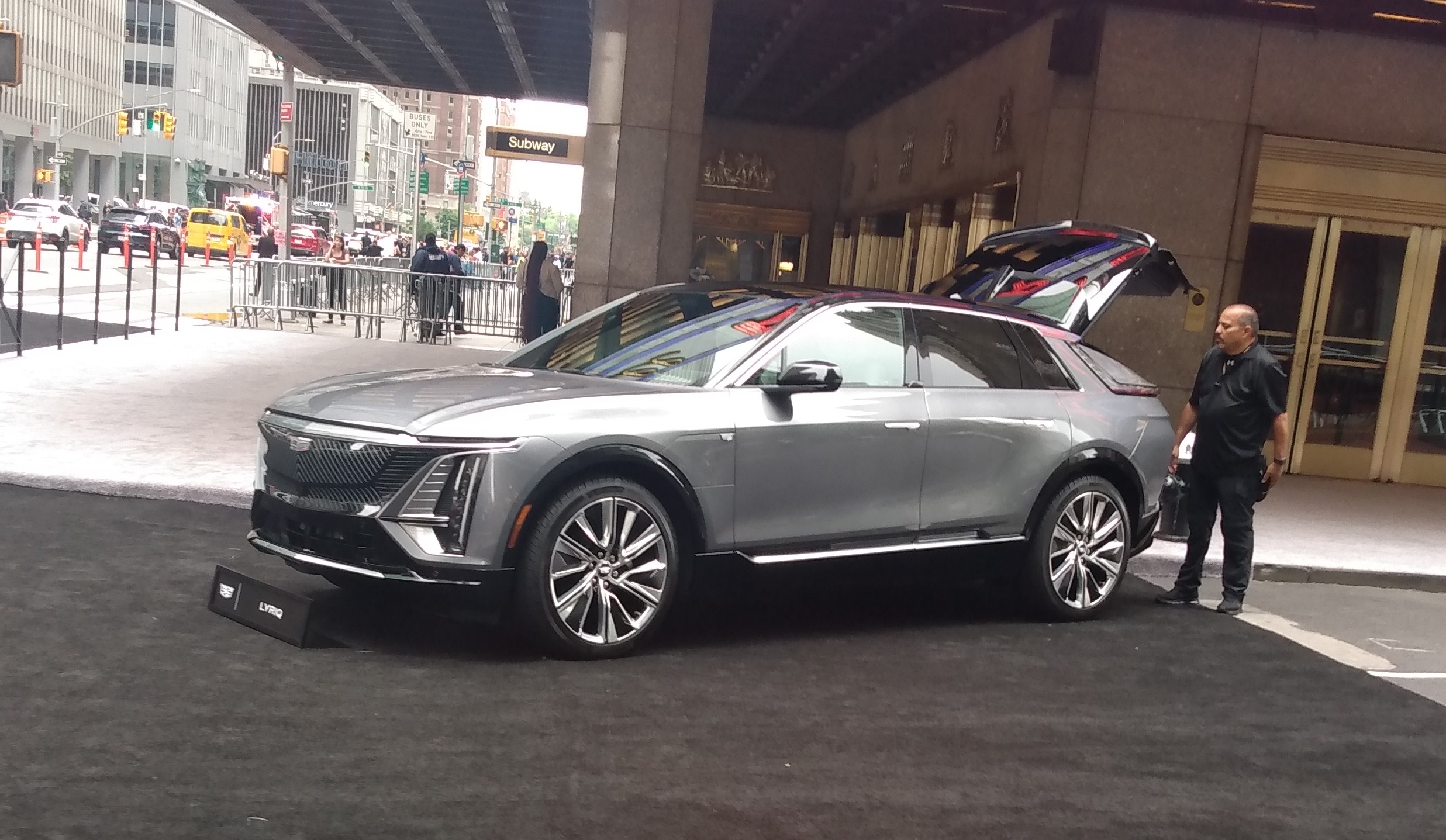
The Cadillac Lyriq is an electric SUV from Cadillac. The podcast mentions it as one of several electric cars people might compare when deciding what to buy. It’s included because it’s aimed at the luxury side of the EV market.
NetSuite by Oracle is a cloud software service businesses use to manage things like finances and operations. It’s mentioned here as the sponsor, not as something related to EVs directly.
Battery technology is what kind of battery an EV uses and how it’s built and controlled. It matters because it affects how far the car can go, how fast it charges, and how well the battery holds up as the years pass.
For EVs, software is the car’s computer programs that control things like battery charging and driving features. Updates can improve the experience over time, not just the hardware.
The Tesla Cybertruck is Tesla’s electric pickup truck. It’s famous for its unusual look and for being an EV, so owners often talk about charging and range planning.
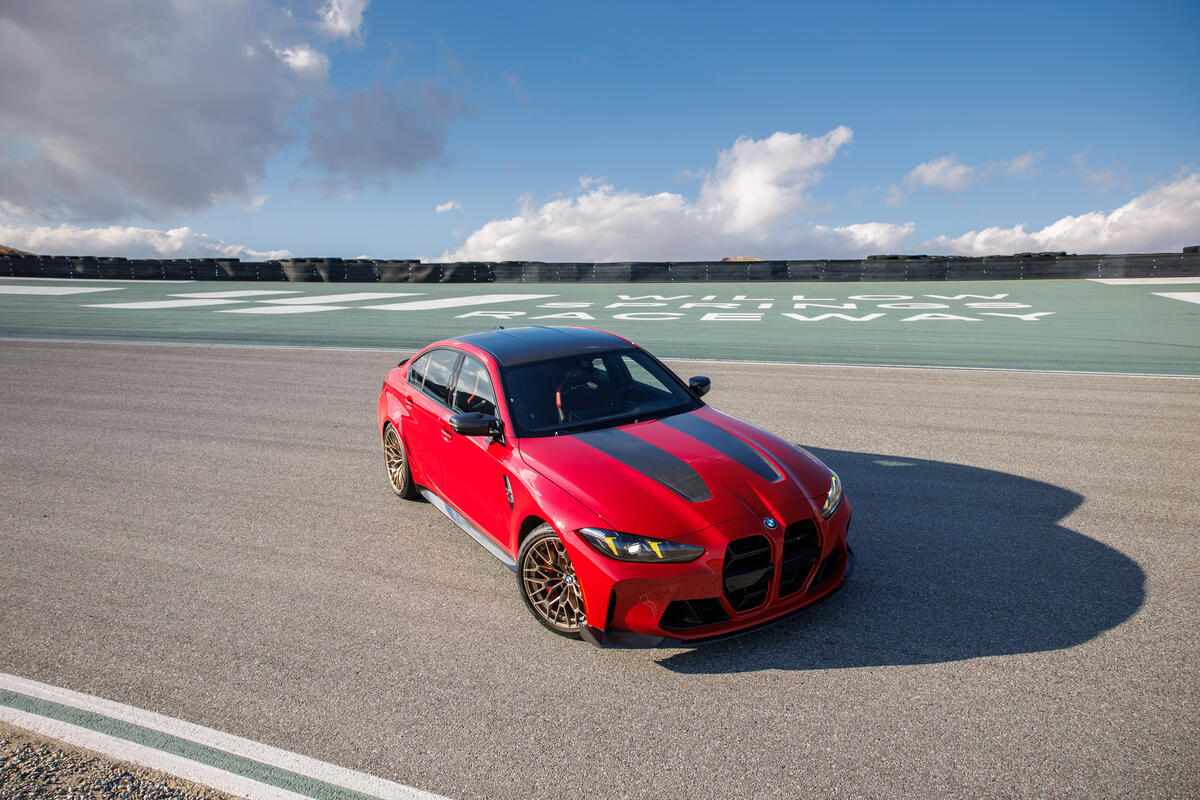
BMW is showing a concept for a future “M3” that will exist as both an electric car and a gas car. The big point is that BMW M is trying to make the electric version feel like a real performance car, not just a slower alternative.
The BMW M Coupe (E36) is a sporty BMW coupe from the E36 generation. The podcast mentions it as part of a discussion that connects BMW’s past performance cars to what’s coming next. It’s basically a reference to an older BMW model with an M performance focus.
Neue Klasse is BMW’s plan for what their next generation of cars will be like. The podcast says it will focus on design and better airflow (aerodynamics), which can help efficiency. It’s mentioned because it’s a roadmap for future BMW vehicles.
The “3 Series Compact” refers to a smaller version of BMW’s 3 Series lineup. In the podcast, it’s mentioned as part of BMW’s Neue Klasse plan, meaning the same new design ideas would apply to that smaller car. It’s basically about what BMW might build next in the compact segment.
They’re talking about an electric version of an M3 and saying it should be a better track car than the gas one. The episode is basically teasing what BMW is promising, even though the full specs aren’t out yet.
Vehicle dynamics is basically how the car drives and handles—how it grips, turns, and stays stable when you push it. Here, BMW is saying they tuned the electric car to be fun and capable on a track, not only fast in a straight line.
Torque split is how the car decides how much pulling force to send to different wheels. By changing that distribution, the car can improve traction and handling—especially when cornering or accelerating hard.
BMW’s M3 is a high-performance BMW. In this episode they’re talking about an M3 concept, which is like a preview car that may not be exactly what you’ll be able to buy.
Instead of one electric motor doing all the work, this concept uses four. More motors can help the car control grip and power more precisely, especially when accelerating or cornering.
The Tesla Model S is one of Tesla’s main EVs. The host brings it up to say Tesla tends to build cars that are very similar to what they show in prototypes.
Car
Tesla X
The Tesla Model X is an electric SUV. They mention it to argue that Tesla usually makes the production car look and feel like the one they show first.
Here, “alphas” means early test versions of the vehicle. They’re not the final product you’d buy, but they help the company validate the design and technology.
BMW is known for its distinctive front grille shape, often called the “kidney grille.” The host thinks BMW has been making it too big or too weird-looking on newer cars.
“Neue Klasse” literally means “new class.” In this context, it’s BMW’s label for a new direction for future cars—like a new generation of how they’re designed and built.
The Pontiac Firebird is an older American sports car known for a muscle-car style. The podcast mentions it because someone thinks a vehicle looks like an 1980s Firebird. It’s mainly a visual comparison.
“Eyes off” means the car can do more of the driving without the driver having to keep their eyes on the road all the time. It’s usually considered a bigger leap than just taking your hands off the wheel.
“Hands free driving” means you don’t have to keep your hands on the wheel because the car is steering for you. You still usually have to pay attention and be ready to take over.
Point-to-point driving means you set where you want to go, and the car tries to drive you there. The “supervised” part means it still expects the driver to watch and take over if something goes wrong.
The Rivian R1T is Rivian’s electric pickup. In this episode, they’re talking about which R1T versions will get the newer self-driving features, and that the Gen 2 cars are the ones targeted first.
“Fully driverless” means the car can drive by itself with no person inside. The big reason people care is that it could enable services like robot taxis.
Concept
first movers
“First movers” means the early companies that try a new technology before everyone else. The host is saying Tesla went first in consumer EV autonomy, so others may be able to learn from that and move faster.
The host is using “controlled experiment” to mean a self-driving program that’s run in a more controlled, limited way. That makes it easier to judge how well it works compared with self-driving software in everyday consumer cars.
Rivian’s “autonomy plus package” is an add-on you pay for that’s meant to enable more advanced self-driving features later. The host is basically saying it’s a gamble because Rivian hasn’t proven the results yet.
Rivian R1 is one of Rivian’s main electric vehicles. Here, the hosts are talking about whether it’s worth paying extra for Rivian’s future self-driving features on that vehicle.
Rivian R2 is Rivian’s next EV the host is considering. They’re specifically talking about paying for self-driving features and how having lidar installed could make that package more valuable.
Lidar is a sensor that uses lasers to “see” the world in 3D by measuring how far away things are. The host is saying that if Rivian puts lidar in the car from the start, it could make the self-driving features more credible and worth paying for.
“Version 13” is another software update label from Tesla. The host is using it to show that FSD capability depends on which software generation your car is running.
This is an advanced driving feature that can guide the car along a route from start to finish. It still needs the driver to stay alert and take over if the system can’t handle something.
The Porsche Taycan is Porsche’s electric sports car. Here, they’re talking about big updates for the 2027 model year to make it more appealing—like a bigger battery, better charging, and improved software.
Infotainment is the car’s main screen and software for things like music and navigation. A “revamp” usually means the interface and features are being updated or redesigned.
eShift is a Taycan feature that tries to make the car feel like it’s shifting gears, even though it’s electric. It adds simulated shift moments, sounds, and engine-speed changes to make driving feel more exciting.
The Taycan Turbo GT is the more extreme, performance-focused version of the Taycan. Here, Porsche notes that eShift (the simulated gear-change feature) comes standard on this model.
Because EVs don’t shift like gas cars, Porsche uses software to imitate the feeling of shifting. It’s meant to make the driving experience feel more familiar, even though the car is still electric.
A rev limiter is what stops an engine from spinning too fast. Here, it’s “virtual,” meaning the EV uses software to mimic that behavior for the fake engine feel.
DC fast charging is the “quick charge” method for EVs. It uses high-power direct current so you can add a lot of range in less time than normal home charging.
800-volt chargers are a faster-charging type of EV charger. They use higher voltage so the car can accept more power, which can mean quicker charging—if the car supports it.
This is the car’s voice system, but powered by AI so it can understand you better. The improvement mentioned is that you can ask a follow-up question without having to keep saying the wake word.
Some electric cars let you use steering-wheel paddles to imitate shifting gears, even though there’s no real gearbox. The host thinks owners will eventually stop using that and just drive normally.
The host is talking about which car companies are really committing to making electric cars. They’re saying Porsche is doing it more seriously than some other traditional brands.
The Porsche Cayenne EV refers to Porsche’s electric version of the Cayenne, the brand’s high-volume SUV line. The host calls it a “beast,” positioning it as part of Porsche’s broader push into electrification alongside the Taycan.
The discussion is about a new idea for Tesla’s self-driving features: have the car take you right to the entrance, then park itself. The host says a related feature already exists and that Summon recently got improved.
This phrase refers to the app showing your car from above (like a map/satellite view). The goal is to help you see what’s around the car while it’s moving, especially if cars are nearby.
Concept
inactive development
“Inactive development” here implies the software feature is in a paused or limited state of active work, but still progressing toward release. The host frames it as something Tesla is working on that should reach cars soon, with a timeline of roughly a few months.
Hydroplaning is when your tires hit a wet patch and can’t grip the road well, so the car starts to slide. In heavy rain, it can make steering and braking less effective.
“Hardware three” is the Tesla computer and sensor setup the car uses for its driver-assistance features. In this call, the key point is that heavy rain can interfere with the cameras, so the driver has to take over.
“Speed profiles” are different driving behavior settings. They change how the car speeds up and slows down, and the caller uses them to make FSD feel less aggressive in bad weather.
Atmospheric rivers are weather systems that bring a lot of moisture and can cause very heavy rain. The host is using them to explain the extreme conditions where tires and driving speed become especially important.
A rain channeling tire is designed with tread patterns (like grooves and sipes) that help route water away from the contact patch. That reduces the risk of hydroplaning and helps maintain grip when roads are wet or flooded.
OEM tires are the tires that come on the car from the factory. The host is saying those stock tires are already very good in rain, so you might not need to replace them just for wet-weather driving.
This is a 2018 Tesla Model 3 Performance. The host is describing how their car’s driver-assist system handled big rainstorms, and they emphasize going slower than usual when visibility and traction are worse.
The Tesla Model Y is an electric SUV from Tesla. This caller has one, and they’re using Tesla’s self-driving features day to day—especially for parking.
A “nav point” is a marked destination your car can follow to. The host says you can select your parking spot on the map and set it as the destination so the car drives there.
HD2D is a visual style for games. It keeps the old-school pixel look, but adds modern lighting and camera effects so it looks both nostalgic and sharper.
Tesla can connect to the internet through the car. “Premium connectivity” usually means you pay for a higher tier, which gives you more data/usage than the free option.
An LLM is a kind of AI that can understand and write text—basically a chatbot brain trained on huge amounts of data. In this case, it’s the AI behind the Grock service, and access can be limited by your plan.
“Throttle” means the service intentionally limits you. Here, the free option gets restricted more—especially when lots of people are using it—so it may work slower or stop sooner.
SpaceX is a company associated with Elon Musk. In this segment, it’s mentioned because the speaker says SpaceX owns Grock, which influences how the app works inside a Tesla.
XAI is mentioned as a company involved in the ownership behind Grock. The point is that Grock’s limits are controlled by the Grock/AI side, not by Tesla’s connectivity plan.
Apple Music is used as an example. The speaker is saying that even if you pay for a music service, Tesla may still limit how much data or usage you get through the car’s connectivity.
MyQ is a connected-service brand (commonly used for garage access). The speaker is using it as an example that Tesla’s paid internet plan doesn’t necessarily mean unlimited use for every app.
This is a front license-plate holder that mounts on the car securely. It’s designed to avoid drilling and to work around the camera on the front bumper.
This is a small camera mounted low on the front bumper. It helps the car “see” the road, and the license-plate mount needs to be shaped so it doesn’t block or interfere with that camera.
Automotive tape refers to adhesive tape products used on cars for temporary or semi-permanent mounting. The host warns against using Tesla’s tape-based plate attachment because it can be harder to remove cleanly and may leave residue or damage.
LIVE
On this week's episode of Ride the Lightning,
the Tesla and EV podcast,
Tesla CEO Elon Musk teased a couple of different
quality of life improvements for FSD
that he says are on the way soon.
Plus, some cyber cab specs have been revealed.
BMW reveals a concept for its upcoming
quad motor M3 EV and more.
What's happening friends? I'm Ryan McCaffrey, joined this week by my canine co-host Daisy
the Boxer, Lily the Silly Labrador is elsewhere in the house because she was carrying around
one of her giant river rocks in her mouth that she likes to just carry around and then
drop on our hardwood floors so I can't have that happening while I'm trying to record a podcast.
So Daisy is hanging with me and Lily is elsewhere. Anyway, I hope you are doing well here as summer
officially begins here in the Northern Hemisphere, the longest day of the year as this episode drops.
I love it, I love the longer days because I like walking the dogs in daylight hours that makes me
happy. But I hope you're doing well and let's get right into it. This week there is plenty to talk
about in the world of Tesla and also other EVs this week. We will start with Tesla as per usual
with this. A new report claims that Apple is in the process of developing what would be the missing
link for Tesla to get carplay. Apple and Tesla have been reportedly working together for some time
to give Tesla owners the opportunity to utilize carplay within their vehicles. While many owners
are more than happy with Tesla's in-house UI, which is seamless, effective and smooth, some still
want carplay which does have its advantages. A report from 9to5mac.com now states that a new
carplay technology that was highlighted during the Worldwide Developers Conference, which was
just earlier this month, would potentially be the bridge between Tesla and Apple. With the addition
of a feature known as route sharing, which gives a navigation app the ability to share
routing data with the vehicle, Tesla would be able to launch carplay in its vehicles, the report
states. Back in February, Bloomberg had reported that Tesla was still working on bringing carplay
to its vehicles, but it had not due to app compatibility issues and incredibly low adoption
rates of iOS26. Thank you very much to TeslaRadi for that right up via 9to5mac. Well, if this
indeed finally proves to be the last roadblock in getting carplay added to Tesla's, because it does
seem like it's been imminent for a while now and it still hasn't happened and then we get an update
like this that says, oh, there was this software roadblock and they're working on it. I mean,
the good news is, every one of these updates has come with, there's a solution for this,
none of these updates have been, well, roadblock hit and we can't get around it and that'll do it,
there's not going to be carplay for Tesla. So the good news is, if indeed this is the final roadblock,
then A, that's awesome, and B, using this updated information, I think my best guess
of a new timeline, I think I would probably expect to get this in the holiday software update
right near the end of the year. I know that's obviously well past what I had previously predicted,
but again, new information, we've got to make a realistic update to the prediction and, you know,
that's six months or a slightly less away, so that feels like A, enough time, not that I know
anything about app development, and B, more importantly, we know that Tesla likes to pack
really big new features in its holiday software update in particular, because they've been really
good over the years about making the holiday update feel like kind of a gift, a present,
to unwrap for Tesla owners over the years. I know I've felt that way, I mean, there have been some
really, really big ones over the years. In fact, was it, I don't think it was, it wasn't 2025,
it must have been 2024, I think, that's when we got, in the holiday update, Apple Watch support.
So this wouldn't be the first time that an Apple thing gets included in the software update,
if in fact, this year's holiday update is when we'll get the carplay for Tesla functionality.
So we'll see, but definitely wanted to pass that news along, because I know a lot of you
are very interested in utilizing carplay in your Teslas.
Next up this week, what is my headline story? It's a two-parter, so Tesla CEO Elon Musk teased
an upcoming new FSD feature while responding to somebody over on X, as that is typically where
he makes his commentary these days, that's the platform he owns.
The person posted,
parking preferences so that the car goes to the right location at your home,
office, school drop off, etc. Destination parking is by far the biggest reason people
now intervene with FSD. Critical safety interventions are extremely rare. Well,
I will say that my personal use case definitely supports Elon's statement there, which obviously
his statement is based on factual data from the Tesla AI team. That in fact, the most common
reason to disengage FSD is for parking purposes. One of the buttons that's on the annoying pop-up
when you disengage that you can't get rid of until you touch something or say something
is in fact parking, and that's the one I tap every time when I'm going into my garage,
when I disengage to go in the garage, because it is a parking issue. Now, I personally don't have
any, if you all could see my driveway slash garage situation, I don't actually have a driveway.
On the streets of San Francisco, I go from street and I turn and it's sidewalk and then it's like a
literal three-foot driveway, if you want to even call it that, and then it's into my very narrow
garage door opening that I have to fold the mirrors to squeeze through. I don't have any
real hopes of FSD ever safely getting in and out of my garage because of it's on an incline,
on a hill, but I know I'm in like the one percent weird use case that for most people,
FSD is absolutely going to be able to get in and out of your garage, in and out of your driveway,
no problem. And so the fact that the Tesla AI team is teaching it to remember your parking
preferences, meaning if you want to back into your garage because of your charge ports on one side,
that soon it's going to be able to do that, that is going to be super awesome for most of you.
Like I said, I will probably be manually pulling my car in and out of my garage forever, but
hashtag first world problem, I can't really complain. But what I can say of the progress
here over the last couple of years in particular is FSD can now drive all over the very strange
streets of San Francisco pretty darn well, which used to be something that I would talk about
here on the podcast on the Hardware 3 car on earlier versions that I never felt it could
comfortably do, like maybe it could technically do it, but I was never really comfortable with
how it behaved up until, really I would say version 12 is when it started to actually get
good enough to navigate around San Francisco and now with version 14.3.4 in fact, that's the
one I got that this week, I think a lot of us got that one this week. It is just, it is buttery
smooth throughout San Francisco, which again, I'm not saying it's the most difficult city on the
planet to navigate by car, but it's not an easy one. It's definitely probably in the upper
quadrant of difficult cities to drive a car in, let alone self-drive a car in. It's probably why
Waymo started here, right? Because if you can make Waymo work in San Francisco, it's going to be a
lot easier in a lot of other cities that you take it to. But anyway, getting back to what Elon is
talking about there, if we get to a point soon where the car can learn parking preferences,
again, whether that's backing into your garage or like in my case, if I go somewhere
like a place I regularly go to, if it can remember that I prefer to park far away from other cars,
ideally at the end of a row to limit the number of people who can park next to me and thus limit my
exposure to other car doors, that would be an awesome quality of life improvement for FSD that
I would, I would embrace with open arms. That would be phenomenal. Now, on a similar note,
the part two of this week's title of Elon teasing upcoming FSD improvements,
he responded to another FSD-related post on X, and this one was from a woman named
Kristen Hendricks, who I noticed does follow me on X. So that means Kristen, if you happen to
listen to this podcast and you're hearing this, hello, I hope you're having a wonderful day.
Anyway, Kristen posted, Tesla FSD is magic. Need to be able to converse with grok
like we can with an Uber driver. For instance, hey grok, turn right here. Drop us off right here,
we'll walk because of traffic, or drop us at the entrance first and then go park far away.
And first of all, I would love to see that, Kristen, if that word actually happened, and
Elon did respond to it saying, quote, this functionality will be there in about three months
or so. So that's, that is awesome to hear. Now, whether that means it's going to be part of
version 15, or maybe just another major point release of version 14, whether that's 14.4,
maybe a 14.5, remains to be seen. Because you know, if you think about it, I think,
I don't have the data in front of me, but my memory says that Tesla's been releasing,
it's about one version, like full version turnover per year. Like we got version 14
last year, and then we got version 13 in late 20, I feel like it was right when I got my new car.
So like late 2024, version 12, boy, I can't quite remember when 12 was, but it feels like it's
about one a year. So will we get version 15 at some point this year, TBD, will this functionality
that Elon is acknowledging, being able to tell Grock what to do with the car, like how you,
you know, what, give it, give it directions, that'll be awesome regardless of, of what version it is.
But part of what she's describing and what Elon is acknowledging there is the banish feature,
which has been discussed before. That is where your car drops you off at the entrance to your
destination, like say, if you're going to the movies, drops you off at the, at the front entrance,
and then it banishes itself to the parking lot, and it goes and finds a spot and parks itself
until you're ready to be picked up by the car again, until you summon it, until you actually
smart summon it again when you're, when you're done with your movies. So if that's really coming
in three months or, you know, even six, because FSD timelines tend to, tend to not be always as
optimistic as Elon says they are. But even if it's six months, that would still be this year. That
would be maybe, maybe part of the holiday software update. If it doesn't arrive sooner. So that would
just be phenomenal. Now, before I move on from this topic, speaking of full self-driving, it is
June 19th as I record this, so I must ask, as the calendar says June 19th as I'm recording this,
are those of us with hardware three cars going to be getting version 14 light by the time I record
next week's podcast, or maybe at worst two podcasts from now? Remember, the end of June was the target
date that was originally given, and then it was reaffirmed more recently, I believe on the last
earnings call. So I wonder if the Tesla AI team is still tracking towards that. History says not
to hold your breath. Again, I'm not trying to be negative, but just history says that FSD timelines
have not always come to fruition as Tesla tends to announce them ahead of time, but I hope it will
be soon. And I think even if it doesn't hit by June 30th, I do think there's a better than average
chance. Like, I think the chance will go up that we get it before July, you know what, hang on,
I didn't put it in my notes, before July 22nd. I think we'll get, I think there's a good chance
we'll get it by July 22nd if it doesn't land by the end of this month. And the reason that I say
July 22nd specifically is because that is when the Q2 earnings call should be happening. It's
usually the third Wednesday, the Wednesday of the third week in the new month after the quarter ends.
And we've seen it plenty of times before where Tesla will announce a new variant or, you know,
it makes some kind of announcement or ship something so that they can brag about it, basically,
for lack of better term. And I mean, that in a nice way. Like, they have it as a positive talking
point in that shareholder letter and on the earnings call when investors are paying close
attention. So that's, that would be my fallback date would be by July 22nd, if we don't get
version 14 light in the hardware three cars by June 30th. So should be soon either way, hopefully,
and it will just have to see if it's going to be in the next week and a half or if it's going to be
in the next month or so. Before I get to the rest of this week's Tesla news and other EV news as well,
I wanted to mention this week's lightning round mini episode for those of you who are kindly
supporting me over on my Patreon page, which you can find at patreon.com slash Tesla podcast.
I had fun with this one. It was inspired by the Patreon poll question, which I'll talk about
in a little while. The poll, of course, is open to everybody and I want everybody to just stop
by and cast your vote each week. But when I was thinking about, oh, what do I want to do for this
week's lightning round? The the topic of the poll inspired me. So this week's lightning round was
about the five cars on the market now that I would most like to see get electrified. So these are
internal combustion engine cars that I would love to see turn into EVs to get EV versions of.
And I think my list, you know, I think you'll be able to guess at least one of them because I've
talked about it on this podcast before. But I think threw some curveballs in there for you.
And so I hope you enjoy listening to that if you are kind enough to be supporting me at that most
popular tier on Patreon. That's the one that gets that lightning round episode every single week,
as well as the ad free and early access to the podcast. So if you've been listening to the
podcast for a bit, you enjoy it every week, you get something out of it, and you'd like to support me,
I would be so humbled and grateful if you chose to do that. Again, all the information,
all the different support tiers and all the little perks and bonuses that come with each tier
are all clearly laid out over on my Patreon page found again at Patreon.com slash Tesla podcast.
There is an annual pledge option as well, if you'd rather do that than the month to month thing.
And if you are kind enough to do the annual pledge, I offer a 10% discount on the annual pledge
as a thank you for doing that. A couple folks did that over the last couple of weeks,
which is I'm really, really grateful to see. A reminder that any tier of the Patreon from
that base $5 a month tier on up gets the ad free and early access to that ad free episode
every single week as a way for me to say thank you to anybody that joins the Patreon.
And then if you are kind enough to be at that most popular $10 per month tier,
you get the ad free early access and all $196, $7.97 of those lightning round mini episodes.
There's so much extra bonus content up there for you if you decide to jump on the Patreon
and support what I'm doing here. Thank you so much for considering that.
Next up in Tesla news this week, we have new information about Tesla's cyber cab.
It's been revealed in publicly filed EPA documents. This one comes courtesy of our Tesla
tipster friend Sawyer Merritt, a one time guest on this podcast. And here's what we learned from
EPA documents about the cyber cab. It is a front wheel drive car, more on that in a minute.
The battery capacity is approximately 48 kilowatt hours, which would make it the smallest
capacity battery of any currently in production or recently retired Tesla.
The horsepower, 219 horsepower. The curb weight, 3113 pounds. The motor power, capable of outputting
163 kilowatts and the voltage 326 volts. The equivalent all electric range, Sawyer notes,
is listed at 418 miles. Hang on, don't get too excited. With 375 miles of highway range,
but as Sawyer kindly notes, the final EPA range is usually a good bit lower than that.
Tesla has previously stated that the cyber cab has about 300 miles of range. I would actually be a
little surprised if it even ends up quite that high because it's not going to be a highway
traveling car. Anyhow, thank you to Sawyer for digging that out and posting it. And the first
thing that jumped out to me about that was, as I noted there, the front wheel drive factor.
This is Tesla's first front wheel drive car. Every other single motor car that Tesla has ever made
starting with the original Tesla Roadster in 2008 has been a rear wheel drive car.
And, obviously as expected, it is much lighter than Tesla's other cars. But I did look it up
because I was curious, the cyber cab is still heavier than that aforementioned original Roadster.
It's funny, I had just been looking up the weights of both the cyber cab and original Roadster to
compare them. It was for last week's Lightning Round mini episode over on Patreon. And at that time,
the weight for the cyber cab was not available, so it turns out I was basically a week early on
that one. But the original Roadster clocks in at about 2700 pounds, which, funny enough,
from my own personal history, that's about the same weight as my old DeLorean was.
And I only bring that up because there's a short list of commonly asked questions or just
whether I'm out and about with it or at a car show with it. And people would look at it,
and I guess because they see bare metal on the car, the bare stainless steel, they would go,
well, is it heavy? A lot of people, I don't know, maybe that was just a subtle back to the future
joke, right? Heavy, everything in the future is heavy. But no, it was people genuinely go like,
oh, is it a heavy car because of the stainless steel? No, because the stainless, unlike the
Cybertruck, that came obviously many decades later, the stainless steel on the DeLorean is a
very thin panel over the top of a fiberglass underbody to keep the weight down. So the DeLorean
actually wasn't a heavy car, but in any case, getting back on topic with Tesla, the original
Roadster weighed about the same as the DeLorean, and the Cybercab is beefier than both of them,
even though it's a pretty small car. I know a lot of you probably haven't yet had the privilege of
seeing a Cybercab in person, but it is a pretty small car. It's a little two seat coupe,
but it's still a 3,103 pounds is the curb weight on that.
But yeah, 48 kilowatt hour battery pack. So even still, with all that taken into account,
400 pounds or so heavier than the original Roadster was. Now granted, the original Roadster
had a carbon fiber body, so that definitely helped keep the weight down. Most of the weight was,
as is still the case today, coming from the battery pack itself.
Which fun fact in the original Roadster, if you didn't know this, the original Roadster wasn't
a skateboard. That didn't come till Model S, and now every Tesla since has been a skateboard,
with the battery packs in the floor. But in the original Roadster, the pack is mounted directly
behind the passenger compartment, effectively making the original Roadster like a mid-engined
sports car. But back to Cybercab. If you are curious how the 219 horsepower compares to other
cars, I would be curious what the 0-60 time is on the Cybercab. I mean, I suppose the Tesla
engineers who are out driving them around now, via the Cybertruck,
steer by wire squircles that are hooked up to those engineering Cybercabs,
they could test it out. They've got full control over the vehicle, which we won't
when that car gets officially released to the public once it's out and about giving rides
in the robotaxi fleet. We're never going to get to see one accelerate as hard as it possibly can.
If I had to guess, and if I ever have the privilege of having Lars Moravy,
the chief engineer at Tesla, back on the show, I'm going to have to ask him this.
I got to remember to ask him, what's the 0-60 time on the Cybercab? It's like, I know you guys
have tested it Lars, what is it? What's the 0-60 time? But anyway, my guess would be like 6-7
seconds, somewhere in that neighborhood. If I'm wrong, it might even be slower than that.
The reason I say that is because, as we all know, the Cybercab is made for maximum efficiency
and not at all performance whatsoever. By the way, the thought occurred to me while I was
making my notes for this, this section of the podcast. The thought was this, do we consider
the Cybercab to be out yet? Do we consider that car launched? I think the answer is still no,
since none of them are being used to actually conduct fully driverless, pedalless, no steering wheel,
full self-driving, unsupervised rides to the public as of yet, so that's where I would lean
towards no, but once that happens, then I would consider it launched. I wonder if Tesla would
feel differently about that, but that's how I see it, as I would consider the Cybercab still not
officially launched. Next this week, a not fun news story, we've been having fun up until now,
but the fun must go on pause for me to tell you about this. Tesla is meeting resistance to their
autonomous push in my birthstate of New Jersey, where I will be later this summer in fact.
Thank you to long-time loyal listener and Patreon backer Lyle Austin for forwarding me
the email that Tesla sent out to its New Jersey customers. That email is titled,
New Jersey could block autonomous vehicles, here's why this matters to you. And it reads in part,
propose legislation moving through Trenton right now would impose restrictions so severe
that true driverless deployment would remain illegal. Your voice is crucial to ensure New
Jersey remains at the forefront of transportation innovation. We urge you to contact your state
to support autonomous vehicle policy that encourages safety outcomes, open competition,
and expanded access for every New Jersey resident. Before any bit of panic starts to set, and let me
unsupervised full self-driving. But the reality is here that autonomous vehicles are no longer a
futuristic concept. The driverless technology exists today, and it's already making roads
measurably safer in the states that have welcomed it. So instead of positioning itself as a leader
in transportation innovation, Jersey is at the risk of going in the opposite direction here.
And as I saw somebody in the Tesla community online slyly comment in response to this,
they said, yeah, is this really still a surprise from the state that still will let you pump your
own gas? Fair point, right? That is, if I lived in New Jersey and I had, and if I still had,
my DeLorean or a gas powered car that I really cared about, I wouldn't want somebody else pumping
the gas. So anyway, it's neither here nor there. So it is a shame that there are roadblocks going
on right now. But the real reason I would say that I unfortunately can't necessarily say I'm
surprised is not a sly quip about not being able to pump your own gas in New Jersey. But
on the EV subject, remember, a couple years ago, New Jersey made Tesla rip out superchargers along
the Garden State Parkway because they'd signed a deal with a third party charging company that
they claimed would be for everyone, which seemed like a waste of resources at the time and it only
seems more so like it now because as I said on the podcast at that time, Tesla was already there
on the Parkway and NACS, the North American Charging Standard, was already the standard
when the New Jersey state government made that move. So anyway, the point here is if you're in
New Jersey, you probably already got the email from Tesla. If you click into that email, it takes
you to a website where there is a take action button. It explains more and explains how to
go ahead and reach out to your state representatives. I won't read you the whole thing,
but in part it says, as written, the legislation imposes restrictions so severely
that Tesla's autonomous vehicle technology couldn't legally operate in New Jersey. Rather than
prioritizing real safety outcomes and performance, the bill specifically bans Tesla from the New
Jersey, not literally banning Tesla from being in New Jersey, even though they do have a limit of
how many stores or galleries and service centers they can have in New Jersey, but they're talking
specifically about unsupervised full self-driving, meaning the robotaxi network once it were ready
to deploy in New Jersey, once unsupervised is ready to go. So there's a button there,
you'll see if you end up clicking into it to contact your state representatives.
Good luck to my New Jersey listeners in having your voices heard on this.
As I mentioned a minute ago, I will be visiting New Jersey, my birth state. In late August,
my cousin Zach's wedding, shout out to Zach, I know he's listening to this. In fact,
just this past week, I was like, oh, I need to kind of button up everything for my trip.
I went on Touro and I rented a Model 3 with FSD for that New Jersey trip for my cousin Zach's
wedding so that I could just let FSD do the driving for me around New Jersey's largely
unfamiliar to me roads. I'll just figure why not. I mean, I'll take full advantage of it,
I know how well the software works. And I think I might have a little bit of free time while I'm
there because we'll see. And I'm thinking, oh, I want to make a trip to the Star Tavern, which
maybe some Jersey residents listening to this are going, are nodding their head in agreement right
now. Famous pizza place, bar tavern style pizza, bar pie in New Jersey, I want to go try it.
I might head up to Vernon if I have some time, which is where I originally grew up,
that's where I spent the first years of my childhood. And wherever I go in New Jersey,
while I'm there, I am going to trust full self-driving to guide me. And I have to say,
I was pleasantly surprised the Touro rental of the Model 3 with FSD. I found it to be
pretty reasonably priced. And I just figured, well, if it's that reasonably priced, I figure that
it sure beats manually driving around some standard rental company, bottom of the line,
base model gas powered car, that would maybe have traffic aware cruise control at the most. So
that's the plan for my Jersey trip coming up later this summer.
You know, I wonder if there's time, maybe I should do a New Jersey listener meetup
for any Ride the Lightning listeners in Jersey that would want to come hang out
and share a meal, maybe at the Star Tavern. I don't know, would people be interested in that?
If you're in New Jersey, feel free to reach out via email TeslaPodcastatgmail.com
if that's of interest. I don't know, I'll have to kind of see if anybody cares.
I won't take offense if no one does, and then see what the itinerary ends up looking like
for that weekend. Anyway, I'm going to take a quick break. I'll be right back in a few minutes to
go over all of this week's other EV news and then get to your phone calls in the Ride the
Lightning hotline. Stay tuned.
A few friends of Ride the Lightning to tell you about here real quick. First is my friends at
the Chesed Chicago Raffle. The 12th annual CC Raffle is here. Time's running out less than one
month to go, and it could be even less than that if you guys buy up all the tickets because the
tickets are limited. So this is the 12th annual raffle from these folks. I'm thrilled to help
raise some money for a great cause once again, at least help them raise money certainly through
all of you because you all are super kind. You've supported them really generously the past couple
years. Let's help them out again here in 2026. They do a lot of good work. This raffle as a reminder
gives you a chance to win any EV of your choice, whether that's the new Rivian R2, maybe a new
Model Y performance, a Model 3 performance, a Lucid Air, maybe a Cadillac Lyric. How about 50
grand in cash if that even sounds preferable to one of the cars? But either way, whether you win
or not, you are helping families in need at the same time. Go to CCRaffle.com and use promo code
RTL for $25 off of two tickets or $500 off of 15 tickets. Plus, optionally, you can super charge
your entry for $10 per ticket. Again, as an option, meaning if your supercharged ticket wins,
you will get the car of your choice and a Tesla wall connector, including installation from a
professional electrician. So that'll be the add-on to your prize if you win. So check them out.
CCRaffle.com or better yet, click the link in the episode description here. With the, you know,
tax credit now gone, this raffle is an even more awesome way to get your hands on the EV
of your dreams for as little money as possible. Chesed Chicago offers over 80 programs and services
which provide vital assistance to more than 6,000 individuals per year, with a focus on battling
hunger, preventing eviction and homelessness, and providing needy families with basics such as
clothing and furniture. Again, that final drawing is less than a month away. It's on July 13th,
so get your tickets now before they are all gone because yes, they're limited and yes,
they have ended the raffle early in previous years because they sold out of tickets. CCRaffle.com
or click the link in the episode description and don't forget that promo code RTL for $25 off
of two tickets or $500 off of 15 tickets. And I also want to again mention my friends at Oracle
NetSuite. This week's episode of Ride the Lightning is brought to you in part by NetSuite by Oracle.
Now, as I've said before, this podcast is technically my own small business and as a
one-person small business, I along with every business is asking the same question,
how do I keep up? Because they say that every day your business is late to AI, you fall two days
behind. The competition sure as heck isn't slowing down. Fortunately, there's NetSuite next. You
probably know NetSuite already, the AI-powered business management suite that securely connects
all of your data. It's a unified suite that brings your financials, inventory, commerce, HR,
and CRM into a single source of truth trusted by over 43,000 customers. NetSuite next is the
next huge leap in how business gets done because AI is built into everything that you do. It
automatically surfaces custom insights throughout your day. AI agents work alongside you to solve
problems and handle routine work. And anytime you have a question about anything, ask just like
you're having a conversation with a colleague. Whether your company earns millions or even
hundreds of millions, it's time for NetSuite next where your business meets AI. Hey, my hope is that
Ride the Lightning is one day big enough to take advantage of NetSuite, but your business probably
is. And now, for the first time ever, you can try NetSuite next for free. If your revenues are at
least in the seven figures, go to netsuite.ai slash lightning, that's N-E-T-S-U-I-T-E dot AI slash
lightning, built for every industry, ready for every boardroom, netsuite.ai slash lightning,
or click the link in the episode description.
Before buying an EV, these folks research charging, battery technology, software, range,
road trips, ownership costs, they plan ahead. And that's exactly why so many Tesla and Rivian owners
take a look at X-Care before they ever need it. Not because something's wrong,
but because preparation is part of smart ownership. Whether you're driving a Model Y,
Cybertruck, R1-T, R1-S, or something else entirely, X-Care was built specifically for EV owners who
plan to enjoy their vehicles for years to come. I'm in that group. The best ownership decisions
are usually made before they're necessary. To learn more, you can speak to a human being by
calling 866-584-1363. And if you do after talking to that agent, you want to go ahead with an
extended warranty option for your EV, make sure to mention the promo code lightning for $100 off
your policy purchase, or if you'd rather do it online, visit X-Care dot com, that's X-C-A-R-E dot
com, and use promo code lightning. In other EV news this week, BMW revealed the concept for
its new Neue Classe M3, which will interestingly come in both an EV and a gas-powered version,
no hybrid. So it's one extreme or the other. I saw this on BMW's own website and on their blog,
they wrote, the BMW M concept Neue Classe debuts the new design language for high performance
vehicles, an uncompromising preview of the next generation of electric BMW M models.
Every design measure follows a clear principle. Form follows from function, making dynamism,
precision, and control instantly tangible. Quote, with the new design language for BMW M automobiles,
we are presenting the most expressive interpretation of Neue Classe design.
Said Oliver Heilmer, head of design at BMW Compact class, Neue Classe NBMWM,
he continues saying genuine aerodynamics and functional design that is even more than aesthetics,
it is the soul of the vehicle, making performance palpable even at a standstill.
Well, a couple random bits of information I was able to scrounge together from around
the internet saw this on the drive, who wrote, as for the battery-powered version, well, BMW says
it'll be a hoot. Quote, with the electric M3, we move to the next level of vehicle dynamics,
a BMW rep said. The technology provided to us by Neue Classe means we can have the range, power,
and torque split to create something quite extreme. We actually started development with
the vehicle dynamics as our main target, so the EV won't just be the quicker car in a straight line,
it'll be faster around a track too. That would be something to see if the EV version of this car
is even quicker on the track than the gas-powered version.
Actually, this is a fan site, bmwblog.com says, because BMW stops short of calling it an M3,
it isn't sharing any technical specifications beyond what we already knew. And if you're
wondering, wait a minute, they absolutely called it an M3, it's an M3 concept. And this isn't
necessarily the thing that's going into production, but anyway, BMW blog continues saying,
the concept uses four electric motors powered by an M-specific battery pack with more than 100
kilowatt hours of usable energy. We've reported that the production version could deliver somewhere
between 800 and 900 horsepower, however these figures remain unofficial until BMW confirms them.
Well, I watched a couple of videos on this car, or at least the concept car, and I read up on it,
and I have personally, I'll say, I've not been a fan of BMW's recent design language. In fact,
a lot of people, I'm not alone on that. They've alienated some fans for sure, but this one,
I gotta say, taking a look at it, I honestly like it. I like the look of this car. Now it won't be
cheap, but if recent BMW history is any indication, it's going to have awesome tech on the inside,
like in the cabin, and it should drive very, very, very well. The only problem is, as noted already,
it's a concept. It's not necessarily representative of the car that will actually go into production.
In fact, sadly, with traditional automakers, the concept typically does not end up closely
resembling the final product in the way that I think Tesla is very good about doing with their
prototypes. You take any of the concept or prototype Tesla's from the S to the X, the three,
I mean, the three was almost exactly the same car. But the SX3, the Y,
Cybertruck, Cybertabs, I mean, Cybertab, we didn't even really get a concept. We got a whole fleet
of alphas at the unveil for that. But anyway, Tesla's been good over the years, like the car
that's unveiled is basically the car that you get to buy. That is not always the case with other
automakers. But I hope it is with this BMW M3 concept, because I think it's really aggressive
looking. It's really cool looking. They fixed the whole front end, like weird giant kidney grille
thing that they were doing. Or I should say, they weren't even kidneys anymore. They were lungs
on the front of the BMWs in recent years. But yeah, I hope they build this as is. I think it's
pretty darn good looking. And I wanted to see what all of you thought of this design. So I made
it the subject of this week's Patreon poll, which again, you don't have to be supporting me at all.
You don't have to be giving me a dime to vote in each week's poll. Just swing on by Patreon.com
slash Tesla podcast every single week, and I'll have a new poll question for everybody to vote on.
I usually put the poll question up on Tuesday evenings. That's typically the goal. And this
week it was simply, what do you think of the new BMW M3 Neue Klasse EV concept? By the way,
I remember enough of my high school German, Neue Klasse does mean new class. So it's like,
save by the bell, Neue Klasse. That is the new class. That is the literal translation of that
one. Anyway, I put up a couple pictures of this car for you to check out as you cast your vote.
Didn't get as much interest in the poll this week, maybe because it wasn't Tesla related, but
229 votes as of this, still a nice little sample size, and a lot of overwhelming positivity for it
because 29% of you said, I like it, but I don't love it. 28% of you almost neck and neck said,
I love it. I hope they ship this design as is. Then it just drops off slowly from there. 18%
or about one in six of you voted, I'm unmoved by it. 16% of you voted, I don't really like it,
but I don't hate it. And just 4% of you voted, thanks, I hate it. And then 5% of you said,
no opinion, just show me the results. So thank you very much to everybody that kindly took
the time to vote. I'll mention a couple quick comments that were left on this poll. David Harper
says, finally looks like a BMW again, to my point a moment ago about a lot of people not being super
on board with the recent design language of BMW. Mike Suttick saying, looks like my 80s firebird.
And you know what, Mike, now that you say it, I can see it. what you're talking about.
And I think that's probably Mike probably intends that as a compliment. I would interpret it as a
compliment. James Colberg says, looks like an old school muscle car. I want a matchbox version
of this right now. I would agree. It's definitely got a muscle car look to it. So anyway, I liked it
and seems like the plurality of you who voted in the poll also liked the design of this car.
But we're not done with the other EV news this week. Next up, Rivian has delayed eyes off driving
in its cars to 2027 as they chase Tesla's FSD. I saw this on Drive Tesla Canada who wrote,
in early 2025, so early last year, RJ Scarridge, the CEO of Rivian said that the company would
introduce hands free driving by the end of the year followed by an eyes off autonomous driving
system this year, 2026. However, Scarridge now says Rivian's point to point driving system similar
to Tesla's FSD will arrive later this year while eyes off capability is now expected in 2027.
The updated timeline was revealed during a recent appearance on the Masters of Scale podcast
where Scarridge also discussed Rivian's longer term ambitions for fully driverless vehicles
and robot taxi services. According to Scarridge, Rivian's next major step will be the launch
of supervised point to point driving across its second generation vehicle platform.
Quote, later this year will have full supervised point to point which will be very similar to
Tesla's FSD. That will roll out to all of our Gen 2 vehicles and of course R2. The system is
expected to handle complete trips while still requiring driver supervision similar to how
Tesla's FSD operates today. Rivian plans to deploy the capability to its Gen 2 R1T and R1S vehicles
and the new R2 leaving Gen 1 R1T and R1S owners out in the cold. While Rivian's immediate focus is
on consumer vehicles, Scarridge made it clear that the company is ultimately working toward fully
driverless operation. Quote, the next step is achieving full capability for the vehicle to
drive itself with no one in the car. We've been developing that for a while with our personal
vehicles but we also see it unlocking new business models, robot taxi being one of them.
Rather than building its own ride hailing platform, Rivian intends to leverage its
recently announced $1.2 billion partnership with Uber as a path toward commercial deployment.
We took the decision to partner with Uber so we could focus on the tech and leverage them for
their access to a big distribution channel. They're really a category of one, there's no one
quite at their scale or reach. Well, as anyone who's been following Tesla's autonomy journey,
whether you're a paying customer or just as an observer, you're probably not surprised to hear
of the delay. It turns out Tesla's not the only one who has trouble sticking to their
autonomy timelines. It's building an autonomous driving system is clearly one of the hardest
technological challenges of our lifetimes and maybe, is it hyperbole to say maybe even ever,
like one of the biggest technological challenges ever, what I would be curious to ask RJ is
what following Tesla, and I don't say that in like a fanboy slight against Rivian way,
but is a genuine question of what does, what following Tesla has allowed Rivian to learn
and maybe help them skip a couple steps, right? Maybe get there faster without having to navigate
through the figurative minefield that Tesla's had to tiptoe through since Tesla, of course,
has been the first movers in this space, at least certainly with regard to consumer vehicles.
I'm not completely ignoring Waymo, but Waymo is, you could consider Waymo like a,
a very controlled experiment by comparison to what Tesla's doing with FSD and what Rivian
wants to do with its autonomy plus package. Now granted, the results of Waymo's controlled
experiment have been excellent and they're expanding to more and more major cities all the time,
which is awesome, but anyway, getting back to Rivian, because Rivian hasn't really delivered
anything as of yet, I wonder if I would pay $2,500 for that lifetime autonomy plus package
if I were buying an R1 today or an R2 once they get the lidar pre-installed in them.
I mean, I obviously, you all know that I bought FSD outright on both of our Teslas and the first
time that I did that in 2018, there was no FSD product, at least with my 2024 car when I made
that $8,000 purchase, it was on newer hardware and I think, like I was saying earlier, either
version 12 was already in or for sure version 12 and maybe even version 13 had come out right
about the same time, but anyway, what I'm saying here is I'm not sure that I would necessarily
recommend to other people that they buy the $2,500 autonomy plus package on their Rivian,
but I think I would, like I just wouldn't outright say yes, buy this for sure,
just because they haven't delivered anything yet, but if I were buying a Rivian, I probably would
because $2,500 seems pretty reasonable to me, at least certainly in comparison to the $8,000
that Tesla was charging when you could still buy it outright, but as advice to anybody else
who's buying a Rivian, not that anybody's asking me, but I think it'd just be a case by case thing,
right? Like, I would want to talk to that person about their specific situation if they plan on
keeping the car for a while, etc., etc., but $2,500, hopefully Rivian keeps it at that price
for a while and keeps the option to do that one-time lifetime of the vehicle purchase
and doesn't drop it in favor of a subscription only anytime soon, because options, choices
are a good thing, but I guess last point on this, remember, Rivian is not using a vision-only system
like Tesla is. Rivian is going to be using Lidar as part of the package, so let's see what they're
able to do with it, right? Like, I'm eager to see what their system can do once they deploy that
point-to-point supervised FSD later this year, and then once they do that, obviously I don't have a
Rivian, so I will be very eager to see what other people think of it, how it performs in comparison,
head-to-head with FSD, and also how often Rivian will update that software. Like, are they gonna
update it as frequently as Tesla does? Or are those updates gonna be fewer and further between
on Rivian? All that remains to be seen, but I look forward to them rolling out their point-to-point
FSD supervised equivalent system, hopefully sometime in the next six months.
And finally this week, the last bit of news, it's from Porsche and they are giving the Taycan,
one of its most significant updates yet for the 2027 model year,
introducing a series of changes aimed at reviving sales of the electric sports car. The updates
include a larger battery across the entire lineup, improved charging capabilities, a revamped infotainment
system, and fake gear shifts. I saw this on DriveTestle Canada who wrote,
while Porsche is adding a number of meaningful updates to the Taycan, the one that's getting
the most attention has nothing to do with performance. The feature is called eShift,
an optional system across the Taycan lineup and standard on the Taycan Turbo GT that attempts to
simulate gear changes that you would find in a gas powered car complete with virtual engine speeds,
paddle shift controls, artificial shift points, and sound effects. According to Porsche,
the goal is to make the driving experience more emotional and immersive. Quote,
by introducing comprehensive innovations for the model year change, we are strengthening the Taycan
in all relevant areas. The latest models offer more emotive driving experience and more intuitive
and customizable operation, says Kevin Geek, head of the Taycan model line. Drivers can select
between automatic and manual modes, and in manual mode, paddles mounted behind the steering wheel
allow shifts through eight simulated gears. Porsche says the system recreates characteristics
such as engine braking effects, a virtual rev limiter, shift lights, and noticeable shift
sensations. As for the updates that actually impact the performance of the Taycan,
Porsche has also simplified the lineup by making the larger performance battery plus
standard equipment on all models. The 105 kWh battery replaces the smaller pack,
previously offered on several trims, and increases maximum DC fast charging capability
to 320 kW when connected to compatible 800 volt chargers. Another notable upgrade is the addition
of a native NACS DC fast charging port. Inside the car, Porsche has introduced its latest Porsche
Digital Interaction software platform. The new system features up to five times more computing
power, redesigned menus, customizable widgets, expanded Apple CarPlay and Android Auto integration,
and a more advanced AI-powered voice assistant capable of handling follow-up questions
without repeatedly saying, hey Porsche, the updated 2027 Porsche Taycan lineup is available
to order now in both Canada and the US. In the US, the rear-wheel drive Taycan starts at $112,000
plus a $2,350 destination fee. Porsche says customer deliveries are expected to begin
in fall of 2026, with the first vehicles arriving at dealerships during the fourth quarter of the
year. Now I know that a lot of people are down on the whole fake engine noises and fake gear shifts
thing, and honestly, it's not for me either. Because for me, driving an EV, it's a different
driving experience. Like for instance, you get all of the torque at zero miles per hour,
which you don't get that in a gas powered car, you get that silently. And I think that's pretty cool.
But hey, here's the way I look at this. If this feature that Porsche clearly invested a good bit
of time and energy into gets more Porsche buyers to try an EV and more importantly, buy an EV,
then guess what? Fine. That's a win. That's a good thing. And you know what? Maybe those folks
will have fun with the fake gear shifts. I suspect, and I hope that in about a year from now, I guess
maybe the end of next year, let's say once the car has been on the market for a year. So fall of
2027, I would love for somebody to do a survey of the 2027 Taycan owners, people that bought the car
within that, you know, the revamp here, this updated model within the first year.
And I would love to hear a survey of those people and my bet would, my small in and out lunch bet
would be that a sizable chunk, I won't necessarily say a majority, but I'll bet at least, I'll bet
it's close to half if it's not actually over half. But I'll bet that a sizable chunk of those new
2027 model year Taycan buyers will have stopped using the paddles and fake gear shifts at some
point in their first year of ownership. That's just a hunch. But regardless, and the reason
I think that is because I think they're just going to enjoy driving the car for what it is,
which is an EV. But regardless, I have personally always really liked the Taycan,
even though I've yet to drive one or, and actually I've never driven any Porsche for that matter,
but I very much applaud Porsche for staying in the EV game when many of their legacy automaker
counterparts are bailing out. So Porsche is, they're, they get two thumbs up from me. I mean,
they've got the Taycan, which is now, this is like the third refresh, well, third iteration,
like second refresh of the car. Then they, they just released the new Cayenne EV,
which is a beast, and they've got a McCann EV as well. So Porsche is on my short list of legacy
automakers who, who get a gold star for embracing electrification. And unfortunately, they're on
an even shorter list of enthusiast legacy automakers that have embraced electrification.
All right, that'll wrap it up for this week in Tesla news and other EV news as well.
Stick with me. I will be right back with a few of your ride the lightning hotline phone calls next.
This is Bill Daniels, the voice of Night Industries 2000, or Kit. You're listening to
Ride the Lightning, the Tesla unofficial podcast. Happy electric motoring.
Well, that's enough chatter from me for a little while. Let's hear from all of you
in the ride the lightning hotline. This is the part of the show where you can call in and potentially
be featured on an upcoming episode. If you've got a Tesla or EV question, comment, or discussion
topic, I would love for you to call in and again, send, send your call in. There are two easy ways
to do it. Either use your smartphone's built in voice recording software. When you record the
question, please try to keep it to 90 seconds or less so I can get to as many callers each week
as possible. Then simply email that file to me at teslapodcastatgmail.com or you can take that
same 90 second or less question and just call in and leave a message on the actual ride the
lightning hotline. It's a toll free number and you can dial at any time day or night.
That number is 1-888-989-8752. That number again, 1-888-989-TSLA. And if you know someone special
out there with an upcoming birthday anniversary graduation or some other special occasion,
you can give them a unique gift of recorded voices from friends and family telling them
why they're special. The recordings can be podcasted like I do with them or put onto a keepsake.
Visit lifeonrecord.com to learn more. First up this week is Dave from Georgetown, Texas.
Hey Ryan, it's Dave from Georgetown, Texas calling in again. I've got an idea that I think might be
a good addition to Tesla. I go to a card room a couple times a week and it's got a huge parking
lot and frequently I have to park three rows over from the door. And as I was pulling in last time,
it was starting to rain and I thought wouldn't it be great if the FSD would just take me to the
door and then go park itself, which is just the reverse of summon. And I use summon there all
the time and it works great even from three rows over. And it gives you a silent satellite view
of where your car is and what cars are around it. So if a car is coming down the lane you can see it.
Anyway, it seems like it'd be easy to implement since I have all the technology to find parking
spots and park in them. So thought I'd pass it on. Thanks for everything, Ryan.
Thank you, Dave. And as luck would so have it, you have just heard about this very feature
earlier in this podcast. That would be banish, right? It drops you off at the door to your
destination just as you described and then banishes itself to the parking lot to go find a spot
and park itself. Now, the good news, which I don't think I mentioned earlier, which you may
already be aware of, but actually smart summon recently got a very noticeable upgrade that's
made it a lot faster and a lot smoother to use. So hopefully that is the key foundational block
needed in order for Tesla to implement banish using obviously the FSD software. We heard from
Elon it's apparently coming in about three months. So again, whether that's three months or maybe a
little longer, but it is inactive development and it is on our way to our cars soon. Dave,
I appreciate your call. Take care. Next up, here's Mike from Florida. Hi, Ryan. It's Mike from
Florida where we are in our rainy season and it rains here really hard just about every day,
which is the topic of this particular recording. I am paranoid to drive in rain. I have been ever
since I began driving at 16 years old. I've never really had a rain or weather related accident,
but I am paranoid about hydroplaning. I have a 2022 Tesla Model Y performance that I
use FSD almost exclusively in. Of course, it's got the hardware three computer and cameras,
but as good as FSD is, I am really hesitant to let it be in control during heavy rain.
I don't know. I just can't trust it. It does really good with everything else. I don't know if it's
a me thing or if maybe I am airing in caution by not allowing it to drive. I know that I can
change the speed profiles. I typically stay in hurry. I can change it to standard or even chill,
and I normally do that, but also the fact that I have the hardware three cameras means that heavy
rain sometimes can just completely disable the cameras and I have to take over anyway.
So sorry to ramble. I'm really trying to keep this under 90 seconds, but I just wonder if other
people feel like me that have issues trusting it during heavy downpours and rain and how they
overcome it and maybe some tips on maybe how to still use FSD during heavy rain, but just make
it feel more comfortable for me. I think that's it. All right. Thanks, Ryan. Enjoy the podcast.
Keep up the great work. Bye-bye. Mike, thank you very much for your call.
First, I would like to genuinely applaud you for being extra cautious in inclement weather.
That is such a great default mindset, driving defensively, driving carefully versus the other
end of the spectrum and just tearing through in the rain. Second, I think your distrust in your
heavy Florida down, or at least the distrust in the software while in your heavy Florida downpours,
I think it is warranted with regard to hardware three. And I'm glad that when you do utilize
the software in that kind of weather that you do notch the speed profile down to chill. I think
for, again, what little my opinion might matter here, it's not like I'm the king of traffic or
anything, the king of the road. But I think you're doing everything right in regards to a safety
first approach. Now, I'm happy to open this up to other callers. Maybe we'll even hear from some
of your fellow Florida residents on this. But what I would like to share with you now is my
experience for whatever it might be worth because we do get plenty of rain here in the San Francisco
Bay area in our wintertime. And definitely sometimes it is a crazy downpour. We get these
atmospheric rivers on occasion. Now, what's funny is the first thing that I was going to bring up
after I listened to your call was that was tires because I was like, oh, I wonder if I can be
be helpful to Mike by suggesting that he consider like the best rain channeling tire
available for the for the Model Y. So I've like, I went to tire rack to look it up and
I'm Googling it. I'm like, what's the best rain tire? And it turns out that the OEM tires that
you probably already have on your Model Y performance are the best ones in the rain. Also,
the best ones dry for grip, but turns out they're really good rain tires as well. So
guess what? You're all set there. And that is, I mean, seriously, that is a good thing because,
as you know, tires are the most important thing if you're in adverse weather conditions. It's
like wearing the right shoes for a particular activity, right? Like you wouldn't want to go
hiking up a snowy mountain in your Air Jordan basketball shoes, right? That would probably
not end well for your feet. But anyway, my experience is that our 2018 Model 3 performance
with hardware three on FSD, it has done quite well in the past in those big downpours with the
caveat that I always dial the max speed way down, like way, way down. Like if it's coming down really
hard in the kind of way that you're describing, I will make sure that I am going no faster than the
speed of traffic, which is typically slowed down already, and maybe even a bit slower than that.
So when it's pouring in the way that you're describing, I would say that here, usually people
are not doing the typical 65, 70 plus down the freeway, they're doing maybe 55, 60, and I'll,
I will typically set FSD to like 55 at the most, maybe 50 depending on how bad the visibility is,
sometimes even 45. Like if it's really grim, you know, I just like you, I'd rather air on the side
of caution. If it takes me a couple extra minutes to get home, I would prefer that to hitting something
and then guess what, it's going to take me even longer to get home after I hit something. So,
but yeah, I would say just dialing the max speed way down in a crazy downpour like that,
it does help give me a lot more confidence in the hardware three system on version 12.6
in those conditions. So I hope that's helpful to you in some small way. Thank you so much,
Mike, for listening to the podcast. All right, I've got time for just one more caller this week.
Let's stay in Florida. Let's go over to Orlando, where we're going to hear from Jeremy. Hey, Ryan,
this is Jeremy from Orlando, Florida. I'm a relatively new listener as I just got my first
EV, a Tesla Model Y back in October. And I am loving the full self driving. But as we move
towards total autonomy, there's something that I struggle with on a daily basis and that's parking
at work. At my place of business, there's a specific area that I need to park in. And when my car
pulls onto campus, if you will, it just finds the first spot and tries to pull in there. So
I have to take it out of FSD and go and park in my spot. And I wondered if there's not a feature or
if there isn't, there should be where you can just drop a pin for your location. So when you set your
spot to work, rather than just the general address, it should take you to that specific pin.
And that would be good for a lot of reasons, but it would make my life a lot easier. So hopefully
that's not something that I've missed. I don't sound like a giant newbie, but thank you so much
for your podcast. And I look forward to hearing a lot more in the future.
Hi, Jeremy. Welcome to the podcast and welcome to the EV community. Good news here. You in fact
can drop a pin at your preferred spot. It is a bit cumbersome as you have to manually find it on
the map, but then if you hard press the place either you want, the parking spot that you want,
just choose that as a nav point and have your car navigate to it. It'll go there and it'll park there.
I have used this at my preferred grocery store so that it takes the entrance I want and it parks in
the back of the lot away from the other cars. So I can definitely vouch for this one. Enjoy that.
Thank you so much for your call. Thank you to everybody that kindly took the time to call in.
If I did not get to your phone call, I will get to more of them on next week's podcast. If you
would like to call in, I welcome and encourage you to do so. Again, I gave you the two easy
call in methods and the instructions for those at the top of this segment. So refer back to that
if you'd like to call in. As for what's going on with me and my cars this week, well, I am very,
very, very fortunate to have a four day weekend. My company observes Juneteenth. That's today as
I'm recording this. So I had today off. I washed my car, the Soul of Adventure. It's nice to get
that nice and clean. And I'm taking Monday off as a comp day from my big convention, the work
conference I was at in LA a couple weeks ago. So just, yeah, just gonna chill out. Got Father's
Day as well. Happy Father's Day to my fellow dads out there. We've got, and really I'm at the point,
like the thing I want to do on Father's Day is just eat good, fun food. That's really,
so we've got a reservation at a place we all like, not just me. So looking forward to that,
looking forward to getting out, just doing some dog walks, which is what we do every weekend.
But that's really, I'm a simple guy these days. I don't need anything fancy. Just give me good
food and let me just enjoy the outdoors walking the dogs on the long days. So anyway, that's what
I am up to. And it'll make me feel extra good that we're heading out in a super clean car. That
it is a video game and it's called The Adventures of Elliot, The Millennium Tales. Admittedly,
not a great name. I would have advised them against calling it that because that's
kind of generic. There's not, doesn't really, you don't really know what the heck that means, but
it is for the Nintendo Switch, one or two, PC, Xbox and PlayStation. So basically it's on everything.
It's from Square Enix. It is an HD2D action adventure role-playing game, kind of like old
school style. If you're not familiar with the HD2D art style, it's something that Square pioneered
in recent years. The first game to use it was a really excellent RPG called Octopath Traveler.
Another one where it's like, guys, can we have a meeting about the name of this game, please?
But anyway, HD2D is basically, it's like taking Super Nintendo graphics, 16-bit graphics,
and adding modern lighting and modern effects like depth of field to it. So it's like an
enhanced version of Super Nintendo graphics. And I think, I just, I love it. It's like,
it's, it looks retro and nostalgic while still looking new and fresh and cool. I'm a big fan.
And this game, which is very good from what I've played of it so far, The Adventures of Elliot,
it utilizes the HD2D art style very, very well. Here's your pro tip of the week. It comes from
Mike in Washington State. Ryan, Mike from Samanich, Washington. This week, I call it, I had a question
about Grock and his Tesla limiting his usage. After using it for a while and asked, well, why
should this be? I have premium connectivity. That's not fair. Grock is an LLM like any other LLM
does have paid subscription levels and a free level. The free levels always have usage limits,
especially during peak times and will throttle free users significantly. As for why it's limited for
premium connectivity subscriber, do remember SpaceX owns and Grock, not Tesla. Via the purchase of
XAI, which happens to include X, PKA Twitter. As you spoke about the benefits of a SpaceX Tesla
merger during the same podcast, this could be another future benefit, just like you don't get
free usage to Apple music in your Tesla because you have paid connectivity or serious or other
services like MyQ. That said, I recommend people create an X account if they don't already have
one. Tie their Grock to that and log into their Tesla Grock using that account. If you happen to
have a paid X account, you will get more usage limits than the free account. I do look forward
to more integration with car controls and suspect it will become yet another service fee
when they have Super Grock working the whole car. Hope that clarifies things. Love the show.
It's my mandatory Monday morning drive listening via my unpaid Spotify account.
Mike, big thanks for your kind words there. And more importantly, big thanks for your
constructive suggestion to everybody out there in order to help get a bit more Grock in your lives
if that default amount is not enough. This is super helpful. Thank you so much. Really,
really appreciate that. Great pro tip. And if anybody else out there has a good pro tip of
the week, whether it's for Tesla or EVs in general or a Rivian or another non-Tesla EV,
that's cool too. Send your pro tips of the week in to me by calling in the same way that you would
call in with a regular ride the lightning hotline call. I gave you the instructions for the two
calling methods on that a little while ago. So refer back there and I will play another pro tip
of the week as I do every week on next week's podcast. Before I go, let me mention the affiliates
of Ride the Lightning here that can hopefully be useful to you at some point. These folks are
really all kind. They all offer some sort of discount for you. So if you happen to patronize
their store, there is a discount waiting for you. I will start with RPM Tesla,
trusted by over 200,000 Tesla owners since 2013. They offer over 1,400 in-house designed and
manufactured accessories compatible with every Tesla model and year. A lot of cool design stuff,
like a lot of carbon fiber bits and pieces from them. And buying Tesla accessories online from
RPM Tesla is easy and risk-free. Their low return rate and free return shipping and no restocking
fees speak for themselves. For self-installation, RPM Tesla offers over 600 step-by-step DIY videos.
But if you live in Southern California, you could always pop by their showroom in person
for professional installation. Visit RPMTesla.com to upgrade your Tesla today.
How about the Infinity Shield? This is the device that fool-proofs your garage door system. Now,
it's compatible with all garage door setups. The installation requires no special tools. What this
does is it turns your single beam garage door sensor. It's probably just like a couple inches off
the ground, that's how mine is. And it adds 25 more beams going across, going diagonal. It creates
an awesome grid that will basically pretty much guarantee that your garage door never comes down
on your rear bumper, your rear lift gate, any part of the car, or anything else. Like, I don't know,
like a bike that's anything. Like, it's really a buy it once and then you're set forever kind of deal.
I am very much a big fan of this product and they offer a nice discount, $25 discount in fact. So,
if you would like to fool-proof your garage door so that you never have any garage door mishaps
with your automatic garage door opener, whether it's opening or closing, you can go to infinity-shield.com
and use promo code RTL for a $25 discount, infinity-shield.com.
AbstractOcean.com has a million great aftermarket Tesla accessories and Rivians too. I'm going to
and I'm going to spend 141 products for Model 3. So, if I click specifically, all right,
if I click on the Highland, the refreshed Model 3, the new one, 98 products, it would take me an
entire show just to go through all of these, but they've got fun stuff like a full-color animated
center console LED ambient light strip, which is actually in the little gift they provide,
looks really sweet. Oh, it's actually sold out right now, that's how popular it is. Well,
keep checking back for that one. They've got satin black logo emblems for the three in the Y,
which are now going on the 2026 model year cars. So, if you've got a 2025 or earlier Model 3 and
you want to switch out to the new look that the cars are getting from the factory, you can grab
19 bucks for those logo emblems. They've got the mega-bright LED premium puddle lights that say
Tesla, T-E-S-L-A in the logo, the correct font, the word mark there, etc. etc. The list goes on,
head on over, check it out, abstractocean.com and click on whatever car you own. It'll show you
all of the great aftermarket accessories available for your car. Throw any of them that you like
into your online shopping cart and then when you get to check out, use the coupon code RTLpodcast
to get 15% off of your first order. That coupon code again, RTLpodcast, that's all one word,
no spaces. The snap plate and the newer, stronger snap plate plus available for basically every
modern EV at this point. They've redesigned it for the Teslas in order to accommodate the
lower front bumper camera. This is a great product if you are legally required to have a front license
plate on your car in your state or you just prefer to have one. I do recommend that you buy
the snap plate or the stronger snap plate plus for a couple bucks more rather than using the one
that Tesla gives you because the one that Tesla gives you sticks to the front of your car with
automotive tape. Don't do that. Use the snap plate which does mount to the front end of your car
very safely and securely but it leaves no permanent damage. If you want to take it off,
you can take it off and it'll be like nothing was ever there. So check them out. The website is
everyamp.com slash RTL and don't forget the coupon code RTL for a discount on either the snap plate
or the snap plate plus. If you're in or going to be in the Greater San Francisco Bay Area,
book an appointment ahead of time at Immaculate Reflections, the wonderful professional detailer
that I have used since I got my Tesla, my first Tesla back in 2018. Immaculate Reflections has
been taking amazing care of my cars since I got them. Whether you want to do paint protection film
on the front end of the car or maybe all the sort of key areas or even the entire car,
maybe you want to do ceramic coating so that you don't have to worry about waxing it twice a year
and that ceramic coating is going to last three to five maybe even more years. My first coat on
the 2018 lasted seven years. We'll see how the second coat does and see how the first coat on my
2024 does. I mean that's only a year and a half old at this point so plenty of life left in that.
Anyway, maybe you want to do paint correction where the fine detailer at Immaculate Reflections,
his name's Jeff, he will get into your paint. He will get down in there with all of his
professional techniques and he will take all of those little flaws and scratches and all that
stuff out of your paint finish and it will look, and I mean this, this is not exaggeration, it will
look better than new. That's the kind of work you can get from a professional detailer with
that paint correction. So if any of that sounds good, reach out through the website which is
irdetailing.com, click on the contact button located in either the center of the home page
or the upper left corner and when you write to Jeff, you know tell him what you're looking to do
and maybe you know he can, what your budget is and he can kind of tell you, he can guide you from
there and make sure to mention that you're a Ride the Lightning listener and any of that work you
have done, you will have the Ride the Lightning Listener discount kindly and graciously applied.
Thank you to Jeff at Immaculate Reflections for offering that discount to my audience for many
years now. It's a very, very kind of him to do. The Patreon, that is the way you can choose to
support the podcast. I mentioned it earlier but I'll mention it one more time here, patreon.com
slash Tesla podcast or just click the link in the episode description and if you sign up at just the
base level support tier, it's just five dollars a month. For five bucks a month you can really be
supporting me, really be giving back and thanking me and if you want to thank me, again it's all
optional. This podcast is always free but if you'd like to support me I'd be so grateful if you chose
to do that. Five bucks a month will get you an ad-free podcast and you'll get early access
to that ad-free episode every single week. If you step up to the most popular tier,
which is the ten dollar per month tier, you get the ad-free early access and
all nearly 200 of those lightning round mini episodes that I do every week on Patreon.
So take a look patreon.com slash Tesla podcast. You'll see all the information there. You can sign
up. It's safe, it's secure. Patreon's been around for a long time now. I've been on Patreon for a
long time now and I would be incredibly grateful for your support. You can follow this podcast totally
for free on any of the big podcast services. Statistically most of you use Apple podcasts
or Spotify but I'm also on tune in or Google, I guess Google podcast is no more. I don't even,
I forget what they call it now. I'm also on YouTube podcasts. Just search ride the lightning Tesla
on whatever your favorite podcast service is. You should see my logo pop right up. Just click
follow and you're done. What happens from there is every time there's a new episode,
which is every Sunday at 9 a.m. Eastern 6 a.m. Pacific, you'll get a nice courteous push
notification on your device reminding you that there's a new episode of ride the lightning.
Tap that notification and you'll start listening right away. Makes it nice and simple. You'll
never miss an episode. Finally, you can follow me on X and or on Instagram. I have the same username
on both and that username is DMC underscore Ryan. If you'd like to email me for any Tesla or EV
related reason, you can do so by emailing Tesla podcast at gmail.com. We had a wonderful time
on last weekend's Patreon hangout that we do every single month for the top tier Patreon backers,
as well as the one-time invites that go out to anybody that makes a new or upgrades any existing
pledge. So we hang out, we chat for an hour plus every single month and we had a good one last
weekend. We talked a lot of SpaceX stock, actually. It was a topic I did not expect to come up, but
yeah, we had a good time chatting because of course the IPO had just happened. But anyway,
I want to say thank you to the top tier Patreon backers who get a standing invitation every month
to that Patreon hangout as one of their thank yous for supporting at such a generous level.
Another of the thank yous they get is a shout out at the end of each week's episode. So I will start
with the tippy top tier, the roadster in space tier backers. Big thank you to Pete White, Lyle
Austin, Steve Radspinner, Fernando Cordero, Lawton from Chicago, Sean Nightig, Neil Weaver, Jackson
Wallace, Rolf and Jennifer Evers, Howard Anthony Smith, Victoria Aya Cavedo, Tesla Hitchhiker 42,
Carol Weston, Robert from near Philly, American Home Contractors, Doug Carey, Michael Gallo,
and Tony Figueroa. Next up, the Maximum Plad Backers, big thanks to Jonathan Wales, Cameron Clark,
Daniel Grummer, Seth Capello, the Galpin family, Ryan from New York City, Darren Nicol, Cos Barnes,
Patrick Wisnesky, Todd Badger, Joe Edgel, Kevin Yank, the Tesla Owners Club of San Joaquin Valley,
Will Steadman, Jeremy Harris, Chris Beech, Tom Mills, Cory O'Donnell, Aaron,
excuse me, Joel Sap, Paul Casarino, Chris Osborn, KB, Adam Lavoie, Jason Chalukis, Travis Crenzel,
Bruce Otterstein, Tom Behan, Josh Pennington, John from Cream Ridge, New Jersey, Dustin Hart,
Derek Finley, Charles Clement, Damon Klein, Jeff Brown, Jerry Slinger, Kenneth Corbett,
Brian Bertoglio, Kim Bae, Troy Severs, Chip Hooper, Matt Chinander, Robert Moran,
Rav, Christopher Mann, Michael Williams, Eric Harbert, Scott Sheper, and Tom Tharp.
And finally, the grandfathered in plaid level supporters, huge thanks for your continued
and generous support. Go to George Casiopo, Logan Willis, Peter Chalet, Eric Randolph,
Dory and Steve Guberman, the Tesla Owners Club of Taiwan, Ron Lee, Charlie Gillespie,
Jeff Anguin, Chase Cabaneas, The Lydia Family, Aaron Altschul, Jared Brown, Jamie Dalton,
Mike and Barber from Louisville, Matt Nixon, the Tesla Owners Club of Wisconsin, Ish,
not Elon Musk in quotes, Peter and the Bear Boys of Colorado, B-A-E-R, Bear Boys of Colorado. Hope
you all are doing well. Thank you so much to everybody at All Tears of the Patreon, and thank
you to everybody. If you're still listening, if you've made it this far all the way to the end of
the podcast, thank you so much because your time, your attention, those are gifts. Those are not
limited things, or excuse me, they are not unlimited. There we go. They are limited things.
And I do appreciate you spending, gosh at this point, I guess it's probably going to end up
being what, an hour and a half? Yeah, an hour and a half with me this week. There was lots to
talk about as there typically is these days. The world of EVs is only getting bigger and more fun,
and I am happy to be here to chronicle it each and every week and react to it and analyze it.
It's fun stuff. It's a privilege to get to do this. Thank you all so much for joining me,
for just joining me along on this journey here in the EV world.
My name of course is Ryan McCaffrey. You know my canine friends, Daisy the Boxer,
who is snoozing away on the couch next to me, and somewhere else where in the house. I don't hear the
rock thumping to the hardwood floor, so hopefully she's moved on from that, but that's Lily the
silly Labrador puppy. But in any case, happy electric motoring, my friends, and I'll see you
back here next week.
Elon Musk. People don't like Elon Musk. The guy founded PayPal and Tesla, and people were like,
yeah, but he's a troll and a bad dad. I'm like, so is mine. He did nothing to fight climate change.
Also, have you been in a Tesla? Have you been in a Tesla? My buddy let me drive his Tesla. I laughed
out loud at how fast it went. Been clinically depressed my entire life on dozens of medications
in a Tesla for 13 seconds, cured forever.
I mean, I think a Tesla is the most fun thing you could possibly buy ever.
That's what it's meant to be. Our goal is to make, it's not exactly a car. It's actually a
thing to maximize enjoyment. It's maximum fun.
About this episode
Elon Musk’s FSD tease kicks things off, with hosts zeroing in on parking—why “Destination parking is by far the biggest reason people now intervene with FSD” and how improved destination parking could reduce driver takeovers. The conversation then pivots to Apple CarPlay rumors, including why it was delayed and when it might arrive in a holiday software update. Later, the show broadens to Tesla’s Cyber Cab details from EPA documents, plus autonomy and EV news from Rivian, BMW, and Porsche.
Tesla CEO Elon Musk teased a couple of different quality-of-life improvements for FSD Supervised that he says are on the way soon. Plus: some Cybercab specs have been revealed, BMW reveals a concept for its upcoming quad motor M3 EV, and more!
Also, don't forget to leave a message on the Ride the Lightning hotline anytime with a question, comment, or discussion topic for next week's show! The toll-free number to call is 1-888-989-8752.
If you enjoy the podcast and would like to support my efforts, please check out my Patreon at https://www.patreon.com/teslapodcast and consider a monthly or (10% discounted!) annual pledge. Every little bit helps, and you can support for just $5 per month. And there are stacking bonuses in it for you at each pledge level, like early access to each episode at the $5 tier and the weekly Lightning Round bonus mini-episode (AND the early access!) at the $10 tier! And NO ADS at any Patreon tier!
WIN AN EV WHILE GIVING TO A GREAT CAUSE: For your chance to win your dream EV (or $50k cash!) in the 2026 ChesedChicago raffle, head to https://ccraffle.com/?utm_source=ridethelightning&utm_medium=podcast&utm_campaign=06.14.26 -- Hurry, tickets are limited and only 9,999 tickets will be sold, get your tickets today and use code RTL for $25 off 2 tickets or $500 off 15 tickets. Whether you win or not, you're helping a great organization help families in need.
NEW: Level up your business with NetSuite by Oracle! Get your free business guide, Demystifying AI, at https://www.netsuite.com/lightning
INTERESTED IN A FLEXIBLE EXTENDED WARRANTY FOR YOUR TESLA? Be a part of the future of transportation with XCare, the first extended warranty designed & built exclusively for EV owners, by EV owners. Use the code Lightning to get $100 off their "One-time Payment" option! Go to www.xcelerateauto.com/xcare to find the extended warranty policy that's right for you and your Tesla.
P.S. Get 15% off your first order of awesome aftermarket Tesla accessories at AbstractOcean.com by using the code RTLpodcast at checkout. Grab the SnapPlate front license plate bracket for any Tesla at https://everyamp.com/RTL/ (don't forget the coupon code RTL too!). Enhance your car with cool carbon-fiber upgrades from RPMTesla.com. And make your garage door foolproof with the Infinity Shield – get yours at https://www.infinity-shield.com and use the promo code RTL at checkout for a $25 discount.