Whether you drive a car, need a car, or just occasionally bummer ride with friends, you've
come to the right place.
Join Jill and Tom as they break down everything that's going on in the auto world.
New car reviews, shopping tips, driving green, electric cars, classic cars, and plenty of
great guests.
This is the Consumer Guide Car Stuff podcast.
All right, this is the Consumer Guide Car Stuff podcast, and I am Tom Appel.
Thank you for joining us today.
When you have a moment, check us out at ConsumerGuide.com.
All sorts of good stuff there, especially if you are looking for a new car or truck.
In studio with me live in person is Jill Simonillo, managing editor, and I'm sorry, contributing
editor at ConsumerGuide.com, North American Car of the Year juror, old habits diet.
I know, I know.
And obstinate freelancer.
Obstinate.
How are you?
Obstinate.
That is very descriptive.
How are you today?
I'm doing well, thank you.
I want to hear a funny, not car-related story.
Sure.
Steve and Johnny, I do their show every other week, let me pick the bumper music while I'm
on their show.
I'm sorry?
It's, for me, it's the biggest thrill of a lifetime.
But not for anybody else.
So when I checked, when I checked the weather early last week, it was supposed to rain
all week.
Okay.
So I picked songs about rain.
That was my theme.
Okay.
Good music.
And then it didn't rain?
However, it didn't rain all week.
But then Saturday, all hell broke loose.
You brought the rain.
In the Midwest.
And it was totally appropriate.
Yes.
So that happened.
And it rained like crazy.
I was test driving the Toyota Sequoia 1794 edition.
Okay.
And I drove that through the storm and kind of missed the storm.
I was going Northwest or Northwest Highway outside of Chicago and I got some rain.
But when I turned around to come back, everything was, there were trees all over the road.
There was, there was puddles everywhere.
There was flooding.
Somehow I missed it and I was in it.
Yeah.
You know, I got, so there was rain earlier last week, like Tuesday, I think, was it Tuesday?
And I just got the Toyota 4Runner Trail Hunter and there was like flash flood warnings
and I was getting all the alerts and all the things.
And I was literally driving through water that was probably two feet high.
I was like, bring it, bring it, bring all the water.
I can do it in this truck.
I don't know if I drove through 24 inches of water, but I certainly drove through more than
a foot of it.
Yeah.
I'm like, yeah, I'm going to swim.
Whatever.
I'm good.
Well, the, the, the trail hunter has like a spout too, so you can forward water a little
bit more.
That spout, which is functional, makes funny noises.
That's what that is.
Yeah.
Okay.
I, you know, I've been trying to figure it out.
I'm like, is it the engine?
Is it?
But yes.
Okay.
Now that makes perfect sense.
Yeah.
It's driving, it's driving me nuts.
It's driving you down, and you're decelerating, you hear the craziest noise.
No, it's, it's, it's, even when you accelerate, it sounds like somebody's turning on a bus
saw.
Yeah.
And there is being pulled through a snorkel.
Yeah.
For people who don't know what that is, it's for extreme off-roading.
Yes.
And, and fording steam streams and stuff like that.
And also it looks cool.
It does.
It looks very cool.
A lot of people have fake snorkels.
This is not that.
Which is kind of sad.
Yes.
Really.
Speaking of kind of sad, you remember my jubilation when Volkswagen handed Rivian
a big bag with a billion dollars and I thought, they're set, they're home free. Everything
is good now. Guess how much money Rivian lost in Q2?
A billion dollars.
A billion dollars. A billion one. They just lost it. It was like they went to Vegas and
they just bet it on 31 black and yeah, it didn't go well.
Yeah.
Rivian has trouble and it's amazing how much trouble they have because they've
been in this business for a while. They're selling vehicles in some volume and they
are selling well reviewed vehicles. So the stuff should be here plus they have cash coming in
because they were selling vans to amazon.com though I don't know where that's at.
Right.
They had a contract for a hundred thousand units and I don't think they're anywhere near
that number yet. Although around here.
We see them a lot.
We see them a lot. Anyway, they lost one point one billion dollars in Q2 which works
out to they sold 10,700 vehicles. They lost about a hundred thousand dollars of vehicles
sold.
Now, I realize that things don't work evenly like that. Things are amortized. You take
you take write downs and things. But still, dang, yeah, that is nowhere in your making
money.
Nope.
They should be close to breaking even.
Yeah.
On stuff now. So if you're an investor there, you're a little worried.
Oh, maybe.
Maybe a lot worried.
You know, I have to say, everywhere I go, I am seeing Rivians everywhere.
Yeah.
Good looking trucks.
Yeah.
People who own them like them.
Yeah.
So the problem is they can't make them affordably enough. And by affordably, I mean, they can't
make them right work for them. They're selling them for what is apparently a reasonable
price. They're selling some.
So that's a bummer.
Yeah.
Here's another bummer along those lines. Are you ready?
Okay.
The the de-escalation of the de-escalation, but the basically the removing the teeth
out of the EPA standards for fuel economy means that manufacturers no longer have to worry about
carbon tax credits.
Right.
Meaning that they don't have to worry about hitting fuel economy numbers and thus they
don't have to buy credits if they miss those numbers.
Right.
Stellantis, for example, was a big buyer of tax credits of carbon credits and Tesla
was a big seller of them. Well, that's not happening anymore.
Yeah.
Some numbers here. These are estimates. Tesla, what was this? Tesla sold $890 million worth
of tax credits in Q2.
Okay.
So almost a billion dollars and one quarter revenue from just selling electric vehicles
as a bonus to selling the vehicles and Rivian made $150 million selling those credits. Those
credits are all gone now.
Yeah.
That is money they're not going to get.
Ooh.
At least in the U.S.
Yeah.
Still the EU.
Right.
But that's a thing. So that's bad. Here's another one. More EV bad news.
Okay.
Maybe you heard this one. The Lucid Gravity. It's out there.
Yeah.
Lucid's first non-big sedan-like car.
Yeah. It's the first SUV.
Yeah.
It looks good. It's well-reviewed. It's got a lot of range and it's not selling.
Yeah.
One report said that they sold nine.
Ooh.
Last so far this year.
Ooh.
Single digit, nine.
There's other numbers that put that number higher but they're still depressing.
Yeah.
And Lucid doesn't report directly so they're just saying the number is higher. But I don't
know what the problem is there. It's expensive. Right? It starts at $82,000. I don't know
if that's the problem.
I would not think that's the problem because people who buy that car, you know, they're
not afraid of that price tag and they... So I don't know. I mean I have friends
who are like when you get that as a test car you have to bring it to us because
they're seriously thinking about buying it. And I haven't seen it yet. So I don't know
who's getting the opportunity to review these cars but it's not regular...
Not a lot of reviews out there.
It's not like regular people.
Yeah. I don't know what's going on with that. But it's kind of depressing because
we sort of thought this was going to save Lucid.
Yeah.
Now Lucid's owners are largely the Saudi wealth fund. Right? Deep, deep, deep pockets.
Right.
Right.
It's almost a trillion dollars. So funding this operation isn't killing them. However,
at some point you cut your ties just because you don't want to lose money on something.
And they're losing money on this and I don't know what's going on there either.
So Lucid and Rivian, like, you know, fingers crossed for those guys.
Yeah.
They were new companies, novel product, good product.
Yes.
And then Lucid, too, had some proprietary battery technology. The Lucid Air Sapphire.
One of their trim levels was capable of 500 miles on a charge. That's really cool.
Yeah.
But yeah, no one wants big sit-ins and no one seems to want their big crossover unless that changes.
You know, I think that's going to change. I think maybe they're just ramping up production
and, you know, they just haven't gotten the vehicles in hands to create the conversations yet.
Hopefully. I mean, it's been out there for a while. So that's the depressing part of this.
Yeah.
There is now, they announced today. Today is $7,500 rebate.
I did see that.
It's only on the lease, but most people in this price class lease anyway.
Probably, yeah.
So it's a lease buy-down.
Yeah.
So that helps you with the price. All right. You saw this maybe? Crazy QX80s?
Yes. I was like, what? Yes. I had to think, like, it's been a long weekend.
I had to think about that.
Infinity kind of hurting right now. They're going to lose two models that they used to import from
Mexico, the QX50 Compact Crosshair and the QX55 Fastback.
I liked the QX55, yeah.
Coop-looking version of that. Those are going away. They're imported from Mexico and that doesn't work anymore.
Thank you, tariffs. But they're doing off-road versions and sport versions of the giant QX80 SUV.
Yep.
Maybe. Right now we're seeing them in concept form.
Yeah, prototype.
Moderate car week at the quail. I don't exactly know what the quail is.
I have never been. I just know people go and they wear pretty dresses and big hats.
It's like a lawn party.
Yes.
You drink pimps.
Yes, pimps and lemonade.
Yeah. But the cars look cool.
Yes.
It's nice to see Infinity making news.
Well, and I will say this isn't completely radical.
Well, Infinity in 2020 did compete in the Rubel rally with the QX80.
I don't remember that.
All right.
Well, so a couple of our automotive colleagues actually were piloting the vehicle.
Nicole Wakeland, who has been a guest host for me when you were out about a year ago,
she was the driver. And then Alice Chase, who is more on the influence side of things,
she was the navigator.
Yeah.
QX80 is a big off-road or anybody on a frame truck.
What is that called? The Nissan Patrol. That's the vehicle it's based on.
And that's a serious off-roader.
Yep.
So this isn't crazy.
It's just funny that they take a serious off-roader, dress it up in a tuxedo, and then
still with the tuxedo on, it's putting on hiking boots.
Yes.
Well, you know, it's a look.
I'm trying to get somebody from Infinity on to talk about this.
I would like that.
Yeah.
I would like that very much.
It's your job.
I'm working on it.
They didn't say no.
How's that?
They actually replied to me and they didn't say no.
That's good.
The QX65, a coupe version of the QX60 mid-size SUV, on the way.
Yes.
That looks good.
Yeah.
So some news at Infinity, and they're getting rid of their low-end stuff that maybe wasn't
even brand-appropriate.
I don't know.
We'll see.
It's just nice to see some action there.
Yeah.
And I think they've got stuff next year.
18 months ago, if you were going to ask me about a brand that was going to die in the U.S.,
I might have said Infinity.
But now it seems like there's some action there.
Also, the QX80 probably going to sell well in the way that the Escalade sells for Cadillac.
Yeah.
Yeah.
Speaking of which, this is not on my list, but maybe you saw this.
The redesigned Lincoln Navigator is very nice.
Yes.
My review is up.
They killed the base version.
Huh.
The base price, the price of entry for a Navigator went from about 80 grand to more than 100 grand
in a model year.
Yeah.
And it's not so much that they raised prices, they just killed the bottom end.
Yeah.
Well, I mean, I feel like Escalade, the price for entry, is about that too.
So.
It's actually cheaper.
Is it?
Yeah.
It's like 93K.
Okay.
Unbelievably, I checked that in case.
In case it came up in conversation.
Got it.
Yeah.
Yeah.
Well, I'm at the health club.
That never happens, by the way.
All right.
Interesting car.
We touched on it last week a little bit.
The Acura ADX.
Yes.
You have sat in this thing.
I have sat in it.
You've driven this thing.
I've driven it.
Have you eaten chili in it?
I've not eaten chili in it.
I think I brought chili here.
But you purchased chili while sitting in it.
I did purchase chili while sitting in it.
Yeah.
And thank goodness for the red interior.
So tell us.
Tell us what the ADX is because it's interesting.
Yeah.
So this is a new compact SUV from Acura.
It's the new entry level into the SUV lineup.
It is based on the HRV, the Honda HRV platform.
And it is, I think, reasonably priced vehicle with some really nice finishing touches.
And I liked it.
I did not love it.
That is overwhelmingly the response to that vehicle.
Yeah.
And it's interesting because it gives Acura something to sell to young, wealthy urbanites.
Or just young and fast.
You don't need to be that wealthy.
Yeah.
Yeah, which is interesting too.
Yeah.
But just a little bit about Acura.
They just killed the TLX.
That's the mid-size sedan that was not selling at all.
I have numbers here, TLX.
They sold fewer than 3,000 so far this year.
Okay.
The ADX, which is brand new, 200 in the first quarter.
4500 in the second quarter.
So it's now online and selling.
It's starting to ramp up.
And it looks like it's selling pretty well.
Yeah.
I mean, there's a lot going for this vehicle.
It was the 1.5-liter engine delivers 190 horsepower.
And it is okay-powered.
If you are not an aggressive driver, like you don't need anything more than that.
But the problem I had, so I live in the city.
And I park up a ramp that's 22 degrees.
And so I have to go up this ramp to get into my parking space.
And I usually back into my spot.
I did not have enough power to back up that ramp.
So I had to start pulling forward into the-to kind of do a little dance inside my-
Like it kept, like, going forward down the ramp.
And then I would like yeee.
And I mean, it was just-it was a really awkward thing.
Okay.
I've got to ask.
Was it not enough power or some complication with the CVT automatic?
Although it should be a fixed gear in reverse.
Yeah.
I don't know what that-
That's very weird.
It was very weird.
And I, like, would punch it and it would just, like, kind of, like-
It was struggling up a 22-degree ramp.
So going backwards.
So when I was going forward, it was a little bit easier.
And, you know, it's small enough that I could do, like, 20-point turn
and then back into my space so I could nose out.
But so I thought it was a little bit wimpy, but not completely bad.
If you're not an aggressive driver, it's fine.
But the biggest problem I had with it was just the overall noise that creeps into the cabin
from the engine and the CVT.
It was just like-
Well, that's disappointing.
Yeah.
And that's sort of the nature of a CVT.
Yeah.
It was just-it was very-like, I think that was the bigger problem.
It wasn't the power.
It was, like, the sound.
And then it made you feel like you were not-
So for people listening who don't know what we're talking about,
most transmissions are stepped-gear automatics.
Yeah.
So when you hear six-speed automatic, eight-speed automatic,
there are six or eight gears that you roll through on the way to your speed.
Exactly.
Yeah.
That's it.
And a CVT doesn't do that.
No.
There's an infinite number-theoretically, there's an infinite number of ratios,
and it's always sliding in those ratios.
That's actually good for efficiency and actually good for power,
acceleration, but it doesn't feel good.
And if you are old enough to remember a stepped-gear automatics,
these are troubling sometimes to you.
Now, that said, Subaru and Honda have done an excellent job with CVTs.
Yeah.
Actually has so has Nissan now.
Nissan had some problems with their good.

So compare this car to, like, the Mazda CX-30,
which is-Mazda CX-30 is not as inexpensive as it could be
for a subcomp head-crosserver, but it's also wonderful.
Yeah.
You know, so I will say, I really like how-like,
the CX-30 is very sporty.
And I like how it drives, it's compact.
And to me, that has the right amount of power
and the right amount of pep.
And it just feels really good.
But the tech, to me, is a little bit of an obstacle
because you have that rotary dial that you have to use
to no touch screen.
Generally unpopular.
And generally unpopular.
I mean, you get used to it.
And I know people who own Mazda,
and they're like, oh, I love it.
It's amazing.
I like it.
So it doesn't bother me, but it's not my favorite.
And when you're going, like if you are using Apple CarPlay,
touching the screen is just easier.
And so that, to me, is a little bit dated on the Mazda,
whereas the Acura ADX has the wireless Apple CarPlay
and Android Auto.
It has a touch screen.
And it just, it feels a little bit more modern.
Which one would you rather take on a long drive
across the country?
Ooh, that's a tough question.
Mazda seats have gotten kind of uncomfortable lately.
And I did drive the ADX down to Indianapolis and back
and thought those seats were incredibly comfortable,
which, you know, the A Honda HR-V seats,
not comfortable at all.
So I found the Acura ADX to be comfortable.
And it's been, it's probably been more than a year
since I've driven the CX-30s, so I can't,
I don't remember the comfort.
Now, if I were just zipping around town,
running errands, coming up to, you know,
Palatine, Illinois from Chicago,
Mazda CX-30 every day all day.
Yeah, I'm actually trying to get my daughter
to be interested in the CX-30.
Right.
However she is, she has sworn to herself
to get a color she likes.
And the Mazda CX-30 does not come in interesting colors.
What color does she want?
Yellow.
Ooh, that's going to be a tough one.
Like we drove the Nissan Kix.
Okay.
And that comes on a great yellow.
Yes.
The problem with the Kix is to get everything you want,
including heated seats, it's no longer a bargain
because you have to get the sunroof package.
Very expensive to get heated seats.
Yes.
So you have to get the top trim level of three trim levels
plus an expensive package.
However, it might be worth it.
Well, because then all we'll drive, too.
Oh, and speaking of the yellow Kix,
it just popped up on the screen in front of us.
Yep, that's it.
Yeah, I mean, I really like the Kix.
I thoroughly enjoyed test driving that.
So the Acura ADX is out now.
Prices range from, I had this somewhere,
$36,000 to $45,000 versus the HRV 28 grand to 32 grand.
So you're big bump.
Yeah.
And the version I was driving was the A-spec
with the advanced package.
So it had all the things.
That's all the cars.
Yeah.
And I think it was ass tested at about 46.
So Acura, little lineup shake-up, right?
They added the Integra two years ago,
which is basically a very nice Civic.
This is a very nice HRV that they've added to lineup.
So volume is going to be up at Acura.
Yeah.
Question not if this is good for the brand,
but the Acura brand, I think,
has lost some definition over time.
Yeah.
So maybe they can refine that in the way that
Infinity seems to be grappling for an identity
and maybe finding it.
Yeah.
So this car, like it?
Love it?
Lump it?
I liked it.
I didn't love it.
Don't say lump it.
No lumping.
No lumping.
There are very few cars I would lump.
Most of them don't have Apple CarPlay.
But I really...
Don't make me start talking about the Cordova.
I will not.
But I liked it.
I think it's a solid car.
The interior is really nice.
My test vehicle had the red leather, which was gorgeous.
And I think it's an attractive vehicle,
but I think they need to work on the
NVH noise vibration and harshness.
They need to stop some of that noise
from coming into the cabin,
and I think it would be a much better experience.
So it hasn't been fully Acura.
Acura-ized.
Acurized.
Acurized.
Yeah.
That's an unsayable word.
It is.
All right.
There it is.
We're about to review of the Acura ADX.
I look forward to driving it.
I don't have it on my list.
I was going to talk about my list.
I have so many electric vehicles coming.
I'm so excited.
Yeah.
It's a great car.
I know the next three months of cars now.
Okay.
Super excited.
All right.
After the break, we talked to Robert Calangelo.
Yes.
Of GreenSense Radio.
That should be a good show.
Yeah.
Good chat.
Good chat.
This is the show.
This is the show.
All right.
We'll be right back.
Questions or comments?
Drop us a line at carstuffatconsumerguide.com.
That's carstuffatconsumerguide.com.
Welcome back to the Car Stuff Podcast.
And we're back.
This is the Consumer Guide Car Stuff Podcast.
I'm Tom.
She is Jill.
Jill, how's it going?
Second time you've asked me that, it's still going well.
Yeah.
Well, something could have changed in the last 22 minutes.
That's true.
I'm going to start eating the cinnamon donut that you brought for me, thankfully.
That's a mood brightener.
It is a mood brightener.
And it's like a cinnamon twist this week instead of the powdered cinnamon donut.
It's called the sugar twist.
Okay.
It's extra cost.
Okay.
It's not on the regular donut rack.
It's in the display case.
Actually, all of these long johns too.
So special week.
What blech?
Blech.
Thank you for bringing me cinnamon.
I appreciate you.
Last week, I got a vanilla long john to take home.
And my daughter said blech.
Yeah.
Your daughter's a smart woman.
No, because she said that long johns shouldn't be vanilla.
Okay.
So now you've got chocolate long johns for her.
All right.
We could talk social media later on the phone is my good friend, Robert Colangelo.
He's an entrepreneur, radio host and an author with a passion for sustainability and innovation.
Robert, how are you, sir?
Great, Tom.
It's always good to talk to you and hear you on the radio.
It is good to talk to you today, Robert.
Now, before we get going with a very interesting conversation.
You have some news about the Greensense show.
Yes.
We did our last show live 31st and that was with you.
So as a long time featured guest, I thought it was only fitting that we would air the
last show with you because we looked at so much change in mobility that I thought that
was a great way to end things.
I have always enjoyed being a part of that show.
I always felt honored.
I always felt smart being a part of that show.
One of the great things.
I always felt less smart when I talked to you because you're so knowledgeable.
We would have the same.
We would finish taping the show and then talk for another half hour about the same topic.
That was the kind of conversations we had.
So I'm kind of bummed out about this, Robert.
But can people still listen to back episodes?
Yes.
On Podbean, you could go on greensenseshow.com and all our past episodes are on there.
But you know, Tom, it's not something to be bummed out about.
We were on air for 15 years.
Yes.
And we watched the sustainability issue change over the years from its infancy to, I would
say, an advanced area and also go through ups and downs depending on what president was
in office and what focus that administration had on sustainability.
So I'm very happy with what we've done.
I hope we got the word out and that we help make the world a better place to live.
Well, it was a great show and I was proud to be a part of it.
It's funny, too, the range of topics that we covered over time.
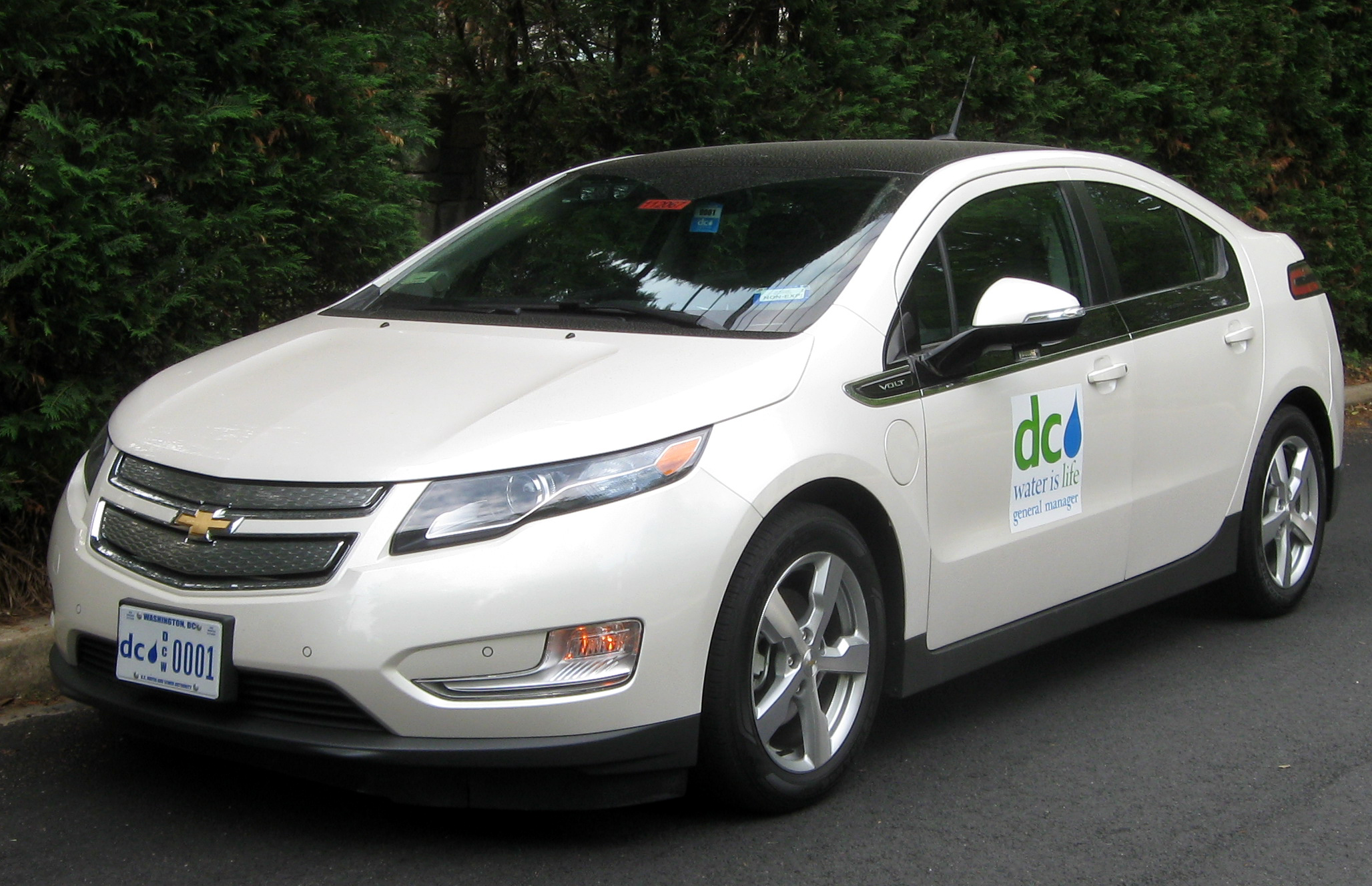
When you and I first met, we were discussing the Chevrolet Volt extended range electric
vehicle, a vehicle that no one understood.
And we went on to discuss electric vehicles, which most people didn't understand.
So it always seemed like we were helping fight the battle for information.
And I really enjoyed that.
And now, Tom, looking back, the things that we didn't understand seem so simple.
They do, and it's funny.
And I've made this point a couple of times up until relatively recently, people were kind
of afraid of hybrids, which is kind of strange because they've been around for a long time.
And Toyota has made them so normal and so simple, people shouldn't fear them.
But now that we're afraid of electric vehicles, hybrids are flying off the shelf.
Like you can't sell a vehicle anymore without a hybrid version of it.
And Toyota is going all hybrid with most of its lineup.
So the battle for information is slowly won and people are being moved reluctantly
into a higher tech, more efficient era.
Well, they say a mind is like a rubber band.
Once it's stretched, it doesn't return to normal.
So when you're exposed to new things, people are reluctant to change.
But then after a while, the things that were once new seem easy.
And the same with the hybrid, you know, that was a confusing thing at first.
I remember the first Prius I drove in where it would show how the energy would transfer
when it would run off the gas and when it would run off the electric.
And it just seemed so advanced and complicated.
And now it seems, you know, mundane.
So yeah, I think that's just human nature.
It's funny too, because I remember the Ford Fusion had this thing where you would
build a tree while you were driving.
Where you would put the leaves on the tree, right?
And you would, I guess, grow a tree.
Grow it, not build a tree.
But yeah, if you did the thing like not to break too aggressively,
because if you hit the brakes too hard, you were not maximizing regenerative braking.
And if you accelerated too hard, you were obviously wasting gas.
So yeah, I never, I always had a tree.
I had no leaves.
I had no leaves on my tree.
So Robert, you and I were talking earlier this week,
and there's a topic you really wanted to cover,
and you challenged me to come up with what it meant automotively.
And that is counter urbanization.
And I didn't really know this, but globally cities are shrinking.
Yes.
And, you know, I thought I'd take a leap here and maybe do something a little different
than maybe your listeners are used to.
But when I look at sustainability, you know, the automobile has come a long way.
Manufacturing facilities and cars are much more sustainable than they were 10 years ago.
They're creating less admission, less pollution, and a lot less waste.
And they're using energy much more efficiently.
But if we look back at past automotive operations, both manufacturing facilities
and all the facilities that it takes to make a car,
both the raw materials and the parts component,
they've left a legacy of blight in many, many areas around the country.
And to your point that you just mentioned, did you know that according to Yahoo Finance,
nearly 15,000 American cities are projected to lose population by the year 2100?
Wow. No, I did not know that.
And if you look at that, you could see that some cities are experiencing slow growth
while others are actually shrinking, not the size of the city,
but the population and the economy.
And then we have something we call dying cities.
And the shrinking and dying cities are really most visible.
You guessed it, right here in the Midwest in the Northeast states,
the old, cold part of our country that we affectionately referred to as the Rust Belt.
And you could see these shuttered factories and abandoned mills.
And they got the landscape almost like perspiration states from our industrial past.
They're blight on the properties.
And what you see is these were once thriving economies where we saw coal, steel, textiles,
and autos being manufactured.
And when these industries closed, the jobs vanished, people moved out,
the tax base shrank, and some cities slipped into what I call a death spiral.
And that's what makes them the dying city is they have half the residents,
twice the infrastructure and not enough revenue to sustain city services
or attract new people to those cities.
So that was what I started thinking is that when this starts to happen
and we've got this large amount of cities that are shrinking,
and then you've got sophisticated cities like San Francisco and Austin and Denver
that are bringing all this new technology like Wave-O
and Ride Sharing Services and Uber and electric car charging networks,
are we starting to get a transportation divide in our country
where not only are these cities in a death spiral,
but they're not getting any of these new sustainable mobility technologies.
And that's what I wanted to talk a little about.
Yeah, and it's an absolutely great question.
And one of the interesting things about declining city populations
is that I think that the business case for ride-hailing, ride-sharing,
mostly ride-hailing and autonomous ride-hailing is basically urban areas, right?
I think that the further you move away from a concentrated population base,
the more difficult it is to make money using those services.
Like you see ride-hailing a lot less out here in Palatine,
which is still pretty population-dense than you do in Chicago.
Yeah, no, they're everywhere in Chicago.
And the other issue there, too, is if people move out of the cities,
they're going to need vehicles and affordability is an issue.
So if you're looking for a divide or a chasm in affordability between haves and haves not,
it's going to be difficult for people to afford vehicles
if they were going to make the move to ride-hailing or ride-sharing.
And one of the things that Elon Musk had said years ago
before he was as controversial as he is,
was that the answer for affordable electric vehicles is ride-hailing.
Like there's a point where people just can't afford cars and they shouldn't bother.
Yes. Well, first I'm remiss. I didn't say hello to Jill. Hello, Jill.
Hello. Good. How are you doing?
And I wish I had some of those donuts you were talking about.
Oh, they look good.
The cinnamon donut is very good. The long johns, I mean meh.
What's also funny about that, Tom,
when I started looking at some examples of dying cities,
a lot of them are tied to the auto industry,
at least in the Midwest, northeast.
So for example, Gary, Indiana, that steel city.
It was once held, I don't know if you know this,
but it was the city of the future.
It was a very progressive city.
At its peak, it had 180,000 residents.
Wow. Today the population is less than 70,000.
And not only do they have less people,
but they have this legacy of blight and pollution.
There's tens of thousands of abandoned homes.
There's high commercial property vacancy rates,
and there's very little economic opportunity there.
And that's a good example of a dying city,
and a lot of that steel was used to make cars.
And it went into the automotive industry
that fueled the Midwest.
Another company and a tie to another city
is Centralia, Pennsylvania.
Do you know about this city?
I don't.
This was a coal mining town,
and coal goes into coke, which goes into steel making.
And that was in Pennsylvania and is now completely abandoned.
There was a underground fire that started in 1962,
and it's still burning,
and it left the town with terrible air pollution,
and it's undevelopable because there's an underground fire
that's been burning for what, 80 years?
It's amazing.
The good news is that pollution can be cleaned.
Economies can be turned around
with the right political will and leadership.
And I've seen this in many cities.
Prior to working in agriculture,
I dealt a lot with mayors on this issue of redevelopment.
And another positive out there in redeveloping cities
is that it creates jobs and improves the tax base.
And the best thing and something we really need today,
it's a bipartisan issue that can bring both sides of the aisle
together.
That's something that's very rare in today's political context.
You know, an interesting point about Dine Cities,
and I don't think Louisville is a Dine City,
but it is a city that could use more jobs.
And one of the interesting things about Louisville,
and I don't know how on top of the story you were last week,
Robert, but Ford made this announcement
about their Model T moment.
And a lot of it had to do with manufacturing techniques
and updated high-tech manufacturing.
And the good news is that they were going to bring 2,200 jobs
to Louisville to the Kentucky car plant that Ford has there.
Here's the bad news about that.
That sounds like they're running the plant at near capacity
and they're doing it at just 2,200 workers.
It was not long ago that that plant hired 4,500 workers,
making the escape and the course there.
So that plant is going to be working again
kind of at full throttle, hopefully,
with half the workers.
With half the workers.
And that's a problem.
And when you talk about bipartisanship
and hopefully, you know, Congress doing something,
this is why it's so important that we do get battery plants
here in the U.S.
because we need all the jobs we can get
because the auto industry is going to be employing
fewer people moving forward.
Well, I could say the same thing in the steel industry.
The South Works plant used to employ 30,000 people.
I think it runs now at 6,000.
You know, and I think that's also the big myth
is that before manufacturing created lots of jobs,
but technology has been infused in everything
and robotics and AI and automation.
And so we can do a lot more with a lot less people.
So manufacturing doesn't produce the kinds of jobs
that it used to in the past.
And again, another example of a city
that went into a death spiral but recovered
is Motor City, Detroit.
You know, it had a population.
Do you know what its population was at the peak?
I don't.
Was it like 22, 2.2 million, 2.3 million?
Very close.
It was 1.85 million.
And then it lost 65% of the population.
Wow.
Isn't that huge?
And in 2013, it filed the largest
municipal bankruptcy in U.S. history,
which is, so not only did it lose people,
but it lost, you know, it's a bond rating
and economic status.
But today, there has been a tremendous investment
in technology, mobility, battery storage
and production, like you mentioned earlier.
Real estate's revising parts of the city.
And it's also anchored by institutions
like Wayne State University, the Detroit Medical Center.
The parts of the auto industry are still there.
The Renaissance Center down by the river.
And they've got a lot of thriving sports facilities down there.
So things can turn around.
And I think Detroit is a good example
of how things can get terrible,
but they can also rebound.
A city I really like as a great example
is Akron, Ohio.
Do you know why Akron was so important
to the auto industry?
I thought it was tires.
Exactly.
It was the rubber capital of the world.
It's once had as many as 50 tire manufacturing companies.
And by 1980, most left.
And Goodyear is like the major remaining one.
And instead of leadership there,
instead of chasing old jobs,
they reinvented themselves as the Polymer
and Advanced Materials Hub
with the Goodyear Slash University Akron Polymer Research Center
leading the way.
And they've had some really cool innovations out of there.
Do you know what an elastomer is by any chance?
I do not, Jill.
Elastomers are a variation of a polymer,
but if you've ever seen an ATM,
it has that hard shell on the outside.
That's an elastomer.
And that was developed at this Akron Polymer Research Center.
And that's a great example
of not trying to go chase the old way things were done,
but try to come in and find something new.
And create something that attracts new investment
and new talent.
So that was sort of my thoughts out there, Tom,
is that there's some good examples of legacy cities
that are turning around.
And back to the original question,
do you think mobility,
as it becomes more sustainable
at less emissions and cleaner factories,
are we creating a transportation divide in our country?
Are we going to see old technology
in these dying shrinking areas
and new technology in the more progressive ones?
I think we might, actually.
And I think that ultimately,
if ride-hailing is going to become a bigger, bigger thing,
especially autonomous ride-hailing,
they're going to want to charge a fair amount for it.
So it may not be the affordable answer to owning a car
that people think it will be.
Right.
I think the other thing that we haven't discussed
is the idea of weather.
You talked about San Francisco and Austin
getting all this great new technology
and ride-hailing and Waymo
and Tesla's piloting their driverless taxis.
And we don't get that in the Midwest because of weather.
Our infrastructure is bad.
It's constantly under construction
and there's constant heat and cold.
And so I think that there's going to be
an additional divide that's going to be
between the Sun Belt and the Rust Belt
of who can get that tech.
Well, at least initially.
I mean, that is a technological barrier.
And hopefully, we breach that.
Well, hopefully.
That created an opportunity for innovation.
The great thing about gas
is it works everywhere.
But these renewable and sustainable technologies,
as you said, Jill, are very weather and climate dependent.
So I don't know.
Maybe something new will come out of that.
Can we use these old factories
as a way to build new technologies?
Like Michigan made a considerable investment
into battery technology
and took some of those older areas and converted them.
So every town creates an opportunity.
So I think we have a lot of these cities
that we're seeing.
And, you know, this is a global issue.
It's not here in the States.
I was just reading about Japan,
how the population is getting older
and it's more expensive to live there.
People are having less children.
So they're getting an older population
with less new birth.
So there's some serious problems out there
that we're going to have to start addressing.
Interesting.
Robert, we've run out of time,
but give us a final thought on this whole
counter-urbanization situation.
So I would say that, you know,
these cities declined over decades
and it's going to take time to revitalize them.
It's not going to happen overnight.
But with ingenuity and sustainable innovation,
I really believe there's hope
to turn a challenge into a great opportunity.
Robert, thank you so much for joining us today.
And thank you for 15 years
of one of the most worthy to listen to podcasts out there.
Well, thank you for having me on
and Jill, it's always good to hear.
All right, we'll talk again soon.
That was Robert Colangelo of The Greenscent Show.
We're going to take a break.
And when we come back...
Quiz time.
Quiz time.
Speed.
You've heard me and my colleague Paul
on the Car Stuff podcast whenever Jill's out of town.
But now you can hear us every week
on the We Are Motor Driven podcast,
along with Jennifer from Auto Exotica
and Harvey from Rides and Drives.
We talk about everything from sports cars to trucks
to EVs and our favorite, Speed.
So join us each week by searching
We Are Motor Driven,
wherever you get your favorite podcast.
Welcome back to the Car Stuff podcast.
And we're back.
This is the Consumer Guide Car Stuff podcast.
I am Tom.
She is Jill.
We just talked about some cool stuff
with Robert Colangelo.
Yes.
I'm going to miss his podcast.
Yes.
I'm going to miss being a part of that
because I felt smart being a part of that.
Wait, aren't you smart?
Regardless.
I mean, reasonably.
Okay.
I guess.
Just to verify.
But, you know, if you're involved
in a smart conversation,
you start to feel a little...
You start to feel smart.
A little smug.
Yeah, okay.
All right.
It's quiz time,
but you probably want to talk a little
social media first.
I do.
I do.
Yeah.
So you can find me on Instagram,
TikTok, YouTube,
Facebook, LinkedIn,
all the things.
I've been doing a real big push
on Instagram lately.
I just top 5,000 followers.
So thanks to everybody.
Wait, where's this?
On Instagram.
Okay.
So thanks to everybody who followed.
I was like at four,
nine, nine, nine for like ever.
And I was just like,
come on.
I just need a couple more people.
So thank you for those
who pushed me over the edge.
So now I'm starting to work
on my YouTube.
So if you haven't subscribed to me
on YouTube, I would love,
I would love a subscription there
at Jill Siminello.
And I use the hashtag
card as your...
Also, you can watch the podcast
on YouTube.
You can.
You can watch it on my YouTube
channel.
If you want to watch that.
If you would like to see what Tom
and I actually look like.
Also, you should follow us
on Facebook.
The Karstoff podcast on Facebook.
Where we post pictures
of the donuts.
You can rate the donuts.
You can...
And the cinnamon always gets
a 10 out of 10.
A couple of weeks ago,
we posted a picture of
producer Randy.
Yeah.
Up until that time,
he had been a ghost.
No longer ghost.
Yep.
Yeah.
So there you go.
All right.
You want to check us out
on Facebook.
Yeah.
I'm Kargai Tom.
Yeah.
I was like,
you also do some social things.
Yeah.
Kargai Tom on Twitter X
and Louis Guy.
Fun cars this week.
Actually, my car spotter cars,
hashtag car spotter,
came during the weather
nightmare that came blowing
through here Saturday.
So all the pictures are wet.
Okay.
All right.
It's quiz time.
Are you ready?
Always.
This is the Consumer Guide
Karstoff Power Quiz.
Today's topic is
Korea or Japan?
Okay.
I'm going to just
mention something to you
and you have to tell me
if it is Korean or
Japanese.
Okay.
It sounds way simpler
than what I think it's
actually going to be.
Maybe a little.
Five questions.
Could you like to
throw me a wrench?
Plus a bonus question
always related to the
topic of the day.
Actually, it kind of is
today.
Just a little bit.
Okay.
You need three
total to win.
Okay.
Are you ready?
I am ready.
We have 14 minutes.
There is another topic
I want to get to
so you may not
dilly-dally.
I'm meeting a donut.
I made dilly-dally.
Yeah.
Are you ready?
Yeah.
It is called
Daihatsu.
Ooh.
Daihatsu.
Car brand
Daihatsu.
I think it's Japanese.
It is Japanese.
It is now wholly owned
by Toyota.
Okay.
And they had a brief
period of sales here
in the U.S.
like three or four model
years.
They sold the
Daihatsu Rocky
which was like the
Suzuki sidekick.
It was a very small body
unframed crossover.
Okay.
And the
Ushiraid which was
a subcompact car.
It didn't
make it here in the U.S.
They now sell
Kai cars.
You know what those are?
I thought they were
key cars.
Okay.
Are they Kai?
I don't know.
Okay.
But Kei.
Okay.
And they're
super popular in Japan
because they're
more or less regulated
by the government.
They get huge
Japanese consumers
get huge tax breaks
for buying very tiny
cars.
Yes.
But the cars
have to be under
660 CC
for no reason.
So that's what
Daihatsu does these days.
And they sell
cars called the
Miro, the Move
and the Tonto.
Okay.
All right.
You have one point.
Okay.
I got a point.
Incheon City.
What?
Incheon City
I-N-C-H-E-O-N.
I did look
it up.
It's Incheon City.
Is that Korean
or Japanese?
I have never
heard of this.
I'd heard of
Daihatsu.
I'm
going to say Korean.
Incheon City is
Korean
and I asked it
because it is where
General Motors
builds the tracks,
the invista,
the trailblazer
and the Encore GX.
Oh, so it's not
an automaker.
It's a city.
It's a city.
Incheon City.
Well, I don't know.
I was thinking
you were talking about
car brands.
No.
So it's just a thing.
I never said
brands.
It's a thing.
It's a thing.
Okay.
Now I've got my-
Okay.
All right.
I got my head in the
game now.
I'm going to say
it's going to be
less affordable.
A lot less.
When the 15 percent
tariff kicks in
on those bad boys.
Yes.
But they're nice cars
and they're on the list
of things that my daughter
is driving.
I want her to like
the invista
because a year old,
they're a crazy good deal
well equipped.
However,
she doesn't like
any of the colors
because she wants yellow
and they are kind
of an old people colors.
Yeah.
So that's kind
of a problem.
All right.
You have two points.
Okay.
I'm like that I know
because it's
Japan and England.
I had to check.
Korean is left-hand drive.
Okay.
All right.
You've got three.
You've won.
All right.
The won.
W-O-N.
The won.
I don't know
what that is.
Hmm.
Well, I am saying
the won.
Oh, is it a
monetary?
It could be
currency.
Sure.
I'm going to say
Korean.
Yes.
It's the Korean
won and the Japanese
yen.
And there are currently
1,401 to the dollar.
How much?
1,400.
Okay.
So that makes
like doing the math
kind of tricky.
Yes.
In fact, this is funny.
I wrote about this
the other day.
In India,
the rupee
is relatively
small
value,
small value units.
So
to make that work
in advertising
or in transactions,
they use something
called a lock,
L-A-K-H,
which is
100,000
rupees.
So it's just
kind of shorthand,
like a grand,
like we might say a grand.
All right.
Last one.
Are you ready?
Mm-hmm.
Renault Samsung Motors.
Renault Samsung Motors.
Is it Korean or Japanese?
Hmm.
I'm trying to fill the
dead air,
even though there's
music playing.
Mm-hmm.
Totally have no idea.
Um...
I'm going to say Korean.
It is.
Yeah.
Samsung's a Korean maker.
They entered into this
joint venture with Renault.
It's kind of a flop.
I mean, they build vehicles
together,
but they mostly sell them
as Renaults.
So I don't know where this
went.
Although now,
I believe it is Renault
Samsung that
Geely is building
pollsters with
to not build them in China.
Okay.
So there's that.
All right.
You got five out of five.
Woo!
All right.
Are you ready?
Bonus question coming.
I win.
I win.
You got five out of five.
You're familiar with
Baskin Robbins?
Yes.
All right.
How many Baskin Robbins
do you think there are
in the world?
You ask me these
questions,
and I either go
really high or really low.
Um, 10,000.
You were close this time.
7,800.
Okay.
How many do you think
there are in the U.S.?
I'm sort of
surprised by this number.
6,000.
Just 2,200.
Oh.
I don't know if that
if that brand,
if that franchise is contracted
or what.
And how many do you think
there are in
South Korea?
Ah,
um,
100.
1,700.
Wow.
Nearly as many in
South Korea
as there are in the U.S.
Wow.
It is the interesting thing.
They like their ice cream, apparently.
It used to be 31 flavors,
right?
Mm-hmm.
They've backed off of that.
And they're branding anymore.
Okay.
So I don't know
how many flavors they have,
but if it's 30,
I feel cheated.
Okay.
All right.
I was going to say
when I was a kid,
we would go to Baskin Robbins
and I would always get
two scoops
and I'd get
peppermint stick
and bubble gum.
Oh.
Hahaha.
I,
I,
Do you have an issue
with chocolate?
What's wrong with the
chocolate?
No,
I wanted the bubble gum
because
peanut butter,
rocky road.
I would get the bubble gum ice cream
and then I could,
like I would,
I would like literally
spit the little gum pieces out
and save them.
Hahaha.
You no longer get to
call anything else gross.
Hahaha.
Um,
I was a kid.
I want to say
I had the bubble gum.
I'm still good.
You know where
we used to go for ice cream?
There was a Dairy Queen
in Chicago
on Lincoln
and Crawford.
Mm-hmm.
Or close to that
intersection.
And my parents always
took us there
and that was soft serve.
Okay.
Dairy Queen was big
too.
Which I didn't know
was at National
at the time.
But we also used to go
to Howard Johnson's
which I think
advertised 28 flavors
for a while.
Hojo had
Yeah.
Ice cream.
Mm-hmm.
Interesting.
Yeah.
And I think it was
really close to my office
in Morton Grove
there outside of Chicago.
Interesting.
All right.
I need you to tell me
which of the following
four flavors,
ice cream flavors
is fake in
South Korea.
In South Korea.
Got it.
Yeah.
I actually read reviews
of all these flavors.
Are you ready?
Mm-hmm.
Sweet corn cheese.
Okay.
Sweet potato cheese.
Mm-hmm.
Sweet cream and
shallot.
Green tea cookie.
I think the
green tea cookie
has to be real.
Okay.
Because that's
something I would want
to eat.
My daughter
loves green tea stuff
and matcha.
Yeah.
The matcha
matcha lattes.
My new favorite
by the way.
I'm sorry
I'm stalling
but you get
like the new matcha latte
is much less sweet
and if you get it
without the syrup
and put cinnamon on it
it is amazing.
Yeah.
That is my new drink
of choice.
And I do coconut milk
so matcha latte
with coconut milk
no syrup
and then
sprinkle on the cinnamon.
All right.
But
so that one's real.
I think
so you said
there was
something with cheese.
Sweet corn cheese.
Mm-hmm.
Sweet potato cheese
and sweet cream
and shallot.
I think this
shallot is weird.
Okay.
So I'm going to say
that's not real.
That's not.
Good job.
You swept today.
Who wants to put onion
in their ice cream?
You know it's the one here
I would try.
No.
I don't like green tea.
Sweet corn cheese.
I've had
there is a
a Filipino
ice cream
ice cream store
near my old office.
Everything's near my old
office.
Morton Girls is not that
exciting but here it is.
They got all this stuff.
I'm making the case for
it being exciting.
This Filipino ice cream store
they had fun stuff like that.
Mm-hmm.
And what's
the green
the purple yam
is that ube?
Yeah ube.
They have ube ice cream
but they had a lot of
this corn
stuff and corn
wonderfully sweet.
Yeah well you would think
like cheese and ice cream
would be weird but when
you think about what ice
cream is it's milk
and cheese is milk
and so.
Although they do
actually use cheddar
sometimes which is
really interesting.
Okay.
But yeah I've had this
stuff and none of it is
bad.
Okay.
I don't know that I've
done that for a while.
I'm going to put a six
and an exclamation point
and then two more
exclamation points.
Oh okay.
I'm going to
underline it.
I'm underlining it twice.
Got it.
I don't want to underline
it a third time because
that would be overkill.
That would be a little
bit overkill.
There is a list that
showed up a couple of
weeks ago and I never
got to it from IC cars.
Okay.
And it's basically
tracking resale value of
vehicles that they
list on IC cars.
Okay.
And the drops
and the increases.
And I can't make
head or tails of the price
increase list.
I don't understand why
vehicles would get so much
more expensive in a short
period of time over the
period of a year.
But the losses are
interesting.
And the top three vehicles
to lose value used in the
last three and they
don't they're not specific
about model years.
Okay.
It's just those vehicles
listed the average price
for those.
So all all these vehicles
but top three models on
the loss list.
Tesla's.
The model s the model y
and the model X and
somehow the model three is
much much lower on the list.
But the model s which was
the original big sedan
lost used sixty six hundred
dollars in value in a year.
Okay.
The model y has lost four
thousand dollars in a year
and the model X seven
thousand bucks.
Here's the thing if you
can live with the
political issues aside if
you can just model three
or model y the small
crossover.
Yeah.
It's an interesting vehicle
to buy.
The average transaction price
right now is twenty nine
thousand dollars for which
you get a vehicle with good
range.
Fun to drive.
They're right a little
firm.
They're a little bit loud
but they're really kind of
excellent examples of the
electric car breed and
yeah lots of people bought
them.
So all you need is the
bumper sticker that says I
bought this before Elon
went crazy.
And then you're cool.
Which is now the hottest
the value of that sticker has
gone up a thousand bucks.
Oh right.
Yeah.
So it's great.
Other cars on this list that
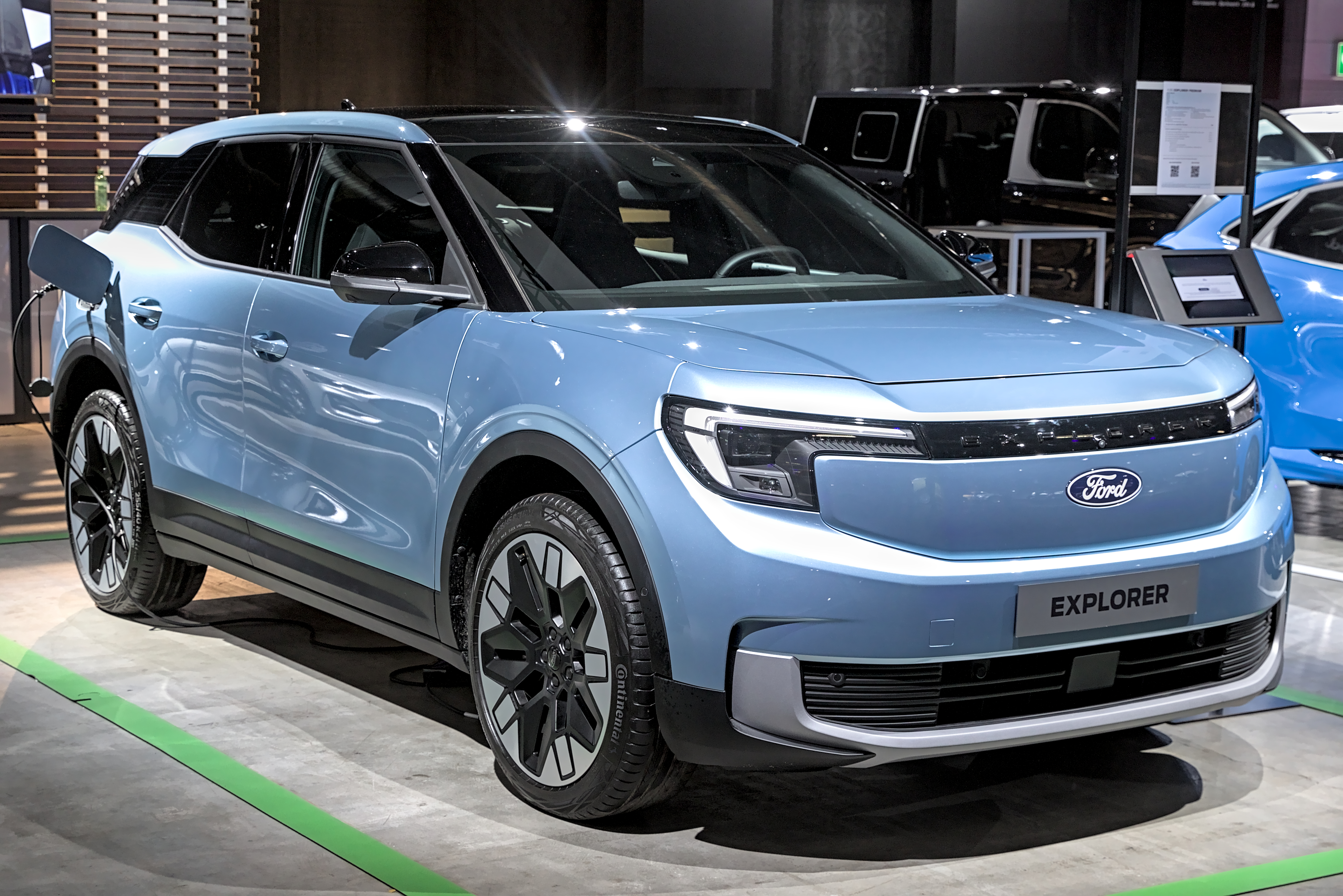
have lost value the Ford
Explorer hybrid that vehicle
hardly exists.
That vehicle is no longer
available to the public.
It's only available to police
department.
So I don't know why people
care about this.
This one's interesting the Jeep
Gladiator and I think that's
just a victim of the Wrangler
versus Bronco battle.
It's just too much of those
vehicles out there.
The Mercedes Benz GLB.
That was the little boxy
subcompact crossover.
It was always a weird fit
in their lineup anyway.
I liked it.
I liked it better as an
electric car.
Maserati Levante.
I always forget that vehicle
exists.
Yeah.
Lincoln Aviator.
I don't know why.
Mercedes Benz AMG GT.
Sure when you buy a car
that starts at 200 grand
it's going to go down in
value.
And then the Tesla Model 3.
Got it.
So there you go.
We should probably have
these folks on again to
talk about this list or
the next list.
Maybe next quarter.
Yep.
All right.
Guess what we did?
We had a really good show.
We had a good show.
It was good to talk to
Robert.
Thank you.
Yes.
To Robert Colangelo of
Greensense Radio.
Thank you, Jill.
Thank you producer Randy
and the good folks here
at TalkZone.
Let's talk more about
cars again.
Next week.
Next week.
Remember to check us out
at ConsumerGuide.com.
The Car Stuff podcast is
produced by J-Turn Media.
To advertise on the show
please drop us a line
at carstuffatconsumerguide.com.
About this episode
Jill and Tom dive into the challenges facing EV startups like Rivian and Lucid, discussing their financial struggles and market performance. They also review the new Acura ADX, highlighting its features and performance, while noting some drawbacks like engine noise and power issues. The episode touches on the shrinking populations of American cities and the implications for mobility and automotive industries, featuring insights from Robert Colangelo on sustainability and urbanization. The hosts share personal anecdotes and engage in a fun quiz segment, rounding out a lively discussion on current automotive trends.
Jill and Tom open the show discussing the poor first-half financial returns of EV startups Lucid and Rivian, and the surprising impact recent emissions deregulation will have on their bottom lines. The hosts also touch on the slow sales start of Lucid’s new Gravity EV crossover.
Still in the first segment, Jill reviews the subcompact Acura ADX crossover. Jill likes the vehicle, but questions if it's refined and powerful enough to be an Acura. Listen in for her complete review.
In the second segment Jill and Tom welcome Green Sense Show host Robert Colangelo to the program. Robert talked about his show—surprise news—and how shrinking cities may impact the auto industry and transportation in general.
In the last segment Jill is subjected to Tom’s “Korean or Japanese?” quiz. To close the show, Tom shared some highlights from an iSeeCars list of fastest-depreciating vehicles.