The Porsche 911 is Porsche’s most famous sports car. It’s known for its distinctive layout and feel, so when Porsche starts borrowing ideas from others, it stands out.
The Porsche Cayman is a Porsche sports car with the engine placed toward the middle. The hosts bring it up to show Porsche already has a reputation for making cars that drive well.
The Hyundai Ioniq 5N is a high-performance Hyundai electric car. The big point here is that it uses artificial gear-shift behavior to make the driving feel more exciting.
Because EVs don’t use gears the same way as gas cars, some automakers add simulated “shift” moments. It’s basically extra feedback to make the car feel more fun and responsive.
The Porsche Taycan is Porsche’s electric performance car. In this story, Porsche is considering adding simulated gear-shift behavior to make the EV feel more engaging.
The Audi Quattro is an Audi model name that’s known for using all-wheel drive. It’s often talked about because it helped define Audi’s performance reputation. The episode mentions it as something the speaker remembers from their past.
EV stands for electric vehicle. The hosts are saying people often talk about EVs differently than gas cars, especially when it comes to excitement and emotion.
Internal combustion is the kind of engine that burns fuel to make power. The hosts are contrasting it with electric cars to explain why gas cars often feel more exciting to people.
Car
Rivian
Rivian makes electric vehicles. In this discussion, it’s just another example of an EV the host has driven to compare excitement and speed.
Hyundai Ioniq is a line of cars from Hyundai that includes electric and hybrid options. The podcast mentions it because the speaker is talking about what they learned from driving a high-performance Ioniq 5N. It’s basically the name of Hyundai’s electrified car family.
A virtual transmission is software that makes an electric car feel like it’s shifting gears. It doesn’t use real gears—it's just designed to mimic the sensation.
Paddle shifters are the little levers behind or on the steering wheel. They let you tell the car to change gears (or, in this case, simulate that feeling).
A rev limiter is what stops an engine from revving too high. Here, the car fakes that effect in software, so acceleration cuts off when you hit the simulated limit.
The “uncanny valley” idea is when something looks or feels almost real, but a little off, and that can be weird. The host says the car’s simulation is close enough now that it feels fun instead of creepy.
A power curve is how strong the car feels over time as you accelerate. Even if an EV starts strong, the car may reduce or shape that strength to keep things smooth and controlled.
The Hyundai IONIQ 6N is a sporty electric car from Hyundai. The hosts mention it with the IONIQ 5N because they both use the same “feel” system that’s part of the debate.
Some EVs can fake the feeling of shifting gears. They do it by adding sounds and cues so it feels more like a normal car, but some people think it’s a gimmick.
They’re referencing something said by a Hyundai executive. The takeaway is that Hyundai may expand this simulated-shift feature to more EVs beyond the current model.
Fast charging is when an EV is charged with high power so it takes much less time than normal charging. The hosts are saying it can be as quick as about 5–15 minutes.
Some EVs add a “fake” gear-change feel. It makes sounds and changes the driving sensation to help you understand what the car is doing, even though there aren’t real gears shifting like in a gas car.
The hosts contrast EV driving with a traditional gas-car “sensory experience,” meaning the driver’s cues from sound and vibration during acceleration and cornering. They argue that adding simulated cues (via fake shifting) helps the driver interpret the car’s behavior more easily.
The powertrain is the car’s main “go” system—everything that makes and sends power to the wheels. The hosts are saying that in many EVs you don’t hear as much of that as you would in a gas car.
Track driving means driving on a race course. On track, you usually focus on the road ahead and your reference points instead of staring at the speedometer.
The Dodge Charger is a sporty, performance-focused car made by Dodge. People talk about it a lot because it can be fast and fun to drive, including on a track. In the episode, it’s shown doing laps or runs with another performance car.
Some electric cars use a speaker to play made-up “engine” sounds outside the car. The idea is to make the car feel more like a gas car, but the hosts think it can be annoying instead of fun.
The Challenger is a muscle car model from Dodge. In the episode, it’s mentioned along with the Hellcat, especially for how loud it sounds when you start it. It’s basically referring to that specific type of Challenger performance car.
A resonator is a part of a sound system that helps boost and shape the noise. Here, it’s used to make the EV’s artificial “engine” sound louder and more convincing.
The Ford Mustang is a sports car made by Ford. It’s known for being fun to drive and for having different power options depending on the version. The episode references it because a Mustang was present at the scene.
Electrify America runs public fast-charging stations for electric cars. The host brings it up because it’s where they experienced someone approaching after hearing the car’s sound.
Regen brakes are how an electric car slows down while also recharging its battery. The car uses the motor to slow you down, and that action makes electricity.
The Dodge Challenger is a two-door muscle car made by Dodge. It’s known for powerful engines and a distinctive look. The podcast brings it up while talking about how the car’s shape looks.
A V6 engine is an engine with six cylinders arranged in a V shape. People like it because it usually runs smoothly and can feel strong in everyday driving.
The Nissan Frontier is a mid-size pickup truck. It’s designed to be useful for hauling and driving in everyday life. The episode mentions it because it has kept a V6 engine option in its lineup.
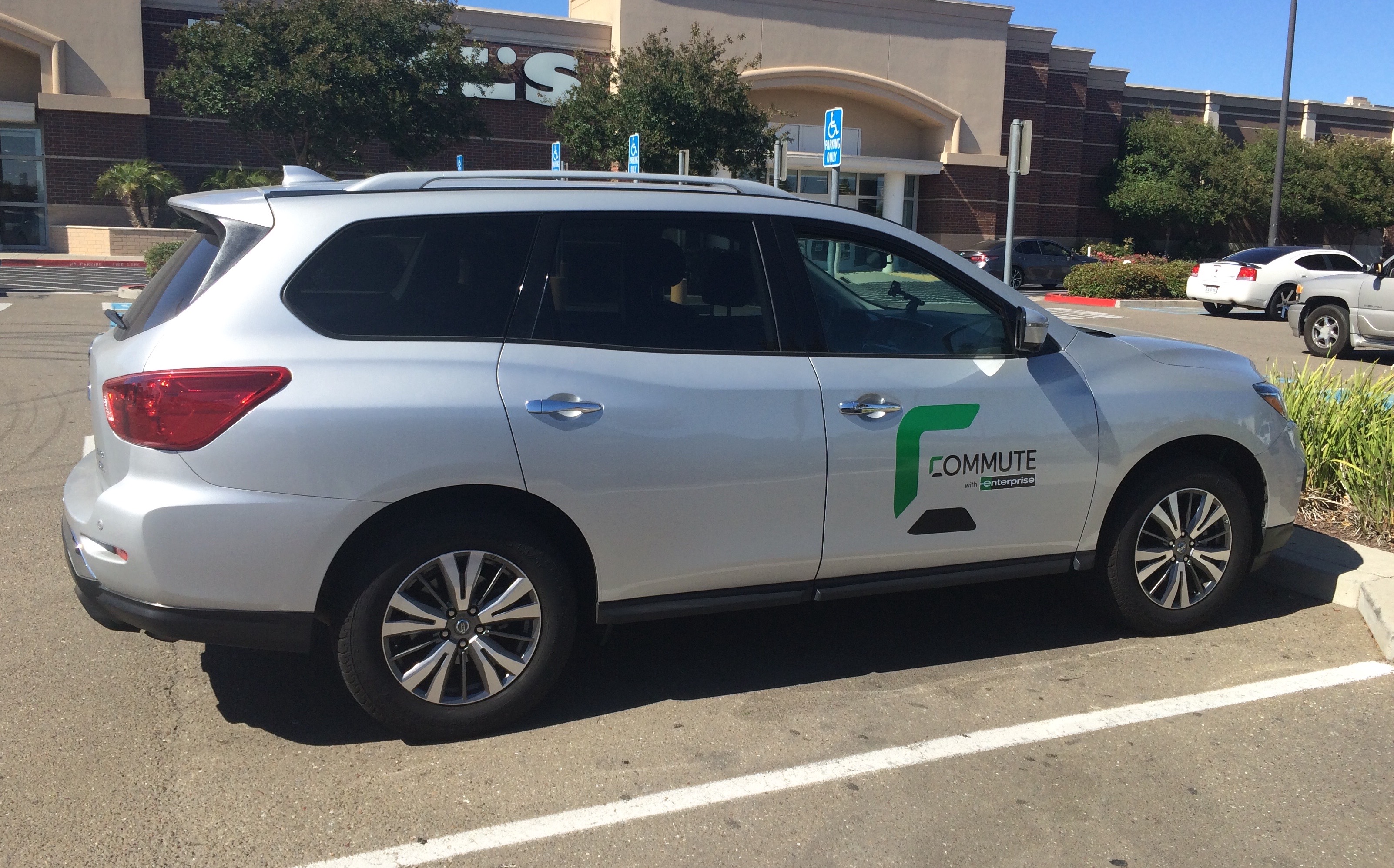
The Nissan Pathfinder is a larger SUV meant for everyday family use. It’s often offered with a V6 engine depending on the year. The episode mentions it while talking about which engine types are staying popular.
The Nissan Armada is a large SUV designed for families and bigger trips. It’s typically offered with a V6 engine in many versions. The episode mentions it as part of a list of SUVs and trucks that still offer V6 options.
Cadillac is a luxury car brand. In this episode, it comes up because the hosts are talking about how brands are trying to make car sounds feel better—without sounding fake.
The Cadillac Fleetwood is a luxury car model from Cadillac. Older versions are known for a very distinctive, upscale look. In the episode, it’s referenced to describe the style of the taillights and front-end design.
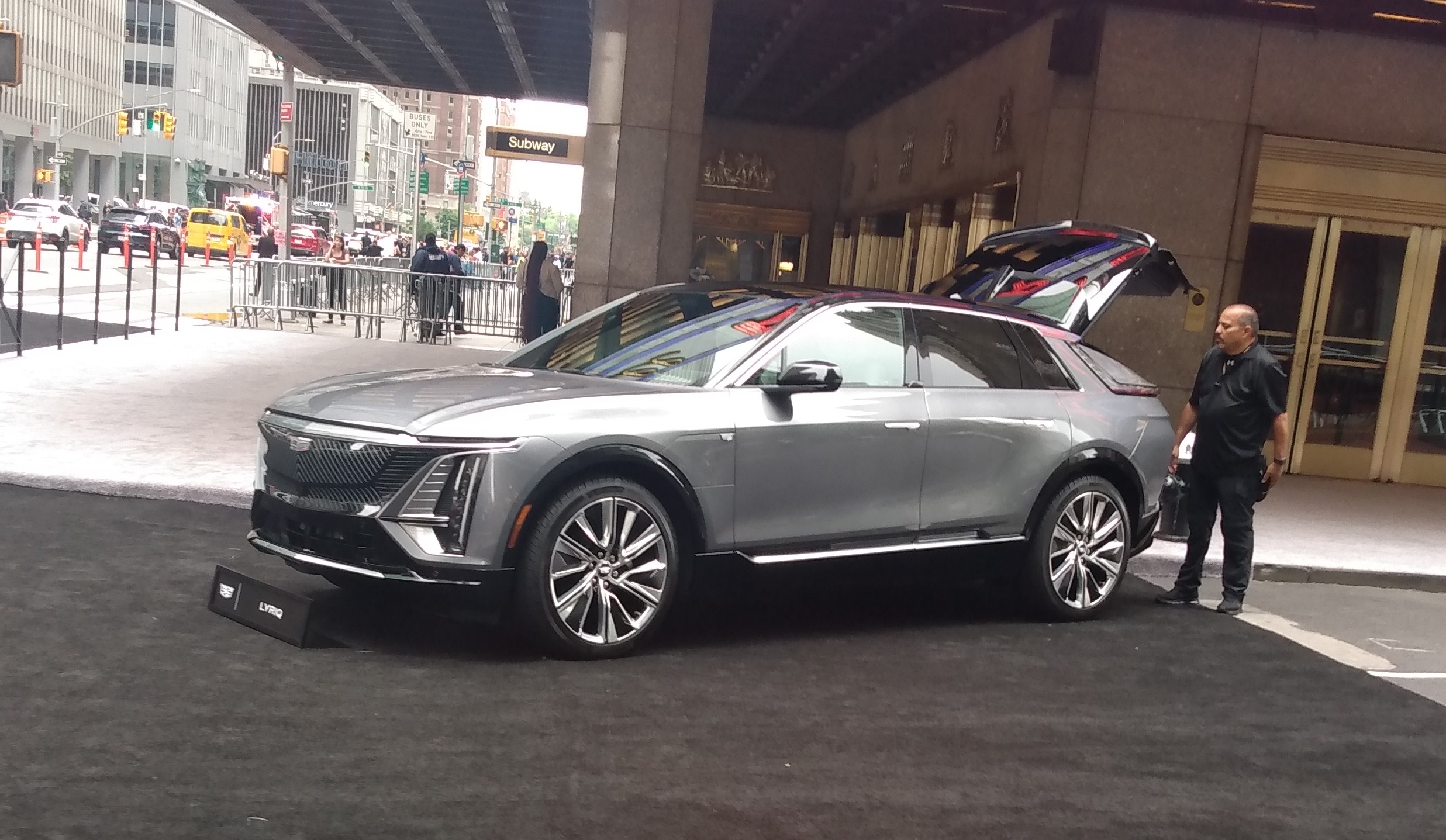
The Cadillac Lyriq is an electric SUV made by Cadillac. It’s designed for comfortable, everyday driving with an electric powertrain. The episode mentions driving a higher-performance version to describe how it felt.
AMG is Mercedes-Benz’s performance brand, known for high-output engines and a distinctive driving feel. In this segment, AMG is referenced specifically because the host previously experienced AMG-branded electric vehicles whose sound design felt “very fake.”
The host is talking about artificial noises that EVs make to imitate engine sounds. They didn’t like versions that felt obviously “made up” rather than matching how the car actually drives.
They’re comparing two approaches: one where an EV tries to copy the sound of a gas engine, and another where it doesn’t. The host prefers the approach that doesn’t sound like an imitation.
Touring mode is a driving setting meant to feel smoother and more relaxed. In this case, it also changes the car’s sound to be quieter and more refined.
Because electric cars don’t make the usual engine noise, some manufacturers add sound effects. Here, the host explains that the sound is designed to feel futuristic and to help you “hear” speed as you accelerate.
Those words describe fake “crackling” and “popping” sounds that some cars play to imitate the noise of a gas engine. The host is saying this car’s sound is different and not trying to copy that style.
Some cars add fake engine noise through the speakers. It can make the car feel more exciting, but because it’s not a real engine, it can get annoying after a while—especially on long drives.
The Chevrolet Corvette is a sports car designed for performance. The E-Ray version uses a hybrid system, meaning it can use electric power along with its regular powertrain. In the episode, it’s mentioned because the speaker enjoyed driving it.
Because EVs are quiet, some cars use built-in speakers to make fake engine sounds. The host turned those sounds up because it made the drive feel more intense.
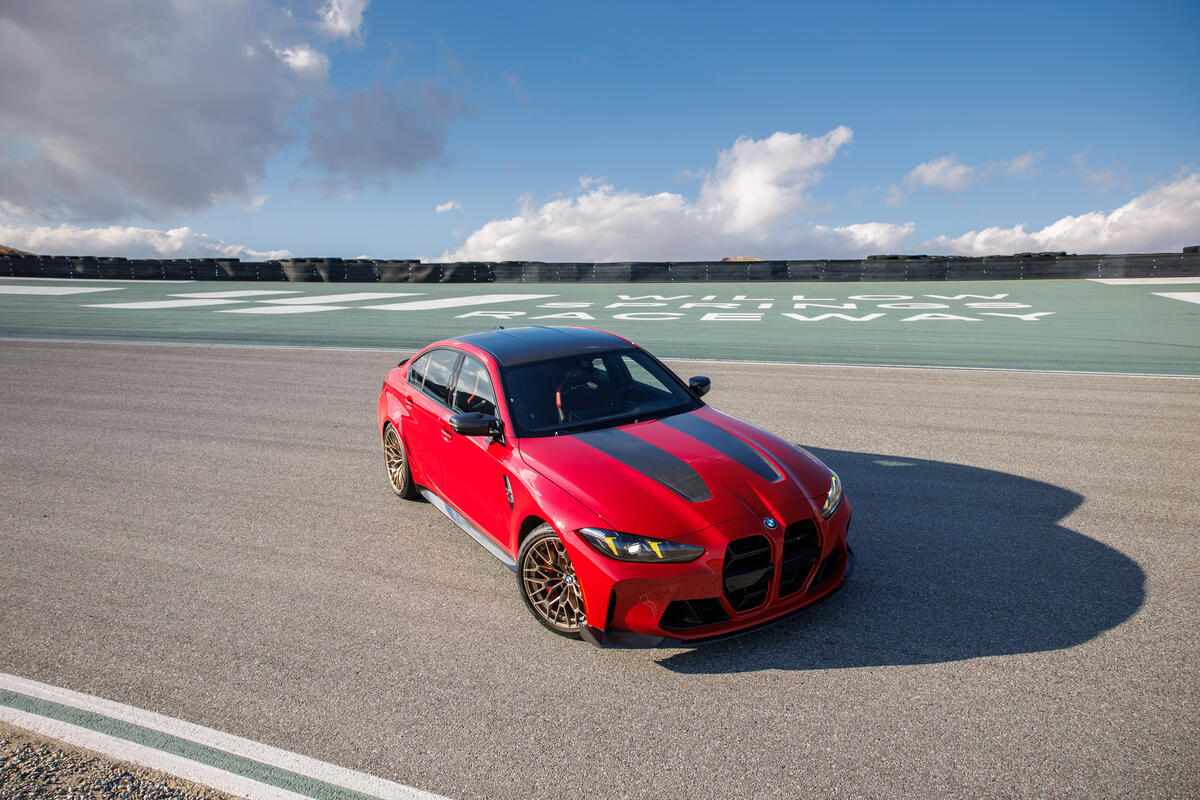
The BMW M3 is a high-performance version of the BMW 3 Series. It’s made to be fun to drive quickly, with stronger power and sportier handling than a regular model. In the episode, it’s used as a reference point for how fun another car felt.
Because electric cars don’t naturally make an engine sound, some use speakers to play an artificial “engine” noise. In this case, Porsche (and others) try to make that sound feel believable and tied to how the car is driving.
Electric cars usually don’t shift gears the way gas cars do. Some cars add pretend shift sounds or cues so the driving experience feels more like a traditional car. The hosts are saying it takes real tuning to make it convincing.
Some EVs use speakers to make the car sound more exciting. In this case, the hosts say Maserati’s approach uses real motor noise and amplifies it—rather than inventing a totally artificial sound—and you can turn it off.
Rimac Nevera is an ultra-rare, very expensive electric hypercar. The hosts say it’s the most fun EV they’ve driven, connecting that to the idea of making EVs feel more exciting.
The throttle is basically the pedal you press to tell the car to give you more power. The host is saying the car’s response and sound line up right when you press it.
Because electric cars are so quiet, they often play an artificial sound when moving slowly. That sound helps people like pedestrians notice the car coming.
“Fake noises” is the idea of adding artificial engine or exhaust sounds to mimic a traditional performance car. The hosts argue that adding these sounds can reduce immersion for an EV off-road experience, especially when the goal is to stay connected to the environment.
The G-Class is a luxury SUV that’s built for off-roading. It’s designed to handle rough terrain while still feeling upscale. The episode mentions it because the speaker has gone off-roading in G wagons.
The Jeep Wrangler is an off-road SUV made by Jeep. It’s designed to handle rough roads and trails better than most regular cars. The episode brings it up because the speaker has gone off-roading in Wranglers.
Silent electric off-roading is when an electric vehicle drives quietly on trails. Because there’s less engine noise, you can hear nature and the sound of the tires on gravel more clearly.
This means the car is using its speakers to make the engine/drivetrain sound louder or more noticeable. The host says the Lucid’s sound wasn’t being boosted that way.
“Next gen motors” means newer-generation electric motor designs. Newer motor generations typically incorporate improved materials, control strategies, and electromagnetic design, which can make the motor feel more refined and change its sound.
“Amplify it” here means making the car’s sounds louder or more noticeable on purpose. The hosts are saying they don’t do that—they let the motor sound come through naturally.
Hemi is a famous engine nickname used by Chrysler for a particular type of V8. The hosts are saying automakers should give their electric-motor tech a similar catchy name.
This is about EVs using made-up or tuned sounds so the car feels less confusing. The idea is that drivers can “get it” faster when the sound matches what the car is doing.
“Driver engagement” means how connected and fun a car feels to drive. Here, the point is that the company is claiming these changes make driving more involving, but the speaker disagrees.
Term
EV startups
“EV startups” refers to newer companies building electric vehicles rather than established automakers. In this context, the speaker is contrasting how these companies approach the problem they’re discussing—by handling it “on its own merits” instead of using a specific feature.
Porsche Cayenne is a big SUV. Here they’re talking about a special electric version where Porsche added a distinctive sound/experience, not by changing how the car shifts gears.
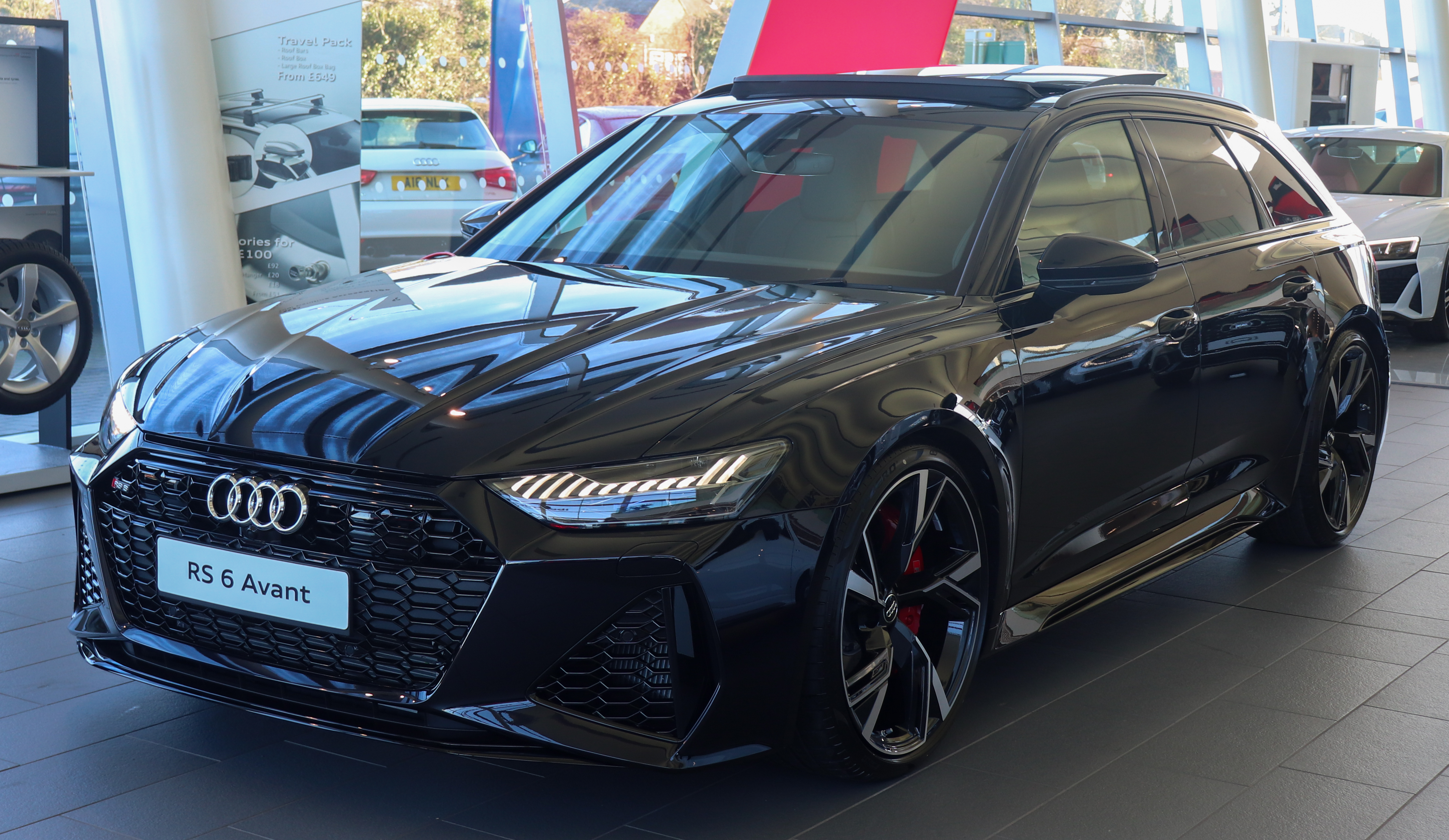
The Audi RS6 Avant is a super-fast wagon from Audi. It’s an example of a car the host thinks is awesome even while talking about the shift toward electric vehicles.
Brand
Elucidator Sapphire
“Elucidator Sapphire” sounds like a specific electric Lucid model/trim. The host is basically saying it’s awesome, not that it’s awesome only because it’s electric.
“N badge” is Hyundai’s way of labeling its sportier, performance-focused cars. The point here is that the host thinks the car can be cool regardless of power source.
“M badge” means a BMW is from BMW’s performance line. The host is saying those performance badges are part of what makes a car cool, regardless of powertrain.
The Rivian R1T is an electric pickup truck. The “Quad” version means it uses four electric motors, which helps it put power to the wheels effectively.
LIVE
This episode is brought to you by V6 Day, powered by Nissan.
Hello, everyone, and welcome to The Drive Cast.
I'm Kyle Taramka, editor-in-chief of The Drive.
And I'm Joel Federer, The Drive's director of content and product.
And The Drive Cast is our weekly podcast giving you an inside look at the biggest stories, controversies, and people shaping the automotive industry.
Today, we're talking about one automaker copying another's ideas, and neither are who you'd expect.
Porsche is an unquestioned leader in the world of performance cars, and its careful treatment of the 911 Cayman and Boxster is often imitated, never duplicated.
But now, a new report is adding to the pile of evidence that it's about to steal a controversial move from an unlikely source, that's Hyundai, as it tries to figure out the magic formula for a fun-to-drive electric car.
What a world. Last week, AutoCar ran an interview with Andreas Preininger, the head of Porsche's GT Performance model line, where he heaped praise on Hyundai for adding fake gear shifts to the Ioniq 5N to increase driver engagement.
And it's not the first time. In fact, last December, we published an exclusive report that Porsche was so smitten with Hyundai's system, it had already decided to add fake gear shifts to its next EVs, starting with the 2027 Taycan.
And the reactions to this news have been polarizing, even accounting for the shock of a company like Porsche copying a company like Hyundai. Some people think fake shifts in EVs are neat, others think it's an affront to humanity, but the dispute points to a larger issue that car companies are finally recognizing.
Among the many factors holding up EV adoption, the fact that a lot of people just don't think they're fun to drive might be the hardest to solve.
Look, let's just cut to the chase, Kyle. The real questions are, can automakers engineer a soul into EVs? Why does it matter if they can or can't, and are they even trying to do it in the right ways?
I mean, we've both seen, driven, and heard a lot about this on the job, from industry executives to engineers to enthusiasts, and the answers are starting to emerge, and like some early budding relationships, it's complicated.
Car enthusiasts don't shape the car market like they used to, just look at how SUVs rule the roads today, but the vocal minority can have a massive impact on the perception of the market.
And if loyal fans are shouting about how EVs make them feel dead inside, a company like Porsche that made its name on performance, or anyone trying to sell sporty EVs, is going to have a real hard time convincing anyone it's got a solid plan for the next couple of decades.
So today, it's fun versus electric cars, how a company like Porsche ends up copying Hyundai, what the various tricks automakers are trying means for the next generation of EVs, and why this all matters more than you'd think.
By the way, if you like what we're doing here, do us a favor and hit us with a five star review on Spotify or Apple Podcasts. It really does help get the drive cast in front of more people.
Okay, let's go.
All right, Joel, did I see you driving an Audi RS6 this week? That is not a fun EV, but a fun car.
Oh, yeah.
Kind of the polar opposite of what we're talking about today.
Some of the people listening probably know my background, and a lot probably don't. Our family, before my time, we're all about Mopar and Nissan Datsun, and then they moved into their German era, if you will, with some Mercedes, but a lot of Audi.
And by the time I came around, we were just moving out of the Nissan Datsun phase and into the house of Quattro, and that's what I grew up with, Hakka Palitas, Quattro, Minnesota weather.
But yeah, no, this is a cool car. This is a loud car.
And see, like, that kind of says it all and why we're talking about what we're talking about today, because your reaction and describing how great it is to have a twin-turbo V8 performance station wagon, you don't hear people talk about,
aside from some, you don't hear a lot of people talk about EVs with the same fervor or passion or just like, wow, this thing is cool.
I mean, there are a lot of ways that you can convince people that something is fun. There are a lot of definitions of fun, but it's just very obvious for a lot of gas cars and internal combustion cars where the fun comes from.
The noise, the sound, the experience, the fact that it's a bunch of controlled explosions happening under the hood. With EVs, the conversation takes a much different shape.
And yeah, pretty much says it all.
The first day I had it, you know, I was on full dad duty this week. My wife had foot surgery, so she was down for the count for the week.
And I was doing school runs constantly, which talk about a car for a school run, I just got to say.
But anyway, you know, I ripped onto the highway absolutely at legal speeds because I'm pretty sure our budget is not accounting for bailing me out of jail.
And I definitely noted that you could very quickly, very quickly go to jail in this car. And it's funny because I've driven cars that are faster and quicker than this, right?
I've driven a Lucid Air Sapphire, I've driven a Rivian, like I've driven cars that do 060 faster than this car does and probably go just as fast in terms of top speed.
But I don't think I've ever posted when I was driving a Lucid Air Sapphire or a Rivian or any of these other vehicles, I could go to jail real fast.
And this is even the quickest thing I've ever driven.
It's like you're along for the ride and this car is an equal partner in it because it feels a little more alive.
I really don't personally like to describe machines as having souls, like a soul is what humans have.
But it's undeniable that there is a connection that's much easier to make on an emotional level with an internal combustion car for a lot of people versus an EV.
But I think this speaks to a bigger issue.
I was actually interviewing a designer, not about electric cars, about actually concept car design for an upcoming episode that you'll hear recently.
But he made the point that cars are basically still the closest thing we have to personal robots, like big robots that we own in our parts of our lives.
Just like anything, if the robot needs to convey the appearance of having a soul, that formula has been figured out with internal combustion cars.
And they know how to do that and they know how to make that impression on people.
They haven't figured that out with EVs yet.
And if the robots in our lives are suddenly missing souls, people are going to notice, people are going to feel it.
And I would say for me, the most fun EV I've ever driven is the Rematch of Era, which you can make a really genuinely fun EV.
The thing also costs three million bucks.
If fun requires a price tag in the seven figures, that's not a good sign and does not portend good things.
So let's talk about the Porsche news from last week.
So AutoCar published this interview with the head of the GT model line, Andreas.
I'm not going to try to say his last name.
Good for you for giving it a shot in the intro there.
And again, they keep coming back to saying that Hyundai is really, really locked into something they find, quote, very impressive with fake gear shifts in EVs.
And that it was his, quote, biggest takeaway of driving the Ioniq 5N.
I mean, it is like the most significant differentiator from them.
But this is, again, just the latest we've heard them talk about this.
And can you fill everyone in on the developments that we've been tracking on this very topic for about a year now?
So Porsche is going to adopt the whole fake transmission, fake gear shift thing.
And the first car to get that in their EV lineup will be the Taycan for model year 2027,
which is supposed to arrive about August-ish time frame, second half 2026.
And we don't know exactly how it's going to function, right?
But we expect the function to be similar to Hyundai.
You can turn it on, you can turn it off.
It's obviously not real.
But when we talked to Porsche, we reached out to them, obviously.
I'm not entirely sure what their face looked like when they figured out that we knew this, but you know, whatever.
The quote was, Porsche continuously tests and evaluates potential new technologies as part of its research and development process.
The spokesperson told me and went on to say, if and when these technologies may or may not be brought to market,
it is decided based on his insights gained from these exploratory tests.
The same applies to consideration of a potential virtual transmission in the future.
Huh? Okay, cool.
Yeah, I love the Bayer may not be true, cannot confirm or deny.
But if it is true, we already kind of have a name for it in calling it a virtual transmission, which is not what Hyundai calls it.
And just to explain real quick, what we're talking about here is electric vehicles by and large do not have transmissions like a gas car does with gears.
They have a single gear, like a reduction gear, because they don't need them.
An electric motor develops all of its torque from zero RPM and you don't need to have a progressive gear set
so that you can keep the powertrain in the power band and actually keep moving forward.
Hyundai, in trying to figure out how to make the Ioniq 5N stand out, said, you know what?
What if we faked gears and what if we made a software trick so that the car would behave like it had gears
and you can use the paddle shifters to shift gears and you would feel the difference in the torque and the top speed
as you would if it was an actual gas car with a transmission.
And so it was totally unnecessary.
But what Hyundai did, again, and we'll get into the merits of like whether or not some people love them, some people are very upset by this.
Objectively, they did an amazing job.
Like it does feel, I guess the closest analogy would be to Gran Turismo or a video game where like if you have a controller,
you're shifting using the controller and the car's reacting immediately like you would if it was in the actual gas car.
And the engine, the fake engine sound they added to it so you can hear the revs and the way that if you run up against the rev limiter,
which is not real rev limiter, but if you run up against their simulated rev limiter, the car stops accelerating.
If you are in a too low of a gear, the car will kind of bog and buck.
Like in my opinion, they've crossed the uncanny valley and made it something that is pretty enjoyable to use if you can get past the psychological bias.
And then so Porsche is saying, hey, that's a pretty good idea.
And we think it could make people think our EVs are fun too.
It's really upset a lot of folks to say the least.
I think that and for many people who've listened to this, I'm sure because it's not a common car to be clear.
The Hyundai Oniq 5N has not been driven by like a vast majority of people, right?
And so I do what how Kyle just explained it is 100% accurate.
But what I really want to layer on here is if you didn't know better and you thought this car was powered by a forebanger and like you had your your eyes either blindfolded or whatever,
based on the senses and I mean the senses of feeling and hearing and whatever, you might just think this is a really oddly tuned four cylinder car.
And I mean that in like the most complimentary way of this feels real the way to what Kyle just said, it builds power.
And to be clear, EVs don't need to build power.
It's instant torque 100%.
But they are basically ratcheting down that power and having a power curve, a torque curve that comes into play.
And then you feel the thrust and then you literally feel the shift.
I can feel it in my tush.
You can feel the pause and power and this little click and like is a little shove in the bottom of your back and then you go forward again.
The fact that they've done is so good to impress Kyle.
The fact that it is so good to impress me, that's notable of course, right?
Like we drive how many cars a year, we're very persnickety.
I'm absolutely jaded at this point on certain things, of course.
But Porsche is not me and Kyle.
It's the holy grail for many people, right?
There are people that run their lives around Porsche, whether it's racing, the lifestyle, the branding, the clothing, whatever.
For them to drive this car from Hyundai and say, this is so good.
It is so well done.
This is so not dumb.
We're going to copy it and we can do it as well as this.
They had Hyundai as the bar and that tells you this is good.
It's really well done.
Dumb or not, it doesn't matter.
It's done well.
Exactly.
There's a lot of dumb things that are done well and end up being a lot of fun.
I think some of the polarized reaction to this news comes from the fact that, like you said, a lot of people have not driven and will not ever drive the IONIQ 5N or the 6N that they both have the same system.
Yeah, these are not high volume cars.
They're not high volume cars and they're still pretty expensive.
It's just not something people are going to have exposure to.
You and I can sit here and extol the virtues of the system and describe how realistic it is and how fun it is and how once you're in it, you really understand it.
That's just not going to cut it for a lot of people who are just reacting to the idea alone of, I don't want a fake thing in my car trying to convince me that it's cool.
There's this try-hard element to it that just hits the exact wrong button for a lot of enthusiasts.
A company like Porsche, I think they're probably seeing reviewers like us praising Hyundai's system and then they tried themselves.
They're like, oh, it's getting glowing reviews.
We love it.
Of course, we're going to do this.
And it kind of left out the important piece that the wide audience of people who did not drive the Hyundai's and are reading our reviews and thinking, yeah, but whatever, not for me.
They're not going to see Porsche's stamp of approval as that.
They're going to see it as Porsche is resorting to gimmicks because it doesn't know how to make a truly fun, authentic EV.
And I mean, I'm not saying that's actually the case.
I just think that's the perception that a lot of people are carrying into this conversation.
And it's just like many things becoming way, way, way, way more intense and charged than it should be of just like, do you want this fun thing that you can turn on or off?
Who cares?
If you like it, great.
If you don't, turn it off.
It doesn't matter.
I will say there was another report that came out this week, in fact, and a Hyundai executive basically said that they are now considering taking this fake virtual gearbox, the fake virtual shifts, and they're thinking of transferring it to other EVs that are not N branded.
And the reason I mentioned this is because we just talked about how so many people aren't going to buy the high end, high performance version of the Hyundai Ioniq 5N.
Right.
But what if all of a sudden in the next refresh, the Hyundai Ioniq 5, like the regular car that is not crazy money?
It actually sounds like that's where this is going because it's been so well received of like, I mean, we're making it more feel like that transition is less and less.
We have 400 miles of range and we have this and we have fast charging.
It's an out 5, 10, 15 minutes to charge a car.
Like as we make these barriers and they bring them down lower, we would start making them more equal, more parallel of you can have it.
Turn it on.
You can have it.
You can turn it off.
But, you know, I think we also have to talk about the fact that to your point of this fakeness and whether Porsche agrees with it or not, doesn't really change someone else's mind.
It's interesting to see how other players from Dodge, from Lucid, from Maserati, from Cali, from Rivian, from Tesla, pick any car that the automaker that makes EVs, right?
They have all done certain things in different ways.
A lot of them tried to execute certain things, but they're doing it in very different ways.
And I think that's interesting because it definitely seems to resonate differently with different buyers and different demographics in the segments.
Yes, yes.
Before we get to those, though, I do have one more point I think is important about Hyundai and the virtues of a system like this or the value of it.
We are, again, talking about cars appealing to a very small portion of buyers.
And, you know, the vocal minority point I made in the intro I think is true.
It's important to pay attention to this stuff.
But the exposure is key.
Like once you experience it, you can sort of get it.
More importantly, if you like driving, if you are someone who likes to drive and likes to have a fun time behind the wheel, a system like Hyundai's fake shifting, and they don't like when we call it fake shifting, by the way,
but it does help you understand what the car is doing better.
If you have the absence of a sensory experience and you're just hearing like a little bit of a wind whistle, some tire noise and whatever bit of the powertrain you can actually hear in a regular EV as you're going into a fast corner, for example.
If you are actually using the fake shifting system or letting it be an automatic mode, so it's doing it itself, you don't actually have to press the paddles.
But it is still making the same noises you would expect in a gas car going into a corner.
You can just read what the car is doing a lot more easily.
And if you're on a track where you should not be looking at your speedometer ever if you're on a track, you should be looking at the course and judging your speed that way.
The sound is a huge part of understanding how fast you're going.
It can really catch you off guard.
And I experienced this when we filmed the video with the IONIQ 5N and the Dodge Charger on track.
If you have the system off, you go flying into a corner, you suddenly are breaking a lot later and to the point where you're messing up your line because you just don't have those signals you're used to having.
You're trained for years and decades of understanding this is how the car is going to react when I do this.
So this is kind of a small, might seem like a small deal, but it does have big implications on whether or not you can really do the same kind of fun things in an EV than you can in a gas car.
And then the implications of the broader market is we'll get into.
So, rant over, back to the Dodge Charger as the first one of these attempts to, like, what makes a funny EV? Let's figure it out together, guys, and just trust us.
The Dodge Charger was also featured in our video. I did not find it to be very fun.
It's trying, but it just, man, it's heavy, loud, but not in a good way. It's got that fake external speaker.
It's really loud.
I mean, to the point of being antisocial and even more so than in a way that an actual exhaust is because you can't help that.
The car makes that noise as part of starting up and making things explode under the hood.
An EV doesn't need that. And so when you have a massive speaker on the outside that you can hear from down the block when you turn it on and every time you do it goes, ooh.
It's like, what are you doing, man?
Just for a point of reference, so everyone knows, the Hellcat has a certain decibel rating when you start a Hellcat.
And their target was that this thing, when it has the speaker that channels air and pumps it through these tubes, like a resonator, it had to be as loud as a Hellcat, and it is.
Just so we're all clear, it is as loud as a Hellcat.
And that pretty much says it all. It's like the same shape of the conversation we had about electric trucks and, like, why the full-size electric trucks?
They tried so hard to make the numbers match the gas ones because they thought that's what would matter, and it turned into a bad product.
And the charger, it's like, great, you made it as loud as a Hellcat. Why? Why'd you do that? Because you thought people would think that's fun?
That's not what people think is fun. That's a trick.
I remember I was charging it at an Electrify America station when I had it in January, and this guy walked up to me and I believe he was driving a Mustang.
He parked his Mustang and walked over.
I was like, oh, is this the new charger? Let me see. Let me see.
I didn't realize it was the electric one.
And when I showed him the exhaust and I revved it and made it make its noise, the look of disappointment on his face or the look of confusion on his face was striking.
It did not leave the impression that Dodge intended when they developed that system.
And, you know, that car has a lot of other issues. It was kind of half-finished. The software is not great.
It's got these really cringy touches, like the ambient lighting adjustment inside, the attitude adjustment.
And they call, actually call, it has paddle shifters that are used to change the settings of the regen brakes.
But when you do that, the menu thing that comes up, the label is paddle shifting.
You are paddle shifting between regen settings.
And it's like this whole thing is just ill-conceived, guys.
So, you know, that's an example.
You can criticize Hyundai all you want and Chris Portray all you want, but look at that car if you want to see what an unsuccessful attempt to make a funny view looks like.
I'm not going to disagree with any of that.
I mean, I think the design is cool.
I think that there's a few things that are a little off-putting on it.
Like the reason, and it took me a long time to figure this out.
First off, I think it looks better as a four-door, which is just weird.
It does, yes.
And also, I love the retro design at the front end.
I love that they brought back the retro Dodge logo.
I love this backlit.
I love the rear end.
Like the design really works for me.
What I couldn't figure out is why are the proportions awkward?
The Dodge Challenger, the last one, you know, with the Hellcast and all that, they look so good going down the road.
And this thing should.
It should because the design lends itself to that.
Until I had one, it didn't click with me and I was like staring at it from different angles in a parking lot.
I'm taking photos.
The front fenders, for some odd reason, seem high.
And it makes the whole thing look shorter than it is, which is a large car to be clear.
And it makes it look stubby.
And I don't.
And it's not stubby.
It's got a long hood.
It fits that Turbo 6 Hurricane engine under there in the gas ones.
It's not a small car.
So something about the proportions on the front are not working for me.
Yeah, it's also quite wide too.
And so that makes it even tougher to make the dimensions hit, you know, come together in your eyes the way they should.
Okay, we need to take a quick break and we'll be right back.
I have to tell you about V6 Day.
May 6th, as in 5-6, Roman numeral V6.
Get it?
V6 engines just hit different.
Legit power and performance dialed in with precision.
That reliability has kept people loyal for years, so it's important to celebrate what V6 has meant to car culture.
That's where V6 Day comes in, an annual celebration of beloved V6 engines, past, present, and future.
All drivers are invited to celebrate that legendary V6 torque and precision engineering.
And it's powered by Nissan, who understands car love and stayed committed to keeping the V6 alive.
I appreciate their frontier.
While Tacoma went turbo, frontier kept it real.
Plus the Armada, Pathfinder, and Z, all staying strong with V6.
May 6th, at Bob's Big Boy in Burbank, come celebrate V6 Day with Nissan.
It's a moment for everyone who appreciates what these engines represent.
Let's talk about a couple other automakers that are trying things with sound specifically too.
You brought up Maserati and Cadillac before we started recording.
Tell me what's going on with them.
I just like the transition to better looking vehicles than the Dodge Charger.
I have the beholder. I have the beholder.
I know.
The Cadillac thing.
I like it. I like it. I know you don't like the Finland.
I like the taillights, the thin vertical taillights, 90s Fleetwood style.
The front end looks like the facehooker from Alien.
But the sound, the sound is what we're talking about here.
So when I did the Lyric V, by the time I driven a Lyric V, which was last summer and it was the launch of the car,
to be clear, these were early built cars.
Like the sound wasn't even done yet.
But I've already been an AMG branded vehicles that were electric, right?
And those sounds were like very fake.
They were just like, and they didn't do anything for me.
This one, they were trying to figure it out, right?
And it didn't sound like a gas car.
So it wasn't trying to, like the Dodge Charger thing.
This wasn't trying to mimic that.
There were no explosions or pops or bangs or backfires.
I felt the way I described in an interview is it kind of falls somewhere between a luxurious hum when you're in touring mode.
I'm sorry, a luxurious hum.
I don't know that that's a compliment.
Look, I gotta wait with words.
What can I say?
And then in sport mode, it's like a space like thruster, right?
And so like it's just leaning into this is like we're creating a new noise.
Like we are creating something, right?
And it's not trying to mimic a gas engine.
The sound, it was futuristic.
It wasn't overtaking.
It wasn't super loud.
It didn't detract from the experience.
I'm not sure it's super enhanced.
It kind of like the Hyundai does, right?
But it provided something instead of silence.
And it gave you a sense of speed because it got louder as you're like more acceleration and all that stuff.
And so it felt fitting with the car.
I think that's a really big thing here is it fit the car, the Hyundai stuff.
There's three modes.
And if you watch Kyle's video on YouTube about engineering electric and fun cars, you know, there's one that kind of sounds like a gas car.
And it's got bubbles and bangs and pops.
That sounds like a gas car.
It's not a gas car.
And there's one that sounds like a true Tron like spaceship.
And it's like, okay, that's ridiculous.
Yeah.
Real quick, I just, I forgot to say this earlier.
There is a limit to the efficacy of these systems because when you're experiencing it driving on a fun road, like, yeah, it's doing what it's supposed to.
It's making you feel the car in a way that you wouldn't otherwise.
I think you actually really want to point this out to me initially that if you're driving along freeway speeds and you have the sound on the gear shifts on
and you are higher up in the rev range than you would be normally because you're using the gears, the thing is very droney.
Like it kind of just holds that pitch and it's artificial in a way that even holding the same RPM in a gas car isn't.
And it just hits your ears differently.
And I will say you do get tired of it after five, 10 minutes in a way that you wouldn't with a normal engine.
No, just because it's not a real sound.
So what you're referring to is actually, I love this.
It means you read the stuff I do.
And you're right.
And the Ionix 6N is a little different than the Ionix 5N.
The only reason I'm driven is I'm a world carier word juror.
So we drove a Korean spec car and I had 53 minutes with it.
I swear to God, it was 53 minutes.
I had the keys in my hand.
And it was raining, too.
And it was raining.
And it was raining.
And I was on Angela's crest.
And I mean, I was hauling the mail within legal limits, of course.
But this thing, and by the way, the car drove afterwards, was a Corvette E-Ray and I had more fun.
It wasn't as fast, but I had more fun in the Ionix 5N or 6N, which, by the way, should say everything.
Like I had more fun.
I don't care what powered it.
It was more fun.
There we go.
Yeah.
But it was so loud that like, I turned the sound generators all the way up.
I turned everything all the way to maximum crank stupidity 11 just to do it.
And 53 minutes in that car and I came off Angela's crest and my ears were ringing.
They hurt.
The sound from the speakers was so loud.
It hurt my...
It's kind of like if you had a straight pipe Porsche 911, you were going full tail for
53 minutes, your ears are going to ring.
It's going to hurt.
And I think a lot of people would hear that and say, yeah, but I'd be having even way more
fun.
So it's...
Sure, man.
This car was more fun than any M3 I've ever driven.
It was so fun.
We're going to get some mail about that.
Anyway, the sound, there's two approaches to sound in an electric car.
You can fake it, you can make it super Tron-like, as you said, very spaceship-y.
You can remix an actual engine note and make it sound kind of true to the brand.
I will say that Porsche, I think, did a great job with that in the new electric Cayenne.
They remixed the old V8 from an old Cayenne and I don't know.
I really liked it.
I didn't get sick of it after driving it all day.
It sounds like a futuristic-y, spaceship-y V8.
But yeah, with still some explosion happening in there and they tuned it really well.
That's the level of engineering.
That's the other thing, the level of engineering that goes into a simple feature like a fake
engine note so that it feels realistic or even the fake gear shifting.
You can just say, oh, it's all software.
But there is a level of quality that comes with the amount of money, the amount of resources
put towards that project.
That's true of anything.
And so companies taking this more seriously, putting more effort into it.
There will be a range of experiences even if they're like, oh, every EV has a fake sound.
Like, what's the difference?
Well, there actually is a difference in the experience.
But you have that and then you have some companies that are trying to just let the EV powertrain
be the sound and just go through that.
You brought up Maserati as an example of that.
And I think you think it's successful, which I don't know that I would agree with.
But what's going on?
Well, to be clear, I think it's successful in what they did and how they went about it.
Obviously sales didn't prove to be successful, right?
The way Maserati did it, and we were talking about this before we started recording,
is actually the same way that necessarily Loose has done it or Rivian has done it.
But Maserati did the same thing.
So Maserati, when you drive Maserati for Gori, especially the Grand Cabrio, which they're convertible,
they engineered the car's powertrain.
And then from there, they took whatever noise was coming from the electric motors,
from the actual windings, and they just amplified those naturally.
Like, it's not synthetic, it's just the noise.
And they pumped it through the speakers into the car so you hear that even louder.
But it's the real noise.
It's not fake.
And it's super cool because it's a very mechanical noise because these are the windings that
are spinning inside the electric motors.
But it's louder than it should be necessarily, right?
Like, it's not the natural noise you would just hear.
I thought it was cool because it was mechanical and it was real, like it was not fake at all.
And you can also turn off those speakers just so you know.
So like, I thought that was a really successful implementation that was authentic because it's not fake.
Yeah, I mean, you would think that would hit a little better with people.
I mean, Maserati as a brand, they have struggled over the last decade for relevance.
Whole 990s.
Yeah, they've struggled with many, many things besides what sound should we give our EVs.
And that, I think, was just one factor in the overall failure of those model lines to excite people.
But it is a great point because, like I said earlier, the most fun EV I've ever driven is the Rematch Nevera.
And it's a $3 million hypercar.
Go figure.
But the reason it was fun wasn't just because it was incredibly fast and incredibly powerful and just like handled amazing.
The sound was part of it too.
And that actually was the real sound those motors were making in the moment strategically piped through various voids and areas into the cabin.
So you would actually hear it like you would hear a normal powertrain.
And it honestly, it sounded kind of like straight cut gears like this wine that wasn't unpleasant.
Like it felt like mechanical in a way that I was not expecting.
And especially the experience of putting my foot down on the throttle and hearing like literally exactly the noise response I would expect.
The way I would compare it is like when you're watching something on TV or video online and the audio of someone speaking is just like a nanosecond off from their lips moving.
And you're just like watching, you're like, this just kind of bothers you.
It's just like an itch you can't scratch like this isn't synced up.
And I don't know why it's so annoying, but it is.
And then you get in a car like that and it is actually synced up.
It's like that switch is flipped and suddenly everything's in line.
It's just like, oh my God, that feels so good that that just that that's where the fun came from for me.
So like an electric powertrain can make a fun noise that contributes to a fun car's overall fun value.
Let's put it, it just it cannot cost three million dollars for people to give a shit.
Like it just needs to be more achievable.
So we've been talking about legacy automakers trying to figure this out.
If you start up automakers, you would think they would have a head start.
And I think these companies do show that they are at least thinking a little bit more strategically about how to appeal to
enthusiasts and convince them that their EVs are worth it.
I actually haven't driven the Lucid Air Sapphire you have, which is their top tier performance sedan.
So you can speak to that better than I can.
But Rivian, we covered them extensively.
I mean, it's a truck, not a performance car.
So different kind of fun, but like the rad tuner where you can adjust every little detail and how that car drive from the powertrain
to the handling, the suspension objectively, like that's fun.
Like having a totally customizable thing that you can tune from the touchscreen in ways you would not be able to without like an actual shop tune.
Previously, that's fun.
Yeah, no.
Well, the thing is cool about that is you can you can literally make it drive for how you drive.
So that inherently is fun.
Now, the Rivian isn't making fake noises, making the low speed pedestrian hum you have to when you're going really slow for anyone that's
blind or anything like that because it's illegal law, but they're not making noises.
They're not inverting fake things or anything like that.
But what I do think is cool about Rivian is if you had noises, if you had fake stuff, it would actually detract from the experience of what the Rivian
is aiming to do in terms of a lifestyle of a brand or any of these things and trying to set the motif when you're going off road.
The whole cool thing about Rivian is look, I've been off roading in G wagons.
I've been off roading in Wranglers.
Pick an off road vehicle.
I've been off roading in it, right?
Four runners, et cetera.
And when you're out in nature, I'm not entirely sure the roar of an engine when you're in nature is enhancing the experience.
Yeah.
Silent electric off roading is actually quite wonderful.
It's amazing.
You can hear the birds chirping.
You can hear the gravel crunching out of the tires.
It's so sensory overload, but in a cool, unique way.
If you have the windows down and I think that if you had fake noises from this thing, it would be worse for it.
Yeah.
Absolutely.
Absolutely.
But Lucid is different.
The first Lucid I ever drove was the year they started production.
It was the dream edition performance, blah, blah, blah.
They was like a limited edition car, right?
And I was going up Angela's crest also in the rain.
Hilarious that this keeps happening.
And I was with a Lucid rep.
They wouldn't even let me have the car alone yet.
Smart.
Smart move on their part.
Yeah, but he wasn't scared.
He was very calm.
A lot of trust.
But we were ripping up Angela's crest and I looked at one point and said, there's a lot of noise coming from this.
I hear mechanical noise coming and it was not like unlike the Maserati.
It wasn't amplified through the speakers.
It was just the natural noise.
And I asked him, he said, yeah, we just left it what it was.
It is what it is.
We didn't tune anything out.
We didn't tune anything in.
We just tuned and dialed the powertrain and this is natural.
And I said, you know, this is really cool, but I've driven other Lucid airs since then.
They don't all sound like that.
Each one has a slightly different character, different sound to it.
Okay.
But why?
They don't all have the same electric motors.
They don't have the same windings.
They don't all have the same MVH.
Some of them you're going to hear the windings more.
Some of them you're going to hear the windings less.
And some of them just have next gen motors.
So the windings are different and it's just a more refined motor in general.
We've never tuned anything in.
We've never tuned anything out.
We don't amplify it.
It's just, it's natural.
I respect that.
I like that.
This may sound like a bridge too far for some people, but I think one thing that automakers could do is,
now that they've been making their own electric motors,
more and more of them instead of using supplier parts,
start shouting about that.
Start naming them.
Start branding them the same way you got Hemi.
You've got LS.
You've got any number of engines that are icons for those automakers.
They got to stop.
They got to get over the idea that people are going to call them nerds or whatever
and just start shouting about how cool these electric motors are.
And then you can let them actually make sounds.
And yeah, it's a different sound.
It is not an internal combustion engine,
but people could start to connect the sound to that motor in that car
in ways that I think will bridge some of the disconnects.
For trim levels, maybe.
Like a super air quad, a dual tri.
That's a tangible thing that is both marketing and engineering that could be done
to bridge the gap in people's minds, the disconnect between like,
what is this car actually doing?
What am I experiencing?
And should I care?
Give them something to latch onto.
To bring a full circle back to the Porsche thing.
That is what Porsche did early on.
And it's stuck with it.
Even in their electric era with the turbos, the GT3s, the GT3 RSs,
if you see an RS badge on a Porsche,
you see a GT3 badge on a Porsche,
you see a GT2 badge on a Porsche,
you see a turbo badge on a Porsche,
you associate that Porsche with a pecking order and dynamics
and character traits you're going to get.
And I think, I mean, Rivians experience this a little with quads
because they have the little Rivian gear guard.
Tesla's messed around with this with plaid, of course.
Lucy was sapphire, but these are like,
they're dipping their toes in the water.
I think to your point, they really just got to lean in.
Just stand on it.
There's a really key point in what you just said
that brings this whole thing together in my view.
And that's that these new startup EV automakers,
they're not talking about fake shifts.
They're not going down that route.
They have no interest in doing that.
Meanwhile, there's companies like Porsche
and probably more down the line that are saying,
this is the trick for us.
This is what will make people care about us.
Maybe that's the problem.
It's the tricks.
The problem it's reflecting is that something like fake gear shifts,
it upsets both traditional enthusiasts
and it also upsets the EV crowd.
They don't like this either.
You got the EV early adopters and enthusiasts looking at this
being like, why are you bringing down these cars?
Why are you making them worse,
interrupting that seamless torque I should be experiencing
just to please some knuckle draggers
who are too dumb to understand that EVs are the future
and they need to get on board.
And then you have the enthusiasts, the purists,
who are like, this is fake.
You are pandering to me.
You are telling me you're doing this for driver engagement,
but I do not think this adds to driver engagement.
Therefore, you are pandering.
Therefore, I'm upset.
It's making both sides mad.
And what you just said about why they just stand on there
and stand on the electric motors and let people care or not care.
I think the way that Porsche is talking about this
is maybe part of the problem too because they're like, this is it.
This is what we need to make truly good driver engagement cars.
If they just said, hey, we think this is pretty neat.
We're going to add it.
If you don't like it, turn it off.
It's not for you.
It's fine.
It's not going to add anything to the cost of the vehicle.
It's a totally optional feature, opt-in, opt-out.
Those who want it, great.
Those who don't, you don't need it.
Instead, they're talking about it as the thing
that's going to solve this riddle for them.
And I think that's really pissing people off
in a way that they could have avoided.
I'm not a CMO at an automaker.
I know that there's a lot of factors that go into how they mess with these things.
We're often on the receiving end of that.
But what we're doing right now is not solving anything.
And I think looking at the fact that the EV startups are skipping over this entirely
and just saying, hey, we're going to figure out this on its own merits.
That's probably how we should be thinking about it.
Like you and I said earlier, I think that the sound they made
with the Porsche Cayenne electric turbo, that's cool, right?
I think that's cool.
And that's in-house done and that has nothing to do with the shifts or anything like that.
But also, just the active arrow they did with the blades that come out
out of the bumper for a launch control, that's super dumb.
It probably adds almost no real, pretangible performance.
And I think it's awesome.
I took a video of it and put it on my Instagram because it's cool.
And so I really want to just wrap this up and take this full circle
because I think some people might roll their eyes and be like,
oh my God, these two are just saying the future's electric and I'm so over it.
Look, I don't really care what you drive.
I don't care.
Make, drive whatever makes you happy.
The reality is that the rest of the world is moving to electric.
Eventually, it probably will happen.
People probably said the same thing about gas cars, by the way,
because my horse can feed anywhere, right?
Like it is what it is, but I will tell you the RS6 Avant
that's in my garage right now is epic.
Elucidator Sapphire is epic.
Any N badge or M badge vehicles or AMG badge vehicles are epic.
Like it does, I don't care what powers the car.
I care whether the car is cool.
And I think that's really what people are getting so hung up on.
You go to car meets and be like, oh, it's electric.
Oh, it's gas.
Who cares?
It's cool.
Is it cool or is it not cool?
That's the bottom line.
It's okay to have big feelings and it's okay to not let those big feelings
like determine the way that you view the world.
Don't let them define you.
Don't let them define you.
Don't let them define how you have fun or what you are thinking about
on a 24-hour basis.
You can, you can love, you can love an RS6 Avant
and you can love a Rivian R1T Quad
and you can be the same person.
That's okay.
I think, I think the world would be better off if we all just accepted that.
It's okay to feel things.
It's okay.
I think so much of the angst and conflict and strife and polarized reactions
is just like, you're having a big feeling.
I'm having a big feeling.
That means that they both can't be valid.
It's like they can be.
And if we just kind of accept that, like, I think we'll be in a better place.
I think that's the perfect place to end it.
I think so too.
We'll better the world.
That's it for this week's episode of The Drive Cast.
Thanks to Porsche for copying Hyundai.
Joel for his insights in driving all these cars.
Thanks to our editor, Tyler Mark.
And thank you for listening.
We'll be back next Wednesday.
We'll see you next week.
About this episode
Porsche’s reported plan to add fake gear shifts to future EVs sparks a bigger debate about what makes an electric car feel fun. The hosts compare Porsche’s move with Hyundai’s Ioniq 5 N, which uses simulated shifting and sound to mimic a gas car, and they argue the execution matters more than the concept. Along the way, they weigh real versus fake sound design, brand identity, and why some gimmicks land while others just annoy enthusiasts.
Believe it or not but one automaker is about to copy another’s idea—and neither are who you’d expect. Porsche is an unquestioned leader in the world of performance cars, and its careful treatment of the 911, Cayman, and Boxster is often imitated, never duplicated. But now? It’s about to steal a controversial move from an unlikely source— Hyundai—as it tries to figure out the magic formula for a fun-to-drive electric car.
What a world.
So today, it’s The Drive's Editor-In-Chief Kyle Cheromcha and Director Of Content And Product Joel Feder discussing fun versus electric cars: how a company like Porsche ends up copying Hyundai, what the various tricks automakers are trying means for the next generation of EVs, and why this all matters more than you’d think.
Stories mentioned in today's episode:
Porsche Is Adding Fake Gear Shifts to Its EVs, 2027 Taycan Will Be First: Exclusive
Future Porsche EVs in frame for Hyundai-like simulated gearboxes
Porsche Says It ‘Learned a Lot’ From the Hyundai Ioniq 5 N: TDS
2025 Hyundai Ioniq 5 N Review: A Racing Sim You Can Drive on the Road
2026 Hyundai Ioniq 6 N Preview Drive: More Fun Than Most Sports Cars
Fake Gears, Real Fun: A Pro Driver Makes the Case for EV Gimmicks
2026 Cadillac Lyriq-V First Drive Review: Succeeding Where Mercedes Failed
2026 Rivian R1T Quad First Drive Review: When Too Much Is Just Enough
Rivian’s RAD Tuner Is Like An Equalizer For Your EV’s Powertrain
00:00 Intro
06:49 Porsche is about to copy Hyundai's fake gear shifts in EVs
08:47 What is a virtual transmission for an EV?
17:06 The Dodge Charger Daytona
22:28 Cadillac and Mercedes-Benz
24:12 A limit to the efficacy of these systems
25:02 Hyundai Ioniq 6 n
27:23 Maserati
30:54 Rivian
32:32 Lucid
35:26 Legacy vs. startup automakers
Learn more about your ad choices. Visit megaphone.fm/adchoices