FastCarsMedia. Olympus Rally. Binfords Field of Dreams. Silver State Classic. 3,000 mile EV road trips are no sweat. Griots
About this episode
The hosts trade road-trip stories across the U.S., starting with driving to Arizona in a Tesla instead of flying. They dig into EV trip planning—Tesla navigation maps charging stops and estimates time, with about 320 miles per charge—and compare Tesla vs non-Tesla public charging, including a generator workaround when chargers fail. The conversation then shifts to motorsports: the Silver State Classic’s closed 90-mile Nevada highway, plus the Toyota Olympus rally’s European-style roots and a Travis Pastrana crash. They also discuss how fast-cars media creators use YouTube and music licensing to reach viewers.
Joe does a name change & reboot. Don drives 3,000 miles hands-free across 6 states. Olympus Rally celebrates America's last WRC event 4 decades ago. Returning???
charge
"The car will go about 320 miles on a charge, a full charge. And that cost how much?"
For an EV, a “charge” is the battery’s stored electricity. Charging is what you do to refill that electricity.
In EV talk, a “charge” is the electrical energy stored in the battery (and the act of replenishing it). The segment uses it in both senses: how far the car goes per charge and how much it costs to charge on the road.
Tesla
"But you know, when in the car, I'm some of you who have Tesla's or driven Tesla's know is that you just enter your destination and within a few seconds it maps out the route and it even shows you each charging stop you'll make along the way."
Tesla is an electric-car brand. The car can plan your trip and even suggest where you’ll need to charge, so you don’t have to figure it out yourself.
Tesla is an EV brand known for integrating navigation and charging into the car’s touchscreen. In this segment, the hosts describe how Tesla route planning can automatically include charging stops and estimate how long you’ll spend charging.
charging stop
"it even shows you each charging stop you'll make along the way. And it's like, it tells you how long you're going to stay there to charge."
A charging stop is where you stop to plug your electric car in. For road trips, the car can plan these stops for you.
A charging stop is a planned location where an EV plugs in to add energy during a longer trip. The hosts mention that Tesla navigation can list each charging stop and estimate charging time.
maps out the route
"you just enter your destination and within a few seconds it maps out the route and it even shows you each charging stop you'll make along the way."
They mean the car’s navigation builds a trip plan. For an EV, that plan also considers where you’ll need to charge along the way.
“Maps out the route” here refers to EV trip planning that uses navigation to generate a driving path and coordinate it with charging needs. The key idea is that the route isn’t just about roads—it also accounts for where you’ll recharge.
public charging
"Well, it wasn't the cost I wasn't so much worried about. It's the public charging. Does it only, does it, like on your screen, does it just do the Tesla charging stations?"
Public charging is when you charge your EV at a charger you don’t own—like at a gas-station-style network. It can cost more and be less convenient than charging at home.
Public charging refers to charging an electric vehicle (EV) at stations outside your home, typically in parking lots, along highways, or at retail locations. Costs and reliability can vary a lot by network, station availability, and charging speed.
AI voice thing
"You tried out that grok, the AI voice thing. We can ask it all sorts of questions."
This is an in-car voice assistant that you talk to. You can ask questions out loud and it answers back using AI.
An AI voice assistant lets you speak to the car and have it respond or perform actions using natural-language understanding. In this segment, the hosts use it to ask questions while driving, similar to having a conversational reference tool in the vehicle.
Grok
"You tried out that grok, the AI voice thing. We can ask it all sorts of questions."
Grok is an AI assistant you can talk to. In the episode, they use it to ask questions while on the road.
Grok is an AI assistant referenced here as the voice system the driver can talk to. The host describes using it like a “talking dictionary” while traveling, suggesting it can pull up information conversationally.
driving around Wikipedia
"You had no, no idea. So you're driving around Wikipedia. Basically, it's like, yeah, like a talking, like a dictionary talking AI."
They mean the AI assistant can answer questions like you’d look up on Wikipedia. Instead of typing or searching, you just ask out loud.
This is a metaphor for using an in-car AI assistant to retrieve and summarize information on demand, similar to browsing reference content. The point is that the system can answer questions conversationally rather than requiring manual searching.
prevents you from doing that while you're driving
"I wish I wish you could turn that part on while you're parked. I mean, while you're driving. Oh, you can't. It prevents you from doing that while you're driving."
Some car features are disabled while you’re driving so you don’t get distracted. In this case, the system won’t let you turn that part on while the car is moving.
Many modern infotainment systems restrict certain features while the vehicle is in motion to reduce driver distraction. The transcript specifically notes that the host can’t enable the feature while driving, implying safety/lockout behavior.
Silver State classic road race
"I've heard of the Silver State classic road race. Isn't that one like driving across Nevada? It is a stretch of very lonely highway in Nevada, 90 miles specifically, between two very remote towns..."
This is a famous speed event in Nevada where a long stretch of highway is shut down so cars can race. The hosts talk about how remote the route is and how the event is organized into different car groups.
The Silver State classic road race is a Nevada event built around a long, remote stretch of highway that’s closed for competition. In this segment, the hosts describe the course length (about 90 miles), the lack of nearby services, and how cars are run in classes rather than wheel-to-wheel.
open road race
"So every year, they stage a road race, they close the highway for the day, and they let people run as fast as they want. Of course, it's broken up into classes of cars."
It’s a race where the road is shut down for the event, so cars can go fast without normal traffic. Instead of racing side-by-side on a track, it’s more like a long run where cars are grouped or started separately.
An open road race is an event where competitors run on public roads that are closed for the day, rather than on a purpose-built track. Because the course is long and not tightly controlled like a circuit, organizers typically use classes and staggered starts to manage traffic and safety.
NASCAR
"But the top car that's won it, this is typically what people use. They'll find like a used NASCAR racer."
NASCAR is a well-known American racing series. The hosts are saying people often start with used NASCAR race cars for this Nevada speed event.
NASCAR is a major American stock-car racing series known for oval-track racing and purpose-built race cars. In this segment, the hosts say competitors often use used NASCAR racers as the basis for cars that run the Silver State event.
staggered starts
"And this, you know, it started like a rally, but the cars are a minute or so apart. So they're not, it's not wheel to wheel racing."
Instead of all the cars launching at the same moment, they start at different times. That helps keep cars from catching each other and reduces the risk of side-by-side racing.
Staggered starts mean cars begin the race at different times rather than simultaneously. That reduces the chance of cars meeting at high speed and helps keep the event from becoming true wheel-to-wheel racing.
wheel-to-wheel racing
"So they're not, it's not wheel to wheel racing. Yeah. It's supposed to be the fastest open road race in the world."
Wheel-to-wheel means cars are running side-by-side, trying to race each other directly. It’s usually more chaotic and riskier than racing against the clock.
Wheel-to-wheel racing is when cars compete side-by-side at the same time, closely matched in speed and position. It’s generally more intense and higher risk than time-trial-style racing because drivers can interact directly at speed.
portable generator
"So what people would do is they would get a portable generator. Yeah. And they would put the gas in the generator and charge the Tesla."
A portable generator makes electricity using fuel. People sometimes use one as a backup way to keep an EV going when they can’t find working chargers.
A portable generator is a small engine-driven device that produces electricity. Some EV owners use one as an emergency power source to extend driving when public charging is unreliable, effectively turning the generator into a temporary “fuel-to-electricity” system.
range extension via generator
"And they would put the gas in the generator and charge the Tesla. Oh, I've seen that guy that did a, yeah, they, yeah. So it's, yeah, the Tesla can take fuel to keep you going."
It means using a generator to make electricity so the EV can keep going even if charging stations are unavailable. It’s basically an emergency workaround, not the usual way to road-trip.
This describes using an external power source (like a generator) to keep an EV moving when you can’t reliably access charging. It’s not the normal “plug in and charge” workflow; it’s an improvised backup that converts fuel into electricity to extend usable driving.

Ford Fairlane
"Yeah. Wasn't his nickname Ford Fairlane or what? [846.5s] Ford Fairlane, baby."
The Ford Fairlane is an older Ford model people associate with the classic muscle-car era. Here it’s mentioned like a nickname, not as a deep dive into how the car works.
The Ford Fairlane is a mid-size car line from Ford that became especially well known in the U.S. for its classic 1960s styling and muscle-era reputation. In this segment, it’s referenced as a nickname tied to Andrew Dice Clay’s persona, not as a technical discussion of the car itself.

Dodge Road Runner
"... does. I'll tell you what, we were, did you see a road runner? Uh, no, no, or maybe, maybe we did. We just didn..."
The Dodge Road Runner is a classic American muscle car. It was made to be quick and exciting to drive, and it’s recognizable as a performance model. The podcast brings it up because someone is trying to remember whether they saw one.
The Dodge Road Runner is a classic performance car associated with the muscle-car era, known for being a fast, no-nonsense model. It’s frequently referenced in car conversations because it has a strong identity and is recognizable to enthusiasts. In the podcast, it’s mentioned in a casual “did you see one?” way, pointing to its presence as a notable car people remember.

Chevrolet Nova
"Because I met a guy at Benford's Field of Dreams, right? Okay. And he had a Chevy Nova, [903.2s] but on the back of his car, he had a road runner decal..."
The Chevy Nova is a well-known older Chevrolet model that car fans still talk about. Here it’s mentioned because the car has decals inspired by another famous muscle car character.
The Chevrolet Nova is a classic American compact/midsize car that’s been popular with enthusiasts for decades, especially in the muscle-car and street-performance communities. In this segment, a Chevy Nova is specifically called out because it has a Road Runner-style decal theme, connecting it to the muscle-car culture references.

Plymouth Road Runner
"...he had a road runner decal and a coyote like the Plymouth road runner [908.9s] decal."
The Plymouth Road Runner is a classic muscle car from the Mopar brand family. In this story, it’s used as a recognizable decal/branding reference that people associate with that era of performance cars.
The Plymouth Road Runner is a famous Mopar muscle car nameplate associated with the late-1960s performance-car boom. The hosts reference its distinctive “Road Runner” branding and compare it to decals on a different car, highlighting how these models became pop-culture icons beyond just their specs.
muscle car
"...they were going to buy a muscle car. And so somewhere along the line, [922.4s] the car was a, you know, had the, you know, it was a road runner and this and that,"
A muscle car is an older style of car that’s meant to feel powerful, especially when you accelerate. The story uses it to describe what kind of car they wanted to buy.
A muscle car is a performance-focused American car concept built around strong engine output and straight-line acceleration, especially popular in the 1960s–1970s. In the segment, it’s used to describe the kind of car the two guys were trying to buy while driving through the Southwest.
coyote engine
"I thought he maybe had put a coyote engine in a Nova, which no, that's what you would think too. Cause I was kind of like, no, he's like, no, I'm Chevy guy, but they were going to get his friend a mobile power down there."
“Coyote engine” is slang for a Ford V8—usually the 5.0-liter one people put into other cars. It’s popular because it’s strong and responds well to upgrades.
“Coyote engine” is enthusiast slang for Ford’s modular V8 family (most commonly the 5.0L “Coyote” used in Mustangs). People use the nickname because it’s a popular swap choice for other cars when they want a modern, high-revving V8.
Toyota Olympus rally
"And it was right here in, in town. It was called the Toyota Olympus rally. And they'd never come to the U S to do a rally before, but actually was based out of the Tacoma dome."
This is a rally race event called the Toyota Olympus rally. It’s described as a European-style rally that took place in the U.S., with stages around the Olympic peninsula.
The Toyota Olympus rally is a rally event tied to the Olympus name and the Pacific Northwest. The hosts describe it as a European-style rally that came to America for its 40th anniversary of a world championship event, with operations based out of the Tacoma Dome and stages around the Olympic peninsula.
Toyota Tacoma
"...a rally before, but actually was based out of the Tacoma dome. Oh, really? Yeah. And then they raised in t..."
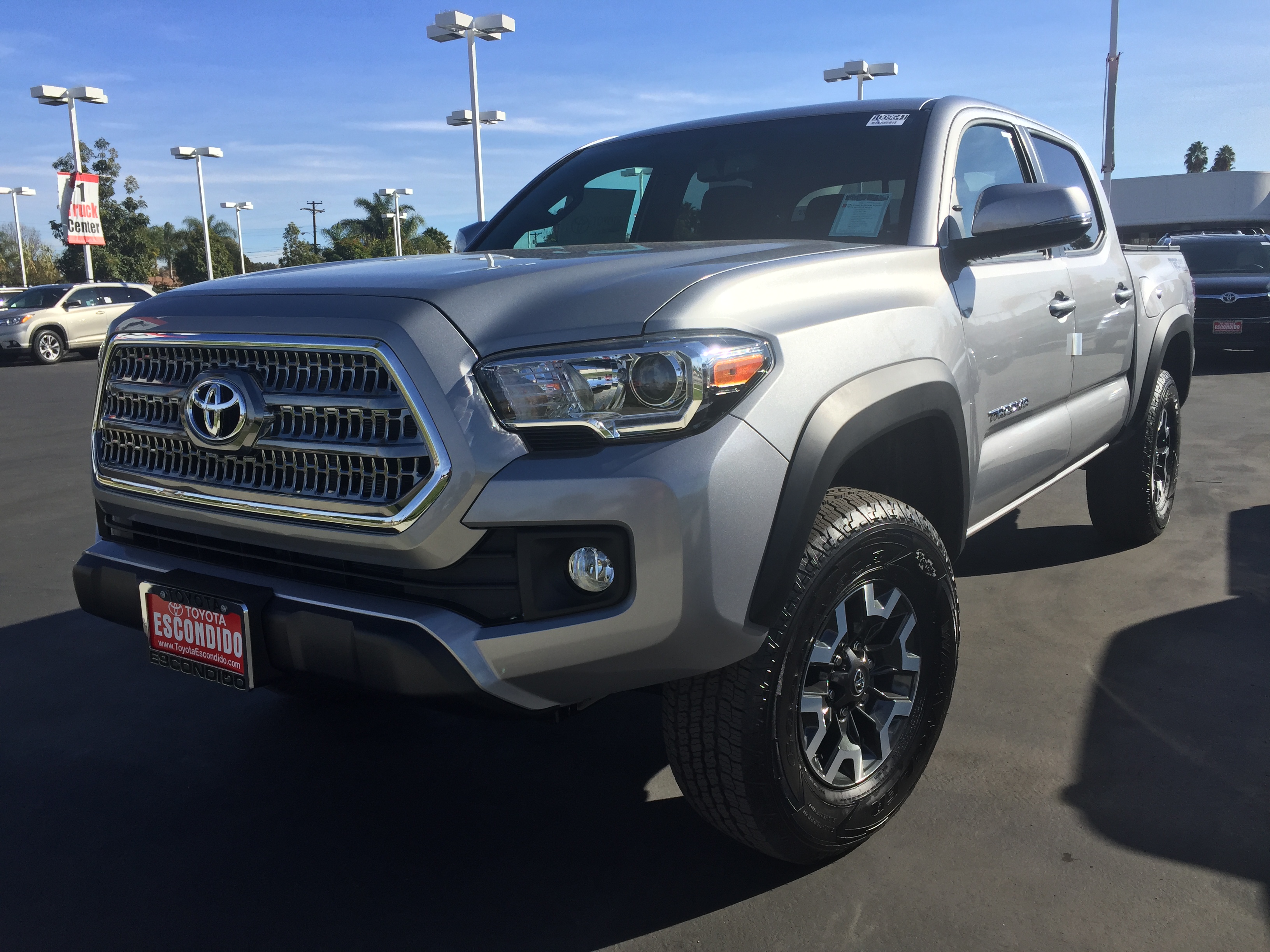
The Toyota Tacoma is a pickup truck. It’s designed to carry people and cargo, and it’s also used for everyday driving. The podcast mentions it because it’s a common truck you might see around events and locations.
The Toyota Tacoma is a midsize pickup truck known for being practical and capable for everyday driving and light-to-moderate work. It often comes up in conversations about American venues and events because it’s a common, easy-to-spot truck on the road. In a podcast context, it’s mentioned as a real-world reference point for where something was based or organized.
Ridge Motorsports Park
"Yeah. Yeah. Yeah. The Ridge Motorsports Park is out there. Yeah. That's even a newer thing, a racetrack that was built 10, 15 years ago."
Ridge Motorsports Park is a race track in Washington. The hosts mention it to explain that there are more and more racing events and facilities nearby.
Ridge Motorsports Park is a road-course racetrack in Washington State mentioned as a relatively new addition (built roughly 10–15 years prior to the conversation). It’s relevant because the hosts connect it to the region’s growing motorsports scene around rallying and other track activity.
service area
"we went out there to spectate the rally race. And at the service area, it's right next to Camilti Skydiving."
A service area is a pit-stop zone for rally teams. Mechanics can fix things and get the car ready to keep going.
In rallying, a service area is a designated zone where teams can stop to inspect and repair the car during the event. It’s where mechanics do quick maintenance so the car can continue the next stage.
rally race
"we went out there to spectate the rally race. And at the service area, it's right next to Camilti Skydiving."
A rally race is a timed driving competition on different road sections. The roads can be bumpy or slippery, so the cars may need attention between runs.
A rally race is a motorsport where cars compete on timed stages over roads that can be rough, loose, or uneven. Unlike a closed-track race, rally cars often need frequent setup changes and repairs between stages.
rolled
"I think it was the second day, Saturday, he rolled and ended up out of the, out of the event."
When a rally car “rolls,” it tips over onto its side or roof due to loss of traction, impact, or extreme cornering forces. Rollovers are a major safety concern, and rally cars are built with roll cages and other protection to reduce injury risk.
Red Bull
"And then have you seen the Red Bull rampage? These guys that they ride bicycles off cliffs in Utah... I was up near Seattle... he was driving the Red Bull."
Red Bull is a company that sponsors a lot of big motorsports and stunt events. They mention a Red Bull-branded car they saw driving around.
Red Bull is a major motorsports sponsor and brand that backs high-profile stunt and racing events. In the segment, they’re talking about a “Red Bull” car with a large can graphic, tying the brand to rally-style driving and spectacle.
race track event promotion
"...they're coming out to your racetrack... I'm trying to get myself bigger, but I'm also going to get you larger for your community. And I get people on there..."
They’re talking about how people promote their videos and channels at race events. The goal is to get more followers and help the community, not just sell themselves.
The hosts discuss how creators promote themselves and their content when they attend racetrack events. They also talk about using that exposure to gain access to events and grow an audience.
using YouTube for vehicle videos
"...you just go to YouTube right here... Because I used to do... could I get a video of that? I would give me, okay, give me a phone number. I would send them a video..."
The segment explains a workflow for getting vehicle videos seen by more people using YouTube. The host contrasts sending videos directly (which may not grow an audience) with driving viewers to a public platform.
international appeal of music in car videos
"...Your videos that you show with, with the music and with the cars and without speech... is a very international music. People don't realize this music brings people together."
They’re saying the music in the videos helps them connect with people worldwide. If there’s little or no talking, it’s easier for anyone to enjoy.
They claim that the music used in car videos—especially when videos are shown without spoken commentary—can appeal to a global audience. The idea is that music is easier to understand across languages than spoken narration.
bench seat
"[1642.3s] I mean, because the seat was all tore up, it shows the frame and everything, right? [1646.1s] Wow. Because it was a bench seat. And I'm like, so I was like, I don't know if I should post this"
A bench seat is one long seat for multiple passengers. The host is saying the upholstery was ripped and you could see the seat structure underneath.
A bench seat is a single wide seat that spans across the cabin, typically with multiple seating positions. In this segment, the host points out that the car had a bench seat, and the torn upholstery revealed the seat frame.

Chevrolet Chevelle
"... what kind of car are you like? I go, I want a 69 Chevelle. I say, okay, so what's your music? I said, what ..."
The Chevrolet Chevelle is a classic car, and the 1969 version is one of the most famous. It’s a muscle car, meaning it was built for strong acceleration and a sporty feel. The podcast mentions it because someone is specifically interested in that model year.
The Chevrolet Chevelle is a classic American muscle car from the 1960s and early 1970s, with the 1969 model being especially well known. It’s often discussed because it represents a peak era of big-engine performance and iconic styling. In the podcast, it’s brought up as a specific car someone wants—highlighting its cultural and enthusiast appeal.
Request an Explanation
Heard something you'd like explained? We'll add it to this episode.
Sign in to request explanations for terms you heard.
Want to learn more?
Browse our glossary for plain-English explanations of automotive terms, jargon, and concepts.
Help improve this episode
See something that's not quite right? Our annotations are AI-generated and can sometimes miss the mark. Click the flag icon on any annotation to suggest a correction.