A “tune” is when someone changes the car’s computer settings so the engine runs differently. The goal is usually to make it feel quicker or smoother, not just louder.
Side skirts are the panels that run along the bottom of the car near the doors. They mainly change the look, and sometimes they also help the airflow under the car.
The rocker is the lower part of the car’s body along the side, kind of like the “frame rail” area under the doors. Side skirts attach to that area, so fitment depends on the rocker’s shape.
Concept
upgradable
Here, “upgradable” means the car can be improved step-by-step. You can start with basic changes and then add more power later.
A “paint job” is how the car gets its color and protective coating. If it’s done poorly or with the wrong materials, the paint can peel or fail over time.
Delaminating is when the paint layers start to separate. Instead of sticking together, the coating peels or flakes off, usually because it didn’t cure/bond correctly.
“Dry rot” usually means something is getting brittle and cracking. Here, the speaker thinks it’s not that—it’s the paint layers coming apart (delaminating).
Clear coat is the shiny protective layer on top of the colored paint. If it doesn’t bond well or isn’t the right type for the environment, it can start to peel and come off in sheets.
Base coat is the colored layer that gives the car its color. Clear coat is the protective top layer, and if the two aren’t applied correctly, the paint can peel later.
A paint booth is a special enclosed area for spraying car paint. It helps keep dust and conditions under control so the paint comes out cleaner and more durable.
The RX-8 is a Mazda sports car. “Grabber Blue” is just the name of the paint color they were spraying, and the story is about how paint can get ruined if the booth isn’t controlled properly.
Term
makeup unit
The “makeup unit” is part of the booth’s airflow system that brings in and conditions air. If water gets into that airflow during spraying, it can mess up the paint job.
“Blocking out” means sanding the clear coat with a flat tool to smooth out bumps and drips. It helps make the paint surface even before the final finish steps.
Term
TV shot
A “TV shot” is basically “make it look good for the camera.” That can lead to faster, more cosmetic-focused paint finishing.
The Honda Civic is a small, everyday car made by Honda. People talk about it a lot because it’s common and usually straightforward to maintain and repair. If someone says they got a Civic running, they’re likely working on getting the engine to start and run properly.
The ECU is the engine’s computer. It needs the right sensors plugged in so it can manage how the engine runs. Here, the speaker is saying one particular Honda ECU needs a specific sensor to work properly.
A MAP sensor measures how much air pressure is in the engine’s intake. The ECU uses it to decide how much fuel to inject. If the sensor isn’t there (or isn’t wired right), the engine may run rough or not run right.
An ohm meter is a tool that checks whether electricity can pass through a wire. It helps you figure out which wire goes where without guessing. Here, it was used to trace the wiring to the ECU.
Automatic and manual cars often use different wiring for transmission-related signals. So the ECU may have a connector that exists only on automatic cars. In a swap, you might have to add that connector so the ECU can read everything it expects.
An exhaust leak is when there’s a hole or loose connection in the exhaust. Instead of going through the exhaust pipe, some fumes escape early, which can make the car louder and can confuse the engine’s computer.
Final tuning is the last step of getting the car’s engine settings dialed in after work is done. The goal is to make it run smoothly—especially at idle and during normal driving.
Surging idle is when the engine’s idle speed keeps hunting up and down. It can feel like the car is “breathing” at a stoplight, usually because something is off with airflow, fuel, or engine control.
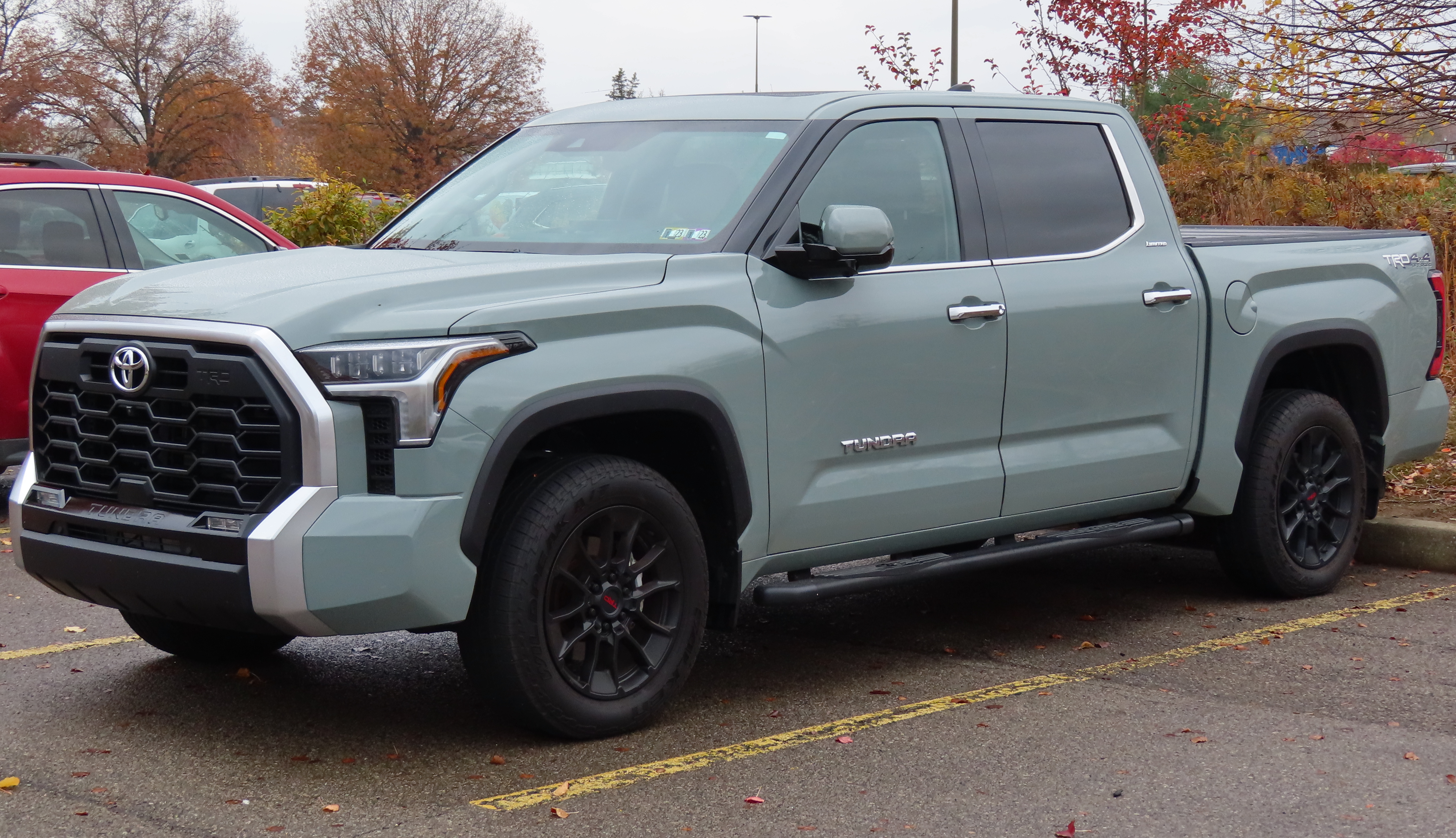
The Toyota Tundra is a big pickup truck. Here it’s mentioned as the source of the engine, so the speaker is comparing how that engine ran before versus what they’re fixing now.
Body filler is a thick putty used to fix dents and smooth out the car’s metal before painting. After it’s applied, you sand it down until the surface is perfectly shaped.
“Gauge” is a measurement of how thick the sheet metal is. Lower gauge numbers usually mean thicker metal, and they’re saying the repair piece was thicker than the original panel.
Welding is how you join two metal pieces so they become one solid section. With thin sheet metal, you have to be careful because too much heat can cause holes or warping.
Priming is the step where you coat the repaired metal so paint will stick better and last longer. It also helps protect the metal from rust while you finish the job.
They’re referring to a Ford Mustang build that uses Ford’s “Coyote” 5.0-liter V8. Because it’s being supercharged, it needs extra fuel system work to run correctly.
Here, “plumbing” means the hoses and lines that move fuel around the car. They’re saying most of those connections are done, but the fuel part still needs work.
A supercharger forces extra air into the engine so it can make more power. When you do that, you usually have to upgrade the fuel system so the engine gets enough fuel to match the extra air.
The Chevrolet C10 is an older pickup truck made by Chevrolet. It’s the kind of vehicle people work on in garages because it’s a classic and often gets restored or repaired. If someone says they worked on a 60s C10, they’re talking about a specific older version of that truck.
Epoxy is a strong glue/repair coating used on car body panels. It helps fill small problems and makes the surface ready for sanding and painting.
Concept
replace the whole bottom half
If rust gets into the important lower parts of the cab, people may have to replace that whole section. That’s usually a lot more work and money than fixing small surface rust.
A “rust-free cab” means the cab structure has little to no corrosion, which is a big deal on older trucks. Rust in the cab typically requires more than cosmetic fixes—often it means cutting out and replacing structural sections.
Body filler is a thick putty used to fill dents and smooth out damaged panels. After it hardens, you sand it down so the car surface is straight before painting.
Term
VP 20, 50 system
“VP 20, 50 system” sounds like a specific set of body-repair products that are meant to work together. The host likes it because using the same compatible product on both sides can make the repair more reliable.
Sprayable polyester is a body-repair filler material applied in a spray form to build up surface thickness quickly. It’s often used for larger areas, but the speaker is skeptical because it can be “piling junk together” if it’s used as a shortcut rather than a properly engineered repair.
They’re planning to lower the truck’s front. Drop spindles move the wheel mounting point lower, and different springs help the front sit closer to the ground.
Term
classically lowered
“Classically lowered” just means the car sits lower than stock, for a traditional hot-rod/stance look. The idea is usually to keep it drivable, not slammed to the point it can’t handle bumps.
Here, “static” means how low the car sits when it’s parked and not moving. “Drivable static” means it’s low enough to look good, but not so low that you can’t drive it day to day.
A “donor car” is another car you buy mainly to steal usable parts from. People do this when they want to build or fix a project car without paying for everything new.
Coilovers are suspension parts that let you lower the car and adjust how it rides. They’re popular with car builders because you can dial in the look and the comfort level.
An “extended cab” is a pickup cab with extra space behind the front seats. It’s usually not a full four-door setup, but it gives you more room than a regular cab.
A “swap” here means replacing the truck’s engine with a different one. It’s a bigger modification than just maintenance, and it can take a lot of work to make everything fit and work together.
Overheating is when the engine gets too hot. That usually happens when the cooling system isn’t moving coolant properly, so the engine can’t shed heat.
The water pump moves coolant around the engine. If its bearings wear out, it can make a loud noise and the engine may overheat because coolant isn’t circulating.
Bearings are small parts inside a rotating component that help it spin smoothly. When they go bad, they can make loud noises and cause the part to fail.
A “small block” is a type of V8 engine that’s popular for swaps. People choose it because it can be easier to fit and support than some other engine options.
Term
53
They’re talking about swapping in a different V8 engine size. Bigger numbers usually mean a different engine displacement, which can change how the truck drives and how much it costs to run.
Term
350
“350” is another engine size number—350 cubic inches. It’s being compared to the smaller “305” as a possible swap choice.
Term
305
“305” is an engine size number—305 cubic inches. It’s mentioned as a smaller V8 option that could be put in the truck.
“Bagged” refers to air suspension using air bags to lower the vehicle’s ride height. It can look great, but it often trades off everyday usability—ride quality, drivability, and convenience—compared with a conventional suspension setup.
Term
chrome blades
They’re describing a wheel design that has thin, blade-like spokes and a shiny chrome finish. It’s mostly about looks, though the design can also affect how the wheel cleans up and how it looks behind the spokes.
“22s” are 22-inch wheels. They look bigger and more flashy, but they often make the ride harsher and can be more vulnerable to damage from rough roads.
A topper is a cover that sits on top of the back bed of a pickup. It helps protect what you put in the bed from rain and theft, and it can have a window at the back.
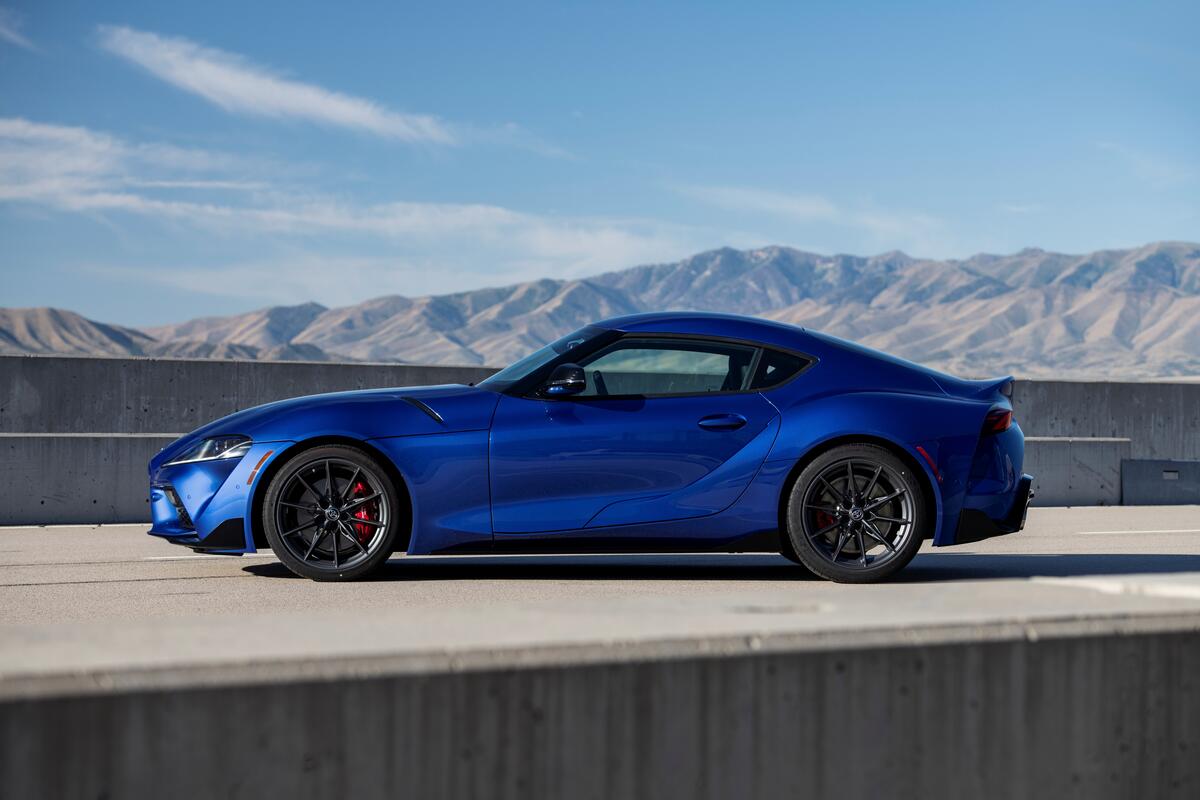
The Toyota Supra is a sports car from Toyota. People often argue about which year or generation they mean because different versions can be quite different. If someone isn’t sure whether it’s a 1989, 1990, or around 2000, they’re trying to identify the exact model they’re looking at.
“Golden era imports” means the time period when many people think older Japanese cars were at their coolest. Enthusiasts often associate it with cars that are fun to modify and have a big parts scene.
A “slam truck” is a truck that’s been lowered a lot so it sits very close to the ground. People do it for the look, especially for car shows and social media.
Spinners are special wheels where the center part spins on its own while you drive. People usually use them for looks and attention, not for better driving.
American Racing is a company that makes aftermarket wheels. When people mention it, they usually mean a popular style of wheels you can buy to change the look of your car or truck.
Monster Garage is a TV show about building and customizing cars. The speaker is using it as an example of a wheel design they remember.
LIVE
So what's been happening in the car world?
Anything sweet on the audio?
I think you said you did a tune on it.
Oh, yeah.
Yeah, we did a tune on it.
And I got the side skirts on it.
The side skirts are like, I don't know.
They're not shaped to the bottom of the rocker very well.
You know, there are some of the more expensive versions,
which I can't imagine cheaper ones, how
you would melt them at all.
So yeah, it wasn't ideal, but whatever.
They look OK.
They look the part.
But the tune, you can definitely feel the power that the tune
added, so that's pretty cool.
That is cool.
All the work on the Honda, and I'm pretty sure it's the power
as is, is not significantly different stock to stock.
But that's not a surprise, necessarily.
Yeah, but the point is to have that motor that's
upgradable to the right, you know.
Yeah, definitely that thing a lot further than the motor
that was in it.
Yeah, the engine now is like a guy
could have 400 horsepower.
Pretty easy.
Whereas the other one, you'd be stretching pretty hard
to get there and spending a lot of money.
Fucking boogie in and 400 horse.
Holy shit, dude.
I would love a reliable 250.
If I had a reliable 250, it'd be awesome.
I think a reliable 300 would be awesome.
Isn't that thing?
Yeah.
How much did you say the car was?
I think it's in the 2000s.
Yeah, I thought so too.
Yeah, it's pretty light.
It's pretty wild.
I don't know.
We're getting close to paint time soon.
So I'm starting to get excited because getting it running
and all that, it's all cool.
But I just really want to paint it outrageous.
Like everything else is kind of like just, it's like just
to get there.
Like it has to be a car.
But really, I want to paint it.
Yeah, because it definitely takes it over like the puts it
where you want it to be.
Because I mean, yeah, the paint job can make and break some.
Yeah, right now, like if I took a shot of just the engine bay,
it's like, oh, nice Honda.
But then I want to take a picture of the whole car.
The paint is peeling off of every single panel.
So it's like, especially when I'm talking to like other brands
about trying to work with me for videos.
It's like, yeah, I'm building this Honda.
And then they look at this peeling roached out city.
Is it just like dry rot?
Like it's just falling, delaminating or what?
It's delaminating.
I'm certain it was painted in a driveway.
I think it was probably one to one and a half coats of clear.
And the knowing most driveway paint jobs,
they could have put the base coat on one day
and clear coat another.
There's clear coat that I, when I worked at a shop in town
here, the clear coat that they use daily,
that we that we were forced to use on everything.
If they were to use that in Florida,
it would do what you're doing or what's happening to that.
It would just delaminate.
So I mean, if it depends on where, you know,
if they're using cheap clear, it can be a professional setting
and just use a little cheaper clear.
And it's going to fucking delaminate in the sun.
Yeah, I could just tell by the finish and like the overspray
that it was, you know what I mean, like a driveway job.
It wasn't a bad driveway job.
I've seen some booth jobs.
You know what I'm saying?
I have been part of some booth jobs
that wanted to look like that.
The one body shop I was working at,
I was painting an RX-8 Grabber Blue,
you know, the Ford color and a wicked thunderstorm came in
and water started coming in through the top of the paint
booth down the makeup unit.
Oh my God.
I don't think I've ever heard of that happening.
Dude, it was outrageous.
Yeah, yeah, that's nuts.
I was using like,
not paint when it's raining.
That's fucking crazy in a body shop.
Well, I worked there and we never had an issue.
And then I rented the booth on like a Saturday night.
Sure.
And of course, that's when the problem is that we got like
this great, it was, this was in Wisconsin.
We got this wicked storm and it was like blowing
in sideways and it was coming in through the,
like the outlet of the air makeup unit
and then dripping down onto the car.
But what do you do?
No, no thanks.
Not it done.
I don't think I've ever had anything like really,
really dumb like that happened during a paint job.
I mean, maybe.
I know one time we had to turn like the booth heat off
to get some metallic to lay out.
Like, I think it was that dark green jade metallic
on like a 68 or nine-ish plus thing.
And it was like, I bet it was like 40 degrees in there.
We just, it just wouldn't like orientate.
That's terrible.
But anyway, that was probably the worst.
It's really not a great thing to do.
You don't want your paint job to ever really get that cold
like ever, ever.
So that's kind of a no, no.
One of my wild tech instructors,
I believe he was talking about an overhauling car
that they were doing.
You know, one of these late night paint jobs
where the, you know, the star of overhauling
puts like a coat of clear on it and then leaves.
And then the other people have to finish it up.
And apparently I believe how the story went
and this is a while since I heard it,
but the guy lost balance clear-coating it
and put his hand right into the clear coat of the door.
Oh God.
And so my instructor said that he sent,
like with the time crunch and everything.
And I think it was a solid color car.
They just hosed and the door up
and then ended up, he said, like,
you had to cut the runs off the bottom of the door
with a razor blade and then they blocked out the clear.
Oh yeah, baby.
Gotta get it done though.
Gotta have that TV shot.
Yeah, Hollywood.
Yeah, the problem with that, I mean,
you're never, we're gonna know how many,
what the milk thickness is left with the clear, you know?
So it's, you don't have your luck with the relief,
which probably is little to none, I would suspect.
Right, I, I'm sure they're not going for a full blown,
like 50 year restoration paint job, you know?
Right, they're just make TV.
Yeah.
Yeah, I, that's part of the reasons I don't really love
like a lot of crazy wet sanding on clear coat
because I just, to me, like I, you want some builds.
So it's to, I would rather have a really good
out of the gun finish and just leave it
with a slight, you know, wetness, but.
Before, because I mean, if you're,
if you want like show quality, show show quality,
you should be, you should be hard blocking it with 600.
Yeah.
So I mean, that's, that's a whole different ball game.
That's like three weeks of wet sanding and buffing.
My buddy does that regularly.
How many coats does he put on?
I think he puts like four or five really good,
like good ones on.
I don't think he does like six or eight coats.
Are you using acrylic blocks to sand them back out?
Or is he just using like a, like Dura block kind of a thing
just to get flat?
When I went to his shop a couple of weeks back,
he had just gotten a several thousand dollar
big kid block acrylic block kit.
For sure.
So they're just dabbling and starting to get into that.
I think he had a few, but then he decided to splurge.
Yeah.
I mean, they're worth it because they're going to laugh
as long as you take care of them.
The last, you know, the ones that I've used,
I haven't used big kid blocks,
but I've used true blocks and linear blocking tools.
It's got PVC size on the outside.
And it's like, to me, it's too big to hold on to,
like way too big.
It does just, I'm just used to having my hands closer
to the actual body.
Right.
I don't know. It's just not my vibe.
I can't get a, a feel of them.
And I've dropped one in a broken half,
which they'll warranty, but like, come on, man,
you can't drop your block.
I can drop my true blocks and they don't do anything.
Yeah.
Yeah, it's a whole different game when you're,
he sends me, he loves to do the pictures where he'll,
he'll get a paint job, wet sand it out and buffed
and then he'll put a hundred dollar bill on it.
And then a lot of times he'll,
you can flip the picture and you don't know
which side is the right side, you know?
So it's cool, but I'm just like, good for you.
Yeah, I mean, I don't know.
I'm gonna finish a paint job and finish it out.
That flawless, it's pretty awesome.
Cause there's not, not even joking.
I just seen a paint job from a body shop around here
that did a car and you, there's like this long of like,
must be 1500, 2000 scratchers, like still in the car.
Yeah.
Pretty sad.
Yeah.
Talent is and skill are getting thinner and thinner.
Hair, the care, I think, you know, some of these,
I think a lot, some of it is like,
I don't know how picky some of the customers really are.
If they just want a color and they're fine with it,
like would the customer even know, you know,
is this just me being a body shop technician
or, you know, slash owner and being a picky bitch about,
well, you know, what I wanted to look like,
but great six, your name's on it
for a long, long, long time, you know?
Right.
Yeah. You got to think like,
it doesn't matter if the customer knows better,
you should still be giving them the product
you say you're giving them.
Yeah. I mean, and at least be industry relevant.
I mean, at least take the sand scratches
out of your paint job.
And there was actually like, it looked like he,
or whoever did paint it over.
So maybe some cut throughs or something
cause there was like some ringing happening in it and stuff.
Yeah.
Like how does that happen in a, in a restoration?
It shouldn't be happening, right?
You shouldn't have any sort of ring, you know,
coming back in a clear.
So I don't really understand it, but what are you going to do?
What are you going to do?
To complain, but I don't think anybody's listening.
Yeah. I mean, to a certain extent, I think.
I don't know.
Maybe we should just leave it at that.
We should probably.
Yeah. Yeah.
So you get the civic running.
Is this like, did it take a, like a long time to figure it out?
Was it just like, was it one minute?
Aha, it's starting to run now or what?
I don't have it running a hundred percent perfect.
I, there's like, there's a couple of little things
that are fighting me.
Like you can tell the engine runs strong,
but then it seems like once it's warm,
it's a little bit much.
More moody.
And I think like yesterday, I ordered a new PCV for it.
Like I just think that the thing sat for a long time
and there's like a, you know, a number of small things
that are just making it run a little goofy,
but it's getting close.
It's getting close.
The main issue that kept putting me into limp mode,
I think we talked about that the last episode,
it ended up being that apparently just this one Honda ECU
for the K24 needs a map sensor.
All of the other ones don't like,
do you know if you have the map sensor?
I'm running the one that's that came on the car.
No, no, it was a right.
The car didn't run perfect when I took the motor out.
So who knows?
But yeah, it's definitely that I wired that in.
And then of course it wasn't on any wiring diagram.
So I ended up having to take the stock harness
from the donor car and then back trace the wires
with an oh meter to find out where they ran.
And then they ran to a plug that goes into the ECU
that is generally only used for automatic cars.
And so I had to put this plug in that nobody runs.
Most ECUs don't even have it.
And then it was just like two unlabeled pins in the corner.
But it's terrible.
It's a good thing.
Good thing I have some experience that I wasn't able,
that I was able to, you know,
just rock the oh meter and figure it out.
That sounds like a lot.
Yeah.
So it's in and it was running and now I just have an exhaust
leak and then just getting some final tuning figured out.
Just not not really tuning as far as like performance,
just getting the bugs worked out.
And like I said, I think the car, the donor car ran,
but it had like a surging idle.
It had a few things like that.
And I figured, well, the engine sounds strong.
Like it doesn't sound like it's got a bad cylinder or anything
like that.
It's just, it's something's upsetting it.
And so, but I guess these are just kind of the battles.
And fortunately it makes good content and I have another
vehicle to drive.
Right now.
Yeah, at least it runs now, dude.
That's a big hurdle.
My wife keeps going.
The tundra was like, you, you built the motor,
you put the motor in and like you were driving it.
She's like, what's the, you know, why is this taking so long?
I was like, you know, the tundra motor was the tundra motor.
Yeah.
You just plug it in.
Yeah, it didn't have to figure anything out.
You know what I mean?
Like this one, it's doing a lot of figuring.
Yeah, that's funny.
But I tried to do the whole thing for the thousand dollar
budget and I'm telling you, I think I'm within $50 plus or
minus I'm going to do the next video in the series is going
to be the real cost of my thousand dollar case swap, you know?
Sure.
So we'll find out.
I actually like legitimately don't know if I've just made it
or if I'm just over by it, but we'll see.
My internet is like being poopy today.
Hopefully it all works out.
It's cutting in and out a little bit, but your audio's been,
hopefully we'll be able to edit it.
Right?
Yeah.
Lane, we might have to get a different provider.
So what's been going on around the shop?
All kinds of all kinds of things we had.
I don't know if I talked to you with the headlights with that we
had to make like a couple of different headlights into one for
the 38 Nash.
So we got those prime or bodywork and we're the spears that go
down the side behind the behind the headlights on the body.
Those he had two of them.
We started straightening them and there's somebody had body filled
like it's just rotted front to back.
One of them.
So body of these, this bond was falling out of it and blasted
it and we ended up getting I think four extra spears and of
cutting them up into making one good one.
And this stuff is like, I'm making a repair panel out of 20 gauge
and this stuff is like, when you clamp it to weld it together,
to weld it together, it was considerably thicker than the 20
gauge was considerably thicker than the, than the sheet metal.
I think I was welding at 20 amps.
And I can burn in holes.
Yeah.
Stuff is thin, like thin, thin.
But we got one together and Tammy got it primed.
Thursday, I think Thursday morning.
Nice.
But then we got, let's see, I'm like, the Mustang with the coyote,
we got the majority of the plumbing done versus except for the
fuel and I just got the fuel set up in the mail yesterday.
So pretty spendy, but when you have supercharged coyote,
you need some fuel.
So we got an education and an order in and yeah,
powered by the hour.
They really, they were really helpful.
He was like, if you need any help, just give me a call back.
Like that's why we're here.
Pretty cool.
Very nice. Hell yeah.
Yeah.
That's where the majority of the stuff when I got the car,
the majority of the stuff had came from them.
I didn't order it.
It was kind of came as, as the project or whatever.
So he could actually look back and see what was ordered.
And so that was a little helpful too. So he could have like,
he was a little refreshed on what,
what was going on with car when it was originally started.
Nice.
And then what else has the 69 made it off the, off the frame rack yet.
Yeah.
Now there's a 67 there.
Yep. Yeah, we got, we got that swapped over.
Actually it worked really well at rotisserie fits.
Like you just,
we just come along to our rotisserie up the,
the ramps or whatever, and it fit right on it.
Like, so we built still to get the 69 off.
So that worked out really well.
Just roll it down the ramps and then you get this one up.
We just come along the rotisserie up there.
It fit by maybe an inch and a half on each side,
but it fit and you just lower rotisserie down to the clamps.
Yeah. It was like,
it really couldn't have been easier, which was really cool.
Cause it usually doesn't happen like that,
especially when you're moving car bodies around by hand.
Like it's usually not that easy.
So yeah.
You have to take the wins when you get them.
No doubt. No doubt.
You need some extra wheel or some different wheels for our history.
We kind of got fucked.
But during blasting, you know, like all full of sand and shit.
Yeah.
You'll have that.
Yeah.
And I got the,
something done on that.
50,
58 Chevy truck.
I'd actually cut the collar loose and move it up to meet the rest
of the body panels.
And I talked to the cab maker and they were like, yeah,
sometimes you got to do that on those trucks.
So it's just cutting apart what somebody else did.
It was always really not very fun.
So you're like trying to find spot welds that have been ground
over and, you know, like, yeah, you know, they're not,
they're not like actual spot welds with a resistant spot welder.
You know,
but they're big welded spot welds. So they're kind of hard to find,
kind of hard to cut.
So, yeah.
But we got to cut loose, got to move up. I had to move,
put some extra put hinge mounts in because those are in the wrong
spot.
The inner fenders that they.
Most definitely not.
So just kind of working through some, you know,
it's just all the,
all the different aftermarket parts is just, you know,
getting what they have together now finally.
So we can start ordering more parts and connect the steering,
bed, floor, kit.
So we can get the floor raised and make sure where everything is,
where it's supposed to be.
So you got a few things to go there, but I mean, there's a,
got to finish the inner fenders first and we can measure for the
wheels. There's a lot of stuff to do on that.
A lot of stuff to do on everything.
Yeah, that's cars.
Yeah, I worked on a 60s C 10 when I was at my buddy's shop.
One of his body guys was like, Hey, cause I was kind of just
milling about hanging out with my buddy and he was like taking
phone calls.
So I'd like run out to the car to grab something and whatever.
And one of his body guys was like, Hey, you ever do filler work?
And I went, yeah, plenty of it.
And he's like, you, uh, you want to grab a sanding black?
And I said, I said, sure, what do you need help with?
And then he was like, uh, well, I was, I was just making
conversation and then I walked or my, my buddy and I'm getting
another phone call.
So I walked out in the shop and I was like, Hey, where do you
got the blocks and what do you need sanded?
And he's like, Oh, I was just picking on you.
And I was like, no, it's fine.
He's like, is he going to be okay?
Like, did you get the okay with from him to work on stuff?
I went, I don't need an okay.
What do you need help with?
And he was like, uh, cause this is his work.
You know, this is his boss.
And for me, I'm just like at my buddy's garage, you know what
I mean?
And, uh, but I was sanding block and epoxy on this brand new
60s C 10 cab.
And I could not believe how rough they are.
They're all Chinese stamp parts.
And then they, they, they agree.
Yeah.
They're, they're kind of floaty.
Yep.
Yeah.
Yeah.
I mean, they got a bunch of epoxy on these things too.
I think he said they're used Sherwin Williams and some of it's like C
through, so it's, I don't know.
You know, it's like, it's like what you get for the price.
I can definitely understand why it costs what it costs, but from both,
from both sides, you know, so I don't know.
What do you do by a shady rusty cab, have somebody blast it, replace
the whole bottom half, you know,
it's going to cost you way more than getting one of these.
So, you know, what's.
Yeah.
Yeah.
I, I thought, yeah, I understand, like to have a rust free cab,
I totally understand, but and the idea of just like, it's all new.
You don't have to, like everything's E coded on the inside.
You don't have to worry about what kind of sins of being hidden.
You know what I mean?
Yeah.
Yeah.
Yeah.
Yeah.
They just, they VP 20, 50 at block it and then do their filler work on top of that.
And yeah, you know, of course, like I go into this and I'm like, well,
I don't want to take a bunch of this down to the bare metal and then whatever.
So I'm blocking like as much as I can without breaking through.
And these guys are like, you just kind of break through.
It's just part of the deal, but I'm like,
when you can block to a certain extent with your first layer of, are they,
are they stripping the cab first?
I believe so.
I mean, I would definitely recommend.
Sometimes it's.
You know, the first layer or your first.
Your, your base layer for your body filler.
Your, your three layers, three coats of VP 20, 50 or whatever epoxy you're using.
Sometimes it's take a soft block, sand it.
Don't take any straightness out of it.
Like, because then you're taking your, your, your, your barrier between your bare
metal, you know, you're just, you're almost deleting it.
In a certain extent.
Yeah. When I blocked it, I want to leave that base layer.
Yeah. So you block it to a certain extent,
but we usually use a block only for like,
as soon as you start seeing your regularities were stopping.
And then we're, we're taking a soft block or standing it by hand or scuffing
or whatever we can to get it roughed up to, to then apply filler in those
areas to make sure that you're actually too certain, you know,
you might be using a minimal, you know,
minimally a little bit more filler,
but you also might be using a little bit less filler too, depending on what's
happening.
Yeah. And you want to sandwich that filler between layers of the epoxy.
Like that's the point of that.
Yeah. Yeah.
And with this one, with that VP 20, 50 system,
you're using the same primer top and bottom, which is to me, like that's a no
brainer. Like why wouldn't you want the same product?
So it's not like layers and layers.
Remember like doing, you do epoxy body filler,
sprayable polyester, sand that put urethane primer on top of that.
And these were like good restorations and like, dude,
you are piling some junk together.
I don't know. I'm not a really huge fan of spray poly or polyester filler.
They, they definitely seemed happy that even though these are paid by the
hour guys, they didn't have to sand the back of the cab in the roof because I
had already blocked it out for them.
Nice.
But I, you know what I mean? I'm not there all the time.
So I like just knocked it out.
Like I just went hard for, you know, an hour or so like that.
And you can get a lot done if you don't stop blocking for an hour.
Oh, a lot.
Yeah.
I mean, a lot, a lot.
And so I was just cranking and then the guys were like, are you coming back on Monday?
To me, sometimes that's some of the most.
When you can like just zone out, like if you can like absorb music or a
podcast or something and just, you're just making shit straight.
Like sometimes I just envy the person that can just sand all day and not
have to like think about how the, this project is going to go together.
You know, it's almost like it's not mindless work,
but it's a little more mindless than like fabricating something.
Sometimes filler work is definitely a skill set.
So if you don't have it, it's, it can be hard.
Yeah, there's definitely some, I struggled when I watch,
and I'm not saying these guys were doing it,
but I struggled when I watched somebody put filler on, take too much off,
put filler on, take too much off, put filler on, take too much off.
And I'm like, Jesus Christ.
Or just they're putting it on, cutting it out too far,
putting it out, cutting it out far and not really realizing what's happening.
Yep.
Yeah.
So if you're not like versed in, if you're not like,
talk how to look at the panel, you know, like wet it down and,
and like get a reflection on it.
I don't think you're ever going to get past that to a certain extent.
You know, somebody can show you, you know, you're doing this wrong
and it feels better this way, but unless you see it,
I don't know how to get past that.
Unless you have sweeps, then you can do it.
For real.
You're in love.
Sweeps don't lie, but sweeps also, those curves have to blend together.
And that's what, that's where the body work lies, you know.
Right.
Yeah.
It was fun though.
I didn't mind it.
Yeah.
And what you're like to your point about like sometimes block standing is really nice.
It's like, uh, I always think about how Einstein took a job at the patent office
because he just wanted a simple job.
So he could let his mind wander while his body was busy.
And so I think that a lot when I'm doing stuff like that,
like I should, you should almost be thankful for the, the,
the small bites of mindless labor you get to do.
Yep.
Yeah, even I don't, there's a really not nothing that I can even compare it to.
Usually it's filler work, filler work, or just prep work in general for body work is that way for me,
but everything else is like, I mean, fabricating is one thing and shaping a panel is one thing,
but it's still, you're pretty in it.
You know, you got to be kind of, especially if you're on the power hammer and you leave a little,
you stay a little too long in one area, you're fucked.
Yeah.
So I got a phone call from somebody while I was in the shower a couple of weeks ago.
And this is a guy that like when we first, when we first moved here,
when we bought our house, so I bought my house site on scene in Florida.
Like I'd never been in this town.
I'd never been in the house.
I had just bought it from a Facebook messenger video that my realtor took walking through.
I'd never been in this town.
I'd actually, I hadn't been in the county.
You know what I mean?
So when we, and when we moved the lady, she inherited the house.
And then last minute she screwed us a little bit on the closing.
She pushed the closing date back two weeks.
And we had already, we were like closing on our house with a set contract date.
So for two weeks, we were like homeless.
So we lived in this Airbnb that I found that was the cheapest one.
It was like in an airport hanger or airplane hanger.
The guy built an apartment and he'd like his Cessna on the other side.
And then it was like grass hair strip.
And this guy, while I was there, like I, I think I did breaks on his,
on his car and like did some stuff, just helped him out.
And then he, he calls me every once in a while, but I was telling him like,
I don't really have time to fix anything.
But he's called me like probably three times and I haven't even called him back.
So he calls me in the shower the other night, leaves me a message.
And I was like, Oh, I should probably call him.
And then I call him back when I went to go pick my kid up from karate.
Cause that's like, I'm not, the time already is taken.
So I like don't mind making phone calls.
Sure.
And I call him up.
Of course he like, he tells me a bunch of sad news that's happened in his life.
And I'm like, Oh, and then he's like, so, you know, my truck that blew up.
And I said, yeah.
And he goes, do you want to buy it?
And I was like, well, I don't really need any more projects.
And he goes, well, you know, it's, it's a rust free truck.
This guy's from Minnesota.
So he sees a rust free truck with, and he's like, and I just put tires on it.
And he's like, I just, he's like, I'll get more money than what I'm,
he offered it to me for a couple hundred bucks.
And he goes, I'll get more money scrapping it.
And he goes, but I just hate to see a truck like this go to scrap.
And I'm like, well, a couple hundred bucks.
Like how can you lose on it?
It's a LBS Chevy extended cab short box to wheel drive.
Oh, shit.
That's pretty cool.
Well, rust free.
I could buy anything for the fun for that truck, you know, right.
And I'm like, well, I mean, you're almost making me buy it at that price.
Like I could sell the fenders for 200 bucks.
You know what I mean?
The tires and wheels, I could sell for 200 bucks, but I'm like, all right,
let me think about it, but I'll probably end up having to take it.
If it's going to be that price.
And then I was thinking, I have a paint sponsor that works really well with me.
And my wife likes lowered trucks.
So I think this thing, I think after the Honda gets painted and like the big
stuff's done, and then it's like getting down to, you know, we'll do a
stereo video and we'll do stuff like that.
But like when the big stuff's done, I can have this truck do a build series for
building a lower truck for my wife.
I'm thinking just drop spindles and springs in the front.
Do the spring under conversion in the back.
Just get it like classically lowered.
57 do it all the way down.
Well, I mean like pretty low, but drivable static.
Yeah.
I don't even know if I'm going to do wheels or cause I think it might have
steel wheels.
I'm thinking about just doing like trim rings and paint the steel wheels,
like make it super 90s, but we'll have to see what it looks like.
I don't know what it's got on it.
And then you guys have got to have used wheels.
It's got to be like ultra cheap.
Probably as long as you like fuel wheels.
They're everywhere.
Oh, who knows?
Who knows?
I might, I wouldn't mind throwing a set of 20s on it.
We'll see what happens.
Like it's just like with the Civic, the Civic wasn't even,
I didn't even want to build it.
I was thinking about just dumping the thing and then I ran into a donor car
and now it's turning into this whole thing.
And I kind of like that unknown path that I'm taking.
So we'll see where it goes.
But the place that actually sponsored my coilovers for the Civic,
they all, they sell a five inch front drop kit for that Chevy truck.
So I might have spindles and spindles and springs.
Yeah.
Cause I think the spindles are two or three inch drop and then.
Yeah, I can't remember if some of them are two and some of them are three.
Yeah.
So I think I'm going to do that and then I'm going to paint it.
I think it's like a pewter color.
I honestly do not.
I thought it was pewter and my buddy that's worked on it before thinks it's blue.
This truck is so under the radar that neither of us even know,
like we're, I was like, it's a regular cab long box, right?
And my buddy's like, I think it's an extended cab.
And then I'm going to read the exact text message.
I text the owner.
I said, Hey, do you know if it's a long box, a short box, a regular cab,
an extended cab?
I didn't like 200 bucks.
I don't care.
This is his response.
It is like, even the owner doesn't know about his.
That's all right.
So is the truck extended cab or regular cab long box?
I don't really remember much about it.
He says it's a short box, probably six foot.
I think I'm not sure anymore.
I know it's not the eight foot box.
It has a little backseat in it.
I know that.
So whatever that tells you.
Yeah.
That's right.
It's an extended cab box.
Yeah.
It's extended cab short box, but this is like hilarious that even the guy
that's had it forever doesn't even know.
But, uh, I think paints in pretty good shape.
So I'm thinking if it's like a pewter or whatever it is,
I think I'm either going to do a paint job where I do the top of the
truck because if anything's got paint damage, it's probably the top
like from that body line up, do like a crazy two tone, whether it be
like, if it's pewter, I could see doing a bunch of stuff in like a root beer
candy, having the line broke up with like a flamed edge or something.
You know what I mean?
Like just do a super nineties, 2000, like modified or whatever,
like truck and magazine cover truck paint job.
And then just have a static lift or static drop.
It's got a 43 in it.
And I was thinking about doing a swap, but I'm like, honestly,
with gas prices, people might not mind the V six.
Hold up.
So he, uh, he, he ran it.
Uh, and then it was overheating and he drove several miles to my
buddy's house to ask him like, Hey, you want to take a look at my truck.
It's really overheating.
And my friend came out there and he's like, um, you have,
let's put some coolant in there.
And then they put gallons of coolant in and then he drove it.
You know, about five miles, six miles home.
And then another friend of mine went and looked at it.
Uh, cause I, I just send everybody to work on people's vehicles.
I try not to do whatever.
Another friend of mine went and looked at it.
They fired it up.
He's like, Oh, the bearings are screaming in the water pump,
replace the water pump, fired it up.
And the inside of the engine was making all sorts of clatter.
So, but it's a 43
I think it's a 700 R four.
Sure. Um, and like I said, I was thinking about,
I'll just throw a small block in it.
I'll just throw a 53 in it.
I like with gas prices at four, 50 or whatever they are.
Those four threes never got.
You could have a 305 or a 350 in that, in that truck and it would
get the same fuel mileage as that 43
I had one.
Oh really?
I don't know.
I just, I could probably swap the 43 for a hundred bucks
and not have to do anything or 200 bucks.
That's, that's totally fair.
Cause it would be very easy.
Yeah.
Cause it's working on a short small block Chevy.
I mean, it's easier.
Yeah.
So I just, I don't know.
I think I might just swap the 43 and who cares?
Like I don't, I'm thinking of just making it like keep it a reliable
truck, you know, not have it bagged where it's like, you know,
you can't just drive it and then, you know, either if it looks,
if it has a cool set of wheels on it, like see what, you know,
throw some 20s on it that are like chrome blades or something,
you know, crazy.
I've got to put some 20s on that thing.
Let's see.
It's really nice.
They look really nice on 22s.
Yeah.
So I think, I think that's, I think it has a topper.
This is one of those things too.
Like we've all seen this truck a bunch of times or two.
Uh huh.
I keep the top or two.
I might.
Yeah.
A crazy paint job.
Top around it.
It was so fun.
I mean, I don't know.
None of that was like much fun, but it just,
it turned it into a different vehicle front.
I don't know.
Right.
And if you have the topper with the sliding back window and the
sliding back window in the truck.
That's what I'm saying.
Yeah.
That's like teenager days.
Holy cow.
Yeah.
So I don't know.
I send a lot of my, uh,
in my teenage years in an extended cab short box GMC,
I think this might be a GMC.
Um, I don't even know if it's a GMC or Chevy.
Like that's the funniest.
It is.
No.
It's 90s.
OBS.
I don't know if it's a 90 or it could be an 89.
It could be a, you know, an 01 or whatever, 2000.
Switched into these six.
You're 96, I think.
I'm a square dash of the round dash.
Yeah.
Who knows, right?
That's funny.
I don't even know.
I'm kind of enjoying the mystery.
That's all right.
And they, it's like hit my ride, but like in reverse,
you get to see it and you're like, Oh, this is the truck.
Yeah.
So, um, it should be exciting because I think this is like,
so I did the, I did the pre-runner and, um,
that series has, uh,
in the last month, just like when it said 50 something thousand views
on the one video, like suddenly YouTube was like, Oh, wait a minute.
People are watching this.
And so it's just showing it to everybody.
So, you know, it's getting like thousands of views a day.
Sure.
And then, you know, the civic videos are doing good.
And I think going to like, so I've got the off road pre-runner.
It's kind of different than everybody.
If I do the slam show car civic with a K swap,
that's a little different 90s, 2000 style.
And then I do the same thing on the, you know,
the seat 10 or seat 1500 or whatever they call that thing.
And, uh, I think like, I could, I think this could be like,
it could just be like a good arc where I'm just like capturing all these
parts of the, of the car community and showing them some fun stuff that
nobody seems to really do too much of anymore.
There's really no, there's not a lot of people that I see, uh,
that do a lot of different jobs.
And Rose, that's why I like, I kind of get sick of like everybody, everybody,
you know, it's, I shouldn't say I get sick of it.
It's, it's cool.
Everybody's got their own lane, but also I don't necessarily love just one
lane either.
You know, so people seem to like, they get into their niche.
And so there's like this thing that happens,
especially if they're a content creator,
there is a little fear if you jump out of your niche that you'll hurt
yourself in the algorithm because suddenly your subscribed viewers are
not watching the same videos.
But I think like, if you're into nineties,
2000 like golden era imports,
like you probably aren't that many trucks or lowered trucks with that style,
probably are not that far off.
Yeah.
And we're all modified the same way by the same people to release from
where, you know,
and how many, how many show cars get pulled around by slam trucks?
You know what I mean?
Like that was a cool thing.
If you were, if Toreg was cool too.
So I, I think it's a good natural progression.
Like I said, I didn't even.
You remember that?
Well, the, it was like a Ford,
like a nineties four door blazer that was slammed with the Colorado
front end.
You ever seen that thing around?
I think so.
They, they were driving that thing through a show on an open trailer.
And I don't know if there's the slam truck, like they've,
they lost the whole rig.
They rolled it. Yeah. Yeah.
Yeah.
It's pretty nuts.
They even, I think they took some of the pictures and featured it in a magazine afterwards.
Like it was a magazine featured vehicle, but yeah,
they rolled it and then they put it back in the magazine after it was rolled.
That's rough.
It's really rough.
Yeah.
I don't know.
There's a note.
You remember Nopi?
Like Nopi Nationals.
The import shows, many trucks.
Yep.
They, they brought it back last year, I think.
And now they have, there's a small event in Palm Beach in at the end of June.
Like a little part of me is like,
it'd be really nice to get the Civic painted and like out to the show.
I think I'm not crazy about two day events because it's just like,
two day events that are, you know, hour and a half from the house.
So then it's like,
I got to drive out there four times or I have to get like a place to stay,
but then I have dogs.
Like, yeah.
Yeah.
I wonder if I can, like, can I just show up for the judging day?
Not that I think it's going to win anything, but you know what I mean?
Like I just, like parking your car in the show and then like the show
judging day are like different things.
Yeah.
I never really, I mean, yeah, I feel the same way.
Sometimes it's just a little bit too much.
Yeah.
I just don't like it.
It's a lot for somebody that's not a teenager.
Multi day events are like, you know, they're, it's an undertaking.
You got to like plan your life around it.
You got to work.
You got to do this.
You got a family.
You got dogs.
You got a house like responsibilities.
But I don't know.
That being said, I'm trying to capture all of us dudes that are like finally
getting to a point in our lives where we can start to act like irresponsible
teenagers again and think about all the dumb stuff we did.
And like, yes, I keep posting all these videos of like old car show footage
and like people love it because it's like, it's ridiculous.
And like all that, you know, that stuff was before you had to worry about
comments on Facebook.
Like if somebody had to hate on your car, you either had to catch them
hating on your car at the car show or hear about it from somebody.
It's not like there's a thousand people waiting to drop a mean comment.
Yeah.
I mean, I think it's some of it's like some.
Then, you know, a lot more anonymity than there is now.
Yeah.
I had somebody comment on like these cars weren't tasteful or whatever.
I said, isn't taste subjective?
Yeah.
I mean, because there were some really ugly things and there were some
really awesome.
I mean, there were some really, really nice cars.
Yeah.
There was like, there was covered trucks for many truck and at drop
fast, like there was some, and it was not, it was not a shitty build.
Right.
Yeah.
I don't know.
Then, you know, I've got people like, well, the reason these cars went
away is because they're terrible investments.
You put all, you know, you can put 40 grand in it.
It's a 10,000 dollar vehicle and the buyer pool is really small.
I'm like, well, haven't you ever done anything for fun that wasn't an
investment?
Yeah.
But unless you're in the land of, you know, multi 100000
dollar cars, they are all bad investments.
Right.
That's what I mean.
Yeah.
They're like, that's, that's such a ridiculous stupid thing to say.
If you're comparing it to a house, yeah, it's a bad investment, but in
comparison to what your other car, like it's still a bad investment.
These are the peoples that are driving around in a Kia that's going to
go with half and 10 years, you know.
For sure.
It's like you go on vacation.
All you did was spend money to have fun.
Yeah.
So what does that mean?
I'm only building the cars to have fun.
Like I'm not doing it to like try to come out ahead.
I think that in Florida, if I do the stuff I'm doing, I can find
somebody to buy stuff and probably break even if not make money.
Because I am.
Oh, bro, I should with like a spinner on it.
Only when you're selling shit and people are coming to pick it up.
Yeah, with a spinning wheel.
Oh yeah.
Not damn internet dude.
I don't know if it's just shitty out today or our internet is just
legit junk.
No.
I don't know.
I think it's gold chain spinning wheel.
I just get the gold plated chain though.
Cause like I don't need all that.
No, you don't know what he does.
I've been trying to find a set of spinners, but I have a feeling I'm
going to end up having to make some.
Yeah.
I bet the, I mean, anyone you're going to, unless they're like new old
stock, there's some guys that have been finding like the, you know what
I mean?
Like you can put them over any wheel spinners from the like 20 years
ago and they've been posting videos with them on and I'm like, dude,
where do I, they look terrible.
The spoke like goes up and it's like a fireball.
There's like five fireballs and it's a spinner and it's like, I want to
set just cause it's just so hideous, but.
If there was ever a truck, it's a vehicle.
It's got to be this OBS you're getting man.
Dude, how cool would spinners be?
Spinner dudes.
Hell yeah.
Flame ball.
I feel like an OBS needs American racing wheels.
Like I can see that.
You remember all those super ugly like summit American racing wheels
for those trucks?
Like in trucking magazines, there's just pages and pages of ugly wheels.
Maltese cross.
I was watching some monster garage a while back and they had like the
Jesse James signature wheels and they were the most hideous wheel I
had ever seen.
I'm like, how do you, how is your name on that?
But yeah, I don't, I can't believe how, like looking back how thick
trucking magazine was like, it was a book.
That was every month.
I could like think it back.
Like that was a lot of like just content.
Like it was kind of crazy.
Yeah.
I keep looking at old magazine lots on eBay and you can't imagine
how much they're selling the things for.
Really?
Yeah.
I was looking at like import 200 magazines from like, you know, 2004
or something like that.
And it was like eight, no, maybe like six magazines for a hundred
something dollars.
I was like, there's something for like 15 bucks a piece on eBay,
which I get.
Like I get, if you're going through the effort of posting it and
shipping it, like you got to make it worth your time.
But like,
well, yeah.
You sure about that?
Yeah.
You got anything else or should we wrap this thing before there's
like a million cuts from the bad internet?
That's, it's, it's seeming like it's got a thing up in the corner.
Like it's going to be cutting soon.
So I'm really sure it's every time it's cut, it had this in the
corner before it.
So yeah, I'm sure it's going to.
Hmm.
That's right.
So, uh, why don't you tell everybody where to find you online?
Oh, hunger, hollow customs on Facebook.
Not so much.
I mean, we do post on Facebook.
I'm personal page on Facebook.
Couldn't strike hunger, hunger, hollow customs on Instagram and
YouTube.
Where can I find you, sir?
You can find me everywhere at tear shark TV, YouTube, tic-tac,
Instagram, Facebook and right here, fucking cars.
Hey, fucking cars.
About this episode
The crew bounces between build updates and shop lessons: a Honda tune is felt immediately, but side-skirt fitment is off, and they’re chasing a balance of power and reliability. A big chunk dives deep into paint failures—peeling delamination, clear-coat issues from driveway work, and even storm water contaminating a booth—then moves to practical finishing and correction steps. Later, they troubleshoot swaps (PCV, ECU wiring, exhaust leaks) and keep the conversation grounded in cost, reliability, and show-event planning.