00:00
I'll sleep when I'm dead and I just need to push.
00:02
That's actually, that does not work.
00:04
You're gonna die way faster if you're not sleeping.
00:06
You can get away with a lot of bad habits
00:08
when you're in your teens and twenties,
00:09
but as you get older, those things catch up to you.
00:12
So you need to eat, like eating is good.
00:14
You also need to have periods where you don't eat.
00:16
Your body's incredible at what it can handle and what it can do.
00:18
It's like if you prioritize your health,
00:20
you're gonna be in it for the long run.
00:21
Welcome to Dealer Out of Office.
00:26
And we are here to talk to you
00:27
about Dealer's interests outside of the office.
00:30
Now watch this drive.
00:53
What is up, everybody?
00:55
Welcome back to Dealer Out of Office
00:57
As always, I'm your host, Jake Burkle,
00:59
alongside my good buddy, Frank Zambo.
01:02
We had a hell of a guest in Alidona last week.
01:06
And I think because we could have made that another two or three hours
01:10
because of how invested we were in our own health,
01:13
we want to keep that, keep that train rolling.
01:16
So I want, I think it's that for everyone right now.
01:20
It's like, how, how do we get in the best shape possible
01:23
for those summer months,
01:24
especially some of the guys here in Michigan?
01:25
She's already been quitting time or quit.
01:27
What's the quitting week two weeks after?
01:29
Yeah, you're right.
01:29
So we were already kind of past that,
01:31
but for the people that are still holding on strong
01:32
and want a little bit, a little, you know,
01:34
maybe an extra push or a little more knowledge
01:36
who are getting into the fitness game,
01:38
we have an incredible guest on.
01:40
We saw him with the shirt off.
01:42
That's that was the sun for me.
01:43
So we're like, what is he doing?
01:45
What is he doing so we can get to that point?
01:47
Give us, give us his.
01:50
Right. So with that said, welcome to Dealer Out of Office.
01:53
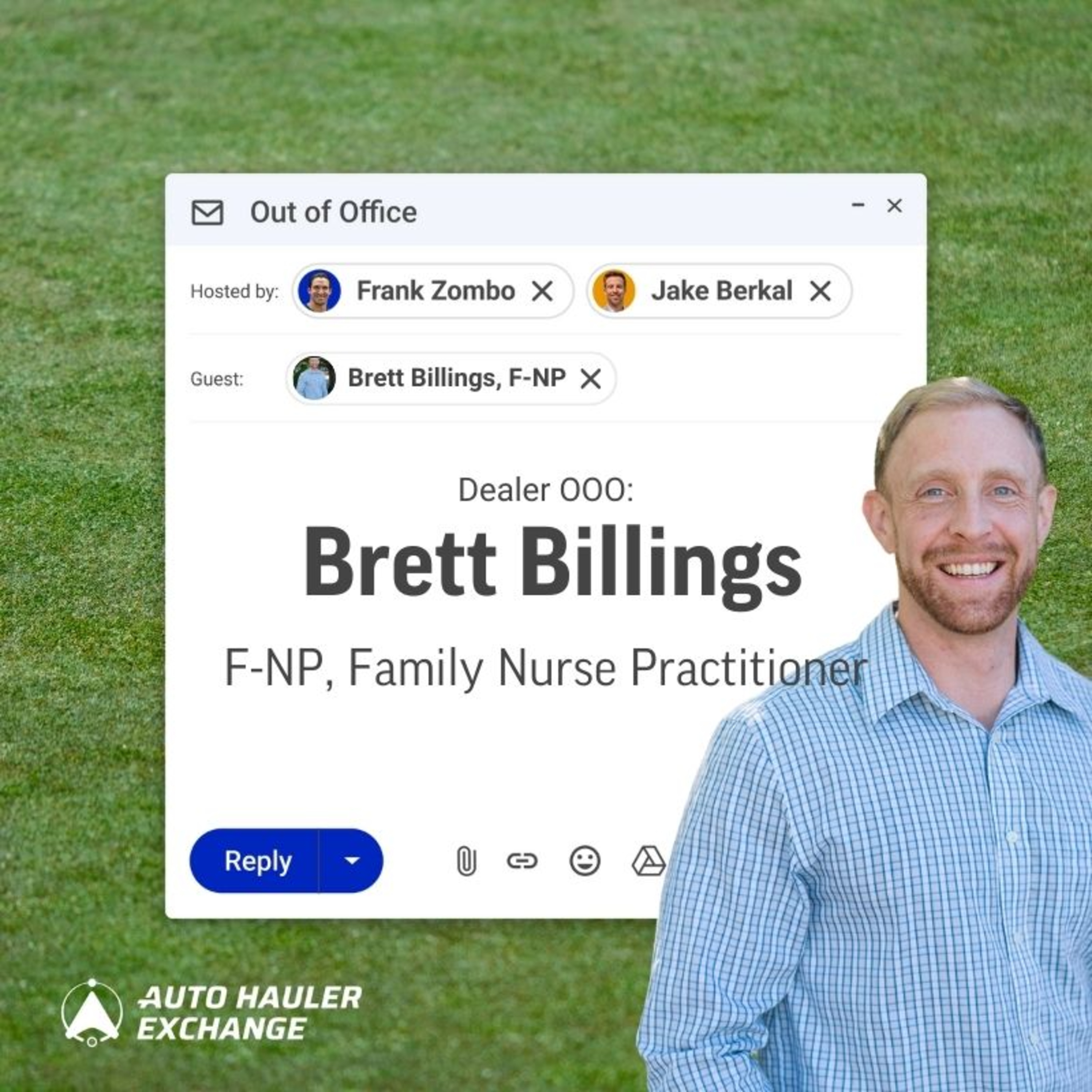
Brett Billings, what's going on, buddy?
01:54
Hey guys, I'm good.
01:56
I'm good. Thank you for having me on.
01:58
I'm excited to chat about whatever you want to talk about, but.
02:01
What's working for you is what we're going to,
02:03
we're going to get, we're going to get off the rails a little bit,
02:05
but we're going to try and keep it on for right now.
02:06
So before we dive deep into just, you know,
02:10
again, why you're yoked and what we can all do to get there,
02:13
give us a little background where you're at, what you do,
02:16
you know, at least for, for the professional aspect.
02:19
And then of course we'll, we'll dive into the other stuff.
02:21
Yeah, sure. So I'm a family nurse practitioner.
02:26
I've been in practice now for about six,
02:29
going on seven years, I think.
02:31
And then about, about two years ago, I opened my own practice.
02:35
I'm here in Southern Oregon in Medford.
02:39
And I have two different practices.
02:41
I run one as a family practice.
02:43
So I still see men, women, children of all ages.
02:45
And then I have a men's health clinic.
02:47
And that's where, I mean, it's really my,
02:49
my goal of that is to just help each patient optimize their health
02:54
and really focus on, you know, men 30 to 60
02:58
and trying to get everything optimized as well as we can.
03:02
Well, that, perfect.
03:04
Cause that's what we're, that's what we want.
03:06
Cause we're in that, in that range.
03:08
So I think one of my first questions is like,
03:11
everyone's busy, right?
03:12
A lot of the people that listen to this podcast,
03:15
they're, you know, GMs, they're, they're high up in the dealership life
03:19
and the automotive life, or just, you know, busy in general.
03:23
So you got three kids, you have two practices.
03:26
What's like the non-negotiable for you in terms of fitness?
03:31
Like is it three times a week, five times a week,
03:33
or just, hey, you got to get your steps in.
03:35
What is it that you find that is just the consistent and all that?
03:40
Yeah. Yeah, that's a great question.
03:43
I really try to prioritize some kind of exercise,
03:49
like five to six days a week.
03:52
And generally I'll do like some, some resistance training
03:56
three to four times a week that I try to like have consistent
03:59
throughout my life, regardless of time.
04:02
And then I'll, I'll have various types of like longer distance
04:07
endurance training or, or cardio type stuff that I'll do.
04:11
And that kind of ebbs and flows a little bit more
04:13
depending on how much time I have in my schedule.
04:16
So they're, you know, seasons where I mainly do
04:18
like one or two times a week for 45 minutes
04:20
or times when I have more availability
04:22
and I'll train for some event or do something
04:25
where I can really spend more time on it.
04:27
But I really try to have, I would say 45 minutes
04:31
devoted to exercise every day,
04:34
five to six days a week that I, that I pin in there
04:37
that is time that can't be taken over by something else.
04:43
So I love it. I think everyone knows too.
04:46
It's like, you got to work out to get, to get big.
04:49
Someone as busy as you, how old, how old are you again, Brett?
04:55
Yeah, my kids are five, five and three.
05:00
Okay. And you got two businesses, two clinics.
05:03
Um, me, I have kids 11, nine, eight, five, all boys, all in sports,
05:11
got a job, you know, eight to five.
05:16
Then I got kids sports afterwards.
05:19
Then all of a sudden you like to golf on the weekend,
05:21
you know, golf on the weekdays too.
05:23
You got golf league, you got dart league, you got whatever.
05:25
Balancing it all, when do you find the time to fit it in
05:28
and when do you find the best time to get that 45 minutes
05:31
to an hour workout in?
05:33
Yeah, for me, it, it only works if I do it early in the morning.
05:37
I inevitably, there's more things that need to be done as the day progresses.
05:41
And if I wait till like midday or afternoon or in the evening,
05:45
even it just, it never happens.
05:47
And I'm also the kind of person that after like seven or eight PM,
05:52
I'm toast man, I do not have the energy to like go do a workout.
05:56
So usually I am up around four every day and I'll try to do my workout
06:02
and get all of that done by like five, sometimes a little later.
06:07
But that time is almost guaranteed to be available because no one else is awake.
06:12
So again, two boys for me, two and a half and six months.
06:17
So I'm a 430 in the morning kind of guy.
06:20
And it took me, you know, the better part of a month to like just, you know,
06:26
telling yourself, you're not, you know, don't be a lazy, you know,
06:29
piece of, you know what to get out of the door, right?
06:32
What's kind of your mentality other than like, hey, this is a non-negotiable
06:35
for people that are trying to get into it.
06:37
Is it, you know, don't put all your eggs in one basket too soon
06:40
because you're going to get burned out.
06:42
Everyone goes, you know, full bore four AM for a week.
06:46
And then it's like, no, my body just can't catch up.
06:48
Right. So for someone that's, hey, I'm very busy, you know, seven to seven.
06:54
And they only have that morning time.
06:56
What's a little, a little hack or little trick that you've used, you know,
07:00
to kind of get into that routine or rhythm?
07:02
Or is it just that, like, just get out of bed and start moving?
07:07
I mean, I think it's probably both.
07:09
Like there has to be some level of commitment because there's a lot of
07:12
mornings when I would much rather sleep or, you know, not work out.
07:18
But I do think that one thing that's really helpful is committing to a bed time.
07:25
You know, you have to, like, decide to go to sleep and within a reasonable hour.
07:29
So I don't really ever stay up past 10 o'clock.
07:33
I mean, there's exceptions for, I don't know, some celebration or event.
07:36
But on your day to day routine, you really have to decide, like,
07:39
do you have to commit a little bit to sleeping a little earlier if your time,
07:46
and then you probably need to go to bed by, you know, 9 or 10 to still get decent sleep
07:51
and feel okay to exercise.
07:52
So I think committing to a good sleep pattern is critical.
07:56
And then it just takes time to develop that habit.
07:59
Your brain will adjust.
08:00
You'll kind of get used to it, but you just have to set your wake up time and make it that morning
08:03
or make it that time every morning over and over and over.
08:06
And eventually your body kind of adapts to it and it feels a little bit more normal.
08:10
It's still going to be hard at times.
08:11
But I think if you can get a good routine of bedtime and wake time, it helps a lot.
08:16
Was it 60 days to become a routine or something like that?
08:18
Well, I think two is like the Glenn Mundy don't hit the snooze button,
08:23
like set that snooze and see how long I've actually,
08:25
you know, like the Michael Jordan, you quit once it becomes a habit.
08:28
And it's like, all right, don't quit on that snooze.
08:30
Because like at the end of last year, I was hitting that snooze three times,
08:34
four times, all of a sudden that five, a morning wake up turned into 545.
08:39
So far this year, I've been good.
08:40
I don't want to be the first to stop.
08:42
And then, you know, once you started, because then it's easier to quit,
08:45
you know, to hit the snooze the second time.
08:46
But then I find out too, I have a similar schedule.
08:49
I try to get in bed, you know, you try to get in bed by 10 o'clock.
08:53
And then I got the kids and then they're up at nine, nine 30.
08:56
And, and I try to get that at nine, but then, you know, you never,
09:01
you never know when the old lady might, you know, I mean, is it my dyke?
09:07
And then, and then you're off to the nine and then that turns into a five,
09:10
you know, you only get five hours of sleep, six hours of sleep.
09:12
So it's, it's tough balancing as a 35 to 40 year old guy trying to do it all
09:17
and get those early morning workouts.
09:19
You know, there's a lot of excuses that creep in and.
09:21
But it's a routine too, right?
09:22
Like if you're doom scrolling, if you're watching TV, like,
09:26
I think that's a big part of it too is, is getting into a routine like,
09:28
hey, read a book, like do, you know, do something to turn your brain off a little bit.
09:32
You know, to just scroll and scroll and scroll and then try and go to bed.
09:36
You're just wired and it's never going to work out for you.
09:39
You do have to get that.
09:40
But my point though, too, not just like that kind of time, but like time with
09:44
your sniffing out like there's wind.
09:46
You're at the work all day and then you're driving the kids to sports and then
09:48
your kids are in bed by nine o'clock.
09:49
And then it's like, then I want to be in bed by nine o'clock.
09:51
It's like, Hey, Jessica, I didn't see you while we, you know, it's like,
09:54
so you got to find that, that perfect balance of everything.
09:56
And then when do you find time to go, uh, you know, hit tea times at night or.
10:03
Dart league, you know, it's, it's a lot to balance.
10:07
I think it's good to like figure out your top priorities in life, like your
10:11
family time with your wife, exercise, whatever they are, and kind of narrow it
10:15
down to, I don't know, a handful of things that you're saying, either decide,
10:18
like, I won't compromise on these no matter what.
10:21
And I will decide whether or not I'm going to commit to doing some activity or
10:25
even let my kids commit to something based on whether or not I can maintain
10:29
Like, uh, it's for me, it's critical that I get to be home by four or five every
10:35
day because I want to spend time with my kids and I don't want to get caught in
10:38
this rut where I start working more and more and more.
10:41
And then I never see my kids, uh, and I also want to have time with my wife and I
10:45
want to have time to exercise.
10:47
So there are certain things we say no to, um, I think there's a, especially in
10:51
our culture, there's a lot of, um, push to just do more and more and more,
10:56
especially for men.
10:58
And there's probably some value in doing less sometimes if it allows you to
11:02
prioritize what really matters in your life.
11:05
So while, while staying on kind of the sleep topic in your professional
11:09
experience, I know some guys are very different and Frank brought up Flynn
11:13
Lundy, who's a consistent, like four hours of sleep guy, but he's, you know,
11:17
as he's deep into his room, he's even in the, in the good sleep.
11:21
So how much sleep is truly needed for recovery, you know, both physically,
11:26
mentally, in your, in your opinion, should everyone be get it?
11:29
Yeah, you know, the, the typical number that's thrown around, especially in the
11:33
medical books and stuff is like eight hours.
11:36
It's kind of the magic.
11:37
Usually between the six to eight hour window of, of time in bed is like
11:41
sufficient to get enough sleep, but it totally depends on your quality of sleep.
11:46
So you can, you know, be in bed for 10 hours and still have really poor sleep
11:51
because you didn't get enough of those deep and rim cycles.
11:54
And you can be an hour in bed for, you know, in theory, you could be in bed
11:57
for four or five hours and get everything you needed.
11:59
If your brain was able to just like basically stay in deep and rim sleep.
12:05
So there are some just fortunate few who can get along with four to five hours because
12:13
there's a component of that that's just out of your control.
12:16
We, that you, most of us don't have that ability.
12:19
And so you should probably expect that you're going to need to be in bed for
12:23
seven hours on a, like the short side to actually get sufficient,
12:28
like quality sleep.
12:29
But, you know, there's a lot of good sleep tracking technology now that you can get
12:34
on like a Garmin watch or those, you know, whoop band or the order rings.
12:38
And it's super helpful to actually start tracking and look at like, okay,
12:42
what are my normal habits?
12:43
And then you can see the way things like caffeine late in the day affect you or a
12:47
meal late at night, or there's so many things that can influence your sleep a little bit.
12:52
And it's really helpful to be able to look back and say, oh yeah, I should probably avoid that
12:55
because that really disrupted me.
13:00
Brett, for, for the folks coming into your clinic, your men's health clinic.
13:04
So last week we talked to, to Ali, she was more, she looked at our blood work.
13:08
She has a great sense of both sexes, but it sure was a lot of female.
13:12
Her clinic was more female oriented.
13:14
Yours being more male oriented.
13:16
Our listeners are a lot in that like 35, you know, 30 to 55 range, 60 range.
13:21
Let's say what are most gentlemen in that age coming in to see you about right now?
13:27
A lot of the same stuff we're talking about, just sort of a general feeling of
13:33
fatigue or lack of energy, low libido, they feel like they're, they're starting to notice that
13:39
they don't feel like they did when they were in their 20s.
13:42
And it's usually kind of general type symptoms, but longer recovery times from exercise,
13:49
like me and I'm sore now for four or five days or, you know, a difficulty building muscle or
13:55
maintaining strength, just kind of seeing some of what would be normal for age, but like at a
14:00
significant pace. And I think the most common would just be like, I just feel tired or physically
14:07
like I don't have energy. Sure. So as we kind of get into it, we're kind of wrapping up sleep,
14:14
but we're going to talk obviously nutrition and we're going to talk supplementation,
14:16
we're going to talk exercise. Where do you rank those in terms of like most important to like
14:22
least important or are we tying like you got sleep, nutrition, exercise, supplementation.
14:28
I mean, some people have heard, are you sleep's number one? I've heard some people are you nutrition
14:32
number one, right? So in your opinion, what should people, our listeners be prioritizing and kind
14:38
of chip away at? Yeah, I would be hard to pick probably the number one because you're, they're
14:47
all important. I understand. You're all essential. I would say something that I feel like has been a
14:53
recent development or discovery for me is, is sleep being the most important for me. And I think
15:00
this is probably true for you guys, but any like ambitious young male is usually going to try to
15:06
just push, push, push. And I think in our like, in our time when growing up, the general mantra was
15:12
like, I'll sleep when I'm dead and I just need to push. And so as I've gotten older, I've realized
15:18
like, that's actually, that does not work. You're, you're going to die way faster if you're not sleeping.
15:23
And you just can't function. I mean, you can get away with a lot of bad habits when you're
15:27
in your teens and twenties, but as you get older, those things catch up to you. So
15:32
I really have put a priority on sleep in the last probably two years and that's made a big
15:37
impact for me. But I think exercise is, is equally as, is critical. And I like to sometimes tell my
15:46
patients the, or broaden the term from exercise to like movement. It's not just about like going to
15:52
the gym and lifting weights, which is I think when most people think about exercise, it's really
15:57
about just a lifestyle where you're physically active, where you, you're out, you know, hiking,
16:01
you're working in your yard, you're, you know, you do some weightlifting, you do some running,
16:04
but you can do so many things. I think just making an active lifestyle is, is really critical.
16:10
And then those are top two for sure. Nutrition is critical, but I would put exercise and sleep.
16:16
It's funny how they go, Brett, like hand in hand, because I did start tracking my sleep
16:21
over the last 18 months, I would say. And I would say, I played nine years in the NFL.
16:29
I didn't drink a whole lot. A lot of that time was spent training. Now that I'm out of the NFL,
16:33
I thought maybe I would start drinking alcohol more, you know, like now I'm just living for me
16:38
now. I'm not living to go perform on Sundays. But now when I see the effects alcohol has on my sleep,
16:44
where everyone maybe thought like, oh, I'll go crush a bourbon before bed and I sleep like a
16:48
rock or have a glass of wine. I sleep like a rock. If I did that, now I see, even though
16:53
maybe I can sleep eight hours, but my sleep score is like through the floor, you know, it's,
16:58
it's terrible. So my body is obviously not reacting well to alcohol. I've come to find that out.
17:03
And I just now, maybe it's mental, maybe whatever, I don't handle alcohol very well. So I probably
17:08
drank less alcohol now than I did even in my senior high school, just because I know it's
17:12
bad for me. Now every once in a while, you mess around with the occasional like gummy or whatever,
17:16
just to kind of have some type of something, you know, but even that, and even last night,
17:21
I took a, I took a gummy and I didn't sleep great. My sleep score wasn't great. Whereas
17:26
like the last couple of days before that, I didn't do anything and had great sleep scores. So
17:33
yeah, you gotta have some give and take. Yeah, just give and take some balance.
17:38
You brought up a funny point and I kind of glad you did because we see in our, you know, in the
17:42
industry, like everyone, you know, four a.m. wake up, you know, splitting everything, you know,
17:47
you got a, you know, four o'clock, you sleep at noon and you got a grind, grind, grind,
17:52
where it's just like, yeah, but you know, what is that going to do for you in the, in the long run?
17:56
You know, I think there's been too much of a, I don't want to call it pride thing. I don't know
18:00
what it is, an ego thing of trying to work hard in the next guy. Whereas like, if you prioritize
18:05
your health, you're going to be in it for the long run, you're going to be able to, you know,
18:08
what do you always say to me? It's not the hours you, it's not, it's not how many hours you put
18:12
in is what you put in your hour. There you are. So that's why I'm only here a couple hours a day,
18:15
Brett. That's because of what I put in my hours. Frank doesn't know what the office looks like
18:18
after 3 30. No, yeah, I did say really in the thing, I was eight to five, but eight to 3 30.
18:25
Switching gears, something that Frank and I are both big on is also nutrition. You know, we,
18:31
you know, we talk about fasting and autophagy. We talk about whole foods, whole foods, and that's
18:38
kind of where like, I got two kids and that's a big thing in my house is like, it's whole foods,
18:43
right? If you can pronounce it, you can eat it, right? Looking at ingredients knowing, hey, you
18:48
know, an apple is, you know, an apple, right? You know, vegetables, meats, you know, sourcing
18:55
correctly from, you know, places, you know, the food is sourced from, right? Like I bought a half
19:01
of cow, right? I know exactly where that cow was from. I know exactly what they put into it. So
19:05
stuff like that. For people that are constantly moving, I mean, you said nutrition is equally as
19:10
important as up there. What are you doing? What's kind of your, what's worked for you? What diet?
19:15
Every two hours kind of guy, are you doing intermittent fasting? You know, what, what do
19:20
you find to be productive? Yeah, well, I will say that it, it does depend on the person.
19:27
You know, there are different phenotypes, your body will process like carbohydrates,
19:33
for example, differently. Some people like metabolize those so quickly, and they're able
19:37
to tolerate a lot of carbs and look great and have low body fat. Some people, their body just
19:42
soaks those up and turns them into fat so fast. So there is some variation amongst just sort of
19:49
your genetics, but I think generally speaking, the key things are like having some awareness of
19:56
your macro nutrient intake is just so helpful. You don't have to count calories, but it's,
20:01
it's a good idea to have a general idea of like how many calories do I even eat in a day, because
20:05
I think most people will basically have the assumption that their diet's pretty good. It's,
20:12
they're just thinking back and they're comparing themselves to a typical American, which has a
20:16
terrible diet. So it's really helpful to like track some of those things for a while, like what
20:21
do I normally eat? And, and what does that translate to how many, you know, how many grams of protein
20:25
am I getting fat and the calories? I, I do eat typically every three to four hours. So I have
20:32
a routine since I've been on since in high school, and just developed that habit when I was an athlete
20:39
playing sports all the time, which is a pretty common one. You're just hungry all the time. So
20:42
you just eat like anytime you get a chance. But I've been able to kind of maintain that. And it's
20:47
just, it works for me. So I have like small, high protein meals every probably, I don't know, four
20:53
hours or so. And that varies. Sometimes I do just like drink a protein shake or eat a protein bar,
20:59
but I really do try to eat whole foods, you know, actual, you know, meat, vegetables, those sorts
21:05
of things. Having kids has dramatically thrown, just like I mentioned, the works for me. And that
21:11
can be a huge challenge. Boom. Yeah, I eat the words I've ever eaten in my life after having kids.
21:18
And that's a challenge to like overcome. But yeah, I try to stick to, I mean,
21:24
we can get into the details if you want, but the, the actual, you know, grams of percentages.
21:30
And, you know, we can go down the trail of fasting too. But generally speaking,
21:34
just having awareness of your macro nutrients and kind of monitoring that.
21:38
Yeah, I mean, I, I would like to get into it because I think nutrition is something that you can,
21:44
nutrition, in my opinion, is something that you can have the most control over, right? You know
21:50
what you're putting in your body, you can, you know, you can say yes, you can say no,
21:55
you know, time, sleep, like kids, exercise, that's going to be a problem. All of these are stuff that
22:00
we have control over. And if it was easy, everyone would be looking like Brett, right? Sure. It takes
22:06
discipline. And then when, and then Ali got to a point when you've put in the work, and it still
22:10
isn't working for you. Now you can get into some supplementation to help aid that or speed that
22:16
up, right? Once you've proven that, Hey, I've tried everything. It's just not working for me.
22:19
And you brought up a good point about like phenotypes. And hopefully I said that right.
22:23
It is again, not to keep dropping the NFL card. I played in locker rooms with folks from all over
22:30
the country, all different types, walks of life, different nationalities, backgrounds.
22:35
There's a true thing about some people process carbohydrates, like it could be Kool-Aid or a
22:41
bag of Skittles differently than I break down a bag of Skittles. And almost like it was their
22:46
protein shake I watched. And again, it could be African American, whatever it is, but
22:51
one of my good but Alan Bailey, the guy was just Jack, not that he had a poor diet, but I would
22:55
say my diet was more around meat, because that's what I needed. That was my edge to stay in the
23:00
league, whereas Alan was just like an absolute freak, big, like a 310 pound version just of Brett,
23:06
Brett just delts and just arms. And again, he could just eat kind of whatever he wanted and
23:12
just built muscle. So I think some of those food sensitivity tests too, to find out what your
23:18
phenotype or what your body can process the easiest to generate, to stay healthy, to generate
23:23
muscle, whatever that is, is important to find out as well. So in terms, I know we kind of talked
23:32
quickly about like fasting, and that's something that I've kind of gotten into with autophagy and
23:36
you know, did a 72 hour fast stuff like that. I hear more and more about autophagy, right,
23:42
as you kind of go through eating, cancerous cell stuff like that. But to actually track it is very
23:47
difficult because you got to get it on a cellular level. Fasting, we're saying thumbs up, thumbs
23:53
down, you know, how often should you do it? Does it really make a difference? What are your thoughts
23:59
there? Yeah, I think it's helpful to define fasting a little bit because it varies a lot
24:06
in people's heads what fasting means for them. But you know, generally, depending on what you ate,
24:11
your body's going to be in a fasted state probably four to eight hours after a meal.
24:16
And it's essentially processed everything you've eaten. That spike in blood sugar has come back
24:22
down to normal. And so you can enter a fasted state, you know, relatively quickly after a meal.
24:28
And then how long you sustain that is generally what we would consider fasting, like how long
24:32
you've gone before you've eaten. So overnight, you typically, you know, you're you're fasting,
24:39
it's, you know, what we call breakfast, breakfast, you're breaking that fast of,
24:43
you know, no food there. So your body is that's why you call it like I'm 31 years old. That just
24:49
that just hit you. That just hit me. You're breaking the fast. Holy hell. Gotta break the fast.
24:54
God, I feel like an idiot. Gosh, you learned something today.
24:59
So, you know, your body needs to have being periods of feeding and of fasting. And so you
25:06
need both of those similar to like you need sleep and exercise, you can't just exercise
25:10
continuously without sleeping without collapsing, and you're not going to just sleep continuously.
25:15
You need to be you need to eat like eating is good. You also need to have periods where you
25:18
don't eat. There is so much debate, even amongst the highest level of specialists in this world on
25:25
like, what is the optimal amount of like time between meals? And should you eat two in a day
25:29
or one or should you eat every three hours? And I don't know that we'll ever come up with a very
25:34
clear answer. I think there's some some components of it are just every human body is a little
25:39
different. And so there may be people that do really well with certain types of eating schedules
25:43
versus someone else. But I think generally speaking, doing a basically intermittent fasting where you
25:51
go 10 to 16 hours without eating, or a better way of looking at it is having a strict feeding
25:58
window when you're eating, I eat all my food between, you know, 10am and 6pm is really helpful
26:05
because it gives your body ample time of no food to like really process and digest that and then
26:11
all sorts of cellular things change and transition when you're when you're not eating. And so that
26:17
is probably the ideal. At least that's the consensus right now is doing like a feeding window
26:24
about eight hours, maybe up to 10 in a day. And then you don't eat generally one to two hours
26:30
before you wake up. And then you try to avoid eating anything about three hours prior to bedtime.
26:35
And is that just I mean, you talk about people like intermittent fasting has helped me lose
26:40
so much weight. Well, it's really still calories and calories out, right? You're just limiting
26:44
that window. So at the end of the day, you just can't consume the bag of chips at the end of the
26:48
night. The cereal before bed. I mean, your chips and glasses. I don't know that there's
26:54
like significant magic effects of intermittent fasting for losing weight. I think it's that
26:59
it really helps people control their calorie intake. And then they're not also just continuously
27:04
having spikes in their blood glucose because they eat, you know, at 10pm and at 5am and again and
27:11
again and again. So but yeah, I mean, there's all sorts of claims about the power of fasting and
27:17
some of it may be true. I just think the general idea is that you should have, you should have
27:22
deliberate periods where you do not eat food and it shouldn't be just when you're sleeping.
27:27
All right. My last one is autophagy. I'm sorry. I'm very, you know, I'm very into this one.
27:33
What, you know, you read different things, right? There's different tests. It's like,
27:36
hey, you know, your body goes into autophagy after 24 hours and you read something else
27:39
at 36 something else, 48. And then you see like 72, right? That was awful. Trying to do 72.
27:46
Right. Like, but there was a truth to it that you got after the 48 hours, like, okay, like,
27:51
I'm okay. Right. I fought through some BS. I'm okay. Like your body's incredible at what it
27:56
can handle and what it can do. Is there another word for saying getting into ketosis, right? Would
28:01
that be autophagy? Basically autophagy, isn't that when you start to eat your own set, like all
28:06
that? Yeah. Which which ketosis is when it starts eating your own body, your own stored fat for
28:11
fuel, correct? So is that something that you're like, hey, if you're, you know, if you're a healthy,
28:17
you know, 30 to whatever your old male, like, yeah, try it, see what happens, like be a guinea
28:22
pig or you're like, no, there's really, you know, there's no science behind it. Yeah. I mean, there
28:30
are definitely some, some things that occur in the body, some cellular changes and in hormonal
28:36
changes that come with prolonged fasting. I think you can get the majority of the benefit of that,
28:41
though, with doing like a 12 to 24 hour fast. The the value of a greater than 24 hour fast,
28:52
I think is mostly in the mental. And this is somewhat of my opinion. But, you know, there
28:58
is some value in just like doing something difficult that you didn't think you could do,
29:03
whether that's fasting or some physical challenge. But to break your mind of like, I need to be eating
29:09
all the time and realize like, I'm okay, like I will survive if I wait on this, this meal or if
29:15
you go two or three days without eating. It does give your body a chance to essentially clean itself
29:21
out though, like a prolonged fast. I mean, your GI tract will mostly empty out. And you can have
29:28
a lot of like, autophagy, I think is I like just describing it as like a cleanup, your body's kind
29:34
of like going through and just eating up stuff that it doesn't need anymore. That does happen,
29:40
like even when you're eating food, like autophagy is, you know, it's something your body's doing
29:46
all the time. But there's some unique things that happen during fasting. So I don't usually
29:50
recommend fasting for more than a 24 hours to patients unless they have like a mental or spiritual
29:55
purpose. And it needs to be very specific of like, I'm trying to do this for X amount of reasons.
30:00
And it needs to be kind of planned, especially if you're doing more than three days, like you
30:04
really need to kind of pay attention to what you're doing, make sure you're getting enough salt and
30:08
water, you're going to get really low blood pressure. That did happen. That was bad. I like
30:15
there were a few times I went to pick up my my six month old and I was like, there was some there
30:20
was some black spots going on. Like I got sit down, like lemon water was salt. And after that,
30:26
I was actually feeling pretty good. So I like what you said there, Brett, about the mental battle
30:30
there, because that's almost why I always hated running growing up because running for me was
30:34
always a sense of like, it was like a disciplinary act of like, Oh, you screwed up, oh, you're
30:38
talking, go run a lap. So when I run, it's almost like innate in me my whole life was like running
30:43
a lap was like punishment. So now when I go run, you know, three miles, I got to break that of like,
30:48
hey, I enjoy this. I never really enjoy it. It's more of like a mental battle. I have like,
30:54
not just physically it hurts. But mentally, if I tell myself, I'm going to go run six miles,
30:58
I'm going to go run a 10k, you get to that mile marker four in your head and you're now you're
31:02
battling yourself of like, I don't, I'm hurting. I want to quit. This sucks. This sucks. Quit,
31:07
quit, quit, quit. And then you're like, Nope, then you get the mile five, then you get the
31:10
mile six. I did do a do ethylon sprint. You know, you run two miles by 12, then you run a
31:19
5k at the end of it. And I was dog tired. And that last mile, it was like, I just walk, just
31:24
walk, just walk and you're just battling yourself. So the mental, not just the physical but the
31:29
mental aspect of the mind is an amazing thing. And that internal struggle you have is the real
31:34
deal. Oh, I have a one. So we kind of talked about nutrition, talked about these things.
31:42
Time to spill the beans, Brett. I knew you were going worse. I didn't know if I was for creatine,
31:49
worst I ever done, right? Up until three days ago, someone may have popped a couple peptides,
31:54
tried it out and trying it out. What we have some high testosterone up here in Michigan,
32:01
I don't know what you guys are like in Oregon. You saw the lab, didn't you? You saw the labs?
32:06
They were good. So I don't know what is the testosterone levels like over there in Oregon
32:11
for you and for your folks and what's worked for you when it comes to, because right now,
32:18
the big thing is TRT in our age group in our area, TRT peptides. Let's jump into some of that stuff.
32:26
Yeah. Well, on the question of like testosterone levels, you know, for guys who are not taking
32:33
TRT and that like 30, let's say 30 to 40, 45 maybe, so young, but not in their 20s. I find
32:44
most guys are hovering between with their total testosterone hover somewhere between about
32:49
400 and maybe up to 600, but I don't, it's pretty rare that I find guys who are over
32:56
600, like less than 5% of the time. And that's really among like pretty healthy guys, like a
33:02
huge percentage of my patients are firefighters and that kind of professions, you know, where
33:09
they're pretty physically active and engaged. So I think I commonly see guys in our, you know,
33:16
age group 30 to 40 though that are under 300 even, which is, you know, obviously quite low.
33:23
I think an optimal testosterone would be somewhere between 500 and 1000 as the total
33:30
testosterone. And then of course the free tea, it does matter, but there's a lot of factors into
33:37
what your optimal members should be. And it's not all the same for everyone.
33:43
So, so to that, you mentioned the range and it's like the range has changed so significantly.
33:49
It used to be like 200 to 700, which from someone from an outsider's perspective,
33:54
that's super wide. Now we're saying 5 to 1000. Like, what does that range really mean? I guess
34:01
it's kind of my question and like why we keep moving it up, we keep, you know, why is it just new
34:07
studies are coming out? Is why the fluctuation, how big that range is? Yeah, I mean, for the most part,
34:14
the reference ranges have kind of hovered around somewhere between 300 to 900 or 1000. That's been
34:22
relatively consistent, but you'll see every lab will establish their own reference range and they
34:26
will vary maybe 100 to up to 200 points. And some of that just has to do with how the lab
34:33
determines its reference ranges. But I think from a medical professional standpoint, what would be
34:40
considered unanimously low would be a total T that's under 300. And then I think unanimously high
34:47
would be somewhere over 1000 on a regular basis. So that usually makes up kind of the typical range
34:54
that a medical professional is going to be thinking of is somewhere between 300 to 1000.
34:59
I wonder if your testosterone levels, I was just thinking, Jake, correlate to how far you hit a golf
35:04
ball. Because there's not many people that hit a golf ball further than me, except for Jake.
35:10
My testosterone 750, Jake somehow is 850. And Jake's a strong dude, he's not overly tall. I mean,
35:17
I'm taller than him. You're not going to look at me like, Oh, that's a big duty hits a bread.
35:21
Going into the goal, you wouldn't say that guy hits a long golf ball. Me walking up, I'm excited
35:25
to see this guy hit a bar better goes a far ways guys come up to me. Jake's like a surprising
35:29
like, Oh, I didn't know that was coming out of that guy. I'm 59185 the most big legs, the most
35:36
average height numbers, but can hit the piss out of a golf ball, like it goes a mile. So
35:42
maybe there we should do a study on testosterone levels in drive distance. It's got Matt Wenner,
35:48
another listener here. I'm going to have to get his testosterone tested. Big strong,
35:52
he's strong dude looking dude doesn't hit a very far ball ball somehow. So yeah, we're gonna have
35:58
to maybe do a side study on testosterone and drive. We're gonna have to at least take a couple
36:02
days to figure test this out from the office. Yeah, put that out. Yeah, we're gonna do a company
36:08
expense Royce. We're doing a study for the podcast. I think everyone here's another question too. So
36:14
let's just say I come into your clinic and I am a 300 level 400 level testosterone. All right,
36:20
I'm 3540 and I want I need to get on testosterone. What does that commitment look like? Cost,
36:28
time? Now am I going to be on? What is it going to cost somebody a month or a year?
36:33
And then how long are they gonna be on it? Is that rumor true? Like once I get on it,
36:36
now I'm gonna be on it for the rest of my life. I have to do this now for the next 60 years of
36:39
my life. You know, like, what does that commitment look like? Yeah, well, if you're if you're starting
36:45
on testosterone, you know, there's there's kind of two ways you can get it. There's a ton of clinics
36:50
now that like my especially big online ones you can join like Kone or something else like that,
36:56
where you can just pay a monthly fee and then be on essentially have testosterone prescribed to you
37:03
for as long as you want. Those generally cost you somewhere between 150 to 300 a month. You know,
37:11
they vary a little bit, but that's pretty standard if you're just going through one of these like
37:15
online clinics and a lot of local ones like even mine is is a monthly recurring cost. You can go
37:21
through your insurance and just kind of like let's say your primary care guy is checking it for you
37:26
and it's low needs a gal start you on it. You can get insurance to cover that, but you have it has to
37:32
be consistently under 300. And then in theory, it's free. I mean, obviously some of your costs of
37:38
having insurance and whatever. Is there something to say to a physician to kind of help your cause
37:44
a little bit like, you know, people when they need riddling, they're like, I can't focus and whatever
37:49
it's like, here you go. Is there something you should walk in there and be like, I can't, you
37:53
know, whatever it is. Is there something to say? I mean, yeah, from a medical professional's point
37:59
of view, you have to have symptoms. So if you're coming to me, you're like, I feel so great. And
38:04
we just happen to check your testosterone and it's like 400 or even 350. But all I hear from you is
38:09
you're feeling great. I'm not going to put you on testosterone because there needs to be some
38:13
amount of like, I feel, you know, fatigue, worn out low libido, there's got to be some symptoms.
38:19
And then you're usually just need to let them know that it's been like consistent, you know,
38:24
it's not like, Hey, I felt tired three days ago. I wonder if my T is low. It needs to be a kind of
38:29
a pretty consistent pattern of at least three months of like, I'm doing everything I can, my
38:35
sleep's fine. I'm, you know, doing a normal life, but I just feel like I don't have physical energy
38:40
and all those sorts of things. And then you're still going to find some doctors will either
38:46
check it or they won't. I think most people are in one of two camps of like, I don't mess with
38:50
testosterone, I'm not going to check it, like, don't ask me about it, or they're like, much more open,
38:55
or going to look at it for you and try to give you some feedback on it. But yeah, you can always ask
39:01
and just sometimes you just have to say like, just I want this test, just order it for me.
39:06
Are you able to tell us because there's one part of my question earlier, Brett, that you've
39:09
never answered. Have you tried, and if you want to say no comment, I guess you can say that,
39:15
have you experienced TRT? Yes. Yeah. I, when I was like 27, it was before I'd done like,
39:25
I mean, you're at that age, most men don't do any medical care. So I hadn't done anything,
39:29
but I was constantly exhausted. Like I just felt so worn out. My sleep was fine. I was like, I don't
39:35
know. It was enough for me to want to go see a doctor. So I wouldn't saw a guy and
39:39
they checked a bunch of stuff. But my testosterone at that time was like 17580,
39:44
somewhere in that range. And so, you know, we did a whole long process, had to have it repeated.
39:49
It was still that low. Then I had to see a urologist and went through all these tests and
39:53
they're like, yeah, we don't know why, but you just have really low T for whatever reason,
39:57
your testicles just decided to quit. So they're like, you can go on testosterone or you can just
40:02
keep living like you live. And I was like, well, let's do testosterone. So since that time, I have
40:07
been off and on. What happens is I'll get on it for a while. And it like, it's super effective.
40:12
I feel much better. I feel normal is the better way of saying it. I don't feel like a superhuman.
40:16
I just feel, I don't feel terrible anymore. But I kind of just get tired of doing shots and dealing
40:22
with blood work and follow up. And I'm like, yeah, you know what, I'll be fine without it.
40:26
And since I started it, and I've stopped and started like, I don't know, four or five times for,
40:32
I mean, we had kids. So I stopped it for a while so we could have kids. And then it seems like my
40:37
normal levels of production vary between about 300 and 400. So it's never got as low as it did before.
40:44
But it stays like just kind of chronically right on edge. And so I kind of go back and forth. I'm
40:51
like, you know, I'm kind of tired of dealing with the little bit of like dragging and low, you know,
40:56
feeling kind of lack of energy, long recovery time. So I'll get back on it. So I'm on it right now.
41:01
But I kind of cycle off and on periodically. So sorry, Jake. So I saw the after picture when we
41:08
were recruiting you for this podcast, Lindy showed me a picture, I think you were holding maybe one
41:11
of your children or something stacked. Before, were you not so stacked or were you genetically
41:17
always been pretty easy to low lose body fat? Because I think what was your what are you down?
41:22
Like what it maybe it is now or whatever, but you got down to like 6% probably or maybe lower than
41:26
that. And were you not like that when you before? No, I mean, that's, it's probably like slightly
41:34
more muscle and maybe a little leaner when I'm on testosterone. But I don't think it's dramatic.
41:41
In fact, the picture I think I don't know exactly what picture it is, but I don't think I was on
41:45
the show in pictures of you. There's all kinds of pictures. We're all
41:49
Yeah, if I was on the baby, I probably was not on it. So I mean, a lot of that's just been my
41:55
my routine of like consistently exercising and I'm pretty tall. It's easier for tall guys to
42:01
look a little leaner. And then I stayed, especially when I was younger, I was very diligent on my
42:07
diets. I really paid attention to my macros. So kind of doing all the things that are within my
42:11
control to just be as lean as I can. And then I just did absurd amounts of exercise. Like I could
42:17
not keep muscle on really because I just was constantly doing, I don't know, all sorts of stuff.
42:24
So in whole, in whole what I'm hearing is it's not just an easy button. You're still
42:29
has a lot of work involved. It's not just, Hey, I'm going to jump on TRT and I'm going to look
42:33
like Superman. Well, and that's kind of the question I wanted to ask. It's like, you know,
42:39
for the guy, you said like, Hey, I don't want to go through the shots.
42:44
I want to go through the shots and the blood work and all that, you know, is it,
42:49
you know, what's the most natural way to increase tests to write it there? Like, Hey,
42:53
is it, is it the lifestyle? Is it just putting in the work? Or is it something, you know,
42:58
what have you found outside of TRT to kind of improve? Yeah, well, and I'll say,
43:05
if you're not on testosterone and you're can sit, you know, your levels are, I don't know,
43:11
three, four hundreds or 500 even, and you're considering it and that medical person's like,
43:15
let's do it. You should absolutely before you do, you should make sure that your lifestyle
43:20
and routine is like really dialed in before because you can fluctuate your levels of testosterone.
43:27
I mean, but you can double or triple it sometimes just by making sure you're sleeping well, eating
43:32
properly and exercising. But if you're going for the biggest bang for your buck, the two most
43:37
significant things to raise testosterone naturally is going to be really resistance training,
43:43
especially doing like heavy ish lifting, like compound movement.
43:50
Hang cleans, hang cleans, squats, deadlifts, bench press, pull ups, even push ups, like,
44:01
you don't necessarily have to be doing heavy weight, but it's doing, you know, it's load
44:07
bearing on the muscles is going to stimulate testosterone, but that's not for like one week.
44:11
You got to be consistent for, you know, a month or two to really get a good response and then
44:17
sleeps. So to recap that, right? There's no, and I've always said this, like the fitness isn't
44:24
in a bottle, right? I mean, there's some things that you can do and we're going to get into this
44:28
because I know you're chomping at the bit for peptides, but like, hey, check your, check yourself
44:33
first, right? Are you doing the right things? Are you exercising, you know, make a lifestyle change?
44:38
Are you, you know, are you going eating chicken wings and pizza for lunch? Are you having beers
44:42
after work? There's a time and a place, but at the end of the day, make sure you're doing all the
44:46
right things and, and, you know, the rest follows. You also got to live, right? I guess it's just
44:50
figuring out maybe it's one day a week, two days a week, but when you're doing it every day, it's
44:54
going to catch you. And well, I see a lot of people, I think it's all a balance, right? Right.
44:58
You see people who they're like, oh, I'm so locked in, I'm locked in, I'm locked in, and they, you
45:02
know, they lose a ton of weight, but they're just like this lifestyle isn't sustainable for you.
45:07
You're eating. It has become a lifestyle. You're eating 1200 calories a day. Like that's not
45:11
sustainable. You got to figure out a way to do it further for the long haul. So
45:16
again, I know you're chomping at the bit. Peptides. Peptides, what is, have you experimented with them
45:23
at all? Have, would you, is there certain ones that you would recommend? Yeah, I will say, you
45:31
know, peptides is a huge like category that can mean different things for different people.
45:37
There, there's a ton of different peptides available. I would be very cautious of using stuff that's
45:45
either new or that you don't really understand what it's doing. Even if your buddy's like, dude,
45:49
you got to take this, I promise it's going to work. It's worth really diving into figuring out what
45:55
is it, what it is, how it works. Ideally, you'd have a medical professional kind of helping you
46:00
on that. But I know there's very few that do. I will say that of the peptides that's around,
46:07
the few that I am in favor of and that have trialed are going to be BPC157. And then that in combination
46:15
at times with TB500. Those are like well studied, been around for a long time, reliable. They really
46:24
do help accelerate your repair and recovery, especially from injuries. And it's, they're,
46:30
they're quite effective. That and then there's some growth hormone related peptides. There's,
46:36
there's quite a few actually, but the most tried and true is Tessamorellum. That's actually an FDA
46:42
approved drug called Agrifta, but it's also a peptide you could buy from, you know, wherever.
46:48
That will cause your body to produce more growth hormone and growth hormone is an excellent
46:53
hormone for helping develop muscle, burn body fat. It actually does help improve your sleep
46:59
quality. But with any peptide, you should, it's not something you can just stay on continuously
47:05
forever. There's just not enough data to support that it's safe for 20 years of use. So you just
47:12
need to keep that in mind too, if you're going to try all stuff. What do those cycles look like?
47:15
Or how long should one stay on them and then take a break off them or what should take?
47:19
Yeah, it kind of depends on which one, but for the most part, the standard cycles are three to
47:26
six months at a time and then stopping for probably the same amount of time you use. But
47:32
you can rotate, you can use like VPC 157 for a few months and then stop and start using something
47:39
different, you know, they're, they work very differently in the body. So it's okay to sort
47:43
of stack them. But it's, I think for me, if I'm going to help a patient figure out what to use,
47:52
I want them to have a very specific reason they're using it. Because otherwise, if you're just taking
47:56
it for like, I don't know, I just want to feel better. It's really hard to gauge whether that's
48:00
happening. And that's not a good enough metric for me to say like, yeah, this is worth doing.
48:06
It should be like a more specific goal. Like I just had surgery, I want to recover faster.
48:10
I'm dealing with this, I don't know, torn Achilles and I want it to get better sooner,
48:14
or I'm doing, you know, some, I have a big athletic competition or whatever it may be to try to help
48:20
improve your muscle strength stamina. What if it is, I want to go to lifetime and put on a show?
48:25
So what peptide would put me in the best, put me in the best position to be a mutant over at lifetime?
48:34
Yeah, that's what I'm at now. That's what I live for now. Brett used to be a little bit of different
48:39
for now. It's only thing I got is you walk into like, oh, look at that guy's pretty, you know,
48:44
big. And that's it. That's it. Yeah. That's where I'm at now. Man, I mean, there's a lot of things
48:50
that you walk around and just puffed up to jack through your vest. How do we get there?
48:57
Yeah, well, in terms of the peptides alone, any of the growth hormone, they call them
49:03
growth hormone, secretogogs, but peptides that increase growth hormone are going to help you
49:07
a lot. Tess Morellin is one I mentioned. There's CJC1295 and Morellin MK67. There's a bunch of
49:14
different ones. They do work a little differently than each other, but for the most part, the end
49:18
result is the same. You're getting more growth hormone in the body, and that's going to help you
49:22
build muscle faster, but it's not going to do it just because you took it. You have to be doing,
49:28
you know, heavy lifting to build muscle. That's not Frank's problem. I'll say that for free.
49:35
So, well, I feel huge strength gains. If I'm bench pressing a certain amount,
49:41
and I'm on this for a month, am I going to see, and I'm just doing the same work,
49:44
am I going to see a bigger bump than I would before being on some type of...
49:49
You will see strength gains a little faster, but you'll note, you'll look bigger and you'll feel
49:55
that. You can tell your muscles will feel a little bit more like full, and some of that's
50:00
because you'll get a little bit of water attachment to the muscle, too.
50:03
Should I stay on creatine and be on CJC or any type of peptide?
50:11
Yeah, you should stay on creatine for sure. Go ahead. No, no, no. I think what I've taken
50:20
from a lot of this though is that you are always in the camp of having a better lifestyle,
50:26
changing lifestyles before we go into supplementation, though, would you?
50:29
Oh, for sure. Yeah. I mean, there's no shortcut to good diet, exercise, and sleep,
50:36
and you can take all the peptides and steroids you want, and if you're not doing those things,
50:40
you're still not going to look like you want to look. I mean, even a bodybuilder is a good
50:43
example. I think most people get fixed on what they're taking and all their gear and whatnot,
50:48
but the majority of their effort is spent on an unbelievably strict diet and continuous,
50:54
progressive overload. They are so faithful to go to the gym and do progressive overload training
50:59
every single day or their routine. Well, then you look at one of the goats and Ronnie Coleman,
51:05
and the dude can not stand up anymore for any bodybuilder fans out there. You can't squat
51:11
800 pounds for 20 years and then be okay. So it's pretty cool when you can.
51:19
I like that you said progressive overload is the type of workouts. Have you ever followed
51:23
Charles Pollack when does that name ring a bell do it all? Who's the strength coach?
51:26
I'm familiar with him, but I haven't followed any of his stuff.
51:29
Big progressive overload guys, kind of how I've faced my workouts over the last 10 years or so.
51:35
And a big thing of working out to tell everybody, keeping track of your weights,
51:39
don't be the guy that goes to the gym or the female that goes to the gym and you're just like,
51:43
oh, I'm going to bench press today. Have a plan, write your weights down from one week,
51:47
go a little bit more the next week, do a little bit more the following week, and that's how you
51:52
progressively overload. But you have to be able to keep track of it some way or
51:55
form. You can't be like, oh, wait, what did I do last week? I think it was 225. It's like,
52:00
you just screwed yourself. You're wasting, not that you're not wasting your time,
52:03
but again, you're not going to, you'll go here, but you could get here by doing that the right way.
52:11
Well, Brett, this has been, I appreciate you coming on. I think, again, this is another thing
52:16
we could talk about for a while. We want to be respectful of your time. If there's one thing,
52:20
and I think we probably covered it, it's probably going to be redundant, but one piece of advice
52:24
you're giving for anyone out there that's just trying to be better in their everyday life,
52:28
what would that be? Oh man, that's good. If I'm going to try to make it one thing,
52:38
I would say move outside. I think the value of just being outside, being in the sun,
52:45
being exposed to cold, heat, whatever is really helpful. And just movement, like whether you
52:52
hike or run or swim, I mean, your body, you just, it thrives off of being active and moving.
52:58
And so that's something that I think there's mental benefits of just sort of like going on a
53:03
hike, being around outside and kind of checking out of the screens and the TV and all the stuff
53:09
that we kind of get sucked into. And so I think for your mental and physical benefit, just move
53:16
around outside. I love that too. It's a big thing for me right now is not just improving your life
53:23
spans or it's your health span and being able to go on those hikes when you're 70 years old. You
53:28
got grandkids, you want to go on a hike or you want to go to, you want to take your kids, your
53:32
grandkids to Disney World. And I don't have to be in one of those little moped things, you know,
53:37
whatever hone around. I can actually carry my grandchild and I can go to the next, you know,
53:41
something like that. I was listening to that Peter Taye book too. And he's like, you should be doing
53:46
like hang on some monkey bars, try it. I was, I remember I was listening to the podcast or his
53:51
book while I was cutting my grass and I'm going and then he's like, you should be able to hang for
53:55
like three minutes. And I was like, just driving by my kids like play set. And I was like, shut the
53:59
lawn more off. And I hung there. I hit my watch like timer. And it was like 90 seconds in and
54:05
all of a sudden I'm like ripping at my, at my lats. And I'm like, this is terrible. Like there's
54:11
a, like just doing something. And the reason that's important too, is like once you get older,
54:16
he says like the way you're going to die after like 70, 75, 80 is a trip and fall bone density
54:21
trip and fall, you get hurt like that. And then your, your health just drastically takes like a
54:27
downhill. And you should have strong grip strength in case you are going to fall, you can grab onto
54:33
that railing or something like that. And just little things like that, preparing yourself from
54:37
when you're older and then you can live a better life longer. Sorry to go on that little spiel at
54:43
the end there. Close out. Well, Brett, once again, buddy, thank you for joining us. We appreciate
54:48
you. We appreciate your time. And I think this is something that maybe, you know, we got our
54:53
blood work done again, and we got to bring Brett back on for a little bit. Give me a call. I'd be
54:58
happy to go through it with you. It'd be fun. Awesome, man. Well, thank you again, buddy.
55:02
Yeah, thank you guys. Thanks Brett. Thank you for watching the most recent episode of Dealer
55:06
Out of Office sponsored by Auto Hauler Exchange. Auto Hauler Exchange is a B2B marketplace where
55:12
our customers post their shipping opportunities direct to carriers, the technology and the
55:16
operations team I have behind me. Take care of everything else.