The discussion centers on the critical role of fixed operations in dealership profitability amidst challenges like technician shortages, tighter margins, and evolving OEM investments. Bob Keele from Ziggler Auto Group shares innovative approaches to recruiting and training technicians through local educational partnerships and internal academies, achieving high retention. The episode also covers shifting used car market dynamics, OEM capital allocation towards EVs and hybrids, Stellantis' financial struggles, and the impact of AI on dealership website traffic and SEO strategies. The conversation highlights the importance of human-led content and strategic fixed ops management to drive dealership value and employee engagement.
Today's show features:
- Bob Kuehl, Vice President of Fixed Operations at Zeigler Auto Group
- John Bishop, Service Director at Volkswagen of Clarksville
- Vince McIsaac, Director of Parts Operations at Hawk Auto Group
This episode is brought to you by:
Impel – Your sales team should be selling—not answering the same questions after hours or chasing low-intent leads. Impel AI works 24/7, instantly answering complex inventory, trade-in, and financing inquiries while booking appointments automatically. And with Agentic Response capability, Impel AI interprets the context of each lead source in real time and delivers tailored journeys that drive 26% more sales conversions. Your reps can finally focus on engaging with ready-to-buy shoppers at exactly the right moment and closing deals more efficiently. See how we turn your BDC into a sales powerhouse. Learn more at https://carguymedia.com/3MZnxmf.
Check out Car Dealership Guy’s stuff:
CDG Circles ➤ https://cdgcircles.com/
CDG News ➤ https://news.dealershipguy.com/
CDG Jobs ➤ https://jobs.dealershipguy.com/
CDG Recruiting ➤ https://www.cdgrecruiting.com/
My Socials:
X ➤ https://www.twitter.com/GuyDealership
Instagram ➤ https://www.instagram.com/cardealershipguy/
TikTok ➤ https://www.tiktok.com/@guydealership
LinkedIn ➤ https://www.linkedin.com/company/cardealershipguy/
Threads ➤ https://www.threads.net/@cardealershipguy
Facebook ➤ https://www.facebook.com/profile.php?id=100077402857683
Everything else ➤ dealershipguy.com
"And hey everybody, welcome to Fixed Ops Friday. If your service department isn't carrying your dealership right now, you might be doing it wrong."
Fixed Ops means the part of a car dealership that fixes and services cars, like oil changes and repairs, which helps the dealership make money even after selling cars.
Fixed Operations (Fixed Ops) refers to the service and parts departments of a car dealership, which provide ongoing maintenance and repair services, generating steady revenue beyond vehicle sales.
"So say industry experts and today's guests. The vehicle fleet is older than ever before."
A vehicle fleet is all the cars and trucks a company or dealership has, which need regular care and fixing.
The vehicle fleet refers to the total number of vehicles owned or managed by a company or dealership, often used in the context of service and maintenance needs.
"Front-end margins are tighter than they've been in years and OEM pressures, well, they're not easing."
OEM pressures mean the rules and demands car makers put on dealerships about how they sell and fix cars.
OEM pressures refer to the demands and requirements from Original Equipment Manufacturers (car makers) that dealerships must meet, often affecting pricing, parts availability, and service standards.
"And some techs need to be re-engaged. Video MPI is sometimes treated"
Video MPI means the mechanic makes a video showing what parts of your car need fixing so you can see it yourself.
Video MPI stands for Video Multi-Point Inspection, a process where technicians record videos of a vehicle's condition to show customers, improving transparency and trust.
"As of last quarter, three-year-old units averaged $30,699 and sat 45 days. That's the slowest fourth quarter turn since 2017. This according to our friends at Edmunds. Meanwhile, current model year used cars quietly became the value leaders."
A used car is a car that someone else owned before you. It usually costs less than a brand new car because it's older and has been driven before.
A used car is a vehicle that has had one or more previous owners. Used cars typically sell for less than new cars and their value depends on factors like age, mileage, and condition.
"Meanwhile, current model year used cars quietly became the value leaders. 2025 model year used vehicles sold for about $6,370 less than their new equivalents and they made up roughly one in every 12 used sales."
These are cars that are almost brand new but have already been sold to someone else. They usually cost less than brand new cars but still look and drive like new.
Current model year used vehicles are cars that are from the most recent model year but are already sold as used, often with very low mileage. They tend to offer significant discounts compared to new cars of the same model year.
"That's a high ratio, but mileage is doing the real work here. About 60% of current model year used units sold had under 10,000 miles. Once mileage pushed past 15,000, discounts widened to 10 grand or more."
Mileage means how far a car has been driven. Cars that have been driven less usually cost more because they have less wear and tear.
Mileage refers to the total distance a vehicle has been driven, usually measured in miles. It is a key factor in determining a used car's value and condition.
"That spread is what makes the near new category compelling if it's merchandise correctly. What's the bottom line here? Well, the used car quote unquote sweet"
Near new cars are used cars that are almost like new because they haven't been driven much and are very recent models. They often cost less than brand new cars but still look and feel new.
The near new category refers to used vehicles that are very recent model years with low mileage, often offering a good balance of value and condition compared to brand new cars.
"directed towards next gen platforms, including battery electric vehicles, hybrid and advanced battery manufacturing and large scale retooling of"
Next gen platforms are the new ways car companies build cars to include things like electric batteries and better parts.
Next generation platforms are new vehicle architectures designed to support advanced technologies like electric drivetrains and improved manufacturing processes.
"existing internal combustion engine plants. However, the availability of skilled labor permitting speed and whether a region can actually scale infrastructure are the limiting factors."
An internal combustion engine is the kind of engine that burns fuel inside the car to make it go. It's what most cars have used for a long time before electric cars became popular.
An internal combustion engine (ICE) is a heat engine where the combustion of fuel occurs with an oxidizer in a combustion chamber, producing power to move the vehicle. It is the traditional engine type used in most cars before the rise of electric vehicles.
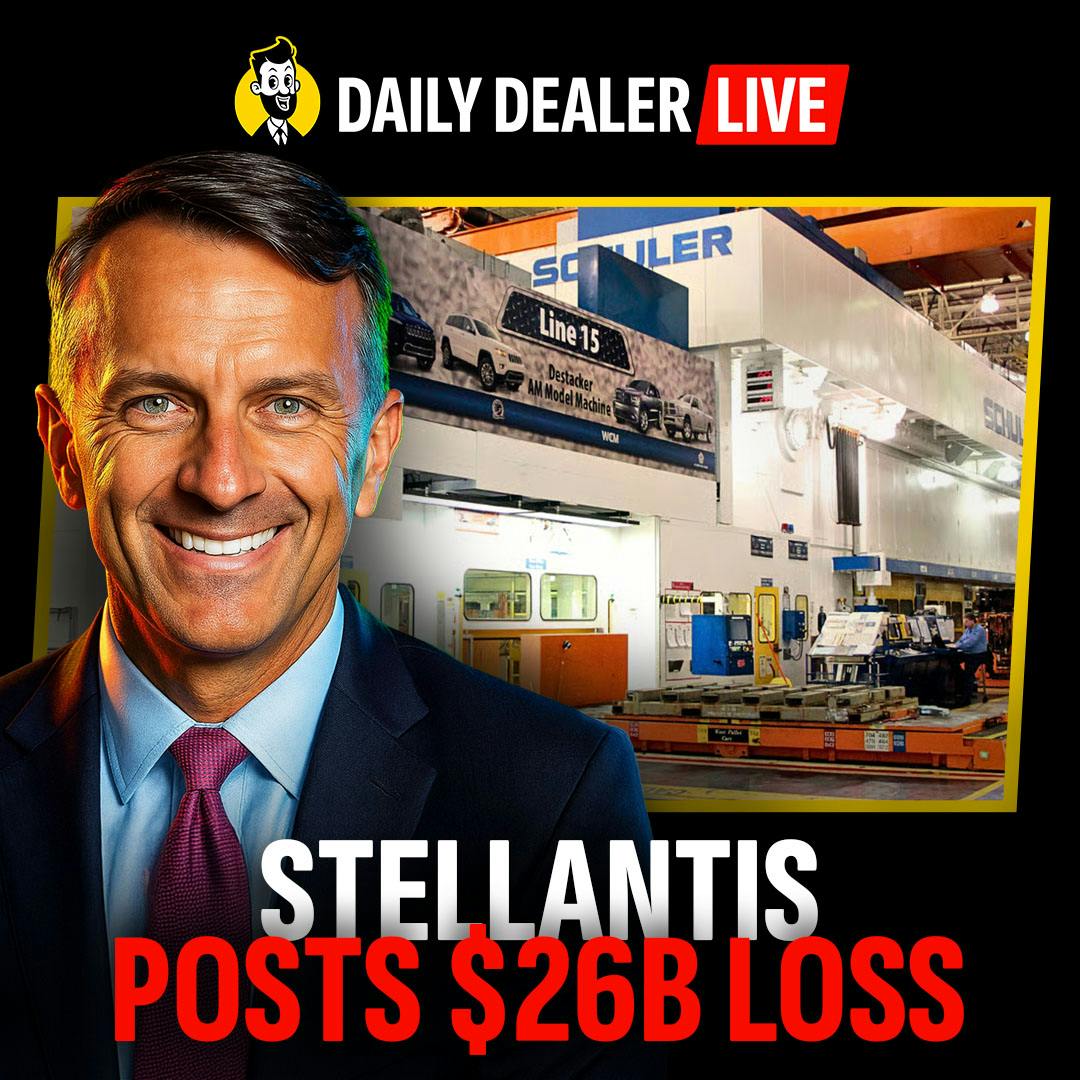
"Speaking of revenue and other automaker news, Stellantis posted a, get this, $26.2 billion net loss for 2025, including $23.8 billion in the second half alone,"
Stellantis is a big company that makes cars. It was created when two car companies joined together and now owns many well-known car brands.
Stellantis is a multinational automotive manufacturing corporation formed in 2021 by the merger of Fiat Chrysler Automobiles and PSA Group. It owns many popular brands including Jeep, Ram, Dodge, Peugeot, and Fiat.
"Much of the financial hit stems from pulling back on EV investments and the losses wiped out U.S. profit sharing for union workers for the first time in 15 years."
EV investments mean the money car companies spend to make electric cars and the parts they need. It's important because electric cars work differently than regular gas cars.
EV investments refer to the financial resources automakers allocate to develop electric vehicles (EVs), including research, development, manufacturing, and infrastructure. These investments are critical for transitioning from traditional internal combustion engines to electric powertrains.
"...North American orders and the return of the Jeep Cherokee now back in Mexico production. On top of that, R..."
The Jeep Cherokee is a smaller SUV that can drive well both on regular roads and rough paths. It's being made again in Mexico and sold in North America, showing that many people still want this kind of car. It's popular because it’s good for everyday use and adventures.
The Jeep Cherokee is a compact SUV known for its off-road capability and comfortable ride. The mention of its return to production in Mexico and its presence in North American markets indicates its ongoing relevance and demand. This model is often discussed in the context of Jeep's global production strategy and market availability.
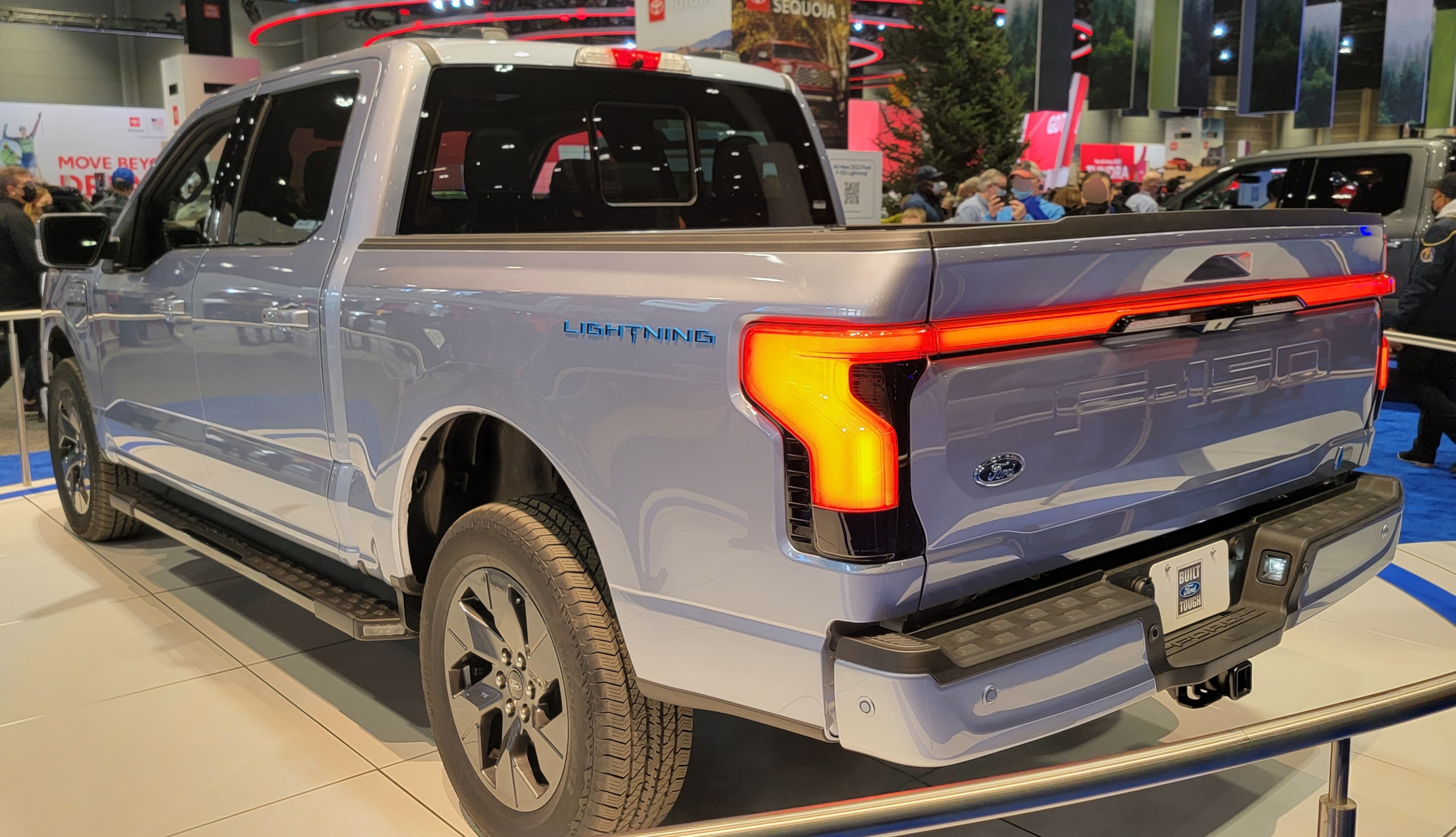
"what they have already and start by fixing that foundation instead of getting distracted by every shiny new AI toy. Buyers are moving away from keyword searches like quote F-150 near me and they're opting for conversational prompts asking AI which vehicle better fits their lifestyle."
The Ford F-150 is a very popular big truck that many people use for work and daily driving because it's tough and reliable. People are talking about it because instead of chasing new fancy gadgets, they want to fix and improve what they already have. So, the F-150 is seen as a solid choice that doesn’t need every new feature to be useful.
The Ford F-150 is a full-size pickup truck known for its durability, versatility, and strong sales in the North American market. It is often discussed due to its role as a foundational vehicle for many buyers who prioritize reliability and utility over the latest tech trends. The mention highlights a shift in consumer focus from flashy new features to improving existing, proven models.
"and then also bring back a minimum of 10 repair orders that they worked on and worked on that specific area of the vehicle."
A repair order is like a work ticket that shows what fixes or maintenance a car needs or has had. It helps the shop keep track of the work done on a car.
Repair orders are documents used in automotive service shops that detail the work requested, performed, and parts used on a vehicle during maintenance or repair. They help track the service history and ensure accountability.
"not everybody in automotive gets to do, is we get to go to NASCAR races and it's cool as heck to be able to be there whether it's Daytona, whether it's Atlanta, wherever..."
NASCAR is a type of car racing where drivers race specially built cars on oval tracks at very high speeds. It's very popular in the US and has many fans.
NASCAR is a popular American motorsport series featuring stock car racing, known for high-speed oval track races and a passionate fan base.
"Anyone who was watching Daytona, it was a heartbreak into the final lap, white flag."
Daytona is a big race track where important car races happen, especially NASCAR races that many people watch.
Daytona refers to the Daytona International Speedway, a famous racing track in Florida known for hosting major motorsport events like the Daytona 500 NASCAR race.
""...how critical in 2026 service departments are across the nation. They're the lifeblood of a car dealership...""
Service departments are the part of a car dealership where you take your car to get fixed or maintained, like oil changes or repairs.
Service departments in car dealerships handle vehicle maintenance and repairs, playing a crucial role in customer retention and dealership profitability.
"...effective labor rate, CSI, which is the big one with advisors, and we celebrate our President's Circle..."
CSI means how happy customers are with the people fixing their cars or helping them at the service center.
CSI stands for Customer Satisfaction Index, a metric used by automotive service departments to measure customer satisfaction with service advisors and technicians.
"...ind of our last topic we'll hit today is raising ELR. Talk to us about what is ELR? Why is it an impor..."
The Cadillac ELR is a fancy car that uses both gas and electricity to help save fuel and reduce pollution. It was made for a few years and is special because it tries to be both powerful and better for the environment. People talk about it because it shows how Cadillac started making greener cars.
The Cadillac ELR is a luxury plug-in hybrid coupe that was produced between 2014 and 2016, combining electric and gasoline power for improved fuel efficiency. It is significant as Cadillac's attempt to enter the eco-friendly luxury market, though it had limited sales due to its high price and niche appeal. Discussions about the ELR often focus on its technology and its place in Cadillac's electrification history.
"So Cox Automotive recently came out and said, fixed ops is one of the biggest opportunity points in automotive in 2026."
Cox Automotive is a big company that helps car dealers and makers by giving them information and tools to sell and service cars better.
Cox Automotive is a large automotive services company that provides data, software, and services to dealerships and manufacturers. They offer market insights and analytics for the automotive industry.
"The aftermarket guys are always nipping at our heels and they are, they're always out there looking to take some of our business."
Aftermarket means parts or services for your car that come from companies other than the car maker, usually used to fix or upgrade your car after you buy it.
The aftermarket refers to the market for vehicle parts, accessories, and services provided after the original sale of the vehicle, often by third-party companies rather than the original manufacturer.
"doing a solid multi point inspection, telling them what is going on with their vehicle and offering solutions when they have problems."
A multi point inspection is when a mechanic checks many important parts of your car to make sure everything is working well and to find any problems early.
A multi point inspection is a thorough check of a vehicle's key systems and components to identify any current or potential issues, often performed during routine maintenance visits.
"...service director Volkswagen of Clarksville, Indiana, John Bishop. John, welcome to the show..."
Volkswagen is a big car company from Germany that makes many types of cars. You might have seen popular models like the Golf or Passat.
Volkswagen is a major German automotive manufacturer known for producing a wide range of vehicles, from compact cars to SUVs. It is recognized globally for models like the Golf, Passat, and Tiguan.
"We're seeing a lot of defection to non OEM repair facilities, places like Jiffy Loop for basic services and whatnot."
OEM repair places are official shops that fix your car using parts made by the car's maker, so your car stays like it was originally.
OEM repair facilities are authorized service centers that use Original Equipment Manufacturer parts and follow manufacturer guidelines for vehicle repairs and maintenance.
""Stop looking at the numbers and the KPIs and focus on the customers. Do they feel value when they're here?""
KPI means a way to measure how well a business or team is doing at important tasks. In a car service shop, it helps see if things are going well or need fixing.
KPI stands for Key Performance Indicator, which is a measurable value used by businesses, including automotive service departments, to evaluate how effectively they are achieving key objectives.
""What do you think is the most misunderstood or overvalued KPI in a service department this year? Effective labor rate. Okay. You're against effective ELR. Okay. Yeah. I mean, hands down.""
Effective labor rate is how much money a car shop makes on average for each hour of work they sell. It helps them see if they're charging and working well.
Effective labor rate is a metric used in automotive service departments to measure the average revenue earned per hour of labor sold, reflecting both labor rates and efficiency.
Select text to request an explanation
Hey everybody, welcome back to another episode of The Daily Dealer Live.
I'm your host Sam Dark and thanks for choosing to be here this Friday the 27th
of February. And hey everybody, welcome to Fixed Ops Friday. If your service
department isn't carrying your dealership right now, you might be doing it wrong.
So say industry experts and today's guests. The vehicle fleet is older than
ever before. Front-end margins are tighter than they've been in years and
OEM pressures, well, they're not easing. And yet across America, service
departments are leaking profit every single day. ELR sometimes low, parts
gross can be inconsistent. Advisors discounting because it's easier than
selling value. And some techs need to be re-engaged. Video MPI is sometimes treated
like compliance instead of a revenue engine. And here's the truth. The service
shop, not sales, not the desk, not the dealer recap, is where real value can be
built. Certainly totally from past Fixed Ops Friday would agree with that. Fixed
Ops, that's where the value is. Today we've got operators who are actually
moving ELR, actually defending parts gross, actually building retention
systems and actually creating employees for life. If you're a dealer principal,
if you're a general manager, fixed ops director or service manager, today's
episode might be eye-opening and it might be uncomfortable. That's good. And
first, let's hit today's auto industry headlines. First up today in the news,
for years, the three-year-old vehicle was the safe bet for value shoppers, but
that script has flipped. As of last quarter, three-year-old units averaged
$30,699 and sat 45 days. That's the slowest fourth quarter turn since
2017. This according to our friends at Edmunds. Meanwhile, current model year
used cars quietly became the value leaders. 2025 model year used vehicles
sold for about $6,370 less than their new equivalents and they made up roughly
one in every 12 used sales. That's a high ratio, but mileage is doing the real
work here. About 60% of current model year used units sold had under 10,000
miles. Once mileage pushed past 15,000, discounts widened to 10 grand or more.
That spread is what makes the near new category compelling if it's merchandise
correctly. What's the bottom line here? Well, the used car quote unquote sweet
spot is moving and dealers who recognize where the value story is moving
instead of where it used to be will likely be much better positioned. Next up
today in the news, a new report by Global Location Strategies has revealed that a
much larger share of OEM investment is being concentrated into a smaller
number of massive high stakes bets. So the question is where are OEMs spending
the money today developing projects and investments amounting to a billion or
more. Now account for 43% of all cap spending and that's up 18% from a
decade ago. And the recalibration of that cap spend is increasingly being
directed towards next gen platforms, including battery electric vehicles,
hybrid and advanced battery manufacturing and large scale retooling of
existing internal combustion engine plants. However, the availability of
skilled labor permitting speed and whether a region can actually scale
infrastructure are the limiting factors. What's the takeaway here? Well, when
OEMs concentrate capital like this, it directly shapes who gets what product
and how fast it moves and that revenue is on the move. Speaking of revenue and
other automaker news, Stellantis posted a, get this, $26.2 billion net loss for
2025, including $23.8 billion in the second half alone, marking one of the most
financially painful years in company history. Much of the financial hit stems
from pulling back on EV investments and the losses wiped out U.S. profit sharing
for union workers for the first time in 15 years. And it included $2.2 billion
in North American losses with $1.4 billion of that tied to tariffs. CEO Antonio
Filogio says a turnaround is underway pointing to a 150% increase in North
American orders and the return of the Jeep Cherokee now back in Mexico production.
On top of that, RAM is doubling down on Hemi V8 trucks, adding 100,000 more
units this year with 50K already ordered as looser emission rules open the door
for more gas-powered production. But that's a big loss. And finally up today,
dealers may be noticing fewer clicks on their websites. They should know that at
least some of the dwindling traffic is due to how AI is rewriting search engine rules.
April Simmons, corporate internet and marketing director for the Horn Auto Group,
explained why in a recent webinar saying dealers should review what they've already
what they have already and start by fixing that foundation instead of getting distracted by every
shiny new AI toy. Buyers are moving away from keyword searches like quote F-150 near me and
they're opting for conversational prompts asking AI which vehicle better fits their lifestyle.
And large language models like Google, Gemini and ChatGPT are responding
with some of the summarized answers. That puts pressure on what Simmons calls prompt visibility
and generative engine optimization or GEO meaning dealers must structure content so AI can understand
site and summarize it, not just rank it in traditional SEO results. Looking ahead, as AI
generated results expand, traditional clicks will likely continue to decline. And dealers who
strengthen site accuracy, schema and human-focused content will now be better positioned to stay
via visible as search behavior evolves. The fascinating part of that as a little aside to me
is that it's being proved that ChatGPT, Gemini and other AI search tools preference human created
content and SEO more than it does AI generated SEO. So that's a bizarre twist in this world as we
try to figure out how to up our lead generation activities and how to become more visible in
the auto dealer community. Well, that's a wrap on today's industry headlines and everybody. Welcome
to Fixed Ops Friday. All right, Fixed Ops Friday is a reminder to everybody. We are streaming live
across all CDG social media platforms. You can post your comments into social media. We'd love to
bring them into today's show. It shapes the way we go. Love Paul Salisman for coming into the
chat just now. Reviews are king right now. But Paul, did you think it would be human-led content
that would be the thing that AI valued the most? So as we become more AI, the human thinking
is becoming rarer and more valued. I think that's an interesting conundrum as you think about
creating that SEO and creating those things that that chat GPT and Gemini will end up searching.
All right, we've got a huge show coming up today. It's all Fixed Ops based. First up today, we're
going to go back to my own group. I love talking to members of my own team. Bob Keele, our vice
president of Fixed Operations, Ziggler Auto Group. Bob Keele, welcome to the show. Hi, Sam. Good to
be here. Bob, it's good to have you here. You're sitting in a brand new office, by the way. So
Ziggler Auto Group, 41 stores, four states, 2700 employees. Recently at the Chrysler store there
in Kalamazoo, we added Jeep and had a major remodel underway. So you're almost back into your new
office. Congratulations. Thank you. So you oversee, Bob, Fixed Ops across one of the top dealer groups
in the country. You're focused on a lot of things right now. But let's first talk about how you're
solving the technician shortage crisis in the world right now. Technicians are valuable. They're
hard to find. They're hard to retain. Tell us a little bit about what you're doing to fix that
at the Ziggler Auto Group. Well, you're exactly right. They are hard to find and retain. We've had
every high school in the country has dropped their automotive program, or most of them,
and they've dropped the interest. So in the Auto Group, we saw this a couple years ago. We have
vet students through the service manager. And then we have an automotive instructor from a local
college that is retired. And then they spend one week a month for six months on a different portion
of the vehicle. When they leave the class that one week, if it was a week on breaks or a week on
steering, they go back to their mentor in the shop and they have a checklist of things they have to
do and perform throughout the next three weeks before they come back and then also bring back a
minimum of 10 repair orders that they worked on and worked on that specific area of the vehicle.
Let's help us out quite a bit. We've gotten involved in a couple of our communities as well
with the Kelm Zoo, for example, has what they call Kresa, which is a new
trades-based education system for a four-county school system. So we've gotten heavily involved
in that as well. So we can kind of handpick some of the people that we want to bring into the Auto
Group. So that's kind of what we've done. We're on our fifth class at this point, sixth, excuse me,
our sixth class. We've graduated 55 students out of there with a 90-plus percent
stick rate once they get out in the shop. So it's worked out real well.
So how does that work once an aspiring technician goes through the program? Do they get the choice
of a store? A geography does a store sponsor that candidate? How do they decide where to go? And then
once the training ends, what type of support continues with them as they emerge into that
new career? Well, they're actually in a store before they get into our university. They're
vetted by a service manager and actually recommended. And then we go through an interview process to
bring them in to the university. We have not declined anybody. We have that opportunity,
but the service managers do a really good job of vetting them in. And they stay in the store
normally that sponsored them through the event. Once they graduate per se out of our academy,
they're immersed in the manufacturer training, the online and the in-person training that the
manufacturer offers as well. And they're coupled with a mentor throughout that training process and
bring them up through the flat rate system through that manufacturer. They've already
displayed their interest in the manufacturer and obviously in the industry because they came to us,
but they have an interest in a manufacturer before we ever put them in the class.
So if there are aspiring technicians out there, whether the Chicagoland, Kalamazoo area across
Indiana, Wisconsin, looking to get part of that program, would they go into a Ziggler store,
talk to a general manager, talk to a service director? How do you get engaged and active in that?
They actually can get in and see the service director in the store. They can also go to our
website and fill out five pieces of information right there that will come directly to me.
Then I can get them to the store they want to get to and they can kind of usher them through the
introduction and the application process from that point once they show the interest.
We have a specific website out there that is a sub-site of our company site that just goes to
employment for parts and service and that's been very productive for us. So actually let's
transition to that for just a minute. So one of the things that you and I get to be involved in,
not everybody in automotive gets to do, is we get to go to NASCAR races and it's cool as heck to
be able to be there whether it's Daytona, whether it's Atlanta, wherever. The Ziggler Auto Group
sponsors a rising star in NASCAR, Kalamazoo-based native Carson Hosevar. He's on the number 77 car.
Let's go see a video of Carson. Anybody who's been to a race, Bob, knows there's nothing quite
like the sound. There's nothing quite like the sound of that engine at NASCAR. Why does Ziggler
sponsor NASCAR and what does it do when you think about hiring and recruiting technicians and employee
engagement? What is participating and being part of NASCAR? How does that enhance the value
property position at the Ziggler Auto Group? It definitely enhances our position. It's something
that not a lot of auto groups do. Of course, the Hendrick Auto Group is heavily involved in the
South. We're the only one in the North that's involved with that. We've got an owner that loves
everything racing and everything automotive. Your service employees are usually positioned
in that environment as well. They like that. We take people to races. We do suites. We do
shows at local racetracks. It just gets everybody involved, excited, gives them something common
to talk about. As you can see, our technician website was on the back of the car. That's on
the thing. It's ziggler.com. It creates excitement. We have swag. We wear black with gold. As you
can see in the picture, the car is black with gold. Everything brands our Auto Group along with
our parts trucks and everything else. It's just a national branding and a lot of fun. It'd be
amazing amount of text messages I get from technicians and advisors on Sundays with status of the
car and that type of thing because all the guys are watching it throughout the day. It builds
excitement and fun. Carson's at our Christmas party every year. We normally have a car around
a couple of times throughout the year. It builds excitement, builds a lot of fun, and people really
like it. Anyone who was watching Daytona, it was a heartbreak into the final lap, white flag.
Carson Hosefar was in first place until he got tapped from behind about a quarter way
through that final lap. He was jammed into the wall, ended up finishing, I think still top 20,
which is pretty impressive after being spun out, but a legit shot at first place. Then I think
finished top five at Atlanta shortly thereafter. Super exciting when you think about just being
part of that. I think that's something that employees love is the excitement surrounding
having an affiliation to a sporting event like that, not to mention access. You mentioned the
message that's on the backside of the bumper. Are you able to hire and recruit technicians
through that? Do techs actually watch that and then submit and say, hey, I want to join your
auto group as part of that? 100%. That website is readily available. All of our managers have a QR
code on the back of their business card that takes them to that site directly as well. We use that
moniker throughout the auto group and throughout our recruiting process. There's no question that
when a guy sits down in front of you, they want to talk about NASCAR to begin with. A lot of our
employees have diecast. Everybody's excited to get pictures with Carson. It draws a certain
amount of excitement back to the auto group for fresh employees, for sure. Bob, it's interesting.
We talked about how critical in 2026 service departments are across the nation. They're
the lifeblood of a car dealership. Retention totally has been on here many times from the
needle auto group talking about the importance of retention. Celebrating success is something
sales has typically done a great job of in the past. Fixed ops, many would argue, have not
been as forward thinking about celebrating success. You were highlighted in automotive news this past
year for a tradition that highlights the best technicians and service advisors. Tell us a
little bit about that, how it came to be, and what you do on an annual basis to celebrate techs and
service advisors. On what we have, we call it the President's Circumstance. It's for the best of
the best. We've got a lot of great people. We collect data monthly. Technicians are based on
production. Advisors are based on a lot of different things. Hours per repair order,
effective labor rate, CSI, which is the big one with advisors, and we celebrate our President's
Circle. We send out the standings monthly, and then at the end of the year, we have 20 technicians,
10 domestic, 10 import. We have 10 advisors, five domestic, five import, and we have a real
large celebration. We announce it to the group. We make a big deal out of it. Then we have a
celebration annually. We've gone to the Autobahn a couple times. We've raced NASCAR at MIS. We've
gone to a Chicago Cubs game. We've done a lot of different things. We spend the day with them,
celebrate them. Everyone gets a nice trophy and some gifts, some parting gifts to take home with
them that have got our logo on them. The reason it all came about is, like you said, Sam, a lot
of the fixed operations guys go unnoticed. Can the unsung hero? Everybody worries about selling
cars and everything else. We have a hand in that as well. We're a team from the front to the back
of the store and recognizing monthly for great performances is something that we do, and then
an annual contest at the end of the year, which is a points-based system, and they get to spend a
day out with Aaron. Aaron is always at our celebration. Carson Hostbar is at our celebration,
and myself, a couple of our recruiters, and then all the employees that are involved,
and that's a really, really big day. It's a fun day for sure. A big project you've been
engaged in across the Auto Group this past year, kind of our last topic we'll hit today is
raising ELR. Talk to us about what is ELR? Why is it an important lever and what are you doing to
move that lever in February of 2026? In fact, ELR stands for Effective Laborate,
and basically what that is is that's the dollar amount you are effectively charging the customer.
Everybody looks at door rate and everything else, and there's a lot of things that affect
door rate, whether it be a maintenance item or an item that you don't get your full repair rate
out of and that type of thing. The biggest key to us keeping our effective labor rate up is now
we can, once our effective labor rate is at a high enough point, we can go to the manufacturer and
get our warranty labor rate raised as well. That's been a huge improvement. A lot of changes in that
field since COVID, a lot of increases. Our training expense is going up on the regular.
Technician wages are going up. The intricacies of the car are causing more time to be spent on it,
and that type of thing. Effective labor rate is monitored basically daily in all of our stores
and changes are made when it seems necessary if we're not hitting our targets. Then the target,
then, of course, lets us do the surveys and then file with the manufacturers to increase what they
are paying us as well. As our business moves forward and our customers move forward, we do
have a lot of, the average age of the car on the road is lower, but there are a lot of extended
warranties out there. We've got some manufacturers that go to 100,000, 50,000, 75,000. There's a
lot of things out there. Factory service plans, even though the vehicle is out of factory warranty,
you have an extended warranty while you're reimbursed at your factory warranty labor rate,
so it is crucial that we keep that pacing with the customer. There are some where
as anywhere, depending on the store, 40% to 60% of our business is warranty, so that is a large
input that we need to make sure we are keeping pace with the market, with the business, and with
our customer paid door rates. Effective labor rate is the only way you can do that, and then
part reimbursement rates, of course. So Cox Automotive recently came out and said,
fixed ops is one of the biggest opportunity points in automotive in 2026. Opportunity to
capitalize, retain customers. They talked about lifetime value of a customer in multiple different
places. Jonathan Smoke and the new head of, that new head chief economist Jeremy Robb both said
somewhere. When you think about 2026, Bob, what concerns you most when you think about fixed ops
and what are you working to solve for the rest of this year? Well, the biggest concern of fixed
ops, obviously, we need to keep people coming through our doors. We need to make them, not make
them, we need to get them to realize the value that we offer with our training and with our
quality and that we're always going to be there. The aftermarket guys are always nipping at our
heels and they are, they're always out there looking to take some of our business. They don't
have the training or the technology normally that we have. So we need to focus on that and we need
to focus on retention and retention starts when the customer arrives at our doorstep, making them
feel welcome, doing a solid multi point inspection, telling them what is going on with their vehicle
and offering solutions when they have problems. Not only is finding a problem with the customer's
vehicle important, but the guy that takes care of his care that doesn't have any issues and you
can prove to him that, you know, he's done a good job. He doesn't have anything coming up and he
can build that trust in you because if we have trust at the service lane, we're going to be unstoppable.
You know, transparency is going to help with that. Transparency with our pricing, transparency with
our inspections, transparency with our people, transparency with our process. But retention
is going to be the key moving forward and we're going to have to build value and retain that
value with our customer and that's going to be done through our process and our policies.
So the industry is focused on fixed ops right now as vehicles get older and the kind of the
customer retention becomes so important. Why do you think fixed ops has been such an overlooked
department over the past several decades? Why is it now that fixed ops getting so much attention
in the auto industry, Bob? Well, the attention on fixed apps started back with COVID when we
didn't have any vehicles, right? We didn't have anything to sell. So we had to sell more out of
the service lane to keep the stores going. And there's always been somewhat of a mentality of
a necessary evil being a service department. And we've been fortunate enough in our auto group and
with my 35 years here with the auto group, we've been able to kind of change that paradigm a little
bit and have everybody realize that we are in this together. There are no silos. It's not a
strip mall. We're in this deal together and we need to take care of them on the front side when
they buy the vehicle. But we need to also show some focus towards the service department and
fixed ops to take care of them so they come in by that second, third, fourth, and fifth.
You know, that comes from your use care inspection process. That comes from your sales process.
That comes from your service lane. If you can make that customer feel like there really isn't
anywhere to go anywhere else, that's when they're going to be valuable to you. And it's like, you
know, everybody always says, Hey, I've got a guy. I've got a guy. Well, guess what? I've always
preached to my service departments that we need to be their guy. We need to be the one that they
call and we make them comfortable enough and we make them trust us enough where there really is
no reason to ever go anywhere else. And if you are transparent with your customers, you quote
things competitively where they're supposed to be. If they do go out and shop anywhere else,
they're going to come back anyways because they realize you're taking care of them.
So the focus on fixed ops has become in the last two or three years because we're not selling as
many vehicles whether it is, we can't get them. They're not producing them. The pricing, you know,
people are thinking that it makes a little bit more sense to maybe keep that car one or two years
longer due to the fact that the expense that's involved in replacing it, you know, at least
portfolios went backwards in COVID. That helped the service department as well. Those are starting
to come back a little bit and we'll probably I don't know if we'll ever get back to the levels we
were at. But if we keep the focus in the service department on transparency, trust, and value,
we'll be just fine. Bob Kil, Vice President of Fixed Operations Ziggler Auto Group. It's always
great to have members of our own team on the show and, you know, selfishly highlight excellence in
our own world. You and I basically share a building office. We appreciate you being on the show today
and sharing perspectives on retention and recruiting technicians into this industry.
And then the heck of a lot of fun we all get to have at NASCAR. So, Bob, thanks for being on the
show. Absolutely. Thanks for having me, Sam. Appreciate it. What's a fun conversation? So,
tell our listening audience, everyone out there, post up in the comments, why do you think Fixed
Ops has been overlooked for the past decades? Why is it only now that the auto industry is coming
here saying, hey, this is an important time to pay a note? It's an important time to train, you know,
within our own group. It's fun to see technicians and service advisors getting recognized. That's
kind of newer in the auto industry. We've been doing it a while, but, you know, a lot of the
limelight historically in automotive has gone to the sales side. Why is Fixed Ops kind of a late
arrival to that? We'd be curious to get your comments in the chat and the notes and we'll
bring those into today's show. Let's talk Impel. Today's episode is brought to you by Impel.
Impel's service AI with voice AI delivers proactive VIN-specific outreach based on individual driving
behavior, captures missed calls and schedules appointments instantly by text and by email,
advisors stay focused on the drive, customers get fast personalized service, learn more by
clicking the link in the show notes below. Click the link in the show notes below to learn more
and or you can also click the QR code off to my side there. And if you're watching after the fact,
you can you can obviously go to the link. We appreciate Impel sponsoring today's content,
including the conversation with Bob Keel about retention and a little bit of NASCAR thrown in
for good measure. So thank you Impel. We appreciate you guys sponsoring today's show. All right,
let's transition directly into our next guest up today, service director Volkswagen of Clarksville,
Indiana, John Bishop. John, welcome to the show. Thank you for having me. John, it's awesome to
have you. Thanks for being on. So tell us a little bit about yourself, what you do and what you do.
Well, so I'm service director of Volkswagen of Clarksville, Indiana. And I started out in this
business 16 years ago, washing cars, lot attendant and moved into a technician position and then
was fortunate a general manager said, Hey, why don't you try to write service? So
started writing service at a young age and really understood the fact that we were what we were
doing maybe wasn't exactly the way we could have been doing it. And then as I continue to develop
an age, I've learned in a watch that retention numbers continue to slide off and we're losing
customers that are unhappy. And then you really have to do a deep dive and focus on which really,
which really the catalyst here and what's causing that problem. And if you dive enough,
you'll start seeing that really it's us looking in the mirror and reflecting on the process that
we have is the same process that we've had as dealerships for as long as I've been in the
business where KP out focused, but we're not customer focused. You know, it's interesting. I
appreciate you noting it. So it seems to me as we came out of COVID inflation, increased cost of
repairs, labor, everything, it masked the problem. The RRO counts as an industry are going down.
We're seeing a lot of defection to non OEM repair facilities, places like Jiffy Loop for basic
services and whatnot. You say it's process that's driving it. What process is so old and outdated
that it's pushing consumers away to repair facilities that have no business? In many cases,
repairing the intricate vehicles we're selling today in 2026?
I just think that we're so focused on sales that we're pushing customers into a different area of
repair. So when you come into the store, you're greeted with a, Hey, your cars do for this service
and it's $500. Well, then you get an MPI inspection. Despite transparency in the videos,
it's still asking for what money? Well, then you're, Okay, now your car's finished. Now I need your
money. But yet, where do we build the relationship? At what point in this process that's built,
do we focus on the customer and less about the money? Because obviously if, go ahead.
So what are you doing today in February, 2026 to solve this defection problem,
to focus more on the customer instead of the money, to make the customer the center
of that retention strategy? Focus on the customer, ask them about themselves,
take them out of the experience of the car servicing. It's never going to be convenient
when it breaks. It's not realistic. So when they come in, they're already,
they're already ready to put their guards up. So you have to break those down. You have to be
willing to listen, talk less, and then work with them for a solution. This isn't sales.
This is problem solving. They're coming in with a problem. It is our job to find a solution for
them and make it more convenient. Jiffy Lou, Valveline, whoever it may be, they are in business
because dealerships back in the 80s were more interested in large repairs, but never interested
in doing the quick services. And now dealerships are looking at each other trying to figure out
how to get that business back. So John, in February of 2026, are there things that you're
doing at your dealership there at Volkswagen of Clarksville to focus more on that customer?
Is there a technology you're implementing? Is there a process? Is there something others could
replicate? Yeah, just treat people like you want to be treated. I know it sounds crazy that it's so
simple and so basic, but you know, that's the reality. Cars are breaking. You know, cars will
break down, but how do you make them feel when you come in? Customers look at experience and it's
based off emotion. You know, if they feel good about you and they trust you, they're more likely
to purchase whatever they need for their vehicle. And that's the simple facts.
So Bob talked, part of the Ziggler Auto Group, he talked earlier on about the MPI process.
So in your store, how is that MPI process? What does it look like? Is it paper? Is it video?
Is it text communication? What are you doing? So Volkswagen Group of America requires video
MPIs to be done with every vehicle. That's a technician going over your brakes, your tires,
your fluids, and then demonstrating to you visually what you need and why you need it.
Or maybe even starting the process when they don't really need it, just letting them know that
coming soon, this is what you're going to be looking at. So those videos do provide transparency.
Like Bob said, it's a game changer for the market, but we're still missing a key point. No matter
what information or what data we give them, whether it's chat GPT or Google, we are still
missing the customer connection. And without that, our retention numbers market-wide will continue
to drop. So let's pressure test that a little bit because you have said that a couple of times,
then I want to bring in a comment from Paul Salzman. Is there one strategy that you're asking
your service advisors and your technicians to implement to help solidify that connection?
I mean, obviously making sure that the customer understands the process that you're communicating
efficiently and effective, but is there a process you're leaning in on in February 2026?
Yeah, the process is when a customer comes into your service lane, make it about them,
prepare them with word tracks stating this is, you're at 60,000 miles, you're coming in,
you do have some services that are due by the manufacturer. Let's get the inspection done by
the technician who's going to make those recommendations. Instead of making it about price
point from the start, let's let the technician build the value which we keep going back to,
let the technician build the value in the MPI. Paul Salzman comes into the comments that says
perception warranted or not creates customer churn. If clients perceive they're going to
dealer service is akin to proctologists, you lose their positive sentiment to the entire store.
So his point being, I think, if they're begrudging a visit to the dealership as much as they begrudge
a doctor, it's going to be a challenge to have them stay connected to the store. So speaking
of connection, how do you stay connected to your clients between major services in a way that retains
them? Just try to reach out with them and email, you know, instead of sending them just coupons,
let's send them information, information of how the word convenient can be for them instead of
scheduling with a phone call, scheduling with an online provider or a text in and scheduling that
way. But communicating with knowledge, educate them to know that we're here to help them,
that it's not just about the money. Even when they don't need us, we need to provide them with a
service to let them know that we're here to help. Okay, you've talked often about not only
retaining customers, but retaining employees. You talked about employees for life. What does
employees for life look like in pay plan and career pathing? Well, employees for life is equally
as important as customers for life. You have to treat your employees and understand that life
happens, whether it's calling in or missing work, you structure a level of respect between you and
teammates and understand we are one. We work together. And that's the biggest focus point.
It's not always about money. Nobody's, for the most part, most people don't quit just because
of income. They're quitting because of culture. They're quitting because of leadership. They're
quitting because of a manager. And there's a difference. You can be a manager, but are you
a leader? And that's what this industry needs leaders in order to get us back on track to where
we need to go in order for this industry to continue to grow. John, why would you say good
people leave service departments? You've alluded to it a little bit through leadership, but
what is causing a defection in most service departments in February of 26th?
A lot of times it's going to be culture. I mean, culture sets the standard for
what they expect and the way that they're treated. And again, it's just like customers.
They just want to be treated like people, treat them fairly, treat them kindly,
work with them. Most people, either you have kids or don't have kids, life will happen.
And it's not a matter of if it's a matter of when.
Yeah. Yeah. What's the fastest way you in your store? Last question up, and then we're going to
bring you back into the round table. What's the fastest way you've improved morale or culture
without spending a lot of money in the service department?
Just understand the titles mean nothing. We're all here to do the same task. We're here to help
people understanding that that is the key. Stop looking at the numbers and the KPIs
and focus on the customers. Do they feel value when they're here? And if that's not happening,
then you're not doing what needs to be done. Speaking of KPIs, what do you think is the most
misunderstood or overvalued KPI in a service department this year? Effective labor rate.
Okay. You're against effective ELR. Okay. Yeah. I mean, hands down. I mean, again, if we can't get
retention done correctly, why are we still looking at money when we can't even get the customer side
of it done without the customer? The effective labor rate doesn't even exist.
Yeah. Interesting. Okay. So your perspective would be, let's get the people side right,
then let's focus on ELR. So a question for you. You're a Volkswagen dealer.
Volkswagen famously is trying to inject vehicles into the U.S. marketplace through an alternate
route through Scout. And they've actually gotten approval in many states, Colorado,
California, Utah to name a few. What do you think about that? Does that concern you as a
Volkswagen dealer in 2026 that your own OEM might be going around you to sell vehicles?
I think it's an opportunity to grow, but I also think that you have to look at it from a customer
service standpoint as well. There has to be a reason. Usually the only reason these actions are
taken is because maybe we, as an industry, haven't done the right things the right way. And to avoid
that possible loss, we choose to go around the stores. You know, the less people involved,
maybe the more opportunity it's going to provide. So how do you remedy that? How do you make Scout
not a threat to you as an OEM? Start with day one. Work on your customer process first and
everything else will follow. Yeah. Fantastic. Well, John Bishop, service director, Volkswagen of
Clarksville. Hang out for a few minutes. We want to bring you back at the end of the show and have
you participate in a little bit of a roundtable test your ELR theory and your strategy to win
in 2026. Thanks for being on the show, sharing your perspectives. Thank you.
You know, it's a fair point. What do you think in the comments? We'll bring your thoughts in.
Is John correct that we need to focus first on the people, the process, and update those processes
to better reflect 2026? We're going to transition next into Vince McKizak, director of parts
operation at the Hawk Automotive Group. Vince, welcome to the show. So Vince, tell us a little
bit about yourself and what do you do in Automotive? I started 12 years ago-ish, 2014. I came in. I
just fell into the industry, knew really it wasn't not a car guy at all. I'm not your traditional
parts guy by any means. I was a computer guy, process person. Came in doing consulting just to
try to fix in a warehouse operation. Instilled that culture where it really doesn't matter what we
sell. It could be a car part, a t-shirt, a computer part, or an orange. You got to have the right
processes, the right people. And then at the end of the day, it's the right part, right place, right
time that age old adage started there. And then kind of just fell into it and grew and grew and grew.
And even my own people will make fun of me that I barely know the difference between a hood and a
fender to this day. But you know, again, if we if we have, as John kind of alluded to, you have the
right leadership and the right team that you build. And you just put the right places, people in the
right place. You got a receiver as a receiver, a quarterbacks, a quarterback, and try to make
the best of it. Well, we appreciate you being on the show. You're one of the first, if not the
first parts directors that have been on the show, bringing a different perspective. And I'm fascinated
by your background in computer and technology. What do you think most dealers miss about parts
operations and distribution given your given your technology background? What are most
dealer operators missing out on when they think about parts?
Great question. I think the thing that I one of the things I can bring to the table since I wasn't
stuck in these four walls of the dealership auto world for years and years and years is
and there's a big world out there. And you know, you hear that all the time, we got people and
we need both, you need both, you need people that have been doing it forever, you need new
new ideas. One of the things, you know, I've been doing this 40 years, etc. Well, you've,
all that tells me is you've been stuck inside these four walls. And there's a big world out there.
And what I have learned about the auto world, whether it's manufacturing, dealership sales or
after sales, the auto industry, unlike other industries, works on very, very tight margins.
So therefore, a lot of times investment into technologies and things like that and making
yourself more efficient is overlooked or just, nope, we can't make the investment,
can't make the investment. So that is the first thing that I noticed.
What's one investment in your world coming in with your technology background
that absolutely crushed it thinking about moving into 2026?
And you know, it's as simple as it seems now, but at the time we were doing everything very
archaic in terms of everything was manual, no scanning, no logistics software. We just didn't
have software basically, everything was done manually. And even again, this is like an archaic
thing, but we weren't even really using material handling carts to the best of the efficient we
should. So basically, the basics. How did you coming into the role without an automotive background
get buy-in from other teams who knew better than you because they've been in automotive
longer than you? How did you deal with people who knew so much that just wasn't so?
Well, one thing I'm very, very good at and very, I have a lot of experience at is being highly
disrespected and undervalued and appreciated for sure. So in previous lives, I learned I just
get in there and do the work. So every single day, every single weekend, I basically lived there
moving from Detroit to Chicago, living out of a hotel essentially and a buddy's basement.
I was there every day doing the work and that's how you that's how you gain the trust of anybody
in any industry. You just roll up your sleeves and do the work. So you're on the Car Dealership Guy
podcast. You're on the Daily Dealer Live. You're speaking to a ton of parts managers and directors
out there as well as auto dealers. What would you say to the parts manager sitting in the parts
department a key crucial role but often overlooked? What would you say to that manager who has a good
idea about implementing technology but just isn't getting heard? How tenacious should I be at
advocating for that position and how should I sell the dealer on this idea that I know could help
better operations return more profit in 2026? I think our role as directors and managers,
we essentially have two roles in any this is any business. You got to make the owners happy and
you make the employees happy. You make the owners happy if they don't have to deal with you know
employee nonsense and stress and drama and you're making them more money and you make the employees
happy if you make their lives easier at work and you show them how to make more money. There's a
lot of us. The best way to implement new things that get resistance is one getting there and getting
your roll up your sleeves do it yourself and show them hey this is look at how much easier your
lives are now and how much more efficient it is. When you get an employee that gets more efficient
and they're making more money for you and they're making their lives easier and they're happier
at work after that rough period because everybody hates that change. When you can show that to the
owners that hey listen this investment work look at how much more efficient we are at ABC processes
and therefore a bottom line recognition. That's how you get buy-in from both. Fantastic. All right
as director of parts operational Hawk Auto Group you've talked about pricing change to increase
gross or move gross. What pricing change in 2025 has actually moved the gross and positioned you to
win in 2026 in the parts world? Well this one is tough. We evolved quickly and went the wrong
way a couple times that's for sure. So a couple years ago we were you got to grow grow grow the
manufacturers make these tiers and everybody knows the manufacturers have these different buckets
and all that and they essentially promote a race to the bottom even though it's a good it's everybody
knows it's a free market and you know you can do what you want but they promote this race to the
bottom. There's a as we know between our own groups between your group and mine there are barriers
to entry new people come in to an established territory and it's easy it promotes growth but
then all of a sudden you hit some type of ceiling and it's wow wow we can't grow anymore. So you go
from growing your overall business sales wise to get that back end money and then eventually
realizing you do the math wow it's not worth it. It's given away the upfront gross so dialing that
back and unfortunately quite frankly raising prices is what you have to do to save your gross
profit. So how do you balance that being competitive and being profitable in a parts department in
2026? Great question. I think I think John hit it on the head and a big time was your people
so you get buy-in from all your people on a certain culture and everybody has to you have to show them
the whole doing more using less mindset of from the financial statement side making their lives
easier on you know getting dirty with them and going through the grind with them. I think that
shows them that you can get move ahead and then as you're adjusting pricing and your talk being
quite frankly as John said again being transparent with your customers telling them this is what's
going to happen and just trying to preserve that service. That's the only thing you can do.
So in the parts department and in the parts world there can be fracture between pricing
at the counter in the service department and online. How do you keep pricing consistent events in
those three areas between the counter service and online? It's like anything else you're essentially
reading the room totally different pricing for totally different pricing up front for an outside
customer such as a collision even a collision customer versus a mechanical customer totally
different pricing different pricing than obviously warranty which is different than in the counter.
So what we try to do is we just try to categorize and make sure we we keep it nice and organized
and we don't lose any opportunity. You don't want to you don't want to lose the ability to
charge more when you can but take care of the customers that you need to. So is there a particular
set of software or communication tool or posting tool that allows you to do that within your
organization? We do. We use a couple of different outside. We have CDK which is what we use which
isn't the greatest but again something that I know from you know a software guy this industry has
the worst softwares in any industry like by far it would be nice. Why is that by the way? Why in
your opinion is it so bad? In my opinion it's because as the customer as we talked about earlier
the margins are so tight in the auto world so in the auto world we're not really willing to make
that large investment in expensive stuff such as a software. So when you're not willing to pay for
a lot of it the vendor is not developing it so we're not going to pay you know 10 grand a month
for SAP we'd rather pay a thousand a month for a CDK. So CDK when you're paying any CDK rentals
it doesn't matter and we've noticed this with the new people I'm sure you guys have too. Any of the
new DMSs that try to make it they're not willing to make that investment into their product because
no one's going to pay for it so if they don't have somebody to pay for why would they do it?
So you're speaking today to a lot of vendors there's retail customers out there that there are
people that are industry adjacent that would say come on Vince like automotive is enormously profitable.
You say it's thin margins is it truly thin margins is it really as skinny and as thin as you say it
is? On the fixed-top side for sure when you're talking about when you're talking about wholesale
specifically on the retail side of course it's great and I try to measure things up to your
own personal life you have 100 grand or 50 grand you saved up your entire life you want to invest
it you know the whole eight old adages you should get 10 percent on the market so we kind of use
as our baseline hey if you're an owner and you have money to invest are you going to make more on
the market or less so when we talk about fixed-ops your margins anything you know in the 20s is great
you know if your bottom line is 15 to 20 you're doing well when you start getting into wholesale
your margins anything below 10 now your owners are starting to thinking should we even do this
so with that are you even going to spend money because if you could do it make more in the
in the stock market for sure let alone car sales or fixed-ops or in the service side so
if you're less willing to make that investment to a vendor they're less willing to make that
development. All right we talked a little bit about pricing before we leave that entirely
we'll go to expense next where do most dealers in in February 26 where do they mess up pricing
in the parts department with such thin margins? I say a lot of people still have the age old
we have to be the cheapest we have to be the cheapest I think people are very scared to
just hold your ground and so that's where I think our biggest mistake is. So how do you deliver value
in parts which many could argue parts if anything is a commodity right how do you deliver value
and make it and take it away from being about price? It's very cliche but you give the good
service you have your guys if it's a driver he's trying to be friendly if it's a person on the phone
for an inside sales rep or a wholesaler they're trying to give as much information and talk with
the basics you know you're talking about like Fred Pryor sales 101 talk with a smile give
information where you probably didn't need to and quite frankly most of the time we're learning and
I know a lot of people are learning this they're going to use you for information and call input
the order with somebody else who's ever cheaper but if you can implement that same strategy with
retail person and even with your service technicians service technicians as we know are
probably in the same category as body shops or mechanical shops in terms of difficulty to deal
with sometimes but you just got to try to be cool with everybody and build that relationship.
Kevin Stuckey comes into the comments says culture is everything and then he says embrace
new change be the leader and the light for others and then long time poster Paul Kevin is as well
but eager K comes in and says it's not just the matter of the price but matter of comforting
people are used to the old software and too lazy to learn new software so sometimes change
is difficult so you've talked about you know on such thin margins in parts expense control what
was the first big expense and the most significant expense you've attacked in your auto group and
why what could others learn from that in 2026? Probably personnel which is tough I mean that's
a very big expense and you never want to try to do things with personnel if you don't have to of
course and like most big groups these guys these owners are awesome they have a passion not only
for cars but for just providing jobs for people in security and that's a that's one of the great
things about bigger groups is people do take pride in that and nobody likes to do expense control
when it comes to people so but those are some of the things that we have to do and we we have to
get more efficient which is the root of that being more efficient at different processes
so we talk a lot on the show about technology AI and other such things is there an AI technology
that's interesting to you in the wholesale and in the parts world in 2026? One of my goals is to
find something that can process orders and scrub vins I'm very interested in that okay as volumes
increase and etc we've discussed that a little bit I would love to explore some of those softwares
where an order comes through on one of the platforms and we could have people scrubbing vins
because a lot of the experienced countermen are starting to you know retire out well earned well
earned years of service from them and some of the newer people nothing against them we're asking
them to do more so we try to get that automation a little bit better. What when you say scrubbing
vins do you mean like big vent explosion like identifying the vehicle based on just the vent is
that what you're saying? Yeah so a part will come through and it's a part with the you know there
can be many things about the part number a part number could have changed it could be a super
session it could be a right versus a left the unfortunately the estimation if I'm just talking
collision wholesale side right now yeah a an estimation platform doesn't seem to keep up with
the uh with the catalogs so it'll the estimation software will say hey we need part one two three
it'll come across if we don't scrub that against the vin meaning is this the right part they requested
on what this actual model needs yes we're sending out the wrong part and that's on us.
Kevin Stuckey comes in the comments says hey part of delivering value is having the inventory to be
able to deliver same day so if you've got a large enough inventory stock where you can deliver same
day that's something that can drive up a little bit of the asking price and provide uh you know
potentially higher price in exchange for that convenience eager K comes in the comments and
says I agree with that um so as we wrap up before we go into our closing round table what do you
what would you say uh is the weekly KPI in parts that's most overlooked this year?
um I think it's starting to come into the light big time but I think receivables is a big one that's
typically been overlooked it's when you're in the parts when you're a parts person or counterman
obviously anything else driver warehouse worker you never think about the money come in and you
think I'm super super busy wow we must be doing really well um one thing that's very overlooked
and we as uh as part of the leadership team need to really focus on is is how much of that is our
customers are actually paying with the cost of money now different than it was a few years ago
I mean just look at everybody's own lives your mortgages are different you can't get a line of
credit on your house without paying seven percent same transferred to business so the cost of money
is more so in you know to their point yes inventory is good but the cost of inventory is very expensive
so we need to we need to make sure we're looking at uh receivables.
All right Vince McKizick director of parts operation a hot auto group thanks for being
on the show sharing your perspective we're going to actually bring John Bishop service
director of Volkswagen of Parkesville back on for our round table here at the very end this has
become a tradition I actually thoroughly enjoy and uh we've done this for a few fixed ops Fridays
in a row so welcome back thanks for uh being here all right we're just going to go through a little
bit of a lightning round uh on questions so question and either one of you can take this
should dealers in 2026 prioritize ELR growth or parts grossed first who wants that go ahead
Vince you gotta say parts guys gonna say parts gross for sure yeah I'm gonna agree I understand
though that parts is absolutely the we serve service and service promotes the dealer retention
for at the end of the day it's a new car sales what matters so absolutely service should be uh
the first focus and we just need to make sure we're back them up and just as just as a comment on
the last part of the conversation Kevin Stuckey comes in the comments says 100% receivables hand
hands down great answer so uh John I think you surprised our audience by saying you agree parts
gross should be the focus not ELR why is that well I mean historically speaking it's always
looking for labor rate increases like Bob said earlier we're always looking for labor rate
but nobody's talking about parts increases I mean how about every I mean they're doing just as much
work and if not more work to scrub vins and go through the process and they're the first person
to get you know chastised because the parts are incorrect but yet we don't give any glory back to
them so I agree I think parts should actually reap some benefits now because they deserve that
service and has been re getting all of that for a very long time while parts sit in the background
like stepchildren all right so following on that John here's the next question we'll get it from
both of you you first John is discounting in the service department is it cultural or structural
discounting whether it's parts or its repair orders is discounting cultural or structural John
oh it's cultural no doubt it's definitely a culture because I think that I think we spoke
about it earlier it's it's not about the money it's about the experience it's about how they feel
you can give great service and the price isn't what's mattering it's actually just how they're
treated from the start so discounting it means that you're discounting it to make up the difference
in what you may not have done correctly that's the reality we've coached customers to think that
discounts are normal instead of coaching them that good customer service is normal oh I like that
Vince thoughts I couldn't agree more and you know to take it one step further the culture between a
service manager and a parts manager one thing we've worked really hard on is making sure that
there's not friction traditionally it's been a us versus them thing and when that happens
we all kind of buy in on the on the getting a discount parts guys typically be really angry
man they're discounting all our stuff well we've had a lot of cases where we have our parts managers
and service managers in a good culture with each other they grow up and that way everybody's cool
about it no fighting all right I like that what next next question and by the way let's do this
eager k comes into the comments is that you guys in parts usually always get shoved to the side I
also agree with the comment of parts department feeling like a stepchild I'm gonna ask a robot
question in just a minute as we wrap up here but before we go there what's one fixed ops myth
that needs to dive and so let's start with you on that one a myth that needs to die yeah
uh I guess I'm not I'm I would have to even find out what some of the myths are I mean one of the
myths of by the way that's great about your background because you come from computer technology
you've applied that into parts you've created a thriving wholesale operation as a result I mean
I guess an us versus them type thing would have to die again between service and parts we've worked
really hard on our retail side of making sure service and parts departments are in sync not
against each other so for me and art my experience that's that's a battle that me and my counterpart
in service have really worked hard to do John one myth I mean I'm gonna say the same thing I think
it's cultural too though just as equally as much as the discounts it's cultural we've allowed this
to go on for so long focusing again on sales but not focusing on the people that are right in front
of us that actually generate those sales and generate the customer feedback and as we talked in
other shows you're talking about you know chat gpt you know jim and I is the base of that where
google is so your google reviews are feeding chat gpt so why not focus together on bettering this so
we can actually stand out in the crowd equally for parts and service yeah part service sales
everyone should be focused equally I think on that what's one change that would move profit in 90 days
one big change we've got an expert in service or fixed ops we've got an expert in parts
Vince what's one thing dealers could implement in the next that would move profit in 90 days
correct pricing for sure that's a very quick thing you could just adjust have the right
pricing for the right customer yep John all right we'll go with communication all right automated
robots they're all the rage right now yes or no to deliver parts in 2026 John no no
Vince no not yet not yet it's it's not quite there yet you would say so all right well hey to both
of you John Bishop service director of Volkswagen Clarksville and Vince macaizic director of parts
operational hoc auto group thank you both for joining us sharing your perspectives on fixed
ops on this fixed ops Friday thank you both thank you for having us yep Kevin Stuckey comes in the
comments dealers are too expensive charging for elite service if you can provide it just like
the Ritz and Disney they will pay for premium I think what he means is we've got to focus on
delivering value a race to the bottom in parts or in a race to bottom on price doesn't benefit anyone
and speaking of which thank you all for watching daily dealer live fixed ops this Friday February
27th where we break down the biggest moves in the car businesses that they happen don't forget
we're here live every Monday Wednesday Friday 1pm Eastern so if this is where you enjoy being
join us hit like subscribe leave your comments and we'll see you next episode Monday 1pm Eastern
thanks for being here everybody
so
Request an explanation for:
3 cars
3 cars featured
Request an Explanation
Heard something you'd like explained? We'll add it to this episode.
Sign in to request explanations for terms you heard.
Want to learn more?
Browse our glossary for plain-English explanations of automotive terms, jargon, and concepts.
See something that's not quite right? Our annotations are AI-generated and can sometimes miss the mark.
Click the flag icon on any annotation to suggest a correction.