Flock vs the Range Rovers; Ferrari 849 Testarossa Spider Review
The Smoking Tire
Flock vs the Range Rovers; Ferrari 849 Testarossa Spider ReviewThe Smoking Tire · Jul 17, 2026
Annotations will appear as you listen
0:00
99:43
Brand
Maibach Mercedes
This means a Mercedes that someone customized through a company called Maibach. It’s usually about making it more unique and luxurious, not just a basic factory version.
Term
brand new fucking battery
They’re saying the car’s battery health/charge display looks wrong—like it only shows one bar even though it’s supposed to be new. That can happen if the car’s battery monitoring isn’t reading correctly or the battery is already acting up.
“USB-C to C” means a charging/data cable where both ends use the same USB-C connector. It’s the common modern plug shape you’ll see on phones and laptops.
The Range Rover is a large luxury SUV made by Land Rover. It’s designed to feel comfortable like a high-end car while still being able to handle rough roads. It’s often discussed because it’s one of the most feature-rich and capable SUVs in the lineup.
This refers to a license plate layout that doesn’t match the standard numbering/lettering pattern used for normal registration plates. In this context, it’s describing special media/dealer-style plates that can look official but don’t follow the usual format.
A “press car” is a car that a journalist or media outlet is using for a story. It usually has special plates so it’s clear it belongs to the press, not a regular customer.
Moving violations are traffic tickets for things you do while driving, like speeding or other on-the-road offenses. The point here is that police stopped them even though the car was a press vehicle.
This is a Porsche 911 Turbo S from the 992 generation. It’s a very fast, high-end version of the 911, and the speaker is mentioning it because it was the car he was pulled out of.
“M plates” are a special kind of license plate that doesn’t look like a normal public plate. In the episode, the problem is that the officer didn’t recognize what they meant, so he assumed the car was stolen.
Flock AI is a camera system that watches traffic and reads license plates. The episode argues it’s used for more than just catching speeding—it can track where cars go.
“Warrantless surveillance” means watching or collecting information without getting permission from a judge. The speaker is saying the system can be used to track people’s cars without that kind of approval.
Term
California's toll tag system
California’s toll tag system is the electronic tolling setup that uses a transponder/tag to charge vehicles automatically as they pass toll points. The speaker mentions having to enter dealer plates into this system, which is why the plate format/recognition matters.
Term
fast track
“Fast Track” is the toll system name the speaker is using. They couldn’t enter the plate correctly at first, and the system kept saying it wasn’t recognized.
A police report is an official record filed with law enforcement after a crime or incident. The episode says that if a license plate is misplaced or stolen, the owner must file a police report so the plate can be entered into systems like the one being discussed.
The “flock system” is an automated system that looks at license plates and checks them against a list. If it thinks a plate matches something important (like a stolen one), it sends alerts to police.
An AI system is computer software that can “read” patterns—like the characters on a license plate. In this story, it’s used to decide which plates should trigger police alerts.
Term
misidentification
“Misidentification” means someone or something gets identified incorrectly. The concern here is that if AI or automated tools guess wrong, it can point police at the wrong target.
“Spyder” is just a fancy word for a convertible—an open-top car. Because the roof isn’t fixed like a coupe, the car can feel a little different in handling and structure.
The SF90 is a Ferrari supercar that uses a hybrid setup. Even though it makes a lot of power, the hosts say it didn’t feel as fun or responsive as you’d expect.
“296” is Ferrari’s newer mid-engine supercar. It’s a hybrid, and the hosts are saying it’s so quick (and steers better) that it basically made the older Ferrari SF90 feel outdated.
All-wheel drive sends power to all four wheels. That helps the car grip the road when you accelerate, and the host is saying the newer Ferrari still feels just as fast even without that advantage.
Engines can have different numbers of cylinders. “Down two cylinders” means the engine has fewer cylinders than the other car, and the host is saying the Ferrari 296 still performs almost the same anyway.
A mid-cycle refresh is when a car gets updated halfway through its generation. The host is saying Ferrari couldn’t just do small tweaks—they needed a bigger visual change to stand out from the 296.
Term
greenhouse of the car
The “greenhouse” is the part of the car that’s basically the cabin glass and roof area. The host is saying that section looks very similar to the SF90, even if the outside panels elsewhere are different.
The engine cover is the panel that covers the engine area. The host is saying that part looks very similar to the SF90, even though other body pieces are changed.
The Ferrari 430 is a famous Ferrari supercar from the 2000s. People sometimes use it as a starting point for custom Ferrari projects, because it’s a strong platform to build something more special.
The Ferrari 512M was a serious race car from Ferrari’s endurance racing days. The host is saying the car they’re discussing borrows its lower body design from that race car.
Group C was a type of race category for endurance sports cars. The rules pushed teams to build very aerodynamic, prototype-style cars that could last for long races.
The Porsche 917 is a legendary Porsche race car, especially known for endurance racing. The host is comparing the vibe and proportions of this Ferrari project to that kind of classic race-car design.
Car
962
The Porsche 962 was a race car built for long endurance events. The host is using it as another example of the classic race-car look they’re referencing.
A “wedgie” is a car design that looks like a wedge—very low and pointy, with an aerodynamic shape. The host is saying this Ferrari project uses that kind of look.
Term
double flip tails
“Double flip tails” means the back of the car has two hinged “flip” sections. In this context, it’s being used to explain why the rear looks the way it does.
“Square body” just means the car’s upper shape looks more boxy and flat, not rounded. The host is pointing out that the design mixes a round base with a more square upper body.
Winter tires are made for cold weather. They grip better in snow and ice because the rubber and tread are designed for lower temperatures.
Term
intakes on the side
Side intakes are openings on the car’s body that let air flow in. The speaker is talking about their shape—how the sharp, angular design makes the front look like different parts were added together.
The “Roma” is another Ferrari model the host brings up for comparison. They like the Roma’s design, but they don’t like a small front duct detail—and they say the reviewed car has something similar.
Dry weight is basically the car’s weight without the usual fluids onboard. It’s often a lower number than what you’d weigh in real life with fuel and everything filled.
Particulate filters are parts that catch dirty soot from the exhaust. They help the car meet emissions rules, but they can also make the exhaust sound a bit less aggressive.
A carbon tub is the main structural part of the car made from carbon fiber. It’s supposed to make the car stiff and light, but you can still notice how it behaves over rough roads.
Performance mode is a button/setting that makes the car act more “spirited.” In this case, it keeps the gas engine running while the electric motor helps.
A haptic button is a button that “feels” different when you press it, often with vibration or a stronger tactile response. Here, it’s used as a step to wake up the gas engine.
Term
feeder button
The “feeder button” is a named button on the car that changes how it behaves. The host is implying it makes the car feel more exciting or aggressive.
Brake-by-wire means your brake pedal sends an electronic signal instead of directly moving brake fluid mechanically. The computer then applies the brakes for you.
The McLaren Artura is a high-performance supercar made by McLaren. It’s built to be very fast and exciting, with modern technology. People talk about it when comparing different supercars and which one feels most special.
The Corvette Grand Sport is a Corvette model that’s meant to be more performance-focused than the entry trim. They’re using their experience driving one for 800 miles to explain what they prefer.
This means the parts that control how the front wheels work together. The host is saying it’s tuned more for launching in a straight line than for making the car feel great when you turn.
Drag racing is when cars race in a straight line to see who accelerates fastest. The host is saying some car tech is built to help with that launch, not with steering and handling.
Term
marginal returns
“Marginal returns” means the improvement is small. They’re saying the front-wheel setup doesn’t help steering much when you’re driving for handling.
A mid-engine car puts the engine closer to the center of the car, behind the driver. This often helps the car feel more balanced and easier to control when turning.
Valhalla is an Aston Martin supercar idea. It’s mid-engine, meaning the engine sits closer to the middle, which usually makes the car handle more predictably and feel more “planted” in corners.
Horsepower is a number that describes how much power the engine makes. Here, they’re using “535 horsepower” to talk about how strong the Corvette feels compared to the Ferrari.
Haptics are touch/feedback sensations—like vibrations or tactile responses—used in modern car interfaces to make controls feel more “physical” even when they’re digital. The host is contrasting how the Ferrari’s interior experience changes depending on whether those haptic features are included.
A digital cluster is the car’s gauge screen that shows things like speed and RPM electronically. The host is pointing out that the Ferrari’s dashboard is (or isn’t) fully digital.
The Ford Mustang is a sports car made by Ford. It’s known for being fun to drive and for having a lot of different versions over the years. People bring it up a lot because it’s one of the most recognizable performance cars in the U.S.
Paddle shifters are the little buttons/levers behind the steering wheel. They let you shift gears by hand while still keeping your main driving position the same.
Naturally aspirated means the engine isn’t boosted by a turbo or supercharger—it breathes on its own. A flat-plane crank V8 is a specific engine design that can help make the car feel more responsive and sound different.
The Ferrari F12 is a grand touring Ferrari known for its high-performance V12 and classic Italian styling cues. Here, the host uses it as a visual benchmark for “prettiness” when comparing against a C7 Corvette.
Displacement per cylinder means how much volume each cylinder moves through inside the engine. The host is saying the model’s number is based on that per-cylinder amount, not on some historic naming tradition.
“296” is a specific Ferrari model number. They’re using it like a comparison—saying the new car shouldn’t resemble the look of that Ferrari.
Term
SF
“SF” is a Ferrari-related naming tag they’re talking about like it’s already taken. They’re saying the new car shouldn’t use that same label in its name.
“812” is shorthand for a Ferrari model. They’re comparing model numbers to decide what the next one should be “bigger than.”
Concept
Ferrari 1000
They’re basically joking/predicting that Ferrari will eventually make a supercar so extreme it gets a “1000” kind of name. It’s a guess about where Ferrari’s lineup could go next.
The Ferrari Luce is mentioned in the podcast as a Ferrari name. The clip doesn’t explain what it is in detail, so it’s best understood here as a reference to a Ferrari model name. No specific features or purpose are described in the provided context.
GT3 is Porsche’s name for a track-focused version of their cars. In the past it was more specifically about racing use, but now it can mean a wider “serious performance” identity.
Term
optimized for the track
“Optimized for the track” means the car is set up to do well on a racetrack, not just in normal driving. It’s usually tuned for hard driving—like better grip, braking, and handling when you’re going fast for a while.
Porsche’s nomenclature is just how Porsche names its cars using codes and labels. The point here is that those labels can change meaning over the years, even if the name stays the same.
RS is Porsche’s label for a more hardcore, performance-heavy version of a model. In this conversation, they’re saying RS is its own thing, separate from GT3.
Naturally aspirated means the engine doesn’t use a turbo or supercharger to force air in. It breathes using normal air pressure, so the power delivery is usually more direct and linear.
The Porsche Taycan is Porsche’s electric car. Here, they’re saying it had to go back to the shop, meaning something needed fixing or checking.
Term
alarm
A car alarm is the security system that makes noise if the car thinks someone is trying to get in. In this story, it keeps going off after unlocking until the car locks itself again.
Term
automatically relocks
Automatic relocking means the car will lock itself again if you leave it unlocked for a short time. They’re saying it does that after about a minute, and that’s why the alarm starts again.
“Interior monitoring” is the part of the alarm that watches what’s happening inside the car. If you disable it, the alarm won’t go off just because something inside the cabin is detected.
A driver monitoring camera is a camera that watches the driver to help with safety features. Here, they’re saying it can also be used to help detect activity for the car’s security system.
Flashers are the hazard lights system that flashes the turn-signal lamps to warn other drivers. In an alarm context, hazards flashing can be part of how the security system signals an alarm event or a malfunction.
Term
hood pop module
A hood pop module is the part that controls an automatic hood release. If someone suspects it, they think the car’s security system might be triggering the hood-release behavior.
A frunk is the front trunk area on some cars, used to store cargo in place of a rear trunk. Because it’s a separate compartment with its own latch and sensors, issues with the frunk not being fully closed can trigger alarms or other warnings.
The Ferrari 512 BB is an older Ferrari sports car. In the podcast, it’s used as a reference for how something looks, like the body shape. It’s mentioned because it’s a recognizable classic Ferrari.
The Audi e-tron GT is an all-electric Audi that’s built to feel fast and upscale. Here, they’re talking about how much these EVs can drop in price after a couple years.
The Audi e-tron GT is an all-electric car, meaning it runs on electricity instead of gasoline. The podcast is talking about what used ones cost compared to when they were new. That matters if you’re shopping for a used electric performance car.
Depreciation is how quickly a vehicle’s value drops over time after purchase. The hosts discuss whether EVs have a “floor” (a minimum resale value) or could keep dropping toward zero depending on reliability and whether the cars remain usable.
LIVE
What's up everybody? Welcome to the Smoking Tire podcast. Matt Farah here and today's episode is brought to you by Off the Record.
We love Off the Record here at the Smoking Tire. They are looking out for me as I drive all over the country and they are looking out for you in your everyday life.
You name it, if you get pulled over and you get a moving violation, get Off the Record. Go to OffTheRecord.com.
That's OffTheRecord.com. That link will get you 10% off. All legal services booked through Off the Record.
Friends don't let friends plead guilty. That system is meant to trap you. Fight it. Get Off the Record at OffTheRecord.com.
Alright folks, on this episode of the podcast Zach and I review the Ferrari 849 Testarosa.
We also talk about the Scourge that is Flock AI and an update on the Manx and my Tycon has a funny new problem.
It's the Smoking Tire podcast. Let's go.
What the fuck is up? Welcome to Greenwich, Connecticut.
It's a beautiful morning here in suburbia. Well, that's half true. It's a beautiful morning in suburbia that is a little bit, if the folks watching the video can see in the background, it's not foggy.
That's the smoke from the Ontario wildfires.
Yeah, it's really, really, it's great. It's like monotone from morning to evening.
And like yesterday it was also so humid that I was like, holy shit, it's so humid you could see the air, you know, like Smoky Mountains kind of thing.
And then I went outside, I was like, oh wait. And then you were like, dude, fires. And I was like, what are you talking about?
And then, yeah, so it's bad. It's not great. And now, and everyone I've seen is like, is this what it was like in California?
And like, yeah, pretty much. Yeah, people in the chat.
There's a chat happening on the Patreon page. We can't, we're not going to be able to address those. I'm glad that we exist, but it's too far. It's like on a, it's on a computer over there.
So whoa, I just got big. But we're glad to have you with us, particularly at 8.15 in the morning East Coast.
Yeah, I'm glad people submitted questions. I made the event a little earlier.
But I mean, it's been a while since we've done a show. So like, the shows that people are hearing now were recorded like a week ago.
So there's things. There's certainly things to talk about. You've got, I mean, we could, this happened, like the flock camera story is just wild.
Just crazy. We could start there. I can now talk about the Ferrari 849 Testerosa, which I drove in Tenerife and couldn't talk about.
I can, can I talk about the Grand Sport Corvette? I don't think, I don't know if that's embargoed. Maybe I shouldn't.
Let me table that and see if that's actually embargoed. And we've, I've gotten the Manx back and we could talk about that.
You drove the Mansory Mercedes? Maibach. Maibach.
Maibach Mercedes.
As soon as it came out of my mouth, my different end, different.
The Maibach Mercedes, which I just posted a review of on Instagram, actually. So where to start?
Let's start with flock because it's short. Okay.
And the other ones will be longer.
So for those of you who have not yet seen the story by Jerry Perez on the drive, why is that showing one bar? That's a brand new fucking battery.
I don't like that.
I have more batteries.
Or if you have a USB-C to C, I can just, I'll plug it.
I do, I do. It's upstairs. I do. All right.
I'll plug it in.
All right. I apologize. Do you want to plug that in while explaining the background of this story or your original cause?
No, I need, I need the USB-C to C.
No, I know. All right.
Pause. I think it was Joel, the drive.
Yeah.
I think also correction, the article is by Joel Fader.
Oh, it was Joel, not Jerry. Sorry. Excuse me.
I knew it was a J who wrote for the drive. Is that...
All right. The battery indicator lights got away. You don't need to go upstairs when you have an old Jewish mother and a drawer full of cable.
Yeah. Convenience is everywhere. They plan ahead.
Okay. So if you haven't heard the stories, read the story on the drive, a guy called Joel Fader, who is a career automotive journalist, has been doing this for a long time.
We know, I know him.
He was driving a press Range Rover in Minnesota.
Okay. And Range Rovers, in all press cars, you see them in every photo of every press car.
For the most part, not all, many have distributor plates on them or manufacturer plates on them.
And they look like dealer plates, except instead of DLR, they say MFR or DST.
You know, they're typically, it's not just 123 ABC.
There's typically a smaller set of numbers on the plate somewhere.
Usually fewer. Usually like six characters, not seven.
And there's the thing in the middle like you see on almost a government plate or something like that.
It's a non-traditional license plate format.
Okay. That's all you need to know about these.
And all these cards have these plates on them.
And if you've ever seen a dealer plate for a car dealer, my dealer plate that I have looks like this.
And it's like A, B, and then a vertically stacked like five C, and then next to it, you know, six E, right?
So it's like 22 up, down, 22 right?
So, and the formats can be different.
Why does this matter?
Because Joel, he says Costco, his wife, I believe it's his wife, his partner, whatever,
backs the fucking Range Rover out of the spot and is surrounded by cop cars, guns drawn.
They pull this poor bastard out of a fucking car at gunpoint.
And they tell him that his license plate, not the car, his license plate is stolen.
Yeah.
Okay. Now, obviously.
Well, he then has to, you know, nervously but confidently have to explain to the officers what a press car is,
which does take a bit of time because it's a Sunday also.
Right. Now, Zach and I have been pulled over for moving violations in press cars before, and we have had to have this conversation.
I've had to have the conversation going back many years with Tom Morningstar on Bull Run having been stopped deep into the triple digits
in a fucking marked up Shelby having to explain what a press car is and that this car is stolen.
Having to explain to that guy at the beginning of COVID, I got dragged out of the 992 Turbo S.
Oh, right, right, right.
I got dragged out of there.
He was sure the car was stolen from a dealer because it had manufacturer plates on it and he thought they were dealer plates.
Okay, so even cops don't know what M plates are sometimes.
Like, you'd think the kind of thing that they teach fucking cops that are on patrol and in a world where reading license plates is so important
and understanding license plates, you'd think they teach them what these plates are.
I'm getting sidetracked because why did Joel and his wife get dragged out of the car and held a gunpoint in the handcuff?
The cop ultimately, once he explains to him what a press car is, the cop ultimately realized what's happened,
which is that they subscribe to a service called Flock AI.
You can already tell that this is going to be bad.
Flock AI is a general surveillance program.
It's not a privately run speed camera program.
It's not a law, it's not an automated stop sign enforcement program or speeding program.
It is a thing where they just put privately owned cameras, corporate, but privately non-government-owned cameras all fucking over the place.
They record everything and then for however many thousands of dollars a month,
the police department can just subscribe to this totally warrantless surveillance of everybody and can type in a license plate and just get that car's movements around the city.
There are a lot of stories before this happened about officers using Flock cameras to track their ex-girlfriends' whereabouts and stuff.
It's intended as just general surveillance and then if there's a problem, they could log in and look for the back track of the murderer,
but it also has this automated system that will flag license plates that it has deemed are problematic in some way.
So here's how this happened. It goes back to the non-traditional layout of the license plate.
And I had to learn this because I had to enter my dealer plates into California's toll tag system, fast track,
so I could drive to San Diego and back in the 73 and whatever.
And it took me like fucking a dozen tries to enter the plate correctly.
It was just saying not recognized. And I figured out that you have to, if it's horizontal, horizontal, vertical, vertical, horizontal, horizontal,
you treat them like that. You enter it horizontal, one, horizontal, two, vertical, one, vertical, two, horizontal, three, horizontal, four.
It just becomes extra digits, right? It's like all in one line.
All in one line. You don't skip over the little numbers. You don't make a space. You don't type DLR.
It's the numbers, but you type them all.
Well, all of these plates for let's call it Land Rover will have the same big numbers.
Only the little numbers will change.
So if one plate in this fucking stack of 30 plates gets misplaced or stolen, they have to report it to the cops.
It's part of having these plates is if you misplace one, you must file a police report.
They file a police report.
The person who enters the license plate number into this flock system doesn't fucking know how to do it and does it wrong.
And flock flags all Range Rover plates.
So they basically skipped the middle numbers.
So now, and if all of JLR's plates are AB34 with little things in the middle, if they have 50 plates in the United States,
and this is like dealer loaners and it's press cars and everything, flock then put out alerts for every plate.
AB34, whatever I said, and what was really scary and concerning.
So many plates.
So that's why they went after this guy because it popped up as being in their city and it said, hey, this stolen plate is in your city.
And then it also had sent alerts, the police officer informed Joel to like six other precincts.
I don't know if it was all Minneapolis or if it was just around the country.
I don't remember.
But it's like, you know, every Range Rover or every plate that fit these four characters have been flagged in the country by this AI system.
Yeah, it's probably like every Land Rover marketing or press vehicle in the country.
Yeah, pretty probably, or at least a good percentage of them that are using what appear to be identical plates if you're a fucking moron.
Okay.
And so not only is this flock AI system right for abuse by the exact kind of people who would abuse such a system.
It's also right for errors by the exact kind of fucking people that are lazy about inputting this shit right or getting the details right.
And so folks support is coming in today from Casper.
You know, when you've had that long day and just can't wait to get into bed, you got a presentation, the internet cuts out, you go on a date and it's awful.
No matter what happens, you can always go home to your Casper with snow technology to keep you cool.
No matter what.
For me, the day is always ending well with Casper.
Casper, I'm sure you heard of them.
They make reliable, high quality mattresses designed to deliver consistent, comfortable sleep night after night.
That's why out of 99 mattresses, Consumer Reports named Casper's the one mattress, their top rated all foam mattress of 2026.
That's a big deal.
Maybe you've been thinking about getting a new bed, but now is the time because Casper's got that stay cool sale.
It is smoke and hawn outside, but you can head over to Casper.com and save up to 20% on the mattresses that you deserve.
Casper's mattresses are built to be durable and long lasting so you're not replacing your mattress every few years.
Their products are designed to withstand the test of time, maintaining support and comfort over the long haul,
and Casper's got that 100 night risk free trial so you can give Casper mattresses a try risk free,
but with 110,000 plus five star reviews, I'm sure you're going to love it like I do.
Remember, the day always ends well with Casper and right now you can save up to 20% on mattresses
and up to 25% on everything else when you go to Casper.com.
That's C-A-S-P-E-R.com and save up to 20% on the mattress you deserve.
One more time, Casper.com for 20% off on mattresses and up to 25% on everything else.
Thank you to Casper for sponsoring today's episode.
Delete Me was named the top pick for data removal services by Wirecutter.
Delete Me's never been more affordable.
Our listeners can get 20% off at joindeleteemee.com slash Tire with Code Tire.
Get an individual plan for a little over $8 a month then discounts get even better with a two year plan
or when you enroll with your partner or family.
Delete Me does all the hard work to wipe your personal information from data broker websites.
Here's how it works.
I've used it and you can too.
It is so easy.
You just sign up for Delete Me.
They're going to ask you a series of questions about yourself, your location, your phone numbers,
your addresses, the names and addresses and numbers of your family, places you used to live or work, things like that.
It seems counterintuitive to give this information to the site that's trying to get this information off the net,
but you've got to tell them what to look for.
That's just sort of how it goes.
They then go looking and you don't hear from them for a little bit and they come back with an overwhelming of instances
of your information being out there on these data broker websites.
You instruct them to then delete the data and they keep going every month sending you a new report.
The idea being the number of instances gets smaller and because you still live on the internet,
it never gets to zero, but I have noticed a drastic reduction in fake text messages, calls and email spam.
You can take control of your data and keep your private life private by signing up for Delete Me now at a special discount for our listeners.
You can get 20% off your Delete Me plan when you go to joindeleteme.com slash tire and use promo code TIRE at checkout.
The only way to get 20% off is to go to www.joindeleteme.com slash tire and enter code TIRE at checkout.
That's www.joindeleteme.com slash tire code TIRE.
I was very nervous because I was reading stories that the city of LA was going to adopt flock leading up to the Olympics.
And if you really want a fucking story, go listen to the dollop about the 1980 LA Olympics, which many will be like it was the first ever profitable Olympics, which is true.
It's also the Olympics that basically invented modern policing.
Choppers, SWAT teams, the militarization of policing went into super overdrive specifically for the Olympics under the sort of threat of what could happen at the Olympics.
This is 1979, terrorism, Iran, hostage crisis, shit like that. There's hijackings on airplanes.
The fear of what would happen drove a serious militarization of the LAPD that did obviously, like the Patriot Act and everything else, didn't turn off once the event went over.
And so now they were talking about bringing in flock for the fucking Olympics.
And I'm like, oh my fucking god.
Well, they've also, I mean, they've installed flock in a bunch of other municipalities.
And the pushback from the public was, I don't know, it was a small but like energetic murmur like six months ago, a couple of journals were covering it.
And now people are like knocking cameras down and throwing them in garbage and in lakes and stuff like that.
I mean, there's a lot of pushback about it.
But LA, I think, dissolved their relationship with flock because they realized that it was too error-prone and expensive.
Yeah, like four days after, five days after the story on the drive came out, I don't know if it was causation or correlation to causation, but couldn't have helped.
What happened with red light cameras?
Red flex, remember Red Flex?
Yeah, in LA they were bad because they were issuing too many false tickets and it was costing the city more money to subscribe to and maintain the system than they were getting in revenue.
It was like the worst business decision.
It was like, it was a bad decision morally to have a profit motive in getting these tickets as opposed to a safety motive.
Right.
But that's not ultimately what stopped them.
Of course not.
What stopped them was like, oh, actually it's also bad for capital.
Yeah, the business case doesn't work.
So LA, at least as of a few days ago, there was a story that they dissolved their relationship with flock and like fucking thank God.
If you hear about this coming to your city, you need to fight this.
It's like this is some seriously dystopian shit.
It's a really surprising, it seems like such an elementary error.
Because there's plenty of plates out there that have the little numbers in between or different shapes or logos in the middle like other states allow that stuff, historic vehicles.
And for this allegedly high def video system to miss this essential detail that is part of any license plate manufacturing and registration, I can't believe that they didn't think about this.
Yeah.
And even if you, the cops on the ground, like when all of this rolls down to the cops on the ground, like none of them like saw the plate on the car and were like, hang on, it's got little numbers on it.
And the one on flock doesn't have the little numbers.
Like no, but there's like no critical thinking involved anywhere in the process either.
Like it's a complete turnover of the decision making to AI without any critical thinking, even though the mistake was incredibly obvious the entire time.
Yeah.
Like that's...
Or, you know, I mean, if they're in the pitch meeting with flock and they're like, no, no, this is error proof.
And so whatever the system says, and they just go, okay, like we've been told that it, you know, if it says range over in the registration and it says these numbers, like then it has figured it out.
And they learned in real time, luckily without anyone getting hurt that it does not know the difference.
Well, then there's that the fucking body cam video that they got where he said, the cop says to him, you know, you're lucky you were in this town and not Minneapolis, they'd have shot you.
I think he said they would have approached guns drawn in that county and they didn't hear, but like it was still four police cars all swarming.
And maybe stolen plates are a much bigger, you know, maybe they have learned over time that someone who steals a plate and drives around is more dangerous.
It seems like a large response.
Yeah, or these cops have just have nothing to do in this small town and this is the only, the only non white collar crime.
But like, you know, misidentification is obviously a very big problem with in our legal system and policing system.
And so now you're handing that over, you know, to AI. What could go wrong?
Nothing, obviously, unless you happen to be driving a car in America.
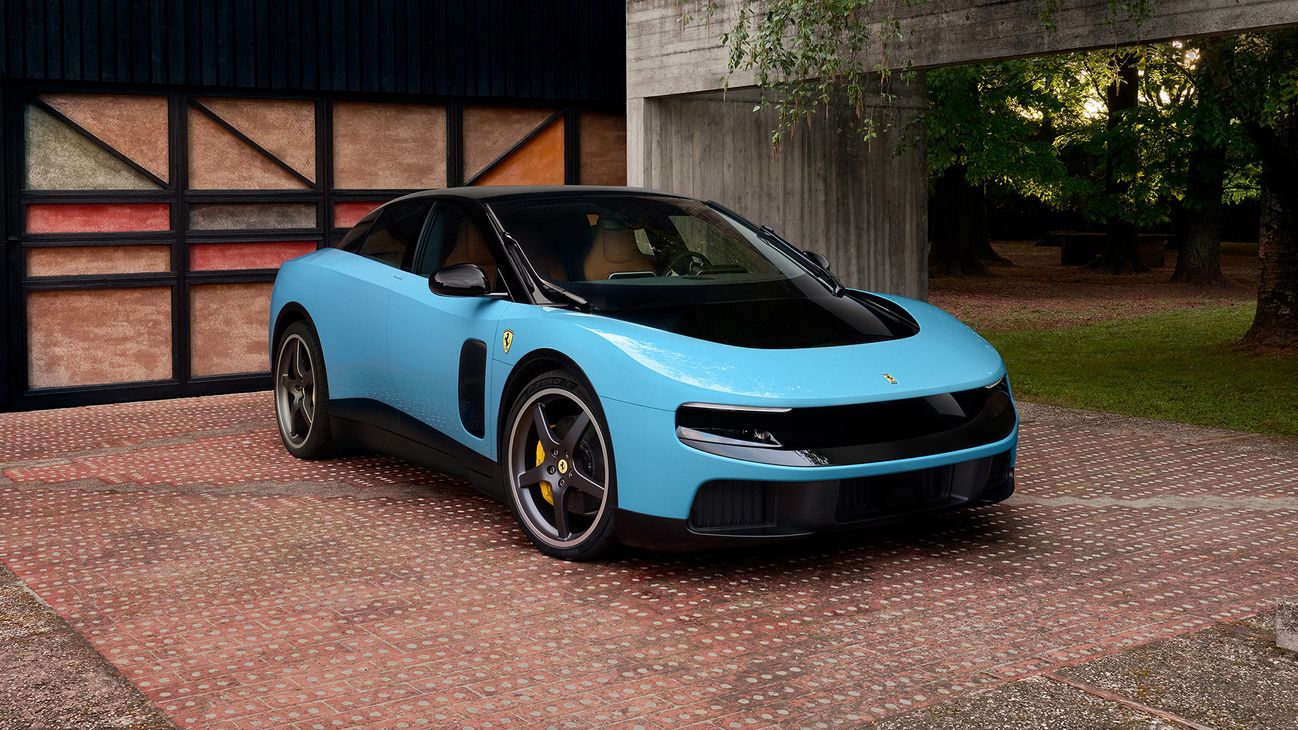
Okay, so speaking of not driving cars in America, the Ferrari 849 Spyder Testarosa Spyder.
The editors at Road and Track, my review is up on the site now, you happen to read it.
It's complimentary to the driving dynamics, not so much the styling.
So you drove the SF90 actually five years ago as well, and neither of us loved it.
It felt heavy, it felt clunky, and for a car that made it almost a thousand horsepower is 980 or something.
It 960, 9, more than 9 in less than a thousand, a lot.
It wasn't particularly exciting by the standard of having that much power.
It was exhilarating, but it was not as exciting or kind of what we wanted from a supercar, and then it was made obsolete by the 296.
Correct, which looked, you know, if you really didn't have a keen eye, you'd think those were the same cars.
For people that don't really know cars, they're effectively the same car.
And an acceleration test, even without the all-wheel drive, and even without even down two cylinders, the 296 is really just as fast as the SF90.
I mean, you're talking about a tenth or two here and there, and for hundreds of thousands of dollars in the real world, that's not a difference.
And from the seat of your pants or your passenger's pants, a few tenths is probably not noticeable.
Both will feel extremely fast.
And the steering was better in the 296, so it didn't have the weight on the front and all that kind of stuff.
So, my theory is that this upset, the depreciation of the SF90 and the fact that people didn't really want it and their own car made it obsolete,
drove them into sort of a panic where they said, you have to make it look different.
I don't care. You need mid-cycle refresh. This isn't going to be a little refresh.
It has to look way different from the 296.
I don't care what it looks like as long as it doesn't look like that somewhere there was a meeting where some angry man goes, I don't care.
I don't care what it looks like. As long as it doesn't look like it doesn't do 296.
Right. It has to be distinct.
Change. It's different. And it must have 1,000 horsepower.
That's it. It's got to have over 1,000 to justify the hyper car-ness now.
And I don't give a shit what it looks like as long as it doesn't look anything like the one that's cheaper.
Go. And this is what you end up with.
But also do it on a budget.
Because they clearly have, and one engineer on the sly was like, we only had the budgets.
Like, seriously, the guy sent me that.
So if you look at a photo of this car, the greenhouse of the car, the glass, the roof structure, the top structure, the engine cover are pretty much the same as the SF90, particularly the greenhouse and the interior.
They are the same. And they said this to me that it's the same.
But then all the other body panels are changed.
Right. And so it looks like, remember like 10 years ago when the Ferrari like special projects division was like doing that shit for Eric Clapton and these people and they would turn a 430 into a 512 boxer or whatever the fuck.
But they had the 430s greenhouse still.
And so, you know, you kind of saw what they were going for, but it looked sort of wonky.
That's this. This is that exact thing.
They've got the lower body elements from the old 512M race car, which is like a Group C car.
It was like somewhere between a Porsche 917 and 962.
Ferrari's take on that shape of a car, wedgie, you know, a curvy top, but sort of slab sided.
Yeah.
And these sort of these double flip tails.
That's where they get the double flip tail from on this car and a real square.
But it looks like they've put a square body on top of a round car.
Guys, one more quick break for Avance.
We've been talking about them before.
They help enthusiasts save money and enjoy their car passion even more because members get sweet discounts on the stuff you're going to buy anyway.
Plus a beautiful quarterly print magazine and access to members events all over the country.
I have known Adam and Avance for many years.
I've been featured in their magazine.
I've attended their parties and I've used their discounts.
And we love Avance because they're helping you save money on the things you're going to buy anyway.
Right?
Like tires.
If you have cars, you will need tires.
Avance members get 10% off at discount tire plus an additional 10% off Michelin and BF Goodrich.
So if you spent 1500 bucks on a set of Michelin pilot sports, you're saving 300 just for being an Avance member.
Right?
Maybe you want fresh summer tires.
Maybe you need a set of winter tires as we get into the fall season.
Members get 10% off at discount tire and you can get those BFG or Michelin summers or winters and save your whole membership and more just with that one purchase.
Plus members get 10% off at FCP Euro, which have both OEM and aftermarket parts for European cars.
5% off Hagerty Insurance, which could add up to a very big number depending on how many cars you got and more.
Avance memberships are only $99 a year and they send you a $70 gift card to Griot's garage when you sign up.
The membership literally pays for itself.
So go to avance.com slash TST and then use code TST for a further 10% off your membership.
Again, one more time, avance.com slash TST and code TST for 10% off.
And thank you to Avance for sponsoring today's episode.
Very much so.
If you drove around in a matte black 849, it would look like you were driving a camo-ed up prototype car.
This is something that I didn't like. I think when they released the first press photos of the white one, and I know that I'm not a car designer and so whatever, caveat.
But it looked like they had the round body language of the 296 and the SF90, which I really like.
But then when the intakes on the side are very angular.
The square.
The polygonal.
Polygonal?
Sure.
Yeah, they're squared off polygons and for me it's like this weird collision of two different ideas and it makes those new parts look even more tacked on because it looks like such a difference.
In the case of the square bits on the nose, they almost are tacked on because the shape of the SF90 face is still there just with these protruding corner bits coming out of it.
It's really, really strange.
And even in the best colors, even in the most complementary angles, even in person, in three dimensions, this is a strange looking car.
The canard things on the front, it's kind of like the Roma, which I think is a beautiful car except for having that little protruding singular duct lip.
And this has it now in four places on these corners.
Right.
And six if you count the back.
Okay, so if you look at it, and look, there's going to be some people that like how it looks.
Okay, fine.
Don't let me tell you how to think, but I think it looks weird.
Driving it, different story.
It's a big wide, you know, super car.
It's heavy.
It's going to be like 3,800.
It might, it could even possibly be 4,000 pounds.
Like the weight, they were very coy about it.
You know, obviously, and they're talking about dry weight and like, we don't really know what it weighs.
It could be 4,000 pounds.
It's so goddamn fast, obviously.
And you, you know, the V8 sounds good, but not as good as it used to sound.
It's got the particulate filters in it.
And so now I had a very funny conversation with the Ferrari engineers, which I'm sure probably shouldn't have been up.
It's not, I don't know, maybe they shouldn't have had it, but we were talking, they were like, yeah, we fully expect everyone to put an exhaust on it.
And I was like, well, what brands do you like?
And they were like, oh, this one sounds like, I mean, I have never had as in depth a conversation with a super car engineer about which exhaust you should plan to put on your car at, I mean.
They're like, we test this one or we like this one.
Yeah, they basically, they ultimately said they have a partnership with the Krapavitch.
And so, you know, okay.
But so, you know, it sounds nice, but it's not that loud.
It rides beautifully, although for all the money they're charging for this thing, on some bumps, you can still tell it's not a carbon tub.
There's a little bit of a jiggle.
Wow.
And it's like $700,000.
And it's 2026.
2026.
Yeah.
And like, they have not got, you just can't, it's just still a metal structure.
Amazing.
Here's the thing.
This car's, this is an amazing car.
You know, the electric, the hybrid system is much better integrated than before.
If you put it into sport, or they call it performance mode, which is where the motor, the gas engine just stays on, which is where you want to drive.
You don't want to drive this thing enough.
They've got a real start button now, but when you press it, it turns the car into us on with a silent EV mode.
You then have to press a haptic button to actually fire the engine.
That's pretty funny.
Like, and that's missing the theater.
That is the most backhanded get, like, press that haptic button to start the hybrid.
What are you doing?
Yeah.
What are you doing, guys?
Like, so, like, when I turned in my article, they toned it way fucking down.
And Dan was like, there's a sour tone to it that I don't think is necessary.
And I was like, but, but all of this stuff, all on an individual level, all of these choices were so poor.
Like, and, and, like, I just don't, there, there should be a sour tone to this.
This car is so expensive.
This car is crazy money.
And it's missed some of these things that, like, you know, a lot of us and the public, I think, has complained about.
Yeah.
You know, and some of it, like, particulate filter, it's a European rule, fine.
They have to do that.
But, like, do they have to do this startup or why can't, you know, can't you just power the car on, hit the haptic for the mode you want, and then push the, because that's the feeder button.
The feeder button.
It's the exciting button.
Yeah.
That is, like, let's turn on the, like, F-16's top gear, or top gun, all that stuff.
It's like, flick, flick, flick.
Do do doop, on, on, on.
And then you get, and, like, that's the part that's, you know, it's the crescendo.
This is the Manx.
It's the plunger in the Manx that it makes, you know.
So does it drive great?
Yeah, it drives great.
Does it go faster than you could possibly go?
Yes, it does.
It has beautiful steering.
It has the blend of the brakes between the hybrid and the, and the caliper is really nice.
You can't really tell, even though it's brake by wire.
That's good.
Does it do anything positively different than other hypercars or hybrids or not that you've
driven?
Does it really, like, does it really stand out above a Ravuelto or Artura?
750 or Ravuelto or Artura.
Or it, so, I mean, that's, that's a tough question.
And, like, no, not really.
No.
It's on that level.
I mean, I think of Valhalla is much more extreme.
A Artura is more chill.
A, you know, a ZR1X for a third of the price.
Pretty close.
Although the Ferrari with the two motors at the front end is how you get that magical
steering, whereas I would not personally want an XZR.
I'd want a regular ZR1 after having just done 800 miles in a Grand Sport.
And I did a couple months ago a lot of miles in the E-Ray.
You want a rear-wheel drive Corvette.
The steering is not helped with that front axle system.
That's for, it's, that front axle system is for drag racing.
Yeah.
And snow.
It's not for handling.
So, it marginal returns there for worse steering feel.
I think it's probably, you know, to take Ferrari aside for a minute, or actually all the companies,
I think it's probably getting harder and harder to make your cars distinctive,
because, especially, like, let's say $700,000, crazy money, obviously.
But you can't step on your million-dollar product's toes too much.
You know, so if Aston made a mid-engine car tomorrow, they would go,
well, it can't be more exciting, more faster than Valhalla has to be $700,000 worth of car.
And, like, in the, you know, particulate rules and these different, like, emissions rules,
and so it's just like the box kind of tightens, kind of like F1,
where there's just fewer and fewer ways to solve this problem.
And so what we have to look forward to or look for to separate the cars is, like,
styling, you know, the cockpit design buttons, like, all the things you interact with.
So I think it's probably, you know, to push back on Punn, like,
we probably have to focus on those things more because it's kind of like the straws we have left.
Yeah, I mean, you know, if the end, if it was gorgeous,
and the engine sounded incredible,
I wouldn't dare say, you know, there's a Corvette.
You know, there's a Corvette.
That's that, because I just drove the Grand Sport and I'm not sure if I should review it,
but let me just say that I drove the Grand Sport three days after,
four days after driving the Ferrari,
mountain roads and I went, oh boy,
because this, the Corvette is so user-friendly,
structurally the same, the same.
It's the same.
You know, it's not like we're talking about a carbon tub car versus a Corvette.
The Ferrari and the Corvette are built the same.
Right.
And you know, the Corvette had 535 horsepower,
but I was going the same speed down the road because in 2026,
it's the level of your morality, your talent and who else is on the road
that's going to determine that, not whether you have a thousand horsepower or 500.
You cannot go faster down the road most of the time in one of these cars than the other.
But hasn't that been the case for along like, you know, C706 or Grand Sport,
you know, or if we go back a little further, like versus the 612 or something,
you know, outright speed, probably basically the same Corvette interior layout
may have been more usable and probably more reliable in some ways,
but I think, you know, was the art and the design of the interior of the Ferrari,
it's more about what it's saying, like, was what you were looking at,
some styling we preferred, you know, and now it's not with all the haptics done.
With all the haptics, with the styling, the Ferrari materials were,
the materials in the interior were very good, they were beautiful.
The carbon was nice, the leather was nice.
Was it several levels above, I mean, I was in a very loaded up Corvette,
it had the nicest interior you could get.
These were pretty close.
Wow.
The leather was nice, the stitching was straight,
the metal was, the aluminum was real metal, there's touch screens,
like, you know, I can no longer say, the Ferrari's cluster is fully digital,
and oh, by the way, you can't have fucking GPS up and see attack.
This is, so this is crazy.
And I said this to them, I said this to them to their face, I go,
guys, why do I not have a tachometer when I have GPS?
There's only one screen, it's right in front of you.
And you have to, and he goes, well, the car play, it must be like this.
And I go, okay, well, your screen is shaped like this,
and you have this room on the side.
I go, how about on the left, where it shows the speed,
why not just one of those small, you know, like the 1980s hockey stick tack?
Yeah, or what Mustang uses now.
Yeah, I mean, I said, come on, I said, why I'm on this beautiful island,
I don't know where I'm going, so I want to have my GPS up,
but I want to shift the car manually.
I go, it's a screen, you have infinite choices,
in a choice of anything, you've done nothing.
And I said, this is the same from 296, there was nothing.
And I go, why don't you do the talking?
And he goes, oh, over there.
It's like, dude, nobody has said to put a tack in the fucking blank part of the screen.
Like, this is crazy.
I need to hire someone who's...
It's like some of these decisions, I go, you're Ferrari?
Nobody thought of this?
No one thought with these paddle shifters that I'd like to know what my RPMs are?
That's insanity.
Imagine the meeting.
They must be taking 99 cents of every dollar and just giving it to Formula One
and hoping that Lewis and Charles can do something,
because stuff like that, all these...
Corvette's getting so close, spending...
Maybe not spending less money, but they charge a lot less money for the car.
So either the profit on the Ferraris is 80% of the car's cost,
or the resources are going elsewhere, because that seems like such a simple thing.
You can get a Corvette with a naturally aspirated flat-plane crank V8 right now.
Ferrari owned that.
They threw it away, and GM's like, okay, we'll do that.
You can get a Corvette that is essentially like a 480...
Like a 480 Pista, like a turbocharged non-hybrid monster for $200,000.
If the Ferrari were a stunner, and I went, fuck Corvette, GM...
Why is the C7 Corvette isn't as pretty as a Ferrari F12?
Because curves are really expensive, you know what I mean?
But I can't say definitively that an 849 is prettier than a Corvette ZR1.
In fact, I think it's less pretty.
It's my opinion.
But if you put them next to each other, and you went, which one is the Italian-styled Ferrari,
in which one is the cheap version of it?
That would be a tough experiment to conduct, but it would be a good experiment.
I do wonder what the general public thinks.
And actually, I would also say the 12-year-old public, because who are we just talking to?
Well, I just judged the car show, Sergio's car show, for charity.
And it was for... Jesus, I'm going to get the...
It was an autism charity, and I'm very sorry, I can't remember which one.
I'd love to plug them, but it was for...
Refraff Autism, whatever it is.
It was for an autism charity.
So I was a judge, judging like the super car class.
Johnny judged the 90s car class, and Tommy Kendall judged another class.
Well, we were assigned, you know, helpers.
I actually don't know if they were autistic helpers, or just the kids of people who were there.
They seemed pretty normal to me.
Anyway, what did the kids like?
The ZR1.
The kids didn't really care that much about the Italian stuff.
They were into the ZR1 at big wings and shit.
Well, you're Italian.
So, right, so that...
New stuff.
Oh, I know, we were talking to Johnny Smith, because we're doing a podcast,
which we probably plugged at the beginning of this show with Richard Porter and Johnny Smith,
August 18th at the Irvine Improv.
But his kids are like 12, and he said,
oh, we went to this car show, and they're mostly interested in the new hypercars,
which he was like, you know, like we are kind of bored of.
So I wonder if young people just see the badge and go,
Ferrari, and then whatever's around it, like, does it program their brain to like that,
or do they look at it, you know, and go,
you know, I don't know, I'm curious what young people think,
how it compares to styling like McLaren,
or WarCorp, or Lamborghini, or whatever.
When I was young, I'm not sure I ever thought about any supercar as, well, that's ugly.
Right, exactly, you're just excited about it.
The fact that it was a supercar was enough for me.
I don't think I had the judgment to go, you know, that's not very good looking.
It comes later, and when I was driving the Ferrari around Tenerife,
little kids were excited by it.
I mean, other, you know, people, they don't see a lot of exotic cars there,
so the presence of any Ferrari would excite them.
Some of them cars are still there, because I get fucking, people don't understand.
That's not me.
I was like the first person to post a picture of this thing on Tenerife,
and like there were six identical silver cars.
They've been there for like a month, but people are like,
I saw you driving yesterday, like no dude.
I left weeks ago.
I'm glad I took a photo of all six of them next to each other.
I just respond with that now.
I just go dude, it's not me.
So anyway, it's a car that drives beautifully,
but not head and shoulders above, you know, some of the other supercars I've driven.
It's got great steering.
It's got great brakes.
It's incredibly capable, beautiful ride, not much trunk,
and I don't love how it looks.
And it's real expensive.
And the name is strange.
There's nothing about it that's Testerosa.
There's no Easter eggs to link it to any other Testerosa in history.
There's no mechanical connections.
They should have hired the person at Jeep who does all the Easter eggs.
It just seems, it seemed like it was like the name, you know, you know,
they just had it laying around and the number scheme is wrong too.
Like it's normally, you know, a displacement followed by cylinder count.
The 328 was a 3.2 liter eight.
The 512 was a five liter 12, right?
Now this is a four liter V8 or it gets 3.99.
So they could have done 398 or 408,
both of which fit the scheme and have not been used.
Instead they did 849, which is they moved the cylinder count to the front.
And the 49 refers to 499 ccs, which is the displacement of each cylinder.
But who doesn't know that?
Which is, but it's kind of dumb because like a two liter four cylinder,
a four liter V8, like a lot, all the most common engines now are
that displacement per cylinder.
It's not like they've come up with some unique displacement per cylinder
and are bragging about their unique cylinder size.
It's the same size cylinder almost everybody else uses in their car.
Do you think their target was we need a big number
and then we will then figure out how to get there?
We need a big number.
We need a familiar name.
It's got a thousand horsepower and I don't give a shit how it looks
as long as it doesn't look like a 296.
And it can't have SF in the name.
If you move your water bottle, I feel like it's in front of that camera.
Oh, right.
And it can't have SF in the name because they have that already.
So it has to be, you know, start with an eight.
Yeah.
So it's like, you know, what's around.
It has to be bigger than 812.
Yeah.
And what can we make up?
Right.
It's just, it's, but they have 296 already.
And 408 or 398 is bigger than 296.
Yeah.
Like you, there's so, it's confusing.
All this is so confusing.
It makes me like really frustrated because like it wipes away the mystique of Ferrari.
Like, I feel like, I feel like sometime, if they keep progressing on that,
at some time in their near future, we will have a Ferrari 1000.
Mark my words.
Yeah.
Call on it.
2026.
Yeah.
Even though four digits is weird, you need three digits is much better than four.
Why?
Because aesthetically.
Yeah.
Aesthetically.
And when you say it, it out loud, think about the number of syllables to say.
Oh.
680.
500.
412.
It's got a, it's got a cadence versus 1022.
You know, it's like falling down the stairs.
Yeah.
What is the escalated?
There's the escalated.
There was a 600.
Hennessy 1000.
And then they have the 600.
Yeah.
Well, you know, 1000 does sound good.
1K.
Following the word Hennessy.
I get, for some reason that's got a flow.
Well, because that's telling you the horsepower.
Right.
But the Ferrari 1K, that actually wouldn't be bad.
That's what they probably could have gotten away with that for like luce.
Hire me.
Yeah.
I'll be there for five minutes and I'll sell you this idea.
You'll sell them the attack idea.
Can't review them again.
All right.
So if you, if you want to read the somewhat sanitized, but well-crafted version of what
I just said there, it's up on road and track.
It's lemonade.
It's still a bit sour and tart, but they added some sugar.
They toned down my abject horror at some of the decisions that were made.
I had conversations with people who defended some of these decisions over there.
And I just went, why died?
Said to their face.
Oh my God.
You had the conversation and this is where you ended up.
Like, wow.
Sorry.
Like I did like, right.
People seem to like the GT3 convertible.
Everyone who had everyone who went on the, the launch and I mean, I'm not
surprised that people like the GT3 convertible.
I figured they would, but like people really seem into it.
It just seems like math.
I mean, if you like the GT3 and if you're a convertible person, they go, well, here's
your, here's your Turducken.
And they go, okay.
And I think, maybe Chris said this, like, you know, people that are pushing back on
it, like a GT3 should be a coupe.
It's like, all right, then just don't get it.
Like they have that.
They offer that, you know.
Yeah.
I think it's, I think it comes down to what does the word GT3, you know, meet?
Sure.
I mean, I think it, I think it means in historically it meant optimized for the track, I think.
And now, well, this is a race car.
I mean, it's a racing class.
Sure.
But I mean, historically within, within Porsche's nomenclature since 2006 or whatever form.
And now it just means like the fizzy engaging one.
Yeah.
Yeah.
It's their, well, I was going to say it's not their RS.
They have that too.
Right.
It's, I was thinking RS like Audi, you know, that's, that's what it is for them.
Yeah.
It just tells, it tells you more successfully than Ferrari's naming scheme.
It tells you exactly what the car will be about and probably what, what is underneath the hood.
Sure.
It means naturally aspirated, you know, now, more than anything, you know, that's, that's,
right now, right now, these are the last of the naturally aspirated engines.
Yeah.
I mean, there will be a GT2 probably coming soon that's turbo, but for now, that's really
what it means.
But like, I'm stoked to drive it.
I, I, I didn't get, we just get to drop a rain, drop a rain on it.
Maybe.
No, look at that.
Uh-oh.
It's not supposed to rain right now.
Well, that would certainly be interesting, wouldn't it?
We just need a roof.
We just need a roof.
Or a tarp.
We have a Pergola.
I don't know.
Is that what it's called?
This is a Pergola.
All right.
Yeah.
Well, if we have to, to move, we'll, we'll stop down and move.
But I'd rather not.
I kind of like it out here.
I figure.
Yeah.
Hopefully.
Okay.
Um, but, oh, okay.
Uh, moving on.
The Taycan has gone back to the shop.
I heard your side of that phone call and I was very curious what's going on.
Right.
I truly never got the details.
I just heard you be like, it's needs to come in again.
And I was like, what?
So it was at my house and the alarm just started going off.
And Hannah, you know, Hannah like unlocked it and then, you know, it stopped.
She goes back inside and like two minutes later, she like, it's going off again.
Did she unlock it and then relock it or she just unlocked it?
Well, but, but it automatically relocks after like, you know, 60 seconds of idle time or
something.
Right.
And then the alarm goes off again.
And she gets in it and starts it and turns off the alarm stops and she drives it around.
And I go, okay.
Uh, you know, take it to the shop.
Like do, do, do, do the soft reset thing where you do the double lock and you walk away.
That doesn't solve it.
Okay.
I called our buddy at Porsche and he says, you know, disable interior monitoring.
So it uses the driver monitoring camera to as a security camera.
So turn that off.
Well, that worked for like a little while, but like then it went off again.
I said, okay, bring it down to West side, put it in the fucking basement, turn off interior
monitoring, like we've, leave all the windows down and just like, you know, just fucking
leave it there.
And if the alarm goes off all night, the alarm goes off all night, you know.
So we take, we take it to Porsche, tell them what's going on.
And for two days they go, we can't replicate the issue.
And I'm like, motherfucker.
Hell of a time.
And I go, okay.
So before we brought it in, we had disabled interior monitoring, which comes back on.
You have to elect to turn it off every time you turn the car off.
You love a car that does that, especially like eight ass.
Normally I just leave it, I don't, I don't turn it off.
When you turn the, when you shut the car down, a window pops up on the screen that says, would
you like to disable interior monitoring?
And I just don't touch it.
Just go, you know, but we've been doing it.
And so I said, make sure interior monitoring is on and then leave it.
And they called me like an hour.
I'm like, it did it.
Oh, wow.
And I'm like, okay, great.
And they said, apparently there was a TSP for this several years ago for some series of
in numbers of which your car is one where the alarm module could go bad and we just replace
it.
And I go, they go, it'll be done tomorrow.
We've got the part on order.
So, so the alarm module itself did actually fail and they're replacing it.
So there was actually something wrong.
Yeah.
I mean, that's good.
I'm glad they were able to replicate it.
I mean, that's good, like detective work.
Similarly, my car's flashers go off when the car's been locked for like 12 minutes.
So right now I just parked in my garage with the car unlocked.
Wait, wait.
It's like a silent alarm.
It seems like the alarm should be beeping, which it has an alarm, but it's just like
the hazards are going.
And for a while, some of the forms, of course, were like, oh, it's your hood pop module is
going bad.
You can replace it or you can just unplug it.
So I unplugged it and it did do it for like six months and now it's doing it again.
The internet said that we should check the contacts on my frunk that they can get gunked
up and it thinks the alarm goes off because it thinks the frunk's not closed and shit
like that.
We tried a bunch of stuff, but it turns out it actually wasn't a broken thing.
But you know what's not broken is the Manx.
The Manx came back last week and dude, they have really done some fine work.
Oh, you drove it, right?
I drove it a bunch.
Yeah, I drove it a bunch.
So it's got the front mount now, which is a really, really clean install.
It is.
It's very cool and it's got the insulated cooling lines that go underneath the undercuts
of the body.
It's like a 512BB.
Yeah.
Fuel.
Yeah, yeah.
So you can't see them.
And so there's a lot more coolant.
There's like almost twice as much coolant in the system now.
There's also the front and the rear radiators are CSF radiators now and they have this high
performance fuel pump, excuse me, water pump.
And so it, dude, I drove it all over high speed.
It did not go over like 195.
Nice.
It was great.
And they've re-tuned the throttle, like it probably feels like it's got 20 more horsepower.
The throttle response is better.
The idle is smoother.
Normally on a cold start, funny for a radial engine, on a cold start it fires on like half
a crank.
Like you just engage the starter and it fires.
On a hot start, it's like, it's like four or five cranks.
Now it's all the same.
Now it's all one crank.
So whatever was causing the hot start to take longer, it's now not doing that anymore.
They've set up the shocks a little bit.
They've turned some of the knobs on the shocks.
It feels really nice.
It's fucking proper.
It's running great.
There's no smoke on startup.
Did it get quicker or was that two services ago?
Didn't they do something that you said came back and it's running stronger?
They did, yes.
They did something.
I don't know what.
On the second tune, and now it feels like it's, although it could be because what they
were saying with the decompression valves, they were getting gunked up and when they
get gunked up, they bleed compression and so I may have been losing little bits of horsepower
over time.
These new valves are not supposed to get as gunked up.
They made of a different material and blah, blah, blah.
But it feels like it's got 20 more horsepower for sure.
But it sounds different too.
The engine actually sounds a little different and is there a dogfight happening in the neighbor's
yard?
Didn't that sound like that?
Yeah, it's like, as an EMT at a rave said in a video, is that good screaming or bad
screaming?
I'm sure there's like a group dog walker or something going around in the neighborhood,
but it's, dude, it's such a, it's really, I mean, one could say that it wasn't
quite done when I bought it, but I knew what I was getting wasn't a totally finished product
and I'm happy they have kept up with their, their word of getting, you know, getting me
the improvements and.
You're part of the R&D program.
It's a good thing you live near them.
They also, they put 300 miles on it while they had it.
So I gave it to them with a thousand miles and it came back with 1300 and I was like,
whoa, and they're like, we wanted to make sure it worked.
So they're like, yeah.
I mean, if your complaint was it gets hot on at high freeway speeds over long periods
of time, like that's, I got to test it.
I'm not sure there's a car on the planet where the odometer matters less than this
fucking thing.
Who cares?
Yeah.
Whatever, like if, you know.
It's depreciating with every mile, probably not.
I have absolutely no care about what the odometer says.
So I'm just happy really, where do you drive it?
It's fucking cool.
They're fun.
Really, really, it's nicely set up now.
They've done a great job.
Cool.
So I'm excited to really have a proper go in it.
Should we go to the people?
Is it that time?
Yes.
Okay, let's go to the people.
51 minutes.
If you want to ask questions for our podcast, even when we're in Greenwich, Connecticut,
patreon.com slash the Smoking Tire podcast, it's where you ask questions and watch the
show live.
Even if it's over my laptop, it's where you get the show early.
It's where you get extra show.
It's where you get the show without ads.
And it's where you get access to all kinds of cool collabs and things that we are doing.
Got a new tactile turn pen collab coming at you soon.
I just got the prototype.
Sweet.
I want to see you spoke about this.
It's very cool.
Yeah, I'm into this one.
And the prototype's waiting at the studio.
And what else do we have coming up?
Well, we have the Grotto.
The Grotto Blazers, dude.
The Blazers.
I got, this one was a slow burn on day one.
The orders have come in and I am really, my blazer went to the dry cleaners before I left
because I wore it like four days in a row.
That shit is mad comfortable.
Mine is so soft.
Yours is slightly stretchier than mine because it's wool, not like a linen blend.
But yeah, I've got a lot of compliments from people I wasn't expecting to compliment fashion.
Like, which was, you know, friends of mine are like, that looks really awesome.
Like, but you dress, you know, worse than me most of the time.
That's not a good endorsement, but it was surprising.
Really a bit of my blazer.
Yeah, I really like it.
My wife really likes it and that makes me happy.
Right?
What do you got, buddy?
Duffel Shelf for Retirement Club says, used Audi e-tron GTs are going for 50% of their
original sticker at just two to three years old.
Do you think that's their floor for the time being or will they hit zero in two to four
years?
I mean, we never know what the floor is of any EV and really, I think, I think the descent,
the rate of descent probably depends more on reliability than this time.
Yeah.
I mean, as if it has a, if it works, the floor isn't zero, right?
Running car.
If it works, the floor on something like this is probably like 20 grand.
You know, it's still a, whatever, 800 horsepower, 700 horsepower, high performance German car.
So although the eventual floor could be zero, if the entire car like bricks, if it works,
the floor is not zero.
Yeah.
If oceans don't have a floor, if the floor of an ocean is not zero, then the floor of
these is higher.
So like the way I would think about it is if it depreciated that much,
the first year, it can't depreciate that much for you, if it lost half its value in
year one, could still lose half its current value, if it lost half its value again, you've
done much better than the first guy.
That is true.
Like if you don't think about it in terms of percentages and think about it in terms
of raw dollars, it depreciated 80 grand a year for him and maybe only 10,000 a year
for you.
So that's how I would think about that.
That's pretty funny.
That's like there's like a lesson in grade school.
Like if I want to walk to the wall and with each step I take, the step is half the distance
of the previous one.
Right.
Will I ever get there?
No.
No, you will never get there.
So it's just like it's slowing down.
It went down 80 grand, then 40, then 20, then yeah.
There's a ton of value in those cars and I considered buying one instead of the Taycan,
but the SEO for our content creator, the SEO was terrible on those nobody.
You know what it'll be?
If the reliability of the electric outies or other companies that are known for having
complicated cars, the reliability of their EVs is much better than the ICE versions.
Like the EVs, I wonder if they will depreciate at a slower rate overall over like 15 years
than the gas ones.
Like a 2012, you know, Mercedes, CLC Hunter or something like that, amazing, but everyone
just knows they're really complicated and they fall apart.
That is interesting.
So I wonder if something that's got electric powertrain.
If the battery helps, it holds up.
A lone list list says, what's the better quirky car?
A Mitsubishi Pajero or a Suzuki Jimny?
I think the Jimny because it's friendlier looking.
I think if I'm going quirky to me, then it's like weird, it's tiny, and the Pajero is trying
to look a little bit like an off-road rally thing.
Well, because it is.
Right.
It's a moligation.
Yeah, it looks more aggressive, so I wouldn't call it as quirky.
Right.
Funny thing is like, I don't think either of them are that quote, I think the Pajero
is probably quirkier because it's like got box flares and stuff on it and it could just
as easily not have those things in it.
They made a regular Pajero that looked a lot like a regular Jimny.
I think that I think because there is a regular Pajero that looks kind of like a regular Jimny,
the Evo is quirkier.
Okay.
Zach's Nitrous Boo Balls, am I the only one who misses Panther platform cars on our roads?
Take me back to the era when every cock car was a Crown Vic.
Do you miss?
I don't really miss seeing town cars.
I don't know, I miss the Panther platform.
I still see plenty of them around.
I saw a fucking LAPD black and white, not two weeks ago, that was a fucking Crown Vic
still, active, like I see them, they ain't all that, I mean come on, they're tough.
I think their retirement career right now is race cars and stunt cars and for dirtbags
like myself or in high school as reliable transportation is a great life.
Yeah.
Plain white Carrarities, is getting a PPI as a seller worth it to show potential buyers
that it's a good car or would the potential buyers think that that is suspicious and assume
the seller is in with the guy who did the PPI?
Somewhere in between, somewhere in between.
It's a nice to have but I as a buyer wouldn't put much credence into it because of what
you just said.
I mean it's not that you hired the guy to write a fake PPI, it's that the point is
that it's independent and so if the guy selling the car is tight with the guy doing the PPI
then it is just an appearance of being improper.
But the mechanic works for the person who pays them so if the seller is paying them
he's going to tell the seller a little more what they want to hear versus if he works
for a buyer he's going to tell a buyer what they need to hear sometimes.
I wonder if you, like if I was selling a car and I was like an independent dealership that
also did the PPI and then you bought the car and I had misrepresented it somehow on the
PPI.
Would there be legal recourse?
No.
Okay.
Yeah.
You can lie about anything to anybody on a car and there's no legal recourse.
As a dealer, if you're a dealer you could be sued for misrepresentation.
As an individual, fuck no.
Right.
You could get away with it.
So as a dealership, yeah.
Yeah, as a dealership you could be sued for misrepresentation because you could.
But like if you're a seller and you want to really have a good faith showing as a seller
what you should do is take the car to the person who normally services it and say go
through it and give it anything it needs, whatever that might be.
And then you go, when you list it you go, you don't say, here's a PPI, you say I took
it in for service, I said do whatever it needs, here's what they did.
We are welcome to have any PPI's.
And then make the car available for the prospective buyer to do a PPI.
Make it easy for the buyer to get a PPI is better than getting a PPI as a seller.
Got it.
Sean Burnham, I'm considering selling my car for a motorcycle but I live in Canada near
Toronto and I'm worried about shortening my already short driving season which currently
is seven months out of the year.
We've ridden motorcycles before, what do we think?
Man, the idea of motorcycles where it's in a place that's cold and raining is not appealing
to me at all.
No, our friend Mike Musto used to commute to work from Jersey to Manhattan in the winter
on a motorcycle with like heated suit, like you plug the suit in when you get on the bike.
And I'm very impressed he did that and I was like, man, alright, you know, Mike, that's
pretty tough but I don't want to do it, it doesn't sound fun, it sounds like you're
just doing it because it's a tool, it's easier to park or it's quicker to get into town but
like are you going to enjoy that riding?
Or you just, what do you do for those seven months out of the year, you know, just take
public transportation, I don't know, I would keep the car.
I would keep the car.
You can have fun driving in the wintertime.
You're in Canada.
Yeah, go snow driving, go do snow racing.
You need a heater.
Yeah.
Carb's legal bakery.
Have we lost the automotive industry's North Star?
Mercedes-Benz...
The V8 engine?
Yes, we have.
Yeah.
Mercedes-Benz was once seen as the brand that was at the forefront of it all.
They were years ahead of everything and had all the new things first.
I feel this is not the case anymore and not sure if automakers are still viewed that way,
it says parentheses, some might say it's Tesla but I think that, I think they used to say
that.
Yeah, I mean...
Like do we have, who's our tech leader the way Mercedes used to be?
I think Mercedes used to be.
It's Chinese shit, dude.
It's like whatever the fucking Camry is in China, has so much more tech than an S-Class.
Like it's that.
Yeah.
It's nothing that anyone in America is driving.
You know?
Yeah.
They have, you know, effectively, you know, some level three autonomy over there for privately
owned cars.
That's beyond what we've got.
They have, you know, hydraulic suspension at lower prices, they've got the crazy electric
speed.
I mean, you know, they're out there like competing for Nurburgring times and whatnot.
Yeah.
Yeah, that's probably the right answer.
Or I mean, maybe it would be like...
The thing is a lot of the tech advances don't necessarily translate into like features.
Like it used to be like Mercedes would like add a feature to the car that other people
don't have.
Now it's not really like that.
There were sort of at the limit of features and the stuff that gets added is like background-y
type things.
Like a, you know, like a hybrid powertrain or something is not something that like I am
using...
You don't interact with it.
You know, so Mercedes still does have a lot of technology, but the leader?
I think they used to...
Like when they had night vision, you know, early on, or I mean they had ABS or them, but
then night vision or sophisticated traction control or whatever, it was probably because
they were thinking of these ideas, finding partners that could build them.
And now I think we're in an era where the people that have built those things in China
just went, what if we just make the car ourselves?
Or they partner with BYD who works down the street.
So you're getting that, you know, quote, early tech, you know, from these other sources.
Yeah, yeah.
John Athen Davis, I recently picked up an O2 CLK430 Cabrio.
It's fun for bombing around Chesco, I don't know where that is, Chesco, Chesapeake.
Fun for heading to the shore, but the steering column not tilting is very annoying.
Are there any solutions out there for that?
I don't believe so.
That's, I wouldn't open that bag of worms.
Yeah, I've never seen, I wouldn't mess with a steering shaft of a fucking Mercedes, dude.
Just deal with it, adjust your seat, I mean it's a Cabrio, like, alright, just put your
hands on the bottom and steer like it's a Rolls Royce.
No, you're better off trying to change the seat than changing the steering wheel.
But this is, you know, that's a problem with a lot of cars, old cars, that's a
one way kind of adjustment.
But talk about a solution for a market of one, though, it's like I want a tilting column
for a 24 year old car.
If we're going to do that, it's going to be for the S2000.
Yes.
No ifs ands or fucking buts.
The CLK market is not big enough, but I know a few tall people that would like to drive
an S2000.
Very true.
Edward Shifterhands wants to add another, yeah, they're looking to add another vehicle,
not a daily driver, something to alternate with my 23 Camaro SS-1LE manual.
Any good garage suggests, oh this is too broad, oh $30,000 budget.
But no other constraints.
Wait, the Camaro SS is the daily.
Yeah.
And so you want, here you want something.
They want something interesting for $30,000 to complement their Camaro.
But I think, I don't think we have enough information.
That's not a lot of information.
I mean, if a Camaro is big and heavy and brutish and it drives like wearing a hoodie,
the opposite of that for $30,000 would be like a BMW E30 325i Cabrio with like nice
suspension and a super sprint exhaust.
I think you want something slow and interesting.
Yeah.
Fun to rev out, but like light, good visibility, I think an ETH, a great E30, six cylinder.
Or a truck, like an off-road truck.
Yeah.
But I think as much we can give them, because we don't know where they live.
What are some, oh this is not the bees, what are some common financial misconceptions or
bad decisions we see non-enthusiast make when it comes to cars?
Oh man.
Oh boy are there, a great many.
I mean, just all the upside down loans, I mean, you know, the ego driving the need to
always have a brand new car when the bank account very much cannot afford that.
There's a good follow-in to the guy, I think his name is like riding with Youssef and he's
like a used luxury car dealer in Miami, but his content is like people calling in trying
to rotate out of their underwater Hellcat 23 into a 25 and he puts these videos out
to inform people who might be thinking about this, like here's how to not get underwater
while there's ash on my computer, how to not get underwater on a loan.
And if you haven't bought a car yet, watch one of these videos and you realize how quickly
and badly people get fucked.
And they put themselves, and you hear them like on the phone learning how finance works
and it's really sad.
Dude they're learning about their own credit from like a fucking used car dealer in Miami.
That's not where you want to be learning about your credit.
Well usually, I mean speculate, a lot of used car dealerships prey on the people who don't
know about their credit, so credit to him for no pun intended like helping inform them.
But yeah, that's the biggest financial misconception is that getting into a newer car is necessary,
a smart financial decision, that stretching for a car is a good idea in any way.
And I think a big one is not considering all the costs for a car, you know, insurance,
like factoring that in the terms of your loan, like how long is it?
How much are you actually going to pay for this thing over eight years?
Yeah, or you know, buying a enthusiast car, if you're not, you know, the question is that
we see non-enthusiast make, but it's really more casual enthusiast that dive in with both
feet without really looking at the, am I buying, you know, bring a trailer and cars and bids
are great sites, and they attract a lot of first time buyers of auction and enthusiast
cars.
And as someone who sells cars on these platforms, there's a whole lot of people that will click
to bid and then not really realize what they've done.
I mean, they've bought a car, the money for that car is going, so they'll buy a car and
then they'll get very sketched out about the idea of a wire transfer, like what exactly
did you think was going to happen when you had to pay for this car, like the money has
to change hands, like, you know what I mean, like, it's so, so I think, you know, also
a little, it's become so easy to make an account and just click bid and then not realize what
you've actually done, or, you know, or it's also, conversely, it's become pretty easy
to abuse those platforms, right, to, if you're a malicious actor.
Yeah.
So, there's no, there's no SEC for that area.
There's no SEC, by the way.
Also there's no SEC in general.
You could have stopped the sentences right there.
From Will Drive NSX, what is the most diverse car fan base?
They recently got into the GMT 800 world on Facebook and they said, boy, howdy, it goes
all the way from wannabe blue color teens all the way to very hardcore.
Yeah, I mean, starting from a perspective of pickup trucks and SUV, like that, that makes
a lot of sense.
I think maybe Wranglers, I mean, think about the Jeep Wrangler, who's driving those, who's
modifying them, and how many ways you can do that, and how expensive they can get.
Yeah, how expensive, but also how cheap, you know, like, I mean, there's a Jeep Wrangler
up my road that has one of those fucking, like, pterodine kits on it or whatever, where
it looks like some apocalypse thing with like those giant loud tires.
And then also, I go bird hunting in the deep south, off a trailer that's towed by like
a 25 year old four cylinder shit pile Wrangler, driven by a 300 pound redneck with three dogs.
And then one of my friends, who's like a set designer and like most amazing costumes and
just extroverted person, she's been driving a sun yellow Wrangler with no doors for like
10 years.
It's all sun cooked.
It's got like flower seat covers and stuff like total beach mobile.
Share from Clueless.
And then my fucking gym teacher shout out to Mr. C. My gym teacher from high school fucking
full time I was there every year.
When so exist, but gaywheels.com was a thing.
And I think they had the ring listed as like Donnie Donnie was gay wheels.
Right?
Oh, it wasn't Donnie Nordlick.
Wasn't Donnie Nordlick gaywheels.com?
I think he was I think the Wrangler was listed like it's popular among all demographics.
Yeah.
Yeah.
And you could all you could find a Wrangler for almost every single demographic group
possible.
Yeah.
I think that's even better than G.A.T.
I think it's a great answer.
Yeah.
Two Ghibli's one Coupre.
That's really funny.
That's great.
It should be 22 Coupre's one Ghibli to well, no, it's two girls, one cup.
Oh, I guess that's right.
Yeah.
As Porsche is now a public company, I mean, they have been for a little bit.
Are we worried that due to their recent financial problems, they will be susceptible to trying
to eke out short term profit?
You know, I mean, I think
I think probably not.
I think they're I mean, look, I think the GT3 Cabrio is is a is a profit project because
they didn't have they it's a parts bin car and that doesn't make it a bad car.
It doesn't make it underdeveloped, but it's certainly cheaper to make than a speedster.
Yeah.
It's a it's a way to squeeze a lot of profit out of parts they were already making.
And isn't the GT4 also that like they took the GT3 engine, they put it in the, you know,
Cayman.
Yeah. So I mean, I don't think they're going to start building a bunch of garbage.
And I think Porsche's shareholders understand
why the they lost all the profit last year.
I mean, they made they made a big bet that turned out to be bad.
But it's not like their business model is fundamentally unsound.
And I also say that they might do a few more special additions than they might have planned.
But I don't think that will undo all the damage done by losing,
you know, these huge EV mark.
Like the number of cars they were selling for with the Macan and all that stuff,
like that's a lot to make up.
And I don't think you could just do it with like a couple of special 911s,
even even doing that per year.
Yeah, they're talking about tooling up whole factories and then like shutting it down.
We're talking about tens of thousands of cars a year and they lost those sales.
That's a lot.
Song for the dead pedal, that's pretty cool.
Audi brought out all the stops for their heritage collection at Goodwood Festival of Speed.
Which manufacturer do we think could definitively win at Goodwood with their heritage collection?
Like who would we want to see, you know,
in our mind would be the coolest manufacturer to bring out everything in their barn?
I mean Ferrari is, you know, Ferrari is the obvious answer.
But but it wouldn't make me as happy as if it was like maybe Aston Martin.
But I think I think Ford.
I mean, this is similar to the question we've had before,
which is like you only have like cell-rate one.
They just they've got the mid-engine racers from the 60s.
And now they've got cool muscle cars.
And then they've got crazy off-road stuff that they've got race cars.
They didn't build, but they supplied engines for four cars.
And yeah, C cars and shit like that, cars, you know, expand it.
Yeah, that's probably the better answer is probably Ford.
Or actually, I mean, it actually may be even maybe even GM,
but I think probably Ford over GM.
That's true, because if you expand GM to all the brands,
I mean, you could really pick and choose some bangers.
Yeah, I just think seeing variety.
It's like McLaren would only have mid-engine cars and F1 cars.
Yeah. So tap in these nuts.
What's the ugliest car you would own only because the experience is too damn good?
Their examples are like first gen Panamera Chevy HHR SS. Absolutely not.
Man, a car that's where the driving experience overpowers its ugliness.
Well, you like the old assed advantage.
That's just the old, the one from the 70s.
You don't like those?
It looks like a Mustang.
It's growing on me slowly.
But of course it looks like a Mustang, but like a more expensive Mustang.
Yeah, that's true. A less reliable, more expensive Mustang.
I don't. It's hard for me.
The car that's ugly, but drives really good.
There's not a lot of them.
I mean, C8 Corvette.
I think we answered a similar question a week ago.
I'm realizing. Oh, the Corvette.
Like the narrow body one.
Yeah, I don't like it, but it's one of the best driving cars.
Sure. I mean, the Ferrari 840.
I wouldn't. I would not want.
I think I wouldn't want to own that.
What's fucking?
I mean, most people are not that into the Ferrari Mondial T.
Most people call that an ugly car.
I don't think it's that ugly and they drive a lot like 348s
and they have four seats and that's kind of interesting.
Yeah, that's kind of cool. Yeah.
I mean, a lot of people think the Aston Martin Lagonda is ugly
and I would I would fuck with one of those,
even though it probably doesn't drive very good.
All we'll drive by is how does East Coast
car culture differ from West Coast car culture?
I mean, other than it's being a shorter season,
the Internet has really very much even to the playing field.
So on the East Coast, it's it's you don't.
I mean, you don't have like low riders and shit out here,
at least not in Greenwich.
You might in the Bronx somewhere in Queens, you might have some low riders,
but but not out here out here.
What we have is the same kind of thing you have in like Calabasas,
where it's like car spotter culture.
So it's like the kids that run up and down Greenwich Avenue
and wait for people in hypercars and supercars to drive by.
You know, the the the kids drive
the same shit they drive everywhere.
I mean, it's it's there's not some secret here.
Although, as I was saying last night, as we were driving back from dinner,
you know, being in in Connecticut reminds me that like there are places
where your daily driver like we're handling and brakes and stuff matter,
because there's lots of curves and hills on on every single drive you take,
unlike where we are.
Yeah, OK.
No, nothing else.
We've got some fun work.
I had nothing else.
A second Jay-Z has hit the Supra.
Is carbon fiber trim on every single interior of 4500
pound cars, the twenty twenties version of baby boomer Chrome.
That's pretty interesting.
Yeah, I mean, it might not age well.
Yeah, might not age well.
It's not a the Venn diagram is not a circle, but it's close,
because it's like it's trying to highlight.
You know, Chrome was luxury, right?
It was like the more chrome you see, the more expensive this was.
And now it's like the more carbon fiber race race sportiness,
even if you're in a huge vehicle.
Yes, it is your high tech.
It's your Pavlovian trigger for sportiness, for sporty technology.
Yeah, yeah, for sure.
That's a good thought. It's
My new Vespa has fake carbon fiber on it.
It does.
Yeah, because, you know, it's all the all instead of chrome, it's blacked out
on mine, but the center stripe down the front facia is fake carbon fiber.
That's funny.
eBay carbon, Zach looks like the singer from Turnstile.
We just determined I don't.
Can you name the five cars that would give a driver the opportunity
to learn and understand driving feel and dynamics?
Sure. Miata.
911
Integra Type R.
The old one. Mitsubishi Evo eight slash nine.
Yeah. And Ranger Raptor.
That could be a good one.
Feel the leaner.
Do we don't have a mid-engine car in there, do we?
Oh, we don't.
I would probably put a mid-engine, a mid-engine car in there
before I'd put a Ranger Raptor in there.
I'd probably put like Cayman.
Yeah, yeah, yeah, some kind of Cayman.
Yeah, so you've got you got, yeah, Miata.
Yeah, that's fine. Yeah, yeah, okay.
Blasting AMG spot. Wow. Wow.
They have kids on the way. No kidding with that name.
Hope. Can we help them create a list of cars to test drive?
New CPO. Lease doesn't matter.
75 grand or 12000 a year if it's on a lease.
The leaning sedan but open SUV. Reliable.
What's our.
Looking for gas or hybrid.
Comfortable. Not boring.
Good back seats. Adaptive cruise for LA traffic.
Volvo V60R.
Yeah, or or yeah, Volvo XC60
with the with the good interior.
Yeah, or of the of these 72.
You love that car. I think it was dope.
I would say Acura ZDX also great adaptive cruise.
Very comfortable seats.
Yeah, you can get those.
Those are not expensive.
Definitely less than 75 grand.
It says budget stretches to 75.
I mean, if if you are open to electric vehicles,
the Maki rally.
Yep, is a is a good time and also good for families.
Absolutely.
75 grand will get you a fucking sweet used Panamera turbo
like big back seat, you know, or a fast Cayenne
if you wanted something like that.
That'd be very fun.
It's such a waste in LA traffic, but it's a very fun idea.
I mean, I'm looking at you know, I'm looking at, you know,
the Cayenne hybrids, you know, off off lease,
20 some thousand miles, 75 grand.
Yep, that's good for LA.
Speaking of which, my my I had talked to my dad
because our trailer is actually coming in a few weeks.
Really is coming.
And I was like, you know, when you're done with your Cayenne
hybrid, can I buy it off you and maybe and use it to tow with
because he's really got not a lot of miles on this thing
and it's paint the sample and it's fucking bitching.
It does not have a tow package.
So I've done some research and I've found out that you can
actually install a factory tow package later.
But you have to either get a new rear bumper that has a cut
out for the tow thing, or if you are comfortable having a
body shop, just cut it, you know, just cut it and sort of
try to trim it.
You can do that.
Have Sean do it.
I think we probably could have a tow hitch just cut out or
you take the bumper off, install the tow hitch, and then
have the Joey Sealy off road bar put on the back.
Oh, but it might leave too much exposed.
Yeah, I mean, we have to do some math on it, but I it's
it's about 1,800 bucks in parts from Porsche and you have
to you have to use a P whiz, which is a Porsche dealer
computer to code the anti sway and the the the air
suspension shit for towing.
But but I Mitch, our buddy Mitch McKee from M engineering,
I talked to someone at Porsche like it can be done.
OK, so that's that's that's possibly on the table.
I want to watch you negotiate with Roger.
I'm just making sure there's nothing like wrong.
Great.
What, are you just checking to make sure our live stream was
still live streaming?
Seems it is.
What else?
All right, two more.
Your poorest patron regarding radial engines, what
conventional engine would we compare the radial to in terms
of power delivery and feel?
And if you could upsize it to a five or seven cylinder,
what other cars would benefit from a radial?
Well, it would get really big.
It would really big.
It wouldn't fit in anything.
Yeah.
Um, it it doesn't you there isn't room to just add so you'd
have to physically wider room for it.
And so there's a guy who did like a seven or nine cylinder
one and he turned it flat and it was like it was almost like
a truck a truck pickup truck almost with a cab with like no
bed and the engine horizontal, you know, on the back and there
was some kind of thing that turned to the drive 90 degrees
to turn the wheel.
Vibrate.
I just imagining all these weird forces.
I saw a video of it like on fucking Instagram.
I don't know.
It seemed pretty hardcore.
I'm not sure it was an improvement over what I've
actually got.
All right.
Yeah.
The power band, I mean, it does sound weird.
It sounds somewhere between like a Harley or a like a
idol and then it very much sounds like a propeller
aircraft at at higher RPM.
But the power band is is linear.
I mean, it doesn't it it drives like a naturally aspirated,
you know, four cylinder engine or something.
Yeah.
I think it is more torque.
I feel like maybe it drives like a flat flat four.
Yeah.
You know, it's kind of it's torquey.
Yep.
You do not have to wind it to red line and if you put your
foot down, it's fucking fast.
It's quick enough for sure.
But it drives like a regular car.
It just sounds sounds kind of weird.
Yeah.
Sounds like a plane.
Like I don't know what like car that would benefit from a
radio.
It's like you just have to like what the engine is.
It's not a performance advantage, a packaging
advantage.
It's none of those things.
No, it's not better for like really anything.
I think the benefit of well, you don't even need that.
Like once you get to huge, you know, the giant airplane
engines that made 2000 horsepower, you know, they were
enormous, but I don't, but you can make 2000 horsepower now
with a small block of turbo.
Yeah, yeah, yeah.
You don't need that.
It's weird for the sake of being weird and steampunk.
It's not, it's not that it's better.
It's just that it's fucking weird to be fun.
The fact that it works at all is amazing.
It kind of is, especially with like this weird oil, you
know, evacuation valve thing.
Straight five dog scenario has a question about PPI's.
I bought my car from a mechanic and assumed he had taken
care of it.
Bad assumption, learned lesson.
Has it been our experience that a licensed mechanic will not
reveal issues and get one over on an unsuspecting customer?
I think like any, like anything with humans, there's good
in bed.
So there's mechanics.
You see it a lot on Craigslist or like shopping for cars
really mechanics special.
Yeah, they bought it.
They repaired something to flip it or they're selling
their own car.
Like, what's the guy's name?
Matt Quick, you know, he's selling number six.
It's his.
So if they're a good person, maybe they, you know, know how
to fix the car, they flipped it, their labor is free.
Great.
But there also are probably people that use that calling
card as an advertisement and they know you can't return the
car and you're like, go fuck yourself.
If it's a mechanic who really cares about their reputation,
they've got a name in some sort of an enthusiast community
and you're buying a car from them and they really care about
and understand the value of their reputation long term,
then maybe it means something.
If it's just some dude on the corner who's on a mechanic,
then there is no guarantee that car has been taken care of
at all, you know, or that they're not going to fuck you.
Yeah, I would say look up the reviews of their business before
you drive the car.
That might tell you a lot.
All right, last one, super car question.
Perfect to bookend our Ferrari topic.
Put it in the ditch, Martha is the name, really funny.
Oh, leave my poor ex-girlfriend's alone.
That's so funny.
That's funny.
All right, in today's super car world, everything has a
plethora of nannies, which is the main reason people look for
more raw experience.
8.9, you have to turn off 8S every time you start the car.
It's a European requirement, right?
Yeah.
With cars like the Temerario making people feel overconfident
in their own skills, at what point do the nannies make the
experience feel less special and that they aren't, and then
therefore rendering the car not worth today's prices?
When the nannies get really good, you aren't supposed to
know that they're there.
And the funniest thing is when you see people get really
surprised at what happens when they turn the traction control
off in their car, they don't really realize that they were
driving down 100 horsepower or with this very, very clever
system that was keeping them from doing whatever was going
to happen with them.
When we drive cars in the canyons, we don't touch the
traction control at all.
Not really.
Sport plus mode, whatever.
Yeah, but that's more for throttle settings and gearbox
settings than to have a more permissive traction control
system on public roads.
On a racetrack, it's a different story where you go,
I'm going flat and it's clearly not delivering, and you're
not getting oversteer or understeer at all.
If you're on a racetrack and you're not getting oversteer
or understeer at all, your traction control is probably
on and probably very good.
It only starts to take away from the experience for me when
you're going very, very fast on racetracks.
When you're on the road, I'd leave everything on almost
the same time.
And I think the more sophisticated it gets, then the
more desirable it is because it gets you closer and closer to
driving perfection, meaning making your driving perfect.
When Mercedes came out with the AMG GT-R Pro and they had the
10 mode traction selector switch, that was a cool
breakthrough everybody really liked because you could
seriously just turn the knob.
How much help do you want to get around this track faster,
faster to train you to drive better, better?
And so I think we welcome that progression because it gets us
closer to the perfect lap or whatever without totally
disturbing your driving, whereas it used to maybe 10 years ago.
Yeah, and some of these systems make you look really good.
I mean, if you've got the Ferrari system or the McLaren
system, you can do some pretty solid slides with that thing
in the middle setting, and it'll unwind nicely and it won't
be scary.
And those are pretty cool.
There's a whole world in between on and off that is
designed for you to play in.
Right.
It helps you play safely and it's an education without big
consequences.
You just go full off and you're 750 and you've never done it,
and you can spin out.
But if your goal is to keep the car not necessarily straight,
but gripped, if you want to, then even a Temurario with the
systems on will still be pretty exciting.
You'll still be going very, very fast.
So I wouldn't worry too much about it until you really get
comfortable with the car.
And when you can start to go fast enough or you can actually
feel, this isn't what this, I could go past this here,
and then you could start to turn it in.
Thank you for joining us live from Greenwich, Connecticut.
Maybe we'll do, if Nat has good internet, maybe we'll do his
live too.
We actually have another show this afternoon that will
probably broadcast the same way through my computer on
Patreon with my very old friend Nat Mundy, who is a really
interesting entrepreneur from around here who I've known for
25 years.
And he's a fun guy.
So that's going to be a fun show this afternoon.
And for everyone else, thank you for listening, watching,
playing along, submitting your questions.
You can get our Blazer collab with the Grotto right now.
The link is on our Instagram.
We're going to be selling those through August 6th or
something.
I think August 6th, July 6th to August 6th, one month.
They're really cool.
They come in US sizes.
They're very tailorable.
And although they are not cheap, they are certainly not
fast fashion.
They're designed to last a lifetime.
And if you were having this garment made just by itself,
it would be $1,000.
So it's really cool.
And we're going to have tickets are up on our Instagram.
Yeah, the page is live.
For TST with Smith and Sniff in Los Angeles, technically
Irvine at the Irvine Improv.
Come on down and hang out.
August 8th, show starts at 8 PM.
So doors at like 7.
That's going to be so much fun.
Those guys are hilarious.
It's going to be a really good time.
And that's all I got.
We'll see you later today.
If not next week, goodbye.
About this episode
Zach and the hosts kick off with a Ferrari 849 Testarossa Spider review preview, then pivot into a real-world “Flock vs the Range Rovers” story about press plates, police confusion, and how AI plate recognition can escalate fast. They explain how special dealer-like plates work, why misreads can trigger citywide alerts, and what that means for warrantless surveillance concerns. The episode also weaves in Ferrari naming/design takes and broader tech-and-driving debates, plus sponsor reads.
Matt Farah has some spicy thoughts on his drive in the new Ferrari 849 Testarossa Spider; he and Zack Klapman discuss the terrifying situation between Flock cameras and Range Rovers; the Manx is even better now; and Patreon questions include:
When will Audi etron GTs bottom in price?
Quirk battle: Pajero vs Jimny
Should a seller supply the PPI?
Should this Canadian trade their car for a motorcycle?
Mercedes used to be the tech leader. Who is it now?
Common car enthusiast financial mistakes.
The car with the most diverse fan base is...
The OEM we think would "win" the Goodowood FOS
Ugly cars that drive great
Do nannies REALLY ruin the thrills?
Is carbon fiber trim the boomer chrome of our time?
And more!
Recorded July 15, 2026
Show Notes
DeleteMe
Get 20% off your DeleteMe plan when you go to www.joindeleteme.com/ TIRE and use promo code TIRE at checkout.
Casper
Right now, save up to 20% on mattresses and up to 25% on everything else when you go to Casper.com. #sponsored
Avants
Go to Avants use code TST for 10% off your membership!
Promo Code Offer: Get 4X bonus tickets with any donation of $25 or more. With every donation you are helping benefit some wonderful veterans' and children's charities.
Podcast Promo Code: SMOKINGTIRE
Want your question answered? Want to watch the live stream, get ad-free podcasts, or exclusive podcasts? Join our Patreon: https://www.patreon.com/thesmokingtirepodcast
Use Off The Record! and ALWAYS fight your tickets! Enter code TST10 for a 10% discount on your first case on the Off The Record app, or go to http://www.offtherecord.com/TST.
Watch our car reviews: https://www.youtube.com/thesmokingtire