
Flock vs the Range Rovers; Ferrari 849 Testarossa Spider Review
About this episode
Zach and the hosts kick off with a Ferrari 849 Testarossa Spider review preview, then pivot into a real-world “Flock vs the Range Rovers” story about press plates, police confusion, and how AI plate recognition can escalate fast. They explain how special dealer-like plates work, why misreads can trigger citywide alerts, and what that means for warrantless surveillance concerns. The episode also weaves in Ferrari naming/design takes and broader tech-and-driving debates, plus sponsor reads.
Matt Farah has some spicy thoughts on his drive in the new Ferrari 849 Testarossa Spider; he and Zack Klapman discuss the terrifying situation between Flock cameras and Range Rovers; the Manx is even better now; and Patreon questions include:
When will Audi etron GTs bottom in price?
Quirk battle: Pajero vs Jimny
Should a seller supply the PPI?
Should this Canadian trade their car for a motorcycle?
Mercedes used to be the tech leader. Who is it now?
Common car enthusiast financial mistakes.
The car with the most diverse fan base is...
The OEM we think would "win" the Goodowood FOS
Ugly cars that drive great
Do nannies REALLY ruin the thrills?
Is carbon fiber trim the boomer chrome of our time?
And more!
Recorded July 15, 2026
Show Notes
DeleteMe
Get 20% off your DeleteMe plan when you go to www.joindeleteme.com/ TIRE and use promo code TIRE at checkout.
Casper
Right now, save up to 20% on mattresses and up to 25% on everything else when you go to Casper.com. #sponsored
Avants
Go to Avants use code TST for 10% off your membership!
Use Off The Record! and ALWAYS fight your tickets! For a 10% discount on your first case go to https://www.offtherecord.com/TST
Want your question answered? Want to watch the live stream, get ad-free podcasts, or exclusive podcasts? Join our Patreon: https://www.patreon.com/thesmokingtirepodcast
Instagram:
https://www.Instagram.com/thesmokingtire
https://www.Instagram.com/therealzackklapman
Enter to WIN our AMAZING 2025 Porsche 911 Turbo S!! https://www.dreamgiveaway.com/tickets/porsche?promo=SMOKINGTIRE
Promo Code Offer: Get 4X bonus tickets with any donation of $25 or more. With every donation you are helping benefit some wonderful veterans' and children's charities.
Podcast Promo Code: SMOKINGTIRE
Want your question answered? Want to watch the live stream, get ad-free podcasts, or exclusive podcasts? Join our Patreon: https://www.patreon.com/thesmokingtirepodcast
Use Off The Record! and ALWAYS fight your tickets! Enter code TST10 for a 10% discount on your first case on the Off The Record app, or go to http://www.offtherecord.com/TST.
Watch our car reviews: https://www.youtube.com/thesmokingtire
Tweet at us!
https://www.Twitter.com/thesmokingtire
https://www.Twitter.com/zackklapman
Instagram:
https://www.Instagram.com/thesmokingtire
https://www.Instagram.com/therealzackklapman
Maibach Mercedes
"Maibach Mercedes. As soon as it came out of my mouth, my different end, different. The Maibach Mercedes, which I just posted a review of on Instagram, actually."
This means a Mercedes that someone customized through a company called Maibach. It’s usually about making it more unique and luxurious, not just a basic factory version.
“Maibach Mercedes” refers to a Mercedes-Benz that’s been modified by the Maibach coachbuilding/customization shop. These builds typically focus on bespoke exterior/interior details and luxury appointments rather than changing the core mechanical platform.
brand new fucking battery
"Let's start with flock because it's short. Okay. And the other ones will be longer. So for those of you who have not yet seen the story by Jerry Perez on the drive, why is that showing one bar? That's a brand new fucking battery."
They’re saying the car’s battery health/charge display looks wrong—like it only shows one bar even though it’s supposed to be new. That can happen if the car’s battery monitoring isn’t reading correctly or the battery is already acting up.
The “battery indicator” showing only one bar suggests the vehicle’s battery state-of-charge (how full the battery is) is being reported incorrectly or is dropping quickly. In modern cars, these indicators are tied to battery management systems that estimate remaining capacity.
USB-C to C
"I have more batteries. Or if you have a USB-C to C, I can just, I'll plug it. I do, I do. It's upstairs."
“USB-C to C” means a charging/data cable where both ends use the same USB-C connector. It’s the common modern plug shape you’ll see on phones and laptops.
“USB-C to C” refers to using a USB-C cable on both ends. USB-C is a common connector standard for charging and data, and the “to C” part means both plugs are the same USB-C shape.

Land Rover Range Rover
"We know, I know him. He was driving a press Range Rover in Minnesota. Okay. And Range Rovers, in all pres..."
The Range Rover is a large luxury SUV made by Land Rover. It’s designed to feel comfortable like a high-end car while still being able to handle rough roads. It’s often discussed because it’s one of the most feature-rich and capable SUVs in the lineup.
The Land Rover Range Rover is a luxury SUV that’s built for comfort, off-road ability, and high-end features. It’s frequently mentioned in automotive media because it represents the brand’s flagship approach to combining refinement with capability. In the podcast context, it’s brought up as a press-car example, which often matters for how people experience the vehicle and its tech.
non-traditional license plate format
"There's the thing in the middle like you see on almost a government plate or something like that. It's a non-traditional license plate format. Okay. That's all you need to know about these."
This refers to a license plate layout that doesn’t match the standard numbering/lettering pattern used for normal registration plates. In this context, it’s describing special media/dealer-style plates that can look official but don’t follow the usual format.
press car
"Well, he then has to, you know, nervously but confidently have to explain to the officers what a press car is, which does take a bit of time because it's a Sunday also. Right. Now, Zach and I have been pulled over for moving violations in press cars before, and we have had to have this conversation."
A “press car” is a car that a journalist or media outlet is using for a story. It usually has special plates so it’s clear it belongs to the press, not a regular customer.
A “press car” is a vehicle provided to journalists or media outlets for coverage. It’s often identified with special dealer-like plates so police and other authorities can recognize it as media property rather than a normal retail car.
moving violation
"Right. Now, Zach and I have been pulled over for moving violations in press cars before, and we have had to have this conversation. I've had to have the conversation going back many years with Tom Morningstar on Bull Run having been stopped deep into the triple digits"
Moving violations are traffic tickets for things you do while driving, like speeding or other on-the-road offenses. The point here is that police stopped them even though the car was a press vehicle.
“Moving violations” are traffic offenses that happen while a vehicle is in motion, such as speeding or running a red light. The speaker uses it to explain why police stopped them even though they were in press cars.
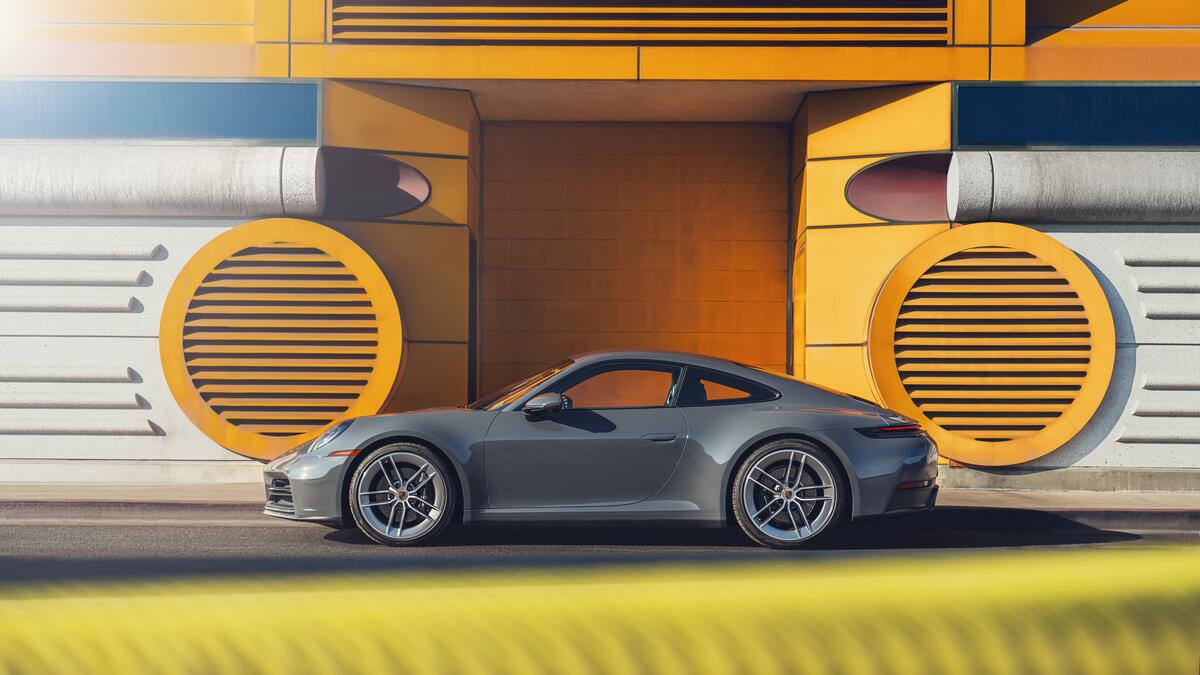
Porsche 992 Turbo S
"Having to explain to that guy at the beginning of COVID, I got dragged out of the 992 Turbo S."
This is a Porsche 911 Turbo S from the 992 generation. It’s a very fast, high-end version of the 911, and the speaker is mentioning it because it was the car he was pulled out of.
The Porsche 992 Turbo S is the high-performance variant of the 911’s 992 generation, using a turbocharged engine and Porsche’s top-tier “Turbo S” tuning. In this story, it’s important because the speaker says he was physically removed from this specific car during a COVID-era incident.
M plates
"Okay, so even cops don't know what M plates are sometimes. Like, you'd think the kind of thing that they teach fucking cops that are on patrol and in a world where reading license plates is so important"
“M plates” are a special kind of license plate that doesn’t look like a normal public plate. In the episode, the problem is that the officer didn’t recognize what they meant, so he assumed the car was stolen.
“M plates” here refers to a specific type of license plate used by dealers or manufacturers (often associated with press/dealer use). The key point is that even some police officers didn’t recognize them, which contributed to the misunderstanding and escalation.
Flock AI
"which is that they subscribe to a service called Flock AI. You can already tell that this is going to be bad. Flock AI is a general surveillance program."
Flock AI is a camera system that watches traffic and reads license plates. The episode argues it’s used for more than just catching speeding—it can track where cars go.
Flock AI is a surveillance system that uses networks of cameras to read license plates and track vehicle movements. The speaker contrasts it with traditional speed-camera enforcement, emphasizing that it’s used for broad, subscription-based monitoring and later plate “flagging.”
warrantless surveillance
"the police department can just subscribe to this totally warrantless surveillance of everybody and can type in a license plate and just get that car's movements around the city."
“Warrantless surveillance” means watching or collecting information without getting permission from a judge. The speaker is saying the system can be used to track people’s cars without that kind of approval.
“Warrantless surveillance” means collecting and using information without a court-issued warrant. In the episode, the speaker claims the police department can subscribe to the system and access vehicle movement data without the usual legal authorization.
California's toll tag system
"And I had to learn this because I had to enter my dealer plates into California's toll tag system, fast track, so I could drive to San Diego and back in the 73 and whatever."
California’s toll tag system is the electronic tolling setup that uses a transponder/tag to charge vehicles automatically as they pass toll points. The speaker mentions having to enter dealer plates into this system, which is why the plate format/recognition matters.
fast track
"And I had to learn this because I had to enter my dealer plates into California's toll tag system, fast track, so I could drive to San Diego and back in the 73 and whatever."
“Fast Track” is the toll system name the speaker is using. They couldn’t enter the plate correctly at first, and the system kept saying it wasn’t recognized.
“Fast Track” is referenced as the name of the toll-tag workflow/system used to manage toll charges. The speaker’s point is that the system rejected his plate entries until he learned the required formatting.
license plate number
"They file a police report. [663.0s] The person who enters the license plate number into this flock system doesn't fucking know how to do it and does it wrong."
It’s the code on the car’s license plate that identifies the vehicle. Here, the system is using those exact characters to decide which cars to flag.
A license plate number is the unique identifier on a car’s registration plate. In this story, the system is matching and flagging vehicles based on the exact characters on those plates.
police report
"It's part of having these plates is if you misplace one, you must file a police report. [660.7s] They file a police report. [663.0s] The person who enters the license plate number into this flock system doesn't fucking know how to do it and does it wrong."
A police report is an official record filed with law enforcement after a crime or incident. The episode says that if a license plate is misplaced or stolen, the owner must file a police report so the plate can be entered into systems like the one being discussed.
flock system
"[663.0s] The person who enters the license plate number into this flock system doesn't fucking know how to do it and does it wrong. [673.2s] And flock flags all Range Rover plates. [676.8s] So they basically skipped the middle numbers."
The “flock system” is an automated system that looks at license plates and checks them against a list. If it thinks a plate matches something important (like a stolen one), it sends alerts to police.
The “flock system” is an AI-driven license-plate recognition/alert workflow that compares plate characters against a database and generates flags or alerts. In the episode, it’s used to detect “stolen plate” matches and then notify law enforcement across jurisdictions.
AI system
"[719.7s] But it's like, you know, every Range Rover or every plate that fit these four characters have been flagged in the country by this AI system. [727.1s] Yeah, it's probably like every Land Rover marketing or press vehicle in the country."
An AI system is computer software that can “read” patterns—like the characters on a license plate. In this story, it’s used to decide which plates should trigger police alerts.
An AI system here refers to software that uses pattern recognition to interpret license plate characters and decide when to trigger alerts. The episode frames it as flagging plates that match a specific character pattern across the country.
misidentification
"But like, you know, misidentification is obviously a very big problem with in our legal system and policing system. [1321.7s] And so now you're handing that over, you know, to AI. What could go wrong?"
“Misidentification” means someone or something gets identified incorrectly. The concern here is that if AI or automated tools guess wrong, it can point police at the wrong target.
In policing and legal contexts, “misidentification” means the wrong person, vehicle, or plate is identified as the suspect. The hosts connect it to why relying on automated systems can be risky when the system can’t reliably distinguish similar cases.
Spyder
"Okay, so speaking of not driving cars in America, the Ferrari 849 Spyder Testarosa Spyder. [1344.2s] The editors at Road and Track, my review is up on the site now, you happen to read it."
“Spyder” is just a fancy word for a convertible—an open-top car. Because the roof isn’t fixed like a coupe, the car can feel a little different in handling and structure.
“Spyder” is an automotive body-style term for an open-top convertible. It typically implies a removable or folding roof, which can affect chassis stiffness and how the car feels compared with a coupe.

SF90
"So you drove the SF90 actually five years ago as well, and neither of us loved it. [1362.6s] It felt heavy, it felt clunky, and for a car that made it almost a thousand horsepower is 980 or something."
The SF90 is a Ferrari supercar that uses a hybrid setup. Even though it makes a lot of power, the hosts say it didn’t feel as fun or responsive as you’d expect.
The Ferrari SF90 is Ferrari’s modern supercar known for being a plug-in hybrid with very high output. In this discussion, the hosts focus on how it felt “heavy” and “clunky” despite the huge power figure, which is a common critique when a hybrid system adds mass and complexity.

296
"It was exhilarating, but it was not as exciting or kind of what we wanted from a supercar, and then it was made obsolete by the 296. Correct, which looked, you know, if you really didn't have a keen eye, you'd think those were the same cars. For people that don't really know cars, they're effectively the same car. And an acceleration test, even without the all-wheel drive, and even without even down two cylinders, the 296 is really just as fast as the SF90."
“296” is Ferrari’s newer mid-engine supercar. It’s a hybrid, and the hosts are saying it’s so quick (and steers better) that it basically made the older Ferrari SF90 feel outdated.
Ferrari 296 refers to the Ferrari 296 GTB/GTS family, a modern mid-engine supercar that uses a hybrid powertrain. In this segment, the hosts compare its real-world speed and steering feel against the Ferrari SF90, arguing it made the older car feel less relevant.
all wheel drive
"And an acceleration test, even without the all-wheel drive, and even without even down two cylinders, the 296 is really just as fast as the SF90."
All-wheel drive sends power to all four wheels. That helps the car grip the road when you accelerate, and the host is saying the newer Ferrari still feels just as fast even without that advantage.
All-wheel drive (AWD) means power is sent to both the front and rear axles, improving traction—especially when accelerating. The host notes that even without AWD, the Ferrari 296 still matches the SF90’s acceleration performance, implying the cars are close on pace.
down two cylinders
"And an acceleration test, even without the all-wheel drive, and even without even down two cylinders, the 296 is really just as fast as the SF90."
Engines can have different numbers of cylinders. “Down two cylinders” means the engine has fewer cylinders than the other car, and the host is saying the Ferrari 296 still performs almost the same anyway.
“Down two cylinders” refers to having fewer engine cylinders than a comparison car, which can reduce the engine’s potential power output. In this context, the host is arguing that even with a smaller-cylinder count, the Ferrari 296 still keeps up with the SF90’s acceleration.
midcycle refresh
"I don't care. You need mid-cycle refresh. This isn't going to be a little refresh. It has to look way different from the 296."
A mid-cycle refresh is when a car gets updated halfway through its generation. The host is saying Ferrari couldn’t just do small tweaks—they needed a bigger visual change to stand out from the 296.
A mid-cycle refresh is an update done partway through a model’s life—typically changes to styling, tech, and sometimes powertrain tuning—before the next full redesign. The host argues this refresh needed to be much more than “a little refresh” because the new Ferrari 296 had made the SF90-era design feel too similar.
greenhouse of the car
"So if you look at a photo of this car, the greenhouse of the car, the glass, the roof structure, the top structure, the engine cover are pretty much the same as the SF90, particularly the greenhouse and the interior."
The “greenhouse” is the part of the car that’s basically the cabin glass and roof area. The host is saying that section looks very similar to the SF90, even if the outside panels elsewhere are different.
The greenhouse of a car is the cabin’s glass-and-metal enclosure—windows, roofline, and the surrounding structure that frames the driver and passengers. The host says the greenhouse and interior layout on the new car are largely the same as the SF90, even though other body panels change.
engine cover
"So if you look at a photo of this car, the greenhouse of the car, the glass, the roof structure, the top structure, the engine cover are pretty much the same as the SF90, particularly the greenhouse and the interior."
The engine cover is the panel that covers the engine area. The host is saying that part looks very similar to the SF90, even though other body pieces are changed.
An engine cover is the body panel that covers the engine bay area, often shaping airflow and contributing to the car’s visual design. The host notes the engine cover is “pretty much the same” as the SF90, reinforcing that the update keeps key upper structures while changing other panels.

Ferrari 430
"Right. And so it looks like, remember like 10 years ago when the Ferrari like special projects division was like doing that shit for Eric Clapton and these people and they would turn a 430 into a 512 boxer or whatever the fuck."
The Ferrari 430 is a famous Ferrari supercar from the 2000s. People sometimes use it as a starting point for custom Ferrari projects, because it’s a strong platform to build something more special.
The Ferrari 430 is a mid-engine V8 supercar (from Ferrari’s 2000s lineup) that became a popular base for coachbuilt and special-project cars. In this segment, the host references Ferrari’s “special projects” approach of transforming a 430 into something more extreme.

512M race car
"They've got the lower body elements from the old 512M race car, which is like a Group C car."
The Ferrari 512M was a serious race car from Ferrari’s endurance racing days. The host is saying the car they’re discussing borrows its lower body design from that race car.
The Ferrari 512M was a Group C-era race car, known for its endurance racing pedigree and distinctive aerodynamic package. The host says the subject car uses the lower body elements from the old 512M race car, tying its shape and stance to that prototype/race heritage.
Group C
"They've got the lower body elements from the old 512M race car, which is like a Group C car."
Group C was a type of race category for endurance sports cars. The rules pushed teams to build very aerodynamic, prototype-style cars that could last for long races.
Group C was a top-level sports car racing category used in the 1980s and early 1990s, focused on endurance events. Cars in Group C were built around prototype rules, which heavily influenced their aerodynamics and lightweight construction.
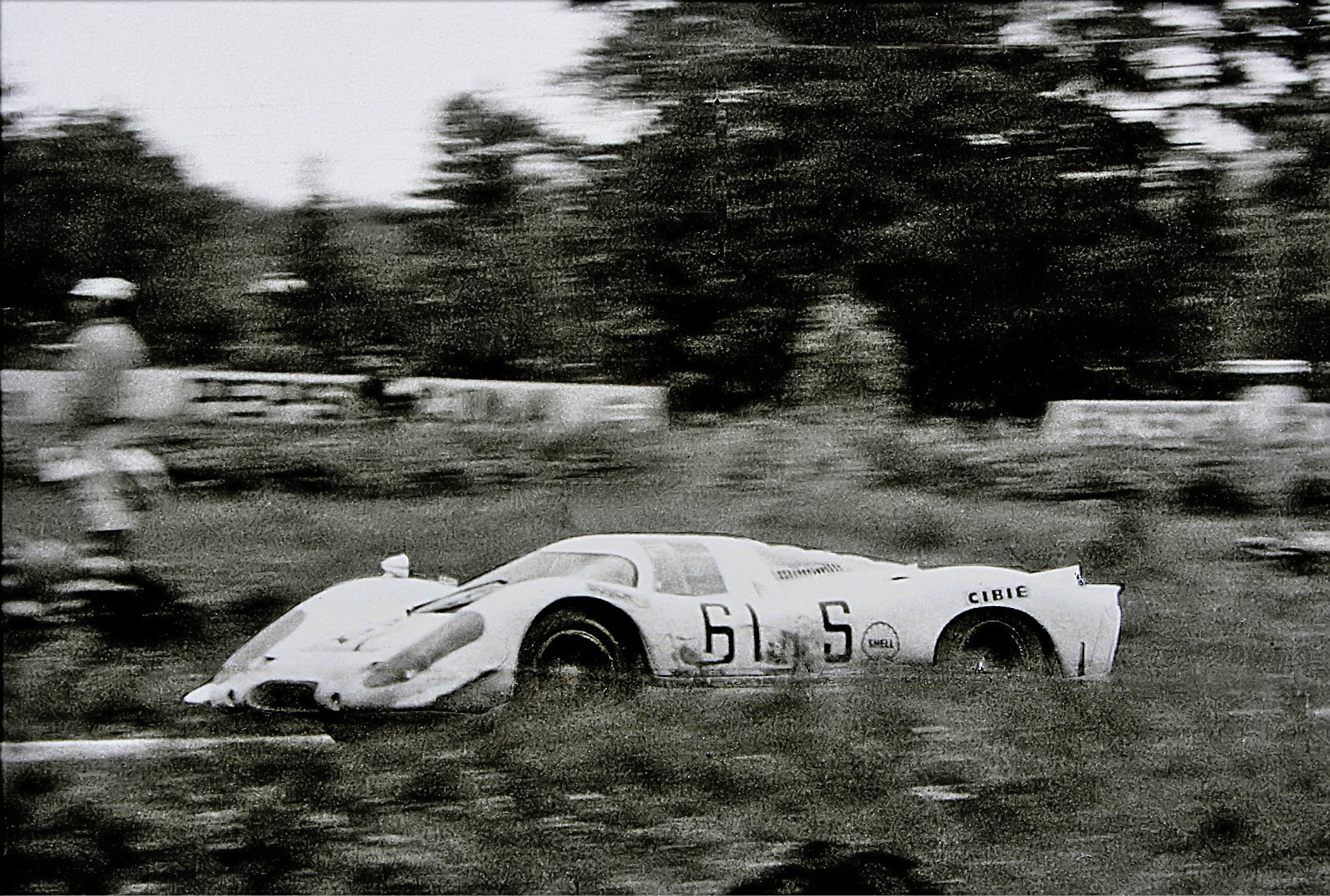
Porsche 917
"It was like somewhere between a Porsche 917 and 962."
The Porsche 917 is a legendary Porsche race car, especially known for endurance racing. The host is comparing the vibe and proportions of this Ferrari project to that kind of classic race-car design.
The Porsche 917 is one of the most iconic endurance race cars ever, famous for dominating Le Mans in the late 1960s. The host uses it as a reference point for the kind of “shape of a race car” the Ferrari-derived design is aiming toward.

962
"It was like somewhere between a Porsche 917 and 962."
The Porsche 962 was a race car built for long endurance events. The host is using it as another example of the classic race-car look they’re referencing.
The Porsche 962 is a Group C prototype race car developed from the 911 platform, built for endurance racing. The host pairs it with the 917 to describe the intended race-car proportions and overall silhouette.
wedgie
"Ferrari's take on that shape of a car, wedgie, you know, a curvy top, but sort of slab sided."
A “wedgie” is a car design that looks like a wedge—very low and pointy, with an aerodynamic shape. The host is saying this Ferrari project uses that kind of look.
“Wedgie” here is shorthand for a wedge-shaped supercar design—low, sharp, and aerodynamically aggressive. The host is describing the Ferrari’s take on that race-inspired silhouette: curvy top, but slab-like sides.
double flip tails
"And these sort of these double flip tails. That's where they get the double flip tail from on this car and a real square."
“Double flip tails” means the back of the car has two hinged “flip” sections. In this context, it’s being used to explain why the rear looks the way it does.
“Double flip tails” refers to a rear-end design feature where the tail section has two hinged/flip-style elements, typically for styling and/or access to rear components. The host credits this feature as the source of the car’s distinctive rear look.
square body
"But it looks like they've put a square body on top of a round car."
“Square body” just means the car’s upper shape looks more boxy and flat, not rounded. The host is pointing out that the design mixes a round base with a more square upper body.
“Square body” is a design description meaning the upper body has more upright, flat, boxy surfaces rather than flowing curves. The host contrasts it with a more rounded base shape, emphasizing the hybrid styling approach.
summer tires
"Maybe you want fresh summer tires. Maybe you need a set of winter tires as we get into the fall season."
Summer tires are designed for warm weather. They’re meant to give good grip when it’s hot, but they don’t perform as well in colder temperatures.
Summer tires are built to work best in warm weather, with rubber compounds and tread designs optimized for dry and wet grip at higher temperatures. They generally aren’t intended for cold weather because grip can drop as temperatures fall.
winter tires
"Maybe you need a set of winter tires as we get into the fall season. Members get 10% off at discount tire and you can get those BFG or Michelin summers or winters and save your whole membership and more just with that one purchase."
Winter tires are made for cold weather. They grip better in snow and ice because the rubber and tread are designed for lower temperatures.
Winter tires are specialized tires designed for cold temperatures, snow, and ice. They use different rubber compounds and tread patterns than summer tires to maintain grip when it’s cold.
intakes on the side
"But then when the intakes on the side are very angular. The square. The polygonal."
Side intakes are openings on the car’s body that let air flow in. The speaker is talking about their shape—how the sharp, angular design makes the front look like different parts were added together.
Side intakes are openings in the bodywork designed to pull air in for cooling or aerodynamic purposes. When the host calls them “angular” and “polygonal,” they’re criticizing how the intake shapes affect the car’s visual harmony.
canard things
"The canard things on the front, it's kind of like the Roma, which I think is a beautiful car except for having that little protruding singular duct lip."
Canards are little fins at the front of a car. They can help the car’s aerodynamics, and they also stand out visually on many performance designs.
Canards are small aerodynamic fins mounted near the front of a car, usually on the bumper or front corners. They help shape airflow to improve downforce and stability, and they’re often used as a visible styling cue on performance cars.

Roma
"The canard things on the front, it's kind of like the Roma, which I think is a beautiful car except for having that little protruding singular duct lip."
The “Roma” is another Ferrari model the host brings up for comparison. They like the Roma’s design, but they don’t like a small front duct detail—and they say the reviewed car has something similar.
The Ferrari Roma is a modern grand tourer used here as a styling comparison for the front “canard” area. The host likes the Roma’s overall look, but criticizes a small duct detail, then points out a similar feature on the car being reviewed.
dry weight
"Like the weight, they were very coy about it. You know, obviously, and they're talking about dry weight and like, we don't really know what it weighs."
Dry weight is basically the car’s weight without the usual fluids onboard. It’s often a lower number than what you’d weigh in real life with fuel and everything filled.
Dry weight is the car’s weight without fluids like fuel, coolant, and sometimes other consumables. Manufacturers often quote dry weight because it’s lower than the curb weight you’d measure with fuel and operating fluids.
particulate filters
"It's got the particulate filters in it. And so now I had a very funny conversation with the Ferrari engineers..."
Particulate filters are parts that catch dirty soot from the exhaust. They help the car meet emissions rules, but they can also make the exhaust sound a bit less aggressive.
Particulate filters are emissions-control devices that trap soot and other tiny particles from the exhaust. They can make the exhaust note feel less raw because the system adds restriction and changes how sound travels through the exhaust.
carbon tub
"It rides beautifully, although for all the money they're charging for this thing, on some bumps, you can still tell it's not a carbon tub."
A carbon tub is the main structural part of the car made from carbon fiber. It’s supposed to make the car stiff and light, but you can still notice how it behaves over rough roads.
A carbon tub refers to a vehicle’s structural body section made largely from carbon fiber composites. Even when a car uses a carbon tub, you can still feel compliance or flex on rough bumps, which is what the speaker is pointing out.
electric, the hybrid system
"You know, the electric, the hybrid system is much better integrated than before. If you put it into sport, or they call it performance mode, which is where the motor, the gas engine just stays on, which is where you want to drive."
This is a car setup that uses both electricity and gas. The goal is to make the switch between them feel smooth, instead of clunky.
A hybrid system combines an electric motor with a gasoline engine so the car can use either power source depending on conditions. The speaker is saying the integration (how smoothly the systems work together) is better than in earlier generations.
performance mode
"If you put it into sport, or they call it performance mode, which is where the motor, the gas engine just stays on, which is where you want to drive."
Performance mode is a button/setting that makes the car act more “spirited.” In this case, it keeps the gas engine running while the electric motor helps.
Performance mode is a driver-selectable setting that changes how a hybrid powertrain behaves. Here, it keeps the gas engine running while the motor contributes, so the car responds more aggressively.
silent EV mode
"They've got a real start button now, but when you press it, it turns the car into us on with a silent EV mode. You then have to press a haptic button to actually fire the engine."
Silent EV mode means the car is driving using electricity only, so the gas engine doesn’t run. It’s quieter because there’s no engine noise.
Silent EV mode is when a hybrid car runs on the electric motor only, without the gasoline engine. The speaker notes that pressing the start button first engages this quiet electric operation.
haptic buttons
"You then have to press a haptic button to actually fire the engine. That's pretty funny. Like, and that's missing the theater."
A haptic button is a button that “feels” different when you press it, often with vibration or a stronger tactile response. Here, it’s used as a step to wake up the gas engine.
A haptic button uses touch feedback (vibration or a tactile response) rather than relying purely on sound or visual cues. In this context, the speaker criticizes that you must press it to start the engine after entering silent EV mode.
feeder button
"But, like, do they have to do this startup or why can't, you know, can't you just power the car on, hit the haptic for the mode you want, and then push the, because that's the feeder button. [2005.1s] The feeder button."
The “feeder button” is a named button on the car that changes how it behaves. The host is implying it makes the car feel more exciting or aggressive.
A “feeder button” here sounds like a specific car control that triggers an engine/exhaust behavior (the host later calls it the “exciting button”). It’s likely a mode or sequence that changes how the car responds—often to make the sound/response more aggressive.
brake by wire
"You can't really tell, even though it's brake by wire. [2038.7s] That's good."
Brake-by-wire means your brake pedal sends an electronic signal instead of directly moving brake fluid mechanically. The computer then applies the brakes for you.
Brake-by-wire replaces the traditional mechanical/hydraulic link between the pedal and brakes with electronic signals and actuators. The pedal input is interpreted by the car’s control system, which then commands the braking hardware—often enabling more advanced brake feel and integration with stability systems.

McLaren Artura
"...ike, does it really stand out above a Ravuelto or Artura? 750 or Ravuelto or Artura."
The McLaren Artura is a high-performance supercar made by McLaren. It’s built to be very fast and exciting, with modern technology. People talk about it when comparing different supercars and which one feels most special.
The McLaren Artura is a modern supercar from McLaren, designed to deliver high performance with a focus on efficiency and advanced powertrain technology. It’s often compared directly to other high-end supercars because buyers weigh factors like standout design, driving experience, and overall “presence.” In the podcast snippet, it’s mentioned alongside another supercar in a question about whether it stands out.

Grand Sport
"I'd want a regular ZR1 after having just done 800 miles in a Grand Sport. And I did a couple months ago a lot of miles in the E-Ray."
The Corvette Grand Sport is a Corvette model that’s meant to be more performance-focused than the entry trim. They’re using their experience driving one for 800 miles to explain what they prefer.
The Chevrolet Corvette Grand Sport is a Corvette trim positioned between the base and the top performance versions, typically emphasizing road-course capability. The host references having just done 800 miles in a Grand Sport to ground their opinion about what they’d want next.
LMH front axle system
"You want a rear-wheel drive Corvette. The steering is not helped with that front axle system. That's for, it's, that front axle system is for drag racing."
This means the parts that control how the front wheels work together. The host is saying it’s tuned more for launching in a straight line than for making the car feel great when you turn.
A “front axle system” here refers to the hardware and control strategy that drives or influences the front wheels. The host argues this system is intended for drag racing, so it can deliver less satisfying steering feel for handling-focused driving.
drag racing
"That's for, it's, that front axle system is for drag racing. Yeah. And snow."
Drag racing is when cars race in a straight line to see who accelerates fastest. The host is saying some car tech is built to help with that launch, not with steering and handling.
Drag racing is straight-line competition where cars accelerate as quickly as possible over a short distance. The host uses it to explain why a front-wheel system might be optimized for traction and launch rather than for steering precision and cornering feel.
marginal returns
"It's not for handling. So, it marginal returns there for worse steering feel."
“Marginal returns” means the improvement is small. They’re saying the front-wheel setup doesn’t help steering much when you’re driving for handling.
“Marginal returns” means the extra benefit you get from a feature, compared to the cost or tradeoff. Here, the host says the front axle system provides only limited benefit (“marginal returns”) for steering feel in handling situations.
mid-engine cars
"You know, so if Aston made a mid-engine car tomorrow, they would go, [2143.4s] well, it can't be more exciting, more faster than Valhalla has to be $700,000 worth of car."
A mid-engine car puts the engine closer to the center of the car, behind the driver. This often helps the car feel more balanced and easier to control when turning.
A mid-engine car places the engine behind the driver but ahead of the rear axle. That layout helps balance weight distribution and can improve steering response and traction compared with front-engine designs.

Valhalla
"well, it can't be more exciting, more faster than Valhalla has to be $700,000 worth of car. [2147.8s] And, like, in the, you know, particulate rules and these different, like, emissions rules,"
Valhalla is an Aston Martin supercar idea. It’s mid-engine, meaning the engine sits closer to the middle, which usually makes the car handle more predictably and feel more “planted” in corners.
Aston Martin Valhalla is a mid-engine supercar concept that’s positioned as a high-tech, track-focused alternative to other $700,000-class exotics. The key idea is that its mid-engine packaging and advanced engineering are meant to deliver sharper dynamics than typical front-engine grand tourers.
emissions rules
"And, like, in the, you know, particulate rules and these different, like, emissions rules, [2152.3s] and so it's just like the box kind of tightens,"
Emissions rules are laws about how much pollution a car is allowed to put into the air. Automakers have to design their cars to meet those limits.
Emissions rules are regulations that limit what a vehicle can release into the air, such as exhaust pollutants. They can force automakers to change engine calibration, add exhaust aftertreatment, or alter powertrain design to comply.
F1
"and so it's just like the box kind of tightens, kind of like F1, [2155.1s] where there's just fewer and fewer ways to solve this problem."
F1 is Formula 1 racing. The point is that racing rules are very strict, so engineers have fewer options to make the car fast.
F1 here is shorthand for Formula 1, which is known for strict technical regulations. The speaker uses it as an analogy: when rules tighten, there are fewer ways to solve the same engineering problem.
535 horsepower
"And you know, the Corvette had 535 horsepower, [2229.0s] and the Ferrari had 700 horsepower."
Horsepower is a number that describes how much power the engine makes. Here, they’re using “535 horsepower” to talk about how strong the Corvette feels compared to the Ferrari.
Horsepower is a measure of engine power output. In this context, “535 horsepower” is being used to compare the Corvette’s performance level against the Ferrari the speaker drove.
haptics
"and now it's not with all the haptics done. [2280.7s] With all the haptics, with the styling, the Ferrari materials were,"
Haptics are touch/feedback sensations—like vibrations or tactile responses—used in modern car interfaces to make controls feel more “physical” even when they’re digital. The host is contrasting how the Ferrari’s interior experience changes depending on whether those haptic features are included.
digital clusters
"like, you know, I can no longer say, the Ferrari's cluster is fully digital, [2318.3s] and oh, by the way, you can't have fucking GPS up and see attack."
A digital cluster is the car’s gauge screen that shows things like speed and RPM electronically. The host is pointing out that the Ferrari’s dashboard is (or isn’t) fully digital.
A digital cluster is the fully electronic instrument panel (speed, RPM, warnings) instead of traditional analog gauges. The host is discussing whether the Ferrari’s cluster is “fully digital,” which affects how the driver reads information and how the dashboard is designed.
tachometer
"And I said this to them, I said this to them to their face, I go, [2330.6s] guys, why do I not have a tachometer when I have GPS?"
A tachometer tells you how fast the engine is spinning (RPM). The host is saying it’s weird to not have that gauge when the car has GPS.
A tachometer measures engine RPM (revolutions per minute). The host is complaining that the car lacks a tachometer display even though it has GPS, implying the layout prioritizes navigation over traditional driver information.
CarPlay
"And you have to, and he goes, well, the car play, it must be like this. And I go, okay, well, your screen is shaped like this,"
CarPlay is a way to connect your iPhone to the car so you can use apps on the car’s screen. It’s commonly used for navigation and music.
CarPlay is Apple’s in-car interface that mirrors compatible iPhone apps onto the vehicle’s infotainment screen. It’s often used for navigation, music, and phone functions while keeping the driver focused on the road.

Ford Mustang
"..., like the 1980s hockey stick tack? Yeah, or what Mustang uses now. Yeah, I mean, I said, come on, I said, ..."
The Ford Mustang is a sports car made by Ford. It’s known for being fun to drive and for having a lot of different versions over the years. People bring it up a lot because it’s one of the most recognizable performance cars in the U.S.
The Ford Mustang is a long-running American sports coupe known for its strong performance heritage and wide range of engine and trim options. It’s a frequent topic in car conversations because it has evolved over decades while keeping a recognizable identity. In the podcast snippet, it’s referenced in the context of design/branding and what “Mustang” means in modern usage.
GPS
"I'm on this beautiful island, I don't know where I'm going, so I want to have my GPS up, but I want to shift the car manually."
GPS is the navigation system that uses satellites to show your location and directions. In a car, it usually appears on the screen.
GPS (Global Positioning System) is the satellite-based navigation system that shows where you are and guides you along a route. In cars, it’s typically displayed on the infotainment screen or instrument cluster.
paddle shifters
"No one thought with these paddle shifters that I'd like to know what my RPMs are? That's insanity."
Paddle shifters are the little buttons/levers behind the steering wheel. They let you shift gears by hand while still keeping your main driving position the same.
Paddle shifters are the small shift controls mounted behind the steering wheel. They let the driver change gears without using a traditional gear lever, and they’re commonly paired with automatic or dual-clutch transmissions.
RPMs
"No one thought with these paddle shifters that I'd like to know what my RPMs are? That's insanity."
RPMs tell you how fast the engine is spinning. Higher RPMs usually mean the engine is working harder and responding more quickly.
RPMs (revolutions per minute) measure how fast the engine is spinning. It’s a key driver input because it correlates with power delivery, sound, and how close the engine is to its redline.
naturally aspirated flat-plane crank V8
"[2435.8s] You can get a Corvette with a naturally aspirated flat-plane crank V8 right now. [2442.0s] Ferrari owned that."
Naturally aspirated means the engine isn’t boosted by a turbo or supercharger—it breathes on its own. A flat-plane crank V8 is a specific engine design that can help make the car feel more responsive and sound different.
A naturally aspirated engine doesn’t use a turbocharger or supercharger, so it relies on atmospheric pressure and engine design for airflow. A flat-plane crank V8 uses a crankshaft layout that’s common in some high-revving performance engines, and it can contribute to a distinctive throttle response and sound.

Ferrari F12
"[2473.6s] Why is the C7 Corvette isn't as pretty as a Ferrari F12? [2480.0s] Because curves are really expensive, you know what I mean?"
The Ferrari F12 is a grand touring Ferrari known for its high-performance V12 and classic Italian styling cues. Here, the host uses it as a visual benchmark for “prettiness” when comparing against a C7 Corvette.
Corvette ZR1
"[2482.8s] But I can't say definitively that an 849 is prettier than a Corvette ZR1. [2488.3s] In fact, I think it's less pretty."
The Corvette ZR1 is the most extreme version of the Corvette. Here, it’s being used as the “cheap version” comparison against a Ferrari’s styling.
The Corvette ZR1 is the top-track-focused performance version of the Chevrolet Corvette line, typically associated with the most extreme power and hardware in the lineup. The host compares the ZR1’s looks against an “849” Ferrari, arguing the Ferrari may actually be less pretty.
displacement per cylinder
"And the 49 refers to 499 ccs, which is the displacement of each cylinder. [2747.3s] But who doesn't know that?"
Displacement per cylinder means how much volume each cylinder moves through inside the engine. The host is saying the model’s number is based on that per-cylinder amount, not on some historic naming tradition.
Displacement per cylinder is the engine’s total displacement divided by the number of cylinders. It’s a way to describe how big each cylinder’s “swept volume” is, and the host uses it to explain the logic behind the “49” in the 849 naming.
CCS
"And the 49 refers to 499 ccs, which is the displacement of each cylinder. [2747.3s] But who doesn't know that?"
“ccs” is just a measurement of engine size. In this case, it’s saying how much space one cylinder takes up when it moves through its stroke.
“ccs” here means cubic centimeters (cm³), a unit of engine displacement. When the host says “499 ccs,” they’re describing the swept volume for a single cylinder.
296
"It's got a thousand horsepower and I don't give a shit how it looks as long as it doesn't look like a 296. And it can't have SF in the name."
“296” is a specific Ferrari model number. They’re using it like a comparison—saying the new car shouldn’t resemble the look of that Ferrari.
“296” is shorthand for the Ferrari 296 GTB, a modern Ferrari mid-engine supercar. In this segment, the hosts use it as a reference point for how a new car should not look like that specific Ferrari design language.
SF
"And it can't have SF in the name. If you move your water bottle, I feel like it's in front of that camera. Oh, right."
“SF” is a Ferrari-related naming tag they’re talking about like it’s already taken. They’re saying the new car shouldn’t use that same label in its name.
“SF” is used here as a Ferrari naming prefix the hosts want to avoid. In Ferrari’s model naming, “SF” is commonly associated with the Scuderia Ferrari branding and/or specific model naming conventions, which is why they’re treating it like a reserved label.
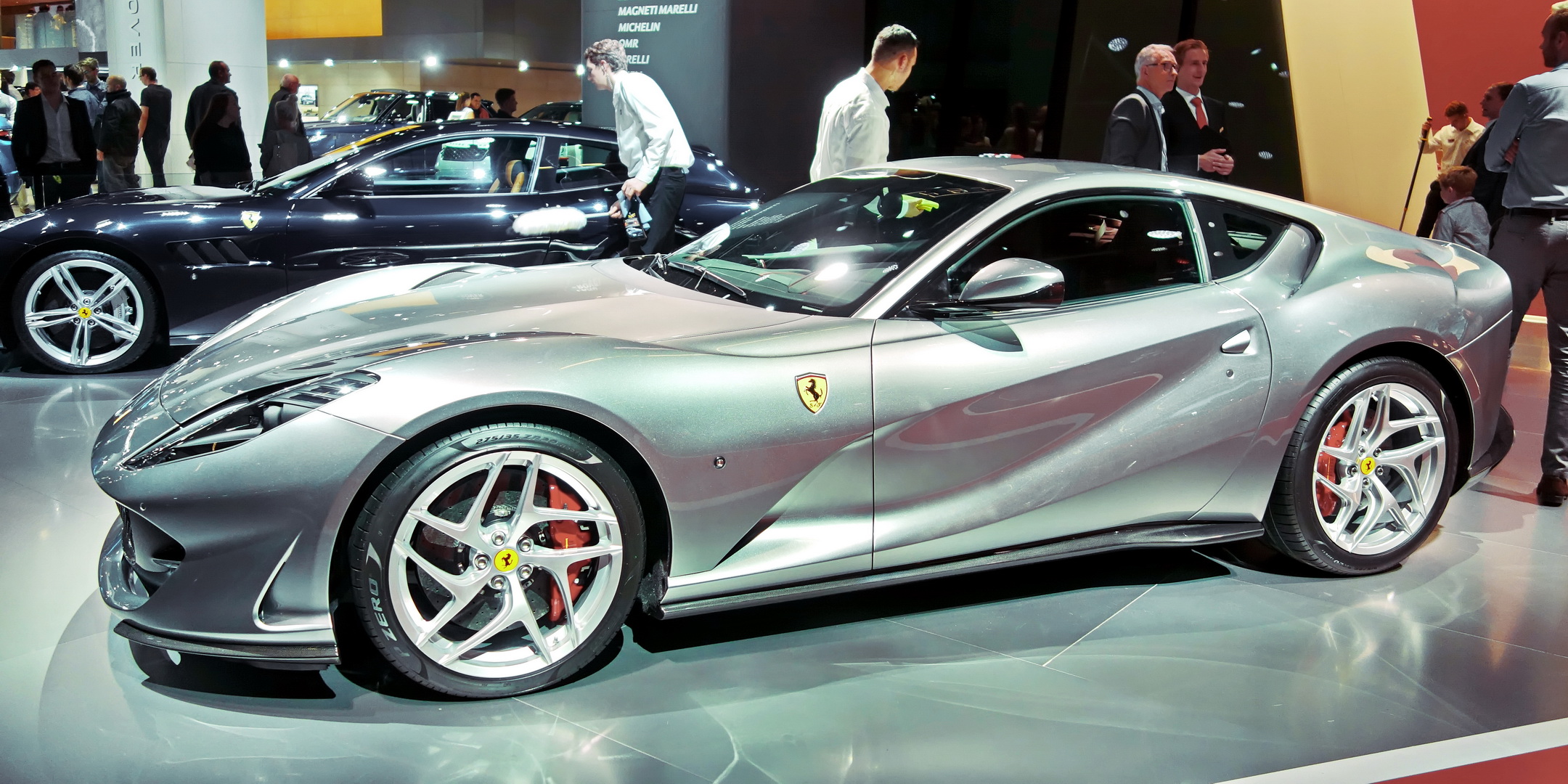
812
"It has to be bigger than 812. Yeah. And what can we make up?"
“812” is shorthand for a Ferrari model. They’re comparing model numbers to decide what the next one should be “bigger than.”
“812” refers to the Ferrari 812 Superfast, which is known for its large-displacement V12 and grand-touring supercar character. Here, the hosts treat it as a benchmark “bigger than” another Ferrari number, continuing the naming/numbering discussion.
Ferrari 1000
"Like, I feel like sometime, if they keep progressing on that, at some time in their near future, we will have a Ferrari 1000. Mark my words."
They’re basically joking/predicting that Ferrari will eventually make a supercar so extreme it gets a “1000” kind of name. It’s a guess about where Ferrari’s lineup could go next.
“Ferrari 1000” is the hosts’ prediction/hyperbole that Ferrari could eventually reach a “1000” model-number milestone as performance keeps escalating. It’s not a confirmed model name in this segment—more of a commentary on how Ferrari’s numbering and power targets are trending.
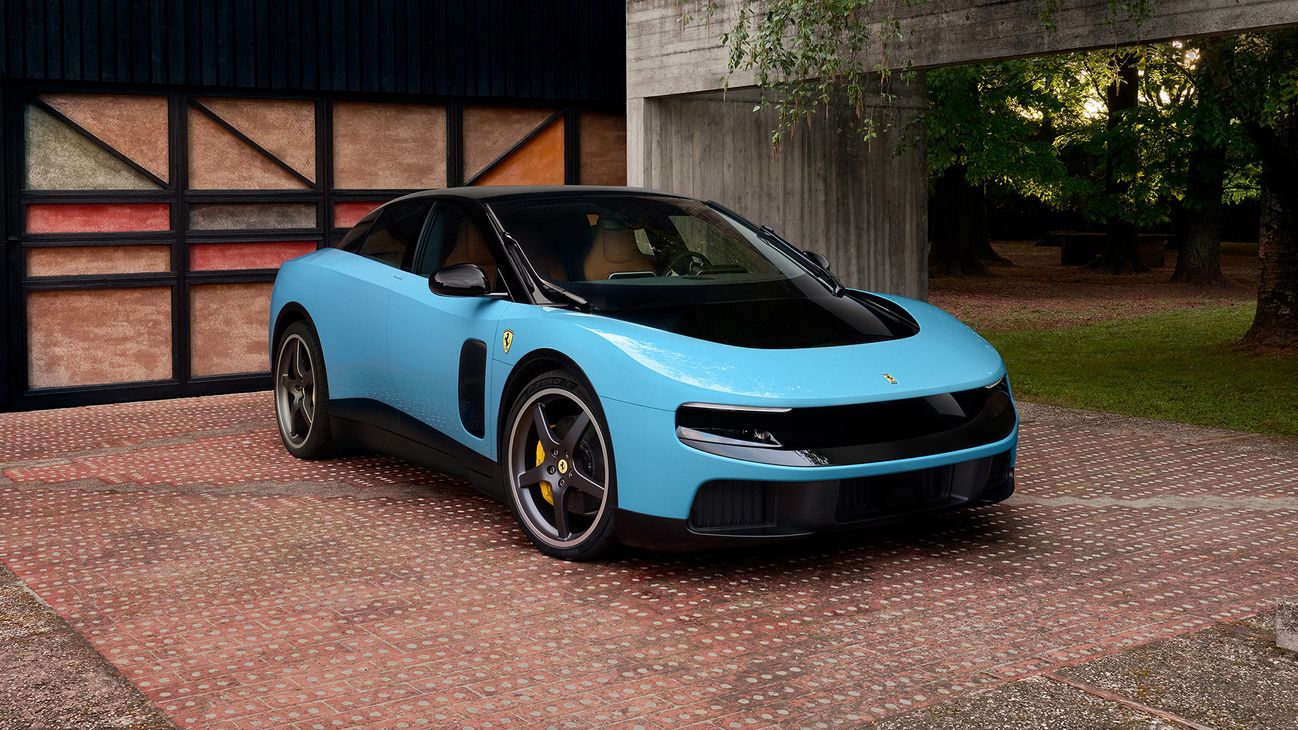
Ferrari Luce
"...robably could have gotten away with that for like luce. Hire me."
The Ferrari Luce is mentioned in the podcast as a Ferrari name. The clip doesn’t explain what it is in detail, so it’s best understood here as a reference to a Ferrari model name. No specific features or purpose are described in the provided context.
The Ferrari Luce appears in the podcast as a reference point in a joke or remark, but it’s not clearly described in the provided context as a specific, fully detailed model. Because the transcript doesn’t give enough technical or historical information, the safest takeaway is that it’s being mentioned as a name tied to Ferrari. It’s discussed in the episode more as a conversational reference than a deep dive into specs.
GT3
"I think it comes down to what does the word GT3, you know, meet? ... historically it meant optimized for the track ... within Porsche's nomenclature since 2006 or whatever form."
GT3 is Porsche’s name for a track-focused version of their cars. In the past it was more specifically about racing use, but now it can mean a wider “serious performance” identity.
GT3 is Porsche’s designation for a track-oriented model line. The speaker contrasts its historical meaning—optimized for racing—with how it’s evolved into a broader performance label within Porsche’s naming.
optimized for the track
"I mean, historically it meant optimized for the track, I think. And now, well, this is a race car."
“Optimized for the track” means the car is set up to do well on a racetrack, not just in normal driving. It’s usually tuned for hard driving—like better grip, braking, and handling when you’re going fast for a while.
“Optimized for the track” refers to engineering choices aimed at lap-time performance and durability under racing conditions. That typically includes things like suspension tuning, braking capability, and aerodynamic efficiency tuned for sustained high-speed use.
Porsche Nomenclature
"But I mean, historically within, within Porsche's nomenclature since 2006 or whatever form."
Porsche’s nomenclature is just how Porsche names its cars using codes and labels. The point here is that those labels can change meaning over the years, even if the name stays the same.
Porsche’s nomenclature is the company’s system of model naming—how it uses letter/number codes like GT3 and RS to communicate what the car is meant to be. The speaker is arguing that the meaning of those codes has shifted over time.
RS
"Yeah. Yeah. It's their, well, I was going to say it's not their RS. They have that too."
RS is Porsche’s label for a more hardcore, performance-heavy version of a model. In this conversation, they’re saying RS is its own thing, separate from GT3.
RS is Porsche’s designation for a more extreme, performance-focused variant—often with additional track-oriented hardware and tuning compared to the base model. In the transcript, the speaker contrasts GT3 with RS as separate “levels” of Porsche performance labeling.
naturally aspirated engines
"[3016.1s] It means naturally aspirated, you know, now, more than anything, you know, that's, that's, [3023.0s] right now, right now, these are the last of the naturally aspirated engines."
Naturally aspirated means the engine doesn’t use a turbo or supercharger to force air in. It breathes using normal air pressure, so the power delivery is usually more direct and linear.
A naturally aspirated engine makes power without a turbocharger or supercharger. Instead, it relies on atmospheric pressure and the engine’s internal design to pull air into the cylinders.
Roof
"[3050.7s] We just need a roof. [3052.3s] We just need a roof. [3053.6s] Or a tarp."
They’re talking about needing something overhead to keep the car dry if it starts raining. It’s basically a quick weather shield.
In this context, “roof” refers to adding overhead coverage to protect the car and occupants from rain during a drive or test. It’s a practical workaround when weather changes unexpectedly.

Porsche Taycan
"Uh, moving on. [3071.8s] The Taycan has gone back to the shop. [3074.7s] I heard your side of that phone call and I was very curious what's going on."
The Porsche Taycan is Porsche’s electric car. Here, they’re saying it had to go back to the shop, meaning something needed fixing or checking.
The Porsche Taycan is Porsche’s all-electric performance sedan, known for its fast acceleration and electric-motor feel. In this segment it’s mentioned as having to return to the shop, which suggests an issue or service need rather than routine use.
alarm
"So it was at my house and the alarm just started going off. [3091.3s] And Hannah, you know, Hannah like unlocked it and then, you know, it stopped. [3097.5s] She goes back inside and like two minutes later, she like, it's going off again."
A car alarm is the security system that makes noise if the car thinks someone is trying to get in. In this story, it keeps going off after unlocking until the car locks itself again.
An alarm system is the vehicle’s security feature that triggers a loud warning when it detects an unauthorized entry or movement. Here, the discussion centers on how the Taycan’s alarm behavior changes after unlocking and then automatically relocking.
automatically relocks
"Well, but, but it automatically relocks after like, you know, 60 seconds of idle time or [3111.1s] something. [3111.6s] Right."
Automatic relocking means the car will lock itself again if you leave it unlocked for a short time. They’re saying it does that after about a minute, and that’s why the alarm starts again.
Automatic relocking is a security/anti-tamper feature where the car re-locks itself after a short period if it’s left unlocked. In this segment, they mention it relocks after about 60 seconds of idle time, which then causes the alarm to trigger again.
double lock-up
"Like do, do, do, do the soft reset thing where you do the double lock and you walk away. [3131.6s] That doesn't solve it."
“Double lock” means locking the car twice in a row. Some cars use that sequence to change how the alarm/security system acts.
“Double lock” refers to a security procedure where you lock the car twice (often in quick succession) to change how the alarm or immobilizer behaves. Some cars use it as a quick way to reset or re-arm certain alarm functions.
soft reset
"Like do, do, do, do the soft reset thing where you do the double lock and you walk away. [3131.6s] That doesn't solve it."
A “soft reset” is like restarting the car’s computer system. It can fix temporary software problems without doing anything permanent.
A “soft reset” is a non-destructive reboot of a car’s electronics. In practice, it’s meant to clear a temporary glitch without fully disconnecting power or performing deeper repairs.
interior monitoring
"I called our buddy at Porsche and he says, you know, disable interior monitoring. [3138.3s] So it uses the driver monitoring camera to as a security camera. ... [3188.6s] you like to disable interior monitoring?"
“Interior monitoring” is the part of the alarm that watches what’s happening inside the car. If you disable it, the alarm won’t go off just because something inside the cabin is detected.
Interior monitoring is an alarm feature that detects movement inside the cabin (typically using sensors and/or cameras). Disabling it prevents the alarm from triggering due to activity inside the car, such as people or pets—or sometimes false alarms.
driver monitoring camera
"So it uses the driver monitoring camera to as a security camera. [3142.8s] So turn that off. [3144.3s] Well, that worked for like a little while, but like then it went off again."
A driver monitoring camera is a camera that watches the driver to help with safety features. Here, they’re saying it can also be used to help detect activity for the car’s security system.
A driver monitoring camera is a camera system used to watch the driver’s face/eyes for attention and safety. In this case, the speaker says it can be repurposed as part of the security system when interior monitoring is enabled.
Flashers
"Similarly, my car's flashers go off when the car's been locked for like 12 minutes."
Flashers are the hazard lights system that flashes the turn-signal lamps to warn other drivers. In an alarm context, hazards flashing can be part of how the security system signals an alarm event or a malfunction.
hood pop module
"And for a while, some of the forms, of course, were like, oh, it's your hood pop module is"
A hood pop module is the part that controls an automatic hood release. If someone suspects it, they think the car’s security system might be triggering the hood-release behavior.
A hood pop module is an electronic control used for an automatic hood-release/actuation feature. If it’s suspected, it suggests the alarm or security system may be interacting with the hood-release hardware.
frunk
"The internet said that we should check the contacts on my frunk that they can get gunked [3274.8s] up and it thinks the alarm goes off because it thinks the frunk's not closed and shit"
A frunk is the front trunk area on some cars, used to store cargo in place of a rear trunk. Because it’s a separate compartment with its own latch and sensors, issues with the frunk not being fully closed can trigger alarms or other warnings.
coolant
"It's very cool and it's got the insulated cooling lines that go underneath the undercuts [3312.0s] of the body. [3317.1s] And so there's a lot more coolant. [3320.6s] There's like almost twice as much coolant in the system now."
Coolant is the liquid that keeps the engine from overheating. It circulates through the engine and then goes to the radiator to dump the heat.
Coolant is the liquid that absorbs heat from the engine and carries it to the radiator to be cooled again. Increasing coolant volume (as they describe) can help manage heat load, especially on modified cars with higher demand or different cooling layouts.

512Bb
"of the body. It's like a 512BB. Yeah."
The Ferrari 512 BB is an older Ferrari sports car. In the podcast, it’s used as a reference for how something looks, like the body shape. It’s mentioned because it’s a recognizable classic Ferrari.
The Ferrari 512 BB is a classic Ferrari model known for its distinctive design and performance reputation from its era. In the podcast snippet, it’s referenced as a comparison point for body shape or styling details (“it’s like a 512BB”). That kind of mention usually signals the car’s look is being used as a recognizable reference.
radiator
"There's also the front and the rear radiators are CSF radiators now and they have this high [3331.0s] performance fuel pump, excuse me, water pump."
Radiators are the parts that cool the engine’s coolant. Air passing through them helps pull heat out so the engine can stay at a safe temperature.
Radiators are heat exchangers that cool the engine’s coolant by transferring heat to airflow. They mention switching to CSF radiators for both front and rear, which implies a higher-capacity or more efficient cooling setup.
water pump
"There's also the front and the rear radiators are CSF radiators now and they have this high [3331.0s] performance fuel pump, excuse me, water pump."
The water pump moves coolant around the engine. If it’s upgraded for higher flow, it can help the engine stay cooler when you’re pushing it.
The water pump circulates coolant through the engine and cooling system so heat can be carried to the radiators. A “high performance” water pump typically means higher flow capacity to improve cooling under demanding conditions.

Audi Etron
"Duffel Shelf for Retirement Club says, used Audi e-tron GTs are going for 50% of their original sticker at just two to three years old."
The Audi e-tron GT is an all-electric Audi that’s built to feel fast and upscale. Here, they’re talking about how much these EVs can drop in price after a couple years.
The Audi e-tron GT is an all-electric grand touring (EV) from Audi, known for its high-performance, German-engineered electric powertrain. In this segment, it’s used as an example of how EVs can depreciate quickly after launch.

e-tron Audi Etron Gts
"What do you got, buddy? Duffel Shelf for Retirement Club says, used Audi e-tron GTs are going for 50% of their original sticker at just two to three years old."
The Audi e-tron GT is an all-electric car, meaning it runs on electricity instead of gasoline. The podcast is talking about what used ones cost compared to when they were new. That matters if you’re shopping for a used electric performance car.
The Audi e-tron GT is an all-electric performance sedan designed to deliver quick acceleration and a sporty driving feel. In the podcast context, it’s discussed through used pricing, with the claim that used e-tron GTs can sell for a large percentage of their original sticker price after only a couple of years. That makes it a relevant topic for buyers thinking about value and depreciation.
floor
"Do you think that's their floor for the time being or will they hit zero in two to four years? [3638.3s] Yeah. [3645.9s] Running car."
Here, “floor” means the lowest price the car might realistically end up at. They’re saying EVs may not hit zero if they’re reliable and still usable.
In the context of used-car pricing, a “floor” is the minimum resale value a vehicle is expected to reach rather than continuing to collapse toward zero. The hosts argue that for EVs, the floor depends heavily on real-world reliability—if the car keeps working, it shouldn’t be worth nothing.
depreciation
"Do you think that's their floor for the time being or will they hit zero in two to four years? [3622.3s] Do you think that's their floor for the time being or will they hit zero in two to four years? [3680.1s] the first year, it can't depreciate that much for you, if it lost half its value in year one, could still lose half its current value, if it lost half its value again, you've done much better than the first guy."
Depreciation is how quickly a vehicle’s value drops over time after purchase. The hosts discuss whether EVs have a “floor” (a minimum resale value) or could keep dropping toward zero depending on reliability and whether the cars remain usable.
Request an Explanation
Heard something you'd like explained? We'll add it to this episode.
Sign in to request explanations for terms you heard.
Want to learn more?
Browse our glossary for plain-English explanations of automotive terms, jargon, and concepts.
Help improve this episode
See something that's not quite right? Our annotations are AI-generated and can sometimes miss the mark. Click the flag icon on any annotation to suggest a correction.