
China is re-producing Enthusiast Cars: Is it a Good Thing?
About this episode
Matt Farah and Zach kick off with off-the-record ticket help, then pivot into personal stories: choosing matching blazers, photo-taking on trips, and the awkward reality of “in-car” journalist interviews. The conversation then shifts to track excitement—Matt’s experience driving the high-downforce Zinger 21C at Willow Springs—and what that kind of pace means for upcoming racing against NASCAR drivers at Cletus’ event. The show also touches on Chinese-made enthusiast-car “reproductions,” including Chinese knockoff unibody structures, and debates whether that’s a good thing for the hobby.
Want your question answered? Want to watch the live stream, get ad-free podcasts, or exclusive podcasts? Join our Patreon: https://www.patreon.com/thesmokingtirepodcast
Use Off The Record! and ALWAYS fight your tickets! Enter code TST10 for a 10% discount on your first case on the Off The Record app, or go to http://www.offtherecord.com/TST.
Watch our car reviews: https://www.youtube.com/thesmokingtire
Tweet at us!
https://www.Twitter.com/thesmokingtire
https://www.Twitter.com/zackklapman
Instagram:
https://www.Instagram.com/thesmokingtire
https://www.Instagram.com/therealzackklapman
downforce
"I talk about my experience driving the high downforce zinger 21c on track at willow springs"
Downforce is the “suction” effect from the car’s shape and wings that presses the tires onto the road. That helps the car turn and stay planted when you’re driving fast.
Downforce is the aerodynamic force that pushes a car downward toward the road. More downforce generally means better tire grip and more stable cornering at higher speeds, especially on track.
Willow Springs
"driving the high downforce zinger 21c on track at willow springs and then Zach and I realized the kind of competition"
Willow Springs is a famous race track in California. People use it to see how a car handles at speed, especially through fast turns.
Willow Springs is a well-known motorsports circuit in California used for testing and racing. It’s popular with drivers because it has a mix of fast corners and elevation changes that reveal how well a car’s aero and chassis work under real load.
car unibodies
"I bought some new gear for my Vespa and there's Chinese knockoffs of entire car unibodies"
A unibody means the car’s body and frame are built as one connected structure. It helps the car feel solid and can affect safety and how the car drives.
A unibody is a vehicle body structure where the frame and body are integrated into one unit. That construction affects crash behavior, stiffness, and how easily the car can be engineered for handling and durability.

Chevrolet Blazer
"...let's say you're in the car wearing your dope ass blazer with your lady right the top is down and it's win..."
The Chevrolet Blazer is an SUV made for everyday driving and family-friendly practicality. The podcast mentions it with the top down, meaning it’s being talked about in an open-air, fun-driving way. It’s basically a moment about enjoying the car’s look and experience.
The Chevrolet Blazer is a midsize SUV that’s known for being practical while still having a sporty, lifestyle-friendly image. In the podcast, it’s mentioned in a playful scenario—driving with the top down—suggesting a convertible or open-air variant being discussed for fun and style. That kind of reference usually comes up when talking about how cars feel and look during casual driving.

Hyundai Santa Cruz
"...ing to you like every time sarin I come back from Santa Cruz I drive and she's on the west facing window and j..."
The Hyundai Santa Cruz is a small SUV that also has a short bed like a pickup truck. It’s meant to be practical for everyday life and light hauling. The episode mentions it as a car someone drives regularly and deals with in normal situations.
The Hyundai Santa Cruz is a compact crossover with a pickup-style bed, blending SUV practicality with light truck utility. It’s discussed in the podcast in a personal driving context—mentioning returning from Santa Cruz and the car being positioned by a window—suggesting it’s part of someone’s daily routine. That makes it relevant as a modern, practical vehicle rather than a pure track toy.
Kyle Kennard
"“...I think was Kyle Kennard [400.7s] on the spider rs press launch in Germany love him love and I love Kyle Kennard and he fully gets it...”"
Kyle Kennard is a car journalist. The host is saying he’s easy to work with during an in-car media moment.
Kyle Kennard is a motorsports journalist/content creator referenced here as someone the host has done an in-car segment with. The context matters because it’s about how different journalists’ personalities affect the on-camera experience.
Chris Harris
"“...other I'm trying to think if if I had to do in car with Chris Harris [423.6s] sitting in the car absolutely not...”"
Chris Harris is a famous car journalist. The host is joking that he’d be too intense to do an in-car segment comfortably.
Chris Harris is a well-known automotive journalist referenced as someone the host would not want in the car. The mention is about the social dynamic of press events and how a journalist’s style can change the filming experience.
Le Mans
"“...well we were I mean this is 10 years ago when we did that episode in France I'm up there on a podium at Le Mans for we were doing that tour of Le Mans thing...”"
Le Mans is a legendary race in France. It’s especially famous for long-distance endurance racing, and it’s a big deal for car makers and journalists.
Le Mans is the famous French endurance-racing venue best known for the 24 Hours of Le Mans. It’s a benchmark event where manufacturers and journalists experience cars under sustained, high-load conditions and big-crowd media setups.
straightaways
"um so it's just the the straightaways become so short you know the the uh"
Straightaways are the straight parts of the track where you accelerate. How long they are changes what matters most—top speed versus cornering and braking grip.
Straightaways are the sections of a circuit where the car accelerates in a relatively straight line. Track layout matters because high-downforce cars can exploit long high-speed sections, while short straightaways shift the balance toward braking and low-speed corner grip.
road tire
"um so it's just the the straightaways become so short you know the the uh and it is still on a road tire and so although you have the downforce for the higher speeds stuff in a hairpin"
A road tire is a tire designed for street use rather than dedicated track-only performance. Even if a car has huge aerodynamic grip (downforce), the tire’s traction limits how hard you can brake, turn, and accelerate—especially in low-speed corners.
hairpin
"um so although you have the downforce for the higher speeds stuff in a hairpin you know you are limited by the the limit of a sticky but it's a street tire right"
A hairpin is a super tight turn, like a near-U-turn. Even if a car is fast at high speed, hairpins can still be hard because you’re mostly relying on tire grip at lower speeds.
A hairpin is a very tight, slow-speed corner that requires heavy braking and low-speed cornering technique. On high-downforce cars, hairpins can still be limited by tire grip and traction because the car’s aerodynamic advantage is less dominant at low speeds.
sticky
"you are limited by the the limit of a sticky but it's a street tire right"
“Sticky” just means the tires have a lot of grip. When the tires stop being “sticky,” the car starts to slide and you can’t go as hard.
“Sticky” is enthusiast slang for a tire compound and setup that provides high grip. It’s a practical way to describe how much traction the tires deliver before they start to slide.
spa
"is probably like around the many corners is probably bigger like at spa or whatever where the average lap speed is higher"
Spa is a famous race track in Belgium. It has lots of fast sections, so cars behave differently there than on tracks with lots of short, tight turns.
Spa refers to Circuit de Spa-Francorchamps in Belgium, a track known for fast corners and higher average lap speeds. The host contrasts it with a shorter-corner layout where the car’s grip limits show up differently.
4400 pounds
"it equals it's all right high downforce version is 4400 pounds it has its own weight"
This is a higher downforce number than the previous one. It suggests the car can generate even more “air push” onto the tires, which can make it faster and harder to drive at the limit.
This is a second quantified downforce level, implying a higher-downforce configuration or version. The comparison helps illustrate how aerodynamic load can change the car’s balance and potential grip envelope.
indy 500
"it was we shot this in when then we shoot this before the indy 500 yeah"
The Indy 500 is a huge famous race in the U.S. Mentioning it tells you the car was tested or debuted around the same time as that major event.
The Indy 500 is the Indianapolis 500, a major American open-wheel race. Mentioning it provides context for the car’s development/testing timeline and how early it was in its track life.
python green carbon
"in the beauty shots oh my god it's like this python green carbon it's so good yeah that's lovely"
This is a description of the car’s look—green color plus a carbon-fiber style. It’s basically talking about the special visual finish.
“Python green carbon” describes a specific paint/color and carbon-fiber visual theme. It’s the kind of detail enthusiasts care about because carbon components and special colors are often part of a car’s identity and aero package.
comfort seat
"because this is the it's the high downforce car but it has the comfort seat and if i was you know billionaire buying a zinger i would get the comfort seat for sure"
A comfort seat is the more road-friendly version of a seat. It’s usually designed to be easier to sit in for long periods, but it may not hold you as firmly as a racing bucket seat during hard driving.
A “comfort seat” refers to a more supportive, road-oriented seat setup designed to be easier to live with over long drives. Compared with a bucket seat, it typically offers more adjustability and less aggressive lateral support, which can matter when you’re doing serious track work.

Ford Mustang
"like brace on the car like almost like i did in like a Mustang dark horse which is which is pretty funny to have you know like putting your leg out yeah"
The Mustang Dark Horse is a sportier, more track-oriented version of the Ford Mustang. Here it’s mentioned because the speaker had to hold themselves in place the way you might in a more performance-oriented car.
The Ford Mustang Dark Horse is a performance-focused trim of the modern Mustang, known for track-capable hardware and a more aggressive driving position. In this segment, it’s used as a comparison for how the speaker had to brace themselves in the seat.
carbon bucket seat
"of course the comfort seat as opposed to i've never even seen it in person but the car the carbon bucket if you they showed me a photo of it maybe one i'm sure it exists somewhere"
A carbon bucket seat is a race-style seat made with carbon fiber. It holds you in place better than a normal seat, which helps you stay steady when the car is going fast and turning hard.
A carbon bucket seat is a lightweight, rigid racing-style seat made from carbon fiber. Its deep “bucket” shape cradles your body to reduce movement during hard cornering, which helps drivers stay consistent and reduces fatigue on track.
manual seat
"it is it's a man it's on a manual seat like it's on a slider like you could you could probably just you know that doors open enough like yeah it couldn't be that hard"
A manual seat is adjusted by hand instead of using buttons and motors. It can still move on rails, but it’s less convenient than power seats—especially if you’re changing drivers often.
A “manual seat” means the seat position is adjusted by hand rather than using power motors. For track use, the key point is that manual sliders can still allow quick positioning, but they’re not as convenient as power adjustments when you’re swapping drivers or dialing in fit.
slider
"it is it's a man it's on a manual seat like it's on a slider like you could you could probably just you know that doors open enough like yeah it couldn't be that hard"
A seat slider is the rail system that lets the seat move forward and back. It matters because it affects how easily you can adjust your driving position and how stable the seat feels when you’re driving hard.
A seat “slider” is the rail mechanism that lets the seat move forward and backward. In racing contexts, the slider design affects how quickly you can adjust fit and how securely the seat stays positioned under cornering loads.
hot swap the seat
"yeah so uh that would be a fun thing if they could hot swap the seat yeah for you for attractive you definitely need did you find a photo of it"
“Hot swap the seat” means changing the seat quickly. The speaker is talking about being able to switch between a comfy seat for normal driving and a racing seat for track days.
“Hot swap the seat” refers to quickly exchanging the seat setup without a full teardown—here, swapping between comfort and carbon bucket seats. The idea is to make the car more flexible for different driving events, like track days versus road use.
m
"it i think it pretty much it might like be the m seat back but it doesn't have the the cup and the balls which makes it better"
Here “M” means BMW’s performance brand. The speaker is saying the seat looks similar to the kind BMW M uses in its performance cars.
In this context, “M” is referring to BMW’s M division, which produces performance cars and track-focused equipment. The speaker is comparing the carbon bucket seat shape to BMW M’s bucket seat design.
traction circle
"you know the traction circle right like you can turn and or break you know depending on depending on how much your braking means you can turn or you know more or less"
It’s a simple idea that your tires have a limited amount of grip. If you’re braking hard while also turning, you run out of grip sooner, and the car can start to slide.
The traction circle is a way to visualize tire grip limits: the tires can only provide so much total force before they lose traction. Turning, braking, and accelerating all “consume” grip, so doing multiple things at once reduces how much each one can do.
vmax
"other than you know the thing uh that the the vmax car had which is a bit of uh of instability at high speed"
“Vmax” is basically about the car’s top speed. At those speeds, the car can feel less stable because everything is more sensitive—wind, tires, and aero effects.
“Vmax” here refers to a car’s top-speed run or top-speed-focused behavior, where stability can become harder to manage. At very high speed, small changes in airflow and tire behavior can make the car feel less stable.
9 000 rpm
"when you get past about 9 000 rpm you know in third gear in this car your brain stops being able to think about anything else"
RPM tells you how fast the engine is spinning. Around 9,000 rpm is very high, and it often comes with strong acceleration and a lot of sensory overload for the driver.
RPM (revolutions per minute) is how fast the engine spins, and hitting around 9,000 rpm means the engine is operating in a very high-output range. At those speeds, the engine note and acceleration can become so intense that the driver’s attention narrows to managing throttle, braking, and cornering.
third gear
"when you get past about 9 000 rpm you know in third gear in this car"
Third gear is one of the gears in the transmission. Using it while the engine is spinning very fast usually means the driver is trying to keep the car in its strongest acceleration range.
“Third gear” is a specific transmission ratio that typically provides a balance between acceleration and engine speed. Mentioning it alongside high RPM suggests the car is being driven in a way that keeps the engine in its power band.
hypercar
"there you know in the land of the hypercar each has their own talent"
A hypercar is basically a step beyond a supercar—an extremely high-end, very fast, very advanced performance car. The idea is that different hypercars feel different when you drive them hard.
A hypercar is an ultra-high-performance, top-tier supercar category—usually defined by extreme power, advanced aerodynamics, and cutting-edge engineering. The speaker uses it to frame how each hypercar has a distinct “talent” or character on track.
A pillars
"because of how the a pillars are shaped you have to move your head slightly differently to look through the same corner"
A-pillars are the structural posts at the front of the car that hold up the roof near the windshield. Their shape can change what you see when you’re driving, especially on a track.
The A-pillars are the front roof supports that frame the windshield area. Their shape affects visibility and the driver’s sightlines, which can make track corners look different compared to other cars.
formula one
"that extremely prototypy formula one fighter plane kind of vibe that lends itself pretty well to being on the track"
Formula One is the highest level of racing with very advanced aerodynamics and race-focused design. The comparison is meant to describe how futuristic and intense the car feels from the driver’s seat.
Formula One (F1) is the top level of open-wheel motorsport, known for extreme downforce, specialized aerodynamics, and driver-focused cockpit design. The speaker compares the car’s “prototype” vibe to an F1 fighter plane look, emphasizing how track-focused it feels.

Aston Martin Valhalla
"...god to try this at kota or the track where you go valhalla like that's the kind of place for this yeah yeah ..."
The Aston Martin Valhalla is a very fast, expensive sports car made for performance driving. The podcast talks about trying it at a race track, which is where this kind of car is meant to shine. It’s being discussed as a track-focused supercar.
The Aston Martin Valhalla is a high-performance supercar designed for track-level driving and advanced engineering. In the podcast, it’s specifically tied to the idea of trying it at a circuit like COTA, reinforcing that it’s meant to be used where performance matters. That’s why it comes up: it’s a “go to the track” kind of car in the conversation.

McLaren W1
"they were just doing um fucking of course puns took it why would he not uh the w1 mclaren was at mugello which is which is cool like then they were doing 200 miles an hour on the front straight"
The McLaren W1 is a very expensive, very fast supercar from McLaren. The discussion uses it as an example of how fast these cars can go on a race track’s long straight.
The McLaren W1 is a modern, ultra-high-performance hypercar from McLaren, known for being built to deliver extreme straight-line speed and track capability. Here it’s mentioned in the context of being at Mugello and doing very high speeds on the front straight.
Mugello
"uh the w1 mclaren was at mugello which is which is cool like then they were doing 200 miles an hour on the front straight"
Mugello is a well-known race track in Italy. It has long straight sections where cars can build up huge speed.
Mugello is a famous Italian road racing circuit known for long, fast sections and heavy braking zones. The hosts reference it because it’s the type of track where cars can reach very high speeds on the front straight.
front straight
"then they were doing 200 miles an hour on the front straight ... pretty well that's really how do you know how long that straight is compared to like kota"
A front straight is the long straight part of a race track. It’s where cars can build up speed before slowing down for the next turn.
A front straight is the long straight section of a racetrack where cars accelerate at full power before braking for the next corner. The hosts use it to compare how different tracks allow higher top speeds based on straight length and layout.
Circuit of the Americas
"and what about the back straight at circuit of americas 0.62 hmm okay Miguel is even longer so yeah all right so"
Circuit of the Americas (COTA) is a famous race track in Austin, Texas. The hosts mention it because the track has long straight sections where cars can reach very high speeds.
Circuit of the Americas (COTA) is a major road course in Austin, Texas, used for high-speed track testing and racing. In this segment, it’s referenced specifically for its straight lengths, which matter for top-speed runs in cars like the Chevrolet Corvette ZR1.
back straight
"and what about the back straight at circuit of americas 0.62 hmm okay Miguel is even longer so yeah all right so"
A back straight is a long straight section later in the lap. The hosts compare its length because longer straights generally let cars reach higher speeds.
A back straight is another long straight section of a circuit, often on the opposite side of the lap from the front straight. In this discussion, the back straight length at COTA is compared to other tracks to estimate achievable top speeds.

Chevrolet Corvette ZR1
"look i hit in the 750 s 175 at code on the back straight somebody in the zr1 i thought was like 179 or 180 so like this is probably 185 i mean"
The Corvette ZR1 is the most extreme performance version of the Chevrolet Corvette. They mention it because someone was hitting around the high-170s mph on a track straight.
The Chevrolet Corvette ZR1 is the Corvette’s track-focused, high-output performance variant, typically associated with very high top speeds. In this segment, it’s used as a real-world reference point for speeds achieved on the back straight at COTA.
top speed
"that idaho straight away basically like will you go find out what the top speed is of this mcclough and i didn't want to do it because i'd never driven that fast before so i think punn"
Top speed is the maximum speed a vehicle can reach under specific conditions, usually limited by aerodynamics, gearing, and power. The speaker mentions wanting to find out the top speed of a car on a particular straight but didn’t want to do it because they hadn’t driven that fast before.
mile per hour
"yeah it's not it did more each mile per hour over whatever takes a lot more effort but still it's not a huge delta in miles per hour"
Miles per hour (mph) is just how fast something is going. On a race track, people use it to talk about how fast the car is at certain sections.
“Miles per hour” (mph) is a unit for speed. In racing talk, it’s often used to compare how quickly a car accelerates or how fast it is at a specific point on track.
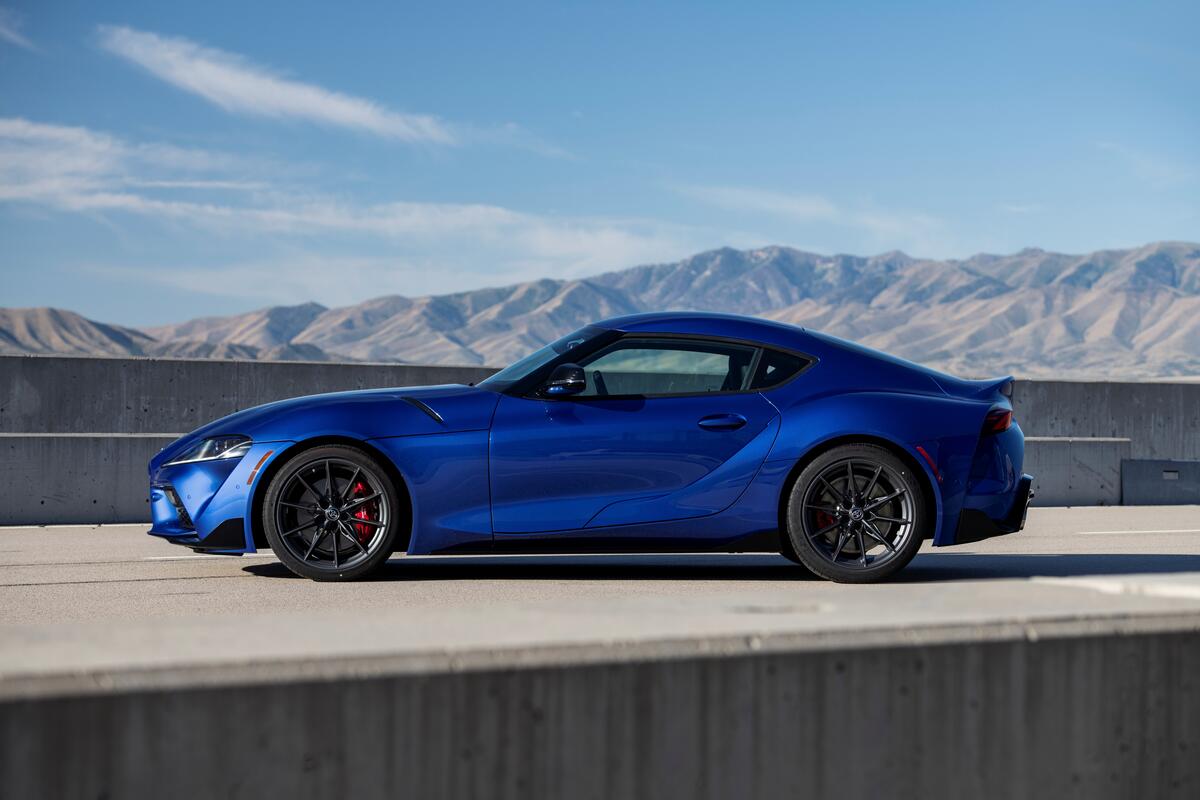
Toyota A90
"front straight at the end of the back straight of coda is a is a not even a 30 mile an hour corner it's 110 or 120 degree uh or excuse me it's it's a more than a 90 degree left hand corner that's like 30 miles an hour actually i think this might be faster but it is also like a 190 degree corner"
The Toyota Supra is a sports car made for going fast and handling well. People talk about it a lot because it can be driven hard on a track. In this episode, it’s mentioned in relation to how it would manage a tough, slow-to-fast corner.
The Toyota Supra is a performance sports coupe known for strong acceleration and a reputation in motorsport and enthusiast circles. It often comes up in track discussions because its balance of power and handling makes it a popular choice for fast corners and straight-line runs. In the podcast context, it’s being referenced for how it would handle a very demanding, high-angle left-hand turn at speed.
rear wheel drive
"there's some crazy fucking cards out there right now like this thing's rear wheel drive i mean it's got the same it's got like the power of the of the zinger but it's rear wheel drive right"
Rear-wheel drive means the back wheels get the power from the engine. That can affect how the car launches and how it feels when turning.
Rear-wheel drive (RWD) means the engine sends power to the rear wheels. This layout changes how the car accelerates and how it behaves in corners, especially compared with front-wheel drive or all-wheel drive.
1200 horsepower
"there's that there's zr1 there's all this stuff that's just 1200 horsepower is the new 600 horsepower"
Horsepower is a way to describe how much power the engine can make. The point here is that very high-power numbers are becoming more common in performance cars.
Horsepower is a measure of engine power output. When someone says “1200 horsepower is the new 600 horsepower,” they’re emphasizing how modern performance cars have dramatically increased power levels.

Porsche Career Gt
"...i like i just got the new avance it's got the the career gt on the cover it's quite sweet the photography is ..."
The Porsche Carrera GT is a very high-performance supercar made by Porsche. It’s the kind of car people talk about because it’s fast and rare. In the episode, it’s mentioned as something featured on a cover, like a car people admire.
The Porsche Carrera GT is a supercar associated with the Porsche Carrera GT nameplate, known for extreme performance and a track-focused reputation. It’s the kind of car that tends to show up in enthusiast media and discussions because it represents a high-water mark of engineering and speed. In the podcast, it’s referenced via a magazine cover, indicating it’s part of the conversation’s “dream car” or inspiration set.
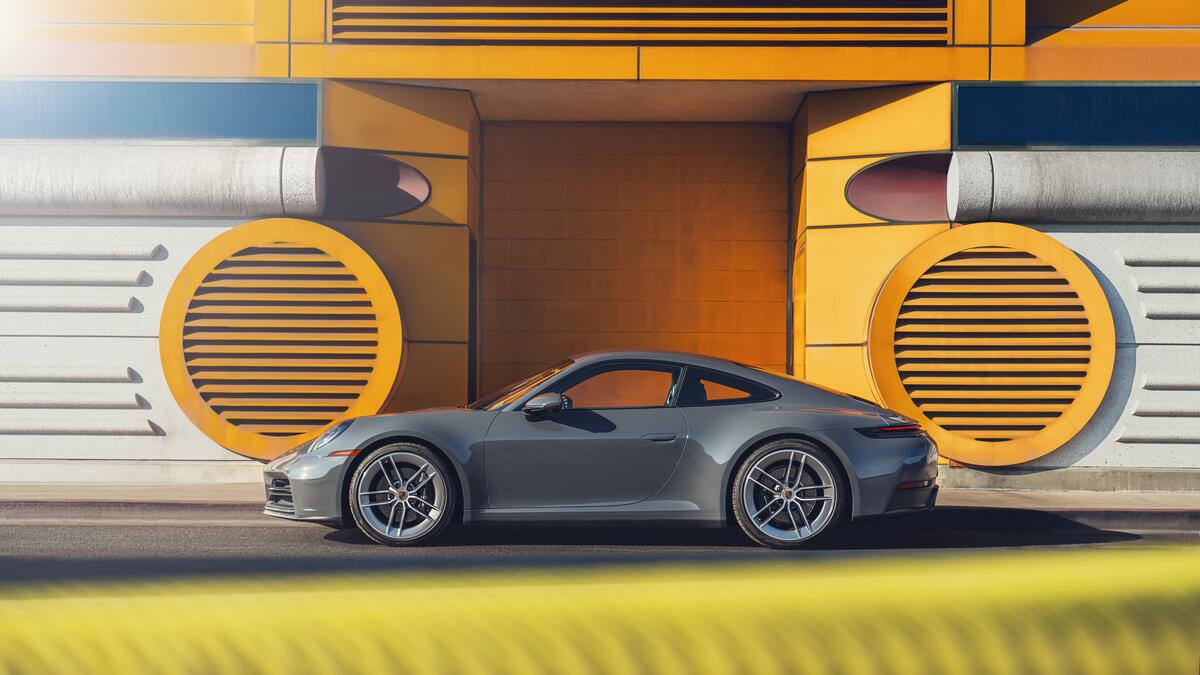
Porsche 911
"...fter like 30 seconds it falls it's not like calls 911 for you no no but it also turns the power off so ..."
The Porsche 911 is a high-performance sports car that’s known for strong handling and speed. It has electronic systems that help control traction when you accelerate hard. The episode mentions it cutting power, which is part of how those systems respond on track.
The Porsche 911 is an iconic rear-engine sports car with a long history and a strong performance reputation. It’s frequently discussed in racing and track settings because it can be driven aggressively while remaining predictable. The podcast context mentions power being turned off after a period, which points to how the car’s systems manage traction and acceleration during hard driving.

cletus mcfarland crown vic
"are doing uh a cletus mcfarland crown vic race it's stafford motor speedway in connecticut"
“Crown Vic” is a nickname for a Ford sedan called the Crown Victoria. It’s a common car people use for racing because it’s big, rear-wheel drive, and easy to modify for motorsports.
“Crown Vic” is shorthand for the Ford Crown Victoria, a full-size American sedan that became a popular platform for stock-car-style racing and demolition derbies. In this segment, the hosts are talking about a Crown Victoria race entry tied to Cletus McFarland’s event.
stafford motor speedway
"are doing uh a cletus mcfarland crown vic race it's stafford motor speedway in connecticut friday july 17th"
Stafford Motor Speedway is a race track in Connecticut. It’s where this event is happening, so it matters for understanding the kind of racing and crowd you’d see.
Stafford Motor Speedway is a race track in Connecticut that hosts short-track and grassroots motorsport events. The hosts are using it as the venue for the Crown Vic race tied to Cletus McFarland.
nascar
"the the headline is every nascar driver entered in cletus mcfarland how long before this just becomes nascar"
NASCAR is the major American stock-car racing series known for oval-track racing and a large roster of specialized drivers. Here, the hosts joke about how quickly a local event could become “NASCAR-like” if enough regulars show up.
Ryan Priest
"notable nascar regulars like uh ryan priest bobby bobby dale earnhardt jr's son probably i'll go that's gotta be uh richard ... noting that ty and austin dillon were also expected to join and noting that uh ryan priest quote ruled ruled the roost at stafford"
Ryan Priest is a stock-car racer who competes in NASCAR. The hosts are saying he’s done really well at this track before, so his presence makes the event more exciting.
Ryan Priest is a NASCAR driver known for competing in NASCAR’s national series and related stock-car events. The hosts mention him as a “notable NASCAR regular” and say he “ruled the roost” at Stafford, implying strong past performance there.
Dale Earnhardt Jr's son
"notable nascar regulars like uh ryan priest bobby bobby dale earnhardt jr's son probably i'll go that's gotta be uh richard"
They’re talking about the Earnhardt family, which is famous in NASCAR. The speaker is guessing which specific driver they mean based on that family connection.
The hosts are referencing a member of the Earnhardt family, which is one of NASCAR’s most famous racing dynasties. In this segment they’re trying to identify which driver is being expected.
Ty Dillon
"noting that ty and austin dillon were also expected to join and noting that uh ryan priest quote ruled ruled the roost at stafford"
Ty Dillon is a NASCAR driver. The hosts are listing him as someone expected to race, which suggests the event could attract more prominent drivers.
Ty Dillon is a NASCAR driver mentioned as part of the expected lineup. Along with Austin Dillon and Ryan Priest, his presence is used to emphasize how “big-name” the field could become.
Austin Dillon
"noting that ty and austin dillon were also expected to join and noting that uh ryan priest quote ruled ruled the roost at stafford"
Austin Dillon is a well-known NASCAR driver. The hosts are saying he might show up, which makes the event feel bigger and more competitive.
Austin Dillon is a NASCAR driver expected to join the event, according to the hosts. His mention signals that this Crown Vic race is attracting recognizable stock-car talent rather than being purely local.
lapped
"that's gonna be crazy to watch from the back of the field if i just don't get lapped that's the goal"
“Lapped” means you get passed by a faster car that finishes a full lap before you do. If you don’t want to get lapped, you’re trying to stay on the lead-lap group.
In racing, being “lapped” means another car completes a full circuit of the track and passes you again, putting you one lap behind. The host’s goal is to avoid getting lapped, which indicates they expect a big speed gap between the field and their entry.
crown vicks
"so i wonder if they're making a dent in the supply of available crown vicks i think that's like i know there's a lot of them but they're buying them like 50 at a clip"
“Crown vicks” is slang for the Ford Crown Victoria. The host is basically talking about how racing can reduce how many of those cars are left available.
“Crown vicks” appears to refer to Crown Victoria police cars (often used in NASCAR-style stock-car contexts or as donor cars). The speaker is discussing how many are available and whether the racing activity is reducing the supply of those cars.
nitrous
"but i am fucking so stoked for this reason rad yeah nitrous i've never hit nitrous before oh yeah they put sprays in the car but you have you have only one bottle right yeah"
Nitrous is a performance boost system that gives your engine a temporary power kick. It adds a special gas so the engine can make more power for a short time.
Nitrous (nitrous oxide) is an aftermarket performance system that injects gas into the engine to temporarily increase power. It works by adding extra oxygen to the combustion process, letting the engine burn more fuel for a short burst.
unibody chassis
"the big story with them is that they are making unibody chassis of classic cool cars that we all love"
A unibody chassis is when the car’s body and frame are built as one piece. That’s important because it affects how well parts fit and how solid the car feels.
A unibody chassis means the body and frame are integrated into one structure, rather than using a separate ladder frame. That matters because unibody geometry and metal quality strongly affect fitment, stiffness, and how easily aftermarket or reproduction parts line up.

Toyota Land Cruiser
"...ic cool cars that we all love like the a86 240 sx land cruiser um are they making this is wild is this who's mak..."
The Toyota Land Cruiser is a tough SUV designed to handle rough roads and off-road driving. People like it because it’s built to last and keep working. The podcast is basically asking why it’s still considered so cool and what’s happening with it now.
The Toyota Land Cruiser is a rugged, body-on-frame SUV built for durability and off-road capability. It’s often mentioned alongside other classic Japanese enthusiast cars because it represents a long-running, dependable formula. In the podcast, it’s brought up as a surprising “cool car” that people love and wonder about in terms of what’s being made today.
Revology
"and not to my knowledge i think they're making their own bodies i'm pretty sure based on their videos revology makes them in florida"
Revology is a company that works with classic-car enthusiasts and helps produce reproduction-style cars or parts. The hosts are discussing where its car bodies/chassis might be coming from.
Revology is an enthusiast-focused company known for building and supplying reproduction-style classic cars and parts. In this segment, it’s referenced as a company that gets bodies/chassis work done and compares its approach to other reproduction efforts.
OE supplier
"making car parts for companies like this is a massive fucking for real factory with it's an oe supplier oe supplier"
An OE supplier means the company makes parts that are intended to match what the carmaker uses on new cars. The point here is that they’re trying to build these reproduction parts with factory-level consistency.
An OE supplier (original equipment supplier) makes parts for the automaker’s production vehicles, not just aftermarket replacements. The host is emphasizing that this Chinese factory is positioned like an OE-style manufacturer, which can affect consistency and quality control.
galvanized steel
"in the video like they show that they galvanized the steel for example of the 86 they didn't do that back in the day so these are these are less likely to rust"
Galvanized steel has a protective zinc coating that helps stop rust. The host is saying the new reproduction parts may resist corrosion better than the original materials.
Galvanized steel is steel coated with zinc to help prevent rust. The host contrasts it with how the original 86-era steel wasn’t galvanized, implying the reproduction unibody may be less prone to corrosion.
tolerances
"and they said a bunch of oe and parts wouldn't fit on it right so the tolerances were wrong so you know larry"
Tolerances are how close to exact the measurements are when parts are made. If tolerances are off, other parts won’t line up or fit properly.
Tolerances are the allowable variation in dimensions during manufacturing. The host says some OE and parts wouldn’t fit because the reproduction chassis had tolerances that were “wrong,” which is a key issue for fitment and quality.
QC problem
"like the way i mean the way that a die is made is really cool i don't even know and the way they press it and all that shit but he didn't address that qc problem"
QC means quality control—making sure parts are made correctly and consistently. The host is saying the concern is whether the chassis is accurate enough that a whole car can be assembled without problems.
QC (quality control) is the process of checking manufactured parts to ensure they meet specifications. The host criticizes that the video didn’t address a QC/fitment issue—specifically, whether the chassis is built accurately enough to assemble into a full car.
lasers
"that now maybe they just they measure with lasers and stuff but also you should do with qc build one come on"
Lasers can be used to measure parts very precisely. The host’s point is that even if you measure with lasers, you should still assemble a full car to confirm everything fits in practice.
In manufacturing, laser measurement systems can be used to check geometry and alignment with high precision. The host suggests they might be measuring with lasers, but argues that building a full car is still important for real-world QC.

Ford Bronco
"... then because they've done they've built like 600 bronco bodies like the classic bronco and some of those ..."
The Ford Bronco is an SUV made for off-road driving. It’s popular with car fans and has a big following. The episode mentions a lot of Bronco bodies being built, which points to how common or important the model is for projects.
The Ford Bronco is a classic American SUV known for off-road ability and a strong enthusiast following. In the podcast, it’s referenced in the context of building or using many Bronco bodies, which highlights how popular and collectible the platform is. That kind of talk usually comes up when discussing projects, racing, or restoration culture.
OEMs
"and also i'm wondering when lawyers show up from oems because you know this isn't oh they're not doing this with permission"
OEMs are the original car makers (and their parts divisions). The hosts are basically asking: will the companies that own the designs and trademarks step in with lawyers if recreations aren’t authorized?
OEMs are Original Equipment Manufacturers—the companies that build the vehicles and parts in the first place. The hosts are wondering when OEM lawyers show up, implying that unauthorized recreations or part-making could trigger legal action over intellectual property, branding, or compliance.
recreation of things
"like they said they're gonna build a recreation of things yeah it's Porsche and i i feel like that'll be the canary in the coal mine"
They’re talking about recreating cars—building something that looks and functions like an original. The big questions are whether it’s legal and whether it’s treated as the real car or just a replica.
“Recreation” here refers to rebuilding enthusiast cars or car components to closely resemble originals, raising questions about legality, permissions, and what counts as an authentic vehicle. The hosts connect it to both parts fitment and vehicle identity (like VIN transfer), which are the two big practical hurdles.
VIN
"you find the donor car and you get transfer the vin onto this new unibody do you there's a legal process for that by the way"
VIN is the vehicle’s unique ID number, like its fingerprint. The hosts are saying that if you transfer the VIN to a new build, it can affect what the car is legally considered to be.
VIN stands for Vehicle Identification Number, a unique code assigned to a specific vehicle for identification and legal tracking. In the segment, transferring the VIN is brought up as part of the process of making a recreated car legally “be” the donor vehicle.

McLaren F1
"mclaren f ones that have had replacement carbon tubs you know there's replacement frames of cars [2785.2s] like it becomes mclaren tubs made by mclaren yeah yeah"
The McLaren F1 is a very rare, high-end supercar. The point here is that some cars can be rebuilt using replacement structural parts (like carbon tub sections and frames) instead of only using original factory pieces.
The McLaren F1 is a famous supercar known for its extreme engineering and rarity. In this segment, the hosts mention replacement carbon tubs and replacement frames, which highlights how some modern “reproduction” approaches can keep the original design language while using new components.
carbon tubs
"mclaren f ones that have had replacement carbon tubs you know there's replacement frames of cars [2785.2s] like it becomes mclaren tubs made by mclaren yeah yeah"
A carbon tub is the main structural shell of the car made from carbon fiber. Replacing it is a big deal because it affects the car’s strength and safety, not just its appearance.
A carbon tub is the structural “shell” section of a car made from carbon fiber composites. Replacement carbon tubs matter because they’re part of the safety-critical structure, not just body panels.
replacement frames
"mclaren f ones that have had replacement carbon tubs you know there's replacement frames of cars [2785.2s] like it becomes mclaren tubs made by mclaren yeah yeah"
A replacement frame is swapping out the car’s main structural base. If you’re building a replica or reproduction, changing the frame can be a major part of making it work and fit legal requirements.
A replacement frame means substituting the car’s primary structural chassis/underbody structure. In the context of reproductions, it’s relevant because it affects how the car is built, repaired, and potentially how it’s classified for registration.
register
"it there's a couple of things like can you register [2796.0s] them that takes that's challenging depending on your state"
Registration is the legal paperwork that lets a car be driven on public roads. The host is saying that replica/reproduction cars may be harder to register depending on local rules.
Registration is the legal process of getting a vehicle recognized for road use, including titling and inspection requirements. The hosts highlight that reproduced or replacement-bodied cars can be challenging to register depending on state rules.

Dodge Challenger
"yeah look at this challenger uh you know a challenger a challenger uh it's just a typo they got [2808.9s] it right over here yeah"
The Dodge Challenger is a popular American muscle car. The host is talking about whether a reproduced or modified version can be registered and how it might be treated legally.
“Challenger” refers to the Dodge Challenger muscle car line, which is often used as a base for track and restomod-style builds. Here it’s mentioned in the context of registration/legality and how reproduced bodies might be classified.
track builds
"i think this is great for like track builds i mean because some of [2813.9s] these cars are so expensive and if you want to build an 86 to drift or track drive"
A track build is a car prepared mainly for driving on a race track. The idea is that you might start with a cheaper base and then add the racing parts you need, instead of paying for a fully built expensive car.
A track build is a car setup intended primarily for track use rather than daily driving. The hosts argue reproductions can be useful here because you can buy a cheaper base body and then add only the parts you actually need for racing.
drift
"these cars are so expensive and if you want to build an 86 to drift or track drive [2825.9s] and it doesn't come with a whole bunch of things that you'd probably throw away"
Drifting is when a driver intentionally lets the car slide sideways through a turn while still controlling it. The host mentions it because people often build certain cars specifically for drifting.
Drifting is a driving technique where the car is intentionally steered so the rear tires lose grip and the car slides through a corner while maintaining control. It’s mentioned here because the Toyota 86 is a common platform for drift/track builds.
replica
"real and fake doesn't necessarily mean bad and good [2868.2s] yes especially today yeah especially with old cars old cars the you know the quote real ones"
A replica is a car made to resemble a more expensive or rare model. The host is saying that replicas can still be high quality, and people’s opinions about them can shift.
Replica (in this context) means a car built to look like another model, often using reproduction bodywork and sometimes non-original components. The hosts discuss how “real vs fake” doesn’t automatically determine quality, and how perception of replicas can change over time.
door slam
"and if you show it to them and they you know they [3005.5s] can see the you do the door slam and they go oh yeah you know that's a good point"
A “door slam” is just the sound and feel when you close a car door. People use it as a quick way to judge whether the car feels solid and well-built.
A “door slam” is a quick test of how solid and well-fitted a car’s doors feel when closed. Enthusiasts often use it as an informal indicator of build quality, panel fit, and structural rigidity.
fatties
"it's from you know fatties is 86 imports or whatever the fuck yeah pretty weird don't say [3026.9s] don't say his name three times or fatties will call us tomorrow"
“Fatties” sounds like a name of a person or shop the host expects listeners to recognize. The point is that reputation and who builds the car can change how people judge it.
“Fatties” appears to be a person or shop name referenced in the context of “86 imports.” The host is implying a known source/community around these cars, which affects how people perceive credibility and authenticity.
dry ice cleaning
"so he's the yo if you're in la and you need that dry ice dry ice cleaning on your shit [3051.7s] not just cars food trucks kitchens industrial equipment parts you know"
Dry ice cleaning uses tiny pellets of frozen carbon dioxide to blast dirt off surfaces. It’s a way to clean without soaking things in water or harsh chemicals.
Dry ice cleaning uses solid carbon dioxide pellets blasted at a surface to remove contaminants without leaving liquid residue. It’s often used for delicate parts or environments where you want minimal mess and reduced chemical exposure.
dry ice blast
"david tracy with those diffs for sure whoa and it's dry cleaning i what if you dry ice black [3064.4s] what if you dry ice blast his shirt my god that's what it survive"
A “dry ice blast” means blasting frozen dry-ice pellets onto something to knock off grime. It’s basically the cleaning action being described.
A “dry ice blast” is the process of blasting dry ice pellets at a target surface. In the segment, the host jokes about whether blasting a shirt would remove oil and restore whiteness, but the underlying term refers to the cleaning method.
power steering gunk
"the underside of my car is is uh full of power steering gunk actually i wiped out the whole tray went through a lot of paper towels"
“Power steering gunk” refers to oily residue that collects around the power steering system—often from minor leaks or seepage. It can mix with road grime and dust, making the underside messy and harder to clean.
pressure washing
"as long as you got something to wreck dude pressure washing i mean we've all done it like it is cathartic it is you just watch the you're watching progress happen"
Pressure washing is cleaning with a strong jet of water. It can be satisfying because you can see the dirt come off, but you have to be careful not to force water into places it shouldn’t go.
Pressure washing uses a high-pressure water stream to remove dirt and grime from surfaces. In detailing contexts, it’s often discussed as a satisfying way to see cleaning progress, but it can also drive water into seams if done carelessly.
throttle
"the tesla guy like tweeted that the throttle was at 100 that guy was charged with manslaughter"
The throttle is basically the power control. When someone says the throttle was at 100, they mean the car was being commanded to give maximum power.
The throttle is the driver’s control that regulates engine power by managing how much air/fuel the engine can use (or, in modern cars, how much power the car is commanded to deliver). In crash discussions, “throttle at 100” implies the car was requesting maximum power, which becomes important for determining driver intent and system behavior.
tesla
"the tesla guy like tweeted that the throttle was at 100 that guy was charged with manslaughter ... of course right yeah so ... his defense is going to be that the car did it"
Tesla is the car company whose driver-assistance features are being discussed here. The debate is whether the system contributed to the crash or whether the driver’s actions were the cause.
Tesla is the automaker behind the Autopilot and “Full self-driving” driver-assistance systems discussed in the segment. The transcript frames Tesla’s likely defense strategy as emphasizing that the driver, not the car, caused the crash.
autopilot
"absolutely possible in and and in fact very likely that he was very over reliant on autopilot in general and came into a situation where he didn't see a stop sign"
Autopilot is a system that helps the car drive, like steering and staying in the lane. In accidents, investigators look at whether the driver was paying attention and ready to take over.
Autopilot is Tesla’s driver-assistance system that can handle certain driving functions (like steering and lane keeping) under specific conditions. In legal/accident contexts, the key issue is whether the driver relied on it too much and failed to respond to situations it couldn’t handle.
stop sign
"and came into a situation where he didn't see a stop sign or a turn and panicked and pressed the wrong pedal"
A stop sign is a road sign that means you must come to a full stop. If the car’s assistance system misses it, that can be a big factor in why an accident happened.
A stop sign is a traffic control device that legally requires a complete stop at an intersection. In driver-assistance failure scenarios, missing a stop sign is often treated as a critical example of the system not recognizing or responding correctly to traffic signage.
wrong pedal
"and panicked and pressed the wrong pedal and and and he will almost certainly try to blame uh tesla"
“Wrong pedal” means the driver hits the wrong one—like pressing the gas when they meant to brake. Investigators consider it because it can cause sudden, unintended movement.
“Wrong pedal” refers to the driver accidentally pressing the accelerator instead of the brake (or vice versa), which can cause unintended acceleration during low-speed maneuvers or emergency moments. It’s a common theme in accident investigations because it can mimic system faults even when the vehicle is behaving normally.
data that they can prove is legitimate
"all tesla would have to have data that they can prove is legitimate and then the defense will be like well how do we verify"
They’re talking about evidence that can be checked and trusted. In court, the other side may argue the numbers or tests aren’t reliable or don’t really match what happened.
In this context, “data that they can prove is legitimate” means evidence must be verifiable and trustworthy, not just claimed. For technical product cases, the defense often challenges whether the data is accurate, properly collected, and correctly tied to the specific incident.
misleading marketing
"well but if they make them argument to a jury and say they're misleading marketing led my cousin my client to over rely on the product and he degraded his skills"
It means the company’s ads or claims might not be truthful or might be presented in a way that makes people trust the product too much. In court, that can be used to argue the marketing caused someone to rely on the product.
“Misleading marketing” refers to promotional claims that are presented in a way that’s not accurate or not supported by real-world performance. In a lawsuit, it can be used to argue that a customer relied on those claims when making decisions about using or trusting a product.
monza
"going to northern italy next year for roughly the same amount of money you can rent a for modern ferrari for six to eight laps at monza or rent one for a day to drive through the countryside"
Monza is a world-famous race track in Italy. It’s known for being fast, with long straightaways, so it’s a great place to really test how quick and stable a car feels at speed.
Monza is a famous high-speed racing circuit in Italy, known for long straights and heavy braking zones. Because it’s designed for speed, it’s a common benchmark track for evaluating how well a performance car can accelerate and stay stable at high velocity.
autostrada
"they're tight they're windy they're the tarmac isn't always perfect i mean a good a quality hatchback on the back roads is going to be really as much fun as a ferrari that's very true in terms of like dynamics right um but the vibe i'd i would probably just do the track to be honest with you i'd probably just do the track um if if yeah you'll get if what you love about ferrari cars is like the speed and the allure performance you'll get to feel that on the track that's true tappin z's nuts smallest car"
An autostrada is Italy’s high-speed highway system. The host is saying that on those big roads you can actually drive fast enough to use a powerful car, unlike many narrow back roads.
Autostrada is the Italian term for the country’s high-speed motorway network. The host contrasts it with tight, windy back roads, arguing that you need an autostrada to really use a Ferrari’s speed safely and comfortably.

Mercedes-AMG GT
"i think an astin vantage will fit a set of golf clubs if you take the woods out setting no drivers yeah i think uh an amg gt will well look at 1991"
The Mercedes-AMG GT is a high-performance Mercedes sports car. The host mentions it as part of a list of cars and whether they can fit golf clubs in the trunk.
The Mercedes-AMG GT is a performance sports car from Mercedes-AMG, built for track-capable driving and strong straight-line pace. In this segment it’s name-dropped in a “will it fit golf clubs?” practicality joke.

Ferrari 328
"my ferrari 328 would fit golf clubs in the trunk my coontosh will fit golf clubs in the trunk as a matter of fact like no it will not"
The Ferrari 328 is an older Ferrari sports car with the engine placed near the middle of the car. People like it because it drives like a real sports car and feels very “Ferrari” even today.
The Ferrari 328 is a classic Italian sports car from Ferrari, known for its mid-engine layout and V8 character. In enthusiast circles it’s remembered as a driver-focused 1980s-era Ferrari that still feels special on track and on twisty roads.

Acura NSX
"an amg gt will well look at 1991 1991 act your nsx will absolutely fit golf clubs in the trunk"
The Acura NSX is a sports car with the engine placed near the middle. The host is using it as an example of a supercar that might still fit normal items like golf clubs.
The Acura NSX is a mid-engine supercar from Acura (Honda’s luxury brand), known for blending everyday usability with exotic-car performance. Here it’s mentioned as a surprisingly practical option for fitting golf clubs in the trunk.

Lamborghini Countach
"my ferrari 328 would fit golf clubs in the trunk my coontosh will fit golf clubs in the trunk as a matter of fact like no it will not"
The Lamborghini Countach is a famous, very flashy supercar from Lamborghini. The host is making a joke about whether something as “serious” as a Countach can still fit everyday stuff like golf clubs.
The Lamborghini Countach is a legendary Italian supercar known for its wedge shape and dramatic styling. It’s also a mid/low-slung, high-performance icon, and the host is joking about how even a car like that can (or can’t) swallow golf clubs.

Scion xB
"i bet the scion what's the vertical sign the xb yeah it'll fit in that trunk at an upright angle oh easily"
The Scion xB is a small, box-shaped car designed to be practical and roomy. The host is comparing it to sports cars to make a point about trunk space for golf clubs.
The Scion xB is a boxy, practical compact car known for maximizing interior space. The host uses it as the “it’ll fit anything” comparison against low-slung sports cars.

mclaren gt
"engine corvettes um mclaren gt the mclaren the mclaren gt like when they has that that trunk over the engine that will fit a surfboard oh or a a small set of skis or a snowboard"
The McLaren GT is a McLaren that’s meant for longer drives, not just track days. It also has extra storage space up front, so you can fit things like sports gear in the trunk area.
The McLaren GT is a grand touring McLaren built around comfort and long-distance usability, and it’s notable here for having a practical front trunk (“frunk”) area. The speaker is describing how the storage space can swallow bulky items like a surfboard, skis, or golf clubs—something you don’t usually expect from supercars.

Mercury Grand Marquis
"i mean when i was like in my 20s like you stood on one the grand we danced on the roof of the grand marquis we actually also jumped that car over train tracks like intentionally"
The Mercury Grand Marquis is a big, older-style American car. The host is joking about doing a stunt with it, but it’s not something you should try.
The Mercury Grand Marquis is a full-size American sedan known for a comfortable, traditional layout. The speaker is describing jumping it, which highlights how big, heavy cars can still be used for chaotic stunts—though it’s obviously not something to emulate.

Nissan Juke
"of the grand marquis we actually also jumped that car over train tracks like intentionally we did like a fucking juke's hazard that motherfucker yeah that was serious that that might have been actually the worst that's the highest i've ever jumped any car i think wow yeah i blew the head"
The Nissan Juke is a small crossover SUV. It’s known for being compact and having a unique look. The podcast mentions it in a story where the car was jumped over train tracks, which is an example of an extreme situation.
The Nissan Juke is a subcompact crossover known for its distinctive styling and compact size. In the podcast, it’s brought up in a story involving jumping the car over train tracks, which highlights how the vehicle was treated in a chaotic, real-world situation. That kind of anecdote often comes up to emphasize how the car performed or survived under unusual stress.
head gasket
"yeah i blew the head gasket on my dad's scout offroading it and i didn't realize how severe you know that is in terms of damage at the time"
A head gasket is a tough seal inside the engine. If it breaks, the engine can overheat and you can end up with very expensive repairs.
A head gasket is the sealing layer between the engine block and the cylinder head. If it fails, coolant and/or combustion gases can leak, which can lead to overheating and major engine damage.

mercury villager
"oh i um i got uh the the mercury villager the nautica villager um when i was a well it was before i guess this was one of the first times i ever drove on a vacay"
The Mercury Villager is a minivan—an older family vehicle. They’re just mentioning it as one of the cars they drove.
The Mercury Villager is a minivan from the Mercury brand, best known as a family hauler. The speaker mentions it as part of their driving history, which helps set the “I love driving” backstory rather than discussing a technical detail.
mud bogging
"there was mud all we took it like mud bogging like diving through these mud pits like sending it sideways on these dirt"
Mud bogging is when you drive into really thick mud on purpose. The car can get stuck because the tires can’t grip well.
Mud bogging is off-road driving where a vehicle deliberately enters deep mud to test traction and power, often getting stuck and needing recovery. It’s different from normal “driving in rain” because the tires lose grip and the vehicle can sink.
Request an Explanation
Heard something you'd like explained? We'll add it to this episode.
Sign in to request explanations for terms you heard.
Want to learn more?
Browse our glossary for plain-English explanations of automotive terms, jargon, and concepts.
Help improve this episode
See something that's not quite right? Our annotations are AI-generated and can sometimes miss the mark. Click the flag icon on any annotation to suggest a correction.