
Comedian Jerry Wayne Longmire
About this episode
Jerry Wayne Longmire joins The Smoking Tire, and the conversation swings from car-culture comedy—his “Wrecking Yard” special and the podcast name—to air-cooled Volkswagen memories and wild engine rumors. They debate collector-car pricing, junkyard show-car finds, and fire-damaged VW bus restorations. Later, the talk broadens into touring, transmissions, and racing economics, then into EV feel, off-roading traction, and dirt-track strategy. Between stories, the hosts run sponsor reads for Casper and DeleteMe.
A literal cult story, racing, great bad cars, and so much more. Jerry Wayne Longmire is a Houston-based stand-up comic and Outlaws racing commentator. He is known for his viral series "Truck Astrology". His playful storytelling and relatable humor have captivated audiences worldwide across platforms like TikTok, Facebook, YouTube, and Instagram.
Recorded July 9, 2026
https://linktr.ee/JerryWayneLongmireJr
Show Notes
DeleteMe
Get 20% off your DeleteMe plan when you go to www.joindeleteme.com/ TIRE and use promo code TIRE at checkout.
Casper
Right now, save up to 20% on mattresses and up to 25% on everything else when you go to Casper.com. #sponsored
Avants
https://avants.com/tst use code TST for 10% off your membership!
Use Off The Record! and ALWAYS fight your tickets! For a 10% discount on your first case go to https://www.offtherecord.com/TST
Want your question answered? Want to watch the live stream, get ad-free podcasts, or exclusive podcasts? Join our Patreon: https://www.patreon.com/thesmokingtirepodcast
Instagram:
https://www.Instagram.com/thesmokingtire
https://www.Instagram.com/therealzackklapman
Enter to WIN our AMAZING 2025 Porsche 911 Turbo S!! https://www.dreamgiveaway.com/tickets/porsche?promo=SMOKINGTIRE
Promo Code Offer: Get 4X bonus tickets with any donation of $25 or more. With every donation you are helping benefit some wonderful veterans' and children's charities.
Podcast Promo Code: SMOKINGTIRE
Want your question answered? Want to watch the live stream, get ad-free podcasts, or exclusive podcasts? Join our Patreon: https://www.patreon.com/thesmokingtirepodcast
Use Off The Record! and ALWAYS fight your tickets! Enter code TST10 for a 10% discount on your first case on the Off The Record app, or go to http://www.offtherecord.com/TST.
Watch our car reviews: https://www.youtube.com/thesmokingtire
Tweet at us!
https://www.Twitter.com/thesmokingtire
https://www.Twitter.com/zackklapman
Instagram:
https://www.Instagram.com/thesmokingtire
https://www.Instagram.com/therealzackklapman
air-cooled engines
"An old man could build those air-cooled engines and he was hell on them... Always outside of our house, on the side of our house, there would be a Baja bug and a sandrail and a trike and a couple just regular old Beatles."
An air-cooled engine doesn’t use coolant like most modern cars. Instead, it uses airflow over fins on the engine to keep it from overheating.
Air-cooled engines rely on airflow over the engine’s fins to remove heat instead of using liquid coolant. Volkswagen’s classic “air-cooled” engines are a big part of why they became a huge enthusiast platform.
twin turbo
"Aluisa Roof, our good friend, you know Roof Porsches, they're really fast. They dropped a twin-turbo air-cooled flat 8 that makes like a thousand horsepower."
Twin-turbo means there are two turbochargers on the engine. They cram more air in, which usually makes the engine much more powerful.
Twin-turbo means the engine uses two turbochargers to force more air into the cylinders, improving power output. Depending on the setup, twin turbos can help with both peak power and throttle response by managing boost across the rev range.
air-cooled flat four
"They dropped a twin-turbo air-cooled flat 8 that makes like a thousand horsepower."
A “flat 8” is an engine with eight cylinders laid out horizontally. “Air-cooled” means it uses airflow to cool the engine instead of coolant.
An “air-cooled flat 8” is a horizontally opposed eight-cylinder engine (a flat engine) that uses air cooling rather than liquid coolant. Flat engines are known for a low center of gravity, and pairing that layout with air cooling is unusual at this power level.

912 Porsches
"... It sounds real crazy. It sounds like two Hot Rod 912 Porsches running at the same time. Oh, look at that monste..."
The Porsche 912 is an older sports car made by Porsche. It’s known for a unique engine sound and a fun, lightweight feel. People may mention it when talking about how it sounds or how it drives compared to other classic Porsches.
The Porsche 912 is a classic sports car known for its compact size and distinctive air-cooled character. It’s often discussed because it can sound and feel like a smaller, lighter take on the brand’s more famous models. In a podcast, it may be mentioned for how it sounds or how it compares in driving feel to other similar cars.
water-cooled
"Yeah, that's water-cooled. Maybe I got that wrong. I was browsing through Instagram. Maybe it's water-cooled. I haven't read about it yet, but I would wager if it..."
“Water-cooled” means the engine uses coolant (liquid) to carry heat away. That heat is then managed by the radiator so the engine doesn’t overheat.
“Water-cooled” means the engine uses a liquid coolant circulated through passages to absorb heat and keep temperatures under control. It’s contrasted with air-cooled designs, which rely more on airflow and fins.
flat 8
"The thousand horsepower flat 8. That I do know. Are you excited for a new flat 8 engine? Yes or no?"
A “flat 8” is a type of engine with eight cylinders arranged in two sides that sit flat like a book. Because it sits low in the car, it can help the car feel more balanced, especially in mid-engine designs.
A “flat 8” refers to an eight-cylinder engine with a boxer layout, where cylinders sit horizontally on opposite sides of the crankshaft. This layout is known for keeping the engine’s mass low, which can help a mid-engine car’s balance and handling.
horsepower
"The thousand horsepower flat 8. That I do know. Are you excited for a new flat 8 engine? Yes or no?"
Horsepower is a measure of how much power the engine makes. More horsepower usually helps the car go faster, especially when you’re already moving.
“Horsepower” is a measure of engine power—how quickly the engine can do work. Higher horsepower generally means the car can accelerate harder, especially at higher speeds.
boxer
"Eighth-cylinder boxer twin-turbo 4.8 thousand horsepower, no other specifics. 737 foot-pamper."
“Boxer” means the engine’s cylinders are arranged so the pistons move opposite ways on each side. It can help the engine sit lower in the car, which can improve balance.
“Boxer” describes the cylinder arrangement where pistons move in opposite directions on either side of the crankshaft. This is common in certain performance engines because it helps keep the engine’s center of gravity low.
foot-pamper
"Eighth-cylinder boxer twin-turbo 4.8 thousand horsepower, no other specifics. 737 foot-pamper."
“Foot-pamper” sounds like “foot-pounds,” which is a way to measure torque. Torque is the engine’s twisting force—higher torque usually means stronger pull when you start moving.
“Foot-pamper” appears to be a mis-transcription of “foot-pounds,” a unit commonly used for torque. Torque is the twisting force the engine produces, which strongly affects how quickly a car accelerates from low speeds.
mid-engine
"Well, it's in a car that's like a mid-engine sort of supercar. Yeah, I mean, that's going to be pretty cool, huh?"
“Mid-engine” means the engine sits closer to the middle of the car rather than at the front. That can help the car turn more easily and feel more balanced.
A “mid-engine” layout places the engine near the center of the car, typically behind the front seats and ahead of the rear axle. This helps reduce polar moment of inertia, which can make the car feel more agile in cornering.

Chevrolet Chevelle
"No special Chevelles and stuff are back to earth. You watch them."
A Chevelle is a classic Chevrolet muscle car. The speaker is saying that even the “special” versions aren’t selling for as much as you might expect right now.
The Chevrolet Chevelle is a classic American muscle car line from Chevrolet, best known for its 1960s–1970s performance variants. In this segment, “special Chevelles” implies higher-demand or more desirable trims that the speaker says aren’t getting the same hype or money as before.
barn find buys
"You watch them. They go out through these barn find buys and these collections."
A “barn find” is a car that’s been sitting for a long time, usually forgotten in storage. When people say “barn find buys,” they mean buying those cars when they show up—sometimes cheap, but often needing work.
A “barn find” is an old car that’s been stored away for years—often in a barn or garage—then gets discovered and sold. “Barn find buys” refers to buying cars that come from that kind of long-storage discovery pipeline, which can drive both bargain pricing and restoration projects.
collection
"You watch them. They go out through these barn find buys and these collections. They're buying these collections up all across."
Here, “collection” means a person has a bunch of cars together, not just one. When those owners sell, it can change what cars show up and what they cost.
In enthusiast car talk, a “collection” usually means a group of cars owned together by one person or family, often curated over time. When cars are sold from collections, pricing and availability can differ from normal dealer or auction inventory because the cars may be bought and sold as part of an estate or downsizing.
Barrett Jackson
"I was just talking to two friends who I was like, we need to go to the Tuesday of Barrett Jackson next year with 25K cash."
Barrett-Jackson is a famous car auction where collectors buy and sell classic cars. The speaker is talking about going there on a specific day to see what they can buy.
Barrett-Jackson is a major collector-car auction company known for selling classic and enthusiast vehicles, often with big crowds and high-profile results. When someone says they want to go to the “Tuesday of Barrett Jackson,” they’re talking about attending a specific auction day to buy cars.

Volkswagen Bus
"...he other houses on the block. And the side of the bus that was facing the house was like melted and the..."
A Volkswagen Bus is a large van made by Volkswagen. It’s known for carrying people and having a recognizable, boxy shape. People might talk about one because of how it looks, or because a damaged one can show obvious body damage.
The Volkswagen Bus (often called a Microbus/Transporter depending on era) is a classic van known for its roomy interior and iconic design. It’s frequently discussed in car culture because it’s practical for passengers and also a popular platform for customization. In the podcast context, it’s mentioned in a story about damage to the bus body, which highlights how these vehicles can be affected by accidents or neglect.

Volkswagen I
"...d the cars are in good shape, I have not got that Volkswagen I rented over 30 miles an hour. It's a two car syst..."
The Volkswagen ID. Buzz is an electric van based on the classic Volkswagen Bus idea. Instead of using gasoline, it runs on electricity. People may mention it because it can drive normally at highway speeds and feels practical for everyday use.
The Volkswagen ID. Buzz is an electric version of the classic Volkswagen Bus concept, combining the familiar van shape with modern EV technology. It’s discussed in terms of how it performs in everyday use—like maintaining speed and feeling “in good shape” during a rental or test drive. In a podcast, it often comes up when comparing expectations of electric vehicles versus real-world driving behavior.
lane splitting
"[1042.0s] or your motorcycle or whatnot. [1044.8s] The other move here is motorcycle, [1046.5s] because lane splitting is legal, so you can beat traffic. [1048.8s] Yeah, we got that too."
Lane splitting is when a motorcycle goes between lanes of cars that are stuck in traffic. Some states allow it, and some don’t, which is why people argue about it.
Lane splitting is when a motorcycle rider drives between lanes of slower or stopped traffic. It’s legal in some places and treated differently than normal lane changes because the bike is moving through the gap rather than merging into a lane.

Vespa
"I don't know if you saw my Vespa outside. That's what I'm riding. It's lovely."
A Vespa is a small scooter you ride like a bike, but with a motor. The speaker is saying he rides one and really likes it.
Vespa is a scooter brand known for small, step-through styling and easy city use. In this segment, the host says he rides a Vespa, framing it as his everyday “ride” and a personal commitment.
power band
"It's got a hilarious 80s zingy powerband, and the worst brakes imaginable."
The powerband is the part of the engine’s RPM range where it feels most powerful. If it’s “zingy,” it means the power hits quickly in that range.
A powerband is the specific engine RPM range where the engine produces most of its usable power and feels strongest. When someone describes a “zingy powerband,” they mean the bike’s thrust comes on sharply within a narrow band rather than being smooth everywhere.
worst brakes imaginable
"It's got a hilarious 80s zingy powerband, and the worst brakes imaginable. That's a terrible fucking brakes."
They’re saying the brakes don’t work well or don’t feel trustworthy. Even if the bike is fast, stopping is the problem.
This is a qualitative description of brake performance—how well the brakes slow the vehicle and how confidence-inspiring they feel. In context, the speaker contrasts the bike’s exciting power delivery with braking that feels inadequate.

Honda CBX
"Honda, there's a CBX. You know about the CBX, I assume, right? With the inline six."
The Honda CBX is a motorcycle that’s known for having six cylinders in a straight line. That’s rare, and it makes the bike feel special even before you start modifying it.
The Honda CBX is a famous 1970s Honda motorcycle known for its inline-six engine, which was unusual for the era. In this segment, they’re discussing a modified “pro touring” CBX build that mixes classic CBX power with modern sportbike-style parts and styling.
inline six
"You know about the CBX, I assume, right? With the inline six. There was a CBX on Bat that has like a jigsaw front fork"
“Inline six” means the engine has six cylinders lined up in a row. With six cylinders firing in a smooth pattern, it usually feels very smooth and refined.
An inline six is an engine layout where six cylinders are arranged in a single straight line. It’s often praised for smooth power delivery because the firing order is naturally balanced compared with many other layouts.
pro touring
"It's like a pro touring CBX that looked so cool. Did it sell? OK, it must have sold."
“Pro touring” is a build style where someone takes an older vehicle and upgrades it to drive more like a modern performance one. The goal is better handling and control, not just looks.
Pro touring is a style of build that aims to make an older car or bike handle and ride like a modern performance machine. It typically pairs updated suspension/brakes and more aggressive geometry with a classic look.
street fighter
"That's cool. Yeah, cool street fighter thing. Yeah, that's going to sound like a fucking F1 car."
A “street fighter” is a modified motorcycle style that usually removes the fancy fairings and makes the bike look tougher and more aggressive. It’s more about attitude and street presence than full fairing aerodynamics.
A street fighter is a motorcycle customization style that strips away fairings and turns the bike into a more aggressive, naked, street-focused machine. The look emphasizes exposed mechanicals and a “mean” stance rather than aerodynamic bodywork.
milk crate
"You bought it in pieces? Yeah, yeah, I bought it in milk crates."
They’re talking about using milk crates to store motorcycle parts. It’s basically an improvised way to keep a bike’s pieces organized while it’s being taken apart or rebuilt.
“Milk crates” here is a literal storage/transport setup for motorcycle parts. It’s a humorous but specific detail that implies the bike was disassembled and kept in improvised containers during a project.
Discount Tire
"Avance members get 10% off a discount tire. Plus an additional 10% [...] Members get 10% off at discount tire."
“Discount Tire” is a store that sells tires. The hosts are saying members can get a discount there when buying tires.
“Discount Tire” is a retail tire chain that sells tires and related services. In this segment, it’s mentioned as a place where Avance members get a percentage off tire purchases.
BF Goodrich
"off Michelin and BF Goodrich. [...] And you can get those BFG or Michelin summers or winters and save"
BF Goodrich is a tire brand. The hosts are saying you can buy BF Goodrich summer or winter tires and get a member discount.
BFGoodrich (spelled “BF Goodrich” in the transcript) is a tire brand known for both street and performance tires. Here it’s referenced as an available option for summer or winter tire purchases with the membership discount.
Michelin Pilot Sports
"So if you spent 1500 bucks on a set of Michelin Pilot Sports you're saving 300"
Michelin Pilot Sport is a type of tire made by Michelin. The point of mentioning it is that the discount applies if you buy that tire line.
Michelin Pilot Sport is a performance-oriented tire line from Michelin. The “Pilot Sports” mention here is about pricing and savings on a specific tire model family.
winter tires
"Maybe you want fresh summer tires. Maybe you need a set of winter tires as we get into the fall season."
Winter tires are made to work better in cold weather, snow, and ice. They’re typically recommended when temperatures drop toward winter.
Winter tires are tires designed for cold temperatures and snow/ice conditions, using a softer rubber compound and tread patterns that grip better in winter weather. The segment frames them as a seasonal purchase as fall approaches.
summer tires
"Maybe you want fresh summer tires. Maybe you need a set of winter tires"
Summer tires are designed for warmer weather and usually don’t work as well in cold temperatures. The hosts are talking about choosing the right tire type for the season.
Summer tires are optimized for warm, dry, and wet conditions, typically using a rubber compound that performs best above roughly 45°F (7°C). In the segment, they’re mentioned as the alternative to winter tires depending on the season.
FCP Euro
"Plus, members get 10% off at FCP Euro which have both OEM and aftermarket parts for European cars."
FCP Euro is a store that sells car parts, especially for European brands. They’re saying members get a discount there, and the store carries both factory-style parts and aftermarket options.
FCP Euro is a parts retailer that sells components for European cars, offering both OEM (original equipment manufacturer) parts and aftermarket parts. In this segment, it’s included as another place where Avance members get a discount.
OEM and aftermarket parts
"at FCP Euro which have both OEM and aftermarket parts for European cars."
OEM parts are the same kind of parts the car maker would use. Aftermarket parts are made by other companies, and they can be cheaper or offer different options.
OEM parts are made to match the original equipment specifications from the automaker, while aftermarket parts are made by other manufacturers. The segment highlights that FCP Euro carries both types for European cars.
Hagerty Insurance
"which have both OEM and aftermarket parts for European cars. 5% off Hagerty Insurance"
Hagerty Insurance is a company that sells car insurance, often for classic or hobby cars. The segment says members can get a discount on that insurance.
Hagerty Insurance is an insurer known for specialty coverage, especially for classic and enthusiast vehicles. The hosts mention it because Avance members get a percentage discount on premiums.
hydrogen-powered
"it was a hydrogen powered stew to baker the one that I"
“Hydrogen powered” means the car uses hydrogen for energy instead of gasoline. Some hydrogen cars use a fuel cell to make electricity, while others burn hydrogen directly.
“Hydrogen powered” refers to using hydrogen as the energy source for the vehicle. Depending on the system, hydrogen can be burned in an engine or used in a fuel cell to generate electricity for electric drive.
89 percent grade
"like two miles of you know 89 percent grade when grandpa got"
A “grade” is how steep a hill is, shown as a percent. An “89 percent grade” is insanely steep, which is why the car’s ability to climb is such a big part of the story.
A “grade” is the steepness of a road, expressed as a percentage rise over a given distance. An “89 percent grade” is extremely steep—far beyond typical city hills—so the story is highlighting how the car could climb under very demanding traction and power conditions.

57 thunderbird
"when grandpa got the 57 thunderbird he had the he got the thunderbird"
They’re talking about a 1957 Ford Thunderbird, a classic Ford from the 1950s. The story emphasizes that it could climb a steep hill and even idle up it.
A 1957 Ford Thunderbird is a classic American personal-luxury coupe/convertible from the late 1950s. The host’s point is that it had enough gearing and drivability to climb a very steep hill, even while idling.
two-speed
"it was I don't know two fucking two speed all over three speed on over some shit"
“Two speed” means the car had only two gear ranges for moving. Fewer gears can still work well for climbing if the gearing is set up for low-speed torque.
“Two speed” here likely refers to a two-speed transmission or gearbox arrangement used in older vehicles. The host contrasts it with a “three speed,” implying different shift/gear setups that affected how the car could crawl up the hill.
three speed
"two fucking two speed all over three speed on over some shit"
“Three speed” means the car had three gear steps. That can make it easier to climb hills because you can pick a gear that keeps the engine working effectively.
“Three speed” refers to a three-gear transmission layout, common on older cars. More gear ratios can help keep the engine in a useful power band for steep grades and low-speed driving.

Ford F150
"so when you first started touring [3071.3s] what was your road car? [3074.0s] my first time [3075.3s] back in the early [3076.4s] 2000's was a [3078.5s] I started out with a 94 [3080.4s] F-150 and that got untenable"
The Ford F-150 is a popular pickup truck. Here, the guest says they started with a 1994 F-150, but it became too much to keep running after they had to replace the transmission multiple times.
The Ford F-150 is a full-size pickup known for being widely used and easy to find parts for. In this story, the speaker says they started touring with a 1994 F-150, then had to move on because the truck became impractical after repeated transmission work.
AOD
"and that got untenable [3082.7s] real quick after the [3084.5s] third AOD I had to put in it"
AOD is a name for a Ford automatic transmission. A “transmission” is what changes gears so the engine can run efficiently, especially on the highway.
AOD is an acronym for Ford’s Automatic Overdrive transmission. It’s a type of automatic gearbox designed to provide overdrive gearing for lower engine RPM at highway speeds.

1999 Hyundai Accent
"and I swapped out to a [3088.5s] Hyundai Accent it was a 1999 [3090.5s] Hyundai Accent [3091.8s] and I will tell you I have nothing ugly"
The Hyundai Accent is a small, budget-friendly car. Here, the guest says they switched to a 1999 Accent because their earlier truck setup wasn’t working out.
The Hyundai Accent is a compact car, and the speaker specifically mentions a 1999 model as their next “road car” after the Ford F-150 became unreliable. This highlights how touring often pushes owners toward simpler, cheaper-to-maintain vehicles when a bigger truck becomes a money pit.
checked the oil
"[3107.1s] I don't think I ever checked the oil [3110.1s] not an area one time blew the transmission"
Oil is what lubricates the engine so parts don’t grind against each other. If you don’t check it, the engine can run low on oil and wear out faster.
Checking the oil level is basic maintenance that helps ensure the engine has enough lubrication. Low or dirty oil can increase wear and contribute to mechanical failures.
blew the transmission
"[3110.1s] not an area one time blew the transmission [3112.5s] up in it at [3114.2s] 98,000 miles"
A transmission is the system that helps the car shift gears. “Blowing” it means it broke badly, usually requiring a rebuild or replacement.
“Blowing” a transmission means it failed catastrophically—often from internal damage or overheating. When that happens, the car may stop shifting correctly or become undrivable.
warranty
"[3118.2s] Hyundai just [3118.2s] rebuilt the transmission no questions [3120.2s] like that warranty [3122.3s] just went back to that little"
A warranty is like a repair guarantee from the car maker. If something breaks within the warranty terms, they pay for the fix.
A warranty is a manufacturer’s promise to cover certain repairs for a set time or mileage. In this story, the transmission rebuild was covered without questions.
three-cylinder
"[3120.2s] like that warranty [3122.3s] just went back to that little [3124.2s] three cylinder and [3125.8s] I remember one time I drove"
A three-cylinder engine has three pistons that make power. It’s a smaller engine design, and how well it’s maintained can matter a lot over time.
A “three-cylinder” engine has three combustion cylinders working together to produce power. It’s common in smaller, fuel-efficient cars, but the engine’s design and maintenance history can still affect long-term reliability.
off-road
"and we did off road trip [3167.2s] and I bought one of these and it was fine"
“Off road” means driving somewhere rough or unpaved, not regular highways. It puts more stress on the vehicle because the ground is uneven.
“Off road” refers to driving on unpaved or uneven surfaces like dirt trails, rocks, or ruts rather than normal paved roads. It’s a tougher test of traction, suspension travel, and durability.
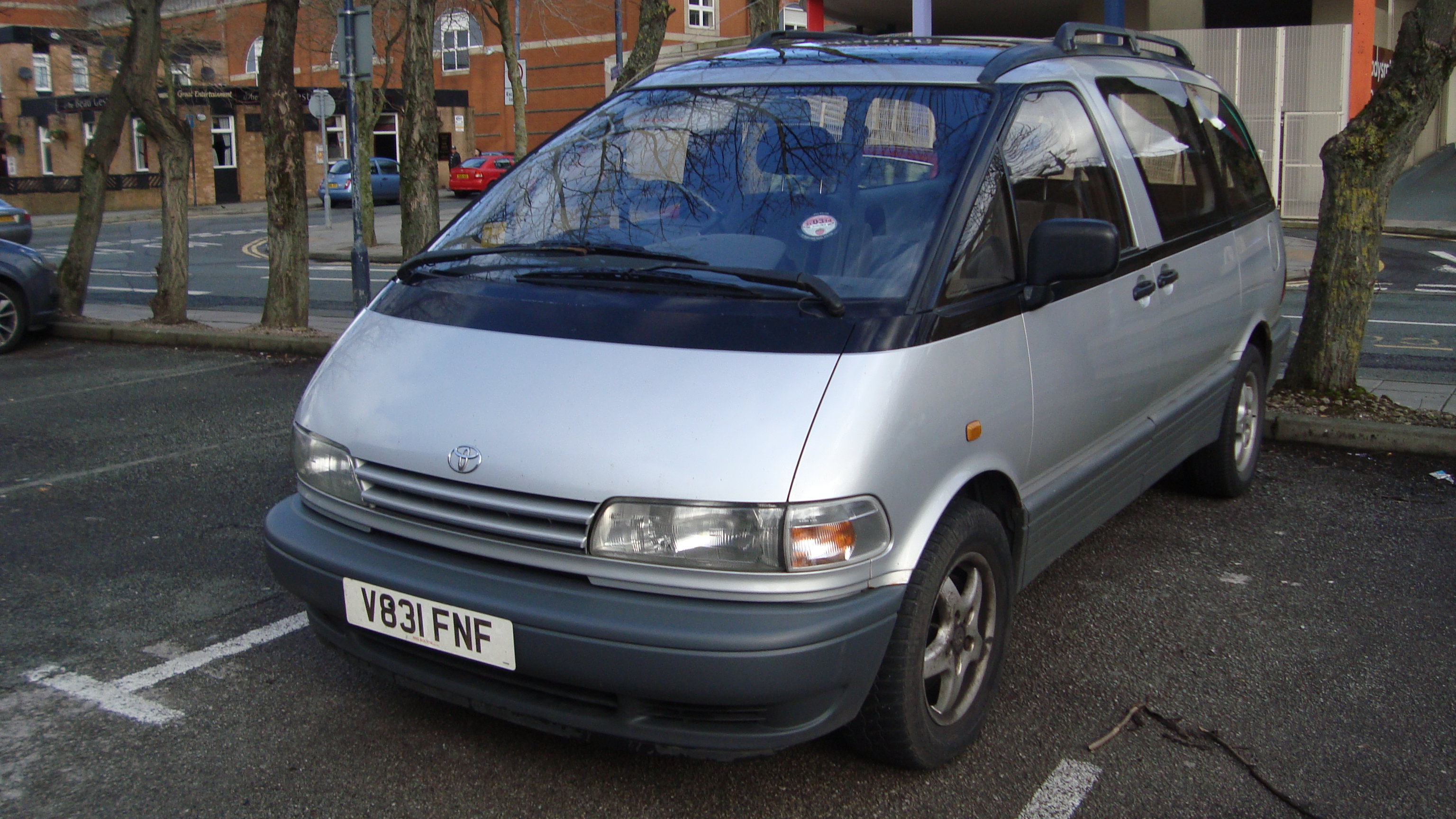
Toyota Previa
"and so he bought that and I bought a [3188.0s] Toyota Previa [3190.1s] the Previa [3191.8s] the Previa was awesome"
The Toyota Previa is a minivan from Toyota. It’s not a typical “off-road” vehicle, but the point here is that it was cheap to buy and worked well for their trip.
The Toyota Previa is a minivan known for being a practical, boxy people-mover that enthusiasts sometimes use for off-road-ish trips. In this segment, the hosts highlight it as a cheap, reliable platform they could buy and then drive long distances.
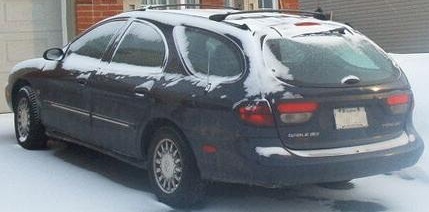
1988 Mercury Sable station wagon
"and seeing a 1988 Mercury Sable station wagon pristine it looked like"
This is a late-1980s Ford-era Mercury station wagon. It was the kind of family car people used to carry lots of stuff, and today it’s mostly something you find older and well-kept.
The Mercury Sable is a full-size sedan line from Ford’s Mercury brand, and the 1988 Sable station wagon is a rare, family-focused body style. In the late 1980s, station wagons like this were common for hauling people and cargo, but they’re now mostly seen as older, preserved “estate-sale” finds.

Buick Roadmaster wagon
"late 80's early 90's Buick's and by half of them we got a roadmaster and stuff our buddy fucking rocked the roadmaster wagon"
The Buick Roadmaster wagon is a big American station wagon from the late 80s/early 90s. People like it because it’s roomy and has a lot of old-school character.
The Buick Roadmaster is a full-size wagon from Buick’s late-1980s/early-1990s era, known for being big, comfortable, and used as a “do-everything” family hauler. When someone says they “rocked the Roadmaster wagon,” it usually means they were driving a large, old-school American wagon as a fun, character-rich daily or project.
sunroofs
"there was a guy that had the one with the crazy sunroofs and everything it was like a glass roof"
A sunroof is a glass or fabric panel in the roof that can open for fresh air and light. When the host says the car had “crazy sunroofs” and “a glass roof,” they’re describing a standout interior/exterior feature that’s especially noticeable on older wagons.

Oldsmobile Vista Cruiser
"it was like a glass roof that's like a vista cruiser it was insane"
The Oldsmobile Vista Cruiser is an older station wagon made by Oldsmobile. It’s known for having a big glass roof that lets in a lot of light. People mention it because it looks unusual compared with most other cars.
The Oldsmobile Vista Cruiser is a classic station wagon known for its distinctive glass roof and upscale, family-car styling. It’s significant because it stands out visually and represents a particular era of American station wagon design. In podcast talk, it’s often referenced for its unusual features—like the panoramic glass roof—that make it memorable.
straight line
"it was just so easy [3336.5s] to make that car handle and get not just [3338.9s] straight line [3339.6s] you could get out there on the bendy roads"
“Straight line” just means going fast without turning. It’s the opposite of how well the car handles when you’re taking corners.
“Straight line” refers to acceleration and top speed—how quickly a car goes when you’re not turning. In enthusiast talk, it’s often contrasted with handling, braking, and cornering ability on twisty roads.
bendy roads
"straight line [3339.6s] you could get out there on the bendy roads"
“Bendy roads” means roads with lots of curves. On those roads, how the car turns and grips the pavement matters more than just how fast it can go in a straight line.
“Bendy roads” is casual shorthand for twisty, curving roads where cornering performance matters. On these roads, suspension tuning, tire grip, and steering feel become more important than pure acceleration.

Mustang Fox Body
"...e some fun in that machine every problem with the Fox body has been solved by two dozen"
The Mustang is a sports car made by Ford. The “Fox body” is a particular older Mustang generation that many people modify. When someone says its problems have been solved, they mean there are known fixes and replacement parts that make it better to own.
The Mustang is Ford’s iconic pony car line, and the podcast reference to “Fox body” points to a specific generation known for its popularity in the aftermarket. That era is often discussed because many owners modify them, and enthusiasts talk about how common issues were addressed over time. In this context, the point is that problems associated with that generation can be solved with the right fixes and parts.
subframe connectors
"weld some more crap [3365.7s] need some subframe connectors [3368.0s] no dude after you know I"
Subframe connectors are braces that connect parts of the car’s frame together. They help the car feel tighter and less “wobbly” when you drive hard.
Subframe connectors are metal braces that tie the car’s front and rear subframes together. They reduce chassis flex, which can improve steering feel and make the car handle more consistently—especially on older, unibody cars.
suspension
"these square body pickups and they don't do anything to the suspension I'm like those things drove like crap to begin with"
Suspension is what connects the wheels to the truck and controls how it rides over bumps and how it handles turns. The host is saying you can’t just add power—you often need suspension upgrades too.
Suspension is the system of springs, shocks/struts, control arms, and related components that determines ride quality and handling. Here, the host argues that spending big money on a square-body pickup without upgrading the suspension leaves it feeling bad.

Chevrolet C10
"I'm like those things drove like crap to begin with we all drove like a C 10 with an LS seven or something like best"
The Chevrolet C10 is an older pickup truck. Some owners keep the truck’s body but install a newer engine to make it drive better. That’s why people might compare how it drives before and after an engine swap.
The Chevrolet C10 is a classic pickup truck from the 1960s–1970s era, known for its simple, traditional styling and huge aftermarket support. In performance talk, people sometimes mention swapping in modern engines (like an LS) to improve drivability and power. That’s why it can come up when comparing how a truck feels “stock” versus with a modern powertrain.
LS seven
"we all drove like a C 10 with an LS seven or something like best 700 horsepower but you can't stop it good luck bro"
“LS” is a type of GM V8 engine that’s popular to swap into older cars and trucks. The host is basically saying they had a powerful modern V8 in a classic pickup.
“LS” refers to GM’s LS-series V8 engines, which are popular for swaps because they’re compact and make strong power with good aftermarket support. The host mentions “LS seven” as shorthand for that LS V8 swap setup.

Ford Falcon
"I briefly had a 64 Ford Falcon that the lunatic that built the 289 for this car I couldn't we didn't have dino money"
A Ford Falcon is a type of Ford car from the 1960s. The speaker is talking about a “64” version, and they’re describing it like a basic, hard-used project car rather than something comfortable or fancy.
The Ford Falcon is a compact car line from Ford that became popular in the U.S. and Australia. In this story, the speaker mentions a specific “64 Ford Falcon,” which matters because that era is known for simple, rugged V8 swaps and drag-style builds.

289
"the lunatic that built the 289 for this car I couldn't we didn't have dino money"
The “289” is a Ford V8 engine from the 1960s. It’s a popular engine for older cars because it’s relatively small for a V8 and there are lots of parts and upgrades available.
“289” refers to Ford’s 289 cubic-inch V8 engine (often called the Ford 289). It’s a small-block V8 that was common in 1960s Mustangs and Falcons, and it’s frequently used in hot-rods because it’s compact, revvy, and has lots of aftermarket support.
rear end
"and you know the rear end was set up right there's a big old fat tires on it but it was literally"
“Rear end” is a common way to refer to the parts that send power to the back wheels. It includes the axle and gears, and “set up right” usually means it was arranged to hook up and go fast.
In car talk, the “rear end” usually means the rear axle assembly, including the differential and gearing. When someone says it’s “set up right,” they’re typically talking about how the drivetrain is tuned for traction and acceleration.
400
"in high school I had a 65 Pontiac with like [3497.0s] a 400 and stuff so but"
“400” is the engine size—about 400 cubic inches. Bigger engines like that usually make more pulling power, which makes the car feel faster.
“400” here refers to a 400 cubic-inch V8 engine displacement, a common big-block size in older American cars. Bigger displacement generally means more potential power and torque, which is why these engines were popular in muscle cars.

95 Intrepid
"someone today sent me a picture [3503.1s] of like a 95 Intrepid they were trying to [3504.9s] make fun of it"
The 1995 Intrepid is a regular sedan, not a muscle car. The point here is that it didn’t look or sound like a hot rod, but it could still be faster than the loud cars people had.
The 1995 Dodge Intrepid is a front-wheel-drive family sedan, not a traditional muscle car. The speaker uses it as a contrast: it’s quieter/less “cool” than muscle cars, but it can still be quicker in real-world terms depending on setup.

72 F100
"yeah the other ones [3518.5s] I had were I had like a 72 [3520.4s] F100 had a big block in it"
A “72 F100” is a 1972 Ford F-100 pickup, typically known as a work truck platform. The speaker says it had a big block in it, which is a common enthusiast swap to turn a truck into something that can run quicker times.
big block
"I had were I had like a 72 [3520.4s] F100 had a big block in it but"
“Big block” means a large V8 engine. These engines usually make lots of torque, so the car or truck can accelerate hard.
“Big block” is an enthusiast term for large-displacement V8 engines, especially common in older American muscle and truck builds. The idea is that a big block can produce strong torque, which helps acceleration—especially in heavy vehicles like pickups.
quarter mile
"had a big block in it but [3523.4s] 18 second [3524.3s] quarter mile on a good day you know what I mean"
The “quarter mile” is a drag-racing run over about 400 meters. The time tells you how quickly the car accelerates from a stop to the finish line.
The “quarter mile” is a drag-racing distance (about 402 meters) used to compare acceleration performance. When someone quotes a time like “18 second quarter mile,” they’re describing how long it takes the car to cover that distance from a standing start.
box bodies
"there was a couple [3532.3s] 14 13 second box bodies but"
“Box bodies” means a muscle car shape with a more squared-off, boxy look. People mention it because that era’s cars were common in drag racing and street builds.
“Box bodies” refers to the square, angular body style used on certain 1970s–1980s American muscle cars (commonly associated with late-70s/early-80s GM A/G-body and similar eras). In drag-racing talk, it often implies a no-nonsense, lightweight-looking shape that was popular in street/strip builds.
slicks
"you had you had slicks I remember the first"
“Slicks” are special drag-racing tires with almost no tread. They grip the road better for quick launches, but they’re not meant for normal street driving.
“Slicks” are drag-racing tires with little to no tread, designed to maximize grip during acceleration. They’re typically used for straight-line launches because they can provide more traction than street tires, at the cost of reduced usability on public roads.
nine second car
"they were talking about nine second cars [3544.3s] I was like"
“Nine second cars” refers to cars that can run the quarter-mile (about 1,320 feet) in under 10 seconds—specifically in the 9-second range. It’s a common drag-racing benchmark for how fast a car is in a straight line.
13s
"and now you got Toyota Camrys [3549.1s] that'll run 13s from the factory [3553.9s] I've run"
“13s” is a quick-time number—usually how long it takes to run a drag-race quarter-mile. The speaker is saying some normal cars can do that kind of time now.
“13s” is shorthand for a car’s acceleration time in seconds, most commonly referring to a quarter-mile elapsed time around 13 seconds. In this context, the speaker contrasts modern Toyota Camrys running in the low-13-second range with much faster “nine second” cars.

Rimac Nevera
"I ran the Rimac Nevera [3562.5s] which is the electric car [3564.7s] I ran an 8-8 on the road"
The Rimac Nevera is an electric supercar made by Rimac. It’s famous for being insanely quick, and the speaker is saying it can do that kind of fast driving in a normal, everyday way.
Rimac Nevera is a high-performance electric hypercar from Rimac, known for extremely fast acceleration and very high power output. In the segment, it’s used as an example of a street-capable car that can hit very quick times without the drama of a loud engine.

Tesla
"I had a client let me drive his Tesla [3580.9s] and it was the same he had one of those little [3582.5s] Teslas"
Tesla is a company that makes electric cars. The speaker is saying he drove a Tesla and it felt similarly easy and fast, like the other electric car he mentioned.
Tesla is an electric-vehicle brand known for performance variants and for making EVs feel quick and easy to drive. Here, the speaker mentions driving a Tesla and compares the experience to the Rimac’s effortless, repeatable performance.
two-stroke
"you're there there's no pull on it no wait for that two stroke to build power there's no power it's just powerband you just go there"
A two-stroke engine makes power every two piston movements, so it can feel more sudden and lively. It’s a different engine design than the more common four-stroke.
A two-stroke engine completes its power cycle in two piston strokes (one crankshaft revolution), unlike a four-stroke which takes four strokes. Two-strokes often feel punchier and can have a more abrupt power delivery, but they’re also typically less efficient and can be louder.
on charge
"they only go about half as far on charge as whoever says they will"
“On charge” here refers to how far the vehicle can go using the energy stored in its battery at that moment. For EVs, range can vary a lot with speed, weather, and riding style, so “how far on charge” is a practical planning metric rather than a fixed number.

live wire
"so you got a really really plan to even you know the the live wire which is the Harley Davidson one"
The Harley-Davidson LiveWire is an electric motorcycle. The big takeaway is that its range can be much shorter than people expect, so you have to plan your ride and charging.
The Harley-Davidson LiveWire is an electric motorcycle, and the key point here is its real-world range. The hosts are noting that when you ride it, you may get only about half the distance you expect compared with what others claim—so planning charging stops matters.
wheel spin
"so easy but he was riding it in the snow also and if you get a little too much wheel spin like you kind of bury yourself"
Wheel spin is when the tires spin but the car doesn’t really move forward. On snow, the spinning tires can dig into the ground and get you stuck.
Wheel spin is when a driven tire loses traction and spins faster than the vehicle can actually move. On snow or loose surfaces, it can quickly reduce forward progress and make the vehicle dig in.
range
"and then of course you have to plan for range but like I mean we've we've done a lot of"
In EV talk, range is how far the vehicle can drive on a full battery charge under specific conditions. Off-roading can reduce range because of extra power demand, traction losses, and repeated acceleration.
Baja 1000
"yeah I always love the the Baja 1000 races and all that stuff"
The Baja 1000 is a legendary off-road race in Mexico. It’s known for being extremely tough—fast desert driving over rough ground for a long distance.
The Baja 1000 is a famous off-road race in Mexico known for long, punishing desert stages and high speeds over rough terrain. It’s a benchmark event for off-road durability and driver skill.
King of the Hammers
"they haven't really King of the Hammers King of the Hammers has got an electric a couple electric entries now it's not as long as Baja but it's still pretty hardcore"
King of the Hammers is a brutal off-road race. People drive through very rough desert terrain—rocks, sand, and steep obstacles—so it’s famous for being especially intense.
King of the Hammers is a very tough off-road race in the desert that’s known for extreme rock crawling, deep sand, and high-speed desert sections. It’s often compared to other off-road events like Baja, but it’s still considered hardcore even with a shorter overall format.
electric entries
"King of the Hammers has got an electric a couple electric entries now it's not as long as Baja"
“Electric entries” are race vehicles that run on electricity instead of gas. They use electric motors and batteries to power the car.
“Electric entries” means race teams entering vehicles powered by electric motors instead of internal-combustion engines. In off-road racing, that usually implies an electric powertrain with battery energy storage and electric traction control.
dirt track racing
"so dirt track was king in Texas where I grew up and everything was circle track dirt track racing oval stuff like that"
Dirt track racing is racing on a dirt oval track. The surface changes as cars drive on it, so drivers have to adapt to changing grip.
Dirt track racing is motorsport run on oval tracks made of dirt or packed soil, where cars slide and grip changes constantly. The “circle track” and “oval stuff” described here points to short-track racing formats where maintaining traction through corners is the key challenge.
Cletus McFarland
"in Connecticut are doing one of the Cletus McFarland Crown Vic races that's cool"
Cletus McFarland is a racing personality who puts on car events and helps organize the kind of races people watch online. In this part of the show, he’s connected to a Crown Vic race.
Cletus McFarland is a motorsports personality and promoter known for organizing and broadcasting racing events, often featuring American V8 cars and fan-driven formats. In this segment, he’s associated with a “Crown Vic” race event in Connecticut.
pay-per-view
"they invite us, they invite you to drive because they sell this shit on pay-per-view"
Pay-per-view means you pay to watch one specific event. Instead of a monthly subscription, you buy access to that particular race.
Pay-per-view (PPV) is a broadcast model where viewers pay a fee to watch a specific event rather than subscribing to a channel. Here, Zach says the event is monetized through PPV, which explains why they invite drivers to participate.
Arca races
"when I saw him on the ARCA races for the first time I was like, man this is kind of cool"
ARCA is a type of stock-car racing series in the U.S. Zach is saying he first noticed Cletus McFarland when he saw him racing in that series.
ARCA refers to the ARCA Menards Series, a stock-car racing series that often serves as a stepping stone for drivers and a proving ground for race-prepped cars. Zach mentions seeing Cletus McFarland on ARCA races, framing his motorsports background.

explorers
"[4339.3s] yeah I would rather have the Vic over the explorer [4342.8s] because that thing [4344.4s] they're all wheel drive based explorers"
“Explorers” means the Ford Explorer SUV. The speaker is pointing out that it’s set up with all-wheel drive, which changes how it behaves on rough roads and curbs.
“Explorers” refers to the Ford Explorer SUV line, which the speaker describes as “all wheel drive based.” That matters because AWD SUVs can handle curbs and rougher surfaces differently than rear-wheel-drive cars.
all wheel drive
"[4344.4s] they're all wheel drive based explorers"
All-wheel drive means the car can send power to all four wheels. That usually helps with grip on bad pavement or when you’re driving over uneven stuff.
All-wheel drive (AWD) means power is sent to all four wheels, improving traction when roads are slippery or uneven. In the transcript, AWD is brought up to explain why the Explorer might handle differently than the “Vic.”
pit maneuver
"[4347.0s] the Vic was the pit king [4349.0s] that's what they invented the pit maneuver with"
The “pit maneuver” is a police technique to stop a fleeing car. The officer bumps the target’s side in a controlled way so the car loses control and slows down.
The “pit maneuver” (Precision Immobilization Technique) is a police driving tactic where an officer steers into the side of a target vehicle to destabilize it and force it to spin. It’s designed to bring a car under control without using a collision at full speed.

Crown Vic
"“the Vic was the pit king” [4352.2s] was the Crown Vic"
“Crown Vic” is a nickname for a Ford police sedan. It’s famous because it was used by police a lot, and people associate it with a specific maneuver police use to stop cars.
“Crown Vic” is shorthand for the Ford Crown Victoria, a big American sedan that became a common police car. In the transcript, they connect it to police tactics, including the “pit maneuver,” which is why the Crown Vic is remembered in enthusiast circles.

Dodge Charger
"was the Crown Vic the charger looks the best so I remember"
A Dodge Charger is a car that’s built to look bold and drive with power. People often talk about it when comparing classic-looking performance sedans. It’s usually remembered for its strong engine options and distinctive styling.
The Dodge Charger is a full-size/midsize performance-oriented sedan/coupe that’s known for its powerful engines and muscular styling. It often gets compared to other classic “big sedan” performance cars, especially when people talk about which one looks best or feels most iconic. In a podcast, it may come up as a reference point for how certain body styles and eras compare.

77 Datsun 280Z
"[4360.4s] had the Notchback 5 Os [4362.7s] and I can remember thinking [4366.0s] I had this 77 Datsun 280Z"
The Datsun 280Z is a classic Japanese sports car. The speaker is talking about their own 1977 280Z and how it was set up.
The Datsun 280Z (often written as Nissan Z-car in later history) is a classic late-1960s/early-1970s sports coupe known for its lightweight feel and enthusiast following. In the transcript, the speaker mentions owning a “77” 280Z and adds details about its modifications.
Rebella building
"[4370.0s] it had a Rebella building [4372.2s] and it was a crazy story how we had gotten"
This phrase sounds like it might be a misspelling of a car part or brand. I can’t tell exactly what it refers to from the transcript as-is.
“Rebella building” is likely a transcription error for a specific performance part or brand related to the 280Z. As written, it isn’t a standard, clearly identifiable automotive term, so it can’t be reliably explained without the correct spelling.
Galveston
"and I was hauling down the highway one night [4384.6s] in Galveston [4386.0s] outside of Galveston and"
Galveston is a city in Texas on the Gulf Coast. It’s just the location where the story takes place.
Galveston is a city on the Gulf Coast of Texas. The speaker uses it as a geographic anchor for where the highway drive and incident happened.
Bolliver
"I forgot what they called that area, Bolliver [4389.7s] so over in Bolliver [4391.8s] and"
“Bolliver” is the name the speaker gives for the area near Galveston. It’s part of the story’s location details.
“Bolliver” is referenced as the area outside Galveston where the speaker crested a rise and saw the car on the roadside. The exact place name is unclear from the transcript, but it’s being used as a local geographic marker.
5-0 GT
"and I saw this little 5-0 GT [4401.1s] sitting on the side, a little 5-0 Notchback [4403.3s] on the side of the road, black and white"
“5-0” usually means the car has a 5.0-liter V8 engine. “GT” means it’s a higher-performance Mustang trim, not the base model.
“5-0 GT” is a shorthand enthusiasts use for a Mustang GT powered by the 5.0-liter V8 (the “5.0” refers to engine displacement). In this context, it’s describing a specific performance trim rather than just a generic Mustang.
notchback
"sitting on the side, a little 5-0 Notchback [4403.3s] on the side of the road, black and white"
“Notchback” describes the car’s shape—its roof and trunk look like two distinct sections. It’s a specific body style, not just a generic description.
A “notchback” is a body style where the roofline and trunk are clearly separated, creating a more squared-off profile than a fastback. It’s a common way to distinguish Mustang body styles.
four speed auto
"Real wheels on gravel, four speed auto [4413.8s] I dropped it into fourth"
That means the car’s automatic transmission has four forward gears. It can change how often it shifts and how high the engine revs are at highway speed.
A “four-speed auto” is an automatic transmission with four forward gears. Gear count affects how the car shifts and can influence acceleration feel and highway RPM.
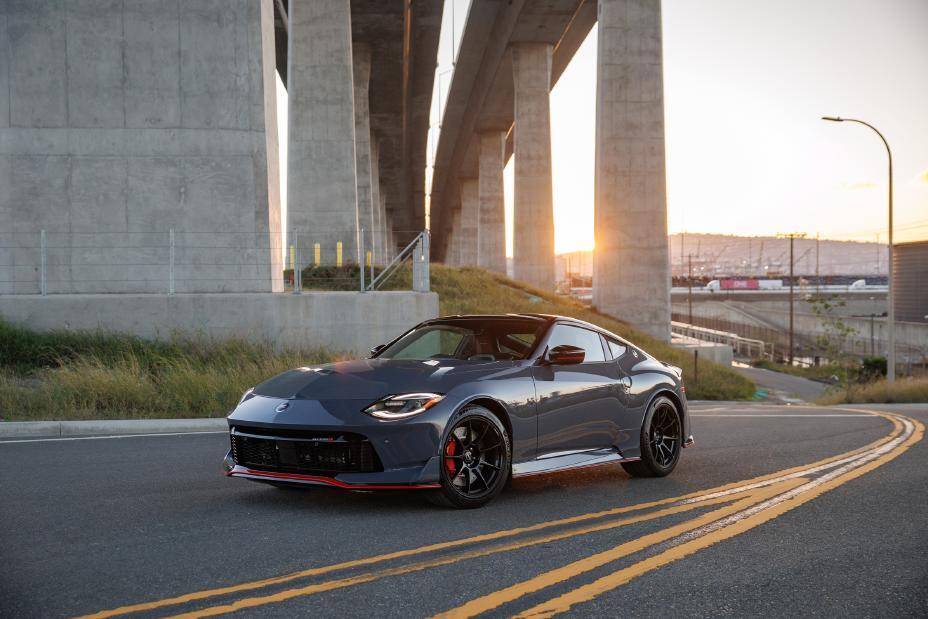
Z Car
"and just railed on that Z car and I just remember"
The “Z” is a sports car model line made by Nissan. People talk about it because it’s meant to be fun to drive and has a dedicated fan base. If someone criticizes it, they’re usually pointing out something they didn’t like about how that specific one performed or felt.
The “Z” in this context refers to a Nissan Z-series sports car, which is known for its performance potential and enthusiast following. Podcast comments about “railing on that Z car” suggest a discussion of how that particular Z behaved—whether it was fast, loud, or had some flaws. The Z is often brought up because it’s a recognizable sports-car option with a strong aftermarket.

Volkswagen Rabbit
"and so Igor [4460.4s] into cars, he's not and he's like what should I get [4462.0s] and my friends find him [4463.4s] a Volkswagen rabbit [4465.8s] that had a 10-point cage"
A Volkswagen Rabbit is a small car model from Volkswagen. Here, it’s mentioned as the kind of car a high-school friend bought and then modified for a more serious driving setup.
The Volkswagen Rabbit is a compact car from Volkswagen’s lineup, best known in enthusiast circles for the Mk1/Mk2 era. In this story, it’s being referenced as a base platform that someone could modify for a more track- or performance-oriented setup.
10-point cage
"a Volkswagen rabbit [4465.8s] that had a 10-point cage [4467.8s] built engine, like curkey seats"
A 10-point cage is a safety frame inside the car made of metal tubes. It helps protect you in a crash and also makes the car feel more solid when driving aggressively.
A 10-point cage refers to a multi-piece roll cage made from steel tubing that’s welded or bolted into the car’s cabin. More “points” generally means more bracing around the driver/passenger area, improving occupant protection and chassis rigidity for hard driving.

Hyundai Santa Cruz
"...nd me and my friend Eric are driving it up in the Santa Cruz mountains because Igor just let us borrow it"
The Hyundai Santa Cruz is a small crossover that looks partly like a pickup truck. It’s made to be practical for daily driving and also handle some light utility needs. People may mention it when they’re talking about how it drives on a trip or in hilly areas.
The Hyundai Santa Cruz is a compact crossover with pickup-truck styling and utility features, designed to blend everyday comfort with light truck capability. In the podcast context, it’s mentioned as a vehicle used for a drive in the mountains, which highlights its role as a practical, road-trip-friendly option. That kind of mention usually focuses on how it feels during real driving rather than just specs.
Request an Explanation
Heard something you'd like explained? We'll add it to this episode.
Sign in to request explanations for terms you heard.
Want to learn more?
Browse our glossary for plain-English explanations of automotive terms, jargon, and concepts.
Help improve this episode
See something that's not quite right? Our annotations are AI-generated and can sometimes miss the mark. Click the flag icon on any annotation to suggest a correction.