Focus & Hit The Mark : My 5-Step Vehicle Rescue Strategy
About this episode
Car Connection Workshop lays out a “focus and hit the mark” approach to rescuing problem vehicles—starting with a walk-around evaluation, then triage and cost homework, followed by improvising with used/refurbished parts, and finally executing the plan. Along the way, the host contrasts expensive risks like CVT failures on a 2008 Nissan Rogue with the reality that low or severe service can accelerate wear. Real rescues include a 2003 New Beetle interior decontamination and a 1997 Jeep TJ Wrangler, including custom exhaust, welding, alignment, and sourcing a replacement engine after a machine shop verdict.
Not every vehicle is a rescue candidate, and not every repair project makes financial sense. In Episode 200, I share the exact 5-step evaluation process I've used for decades to determine whether a vehicle deserves a second chance, should become a donor vehicle, or is headed for the scrapyard AKA The Crusher🚀
From assessing the true condition of the vehicle to calculating repair costs, estimating time requirements, and finishing opportunities to save money through refurbishment and repair, this proven strategy helps remove emotion from the decision-making process.
Whether you're considering a project car, evaluating a family vehicle, or trying to decide if a repair is worth the investment, these five steps can help you focus on the facts and hit the mark.
Before you spend a dollar, have a plan👍🚗
#FocusAndHitTheMark #VehicleRescueStrategy #CarConnectionRadio
👉 CALL TO ACTION-HELP KEEP THE WHEELS TURNING
If you enjoy the podcasts, videos, vehicle tips, and real - world automotive advice, here's how you can help[ support what we do:
☕️🍩 Buy Me a Coffee:
Support the show and help keep the microphones on and the cameras rolling at: buymeacoffee.com/motormouthnile Thank You❤️
👍 Visit our Merch Store: Pick up some Car Connection merchandise and wear it with pride! Best of all, all proceeds from merchandise sales go directly to support Total Freedom Addiction Campuses Canada & USA changing lives one at a time, together we can help them get there friends🚗
✅ Fleet Maintenance Schedules On Sale: Our popular fleet maintenance schedules are currently available at a special price for subscribers. Whether you manage one vehicle or an entire fleet, these proven maintenance plans can help reduce break downs, control costs, and keep your vehicles operating reliably. visit the review page to fill out the order form and get your today while supplies last. (ccbusnet.com) 👍🚗NMJ
Help Us Reach Our First 1,000 Subscribers: we're officially halfway there! If you haven't already, please subscribe, like, comment, and share our content with family, friends, coworkers, and fellow automotive enthusiasts. Every subscriber helps us reach more people and continue providing free automotive education and entertainment.
✅ Follow us on Facebook & Instagram, stevensvilleontheweb.ca (click bus tab) for additional videos, reels, updates, and behind- the- scenes content.
Thanks for being part of the Motormouth community. Your Support helps us continue helping drivers make informed decisions and get the most out of their vehicles.
We'll see you in the next podcast, video, or somewhere out on the road👍🚗
Happy Healthy Motoring Friends, Peace Patience Kindness Always❤️ NMJ & Skippy

Jeep Wrangler
"...rs, we live them. Whether it's a 25 year old Jeep Wrangler getting a second chance at life, or a Nissan Rogu..."
The Jeep Wrangler is a type of SUV built for off-road driving. It’s popular with people who like to keep older vehicles running because parts and repairs are widely available. In podcasts, it often shows up in stories about getting a used Wrangler back into good shape.
The Jeep Wrangler is a rugged, off-road-focused SUV known for its simple, durable design and strong aftermarket support. It’s often discussed in the context of keeping older vehicles running because many owners maintain them for years, including high-mileage examples. That’s why it can come up alongside “second chance” stories—people bring them back to reliable daily use or light off-road capability.
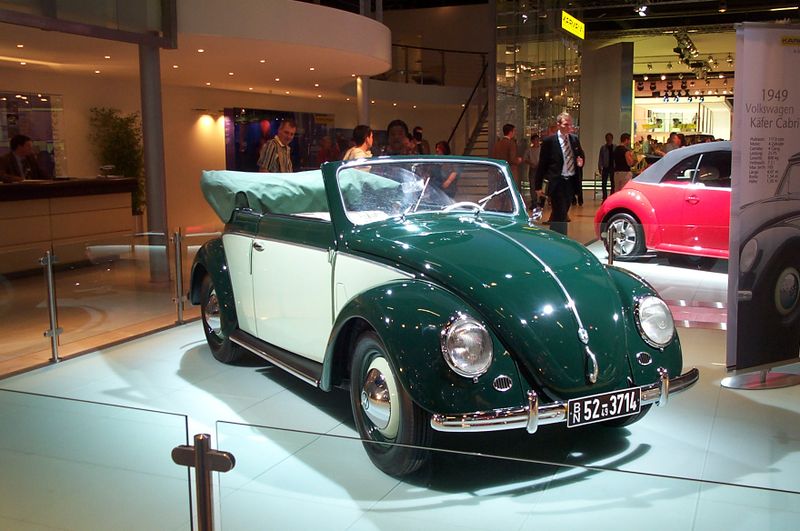
2003 new Beetle convertible
"and in fact I have a vehicle in the service bay right now, Orange Crush, that was a rescue, no one wanted it, because it's a stick shift, [1373.2s] and it's a beautiful little 2003 new Beetle convertible, two liter turbo, and it scoots,"
This is a 2003 Volkswagen New Beetle convertible. It’s a Beetle-style car with a turbo engine, and the host is saying it was worth saving even though nobody wanted it at first.
The Volkswagen New Beetle (2003) is a modern reinterpretation of the classic Beetle, and the convertible adds open-top driving. In this story, the host highlights it as a “rescue” candidate because it’s a two-liter turbo that still “scoots,” even after prior abuse.
stick shift
"Orange Crush, that was a rescue, no one wanted it, because it's a stick shift, and it's a beautiful little 2003 new Beetle convertible, two liter turbo, and it scoots,"
A “stick shift” is a manual transmission. Instead of the car changing gears for you, you use a clutch and a shifter to pick the gear.
“Stick shift” means a manual transmission, where the driver selects gears using a clutch and gear lever. In the context of a vehicle rescue, it can reduce the buyer pool because not everyone wants to drive a manual.
two liter turbo
"and it's a beautiful little 2003 new Beetle convertible, two liter turbo, and it scoots, [1383.7s] and I'll, I'll be honest with you, that thing runs on farts and a jar, it's unbelievable,"
“Two liter turbo” means the engine is about 2.0 liters and it has a turbocharger. The turbo helps the engine make more power (and often better efficiency) than a similar engine without it.
A “two liter turbo” refers to a 2.0-liter engine equipped with a turbocharger. The turbo forces more air into the engine, which can improve power and efficiency compared with a non-turbo engine of similar size.
cabin air filters
"and I looked it over, and it had some abuse on it, [1398.9s] and I just did a video with it so you can watch the video, because we've [1404.0s] gotten into talking about cabin air filters, you got to watch the videos on that, I got to finish [1409.3s] that off today, this afternoon I got the final cleanup to do,"
A cabin air filter cleans the air that comes into the car’s heating and air system. If it’s dirty, the car can smell bad and the airflow can feel weaker.
A cabin air filter is a filter inside the vehicle’s HVAC system that cleans the air coming into the passenger compartment. Replacing it helps reduce dust, pollen, and odors, and it can also improve airflow and comfort.
bleach
"I got to finish [1409.3s] that off today, this afternoon I got the final cleanup to do, I got to work with some bleach, [1415.8s] and a mask, and some hospital authorized bacteria killer product, yeah it's a product I got through"
Bleach is a disinfectant chemical used to kill germs. People sometimes use it for car interior cleaning, but you have to be careful because it can harm some materials.
Bleach is a strong disinfecting chemical often used to kill bacteria and sanitize surfaces. In vehicle rescues, it’s sometimes used for interior cleanup when dealing with contamination, but it must be handled carefully to avoid damaging materials.
antibacterial
"so a little plug for those guys, they've been good to me out there, their hand soap, soft hand soap [1446.8s] lasts forever, and it's antibacterial, so anyways I got some cleaner there, that's antibacterial, [1453.0s] does streptococcus, and all that nasty, those nasty bugs, so I've got to use that after I use [1458.9s] the bleach to finally finish up on the inside of the O3 Beetle,"
“Antibacterial” means the product is meant to fight bacteria. The host is using it to sanitize the inside of the car.
“Antibacterial” describes products formulated to kill or inhibit bacteria. The host uses it to describe the cleaning agents intended to reduce germs inside the vehicle before reassembly.
streptococcus
"so anyways I got some cleaner there, that's antibacterial, [1453.0s] does streptococcus, and all that nasty, those nasty bugs, so I've got to use that after I use [1458.9s] the bleach to finally finish up on the inside of the O3 Beetle,"
Streptococcus is a type of bacteria that can cause infections. The host is saying their cleaner is strong enough to deal with that kind of germ.
Streptococcus is a genus of bacteria that includes species capable of causing infections in humans. The host mentions it to emphasize that the cleaning product is intended to target specific germs, not just general dirt.
CVT transmission
"and the 2008 which I'm driving and that's an amazing little car and yeah it has some issues with the CVT transmission and when you understand that little animal how it works"
A CVT transmission is an automatic transmission that can “slide” between ratios instead of shifting gears in steps. The host is emphasizing that it needs careful maintenance, because if it fails it can be expensive to repair.
CVT transmission stands for continuously variable transmission, a gearbox that can smoothly change gear ratios instead of shifting between fixed steps. Because the ratio changes continuously, CVTs rely on specific wear-prone components and fluid maintenance, and failures can be costly.
severe service
"you're in a category called severe service and you got to grab that because it's true, you know brakes and stuff rot off before they wear out on your vehicle"
Severe service means the car is being used in tougher conditions than normal. That kind of use can make parts wear out faster, so you often need more frequent maintenance to stay ahead of problems.
Severe service is a maintenance category for vehicles that experience harsher-than-normal use, such as frequent short trips, lots of idling, or long periods of sitting. The host ties it to accelerated wear—like brakes rotting before they wear out—so the maintenance schedule needs to be stricter.

2008 Nissan Rogue
"and in fact there is a video we skipped and I did on the 2008 Nissan Rogue when we took it down to the Niagara River and I did a walk around evaluation as though the vehicle was sitting there at somebody's home in the driveway"
The Nissan Rogue is a popular SUV. Here, the host uses a 2008 Rogue as an example of how he checks a car over carefully to decide whether it’s worth saving or should be scrapped.
The Nissan Rogue is a compact crossover SUV known for being practical and widely used, which makes it a common candidate for vehicle-rescue projects. In this segment, the host specifically references a 2008 Nissan Rogue as the example for his “walk-around evaluation” and rescue checklist approach.

Nissan 2008 Nissan
"...fact there is a video we skipped and I did on the 2008 Nissan Rogue when we took it down to the Niagara River a..."
The Nissan 200 SX is a sporty two-door car. It’s the kind of vehicle that enthusiasts pay attention to, especially when it’s older and needs care to stay reliable. In a podcast, it may be mentioned because people are sharing videos or stories about maintaining or working on that specific model.
The Nissan 200 SX is a sporty coupe that’s known more for its enthusiast following than for being a mainstream daily driver. It can come up in podcast segments about specific models and videos because it represents a particular era of Nissan’s performance-oriented lineup. Discussions often focus on condition, originality, and what it takes to keep a niche car running well.
walk around evaluation
"when we took it down to the Niagara River and I did a walk around evaluation as though the vehicle was sitting there at somebody's home in the driveway in a parking lot"
This means checking the car closely from the outside (and quick checks around the engine area) to find obvious problems. The goal is to decide early whether the car might be fixable or not.
A walk-around evaluation is a systematic inspection of a vehicle’s exterior and obvious under-hood/underbody areas to spot issues before deeper diagnostics. It’s the first step in many rescue or salvage decisions because it quickly reveals missing parts, damage, and signs of leaks.
vehicle rescue strategy
"and bring this vehicle back to life rescue it from the the crusher basically because that's where it's going to go and get picked over perhaps and then head to the crusher"
This is a step-by-step method for deciding if a broken or neglected car is worth saving. The host’s point is to avoid automatically scrapping it and instead figure out what it would take to fix it.
A vehicle rescue strategy is a structured approach to deciding whether a neglected car can be repaired and put back into service. In this segment, it’s framed as rescuing the vehicle from being crushed and instead sending it through a repair/ownership path.
crusher
"bring this vehicle back to life rescue it from the the crusher basically because that's where it's going to go and get picked over perhaps and then head to the crusher"
A “crusher” is where cars get smashed up when they’re not being repaired anymore. The host is saying his goal is to stop the car from ending up there.
In salvage contexts, a “crusher” is the facility or process where end-of-life vehicles are compacted and destroyed for recycling. The host uses it as a contrast to his rescue plan—if the car isn’t worth fixing, it ends up crushed.
final resting place
"and then head to the crusher and then to its final resting place the melting pot so first of all number one is I strategize"
This is just a casual way of saying where the car ends up after it’s no longer being repaired. In this story, it’s the last step before the car is fully recycled or disposed of.
“Final resting place” is a colloquial way to describe where a vehicle ends up after salvage processing. Here, it’s paired with “the melting pot,” implying the ultimate recycling/disposal stage.
brutally honest about the vehicle
"I'm going to formulate a list and I'm going to be absolutely brutally honest about the vehicle everything anything that's broken missing loose or it's just not there or there's things leaking or there's potential fluid leaks"
The host is saying he’s very strict about spotting problems. The idea is to be realistic early so you don’t get surprised by expensive repairs later.
This phrase describes an explicit triage mindset: identifying everything that’s broken, missing, loose, leaking, or not functioning. In vehicle-rescue work, that kind of upfront honesty is what prevents underestimating the scope and cost of repairs.
potential fluid leaks
"or there's things leaking or there's potential fluid leaks I see potential fluid leaks leaking hoses belts wiring you name it"
Potential fluid leaks refers to signs that automotive fluids (like oil, coolant, transmission fluid, or brake fluid) may be escaping. Leaks matter because they can indicate failed seals, damaged lines, or overheating/driveability issues that affect whether a rescue is feasible.
homework begins
"number three recognizing the cost and not factoring in the labor because you'll so that's where now the homework begins okay so we've I've I've got my sights set on this via particular vehicle"
The host means you have to do research and figure out what repairs will cost before you decide to save the car. It’s the planning step so you don’t waste time on something too expensive.
“Homework begins” here means doing research and estimating repair scope before committing to the rescue. It’s essentially the cost-estimation phase that helps decide whether the project can be completed profitably or practically.
Wrangler Tj Wrangler
"and decay period you know in our uh 1997 1997 Jeep TJ Wrangler is sitting in the staging lanes it needs to go out to Jesse's shop just to have custom exhaust put on"
This is a 1997 Jeep Wrangler (the TJ generation). The host is working to fix it up—adding exhaust parts, repairing damage, and getting it ready to pass inspection so it can be driven reliably again.
The 1997 Jeep TJ Wrangler is a classic Jeep generation known for its simple, off-road-focused design and solid aftermarket support. In this segment, it’s being “rescued” with exhaust, axle work, body repairs, and ultimately an inspection so it can return to reliable street use.
custom exhaust
"in the staging lanes it needs to go out to Jesse's shop just to have custom exhaust put on and a bracket welded on the front axle so we can align do an alignment on it"
Custom exhaust means the exhaust system was modified or made specifically for that Jeep. It can be done to improve how it fits, how it sounds, or how it runs compared to the original setup.
Custom exhaust refers to an exhaust system built or modified to fit a specific vehicle and goals, rather than using a factory or off-the-shelf setup. It can change sound, flow characteristics, and sometimes fitment/clearance—especially on older off-road vehicles.
front axle
"and a bracket welded on the front axle so we can align do an alignment on it and I've got some welding to do uh body work on the floor"
The front axle is the main part that connects the front wheels to the vehicle. Fixing or welding something on it can affect steering and alignment, which is why the host mentions aligning right after.
The front axle is the structural assembly that carries the front wheels and transmits driving and steering forces. If a bracket or alignment-related part is welded or repaired on the front axle, it can directly affect wheel alignment and how the vehicle tracks.
alignment
"so we can align do an alignment on it and I've got some welding to do uh body work on the floor because the floor was wet for so long"
Alignment means setting the wheels so they point in the right directions and sit correctly on the road. After suspension or axle work, alignment helps the Jeep drive straight and reduces tire wear.
Wheel alignment is the adjustment of angles that determine how the tires contact the road—commonly camber, caster, and toe. After axle/bracket work, alignment is needed to restore proper handling and prevent uneven tire wear.
inspection
"so I'm going to take care of that myself then it'll be ready for an inspection and it'll be out on the road so there's a proof in the pudding"
An inspection is a check to make sure the car is safe and legal to drive. The host is saying they’ll finish the repairs, then get it inspected before putting it back on the road.
An inspection is the required check (often by a shop or authority) to confirm the vehicle meets safety and legal standards for road use. In a rescue project like this, inspection is the gate that verifies the repairs are sufficient before the vehicle can be driven.
used parts
"so it's focus and hit the mark so number one is strategize number two is realize number three is recognize number four improvise with used parts refurbished parts or can I refurbish stuff"
Used parts are parts taken from other cars that have already been owned. The host is saying they might use refurbished or used parts to help finish the repair without spending as much.
Used parts are components taken from previously owned vehicles, often sourced to reduce cost during repairs. In a rescue build, used parts can be a practical way to keep the project moving while still restoring functionality.
refurbished parts
"number four improvise with used parts refurbished parts or can I refurbish stuff"
Refurbished parts are older parts that have been fixed up and put back into good working shape. It’s often cheaper than new while still getting the job done.
Refurbished parts are used components that have been cleaned, repaired, or rebuilt to restore them to working condition. Compared with buying brand-new parts, refurbishment can cut cost while still addressing wear or damage.
engine
"and still worked on getting the mechanicals done while we were trying to find a replaces a replace engine and it came through some of my firefighter friends that are jeep people"
Here, “engine” means the main motor that powers the Jeep. The host says they were trying to find a replacement engine while they were also doing other mechanical repairs.
In this context, “engine” refers to the powerplant being replaced or sourced to restore drivability. The host mentions searching for a replacement engine while continuing other mechanical work.
wrecking yard
"[2270.9s] but we got we got snagled when discovering that the the reason it ended up in [2278.8s] the wrecking yard was they blew the engine to smithereenies that's what happened"
A wrecking yard is where crashed cars go to be taken apart. People buy parts from there or use the whole car for a repair project.
A “wrecking yard” is an automotive salvage yard where accident-damaged vehicles are dismantled and parts are reused or sold. The host is using it as the source for a project vehicle and explaining why the car ended up there.
machine shop
"[2351.1s] I even checked in with it with our machine shop and [2355.6s] Dion said not only says even at cost he says it wouldn't be worth it"
A machine shop is a workshop that does precision work on car parts. In this case, they’re checking whether the damaged engine can realistically be rebuilt.
A machine shop is a specialized repair facility that can inspect, measure, and machine engine components (and sometimes rebuild them) to restore proper fit and function. The host consults their machine shop to determine whether the damaged engine is rebuildable and worth the cost.
certified
"[2388.3s] have in the driveway you know if you're financially strapped and in a bad position the economy isn't [2394.9s] the greatest the best vehicle in the driveway are certified both Tony and Larry are certified [2400.5s] financial planners"
Here, “certified” is used to describe Tony and Larry as credentialed financial planners, not as a car-related certification. The host uses their advice to frame the rescue strategy as a financial decision: keep a paid-for vehicle running rather than focusing on market value.
Request an Explanation
Heard something you'd like explained? We'll add it to this episode.
Sign in to request explanations for terms you heard.
Want to learn more?
Browse our glossary for plain-English explanations of automotive terms, jargon, and concepts.
Help improve this episode
See something that's not quite right? Our annotations are AI-generated and can sometimes miss the mark. Click the flag icon on any annotation to suggest a correction.