Q&A Saturday: Are You following Bad Maintenance Advice?
About this episode
Q&A Saturday turns into a reality check on “bad maintenance advice,” with the hosts stressing that upkeep isn’t optional—whether the vehicle is old or new. They connect missed oversight to catastrophic outcomes, then zoom in on practical examples: car A/C isn’t maintenance-free, and stretching oil-change intervals can lead to varnish, sludge, and even engine failure. Listener questions cover speed-related vibration, tire balance/alignment, wheel torque, and unexpected oil consumption despite following the factory schedule.
Every vehicle tells a story-if you know how to listen
On this week's Q&A Saturday, we answer three questions every driver should understand. Cheryl asks whether 16,000 - km oil change intervals are really safe. Tracy wants to know if an intermittent vibration at different speeds is something to worry about. And Robert's Toyota is using 2 to 3 quarts of oil between oil changes despite following the factory maintenance schedule exactly.
We brake down what manufacturers recommend, what years of experience in the repair shop have taught us, and how preventative maintenance can help you avoid expensive repairs down the road.
Knowledge is cheaper than repairs.
#CarCare #PreventativeMaintenance #AutomotiveQ
Donations Accepted with a Grateful❤️ visit our page ☕️🍩 buymeacoffee.com/motormouthnile any amount is truly appreciated friends👍❤️
Merch Available in our online store at (ccbusnet.com) proceeds from all purchases go to Total Freedom Addiction Campuses Canada & USA changing lives one at at time. Join our crew helping them get to a TF Campus, together we can make a difference in the life of another❤️ Thank You 🙌
Car Connection Maintenance Schedules ready for take off 🚀 order yours today at (ccbusnet.com) visit the review page fill in the order form and it's on it's way to saving you money on auto repair bills! Remember Mileage does NOT Matter.....Maintenance DOES. Discount pricing for those Subscribed to our YouTube & Podcast Channel Save$$$. on your order✅
E-Mail Questions To: [email protected] or [email protected]
Help us to reach our first 1,000 subscribers! If you enjoy honest automotive advice without the sales pitch, hit Subscribe and be part of the Car Connection Community👍❤️
More Episodes and ...project Details are available at Car Connection Business Network.com (ccbusnet.com) you'll find everything on our home page if you'd like to follow the build & repair work we do & connect with our program partners. Just click their logo to meet them and Thank You for giving them your business, we need them and YOU TOO❤️ Nile Motormouth Jenkins.
We'll see you in the next one Friends,
Happy Healthy Motoring, Peace Patience Kindness Always🚗 NMJ
air conditioning system
"And if you haven't listened to our series on how to use your vehicles air conditioning system properly, we got some hot, steamy weather coming in. [719.9s] You might want to review that was a four part series I did back in May."
Your car’s air conditioning is a system that cools the inside of the car. It uses special fluid (refrigerant) and parts that can wear out or get damaged, so using it the wrong way can lead to expensive repairs.
The air conditioning system in a car is a closed-loop refrigeration setup that cools the cabin by moving heat out of the interior. It relies on refrigerant, a compressor, and controls; if it’s used incorrectly or neglected, it can fail and become costly to repair.
oil change
"[2166.1s] Oil and quality oil change. [2168.6s] That means no cheapy oil change. [2171.9s] No."
An oil change is when you replace the engine oil (and usually the filter). Clean oil keeps the engine parts from grinding and helps it run cooler.
An oil change is the scheduled replacement of engine oil and (usually) the oil filter. Fresh oil helps lubricate moving parts and carries away heat and contaminants, so skipping or stretching intervals can increase wear.
Volkswagen
"[2185.6s] And I'll tell you what my representative, my factory rep told me many years ago when [2191.9s] I worked for Volkswagen and they sent me to a dealership. [2197.2s] I cannot say."
Volkswagen is a car brand. In this segment, the speaker mentions a Volkswagen representative who talked about how the maintenance schedule should be viewed.
Volkswagen is the automaker whose dealer/representative the speaker references when discussing service guidance. The point is that the maintenance guidance from the brand’s rep conflicted with the idea of very long oil-change intervals.
maintenance schedule
"[2240.7s] And that's when I figured out that was a what year would that have been 2000 2000. [2249.7s] And that's when my rep said the maintenance schedule in the manual for for the product is just a suggestion."
A maintenance schedule is the checklist of when to do things like oil changes, based on what the car maker recommends. Following it helps keep the engine healthy.
A maintenance schedule is the set of recommended service intervals (like oil changes) listed in the owner’s manual for a specific vehicle. It’s meant to match the engine’s design and operating conditions, so treating it as “just a suggestion” can lead to overdue service.
Toyota
"That there's a couple of brands out there and Toyota is one of them. That if you take their advice on the oil changes, you're going to blow the motor right clean out of it."
The host mentions Toyota as an example of a brand whose maintenance guidance they disagree with. Their point is that using the recommended oil-change approach could lead to engine buildup if it’s not done often enough.
Toyota is the brand the host specifically calls out as recommending a particular approach to oil-change intervals or oil viscosity. The claim is that following that advice can lead to excessive deposits and engine damage.
varnish and sludge
"Because what's happening is it's creating to the length of the time the oils in there is creating a lot of varnish and sludge."
If oil isn’t changed often enough, it can turn into sticky gunk inside the engine. That gunk can slow down oil flow and make it harder for the engine to stay properly lubricated.
Engine oil can break down and leave deposits. “Varnish” is a sticky, amber film that forms on internal surfaces, while “sludge” is thicker, darker buildup that can clog oil passages and reduce lubrication.
zero W 20
"That's why we're seeing zero W 20. And that is way too thin."
0W-20 is a specific type of engine oil thickness. The “0W” part is about how it behaves when it’s cold, and the “20” part is about how thick it is when the engine is hot.
“0W-20” is an engine-oil viscosity grade: the “0W” indicates good flow in cold temperatures, and “20” is the oil’s thickness at operating temperature. The host argues that using 0W-20 when a different grade is needed can increase the risk of deposits and insufficient protection in their scenario.
tight tolerances
"And these engines are running very tight tolerances. That's why we're seeing zero W 20."
Tight tolerances means the engine parts are built very close together. That can make the engine depend more on the right oil so everything stays lubricated the way it was designed.
“Tight tolerances” means the engine’s internal parts are manufactured with very small clearances between them. That can make the engine more sensitive to oil quality and viscosity, because the oil has to maintain proper lubrication in those narrow gaps.
motor oil
"Trust me, it's your engine and the knowing the tolerances in there and what happens when you extend the motor oil."
Motor oil is the fluid that keeps the engine’s moving parts from grinding together. Over time, it can get less effective, so the engine may not get the lubrication it needs.
Motor oil is the lubricant that flows through an engine to reduce metal-to-metal wear and carry heat away. Its viscosity (thickness) and how long it’s been used affect whether oil can reach critical internal parts under pressure.
oil pump delivery pressure
"It affects oil pump delivery pressure and return. It affects the valve lifters and it plugs up the holes where the oil has to bleed through."
The oil pump acts like a pressure system that pushes oil through the engine. If the oil isn’t flowing right, important parts don’t get enough lubrication.
Oil pump delivery pressure is the pressure the oil pump creates to push oil through the engine’s oil passages. If oil gets too thick with sludge or varnish, the pump may not deliver oil where it needs to go, starving bearings and other components.
valve lifters
"It affects the valve lifters and it plugs up the holes where the oil has to bleed through. It also damages the variable valve timing clutches on the front front of the camshafts."
Valve lifters are parts inside the engine that help control when the valves open and close. They need clean oil flow, or they can start working poorly.
Valve lifters are components in the valvetrain that transfer motion to open and close the engine’s valves. They rely on a steady oil supply; varnish or sludge can restrict oil flow and cause improper operation.
variable valve timing clutches
"It also damages the variable valve timing clutches on the front front of the camshafts. They plug up with varnish and then the oil pressure is not getting in."
Variable valve timing helps the engine adjust valve timing for different driving conditions. The clutches that do that need clean oil, and dirty oil can stop them from working right.
Variable valve timing clutches are part of a system that changes camshaft timing to improve power and efficiency. They depend on clean oil to engage correctly; varnish and sludge can prevent proper oil pressure and cause damage or malfunction.
oil pressure
"They plug up with varnish and then the oil pressure is not getting in. So then the engine starts to run incorrectly and now you're getting into buca bucks."
Oil pressure is how hard the engine’s oil system is pushing oil around. If pressure drops, bearings and other parts can wear out faster.
Oil pressure is how strongly oil is pushed through the engine’s lubrication system. When sludge or thickened oil prevents pressure from reaching bearings, wear accelerates quickly because the metal surfaces aren’t separated by an oil film.
bearing tolerances
"And the worst thing is it sludges up the bearing tolerances that are already super tight. That's why they're telling us 020 oil."
Bearings have very small clearances so the moving parts can spin smoothly. If oil can’t get in properly, the parts can start rubbing and wear out.
Bearing tolerances refer to the very tight clearances engineered between bearings and the rotating parts they support. Those small gaps rely on correct oil pressure and oil film thickness; sludge can reduce flow and cause metal contact.
020 oil
"And the worst thing is it sludges up the bearing tolerances that are already super tight. That's why they're telling us 020 oil. If it gets any thinner, it'll be fish oil, it'll be thicker."
0W-20 is a specific type of engine oil with a defined thickness. If the oil is too thick (or gets dirty and sludgey), it may not flow where it needs to go.
“0W-20” (spoken here as “020”) is an oil viscosity grade that indicates how thin the oil is, especially at cold temperatures. Using the wrong viscosity—or letting oil degrade and thicken with sludge—can prevent proper oil delivery to bearings and valvetrain components.
main bearings and connecting rod bearings
"So then main bearings and connecting rod bearings aren't getting enough pressure and oil delivery. So guess what happens?"
Main bearings and connecting rod bearings are the parts that let the crankshaft spin smoothly. They need a steady supply of oil, or they can wear out and damage the engine.
Main bearings support the crankshaft in the engine block, while connecting rod bearings support the crankshaft at each connecting rod. Both depend on consistent oil pressure; if oil delivery drops, the bearings can overheat and fail.
oil and filter
"So change your oil and filter. We don't want any cheapy oil filters and cheapy oil."
When you change the oil and filter, you’re getting rid of dirty oil and trapping particles before they can harm the engine. It helps the engine keep getting clean lubrication.
Changing the oil and oil filter removes contaminated oil and captures debris before it circulates through the engine. Fresh oil helps maintain correct viscosity and oil pressure, which protects bearings and valvetrain components.
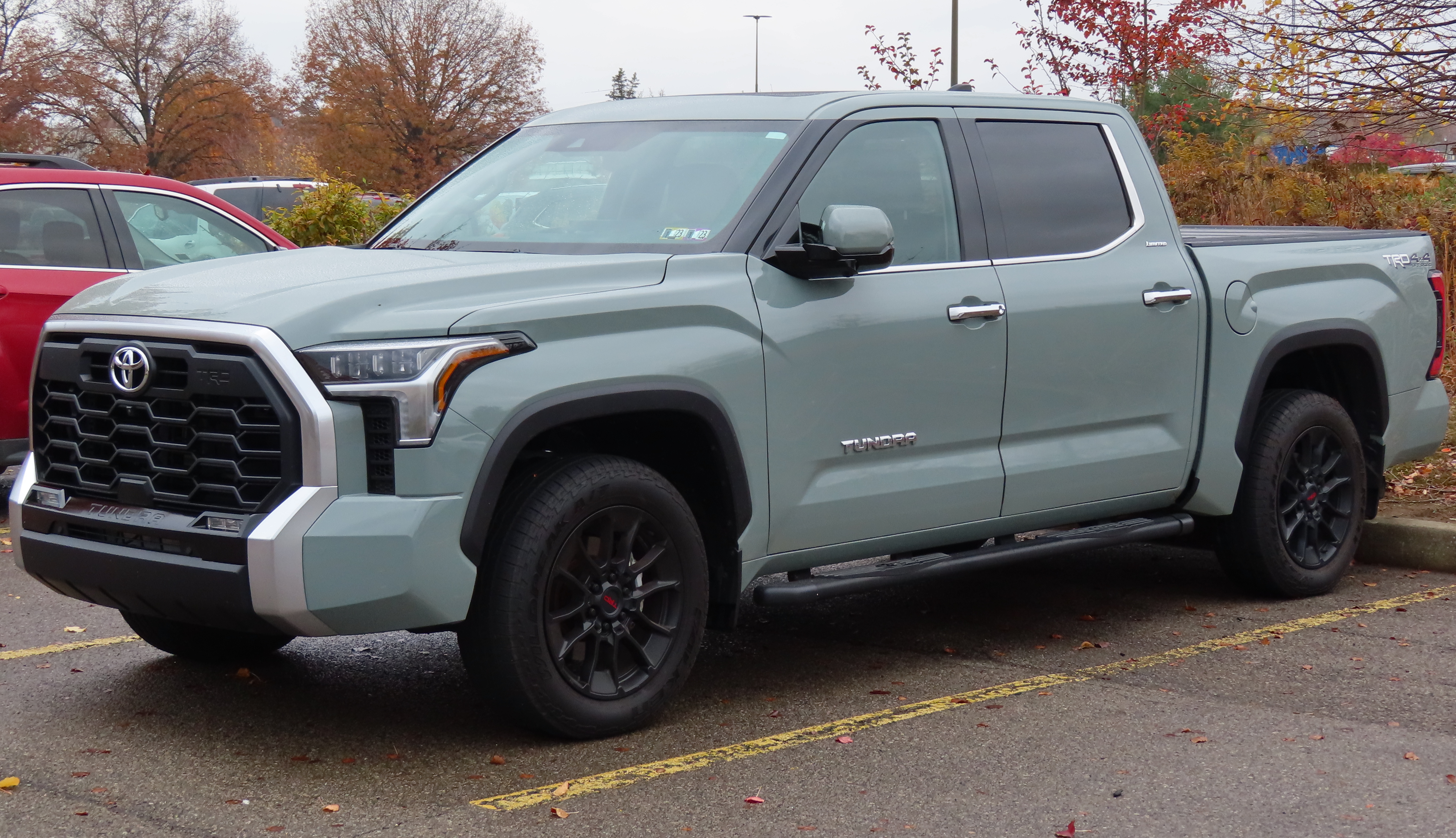
Toyota Tundra
"So he's saying the same thing and he has a brand new Toyota Tundra."
The Toyota Tundra is a full-size truck that’s often used for towing and hauling. If you drive it hard, keeping up with oil changes matters more for protecting the engine.
The Toyota Tundra is a full-size pickup known for being used hard—towing, hauling, and lots of real-world engine load. That makes oil-change practices a big deal, because heavy use can accelerate oil contamination and wear.
conventional oil
"The average Joe driving up and down the roadways will never get all the feature benefits out of synthetic oil compared to a good quality conventional oil."
Conventional oil is the standard type of engine oil you’ll see at most stores. The host is saying it may be good enough for normal driving compared with synthetic oil.
Conventional oil is the more traditional, refinery-based engine oil (as opposed to synthetic). The host contrasts it with synthetic oil, arguing that most everyday drivers won’t notice the same benefits.
synthetic oil
"The average Joe driving up and down the roadways will never get all the feature benefits out of synthetic oil compared to a good quality conventional oil... He said they they need the synthetic in there because it dissipates a lot of heat."
Synthetic oil is a higher-tech type of engine oil. The idea is that it can handle high heat better, so some people say it’s worth it for racing but not necessary for normal driving.
Synthetic oil is a specially engineered engine lubricant made to handle heat and stress better than conventional (refined) oil. In this segment, the host claims it helps with heat management, which is why they say racers use it more often than everyday drivers.

98 Honda Civic DX
"I do 3500 and that's why I have almost 400,000 kilometers on our 07 FJ 319,000 on our 98 Honda Civic DX."
They’re talking about a 1998 Honda Civic DX. Their example is that keeping up with oil changes helped the car rack up a lot of miles.
The Honda Civic DX is a trim level of the Honda Civic, and the host cites it as another example of high mileage achieved with frequent oil changes. The “DX” detail matters because it indicates a specific equipment/trim level, not just the model name.
quality filter
"Every five K quality filter quality oil. No cheapy drive through oil change garbage because that's exactly what it is."
The oil filter helps keep dirt and debris out of your engine oil. The host is saying to use a good filter, not the cheapest option.
An engine oil filter is the part that traps contaminants in the oil so they don’t circulate through the engine. Here, the host emphasizes using a “quality filter” alongside frequent oil changes, implying that cheap filters may not protect as well.
drive line
"Yes, absolutely. It sounds like it could be in the drive line. It could be a half shaft."
The drive line is the set of parts that sends power from the gearbox to the wheels. If the car vibrates at certain speeds, it can mean something in that power-transfer path is worn or out of balance.
The drive line is the drivetrain hardware that transfers power from the transmission to the wheels. If a vibration changes with speed, it can point to problems in the drive line components rather than something like engine mounts or tires alone.
half shaft
"It sounds like it could be in the drive line. It could be a half shaft. They're bearing going could be a wheel bearing."
A half shaft is a shaft that helps turn a wheel. If it’s worn or not running smoothly, it can cause vibration while driving.
A half shaft (often called an axle shaft) is one of the shafts that delivers torque to a wheel. Wear, looseness, or imbalance in a half shaft can create vibrations that show up at certain speeds and may come and go.
wheel bearing
"It could be a half shaft. They're bearing going could be a wheel bearing. It could be something as simple as we've got a tire or two that are affected."
A wheel bearing is a part that helps the wheel rotate smoothly. If it’s going bad, the car can vibrate more as you drive faster.
A wheel bearing lets the wheel spin with low friction while supporting the vehicle’s weight. When a wheel bearing is failing, it can produce speed-dependent vibration and sometimes a growling or humming noise.
tread
"It could be something as simple as we've got a tire or two that are affected. It could be tread. The tread is uneven."
Tread is the part of the tire that actually touches the road. If it wears unevenly, it can mean the tires aren’t lined up or balanced correctly.
Tread is the rubber pattern on the outside of a tire that contacts the road. Uneven tread wear often indicates an alignment problem, suspension issue, or tire balance issue rather than a simple “tire is old” situation.
alignment issue
"The tread is uneven. Could be an alignment issue. It could be just as something as simple as a real wheel belt."
Alignment is how straight (or angled) your wheels are mounted. If it’s off, your tires can wear unevenly and the car may feel off or vibrate.
An alignment issue means the wheels aren’t set to the correct angles relative to each other and the road. Misalignment can cause uneven tread wear and can contribute to vibration or steering feel problems.
rebalance the tires
"It could be just as something as simple as a real wheel belt. A real, never mind, but rebalance the tires. Yeah, rebalance the tires."
Rebalancing means adjusting weights so the tire and wheel spin evenly. If they’re not balanced, the car can shake or vibrate as you drive faster.
Rebalancing tires corrects uneven weight distribution between the tire and wheel so the assembly spins smoothly. If tires are out of balance, they can cause vibration that changes with speed, often felt through the steering wheel or seat.
balancer
"It's not a bad idea to just have the tech throw them on the balancer. Because that's what creates premature tire wear. There's a lot of things that create premature tire wear that many of you aren't doing."
A balancer is a machine shop uses to check whether your tire and wheel are weighted evenly. It tells them where to add small weights to stop shaking.
A tire balancer is the machine used to measure and correct imbalance in a tire/wheel assembly. It helps determine where small weights need to be added so the tire spins without causing vibration.
premature tire wear
"Because that's what creates premature tire wear. There's a lot of things that create premature tire wear that many of you aren't doing. And we will share that in a video shortly as well and also a podcast."
Premature tire wear means your tires are getting worn out faster than they should. It can happen when the tires aren’t balanced or aligned correctly, or when something in the suspension is off.
Premature tire wear means the tread wears out sooner than expected, often due to issues like imbalance, misalignment, or worn suspension components. The key point is that vibration and uneven wear can be symptoms of a fixable underlying problem.
pothole
"And I'm just looking up some tires for our skippy because she had a pothole about six weeks ago that actually folded an aluminum rim. ... So that pothole had to be big enough to swallow a Hyundai Accent and it totally blew out the tire and it was a run flat."
A pothole is a hole or damaged spot in the road. Hitting one can be so hard that it bends or ruins your wheel and can also destroy the tire.
A pothole is a road defect that can hit hard enough to damage wheels and tires. In this segment, the pothole impact is described as folding an aluminum rim and collapsing it, which then causes a tire blowout.

Hyundai Accent
"So that pothole had to be big enough to swallow a Hyundai Accent and it totally blew out the tire and it was a run flat."
The Hyundai Accent is a small car. The host is using it as a comparison to explain how big the pothole was and how badly it damaged the tire.
The Hyundai Accent is a compact car used here as a size reference for how severe the pothole impact was. The host says the pothole was big enough to swallow an Accent, leading to a tire blowout and a run-flat tire failure.
run flat tires
"So that pothole had to be big enough to swallow a Hyundai Accent and it totally blew out the tire and it was a run flat. ... So we're looking to get that one figured out for so I've been looking up tires and these run flat tires. ... Yeah, they are not cheap and they don't last."
Run-flat tires are made so the car can keep rolling for a while even if the tire gets punctured. They usually cost more and can wear out faster than regular tires.
Run-flat tires are designed to keep supporting the car even after a puncture, so you can often drive to a shop without immediate tire replacement. They’re typically stiffer and use reinforced sidewalls, which can make them more expensive and sometimes shorter-lived than conventional tires.
torqued on
"So we want to make sure that all the wheels are torqued on and torque properly not torqued off but torqued on. ... Yeah, because I had someone say I'm really torqued off today I go how did that happen. We only torque on not off."
“Torqued on” means the lug nuts are tightened to the right tightness using a tool that measures force. Getting it wrong can cause vibration and can even let the wheel loosen.
“Torqued on” refers to tightening wheel lug nuts to a specified torque value using a torque wrench. The host contrasts this with “torqued off,” emphasizing that correct torque helps prevent wheel loosening and related vibration or safety issues.
wheel nuts are torqued
"Anyways, we want to make sure all the wheel nuts are torqued to manufacture specs that can cause a vibration."
Torquing wheel nuts means tightening them with a specific amount of force, not “as tight as you can.” Doing it to the car maker’s spec helps avoid wobble and vibration.
“Torque” is a tightening force measured in units like ft-lb or N·m. When wheel nuts are torqued to the manufacturer’s spec, it helps prevent uneven clamping force that can lead to vibration.
tire somewhere that's beginning to separate
"Number two, we could have a tire somewhere that's beginning to separate the tires separating the steel belts are separating."
If a tire starts separating inside, it can feel like vibration or shaking even if the tread looks okay. It’s a serious tire problem because the tire’s internal layers are coming apart.
Tires can “separate” when internal layers (like belts) start to delaminate, which can create vibration and abnormal wear. The mention of steel belts separating points to a structural tire failure mode rather than just surface wear.
inconsistent tire wear
"We can have tire wear. We can have like inconsistent tire wear where it's choppy where it's feathered where the tire is wearing weird something's going on."
If your tires wear unevenly, it’s usually a sign something is off—like alignment or suspension. Uneven wear can also correlate with vibration while driving.
Inconsistent tire wear means the tread wears unevenly across the tire’s surface. Patterns like “choppy” or “feathered” often indicate alignment issues, suspension/steering problems, or tire-related defects that can also cause vibration.
tie rod
"We can have a tie rod and inner or outer that's loose ball joint sway bar link control arm bushings and wheel bearing."
The tie rod connects parts of the steering system so the wheels turn correctly. If it’s loose or worn, you can get vibration and vague steering feel.
A tie rod is part of the steering linkage that helps transmit driver input to the front wheels. If a tie rod is loose or worn, it can cause steering-related vibrations and handling issues.
ball joint
"We can have a tie rod and inner or outer that's loose ball joint sway bar link control arm bushings and wheel bearing."
A ball joint is a moving joint in the suspension that lets the wheels move up and down. If it wears out, it can cause shaking and uneven tire wear.
Ball joints are pivot points that allow suspension movement while keeping the wheels aligned. When a ball joint is worn or loose, it can create vibration and uneven tire wear.
sway bar link
"We can have a tie rod and inner or outer that's loose ball joint sway bar link control arm bushings and wheel bearing."
A sway bar link is a small connector that helps the suspension work together when you hit bumps or turn. If it’s worn, it can cause clunks or vibration.
A sway bar link connects the sway bar to the suspension components. If the link is worn or loose, it can affect how the suspension controls body roll and can contribute to vibration.
control arm bushings
"We can have a tie rod and inner or outer that's loose ball joint sway bar link control arm bushings and wheel bearing."
Control arm bushings are the soft mounts that let the suspension move smoothly. When they wear out, the suspension can shift too much and cause vibration.
Control arm bushings are rubber or elastomer mounts that allow the control arm to pivot while isolating vibration. Worn bushings can let suspension movement get “loose,” leading to vibration and abnormal tire wear.
road test
"And that's where I recommend that you take the the tech that's going to do the job on a road test so that you can point that out."
A road test is when a technician drives the car to recreate the problem. For vibrations, it helps figure out when it happens and where you feel it.
A road test is a controlled drive used to reproduce the symptom under real-world conditions. In vibration diagnosis, it helps pinpoint whether the vibration appears at specific speeds and whether it’s felt in the steering wheel or the seat.
rebalanced
"So it could be something as simple as we have uneven tire wear a tire that's acting up showing signs of wear and tear or something as simple as a re re wheel balance required. So get the all four tires re balanced."
Rebalancing means adding/removing small weights so the tire and wheel spin evenly. If they’re not balanced, you can feel shaking at certain speeds.
Wheel balancing (often called “rebalancing”) corrects uneven weight distribution between the tire and wheel. If a wheel/tire assembly is out of balance, it can cause vibration that comes in at certain speeds and disappears at others.
oil rings
"He nailed it their problem they're having with their oil change intervals suggestions is causing the oil rings to carbon up and then they're not rotating. So then the engine starts burning oil guess what the fix is it's engine time that's fix why extended oil change intervals is causing that."
Inside the engine, there are small metal rings on the pistons. The oil rings help keep oil from getting into the combustion area. If carbon buildup sticks them, the engine can start using/burning too much oil.
Oil rings are piston rings designed to scrape excess oil off the cylinder walls and return it to the crankcase. If they get stuck with carbon, they can’t do that job, so oil consumption rises and the engine can start burning oil.
timing chain tensioner
"There's no fix for that and it's probably bunged up the variable valve timing clutches as well and maybe even the timing chain tensioner that takes oil pressure. If it's bunged up the oil rings to the point where they're not rotating which that's what's happening here it's eating up two to three quarts of oil it's burning it because the oil rings are stuck on the pistons."
The timing chain helps coordinate the engine’s moving parts. The tensioner keeps that chain properly tight, and some designs use oil pressure to do the job—bad oil can lead to problems.
A timing chain tensioner keeps the timing chain tight so the cam timing stays accurate. Many tensioners use oil pressure; if oil is contaminated or pressure is compromised, the tensioner can fail to control chain slack properly.

Wrangler Rubicon
"...ady it's over she's singing and we've crossed the Rubicon yeah I'm sorry to say for Robert that the only fi..."
The Wrangler is an off-road SUV made for driving on rough roads and trails. It’s designed to go where regular cars may struggle. That’s why it often gets mentioned when people talk about big off-road trips.
The Wrangler is a rugged off-road SUV known for its ability to handle rough trails and challenging terrain. It often comes up in conversations about adventure driving because it’s built with off-road capability as a core focus. In a podcast, it may be referenced in connection with iconic off-road routes and the idea of going places regular vehicles can’t.
Request an Explanation
Heard something you'd like explained? We'll add it to this episode.
Sign in to request explanations for terms you heard.
Want to learn more?
Browse our glossary for plain-English explanations of automotive terms, jargon, and concepts.
Help improve this episode
See something that's not quite right? Our annotations are AI-generated and can sometimes miss the mark. Click the flag icon on any annotation to suggest a correction.