
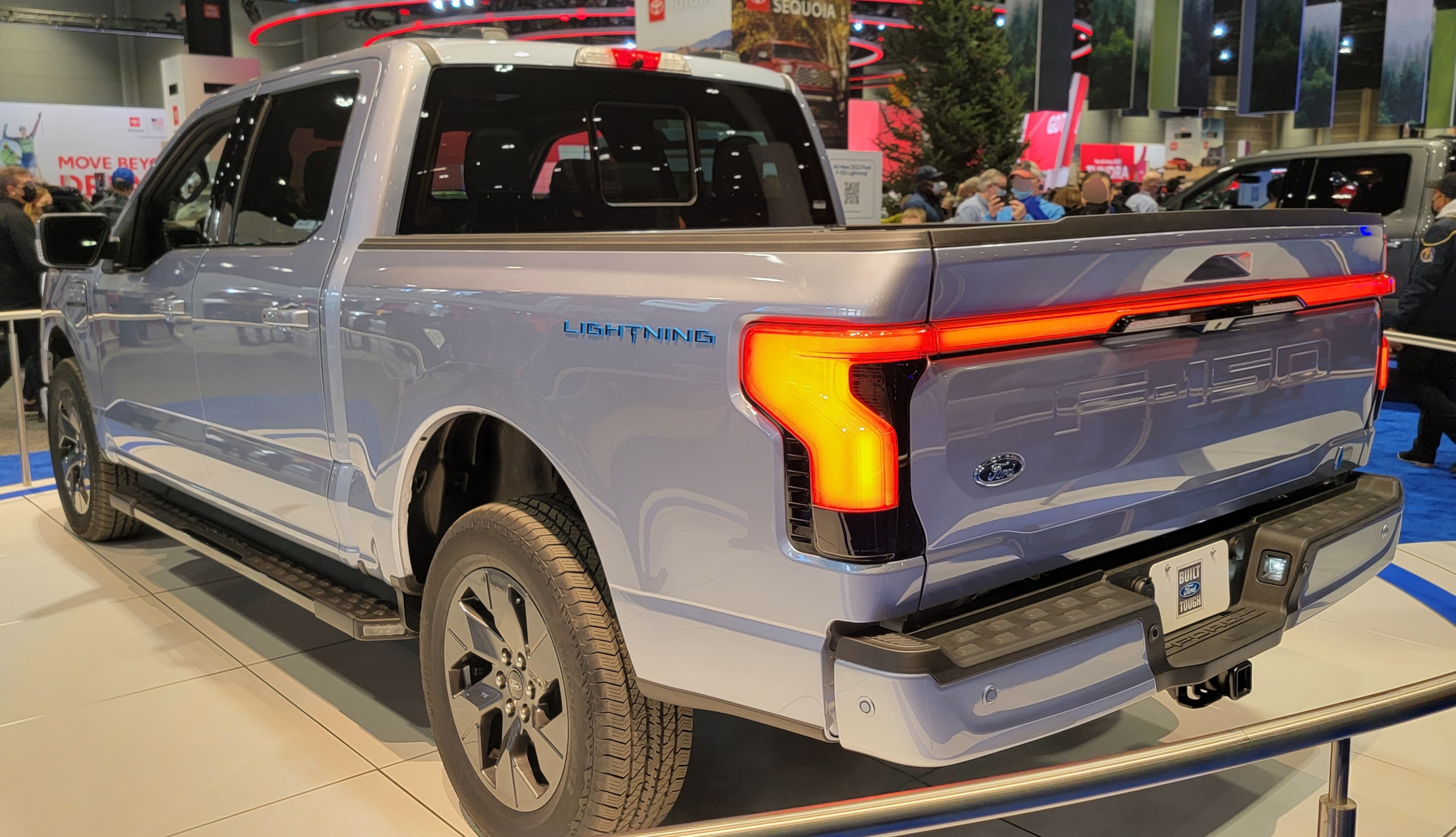
Ford F150
The Ford F-150 is a big pickup truck. It’s great for hauling and towing, but it usually costs more to run than smaller trucks.

Ford Maverick
The Ford Maverick is a smaller pickup truck that’s meant to be more fuel-efficient and easier to drive day to day. It won’t haul or tow as much as a full-size F-150, but it can be more practical for errands and commuting.
two-liter four-cylinder engine
That’s the engine size and layout: it has four cylinders and about 2.0 liters total. Smaller engines usually use less gas, but they can feel less powerful than bigger engines.
nine-speed automatic transmission
This is the automatic gearbox with nine different gear ratios. Having more gears can help the car shift smoothly and use less gas.
Apple CarPlay
Apple CarPlay lets you connect your iPhone to the car and use certain apps on the screen. It’s handy for maps, music, and calls while you drive.
35 miles to the gallon
This is how efficient the car is with gas—how many miles you can drive per gallon. Higher numbers usually mean you spend less on fuel.
bed cover
A bed cover is a cover for the back cargo area of a pickup. It helps keep stuff dry and out of sight.
tow
To “tow” means pulling a trailer behind the vehicle, which requires sufficient engine power, transmission gearing, and cooling capacity. Towing limits are typically set by the manufacturer and depend on the specific configuration, so switching from a full-size truck to a smaller one often reduces capability.
booster seats
Booster seats are child-safety seats used to position a child so the vehicle’s seat belt fits correctly. Fitment depends on back-seat dimensions and the spacing between seat belts, which is why Lenny is concerned about how tight the grandkids will be in the Maverick.

Nissan Frontier
The Nissan Frontier is a mid-size pickup truck. Here it’s mentioned as part of the dealer’s lineup, contrasting the idea of “a little truck occasionally” with other truck sizes.

Nissan Titan
The Nissan Titan is a big, full-size pickup truck. The host is saying Nissan stopped making it because not enough people were buying it.

Ford Ranger
The Ford Ranger is a mid-size pickup. The host is basically saying it’s larger than the Maverick, but not as big as the F-150.
Rough Country
Rough Country makes aftermarket accessories for trucks. In this segment, they’re mentioned as the brand of bed cover used to make the Maverick’s cargo area more useful.
drivetrain
The drivetrain is the “power path” from the engine to the wheels. It’s what takes the engine’s power and delivers it to the tires so the car can move. Different cars route that power a little differently, but the goal is the same.
differential
The differential lets the wheels spin at different speeds when you turn. Without it, turning would feel jerky or bind up.
drive axle
The drive axle is what carries power from the drivetrain to the wheels. Think of it as the “power delivery” link to the tires.
front-wheel drive
Front-wheel drive means the front wheels do the work of moving the car. The power goes to the front tires instead of the rear.
all-wheel drive
All-wheel drive means more than just one axle gets power. It helps the car grip the road better, especially on slippery surfaces.
trans-axle
A trans-axle is like a combined “gearbox + power-to-the-wheels” unit. Instead of having separate parts, it puts them together in one casing.
rear-wheel drive
Rear-wheel drive means the back wheels move the car. The power path is different than front-wheel drive, so the drivetrain layout changes.
diesel
Diesel is a type of fuel. Diesel engines usually don’t use a spark plug to ignite the fuel; they ignite it using compression. That’s one reason diesel engines can feel different from gasoline engines.
gas
“Gas” means gasoline. In most gasoline engines, a spark plug ignites the fuel and air mixture so the engine can make power. That’s why spark is mentioned as something the engine needs.
internal combustion engines
An internal combustion engine is an engine that burns fuel inside the engine to make power. To work, it needs fuel and air, and it also needs a way to ignite the mixture. That’s what makes the engine run.
fuel, air, spark, and compression
To make an engine run, you need fuel and air, and you need a way to ignite them. In many engines, a spark does the ignition. Compression helps set up the mixture so it burns effectively.
reciprocating motion
Reciprocating motion is the engine’s back-and-forth movement. The piston moves up and down inside the cylinder. Later, that back-and-forth motion gets turned into spinning motion.
piston
The piston is the part inside the engine cylinder that moves up and down. When the fuel burns, it pushes on the piston. That movement is what helps the engine make power.
rotary engine
A rotary engine is a different kind of engine than the usual piston design. Instead of pistons moving up and down, it uses a rotating setup to make power. Because the design is different, it can behave and wear differently over time.
V6 engine
A V6 engine is an engine with six cylinders arranged in a V shape. The host is using it as an example of how many moving parts a more typical engine design can have. More parts can mean more things to maintain over the years.
oil changes
Engine oil acts like a protective lubricant. If you wait too long to change it, it gets dirty and doesn’t protect the engine as well, so the engine wears out faster.
lubrication
Lubrication is how oil keeps moving parts from grinding against each other. Without it, parts wear out faster and the engine doesn’t work as smoothly.
flywheel
A flywheel is a heavy spinning part that helps the engine’s power feel steady. It acts like a “buffer” so the car doesn’t jerk as the engine speeds up and slows down.
neutral
Neutral is when the engine isn’t directly pushing the wheels. That’s why you can stop the car and not have it constantly trying to move.
torque converter
A torque converter is like a fluid “middle step” between the engine and the transmission. When you press the gas, the engine spins, and the fluid helps that spin get transferred to the rest of the drivetrain. Because it’s fluid, the response can feel a little delayed compared to a direct mechanical connection.
fluid coupling (no metallic connection)
Instead of metal parts grabbing each other right away, the drivetrain uses fluid to move power. That fluid transfer isn’t perfectly immediate, so you can feel a slight delay when you start moving. As you drive faster, the system usually becomes more efficient.
transfer case
A transfer case is what lets a 4-wheel-drive car send power to both the front and back wheels. When conditions call for it, it directs power to the front axle.
four-wheel drive
Four-wheel drive means the car can send power to both the front and back wheels. That helps when roads are wet or slippery because more tires can grip.
computer-controlled traction management
Modern AWD/4WD systems use sensors and a computer to detect wheel slip and adjust torque distribution. This is why the host frames it as a newer capability compared with older vehicles that relied more on mechanical behavior than electronic control.
anti-lock brake system
ABS helps your tires keep gripping the road when you brake hard. It watches the wheel speeds and quickly adjusts braking so the wheels don’t lock and slide.
CVT, continuously variable transmission
A CVT is a transmission that can change smoothly through many “gear-like” ratios. Instead of shifting between set gears, it uses a belt and pulleys to keep the engine in a good power range.
contamination
Some transmissions don’t like dirty fluid. If the fluid gets contaminated or breaks down, the transmission can wear faster or start acting weird.
CVTs
A CVT is a type of automatic transmission that doesn’t use set gears like “1st, 2nd, 3rd.” It smoothly changes the ratio so the engine can stay in its best range.

Nissan Rogue
The Nissan Rogue is a common crossover. Some versions use a CVT, so it’s a good real-world example of how CVTs show up in normal cars.

Honda Crv
The Honda CR-V is a common SUV people drive every day. Some versions use a CVT, which is why it comes up in a discussion about transmission types.

Toyota RAV4
The Toyota RAV4 is a very common SUV. Some versions use a CVT, which is part of why CVTs show up in everyday driving.
turbocharged
A turbocharger is like an air pump for the engine. It helps the engine make more power by pushing extra air into the cylinders.
manual transmission
A manual transmission is the kind where you choose gears yourself. You use the clutch pedal to control how smoothly power goes to the wheels.
clutch
The clutch is what lets you smoothly connect the engine to the wheels in a manual car. If you let it out too quickly, the car can jerk or stall; if you do it smoothly, it drives normally.
stalling on a hill
When you’re on a hill, the car can start rolling backward while you’re still finding the clutch “bite point.” You have to balance the clutch and gas so it doesn’t roll back or stall.
PDK
PDK is Porsche’s automatic transmission that shifts quickly. It uses two clutches and paddle shifters so you can still feel like you’re controlling the gears.
paddle shifters
Paddle shifters let you change gears without using a gear lever. You pull them to tell the transmission what gear you want.
drive shaft
The drive shaft is the part that carries power from the transmission to the back axle. Without it, the wheels wouldn’t get the engine’s power.
ring gear and a pinion gear
Inside the differential there are gears that multiply and redirect power. The pinion gear drives the ring gear, and that’s how rotation gets turned into wheel motion.
posi traction
Posi traction is a type of rear differential that helps both rear wheels work together. If one wheel starts spinning on ice or snow, it helps send power to the other wheel so you can keep moving.
onboard computer
The onboard computer is the car’s brain. It watches what the wheels are doing and can tell the drivetrain to send power where it’s most likely to help.
fluids
Fluids are the liquids that keep your engine from overheating and grinding itself down. Regular maintenance helps keep them clean so the car runs reliably.
OEM parts
OEM parts are the “factory” type parts for your car. They’re made to match what the car was originally built with, so they usually fit right and work as intended.
air filter
The air filter keeps dirt out of the engine. If it gets dirty, the engine can’t breathe as well and may run worse.
fuel filter
The fuel filter keeps junk out of the fuel system. If it’s clogged, the car may run poorly or not start as easily.
cabin filter
The cabin filter cleans the air you breathe inside the car. If it’s old, the air can feel dusty and the HVAC may not blow as well.
transmission fluid
Transmission fluid is what keeps the transmission working smoothly. If it gets too hot, it can start to break down and the transmission may shift worse.
transmission cooler
A transmission cooler helps keep the transmission fluid from getting too hot. When you tow or drive hard, heat builds up, and the cooler helps protect the transmission.
temperature gauge for the transmission
Some trucks show how hot the transmission is getting. That matters when towing, because overheating can damage the transmission over time.
rear diff
The rear diff is a set of gears in the back of the car. It helps the wheels turn at different speeds in corners. If it’s working too hard (like towing), it needs the right fluid maintained.
forgotten fluid
Some car fluids get ignored because they’re not checked often. But they still wear out from heat and heavy use, so they need periodic service.
inspection plug
Some parts don’t have a dipstick. Instead, a mechanic checks the fluid level through a small access hole called an inspection plug.
owner's manual
Your owner’s manual tells you when to check and change fluids. It’s the car maker’s recommended schedule for keeping things running right.
oil-change interval vs oil-life light
Some cars tell you to change oil based on an oil-life estimate or a warning light. The host prefers changing on a fixed schedule because it’s a safer, simpler way to keep the engine cleaner.
oil drain plug is typically magnetic
Some oil drain plugs have a magnet. When you drain the oil, the magnet helps grab tiny metal bits that can come from engine wear.
early oil change / break-in inspection
Changing oil early (like at 2,500 miles) is often part of a break-in routine to remove initial wear particles and contaminants that can accumulate as new components seat in. Inspecting the drain plug for debris is a simple way to catch potential issues early.
metal on it
If you see metal bits on the drain plug, it can mean parts inside the engine are wearing more than they should. If there’s a lot of metal, the shop should check what’s going on.