
For the novice....a simple explanation of what makes your car go?
About this episode
Lenny Lawson breaks down the drivetrain in plain language, explaining how the engine, transmission, torque converter, transfer case, differential, and axles work together to move a vehicle. He compares rear-wheel drive, front-wheel drive, all-wheel drive, CVTs, and manual transmissions, while stressing fluid maintenance, OEM filters, and transmission cooling. The conversation also wanders into his possible switch from an F-150 to a Maverick, with practical notes about towing, fuel economy, and family space.
Email Lennie at [email protected]
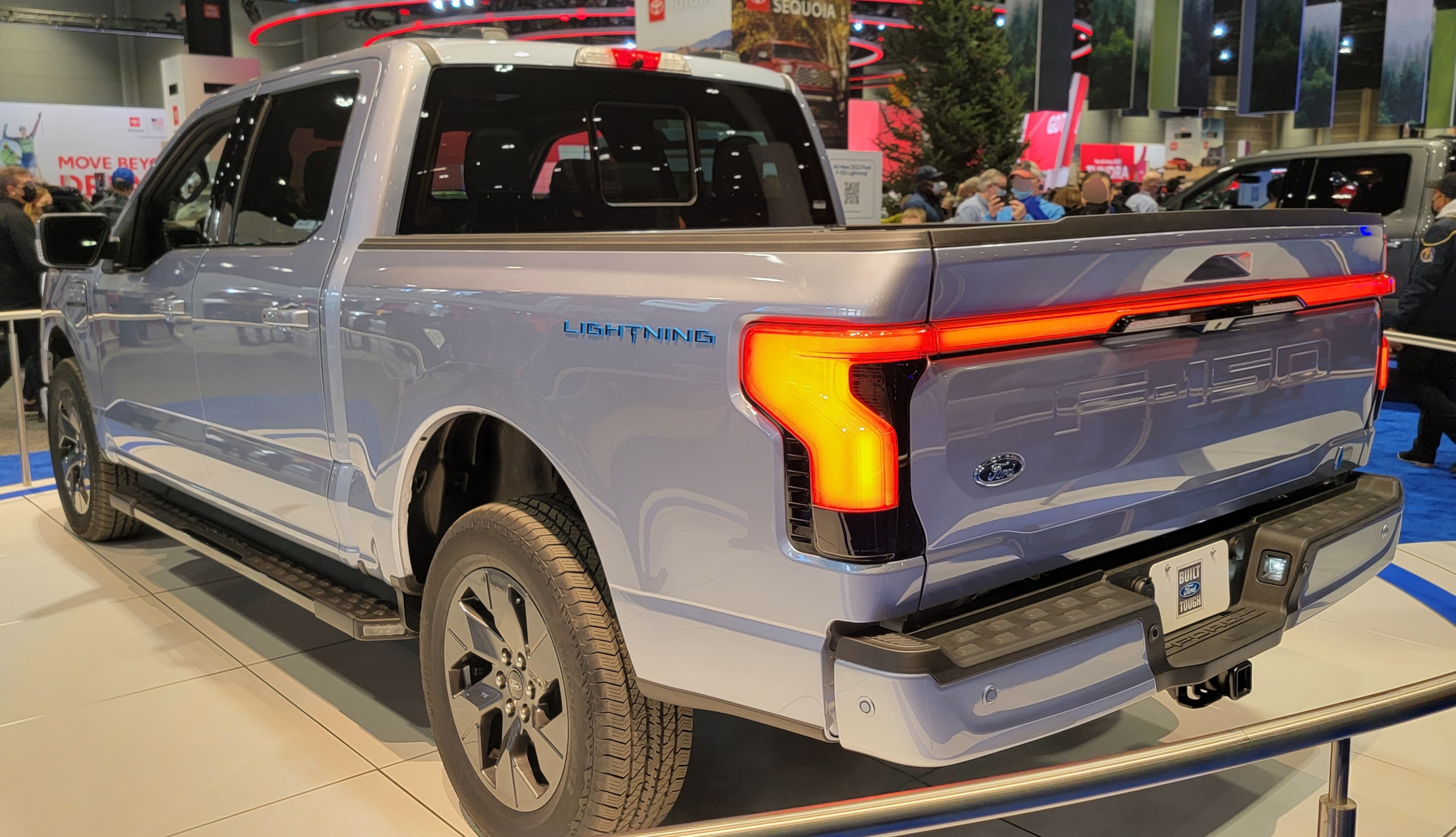
Ford F150
"I'm considering trading my F-150 for, I know, this is going to sound weird. I'm going to say it anyway, I'm trading my F-150 for a Maverick."
The Ford F-150 is a big pickup truck. It’s great for hauling and towing, but it usually costs more to run than smaller trucks.
The Ford F-150 is a full-size pickup truck known for towing and hauling capability. In this episode, it’s the “current” truck Lenny is considering replacing, so it sets the baseline for what he’s giving up (space, payload, towing) and what he’s gaining (fuel economy, daily drivability).

Ford Maverick
"I'm going to say it anyway, I'm trading my F-150 for a Maverick. I'm going from a full size truck to a small truck. Why? I just drove a Maverick with a two-liter four-cylinder engine..."
The Ford Maverick is a smaller pickup truck that’s meant to be more fuel-efficient and easier to drive day to day. It won’t haul or tow as much as a full-size F-150, but it can be more practical for errands and commuting.
The Ford Maverick is a compact pickup that’s designed to be efficient and easy to live with. Lenny highlights its 2.0-liter four-cylinder engine, nine-speed automatic, and features like Apple CarPlay, plus the tradeoff versus his F-150 in towing/hauling.
two-liter four-cylinder engine
"I just drove a Maverick with a two-liter four-cylinder engine, a nine-speed automatic transmission, it's got leather seats..."
That’s the engine size and layout: it has four cylinders and about 2.0 liters total. Smaller engines usually use less gas, but they can feel less powerful than bigger engines.
A “two-liter four-cylinder” describes an engine with four cylinders and about 2.0 liters of total displacement. Smaller engines typically improve fuel economy, but they may feel less effortless than larger engines when you’re accelerating or towing.
nine-speed automatic transmission
"I just drove a Maverick with a two-liter four-cylinder engine, a nine-speed automatic transmission, it's got leather seats..."
This is the automatic gearbox with nine different gear ratios. Having more gears can help the car shift smoothly and use less gas.
A nine-speed automatic transmission uses nine gear ratios to keep the engine operating in its most efficient range. More gears can help with smoother driving and better fuel economy, especially during city driving and steady cruising.
Apple CarPlay
"it's got leather seats, it's got Apple CarPlay, which is the most important thing to me. The steering wheel feels marvelous."
Apple CarPlay lets you connect your iPhone to the car and use certain apps on the screen. It’s handy for maps, music, and calls while you drive.
Apple CarPlay is a smartphone integration system that mirrors compatible iPhone apps onto the car’s infotainment screen. It’s often used for navigation, music, calls, and messages, and it can make a newer car feel more “connected” without needing to learn a complicated native interface.
35 miles to the gallon
"The transmission shifts good, it's got plenty of power, it gets 35 miles to the gallon. I can put a little bed cover on it."
This is how efficient the car is with gas—how many miles you can drive per gallon. Higher numbers usually mean you spend less on fuel.
“35 miles to the gallon” is a fuel-economy figure that indicates how far the vehicle can travel on one gallon of fuel. Real-world results can vary based on driving style, weather, and whether you’re using features like towing or a bed cover.
bed cover
"it gets 35 miles to the gallon. I can put a little bed cover on it. No, I can't haul as much in it or tow as much with it as I can my F-150."
A bed cover is a cover for the back cargo area of a pickup. It helps keep stuff dry and out of sight.
A bed cover is an accessory that goes over the pickup truck’s cargo bed to help protect items from weather and theft. It can also affect aerodynamics slightly, which may influence fuel economy depending on the design.
tow
"No, I can't haul as much in it or tow as much with it as I can my F-150. But, here's the but, I own a Ford dealership."
To “tow” means pulling a trailer behind the vehicle, which requires sufficient engine power, transmission gearing, and cooling capacity. Towing limits are typically set by the manufacturer and depend on the specific configuration, so switching from a full-size truck to a smaller one often reduces capability.
booster seats
"I don't think my wife will like it though because, well, I think the grandkids will be too tight in the back seat. So, I've got to pick them up at school occasionally, and we have three that we're picking up. And so, they're in the little booster seats."
Booster seats are child-safety seats used to position a child so the vehicle’s seat belt fits correctly. Fitment depends on back-seat dimensions and the spacing between seat belts, which is why Lenny is concerned about how tight the grandkids will be in the Maverick.

Nissan Frontier
"We're also a Nissan dealer, so we do sell the Nissan Frontier. They eliminated the Nissan Titan, full-size truck it didn't sell."
The Nissan Frontier is a mid-size pickup truck. Here it’s mentioned as part of the dealer’s lineup, contrasting the idea of “a little truck occasionally” with other truck sizes.

Nissan Titan
"They eliminated the Nissan Titan, full-size truck it didn't sell. And so, we, and then we have, of course, the F-150, 250, 350, and so on."
The Nissan Titan is a big, full-size pickup truck. The host is saying Nissan stopped making it because not enough people were buying it.
The Nissan Titan is Nissan’s full-size pickup truck. In the segment, the host says Nissan eliminated it because it didn’t sell, which is a useful example of how model lineups change based on demand.

Ford Ranger
"And then we have the Ford Ranger. And the Ranger is bigger, not as big as the F-150. The Maverick is a small, but it's perfect for what most people need."
The Ford Ranger is a mid-size pickup. The host is basically saying it’s larger than the Maverick, but not as big as the F-150.
The Ford Ranger is a smaller pickup truck compared with the F-150. The host uses it to describe size differences within Ford’s truck lineup, positioning the Ranger as “bigger” than the Maverick but still not as large as the F-150.
Rough Country
"The bed of a Ford Maverick, sealed with a Rough Country bed cover. It's perfect. And of course, I'm biased."
Rough Country makes aftermarket accessories for trucks. In this segment, they’re mentioned as the brand of bed cover used to make the Maverick’s cargo area more useful.
Rough Country is an aftermarket parts brand known for truck accessories. Here it’s specifically tied to a bed cover for the Ford Maverick, implying a particular product choice rather than a generic cover.
drivetrain
"I'm going to talk a little bit about the drivetrain. [285.0s] No, it's not a choo-choo train."
The drivetrain is the “power path” from the engine to the wheels. It’s what takes the engine’s power and delivers it to the tires so the car can move. Different cars route that power a little differently, but the goal is the same.
A car’s drivetrain is the set of components that transfers power from the engine to the wheels. It typically includes the transmission and the driveshaft/axles, and it may also include a differential. Understanding the drivetrain helps explain how power actually gets to the tires.
differential
"And it's the drive axle or the differential. Now, front-wheel drive cars and all-wheel drive vehicles"
The differential lets the wheels spin at different speeds when you turn. Without it, turning would feel jerky or bind up.
The differential (often called the rear differential or front differential depending on layout) allows the driven wheels to rotate at different speeds while still receiving power. This is especially important when turning.
drive axle
"So it's the engine. It's the transmission. And it's the drive axle or the differential."
The drive axle is what carries power from the drivetrain to the wheels. Think of it as the “power delivery” link to the tires.
The drive axle is the part that delivers power from the differential to the wheels. Depending on the drivetrain layout, it may be integrated with other components.
front-wheel drive
"Now, front-wheel drive cars and all-wheel drive vehicles and rear-wheel drive vehicles are different. They all have engines."
Front-wheel drive means the front wheels do the work of moving the car. The power goes to the front tires instead of the rear.
Front-wheel drive (FWD) means the engine’s power ultimately turns the front wheels. Many FWD cars package the transmission and drive components together to save space.
all-wheel drive
"Now, front-wheel drive cars and all-wheel drive vehicles and rear-wheel drive vehicles are different. They all have engines."
All-wheel drive means more than just one axle gets power. It helps the car grip the road better, especially on slippery surfaces.
All-wheel drive (AWD) sends power to more than two wheels, typically both front and rear axles. It’s designed to improve traction by distributing torque where it’s needed.
trans-axle
"The front-wheel drive vehicle that you're driving probably right now has an engine and something called a trans-axle. Why do they call it a trans-axle?"
A trans-axle is like a combined “gearbox + power-to-the-wheels” unit. Instead of having separate parts, it puts them together in one casing.
A trans-axle is a combined unit that integrates the transmission with the drive axle/differential in one housing. It’s common in front-wheel drive cars because it saves space and simplifies packaging.
rear-wheel drive
"Whereas, if it's a rear-wheel drive vehicle, and I do get tongue twisted saying that, a rear-wheel drive vehicle has a separate transmission and rear axles differential and so forth."
Rear-wheel drive means the back wheels move the car. The power path is different than front-wheel drive, so the drivetrain layout changes.
Rear-wheel drive (RWD) sends power to the rear wheels. In many RWD layouts, the transmission and rear differential/axle components are packaged separately.
diesel
"It could be diesel or it could be gas or it could be natural gas. Oh, what else? That's about it."
Diesel is a type of fuel. Diesel engines usually don’t use a spark plug to ignite the fuel; they ignite it using compression. That’s one reason diesel engines can feel different from gasoline engines.
Diesel is a fuel type used in diesel engines, which rely on compression ignition rather than spark ignition. Compared with gasoline, diesel typically uses higher compression and different fuel injection strategies. The episode’s “fuel options” framing is setting up how different fuels relate to engine operation.
gas
"It could be diesel or it could be gas or it could be natural gas. Oh, what else? That's about it."
“Gas” means gasoline. In most gasoline engines, a spark plug ignites the fuel and air mixture so the engine can make power. That’s why spark is mentioned as something the engine needs.
“Gas” here means gasoline, the most common fuel for spark-ignition engines. Gasoline engines typically use a spark plug to ignite an air-fuel mixture, which is why the segment later emphasizes spark as a required ingredient. Fuel choice affects how the engine ignites and burns the mixture.
internal combustion engines
"That's all that's relatively common as far as fuels are concerned for internal combustion engines. And it also needs air. Gotta have air."
An internal combustion engine is an engine that burns fuel inside the engine to make power. To work, it needs fuel and air, and it also needs a way to ignite the mixture. That’s what makes the engine run.
An internal combustion engine (ICE) makes power by burning fuel inside the engine itself. The combustion process needs the right mix of fuel and air, and then ignition to start the burn. This is why the episode keeps listing fuel/air/spark/compression as the “ingredients” for an ICE to run.
fuel, air, spark, and compression
"Gotta have air. It's just like a fire... the engine needs oxygen and it needs fuel. And it also needs a spark... and that's compression."
To make an engine run, you need fuel and air, and you need a way to ignite them. In many engines, a spark does the ignition. Compression helps set up the mixture so it burns effectively.
The segment lays out the core requirements for combustion in an engine: fuel, air (oxygen), ignition (spark), and compression. In spark-ignition engines, the spark ignites the compressed air-fuel mixture; in compression-ignition (diesel) engines, compression plays the primary ignition role. Together, these ingredients explain how the engine turns chemical energy into mechanical work.
reciprocating motion
"The engine basically converts reciprocal energy or motion... reciprocal motion. That's up and down, up and down... Okay, that's the piston going up and down inside the engine."
Reciprocating motion is the engine’s back-and-forth movement. The piston moves up and down inside the cylinder. Later, that back-and-forth motion gets turned into spinning motion.
Reciprocating motion is the back-and-forth movement of engine components, most notably the piston. The segment describes how this up-and-down motion is produced inside the cylinder. That motion is then converted into rotational motion by the crankshaft and connecting rod.
piston
"Okay, that's the piston going up and down inside the engine. That's, it's going up and down reciprocally, something like that."
The piston is the part inside the engine cylinder that moves up and down. When the fuel burns, it pushes on the piston. That movement is what helps the engine make power.
The piston is the moving component inside the cylinder that travels up and down, compressing the air-fuel mixture and then being pushed by expanding combustion gases. This is the “up and down” motion the host describes. The piston’s movement is central to converting chemical energy into mechanical motion.
rotary engine
"I remember when they first introduced the rotary engine, which is a totally different engine design. It has three internal moving parts."
A rotary engine is a different kind of engine than the usual piston design. Instead of pistons moving up and down, it uses a rotating setup to make power. Because the design is different, it can behave and wear differently over time.
A rotary engine is a different internal combustion design where the working motion is rotary rather than piston-based. The host contrasts it with a typical V6 by noting it has fewer internal moving parts. This matters because design differences can affect maintenance needs, wear patterns, and long-term reliability.
V6 engine
"It has three internal moving parts. The typical V6 engine has 223 moving parts. So that's, you can understand why there could be some problems as far as long-term maintenance."
A V6 engine is an engine with six cylinders arranged in a V shape. The host is using it as an example of how many moving parts a more typical engine design can have. More parts can mean more things to maintain over the years.
A V6 engine is an internal combustion engine with six cylinders arranged in a “V” configuration. The segment uses the V6 as a comparison point for moving-part count and potential long-term maintenance complexity. More moving parts generally means more opportunities for wear, though actual reliability depends on design and upkeep.
oil changes
"You got to have lubrication. You know, those of you who forget about your oil changes and, you know, go longer periods of time between oil changes, you're just making your engine last less."
Engine oil acts like a protective lubricant. If you wait too long to change it, it gets dirty and doesn’t protect the engine as well, so the engine wears out faster.
Oil changes are the scheduled replacement of engine oil to keep it clean and effective. Fresh oil provides lubrication and helps reduce wear, friction, and heat inside the engine.
lubrication
"I should say that that's one of the main components. You got to have lubrication. You know, those of you who forget about your oil changes..."
Lubrication is how oil keeps moving parts from grinding against each other. Without it, parts wear out faster and the engine doesn’t work as smoothly.
Lubrication is the process of using oil to reduce metal-to-metal contact between moving engine parts. Good lubrication lowers friction and wear, which helps the engine run efficiently and last longer.
flywheel
"So all of this motion that goes from reciprocal to rotational is forced out the back of the engine through something called a flywheel. I know it's in these names..."
A flywheel is a heavy spinning part that helps the engine’s power feel steady. It acts like a “buffer” so the car doesn’t jerk as the engine speeds up and slows down.
A flywheel is a rotating component that helps smooth out the engine’s power delivery. It stores rotational energy and helps the engine keep turning smoothly between power strokes.
neutral
"And as soon as you connected the engine to the drive axle, you're going. There is no neutral. The transmission allows the car to sit there..."
Neutral is when the engine isn’t directly pushing the wheels. That’s why you can stop the car and not have it constantly trying to move.
Neutral is the drivetrain state where the engine is not mechanically driving the wheels. The transmission provides this separation so the car can roll or be stationary without being forced to move.
torque converter
"It's called a torque converter full of fluid. And it has veins like, imagine a windmill... Now it won't be an instant reaction... This is exactly what happens inside of a torque converter."
A torque converter is like a fluid “middle step” between the engine and the transmission. When you press the gas, the engine spins, and the fluid helps that spin get transferred to the rest of the drivetrain. Because it’s fluid, the response can feel a little delayed compared to a direct mechanical connection.
A torque converter is a fluid-filled coupling between the engine and the transmission. It uses fluid movement to transfer engine torque to the transmission, which is why the car can feel like it “doesn’t take off” immediately when you press the gas. It also allows the engine to keep running while the vehicle is stopped or moving slowly.
fluid coupling (no metallic connection)
"And in reality, there is no metallic connection between the flywheel which is connected to the engine and all the gears in the transmission. Because of that torque converter, it's fluid. Your car, your truck, your SUV is being driven by fluid."
Instead of metal parts grabbing each other right away, the drivetrain uses fluid to move power. That fluid transfer isn’t perfectly immediate, so you can feel a slight delay when you start moving. As you drive faster, the system usually becomes more efficient.
The transcript emphasizes that a torque converter transfers power through fluid rather than a direct metal link. That’s why there can be “lag” and less-than-perfect efficiency compared to a fully locked mechanical connection. In practice, the converter multiplies torque at low speeds and then typically locks up or behaves more efficiently as speed increases (depending on the transmission design).
transfer case
"It's called a transfer case. What's that do? Well, now in a typical rear wheel drive vehicle, all the power is going to the rear wheels."
A transfer case is what lets a 4-wheel-drive car send power to both the front and back wheels. When conditions call for it, it directs power to the front axle.
A transfer case is the drivetrain component used in four-wheel drive (and some all-wheel drive systems) to route power from the transmission to the front and rear axles. It uses gears to split and deliver torque to the front differential when needed.
four-wheel drive
"But if you have four-wheel drive, you want some of that power, especially when it's slick outside going to the front wheels. That's what a transfer case does."
Four-wheel drive means the car can send power to both the front and back wheels. That helps when roads are wet or slippery because more tires can grip.
Four-wheel drive (4WD) is a drivetrain setup where power can be sent to both the front and rear wheels. The transfer case helps manage how much torque goes to the front axle, which can improve traction on slippery surfaces.
computer-controlled traction management
"We didn't have all-wheel drive, I don't know, 30 years ago. So that's a new creation, because we have computers that tell the vehicle what to do. If the rear wheels start to slip, there's a computer that senses that."
Modern AWD/4WD systems use sensors and a computer to detect wheel slip and adjust torque distribution. This is why the host frames it as a newer capability compared with older vehicles that relied more on mechanical behavior than electronic control.
anti-lock brake system
"Matter of fact, it is directly fed from the wheel sensors for the anti-lock brake system. That's how the computer knows that the rear wheels are spinning and not moving the vehicle forward."
ABS helps your tires keep gripping the road when you brake hard. It watches the wheel speeds and quickly adjusts braking so the wheels don’t lock and slide.
An anti-lock brake system (ABS) prevents the wheels from locking up during hard braking. It uses wheel-speed sensors to detect when a tire is about to skid, then modulates brake pressure to keep traction.
CVT, continuously variable transmission
"There's something called a CVT, continuously variable transmission. It's kind of like a transmission and a four-wheeler, or a side-by-side. It doesn't have gears. It has cones and belts."
A CVT is a transmission that can change smoothly through many “gear-like” ratios. Instead of shifting between set gears, it uses a belt and pulleys to keep the engine in a good power range.
A CVT (continuously variable transmission) changes engine speed smoothly without fixed gear steps. Instead of discrete gears, it uses a belt and pulleys (often described as cones and belts) to provide an effectively infinite range of ratios.
contamination
"They are, if you keep them serviced, very sensitive to contamination. And if you're driving a Honda CR-V or a Toyota RAV4, Nissan Rogue, most small cars, they use CVTs."
Some transmissions don’t like dirty fluid. If the fluid gets contaminated or breaks down, the transmission can wear faster or start acting weird.
CVTs are sensitive to contamination because their internal components rely on clean, correctly formulated fluid. Dirty or degraded fluid can increase wear and cause slipping or harsh behavior.
CVTs
"And if you're driving a Honda CR-V or a Toyota RAV4, Nissan Rogue, most small cars, they use CVTs. ... So are CVTs bad?"
A CVT is a type of automatic transmission that doesn’t use set gears like “1st, 2nd, 3rd.” It smoothly changes the ratio so the engine can stay in its best range.
CVT stands for continuously variable transmission. Instead of fixed gear ratios, it uses a belt/chain and pulleys to keep the engine in a good efficiency or power range across speeds.

Nissan Rogue
"And if you're driving a Honda CR-V or a Toyota RAV4, Nissan Rogue, most small cars, they use CVTs."
The Nissan Rogue is a common crossover. Some versions use a CVT, so it’s a good real-world example of how CVTs show up in normal cars.
The Nissan Rogue is a widely sold crossover that has often been offered with a CVT. The host uses it as an example of how many “regular” cars use CVTs.

Honda Crv
"And if you're driving a Honda CR-V or a Toyota RAV4, Nissan Rogue, most small cars, they use CVTs."
The Honda CR-V is a common SUV people drive every day. Some versions use a CVT, which is why it comes up in a discussion about transmission types.
The Honda CR-V is a popular compact SUV that, in many model years, has been offered with a CVT. That’s why it’s used as an example when discussing how common CVTs are in everyday cars.

Toyota RAV4
"And if you're driving a Honda CR-V or a Toyota RAV4, Nissan Rogue, most small cars, they use CVTs."
The Toyota RAV4 is a very common SUV. Some versions use a CVT, which is part of why CVTs show up in everyday driving.
The Toyota RAV4 is another mainstream compact SUV that has commonly been paired with a CVT. It’s mentioned to show that CVTs aren’t rare—they’re used in lots of normal, commuter vehicles.
turbocharged
"... it says it has a two-liter four-cylinder engine, turbocharged. And the transmission is a nine-speed, so it is not a CVT."
A turbocharger is like an air pump for the engine. It helps the engine make more power by pushing extra air into the cylinders.
Turbocharged engines use a turbocharger to force more air into the cylinders. More air allows more fuel to be burned efficiently, which can increase power without making the engine physically larger.
manual transmission
"So we're transferring power, right? If we have a manual transmission vehicle, the separation between the engine, the flywheel on the engine and the transmission is done with a clutch."
A manual transmission is the kind where you choose gears yourself. You use the clutch pedal to control how smoothly power goes to the wheels.
A manual transmission connects and disconnects the engine from the drivetrain using a clutch pedal. The driver selects gears, and the clutch controls how smoothly power transfers to the wheels.
clutch
"... the separation between the engine, the flywheel on the engine and the transmission is done with a clutch. So, you know, when the clutch is let out, if you're in neutral, they're not connected."
The clutch is what lets you smoothly connect the engine to the wheels in a manual car. If you let it out too quickly, the car can jerk or stall; if you do it smoothly, it drives normally.
The clutch is the mechanical connection between the engine (via the flywheel) and the transmission in a manual car. Letting the clutch out gradually “engages” it, transferring torque to the drivetrain; releasing too fast can stall the engine or jerk the car.
stalling on a hill
"And it's tougher on a hill because the vehicle starts rolling backwards before you have the clutch out and you just have to find that point."
When you’re on a hill, the car can start rolling backward while you’re still finding the clutch “bite point.” You have to balance the clutch and gas so it doesn’t roll back or stall.
On a hill, a manual car can roll backward before the clutch is fully engaged. Drivers must coordinate clutch engagement with throttle to prevent rollback and avoid stalling.
PDK
"I could get an automatic, it's called a PDK. It's got paddle shifters and it's got dual clutches built into it."
PDK is Porsche’s automatic transmission that shifts quickly. It uses two clutches and paddle shifters so you can still feel like you’re controlling the gears.
PDK is Porsche’s dual-clutch automatic transmission. It uses two clutches to pre-select the next gear, enabling fast shifts and a more “manual-like” feel via paddle shifters.
paddle shifters
"It's called a PDK. It's got paddle shifters and it's got dual clutches built into it."
Paddle shifters let you change gears without using a gear lever. You pull them to tell the transmission what gear you want.
Paddle shifters are controls mounted behind the steering wheel that let the driver command gear changes. On dual-clutch automatics like PDK, they provide a more interactive, manual-style driving experience.
drive shaft
"So beyond the transmission, you have a drive shaft. If it's a rear wheel drive vehicle, you have a drive shaft that is connected directly to the transmission."
The drive shaft is the part that carries power from the transmission to the back axle. Without it, the wheels wouldn’t get the engine’s power.
A drive shaft transfers rotational power from the transmission to the differential on many rear-wheel-drive (and some all-wheel-drive) layouts. It’s the link that carries torque to the axle(s) that turn the wheels.
ring gear and a pinion gear
"It's really kind of neat looking on the inside. It uses a ring gear and a pinion gear and a bunch of other gears to make this happen."
Inside the differential there are gears that multiply and redirect power. The pinion gear drives the ring gear, and that’s how rotation gets turned into wheel motion.
A ring gear and pinion gear are part of the differential’s gear set that changes torque direction and gear ratio. The pinion drives the ring gear, which then turns the rest of the differential to move the wheels.
posi traction
"Now, lots of rear wheel drive vehicles have something called a posi traction [1119.2s] or limited slip differential."
Posi traction is a type of rear differential that helps both rear wheels work together. If one wheel starts spinning on ice or snow, it helps send power to the other wheel so you can keep moving.
“Posi traction” is a brand-style name often used to describe a limited-slip differential. Its job is to reduce wheel spin by sending more torque to the wheel with grip, especially when one rear wheel starts slipping.
onboard computer
"it's going to send a message to the onboard computer and say, hey, [1163.7s] we need the front wheel spinning please. [1166.5s] And that's what it does."
The onboard computer is the car’s brain. It watches what the wheels are doing and can tell the drivetrain to send power where it’s most likely to help.
The onboard computer (vehicle control module) monitors traction-related inputs and commands drivetrain systems to react. In AWD/traction scenarios, it can request torque changes to help maintain forward motion.
fluids
"And of course, the engine has a lot of requirements, [1191.3s] mostly has to do with keeping it cool and keeping it lubricated. [1195.6s] So important folks to keep those fluids fresh and clean."
Fluids are the liquids that keep your engine from overheating and grinding itself down. Regular maintenance helps keep them clean so the car runs reliably.
“Fluids” refers to the liquids that keep engine components working properly, mainly by providing lubrication and heat control. The transcript emphasizes that keeping fluids fresh and clean helps prevent overheating and wear.
OEM parts
"I always recommend using OEM parts or original manufactured parts. If I have a GM car, it's going to have a GM filter on it."
OEM parts are the “factory” type parts for your car. They’re made to match what the car was originally built with, so they usually fit right and work as intended.
OEM parts are components made by the original equipment manufacturer—the same company that built the car’s parts for the factory. Using OEM-style filters and fluids helps ensure correct fit, filtration performance, and compatibility with the vehicle’s design.
air filter
"Five Honda, it's going to have Honda filters, air filter, cabin filter, fuel filter, everything is going to be from the factory."
The air filter keeps dirt out of the engine. If it gets dirty, the engine can’t breathe as well and may run worse.
An air filter cleans the air entering the engine so dust and debris don’t wear out internal components or disrupt combustion. A clogged or low-quality air filter can reduce airflow and hurt performance and fuel economy.
fuel filter
"Five Honda, it's going to have Honda filters, air filter, cabin filter, fuel filter, everything is going to be from the factory."
The fuel filter keeps junk out of the fuel system. If it’s clogged, the car may run poorly or not start as easily.
A fuel filter removes contaminants from the fuel before it reaches the engine. Keeping it fresh helps protect fuel injectors and maintains proper fuel delivery.
cabin filter
"Five Honda, it's going to have Honda filters, air filter, cabin filter, fuel filter, everything is going to be from the factory."
The cabin filter cleans the air you breathe inside the car. If it’s old, the air can feel dusty and the HVAC may not blow as well.
A cabin filter cleans the air that enters the passenger compartment through the HVAC system. Replacing it helps reduce dust, pollen, and odors, improving comfort and airflow.
transmission fluid
"Transmissions get hot, especially when you're towing something. And there are a lot of people that will put a transmission cooler on there. They want to keep the fluid in the transmission cool."
Transmission fluid is what keeps the transmission working smoothly. If it gets too hot, it can start to break down and the transmission may shift worse.
Transmission fluid lubricates internal components and carries heat away from the transmission. When the fluid overheats—especially during towing—it can lead to accelerated wear and shifting problems.
transmission cooler
"And there are a lot of people that will put a transmission cooler on there. They want to keep the fluid in the transmission cool. It has lines that go from the transmission to something that looks like a little radiator out there in front of the grille, right in front of the regular radiator."
A transmission cooler helps keep the transmission fluid from getting too hot. When you tow or drive hard, heat builds up, and the cooler helps protect the transmission.
A transmission cooler is an add-on heat exchanger that helps lower transmission fluid temperature. It typically uses lines to route fluid to a radiator-like unit (often in front of the main radiator) so the fluid can shed heat before returning to the transmission.
temperature gauge for the transmission
"A lot of modern trucks have a temperature gauge for the transmission on their instrument panel. That's why that's important, especially like I say when you're towing."
Some trucks show how hot the transmission is getting. That matters when towing, because overheating can damage the transmission over time.
A transmission temperature gauge lets the driver monitor how hot the transmission fluid is running. This is especially useful while towing because heat is a major factor in transmission wear and fluid degradation.
rear diff
"If you've got a bearing, it starts to go bad, or you have a lot of stress on the rear diff because you're towing something heavy, then that can cause issues there."
The rear diff is a set of gears in the back of the car. It helps the wheels turn at different speeds in corners. If it’s working too hard (like towing), it needs the right fluid maintained.
“Rear diff” is short for the rear differential, the gear assembly that lets the rear wheels rotate at different speeds when you turn. It also takes a lot of load, especially if you tow or drive hard, so neglecting related maintenance can lead to wear and noise.
forgotten fluid
"because you're towing something heavy, then that can cause issues there. That's the forgotten fluid. The ones that don't have a dipstick, don't have a way to check it is to either get up underneath the car and pull out an inspection plug..."
Some car fluids get ignored because they’re not checked often. But they still wear out from heat and heavy use, so they need periodic service.
“Forgotten fluid” refers to drivetrain fluids people often overlook, like differential fluid, transfer-case fluid, or transmission-related fluids. These fluids can degrade from heat and load, and some vehicles don’t make it easy to check them.
inspection plug
"The ones that don't have a dipstick, don't have a way to check it is to either get up underneath the car and pull out an inspection plug or to have a technician check it for you when it's on a lift."
Some parts don’t have a dipstick. Instead, a mechanic checks the fluid level through a small access hole called an inspection plug.
An inspection plug is a service access point used to check fluid level in components that don’t have a dipstick. Mechanics typically verify the fluid is at the correct level (often “at the plug” level) before reinstalling the plug.
owner's manual
"there's a page in your owner's manual that tells you when these fluids are supposed to be inspected or replaced and you need to follow that."
Your owner’s manual tells you when to check and change fluids. It’s the car maker’s recommended schedule for keeping things running right.
The owner’s manual is the manufacturer’s guide for maintenance intervals and fluid inspection/replacement schedules. Following it helps ensure fluids are serviced on time for your specific vehicle and usage conditions.
oil-change interval vs oil-life light
"I wouldn't pay much attention to them. You know, my problem is that the factory says you don't need to change. Well, like on my F-150, I don't need to change my oil until the light comes on... It's easy for me to remember."
Some cars tell you to change oil based on an oil-life estimate or a warning light. The host prefers changing on a fixed schedule because it’s a safer, simpler way to keep the engine cleaner.
Oil-life systems and factory schedules often assume typical driving conditions and use sensors/algorithms to estimate when oil is still healthy. The host’s counterpoint is that shorter, consistent intervals can reduce the chance of oil getting too contaminated—especially with new engines or harder use.
oil drain plug is typically magnetic
"Now, if it's a brand new vehicle, I'm changing the oil at 2,500 miles... metal shavings accumulate in the oil pan. You know, that's why the oil drain plug is typically magnetic."
Some oil drain plugs have a magnet. When you drain the oil, the magnet helps grab tiny metal bits that can come from engine wear.
A magnetic oil drain plug attracts metal particles suspended in the oil. The idea is to catch wear debris (like from normal engine wear or early break-in) before it circulates further, which is why oil changes matter.
early oil change / break-in inspection
"Get your first oil change at 2,500 miles and have them pull out that drain plug. And before they wipe it off, have them show it to you and see if there's any metal on it."
Changing oil early (like at 2,500 miles) is often part of a break-in routine to remove initial wear particles and contaminants that can accumulate as new components seat in. Inspecting the drain plug for debris is a simple way to catch potential issues early.
metal on it
"And before they wipe it off, have them show it to you and see if there's any metal on it. If it is, I hope you don't have a problem, but it's a good thing you change your oil at 2,500 miles."
If you see metal bits on the drain plug, it can mean parts inside the engine are wearing more than they should. If there’s a lot of metal, the shop should check what’s going on.
Metal on the drain plug (or its magnet, if equipped) can indicate abnormal engine wear or debris from internal components. Small, non-concerning particles can happen, but significant metal shavings are a warning sign that should be investigated.
Request an Explanation
Heard something you'd like explained? We'll add it to this episode.
Sign in to request explanations for terms you heard.
Want to learn more?
Browse our glossary for plain-English explanations of automotive terms, jargon, and concepts.
Help improve this episode
See something that's not quite right? Our annotations are AI-generated and can sometimes miss the mark. Click the flag icon on any annotation to suggest a correction.