'Automotive forbidden fruit' means cars that people really want but can't buy in their country. There are many reasons why these cars aren't sold, like laws or the company's choice.
The Audi A3 is a small, fancy car that feels nice to drive and has a lot of cool features. It's a good choice for someone looking for a stylish and comfortable ride.
Cupra is a brand that makes sporty cars and started as a part of another brand called Seat. They create cars that are faster and more stylish than regular Seat cars.
The Hyundai Genesis is a nice, fancy car that offers a lot of comfort and features. It's a good option if you want something luxurious without paying the highest prices.
Car
SEAT León
The SEAT León is a small car that looks sporty and comes with different types of engines, including gas and hybrid options. It's designed for people who want a fun driving experience.
A turbo diesel engine is a kind of engine that uses a turbocharger to make it more powerful and efficient. It helps the car use less fuel while still going fast.
A manual transmission is a kind of gear system in cars where the driver has to change gears by hand. It gives the driver more control over how the car drives.
A 'driver's car' is a type of car that is really fun to drive. It feels good on the road and gives you a sense of control and excitement while driving.
The Vauxhall Mokka GS Line is a small SUV that looks good and is easy to drive. It's designed for city roads and has some fun colors and shapes that make it stand out.
Peugeot is a car brand from France that used to sell cars in the United States. They stopped selling cars there in 1991 because they weren't selling well anymore.
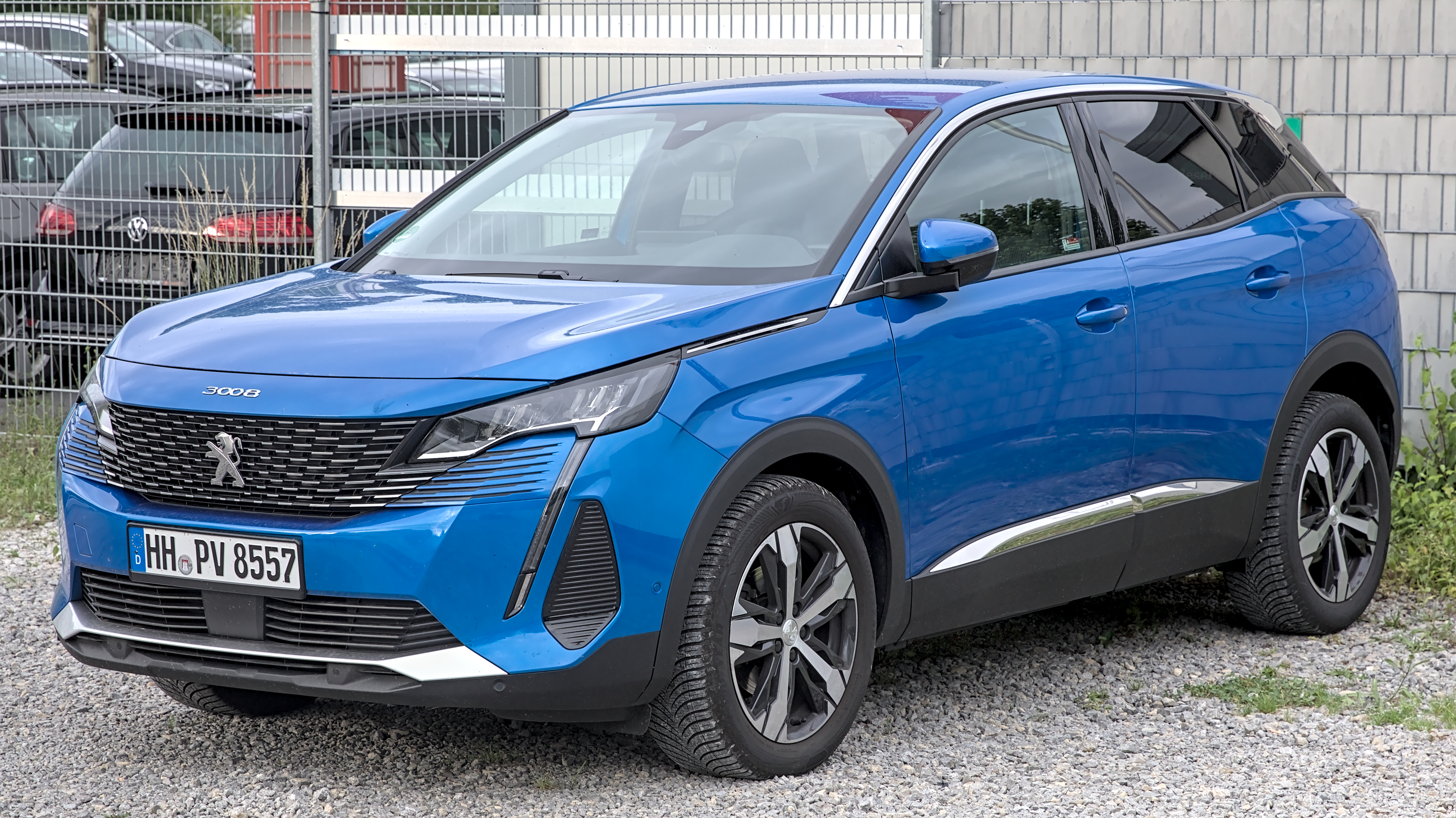
The Peugeot 3008 is a small SUV that's designed to be stylish and comfortable. It's a popular choice for people looking for a practical vehicle with a modern look.
The Peugeot 4008 is a small SUV that looks like a sporty car. It's designed to be practical for families but also has a stylish look that makes it stand out.
A crossover is a vehicle that mixes the features of a car and an SUV. It usually has more space and a higher driving position, making it good for families.
DS Automobiles is a brand that makes luxury cars. It's part of Citroën, a well-known car company, and focuses on creating stylish and comfortable vehicles.
Term
DS
DS stands for 'Different Spirit' or 'Distinctive Series', which shows that the brand wants to be seen as unique and special. It sounds like the French word for 'goddess', which adds to its luxury appeal.
Volkswagen Group is a big car company that owns several brands, like Volkswagen and Audi. They make many different types of cars and are known all over the world.
Global platforms are like a base that many different cars can be built on. This helps car companies save money and make different types of cars more easily.
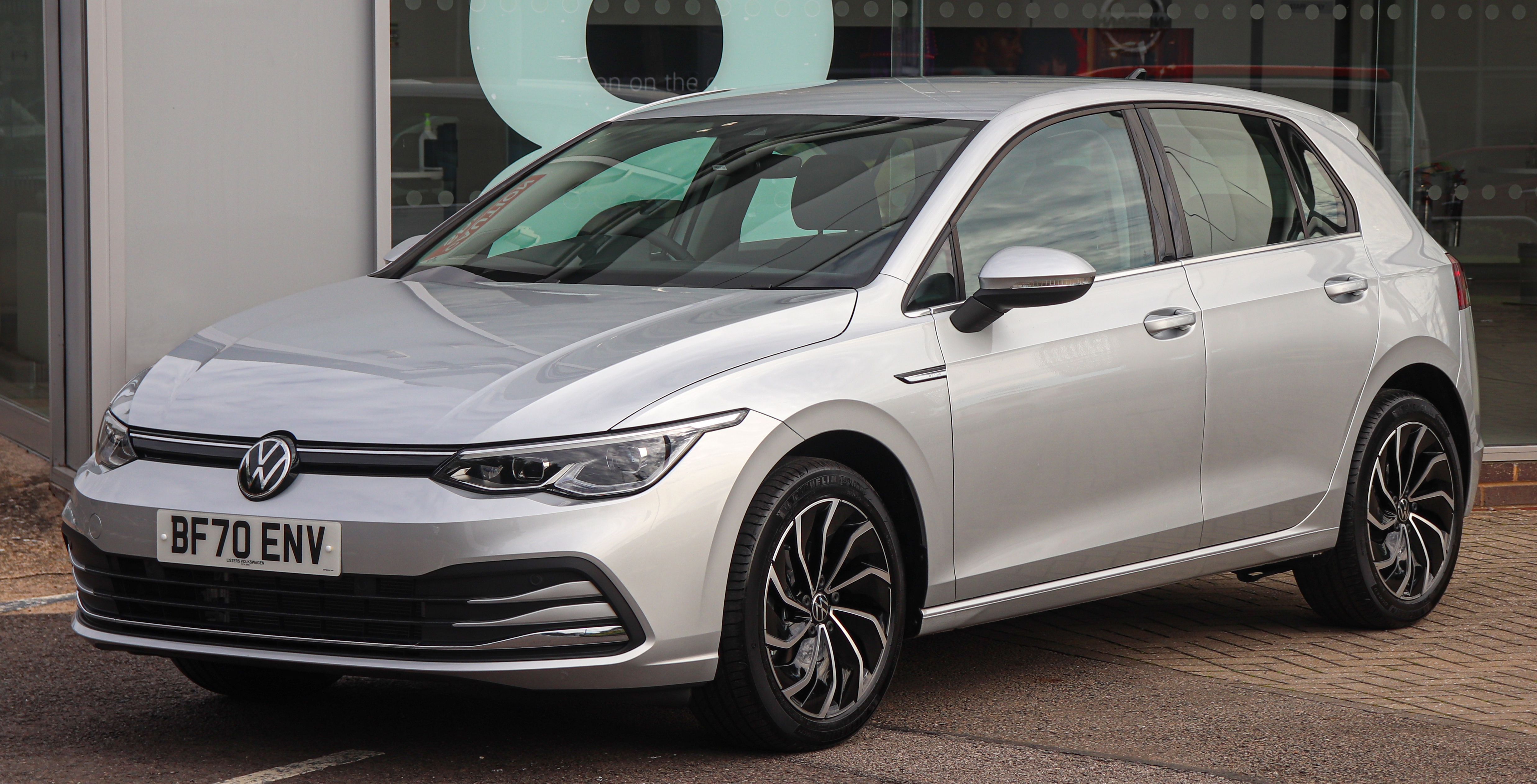
The MQB platform is like a shared foundation for many different cars made by Volkswagen and its brands. It helps them build different models more easily and cheaply.
The Chevy Trax is a small SUV that's easy to drive and park. It's a good choice if you want a bit more space than a regular car but don't need something too big.
PSA Group was a company that made cars, and in 2021, it joined with another car company called Fiat Chrysler to create a new company called Stellantis. This new company owns many different car brands.
The Dodge Ram is a big truck that can carry heavy loads and tow trailers. It's popular for people who need a tough vehicle for work or outdoor activities.
The Chevy Tahoe is a big SUV that can carry a lot of people and stuff. It's great for families or anyone who needs a strong vehicle to drive around or go on trips.
The Ford Mustang is a classic American sports car that people love for its speed and cool looks. It's been around for a long time and is often seen as a symbol of fun driving.
The Toyota Matrix is a small car that looks like a hatchback. It was made by Toyota and is similar to the Corolla, but it had a different name and style that appealed to American buyers.
The Nissan Qashqai is a small SUV that's great for city driving and family outings. It has a lot of room inside and is known for being safe and fuel-efficient.
They look like concept cars that actually made it to the production floor.
What you would expect from French art.
And DS Automobiles doesn't have a website that would be too pedestrian.
They have what they call a digital design studio, which tells you all about not their
cars, but their creations, their savoir faire, which is French for know-how, but
not in the practical know-how sense.
More means that you know what to do and how to act appropriately and gracefully at all
times in any social situation.
So they don't just make cars.
They make statement pieces.
It's the kind of thing that you fully expect to see parked outside an elite's Paris
Michelin-starred restaurant, not in the Chick-fil-A drive-thru.
So of course they're not sold here.
I guess we're just not sophisticated enough to deserve them.
Eh, c'est la vie.
So why don't we have these cars other than the French probably don't think we're
good enough?
Let's talk about all the reasons and there are many on why basically none of
these fun, small, stylish cars ever make it over here.
The biggest one obviously are the safety and emissions standards and
regulations.
Europe has a lot of them just like the US does.
But they're all totally different standards.
They're different safety standards, different emissions regulations and they're
developed and governed by totally different organizations.
In the US everything is governed by the National Highway Traffic Safety
Association and the book of standards that they have put out.
Well Europe on the other hand follows the United Nations Economic
Commission for Europe.
And they have never gotten together to agree upon a set of global standards that
would make it easy for the automakers to build and sell vehicles across
country lines and across the continents.
No, no, so a car that is perfectly safe in England might fail the safety
standards here because, God forbid, the headlights sit a millimeter too high.
You can't just flip the steering wheel to the other side and call it a day.
Another thing that makes it complicated is that to actually sell those cars,
brands need to have a full support ecosystem in the United States.
They have to have dealerships with showrooms and trained salespeople,
trained technicians, part supply change.
That is a billion dollar investment before you even sell one car.
Fortunately, some of that is changing and in theory could get easier because
more and more car brands are getting assimilated by some of these large groups
like Solantis and Volkswagen Group and they're doing that for the specific
purpose of cutting costs and having these global platforms and economies of scale.
As I've talked about in some past podcasts, modern cars are built on
these shared modular platforms or basically giant Lego sets.
So one architecture can span not only a dozen different models but
across different brands under the same group.
So for example, Volkswagen's MQB platform supports everything from
the little golf up to the Big Three Row Atlas.
And Solantis has a CMP platform that underpins Pujo, Citoyenne,
Opel, Vauxhall, even Buick's here.
So for example, that cute little Vauxhall mocha that I like so
much with the red trim in England.
It has the same bones as the Pujo 3008 and the Citoyenne C4.
They're cousins.
But it gets even more complicated than that because Vauxhall was previously owned
by GM.
They purchased it in the Opel brand from Germany back in 1925.
The first little mocha that launched in 2012 was a Buick encore in disguise
and a Chevy Trax just built in South Korea and sold in the UK.
Yeah, complicated.
And then in 2017, GM sold Vauxhall Opel to the French PSA group.
And that is when the mocha got redesigned and became cousins with the
Pujo and the Citoyenne.
But wait, there's more.
In 2021, PSA group merged with Chrysler Fiat to form Solantis,
which now owns practically half the world's brands.
They own Pujo, Citoyenne, DS, Opel, Vauxhall, Fiat,
Alfa Romeo, and Chrysler Jeep Dodge Ram.
Confused yet?
Don't worry, you're not alone.
Keeping it simple, everyone is related.
They just don't want to talk about it at family reunions.
But despite all this automotive inbreeding, sales and support infrastructure,
especially in a country the size of the United States is still
immensely complex and incredibly expensive.
Not to mention a huge risk if the cars don't actually sell here in our highly
competitive and kind of picky environment.
Because let's be honest, we Americans are kind of addicted to size.
Europe loves their little compact hatchbacks and wagons that fit on their
narrow roads and fit into little tiny parking areas.
Where on the other hand, we like our ginormous SUVs that we can barely
skid ways into a parking lot at Walmart.
That little Citoyenne C3, it's a little hatchback.
You put that next to a Chevy Tahoe and it looks like a lunchbox, just like my mini.
But another reason that the Europeans focus on these small cars
is because they pay twice as much for gas as we do.
I mean, we bitch and moan about paying four bucks a gallon for gas,
but they pay eight or nine dollars a gallon in Europe.
So it makes sense that they would build small fuel-efficient cars
that are also agile.
We're just spoiled by all the elbow room we have
and the relatively cheap gas prices if you look at the global picture.
And I would argue that we probably embrace the concept of bigger is better
just a little too much for the European brands to develop a three-row SUV
like what we crave here in America, even with those global platforms,
way too expensive.
And it's getting more cost prohibitive every day.
This is where we enter the trade policy circus.
These days, one week you can import a car.
Next week it's slapped with a 30% tariff and you just don't know what's going to happen.
Then you add in the EU retaliation for centaurs.
You have the Chinese holding rare minerals and computer chips hostage
and all the other forms of political chest beating that seem to be going on.
The poor automakers are left trying to plan five to seven-year product development cycles
in a world that's literally changing every five minutes.
This is why I built my tariff tracker tool because I can barely keep track of it all.
But with all this chaos and uncertainty, the automakers are literally just trying to survive
and hang on to their rapidly vanishing profit margins.
They are not looking to expand into new markets, especially the complex and expensive U.S. market.
Not anymore.
It's just too big of a gamble and they can't afford it.
It's just not the golden opportunity that it used to be.
While we can't have these cool European cars, some of the vehicles sold in the European
market actually are sold here, just under a different name.
After we dropped off the little Skoda rental car and we're heading to the cruise port in South
Hampton, we called Europe's version of Uber and our driver showed up in this shiny little black
hatchback that looked really familiar.
It was a Toyota Oris, basically a Corolla hatchback.
The Corolla badge has been around since the mid-60s, almost as long as the Mustang.
But in 2006, Toyota decided to change the name of the hatchback version,
which was much more popular in Europe, to the Toyota Oris.
But then in 2019, when they redesigned the Corolla and the hatchback version,
they said, never mind and switched back to calling it the Corolla.
They literally renamed it and then renamed it back.
Just classic marketing whiplash.
But here's where it gets really interesting.
For the American market, we actually did have our own version of the Oris,
just under yet another name, the Toyota Matrix.
So that sporty little Toyota hatchback your neighbor had in the early 2000s.
Yep, that was actually a Corolla hatchback, but it was just called the Matrix,
because that just sounds so much cooler and we were enjoying those movies.
But it still shared its platform and engines and so much of its DNA with the Corolla
and the Oris just wrapped in a more American friendly body and cooler name.
It was even twinned with the Pontiac vibe,
which was essentially a Toyota Matrix with a different badge.
But they were both built in California at the plant that Toyota and GM shared.
So while Europe got the Oris to make the Corolla sound stylish,
we got the Matrix to make it sound sporty, just marketing.
And when Toyota killed off the Matrix in the US and then later the Oris in Europe,
they finally realized that everybody is perfectly okay with the Corolla nameplate.
It's synonymous with fuel-efficient, practical, and reliable.
So they just brought it back worldwide and called it a day.
So you can have a Toyota Oris.
It's just called a Toyota Matrix and you have to buy it used.
Another good example is the Nissan Qashqai.
This is one of Europe's best-selling small crossovers.
And it's really fun to say the Nissan Qashqai.
We do have it here.
We just call it the Rogue Sport.
Because I guess Nissan figured out that Americans were just not going to be able
to pronounce Qashqai without spreading a bell.
But Qashqai isn't a random name.
And while it's cool to say, it's named after a real group of people,
a semi-nomadic tribe in Iran that's known for their independence and their constant travel.
And Nissan wanted to capture that same sense of freedom and adventure and individuality.
So when they renamed it the Rogue Sport for the US market,
they kept that same spirit just in a version that we could actually pronounce.
So in Europe, it's a nod to this nomadic tribe.
And in America, it's just something at least because if it's in your garage.
But it's a nice little car.
Another interesting example is the Mitsubishi Pajero.
This is one of the all-time great translation fails.
Mitsubishi launched this car in Japan.
And they named it after a wildcat that is native to South America,
which is Lepardus Paneros.
Sounds exotic.
Sounds adventurous.
Except that in Spanish,
that word doesn't mean wildcat.
It's slang for, how do we say this?
Someone who enjoys spending time alone with themselves.
So in Spanish-speaking countries, the Mitsubishi Pajero is basically
like saying the Mitsubishi wanker in Great Britain, if you catch my drift.
So they very quickly rebranded it as the Montero,
which sounds much more manly.
It means mountain hunter.
Yeah, much better, much better.
But that little translation slip cost them millions of dollars
and gave the rest of the industry a really good reason to double-check
all their translations before naming cars and not to rely on Google for that.
So there you have it, folks.
The forbidden fruit of Europe's car market and all the regulations and costs and plain
bullshitery that keeps us from having nice things.
If you could import any European car that you can't get in the U.S.
tomorrow, let's pretend there are no tariffs,
there's no red tape, there's no safety stuff we got to worry about,
you could import anything you want.
What would it be?
Let me know in the comments.
And if anyone in Spain is listening, please send me a Cooper Leon BZ,
preferably in the Magnetic Tech Matt Gray with the 19-inch Hailstorm Copper Wheels.
Please, please, it's so beautiful.
And if you haven't done so already, please subscribe to the show
and head over to thecarchick.com and sign up for the straight shift newsletter.
You'll get exclusive access to my Tariff Tracker tool,
plus next week's edition is going to dive into the latest chip crisis
that's threatening to bring global auto production to a screeching halt.
Again, thanks for listening, everyone.
Until next time, drive safely.
I'm out of here.
About this episode
Exploring the allure of European cars that remain elusive in the U.S., this episode dives into the reasons behind their absence, from stringent safety regulations to market dynamics. The host shares personal experiences from a recent trip to the UK, highlighting standout models like the Cupra Leon and Peugeot 3008, while discussing the bureaucratic hurdles and cultural preferences that keep these gems overseas. The episode also touches on how some European models exist in the U.S. under different names, revealing the complexities of automotive branding and market adaptation.
Ever wandered through a European parking lot and thought, “Why don’t we get cars like that in America?”
In this episode of The Straight Shift, The Car Chick, dives into the sleek, smart, and downright sexy European cars that U.S. drivers can’t buy — and all the bureaucratic, political, and marketing nonsense that keeps them off our roads.
She covers everything from trade wars and tariffs to global platform sharing, brand confusion, and she reveals the legendary naming fail in automotive history.
Key Takeaways
European automakers build smaller, more stylish, and more driver-focused cars — and American drivers are missing out on some genuinely great vehicles because of it.
The combination of differing safety standards, emissions regulations, and high startup costs makes it difficult for foreign brands to justify entering the U.S. market.
The current trade and political environment is unpredictable, which makes expanding into new markets — especially the U.S. — too risky for many automakers.
Global platform sharing allows manufacturers to design multiple models on the same architecture, meaning many cars are more closely related than consumers realize.
Vehicle naming strategies often change by market due to language, marketing, and cultural factors — though occasionally they lead to some embarrassing translation fails.