Leftover inventory means cars that dealers already have on their lots but can’t sell yet. When that happens, dealers usually have to lower prices or offer deals to get them sold.
The Ford Bronco is a popular SUV known for off-road capability. Here, the host is talking about how many Broncos are sitting unsold and how that relates to Ford’s pricing and what people are actually buying.
The Ford Bronco Sport is a smaller SUV that’s meant to handle rougher roads than a typical car. It’s part of the Bronco family, but it’s not as big as the full Bronco. The podcast mentions it uses a three-cylinder engine.
A three-cylinder engine is an engine with three pistons that make power. It’s often used to save fuel and weight, but it can change how the car feels when you accelerate.
The Land Rover Defender is a tough-looking SUV built for off-road use. The host is using it as an example of a vehicle people are willing to pay a lot of money for.
Ineos is a company that makes a rugged off-road SUV. The host is bringing it up to show that some specialty vehicles still have customers willing to pay high prices.
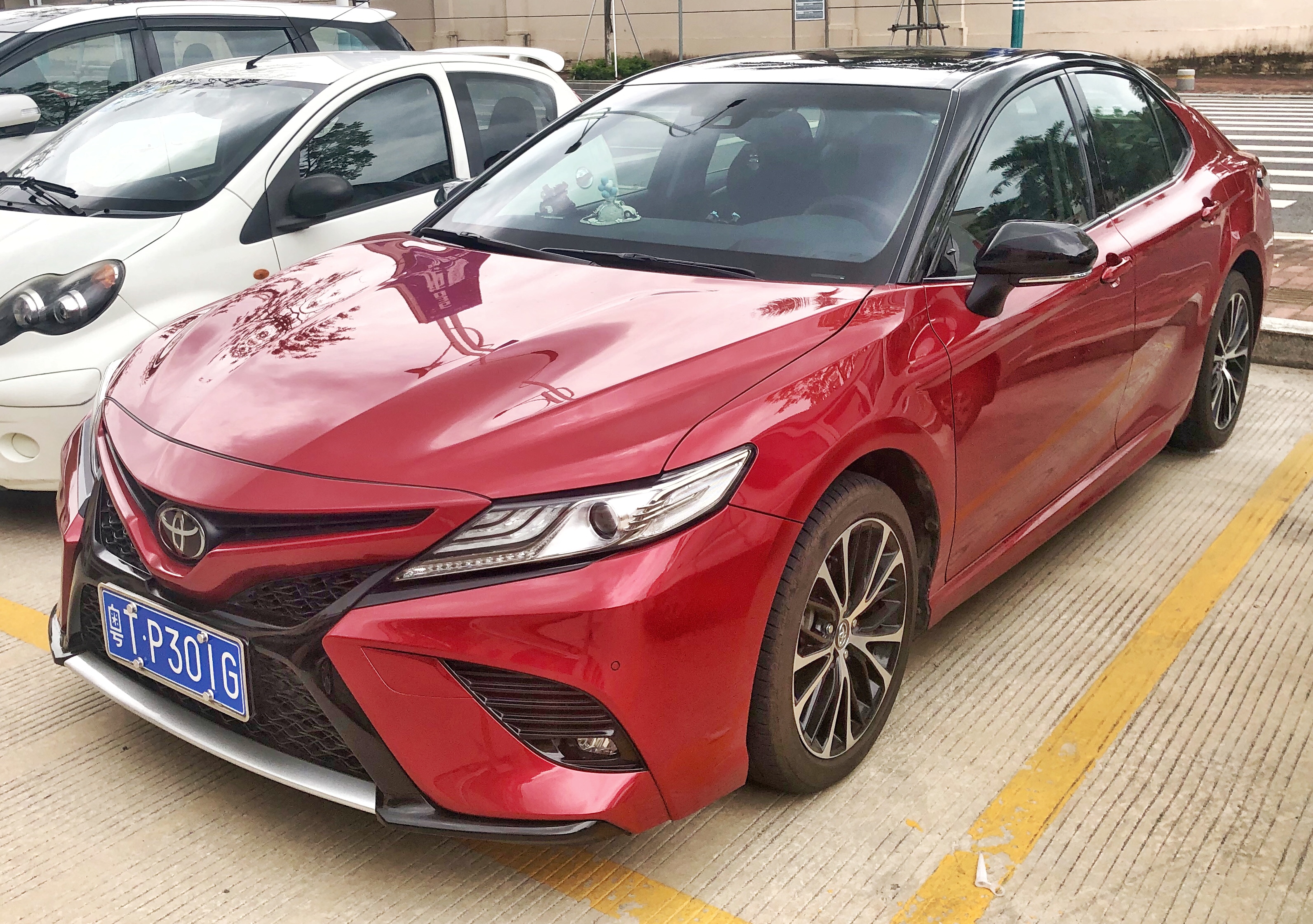
The Toyota Camry is a popular family sedan. The host is pointing to its sales to say that people are still buying sedans, especially when the price makes sense.
The host is saying sedans are selling better again. The reason they give is that sedans tend to cost less than many SUVs, so more people are choosing them.
When sales start dropping, car companies often react by changing pricing or offering bigger deals. The host is saying this is what leads to discounting strategies.
Lincoln is Ford’s luxury car brand. The host says Lincoln sales are falling too, which suggests the issue may be broader than just one type of Ford vehicle.
Stellantis is a big group of car brands. The host says they adjusted their strategy by offering lower prices and bigger deals to attract more mainstream buyers.
Incentives are extra deals from the car company that make the car cheaper to buy. They can be cash rebates or special financing that reduces what you pay.
“Overstocked” means there are too many cars sitting around that the company needs to sell. If they can’t sell them at normal prices, they offer bigger discounts.
“Dealership basis” means the car company can also help the local dealer sell the car, not only the buyer. That can show up as extra dealer discounts or support.
Here, “incentivize” means offering deals to get people to buy cars that are sitting longer on lots. It’s basically the manufacturer or dealer sweetening the offer.
The Chrysler Pacifica is a minivan. In this segment, the hosts are saying it’s so expensive that dealers have to offer big discounts to get people to buy it.
The Dodge Ram is a large pickup truck with a bed for hauling things. People buy it for work or for carrying gear and towing. The podcast is mentioning it in the context of truck pricing and what it costs to buy one.
A freight processing fee is a charge related to moving the vehicle and handling it before it reaches the dealer. Saying it’s “included” under every picture suggests the advertised price is meant to be more transparent about what buyers will actually pay.
The FTC is a U.S. government agency that helps protect consumers from misleading advertising. The hosts are saying it may have pressured dealers to show pricing more clearly.
This is a dealer/manufacturer deal where regular customers can get a discount that’s usually reserved for employees. The hosts are saying Ford tried it and still didn’t sell enough cars.
This is Ford’s electric SUV, the Mustang Mach-E. “Premium” means it’s a more fully equipped version. The discussion here is about how much Ford is having to discount it to get it sold.
That’s a dealer fee for handling the paperwork and getting the car ready to sell. It can be added on top of the sale price, so the “real” price you pay may be higher than the headline number.
This is a dealer term for cars that aren’t selling normally. When a vehicle sits for a long time, the seller may have to treat it like “problem inventory” and cut the price more to get it sold.
A halo campaign is marketing meant to make people notice a product (or brand) by highlighting something special. The point in this segment is that even that kind of promotion hasn’t been strong enough to sell the cars.
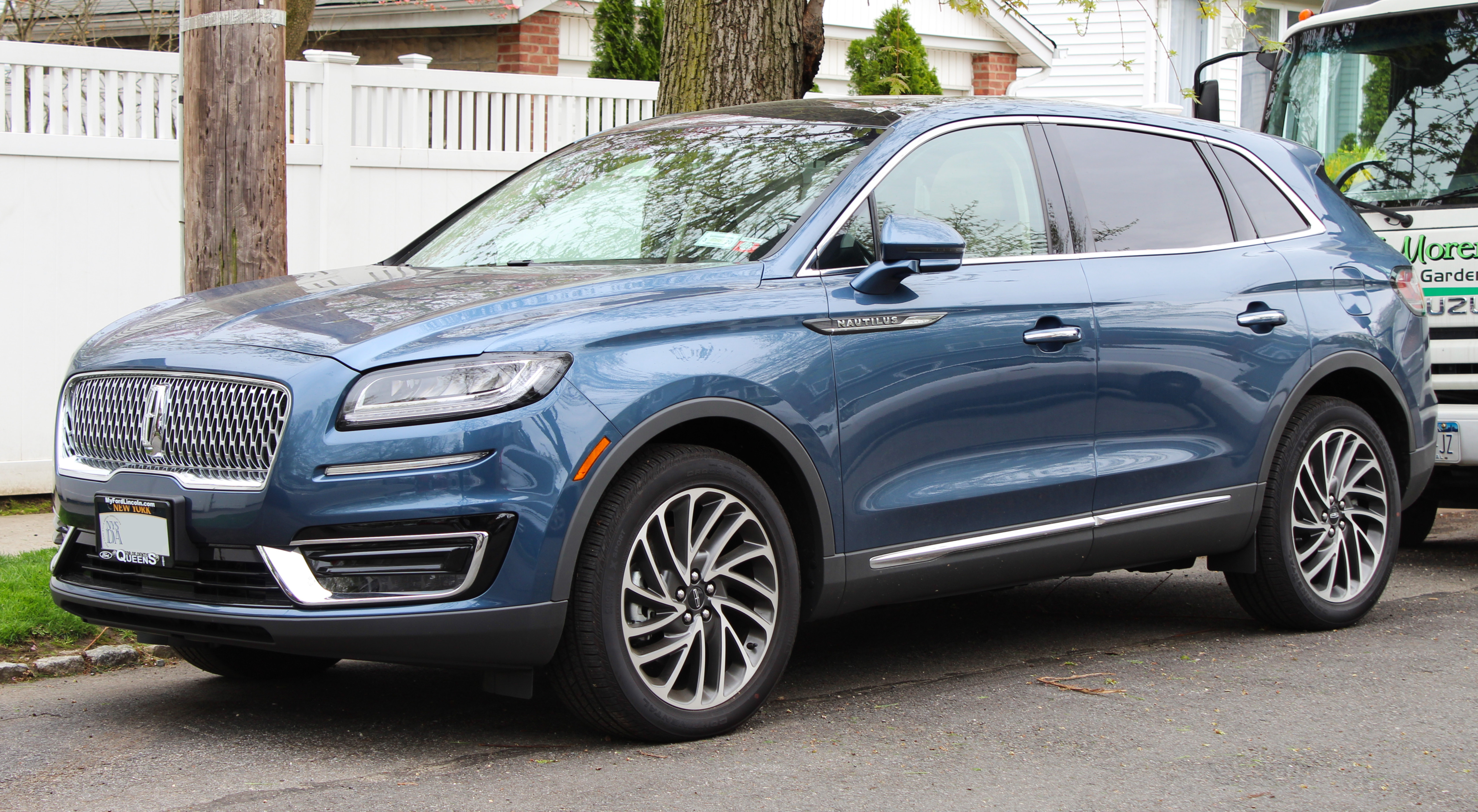
The Lincoln Nautilus is a luxury SUV, meaning it’s focused on comfort and nicer features than a basic family SUV. It’s built for everyday driving with room for passengers and cargo. The podcast is bringing it up as a specific vehicle someone has or is talking about.
“Multi four figure loss territory” refers to the idea that once a vehicle sits unsold for a long time, the dealer may need to discount it heavily—potentially losing thousands of dollars—to move it. The transcript ties this to inventory aging (half a year to a year) and how that can change the economics of a dealership sale.
“Bait and switch” means a dealer advertises one deal to get you in, then changes it to something worse once you’re there. It’s a way of making the advertised price not really be what you end up paying.
LIVE
It's noon here in Ventner City, New Jersey, on our nation's capital, Washington, D.C.,
and this is Car Edge Live for Thursday, June 4th with your host, me, Ray, here hanging out in my
living room in Ventner and Zach getting ready to pass out in this office in Washington, D.C.
I already know the answer to this. How are you doing today, handsome?
I'm okay, y'all. I'm okay. We're going to have some fun here for a half hour. I'm grateful to
be back on with my dad spending time with everyone today without getting into too much details.
Wow, what a 48 hours. All right, let's get into today's show. Today's show is brought to you by
caredge.com. For those of you that are unfamiliar, for the past six years, me, my dad and our incredible
team have been providing car buying services, research, shopping tools, and so much more back
at caredge.com, helping thousands of folks every single day. Please go check it out.
You can learn more as well as, if you're in the market, get a free consultation call with our
team to see if we are able to help you and meet our incredible team of experts as well. Dad,
the big topic I want to talk about this morning is we got the latest sales data from the month of
May. Yes. Market gets a small boost in May, but still in lower gear for a year. Dad, the forward
story is crazy. The forward story in this is just absolutely nuts. I'm going to scroll right to it.
Forward sales off 13.7% year over year. Honda up 10%. Hyundai Kia up 2.7%. Mazda sales actually
bounce back up 35%. Subaru sales up 10%. Toyota down just a smidge. What is going on at Fordbin?
It seems like they can't lower their prices fast enough.
Well, it seems like to a certain degree, they're struggling. The question becomes, why?
Could it have something to do with the fact that they don't offer sedans anymore? Could it have
something to do with the fact that they really have a limited number of affordable options for
people, for entry-level options for people? Could it have anything to do with the fact that,
I don't know, Ford is reconsidering their positioning when it comes to sedans? Like,
hey, we're really glad we got rid of them, but we're thinking, maybe perhaps we'll bring them back.
Well, we have the opportunity to look at stats all the time. When you look at the number one
selling vehicle in this country by volume over the last 45 days, it's a sedan. It is the Toyota
Camry. One of the top selling by volume vehicles in this country is a sedan. It's the Toyota Corolla.
Between the two of them over the last 45 days, they've sold over 100,000 vehicles.
So, as much as everybody says that Americans don't want sedans, well, the number one volume
selling vehicle in America is a sedan. The number five volume selling vehicle in America is, well,
a sedan. So, the concept that Americans only want big-ass SUVs and trucks seems to be, I don't know,
a little bit of a falsehood. I'm not saying people don't want big pickup trucks and don't
want big SUVs. I mean, there's still a market for those, but it says to me when I look at those
numbers that people want to be able to buy cars and the cars that they can buy are $37,000. The cars
that they buy in volume are $37,000 and less. Toyota has figured that out and perhaps Ford and
some other manufacturers need to figure it out as well. We talk about it all the time.
This is just a perfect example of where the market is moving to.
And it is interesting, Dad. It comes at the same exact time that Ford still has
tens of thousands of unsold 2025 vehicles on dealer lots. You all know me. I love looking at
unsold leftover inventory, caredge.com, slash unsold. We still have 141,916 unsold 2025 or older
new cars. So, humor me, Dad, for a second. What do you think? How many do you think are leftover
Fords? 60,000. 60,000. What guesses do we have in the chat? I mean, is it 60,000? Is it more? Is it
less? We'll take a peek here in just a second. And again, this is caredge.com slash unsold.
We'll get that up there on the screen for those of you that are unfamiliar. Drum roll, please.
55,000 of them. So, it's still disproportionately pops. Yes. Ford having these unsold leftover
vehicles. So, sales down 14% year over year when their peers have their inventories going down a
little bit because they're actually selling cars. Then the leftover inventory, which we know is a
terrible situation for these dealers to be in, it's disproportionately still Ford. And then the
one other had that I'm going to turn to at some point today was this. Ford's moving the Bronco
more upmarket with a mid $70,000 2027 Bronco Filsen. I mean, they can't lower prices fast enough,
but they're going more upmarket. What? Well, that indicates to me that they still believe
a big portion of what they do is for the well-heeled clientele out there. And they want to make the
Bronco even more upmarket. This is the one way to do it. And they know that there's enough
buyers out there that perhaps will support that. But how can you say that? How can you say that
with any conviction when I can pull up again right here, right now, the unsold, disproportionately
unsold inventory in the United States right now are Broncos? But it's the Broncos sport.
The Broncos sport with the three cylinder engine. And the Ford door is not selling well either.
There are 8,000 leftover four doors. Yeah, but that doesn't mean that people don't want an overpriced
one with some better goodies. I mean, how much are people willing to pay for, say, a Land Rover
Defender? Because you look at some of these especially-type vehicles and Ineos. I mean,
people are willing to pay big, big dollars for these. And there are and appears to be enough
potential buyers for that. If, however, you're trying to get back some of the customers that
you've lost because you've gone so upscale as Ford has, perhaps you start to reconsider
more entry level vehicles. And, you know, we get it. The entry level vehicles don't produce
the same level of profit margin as the big pickup trucks, as the big SUVs, as the 70 plus
thousand dollar Bronco Philson will. You know, we get it. But that doesn't mean there isn't a market.
And that market, those people who would like to be able to be in a new car are clamoring for
manufacturers to do something other than just talk about it, okay? Make promises about it in the
future. They need to see. And I think when you look at the Corolla sales and you look at the
Camry sales, there is a huge opportunity for others who want to produce those type of vehicles at
those types of price points in sedans. And because to a certain degree, sedans are making
somewhat of a comeback. You know, there's really two types of vehicles that are making a comeback
today. Sedans and minivans. Why? Because they're cheaper, dammit. The, you know, minivans. Why
why's that making a comeback? Well, minivans on average are about $48,000, a comparably equipped
big AS SUV that people were considering in the past, is about $30,000 more than that.
So why do you think? Yeah, it's crazy. Why do you think they're making a comeback? Because
people can't afford people who have kids and families and they need something to carry the
kids, the families and all the crap that is associated with that. They can't necessarily afford
to spend $70,000, $80,000 for it, but perhaps somewhere between $45,000 and $50,000 or $55,000
they can. And that's why they're making a comeback. What happens when sales start to go down like
they are now? That again, this is the latest data from the month of May sales at Ford down almost
14% bigger down at Lincoln. I mean, look at that. Lincoln sales off 20% year over year. And we know
from talking about Joe Lewis, for example, like all sorts of issues selling inventory there.
Well, year over year for the full year, I mean, Ford's down 11.2%, Lincoln's down 10.6% for the
full first five months of the year. I mean, it doesn't bode well for what it is they're trying to do,
but I think more than anything, it's a price thing. That's what I was about to ask you. So what does
an automaker do? Because when you also look yearly numbers, look at Mazda and Subaru, they're also
about down seven and 8.3% respectively. So is it across all three of these brands, Ford, Mazda,
Subaru, are they all looking at a price problem where they need to bring prices down to sell more
vehicles? What do they do? I don't know. Is Ford unfortunately perhaps following a pattern that
was set by Stellantis, where they abandoned the vast majority of their customer base? And finally,
after 345 years of that, took a look and said, okay, we need to go down market again.
We need to be able to appeal to the people who always were Stellantis product buyers.
And so what did they do? They lowered their prices. They came up with greater incentives to
incur. I mean, one of the best-selling minivans out there, believe it or not, has been the Pacifica.
Why? Not because it's the best minivan out there. No, it was because they were so overstocked with
Pacificas that the only way they could sell them was to offer huge incentives both on a customer
basis and a dealership basis. And when they did that, they sold. So what does a manufacturer do?
I don't know. I'm not saying that Ford needs to go out and replace their CEO. Maybe their current
CEO and top manager can look at what Stellantis is doing and say, we need to follow that playbook,
and we need to lower our prices, and we need to come out with more affordable vehicles.
And the stuff that we're having trouble selling, we need to incentivize more.
I'm offended that I just said Chrysler Pacifica is cheap. Dad, the first page of results back on
right now, $60,000 MSRP over at Criswell, Chrysler, Jeep, Dodge, Ram, and Fiat. Now,
they're advertising a 10% discount off of MSRP, but that's absurdity. So even these are super
expensive, but at least the dealers show a lot more desperation here. 2026 Pacifica Select,
$8,000 discount. This is fascinating to me that even Chrysler got so expensive with these things,
but they are selling better than some of the alternatives because to your point,
a comparable SUV option, we're not talking $60,000, we're talking $70,000.
Can you go back to that page that you were just on?
Yeah, of course.
And look what it says under every picture. Freight processing fee included. Do you think
that has anything to do with the letters that were sent by the FTC, that suddenly dealers
are deciding that perhaps our pricing needs to be much clearer to the public than what it had
been in the past? I'm beginning to see it.
100%. That's the other story we're going to talk about today, but we'll get there in just a moment.
So back to Ford for one more second here, because I don't want to go too far down the
Chrysler Pacifica. What do these manufacturers have to do to get their sales back up? It actually
does look like what we just saw there with the Chrysler Pacifica, because you have to put big
discounts and incentives on them too. So we know Ford's big move that has been employee pricing
for all. Last time I checked, that was in effect for the month of May.
Yeah.
So if you're Ford and employee pricing for all did not help you sell more vehicles year over year,
you've got to become even more aggressive. And I go back to, let me do it really quickly here,
let's go back to CarEdge.com. I'm going to type in unsold really quickly, because when I go to this
link, bear with me, move it a little slower than normal. Okay. You know, this Ford Mustang Mach-E
Premium that Lindsey Ford of Wheaton's been sitting on for 309 days, they're discounting $9,081.
Like what more can they do here?
I don't know, maybe more.
I guess that was a rhetorical question.
You know, this all goes back.
We're just counting $10,581, then adding back their processing charge to your point earlier,
that about the disclosure. But you can see additional offers you may qualify for $3,500,
Hispanic Chamber of Commerce, Exclusive Cash, Military Appreciation. So maybe there's other
incentives, but the price is still just too high.
It is. You know, to go back to what my area vice president at Penske Automotive used to say,
if your customer hasn't said yes yet, you haven't lowered the price enough yet. So if that Ford
dealerships, if the customer hasn't said, I'll buy it, they haven't lowered the price enough.
So what can you do? Keep trapping the price. There's no mystery to this.
You know, it is if you have distressed merchandise, and I believe that Mocky could
fall into that category. If it doesn't, what does? It's a year-old EV that they haven't been able
to sell that they're discounting $10,000 off. That's distressed merchandises.
So what that would indicate to me is it requires distressed pricing. Okay. And so $10,000 off hasn't
been enough to move it, which would mean. And employee pricing for all as a halo marketing
campaign hasn't been enough to get people to the dealership to move it. Well, simply because deals
were better before. You could actually get cheaper prices before they went back to the
employee pricing. And another example, if I may, and he's a dear friend of ours,
but Joe at JC Lois with that Nautilus that he has, or whatever it is, I don't know if the
aviator, the aviator, the $100,000 Lincoln aviator, that he's, you know,
he just, I hate to say it. Joe knows it is, you know, if Joe were in my position,
instead of his position, he would say the same thing I'm about to say is, well,
if you haven't sold it in 500 or some days, it's because the price isn't low enough to sell it yet.
So I get as a manager that, you know, you hate staring a loss in the face and you hate staring
a big ass loss in the face even more. And that's what Joe has to do.
I got to text them though, dad, because I actually don't see it on for sale on their website anymore.
Well, maybe they finally sold it. Yeah.
But how do you sell it? The price finally gets low enough. And that's what's so confounding to me
with the data that we got from the month of May for Ford. This is damning, damning, damning.
They had employee pricing running for that month. That was the huge halo.
I think the employee pricing campaign is just the halo marketing campaign to get people interested
and excited. Then what happens at the dealership typically is a very different fall game. You
have to still negotiate. It's still a challenge. But we're seeing dealers be really aggressive
on pricing, but the combination yielded 13% lower sales year over year. That's a slippery slope
for Ford and their dealers. And I want to show one other research angle of this as well, dad,
which is that dealership we were looking at a moment ago. And I encourage everyone,
if you're not using dealer reviews, you're missing out. Great resources here.
When you scroll down on the dealer reviews to their on the lot right now sections, this dealership.
Oh my God. 58% of their vehicles.
Explain to everyone what this is, because this is absurd.
This is the number of vehicles that they have in inventory based on the number of days they've
been sitting on the lot. So 17% or 84 of the vehicles that they have are 90 to 180 days old.
You normally want to stay somewhere between 75 and 90 days. And then 206 vehicles or 41%
of their inventory has been sitting for more than six months, six months or longer.
That is a recipe for absolute disaster. And if I may say one other thing, as this dealer has
earned an A on our dealer transparency index, and we noticed the way that they're advertising
their vehicles, this is the same dealership group, part of the same dealership group,
Lindsay Automotive Group, that entered into an agreement with the FTC and the and the
Attorney General from the state of Maryland to reimburse customers up to $75 million for some of
the business practices that they got cited for that were a tad bit unethical.
I guess when it might cost you a total of $75 million, you finally decide to clean up your act.
That is a little bit what that indicates. A lot of the dissect there. So first and foremost,
on the inventory front, this is a great research tool. This dealer is desperate to get rid of their
aged inventory. And to be clear here, from the dealer reviews and the dealer scores pages,
you can just click on that. And now it takes me directly to the car search for that dealer 180
days plus. And now I can see all that aged inventory. And I can use this as part of my research
process. The other piece of that puzzle is, yeah, dad, this is an A graded dealer. And we've actually
gotten 21 verified out the door price quotes from them. Since we've started having conversations
with them back on September 19, 2025, and they are A rated, they are transparent. And yes,
it did come on the other side of a $75 million potential charge being refunded back to consumers.
What a crazy time in the auto industry. I texted Joe. Yes. Yes, sir, sold it Monday.
Congratulations. I'm so happy for you. How much money did they lose selling you?
How much did you lose? Good for it. For those of you that are not familiar, Joe's been trying to
sell. Joe Lewis from JC Lewis, one of the friends of the show, has been trying to sell this nearly
$100,000 MSRP Lincoln, which again, Lincoln sales off 20% year over year, to no avail.
I mean, he reached out to me and said, hey, I've got final pay coming up. It was this Monday,
I think, or something like that. And I was like, I got to get rid of her. Maybe it was today, June
4th. Final pay, meaning the manufacturer was going to give no more help, no more financial support
to sell the vehicle. So crazy and good for Joe that he finally got rid of that thing.
Yes, sir. I'll let you know when I hear back from that. The other thing I wanted to bring up
today, as you mentioned earlier, we're seeing more and more dealers clean up their acts when it
comes to advertised prices online. This has been tremendous to see. I don't know if you saw this
headline in automotive news. While we look at that one second, Joe says, Internet price of $79,999
lost $8,000. There you have it, ladies and gentlemen.
There you go. All right. So we're closing the book on that. Lost $8,000. Honestly,
pretty good. All things concerning for him.
Buster reviews. May I say, not every car deal is a winner. And people think,
having spent 43 years in retail automotive, people think that the dealerships are making
10, 12, $15,000 on every vehicle that they sell. No. And there's a perfect example where
not only didn't they make any money, they lost $8,000 to sell it. Okay. Now,
do you think Joe's going to order up another black label aviator anytime soon? I kind of doubt it.
But that's where the title for today's show comes from and has come for a long time.
These manufacturers can't lower their prices fast enough because it just puts the
someone's hole in the bag in that situation. The dealer in that case lost $8,000. Well,
that make or break their business for the whole year. No, of course not, because many other
vehicles, they're making a decent amount of money, everything they sell it. But we know
that there are many vehicles, like for example, that Ford dealership that have been sitting for
over half a year. And when you get to sitting a year, that's when we start to get into multi
four figure loss territory. So it is. It's just really good intel for consumers out there
to be aware of. But the other story, the other story.
Couser reviews reveal bait and switch patterns at FTC worn dealerships. Did you have a chance to
read this? I read part of it. And it's, you know, I thought to myself, and not to be self-serving.
Okay. But I thought to myself, well, this is really BS. Why go with the customer review?
And then listen to me for a second. Why go with the customer reviews when we have the receipts?
Okay. And I'm not going to sit here and say that we have gotten completed transactions
and the receipts for all 203 dealerships that receive letters from the FTC because we have not.
But we have had interactions with a large percentage of those. And ours are not a
customer's feelings. Oh, they did this. They did. We have the actual receipts.
For sure. Auto news cited us in a different article. The intent here was in...
I'm sorry. Auto news needs to be less self-serving.
It's not... This doesn't serve auto news. This serves wild, wild, wild, wild world.
Because the truth of the matter is that's the, you know, it's an opinion. It's a customer's opinion.
Sometimes the opinion's right. Sometimes it's wrong. But when you have documents and it's in
black and white, there's not a question as to whether it's right or wrong. You can show it,
okay? So that if auto news wants to do a real story, there's receipts that they can put in an
article that would show what the dealerships are doing. And they're choosing not to. I'm sorry.
I have such a different read on this. Wow. Very surprised by your reaction. The reason I was
bringing this up today was not for it to be, hey, we're better than wide-wale. I don't even know
wide-wale. They do review analytics for all sorts of industries. I'm very shocked by your take on
this. What I found to be fascinating in this step, what I wanted your take on, is do you think that
there's correlation between reviews and FTC disclosure malpractice? Like people not, you know,
these dealerships operating in a way that's unethical or quite frankly, as the FTC says,
illegal. And that's what the wild-wale data started to show, is that these dealerships that did get
these letters have a disproportionately higher number of negative reviews. And I thought that
was really interesting. No, I get that. But, you know, isn't there a difference between subjective
and objective? And one is part opinion and one is part fact. And so I get reviews and review
websites. And I also get that sometimes they're not nearly as accurate as hard and fast facts.
Of course. Yeah, of course. Of course. That's all I'm saying. So nothing against that. But I think...
That about three minutes ago is everything against them. You're calling out automotive news or
calling out... Well, I think that automotive news could have improved the quality of that article
with the black and white faction figures that we're able to provide them with.
They have some black and white figures in here, though. They talk about the percentages. Here,
let me pull it up on the screen. And again, I thought this was interesting because to me,
it made it sound like, okay, our voices do get heard. Among the FTC letter recipients,
26% of reviews that mentioned price included negative comments about the store's pricing
among the broader industry, only 18% of comments about price for a negative. That says two things
to me. Yeah, these folks were obviously doing things that the FTC caught on to and then also
a lot more of the industry is doing it as well. 8% of comments about the FTC's dealerships,
honestly, were negative compared to 5.1% industry-wide. So, you know, they have some data here,
but it just says to me there's a bigger issue, but didn't realize that.
Sorry, you hit a nerve with me. I think there's a difference between transparency
and translucency. Okay, you can be translucent, which is not necessarily the same as being
transparent. But when you're being translucent, you're giving the impression that you're trying
to be transparent. And so, I think that article could have been stronger, could have had greater
impact with not data points, but the actual receipts of the dealer worksheet showing it.
That's all. I'm sorry. You know, I'm sorry. I'm on this crusade of right and wrong and
give me all the information, not try and make it opaque.
You do, you man. I love the passion. I don't know if I can keep up with it today though,
so we'll call it a show for today. We'll be back tomorrow with more Car Edge Live.
Thanks everyone for tuning in. So much more to cover tomorrow. Yeah, Dad,
one of the things we didn't even talk about today, we'll have to cover it tomorrow,
Carvana and Slay Auto. What's going on over there? There's a huge story on that front,
so we're gonna have to spend some time on that tomorrow. But anyway, tune in for more Car Edge
Live tomorrow at 12pm Eastern. And everyone, thanks for bearing with me as I was not feeling
well, glad to be back in the seat and excited to spend time with you tomorrow. Love you, Dad.
Love you too, handsome. Go home, get on the sofa, lay down,
get some rest so that you can be, well, 90% tomorrow instead of 70.
About this episode
Ford’s May sales slide sparks a debate about whether the automaker is reacting too slowly on pricing. Hosts cite “Forward sales off 13.7% year over year” and argue “I think more than anything, it's a price thing,” pointing to unsold inventory and dealer discounting that still isn’t moving units. They challenge the sedan narrative with volume data, then dig into aged stock, incentives, and “distressed merchandises” like a heavily discounted Mach-E.
Today on CarEdge Live, Ray and Zach discuss the latest news on Ford. Tune in to learn more! Hosted by Simplecast, an AdsWizz company. See https://pcm.adswizz.com
for information about our collection and use of personal data for
advertising.