
Ford Can't Lower PRICES Fast Enough | Episode 1083
About this episode
Ford’s May sales slide sparks a debate about whether the automaker is reacting too slowly on pricing. Hosts cite “Forward sales off 13.7% year over year” and argue “I think more than anything, it's a price thing,” pointing to unsold inventory and dealer discounting that still isn’t moving units. They challenge the sedan narrative with volume data, then dig into aged stock, incentives, and “distressed merchandises” like a heavily discounted Mach-E.
leftover inventory
"Ford still has unsold 2025 vehicles on dealer lots. You all know me. I love looking at unsold leftover inventory, caredge.com, slash unsold. ...Then the leftover inventory, which we know is a terrible situation for these dealers to be in, it's disproportionately still Ford."
Leftover inventory means cars that dealers already have on their lots but can’t sell yet. When that happens, dealers usually have to lower prices or offer deals to get them sold.
Leftover inventory refers to unsold new cars sitting on dealer lots after they’ve already been produced and delivered. The hosts frame it as a “terrible situation” for dealers because it ties up money and often forces discounting or incentives to move units.

Bronco
"And they want to make the Bronco even more upmarket. This is the one way to do it. And they know that there's enough buyers out there that perhaps will support that... unsold inventory in the United States right now are Broncos? But it's the Broncos sport with the three cylinder engine."
The Ford Bronco is a popular SUV known for off-road capability. Here, the host is talking about how many Broncos are sitting unsold and how that relates to Ford’s pricing and what people are actually buying.
The Ford Bronco is an off-road SUV that’s become a mainstream alternative to traditional body-on-frame 4x4s. In this segment, the host specifically points to Bronco inventory and mentions a three-cylinder engine variant, tying it to sales/price strategy.

Ford Broncos Sport
"...United States right now are Broncos? But it's the Broncos sport. The Broncos sport with the three cylinder engine..."
The Ford Bronco Sport is a smaller SUV that’s meant to handle rougher roads than a typical car. It’s part of the Bronco family, but it’s not as big as the full Bronco. The podcast mentions it uses a three-cylinder engine.
The Ford Bronco Sport is a smaller SUV in the Bronco lineup, aimed at buyers who want off-road styling and capability without a full-size SUV. The podcast specifically references it with a three-cylinder engine, which highlights a downsized powertrain approach. It’s often discussed as a more accessible entry point to the Bronco brand.
three cylinder engine
"But it's the Broncos sport with the three cylinder engine. And the Ford door is not selling well either."
A three-cylinder engine is an engine with three pistons that make power. It’s often used to save fuel and weight, but it can change how the car feels when you accelerate.
A three-cylinder engine uses three combustion cylinders to make power. Compared with four- or six-cylinder engines, it’s often chosen to reduce weight and improve fuel economy, but it can feel different in power delivery and refinement.

Land Rover Defender
"But that doesn't mean that people don't want an overpriced one with some better goodies. I mean, how much are people willing to pay for, say, a Land Rover Defender?"
The Land Rover Defender is a tough-looking SUV built for off-road use. The host is using it as an example of a vehicle people are willing to pay a lot of money for.
The Land Rover Defender is a rugged, off-road-focused SUV that’s known for its boxy design and strong demand in the premium “go-anywhere” segment. The host uses it as a benchmark for how much buyers will pay for specialty, upscale vehicles.
Ineos
"I mean, how much are people willing to pay for, say, a Land Rover Defender? Because you look at some of these especially-type vehicles and Ineos. I mean, people are willing to pay big, big dollars for these."
Ineos is a company that makes a rugged off-road SUV. The host is bringing it up to show that some specialty vehicles still have customers willing to pay high prices.
Ineos is an automaker best known for building the Grenadier, a modern off-road SUV positioned as a rugged alternative to traditional 4x4s. In this segment, the host mentions Ineos to argue that buyers will pay “big dollars” for niche, off-road-oriented vehicles.
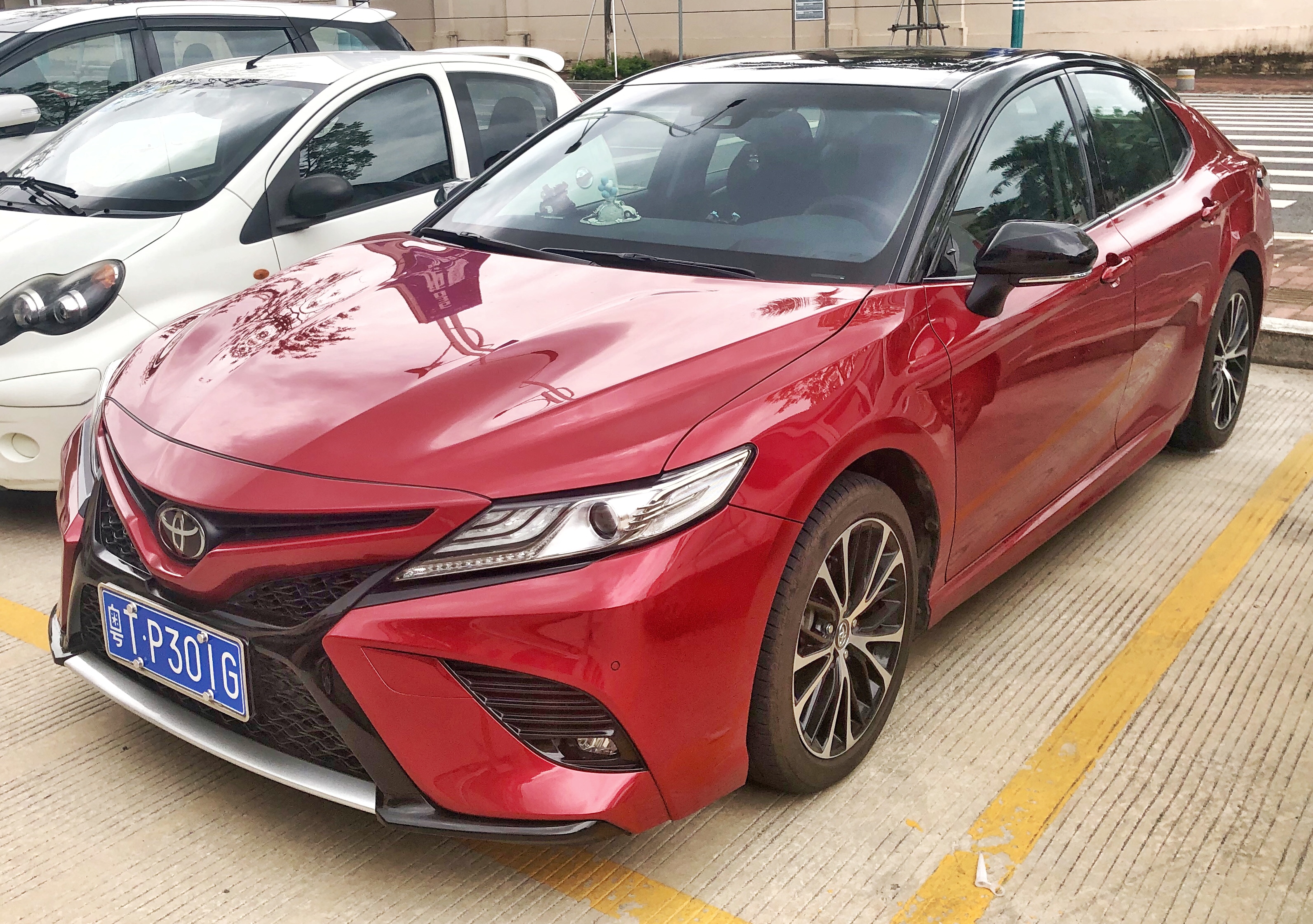
Camry
"And I think when you look at the Corolla sales and you look at the Camry sales, there is a huge opportunity for others who want to produce those type of vehicles at those types of price points in sedans."
The Toyota Camry is a popular family sedan. The host is pointing to its sales to say that people are still buying sedans, especially when the price makes sense.
The Toyota Camry is a mid-size sedan that’s historically been a volume seller and a key indicator of consumer demand in the “value sedan” category. Here, the host pairs Camry sales with Corolla sales to argue that sedans still have strong demand at attainable price points.

Corolla
"And I think when you look at the Corolla sales and you look at the Camry sales, there is a huge opportunity for others who want to produce those type of vehicles at those types of price points in sedans."
The Toyota Corolla is a very common, affordable sedan. The host is using its sales numbers to argue that people still want lower-priced cars.
The Toyota Corolla is a mainstream compact sedan that’s often used as a sales bellwether for the broader economy-focused car market. The host cites Corolla sales to support the idea that there’s demand at lower price points, creating an opportunity for other brands.
sedans are making somewhat of a comeback
"And because to a certain degree, sedans are making somewhat of a comeback. You know, there's really two types of vehicles that are making a comeback today. Sedans and minivans."
The host is saying sedans are selling better again. The reason they give is that sedans tend to cost less than many SUVs, so more people are choosing them.
A “comeback” here means consumer demand and sales momentum shifting back toward sedans after years where crossovers and SUVs dominated. The host frames it as a pricing-driven trend, suggesting buyers are returning to lower-cost body styles.
sales start to go down
"What happens when sales start to go down like they are now? That again, this is the latest data from the month of May sales at Ford down almost 14%..."
When sales start dropping, car companies often react by changing pricing or offering bigger deals. The host is saying this is what leads to discounting strategies.
This refers to a demand/volume shift where monthly sales decline, which can trigger pricing and incentive changes. The host frames it as the reason automakers consider lowering prices or increasing incentives to move inventory.
year over year
"I mean, look at that. Lincoln sales off 20% year over year. Well, year over year for the full year, I mean, Ford's down 11.2%, Lincoln's down 10.6%..."
“Year over year” just means comparing sales to the same time last year. It helps show whether sales are getting better or worse.
“Year over year” is a sales comparison versus the same period in the prior year. The host uses it to show how much Ford and Lincoln sales are down, reinforcing the argument that demand is weakening.
Lincoln
"That again, this is the latest data from the month of May sales at Ford down almost 14% bigger down at Lincoln. I mean, look at that. Lincoln sales off 20% year over year."
Lincoln is Ford’s luxury car brand. The host says Lincoln sales are falling too, which suggests the issue may be broader than just one type of Ford vehicle.
Lincoln is Ford’s luxury brand, and the segment cites its sales being down sharply year over year. The point is that the pricing/incentive pressure isn’t only affecting mainstream Ford-branded models.
Subaru
"Because when you also look yearly numbers, look at Mazda and Subaru, they're also about down seven and 8.3% respectively."
Subaru is another car brand mentioned as having fewer sales than last year. The host uses it to suggest the issue could be broader than one company.
Subaru is cited alongside Mazda as having year-over-year sales declines. This supports the host’s idea that multiple brands are facing similar demand pressure.
Mazda
"Because when you also look yearly numbers, look at Mazda and Subaru, they're also about down seven and 8.3% respectively."
Mazda is another car brand the host brings up. They’re saying Mazda’s sales are also down, so it may not be only a Ford problem.
Mazda is mentioned as another automaker whose sales are down year over year in the same timeframe. The host uses it to argue the pricing problem may be industry-wide rather than unique to Ford.
Stellantis
"Is Ford unfortunately perhaps following a pattern that was set by Stellantis, where they abandoned the vast majority of their customer base?"
Stellantis is a big group of car brands. The host says they adjusted their strategy by offering lower prices and bigger deals to attract more mainstream buyers.
Stellantis is referenced as the example of an automaker that changed its strategy by moving “down market” to regain buyers. The host frames it as a playbook involving lower prices and stronger incentives to sell more cars.
down market
"And finally, after 345 years of that, took a look and said, okay, we need to go down market again. We need to be able to appeal to the people who always were Stellantis product buyers."
“Down market” means going after cheaper cars and more budget-focused buyers. The idea is to sell more by offering options people can afford.
“Down market” means shifting focus from higher-priced customers/models to more affordable segments. The host uses it to describe a strategy where a brand targets buyers who are more price-sensitive to improve sales volume.
incentives
"And so what did they do? They lowered their prices. They came up with greater incentives to incur."
Incentives are extra deals from the car company that make the car cheaper to buy. They can be cash rebates or special financing that reduces what you pay.
In this context, incentives are manufacturer-funded discounts or special offers (like rebates or financing deals) meant to reduce the effective purchase price. The host contrasts “lower prices” with “greater incentives” to explain how automakers can stimulate sales when demand softens.
overstocked
"No, it was because they were so overstocked with Pacifica's that the only way they could sell them was to offer huge incentives both on a customer basis and a dealership basis."
“Overstocked” means there are too many cars sitting around that the company needs to sell. If they can’t sell them at normal prices, they offer bigger discounts.
“Overstocked” means the manufacturer or supply chain has more vehicles than it can sell at current prices. When inventory is too high, automakers often increase incentives—sometimes including dealer-level offers—to reduce the stockpile.
dealership basis
"Pacifica's that the only way they could sell them was to offer huge incentives both on a customer basis and a dealership basis."
“Dealership basis” means the car company can also help the local dealer sell the car, not only the buyer. That can show up as extra dealer discounts or support.
“Dealership basis” refers to incentives or discounts that are tied to dealer participation, not just direct-to-customer offers. The host’s point is that automakers can use both customer-facing deals and dealer-facing incentives to push sales.
incentivize
"And the stuff that we're having trouble selling, we need to incentivize more. [745.6s] I'm offended that I just said Chrysler Pacifica is cheap."
Here, “incentivize” means offering deals to get people to buy cars that are sitting longer on lots. It’s basically the manufacturer or dealer sweetening the offer.
In this context, “incentivize” means using marketing offers—like discounts, rebates, or special financing—to encourage buyers to purchase vehicles that aren’t selling as quickly. The hosts connect it to dealer and manufacturer pricing pressure.

Chrysler Pacifica
"I'm offended that I just said Chrysler Pacifica is cheap. Dad, the first page of results back on [751.7s] right now, $60,000 MSRP over at Criswell, Chrysler, Jeep, Dodge, Ram, and Fiat. Now, [759.7s] they're advertising a 10% discount off of MSRP, but that's absurdity."
The Chrysler Pacifica is a minivan. In this segment, the hosts are saying it’s so expensive that dealers have to offer big discounts to get people to buy it.
The Chrysler Pacifica is a minivan from Chrysler, and it’s being discussed here as an example of how expensive some family vehicles have become. The hosts focus on how pricing and dealer discounts affect whether shoppers consider it versus alternatives like SUVs.
MSRP
"Dad, the first page of results back on [751.7s] right now, $60,000 MSRP over at Criswell, Chrysler, Jeep, Dodge, Ram, and Fiat. Now, [759.7s] they're advertising a 10% discount off of MSRP, but that's absurdity."
MSRP is the official sticker price for the car. The hosts are pointing out that even after the advertised discount, the final price can still be high.
MSRP (Manufacturer’s Suggested Retail Price) is the sticker price a carmaker sets for a vehicle. In the segment, the hosts compare MSRP to what dealers advertise as discounts, arguing that the “discount” still leaves the car very expensive.

Dodge Ram
"I'm offended that I just said Chrysler Pacifica is cheap. Dad, the first page of results back on right now, $60,000 MSRP over at Criswell, Chrysler, Jeep, Dodge, Ram, and Fiat. Now, they're advertising a 10% discount off of MSRP, but that's absurdity. So even these are super"
The Dodge Ram is a large pickup truck with a bed for hauling things. People buy it for work or for carrying gear and towing. The podcast is mentioning it in the context of truck pricing and what it costs to buy one.
The Dodge Ram is a full-size pickup truck known for hauling capability and strong buyer demand in the truck market. In the podcast context, it’s grouped with other brands showing higher MSRP advertising, suggesting discussion around pricing and how manufacturers position their trucks. That makes it relevant when talking about current market costs for popular vehicles.
freight processing fee included
"Yeah, of course. [789.6s] And look what it says under every picture. Freight processing fee included. Do you think [798.1s] that has anything to do with the letters that were sent by the FTC, that suddenly dealers"
A freight processing fee is a charge related to moving the vehicle and handling it before it reaches the dealer. Saying it’s “included” under every picture suggests the advertised price is meant to be more transparent about what buyers will actually pay.
FTC
"Freight processing fee included. Do you think [798.1s] that has anything to do with the letters that were sent by the FTC, that suddenly dealers [805.9s] are deciding that perhaps our pricing needs to be much clearer to the public than what it had"
The FTC is a U.S. government agency that helps protect consumers from misleading advertising. The hosts are saying it may have pressured dealers to show pricing more clearly.
The FTC (Federal Trade Commission) is a U.S. government agency that enforces consumer protection and advertising rules. The hosts suggest FTC letters may have pushed dealers to present pricing more clearly.
employee pricing for all
"So we know Ford's big move that has been employee pricing [841.4s] for all. Last time I checked, that was in effect for the month of May. [847.5s] Yeah."
This is a dealer/manufacturer deal where regular customers can get a discount that’s usually reserved for employees. The hosts are saying Ford tried it and still didn’t sell enough cars.
“Employee pricing for all” is a marketing program where a broad group of customers can buy at a discount similar to what employees get. The hosts frame it as a major Ford incentive that didn’t move sales enough, implying the company may need even stronger offers.

Ford Mustang Mach-E Premium
"Okay. You know, this Ford Mustang Mach-E Premium that Lindsey Ford of Wheaton's been sitting on for 309 days, they're discounting $9,081."
This is Ford’s electric SUV, the Mustang Mach-E. “Premium” means it’s a more fully equipped version. The discussion here is about how much Ford is having to discount it to get it sold.
The Ford Mustang Mach-E is an electric crossover built on Ford’s EV platform, and the “Premium” trim is a higher equipment level than the base versions. In this segment, the hosts discuss how Ford is discounting a specific Mach-E Premium that’s been sitting at a dealership for months, showing how pricing pressure affects EV sales.
processing charge
"We're just counting $10,581, then adding back their processing charge to your point earlier, that about the disclosure."
That’s a dealer fee for handling the paperwork and getting the car ready to sell. It can be added on top of the sale price, so the “real” price you pay may be higher than the headline number.
A processing charge is a dealer-added fee used to cover administrative steps in preparing a vehicle for sale (paperwork, handling, etc.). It’s often added on top of the advertised price, so “adding back their processing charge” changes the effective out-the-door price the buyer is comparing.
distressed merchandise
"You know, it is if you have distressed merchandise, and I believe that Mocky could fall into that category. If it doesn't, what does? It's a year-old EV that they haven't been able to sell that they're discounting $10,000 off. That's distressed merchandises."
This is a dealer term for cars that aren’t selling normally. When a vehicle sits for a long time, the seller may have to treat it like “problem inventory” and cut the price more to get it sold.
“Distressed merchandise” is a sales/inventory concept meaning the dealer or manufacturer can’t move the units at normal pricing, so they treat the cars like problem inventory. The hosts connect it to a year-old EV that hasn’t sold and is being discounted heavily, implying pricing needs to be more aggressive to clear stock.
halo marketing campaign
"So what that would indicate to me is it requires distressed pricing. Okay. And so $10,000 off hasn't been enough to move it, which would mean. And employee pricing for all as a halo marketing campaign hasn't been enough to get people to the dealership to move it."
A halo campaign is marketing meant to make people notice a product (or brand) by highlighting something special. The point in this segment is that even that kind of promotion hasn’t been strong enough to sell the cars.
A “halo marketing campaign” is a strategy where a standout product or promotion is used to create attention and improve demand for a broader lineup. Here, the hosts argue that even with an employee-pricing push framed as a halo campaign, it still hasn’t been enough to bring buyers into the dealership.
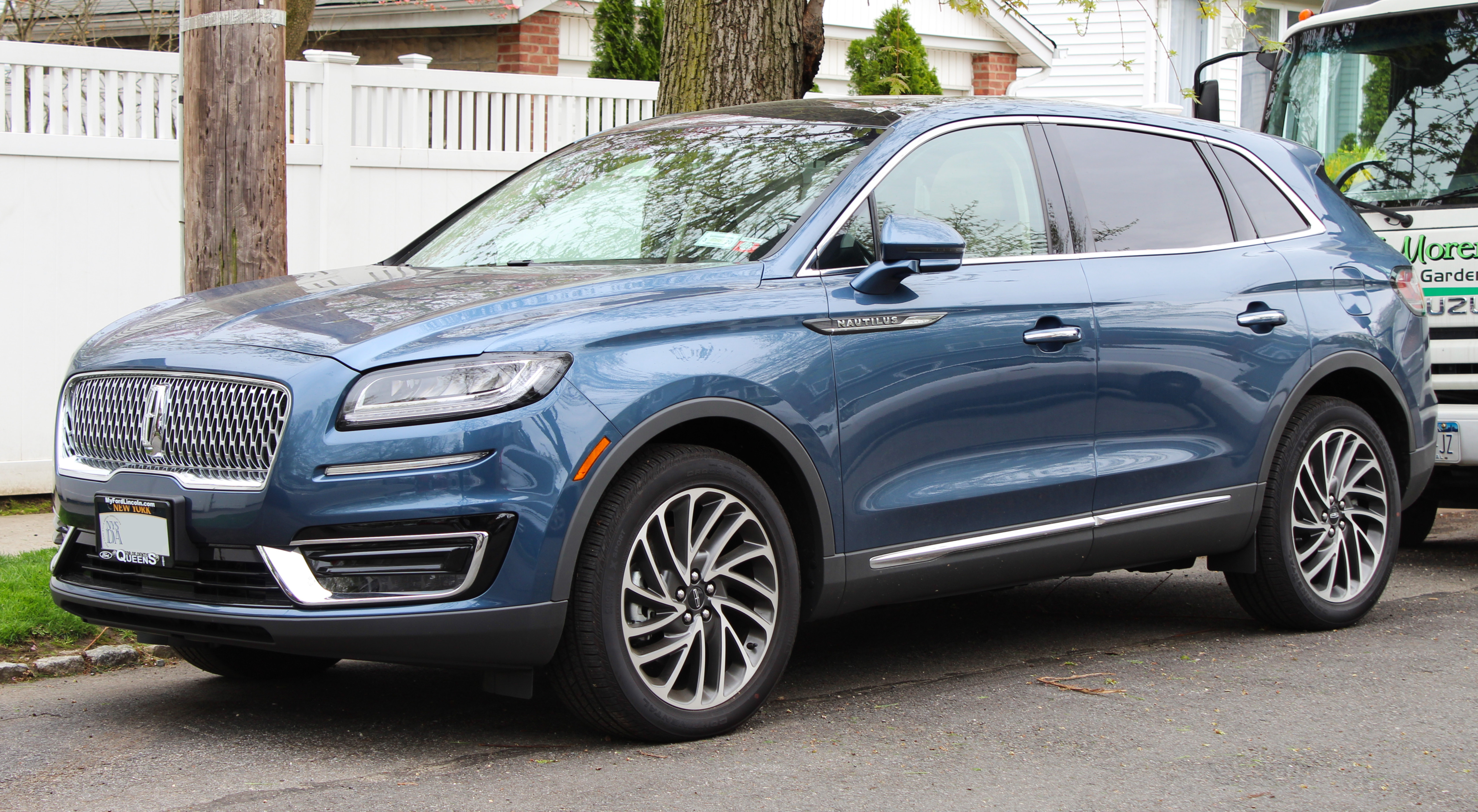
Lincoln Nautilus
"...dear friend of ours, but Joe at JC Lois with that Nautilus that he has, or whatever it is, I don't know if t..."
The Lincoln Nautilus is a luxury SUV, meaning it’s focused on comfort and nicer features than a basic family SUV. It’s built for everyday driving with room for passengers and cargo. The podcast is bringing it up as a specific vehicle someone has or is talking about.
The Lincoln Nautilus is a luxury midsize SUV, positioned as a more upscale alternative to mainstream family SUVs. In the podcast context, it’s being referenced through a specific example of one being owned or discussed by someone in the show’s network. That kind of mention usually points to real-world ownership experience, options, and how the vehicle fits into a buyer’s needs.

Lincoln Aviator
"...'t know if the aviator, the aviator, the $100,000 Lincoln aviator, that he's, you know, he just, I hate to say it. ..."
Internet price
"While we look at that one second, Joe says, Internet price of $79,999 [1332.9s] lost $8,000. There you have it, ladies and gentlemen."
“Internet price” is the price a dealership advertises online. The real price you pay can be different once you add fees and any extra dealer charges.
“Internet price” is the advertised price you see online for a car, often before taxes, fees, and dealer add-ons. In practice, the final out-the-door number can be higher if the dealer adds charges or if the advertised deal doesn’t match what’s actually available.
multi four figure loss territory
"And when you get to sitting a year, that's when we start to get into multi [1414.2s] four figure loss territory."
“Multi four figure loss territory” refers to the idea that once a vehicle sits unsold for a long time, the dealer may need to discount it heavily—potentially losing thousands of dollars—to move it. The transcript ties this to inventory aging (half a year to a year) and how that can change the economics of a dealership sale.
bait and switch
"Couser reviews reveal bait and switch patterns at FTC worn dealerships. [1427.5s] Did you have a chance to read this? I read part of it."
“Bait and switch” means a dealer advertises one deal to get you in, then changes it to something worse once you’re there. It’s a way of making the advertised price not really be what you end up paying.
“Bait and switch” describes a sales tactic where a dealer lures shoppers with one offer (the “bait”), then steers them toward a different, less favorable deal after they’re already engaged (the “switch”). In car retail, this often shows up as advertised pricing that doesn’t reflect the final deal once paperwork, fees, or add-ons are applied.
Request an Explanation
Heard something you'd like explained? We'll add it to this episode.
Sign in to request explanations for terms you heard.
Want to learn more?
Browse our glossary for plain-English explanations of automotive terms, jargon, and concepts.
Help improve this episode
See something that's not quite right? Our annotations are AI-generated and can sometimes miss the mark. Click the flag icon on any annotation to suggest a correction.