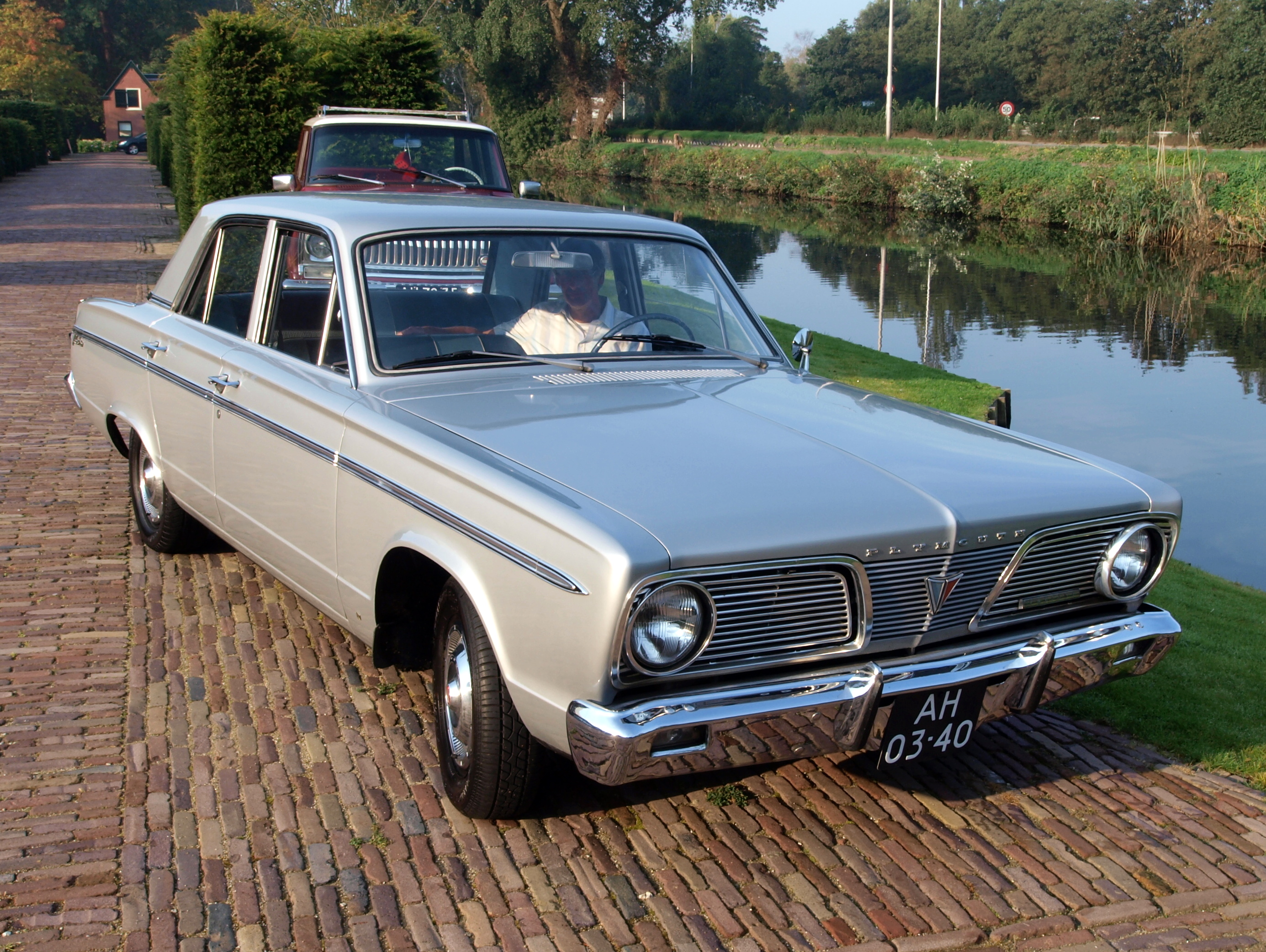
The Plymouth Valiant Signet was a nicer, upgraded version of the Plymouth Valiant compact. Think of it like a higher-trim model meant to look and feel a bit more special.
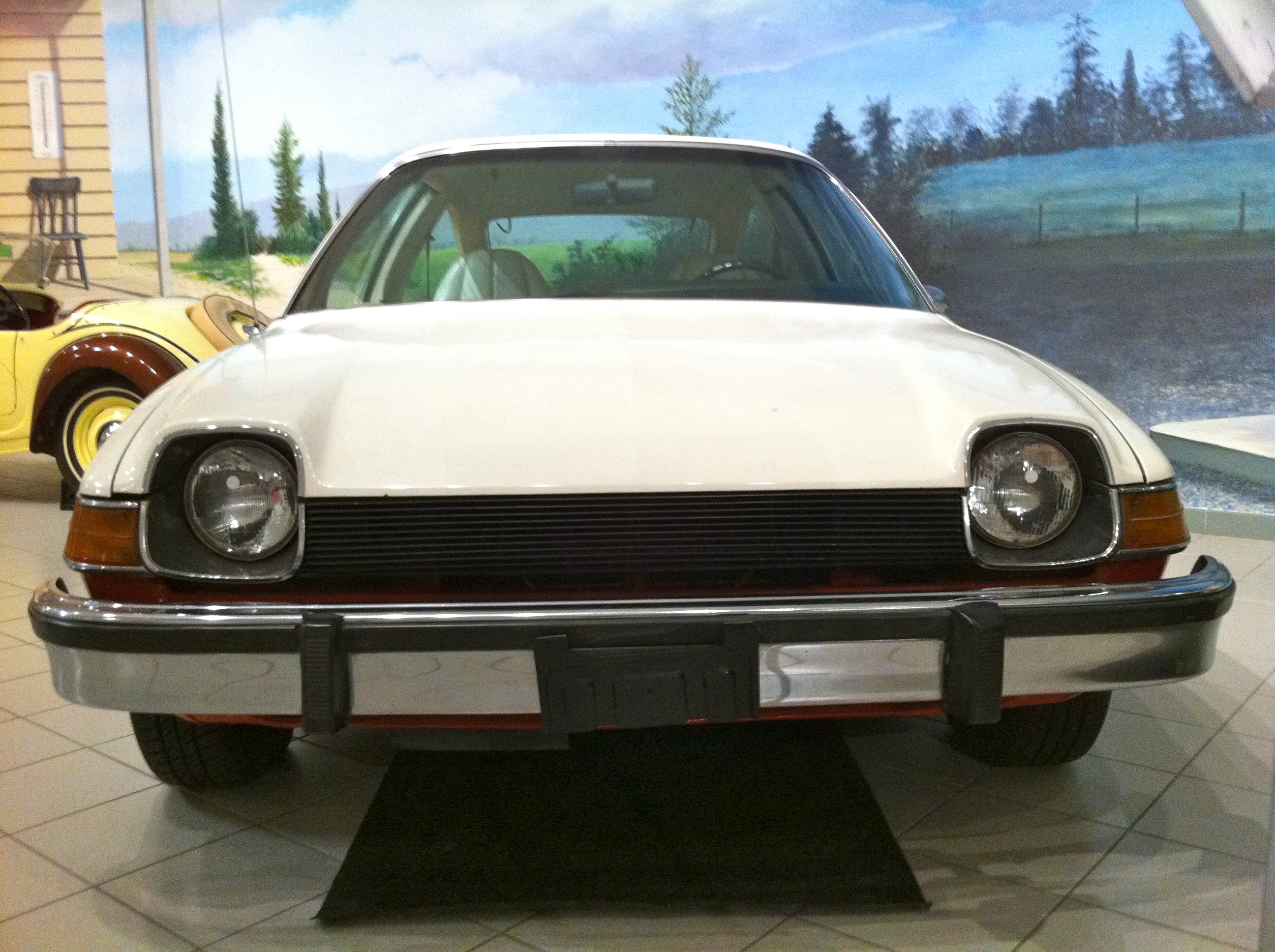
The AMC Gremlin is a small AMC car known for its odd, compact shape. People also talk about it like a “fishbowl” because the glass area around you looks very prominent.
The AMC Pacer is a quirky AMC model that stands out because it looks very unusual and boxy. Here, it’s mentioned alongside the Gremlin as one of those cars people either remember fondly or don’t remember at all.
“AMC Rambler” means the Rambler cars made by AMC. The speaker is saying the body/frame wasn’t especially durable over the long run.
Car
Mercury Meteor
The Mercury Meteor was a car sold by Mercury (a Ford brand). The speaker’s point is that it was kind of hard to understand why it existed, so it faded from memory.
This Mercury Monterey Breezeway is a classic car known for a weird but clever feature: the rear window could roll down. The idea was to let more air into the car, and it also made the car stand out immediately.
Term
rear window rolled down
On this car, the back window could move down instead of staying fixed. That lets more air in and makes the car look different from most others.
The Chevrolet Biscayne was a cheaper, more basic full-size Chevy. The hosts compare it to the more stylish Impala and the more upscale Caprice to show where it fit in the lineup.
The Chevrolet Impala is a large, comfortable sedan made by Chevrolet. It was popular and widely produced, so it became a familiar name. People mention it when talking about how some big cars look more stylish or feel more prestigious than others.
The Chevrolet Caprice is a large sedan made by Chevrolet. It was positioned as a more upscale, comfortable option compared with simpler big cars. In the podcast, it’s mentioned because it’s known for having more “prestige.”
The Mercury Comet Cyclone is a 1960s “performance” version of the Mercury Comet. The host is saying it could be fast, but it didn’t get as much fame as the Ford Mustang.
Velocity stacks are shaped parts on the air intake that help air flow into the engine more smoothly. They’re common on older performance setups and can help the engine “breathe” better.
The Ford Mustang is a sporty car made by Ford. It’s been around for many decades and is known for looking performance-oriented. People talk about it a lot because it became a famous model and helped shape the idea of an affordable sports car.
A turbocharger is a device that forces extra air into the engine to make more power. It can be great for performance, but early turbo setups sometimes had reliability problems.
The Oldsmobile F-85 is a mid-sized car made by Oldsmobile. The podcast is mentioning it because there was a more performance-focused version associated with turbocharging. That’s what makes it interesting to car fans—some versions were designed to make more power.
A four-door sedan is a normal passenger car with two rows of seats and four doors—two in front and two in back. It’s the kind of car people usually use for everyday driving.
Curb stops are little barriers near parking lots that keep cars from going too far. If they’re missing, it’s easier to drive right up to the edge and get into trouble.
The right rear tire is the back tire on the passenger side. If it spins up, it means it’s losing grip and the car is slipping rather than moving smoothly.
“Donuts” are when a car spins in a circle with the tires, kind of like drawing a donut shape. People do it to show how much grip the tires have, but it can wear out tires fast.
The Range Rover is a luxury SUV made by Land Rover. It’s designed to be comfortable for everyday driving but still capable off-road. Here, the host is talking about the 2025 version and where it’s made.
Place
sully Hill, United Kingdom
This is the place in the UK where the car is manufactured. It’s useful background because it tells you where the vehicle is built.
A plug-in hybrid is a car that uses electricity and gas together. Unlike a normal hybrid, you can charge it from a wall outlet to drive on electricity for at least some trips.
A mid-size SUV is a family-sized SUV that’s not as big as the largest SUVs. It usually means more space than a smaller SUV, but it’s easier to park and drive than a full-size one.
“Shaved” here means the body panels look smoother and more blended, with fewer visible seams or bumps. It’s done to make the car look sleeker and sometimes to help airflow.
The Chevrolet Nova is a car model that came in different versions. Some were more basic and had fewer features, which is what the “stripper” idea is referring to. The podcast is using it to explain that not every Nova was the same level of equipment.
The Alpine A110 is a small sports car designed to drive very smoothly and feel nimble. It’s known for being light and well-balanced. It may come up in conversation when someone is thinking about how a sports car fits into everyday fuel costs.
The Tiguan is Volkswagen’s SUV. The host says the next one is a full redesign, which usually means it’s been significantly updated in how it looks and how it’s set up.
The Jaguar XK150 is an older Jaguar sports car. It’s notable because it was the final version of Jaguar’s XK sports-car lineup, so it represents the end of an era for that model family.
The Ford Taurus is a mid-size family sedan. This episode frames the early Taurus as a big redesign—less boxy, more aerodynamic, and aimed at being nicer to drive.
A mid-sized sedan is a common “family car” size—bigger than a compact, smaller than a full-size. It’s the kind of car many people buy for everyday commuting and road trips.
Aerodynamics is about how the car’s shape cuts through the air. A more aerodynamic shape can reduce wind resistance and help the car feel more stable at highway speeds.
An “X-Car platform” is like a shared blueprint GM used for several different cars. It helped GM build front-wheel-drive cars more efficiently, which mattered a lot after the fuel crisis.
Front-wheel drive means the front wheels do the work of both steering and moving the car. The episode mentions it because it was part of the push for better fuel economy after the fuel crisis.
The Phoenix was a Pontiac model that was part of GM’s front-wheel-drive lineup. The episode mentions it to show how GM was changing direction for better fuel economy.
The Skylark is a Buick model that was included in GM’s front-wheel-drive X-Car lineup. The episode is using it as an example of GM’s fuel-economy-focused shift.
The fuel crisis was when gas became harder to get and much more expensive in the 1970s. Car companies responded by building cars that used less fuel.
Part
transmission low and reverse clutch housings
An automatic transmission uses internal clutches to decide which gear you’re in. The “low and reverse clutch housing” is the casing that holds the clutch parts that make those gear ranges work.
The Volkswagen Beetle is the famous “Bug.” In this episode, they’re talking about a newer version that changed the layout to front-engine, front-wheel drive—very different from the original design.
A platform is the shared “base” that multiple cars are built on. If the Beetle is built on the Golf platform, it means it shares a lot of the underlying structure with the Golf, which is why it can use a different layout.
“Type 1” is the original Volkswagen Beetle design. The episode is saying the newer Beetle looks similar, but it uses very different engineering than the original Type 1.
Term
21 point 5000000
This is the number of classic Beetles the host says were produced worldwide before they stopped making that version. It’s meant to show how huge the original Beetle’s run was.
LIVE
All right, time now for Jeff's car culture, we call it.
This week, 60s cars that we don't remember.
Do we really need to remember them?
Well, you're going to help us out.
Yeah, you might remember one or two, but vaguely.
So here we go.
In this opening pick right here, this is actually a Plymouth valiant signet.
The signet was an upscale version of the Plymouth's popular valiant compact.
It was comfortable, reasonably stylish, and perfectly respectable, which is another way
of saying nobody's hung a poster of this car in their garage in 40 years.
Moving on, the next one is a Rambler AMC.
This Rambler had one of the coolest names of the decade.
Unfortunately, the car itself didn't leave quite the same impression.
AMC sold plenty of them, but today most people remember the company's later oddball choices
like the Gremlin and the Pacer.
Hey, we like the Gremlin.
Gremlin.
I had a good friend of mine.
I think she grew up with a high school friend that had a Pacer.
It was a cool little car.
That was the fishbowl.
Yeah.
No, no.
The Gremlin was a fishbowl.
Well, the Pacer.
Yeah, you're right.
The Pacer.
I was thinking of another one.
Anyways, Rambler American is the next on the list, and the millions of Americans once
drove the Rambler American, but spotting one today feels about as good as finding a
payphone this day.
They were dependable, affordable transportation for people who cared more about saving money
than impressing the neighbors.
It wasn't exactly the recipe for a long lasting frame.
That would be the AMC Rambler.
Next one, the Mercury Meteor.
The meteor existed in a strange space between Ford and Mercury, where buyers weren't
entirely sure why it existed.
It wasn't a bad car.
It wasn't an exciting car.
It was just there.
And it was green and boring, which might explain why even many Mercury fans forgot
about the meteor, even though it was part of the lineup.
How about that?
Forgot about it.
Thanks for.
Forget about it.
Forget about it.
One of my favorites.
And I did see one of these.
And I do remember this car is a Mercury Monterey Breezeway.
Oh, my God.
Like we're, uh oh, we're, we're going to go one more.
I think you got to go one more.
You need one more?
Yeah.
That was the meteor.
There's the Breezeway.
The Breezeway featured one of the strangest production car features ever offered.
The rear window rolled down.
Oh, yeah.
Seriously, Mercury claimed it improved ventilation, which it did.
It also guaranteed that anybody seeing one would immediately ask, wait, why is
the back window doing that?
Now this was ahead of its time because now you got pickup trucks with the window
goes down, but look at the roof line in the back.
It's jacked.
It's, I like it.
I like that car.
I do things with that car.
The next one, Mike, is a Chevrolet Biscayne.
The Biscayne was a budget minded full size car.
Millions were built, but it lacked the flash of an impala and the prestige of a
Caprice it perfectly.
It was a perfect example of a vehicle that was everywhere once and almost
nowhere to date.
Mercury Comet Cyclone.
Uh, I had a friend of mine that had a Mercury Comet and it was a cool car.
He had velocity stacks on it and twid bowls.
I didn't have those great big nostrils on the front of it.
The hood was so chopped up for the velocity stacks.
We don't know.
Uh, the Cyclone had one major problem.
It existed in the same era as the Mustang.
That's a little like trying to become a famous rock star while standing next to
the Beatles.
It was actually capable of performing.
It was a performance car, but it spent most of its life in somebody else's
shadow.
That's a cool car.
I drive that today.
And lastly, Don mentioned turbocharges in the first part of the show.
Also will be a F 85 jet fire.
Look at that baby.
The jet fire deserves far more attention than history has given it.
This thing featured a turbocharger years before turbocharging became cool.
Unfortunately, early technology brought reliability headaches and the jet
fire became one of the most overlooked performance experiments of the entire
minute.
That kid is, isn't that Marvin Zendler behind the wheel?
I think I got to have every one of these.
I would drive.
So Buick had a version of that.
They did.
It was at the Skylar.
I believe, I think it was.
It was a Skylar, but same platform.
So my buddy Ross Putnam, that had the hot rod, um, somehow, some way, I guess
he got grandma's car or something that it was a four door sedan, this body
style, right?
It was white and we called it whitey.
And I'll never forget the evening that it had rain.
Pardon me.
It fits code.
And it, uh, it was a parking, strip center strip mall at an intersection.
The intersection was Hillcroft and Brayswood and there was nobody
there's after all closing time and they had no curb stops.
So you get out there and you'd floor it and that right rear tire would
just spin up to, yeah.
And, uh, we'd do donuts, all six of us in the car.
Yeah.
That's my memories of that.
Put the heavyweight guys in the right wheel pretty much.
Yeah.
Mr.
Mars has driving destinations.
Houston hidden underground.
Mr.
Yes, sir.
We had a, quite a few things I want to point out here about the, uh, Houston hidden
underground and starting off with, if everybody that drives around Houston,
particularly if you happen to go out to Katie freeway while they were doing the
big widening job here years ago and made it what the widest freeway in the world.
Yep.
You could see all of the utilities that are underground.
I mean, there's gas lines down there.
There's water lines or phone company spent millions of dollars on that project.
Trying to get their underground equipment over and get it out of the way.
So when you're driving over these roads, unless you're on the 10th story of a
stack of freeways, you don't really think about what's underneath you, but
there's a lot of stuff that's down there.
But now there's also a couple of other things that are down there in the
Houston, and one of those is the Buffalo bio sister.
Now I wasn't aware of all this stuff that was going on down there.
Whenever, uh, back in whenever.
Dang, come on.
So this was started in 1926.
It was a project that was built in 1926 when Houston was going so fast, they
needed more drinking water storage.
And they, so they came up with this plan to make it one of the earliest
underground reservoirs, which is unusual in Houston, considering the static
water level, the ground water level.
But this thing holds 15 million gallons of water.
And that's what kind of what started out helping maintain the water pressure
while the city was growing.
Now it's the size of one and a half football fields, and it's actually
supported by 21 columns that are built down here underneath this area.
And each one of them is like 25 feet tall.
Now it's been in business for 80 years.
It's been working in, uh, engineers have done some repair leaks and repaired
some leaks, but they took it out of service actually in 2007 for realistic
use of supplying water for the city.
Now it's still been down there ever since, but then during the Buffalo
bio park redevelop, redevelopment, instead of tearing it down and trying
to fill in this massive area, they opened it up for tours.
So some things to, to really notice, if you happen to take this tour,
221 concrete columns, 25 feet tall, 15 million gallons of water when it was
operational, 87,500 square feet down here under the ground.
And if you stand there and it's quiet to where you can do an echo, it takes 17
seconds, your echo will actually run for 17 seconds across here.
And so it still has that little thin layer of water at the bottom.
So it reflects it and it makes it look even bigger.
Now the other thing that's going on downtown Houston, and I'm sure some
of you guys have heard of it.
I have never heard of it until recently when I started looking for this stuff,
there were rumors, but there is an underground tunnel system in downtown Houston.
Now it was started in 1935.
And what it was done was to connect two buildings together because of the
heat and the rain and everything.
So it was just a convenience thing that actually started, but now there's
now six miles of interconnected tunnels beneath downtown and dozens of
So that these people that are downtown working, I mean, you can literally go
downtown and go underground and stay down there literally all day long.
And it's just a lot of that reason.
Again, it was started because of the Houston summers and the late afternoon
thunderstorms that make a mess of it that we have that we're still dealing with,
obviously, but if it's 98 degrees outside and the humidity is up at 80% and you
want to walk down two blocks down the street to go to a restaurant, but time
you get back to your office, you're not going to be in the best shape as far as
heat goes.
So you go downtown, you go down into the tunnel system, to the restaurants,
the coffee shops.
If you want to do walking because you want to get in shape, there's long
corridors that you can walk just like at a mall.
It's almost like a mall down there, but you got to be careful and make sure you
don't get lost down there because it does wind around quite a bit.
So that's two places underground in Houston that most people don't think
about because of the water table that's in the ground and the fact that it's
out of sight, it's out of mind.
So if you're looking for someplace to go this summer in Houston heat, here's
two places that you could go to get out of the heat and find some place a
little bit different to hang out.
Good story.
Okay.
Thank you, Mike.
Appreciate that.
Uh, Houston hidden underground.
I've been down there in that, I haven't been to the cistern, but I have
been to the tunnel system and you can get lost really easily.
Let's understand.
Yeah.
I think most of those shops down there are closed, but it's still, I don't
know what part of it's open and closed.
I don't know anymore.
So go, thanks.
Check it out.
Thank you, Mr.
Morris.
All right.
I had the opportunity to drive the 2025 Land Rover Range Rover.
It is built in sully Hill, United Kingdom.
Just thought you'd like to know that where it's built available trim levels,
dynamic and the autobiography.
I had the sport dynamic S E P H E V.
That is a plug in hybrid electric vehicle.
Mid-size SUV.
Now you'd think that this would be full size.
Nope.
Mid-size five seats in it.
That would include the driver clearly.
It was all new in 2023.
We're just now getting this in the press fleet, but I'll tell you what.
What's it?
Good looking.
Good looking man.
Oh, it is.
Absolutely beautiful.
Exterior features, smooth, arrow body lines, modern, yet conservative.
All horizontal and slick design throughout.
Front and rear lighting is no frills, but is extra sleek.
As a matter of fact, the rear taillights are kind of like built in to the,
it looks like the body work on this.
Like shaved in.
They call that shaved or no, I wouldn't know anything about that.
I know, I, I think I know what you're talking about.
It's not the same thing.
Okay.
Big wheels are really straightforward and good looking.
There's nothing fancy about anything that draws your attention.
The whole thing is just slick.
How else do you say it?
It's good on the car.
Overall design gets high marks.
What could use improvement?
Don't get gray.
Gray is boring.
Why would you get a gray car?
It's almost as if you, here, let's
go ahead and get the car sprayed as a primer.
Let's do the gray primer.
They don't use red primer anymore.
I don't know why, but anyway, I just don't understand gray cars, but whatever.
Interior highlights.
I love the interior.
It's just kind of like the exterior.
No frills looking.
Interior is ultra conservative in its design.
Materials top notch with comfortable seating surfaces.
The infotainment screen is tablet style, kind of small, actually, in comparison
to some of the ones that we see today.
Simple conservative controls for the HVAC.
And as far as cargo and trunk room is concerned, it is smallish with the
second row up again.
This is a midsize.
Look how slick that is.
It looks nice.
Yeah.
Now this is a brand new car.
You'd think, well, wait a minute.
That's kind of like the old stripper models of the Nova back in the 1970s.
No, this isn't hardly anything.
Can't even compare it.
What I liked about it, the simplicity of the look.
What could use improvement?
Some of the screens and the infotainment screen are a little complicated to maneuver
through.
I think that I would go back to school on that one.
But like anything else, you buy a new car, you get used to it and then it's no big deal.
All right.
So what's it got under the hood?
A three liter inline six cylinder.
It turns up 454 horsepower and 487 pound feet of torque.
This isn't the big V8.
This is the three liter inline six toes up to 6,600 pounds.
And if you want to just get on the gas only, it gets 21 miles per gallon.
Not bad.
Considering you get this, all this horse power and Lexi.
Yeah, no, isn't it beautiful?
But to see it in person is just truly stunning.
I got 28.3 miles per gallon over 381.8 miles.
What I liked about it, the power plenty.
It's always there.
What could use improvement?
Absolutely nothing.
Maybe a full electric would be interesting to drive.
Now I did not get the 110 volt charge cord with this vehicle.
For some reason they didn't include it.
I don't know.
It would have been nice because I can plug it in here at the house.
And then at work, they have a 110 volt outlet there.
And so I could have probably got a lot better gas mileage
if I plugged it in all over the place.
But I did not.
So I want to be sure and transparent in that regard.
What I liked about it, the air suspension, one of the best, plenty of control.
But my God, the ride is just to die for.
What could use improvement there?
Nothing.
Base trim price, $95,100.
I was sitting here thinking how pretty is that car?
And price has tested 96,725 base model price, 79,450.
Let me just say this before I get into the competitors.
This is was actually shocking to me because I have driven vehicles in the
$130,000 category.
This beats them.
This is probably one of the nicest vehicles on the market today.
As far as reliability concerns, I don't have them.
I don't know anything about that.
I might want to check into that if you're interested in this, but I'll tell you
what, if you're interested in a super luxury, beautiful vehicle that has lots
of horsepower and you want to impress the neighbors, I think I'd check this one out.
Okay.
Here are the competitors.
The Lexus TX PHEV for $80,000, the BMW X5 PHEV for $76,000, and the Mercedes
GLE PHEV for $72,250.
Next week, we'll review the VW Tiguan SUV, which is a complete redesign.
I think you'll be interested to hear what I have to say about that.
So you don't like great cars, do you?
Oh boy, I'll tell you what, man.
If I were a rich man, which I am not, I would seriously consider buying
something like that.
The wife would love it.
I don't have a wife, but you got to buy a wife.
Then you get to car.
And I think that color has got a lot to do with it.
That brilliant red.
Cali, it is, it's stunning is what it is.
Hey, if you'd like to get in touch with us, send us an email.
The address here is info at inwheeltime.com.
We're back after this quick break.
Stay with us.
Time now for this week's Auto History.
Mr. Mars, it's all yours.
And we cannot hear you for some reason.
Oh, I forgot to turn the mute back off.
Oh, it's all right.
And so this week, coming up this week in Auto History, some of the things
that we noticed we thought were interesting.
You may want to follow up on Tuesday, for example, on July the 14th,
way back when in 1960, the Jaguar, one of Don's favorite production companies
produced the last of the XK150.
Now, it's just the final model of the XK sports car series that began
with a 120 in 1948, had leather, walnut interior, 3.4 liter at 150 horsepower.
And it was part of what helped bring Jaguar into a name as a world class
sports car manufacturer.
And then also on Wednesday, this coming week, July the 15th, Ford began
production of the Revolutionary Taurus.
Now, this is a mid-sized sedan, and it got away from the boxy styling
of the early 1980s that Ford was using.
So it had some aerodynamics, had front wheel drive, and it was supposed
to be a driver focused interior, and it became real successful immediately.
And it really helped push forward back into the competitive position
of the family car market.
And a lot of people followed it in the styling.
Then on July the 16th, 1980, GM introduced the X-Car platform.
Now, this was a front wheel drive X-Car lineup, included the Citation,
the Pontiac Phoenix, the Osmobile Omega, the Buick Skylark.
And this was GM shift from traditional rear wheel drive and compact cars
to try and get into the more fuel efficient front car market because
of the fuel crisis that we'd gone through in the 1970s.
Real quick, Mike, when I worked for Turbo HydroMatic on the line,
I was making transmission low and reverse clutch housings for that car.
And it was recalled quite a bit because of my work.
Your contribution.
My contribution to that.
No, it was it was really a cruddy, cruddy operation.
But that's right. I understand.
So moving on to July the 17th, Volkswagen introduced the new Beetle.
Now, I say new Beetle, it's going to look a lot like the old Beetle,
but it has front engine, front wheel drive vehicle.
It's basically built on the golf platform and it did a lot of
brought in some new engineering and stuff that was not available in the original
type one, and it reignited the whole Beetle mania thing
that came up through Volkswagen.
Then July the 18th, the final classic Volkswagen Beetle is built
after they made 21 point 5000000 that were produced worldwide.
They actually stopped building that model.
And lastly, July the 18th, this one, the GM ignition switch
compensation program begins, eleven point 5000000 vehicles in the US.
It was I never understood all this about what was going on.
It was to me, it was silly.
And it was even sillier after all that, that they still put
a key ignition in some of the vehicles for years.
And years anyway, some of the things that are coming up this week
in automotive history that you might want to look into.
About this episode
The hosts start with forgotten 1960s American oddballs, from the Plymouth Valiant Signet to AMC’s Rambler/Gremlin/Pacer era and even a “fishbowl” nickname debate. They then pivot into overlooked performance tech, including a turbocharged Oldsmobile F-85 Jetfire and why early turbo reliability could be rough. After a Houston “underground” detour—utilities, tunnels, and a 15-million-gallon reservoir—they wrap with modern reviews, including a plug-in hybrid Land Rover Sport-style discussion and real-world fuel economy.
Some cars disappear so quietly you don’t realize they mattered until they’re gone. We kick things off by digging into forgotten 1960s cars that used to be everywhere, including the Plymouth Valiant Signet, Rambler American, Mercury Meteor, Chevrolet Biscayne, Mercury Comet Cyclone, and the Oldsmobile F-85 Jetfire. These aren’t just trivia picks, they’re a reminder that “popular” and “memorable” aren’t the same thing, and that practicality can be the fastest path to being overlooked in car culture.
Then we take a hard left turn into Houston Hidden Underground, because the most surprising stories aren’t always on the surface. We talk through what’s beneath Houston’s streets, from the Buffalo Bayou Cistern, an enormous former drinking-water reservoir with a jaw-dropping footprint and echo-filled atmosphere, to the downtown Houston tunnel system that now spans miles. Heat, humidity, thunderstorms, and daily convenience all shape how this underground city evolved.
We wrap with a modern luxury counterpoint: our 2025 Land Rover Range Rover plug-in hybrid review (Range Rover Sport Dynamic SE PHEV). We cover the sleek conservative design, the cabin feel, infotainment quirks, and the big headline numbers: a 3.0-liter inline-six with serious horsepower and torque, towing capability, and a ride that sets a high bar thanks to the air suspension. We also stack it up against plug-in hybrid competitors like the BMW X5 PHEV, Lexus TX PHEV, and Mercedes GLE PHEV, then finish with quick automotive history notes to put today’s cars in context.
If you like smart car talk with real details and a few laughs, subscribe, share the show with a friend, and leave a review. What’s a “forgotten” car you’d still drive today?
Disclaimer: This post contains affiliate links. If you make a purchase, I may receive a commission at no extra cost to you.
---- ----- Want more In Wheel Time car talk any time?
In Wheel Time is now available on Audacy!
Just go to Audacy.com/InWheelTime where ever you are. ----- ----- Be sure to subscribe on your favorite podcast provider for the next episode of In Wheel Time Podcast and check out our live multiplatform broadcast every Saturday, 10a - 12nCT simulcasting on Audacy, YouTube, Facebook, Twitter, Twitch and InWheelTime.com.
In Wheel Time Podcast can be heard on you mobile device from providers such as:
Apple Podcasts, Amazon Music Podcast, Spotify, SiriusXM Podcast, iHeartRadio podcast, TuneIn + Alexa, Podcast Addict, Castro, Castbox, YouTube Podcast and more on your mobile device.
Follow InWheelTime.com for the latest updates!
Twitter: https://twitter.com/InWheelTime
Instagram: https://www.instagram.com/inwheeltime/
https://www.youtube.com/inwheeltime
https://www.Facebook.com/InWheelTime
For more information about In Wheel Time Podcast, email us at