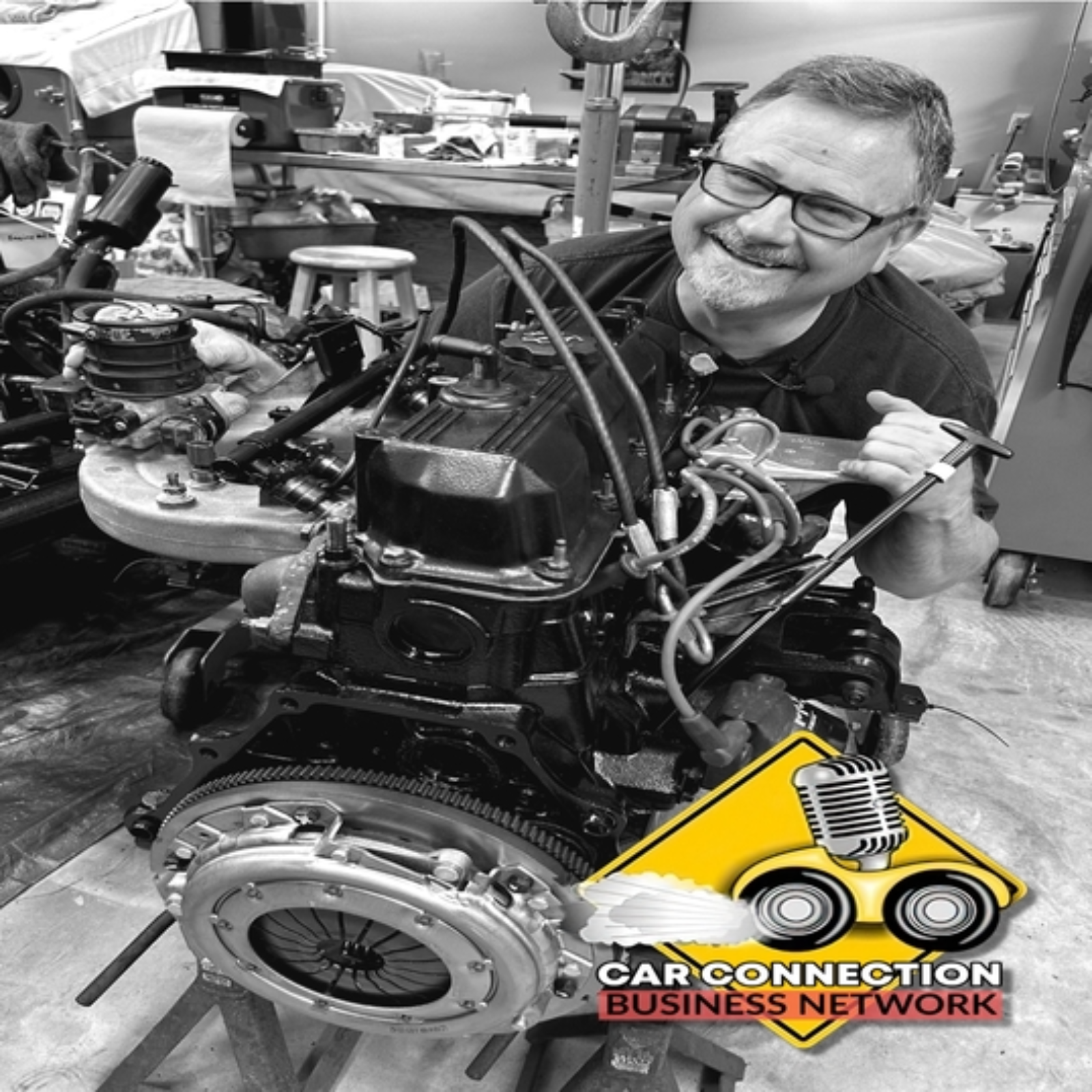
Free Advice Isn't Free - Give Back Before the Heat Takes it Toll
About this episode
Niall “Motormouth” Jenkins kicks off with community and partner shoutouts, then pivots to practical ownership advice: heat is coming, and it’s the enemy that turns “teetering” components into expensive failures. He argues for preventative maintenance over mileage-chasing, using a time-based “fleet maintenance system,” and urges a full pre-summer inspection of fluids, hoses, belts, brakes, and cooling—especially before AC loads the engine and transmission. The show also calls out YouTube viewers to subscribe/share to help creators keep producing free guidance, plus a vehicle-buying plug for City Auto Sales and Leasing.
As temperatures rise, so does the risk of mechanical failure - and most driver don't see it coming until it's too late.
In todays Motormouth Morning Drive, we're talking about why heat is your vehicles worst enemy, how small issues turn into big breakdowns, and what you can do right now to stay ahead of costly repairs.
From cooling system to fluids, batteries to tires, - this is your seasonal wake up call to get your vehicle - road ready before summer pushes it past its limits.
We also had a real conversation today-about value. If you're getting something out of this content, there's a simple way to give back:
Like, Comment, Share,, and Subscribe, Join our on line Community, Like us on Apple, Spotify, Amazon, iHeartRadio Thank You to Those who have, it all helps!! We Love you guys❤️ Skippy & Motormouth.
It costs nothing-but it means everything to creators trying to help you stay safe, informed, and ahead of the curve
And if you're serious about protecting your investment, check out the Car Connection Fleet Maintenance System - built to help you stay organized, proactive, and in control of your vehicle's health.
#CarMaintenance #AutoRepair. #MotormouthPodcast
Grab some Motormouth Merch, proceeds to Total Freedom Addiction Campuses Canada & USA Visit our online store at (ccbusnet.com) your support is appreciated so much❤️ Skippy & Motormouth.
More Episodes and ...project Links are available at Car Connection Business Network.com (ccbusnet.com) you'll find everything on our home page if you'd like to follow the build & Repair work we do, connect with our program partners click their logo to meet them & Thank You So much for giving them your business! Nile Motormouth Jenkins.
Happy Healthy Motoring Friends, Peace Patience Kindness Always, We'll see you in the next one. NMJ
pre-purchase inspection
"Good morning Niagara, you're tuned to Car Connection where the coffee is hot, the tools are ready..."
Before buying a used car, you can pay a mechanic to inspect it. That way you find out if there are problems you can’t see right away.
A pre-purchase inspection (PPI) is a mechanic’s check of a used car before you buy it, looking for hidden problems. It helps you avoid expensive surprises and gives you leverage for repairs or price adjustments.
Drive This Morning
"...and we are shifting into Drive This Morning, a brand new week ahead of us. [60.3s] Did you survive the weekend?"
This is just a named part of the show. It means the hosts are about to get into the main discussion for the morning.
“Drive This Morning” is the show’s recurring segment name for the day’s featured discussion. It signals that the hosts are moving into a structured topic block for listeners.
Car Connection
"we can support them by get into our store, our online store, grab yourself some motor mouth car connection merch, and join Skippy and I supporting Total Freedom Addiction Campuses Canada and USA"
This is the name of the show/podcast. They’re talking about supporting their community and partners, not reviewing a specific car.
“Car Connection” is the podcast/brand being promoted in this segment. It’s referenced alongside merchandise and a community event, so listeners can connect the show to its real-world partnerships and outreach.
massive car show
"and they have a massive car show, and vendors come in from all over, and again all the funds go to make sure that they don't turn anyone down"
They’re talking about a big event where people bring cars to show them off. Vendors come too, and the money raised supports a cause.
A “car show” is an organized event where vehicles are displayed and vendors/participants gather. In this segment, it’s framed as a fundraiser with outside vendors coming in, which is common for large community shows.
Niagara Block
"let's thank our program partner Niagara Block at 5000 Montrose Road Niagara Falls for bringing us our morning swiggy, that's important, let's get that done"
Niagara Block is a local business they’re thanking. They make building materials like blocks and landscaping supplies.
Niagara Block is mentioned as a program partner providing materials and support for the show’s morning segment. The name is tied to building products like blocks and landscaping materials, not automotive parts.
cinder blocks
"they create all kinds of designer blocks that you see on the outside of buildings, from just plain old cinder blocks to fancy stuff, wow, incredible, metal supplies"
Cinder blocks are sturdy, heavy building blocks used to build things like walls. They’re just an example of the materials the sponsor sells.
Cinder blocks are common concrete masonry units used in construction. They’re mentioned here as part of the range of building materials Niagara Block supplies.
rebar
"wow, incredible, metal supplies, rebar, angle irons, all those building supplies are readily available to you"
Rebar is steel bars used inside concrete to make it stronger. They’re mentioning it as part of the building supplies they carry.
Rebar (reinforcing steel) is used in concrete structures to add strength and help resist cracking. It’s listed as one of the building materials available from the sponsor.
angle irons
"rebar, angle irons, all those building supplies are readily available to you, interlocking brick,"
Angle iron is a metal support piece shaped like an L. They’re just listing it as one of the materials available.
Angle iron is a structural steel profile shaped like an “L,” commonly used to brace, frame, or support construction. It’s mentioned as part of the sponsor’s metal supply offerings.
interlocking brick
"interlocking brick, and if you're looking to create that beautiful outdoor space for yourself, where you can hang out with your peeps"
Interlocking brick is brick made to fit together tightly. It’s often used for outdoor paths and patios.
Interlocking brick refers to masonry units designed to fit together for stable surfaces, often used for patios and walkways. The segment uses it to describe landscaping materials available from the sponsor.
slate walkway
"they also have the slate to create a slate walkway, amazing, we have one,"
A slate walkway is a path made from slate stone. They’re mentioning it as a type of outdoor project material.
A slate walkway uses slate stone slabs for outdoor paths, valued for durability and appearance. It’s mentioned as an example of landscaping work the sponsor can help with.
30 day fuel savings challenge
"...we're liking that because that gets us closer now to the 30 day fuel savings challenge which will put a minimum, bare minimum, you'll put $100 back in your pocket..."
It’s a month-long plan to try to spend less money on gas. You change how you drive and/or keep the car in good shape, and then you see what you saved.
The “30 day fuel savings challenge” is a short, structured period where you focus on reducing fuel use through driving and maintenance habits. The idea is to create measurable savings quickly, then keep the habits going after the challenge ends.
preventative maintenance
"...maybe set it aside to do maintenance on your vehicle, imagine that, preventative maintenance, that's where it's at, how long would your car last if you actually followed a proper maintenance plan..."
Preventative maintenance means taking care of your car before something breaks. Instead of waiting for a problem, you do routine checks and replace worn parts so the car lasts longer.
Preventative maintenance is scheduled upkeep done before a failure happens, like oil changes, inspections, and replacing wear items on a timeline. The goal is to catch problems early and keep the car reliable for longer.
maintenance plan
"...how long would your car last if you actually followed a proper maintenance plan, well we are just on the back door of launching the promo page..."
A maintenance plan is a checklist of what to service and when—like oil changes and inspections. If you follow it, your car is less likely to surprise you with big repairs.
A maintenance plan is a structured schedule for service intervals based on the vehicle’s needs (often from the owner’s manual) and your driving conditions. Following it helps reduce unexpected breakdowns and can improve resale value.
fleet maintenance system
"...we've built a laminated reusable fleet maintenance system that makes it simple for you..."
A fleet maintenance system is a simple way to stay on top of car upkeep using a schedule and checklist. It helps you not miss important services, even if you’re busy.
A fleet maintenance system is a process used to keep multiple vehicles running reliably, typically with standardized checklists, schedules, and tracking. Even though the term “fleet” often means businesses, the same structure can help individuals stay consistent with their own car.
older car
"...if you have an older car it doesn't matter what it's worth curbside folks... if your neighbor's got a hard time with that or someone else saying well you know what are you, you should get rid of it, it's older..."
They’re pushing back on the idea that you should get rid of a car just because it’s older. With regular upkeep and repairs, an older car can still work well.
The segment argues against the idea that an older car should be replaced purely because of age. Instead, it emphasizes that maintenance and parts replacement can keep an older vehicle running reliably.
curbside
"...if you have an older car it doesn't matter what it's worth curbside folks, it doesn't matter how many kilometers are on it..."
They’re talking about how the car looks or what it’s worth just sitting on the curb. The message is that age or appearance shouldn’t stop you from maintaining it.
“Curbside” here is shorthand for the car’s condition/value as it sits outside—what it looks like to others, not its mechanical health. The point is that older cars can still be worth maintaining if they’re kept up properly.
kilometers
"...it doesn't matter what it's worth curbside folks, it doesn't matter how many kilometers are on it, it just doesn't matter, it doesn't..."
Kilometers are just how far the car has been driven. A higher number can mean more wear, but if the car was maintained well, it can still be in good shape.
Kilometers are the distance measurement used in many countries to track vehicle mileage and wear. In maintenance discussions, higher kilometers often correlate with more wear, but good service history can matter more than the number alone.
track record for 2026
"...have you looked at the track record so far for 2026 on the vehicles that have been created and they just have the ultimate problems..."
A “track record” is evidence from real-world reliability data—like reported failures, recalls, and owner experiences—used to judge how dependable a model year is. The speaker is referencing early reliability signals for 2026 vehicles.
engine to transmission
"...have you looked at the track record so far for 2026 on the vehicles that have been created and they just have the ultimate problems, yeah from engine to transmission, you don't put any parts into a new car..."
They’re talking about the big powertrain parts—your engine and the transmission. If either one has problems, repairs can get costly.
“Engine to transmission” refers to major drivetrain components that can be expensive to repair if they fail. Mentioning both highlights the idea that reliability issues can span multiple systems, not just one part.
structural foundation
"and it has a strong structural foundation, you're in good shape, everything else is maintainable, all you have to do is have that mindset"
A strong structural foundation means the car’s main body/frame is in good shape. If that part is solid, repairs are usually more straightforward than if the car is bent or badly rusted.
A “strong structural foundation” refers to the vehicle’s body/frame integrity—things like rust condition, alignment, and how well the structure holds together. If that’s solid, many other issues are more likely to be repairable rather than a total loss.
treat it as though it's the last vehicle you're ever going to be able to afford
"treat it as though it's the last vehicle you're ever going to be able to afford to purchase, last one and change your mindset on that"
The idea is to take care of your car like you’ll keep it for a long time. When you think that way, you’re more likely to do maintenance early instead of waiting until problems get worse.
This is a mindset concept: viewing a vehicle as a long-term asset encourages better care and earlier maintenance. It’s essentially a “keep it for the long haul” approach that can reduce neglect and deferred repairs.
time and or mileage
"because I can still calculate my maintenance by time, see how it works, time and or mileage is how you navigate your way through vehicle preventative maintenance"
Some maintenance is based on how many miles you drive, and some is based on how long it’s been since the last service. Both approaches help you avoid problems that come from either heavy use or just aging.
Many maintenance schedules use either mileage (distance traveled) or time (months/years). This matters because some components wear out from use, while others degrade from age or sitting.
maintenance measured by hours vs mileage
"machinery has hour meters on it, so they're measured for maintenance by hours... apparently they had a rock sheared off all the bolts that hold that great big 10 foot disc in and my job was to replace those bolts"
Cars are often maintained by miles, but many machines are maintained by hours of operation. The reason is that “wear” can come from running time even if the machine hasn’t traveled much.
The episode contrasts two ways to schedule upkeep: mileage-based for cars and hour-based for machines. The key idea is that wear can correlate with either distance traveled or time spent operating, depending on the vehicle/equipment.
hour meters
"machinery has hour meters on it, so they're measured for maintenance by hours, tractors, all that stuff, bulldozers, diggers, excavators"
An hour meter counts how many hours the machine has been running. For tools and heavy equipment, that’s often a better measure than miles because the work is measured by runtime.
An hour meter tracks engine runtime instead of distance. This is common on equipment like tractors and excavators because they may work hard for long periods without “mileage” being meaningful.
Earl and Louise Grant
"say thank you to Earl and Louise Grant if anyone you know is in the market for a vehicle listen up this is the place you got to get to"
They’re the people the hosts recommend for buying a used vehicle. The point is that they’ve been in the business for a long time and the hosts trust their approach.
Earl and Louise Grant are mentioned as long-time owners/operators in the pre-owned vehicle resale business. For listeners, this highlights the episode’s emphasis on buying from experienced dealers with a reputation for honesty.
pre-owned automobile resale business
"Earl and Louise Grant have been in the pre-owned automobile business, resale business for almost 25 years now, they're greater Toronto areas, pre-owned auto"
This means they sell used cars. When you buy used, it’s extra important to check the car’s condition and make sure the seller is trustworthy.
“Pre-owned” refers to used vehicles, and “resale business” implies the dealer buys and sells cars rather than selling new from the factory. Buying used often shifts the focus to condition, maintenance history, and dealer credibility.
car the week
"...fair prices, quality vehicles, low mileage and I'll tell you we used to do car the week and when Louise would send me the picture..."
This sounds like a recurring show segment where they highlight a particular car for the week. It’s not really about how cars work—it’s about how the podcast presents them.
“Car the week” appears to refer to a recurring segment where the hosts feature a specific vehicle. It’s more of a show format than a technical automotive concept.
in-house leasing and financing
"...let them do all the legwork, in-house leasing and financing and I'll tell you what you'll meet a brand new family..."
In-house financing means the dealership handles the loan or lease for you. It can be easier, but the price can vary, so it’s smart to ask what the total cost and interest rate really are.
“In-house” leasing and financing means the dealership (or its captive finance arm) arranges the loan/lease directly instead of sending you to outside lenders. It can simplify paperwork and speed up approvals, but you should still compare the effective rate and total cost to outside offers.
City Auto Sales and Leasing
"...so you can send anyone you know to City Auto Sales and Leasing to meet Earl Louise Grant..."
They’re naming a specific dealership and saying to refer people there. It’s not a car part or a technical term—just a business recommendation.
“City Auto Sales and Leasing” is mentioned as a place to send referrals. For listeners, this is essentially a dealership/company callout rather than an automotive technology.
lipstick on pigs
"...there's there's a lot of lipstick on pigs and skunks and mink coats on corner car lots that absolutely eat your bank account alive..."
It’s a phrase meaning “looks good on the outside, but might be a problem underneath.” In car shopping, it’s a heads-up to look past paint and photos and verify the car’s real condition.
“Lipstick on pigs” is a warning that some vehicles are cosmetically improved to look better than they really are. In car-buying terms, it often points to hidden issues like accident damage, deferred maintenance, or misleading condition claims.
buying a vehicle privately
"...so don't go there just don't open that door and buying a vehicle privately that's even creepier yet..."
Private-party buying means you’re dealing directly with the owner. You may save money, but you have to do more checking yourself—like making sure the title is clean and the car is mechanically sound.
Buying privately (from an individual rather than a dealer) can reduce dealer markups, but it usually comes with less protection and fewer guarantees. The buyer is typically responsible for verifying condition, title status, and any prior damage.
YouTube channel education strategy
"almost 400 items up there for you to enjoy whether you know a little bit about automobiles or you don't know the difference between a parking lamp and a tail lamp it's just fine you will learn all that stuff on our youtube channel because you learn five things in every video"
They’re talking about how their videos are organized to teach you car basics step-by-step. The goal is to help you understand what you’re looking at and what to do when something goes wrong.
The hosts describe a repeatable teaching format: explain what a component is, where it is, how it works, how it breaks, and key ownership basics. This is a content-structure topic rather than a single technical term.
parking lamp
"whether you know a little bit about automobiles or you don't know the difference between a parking lamp and a tail lamp it's just fine you will learn all that stuff on our youtube channel"
A parking lamp is a small light on the outside of the car that helps other people see that the car is there. A tail lamp is the rear light that’s more about showing the car’s position (and usually braking) to drivers behind you.
A parking lamp is a small exterior light that’s meant to make the vehicle visible at low speeds or when parked. It’s different from the tail lamp, which is primarily used to show the car’s position to other drivers, especially when braking or driving at night.
tail lamp
"whether you know a little bit about automobiles or you don't know the difference between a parking lamp and a tail lamp it's just fine you will learn all that stuff on our youtube channel"
Tail lamps are the rear lights on your car. They help people behind you see you, and they usually get brighter when you brake.
A tail lamp is a rear light designed to communicate the vehicle’s presence and, depending on the system, braking or running status. In most setups, tail lamps are always on when the headlights are on, while brake lights brighten when you press the brake pedal.
vehicle ownership fundamentals
"you will learn five things in every video what it is where it is how it works how it breaks and some of the basic fundamentals of vehicle ownership that will help you save thousands not hundreds thousands of dollars just by learning the basics"
This is the basic stuff you should know to take care of your car. If you understand how things work and what usually goes wrong, you can avoid costly problems later.
“Vehicle ownership fundamentals” refers to the practical knowledge that helps you maintain a car correctly and avoid common mistakes. Learning what parts do, how they fail, and what to check can prevent expensive repairs and reduce unnecessary shop visits.
monetized
"if out of 95 percent of you that are not subscribed today you'd push us over the top so we'd actually be able to get monetized we could do more reach more people and pay for parts"
Monetized means the channel starts making money from things like ads. That money can help pay for supplies and parts needed to make the videos.
“Monetized” means turning an online channel into a revenue source, typically through ad revenue or sponsorships. For automotive creators, that revenue can fund tools, parts, and events that support hands-on content and community help.
clickbait
"I'm very good now at spotting clickbait and to all those people that are doing that to to make make money on YouTube's you know shame on you that's all I got to say about that"
Clickbait is when a video title or thumbnail is made to trick you into clicking. It often promises big results, but the details may not be as helpful or true as they sound.
Clickbait is content designed to get you to click through using exaggerated or misleading hooks. In automotive media, it can steer viewers toward hype instead of accurate maintenance or buying guidance.
free advice isn't free
"we really really do so this is a little bit of a public service amount announcement from yours truly Nile Motormouth Jenkins I'm here for you I'm not here for the car manufacturers"
The phrase frames online automotive knowledge as something creators invest time and effort to produce. The idea is that viewers “give back” (likes, shares, comments, follows) so creators can keep making content.
public service announcement / viewer support
"we really really do so this is a little bit of a public service amount announcement from yours truly Nile Motormouth Jenkins I'm here for you I'm not here for the car manufacturers"
This part is asking viewers to support the person making the videos. Simple actions like liking, sharing, and commenting help the creator keep going.
This segment is essentially a PSA encouraging viewers to support creators who provide automotive knowledge. It focuses on small actions (like, share, comment, follow) as a way to help the channel continue.
owning and operating an older automobile
"I'm here for you to help you navigate your way owning and operating an older automobile keep that sucker going forever"
Older cars need more attention over time—things wear out and may need repairs sooner. The goal is to keep it running reliably for years instead of giving up when something breaks.
Keeping an older car running usually means managing wear items, deferred maintenance, and parts availability. The hosts position the content as practical guidance for long-term ownership rather than short-term fixes.

Toyota FJ Cruiser
"... for video shoots today so you're gonna see more FJ Cruiser it's coming together now sort of kind of maybe b..."
The Toyota FJ Cruiser is a type of SUV made to handle rough roads and off-road trails. It’s known for its unique, boxy shape, so it stands out easily in photos and videos. People talk about it because it’s built for adventure rather than just everyday commuting.
The Toyota FJ Cruiser is a rugged, boxy-styled compact SUV built for off-road capability and a distinctive look. It’s often discussed because its simple, durable design and trail-ready stance make it a popular choice for people who want something more adventurous than a typical SUV. In a podcast context, it may come up because it’s visually recognizable and works well for video shoots.
caregiving (keeping a vehicle going)
"uh-huh from the original owner and it's all you know how I keep it going it's all about caregiving that's all it is so let's jump in this morning"
“Caregiving” here is the idea of proactive, ongoing maintenance and attention to a vehicle so it stays reliable for years. It frames long-term ownership as a habit—regular checks, repairs before problems grow, and consistent upkeep.
rising tide raises all the ships
"remember this my professor taught us this as well a rising tide raises all the ships be an encourager to those around you even the ones that suck okay"
It’s a saying meaning if you help others do better, everyone benefits. In car communities, that can mean sharing tips so more people can keep their cars running well.
This is a general encouragement concept applied to creators and community, not a car-technical idea. In an automotive context, it often translates to sharing knowledge and helping other enthusiasts maintain and enjoy their vehicles.
heat becomes the 100 absolute enemy
"here's what i know about automobiles and machinery heat becomes the 100 absolute enemy and if your vehicle's not prepared for it I'll tell you what this this is the thing you you can"
They’re saying hot weather is really hard on cars. Heat makes parts wear out faster, so small problems can turn into big ones sooner.
The hosts are describing how extreme heat accelerates wear and failure across a vehicle’s systems. Heat can reduce fluid life, stress rubber and seals, and push components past their limits faster than normal conditions.
push every component on your vehicle
"if your vehicle's not prepared for it I'll tell you what this this is the thing you you can push every component on your vehicle as far as you want but at some point you're going to pay the piper"
They’re basically saying you can’t keep squeezing life out of car parts forever. Eventually something gives, especially when conditions are harsh like in hot weather.
This is a “wear-out” concept: even if you keep driving and stretching maintenance intervals, components eventually fail under cumulative stress. The idea is that heat and neglect compound, so the failure point arrives sooner than you’d expect.
pay the piper
"but at some point you're going to pay the piper it's it is that simple it's not a hard formula if you want to see just how much time you can get out of a component"
It means if you ignore a small car problem, it usually becomes a much bigger and more expensive one later.
“Pay the piper” is being used to describe the cost of deferring repairs: delaying a small issue often leads to more damage and higher total cost. In vehicle terms, one failed component can trigger secondary failures elsewhere.
$200 repair turns into a $5,000 repair
"when that component fails it takes something else out and again that $200 repair turns into a $5,000 repair and your vehicle's on its way to the"
They’re saying a cheap fix can turn into an expensive disaster if you wait too long. One broken part can cause other parts to break too.
This highlights the “domino effect” of mechanical failures: when one component fails, it can damage related parts and systems. That’s why early diagnosis and repair can prevent cascading damage and labor costs.
pull it recon yard
"and your vehicle's on its way to the you pull it recon yard that's where it's going to go 100% because you're not going to have the money to fix it"
They’re talking about a junk/salvage yard. If you can’t afford to fix the car, it ends up there instead of being repaired.
“Recon yard” refers to a salvage/recovery yard where vehicles are taken when they’re too costly to repair or can’t be economically fixed. The hosts are using it as a consequence of deferred maintenance and lack of repair funds.
have the plan
"so now what what do you do next that's what i'm talking about you got to have the plan it's not that we plan to fail"
They’re saying don’t just react when something breaks—plan ahead. That means setting aside money and getting problems fixed early.
The hosts are shifting from consequences to prevention: having a maintenance and repair plan helps you address issues before they become emergencies. In automotive ownership, planning usually means budgeting, scheduling service, and prioritizing safety-critical repairs.
time versus mileage
"like i said before i don't look at mileage because i know my services by time so mileage i don't need to know that really at all i go by time so and that's how i monitor my own maintenance on everything it's time versus mileage"
Instead of only checking mileage, you also service things based on how much time has passed. Some parts wear out because they age, even if you don’t drive much. This helps keep a car reliable long-term.
The speaker is describing maintenance scheduling based on time intervals rather than odometer miles. Many service items (fluids, filters, belts, inspections) can degrade with age, not just distance. Using “time vs mileage” helps ensure you don’t miss maintenance on low-mileage vehicles.
shop manuals
"you don't want to looking in shop manuals looking up a procedure and i i've always loved this you get right to the end and you go okay so now what reverse the removal procedure that's all it says"
Shop manuals are detailed service references used for repairs and procedures. The speaker contrasts relying on manuals with understanding the logic of a job—especially how disassembly and reassembly relate. For enthusiasts, manuals provide torque specs, tool guidance, and step-by-step instructions.
reverse the removal procedure
"[2434.2s] every time reverse the removal procedure you've done the procedure step by step [2443.4s] to get the thing taken apart now you just got to reverse what you did go the opposite direction [2451.4s] reverse the removal procedure here's the problem that we have with heat"
The speaker emphasizes that when repairing or disassembling a vehicle, reassembly should be done by reversing the removal steps. This matters because parts often have specific orientations, torque sequences, clips/fasteners that only seat one way, and alignment steps that are easy to get wrong. Following the reverse procedure reduces the chance of misassembly and subsequent failures.
heat is the enemy to automobiles and machinery
"[2451.4s] reverse the removal procedure here's the problem that we have with heat [2459.8s] heat is the absolute enemy to anything whether it's machinery [2480.0s] heat is your friend yes absolutely but on automobiles and machinery in any kind of device [2490.3s] that you even plug in heat is the enemy that's what takes it apart"
The segment frames heat as a major risk factor for automotive parts and tools—especially during repairs or when components are already stressed. Heat can degrade materials, weaken adhesives/seals, expand parts beyond safe tolerances, and accelerate wear, leading to higher failure rates. The practical message is to plan for heat management and avoid overheating conditions.
mechanical failure rate increases immensely when components are steaming hot
"[2497.0s] we got to know how to be ready for that heat that's exactly what we have to do we got to be ready [2503.5s] for the heat because that is when mechanical failures the mechanical failure rate increases [2512.2s] immensely in other words that's when it's going to happen or if it's going to happen it's going to [2519.2s] happen or when it's steaming hot outside those components that have been kind of teetering on [2524.7s] the edge"
They’re saying that when parts are extremely hot, they’re more likely to fail. Heat makes parts wear out faster and can cause other problems to show up quickly. That’s why overheating can turn into a bigger repair situation.
The speaker connects high temperatures to a higher likelihood of mechanical failure, describing components that are “teetering on the edge” when they’re already very hot. While the exact numbers aren’t provided, the underlying idea is that heat reduces safety margins by accelerating degradation and making tolerances harder to maintain. This is why overheating events and heat-soaked components often lead to rapid secondary failures.
catastrophic failure
"[2524.7s] the edge of letting you know i'm i'm fed up i'm done here it's over she's singing that's when it's [2533.0s] going to happen and that's when catastrophic failure happens so we don't want to get there"
Catastrophic failure is when something breaks in a big, sudden way instead of slowly. With cars, heat can make parts wear out faster or fail all at once. The goal is to stop it before it gets to that point.
“Catastrophic failure” means a component fails in a sudden, severe way that often causes extensive damage beyond the original part. In automotive contexts, heat can push marginal components past their limits, turning a slow problem into a total failure. The key takeaway is prevention—cooling, correct repair procedures, and avoiding overheating conditions.
alternator
"and get the motor back together and it's not because it broke preventative maintenance the alternator broke that's what got the whole thing started and then i well i'm in there"
The alternator charges the battery and powers the car’s electrical system. If it fails, the car can lose power and you may end up doing more work to fix what was affected.
An alternator is the charging system component that keeps the battery topped up and powers electrical loads while the engine runs. The host says the alternator failure was the trigger that led to taking things apart and upgrading the area.
high temperatures
"so getting back to high temperatures high temperatures bring the opportunities for and increase the chance of mechanical failure that's what happens every single time"
Heat makes car parts wear out faster. When things get too hot, fluids and rubber parts degrade, and failures become more likely.
The host links heat to increased risk of mechanical failure. In automotive terms, high temperatures accelerate fluid breakdown and can stress hoses, seals, and other components until they fail.
hoses
"that's when that component will fail that's when hoses will fail"
Hoses move coolant or other fluids around the engine. If the rubber gets old or the fluid breaks down, hoses can crack or leak and cause big problems.
The host specifically calls out hoses as a common failure point when protective fluids degrade. Hoses can harden, crack, or lose sealing ability, leading to leaks and potential overheating or other catastrophic outcomes.
transmission lines
"that's when transmission lines soft transmission lines will fail [2814.8s] that's where engines fail transmissions fail all these components are not maintenance free"
These are the hoses that carry transmission fluid. If they get old and start to fail, the transmission may not get enough clean fluid or cooling, and it can start acting up or get damaged.
“Transmission lines” are the fluid-carrying hoses/lines that move automatic transmission fluid to and from the transmission and cooler. If they soften, crack, or leak, transmission fluid pressure and cooling can be compromised, leading to shifting problems or transmission damage.
not maintenance free
"[2814.8s] that's where engines fail transmissions fail all these components are not maintenance free [2820.7s] we've talked about that so many times but we're not getting it your whole vehicle is not maintenance"
Cars aren’t truly “maintenance-free.” Fluids wear out and parts eventually need service, even if nothing feels wrong yet.
The host is emphasizing that major vehicle systems (engine, transmission, cooling, fluids) require ongoing maintenance and can wear out. “Maintenance-free” is often marketing language; in reality, fluids degrade and components fail over time.
wheels off brakes fully inspected
"give your service tech [2904.4s] a list and say i want you to go over the entire thing i want wheels off brakes fully inspected [2913.0s] in a report a full report under the hood every fluid known to mankind tested checked and verified"
This is a more thorough brake check where the mechanic removes the wheels so they can really look at the brake parts. It helps find problems early instead of waiting for noise or warning lights.
“Wheels off” brake inspection means removing the wheels to check components you can’t see through the rim, like brake pads/rotors condition, caliper operation, and potential leaks. It’s a deeper inspection that can catch issues early before they become rotor damage or brake failure.
cooling system
"it can take those two components out either or or both from super [2946.2s] overheating because those components rely heavily on your vehicle's cooling system [2953.8s] if the cooling system has any weak spots when you turn on your vehicle's air conditioning"
Your cooling system keeps the engine (and sometimes the transmission) from getting too hot. If it’s not working well, the car can overheat and cause expensive problems.
The cooling system controls engine and transmission temperatures by circulating coolant and using heat exchangers/radiators. If it has weak spots (leaks, clogged passages, failing fans), heat builds up and can accelerate wear or cause overheating.
air conditioning
"[2953.8s] if the cooling system has any weak spots when you turn on your vehicle's air conditioning [2960.1s] it adds it pulls away another 15 25 horsepower from your engine that causes your engine to run hotter"
Using A/C makes the engine work harder. If your cooling system is weak, that extra work can make the engine run hotter.
Running the vehicle’s A/C adds load to the engine because the compressor draws power. That extra demand can raise engine temperature, especially if the cooling system is already marginal.
coolant
"[2960.1s] it adds it pulls away another 15 25 horsepower from your engine that causes your engine to run hotter [2968.5s] so if the cooling system's got weakness when you're running that ac you're cooking the engine [2974.9s] you're cooking the coolant"
Coolant is the liquid that helps pull heat out of the engine. If it gets too hot or can’t circulate well, the engine (and sometimes the transmission) can overheat.
Coolant is the heat-transfer fluid that carries heat away from the engine to the radiator for dissipation. If coolant is overheated or the system can’t circulate it properly, both engine and transmission temperatures can climb, leading to damage.
automatic transmission
"[2974.9s] you're cooking the coolant and if you have an automatic transmission you're cooking the transmission [2980.6s] all at the same time so that's why i'm giving a heads up folks treat this vehicle that you"
An automatic transmission uses fluid to shift smoothly and keep things cool. If the car is running hot, that transmission fluid can overheat as well.
Automatic transmissions rely on hydraulic fluid for shifting and also need adequate cooling. When the engine runs hot (e.g., due to A/C load and cooling-system weakness), transmission fluid temperatures can rise too, increasing wear and risk of failure.
depreciate
"...looking and going $58,400 i would rather have some land before i buy that because that is going to depreciate..."
Depreciation means your car is worth less as time goes on. If you buy something expensive, you should think about what it’ll be worth in the future, not just the price today.
Depreciation is the loss of a car’s value over time, driven by mileage, wear, and market changes. The speaker is arguing that a high sticker price can be misleading if you don’t account for how much the car will be worth later.
out the door
"...to get it out the door and tax and i did a podcast on that so you can go back and check that out..."
“Out the door” is the final price you pay when you’re done with all the taxes and fees. It’s the best number to compare between dealers.
“Out the door” (OTD) price is the total amount you pay to buy the car, including the vehicle price plus taxes, registration, and dealer fees. It’s the most useful number for comparing deals because it reflects the real cost to you.
shipping freight
"...what would that be with pdi shipping freight and all the bells and whistles to get it out the door and tax..."
Freight is the cost of getting the car from where it’s built to the dealership. It often shows up in the final price you pay.
Shipping/freight is the cost to move a new vehicle from the factory to the dealership. It’s commonly bundled into the dealer’s out-the-door pricing and can vary by region and vehicle.
PDI
"...what would that be with pdi shipping freight and all the bells and whistles to get it out the door and tax..."
PDI means the dealer does a final inspection before you get the car. It’s basically a “make sure everything is right” checklist before the car is handed over.
PDI usually stands for Pre-Delivery Inspection, a checklist performed before a new car is delivered to the customer. It can include verifying fluids, checking basic operation, and ensuring the vehicle is ready to be registered and driven.
mechanical failure increases
"...heat is the enemy as the temperatures rise the risk of mechanical failure increases..."
When it gets hotter, car parts and fluids can work harder and wear out faster. That can make breakdowns more likely if the car isn’t in good shape.
The speaker is describing how higher temperatures can increase the likelihood of mechanical problems by stressing components and fluids. In real-world terms, heat can accelerate wear and can worsen issues like cooling-system problems.
deferred maintenance
"...any areas of weakness in your automobile as soon as we hit 80 degrees it'll be all over except to cry it things are going to start to rear their ugly heads in a hurry..."
Deferred maintenance means you delay fixing things that need attention. The danger is that a small issue can turn into a major repair later.
Deferred maintenance is when repairs or service are postponed, often because money is tight. The risk is that small problems can escalate into bigger, more expensive failures—especially during harsh conditions like extreme heat.
out-of-pocket budgeting for a vehicle
"...that just doesn't make sense that adds insult to injury so before you buy that next weekend pizza and wings and beer fest you might want to take a look at where could that money be best used..."
They’re basically saying: don’t let car costs take over your whole budget. Think about the total cost of owning the car, not just the purchase price.
The segment frames car ownership as a budgeting problem, comparing ongoing costs (payments and expenses) versus spending on other life priorities. The underlying idea is to evaluate total cost of ownership and avoid letting vehicle expenses crowd out other goals.
Request an Explanation
Heard something you'd like explained? We'll add it to this episode.
Sign in to request explanations for terms you heard.
Want to learn more?
Browse our glossary for plain-English explanations of automotive terms, jargon, and concepts.
Help improve this episode
See something that's not quite right? Our annotations are AI-generated and can sometimes miss the mark. Click the flag icon on any annotation to suggest a correction.