Free Classic Car Story - Tim's DIY Journey - When a Clutch Job Becomes an Adventure
To All The Cars I've Loved Before: Classic Car Restoration, JDM, and Automotive History
Free Classic Car Story - Tim's DIY Journey - When a Clutch Job Becomes an AdventureTo All The Cars I've Loved Before: Classic Car Restoration, JDM, and Automotive History · Mar 1, 2024
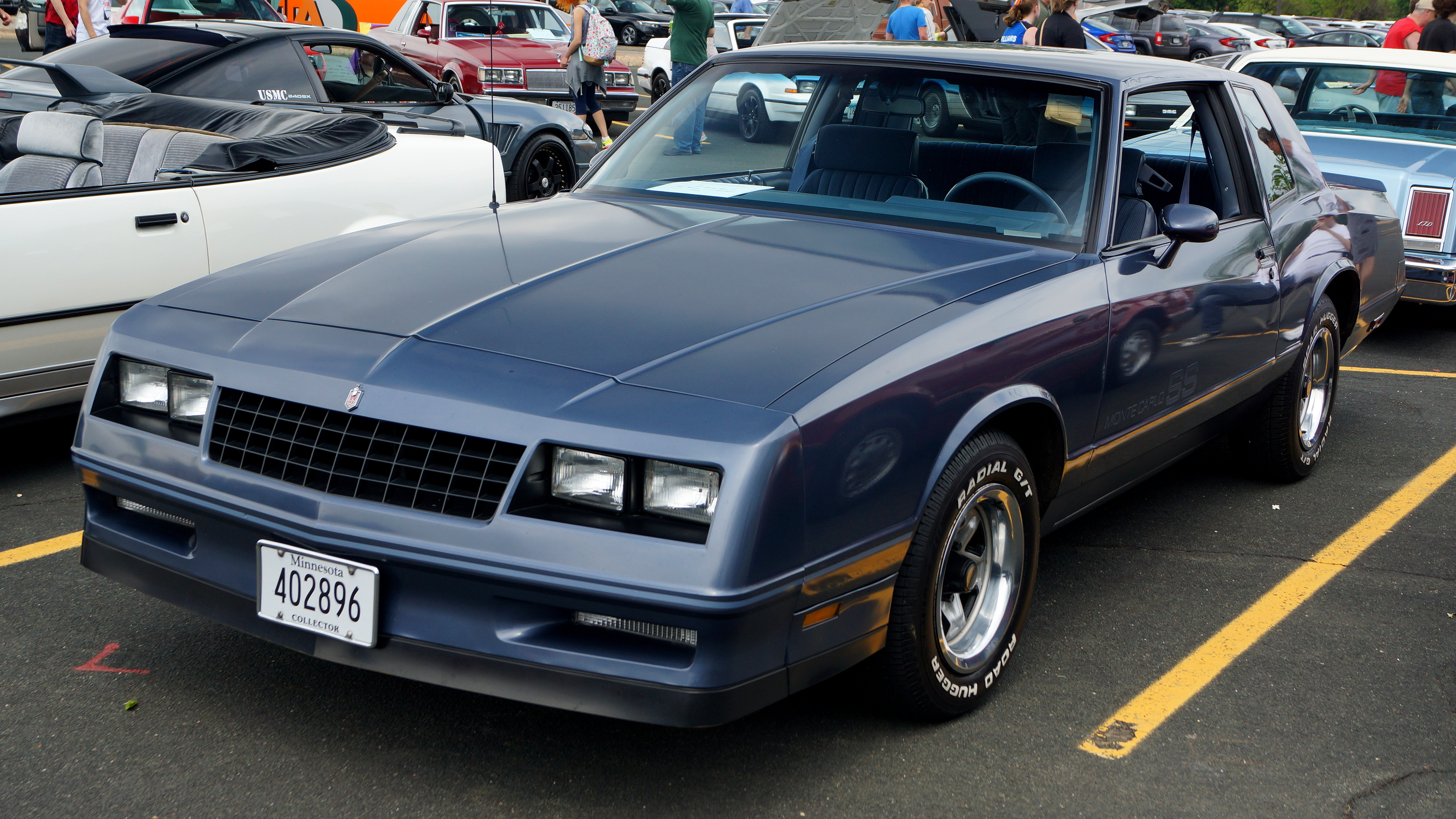
The Chevrolet Monte Carlo is a car that was popular in the 1970s. The 1972 model is known for its stylish look and strong engines, making it a favorite among car enthusiasts.
A freeze plug is a small metal piece in the engine that helps keep the coolant inside. If it gets damaged or rusted, it can cause leaks, which is why it needs to be replaced sometimes.
A 'big block 350' is a powerful engine made by Chevrolet. It's called 'big block' because it's larger than other types of engines, which helps it produce more power.
Torque is how strong an engine is when it turns. More torque means the car can speed up faster and carry heavier loads.
Car
Horizon TC3
The Chrysler Horizon TC3 is a small car made by Chrysler in the late 1970s. It was popular for being affordable and easy to drive, especially for new drivers.
A clutch is a part of a car that helps the driver change gears. It's important for making sure the car runs smoothly when you switch from one gear to another.
The Plymouth Horizon is a small car that was made by the Plymouth brand, which is part of Chrysler. It was popular for being affordable and easy to drive.
The Buick Skylark is a car that was made by Buick for many years. It is known for being stylish and comfortable to drive, and it has changed a lot over the years.
Rebadging means taking a car and changing its brand name or logo, even though the car itself is mostly the same. It's a way for companies to sell the same car under different names.
The Chevelle is a car made by Chevrolet that was popular in the 1960s and 70s. It comes in different styles and was known for being a powerful muscle car.
Car
Yamaha 400
The Yamaha 400 is a type of motorcycle that is easy to handle and good for new riders. It's known for being lightweight and fun to ride.
A volt meter is a device that tells you how much electrical power is in a circuit. It's used to check if things are working properly in electrical systems, like those in motorcycles.
The Isuzu Trooper is a type of SUV that was made by the Isuzu company. It was known for being tough and good for off-road driving, and it had different engine choices, including a V6 engine.
A V6 engine is a type of engine that has six cylinders arranged in a V shape. It provides a good mix of power and fuel efficiency, which is why it's used in many vehicles.
The drivetrain is the system in a car that takes power from the engine and sends it to the wheels, helping the car to move. It includes parts like the transmission and driveshafts.
Badge engineering is when a car is made by one company but sold under different brand names, often looking very similar. This helps companies save money while reaching different customers.
The Toyota Supra is a popular sports car known for being fun to drive and easy to modify. The 1983 version is one of the earlier models and is appreciated by car enthusiasts for its unique style.
A manual crank window is a window in a car that you have to open by turning a handle instead of pressing a button. This was common in older cars before electric windows became standard.
LIVE
Hello America, welcome back to all the cars I've loved before, your podcast where American
history and automotive history meets your history.
This week we have a special guest, a very, very good friend of the show.
We kind of dive into what cars admit to you, what cars do for you, and turning around
the hat means he's serious.
I'm here in the fedora, he's there in the baseball cap.
I am Christian.
He is?
John.
All right.
So you're humble narrators here as we move into this non-pilot episode for the second
week here.
Oh, I did not, not to bury the lead here, but our good friend of the show, I will turn
over introductions to my esteemed co-host, who can, who can get a skid doll.
Yeah.
Thank, thank you, Christian.
All right.
Good friend of the show, Tim Coakley, somewhat of a car enthusiast.
Tim, why don't you introduce yourself?
Tell us about Tim.
Okay.
I wasn't prepared for that guy.
Sorry about that.
Yeah.
You call them somewhat of a car enthusiast, and that's a little jamming with faint
prays.
I mean, my goodness.
Sorry.
I didn't mean to interrupt him.
Go ahead.
I mean, this is a guy that's worked on his cars and replaced transmissions, and
he's got some good stories I hear.
Well, there you go.
This guy is a car enthusiast.
If there are ever ones that would, well, next to me.
Exactly.
He doesn't pay people to fix his cars.
He fixes them in himself.
The other way around.
Yeah.
Right on.
Yeah.
So I guess I would say not to speak about myself so much about, but as far as relationships
with cars go, yeah, I can remember my brother lifting out engines and transmissions
off the I-beam of the garage.
Beautiful.
When I was younger.
Oh, right.
And then it was working on motorcycles, and I can recall swapping out a rear end of my
friend's car in the ambulance garage.
He was on the ambulance squad, so we used the garage there to do that job as well as
others when nobody knew about it.
Yeah, plenty after that, but yeah.
Yeah, right on.
When did your hands get blackened with grease from the underside of a car?
What age?
Yeah, so I would say that I was helping my brother, right?
Not doing anything, but handing him tools, this kind of a thing.
Gotcha.
I love that.
Then I got my own car, and I'm trying to think there wasn't too much work to be
done at first, but then I had the opportunity to get a 1972 Monte Carlo that was stuffed
in a garage for maybe 10 years.
It was a friend's, girlfriend's, grandmother's, and they got, it was theirs now at this point,
but he was not a mechanic, so I bought it off of him for like 600 bucks, and I had
to replace a freeze plug that rusted out.
Then I did get somebody to put on exhaust system out the back, a little exhaust out
the back, and that car ran great.
Love it.
Love it.
That's back when the 70s, even 80s, that's when exhaust would rust out.
These days, I think they're mostly stainless steel, and they last a good amount of time,
but yeah, I know they would rust out.
And Tim, you're from northeast, right?
Your New York area, right?
Originally, yep, correct.
Saw some snow, right?
So I'm sure there was some rust out there.
Well, well-salted roads, right?
Yes.
Well-salted roads, we'll say, and lots and lots of...
We don't have reflectors on the road.
We count on the reflection off the salt.
Yeah.
Well, lots of potholes and whatnot, certainly, but yeah, since you mentioned the Monte Carlo,
is that your first car?
No.
It was probably somewhere about my third car.
My goodness.
Okay.
Yeah.
But listen to him talk about it.
It obviously made an impression, and the whole reason for the show, right?
Absolutely.
Yeah.
Yeah.
Absolutely.
We want to hear about the car.
We want to hear why it left an impression, why you brought it up first, what you loved
about the car, what you hated, any unique experiences in the car, what caused you to
move on from the car.
You mentioned how you acquired it, which was a good story there.
Well, yeah, I can tell you a little bit more about that car, and probably one car
before it as well.
This specific car, probably why I was more attached to it, is because really, I felt like
I resurrected it, and had been sitting for 10 years in a garage, and it was in pristine
condition.
The thread on the seats was not even worn at all, and it was not a big block 350,
but it was a 350, and just had raging power in comparison to the other cars from the 70s
that I previously...
Raging power.
Yeah.
Lots of torque, lots of torque, and this was literally an old lady drove this car on Sundays,
right?
Something like that?
Yeah.
And an interesting, funny story with this car before my brother wrecked it was that I was
coming home from a party one Saturday, Friday or Saturday night, and I stopped at a light,
and then a couple in a 1979 Monte Carlo proceeded to, while they were making out, not paying
attention to the stop lights, just run into the back of me.
Oh my God.
So everybody was fine.
They got worse damage than my car did, and I was fine, but yeah, anyhow, I always share
that story.
It's a bit of a laugh.
How did you find out they were making out after the accident?
They told me.
Oh, okay.
They told me.
Lipstick everywhere.
Did that make it into the police report, you think, or were it cops called?
No, I'm sure it would have made it.
They weren't hiding the information.
They knew there was...
They were...
Young love.
Yes.
They admitted it was their fault.
Yeah.
Right on.
They weren't paying attention.
We'll just say it that way.
They were preoccupied while driving.
Yeah.
I don't think I would have been either.
And then I got my first job out of college, which came on a company car, so I really
wasn't using it and living in a city environment where we didn't have that much space, meaning
garage and door driveway.
And I let it to my brother and he kind of got into another totaling experience and that
was done.
And I regret ever letting that go.
But...
And then I should say one of the cars before that one was a Horizon TC3.
Yeah.
I forget the year, like a 1979 or something like that, that my sister was willing to
give me, but it needed a new clutch.
So if I was willing to put a clutch in a front wheel drive car, it was mine.
So I'm like, well, we'll give it a shot.
And yeah, did that job and it was a great experience.
Did that in my parents' garage and then I had a car.
That's good.
Good experience.
So Horizon, this was a Plymouth.
Correct.
Chrysler Plymouths, yeah, one of some.
Yep.
Yep.
And known for good gas mileage, I think, based on my research.
I can't recall.
I was just happy to have a car.
Yeah.
Yep.
So four on the floor.
Yeah, a little.
There were little, right?
But you know, they almost harkened to the, I'm going to say, citation.
I know that's heresy with a little bit of a different nose comb.
One of my early cars was a Buick Skylark and the front of this is kind of reminiscent
to that.
It's kind of rebadged, BMW, Tom Fulery.
If you reference a Skylark, you really need to say the age because they were years because
they were around for a while.
That's right.
Yeah.
Good point.
80, 384, I'm going to say.
Kind of not quite turd brown, but in the Theses family, I guess, one could say.
It was very unattractive.
Yeah.
I was thinking you have a roommate's mind that had a Chevelle from that kind of
era.
Yeah.
Exactly.
Yeah.
We're all drinking from the same.
Right.
Quarter boy.
Yeah.
Yeah.
Yeah.
And Brown's making a comeback.
Don't forget.
You heard it first here.
What can Brown do for you?
Amen.
Exactly.
Exactly.
What color was the horizon?
And besides, obviously, you figured out how to replace the clutch.
For those of us who didn't grow up with YouTube, which includes myself, how did
you learn how to do that, especially on a non-traditional at the time front-wheel-drive
car?
Yeah.
So the front-wheel-drive was just getting the Chilpen manuals.
Right?
Yeah.
Yeah.
I remember seeing it.
Yeah.
My brother went off to the Air Force, and so it was left there to figure
things out.
And yeah, when you get into it that deep and you just learn, oh, everything's
just a screw or a bolt or some other mechanical physics mechanism, right?
Then you just undo and do.
You do it over again.
You figure it out.
I was pretty proud of myself when I did that at the time.
I'm proud of you.
Yeah.
Yeah.
I should tell you another, and it's not a car story, but it's a motorcycle
story.
I've mentioned my brother, and he's given me guns.
Wait.
Why don't you hold that one for when we fire up to all the motorcycles
I've loved?
Oh, my God.
Totally kidding.
Please continue.
Oh, OK.
I didn't mean to.
Come on.
Let's figure it out.
Please.
No, it's just a funny story, because as I told you, my brother
was away, and I had bought this motorcycle off a friend.
I think it was a Yamaha 400.
And I'd driven it a little bit before the changeover of the season,
and I was going back and forth to college.
And I thought I was pretty smart.
My brothers are electricians, but I'm going to school
for electrical engineering and stuff.
And I am out there with the volt meter and the schematics.
And I can't get this thing running for a while.
And my brother comes back from the Air Force.
I'm like, Brent, look, look at that voltage, that voltage, that
voltage, blah, blah, blah.
I can't get it started.
Blah, blah, blah.
He looks at it, just pulls a fuse out, rubs it in his shirt, puts
the fuse back in, kicks it right over like nothing.
Big brother mojo.
Big brother mojo.
Exactly.
And it was all about that the volt meter could read the
voltage, but there was corrosion that didn't let the
amperage go through.
Good stuff.
That was a, that was a, I took that with me for the rest of
my life, for sure.
That was a great story.
Yeah.
Great story.
Very good.
All right.
So let's pick a lightning round here as it were coming up
on time here.
Any other car that left a memory, maybe your, your
parent's car, a road trip, somebody, it dated, et cetera,
et cetera, anything else?
I have several car stories, but what I can tell you
between-
Well, we'll have you back.
I promise we'll have you back.
Between the Monte Carlo, what I told you was I got a
company car.
Right.
And I pretty much had, you know, I probably had nine
company cars without that company off.
Geez.
Yeah.
So cars just didn't have the same appeal.
They were just a functioning thing that I used all
the time.
But later on, I bought a 1991 Zuzu Trooper, totally
underpowered with a V6 2.8, but the thing just
clunked along and, you know, manual windows, manual
locks and-
Clunked along.
Totally loved that car.
Love it.
Love it.
I wish it was a manual.
I would have never gotten rid of it.
Yeah.
I think I kept it till 255,000 miles.
So how many years did you own it, total?
I loved that.
Two of that.
Approximately.
Yeah.
17 years.
Nice.
And it traveled with you a lot, right?
Yeah.
Yeah.
Between different states.
Between Minnesota.
Yep.
But we drove it up to New Hampshire to pull a sailboat.
We were racing sailboats at the time.
Yeah.
It was awesome.
Love that car.
Yeah.
Pretty bulletproof, right?
Yeah.
Any cool feature in the car?
I know you mentioned you wish it had a manual, but-
Absolutely.
There was not one cool feature in that car.
Not one?
You're excited.
Wow.
It was the magic trim package that included a steering wheel,
which is always helpful in the rain.
Well, some of these cars had compasses, and it was like, not your modern compass.
It was like the floating compass, if you will.
Yeah.
Yeah.
I remember that.
That's funny, because the prior owner must have known about that, so he bought one
of those little plastic ones that you just felt grow or tape on.
That did come with it.
Nice.
It came with a compass.
It came with a compass.
Aftermarket.
Nice.
I put a 6CD changer in there with a big subwoofer in the back and an amp.
I'm just not an audiophile, so that doesn't get me jazzed up, but it was just a great
vehicle just because you couldn't kill it.
I could always get it running again.
I wish I could tell you some other even mechanical story, but nothing's really coming
to mind.
Everything was pretty obvious there.
Oh, excuse me, there is one other thing I should point out.
I don't know if that everybody knows.
I believe the body is from the Zuzu, but the drivetrain was from Chevy, so that engine
and transmission, I believe, were GM products.
Yeah.
Yeah.
GM and Azuzu had a strong relationship.
Yeah.
Azuzu's aren't sold in the States anymore.
I'm not even sure they exist, but yeah, there were a lot of clones, if you
will, or badge engineering that took place.
Let me ask you, Tim, did you start this car with a traditional key, or was there a unique
way to get the car started?
Yes.
Later on in life, it just started with a screwdriver.
Yeah.
The key mechanism was having problems, so I pulled that out, which harkened back
to my father driving a like 1966 Volvo into New York City, a car that he started with a
small screwdriver.
In this case, as you can all imagine, a 1990 does have a locking steering wheel, so you
do have to defeat that, and I had a flashlight with a clip on it that you could put it to
your pocket protector, that kind of a clip, or put it to your hat, and then the ring to
that clip, as it fitted around the flashlight, was the exact diameter I needed, so I squeezed
that, cut the end off the clip, squeezed the clip close, and inserted it, which kept
the steering wheel locking mechanism open the whole time.
Love it.
Collaborate.
And up in northern Minnesota, that fell out one time when I was leaving a gas station,
and the steering wheel locked while I was driving.
Oh my God.
I was still in the parking lot, did a complete circle, parked the car, and had to find
that piece again.
Yeah.
These are all great stories from yesteryear that most people wouldn't know about, right?
You have your car, you have a button, maybe it's a physical button, maybe it's a virtual
button, if you have a Tesla right, maybe you just get in and put it in drive and it
goes, right?
If you will.
I want to squeeze in one story real quick, just out of nowhere.
So my middle son was hanging out with a buddy across town, and he calls me on FaceTime
like Saturday morning, and he says, hey check this out, look at my buddy's car.
And he's from the same age of what, 16, 17, thereabouts.
And his buddy has this 1983 Supra, and that's his everyday driver.
And in my son had never seen anything like this before, so he just, you know, this
was Buck Rogers' crap, you know, Buck Rogers from the 16th century sort of.
And you know, he's FaceTiming me, and, oh look at the steering wheel, dad, look
at this.
Again, that's some, that's a real treat.
You're about to drive a piece of automotive history.
You're about to step into a time capsule.
I made him open the door, and I was, I didn't think it would have the manual
crank window or any of that.
It was all electric, but kind of in the old, you know, in the old style.
So yeah, his buddy let him take it out for a spin, and I was really proud.
I said, put your damn phone down when you drive.
I don't want to see any of this.
Phone down the road.
Exactly.
And I said, put the phone down and just enjoy it, that that is a treat.
That is a literal drive down memory lane.
I remember a guy, Ron, who got a Supra, and he crashed the car in the old way.
He was trying to make a U-turn, a young guy, not enough experience, but tried to
make a U-turn, didn't look in the rear of your mirror and what have you up.
Got T-bones.
Yeah.
Yeah.
So talking about paying attention while you're driving.
All the time.
A hundred percent.
For our young listeners out there, you know, for the toddlers, you know, pay very
close attention, pay very close attention.
Keep your lips on the road.
Okay.
So we got to wrap up here, but I had to mention, do you guys remember Joe
with Zuzu?
Yeah.
Those commercials from like the eight.
Of course.
That guy was so funny.
He was just sleaze bad, but those were the best commercial.
Those were really funny.
So.
Yeah.
I just, I don't want to draw this out, but another time may be to.
Well, don't tell all your stories, man.
We got to stand back.
Some of them.
Yeah.
Yeah.
Just around the Zuzu trooper, people might not know that there was something
done like 2020 or nightline.
If anybody remembers, they did a story on the Zuzu trooper tipping over.
It did.
Yeah.
It started its demise within the United States.
It's funny that you mentioned that because I saw the whole family.
I was doing something.
I think I was grocery shopping the other night and I saw this whole family get out of one
of these like small RVs almost like the 80s conversion.
You know, they're really tall.
They're almost like the worker box.
Yeah.
They're popular these days for trips.
Are they ever, man?
Yeah.
The whole family piles out.
And this thing looked like it was going to tip over sitting next to Chick-fil-A.
I was like, holy croak, but people do it.
And there must be, there must be, those Germans are clever.
There must be some physics involved where it doesn't turn.
But it looks like you'd make a, any turn at a stop, like just a whole damn thing
will fall over.
Or a point.
Like, you know, yes, exactly.
That's totally what I was thinking.
Sorry, man.
I didn't mean to interrupt.
Good story.
Good point.
He's a good guest.
You're a good guest, man.
Good voice.
Good story-telling voice.
We've got to have this guy back.
Yeah.
Yeah.
And he's got a lot of stories.
Season two.
We'll have you, if, if we finish season one, we'll have you back in season two.
What do you say?
Sounds good to me.
It was my pleasure.
Hey, thank you, man.
Great to get to know you.
Yep.
Cheers.
Well, everyone out in the listener land, you, it's listening to the world's greatest
podcast devoted to where American history and automotive history meet your history.
Your cars mean something to you, those around you, to your family, from road trips as a kid
to first dates to the first few cars you owned.
To replacing your clutch in the driveway.
To replacing your clutch with big brother, man.
No better way to, to, to spend some time.
So what, oh, if they want to get involved, let's go to our webmaster who is unsurprisingly
my undaunted co-host here.
So tell us a little bit about the website, if somebody wants to get involved in the conversation
that you've been working on in multimedia.
Absolutely.
So go to carslove.com, it's C-A-R-F-S-L-O-V-E-D.com.
You can also find us on your, via your latest, your preferred podcast platform.
But go to carslove.com.
We'll have pictures of some of the cars that we've interviewed people on about their
cars, maybe the actual picture, we're going to have those up there.
There'll be contact information on there, of course you can listen to the, have a link
to all the podcasts and if desired, we have a form there.
You can put in your interest and just tell us what, if you like our podcast, but also
if you want to be on the podcast, tell us about a couple cars, we'll talk to anybody.
We're happy to have you, we want to hear your stories.
This is your platform, America.
This is your platform to turn away from whenever you so choose.
Join the nine people who've heard of this podcast, five of which are ducking our calls.
But hey, this was great.
Thanks to our guest, Tim, my fearless co-host Doug and we will see you next time.
About this episode
Tim Coakley shares his DIY automotive adventures, reflecting on his journey from helping his brother with car repairs to restoring a 1972 Monte Carlo. He recounts humorous and nostalgic stories, including a memorable accident involving a couple making out in a 1979 Monte Carlo. The conversation touches on various cars he's owned, including a Plymouth Horizon and a beloved Isuzu Trooper, highlighting the lessons learned and the bond formed through hands-on experiences. Tim's engaging storytelling brings a personal touch to the automotive history shared.
Tim’s story celebrates classic cars, DIY repairs, and the nostalgic pull of the past. In this episode, he fondly recalls his first car, a ’72 Chevy Monte Carlo handed down from a little old lady, and the pure classic car nostalgia it brought. Tim then relives the trial-by-fire of reviving a clunky Plymouth Horizon TC3 – an early front-wheel-drive requiring a full engine pull to replace the clutch. Through dusty Chilton’s manuals and determination, he restored life to that second car, sparking a lifelong appreciation for restoration stories and automotive technology. Finally, Tim shares regrets over parting with his beloved Isuzu Trooper II and the inventive hack he used to fix its faulty ignition switch.
This episode delivers car history and heart, showing listeners the value of perseverance, the thrill of hands-on car repair, and the emotional journeys tied to every vehicle we’ve loved and lost.
*** Your Favorite Automotive Podcast - Now Arriving Weekly!!! ***
Listen on your favorite platform and visit https://carsloved.com for full episodes, our automotive blog, Guest Road Trip Playlist and our new CAR-ousel of Memories photo archive.
Don't Forget to Rate & Review to keep the engines of automotive storytelling—and personal restoration—running strong.