From Sales Floor to Seven Stores: Ivette’s Journey to the Top of Colorado Auto Retail — And What's Next | Ivette Dominguez Drawe, Dealer/Owner of Alpine Automotive Group
Ivette Dominguez Drawe shares her inspiring journey from sales floor to dealership owner, leading the Alpine Automotive Group with seven stores across Colorado. She discusses the challenges and triumphs of building a successful automotive business, including her unique approach to culture, employee development, and customer retention. Ivette highlights the importance of community involvement and the role of diversity in her leadership style. With insights into the current automotive landscape and future plans, her story is a testament to ambition and resilience in the industry.
Today I’m joined by Ivette Dominguez Drawe, Dealer/Owner of Alpine Automotive Group.
We unpack her incredible journey from the sales floor to building a thriving dealership empire — leading one of Colorado’s top-performing teams and driving a group that now sells one in every three GM vehicles in the state.
This episode is brought to you by:
1. Lotlinx - What if ChatGPT actually spoke dealer? Meet LotGPT — the first AI chatbot built just for car dealers. Fluent in your market, your dealership, and your inventory, LotGPT delivers instant insights to help you merchandise smarter, move inventory faster, and maximize profit. It pulls from your live inventory, CRM, and Google Analytics to give VIN-specific recommendations, helping dealers price vehicles accurately, spot wasted spend, and uncover the hottest opportunities — all in seconds. LotGPT is free for dealers, but invite-only. Join the waitlist now @ http://www.Lotlinx.com/LotGPT
2. vAuto - As the industry’s premier provider of end-to-end inventory management solutions, vAuto gives every dealer—from a single point store to the largest groups—the data, insights and tools they need to maximize returns from the new and used vehicle inventory investments. Known for its game-changing inventory management innovations, vAuto provides AI-powered predictive data science to help dealers see their future and consistently make the right, ROI-minded decisions with every vehicle they appraise, acquire, price and retail. Visit @ https://www.vauto.com
3. Nomad Content Studio - Most dealers still fumble social—posting dry inventory pics or handing it off without a plan. Meanwhile, the store down the street is racking up millions of views and selling / buying cars using video. That’s where Nomad Content Studio comes in. We train your own videographer, direct what to shoot, and handle strategy, to posting, to feedback. Want in with the team behind George Saliba, EV Auto, and top auto groups? Book a call at http://www.trynomad.co
Check out Car Dealership Guy’s stuff:
For dealers:
Industry job board ➤ http://jobs.dealershipguy.com
Dealership recruiting ➤ http://www.cdgrecruiting.com
Fix your dealership’s social media ➤ http://www.trynomad.co
Request to be a podcast guest ➤ http://www.cdgguest.com
For industry vendors:
Advertise with Car Dealership Guy ➤ http://www.cdgpartner.com
Industry job board ➤ http://jobs.dealershipguy.com
Request to be a podcast guest ➤ http://www.cdgguest.com
Topics:
00:07 Why start a dealership in 2005?
01:56 Key to a successful husband-wife team?
05:44 Secret to 20 years in business?
09:10 How does community involvement drive success?
14:49 Most creative marketing strategy used?
23:14 How to choose digital retailing partners?
27:19 What does a Retention Manager do?
30:07 Benefits of launching mobile service?
39:45 Why diversify into new business ventures?
Car Dealership Guy Socials:
X ➤ x.com/GuyDealership
Instagram ➤ instagram.com/cardealershipguy/
TikTok ➤ tiktok.com/@guydealership
LinkedIn ➤ linkedin.com/company/cardealershipguy
Threads ➤ threads.net/@cardealershipguy
Facebook ➤ facebook.com/profile.php?id=100077402857683
Everything else ➤ dealershipguy.com
"...I was the first female chair of the MDAC with General Motors, which is the Minority Dealers Association. And I was the very first female chair."
General Motors is a big car company that makes many different types of cars and trucks. They are one of the largest car manufacturers in the world.
General Motors, often referred to as GM, is one of the largest automobile manufacturers in the world, known for producing a wide range of vehicles under various brands including Chevrolet, Buick, GMC, and Cadillac.
"...I was the first female chair of the MDAC with General Motors, which is the Minority Dealers Association. And I was the very first female chair."
The Minority Dealers Association is a group that helps car dealerships owned by people from minority backgrounds. They work to make the car industry more diverse and inclusive.
The Minority Dealers Association (MDAC) is an organization that supports minority-owned automotive dealerships, promoting diversity and inclusion within the automotive industry.
"We sell, in fact, our district manager, our zone manager wanted to talk at our 20 year business anniversary. We sell 33% of all GM product in Colorado."
GM product means cars and trucks made by General Motors, a big car company. It includes popular brands like Chevy and Cadillac.
GM product refers to vehicles manufactured by General Motors, which includes brands like Chevrolet, GMC, Cadillac, and Buick. This term is often used in the automotive industry to discuss sales, inventory, and market share.
Nissan is a car company from Japan that makes many types of vehicles, including electric cars.
Nissan is a Japanese automotive manufacturer known for producing a wide range of vehicles, including sedans, SUVs, and electric cars like the Nissan Leaf.
"...September 30th, the federal EV credits ended. So, I think there was a little bit of a pull ahead..."
Federal EV credits are discounts you can get from the government when you buy an electric car. They help lower the price you pay for the car.
Federal EV credits refer to tax incentives provided by the government to encourage the purchase of electric vehicles (EVs). These credits can significantly reduce the overall cost of an EV, making them more attractive to consumers.
"...there's gonna be a lot of customers that are business owners and wanna update their fleet because it's something they can do before the end of the year. And I think that that is reality."
Fleet sales happen when a business buys many vehicles at once, instead of just one. This is common for companies that need cars or trucks for their work.
Fleet sales refer to the sale of multiple vehicles to a single buyer, typically businesses or government agencies, rather than individual consumers. This can include cars, trucks, or vans that are used for company operations.
"...that's gonna pretty much concentrate at GM and Ford."
GM stands for General Motors, a big car company that makes many different types of vehicles, including trucks and electric cars.
GM, or General Motors, is one of the largest automobile manufacturers in the world, known for brands like Chevrolet, GMC, Cadillac, and Buick. They produce a wide range of vehicles, from trucks to electric cars.
"...A lot of those were EVs. And then, you know, we had some, you know, a couple hiccups..."
EVs stand for electric vehicles, which are cars that run on electricity instead of gas. They are better for the environment and can save money on fuel costs.
EVs, or electric vehicles, are cars powered entirely by electricity rather than gasoline or diesel. They are becoming increasingly popular due to their environmental benefits and lower operating costs.
"...first it was the Leaf and then it was the Aria. And there's a lot of work that happens with that brand."
The Nissan Leaf is a popular electric car that is known for being affordable and practical. It's designed for everyday use and helps reduce emissions since it runs on electricity instead of gasoline.
The Nissan Leaf is an all-electric hatchback that has been one of the best-selling electric vehicles globally since its launch. It is known for its practicality and affordability in the EV market.
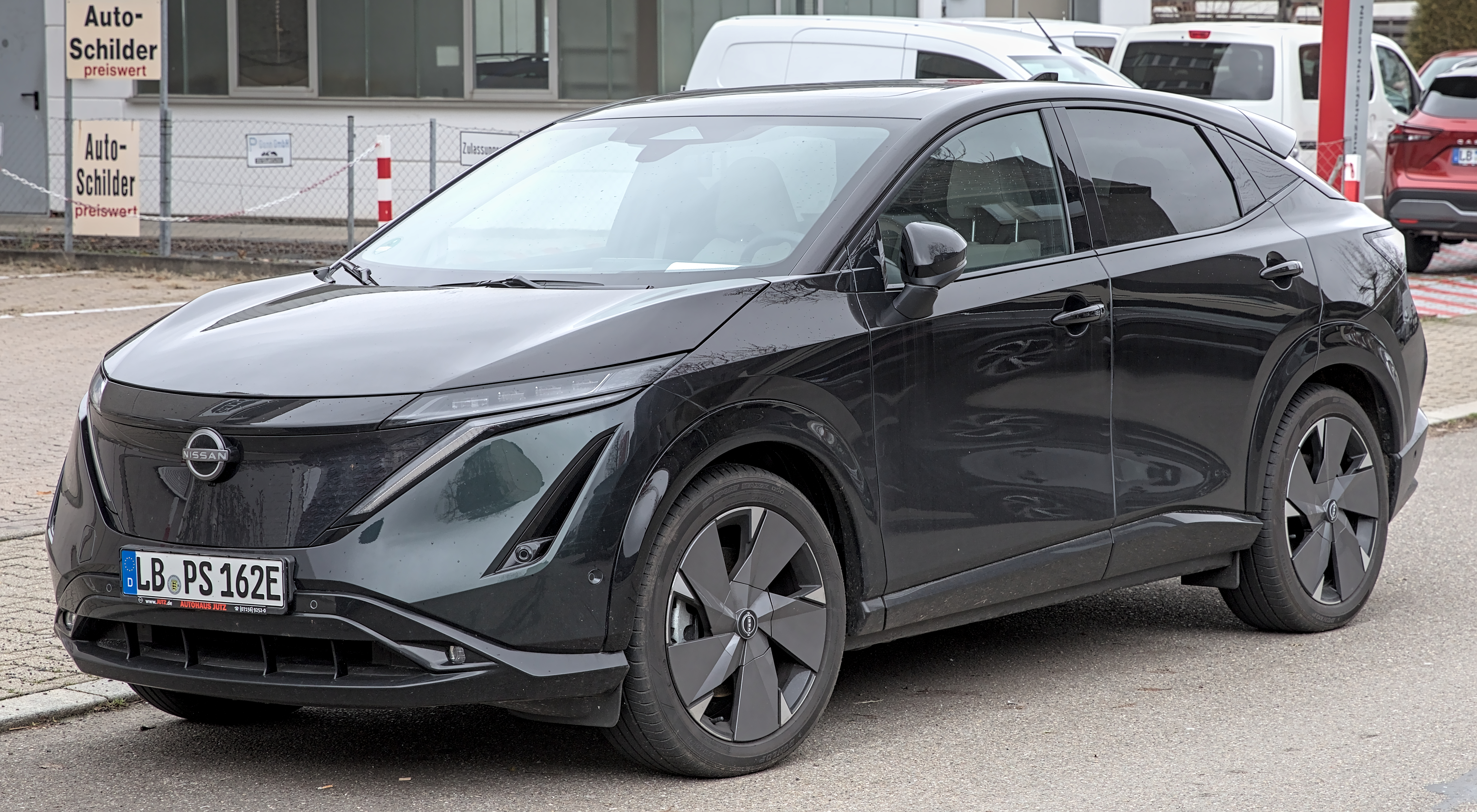
"...first it was the Leaf and then it was the Ariya. And there's a lot of work that happens with that brand."
The Nissan Ariya is a new electric SUV from Nissan. It has modern features and a lot of space, making it a great option for families looking for an electric vehicle.
The Nissan Ariya is a newer all-electric SUV that offers advanced technology and a spacious interior. It represents Nissan's push into the electric SUV market, complementing the Leaf.
"... know, first it was the leaf and then it was the Aria. And there's a lot of work that happens with tha..."
The Tata Motors Aria is a type of car that can carry many passengers and has a lot of space inside, similar to a small bus or large family car. It was made by an Indian company called Tata and is known for having some cool features, but it didn't sell as well as expected. People talk about it because it was an interesting attempt to make a fancy family car.
The Tata Motors Aria is a multi-purpose vehicle (MPV) that was launched in India in 2010. It is significant for being one of Tata's first attempts at entering the premium segment of the market, featuring a blend of SUV characteristics and spacious interiors. The Aria is often discussed for its innovative features and the challenges it faced in a competitive market.
Toyota is a car company from Japan that makes many popular cars, known for being dependable and saving fuel.
Toyota is a Japanese automotive manufacturer known for producing reliable and fuel-efficient vehicles. It is one of the largest car manufacturers in the world.
Why start a dealership in 2005?
Key to a successful husband-wife team?
Secret to 20 years in business?
How does community involvement drive success?
Most creative marketing strategy used?
How to choose digital retailing partners?
What does a Retention Manager do?
Benefits of launching mobile service?
Why diversify into new business ventures?
Select text to request an explanation
We have worked really hard over the years
to build the inventory, get to where we needed to be
because it doesn't happen overnight.
Doesn't happen because all of a sudden you say,
oh, I want to be the number one store in the West.
You got to kind of work with your manufacturers
and you have to kind of earn their respect
and you have to do your job.
Today I'm joined by Yvette Dominguez-Draw,
dealer and owner of Alpine Automotive Group.
20 years ago, Yvette made the leap
from the sales floor to dealership owner.
Today her group spans seven stores across Colorado
and beyond selling one in every three GM vehicles
in the state and she's just getting started.
A big thank you to our sponsors
for making this episode possible.
Lotlinks, The Auto and Nomad Content Studio.
And now let's get into the show.
Yvette Dominguez on the CDG podcast, Yvette, welcome.
Hi, welcome, thank you.
Great to be here.
It's great to have you on
and I'm going to jump right in
because as I'm reading about you
and I'm getting to know you prior to this podcast,
I'm trying to put myself in your shoes.
And so it's 2005, let's just pick a random month.
Let's just say it's April 2005.
And you had, I saw you were at Sonic Automotive.
I mean, you've been in this industry for almost three decades
as a dealer principle, you've been for two decades.
What goes through your mind in April of 2005
when you say, I am going to buy and like open a dealership?
That's just, you know, it's not that normal track
that you typically see out there.
So I respect that, you know,
it's signal some level of conviction, determination
or many other adjectives.
But like, seriously, what goes through your mind?
You know, 2005, you're like,
hey, I'm going to open my own dealership.
Can you tell us a little bit about your story there
and how you got to that point?
I would say it was, you know, it's obviously very scary
because you're working for an automotive corporation.
You have money in the bank, you have security,
you have money that's being invested
and you have, I was a working mom.
So I had a three year old at the time,
but we always wanted to have our own opportunity
at owning our own business.
And when presented with this opportunity,
we didn't really look back.
I mean, we had enough money for the business.
We had to mortgage our home
to get some of our working capital.
And we just got lucky to be honest with you
in the beginning that somebody believed in us.
And we were ready, you know,
we were able to take that risk and that jump.
Okay, so a couple of questions there.
First question, who's we?
Well, I work with my husband.
His name is Mike Draugh and, you know,
we've kind of done this together.
I am a Hispanic woman.
So I think at that time it was, you know, we had,
we both had started in sales,
worked our careers, working our way up.
We worked for a private company
and then we worked for Sonic Automotive
for four years as general managers.
I think he and his line-
Wait, quick question.
So you both were from a private company together
at the Sonic Automotive?
How did that work?
Yes, well, it was tricky.
I was pregnant and we worked together at the time
and they said we couldn't work together.
Yeah, the first thing that goes to my mind is like,
HR is probably like, this is not going to work.
So they separated us from, you know,
working at the same store.
I went on and had the baby
and it was definitely,
we had to go through dealer academy during those days
and it was a little bit challenging
because, you know, we would go to class in North Carolina
and people would say, you know,
a lot of Southern men were at the class.
They would say, oh, my wife would never leave our baby.
So it would be upset for a couple of days
and then I would say, you know what, screw this.
I'm going to just, you know, figure it out.
But my mom would come from California
and help with the baby.
We had to live in Danny,
but that's basically how we started
and it's what we had to do.
This is some real shit.
I like that, because you're telling the truth here.
All right, so.
I am telling the truth.
So you did a private,
you were working at a private dealer group together,
then you were at a private together.
You're kind of insufferable here.
It seems like you did dealer academy.
Like how together are we talking?
Were you the same cohort?
Same, like how together are we talking at dealer academy?
Well, we're actually very different.
I mean, we're, we work well together
and we've obviously created, you know,
20 years of a legacy and a business together,
but we both have different strengths.
I would be more of the people person.
He is a people person when he wants to be,
but we've kind of figured out how to make it work.
I mean, don't get me wrong.
It's not been easy all 20 years.
So I am curious, how do you split up?
We'll get into the, again,
the acquisition of the first store in a second,
but how do you split up?
Like what are, you mentioned you're the people person.
He's maybe a bit more, I don't know, behind the scenes
or however you define it.
Like what is the separation of duties today?
I mean, I would say, well, he's like a used car guy.
He loves buying used cars
and that's where he kind of focuses a lot of energy.
Over the years, I think he does insurance and facilities now.
Obviously a lot of operations
and some of our paths cross each other.
We've developed many people over the last 20 years.
We believe in education and really investing in our people.
I mean, I think if you came to our business,
any of our stores, you would think it's a breath of fresh air.
We have different ages.
I have a lot of women that work for me.
I think they look at me as being a female
and I'm a good role model for women.
And I think that it's refreshing for people
to be an automotive and see a woman's leader.
And obviously we're not from,
we're not second generation or third generation.
We've both worked hard and really paved the way.
I mean, so we just celebrated two weeks ago
our 20 year business anniversary
and I felt very proud to invite people that have supported us
whether it's been a bank or insurance companies,
many people that have supported us over the last 20 years
and we felt very fortunate.
Our business partner was there.
We had so many people that were there.
Everybody except for our daughter wasn't able to come
because she couldn't get off work, but it was good.
Yeah, I have a lot of people that support me personally.
We have a very busy life with travel
and construction projects and buying businesses
and developing employees
and so many different things that I'm involved with and I do.
And I think along the way you need to celebrate your employees
and really I think it really helps
with building your culture and across the board.
And what we've worked on the last,
probably like the last six months is really kind of
just across the board.
How do we take what we have at one store
and how do we duplicate it from day one?
And those are the things that we've really worked on
this year with outside, we have a gal
that works for NCM Flemingford and we really like her
and she supported our team and employee development
and one-on-one coaching and those kind of things
are things that we've been very involved with for many years.
But this year we're really kind of fine tuning our onboarding
and what we do to kind of,
to have all the stores have a similar feel.
You know what I'm curious about?
This is totally off script, which I love.
But I'm curious how you've scaled yourself.
Like you mentioned you have a house manager.
Can you talk to us a little bit about scale?
You've gone from being an employee in a public group
to owning seven dealerships,
which you've obviously, it seems like you've talked
about some of the scale you've incorporated into your life.
A house manager, I'd love to know kind of how they fit
into your life, what they do, are there any other,
just important like nontraditional roles that support you
because you mentioned you have other businesses.
Can you tell us a little bit about your,
like organizational structure?
And I say your, I don't mean Alpine, I mean like Yvette,
like what is your organization?
Well, I would say it's not easy.
And I would say over the years,
I try to say yes to more things that I say no.
And I know that's the opposite of kind of what you're supposed
to do to kind of keep your sanity and kind of keep boundaries.
But I think it's for, in my beginning years,
I was very involved in being on automotive councils
and boards and I was the first female chair of the MDAC
with General Motors, which is the Minority Dealers Association.
And I was the very first female chair.
But then at one point, I think our daughter was in high school
and I didn't really want to miss out on her last few years.
And so my term ended and I didn't really go back
and be involved with that.
But I also felt it was so important to be involved
in my community here in Denver
because this is where the bulk of our businesses were.
And so I've been active on children's hospital,
Habitat for Humanities.
I've been active on the Denver Metro Chamber
economic development,
because I really want to know what's happening
in the community and how we can be part of what's happening.
Because if you don't do that, you don't really know.
This episode is brought to you by Lotlinks.
Chat GPT can write emails, plan trips, even tell jokes,
but it can't tell you which VINs are at risk
of sitting too long,
how your dealership performs against your competition,
or how to improve your VDPs.
That's where Lot GPT comes in.
It's the only chatbot built exclusively for car dealers.
It knows your market, dealership and inventory.
Fueled by Lotlinks' decades of VIN and shopper data
plus your live inventory, Google Analytics and CRM,
it delivers relevant answers and guidance
to help you sell cars faster and more profitably.
Lot GPT is free for dealers, but invite only.
Join the waitlist now at lotlinks.com slash lotgpt
or click the link in the show notes below.
What's your North Star?
Like why are you driven to do this?
Tell us about like, is this like a trial of thing,
the way you're raised?
Like why, you seem incredibly ambitious.
That's kind of my first assessment
in the best way possible.
But like what is your, you know, you're super involved
and you clearly have this well-defined vision
to get to where you are today.
Like what's driven you to do that?
I would say I had great parents as role models.
My parents immigrated from Cuba in the late 50s.
They were educated in the United States in high school.
They married young and went back to Cuba
and they left in their 20s.
My dad was a great role model.
He finished his education in New York,
worked in the garment district and came to California.
They moved from New York to California
and he was very successful, retired young.
He always felt you should be very driven,
but you needed a little luck along the way
and my mom was a CPA.
So I kind of grew up with both parents
as kind of finance and numbers people.
And they were, like I said, great role models.
For me as a younger, I have two older sisters.
I was the youngest born and I came when my parents,
they used to call it, when I was born,
they would say I had an easier time
because I was hija de viejos,
which means child of old people,
but my parents were 33 when they had me.
So they weren't really old,
but in that generation, it was considered older.
So I don't know what makes me why I am the way I am.
I do know this.
I wanna be a good role model for young women.
I felt because I had a daughter older in life in my 30s
and I only had one child.
So I felt like I needed to be a good role model for her
and expose her.
Can't mess it up.
Yeah, that's good.
You can't mess it up.
Not that you can with multiple either,
but I understand your perspective for sure.
Okay, so let's just go back one second to your first story.
Yeah.
How did this happen?
How did your first story, 2005,
you and your husband at the time,
not boyfriend, girlfriend, girlfriend, husband,
how would you go about this?
Like walk me through that
and then we can fast forward to present day.
I would say, so we got a call
and there was a story that didn't quite fit
the Sonic Automotive group who sold,
I think at that time it sold more used,
didn't sold more used cars than it sold new
and they were gonna sell the store.
And the president at the time,
his name was Jeff Rocker.
He's still around.
He's the CEO of Berkshire Hathaway.
Berkshire Hathaway.
Yeah, he came and met us for lunch.
Jeff, if you're listening,
I know we texted like six months ago,
we really gotta schedule this podcast.
So let's make it happen.
He's totally on me.
He's got a busy schedule.
He stayed very busy.
We gotta make this happen, Jeff.
Yes, but always he lives in Dallas
and he's always, every time we see him,
whether it's at a manufacturer meeting,
he always says how proud he is of us.
And because it's been 20 years,
there's a lot of things
that could have happened along the way.
Incredible.
Okay, so that was an opportunity
that sort of came down to grapevine through Jeff
and why were you presented with the opportunity?
We always let him know
that we wanted to have our own store one day.
We inquired into the GM had a minority program
and we looked into it at the time.
And the program didn't quite fit us
because we had enough money.
We had enough money to buy the business.
And so we didn't use the GM,
like the minority program to start.
Not that that matters.
I mean, a lot of people are in business
because of that minority program.
We just didn't use it.
Got it.
So that first opportunity,
we had to take all the money that we had
in our savings account
and we were able to buy the business
and then we had to get loans.
We had some loans against,
we had a piece of property
that a bank loaned us some money on.
They loaned us a little bit more
than the lot was worth.
But that was 2005.
I mean, you got to remember that was 2005.
Then we had GM bankruptcy.
Then we had the financial crisis.
I mean, so we had a lot of hurdles
when we first started in business.
A lot of hurdles.
Yeah.
And what was like figuring out your role with your husband?
Like were you guys like co-CEO structures?
Was there someone more dominant?
Like how did you figure that out?
Kind of.
I mean, I think it's been tricky
because we're both kind of type A personalities
and we're both driven.
I think we just had to kind of figure it out.
I mean, I think there's still days
that we still are trying to figure it out.
When you step on each other's toes.
Yeah, sometimes it happens.
Interesting.
I mean, we try not to.
No, it's definitely a unique structure
that you are sort of in the same seat.
I'm gonna go on a quick tangent here,
but why did I hear about like your billboards
or what's up with your billboards?
What should I know about you?
And I have no context whatsoever.
I just know.
Oh, the billboards.
Ask about the billboards.
Tell me about the billboards.
We had like a year long emoji,
actually probably a three to four year run
with these emojis on billboards.
Probably the biggest campaign we did was Oklahoma
during COVID.
I mean, that store became known
because of the billboards with the emojis.
And also they had a partnership with the Thunder.
And now obviously, you know, fast forward five years
and the Thunder became the national champion.
So it's been a great run with the billboards.
What's the emojis?
Like, can you tell us more, give us more context?
I'm gonna look at it.
You know, probably, I would say probably our most famous one
was the one that I've gotten the most comments on
is like, don't drive a piece, you know,
the poop emoji, the poop emoji,
that was probably the most famous one.
But, you know, you don't have to have a lot of content.
You know, it's crazy that not to like make this
about myself, but I swear to you,
we did the same exact thing.
I have a picture I can show you right now.
Really?
From like five, six, seven years ago.
Yeah.
Except we didn't use this exact tagline,
but we did like, you know, deal so good,
you will poop emoji your pants.
We did stuff like that.
Yeah.
So that's crazy.
You know what I'll do?
I will, I'll either get the editors
to put it up on the screen now,
but less about me, more about you.
I just found that funny because I love the creativity.
Very, very well played.
Okay, that's the billboards and no wonder that works.
It's catchy, it's fun, it's lighthearted.
It's fun.
Yeah, tell me about, you know, as I was reading about you,
yeah, and about just some of the values
that are important at your dealership
and how you operate, a couple of questions came to mind.
The first one being like, what is,
what would you consider your superpower at Alpine?
Like, what do you do, what do you do better
than almost every other dealer or many other dealers?
What is that for you?
Well, I think what you try to look for is ways to,
for you to be a little bit unique.
When we first went in business 20 years ago,
we were kind of, we were in a market
that had a lot of white male, second,
third generation business owners,
along with corporations back then, 20 years ago,
we got very involved in the Spanish language marketing.
That's kind of how we started
because we wanna differentiate ourselves a little bit.
So I think our path in the industry
wasn't always traditional.
And I think we've had to look at,
you know, different ways to drive us.
And I think because I'm a little bit unique,
I bring in different lens than most people do.
And I think that perspective
has really kind of fueled a lot of our success.
Just bringing a different perspective to the culture?
I think culture and, you know, I mean, being a female,
it does give you a different,
it gives you a different set of eyes,
I think by me being involved in the community
and, you know, meeting people
that maybe wouldn't have come to our dealership originally.
I was getting, you know, some good feedback from different,
let's say they were presidents of banks.
I know every hospital CEO in Colorado,
I've been, you know, fortunate to work on boards with them.
And I think I bring up a different perspective
because of, I think typically people think automotive
is a man and I think that,
I think I'm a little bit of a brush of frete or...
Well, tell me more.
I wanna talk more about the tangibles, meaning...
Okay.
I know you do,
there's several things here I've read
that you just do differently.
For example, like you pay your bonuses
on like a rolling basis or...
Can you tell us more about like day-to-day at Alpine?
Like what is that?
Why do you do these types of things?
You know, peak performer awards, peer-to-peer shout-outs,
what are all these things that are...
So those are the things that we're just really,
we have focused on the last 24 months.
And I think that those are ways to really get buy-in
from your people, improve your culture.
I mean, we do a great monthly kickoff meeting.
We're always looking for ways to kind of really improve,
bring everybody together.
We have a fixed operations director
that helps with those meetings.
If we're traveling or not in town,
he, because we don't wanna steer away from those programs
and we wanna acknowledge,
whether it's as simple as a birthday and anniversary.
These peers, what we like about those peer programs
is somebody's nominated you from the dealership.
One of your peers has nominated you.
And I think it's been a great thing for us.
And I think that we're gonna continue to build on that
to really kind of improve,
just whether it's improve the culture
or make it as best it could be, that could be.
And I think if you came here, I think you would be shocked.
I mean, we have people that wouldn't typically be
an automotive, like I said earlier,
I think that I being a good role model,
I think that people look up to me
and I think that, I don't know,
maybe they accept a position in automotive
where they hadn't really thought about being an automotive.
Automotive is tricky with the hours, the responsibilities.
Everything that is hard about the industry,
I have figured out a way to make it look easy.
Now, mind you, we talked earlier,
yes, I have a house manager
that's helped me for the last 10 years.
And I think we've helped each other.
I helped her, she was a stay-at-home mom with five kids
and I helped her really kind of find her own confidence
and gosh, now there's no stopping her.
Wow, tell me about,
I'm curious about your specific departments.
Like when you look across your group,
what is your strongest department?
I would say sales and fixed, sales and fixed.
I mean, but we're obviously,
we come new and used apart, both.
Both.
We have, we have figured out a way.
We can say new, used and fixed, because that's everything.
I mean, a couple other departments.
Yeah, where are we overperforming?
Where are we maybe underperforming slightly
and have room for improvement?
How do we see that?
I think there's positives in all the departments.
We are the number one GM store in Colorado, which...
Okay.
Which is positive.
We outsell Chevy in this market,
which is by a considerable amount.
Interesting.
Is that, what's driving that in your opinion?
Like why are we going there?
I would say, well, it's, I would say us.
I would say our team here,
we have worked really hard over the years
to build the inventory,
get to where we needed to be,
because it doesn't happen overnight.
Doesn't happen because all of a sudden you say,
oh, I want to be the number one store in the West.
You got to kind of work with your manufacturers
and you have to kind of earn their respect
and you have to do your job.
We sell, in fact, our district manager,
our zone manager wanted to talk at our 20 year
business anniversary.
We sell 33% of all GM product in Colorado,
which is, that's a pretty big number for one 33%.
This episode is brought to you by Vauto.
How much time do you spend merchandising
new and used vehicles?
It's probably much more time than you think,
especially if you build descriptions, photos, carousels,
videos and listing information for each vehicle
one at a time.
That's partly why many dealers merchandising
doesn't connect with consumers the way it should.
Today, consumers expect to explore a vehicle's features,
fit and value the way they do anywhere else online.
That's where Vauto's advanced merchandising suite helps.
Cut the time it takes to merchandise each vehicle
and provide the experiences consumers expect.
Want to learn more?
Visit vauto.com today
or click the link in the show notes below.
Are you, tell us more like tactics.
Are you one price?
Are you negotiating?
Do you do digital retailing?
We do, we do it all, we do it all.
We do, we're very big in digital retailing, CDP.
We use a company called Full Path.
We really like our relationship with Full Path.
We do CTV with force marketing.
We have an old friend that works for force marketing.
And that's a fairly new relationship, I would say.
We've been with him for about 120 days.
And then we use a production company out of Florida.
His name is Chris Herman.
And we are still kind of,
we're in the honeymoon stage,
but we are moving.
We have a big task to do our digital spots and online.
We're working on kind of a branding spot.
He's in Florida, but somehow the relationship is good.
We're excited.
Interesting, okay.
What's your process for finding new partners, new tech?
Like how do you think about that?
I mean, it's tricky because sometimes you wanna try
what's new, I think it really depends on the company
and who they are and who their reps are
and who's gonna support you.
And sometimes you go to, let's say you go to NADA
and you're like, oh, that looks great.
And yet you try it and you're like, oh, that's not.
We're not afraid to try something new.
And we know that you have to keep changing in this.
In this industry, you have to keep changing
and moving your cheese and moving to,
because it's an industry that's fast moving.
Do you, you mentioned that you're very strong in the sale side.
It could be a byproduct of the fact that,
I'm assuming that's where you sort of grew up
in the business on the variable side,
which really most GMs and many dealer principles did as well.
But do you, or do you find yourself putting enough attention
to things like retention or are you more focused
on gross today?
I just recorded a podcast with someone
that is all about selling the car as cheap as possible,
just so that he can get that customer
as a future service customer.
He's not even, I don't wanna say he doesn't care
about new vehicle profit,
but it's just not as important for them
and their organization.
They're optimizing for fixed.
How are you optimizing your operation?
Well, I think retention is key
because if you don't retain your customers,
you're kind of spinning your wheels.
I mean, so you have to do both.
To what extent, right?
Like are you, how aggressive are you with it?
I would say we're very aggressive.
Everything that we do here is to retain the customer
and offer a good customer experience.
It is key to staying in business.
I mean, as you know, automotive is not an easy industry.
I mean, I think we are coming off some very good years,
COVID years, or great years.
I think that right now, today,
if you're not retaining your customers,
you're really gonna miss the boat long-term.
You're gonna be spending excess dollars
where you don't need to be.
And the one thing that is difficult for us as business owners,
we can't be everywhere at every moment of the day
when you're kind of spread at different stores.
But it is key to get that messaging out to your employees.
And I think that's the reason that we've been
after these peak performers
and in all those different things
is really to get their buy-in.
Because it's very important that you have a service advisor,
whether they're at Nissan or Ford,
take care of that customer so that customer comes back.
I mean, I'm like, if somebody sends in,
they are unhappy.
I mean, we have a team that we have one person.
Again, I don't know if that's the best,
but we do have one person in the organization
that is, my husband calls her the,
not the queen of happiness,
but she is, her role is to turn the customer around
and she's a retention manager is what she is.
What does she actually do?
Her role is day-to-day is to handle any customer
at any store that's having any type of issues.
She is the retention owner loyalty manager.
We have, she has like a couple of different names,
but her goal is to retain that customer
and do whatever it takes to fix that customer.
And we have a, actually we met her
when we worked for the private company.
And she's an amazing person.
She's worked for us here in Denver.
She moved here, she worked for us for 12 years.
And in that role, she has just a way about her.
We call her the dealership therapist
because she has a way of listening to people.
And when dealing with customers,
she really has, she has a servant's heart.
So she wants to do the right thing.
I mean, there's days that maybe an employee frustrates her,
but her role is to take care of that customer
and make sure that we retain that customer.
Wow, I'd be curious what her KPIs are,
like how you measure success for something like that.
Cause I feel like it would conflict with the GM
or upper management who, I would argue,
that's their role just as much.
You're right.
Go ahead, yeah.
We do, we do have it at every store,
but some of these situations arise
and she takes care of them.
So they kind of cross doors.
She's very good at her job.
That's really, it's an interesting role.
And you said you have this at every store, wow.
Do you recommend it then for other people?
Or are you thinking?
I would recommend it.
Yeah, I would recommend it.
I mean, but you have to have the right individual.
Another thing that we're doing right now is we are,
we think it's very important to have mobile,
mobile service for your customers.
And that is something we fully believe in.
And we think that Ford did a great job
launching their mobile service.
You know, they pay you very well to do it.
And we've learned so much by the Ford program.
We have it across the board at all the stores now.
You don't have a Nissan, Nissan has its own,
they're using I think a Ford van now,
but we wanna be able to take care of the customers.
If it's not convenient for them to come in,
we wanna address their needs in their own home
or in their business office.
We're also in the process of launching a commercial division.
That's one thing that we have not had.
In our business, and we think it's gonna be key
for the future for the next 12 to 24 months,
it's gonna be key because maybe there's not gonna be
as much fluctuations in that business market.
And we think it's key for us.
Even though we haven't operated in that capacity before,
we have a new division vice president
that his role is to go out and do business development
with companies, maybe start with service,
and then ultimately, after you've proven yourself
with service, maybe those translate to sales.
You know, I wanna throw a bone here to a follower
who wrote to us about mobile service
because we've spoken about it a couple of times recently.
And they said, hi, CDG, this is a dealer.
He sent me an email.
He said, I'm always seeing stories about dealerships
that have mobile maintenance and mobile sales,
mobile service, but nothing is ever written
about the liability exposure of this.
You have unsupervised employees
that are out doing maintenance or delivering a vehicle
that can lead to all kinds of problems.
And then he goes to list a bunch of different problems.
And you know, how do you respond to someone like that?
If you were right now and speaking with this person
and they said that to you in light of the opportunity
of mobile service, what would you tell them?
I mean, I think the benefits kind of outweigh.
I mean, there's liabilities in your own business.
I mean, it's a dealership coming or some of an employee
or a consumer coming into your own business,
you have liability.
So I don't know why he would have those thoughts
unless he was being forced to do it
and he didn't wanna do it.
I'm not sure.
Okay.
You know, there's a way.
Yeah, I mean, and you know, GM has a mobile service program.
They're not quite there yet, to be honest with you.
They're not quite there with, you know,
paying the dealership for the customer convenience.
You know, because ultimately,
the customer's gonna be thankful.
They're gonna be able to be retained, I think,
at a higher level than somebody else.
We really like it and we believe in it.
If the other gentleman is, you know,
maybe he had something happen.
You know, you never know.
Sometimes crazy things happen.
My dad says, my dad always says,
when you get burned by the hot water,
you're scared to touch the cold water.
That's true.
Right, and I'm probably butchering that.
So, you know, excuse me.
It's a different.
Those exact, yeah.
The exact.
So, GM Ford Nissan Toyota, can you give us a pulse?
Can you give us a bit of a pulse right now
on the different brands?
How are we performing?
You know, it's October 2025.
I'm hearing from some dealers that there's a slowdown.
Of course, there's always dealers outperforming
and there's always dealers underperforming,
but what's the pulse right now across your group?
I think the pulse right now is, you know,
September 30th, the federal EV credits ended.
So, I think there was a little bit of a pull ahead
for those EV cars.
Ford and GM were gonna kind of give you a program
to carry you through through the end of the year.
And it didn't quite work out.
There was some pushback from the federal government
to not extend that through the end of the year.
So, I think it's, the months started off good.
And then it's, I don't know, the last few days
there have been a little bit,
I would say a little bit quiet
and doesn't mean that that's how the fourth quarter
is gonna go.
I think there's too much writing on the fourth quarter
for manufacturers to just not give you the support
that you need.
You know, right now, commercial programs
that is at Act 179 where you can,
business owners can write off the whole vehicle.
That was pretty much in, it was not happening.
You were only able to write off, I believe it was 60%.
Now it's back to 100%.
And that's gonna be huge.
There's gonna be a lot of, the fourth quarter
is gonna be filled with a lot of customers
that are business owners and wanna update their fleet
because it's something they can do before the end of the year.
And I think that that is reality.
Got it.
So, and my guess is that,
that's gonna pretty much concentrate at GM and Ford
where you have full size companies.
Maybe a little Toyota, I guess, but mostly GM and Ford.
I think so.
Yeah, I think so.
Hmm, how's Nissan holding up for you?
I mean, it's a lot of work, I gotta be honest with you.
We bought that store about a year ago from Asbury.
We wanted a store in that geographical area.
We had been selling for 20 years to consumers
in that northern Colorado area.
And we wanted a store,
but we also didn't wanna spend $50 million
or $30 million to get a store.
And it was a really affordable store
and a good automotive area.
We came out of the gate so strong.
We were selling 300 cars a month, new Nissan's a month.
A lot of those were EVs.
And then, you know, we had some, you know, a couple hiccups.
I know that there's a lot of support for the brand.
I mean, the Japanese government is not gonna
let anything happen to that brand.
And since we started in business,
we were not afraid of hard work.
I mean, we're hopeful that it comes around,
but it is a lot of work.
It feels like...
Is your Nissan store, is it profitable?
Yes, I wouldn't say it's extra profitable.
I'm just saying it's profitable.
It's marginally, and it's hard to get there.
They've been supportive to us,
but Nissan shipped a lot of EVs to Colorado
because Colorado had a lot of support
in addition to those federal dollars.
And then I think that people just became so competitive
in that, you know, first it was the leaf
and then it was the Aria.
And there's a lot of work that happens with that brand.
We haven't given up.
This episode is brought to you by Nomad Content Studio.
Many dealerships are still getting social media
completely wrong.
They either ignore it, post inventory photos,
or hand it off to someone on staff with no strategy.
Meanwhile, the dealership down the street
is racking up millions of views
and turning those views into real car sales.
That's where Nomad Content Studio comes in.
They're the team behind the dealers you actually see online.
Their system trains a videographer,
tells you exactly what, who, and how to film,
then storyboards, clips, their all footage,
and post to content daily across all your social platforms.
They literally do it all for you.
They're the same team behind some of the top dealerships
and biggest automotive influencers today.
I believe in them so much
that I even personally invested in them.
If you want your dealership to be next,
head to TryNomad.co.
That's TryNomad.co to book a call
or click the link in the show notes below.
How did you get your Toyota store?
The prize jewel, how'd we do this?
The prize jewel, we have a business partner
that had worked at a, he worked for us when he was 19, the 33,
and then he went through a divorce
and his kids were moving to Texas.
So he took a job in Texas and ran a Toyota store
for Mike Shaw, and to be honest with you,
he's the one that had the, he had the Toyota connections
and we partnered with him on a store in 2017
in Illinois, a GM store.
And we went to interview with Toyota in Houston.
It was just after the,
whenever they kind of rebuilt after their hurricane in Houston.
So we went to interview with the GST team
that stores in Oklahoma City.
So it's part of the, yeah.
So we went to interview there and they said,
well, we know him from his, you know,
the person he worked with.
We don't know you guys, like how are you guys related
or how are you guys?
And then so it was kind of a funny interview.
We were like, well, we had him during his teenage years,
which you don't know about.
So anyway, so that story bought in November of 2019
and it's been a, it's been a great store.
He manages that store a hundred percent day to day.
He lives in Oklahoma and it's been a good.
Okay, so we're just trying to understand
you have an operating partner who manages your store.
Yeah, I understood.
And so it's you, your husband and the operating partner.
Basically.
It's actually myself and him.
I mean, you know, obviously we're a family.
Yeah, okay.
So I think that I don't, I don't, I mean it.
And how do you, how do you structure these deals,
whatever you can share here?
Like I had Jim Keffer on the podcast
and he was telling us that on in his deals.
I don't know if you've heard his structure,
but he actually just looks for great people
and then partners on a dealership with them
and then gives them a, like a 10 year buyout option.
So they can go on their own.
I'm not suggesting that you do that
or that's your structure.
No, that's not the rule.
But like, what is your structure
in an operating partner situation?
I think I don't know.
The other store.
I mean, in that particular store, I mean,
I don't know if I want to make this public,
but we're, so when we originally purchased it,
I don't, this part, I don't, I mean,
I was the dealer for, I don't know,
for four or five years.
And it was really important for our managing partner
to be the dealer and like,
and it wasn't that important for me.
So we still have the same percentages,
but we wouldn't have the store if it wasn't for him.
Does that make sense?
It does make sense.
He had the relationship.
Capital up front.
Capital and yeah, we both, I mean, out of that,
the store has been, it's been a great store for us.
What's, what's next for you?
Are we looking at more stores now?
Are we, you know, kind of taking a pause?
What's in your mind now?
You also mentioned you have other businesses,
which I want to talk about,
like what other businesses are you involved in?
Well, we have, I mean, we have a,
like a real estate holding company
that's technically a separate business.
What type of real estate?
Well, it's real estate that holds for the dealerships.
We also have a buy here, pay here company
that's an outside business.
Does the buy here, pay here only serve your dealerships
or do you work with other dealers as well?
No, we only serve our dealerships and it's, we, it's,
you know, it's a business we've had for nine years.
I know there's been some recent businesses in the news
The news actually, we, we,
You did?
Very proud.
We broke the tricolor news.
Wow.
Pretty, pretty wild because that was just a tip
that we received and from trusted us.
And it was a crazy like the impact of that.
But yeah, it was a...
Oh, it is a crazy impact.
I would say probably because of that situation,
I would say we have some, you know, bank, not bank loans,
but, you know, floor plan,
we have floor plans reviewed every few years
and things like that.
And it feels like they're, I mean, they're going more in depth.
Yes, they're 100% going more in depth than they ever have before.
And I didn't know, I was thinking that maybe they were using
like AI in your, you know, put your financial statements
and your tax returns and come up with some, you know,
five, you know, tricky questions, but I'm not sure,
but it's been something that we've definitely noticed
in the last 90 days.
Wow.
So they're just, they're auditing more.
There's been a lot of conversation recently in just, you know,
our group chats about like dealer owned finance companies.
Should you do it?
Should you not do it?
The economics of it, the risks of it.
What's your overall perspective on that?
Well, at the time when we did it,
we had, we were trying to do a dealership move
and we were thinking about ways that we could incorporate
a business without adding real estate.
And that's, we have a CPA that's,
he had quarters in Tennessee
and he had some successful dealers
that had these kind of side businesses.
And initially when we started 10 years ago,
that's how and why we started.
We were, we were, we were in a,
I would say, I wouldn't think it was a legal battle,
but kind of with AutoNation and GM over a dealership move.
We had been approved to move in 2014.
And then we got caught up for five years.
We went through every court in Colorado,
Department of Revenue, District Court, Court of Appeals.
And then we got selected to be heard
in the Supreme Court for the dealership move.
So AutoNation had, they didn't have great representation
and we won all the way through.
And then they switched firms
and they went to a Washington DC firm.
And they found like one little part of the statue
in Colorado that seemed a little bit gray.
And so we got picked to be heard in the Supreme Court.
Then we got lucky.
We got lucky and the statue was rewritten
and it became more clear, just coincidentally.
So we were able to, we got through that
without ever going to court and without ever,
you know, the expensive parts of court cases
are definitions and discovery.
And that's where cases get.
We were just refriding for five years,
but it was frustrating, but we did take them on
and we won.
So we were happy about that.
So that's how we ended up two offices and, you know,
this, and we ended up in the better demographics
of Colorado, probably the best.
And that has definitely helped our business.
As we start to wrap up,
I asked you about other lines of business.
You mentioned, you mentioned the buy or pay here,
the Propco, which owns the dealerships.
I thought you were referred to other real estate as well.
Other industries.
Yeah, like it seems like you're mostly
the other businesses you're involved in
mostly are related to the industry.
Is that correct?
Automotive, primarily automotive.
Got it.
We are looking at ways to diversify.
We haven't quite landed on a specific opportunity
that we want to do.
Why?
That makes any sense.
I don't know to what extent you want to diversify,
but why are you thinking about this?
Do you have any concerns about the future
of the auto industry or are you just general?
I don't think so.
I think just general.
I mean, I think general.
I think it's always good in a community
to be informed of what's going on
in the community development.
We've never really 100% felt like that we were
developers by background,
but I think that there is some projects
that are happening in the city and in the state
that could be interesting to us.
Okay, I like it.
Well, it's been a pleasure and thank you
for sharing your story and your insights.
It's been super fun.
Excited to see you continue to grow.
Maybe you'll grace us with another appearance
as you make another acquisition
or have something to share.
Yes, thank you so much.
I was not that I was worried about coming on,
but thank you for being such a gracious host
and easy to talk to.
And I appreciate your time.
And you are growing like crazy.
I mean, I mentioned to somebody today
that I was going to do the podcast
and his words were, wow, that is,
they're huge right now.
Like basically that was his take.
And he's very involved in automotive.
So congratulations and keep shining.
And I would love to be involved.
I didn't sign up to be one of your people,
like in the groups,
but I would love to if you'll take me on as a,
as a, you know, a fill in.
More than that, please,
if you can just drop your name in there,
it takes like 30 seconds.
Okay, I will have someone now
who's like really working on matchmaking,
putting the right groups.
Matchmaking, I like it.
That are like-minded, similar size.
So just please, and for anyone listening,
it's dealershipguy.com.
Dealershipguy.com, you press on services.
And then at the bottom,
the last one is called private dealer chat groups.
And this will evolve tremendously.
Like the chat groups is like the foundation here.
We have a big vision for what this could be.
And, you know, bringing dealers together,
this could really evolve into many, many really cool things.
I'm excited to see how things go.
And thank you for your time today.
I really appreciate it.
All right, hope you enjoyed that episode.
Please give the podcast a rating.
Consider subscribing to the show
and check the show notes for links to what we talked about.
Thanks for tuning in.
I'll see you guys next time.
Request an explanation for:
3 cars
3 cars featured
Request an Explanation
Heard something you'd like explained? We'll add it to this episode.
Sign in to request explanations for terms you heard.
Want to learn more?
Browse our glossary for plain-English explanations of automotive terms, jargon, and concepts.
See something that's not quite right? Our annotations are AI-generated and can sometimes miss the mark.
Click the flag icon on any annotation to suggest a correction.