Fun Friday: Consumers Control the Car Market | Keep Your Old Ride & Skip the Payments
About this episode
“Fun Friday” blends listener Q&A with practical shop talk about keeping older cars on the road. The hosts discuss seasonal DIY maintenance on a 2007 Toyota FJ Cruiser, including tire swaps and brake work, then connect that mindset to consumer control of the market—rust proofing, recycling, and skipping financing. In the garage, they troubleshoot a hard-to-press clutch (likely pressure plate) and outline pulling the transmission. The episode also spotlights Car Connection’s fleet maintenance tools and teases upcoming VW-focused YouTube content.
Welcome Back to Fun Friday on The Car Connection Caregiver Podcast! Today we're talking about the power consumers really have in the automotive world. If a manufacturer keeps letting you down, the answer may be simpler than people think - stop buying the product and move on. Big companies understand one thing very clearly: market share. When consumers change habits, companies are forced to listen.
We had some laughs today while covering the reality of modern vehicle ownership, expensive car payments, quality concerns, and why maintaining the vehicle you already own can often be the smartest financial move you'll ever make. An older, reliable, well - maintained vehicle can save thousands in payments, interest, and headaches.
We also announced the revamped Car Connection Fleet Maintenance System now available on our website with updated pricing, order forms, and information ready to go.
And for today's Fun Friday activity: You've been handed a blank cheque car coupon from Car Connection Workshop...what vehicle are YOU buying? Let Us Know!
Don't forget to send in your questions for tomorrow's Saturday Q&A episode.
#CarCaregiver. #VehicleMaintenance. #ConsumerChoice
CALL TO ACTION-JOIN THE MOTORMOUTH CREW : Like,Subscribe, comment your thoughts below, and ring the bell to get notified of new videos & Live Streams.
Merch Available in our online store at (ccbusnet.com) grab some Motormouth Gear, all proceeds go to Total Freedom Addiction Campuses Canada & USA helping those who have made the decision to say goodbye to their addiction for good get there🚗 Thank You So Much Friends, Skippy❤️ Motormouth👍
More Episodes and .....project Details & links are available at Car Connection Business Network
(ccbusnet.com) you'll find everything on our home page of you'd like to follow the build & repair work we do, connect with our program partners, click their logo to meet them, Thank You for giving them your support Friends❤️ Nile Motormouth Jenkins & Skippy.
Happy Healthy Motoring Friends, We'll See You In The Next One❤️ Motormouth & Skippy
Peace Patience Kindness Always, NMJ👍

Toyota FJ Cruiser
"I gotta finish off the 2007 FJ Cruiser get the winter tires off do a brake service all four corners and then put the summies back on there a"
The Toyota FJ Cruiser is a rugged, older-style SUV that many people keep for years. This mention is about a 2007 model, which is the early generation of the FJ Cruiser.
The Toyota FJ Cruiser is a retro-styled SUV known for its rugged, off-road-ready design and body-on-frame roots. A 2007 FJ Cruiser is from the first generation, and it’s a common choice for owners who keep them long-term and do their own maintenance.
winter tires
"I gotta finish off the 2007 FJ Cruiser get the winter tires off do a brake service all four corners and then put the summies back on there a"
Winter tires are made to work better in cold weather and snow. People often switch to them in winter and back to regular tires when it warms up.
Winter tires are tires designed with a rubber compound and tread pattern that grip better in cold temperatures and on snow/ice. Swapping them out seasonally is common in regions with harsh winters.
brake service
"I gotta finish off the 2007 FJ Cruiser get the winter tires off do a brake service all four corners and then put the summies back on there a"
Brake service is maintenance for the brakes. It usually means checking and possibly replacing parts that wear out, and doing it on all wheels.
A brake service is scheduled work on the braking system—often including inspection and replacement of wear items like brake pads and/or rotors, plus checking fluid condition. Doing it “all four corners” means the work is performed on every wheel.
summies
"I gotta finish off the 2007 FJ Cruiser get the winter tires off do a brake service all four corners and then put the summies back on there a"
“Summies” means summer tires. They’re the tires you use when it’s warm, because they work better than winter tires in warmer weather.
“Summies” is a casual way of referring to summer tires—tires optimized for warm, dry, or wet conditions. They generally provide better steering feel and grip than winter tires when temperatures are above freezing.
parts for it all upgrades
"went and got it got it through the border and stuffed it away so we we are bringing it out and I've saved a ton of parts for it all upgrades it's not a muscle car or anything"
Car people use “upgrades” to mean they’re planning to improve the car with better parts. “Saved a ton of parts” usually means they already have the pieces ready to install.
“Upgrades” in car culture means replacing or adding components to improve how the car drives, looks, or performs—often with aftermarket parts. “Saved a ton of parts” suggests they’re planning a build or restoration where those parts will be installed later.
muscle car
"we are bringing it out and I've saved a ton of parts for it all upgrades it's not a muscle car or anything it's it's gonna it's all original and it came from California it's spotless"
A muscle car is an American-style car that’s famous for having a lot of power. People use the term for classic “big engine” cars, and sometimes for newer cars that feel similarly punchy.
A muscle car is a style of American car known for a big, powerful engine and strong acceleration, especially from the late 1960s through the early 1970s. In modern conversations, people also use the term more loosely for any car that feels “big-engine and aggressive,” even if it’s not a classic from that era.
original
"we are bringing it out and I've saved a ton of parts for it all upgrades it's not a muscle car or anything it's it's gonna it's all original and it came from California it's spotless"
In enthusiast car talk, “original” usually means the car is largely as it left the factory—factory parts, factory-spec components, and minimal modifications. It’s often contrasted with “restored” (brought back to like-new condition) or “restomod” (modernized with upgrades).
structural integrity
"consumers to control this is keep your old car and keep it going keep the structural integrity solid rust proofing every year it's only pennies a day"
Structural integrity is basically whether the car’s body is still strong and solid. If rust or damage weakens it, the car can become less safe and more likely to develop problems.
Structural integrity is how well a car’s body and frame resist bending, cracking, and other damage over time. When rust or neglect weakens the structure, the car can become less safe and harder to keep reliable.
rust proofing
"keep the structural integrity solid rust proofing every year it's only pennies a day folks that's all to get it done but put a separate jar and call that the rust proofing budget"
Rust proofing means putting a protective coating on the car to slow down rust. It helps keep the metal from corroding, especially underneath where it gets wet and salty.
Rust proofing is applying protective coatings to slow corrosion on a vehicle’s underbody and other vulnerable areas. It’s meant to prevent metal from degrading, which can otherwise lead to structural weakness and expensive repairs.
power wash
"in the summer I power wash the engine bay and clean it up and then in the fall I get that area re-squirted"
A power wash is cleaning with high-pressure water. Here it’s used to clean the engine area so the car can be prepped for the next round of protection.
A power wash is using high-pressure water to clean surfaces. In the context of keeping an older car, it’s often used to clean the engine bay and underbody so coatings and rust protection can be reapplied effectively.
clutch replacement
"the big item is it needs a clutch that one's gonna I'm gonna have to work for that one I know how to get the transmission out ... so probably the last thing I'll do is pull the transmission out and we'll go through the clutch and redo that and the car will be ready to go"
Clutch replacement means swapping out worn clutch parts. The host thinks the clutch is damaged because the pedal feels very hard, so they plan to take things apart and fix the clutch so the car drives normally again.
Clutch replacement is the process of replacing worn clutch components so the car can engage gears normally again. In this segment, the host links the hard-to-press clutch pedal to a likely clutch failure and describes the plan to inspect and redo the clutch after removing the transmission.
transmission
"I know how to get the transmission out I do have a spare set aside but it there's something broken in the clutch that makes the clutch pedal almost like"
The transmission is the part that helps the car change gears and send power to the wheels. For clutch work, mechanics often have to remove it because the clutch is located right where the engine and transmission meet.
The transmission is the gearbox that routes power from the engine to the drivetrain. On many cars, replacing the clutch requires removing the transmission because the clutch components sit between the engine and the gearbox.
clutch pedal
"there's something broken in the clutch that makes the clutch pedal almost like you got to push it with two legs instead of one it's really hard to press so there's definitely something wrong in the pressure plate on the clutch"
The clutch pedal is what you press to change gears. If it suddenly feels extremely hard to push, something inside the clutch system is likely not working right.
The clutch pedal is the driver input for the clutch system, which disconnects and reconnects engine power to the transmission. If the pedal feels abnormally hard—like the host describes—it often points to a problem in the clutch assembly.
pressure plate on the clutch
"there's definitely something wrong in the pressure plate on the clutch so probably the last thing I'll do is pull the transmission out and we'll go through the clutch and redo that"
The pressure plate is a key part of the clutch assembly that clamps the clutch disc to the flywheel. When it’s failing, the clutch can feel wrong (including very heavy pedal effort), and the car may need the transmission removed to replace the clutch components.

Porsche 911
"...Lambo number two my number two would be a Porsche 911 for sure number three would be 57 Chevy two door ..."
The Porsche 911 is a sports car made by Porsche. It’s known for its classic look and strong performance. The podcast mentions it as one of the cars the speaker would choose.
The Porsche 911 is a long-running sports car known for its distinctive shape and rear-engine layout. It’s often discussed because it represents a benchmark for performance and engineering, and it’s a common “dream car” choice in automotive conversations. In the podcast context, it’s mentioned as a top pick alongside other classic favorites.

Chevrolet Monte Carlo
"... be Carlos 1984 100% all-natural no preservatives Monte Carlo SS and she's a butte he's a butte and then the ot..."
The Chevrolet Monte Carlo is a type of older coupe made by Chevrolet. An “SS” version is the more performance-focused trim. The podcast is referring to a 1984 Monte Carlo SS as a standout car.
The Chevrolet Monte Carlo is a mid-size personal luxury/fastback-style coupe that became especially popular in the 1970s and 1980s. The podcast mentions a Monte Carlo SS, which is the performance-oriented trim, and it highlights a specific example from 1984. It’s discussed because the SS badge and the particular year make it a recognizable classic.
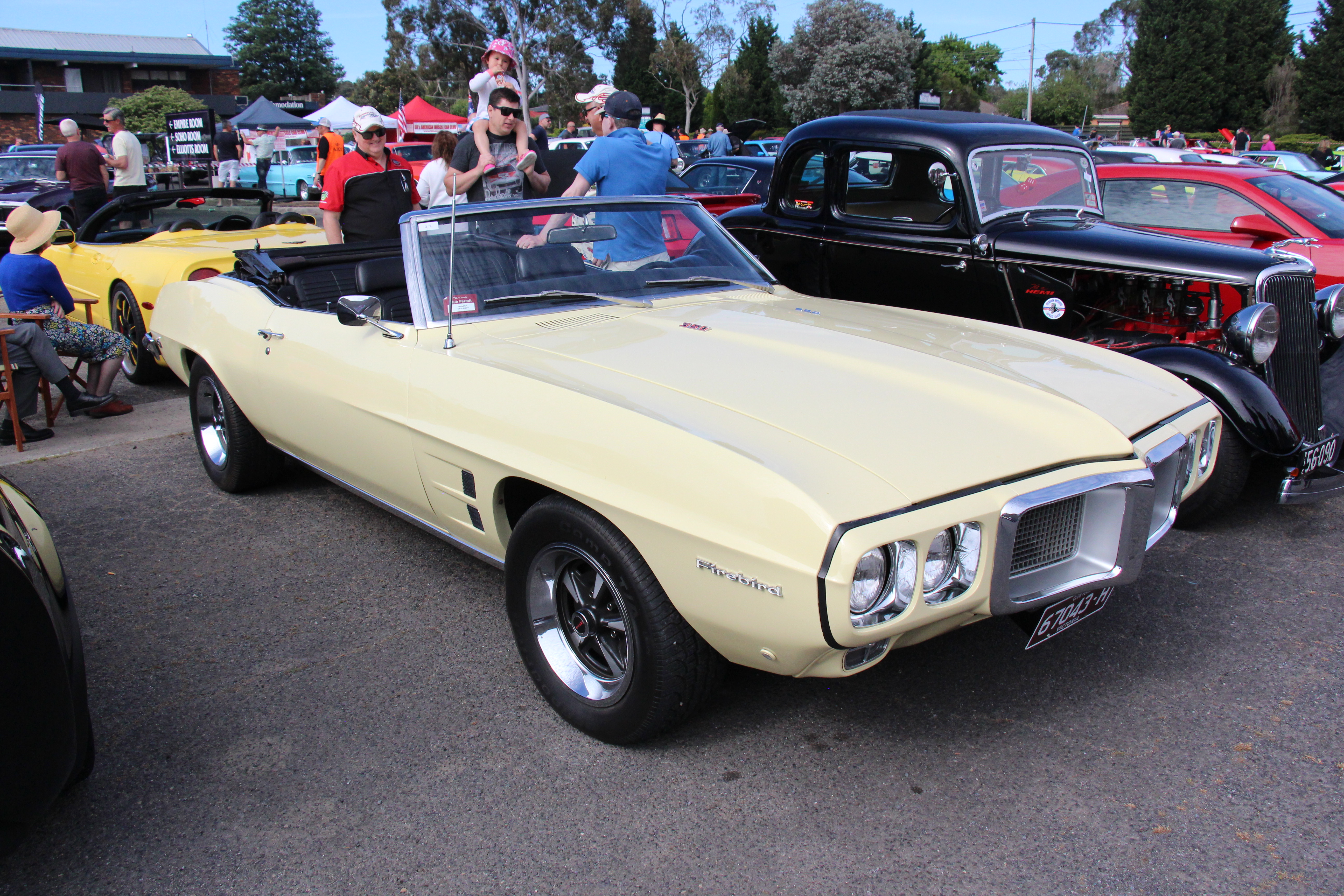
Trans Am Gta
"...a butte he's a butte and then the other one is 84 trans am GTA glass tea roofs the package and it's white both a..."
The Trans Am is a performance car model made by Pontiac. The “GTA” and the “T-top” describe specific versions and roof options. The podcast is talking about an ’84 Trans Am GTA with glass T-tops.
The Trans Am is a performance-oriented model from Pontiac, best known for its muscle-car heritage and distinctive styling. The podcast specifically calls out an “84 Trans Am GTA” with a glass T-top roof package, which points to a particular trim and option set. It’s mentioned because that combination is a recognizable classic configuration for enthusiasts.
leaks
"i'm hoping I can conquer all the leaks that that [2911.4s] thing has so I can get the interior back in and the thing's gonna be running [2915.8s] hundred percent with no leaks then we can get it out of the shop and get it out [2920.9s] there and let everybody enjoy that and it is white 1978 anniversary Corvette it [2929.8s] was practically donated to us but it has been you know what I I have done a few"
“Leaks” here means the car is losing fluids—like oil or coolant—because something isn’t sealed properly. The host is frustrated because the leaks keep coming back even after they think they’re fixed.
In an automotive context, “leaks” means fluid escaping from places like hoses, gaskets, seals, or lines—often fuel, coolant, power steering fluid, or oil. The host describes chasing leaks repeatedly: fixing them, reassembling, then discovering new leaks again after further work.

Chevrolet Corvette
"...ybody enjoy that and it is white 1978 anniversary Corvette it was practically donated to us but it has been ..."
The Chevrolet Corvette is a sports car made by Chevrolet. The podcast is talking about a 1978 Corvette that’s tied to an anniversary, so it’s a specific older model. It comes up because it’s a notable classic car with a personal story attached.
The Chevrolet Corvette is a performance-focused sports car from Chevrolet, and it has a long history of being a flagship model. The podcast specifically references a 1978 “anniversary” Corvette, which makes it a classic example that collectors and enthusiasts often talk about. It’s mentioned because of its significance as a vintage Corvette and the story around how it was obtained.
frame-off restoration
"somebody else did the frame off and put it together and it's just been I may as [2951.7s] well just taking the car apart completely again from scratch and done it from [2956.8s] scratch I would have been done already but it's just been one of those jobs"
A frame-off restoration is an extensive rebuild where the body is removed down to the chassis/frame, then components are repaired or replaced before reassembly. The host implies that even after a frame-off job, leaks and safety issues can still appear if anything was missed or reassembled incorrectly.
safety issues
"here's the big tada mechanics yeah and the things I found [2990.1s] safety issues and whatnot I've gone over the whole car stem to stern and I've [2996.5s] had to redo stuff the whole way and now I got to conquer these leaks again"
“Safety issues” means parts or systems that could make the car unsafe to drive. The host is saying they found these problems during a full inspection and had to fix them before the car could be considered right.
“Safety issues” refers to problems that can directly affect crashworthiness or day-to-day safe operation—such as braking, steering, suspension, wiring, or other critical systems. The host says they found safety issues while going over the car “stem to stern,” then had to redo work to address them.
recycling in the auto world
"there's a whole list I have a whole list but it's alright I have them all in diecast so it's like just like having a so remember recycling in the auto world it isn't about putting old parts into new cars it's about turning old cars into materials and remand parts that keep your older vehicles alive longer"
They’re talking about recycling cars in a practical way. Instead of just throwing parts away, the idea is to turn old cars into materials and rebuilt parts so older cars can keep going.
The host contrasts “recycling” as simply reusing parts with a more automotive-focused idea: turning old cars into materials and remanufactured parts. The goal is to keep older vehicles running longer by supplying replacement components that reduce the need for new-car production.
car payments and interest payments
"and that's what I teach here in the car connection workshop you don't need to be making car payments and interest payments you know what you need you need to be out there driving an older vehicle that's reliable"
Car payments are what you pay each month if you finance a car. Interest is the extra money you pay for borrowing, and the host is saying you can avoid those costs by not taking on payments.
“Car payments” are the monthly installments you make to finance a vehicle purchase, while “interest payments” are the extra cost charged by the lender for borrowing money. The host’s point is that avoiding financing costs can make it easier to afford maintaining and driving an older car instead.

Jeep Commander
"... years already I can't believe it but she was the commander of the ship let me tell you she was the commander..."
The Jeep Commander is an SUV, meaning it’s a larger vehicle meant for carrying people and gear. The podcast mentions it by name, using “Commander” as part of the story. It’s included because it’s one of the cars being discussed.
The Jeep Commander is a mid-size SUV designed for family and everyday driving with available off-road capability. In the podcast, it’s referenced as “the commander of the ship,” using the name as a playful theme. It’s brought up because it’s a specific vehicle the speaker is describing or connecting to their story.
Request an Explanation
Heard something you'd like explained? We'll add it to this episode.
Sign in to request explanations for terms you heard.
Want to learn more?
Browse our glossary for plain-English explanations of automotive terms, jargon, and concepts.
Help improve this episode
See something that's not quite right? Our annotations are AI-generated and can sometimes miss the mark. Click the flag icon on any annotation to suggest a correction.